
Perimeter 81 Review
- Unified security console
- Zero Trust granular access
- Cloud native quick deployment
- Great for distributed teams
- Enterprise rollout can take weeks
- Policy setup needs planning

Cato Networks Review
- Single vendor SASE platform
- Global backbone performance
- Integrated security stack
- Fast deployment with sockets
- Best for multi site firms
- Subscription costs add up
- Needs PoP proximity
- Less on prem control

Zscaler Review
- Cloud native zero trust access
- Global scale low latency
- Replaces VPN complexity
- Strong compliance certifications
- Needs policy design expertise
- Subscription cost for small teams
- Training required for best results

Palo Alto Networks Review
- Leader in next gen firewalls
- Strong threat detection results
- Scales for enterprise needs
- Global support options
- Premium pricing
- Complex configuration setup
- Needs experienced security staff
- Migration requires careful planning

Netskope Review
- Strong cloud app visibility
- Unified SSE security stack
- Fast cloud native deployment
- Centralized easy management
- Enterprise grade pricing
- Network performance concerns
- Endpoint features need improvement

Cloudflare Review
- Generous free plan value
- Fast global Cdn network
- Strong Ddos protection
- Transparent pricing no bandwidth fees
- Limited free plan support
- Advanced setup can be complex
- False positive security blocks
- Potential vendor lock in

Fortinet Review
- Excellent price performance ratio
- Untegrated security fabric platform
- Handles heavy traffic well
- Scales for enterprises
- Support response can be slow
- Support expertise inconsistent
- Deployment can be complex

Juniper Review
- Unified centralized management
- Advanced threat prevention
- Scales for large enterprises
- Strong visibility and analytics
- Premium pricing
- Specialized training required
- Support quality can vary
- Ongoing licensing costs

Versa Networks Review
- Stable high availability connectivity
- Integrated zero trust security
- Advanced analytics and insights
- Multi tenancy for providers
- Subscription costs can scale
- Rollouts may take months
Cisco Review
- Comprehensive product portfolio
- Strong enterprise reliability
- Excellent work life balance
- Global partner ecosystem
- Premium pricing and licensing
- Support quality can vary
- Occasional hardware quality issues
- Documentation can be limited
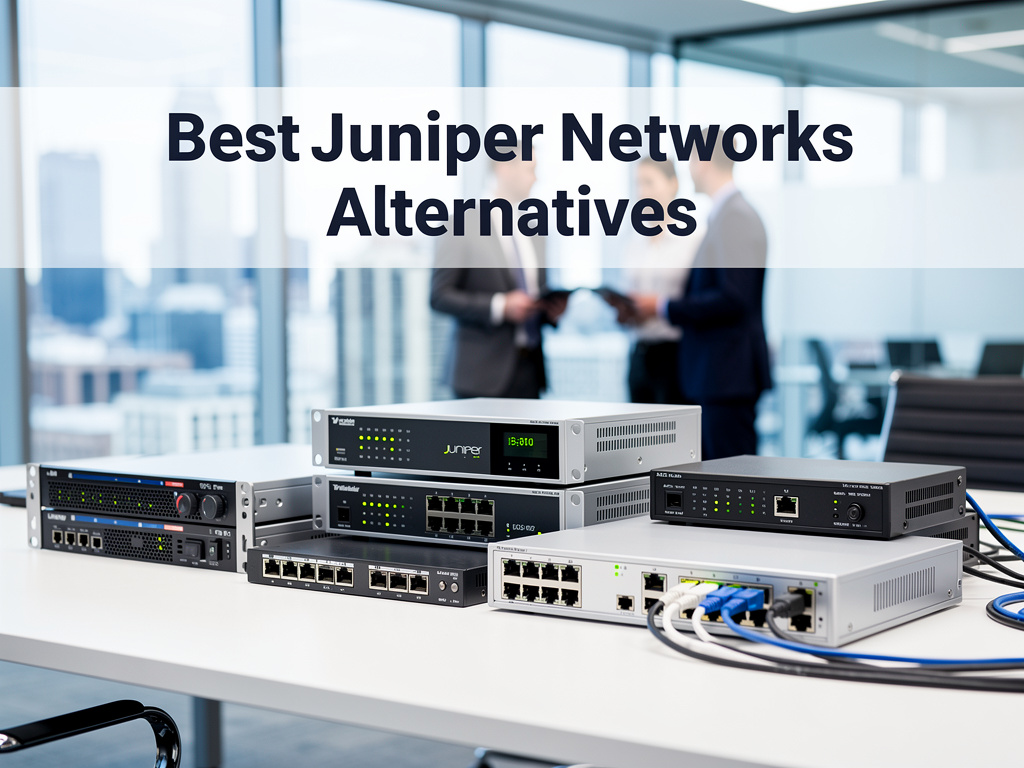
Best Juniper Networks Alternatives: Top 10 SASE and SD-WAN Solutions for Enterprise Networking in 2026
Selecting the right networking infrastructure has become critical for enterprise success in 2026. While Juniper Networks offers solid routing and security solutions, many organizations seek alternatives that provide better cost-effectiveness, enhanced security features, or improved cloud integration. Modern businesses require solutions that combine networking, security, and cloud connectivity into unified platforms.
This comprehensive analysis examines the top 10 alternatives to Juniper Networks, focusing on SASE (Secure Access Service Edge) and SD-WAN solutions. Each alternative offers unique advantages, from simplified management to advanced threat protection. Understanding these options helps IT decision-makers choose platforms that align with their specific requirements and budget constraints.
Understanding the Need for Juniper Networks Alternatives
Organizations increasingly demand networking solutions that go beyond traditional hardware-centric approaches. Cloud-first architectures require platforms that seamlessly integrate security and networking functions. Juniper Networks, while established, often lacks the agility and cost-effectiveness that modern enterprises require.
The shift toward remote work has accelerated adoption of SASE solutions. These platforms combine WAN capabilities with security functions like secure web gateways, cloud access security brokers, and zero-trust network access. Legacy networking approaches struggle to meet these evolving demands.
Enterprises also seek solutions that reduce operational complexity. Managing separate networking and security tools creates inefficiencies and increases costs. Integrated platforms offer streamlined management while providing comprehensive protection across distributed environments.
Cost considerations drive many organizations to explore alternatives. Juniper’s hardware-dependent model often requires significant capital expenditures. Cloud-native solutions provide more flexible pricing models that align with business growth patterns.
Evaluation Criteria for Network Security Solutions
Our analysis uses consistent criteria to evaluate each Juniper Networks alternative. Security capabilities represent the primary consideration, including threat detection, prevention, and response features. Advanced platforms integrate AI-driven analytics to identify sophisticated attacks.
Performance metrics examine throughput, latency, and reliability across different deployment scenarios. Scalability assessments determine how solutions handle growing bandwidth demands and expanding user bases.
Management complexity affects total cost of ownership significantly. Solutions offering centralized dashboards, automated policy enforcement, and simplified configuration reduce administrative overhead.
Integration capabilities determine how well platforms work with existing infrastructure and third-party tools. API availability and standard protocol support enable seamless connectivity across hybrid environments.
Pricing models vary significantly among providers. Some offer usage-based billing while others use subscription models. Understanding these structures helps organizations predict long-term costs accurately.
Cato Networks: Cloud-Native SASE Platform
Cato Networks pioneered the SASE market with its cloud-native architecture. The platform combines SD-WAN functionality with comprehensive security services through a global backbone infrastructure. Organizations benefit from simplified deployment that eliminates traditional hardware requirements.
The Cato Cloud provides integrated security services including secure web gateway, cloud access security broker, and zero-trust network access. These capabilities operate through a single management interface, reducing operational complexity significantly. Advanced threat protection uses machine learning to identify and block sophisticated attacks in real-time.
Performance advantages emerge from Cato’s global point-of-presence network. Traffic routes through optimized paths that minimize latency while ensuring security inspection. The platform automatically adjusts routing based on network conditions and security policies.
Management simplicity represents Cato’s strongest advantage. IT teams configure policies through intuitive dashboards that translate business requirements into technical implementations. Automated policy enforcement ensures consistent security across all locations and users.
Pricing follows a per-user model that includes all security and networking features. This approach provides predictable costs that scale with organizational growth. Enterprise deployments typically range from $30-50 per user monthly, depending on feature requirements and usage volumes.
Limitations include dependency on internet connectivity for all network functions. Organizations with strict latency requirements for local traffic may find this architecture challenging. Additionally, customization options remain more limited compared to traditional hardware-based solutions.
Palo Alto Networks: Comprehensive Security Platform
Palo Alto Networks offers extensive security capabilities through its Prisma SASE platform. The solution combines next-generation firewall functionality with cloud security services and SD-WAN capabilities. Enterprise-grade security features include advanced threat prevention, URL filtering, and application control.
Prisma Access provides cloud-delivered security services that protect users regardless of location. The platform inspects all traffic, including SSL/TLS encrypted communications, to identify hidden threats. Machine learning algorithms continuously improve detection accuracy by analyzing global threat intelligence.
Integration with Palo Alto’s broader security ecosystem creates comprehensive protection strategies. Organizations using existing Palo Alto firewalls benefit from unified management and consistent policy enforcement. Cortex XDR integration provides extended detection and response capabilities across network and endpoint environments.
Performance optimization includes quality of service controls that prioritize critical applications. The platform automatically adjusts bandwidth allocation based on business priorities and network conditions. Global infrastructure ensures consistent performance across different geographic regions.
Management complexity increases with the platform’s extensive feature set. While powerful, the interface requires significant training for optimal utilization. Professional services engagement often becomes necessary for complex deployments and ongoing optimization.
Pricing structures vary based on user count, bandwidth requirements, and feature selections. Typical enterprise implementations range from $15-40 per user monthly. Additional costs may apply for advanced features like threat intelligence feeds and professional services.
Fortinet Secure SD-WAN: Integrated Security and Networking
Fortinet’s Secure SD-WAN solution integrates security and networking functions within a unified platform. The approach leverages Fortinet’s security expertise while providing advanced WAN optimization capabilities. FortiGate appliances deliver both functions through specialized hardware and virtual deployments.
Security integration includes next-generation firewall features, intrusion prevention, and advanced malware protection. The platform performs security inspection without compromising network performance through purpose-built security processors. AI-powered threat detection identifies sophisticated attacks that evade traditional signature-based systems.
SD-WAN capabilities provide intelligent path selection across multiple connection types. The platform automatically routes traffic based on application requirements, link quality, and security policies. Application steering ensures critical business applications receive optimal network resources.
Centralized management through FortiManager simplifies policy creation and deployment across distributed environments. Organizations benefit from consistent security enforcement regardless of location complexity. Zero-touch provisioning accelerates new site deployments while maintaining security standards.
Performance advantages emerge from Fortinet’s specialized hardware architecture. Custom security processors enable high-throughput inspection without latency penalties. The platform scales from small branch offices to large data centers with consistent feature availability.
Cost structures include both hardware and software licensing components. Organizations must factor in initial capital expenditures plus ongoing subscription fees. Total cost of ownership often becomes competitive due to integrated functionality and reduced operational overhead.
Zscaler: Cloud Security Leadership
Zscaler pioneered cloud-delivered security services with its Zero Trust Exchange platform. The solution provides comprehensive internet and cloud security without requiring traditional network security appliances. Global cloud infrastructure ensures consistent security policy enforcement regardless of user location.
Zero Trust Network Access represents Zscaler’s core strength. The platform verifies every user and device before granting application access, eliminating traditional VPN limitations. Microsegmentation capabilities prevent lateral movement even when users gain initial network access.
Internet security services include advanced threat protection, data loss prevention, and cloud access security brokerage. The platform inspects all traffic in real-time, blocking threats before they reach organizational networks. SSL inspection capabilities identify threats hiding in encrypted communications.
Performance optimization occurs through intelligent traffic routing and local internet breakouts. Users connect to the nearest Zscaler data center, minimizing latency while ensuring security inspection. Bandwidth optimization reduces WAN costs by eliminating backhauling requirements.
Management simplicity emerges from centralized policy configuration and automated enforcement. IT teams define security policies that automatically apply across all users and locations. Real-time visibility provides insights into application usage, user behavior, and security events.
Pricing follows a per-user subscription model with different tiers based on feature requirements. Enterprise implementations typically range from $10-30 per user monthly. Additional costs may apply for advanced features like data loss prevention and cloud sandbox analysis.
Netskope: Cloud-First Security Architecture
Netskope delivers cloud security services through its NewEdge network infrastructure. The platform specializes in protecting cloud applications and data while providing secure internet access. Cloud access security broker functionality offers deep visibility into cloud application usage and data movement.
Data protection capabilities include real-time data loss prevention, encryption, and rights management. The platform identifies sensitive data across cloud applications and enforces protection policies automatically. Advanced analytics detect abnormal user behavior that may indicate insider threats or account compromise.
Threat protection services examine all web traffic for malware, phishing, and command-and-control communications. Machine learning algorithms analyze file behavior in cloud sandboxes to identify zero-day threats. Threat intelligence integration provides context about emerging attack vectors and adversary tactics.
Performance optimization includes intelligent caching and protocol optimization for cloud applications. The platform accelerates SaaS application performance while maintaining security inspection. Quality of service controls prioritize business-critical applications during bandwidth constraints.
Integration capabilities extend to existing security tools through APIs and standard protocols. Organizations benefit from unified security orchestration that coordinates response across multiple platforms. SIEM integration provides centralized logging and correlation for security events.
Pricing structures accommodate different organizational sizes and feature requirements. Educational and government organizations often receive preferential pricing. Enterprise deployments typically range from $15-35 per user monthly, depending on feature selections and usage volumes.
Versa Networks: Software-Defined Networking Innovation
Versa Networks provides software-defined WAN and security services through its unified platform. The solution combines advanced routing, security, and analytics capabilities within a single software stack. Vendor-neutral hardware support enables deployment across different infrastructure environments.
Security services include next-generation firewall, intrusion prevention, and advanced threat detection capabilities. The platform provides granular application visibility and control, enabling precise policy enforcement. Behavioral analytics identify abnormal network patterns that may indicate security incidents.
SD-WAN functionality offers intelligent path selection, quality of service, and WAN optimization features. The platform automatically adapts to changing network conditions while maintaining security requirements. Application-aware routing ensures optimal performance for critical business applications.
Analytics capabilities provide deep insights into network performance, security events, and user behavior. Machine learning algorithms identify trends and anomalies that require administrative attention. Predictive analytics help organizations optimize network resources and prevent performance issues.
Deployment flexibility includes on-premises, cloud, and hybrid options. Organizations choose deployment models that align with their infrastructure preferences and compliance requirements. Container-based architecture enables efficient resource utilization and rapid scaling.
Licensing models accommodate both perpetual and subscription preferences. Organizations benefit from flexible pricing that scales with network growth and feature requirements. Professional services support complex deployments and ongoing optimization efforts.
Cisco: Enterprise Networking Heritage
Cisco’s SD-WAN solution leverages decades of enterprise networking experience. The platform combines Viptela SD-WAN technology with Cisco’s security portfolio to provide integrated capabilities. Enterprise-grade reliability ensures consistent performance across large-scale deployments.
Security integration includes firewall, intrusion prevention, and URL filtering services. The platform coordinates with other Cisco security products to provide comprehensive threat protection. Talos threat intelligence enhances detection capabilities with real-time global insights.
Network optimization features include application-aware routing, quality of service, and WAN optimization. The platform automatically adjusts traffic flows based on application requirements and link conditions. Policy orchestration ensures consistent enforcement across all network locations.
Management capabilities span from individual devices to enterprise-wide deployments. Cisco DNA Center provides centralized configuration, monitoring, and troubleshooting functions. Intent-based networking translates business policies into technical configurations automatically.
Integration advantages emerge from Cisco’s comprehensive portfolio of networking and security products. Organizations using existing Cisco infrastructure benefit from unified management and consistent feature availability. Professional services expertise supports complex deployments and ongoing optimization.
Pricing complexity reflects the platform’s extensive feature set and deployment options. Organizations must consider both hardware and software licensing costs. Total cost of ownership calculations should include professional services and ongoing support requirements.
Cloudflare: Global Edge Computing Platform
Cloudflare’s Magic WAN service provides secure networking through its global edge infrastructure. The platform combines SD-WAN capabilities with comprehensive security services delivered from over 250 data centers worldwide. Edge computing integration enables low-latency application performance.
Security services include DDoS protection, web application firewall, and bot management capabilities. The platform automatically blocks malicious traffic before it reaches organizational networks. Zero Trust security model verifies every connection attempt regardless of source location.
Performance optimization leverages Cloudflare’s global Anycast network to route traffic through optimal paths. The platform automatically adjusts routing based on network conditions and security requirements. Content delivery integration accelerates web application performance for end users.
Developer-friendly APIs enable custom integrations and automated workflows. Organizations benefit from programmable networking that adapts to changing business requirements. Serverless computing integration provides additional application deployment options.
Pricing simplicity includes flat-rate options for unlimited bandwidth usage. This approach provides cost predictability for organizations with variable traffic patterns. Pay-as-you-grow models accommodate scaling requirements without upfront commitments.
Limitations include less granular security features compared to specialized security vendors. Organizations with complex security requirements may need additional tools. Enterprise support options provide enhanced assistance for large-scale deployments.
Perimeter 81: Small to Medium Business Focus
Perimeter 81 delivers cloud-based network security services designed for small to medium businesses. The platform provides VPN replacement capabilities with enhanced security and management features. Simplified deployment requires minimal technical expertise for initial implementation.
Zero Trust Network Access represents the platform’s core functionality. Users connect to applications through secure tunnels without exposing internal network infrastructure. Device trust verification ensures only authorized endpoints access organizational resources.
Security features include firewall, intrusion detection, and malware protection services. The platform provides basic threat protection suitable for organizations without dedicated security teams. Automated policy enforcement reduces administrative overhead for IT staff.
Management interfaces prioritize ease of use over advanced functionality. Non-technical administrators can configure basic policies through intuitive dashboards. Self-service options enable users to resolve common connectivity issues independently.
Pricing targets small business budgets with affordable per-user rates. The platform provides essential security features without enterprise-level complexity or costs. Transparent pricing eliminates hidden fees and unexpected charges.
Scalability limitations may affect growing organizations that require advanced features. Enterprise-level organizations often outgrow the platform’s capabilities. Integration options remain limited compared to enterprise-focused alternatives.
Comparative Analysis: Feature and Performance Evaluation
| Solution | Deployment Model | Security Features | Management Complexity | Target Market | Pricing Range |
|---|---|---|---|---|---|
| Cato Networks | Cloud-Native | Comprehensive SASE | Low | Mid-Large Enterprise | $30-50/user/month |
| Palo Alto Networks | Hybrid | Advanced Security | High | Large Enterprise | $15-40/user/month |
| Fortinet | On-Premises/Cloud | Integrated Security | Medium | All Segments | Variable |
| Zscaler | Cloud-Delivered | Zero Trust Focus | Low-Medium | Large Enterprise | $10-30/user/month |
| Netskope | Cloud-First | Cloud Security | Medium | Large Enterprise | $15-35/user/month |
| Versa Networks | Software-Defined | Unified Platform | Medium-High | Mid-Large Enterprise | Variable |
| Cisco | Hybrid | Enterprise Security | High | Large Enterprise | Variable |
| Cloudflare | Edge Computing | Basic Security | Low | All Segments | Flat Rate |
| Perimeter 81 | Cloud-Based | Basic ZTNA | Low | SMB | $8-15/user/month |
Implementation Considerations and Best Practices
Successful implementation of Juniper alternatives requires careful planning and phased deployment approaches. Network assessment identifies current infrastructure limitations and future requirements. Organizations should document existing applications, traffic patterns, and security policies before beginning transitions.
Pilot deployments minimize risks by testing new platforms with limited user groups or specific locations. This approach validates functionality while identifying configuration requirements. Performance monitoring during pilot phases ensures new solutions meet business requirements.
Change management becomes critical for user adoption and organizational success. Training programs help staff understand new interfaces and procedures. Communication strategies manage expectations and timeline concerns throughout implementation phases.
Integration planning addresses connectivity requirements with existing systems and applications. API documentation and professional services support smooth integration processes. Backup connectivity ensures business continuity during transition periods.
Security and Compliance Considerations
Regulatory compliance affects platform selection for organizations in regulated industries. Healthcare, financial services, and government entities require solutions that meet specific certification requirements. Compliance documentation should address relevant standards like HIPAA, SOX, and FedRAMP.
Data sovereignty requirements influence deployment model selections for multinational organizations. Some solutions provide geographic data control options that address local regulations. Encryption capabilities protect data both in transit and at rest across different jurisdictions.
Security architecture integration ensures new platforms enhance rather than compromise existing protection strategies. Incident response procedures require updates to address new platform capabilities and monitoring sources. Security orchestration coordinates responses across multiple security tools and platforms.
Cost Optimization Strategies
Total cost of ownership calculations must include both direct and indirect expenses associated with platform adoption. Hardware elimination provides immediate cost savings for cloud-based alternatives. Reduced facility requirements and power consumption contribute additional savings.
Operational efficiency improvements reduce ongoing administrative costs through automation and simplified management. Fewer security tools require less specialized staff training and maintenance. Vendor consolidation provides negotiating advantages for licensing and support contracts.
Performance optimization reduces bandwidth costs through intelligent traffic routing and caching capabilities. WAN optimization features minimize expensive circuit requirements while improving application performance. Usage-based pricing models align costs with actual business value rather than fixed capacity planning.
Future Technology Trends and Platform Evolution
Artificial intelligence integration continues evolving across all networking and security platforms. Machine learning capabilities improve threat detection accuracy while reducing false positive rates. Automated response features enhance security effectiveness without increasing staff requirements.
Edge computing adoption drives platform architectures toward distributed processing models. Organizations benefit from reduced latency and improved performance for real-time applications. 5G network integration enables new deployment scenarios and connectivity options.
Zero trust security models become standard across enterprise networking platforms. Identity verification and device trust validation replace traditional perimeter-based security approaches. Continuous compliance monitoring ensures ongoing adherence to security policies and regulatory requirements.
Software-defined infrastructure enables greater flexibility and automation across networking functions. Infrastructure as code approaches simplify deployment and configuration management. Container-based architectures provide efficient resource utilization and rapid scaling capabilities.
For additional insights into network security trends, visit Gartner’s network security research.
Organizations evaluating Juniper Networks alternatives benefit from thorough analysis of business requirements, technical capabilities, and cost implications. Each platform offers unique advantages that align with different organizational needs and priorities. Successful implementations require careful planning, phased deployment, and ongoing optimization to achieve maximum value from technology investments.
Frequently Asked Questions About Juniper Networks Alternatives
- What are the main advantages of switching from Juniper Networks to SASE solutions?
SASE solutions provide integrated security and networking functions through cloud-delivered services. Organizations benefit from reduced hardware requirements, simplified management, and improved scalability. Cost savings emerge from operational efficiency and vendor consolidation opportunities. - Which Juniper Networks alternative offers the best security features?
Palo Alto Networks provides the most comprehensive security capabilities with advanced threat prevention, application control, and integration with broader security ecosystems. Zscaler excels in zero trust network access, while Fortinet offers strong integrated security within SD-WAN platforms. - How do cloud-based alternatives compare to on-premises Juniper solutions in terms of performance?
Cloud-based alternatives often provide better performance through global infrastructure and intelligent routing. However, organizations with strict latency requirements for local traffic may prefer hybrid deployments that combine cloud and on-premises components. - What factors should organizations consider when choosing between these Juniper alternatives?
Key considerations include security requirements, deployment preferences, management complexity, integration needs, and budget constraints. Organizations should evaluate current infrastructure, future growth plans, and staff capabilities when making selection decisions. - Are these Juniper alternatives suitable for small and medium businesses?
Solutions like Perimeter 81 and Cloudflare specifically target smaller organizations with simplified interfaces and affordable pricing. Larger platforms like Cato Networks and Zscaler also offer SMB-focused packages with reduced complexity and feature sets. - How long does implementation typically take for these alternative solutions?
Cloud-based solutions like Cato Networks and Zscaler can be deployed within weeks for basic functionality. Complex enterprise deployments may require several months for full implementation, especially when integrating with existing infrastructure and applications. - What ongoing support and maintenance requirements should organizations expect?
Cloud-based alternatives typically require minimal ongoing maintenance compared to traditional hardware solutions. However, organizations need staff trained in new interfaces and procedures. Professional services may be necessary for complex configurations and optimizations. - Can these alternatives integrate with existing Juniper infrastructure during transition periods?
Most alternatives support standard networking protocols that enable integration with existing Juniper equipment. Hybrid deployments allow gradual migration while maintaining connectivity and functionality throughout transition periods.
Reference: Gartner SD-WAN Market Analysis





 Stack Insight is intended to support informed decision-making by providing independent information about business software and services. Some product details, including pricing, features, and promotional offers, may be supplied by vendors or partners and can change without notice.