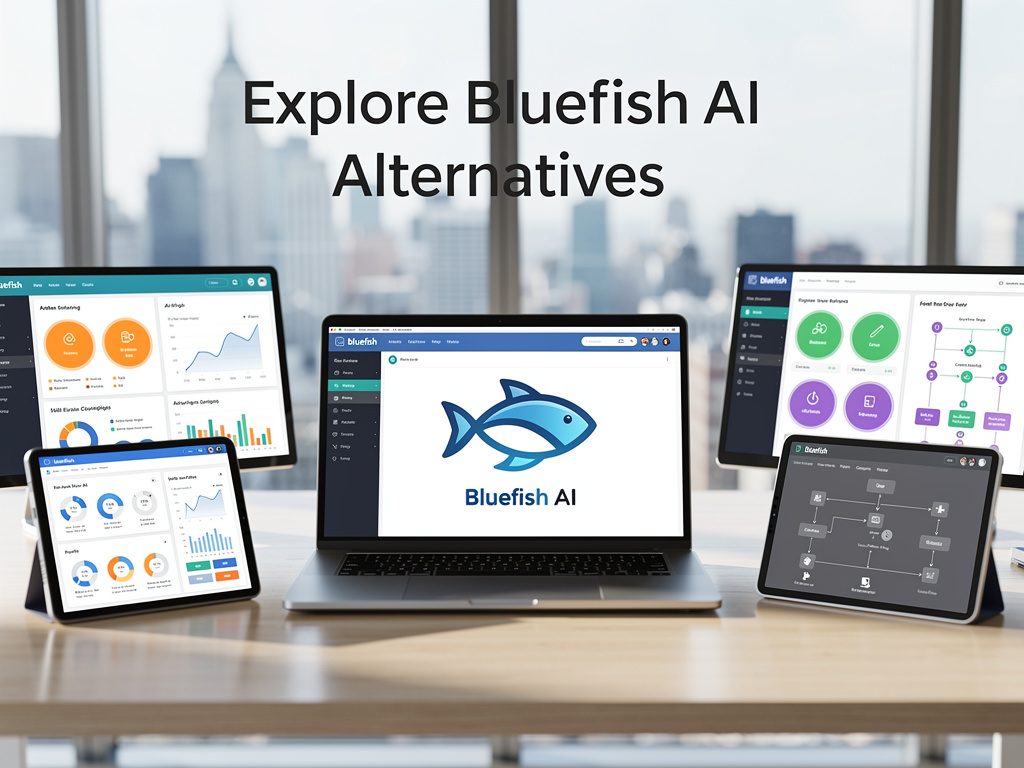
Best Bluefish AI Alternatives in 2026: 20 Top Platforms for AI Visibility Tracking
Bluefish AI has made a name for itself as an enterprise-grade AI marketing platform. It serves Fortune 500 brands exclusively. The company raised $24M from NEA and Salesforce Ventures. It’s known for producing the viral YouTube-vs-Reddit citation data reported by Adweek.
But here’s the thing. Bluefish uses quote-based pricing. It requires a sales cycle just to test the platform. There’s no self-serve access. No published pricing. If you’re not a Fortune 500 company, you might feel locked out.
That’s why many teams look for Bluefish AI alternatives. They want transparent pricing. Self-serve access. Tools that work for mid-market companies and startups, not just enterprise giants.
This guide covers 20 platforms that compete with Bluefish AI. We’ll review each one based on features, pricing, ease of use, and ideal use cases. Whether you need citation analytics, AI search visibility tracking, or full GEO capabilities, you’ll find options here.
Why Teams Look for Bluefish AI Competitors
Bluefish AI does one thing really well. It shows you where AI platforms source their citations. You can see that Perplexity pulls 24% of citations from Reddit. Or that YouTube shows up in 16% of LLM answers.
That’s powerful data. But it comes with limitations.
- No transparent pricing on their website
- Enterprise sales process required to get started
- Per-seat pricing model that adds up quickly
- Fortune 500 focus means smaller teams may not qualify
- Long evaluation cycles before you can test anything
Teams exploring Bluefish AI substitutes often prioritize different things. Some want budget-friendly options. Others need specific language coverage or compliance features. Many just want to sign up and start testing today.
The AI visibility tracking market has grown fast. You now have real choices. Let’s look at each alternative in detail.
Whitebox: Full-Funnel Attribution for AI Marketing
Whitebox takes a different approach to AI marketing analytics. Instead of focusing purely on visibility tracking, it emphasizes attribution across the entire customer journey.
Key Features of Whitebox
The platform connects AI visibility data to actual business outcomes. You can see which AI mentions drive traffic. Which ones lead to conversions. This makes it easier to prove ROI on GEO efforts.
- Multi-touch attribution across AI and traditional channels
- Revenue tracking tied to AI visibility improvements
- Integration with CRM systems and analytics platforms
- Custom reporting dashboards for different stakeholders
Whitebox Pricing and Access
Whitebox offers more pricing transparency than Bluefish. They publish tier ranges on their website. Plans start in the mid-hundreds monthly for small teams. Enterprise pricing scales based on data volume and integrations.
Best For
Marketing teams that need to tie AI visibility to revenue. If your CFO asks “what’s the ROI on this AI search stuff?” Whitebox helps you answer that question with real numbers.
Limitations
The attribution focus means less depth on citation-level analytics. If you need Bluefish’s source breakdown capabilities, Whitebox won’t fully replace that functionality.
Profound: Deep Analytics for AI Search Visibility
Profound positions itself as an analytics-first platform for AI search visibility. It’s built for teams that want granular data about how their brand appears across generative AI platforms.
What Makes Profound Different
The platform excels at detailed reporting. You get extensive breakdowns of mentions, sentiment, and competitive positioning. The analytics depth rivals what enterprise platforms offer.
- Comprehensive AI engine coverage including ChatGPT, Perplexity, Gemini, and AI Overviews
- Sentiment analysis for brand mentions in AI responses
- Competitive benchmarking against up to 10 competitors
- Historical trend tracking to spot changes over time
- API access for custom integrations
Profound Pricing Structure
Profound sits in the mid-market pricing range. It’s not as expensive as enterprise platforms like Bluefish. But it’s not a budget option either. Expect monthly costs in the four-figure range for most use cases.
Ideal Users
B2B SaaS companies and agencies that need detailed analytics but can’t justify enterprise pricing. Also works well for teams that want API access to build custom workflows.
Where Profound Falls Short
The interface can feel overwhelming for new users. The learning curve is steeper than simpler monitoring tools. Some teams find it has more features than they actually need.
Otterly AI: Real-Time AI Visibility Monitoring
Otterly AI focuses on speed. The platform emphasizes real-time monitoring of how brands appear in AI-generated responses. You get alerts quickly when things change.
Core Capabilities
The real-time angle matters more than you might think. AI models update constantly. Citation patterns shift. Otterly helps you catch changes as they happen rather than discovering them weeks later.
- Real-time alerts when your brand appears or disappears from AI responses
- Multi-model tracking across major generative AI platforms
- Query monitoring for custom prompts you define
- Weekly digest reports summarizing visibility changes
- Team collaboration features for sharing insights
Pricing for Otterly AI
Otterly AI offers tiered pricing with a free trial. Paid plans start around $200/month for basic monitoring. More advanced features and higher query volumes cost more. Pricing is published on their website.
Who Should Consider Otterly AI
Teams that need to stay on top of rapid changes. PR and communications teams benefit from the alert system. Also good for competitive intelligence when you need to track multiple brands.
Gaps in Otterly AI
The platform prioritizes monitoring over optimization recommendations. If you want guidance on improving your AI visibility, you’ll need to pair it with other tools or expertise.
Peec AI: Cleaner Workflow for AI Monitoring
Peec AI stands out for operator simplicity. Many AI visibility platforms feel complex. Peec takes the opposite approach. It’s designed to be easy to use from day one.
Platform Strengths
The interface is clean and intuitive. You don’t need training to understand the dashboards. This makes it accessible for marketing teams without dedicated analytics staff.
- Simplified setup process that takes minutes, not hours
- Intuitive dashboards designed for non-technical users
- Automated reporting sent to your inbox weekly
- Brand safety monitoring for negative mentions
- Quick competitive scans for basic benchmarking
Peec AI Pricing
Peec AI publishes pricing on their website. Plans start at a reasonable entry point for small teams. The pricing scales with features and query volume rather than per-seat.
Best Use Cases
Marketing managers who need visibility tracking without complexity. Small teams that can’t dedicate someone to learn a complex platform. Agencies that need to quickly set up monitoring for multiple clients.
What’s Missing
The simplicity comes with tradeoffs. You won’t get the citation-level depth that Bluefish offers. Analytics power users may find it too basic for their needs.
AthenaHQ: Enterprise GEO with Governance Controls
AthenaHQ targets enterprise buyers who need governance features. If your organization has compliance requirements around AI tools, AthenaHQ addresses those concerns directly.
Key Features
The platform combines visibility tracking with enterprise controls. You get user permissions, audit logs, and compliance reporting alongside the core monitoring functionality.
- Granular user permissions and role-based access
- Audit trails for all platform activities
- Compliance reporting for regulated industries
- Multi-region data handling options
- Enterprise SSO integration
- Broader GEO controls for workflow management
AthenaHQ Pricing
AthenaHQ uses enterprise pricing. You’ll need to talk to sales for quotes. But they’re more responsive than some enterprise vendors. Most teams can get pricing within a week.
Ideal Customers
Regulated industries like healthcare, finance, and legal services. Large organizations with IT security requirements. Companies that need to demonstrate compliance to auditors.
Limitations
The governance focus means more complexity. If you just want simple monitoring, AthenaHQ may be overkill. Pricing puts it out of reach for smaller teams.
Goodie AI: Budget-Friendly AI Visibility Tracking
Goodie AI enters the market as an affordable option. Not every team has thousands to spend on AI visibility tools. Goodie makes monitoring accessible at lower price points.
What Goodie AI Offers
The platform covers the basics well. You get monitoring across major AI platforms, basic reporting, and alerts. Nothing fancy, but everything functional.
- Core monitoring for ChatGPT, Perplexity, and Gemini
- Basic reporting dashboards with export options
- Email alerts for visibility changes
- Competitor tracking for up to 5 competitors
- Monthly trend reports
Goodie AI Pricing
This is where Goodie shines. Plans start under $100/month. There’s a free tier with limited features. The pricing is completely transparent on their website.
Who Benefits Most
Startups testing AI visibility concepts. Freelancers managing client brands. Small businesses with limited marketing budgets. Anyone who wants to start monitoring without a big commitment.
Tradeoffs
You get what you pay for. Analytics depth is limited. No API access on lower tiers. Support response times can be slow. But for basic monitoring, it works.
Scrunch: Actionable Optimization Beyond Monitoring
Scrunch AI differentiates by focusing on action. Most tools tell you how you appear in AI responses. Scrunch goes further by telling you how to improve.
Platform Capabilities
The actionability focus shows in the product design. Every insight comes with recommended next steps. The platform is built to help you optimize, not just observe.
- AI-ready site optimization recommendations
- Content gap analysis for AI visibility
- Technical audit features for structured data
- Priority scoring for optimization tasks
- Progress tracking as you make changes
Scrunch Pricing
Scrunch uses a tiered model. Basic monitoring is affordable. The optimization features cost more. Most teams land in the mid-hundreds monthly for the full feature set.
Best Fit
Teams that want guidance, not just data. Content teams looking to improve their AI visibility proactively. Organizations without dedicated GEO expertise on staff.
What’s Lacking
The citation-level analytics aren’t as deep as Bluefish. If you need source breakdown data, Scrunch won’t fully replace that capability.
Brandlight: Brand Safety in AI Environments
Brandlight focuses on brand safety. AI platforms can mention your brand in problematic contexts. Brandlight helps you spot those issues before they become problems.
Core Features
The brand safety angle is underserved in this market. Most tools track visibility without distinguishing good mentions from bad ones. Brandlight fills that gap.
- Sentiment analysis for all brand mentions
- Negative mention alerts with context
- Competitor comparison on sentiment metrics
- Crisis monitoring dashboards
- Reporting for PR and communications teams
Brandlight Pricing
Brandlight sits in the mid-market range. They publish ballpark pricing on their website. Enterprise features require custom quotes. Most mid-sized companies can access the platform without enterprise pricing.
Ideal Users
PR and communications teams. Brands in sensitive industries. Companies that have faced reputation issues. Marketing leaders who report to risk-conscious executives.
Gaps
The brand safety focus means less emphasis on optimization. You’ll know about problems but won’t get as much guidance on fixing them.
Writesonic: Content Creation with AI Visibility in Mind
Writesonic approaches AI visibility from the content creation side. Instead of monitoring mentions, it helps you create content that AI platforms are more likely to cite.
What Writesonic Offers
The platform is primarily a content creation tool. But it includes features specifically designed to improve AI visibility. You can create content optimized for citation.
- AI content generation with citation optimization
- SEO and GEO content templates
- Structured data recommendations
- Content audit features for existing pages
- Multi-language support
Writesonic Pricing
Writesonic offers a free tier. Paid plans start at affordable monthly rates. The pricing is usage-based, scaling with content volume. Everything is published clearly on their website.
Best Use Cases
Content teams that want to create AI-friendly content from scratch. Organizations investing in GEO through content strategy. Teams that need both creation and optimization in one tool.
Limitations
It’s not a monitoring tool. You won’t get visibility tracking or citation analytics. You’ll need to pair it with a monitoring platform for complete coverage.
Trakkr: Multi-Platform Visibility Tracking
Trakkr emphasizes breadth of coverage. The platform monitors visibility across more AI platforms than most competitors. If comprehensive coverage matters, Trakkr delivers.
Platform Features
The wide coverage includes emerging AI platforms that other tools miss. You get monitoring across the major players plus newer entrants to the market.
- Coverage of 15+ AI platforms and search engines
- Unified dashboard for all platforms
- Platform-specific reporting when needed
- Trend analysis across platforms
- API for custom integrations
Trakkr Pricing
Trakkr uses tiered pricing based on platforms monitored. Basic tiers cover major platforms. Premium tiers add the extended coverage. Pricing is published but varies significantly by tier.
Who Should Use Trakkr
Teams that need to monitor beyond ChatGPT and Perplexity. Global brands where regional AI platforms matter. Analytics teams building comprehensive AI visibility reports.
What’s Missing
The breadth focus means less depth per platform. You won’t get the citation-level analytics that Bluefish provides. It’s wide but not always deep.
Qwairy: Query-Based AI Monitoring
Qwairy takes a query-first approach. Instead of tracking your brand broadly, you define specific queries to monitor. This gives you more control over what you’re tracking.
Key Capabilities
The query focus works well for teams with specific concerns. You can monitor exactly the questions your customers ask. Results feel more relevant to your actual business.
- Custom query definition with advanced filters
- Query performance tracking over time
- Competitive query monitoring
- Query suggestion features
- Detailed results for each query
Qwairy Pricing
Pricing scales with query volume. Lower tiers limit queries per month. Higher tiers offer unlimited monitoring. The entry point is accessible for small teams.
Ideal Users
Teams with specific queries they need to own. Product marketers focused on buyer questions. Sales enablement teams monitoring competitor mentions in specific contexts.
Limitations
You need to know what queries to track. The platform won’t discover important queries for you. Teams without query research may miss important visibility opportunities.
Azoma: AI Analytics for E-commerce Brands
Azoma specializes in e-commerce AI visibility. If you sell products online, the generic monitoring tools may not meet your needs. Azoma is built specifically for product-based businesses.
E-commerce Features
The platform tracks how products appear in AI shopping recommendations. You can see when AI suggests your products versus competitors. This is different from brand visibility tracking.
- Product-level visibility tracking
- Shopping AI monitoring for platforms like Perplexity Shopping
- Price mention tracking in AI responses
- Product comparison monitoring
- Category-level analytics
Azoma Pricing
Azoma prices based on product catalog size. Small catalogs get affordable pricing. Large catalogs cost more. They offer trials for e-commerce teams to evaluate fit.
Best Fit
E-commerce brands selling online. D2C companies monitoring AI shopping experiences. Marketplaces tracking how their products appear versus competitors.
Gaps
The e-commerce focus means less utility for B2B or service businesses. If you don’t sell products, Azoma won’t be the right choice.
Gauge: Performance Metrics for AI Visibility
Gauge focuses on performance measurement. The platform emphasizes metrics that matter for ROI calculations. You get data you can actually use in business cases.
Measurement Capabilities
Gauge connects visibility metrics to business outcomes better than most tools. You can track correlations between AI visibility and traffic, leads, or revenue.
- Visibility scoring with clear methodology
- Performance benchmarking against industry averages
- Correlation analysis with business metrics
- Executive reporting templates
- Integration with analytics platforms
Gauge Pricing
Gauge uses transparent tiered pricing. Entry-level plans are accessible. Advanced analytics features cost more. Everything is published on their pricing page.
Ideal Customers
Marketing leaders who need to prove ROI. Teams reporting to data-driven executives. Organizations building business cases for GEO investments.
What’s Missing
Less focus on the “how to improve” side. You’ll get great measurement but fewer optimization recommendations. Works best paired with other tools.
LLM Pulse: Comprehensive AI Visibility Platform
LLM Pulse offers a full-featured AI visibility platform with transparent pricing. It’s positioned as a middle ground between budget tools and enterprise platforms.
Core Features
The platform covers monitoring, analytics, and some optimization features. You get a complete toolkit without needing multiple subscriptions.
- Multi-model monitoring across major AI platforms
- Detailed analytics dashboards
- Competitive tracking and benchmarking
- Optimization recommendations
- API access for integrations
- Team collaboration features
LLM Pulse Pricing
Pricing is transparent and published. Plans start at accessible price points. The platform offers self-serve access without sales cycles. You can start testing immediately.
Who Benefits
Teams looking for Bluefish-level features without enterprise pricing. Mid-market companies that need comprehensive coverage. Agencies managing multiple client brands.
Limitations
The citation-level source analytics aren’t as deep as Bluefish. If you need the specific source breakdown data that made Bluefish famous, you won’t get identical capabilities.
Semrush: SEO Suite with AI Visibility Features
Semrush is primarily known for traditional SEO. But they’ve added AI visibility features to their platform. If you already use Semrush, this integration makes sense.
AI Features in Semrush
The AI visibility features integrate with the broader SEO toolkit. You can see traditional search data alongside AI visibility metrics in one dashboard.
- AI Overviews tracking in search results
- Integration with existing SEO workflows
- Combined reporting for traditional and AI search
- Content optimization recommendations
- Competitive analysis across both channels
Semrush Pricing
Semrush pricing is well-established. AI features may require higher tiers. The platform is more expensive than standalone monitoring tools. But you get the full SEO suite included.
Best Use Cases
Teams already using Semrush for SEO. Organizations that want unified reporting. Agencies that need one platform for all search visibility tracking.
Gaps
The AI visibility features aren’t as deep as dedicated tools. You won’t get the specialized capabilities of purpose-built AI visibility platforms. It’s a good addition, not a complete solution.
Searchable: Search-Focused AI Visibility
Searchable focuses on the search use case specifically. The platform tracks how your brand appears when people use AI platforms for search-like queries.
Search-Oriented Features
The search focus differentiates from broader AI monitoring. You get insights specifically about informational and transactional queries, not just brand mentions.
- Search query monitoring with intent classification
- SERP-style visibility tracking for AI platforms
- Click potential scoring
- Featured mention tracking
- Search volume estimates for AI queries
Searchable Pricing
Searchable offers transparent pricing. Plans scale with monitoring volume. Entry-level access is affordable for small teams. Self-serve signup is available.
Ideal Users
SEO teams expanding into AI search visibility. Content marketers focused on informational queries. Organizations where search-driven traffic matters most.
What’s Missing
Less coverage of conversational AI use cases. If your audience uses AI for dialogue rather than search, Searchable may miss important interactions.
Spotlight: Competitive Intelligence for AI Visibility
Spotlight emphasizes competitive intelligence. The platform is built to help you understand how you compare to competitors in AI platforms.
Competitive Features
Every feature centers on competitive comparison. You see your visibility relative to competitors, not just absolute metrics.
- Head-to-head competitor tracking
- Share of voice metrics for AI visibility
- Competitive alerts when rankings change
- Gap analysis showing where competitors win
- Trend comparison over time
Spotlight Pricing
Pricing scales with competitors tracked. Basic plans include 3-5 competitors. Premium plans offer more. The pricing model is transparent.
Best Fit
Teams in competitive markets. Product marketers doing competitive positioning. Sales teams that need competitive intelligence for deals.
Limitations
The competitive focus means less depth on your own brand analytics. If you need detailed self-analysis, pair Spotlight with another tool.
Citation Junction: Citation-Focused Analytics
Citation Junction focuses specifically on citation tracking. If citations are your primary concern, this specialized tool delivers focused capabilities.
Citation Features
The platform tracks when and where AI platforms cite your content. You get detailed data about citation patterns and sources.
- Citation tracking across major AI platforms
- Source attribution for citations
- Citation quality scoring
- Historical citation trends
- Content-level citation analytics
Citation Junction Pricing
Pricing is published and accessible. The specialized focus keeps costs reasonable. Most teams can access the platform without enterprise pricing.
Ideal Users
Content teams focused on getting cited. Publishers and media companies. Organizations investing heavily in thought leadership content.
Gaps
The citation focus means less coverage of non-citation brand mentions. If AI platforms mention you without citing sources, Citation Junction may miss those interactions.
AirOps: Workflow Automation for AI Visibility
AirOps takes a workflow approach. The platform helps you automate AI visibility tasks that would otherwise require manual work.
Automation Capabilities
AirOps connects monitoring with action through automated workflows. You can set up triggers and responses that run without manual intervention.
- Automated monitoring workflows
- Trigger-based alerts and actions
- Integration with other marketing tools
- Custom workflow builders
- Batch processing for large-scale monitoring
AirOps Pricing
Pricing varies based on workflow complexity and volume. Basic automation is affordable. Complex workflows cost more. They offer trials to test fit.
Best Use Cases
Teams doing AI visibility at scale. Agencies managing many clients. Organizations that want to automate repetitive monitoring tasks.
Limitations
You need technical comfort to build workflows. Non-technical teams may find the setup challenging. The value depends on your automation needs.
iGEO: International AI Visibility Tracking
iGEO specializes in international and multilingual AI visibility. If your audience spans multiple countries and languages, generic tools may not meet your needs.
International Features
The platform tracks AI visibility across regions and languages. You can see how your brand appears differently in various markets.
- Multi-language monitoring with native language support
- Regional AI platform coverage
- Country-specific analytics
- Translation and localization insights
- Global competitive comparison
iGEO Pricing
Pricing scales with language and region coverage. Single-market monitoring is affordable. Global coverage costs more. The pricing reflects the complexity of multilingual monitoring.
Ideal Users
Global brands with international presence. Companies expanding into new markets. Organizations where regional AI platforms matter.
What’s Missing
The international focus means less depth for single-market use cases. If you only operate in one country, a more general tool might serve you better.
Comparison Table: All 20 Bluefish AI Alternatives
| Platform | Primary Focus | Transparent Pricing | Self-Serve Access | Best For |
|---|---|---|---|---|
| Whitebox | Attribution | Partial | Yes | ROI-focused teams |
| Profound | Deep Analytics | Partial | Yes | B2B SaaS, Agencies |
| Otterly AI | Real-time Monitoring | Yes | Yes | PR teams, Fast-moving markets |
| Peec AI | Simplicity | Yes | Yes | Small teams, Non-technical users |
| AthenaHQ | Governance | No | No | Regulated industries |
| Goodie AI | Budget Option | Yes | Yes | Startups, Freelancers |
| Scrunch | Optimization | Yes | Yes | Content teams |
| Brandlight | Brand Safety | Partial | Yes | PR, Sensitive industries |
| Writesonic | Content Creation | Yes | Yes | Content teams |
| Trakkr | Platform Breadth | Partial | Yes | Global brands |
| Qwairy | Query Monitoring | Yes | Yes | Product marketers |
| Azoma | E-commerce | Partial | Yes | Online retailers |
| Gauge | Performance Metrics | Yes | Yes | Data-driven teams |
| LLM Pulse | Full Platform | Yes | Yes | Mid-market companies |
| Semrush | SEO Integration | Yes | Yes | Existing Semrush users |
| Searchable | Search Use Cases | Yes | Yes | SEO teams |
| Spotlight | Competitive Intel | Yes | Yes | Competitive markets |
| Citation Junction | Citation Tracking | Yes | Yes | Content publishers |
| AirOps | Automation | Partial | Yes | Scale-focused teams |
| iGEO | International | Partial | Yes | Global companies |
How to Choose the Right Bluefish AI Alternative
With 20 options, picking the right platform can feel overwhelming. Here’s a framework to narrow down your choice based on what matters most to your team.
Start with Your Budget
If budget is tight, look at Goodie AI, Peec AI, or LLM Pulse. These offer transparent pricing and self-serve access. You can start testing without a big commitment.
If you have enterprise budget but want to avoid enterprise sales cycles, LLM Pulse and Profound offer good middle-ground options. You get advanced features without the lengthy procurement process.
Consider Your Primary Use Case
Different platforms excel at different things. Match your primary need to the platform’s focus.
- Need citation-level analytics? Citation Junction or Profound
- Want optimization guidance? Scrunch or Writesonic
- Focus on brand safety? Brandlight
- Need competitive intelligence? Spotlight
- Running e-commerce? Azoma
- International presence? iGEO
- Want workflow automation? AirOps
Evaluate Technical Requirements
Some platforms require technical setup. Others work out of the box. Match the platform to your team’s capabilities.
Non-technical teams should look at Peec AI, Goodie AI, or Brandlight. These prioritize ease of use over feature depth.
Technical teams can get more from Profound, LLM Pulse, or AirOps. These offer APIs and advanced customization options.
Think About Integration Needs
If you already use an SEO platform like Semrush, their AI visibility features might be the path of least resistance. One platform, unified reporting.
If you need to connect AI visibility data to other systems, prioritize platforms with API access. LLM Pulse, Profound, and Trakkr offer solid integration options.
The Bluefish vs. Alternatives Tradeoff
Bluefish AI does something none of these alternatives fully replicate. Their source-level citation analytics show exactly where AI platforms pull data from. That data powered the viral Adweek report.
If you need that specific capability, Bluefish may still be worth the enterprise pricing and sales process. No alternative offers identical source-level breakdown.
But most teams don’t need that depth. They need to know if they appear in AI responses. How they compare to competitors. What they can do to improve. The alternatives on this list serve those needs at accessible price points.
The AI visibility market is maturing. Competition drives innovation. The alternatives keep getting better. Bluefish’s enterprise moat gets smaller as self-serve options improve.
Conclusion: Finding Your Ideal Bluefish AI Substitute
The best Bluefish AI alternative depends on your specific needs. Budget-conscious teams should explore Goodie AI or Peec AI. Those wanting comprehensive features without enterprise pricing will find LLM Pulse or Profound compelling. Specialized needs like e-commerce, international coverage, or brand safety point to focused tools like Azoma, iGEO, or Brandlight. Test a few options before committing. Most offer free trials or transparent pricing that lets you evaluate fit without a lengthy sales process.
FAQs About Bluefish AI Alternatives
| Frequently Asked Questions About Bluefish AI Competitors and Substitutes | |
| Why do teams look for Bluefish AI alternatives? | Bluefish uses enterprise-only pricing, requires a sales process for demos, and focuses exclusively on Fortune 500 brands. Teams that want transparent pricing, self-serve access, or mid-market pricing explore alternatives instead. |
| Which Bluefish AI alternative offers the best value for small teams? | Goodie AI and Peec AI offer the most accessible entry points. Goodie AI has plans under $100/month. Peec AI focuses on simplicity for non-technical users. Both offer transparent pricing and self-serve signup. |
| Can any alternative match Bluefish’s citation source analytics? | No alternative fully replicates Bluefish’s source-level breakdown showing where AI platforms pull citations from. Citation Junction and Profound offer citation tracking, but not the same depth of source analysis. |
| Which alternative is best for enterprise teams with compliance needs? | AthenaHQ focuses on governance and compliance features. It offers audit trails, user permissions, and compliance reporting that regulated industries need. |
| How do I choose between so many Bluefish AI substitutes? | Start with your budget and primary use case. Match the platform’s focus to your main need. Test 2-3 options using free trials before committing. Most platforms offer enough transparency to evaluate fit quickly. |
| Is Semrush a good Bluefish AI alternative for existing users? | If you already use Semrush for SEO, their AI visibility features provide good integration. You get unified reporting across traditional and AI search. But dedicated AI visibility tools offer more depth. |
| Which alternative is best for e-commerce brands? | Azoma specializes in e-commerce AI visibility. It tracks product-level visibility in AI shopping recommendations rather than just brand mentions. |
| Do any Bluefish alternatives offer free plans? | Yes. Goodie AI, Writesonic, and several others offer free tiers with limited features. These let you test the platforms before paying. |
| Which alternative is best for international companies? | iGEO specializes in multilingual and multi-regional AI visibility tracking. It monitors how brands appear differently across countries and languages. |
| Can I use multiple alternatives together? | Yes. Many teams combine tools. For example, using Peec AI for monitoring and Scrunch for optimization guidance. The specialized nature of some platforms makes combinations effective. |



 Stack Insight is intended to support informed decision-making by providing independent information about business software and services. Some product details, including pricing, features, and promotional offers, may be supplied by vendors or partners and can change without notice.