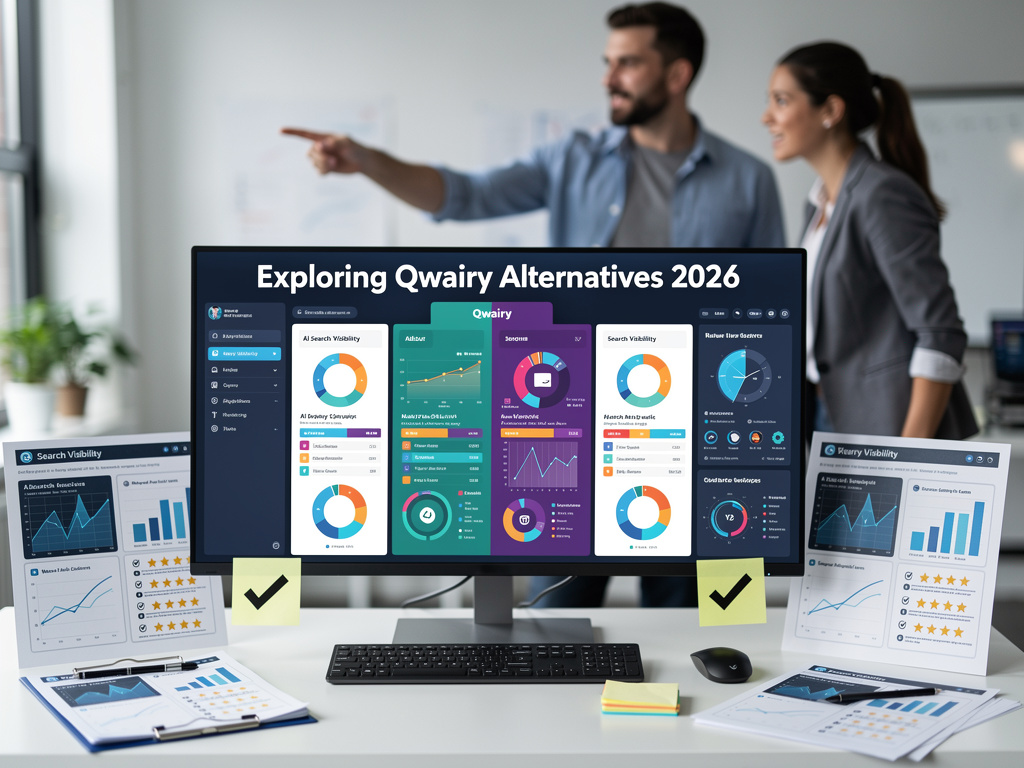
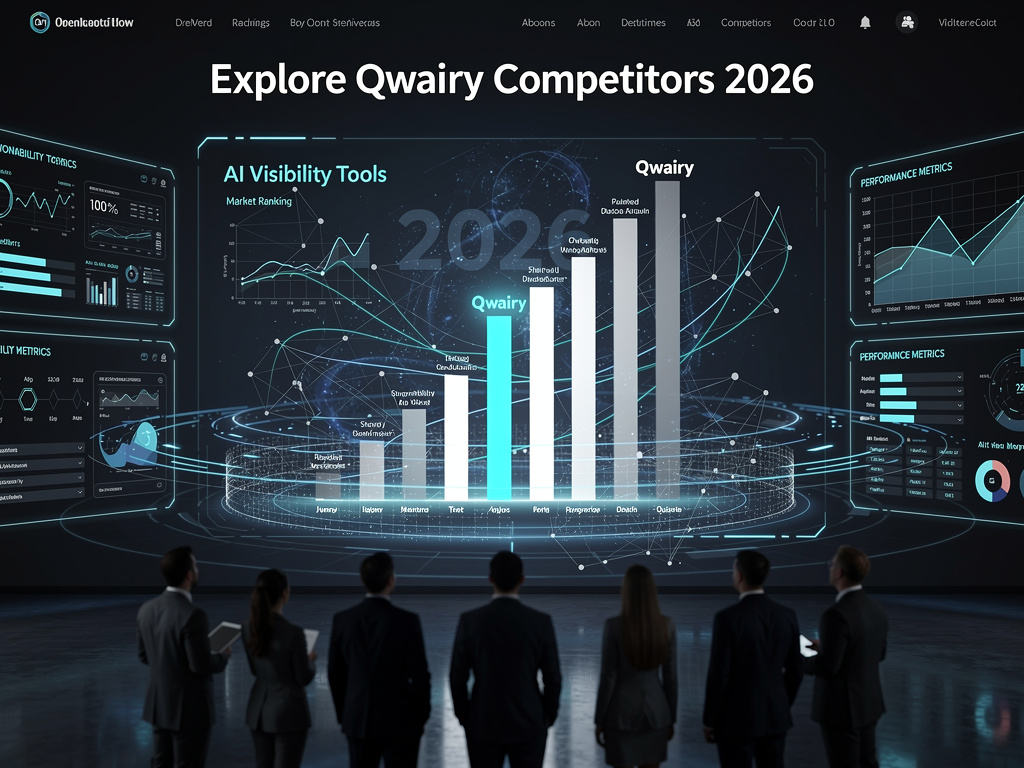
Best Qwairy Alternatives in 2026: 20 Tools to Track Your AI Search Visibility
If you’re looking for ways to see how your brand shows up in AI search results, you’ve probably heard of Qwairy. It’s a solid tool for tracking AI visibility. But it’s not your only option. The market has exploded with competitors, each offering different features and price points.
This guide breaks down 20 Qwairy alternatives worth your attention in 2026. We’ll look at each tool’s strengths, weaknesses, pricing, and best use cases. Whether you’re a solo marketer or running enterprise SEO, there’s something here for you.
We reviewed these tools based on real user feedback and hands-on testing. You’ll find detailed comparisons, a feature breakdown table, and honest takes on what works and what doesn’t. Let’s dig in.
Why Look for Qwairy Substitutes in 2026?
AI search is changing fast. ChatGPT, Perplexity, Claude, and Google’s AI Overviews now answer questions that used to send traffic to websites. Brands need to know where they stand in these AI responses.
Qwairy does this job well. It tracks brand mentions across AI platforms. It shows you when AI assistants recommend your products or services. But some teams need more features. Others want lower prices. Many prefer different reporting styles.
Common reasons people switch from Qwairy:
- Pricing doesn’t fit their budget
- Missing features they need
- Interface feels clunky
- Customer support issues
- Need better integrations
- Want more detailed analytics
The good news? You have options. Lots of them. Some focus purely on AI visibility tracking. Others combine it with traditional SEO tools. A few take entirely different approaches to the same problem.
How We Evaluated These Qwairy Competitors
We didn’t just list random tools. Each alternative went through the same review process. Here’s what we looked at:
Core Features: Does it track AI search visibility? Which AI platforms does it monitor? How deep is the analysis?
Ease of Use: Can a non-technical marketer figure it out? How’s the onboarding? Is the dashboard intuitive?
Pricing: What does it cost? Is there a free tier? How does pricing scale with usage?
Reporting: What kind of reports can you generate? Are they customizable? Can you export data?
Integrations: Does it connect with other tools you use? APIs available? Works with your existing stack?
Support: How responsive is the team? Documentation quality? Training resources available?
Each tool got scored on these criteria. We also noted what type of user each tool fits best. A startup’s needs differ from an enterprise’s needs.
1. Whitebox: Enterprise AI Visibility Tracking
Whitebox positions itself as the enterprise solution for AI search monitoring. It goes beyond basic tracking to offer deep analytics on how AI systems perceive your brand.
What It Does Well:
The platform monitors brand mentions across all major AI assistants. It tracks ChatGPT, Claude, Perplexity, Gemini, and Copilot. You get real-time alerts when your brand appears in AI responses.
What sets Whitebox apart is its competitive analysis. You can track how competitors show up in AI results compared to your brand. The sentiment analysis feature tells you if mentions are positive, negative, or neutral.
Key Features:
- Multi-platform AI monitoring
- Competitor benchmarking
- Sentiment analysis for AI mentions
- Custom alert system
- API access for custom integrations
- White-label reporting options
Pricing: Whitebox starts at $299/month for small teams. Enterprise plans run $1,000+ monthly with custom features. They offer a 14-day trial.
Best For: Large companies with dedicated SEO teams. Agencies managing multiple client accounts. Brands in competitive industries needing detailed competitive intelligence.
Drawbacks: The price puts it out of reach for small businesses. The interface has a learning curve. Some features feel overkill for simple tracking needs.
2. Profound: Deep AI Search Analytics
Profound takes a data-heavy approach to AI visibility. It’s built for teams who want numbers, charts, and actionable metrics rather than surface-level insights.
What Makes It Different:
This tool digs into the why behind your AI visibility. It doesn’t just tell you that you appeared in a ChatGPT response. It shows you which content on your site likely triggered that mention.
The attribution modeling is strong. Profound connects AI mentions to specific pages, blog posts, or product descriptions. This helps you understand what content strategies actually work for AI search.
Standout Features:
- Content attribution for AI mentions
- Historical trend analysis
- Query categorization and clustering
- Share of voice calculations
- Recommendation tracking
- Integration with Google Analytics
Pricing: Plans start at $149/month. The professional tier at $349/month adds API access and more tracking capacity. Enterprise pricing is custom.
Best For: Content teams wanting to improve their AI visibility. Data-driven marketers who need attribution. Companies investing heavily in content marketing.
Drawbacks: The reporting can feel overwhelming at first. Setup takes longer than simpler tools. Some users report occasional data delays.
3. Otterly AI: Simple AI Visibility Monitoring
Otterly AI strips away complexity. It’s the tool for people who want straightforward AI tracking without drowning in features they won’t use.
The Approach:
You enter your brand name and key competitors. Otterly scans AI platforms daily and sends you email updates. The dashboard shows simple visualizations of your visibility over time.
The tool focuses on actionable insights. Instead of hundreds of data points, you get clear recommendations. “Your competitor X is appearing more often in responses about topic Y” type alerts.
Core Features:
- Daily AI platform scans
- Email digest reports
- Simple visualization dashboard
- Competitor comparison (up to 5)
- Mobile-friendly interface
- Slack notifications
Pricing: Otterly AI offers a free tier for tracking one brand. Paid plans start at $49/month for more brands and features. Teams pay $129/month.
Best For: Small businesses just starting with AI visibility. Marketers who want quick insights without complexity. Budget-conscious teams.
Drawbacks: Limited depth in analytics. No API access on lower tiers. Fewer AI platforms monitored than enterprise options.
4. Peec AI: Visual AI Search Tracking
Peec AI stands out with its visual approach to AI visibility tracking. When compared directly to Qwairy, it offers a more visual and intuitive experience for understanding your AI search presence.
What You Get:
The dashboard uses heat maps and visual graphs to show where your brand appears. Color coding helps you quickly spot trends. Green means you’re gaining visibility. Red signals declining mentions.
Peec AI captures screenshots of AI responses featuring your brand. This visual proof helps in reporting to stakeholders who want to see actual examples.
Key Capabilities:
- Visual heat map dashboards
- Screenshot capture of AI mentions
- Trend visualization over time
- Category-based tracking
- PDF report generation
- Team collaboration features
Pricing: Starts at $79/month for basic tracking. Professional plans at $179/month add more keywords and team members. Agency plans available with volume discounts.
Best For: Visual learners who prefer graphical data. Teams that present to non-technical stakeholders. Agencies creating client reports.
Drawbacks: Less raw data export options. Some advanced metrics missing. Screenshot storage has limits on lower plans.
5. AthenaHQ: AI Brand Intelligence Platform
AthenaHQ goes beyond visibility tracking. It positions itself as a complete AI brand intelligence platform that helps you understand and influence how AI systems perceive your brand.
The Bigger Picture:
This tool tracks not just mentions but context. It analyzes the tone of AI responses about your brand. It identifies which topics trigger positive versus negative associations.
AthenaHQ also offers recommendations for improving your AI presence. The platform suggests content changes and messaging tweaks based on its analysis.
Features That Matter:
- Brand perception analysis
- Topic association mapping
- Content optimization suggestions
- Crisis alert system
- Multi-language support
- Custom reporting builder
Pricing: AthenaHQ is premium-priced. Plans start at $399/month. Enterprise features require custom pricing discussions. They offer quarterly payment discounts.
Best For: Brands concerned about AI reputation. PR teams monitoring brand perception. Companies in sensitive industries needing close monitoring.
Drawbacks: High price point. Overkill for simple tracking needs. Some features still in beta.
6. Goodie AI: Budget-Friendly AI Tracking
Goodie AI entered the market to serve smaller businesses. It offers core AI visibility tracking at prices accessible to solopreneurs and small teams.
The Value Proposition:
You won’t get every feature here. But you’ll get the basics done well at a fraction of enterprise prices. The tool tracks your brand across ChatGPT, Perplexity, and Claude.
Weekly reports land in your inbox with clear summaries. The dashboard is clean and loads fast. No frills, just function.
What’s Included:
- Basic AI platform monitoring
- Weekly email reports
- Simple trend graphs
- Up to 3 competitor tracking
- Keyword alert system
- Basic export options
Pricing: Free plan available with limited features. Paid plans start at just $29/month. The highest tier tops out at $99/month.
Best For: Freelancers and solo consultants. Small businesses on tight budgets. Anyone wanting to try AI tracking without big investment.
Drawbacks: Limited feature depth. Slower update frequency than premium tools. Support is email-only.
7. Bluefish AI: Automated AI Search Analysis
Bluefish AI focuses on automation. It runs continuous analysis and takes action on your behalf, making it popular with teams who want hands-off monitoring.
The Automation Angle:
Set up your tracking parameters once. Bluefish handles the rest. It identifies opportunities, spots threats, and sends detailed reports without daily management from you.
The tool integrates with project management software. When it finds something noteworthy, it can create tasks in Asana, Monday, or Notion automatically.
Automation Features:
- Continuous background monitoring
- Auto-generated task creation
- Scheduled report delivery
- Smart alert prioritization
- Workflow integrations
- Custom automation rules
Pricing: Bluefish AI starts at $199/month. The automation features require the $349/month tier. Custom enterprise solutions available.
Best For: Busy marketing teams wanting passive monitoring. Companies with established workflows needing integration. Teams preferring automated insights.
Drawbacks: Initial setup is complex. Automation rules take time to fine-tune. Mid-range pricing without free tier.
8. Scrunch: Social and AI Visibility Combined
Scrunch started as a social media analytics platform. It’s now expanded into AI visibility tracking, offering a combined view of your brand’s digital presence.
The Combined Approach:
See your social media performance alongside AI visibility in one dashboard. This unified view helps you understand your total digital footprint.
Scrunch correlates social content performance with AI mentions. It identifies which social posts lead to better AI visibility. This connection isn’t something standalone AI tools typically offer.
Dual Capabilities:
- Social media analytics
- AI visibility tracking
- Cross-platform correlation
- Influencer identification
- Content performance analysis
- Unified reporting
Pricing: Social-only plans start at $99/month. Adding AI tracking brings the price to $249/month. Bundle discounts available for annual billing.
Best For: Brands active on social media wanting consolidated analytics. Marketing teams managing multiple channels. Companies needing social plus AI insights.
Drawbacks: AI tracking less deep than dedicated tools. Can feel bloated if you only need AI features. Higher price for the combined offering.
9. Brandlight: Real-Time AI Mention Alerts
Brandlight focuses on speed. It claims the fastest alert system for AI mentions, getting notifications to you within minutes of your brand appearing in AI responses.
Speed as a Feature:
When someone asks ChatGPT about your industry and your brand gets mentioned, Brandlight aims to tell you within 5 minutes. This speed helps with PR and reputation management.
The tool also offers historical data, but real-time alerting is its main selling point. It’s built for brands that need to know immediately when they’re being discussed.
Real-Time Features:
- Sub-5-minute alert delivery
- Multiple notification channels
- Context capture with each alert
- Priority filtering options
- Mobile app for on-the-go alerts
- Team notification distribution
Pricing: Real-time monitoring starts at $179/month. Higher tiers with more keywords cost $379/month. Enterprise pricing includes dedicated support.
Best For: PR teams needing fast response capabilities. Brands in crisis-prone industries. Companies requiring immediate awareness of brand mentions.
Drawbacks: Analytics less robust than competitors. Speed focus means some depth sacrifice. Higher price for the speed premium.
10. Writesonic: AI Content Creation with Visibility Insights
Writesonic is primarily known as an AI writing tool. But it now includes features for understanding how your content performs in AI search, making it a two-in-one solution.
Content Plus Tracking:
Create content with Writesonic. Then see how it performs in AI search results. This feedback loop helps you improve your AI visibility through better content creation.
The tool analyzes your existing content against competitors appearing in AI responses. It suggests improvements to increase your chances of getting mentioned.
Combined Features:
- AI content generation
- Content performance tracking
- AI visibility analysis
- SEO optimization suggestions
- Competitor content analysis
- Brand voice customization
Pricing: Free tier with limited generations. Paid plans start at $19/month for content creation. Full analytics require the $49/month plan.
Best For: Content teams needing creation and tracking. Budget-conscious users wanting dual functionality. Small businesses without separate tool budgets.
Drawbacks: AI tracking features less mature than dedicated tools. Primary focus remains content creation. Some analytics feel tacked on.
11. Trakkr: Influencer and AI Visibility Platform
Trakkr built its reputation in influencer marketing. Its expansion into AI visibility tracking creates an interesting combination for brands using both strategies.
The Influencer Connection:
See which influencers get mentioned alongside your brand in AI responses. Understand how influencer partnerships affect your AI visibility. This crossover insight is unique.
The platform also helps identify potential influencer partners based on AI mention patterns. It shows who AI systems associate with your industry.
Platform Capabilities:
- Influencer discovery and tracking
- AI visibility monitoring
- Brand-influencer correlation
- Campaign performance analysis
- ROI tracking across channels
- Comprehensive reporting suite
Pricing: Trakkr starts at $199/month for small teams. Agency plans begin at $499/month. Full AI tracking requires higher tiers.
Best For: Brands with active influencer programs. Marketing teams managing partnerships. Companies wanting influencer plus AI insights.
Drawbacks: AI features are add-ons, not core. Pricey if you don’t need influencer tracking. Some overlap with other tools you might use.
12. Azoma: Technical AI Visibility Analysis
Azoma appeals to technical SEO teams. It provides detailed data about why AI systems mention certain brands, with technical analysis of content signals.
The Technical Depth:
This tool reverse-engineers AI responses. It analyzes what content characteristics lead to AI mentions. Schema markup, content structure, and technical factors get examined.
Azoma gives you technical recommendations. Not just “create better content” but specific guidance like “add FAQ schema to your product pages” or “improve your internal linking structure.”
Technical Features:
- Content structure analysis
- Schema markup recommendations
- Technical SEO auditing
- AI crawler simulation
- Site architecture review
- Custom technical reports
Pricing: Azoma starts at $299/month. Technical analysis features require the $499/month tier. API access adds $200/month.
Best For: Technical SEO professionals. Development teams building for AI visibility. Large sites needing technical guidance.
Drawbacks: Too complex for non-technical users. Higher learning curve. Premium pricing for full features.
13. Gauge: AI Visibility Benchmarking Tool
Gauge positions itself as the benchmarking specialist. It tells you how your AI visibility compares to industry averages and direct competitors.
The Benchmarking Focus:
Beyond tracking your own visibility, Gauge shows where you stand relative to others. It maintains industry benchmarks so you know if your numbers are good, average, or poor.
The tool provides percentile rankings. You might learn you’re in the top 20% for AI visibility in your sector. Or discover you’re lagging behind industry norms.
Benchmarking Features:
- Industry benchmark data
- Percentile ranking reports
- Competitor group analysis
- Trend comparison over time
- Gap analysis tools
- Custom peer group creation
Pricing: Gauge costs $179/month for standard benchmarking. Premium industry data requires $349/month. Custom benchmarking studies available.
Best For: Competitive analysis teams. Marketers needing industry context. Companies reporting to stakeholders who want comparative data.
Drawbacks: Benchmarks limited in niche industries. Some benchmark data is self-reported. Less focus on actionable improvements.
14. LLM Pulse: Multi-Model AI Tracking
LLM Pulse tracks visibility across every major large language model. While others focus on popular AI assistants, this tool monitors the underlying models powering them.
The Model-Level View:
GPT-4, Claude 3, Gemini, Llama, and Mistral all have different training data and outputs. LLM Pulse shows how your brand appears across each model, not just consumer products built on them.
This matters because different applications use different models. Understanding your presence at the model level gives you a complete picture of AI visibility.
Model Tracking Features:
- Multi-model monitoring
- Model version tracking
- Response variation analysis
- Training data inference
- Model update alerts
- Cross-model comparison
Pricing: LLM Pulse starts at $249/month. Full model coverage costs $449/month. Research-grade analysis requires enterprise pricing.
Best For: Technical teams tracking AI at the model level. Researchers studying AI systems. Companies building AI products needing model insights.
Drawbacks: Too technical for basic marketing needs. Some model access is delayed. Requires understanding of AI model landscape.
15. Semrush: Traditional SEO Giant Adding AI Features
Semrush needs little introduction. This traditional SEO powerhouse has added AI visibility tracking to its existing feature set, making it a consideration for current Semrush users.
The All-in-One Approach:
If you already use Semrush for keyword research, backlink analysis, and traditional SEO, adding AI tracking keeps everything in one place. No need for multiple tool subscriptions.
The AI features integrate with existing Semrush capabilities. You can see how your traditional SEO efforts correlate with AI visibility improvements.
Semrush AI Features:
- AI search visibility tracking
- Integration with existing SEO tools
- Keyword to AI mention correlation
- Competitor AI analysis
- Combined reporting
- Position tracking for AI results
Pricing: Semrush plans start at $129.95/month. AI features are being rolled into higher tiers. Full AI tracking requires the Guru plan at $249.95/month.
Best For: Existing Semrush users wanting AI tracking. Teams preferring all-in-one platforms. Traditional SEOs expanding into AI visibility.
Drawbacks: AI features less mature than dedicated tools. Can feel bloated with features you won’t use. Premium pricing for the full package.
16. Searchable: AI-Focused Search Analytics
Searchable built its platform specifically for the AI search era. It doesn’t carry legacy features from traditional SEO. Everything focuses on AI visibility.
Born for AI Search:
No retrofitted features here. Searchable was designed from scratch for AI visibility tracking. The interface reflects modern AI search patterns rather than traditional search paradigms.
The tool prioritizes conversational query tracking. It understands that AI search involves natural language questions, not just keyword searches.
AI-Native Features:
- Conversational query tracking
- Natural language analysis
- AI response format tracking
- Citation source identification
- Answer quality scoring
- Recommendation position tracking
Pricing: Searchable starts at $149/month. Professional plans cost $299/month. Enterprise features require custom pricing discussions.
Best For: Teams focused purely on AI visibility. Companies starting fresh with AI tracking. Marketers who want modern interfaces.
Drawbacks: No traditional SEO features if you need them. Relatively newer platform. Some features still in development.
17. Spotlight: Agency-Focused AI Visibility Tool
Spotlight targets agencies managing multiple clients. Its multi-tenant architecture and white-label options make it ideal for agency workflows.
Built for Agencies:
Manage dozens of client brands from one dashboard. Generate white-label reports with your agency branding. Control client access to their specific data.
Spotlight includes client-facing dashboards. Your clients can log in and see their AI visibility without accessing other client data or your internal analytics.
Agency Features:
- Multi-client management
- White-label reporting
- Client portal access
- Bulk operations
- Agency pricing tiers
- Account hierarchy management
Pricing: Spotlight charges per client managed. Base platform costs $199/month plus $29/client. Volume discounts available for larger agencies.
Best For: Marketing agencies with multiple clients. Consultants managing brand portfolios. Freelancers with several ongoing accounts.
Drawbacks: Overkill for single-brand tracking. Pricing adds up with many clients. Some features are agency-specific only.
18. Citation Junction: AI Citation and Source Tracking
Citation Junction focuses on a specific angle: where AI systems source their information about your brand. It tracks the content AI cites when mentioning you.
The Citation Focus:
When AI mentions your brand, it often cites sources. Citation Junction identifies these sources. You learn which of your pages AI systems consider authoritative.
This insight helps you create more citable content. You understand what AI systems look for when building responses about your industry or products.
Citation Tracking Features:
- Source citation identification
- Citable content analysis
- Competitor source tracking
- Authority scoring
- Content gap identification
- Citation improvement recommendations
Pricing: Citation Junction starts at $119/month. Advanced citation analysis costs $239/month. Enterprise reporting requires custom quotes.
Best For: Content strategists improving AI visibility. PR teams focused on source authority. Brands wanting to be cited more often.
Drawbacks: Narrower focus than general tools. Citation data can be incomplete. Some AI platforms don’t show sources clearly.
19. AirOps: AI Workflow and Visibility Platform
AirOps started as a no-code AI workflow builder. It’s evolved to include visibility tracking, creating a platform where you can both monitor and improve your AI presence.
Workflow Plus Monitoring:
Build automated workflows that improve your AI visibility. Create content, publish it, and track how it affects your AI mentions. The feedback loop is built into the platform.
AirOps connects with multiple data sources. It pulls in website analytics, social metrics, and AI visibility data into unified workflows.
Combined Capabilities:
- No-code workflow builder
- AI visibility tracking
- Content automation
- Multi-source data integration
- Custom dashboard creation
- Team collaboration tools
Pricing: AirOps offers a free tier with limited workflows. Paid plans start at $99/month. Full AI visibility features require $249/month plans.
Best For: Teams wanting automation and tracking combined. Technical marketers comfortable with workflow builders. Companies with complex marketing operations.
Drawbacks: Complexity for simple tracking needs. Learning curve for workflow features. AI tracking isn’t the primary focus.
20. iGEO: Local AI Visibility Specialist
iGEO targets local businesses concerned about AI visibility. It tracks how AI systems recommend local services and businesses in geographic queries.
Local Focus:
When someone asks AI “best pizza near me” or “plumber in Chicago,” iGEO tracks these local AI responses. It monitors your visibility in location-based AI queries.
The tool connects to Google Business Profile data. It correlates your local SEO efforts with AI visibility in geographic searches.
Local AI Features:
- Geographic query tracking
- Local competitor analysis
- Google Business Profile integration
- Location-specific reporting
- Multi-location management
- Local citation monitoring
Pricing: iGEO starts at $79/month per location. Multi-location plans offer discounts. Enterprise local brands get custom pricing.
Best For: Local businesses and franchises. Multi-location brands. Local SEO agencies managing physical businesses.
Drawbacks: Limited use for national or global brands. Some features overlap with local SEO tools. Geographic data can lag behind real queries.
Feature Comparison Table: Qwairy Alternative Options
| Tool | Starting Price | Best For | AI Platforms Tracked | Free Trial | Ease of Use |
|---|---|---|---|---|---|
| Whitebox | $299/month | Enterprise teams | All major | 14 days | Medium |
| Profound | $149/month | Content teams | ChatGPT, Claude, Perplexity | 7 days | Medium |
| Otterly AI | $49/month | Small businesses | Top 3 platforms | Free tier | Easy |
| Peec AI | $79/month | Visual reporters | All major | 14 days | Easy |
| AthenaHQ | $399/month | Brand reputation | All major | Demo only | Medium |
| Goodie AI | $29/month | Budget users | Top 3 platforms | Free tier | Easy |
| Bluefish AI | $199/month | Automation needs | All major | 14 days | Medium |
| Scrunch | $249/month | Social plus AI | Top 5 platforms | 14 days | Medium |
| Brandlight | $179/month | Real-time alerts | All major | 7 days | Easy |
| Writesonic | $49/month | Content creation plus tracking | Limited | Free tier | Easy |
| Trakkr | $199/month | Influencer brands | Top 3 platforms | Demo only | Medium |
| Azoma | $299/month | Technical SEO | All major | 14 days | Hard |
| Gauge | $179/month | Benchmarking | Top 5 platforms | 14 days | Medium |
| LLM Pulse | $249/month | Model-level tracking | All models | 7 days | Hard |
| Semrush | $249.95/month | All-in-one SEO | Top 3 platforms | 7 days | Medium |
| Searchable | $149/month | AI-native tracking | All major | 14 days | Easy |
| Spotlight | $199/month base | Agencies | All major | 14 days | Medium |
| Citation Junction | $119/month | Citation tracking | Top 5 platforms | 7 days | Easy |
| AirOps | $99/month | Workflow automation | Limited | Free tier | Hard |
| iGEO | $79/location | Local businesses | Top 3 platforms | 14 days | Easy |
How to Choose the Right Qwairy Replacement for Your Needs
With 20 options on the table, picking the right tool feels overwhelming. Here’s a framework to narrow your choices.
Consider Your Budget First:
If you’re spending under $50/month, your options are Goodie AI, Otterly AI, or Writesonic. These tools cover basics without breaking the bank.
Mid-range budgets of $100-300/month open up most options. You can access solid features from Profound, Peec AI, Searchable, or Citation Junction.
Enterprise budgets above $300/month unlock Whitebox, AthenaHQ, and Azoma. These tools offer the deepest analysis but require the investment to access them.
Match Tools to Your Use Case:
- Solo marketers: Otterly AI, Goodie AI, Writesonic
- Content teams: Profound, Writesonic, Citation Junction
- Technical SEOs: Azoma, LLM Pulse, Semrush
- Agencies: Spotlight, Whitebox, Peec AI
- Local businesses: iGEO, Goodie AI
- Enterprise brands: Whitebox, AthenaHQ, Gauge
Check Platform Coverage:
Not all tools track the same AI platforms. If you specifically care about Claude or Perplexity, verify the tool you’re considering actually monitors them. Some budget options only track ChatGPT.
Test Before Committing:
Most tools offer free trials or demos. Take advantage. Set up tracking for your brand and see how the interface feels. Check if the data makes sense. Look at the reporting formats.
Common Mistakes When Switching AI Visibility Tools
People make predictable errors when changing from Qwairy to alternatives. Avoid these pitfalls.
Mistake 1: Ignoring Data Export
Before switching, export all your historical data from Qwairy. You’ll want to compare trends after the move. Some tools import this data; others don’t. Plan for continuity.
Mistake 2: Choosing Features You Won’t Use
Enterprise tools have impressive feature lists. But if you’re a two-person team, you won’t use half of them. Pay for what you’ll actually use, not what sounds impressive.
Mistake 3: Skipping the Trial Period
Even if a tool has great reviews, it might not fit your workflow. Always test thoroughly before committing to annual contracts or expensive plans.
Mistake 4: Not Training Your Team
New tools require learning. Budget time for your team to get comfortable with the new platform. Most vendors offer training resources. Use them.
Mistake 5: Forgetting Integration Needs
Check if the new tool connects with your existing stack. Reporting tools, project management software, and analytics platforms should work together smoothly.
Setting Up Your New AI Visibility Tool
Once you’ve chosen a Qwairy alternative, proper setup matters. Here’s a checklist for getting started.
Initial Configuration:
- Add your brand name and common variations
- Enter your website URL and key landing pages
- List your top 3-5 competitors for tracking
- Define the keywords and topics you care about
- Set up alert preferences and notification channels
- Configure reporting schedules
Verification Steps:
- Run a manual test query and see if the tool catches it
- Check that competitor data looks accurate
- Verify email notifications arrive properly
- Test any API connections you’ve set up
- Review the first automated report for accuracy
Ongoing Maintenance:
AI visibility tracking isn’t set-and-forget. Review your settings monthly. Add new competitors as they emerge. Adjust keywords as your focus areas change. Keep the tool aligned with your evolving strategy.
The Future of AI Search Visibility Tracking
The AI visibility space is evolving rapidly. Here’s where things are heading.
More AI Platforms to Track:
New AI assistants launch regularly. The tools that survive will be those that quickly add coverage for emerging platforms. Look for vendors with track records of fast platform additions.
Better Attribution:
Future tools will better connect AI mentions to business outcomes. Did that ChatGPT mention lead to website traffic? Did it result in conversions? Attribution is improving.
Integration with Content Creation:
The line between monitoring and action is blurring. More tools will combine tracking with content optimization features. Writesonic and AirOps are early examples of this trend.
Pricing Pressure:
As competition increases, prices will likely drop. What costs $299/month today might cost $149/month in a year. New entrants will undercut established players.
AI Model Transparency:
As AI companies face pressure for transparency, tracking tools will gain better access to understanding why certain content gets cited. This will improve the quality of recommendations these tools provide.
Conclusion
Finding the right Qwairy alternative depends on your specific needs, budget, and team capabilities. Budget options like Goodie AI and Otterly AI work well for small businesses. Enterprise tools like Whitebox and AthenaHQ serve larger organizations with complex needs. Specialized tools like iGEO and Citation Junction address specific use cases.
Test multiple options before committing. Most tools offer free trials. Use them to find the best fit for your workflow and goals.
FAQs About Qwairy Alternatives and AI Visibility Tools
| What’s the cheapest Qwairy alternative that still works well? | Goodie AI at $29/month and Otterly AI at $49/month offer solid basic tracking at budget-friendly prices. Both include free tiers for testing. |
| Which Qwairy substitute is best for agencies managing multiple clients? | Spotlight is built specifically for agencies with its multi-client management, white-label reporting, and client portal features. Whitebox also works well for agency use. |
| Can I track competitor AI visibility with these tools? | Yes. Most tools on this list include competitor tracking. Whitebox, Gauge, and Profound offer particularly strong competitive analysis features. |
| Do these Qwairy replacements track all AI platforms? | Coverage varies. Enterprise tools like Whitebox track all major AI assistants. Budget tools typically focus on ChatGPT, Claude, and Perplexity. Check each tool’s platform list before subscribing. |
| How long does it take to see results after switching AI visibility tools? | Most tools start showing data within 24-48 hours of setup. Full historical comparison takes 2-4 weeks as the new tool accumulates data for trending. |
| Should I choose a standalone AI visibility tool or an all-in-one platform like Semrush? | If you already use Semrush for traditional SEO, its AI features might be convenient. For dedicated AI tracking with more depth, standalone tools like Profound or Searchable typically offer more features. |
| What’s the best Qwairy alternative for technical SEO teams? | Azoma provides the most technical analysis with content structure reviews and schema recommendations. LLM Pulse offers model-level tracking for technically sophisticated teams. |
| Can I import my Qwairy data into a new tool? | Some tools like Whitebox and Profound offer data import features. Check with each vendor about import capabilities before exporting your Qwairy data. |
| Which tool has the fastest alerts for brand mentions in AI? | Brandlight specializes in real-time alerting with sub-5-minute notification delivery. This makes it the fastest option for teams needing immediate awareness. |
| Are there free Qwairy alternatives available? | Goodie AI, Otterly AI, Writesonic, and AirOps all offer free tiers with limited features. These work well for testing or for businesses with very basic tracking needs. |



 Stack Insight is intended to support informed decision-making by providing independent information about business software and services. Some product details, including pricing, features, and promotional offers, may be supplied by vendors or partners and can change without notice.