
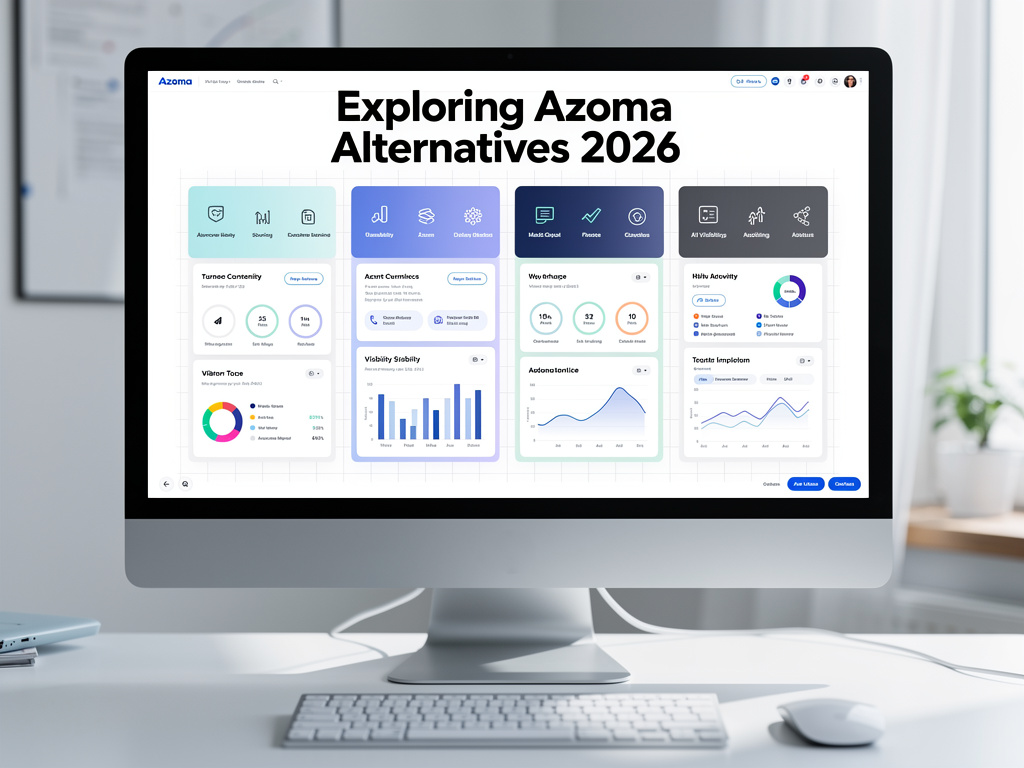
Best Azoma Alternatives for AI Search Visibility in 2026
AI search is changing how people find brands online. ChatGPT, Perplexity, Claude, and Google AI Overviews now answer questions directly. Your content needs to show up in these AI-generated responses, not just traditional search results.
Azoma helped teams track their visibility across AI search engines. But it’s not the only option out there. Some teams need cheaper tools. Others want deeper analytics or better integration with their existing SEO workflow.
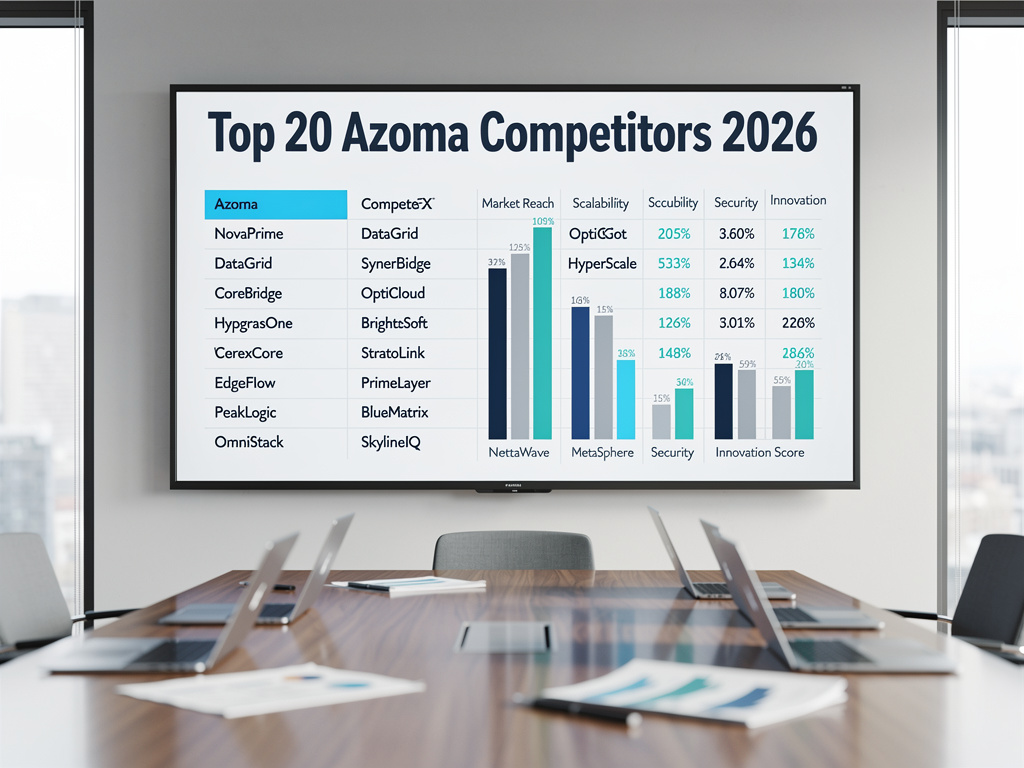
This guide covers 20 Azoma alternatives for 2026. We’ll break down each tool’s features, pricing, strengths, and weaknesses. You’ll learn which platforms track multiple AI engines, which focus on optimization, and which fit different budget levels.
Whether you’re a solo marketer with $50 a month or an enterprise team with thousands to spend, there’s a tool here for you. Let’s dig in.
Why Look for Azoma Competitors in 2026?
AI search visibility tools have grown fast. The market now offers dozens of options with different approaches. Some focus purely on monitoring. Others help you fix visibility gaps with content recommendations and citation building.
Price matters. Azoma’s pricing doesn’t fit every budget. Startups and SMBs often need lighter tools. Enterprise teams sometimes want more features than basic monitoring provides.
Coverage varies. Not every tool tracks the same AI engines. Some only monitor ChatGPT. Others cover 8 or more platforms including Perplexity, Claude, Gemini, and Copilot.
Features differ. Pure monitoring shows where you stand. Optimization tools help you improve. Some platforms combine both. Your needs determine the right fit.
Here’s what we evaluated for each alternative:
- AI engine coverage – Which platforms does it track?
- Core features – Monitoring, optimization, or both?
- Pricing – Entry cost and what you get at each tier
- Ease of use – Learning curve and interface quality
- Best for – Which teams benefit most
- Limitations – Where the tool falls short
Whitebox: Enterprise-Grade AI Visibility Analytics
Whitebox positions itself as a full analytics platform for AI search. It goes beyond basic monitoring to offer deep data on how AI models reference your brand and content.
Key Features
The platform tracks brand mentions across major AI assistants. It monitors ChatGPT, Perplexity, Claude, Gemini, and Google AI Overviews. You get historical data to spot trends over time.
- Brand mention tracking across AI platforms
- Sentiment analysis for AI-generated responses
- Competitor benchmarking dashboards
- API access for custom integrations
- White-label reporting for agencies
Pricing and Plans
Whitebox uses custom pricing based on tracking volume. Most mid-market companies pay between $300 and $600 monthly. Enterprise deals go higher with dedicated support.
Strengths
Data depth stands out. Whitebox captures not just whether you appear, but how you appear. Sentiment scores show if AI describes your brand positively or negatively.
The competitor benchmarking helps teams understand their position relative to rivals. You can track 5 to 10 competitors alongside your own brand.
Limitations
Whitebox focuses on monitoring, not optimization. It tells you what’s happening but doesn’t generate content or build citations. Teams need separate tools for the fix-it work.
Pricing puts it out of reach for small businesses. There’s no starter tier under $200.
Best For
Mid-market and enterprise marketing teams who need detailed analytics. Agencies serving multiple clients benefit from white-label features. If you have separate content tools and just need visibility data, Whitebox delivers.
Profound: The Category Leader for Multi-Engine Tracking
Profound built its reputation on comprehensive AI engine coverage. It tracks visibility across ChatGPT, Perplexity, Claude, Copilot, Gemini, and Google AI Overviews from one dashboard.
Key Features
The platform monitors your brand across up to 8 AI engines. It captures citations, tracks ranking changes, and measures share of voice in AI responses.
- Multi-engine coverage (8 AI platforms)
- Citation intelligence and tracking
- Real-time visibility scoring
- Geo-specific monitoring by market
- Prompt-level analysis
- Historical trend data
Pricing and Plans
Profound offers tiered pricing starting at $99 monthly for Starter. But Starter only tracks ChatGPT. Real multi-engine coverage begins at $399 monthly, which prices out many SMBs.
| Plan | Price | AI Engines |
|---|---|---|
| Starter | $99/month | ChatGPT only |
| Professional | $399/month | 6+ engines |
| Enterprise | Custom | Full coverage |
Strengths
Breadth of coverage sets Profound apart. Few tools match its reach across AI platforms. The data quality from each engine is strong and reliable.
Citation intelligence helps teams understand which sources AI models pull from. This guides link building and content placement strategy.
Limitations
The price jump from $99 to $399 frustrates teams who want multi-engine data without enterprise budgets. Profound also focuses more on monitoring than optimization. You’ll need other tools to create content and fix gaps.
Best For
Teams with $400+ monthly budgets who need comprehensive AI visibility data. Brands competing across multiple AI platforms benefit most. If you only care about ChatGPT, cheaper options exist.
Otterly AI: Answer Engine Optimization Done Right
Otterly AI takes a different approach. Instead of just monitoring, it focuses on answer engine optimization (AEO). The platform helps you appear in AI responses, not just track whether you do.
Key Features
The tool combines visibility monitoring with content optimization. It tracks up to 8 LLMs and gives specific recommendations to improve your AI search presence.
- AI visibility tracking across 8 LLMs
- Citation intelligence and gap analysis
- AI content optimization suggestions
- Answer engine optimization tools
- Competitor citation monitoring
- Content briefs for AI visibility
Pricing and Plans
Otterly AI pricing starts lower than Profound for multi-engine coverage. Plans begin around $150 monthly with full LLM access available in mid-tier options.
Strengths
The optimization focus makes Otterly unique. It doesn’t just show you the problem. It helps fix it with actionable content recommendations.
Citation tooling identifies which sources AI models trust. You learn where to place content and build links for better visibility.
Limitations
The interface takes time to learn. New users report a steeper learning curve than simpler monitoring tools. Reporting customization is limited compared to enterprise platforms.
Best For
Marketing teams who want monitoring plus optimization in one place. Brands serious about answer engine optimization rather than just tracking. Content teams who need guidance on what to create.
Peec AI: Clean Monitoring at a Lower Price
Peec AI offers straightforward AI visibility monitoring without the complexity of larger platforms. At $95 monthly, it sits well below Profound’s multi-engine pricing.
Key Features
The platform tracks your brand across ChatGPT, Gemini, Perplexity, and Google AI Overviews. It uses real AI interfaces rather than APIs, so data reflects actual user experience.
- AI Visibility Score for your brand
- Citation monitoring and alerts
- Competitor benchmarking
- White-label reports for agencies
- Looker Studio integration
- API access for custom dashboards
Pricing and Plans
Peec AI starts at $95 monthly. This gets you multi-engine tracking that costs $399 at Profound. Higher tiers add more tracked queries and competitors.
Strengths
Value for money stands out. You get solid multi-engine coverage at a fraction of competitor prices. The interface is clean and easy to understand.
Tracking from real AI interfaces rather than APIs gives more accurate data. You see what actual users see when they query AI assistants.
Limitations
Peec AI focuses on monitoring, not optimization. It won’t generate content or tell you exactly what to fix. The feature set is lighter than enterprise tools.
Competitor tracking limits apply at lower tiers. You may need higher plans to benchmark against multiple rivals.
Best For
SMBs and startups who want multi-engine AI visibility without enterprise pricing. Agencies who need white-label reporting on a budget. Teams who already have content tools and just need monitoring.
AthenaHQ: Broad Coverage with Competitive Analysis
AthenaHQ targets teams who want deep competitive intelligence alongside AI visibility monitoring. At $295 monthly, it offers more features than basic monitors at a price below Profound.
Key Features
The platform combines AI search tracking with traditional competitive analysis. You monitor your brand and competitors across AI engines while also tracking their broader marketing activities.
- Multi-engine AI visibility tracking
- Competitive intelligence dashboards
- Brand mention monitoring
- Market share analysis
- Trend detection and alerts
- Custom reporting
Pricing and Plans
AthenaHQ pricing starts at $295 monthly. This sits between budget tools like Peec and premium options like Profound. Enterprise plans with custom features cost more.
Strengths
The competitive angle adds value. You don’t just see your own AI visibility. You understand how competitors perform and where they get cited.
Broader market intelligence helps with strategy beyond AI search. Teams get a fuller picture of their competitive position.
Limitations
The breadth of features can feel overwhelming. Teams who only need AI monitoring pay for competitive tools they may not use.
AI engine coverage doesn’t match Profound’s depth. Some newer AI platforms may not be included.
Best For
Marketing teams who want AI visibility plus competitive intelligence in one subscription. Brands in competitive markets who need to track rival strategies. Mid-market companies with $300 monthly budgets.
Goodie AI: Entry-Level AI Search Monitoring
Goodie AI provides basic AI visibility tracking for teams just starting with AI search optimization. The lower price point makes it accessible to smaller businesses.
Key Features
The tool offers straightforward brand monitoring across popular AI assistants. It focuses on core metrics without overwhelming users with advanced features.
- Brand mention tracking in AI responses
- Basic visibility scoring
- Simple competitor comparison
- Email alerts for mentions
- Monthly trend reports
Pricing and Plans
Goodie AI starts under $75 monthly. This makes it one of the most affordable options for teams testing AI visibility monitoring.
Strengths
Simplicity works for beginners. Teams new to AI search visibility won’t get lost in complex dashboards. The learning curve is minimal.
Pricing lets smaller businesses experiment without major commitment. You can test whether AI visibility monitoring matters for your brand before investing more.
Limitations
Feature depth doesn’t match more expensive tools. Advanced users will quickly outgrow it. AI engine coverage may be limited to major platforms only.
Optimization features are minimal or absent. It shows problems without helping fix them.
Best For
Small businesses testing AI visibility monitoring for the first time. Teams with limited budgets who need basic tracking. Brands who want to prove the value of AI search before investing more.
Bluefish AI: Focus on Content Recommendations
Bluefish AI combines monitoring with content strategy recommendations. It helps teams understand what content to create for better AI visibility.
Key Features
The platform analyzes AI responses to identify content gaps. It then suggests topics and formats that could improve your visibility in AI-generated answers.
- AI visibility monitoring
- Content gap analysis
- Topic recommendations
- Format suggestions (FAQ, how-to, etc.)
- Citation opportunity identification
- Content performance tracking
Pricing and Plans
Bluefish AI pricing falls in the mid-market range. Expect $200 to $350 monthly depending on tracking volume and features.
Strengths
The content angle helps teams act. Instead of just seeing visibility scores, you get specific guidance on what to create.
Topic recommendations come from actual AI response analysis. The platform shows what content AI models cite for relevant queries.
Limitations
Content suggestions require human judgment. Not every recommendation will fit your brand voice or strategy.
The tool doesn’t create content for you. It points to opportunities but you still need writers or other tools for execution.
Best For
Content marketing teams who need direction on what to produce. Brands with content resources who lack strategy guidance. Teams who want monitoring that leads directly to action.
Scrunch: Mid-Market Balance of Features and Price
Scrunch positions itself in the middle ground. At $250 monthly, it offers more than budget tools without the enterprise price tag of category leaders.
Key Features
The platform provides solid multi-engine coverage with decent depth on analytics. It balances monitoring with enough insights to guide strategy.
- Multi-engine AI visibility tracking
- Citation source identification
- Competitor benchmarking
- Trend analysis over time
- Custom reporting options
- Team collaboration features
Pricing and Plans
Scrunch starts at $250 monthly. This sits below Profound’s $399 while offering more depth than $95 options like Peec.
Strengths
Value positioning works well. Teams get meaningful features without overpaying. The price-to-feature ratio is balanced.
Team collaboration tools help larger marketing departments share insights. Reporting works for both internal and client presentations.
Limitations
It doesn’t excel in any single area. More specialized tools beat it on specific features. Jack-of-all-trades positioning may frustrate users with specific needs.
Advanced optimization features are limited. Teams wanting deep content guidance need additional tools.
Best For
Mid-market teams who want balanced features at a mid-range price. Companies outgrowing budget tools but not ready for enterprise platforms. Teams who need decent everything rather than excellent something.
Brandlight: Brand Intelligence Beyond AI Search
Brandlight takes a broader view of brand visibility. It monitors AI search alongside social mentions, review sites, and traditional search results.
Key Features
The platform offers unified brand monitoring across multiple channels. AI visibility is one component of a larger brand intelligence system.
- AI search visibility tracking
- Social media mention monitoring
- Review site tracking
- Traditional search visibility
- Unified brand health dashboard
- Reputation management tools
Pricing and Plans
Brandlight pricing starts around $200 monthly for basic packages. Full brand intelligence suites cost $400 to $600 monthly.
Strengths
Unified view helps brand managers. You don’t need separate tools for AI search, social, and reviews. One dashboard covers everything.
Reputation management features add value beyond visibility tracking. Teams can respond to issues across channels from one place.
Limitations
AI search monitoring may not be as deep as specialized tools. The broad focus means less depth in any single area.
Teams who only need AI visibility pay for features they won’t use. Pure SEO teams may find better fits elsewhere.
Best For
Brand managers who oversee total brand health across channels. Companies wanting unified monitoring without multiple subscriptions. Teams where AI search is one part of broader brand strategy.
Writesonic: Content Creation Meets AI Visibility
Writesonic started as an AI writing tool. It expanded into AI search visibility tracking, creating a unique combination of content creation and monitoring.
Key Features
The platform tracks AI visibility across 10 platforms while offering content creation tools. It follows what Writesonic calls the “AI Search Loop”: track, fix, prove.
- AI visibility tracking across 10 platforms
- Content creation and optimization
- Citation and link building guidance
- Dataset of 2 billion+ AI conversations
- Reddit and YouTube citation tracking
- Competitor outreach suggestions
Pricing and Plans
Writesonic offers various pricing tiers. AI search visibility features may require higher-tier plans. Expect $100 to $500 monthly depending on features and usage.
Strengths
The combination of monitoring and execution is rare. Most tools either track or create. Writesonic does both, closing the loop from problem to fix.
The massive dataset of real AI conversations provides deep insights. You see what AI learns from across the web, not just your own content.
Citation tracking extends beyond AI engines to Reddit threads and YouTube videos. This shows where AI models find information about competitors.
Limitations
Content quality from AI tools varies. Human editing remains necessary. The platform tries to do a lot, which can make it complex to learn.
Pricing for full features may exceed pure monitoring tools. Teams only wanting tracking might overpay.
Best For
Teams who want monitoring and content creation in one platform. Brands ready to act on visibility data immediately. Content teams who already use or would use AI writing tools.
Trakkr: Simple Tracking for Specific Use Cases
Trakkr offers focused AI visibility tracking without trying to be everything. It works well for teams with specific monitoring needs.
Key Features
The platform provides clean tracking dashboards for AI search performance. It focuses on core metrics that matter most for visibility decisions.
- AI search visibility monitoring
- Query-level tracking
- Visibility trend analysis
- Basic competitor comparison
- Alert notifications
- Export and reporting
Pricing and Plans
Trakkr pricing aims at affordability. Plans typically start under $150 monthly for standard tracking volumes.
Strengths
Focus keeps things simple. Teams get what they need without feature bloat. The interface is straightforward and quick to learn.
Query-level tracking helps teams understand specific search scenarios. You see exactly which questions return your brand.
Limitations
Feature depth is limited compared to enterprise tools. Advanced analytics aren’t available. Optimization guidance is minimal.
Best For
Small teams who want simple, affordable AI visibility tracking. Brands monitoring specific query categories. Teams who prefer focused tools over all-in-one platforms.
Qwairy: Question-Based AI Visibility Analysis
Qwairy focuses on the question side of AI search. It helps brands understand which questions trigger AI responses mentioning their brand.
Key Features
The platform analyzes AI responses to different question types. It identifies patterns in how AI answers questions related to your industry.
- Question-based visibility tracking
- Answer pattern analysis
- Industry question discovery
- Competitor answer comparison
- Question clustering
- Opportunity identification
Pricing and Plans
Qwairy offers tiered pricing based on question volume tracked. Entry plans start around $100 monthly.
Strengths
The question focus provides unique insights. You learn not just where you appear, but what questions lead users to find you.
Question discovery helps content strategy. You find new topics your audience asks about that you haven’t covered.
Limitations
The approach may not fit all use cases. Brand mention tracking is less emphasized than question analysis.
Traditional visibility metrics may be harder to find. Teams used to score-based dashboards need to adjust.
Best For
Content teams focused on answering customer questions. Brands wanting to understand the question landscape in their industry. Teams doing FAQ optimization for AI search.
Gauge and LLM Pulse: Specialized Monitoring Options
Gauge and LLM Pulse offer specialized approaches to AI visibility monitoring. Each focuses on specific aspects of AI search tracking.
Gauge Features
Gauge provides measurement-focused AI visibility tracking. It emphasizes metrics and scoring over optimization recommendations.
- AI visibility scoring system
- Performance measurement over time
- Benchmark data
- Metric-driven dashboards
LLM Pulse Features
LLM Pulse tracks how large language models respond to queries about your brand. It focuses specifically on LLM behavior rather than broader AI search.
- LLM response monitoring
- Model-specific tracking
- Response consistency analysis
- Brand mention accuracy
Pricing
Both tools offer various pricing tiers. Gauge typically runs $150 to $300 monthly. LLM Pulse pricing varies based on models tracked.
Best For
Gauge works for data-driven teams who want clear metrics. LLM Pulse fits brands monitoring specific language models. Both serve teams with focused rather than broad monitoring needs.
Semrush: SEO Giant Adds AI Tracking
Semrush needs little introduction. The SEO platform added AI search tracking to its feature set, letting existing users monitor AI visibility alongside traditional search.
Key Features
The platform integrates AI Overviews tracking into its broader SEO toolkit. Teams can see traditional rankings and AI appearance in one dashboard.
- Google AI Overviews tracking
- Traditional keyword rank tracking
- Backlink analysis
- Competitor research
- Site audit tools
- Content optimization
Pricing and Plans
Semrush starts at $139.95 monthly for Pro plans. AI features may require higher tiers. Full access runs $249.95 to $499.95 monthly.
Strengths
Integration with existing SEO workflow matters. Teams already using Semrush add AI tracking without new subscriptions or tools.
The massive research dataset provides context. You understand how AI visibility relates to traditional SEO performance.
Limitations
AI tracking focuses primarily on Google AI Overviews. Other AI engines like ChatGPT and Perplexity get less attention.
AI features feel added-on rather than core. Specialized AI tools offer deeper functionality.
Best For
Teams already using Semrush who want AI Overviews data in their existing dashboard. Companies primarily concerned with Google’s AI features. Teams who prefer one SEO platform over multiple specialized tools.
Searchable and Spotlight: Focused AI Search Tools
Searchable and Spotlight offer focused approaches to AI search visibility. Each targets specific needs in the AI monitoring space.
Searchable Features
Searchable helps brands understand their findability in AI search. It focuses on discoverability metrics and improvement recommendations.
- AI search discoverability tracking
- Findability scoring
- Improvement recommendations
- Query analysis
Spotlight Features
Spotlight provides visibility into how AI models reference brands. It tracks mentions and context across AI responses.
- Brand mention detection in AI
- Context analysis
- Mention tracking over time
- Alert systems
Pricing
Both tools offer entry-level pricing to attract smaller teams. Expect $75 to $200 monthly depending on features and volume.
Best For
Searchable fits teams focused on improving discoverability. Spotlight works for brands tracking how AI mentions them. Both serve teams wanting focused tools rather than broad platforms.
Citation Junction: Building the Links AI Trusts
Citation Junction focuses on the citation side of AI visibility. It helps brands get mentioned in sources that AI models trust and reference.
Key Features
The platform identifies citation opportunities and helps execute link building for AI visibility. It combines monitoring with outreach tools.
- Citation opportunity identification
- High-authority source targeting
- Outreach tools and templates
- Citation tracking after placement
- Competitor citation analysis
- Domain authority scoring
Pricing and Plans
Citation Junction pricing reflects its link building focus. Plans typically start at $200 monthly with higher tiers for more outreach volume.
Strengths
The action orientation sets it apart. Most tools show where you’re missing. Citation Junction helps you get placed in trusted sources.
Outreach tools speed up the work. You don’t just identify opportunities. You can act on them within the platform.
Limitations
Link building takes time regardless of tools. Results come slowly. The platform focuses less on broad AI visibility tracking.
Teams wanting pure monitoring need additional tools. It’s specialized rather than comprehensive.
Best For
Link building teams focused on AI-relevant citations. Brands wanting to improve the sources AI references. Teams with resources for active outreach campaigns.
AirOps: Workflow Automation for AI SEO
AirOps takes a workflow approach to AI search optimization. It automates processes around content creation and optimization for AI visibility.
Key Features
The platform connects various AI SEO tasks into automated workflows. It helps teams scale content and optimization efforts.
- Workflow automation for AI SEO
- Content creation at scale
- Data integration from multiple sources
- Custom workflow building
- AI-powered content optimization
- Publishing automation
Pricing and Plans
AirOps pricing varies by workflow volume and complexity. Entry plans start around $150 monthly with enterprise options for high-volume teams.
Strengths
Automation helps teams scale. Instead of manual processes, you build workflows that run repeatedly. This multiplies the impact of your team.
Custom workflow building lets teams adapt to their specific needs. You’re not locked into predetermined processes.
Limitations
Setup requires technical comfort. Non-technical teams may struggle with workflow building. The learning curve is steeper than monitoring-only tools.
Monitoring features are less prominent. Teams need visibility data from other sources.
Best For
Teams with technical skills who want to automate AI SEO work. High-volume content operations needing efficiency. Brands ready to invest in workflow building for long-term gains.
iGEO: Geo-Specific AI Visibility Tracking
iGEO focuses on geographic dimensions of AI search visibility. It helps brands understand how AI answers vary by location and market.
Key Features
The platform tracks AI visibility across different geographic regions. It shows how AI responses change based on user location.
- Geo-specific AI visibility tracking
- Market-by-market comparison
- Location-based response analysis
- Regional competitor benchmarking
- Multi-market dashboards
- Localization recommendations
Pricing and Plans
iGEO pricing reflects the complexity of multi-market tracking. Plans start around $200 monthly with higher tiers for more markets.
Strengths
Geographic focus fills a gap. Global brands need to understand regional AI visibility differences. iGEO provides that specific insight.
Localization recommendations help content strategy for different markets. You learn what works in each region.
Limitations
Teams operating in single markets pay for features they don’t need. The geo focus makes it specialized.
General AI visibility tracking may be lighter than competitors. The geographic angle is the priority.
Best For
Global brands operating across multiple markets. Companies with regional content strategies. Teams needing to understand geographic AI response variations.
Comparison Table: All Azoma Alternatives at a Glance
| Tool | Starting Price | AI Engines Covered | Primary Focus | Best For |
|---|---|---|---|---|
| Whitebox | $300+/month | 5+ engines | Analytics & sentiment | Enterprise analytics teams |
| Profound | $99-$399/month | Up to 8 engines | Multi-engine monitoring | Comprehensive visibility needs |
| Otterly AI | $150/month | 8 LLMs | Answer engine optimization | AEO-focused teams |
| Peec AI | $95/month | 4+ engines | Clean monitoring | Budget-conscious SMBs |
| AthenaHQ | $295/month | Multiple engines | Competitive intelligence | Mid-market competitive analysis |
| Goodie AI | Under $75/month | Major platforms | Entry-level monitoring | Small businesses starting out |
| Bluefish AI | $200-$350/month | Multiple engines | Content recommendations | Content marketing teams |
| Scrunch | $250/month | Multiple engines | Balanced features | Mid-market general use |
| Brandlight | $200-$600/month | AI + social + reviews | Unified brand monitoring | Brand managers |
| Writesonic | $100-$500/month | 10 platforms | Monitor + content creation | Content teams wanting both |
| Trakkr | Under $150/month | Major platforms | Simple tracking | Focused monitoring needs |
| Qwairy | $100/month | Multiple engines | Question-based analysis | FAQ and content strategy |
| Gauge | $150-$300/month | Multiple engines | Metrics and scoring | Data-driven teams |
| LLM Pulse | Varies | Specific LLMs | LLM response tracking | Model-specific monitoring |
| Semrush | $139.95/month | Google AI Overviews | Traditional SEO + AI | Existing Semrush users |
| Searchable | $75-$200/month | Multiple engines | Discoverability focus | Findability improvement |
| Spotlight | $75-$200/month | Multiple engines | Mention tracking | Brand mention monitoring |
| Citation Junction | $200/month | Indirect via citations | Link building for AI | Outreach and citation teams |
| AirOps | $150/month | Via integrations | Workflow automation | Technical SEO teams |
| iGEO | $200/month | Multiple engines | Geographic tracking | Global brands |
How to Choose the Right Azoma Alternative
Picking the right tool depends on your specific situation. Consider these factors as you evaluate options.
Budget Constraints
Under $100/month: Look at Peec AI, Goodie AI, or Trakkr. You’ll get basic monitoring without breaking the budget.
$100-$300/month: Options expand to include Otterly AI, Scrunch, AthenaHQ, and Qwairy. You get more features and better coverage.
$300+/month: Profound, Whitebox, and full-featured Brandlight become options. You get comprehensive coverage and deep analytics.
Primary Use Case
Pure monitoring: Peec AI, Trakkr, Gauge, and Spotlight focus on tracking without trying to be optimization tools.
Monitoring plus optimization: Otterly AI, Writesonic, and Bluefish AI combine tracking with content guidance.
Link building focus: Citation Junction specializes in getting you cited in sources AI trusts.
Workflow automation: AirOps helps teams scale through automated processes.
AI Engine Coverage Needs
ChatGPT only: Basic plans from most tools cover ChatGPT. Profound Starter at $99 works.
Multiple engines: Peec AI, Otterly AI, Profound Professional, and Writesonic cover 4 to 10 platforms.
Google focus: Semrush works well if you primarily care about Google AI Overviews.
Existing Tool Stack
Already use Semrush: Adding AI tracking there makes sense. No new subscription needed.
Need content creation: Writesonic combines monitoring with writing tools.
Want specialized best-of-breed: Pick individual tools for monitoring, content, and citations.
Conclusion
AI search visibility matters more in 2026 than ever before. Azoma served many teams well, but alternatives exist for every budget and use case. Peec AI offers affordable multi-engine tracking. Profound provides the deepest coverage. Writesonic combines monitoring with content creation. Your best choice depends on budget, features needed, and how AI visibility fits your broader marketing strategy.
Frequently Asked Questions About Azoma Alternatives
| What is the cheapest Azoma alternative with multi-engine tracking? | Peec AI offers multi-engine AI visibility tracking starting at $95 monthly. It covers ChatGPT, Gemini, Perplexity, and Google AI Overviews at a fraction of what competitors charge for similar coverage. Goodie AI is even cheaper but offers fewer engines. |
| Which Azoma competitor is best for optimization, not just monitoring? | Otterly AI focuses specifically on answer engine optimization. It provides content recommendations and citation guidance alongside monitoring. Writesonic also combines monitoring with content creation tools for teams wanting to fix visibility gaps. |
| Can I use Semrush instead of dedicated AI visibility tools? | Semrush works well if you primarily care about Google AI Overviews and already use the platform. But it doesn’t deeply track ChatGPT, Perplexity, Claude, and other AI assistants. Teams wanting comprehensive AI coverage need specialized tools. |
| What should agencies look for in Azoma alternatives? | Agencies should prioritize white-label reporting, multi-client dashboards, and API access. Peec AI offers white-label reports at affordable prices. Whitebox provides agency-friendly features at enterprise pricing. Consider how you’ll present data to clients. |
| How many AI engines should my monitoring tool cover? | It depends on your audience. If your customers primarily use ChatGPT, single-engine tools work fine. B2B brands often need broader coverage since business users spread across ChatGPT, Perplexity, Claude, and Copilot. Track where your audience actually searches. |
| Is citation tracking important in AI visibility tools? | Yes. AI models cite sources when generating responses. Knowing which sources get cited helps you place content where it matters. Tools like Profound, Otterly AI, and Citation Junction provide citation intelligence. This guides link building strategy. |
| What’s the difference between AI visibility monitoring and traditional SEO tools? | Traditional SEO tools track rankings in search engine results pages. AI visibility tools track whether AI assistants mention your brand when answering questions. Both matter, but they measure different things. Many teams use both types together. |
| How quickly can I see results from AI visibility tools? | Monitoring shows results immediately. You’ll see your current visibility within days of setup. Improving visibility takes longer. Content changes, citation building, and technical work may take weeks or months to affect AI responses. Expect a 3 to 6 month timeline for meaningful improvement. |



 Stack Insight is intended to support informed decision-making by providing independent information about business software and services. Some product details, including pricing, features, and promotional offers, may be supplied by vendors or partners and can change without notice.