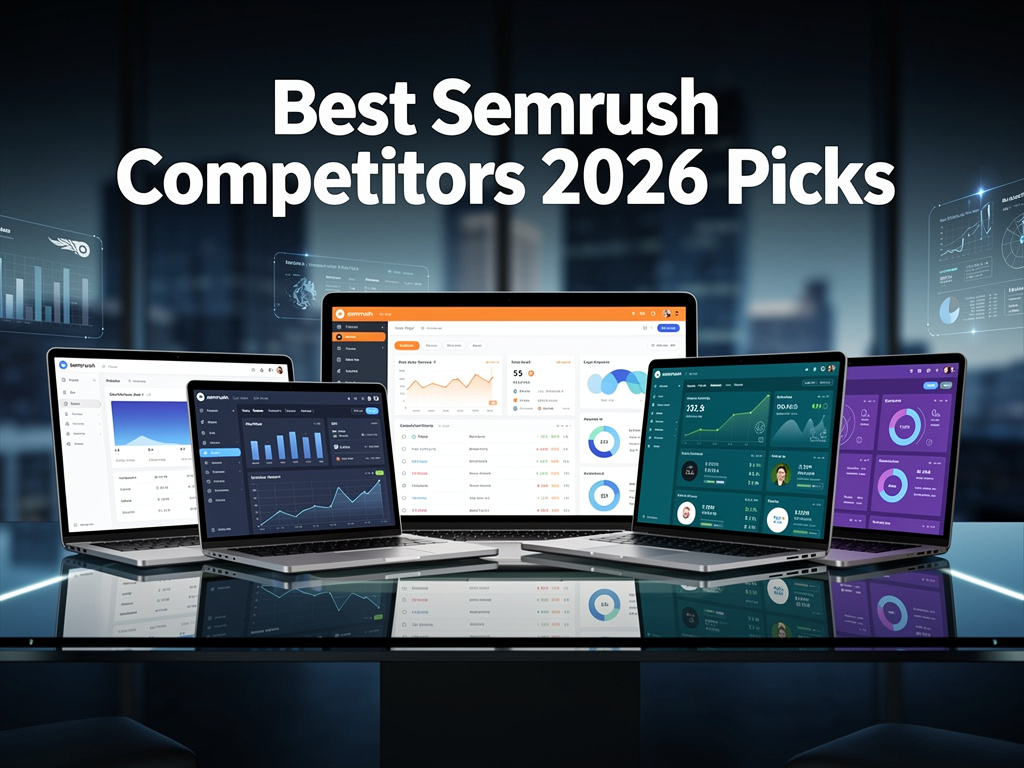
Best 20 Semrush Competitors and Alternatives for AI Visibility in 2026
Semrush has been a go-to platform for SEO and digital marketing teams for years. But the game is changing fast. AI search is reshaping how brands get discovered online. ChatGPT, Perplexity, Google AI Overviews, and Claude are now major players in how people find information. Traditional SEO tools weren’t built for this shift.
That’s why many teams are looking beyond Semrush. They need tools that track brand visibility inside AI-generated answers. They want to know when their company gets mentioned in ChatGPT responses. They need to see which competitors are winning in Perplexity citations.
This guide breaks down 20 Semrush competitors worth considering in 2026. We’ll look at each tool’s strengths, weaknesses, pricing, and ideal use cases. Whether you’re a solo marketer or part of an enterprise team, you’ll find options that fit your needs and budget.
Why Teams Are Looking for Semrush Alternatives in 2026
Semrush added an AI Visibility Toolkit as a premium add-on for $99/month. It covers AI visibility benchmarking, prompt research, competitor views, and technical audit checks for AI crawlers. That’s a solid starting point for many teams.
But here’s the thing. Many marketers outgrow it quickly. They need deeper customization options. They want executive-ready analysis that goes beyond basic reporting. They’re looking for a stronger path from insight to action.
Common reasons teams switch:
- Need more AI platform coverage beyond Google AI Overviews
- Want better competitor intelligence for AI search specifically
- Require stronger citation tracking across ChatGPT and Perplexity
- Looking for purpose-built AI visibility workflows
- Need better integration with content operations
The AI search analytics space has exploded. New tools focus entirely on measuring brand presence in AI-generated answers. Others combine AI visibility with content creation or SEO workflows. Let’s look at what’s out there.
How We Evaluated These Semrush Competitors
We tested each tool against a consistent set of criteria. This makes comparison easier and helps you find what fits your situation.
Our evaluation criteria:
- AI Platform Coverage – Which AI engines does it track? ChatGPT, Perplexity, Gemini, Claude, Google AI Overviews?
- Citation Tracking – Can it show which sources get cited in AI answers?
- Competitor Analysis – How well does it compare your brand against competitors in AI search?
- Reporting Depth – Are reports useful for both daily work and executive presentations?
- Ease of Use – How quickly can a team get started and see value?
- Pricing – What does it cost and is pricing transparent?
- Best For – Which type of team or use case fits best?
Now let’s dig into each tool.
1. Whitebox – AI Visibility for Data-Driven Teams
Whitebox positions itself as an AI visibility platform for teams that love data. It tracks brand mentions across major AI platforms and provides detailed analytics on how those mentions change over time.
Key Features:
- Multi-platform AI monitoring including ChatGPT, Perplexity, and Gemini
- Historical trend analysis for AI mentions
- Custom dashboards for different stakeholders
- API access for integrating with other tools
- Automated alerts when brand visibility changes
What sets Whitebox apart is its focus on transparency. You can see exactly how it collects data and what prompts it uses to test AI platforms. This matters for teams that need to explain methodology to executives or clients.
Pros:
- Clean, intuitive interface
- Strong data export options
- Good documentation and support
- Reasonable pricing for mid-size teams
Cons:
- Limited content creation features
- Claude coverage still in beta
- No built-in SEO tools
Pricing: Starts at $149/month for teams. Enterprise pricing available.
Best For: Marketing teams that want clean AI visibility data without extra features they won’t use.
2. Profound – Enterprise AI Visibility Intelligence
Profound targets enterprise teams that need AI visibility tied to strategic decisions. It’s one of the more expensive options but offers depth that lighter tools can’t match.
Key Features:
- AI visibility benchmarking across all major platforms
- Market share analysis for AI search
- Sentiment tracking in AI-generated mentions
- Competitive intelligence with detailed competitor profiles
- Custom reporting for C-suite presentations
- Integration with major CRM and analytics platforms
Profound excels at turning raw AI visibility data into strategic insights. Its reports don’t just show what happened. They explain why it matters and what to do next.
Pros:
- Deep customization options
- Executive-ready analysis and reporting
- Strong path from insight to action
- Dedicated customer success team
Cons:
- Demo-led sales process (no self-serve option)
- High price point for smaller teams
- Can feel overwhelming at first
Pricing: Custom pricing based on needs. Expect enterprise-level investment.
Best For: Enterprise teams that want AI visibility tied to SEO and content workflows with strong customization.
3. Otterly AI – Budget-Friendly AI Monitoring
Otterly AI is the most affordable option on this list. It’s perfect for freelancers, consultants, and small teams who want to monitor AI mentions without breaking the bank.
Key Features:
- Brand visibility tracking on ChatGPT, Perplexity, and AI Overviews
- Basic citation monitoring
- Simple competitor comparison
- Weekly email reports
- Easy setup with minimal configuration
Don’t expect enterprise features here. Otterly AI does the basics well. It shows you where your brand appears in AI answers and alerts you to changes. That’s enough for many small operations.
Pros:
- Very affordable at $27/month
- Free trial available
- Quick setup (under 10 minutes)
- Clean, simple interface
Cons:
- Limited features compared to pricier tools
- Not built for scale
- Basic reporting only
- No API access on lower plans
Pricing: $27/month with a free trial.
Best For: Freelancers and small teams who want a low-cost way to monitor AI mentions and citations.
4. Peec AI – AI Visibility with Content Intelligence
Peec AI combines AI visibility tracking with content intelligence. It helps you understand not just where you appear but why certain content gets cited by AI platforms.
Key Features:
- AI citation analysis across major platforms
- Content scoring for AI visibility potential
- Topic clustering and gap analysis
- Competitor content comparison
- Recommendations for improving AI visibility
The content intelligence angle is what makes Peec AI different. It analyzes your existing content and tells you what’s working in AI search and what needs improvement.
Pros:
- Strong connection between visibility data and content strategy
- Helpful recommendations engine
- Good for content teams specifically
- Regular feature updates
Cons:
- Less focus on technical SEO aspects
- Learning curve for content scoring features
- Mobile app still needs work
Pricing: Starts at $99/month for small teams.
Best For: Content marketing teams who want to connect AI visibility data with content strategy.
5. AthenaHQ – Strategic AI Visibility Platform
AthenaHQ positions itself as a strategic intelligence platform for AI search. It’s built for teams that need to understand the bigger picture of AI visibility, not just track mentions.
Key Features:
- AI share of voice measurement
- Strategic competitor intelligence
- Trend forecasting for AI search behavior
- Custom alert workflows
- Integration with marketing automation platforms
- Quarterly strategic reviews with dedicated analyst
AthenaHQ treats AI visibility as a strategic function, not just a monitoring task. Its reports focus on market position and competitive dynamics rather than raw mention counts.
Pros:
- Strategic focus rather than just tactical
- Strong competitor intelligence features
- Dedicated analyst support on higher plans
- Good for presenting to leadership
Cons:
- Overkill for small teams
- Higher price point
- Longer onboarding process
Pricing: Custom pricing based on needs.
Best For: Mid-size to enterprise teams that want AI visibility as part of competitive strategy.
6. Goodie AI – AI Visibility for E-commerce
Goodie AI focuses specifically on e-commerce brands. It tracks how products and brands appear in AI shopping recommendations and product searches.
Key Features:
- Product-level AI visibility tracking
- Shopping intent prompt monitoring
- Competitor product comparison in AI answers
- Integration with Shopify and other e-commerce platforms
- Price mention tracking in AI responses
E-commerce teams have different needs than B2B marketers. Goodie AI understands this. It tracks the specific prompts shoppers use and how AI platforms recommend products.
Pros:
- Built specifically for e-commerce use cases
- Product-level granularity
- Good Shopify integration
- Understands shopping intent
Cons:
- Not suitable for B2B or service businesses
- Limited platform coverage outside shopping queries
- Newer player with less track record
Pricing: Starts at $79/month for small stores.
Best For: E-commerce brands that want to track product visibility in AI shopping recommendations.
7. Bluefish AI – Technical AI Visibility Analysis
Bluefish AI takes a technical approach to AI visibility. It focuses on understanding how AI crawlers interact with your site and what technical factors affect AI citations.
Key Features:
- AI crawler behavior analysis
- Technical audit for AI discoverability
- Schema markup recommendations for AI
- Crawl budget analysis for AI bots
- Site structure recommendations
Most AI visibility tools focus on tracking mentions. Bluefish AI asks a different question: why does your site get cited or not? It looks at the technical factors that influence AI source selection.
Pros:
- Unique technical focus
- Helps improve visibility, not just track it
- Good for technically-minded teams
- Complements other AI visibility tools
Cons:
- Requires technical knowledge to use fully
- Less focus on tracking and reporting
- Not a complete solution on its own
Pricing: Starts at $129/month.
Best For: Technical SEO teams who want to understand and improve the technical factors behind AI visibility.
8. Scrunch – AI Visibility with Influencer Intelligence
Scrunch started as an influencer marketing platform and expanded into AI visibility. It tracks how brands appear in AI answers related to influencer and creator content.
Key Features:
- AI visibility tracking across major platforms
- Influencer mention correlation
- Social signal tracking
- Brand sentiment in AI responses
- Creator content performance in AI citations
Scrunch is interesting for brands that rely heavily on influencer marketing. It shows how creator content affects AI visibility and which influencer partnerships drive the most AI citations.
Pros:
- Unique angle combining influencer data with AI visibility
- Good for DTC and lifestyle brands
- Strong social media integration
- Helps justify influencer spend
Cons:
- Less relevant for B2B brands
- AI visibility features still maturing
- Higher learning curve
Pricing: Custom pricing based on brand size.
Best For: Consumer brands that want to understand how influencer content affects AI visibility.
9. Brandlight – Brand Monitoring Across AI Platforms
Brandlight focuses on brand monitoring specifically. It tracks how your brand is portrayed in AI answers, including tone, accuracy, and competitive context.
Key Features:
- Brand mention tracking across AI platforms
- Accuracy monitoring for AI statements about your brand
- Competitive positioning analysis
- Misinformation alerts
- Sentiment tracking over time
Brandlight is good for brand managers who care about reputation. It alerts you when AI platforms say something inaccurate about your company. This matters more than you might think.
Pros:
- Strong focus on brand accuracy and reputation
- Good alert system
- Helps identify misinformation quickly
- Clean dashboards
Cons:
- Less focus on SEO and content strategy
- Limited technical analysis
- Smaller company with less support resources
Pricing: Starts at $89/month.
Best For: Brand managers and PR teams who need to monitor brand accuracy in AI responses.
10. Writesonic – AI Visibility Plus Content Creation
Writesonic combines AI visibility tracking with AI-powered content creation. It’s for teams that want to spot gaps and quickly create content to fill them.
Key Features:
- AI visibility tracking and gap analysis
- AI content generation for identified gaps
- SEO content optimization
- Multi-platform publishing
- Content performance tracking
The combination of tracking and creation makes Writesonic unique. See where you’re missing in AI search, then use the same platform to create content that addresses those gaps.
Pros:
- All-in-one tracking and creation
- Quick content production
- Good for small content teams
- Reasonable pricing
Cons:
- AI content quality varies
- Less deep analysis than dedicated visibility tools
- Not ideal for enterprise needs
Pricing: Starts at $19/month for basic plans.
Best For: Small content teams that want to spot AI search gaps and publish AI-optimized content fast.
11. Trakkr – AI Citation Tracking Specialist
Trakkr focuses specifically on citation tracking. It monitors which sources AI platforms cite and helps you understand what gets you included as a source.
Key Features:
- Deep citation tracking across AI platforms
- Source URL monitoring
- Citation share of voice
- Competitor citation analysis
- Citation trend reports
Getting mentioned is one thing. Getting cited as a source is another. Trakkr focuses on the latter. It tracks when AI platforms link to your content versus just mentioning your brand.
Pros:
- Deep citation analysis
- Helps understand what earns citations
- Good competitive comparison
- Clear, focused interface
Cons:
- Narrow focus may not fit all needs
- Less brand mention tracking
- Limited content recommendations
Pricing: Starts at $99/month.
Best For: Teams that care specifically about earning citations and backlinks from AI platforms.
12. Qwairy – AI Search Query Intelligence
Qwairy focuses on understanding what prompts people use when searching AI platforms. It’s about query intelligence rather than just visibility tracking.
Key Features:
- AI prompt research and discovery
- Query volume estimates for AI platforms
- Prompt trend tracking
- Competitive prompt analysis
- Content opportunity identification
Traditional keyword research doesn’t work for AI search. Qwairy approaches this differently. It studies how people actually phrase questions to AI platforms and what drives those patterns.
Pros:
- Unique focus on prompt research
- Helps understand user intent in AI search
- Good for content planning
- Growing database of prompts
Cons:
- Less visibility tracking features
- Prompt volume estimates are still rough
- Works best alongside other tools
Pricing: Starts at $79/month.
Best For: Content strategists who want to understand what prompts drive AI search behavior.
13. Azoma – AI Visibility for Agencies
Azoma is built for marketing agencies that manage multiple client accounts. It offers white-label reporting and multi-account management for AI visibility.
Key Features:
- Multi-client account management
- White-label reporting
- AI visibility tracking across clients
- Client portal access
- Automated client reports
Agencies have specific needs. They need to manage many brands, create client-facing reports, and justify their work. Azoma is designed for these workflows.
Pros:
- Built for agency workflows
- Good white-label options
- Easy client management
- Automated reporting saves time
Cons:
- Not ideal for in-house teams
- Pricing scales with client count
- Less deep analysis per client
Pricing: Starts at $199/month for 5 clients.
Best For: Marketing agencies that need to track AI visibility across multiple client accounts.
14. Gauge – AI Visibility Benchmarking
Gauge focuses on benchmarking your AI visibility against industry standards and competitors. It’s about understanding where you stand relative to others.
Key Features:
- Industry benchmarking for AI visibility
- Competitive positioning scores
- Trend analysis over time
- Share of voice tracking
- Monthly benchmark reports
Raw numbers don’t mean much without context. Gauge provides that context. Is your AI visibility good or bad? It depends on your industry and competitors. Gauge helps you understand.
Pros:
- Strong benchmarking focus
- Good industry comparisons
- Helpful for setting goals
- Clear scoring system
Cons:
- Less actionable recommendations
- Benchmarks only as good as the dataset
- Limited features beyond benchmarking
Pricing: Starts at $149/month.
Best For: Teams that want to understand their AI visibility relative to industry benchmarks and competitors.
15. LLM Pulse – Real-Time AI Model Monitoring
LLM Pulse takes a different approach. It monitors how different AI models respond to queries about your brand in real-time, tracking changes as models update.
Key Features:
- Real-time monitoring across AI models
- Model update detection
- Response variation tracking
- Historical response archives
- Alert system for significant changes
AI models change constantly. What ChatGPT says about your brand today might differ from tomorrow. LLM Pulse tracks these variations and alerts you to significant shifts.
Pros:
- Real-time monitoring
- Good for catching changes quickly
- Tracks response variations
- Useful historical archive
Cons:
- Can be noisy with too many alerts
- Less strategic analysis
- Requires active monitoring
Pricing: Starts at $119/month.
Best For: Teams that need to monitor real-time changes in how AI models discuss their brand.
16. Searchable – AI Discovery Optimization
Searchable focuses on making your content more discoverable by AI platforms. It analyzes what makes content get selected by AI and helps you apply those patterns.
Key Features:
- Content discoverability scoring
- AI-friendly content recommendations
- Structure optimization suggestions
- Competitor content analysis
- Content improvement workflows
Most tools track visibility. Searchable helps you improve it. It analyzes highly-cited content and identifies patterns you can apply to your own work.
Pros:
- Action-oriented approach
- Good content recommendations
- Helps improve, not just track
- Clear improvement workflows
Cons:
- Less comprehensive tracking
- Recommendations take effort to implement
- Works best with existing content
Pricing: Starts at $89/month.
Best For: Content teams that want to improve their content’s discoverability by AI platforms.
17. Spotlight – Executive AI Visibility Reporting
Spotlight focuses on executive-level reporting for AI visibility. It turns complex data into clear stories that leadership can understand and act on.
Key Features:
- Executive dashboard design
- Automated narrative reports
- Board-ready presentations
- Strategic recommendations
- Quarterly business reviews
Getting leadership buy-in requires different communication than what works for marketing teams. Spotlight creates reports specifically designed for executives who don’t want technical details.
Pros:
- Beautiful, executive-friendly reports
- Good for getting leadership buy-in
- Clear strategic focus
- Saves report creation time
Cons:
- Less useful for daily operational work
- Premium pricing for reporting features
- Limited tactical recommendations
Pricing: Starts at $199/month.
Best For: Marketing leaders who need to communicate AI visibility progress to executives and boards.
18. Citation Junction – Source Attribution Tracking
Citation Junction specializes in tracking how AI platforms attribute sources. It monitors when your content gets credited and how attribution appears.
Key Features:
- Source attribution monitoring
- Link tracking in AI responses
- Attribution quality scoring
- Competitor attribution comparison
- Attribution trend analysis
Not all citations are equal. Some AI platforms just mention sources. Others link directly. Citation Junction tracks these differences and helps you understand attribution quality.
Pros:
- Deep focus on attribution
- Good for understanding citation quality
- Helpful for link building strategies
- Clear reporting
Cons:
- Narrow focus
- Less brand mention tracking
- Best as a supplement to other tools
Pricing: Starts at $69/month.
Best For: SEO teams focused on earning high-quality citations and links from AI platforms.
19. AirOps – AI Visibility Workflow Automation
AirOps combines AI visibility tracking with workflow automation. It helps teams automate responses to visibility changes and scale their AI SEO efforts.
Key Features:
- AI visibility tracking
- Automated workflow triggers
- Content creation automation
- Multi-platform publishing
- Integration with major marketing tools
AirOps is for teams that want to act on visibility data automatically. See a gap? Trigger content creation. Spot a competitor mention? Start a response workflow.
Pros:
- Strong automation capabilities
- Connects visibility to action
- Good integrations
- Scales well
Cons:
- Requires setup investment
- Automation can go wrong without oversight
- Higher learning curve
Pricing: Starts at $299/month.
Best For: Teams that want to automate their response to AI visibility insights at scale.
20. iGEO – Local AI Visibility Tracking
iGEO focuses on local and geographic AI visibility. It tracks how AI platforms answer location-specific queries and recommend local businesses.
Key Features:
- Local AI visibility tracking
- Geographic query monitoring
- Local competitor analysis
- Location-specific recommendations
- Multi-location management
Local businesses face different AI visibility challenges. When someone asks ChatGPT for “the best pizza near me,” who shows up? iGEO helps local businesses track and improve these results.
Pros:
- Unique local focus
- Good for multi-location businesses
- Understands geographic variations
- Helpful local recommendations
Cons:
- Not useful for non-local businesses
- Limited general AI visibility features
- Smaller company
Pricing: Starts at $59/month per location.
Best For: Local businesses and multi-location brands that need to track geographic AI visibility.
Comparison Table: Semrush Alternatives at a Glance
| Tool | Best For | Starting Price | AI Platforms Covered | Key Strength |
|---|---|---|---|---|
| Whitebox | Data-driven teams | $149/month | ChatGPT, Perplexity, Gemini | Data transparency |
| Profound | Enterprise teams | Custom | All major platforms | Strategic intelligence |
| Otterly AI | Budget-conscious teams | $27/month | ChatGPT, Perplexity, AI Overviews | Affordability |
| Peec AI | Content teams | $99/month | Major platforms | Content intelligence |
| AthenaHQ | Strategic teams | Custom | All major platforms | Competitive strategy |
| Goodie AI | E-commerce brands | $79/month | Shopping-focused queries | Product visibility |
| Bluefish AI | Technical SEO teams | $129/month | Major platforms | Technical analysis |
| Scrunch | Consumer brands | Custom | Major platforms | Influencer correlation |
| Brandlight | Brand managers | $89/month | Major platforms | Brand accuracy monitoring |
| Writesonic | Small content teams | $19/month | Major platforms | Content creation |
| Trakkr | Citation-focused teams | $99/month | Major platforms | Citation tracking |
| Qwairy | Content strategists | $79/month | Major platforms | Prompt research |
| Azoma | Marketing agencies | $199/month | Major platforms | Multi-client management |
| Gauge | Benchmark-focused teams | $149/month | Major platforms | Industry benchmarking |
| LLM Pulse | Real-time monitoring | $119/month | All AI models | Real-time tracking |
| Searchable | Content optimization | $89/month | Major platforms | Discoverability improvement |
| Spotlight | Marketing leaders | $199/month | Major platforms | Executive reporting |
| Citation Junction | SEO teams | $69/month | Major platforms | Attribution tracking |
| AirOps | Automation-focused teams | $299/month | Major platforms | Workflow automation |
| iGEO | Local businesses | $59/month | Location-specific queries | Local visibility |
How to Choose the Right Semrush Alternative
With 20 options, picking the right tool can feel overwhelming. Here’s a framework to help you decide.
Start with your primary need:
- Just tracking mentions? Otterly AI or Brandlight offer affordable monitoring.
- Need strategic insights? Profound or AthenaHQ provide deeper analysis.
- Want content creation too? Writesonic or Peec AI combine tracking with content tools.
- Running an agency? Azoma is built for multi-client workflows.
- Focus on local business? iGEO specializes in geographic visibility.
Consider your budget:
- Under $50/month: Otterly AI, Writesonic basic
- $50-150/month: Most mid-tier options
- $150-300/month: Advanced features and better support
- Custom pricing: Enterprise features and dedicated support
Think about team size and skills:
- Solo marketers do well with simple, focused tools
- Small teams benefit from all-in-one platforms
- Enterprise teams often need multiple specialized tools
- Technical teams can handle more complex setups
Key Trends in AI Visibility Tools for 2026
The AI visibility space is evolving fast. Here are trends shaping these tools in 2026.
1. Broader Platform Coverage
Early tools focused on ChatGPT. Now coverage includes Perplexity, Gemini, Claude, Google AI Overviews, and newer players. Expect coverage to keep expanding.
2. From Tracking to Action
Simple tracking isn’t enough anymore. Teams want tools that help them improve visibility, not just measure it. Look for recommendations, automation, and content tools.
3. Integration with Existing Workflows
Standalone tools are giving way to integrated platforms. The best tools connect with your CMS, CRM, and marketing automation systems.
4. Real-Time Monitoring
AI models change constantly. Real-time monitoring becomes more valuable as brands realize that visibility can shift quickly.
5. Vertical Specialization
General tools work for many teams. But specialized tools for e-commerce, local business, or specific industries are gaining traction.
Common Mistakes When Choosing AI Visibility Tools
We’ve seen teams make these mistakes when evaluating Semrush alternatives. Avoid them.
Mistake 1: Focusing only on price
The cheapest tool isn’t always the best value. Consider what you’ll actually use and what impact it’ll have. A $200/month tool that drives results beats a $27/month tool that sits unused.
Mistake 2: Buying more than you need
Enterprise tools are overkill for small teams. You’ll pay for features you don’t use and face a steeper learning curve. Start with what you need now.
Mistake 3: Ignoring the workflow fit
A great tool that doesn’t fit your workflow won’t get used. Consider how it integrates with your existing processes and tools.
Mistake 4: Expecting instant results
AI visibility takes time to build and measure. Don’t expect dramatic changes in the first month. Give any tool at least 90 days before judging it.
Mistake 5: Not involving the right stakeholders
Get input from everyone who’ll use the tool. What looks good in a demo might frustrate daily users.
Getting Started with AI Visibility Tracking
New to AI visibility? Here’s how to start without getting overwhelmed.
Week 1: Establish your baseline
- Search your brand name in ChatGPT, Perplexity, and Google AI Overviews
- Note what appears (or doesn’t)
- Do the same for top competitors
- Document everything manually
Week 2-3: Trial free tools
- Sign up for Otterly AI’s free trial
- Test Writesonic’s basic features
- Compare what automated tracking shows versus your manual research
Week 4: Evaluate your needs
- What did you learn from manual and automated tracking?
- What questions couldn’t you answer?
- What would you do differently with better data?
Month 2: Make a decision
- Based on your needs, trial 2-3 paid tools
- Most offer free trials or demos
- Involve your team in testing
- Choose based on actual use, not feature lists
Conclusion
The AI visibility landscape has grown beyond what Semrush’s add-on toolkit can handle for many teams. Whether you need budget-friendly monitoring, enterprise-grade intelligence, or specialized features for e-commerce or local business, there’s a Semrush competitor that fits your needs. Start by understanding what you actually need, then test options that match your budget and workflow before committing.
FAQs About Semrush Competitors and AI Visibility Tools
| What’s the biggest difference between Semrush and these AI visibility competitors? | Semrush is primarily an SEO platform with AI visibility as an add-on. Most competitors on this list are purpose-built for AI visibility, offering deeper analysis of how brands appear in ChatGPT, Perplexity, and other AI platforms. They often provide better citation tracking, more AI platform coverage, and workflows designed specifically for AI search. |
| Which Semrush alternative is best for small teams on a tight budget? | Otterly AI at $27/month offers the best value for small teams. Writesonic’s basic plan at $19/month is even cheaper if you also want content creation features. Both provide solid AI visibility tracking without enterprise complexity. |
| Do I need to replace Semrush completely or can I use these tools alongside it? | Most teams use these tools alongside Semrush rather than replacing it. Semrush still excels at traditional SEO, keyword research, and competitive analysis. AI visibility tools complement this by adding tracking for AI-generated answers and citations. |
| Which AI platforms do these Semrush competitors track? | Most tools track ChatGPT, Perplexity, Google AI Overviews, and Gemini. Some also cover Claude, Bing Chat, and emerging AI search platforms. Coverage varies by tool, so check that your priority platforms are included before signing up. |
| How long does it take to see results from AI visibility tracking? | You’ll see data immediately after setup. But meaningful trends and actionable insights typically need 4-6 weeks of data collection. Give any tool at least 90 days before judging its value for your strategy. |
| Which Semrush alternative is best for enterprise teams? | Profound and AthenaHQ are the strongest options for enterprise teams. Both offer deep customization, executive-ready reporting, dedicated support, and integration with existing enterprise tools. Expect custom pricing and a demo-led sales process. |
| Can these tools help me improve AI visibility or just track it? | It depends on the tool. Tracking-focused tools like Otterly AI and Brandlight primarily monitor mentions. Others like Searchable, Peec AI, and Writesonic include recommendations and content tools to help you improve visibility, not just measure it. |
| What’s the difference between AI mentions and AI citations? | A mention is when an AI platform talks about your brand in its response. A citation is when the AI links to your content as a source. Citations are generally more valuable because they can drive traffic. Tools like Trakkr and Citation Junction specialize in tracking citations specifically. |
| Which Semrush competitor works best for marketing agencies? | Azoma is built specifically for agencies with multi-client management, white-label reporting, and client portal features. If you manage multiple brands, it’s worth checking out. Pricing starts at $199/month for 5 clients. |
| Are free trials available for these Semrush alternatives? | Most tools offer free trials or demo sessions. Otterly AI, Writesonic, and several others have free trial periods. Enterprise tools like Profound and AthenaHQ typically offer demo-led evaluations instead of self-serve trials. |




 Stack Insight is intended to support informed decision-making by providing independent information about business software and services. Some product details, including pricing, features, and promotional offers, may be supplied by vendors or partners and can change without notice.