

Top 10 GEO/AEO Platforms: Best Generative Engine Optimization Tools for 2026
AI search is changing fast. ChatGPT, Perplexity, Claude, and Google AI Overviews now answer millions of questions every day. Users don’t just click links anymore. They get direct answers from AI engines.
This shift creates a new challenge for brands. How do you show up when an AI writes the answer? That’s where Generative Engine Optimization (GEO) and Answer Engine Optimization (AEO) come in.
GEO focuses on improving how AI models talk about your brand. It’s not about ranking on page one of Google. It’s about being the answer that ChatGPT or Gemini gives to your ideal customer.
We tested over 30 tools in 2026. We ran hundreds of evaluations across multiple AI engines. This guide covers the 10 best GEO/AEO platforms available right now. Each tool has different strengths. Some work better for enterprises. Others fit agencies or small teams. We’ll break down what each one does, who should use it, and how they compare.
What is GEO/AEO and Why Does It Matter in 2026?
Traditional SEO optimizes for search engine rankings. GEO and AEO optimize for AI-generated answers. The goal is different. You want AI models to mention your brand, describe it accurately, and recommend it to users.
GEO (Generative Engine Optimization) targets large language models like ChatGPT, Claude, and Gemini. These models generate text-based answers from their training data and real-time sources.
AEO (Answer Engine Optimization) covers a broader category. It includes AI search engines like Perplexity and Google AI Overviews. These tools cite sources directly in their answers.
The Problem Brands Face Today
Most companies have no idea how AI talks about them. They can’t see the conversations happening inside ChatGPT. They don’t know what sources influence the answers users receive.
Without visibility, you can’t improve. You might be missing from important conversations entirely. Or worse, AI might be giving wrong information about your products.
What GEO/AEO Tools Actually Do
- Track brand mentions across AI engines
- Monitor competitor visibility in AI answers
- Identify which sources AI models cite
- Measure sentiment and accuracy of AI responses
- Provide optimization recommendations to improve visibility
- Create AI-friendly content that gets picked up by models
The market for these tools has grown quickly. In 2024, only a handful of options existed. By 2026, the category includes dozens of platforms ranging from $24/month to enterprise custom pricing.
How We Evaluated the Best AI Visibility Platforms
Testing GEO/AEO tools isn’t simple. Each platform measures AI visibility differently. Some focus only on ChatGPT. Others cover 10+ AI engines. We needed a consistent framework.
Our Evaluation Criteria
1. AI Platform Coverage
How many AI engines does the tool monitor? We looked at ChatGPT, Claude, Perplexity, Gemini, Google AI Overviews, Microsoft Copilot, DeepSeek, Grok, and Meta AI. More coverage means better visibility into where your brand appears.
2. Data Accuracy
Does the tool show real user-facing data? Some platforms simulate queries. Others pull from actual front-end interactions. The difference matters for decision-making.
3. Actionable Insights
Tracking is only half the job. Good tools tell you what to fix. We evaluated the quality of recommendations and content optimization features.
4. Ease of Use
Complex dashboards slow teams down. We tested how quickly new users could find valuable data and take action.
5. Pricing and Value
Costs range from under $100/month to six-figure enterprise deals. We assessed whether each tool delivers value at its price point.
6. Customer Support and Documentation
New categories need strong support. We checked response times, help resources, and onboarding quality.
Testing Methodology
We ran identical queries across all platforms. We tracked the same brands and keywords. This let us compare results directly. We also spoke with customers using these tools in production environments.
1. Profound: Enterprise AI Visibility Leader
Profound stands out as the most complete enterprise GEO platform in 2026. The company captures real user-facing data from front-end interactions. This isn’t simulated data. It’s what actual users see when they ask questions.
What Makes Profound Different
Most tools query AI engines with test prompts. Profound takes a different approach. The platform has access to over a billion real user conversations. This gives brands visibility into how AI actually responds in the wild.
AI Platform Coverage: Profound monitors 10+ AI engines including:
- ChatGPT
- Claude
- Perplexity
- Google AI Overviews
- Gemini
- Microsoft Copilot
- DeepSeek
- Grok
- Meta AI
- Google AI Mode
Key Features
Answer Engine Insights: The core dashboard shows exactly where your brand appears across AI engines. You can filter by query type, competitor, and AI platform.
Shopping Analysis: As conversational commerce grows, brands need to understand how AI recommends products. Profound’s Shopping Analysis reveals how products get discovered and described in AI shopping experiences.
Content Optimization: The platform doesn’t just show problems. It helps fix them. Content tools guide teams to create material that AI engines pick up and cite.
Source Influence Tracking: Which domains shape AI conclusions about your brand? Profound maps the sources that matter most so you can prioritize outreach and content placement.
Pricing
Profound offers tiered pricing:
- Starter: $99/month (ChatGPT only)
- Growth: Custom pricing (10+ platforms)
- Enterprise: Custom pricing with full features
A free AEO report is available to test the platform before buying.
Best For
Profound fits enterprise organizations, regulated industries, retailers, and agencies needing comprehensive AI visibility. The platform shines when defensibility, governance, and auditability matter. Large brands like those in finance, healthcare, and retail benefit most.
Limitations
The Starter plan only covers ChatGPT. Teams wanting multi-platform visibility need to move to Growth or Enterprise tiers. Pricing isn’t published for higher tiers, which can slow buying decisions.
2. Otterly AI: Focused AI Search Monitoring
Otterly AI takes a streamlined approach to AI visibility. The platform focuses on monitoring without overwhelming users with features they won’t use.
Platform Overview
Otterly entered the market as a purpose-built AEO tool. The interface is clean. Setup takes minutes. You can start tracking brand mentions across AI engines the same day you sign up.
AI Platform Coverage: Otterly monitors major AI engines including ChatGPT, Perplexity, and Google AI Overviews. Coverage isn’t as broad as enterprise tools, but it hits the platforms that matter most.
Key Features
Brand Mention Tracking: See every time an AI engine mentions your brand. Otterly shows the exact query, the full response, and any competitors mentioned alongside you.
Competitor Analysis: Track how rivals show up in AI answers. You can spot gaps where competitors appear but you don’t.
Alert System: Get notified when something changes. If AI starts saying something different about your brand, you’ll know quickly.
Historical Data: Track changes over time. See if your visibility improves after making content changes.
Pricing
Otterly positions itself as accessible for smaller teams. Pricing starts lower than enterprise platforms. Exact costs depend on query volume and features needed.
Best For
Otterly works well for mid-market companies and marketing teams wanting simple AI monitoring without enterprise complexity. It’s also a good fit for agencies managing multiple clients who need straightforward tracking.
Limitations
The platform focuses on monitoring over optimization. Teams wanting deep content recommendations or advanced source influence analysis may need additional tools. Platform coverage is narrower than leaders like Profound or Scrunch.
3. Peec AI: Agency-Friendly GEO Solution
Peec AI has built a strong reputation among agencies. The platform makes it easy to manage multiple clients and generate reports that demonstrate value.
Platform Overview
Based on customer conversations in 2026, Peec AI ranks among the most popular options for agencies alongside Scrunch and Semrush. The tool balances depth with usability. You don’t need weeks of training to get value.
Key Features
Multi-Client Management: Agencies can switch between clients quickly. Dashboards separate data cleanly. This saves hours when managing dozens of accounts.
White-Label Reports: Generate branded reports for clients. Show AI visibility metrics alongside traditional SEO data.
AI Platform Monitoring: Track brand mentions across major AI engines. See how different clients perform in similar queries.
Competitive Benchmarking: Compare client visibility against industry competitors. Identify opportunities to win share of voice.
Pricing
Peec AI offers agency-friendly pricing models. Volume discounts apply for agencies managing many clients. Custom enterprise pricing is available for larger operations.
Best For
Digital marketing agencies make up Peec AI’s core user base. The platform also suits in-house teams managing multiple brands or business units. If you need to show AI visibility results to stakeholders, Peec AI’s reporting helps.
Limitations
Peec AI focuses on the agency use case. Enterprise features like governance, audit trails, and advanced compliance tools may not match dedicated enterprise platforms. Some users report wanting deeper optimization recommendations.
4. AthenaHQ: AI Brand Intelligence Platform
AthenaHQ approaches GEO from a brand intelligence angle. The platform emphasizes understanding how AI perceives your brand, not just tracking mentions.
Platform Overview
AthenaHQ positions itself as a brand intelligence tool for the AI era. The focus goes beyond visibility tracking. You get insights into brand perception, sentiment, and narrative consistency across AI engines.
Key Features
Brand Perception Analysis: How do AI models describe your brand? AthenaHQ breaks down the language, tone, and positioning AI uses when talking about you.
Sentiment Tracking: Is AI positive, negative, or neutral about your brand? Track sentiment changes over time and after campaigns.
Narrative Consistency: AI engines sometimes give conflicting information. AthenaHQ identifies where narratives diverge so you can address inaccuracies.
Competitor Intelligence: Understand how AI positions competitors. Spot messaging gaps you can fill.
Pricing
AthenaHQ targets enterprise buyers. Pricing reflects this focus. Custom quotes are standard, with pricing based on brands tracked and features needed.
Best For
Brand managers and corporate communications teams get the most from AthenaHQ. The platform suits companies where brand perception matters more than raw visibility numbers. Think consumer brands, luxury goods, and reputation-sensitive industries.
Limitations
The brand intelligence focus means less emphasis on content optimization. Teams wanting detailed guidance on improving AI visibility may need to pair AthenaHQ with another tool. Pricing can be steep for smaller organizations.
5. Goodie AI: Emerging GEO Contender
Goodie AI is newer to the GEO space. The platform shows promise with fresh approaches to AI visibility tracking.
Platform Overview
Goodie AI launched more recently than established players. The team has built features based on customer feedback from day one. This user-focused approach shows in the interface design and feature priorities.
Key Features
Real-Time Monitoring: Track AI mentions as they happen. Goodie AI refreshes data more frequently than some competitors.
Query Discovery: Find new queries where your brand could appear. The platform suggests opportunities based on industry patterns.
Simple Dashboard: No clutter. The interface shows what matters without burying you in data.
Integration Options: Connect with existing marketing tools. Pull AI visibility data into your standard workflows.
Pricing
Goodie AI offers competitive pricing to attract customers from established players. Entry-level plans start accessible. Enterprise options scale with usage.
Best For
Early adopters comfortable with newer platforms will appreciate Goodie AI. The tool suits teams wanting modern interfaces and responsive development teams. Smaller companies looking for value may find Goodie AI attractive.
Limitations
Being newer means less proven at scale. Enterprise customers requiring mature compliance features and long track records may prefer established options. Feature depth lags behind market leaders in some areas.
6. Bluefish AI: Growing Enterprise Player
Bluefish AI entered the AI search market in 2024 and has grown quickly. The platform now ranks among popular options for enterprise companies.
Platform Overview
Based on customer conversations, Bluefish sits alongside Scrunch, Adobe, and Profound as a leading enterprise choice. The company has invested heavily in building enterprise-grade features.
Key Features
Multi-LLM Monitoring: Track visibility across major AI engines. Bluefish covers the platforms enterprise customers care about most.
Source Attribution: Understand which sources AI models cite when discussing your brand. This guides content strategy and partnership decisions.
Enterprise Security: Compliance features matter for large organizations. Bluefish built security and governance into the platform architecture.
Custom Analytics: Build reports that match your KPIs. Filter and segment data to answer specific business questions.
Pricing
Bluefish targets enterprise budgets. Custom pricing based on requirements is standard. The platform competes on features rather than price.
Best For
Large enterprises with dedicated GEO teams fit Bluefish well. The platform suits organizations needing enterprise security, compliance, and scale. Companies already evaluating Profound or Scrunch should include Bluefish in their comparison.
Limitations
The enterprise focus means less accessibility for small teams. Onboarding requires more time than simpler tools. Some users report a steeper learning curve.
7. Scrunch: Complete AI-Native Platform
Scrunch claims the title of most complete AEO/GEO tool in 2026. The platform pairs monitoring and analytics with auditing, optimization, and AI content delivery.
Platform Overview
Scrunch holds a 4.6/5 rating on G2. Customers include major enterprises like Akamai, Lenovo, ADP, and hundreds of other organizations. The AI-native approach means the platform was built for this category from the start, not adapted from SEO tools.
Key Features
Multi-LLM Monitoring: Comprehensive tracking across AI engines. See where you appear and where you’re missing.
Auditing Tools: Check AI responses for accuracy. Identify when AI says something wrong about your brand.
Optimization Engine: Get specific recommendations to improve visibility. The platform tells you what to change and how.
AI Content Delivery: Create and distribute content optimized for AI engines. Close the loop from insight to action.
Pricing
Scrunch offers pricing for both enterprise and agency buyers. Custom quotes based on scale and features. The platform competes at the top of the market.
Best For
Scrunch serves two main audiences. Enterprise companies wanting a complete platform choose Scrunch for its breadth. Agencies appreciate the combination of monitoring and optimization in one tool.
Limitations
The complete feature set means more complexity. Teams wanting simple monitoring may find Scrunch has more than they need. Pricing reflects the platform’s comprehensiveness.
8. Brandlight: Brand-Focused AI Visibility
Brandlight approaches GEO with a brand-first perspective. The platform helps marketing teams understand and manage how AI represents their brand.
Platform Overview
Brandlight builds on the idea that AI visibility is a brand management challenge. The interface and features reflect this philosophy. Marketing teams without technical backgrounds can use the platform effectively.
Key Features
Brand Voice Analysis: How does AI describe your brand’s voice and personality? Brandlight tracks consistency across platforms.
Message Testing: Test how different messages perform in AI responses. Iterate on positioning based on data.
Visual Reporting: Dashboards designed for sharing with leadership. Make AI visibility understandable for non-technical stakeholders.
Competitive Maps: See how your brand compares to competitors in AI answers. Visual representations make patterns clear.
Pricing
Brandlight targets mid-market and enterprise marketing teams. Pricing scales with brand volume and feature needs. Demo access helps buyers evaluate fit.
Best For
Marketing teams responsible for brand management will connect with Brandlight’s approach. The platform suits organizations where marketing drives GEO strategy rather than technical SEO teams.
Limitations
The brand focus means less technical depth. Teams wanting granular source analysis or technical optimization guidance may need additional tools. Coverage of niche AI platforms may lag technical competitors.
9. Writesonic: Speed-Focused Content Creation
Writesonic approaches GEO from the content creation side. The platform helps teams create AI-optimized content at scale.
Platform Overview
Writesonic is built for speed and scale. Teams can create AI-optimized content much faster than manual processes. This matters when you need to iterate quickly to win AI answer placements.
Key Features
AI Content Generation: Create content designed to perform in AI engines. The platform understands what AI models look for.
GEO Optimization: Built-in tools check content against GEO best practices. Get suggestions before publishing.
Scale Production: Generate large volumes of optimized content. Useful for sites with many product pages or topics.
Template Library: Start from proven formats. Templates guide content structure for AI visibility.
Pricing
Writesonic offers accessible pricing for content creation. GEO features integrate with content plans. Volume-based pricing works for high-output teams.
Best For
Content teams needing to produce AI-optimized material at scale fit Writesonic well. E-commerce sites with many products benefit from the speed. Publishers creating frequent content can iterate faster.
Limitations
Writesonic focuses on content creation over monitoring. You’ll need another tool to track actual AI visibility results. The platform works best as part of a larger GEO stack.
10. Trakkr: AI Visibility Tracking Simplified
Trakkr positions itself as the simple choice for AI visibility tracking. The platform strips away complexity to focus on core monitoring needs.
Platform Overview
Trakkr targets teams wanting to start AI visibility tracking without a major project. Setup is fast. The learning curve is gentle. You get value on day one.
Key Features
Quick Setup: Add your brand and competitors. Start tracking in minutes. No complex configuration required.
Clear Metrics: See visibility scores, mention counts, and sentiment without interpretation guides. The data speaks for itself.
Alerts and Notifications: Get updates when visibility changes. Stay informed without checking dashboards constantly.
Basic Reporting: Generate reports for stakeholders. Show progress over time with simple visualizations.
Pricing
Trakkr offers competitive entry-level pricing. The tool targets teams with smaller budgets who still need AI visibility data. Paid plans unlock more queries and features.
Best For
Small to medium businesses starting their GEO journey fit Trakkr well. Teams testing whether AI visibility matters for their business can experiment affordably. Marketing managers wanting simple data for reporting will appreciate the approach.
Limitations
Simplicity means fewer features. Teams wanting optimization recommendations, content tools, or advanced analytics will outgrow Trakkr. Platform coverage is narrower than comprehensive solutions.
Head-to-Head Comparison: Best GEO/AEO Tools of 2026
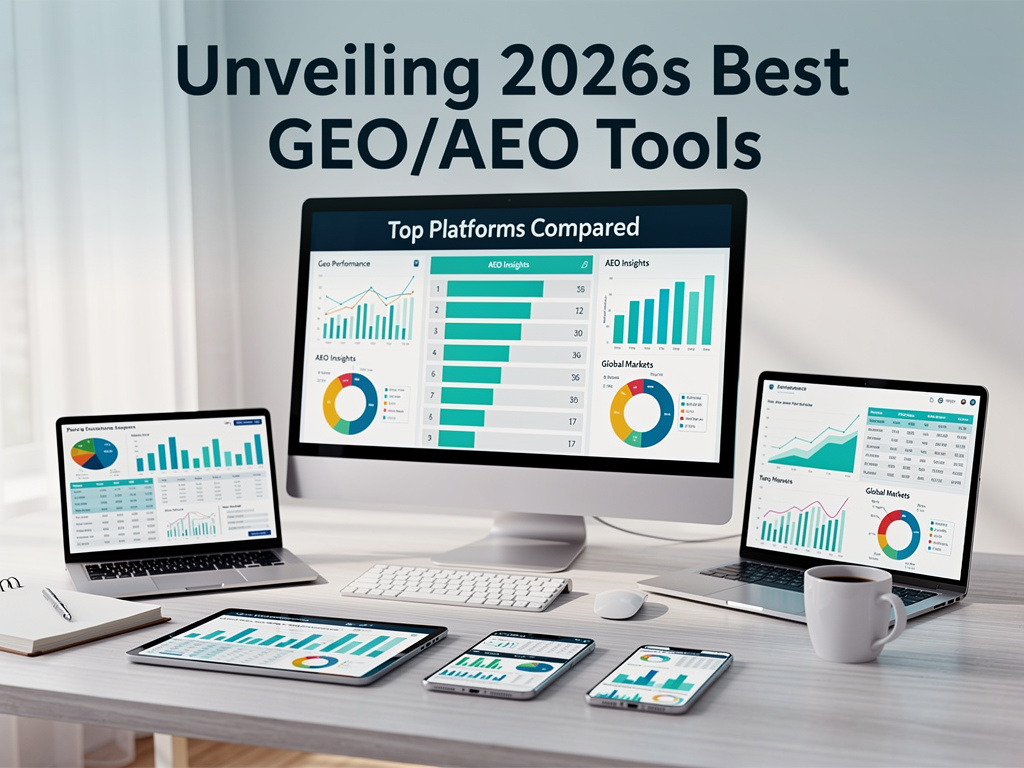
Choosing the right platform depends on your specific needs. This comparison table shows how the top AI visibility platforms stack up across key criteria.
| Platform | Best For | AI Platforms Covered | Starting Price | Standout Feature |
|---|---|---|---|---|
| Profound | Enterprise teams | 10+ platforms | $99/month | Real user conversation data |
| Otterly AI | Mid-market companies | 5+ platforms | Custom pricing | Clean monitoring interface |
| Peec AI | Agencies | 6+ platforms | Custom pricing | Multi-client management |
| AthenaHQ | Brand managers | 6+ platforms | Enterprise pricing | Brand perception analysis |
| Goodie AI | Early adopters | 5+ platforms | Competitive | Modern interface design |
| Bluefish AI | Large enterprises | 8+ platforms | Enterprise pricing | Enterprise security features |
| Scrunch | Enterprises and agencies | 10+ platforms | Custom pricing | Complete optimization suite |
| Brandlight | Marketing teams | 5+ platforms | Mid-market pricing | Visual brand reporting |
| Writesonic | Content teams | Limited monitoring | Volume-based | Scaled content creation |
| Trakkr | Small businesses | 4+ platforms | Entry-level | Simple setup and use |
Coverage Comparison
The platforms with the broadest AI engine coverage are Profound and Scrunch. Both monitor 10+ platforms including ChatGPT, Claude, Perplexity, Google AI Overviews, Gemini, and others.
Bluefish AI offers strong coverage at 8+ platforms. AthenaHQ, Peec AI, and Otterly AI cover the major platforms most brands care about.
Smaller tools like Trakkr focus on the top 4-5 AI engines. This works for many use cases but misses emerging platforms.
Pricing Tiers
Entry-Level ($24-$99/month): Trakkr, Profound Starter, some Goodie AI plans
Mid-Market ($100-$500/month): Otterly AI, Brandlight, Peec AI agency plans
Enterprise (Custom pricing): Profound Growth/Enterprise, Scrunch, Bluefish AI, AthenaHQ
Feature Depth
For the most complete feature set, Scrunch leads with monitoring, auditing, optimization, and content delivery in one platform. Profound matches depth with its enterprise focus on governance and real user data.
Writesonic takes a different approach, focusing on content creation over monitoring. It pairs well with monitoring tools rather than replacing them.
How to Choose the Right AI Visibility Platform
With 10 strong options, picking the right tool comes down to your specific situation. Here’s a framework for deciding.
Consider Your Team Size
Small teams (1-5 people): Start with simpler tools like Trakkr or Goodie AI. You need data without complexity. Don’t pay for features you won’t use.
Mid-size teams (5-20 people): Otterly AI, Brandlight, or Peec AI offer the right balance. You get real insights without enterprise overhead.
Large teams (20+ people): Profound, Scrunch, or Bluefish AI provide the depth and controls you need. Enterprise features justify the investment.
Consider Your Primary Use Case
Monitoring only: Otterly AI, Trakkr, or Goodie AI focus on tracking without overwhelming optimization features.
Brand management: AthenaHQ and Brandlight approach GEO as a brand challenge. They suit marketing-led organizations.
Agency work: Peec AI and Scrunch handle multiple clients well. Reporting and white-label features matter here.
Content creation: Writesonic helps produce AI-optimized content at scale. Pair it with a monitoring tool.
Enterprise compliance: Profound and Bluefish AI include governance and audit features required by large organizations.
Consider Your Budget
Be realistic about what you can spend. An expensive tool you underuse wastes money. A cheap tool that misses your needs wastes time.
Start with free trials and free reports where available. Profound offers a free AEO report. Most platforms provide demos. Use these to compare before committing.
Getting Started with GEO/AEO Platforms
Once you’ve chosen a platform, following a clear process helps you get value quickly.
Week 1: Setup and Baseline
Add your brand, main products, and top competitors. Set up tracking for your most important queries. Document your current visibility scores as a baseline.
Week 2-4: Analysis
Let data accumulate. Look for patterns in where you appear and where you don’t. Identify queries where competitors show up but you’re missing. Check accuracy of AI responses about your brand.
Month 2: Action
Based on analysis, create or update content. Focus on queries with high potential and gaps you can fill. Update sources that AI cites about your industry.
Ongoing: Measure and Iterate
Track visibility changes after content updates. See what works and do more of it. Watch for new competitors entering your space.
Common Mistakes to Avoid
- Tracking too many queries dilutes focus. Start narrow.
- Expecting instant results leads to disappointment. AI models update gradually.
- Ignoring accuracy for visibility metrics misses the point. Correct information matters.
- Working in isolation from content and PR teams limits impact. GEO needs cross-functional support.
The Future of AI Visibility Tools
The GEO/AEO category evolves quickly. Understanding where it’s headed helps you make better choices now.
Trends to Watch
Agentic AI Integration: As AI agents book travel, make purchases, and complete tasks, visibility in these interactions becomes valuable. Profound’s shopping analysis hints at this direction.
Real-Time Optimization: Current tools track and recommend. Future tools will optimize automatically, updating content and sources based on AI visibility data.
Deeper Source Analysis: Understanding which sources influence AI answers gets more sophisticated. Tools will map influence networks more precisely.
Platform Consolidation: Some current tools will merge or be acquired. Expect fewer but more capable platforms over time.
What Won’t Change
AI engines will keep answering user questions. Brands will need visibility in those answers. The core problem GEO/AEO tools solve isn’t going away.
Quality content that accurately represents your brand remains the foundation. No tool replaces the need for genuine value to offer users.
Conclusion
GEO and AEO have become real categories with mature tools to choose from. The 10 platforms covered here represent the best options available in 2026.
For enterprise teams, Profound and Scrunch offer the most complete solutions. Agencies should look at Peec AI and Scrunch. Smaller teams can start with Trakkr or Otterly AI.
The right choice depends on your size, budget, and use case. Test multiple options before deciding. AI visibility will only grow more valuable as more users rely on AI for answers.
FAQs About Top 10 GEO/AEO Platforms
| What is the difference between GEO and AEO? | GEO (Generative Engine Optimization) focuses on large language models like ChatGPT and Claude that generate answers from training data. AEO (Answer Engine Optimization) covers a broader category including AI search engines like Perplexity that cite sources directly. Most tools now address both. |
| Which GEO/AEO platform is best for small businesses? | Trakkr and Goodie AI offer the most accessible entry points for small businesses. Both provide straightforward monitoring without enterprise complexity. Profound’s Starter plan at $99/month also works for smaller teams focused on ChatGPT visibility. |
| How do AI visibility platforms differ from traditional SEO tools? | Traditional SEO tools track rankings in search results. GEO/AEO platforms track mentions in AI-generated answers. The data sources, metrics, and optimization strategies differ completely. Some brands use both types of tools together. |
| Can I improve AI visibility without using a GEO platform? | You can create AI-friendly content and build authoritative sources without dedicated tools. But you won’t know what’s working without visibility data. Platforms like those listed help you measure results and iterate based on evidence. |
| What AI engines do most GEO/AEO tools monitor? | Most platforms cover ChatGPT, Perplexity, and Google AI Overviews at minimum. Leaders like Profound and Scrunch monitor 10+ engines including Claude, Gemini, Microsoft Copilot, DeepSeek, Grok, and Meta AI. |
| How long does it take to see results from GEO optimization? | AI model updates happen gradually. Expect 4-12 weeks to see visibility changes from content improvements. Some platforms like Perplexity with real-time web access show changes faster than models relying on periodic training updates. |
| Which AI visibility platform is best for agencies? | Peec AI and Scrunch are the most popular choices among agencies. Both offer multi-client management, white-label reporting, and pricing models that work for agency economics. Profound also serves agencies at the enterprise level. |
| What should I look for in an enterprise GEO/AEO vendor? | Enterprise buyers should check for data security certifications, audit trail features, API access, customer success support, and proven scale. Profound, Scrunch, and Bluefish AI built these capabilities specifically for enterprise requirements. |
| How much do GEO/AEO platforms cost in 2026? | Pricing ranges from $24/month for entry-level tools to six-figure annual contracts for enterprise platforms. Most mid-market options fall in the $100-$500/month range. Enterprise pricing is typically custom based on scale and features. |
| Do I need separate tools for monitoring and content optimization? | Some platforms like Scrunch and Profound combine monitoring with optimization tools. Others like Writesonic focus on content creation while Otterly focuses on monitoring. You can use specialized tools together or choose an all-in-one platform. |




 Stack Insight is intended to support informed decision-making by providing independent information about business software and services. Some product details, including pricing, features, and promotional offers, may be supplied by vendors or partners and can change without notice.