
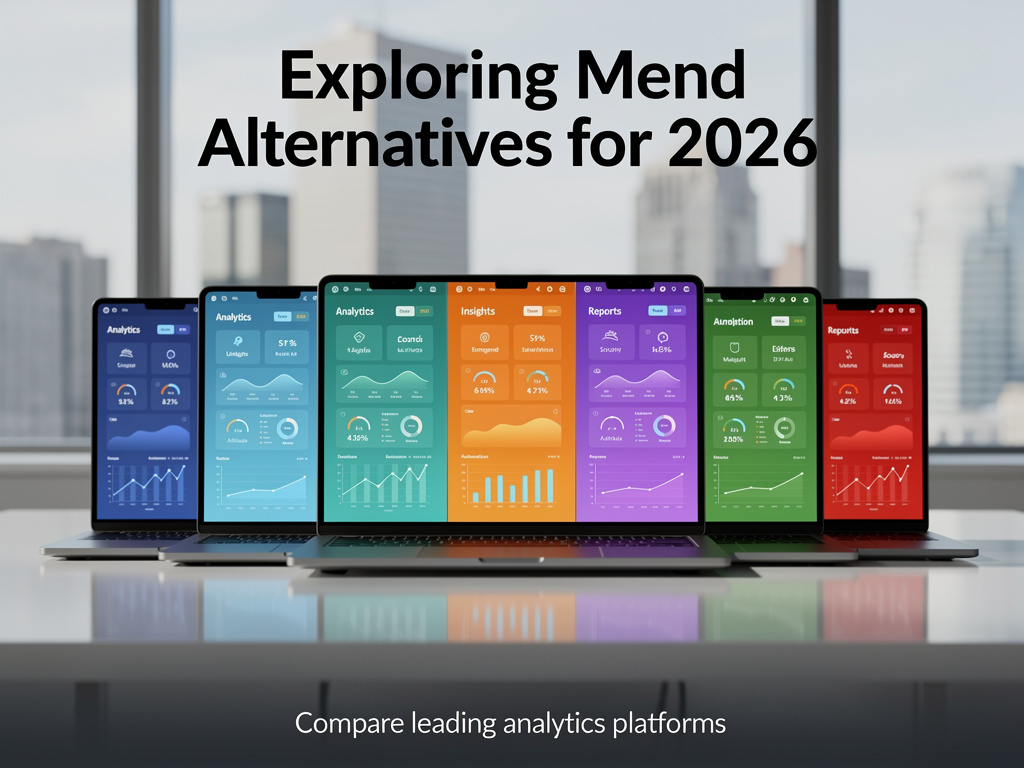
Best Mend Alternatives: Top 9 Software Composition Analysis Tools for 2026

JFrog Xray Review
- Deep artifact scanning
- Real time blocking protection
- Strong policy and compliance
- Broad cicd integrations
- Policy setup learning curve
- Resource heavy on large repos
- Possible peak performance impact

Snyk Review
- Actionable fix recommendations
- Seamless IDE and Git integration
- Broad language and package support
- Automated pull requests for fixes
- Advanced setup takes longer
- Enterprise features may cost more
Black Duck Review
- Extensive vulnerability knowledge base
- Strong license compliance tracking
- Deep binary and container scanning
- Broad CI CD integrations
- Higher enterprise pricing
- Setup can take weeks
- May need security expertise
- Policy tuning takes time
Apiiro Review
- Unified security visibility
- Real time risk insights
- Strong DevOps integrations
- Fewer false positives
- Enterprise focused pricing
- Longer full rollout timeline
- May be heavy for small teams
SonarQube Review
- Strong code quality metrics
- Broad language support
- Great CI CD integrations
- Finds security issues early
- Initial setup can be complex
- Needs configuration expertise
- Can produce false positives
- Resource intensive for large projects

Mend Review
- Fast scanning performance
- Strong integrations with workflows
- Broad language and framework support
- Developer friendly experience
- Fewer advanced niche features
- Legacy tool integration challenges
- Policy setup takes time

Checkmarx Review
- Accurate vulnerability detection
- Supports many languages
- Strong CI CD integrations
- Detailed remediation guidance
- Complex initial configuration
- Steep learning curve
- Long scans on large codebases

Semgrep Review
- Very fast scan speeds
- Low false positives
- Custom rules and transparency
- Strong CI CD integration
- Limited third party integrations
- Weaker compliance reporting
- Per developer pricing costs

Veracode Review
- Supports 80 plus languages
- Scales for large portfolios
- Strong compliance reporting
- Reduces false positives
- Premium pricing tier
- May feel complex for small teams

Fossa Review
- Manual vulnerability verification
- Over 500 package managers
- Strong license compliance
- Enterprise scale deployments
- Pricing requires sales call
- May be overkill small teams
Organizations seeking robust application security platforms often evaluate Mend alternatives to find the perfect fit for their development workflows. Mend.io, formerly known as WhiteSource, has established itself as a leading software composition analysis tool. However, many teams require different features, pricing models, or integration capabilities.
This comprehensive guide explores the top nine Mend alternatives available in 2026. Each platform offers unique strengths in vulnerability management, license compliance, and developer experience. We’ll examine critical factors including scanning capabilities, integration options, pricing structures, and ease of use.
Whether you’re a startup looking for cost-effective security or an enterprise needing advanced compliance features, this analysis will help you make an informed decision. Our detailed reviews cover everything from basic vulnerability detection to sophisticated DevSecOps integration.
Understanding the Need for Mend Alternatives
Modern development teams face increasing pressure to secure their applications without slowing down delivery cycles. Application security platforms have become essential tools in this balance. While Mend.io provides excellent software composition analysis capabilities, organizations often seek alternatives for various strategic reasons.
Cost considerations frequently drive the search for Mend substitutes. Many teams operate under tight budget constraints and need solutions that deliver strong security without breaking the bank. Additionally, some organizations require specific integrations that align better with their existing toolchain.
Developer experience represents another crucial factor. Teams want security tools that integrate seamlessly into their workflows without creating friction. The best Mend alternatives prioritize developer-friendly interfaces and automated remediation suggestions.
Compliance requirements also influence platform selection. Different industries have varying regulatory needs, and some alternatives offer specialized compliance features that better match specific organizational requirements.
Key Evaluation Criteria for Software Composition Analysis Tools
Selecting the right application security platform requires careful evaluation across multiple dimensions. Our analysis focuses on six critical criteria that directly impact security effectiveness and developer productivity.
Scanning Coverage encompasses the breadth of languages, package managers, and vulnerability databases each platform supports. Comprehensive coverage ensures no critical vulnerabilities slip through the cracks.
Integration Capabilities determine how smoothly each tool fits into existing development workflows. Seamless CI/CD integration and IDE plugins significantly impact adoption rates and effectiveness.
Developer Experience includes interface design, workflow integration, and the quality of remediation guidance. Tools with poor user experience often face resistance from development teams.
Accuracy and Performance measure both the precision of vulnerability detection and the speed of scanning operations. False positives waste developer time, while slow scans bottleneck deployment pipelines.
Pricing Structure affects long-term sustainability and scalability. Transparent, predictable pricing models help organizations plan budgets and scale security programs effectively.
Support and Documentation quality determines how quickly teams can resolve issues and maximize platform value. Strong support ecosystems accelerate implementation and ongoing optimization.
Snyk: Developer-First Security Platform
Snyk stands out as one of the most popular Mend.io alternatives, offering a comprehensive developer-centric security platform. The solution covers multiple attack vectors including open source dependencies, custom code, container images, and infrastructure as code configurations.
Scanning Coverage: Snyk provides extensive language support covering JavaScript, Python, Java, .NET, Go, Ruby, PHP, and Scala. The platform monitors over 2 million known vulnerabilities across major package managers and registries.
Snyk Open Source specifically targets dependency vulnerabilities, while Snyk Code analyzes custom application code. Snyk Container secures container images, and Snyk Infrastructure as Code checks Terraform and Kubernetes configurations for security misconfigurations.
Integration Capabilities: The platform excels in CI/CD integration with native support for GitHub, GitLab, Bitbucket, Azure DevOps, and Jenkins. IDE plugins for Visual Studio Code, IntelliJ, and Eclipse bring security feedback directly into developer environments.
Snyk’s CLI tool enables flexible integration scenarios and supports custom automation workflows. The platform also offers webhook support for custom integrations and enterprise workflows.
Developer Experience: Snyk prioritizes developer workflow integration with intuitive interfaces and actionable remediation guidance. Automated fix pull requests help developers address vulnerabilities without deep security expertise.
The platform provides clear vulnerability explanations, impact assessments, and step-by-step remediation instructions. Developers can configure custom policies and suppression rules to align with organizational risk tolerance.
Pricing: Snyk offers a free tier supporting up to 200 tests per month for open source projects. Paid plans start at $25 per developer per month, with enterprise pricing available for larger organizations requiring advanced compliance features.
Black Duck: Enterprise-Grade Open Source Management
Black Duck by Synopsys represents a mature, enterprise-focused alternative to Mend.io. The platform emphasizes comprehensive open source governance, license compliance, and operational risk management across large-scale development environments.
Scanning Coverage: Black Duck maintains one of the industry’s largest vulnerability databases, covering over 5 million open source components. The platform supports signature-based scanning that identifies components even when modified or compiled.
Advanced binary analysis capabilities detect open source usage in compiled applications, providing visibility into inherited dependencies. The solution covers major programming languages and package managers used in enterprise environments.
Integration Capabilities: Enterprise-grade integration options include support for major CI/CD platforms, build tools, and development environments. Black Duck integrates with Jenkins, Azure DevOps, GitLab, and custom automation frameworks.
The platform provides robust APIs for custom integrations and enterprise workflow automation. Policy enforcement capabilities enable automated compliance checking and reporting across development pipelines.
Developer Experience: Black Duck focuses on providing security and legal teams with detailed visibility and control over open source usage. The interface prioritizes compliance reporting and risk assessment over developer workflow integration.
While comprehensive, the platform may require more security expertise to configure and maintain effectively. Advanced policy management features provide granular control over open source approval workflows.
Enterprise Focus: Black Duck excels in large enterprise environments requiring strict compliance controls and detailed audit trails. The platform provides comprehensive license compliance features and legal risk assessment capabilities.
Apiiro: Application Risk Intelligence Platform
Apiiro takes a unique approach among Mend replacements by combining static application security testing with business context and risk intelligence. The platform analyzes code changes, data flows, and business impact to prioritize security efforts effectively.
Risk-Based Approach: Apiiro’s core differentiator lies in its risk intelligence capabilities that consider business context when prioritizing vulnerabilities. The platform analyzes data sensitivity, application criticality, and potential business impact.
Advanced code analysis combines traditional security scanning with data flow analysis to understand how vulnerabilities might affect sensitive information or critical business processes.
Scanning Coverage: The platform supports major programming languages including Java, .NET, JavaScript, Python, and Go. Apiiro analyzes both custom code and open source dependencies for security vulnerabilities and compliance issues.
Unique capabilities include automated detection of sensitive data handling, API security analysis, and infrastructure configuration assessment. The platform provides visibility into application architecture and data flows.
Integration Capabilities: Apiiro integrates with major version control systems, CI/CD platforms, and cloud environments. The platform automatically discovers applications and tracks code changes to maintain current risk assessments.
Cloud-native architecture ensures seamless integration with AWS, Azure, and Google Cloud Platform. Custom integrations support enterprise environments with complex toolchain requirements.
Business Context: Advanced risk scoring considers factors beyond technical vulnerabilities, including business criticality, data sensitivity, and regulatory requirements. This approach helps security teams focus on the most impactful issues first.
Checkmarx: Comprehensive Application Security Testing
Checkmarx offers a comprehensive application security platform that serves as a strong alternative to Mend for organizations requiring broad security testing capabilities. The solution combines static analysis, dependency scanning, and interactive testing in a unified platform.
Multi-Modal Scanning: Checkmarx SAST provides industry-leading static application security testing capabilities covering over 25 programming languages. The platform detects security vulnerabilities, coding standard violations, and potential logic flaws.
Checkmarx SCA focuses specifically on open source dependency management, providing vulnerability detection and license compliance features comparable to Mend.io. Advanced package analysis identifies transitive dependencies and hidden risks.
Scanning Coverage: Extensive language support includes Java, .NET, JavaScript, Python, PHP, C/C++, Go, Swift, and many others. The platform analyzes source code, bytecode, and binary files to provide comprehensive coverage.
Advanced taint analysis capabilities track data flow through applications to identify complex vulnerability patterns. The solution also provides architectural risk analysis and secure coding guidance.
Integration Capabilities: Enterprise-grade integrations support major development platforms including GitHub, GitLab, Azure DevOps, and Jenkins. IDE plugins provide real-time feedback during development.
REST APIs enable custom integrations and automated workflow management. The platform supports both cloud and on-premises deployment models to meet enterprise security requirements.
Enterprise Features: Advanced reporting and dashboard capabilities provide executive-level visibility into application security posture. Customizable policies enable organizations to enforce coding standards and compliance requirements.
Role-based access controls and audit trails support enterprise governance requirements. Integration with ticketing systems automates vulnerability management workflows.
Semgrep: Lightweight Static Analysis Tool
Semgrep represents a modern approach to static analysis, offering a lightweight yet powerful Mend alternative that prioritizes speed and customization. The platform enables organizations to write custom rules for specific security requirements and coding standards.
Rule-Based Analysis: Semgrep’s core strength lies in its flexible rule engine that allows custom security policy enforcement. Teams can write specific rules for their codebase patterns, framework usage, and security requirements.
The platform includes an extensive library of community-contributed rules covering common security vulnerabilities, performance issues, and coding best practices. Organizations can combine public rules with custom policies.
Scanning Coverage: Support for over 20 programming languages includes Python, JavaScript, Java, Go, PHP, Ruby, and many others. The platform analyzes source code patterns rather than building complete syntax trees, enabling faster scanning.
Advanced pattern matching capabilities detect complex security issues including injection vulnerabilities, authentication bypasses, and sensitive data leaks. Custom rules can target organization-specific security requirements.
Performance and Speed: Lightweight architecture enables rapid scanning that fits seamlessly into developer workflows. Incremental scanning capabilities analyze only changed code to minimize CI/CD pipeline impact.
Fast execution times make Semgrep suitable for pre-commit hooks and IDE integration. The platform provides near-instantaneous feedback on security issues during development.
Integration Capabilities: Native integration with major CI/CD platforms includes GitHub Actions, GitLab CI, Jenkins, and CircleCI. Command-line interface supports custom automation scenarios.
Developer-friendly output formats and IDE plugins bring security feedback directly into development environments. The platform also supports custom notification and reporting integrations.
Veracode: Enterprise Application Security Platform
Veracode provides a mature, enterprise-focused security platform that serves as a comprehensive Mend.io substitute for large organizations. The solution combines multiple testing methodologies with strong compliance and reporting capabilities.
Multi-Testing Approach: Veracode Static Analysis provides comprehensive source code security testing with support for over 100 languages and frameworks. The platform identifies security vulnerabilities, compliance violations, and quality issues.
Software Composition Analysis capabilities specifically target open source dependencies, providing vulnerability detection and license compliance features. Dynamic analysis testing validates vulnerabilities in running applications.
Enterprise Compliance: Strong compliance features support regulatory requirements including PCI DSS, HIPAA, SOX, and other industry standards. Detailed audit trails and reporting capabilities satisfy enterprise governance needs.
Policy management features enable organizations to enforce security standards and compliance requirements across development teams. Custom scoring and risk assessment align with organizational priorities.
Scanning Coverage: Extensive language support includes modern and legacy programming languages. Advanced binary analysis capabilities scan compiled applications without requiring source code access.
Comprehensive vulnerability database coverage includes proprietary research and third-party intelligence sources. Regular updates ensure detection of newly discovered security issues.
Integration Capabilities: Enterprise-grade integrations support major development platforms and CI/CD tools. REST APIs enable custom automation and workflow integration.
Strong support for enterprise development environments includes integration with ticketing systems, SIEM platforms, and governance tools. Both cloud and on-premises deployment options support various security requirements.
SonarQube: Code Quality and Security Platform
SonarQube offers a comprehensive code quality platform that includes security vulnerability detection, making it a viable alternative to Mend for teams prioritizing overall code health alongside security concerns.
Code Quality Focus: SonarQube’s primary strength lies in comprehensive code quality analysis that includes security vulnerability detection as part of broader quality assessments. The platform identifies bugs, code smells, and security hotspots.
Quality gate capabilities enable teams to enforce quality standards and prevent deployment of substandard code. Security rules integrate seamlessly with quality metrics for holistic code assessment.
Scanning Coverage: Support for over 25 programming languages includes Java, C#, JavaScript, TypeScript, Python, PHP, and many others. The platform provides both static analysis and dependency vulnerability detection.
Security vulnerability detection covers OWASP Top 10 categories and other common security issues. Advanced taint analysis tracks data flow through applications to identify complex vulnerability patterns.
Developer Experience: Strong IDE integration brings quality and security feedback directly into development environments. Pull request decoration provides feedback on proposed changes before merge.
Clear remediation guidance helps developers understand and fix identified issues. Educational content explains security concepts and best practices to improve team security awareness.
Deployment Options: SonarQube offers both community and commercial editions with varying feature sets. Self-hosted deployment provides complete control over data and configuration.
SonarCloud provides hosted service options for teams preferring managed solutions. Enterprise features include advanced security analysis, portfolio management, and compliance reporting.
JFrog Xray: Universal Component Analysis
JFrog Xray provides comprehensive component analysis capabilities that make it a strong Mend replacement for organizations already using JFrog Artifactory or seeking universal artifact scanning capabilities.
Universal Scanning: Xray’s core advantage lies in its ability to scan all artifacts stored in JFrog Artifactory, including packages, container images, and build artifacts. This universal approach provides comprehensive visibility across the entire software supply chain.
Deep integration with Artifactory enables automated scanning of all artifacts as they flow through development and deployment pipelines. Policy enforcement capabilities block vulnerable components before deployment.
Component Analysis: Advanced vulnerability database includes proprietary research and multiple third-party intelligence sources. The platform provides detailed vulnerability information, impact assessment, and remediation guidance.
License compliance features identify licensing issues and policy violations across open source components. Custom policies enable organizations to enforce specific compliance requirements.
Integration Capabilities: Native integration with JFrog platform components provides seamless workflow integration for existing JFrog users. CI/CD integrations support major platforms including Jenkins, Azure DevOPs, and GitLab.
REST APIs enable custom automation and integration scenarios. The platform supports both cloud and on-premises deployment models to meet various security requirements.
Supply Chain Security: Advanced capabilities include build provenance tracking, artifact metadata analysis, and supply chain impact assessment. The platform provides visibility into component origins and modification history.
Impact analysis features help teams understand how vulnerabilities affect downstream applications and deployments. Automated blocking capabilities prevent vulnerable components from entering production environments.
FOSSA: Modern Open Source Management
FOSSA represents a modern approach to open source management, offering developer-friendly workflows that make it an attractive Mend.io alternative for teams prioritizing ease of use and automation.
Developer-Centric Design: FOSSA prioritizes developer experience with intuitive interfaces and seamless CI/CD integration. The platform provides real-time license and vulnerability checks without disrupting development workflows.
Automated dependency detection and analysis require minimal configuration, enabling quick deployment and adoption. Clear reporting and remediation guidance help developers address issues efficiently.
Modern CI Integration: Native integration with modern CI/CD platforms includes GitHub Actions, GitLab CI, CircleCI, and Jenkins. The platform provides fast scanning that fits seamlessly into automated pipelines.
Policy-as-code capabilities enable teams to define compliance requirements in configuration files that version alongside application code. This approach ensures consistent enforcement across environments.
Scanning Coverage: Comprehensive language and package manager support includes major ecosystems like npm, PyPI, Maven, NuGet, and Go modules. The platform automatically detects dependencies and tracks license obligations.
Vulnerability detection capabilities leverage multiple databases to identify security issues in open source dependencies. Regular updates ensure coverage of newly discovered vulnerabilities.
License Compliance: Advanced license analysis helps organizations understand compliance obligations and potential risks. The platform identifies license conflicts and provides guidance for resolution.
Automated reporting features generate compliance documentation and audit trails. Custom policies enable organizations to enforce specific licensing requirements based on business needs.
Comparison Table: Key Features and Pricing
| Platform | Primary Focus | Language Support | Integration Quality | Starting Price | Best For |
|---|---|---|---|---|---|
| Snyk | Developer-first security | 15+ languages | Excellent | $25/dev/month | DevSecOps teams |
| Black Duck | Enterprise governance | 20+ languages | Very Good | Custom pricing | Large enterprises |
| Apiiro | Risk intelligence | 10+ languages | Good | Custom pricing | Risk-focused teams |
| Checkmarx | Comprehensive SAST | 25+ languages | Excellent | Custom pricing | Security-first organizations |
| Semgrep | Custom rule engine | 20+ languages | Very Good | Free tier available | Custom policy teams |
| Veracode | Enterprise compliance | 100+ languages | Excellent | Custom pricing | Regulated industries |
| SonarQube | Code quality + security | 25+ languages | Very Good | Free community edition | Quality-focused teams |
| JFrog Xray | Universal component analysis | All major languages | Excellent | $98/month base | JFrog ecosystem users |
| FOSSA | Modern open source management | Major ecosystems | Very Good | Custom pricing | Modern development teams |
Making the Right Choice for Your Organization
Selecting the optimal Mend alternative requires careful consideration of your organization’s specific needs, constraints, and objectives. No single platform excels in every area, making it crucial to prioritize features that align with your security strategy.
For Developer-Focused Teams: Snyk and FOSSA offer excellent developer experience with intuitive interfaces and seamless workflow integration. These platforms minimize friction while providing comprehensive security coverage.
For Enterprise Organizations: Black Duck, Veracode, and Checkmarx provide robust compliance features, detailed reporting, and enterprise-grade scalability. These solutions excel in regulated environments requiring strict governance.
For Budget-Conscious Teams: SonarQube community edition and Semgrep’s open source version provide substantial security capabilities without licensing costs. These options work well for smaller teams or organizations with limited security budgets.
For Custom Requirements: Semgrep’s flexible rule engine enables organizations to enforce specific security policies and coding standards. This approach works well for teams with unique compliance or security requirements.
Consider factors beyond features when making your decision. Implementation complexity, training requirements, and ongoing maintenance costs significantly impact total cost of ownership and long-term success.
Implementation Best Practices
Successfully deploying any Mend substitute requires careful planning and execution. Organizations should start with pilot programs to validate tool effectiveness before full-scale deployment.
Start Small: Begin implementation with a single team or project to understand tool capabilities and identify integration challenges. This approach minimizes risk and provides valuable feedback for broader deployment.
Configure Policies Gradually: Avoid overwhelming development teams with too many security policies initially. Start with critical vulnerabilities and high-risk issues, then gradually expand coverage as teams adapt.
Provide Training: Ensure development teams understand security concepts and tool capabilities. Well-trained teams achieve better security outcomes and higher adoption rates.
Integrate Early: Deploy security scanning as early as possible in the development lifecycle. Pre-commit hooks and IDE integration provide the fastest feedback loops and lowest remediation costs.
Monitor and Optimize: Regularly review scanning results, false positive rates, and developer feedback to optimize tool configuration. Continuous improvement ensures sustained value from your security investment.
Future Trends in Application Security
The application security landscape continues evolving rapidly, with several trends shaping the future of Mend alternatives and security tooling generally.
AI-Powered Analysis: Machine learning capabilities increasingly enhance vulnerability detection accuracy and reduce false positives. Advanced AI features will provide more intelligent prioritization and automated remediation suggestions.
Supply Chain Security: Growing awareness of software supply chain risks drives demand for comprehensive component tracking and provenance verification. Future platforms will provide deeper visibility into component origins and modification history.
Developer Experience Focus: Security tools will continue prioritizing developer workflow integration and user experience. Platforms that minimize friction while maximizing security value will gain competitive advantages.
Cloud-Native Integration: As organizations adopt cloud-native architectures, security tools will provide enhanced container and Kubernetes security capabilities. Integration with cloud security platforms will become increasingly important.
Shift-Left Security: The industry trend toward earlier security integration will drive innovation in IDE plugins, pre-commit scanning, and developer education features.
Conclusion
The nine Mend alternatives explored in this guide offer diverse approaches to application security and software composition analysis. Each platform brings unique strengths that align with different organizational needs and priorities.
Success depends on selecting a solution that matches your team’s workflow, compliance requirements, and budget constraints. Whether you prioritize developer experience, enterprise governance, or cost effectiveness, these alternatives provide viable paths forward for securing your applications in 2026.
Frequently Asked Questions About Mend Alternatives
- What are the main reasons organizations seek Mend alternatives?
Organizations typically look for Mend alternatives due to cost considerations, specific integration requirements, developer experience preferences, or specialized compliance needs. Some teams prefer different pricing models or require features that align better with their existing toolchains. - Which Mend alternative offers the best developer experience?
Snyk and FOSSA are widely recognized for providing excellent developer experiences with intuitive interfaces, seamless CI/CD integration, and automated remediation suggestions. These platforms prioritize workflow integration and minimize friction for development teams. - Are there free alternatives to Mend available?
Yes, several free options exist including SonarQube Community Edition, Semgrep’s open source version, and Snyk’s free tier for open source projects. These solutions provide substantial security capabilities without licensing costs, though they may have feature limitations compared to paid versions. - How do these Mend substitutes handle enterprise compliance requirements?
Enterprise-focused alternatives like Black Duck, Veracode, and Checkmarx provide comprehensive compliance features including detailed audit trails, policy management, role-based access controls, and regulatory reporting capabilities. These platforms excel in regulated environments requiring strict governance. - What programming languages do these Mend alternatives support?
Most alternatives support major programming languages including Java, JavaScript, Python, .NET, Go, PHP, and Ruby. Veracode offers the broadest coverage with 100+ languages, while newer platforms like Apiiro focus on the most commonly used modern languages. - Can these alternatives integrate with existing CI/CD pipelines?
All major Mend alternatives provide CI/CD integration capabilities with platforms like Jenkins, GitHub Actions, GitLab CI, and Azure DevOps. The quality and ease of integration vary, with Snyk, Checkmarx, and JFrog Xray offering particularly robust integration options. - How do the pricing models compare across different Mend alternatives?
Pricing varies significantly from free open source options to enterprise solutions with custom pricing. Snyk offers transparent per-developer pricing starting at $25/month, while enterprise platforms like Black Duck and Veracode use custom pricing based on organization size and requirements. - Which alternative is best for small development teams?
Small teams often benefit from Snyk’s developer-friendly approach, SonarQube Community Edition for budget constraints, or Semgrep for custom security policies. These options provide strong security capabilities without overwhelming smaller teams with enterprise complexity.





 Stack Insight is intended to support informed decision-making by providing independent information about business software and services. Some product details, including pricing, features, and promotional offers, may be supplied by vendors or partners and can change without notice.