
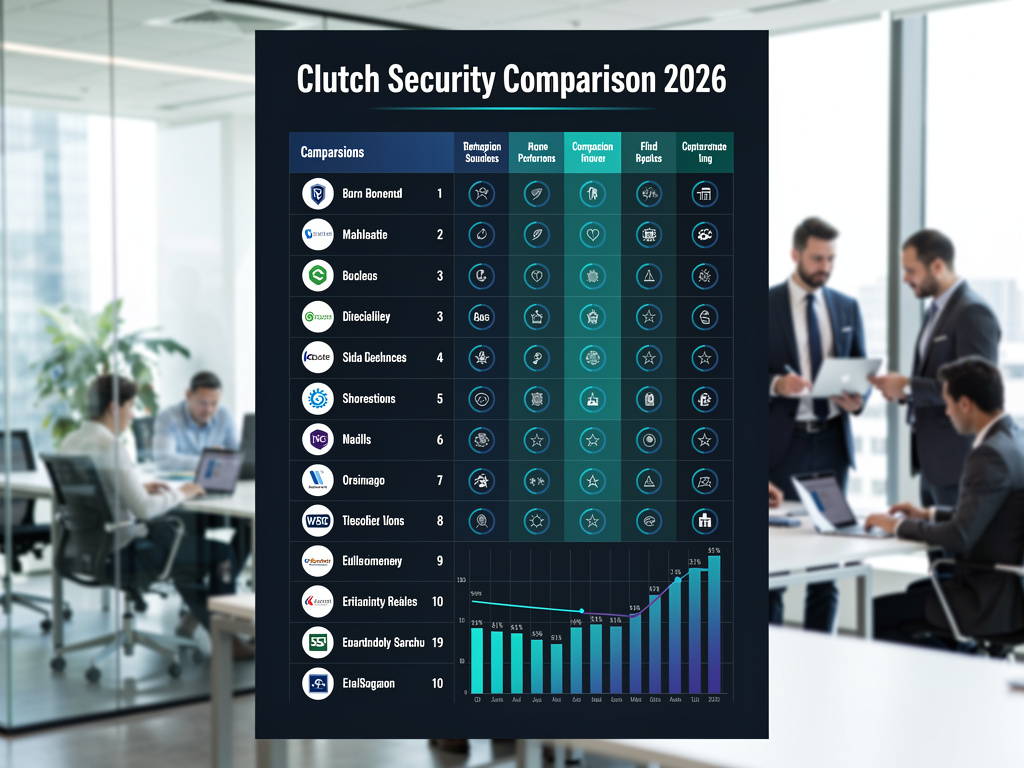
The Ultimate Clutch Security Comparison: Top Alternatives and Competitors in 2026

Entro Security Review
- Best for complex environments
- Integration effort varies
- Enterprise focused pricing
- Learning curve for workflows
- Best for complex environments
- Integration effort varies
- Enterprise focused pricing
- Learning curve for workflows

Clutch Security Review
- Automatic NHI discovery
- Unified multi cloud visibility
- Security focused risk context
- Improves compliance efficiency
- No built in MFA
- Needs careful legacy integration
- Implementation can take months

Token Security Review
- Deep machine identity discovery
- Continuous monitoring and visibility
- API first integrations
- Low ongoing maintenance
- Enterprise rollout can take time
- Niche focus not broad IAM

Glide Identity Review
- Eliminates passwords and SMS OTP
- Strong SIM based security
- Major carrier partnerships
- Fast enterprise deployments
- SDK integration required
- Deployment can take months
- Depends on carrier coverage

Oasis Security Review
- Purpose built for non human identities
- Automatic discovery and cataloging
- Continuous monitoring and threat detection
- Strong multi cloud coverage
- Best for larger environments
- Pricing scales with identity volume
- Implementation may take weeks

Linx Security Review
- AI driven risk assessment
- Automated provisioning workflows
- Strong compliance reporting
- Handles non human identities
- Geared to larger enterprises
- Implementation takes weeks
- Subscription pricing can scale

Permit.io Review
- Powerful policy as code
- Visual no code builder
- Real time policy sync
- Strong audit compliance tools can feel heavy for simple apps and adds vendor dependency
- Overkill for simple projects
- Limited on premises options
- Some vendor dependency

Transmit Security Review
- Passwordless login experience
- Risk based protection
- Strong compliance certifications
- Responsive expert support
- Pricing depends on usage
- Advanced setup takes longer
- Best for large scale teams
Organizations today face escalating cybersecurity challenges as digital transformation accelerates. Non-human identity management has become a critical security concern, requiring specialized platforms to protect machines, applications, and services. Clutch Security has emerged as a prominent player in this space, but numerous alternatives offer compelling features and capabilities.
This comprehensive analysis examines the leading Clutch Security alternatives available in 2026. Each platform offers unique strengths for managing digital identities, secrets, and access controls. Understanding these differences is crucial for making informed decisions about your organization’s security infrastructure.
The following evaluation covers ten leading platforms, analyzing their core features, pricing models, and implementation considerations. Each solution addresses different aspects of identity security, from traditional human identity management to specialized non-human identity protection. This comparison will help security professionals select the most appropriate platform for their specific requirements.
Understanding the Identity Security Landscape
Identity security has evolved dramatically over the past decade. Traditional perimeter-based security models no longer suffice in today’s distributed computing environments. Zero-trust architectures now require comprehensive identity verification for every access request.
Non-human identities often outnumber human users by significant margins in modern enterprises. These digital entities include service accounts, API keys, certificates, and automated processes. Managing these identities effectively prevents unauthorized access and data breaches.
The market offers diverse solutions addressing different aspects of identity security. Some platforms focus exclusively on human identity management, while others specialize in non-human identities. Hybrid solutions attempt to address both requirements within unified platforms.
Selecting the right platform requires careful consideration of organizational needs, existing infrastructure, and future growth plans. Budget constraints and compliance requirements also influence platform selection decisions.
Okta: The Market Leader Alternative
Okta stands as the most comprehensive Clutch Security alternative available in 2026. This platform dominates the identity and access management market with extensive features and proven scalability. Organizations worldwide rely on Okta for managing both human and non-human identities.
The platform’s strength lies in its extensive integration ecosystem. Thousands of pre-built connectors enable seamless integration with existing business applications. This reduces implementation complexity and accelerates time-to-value for new deployments.
Okta’s workforce identity solutions provide comprehensive single sign-on capabilities. Multi-factor authentication options include biometric verification, hardware tokens, and mobile-based authentication. Advanced risk-based authentication automatically adjusts security requirements based on user behavior and context.
Customer identity and access management features support external user communities. These capabilities enable organizations to extend identity services to customers, partners, and vendors. API-first architecture ensures flexibility for custom integrations and unique business requirements.
The platform’s administrative interface offers intuitive policy management and detailed reporting capabilities. Security teams can create granular access policies based on user attributes, device characteristics, and contextual information. Real-time monitoring provides visibility into access patterns and potential security threats.
Pricing follows a per-user model with different tiers based on feature requirements. Enterprise customers benefit from volume discounts and dedicated support services. Implementation typically requires professional services for complex environments and custom integrations.
GitGuardian: Specialized Code Security Focus
GitGuardian specializes in protecting secrets within source code repositories and development environments. This platform addresses a critical security gap where traditional identity management solutions often fall short. Developer teams particularly benefit from GitGuardian’s code-centric approach.
The platform continuously monitors code repositories for exposed secrets, API keys, and credentials. Real-time scanning detects vulnerabilities as developers commit code, preventing secrets from reaching production environments. This proactive approach reduces security incidents and compliance violations.
GitGuardian’s secret detection engine recognizes over 400 types of secrets and credentials. Machine learning algorithms minimize false positives while ensuring comprehensive coverage of potential vulnerabilities. Custom detection rules accommodate proprietary secret formats and organizational requirements.
Remediation workflows guide developers through secure secret management practices. The platform provides clear instructions for removing exposed secrets and implementing proper secret storage solutions. Integration with popular development tools ensures seamless workflow adoption.
Enterprise features include centralized policy management and detailed audit trails. Security teams gain visibility into secret sprawl across development environments and can enforce consistent security practices. Compliance reporting supports various regulatory requirements and industry standards.
The platform offers both SaaS and on-premises deployment options. Pricing scales based on repository count and feature requirements. Developer-focused documentation and support resources facilitate rapid adoption and implementation.
Akeyless Identity Security Platform: Zero-Knowledge Architecture
Akeyless revolutionizes secret management through its innovative zero-knowledge architecture. This platform ensures that sensitive data remains encrypted and inaccessible to the service provider. Organizations with strict data sovereignty requirements find this approach particularly appealing.
The platform’s distributed fragments architecture eliminates single points of failure. Secrets are fragmented and distributed across multiple secure locations, making unauthorized access virtually impossible. Even Akeyless personnel cannot access customer secrets due to the zero-knowledge implementation.
Dynamic secret generation capabilities create temporary credentials for database access and cloud services. These short-lived secrets automatically expire and rotate, reducing the attack surface for potential breaches. Integration with major cloud providers enables seamless credential management across hybrid environments.
Akeyless supports both human and machine authentication methods. Certificate-based authentication, API keys, and cloud provider native authentication provide flexible access options. Role-based access controls ensure appropriate permission levels for different user types and use cases.
The platform’s API-first design enables easy integration with existing DevOps pipelines and CI/CD workflows. REST APIs and SDKs support multiple programming languages and platforms. Command-line tools facilitate adoption by operations teams and automated processes.
Deployment options include SaaS, on-premises, and hybrid configurations. The platform scales automatically to accommodate growing secret management requirements. Pricing follows a consumption-based model with no per-user limitations.
Entro: Non-Human Identity Specialist
Entro focuses specifically on non-human identity and secret security management within enterprise environments. This specialized approach addresses the unique challenges associated with machine-to-machine authentication and automated processes. Organizations with extensive automation infrastructures benefit significantly from Entro’s capabilities.
The platform provides comprehensive visibility into non-human identity sprawl across organizational infrastructure. Automated discovery processes identify service accounts, API keys, and machine identities that may have been created without proper oversight. This visibility is crucial for understanding the true scope of identity management challenges.
Entro’s risk assessment capabilities evaluate non-human identities based on usage patterns, privilege levels, and access frequency. Machine learning algorithms identify anomalous behavior that may indicate compromised credentials or unauthorized access attempts. Predictive analytics help security teams proactively address potential vulnerabilities.
Secret lifecycle management features automate rotation schedules and ensure consistent security practices. The platform can automatically update secrets across multiple systems and applications without service disruption. Integration with popular orchestration platforms enables seamless automation workflow incorporation.
Compliance reporting provides detailed audit trails for non-human identity activities. These reports support various regulatory requirements and help organizations demonstrate proper security controls. Custom reporting capabilities accommodate specific organizational needs and industry standards.
The platform offers flexible deployment options including cloud-native and on-premises installations. Pricing scales based on the number of managed identities and required features. Professional services support implementation and optimization for complex environments.
Token Security: Machine Identity Excellence
Token Security delivers comprehensive machine identity protection with advanced threat detection capabilities. This platform specifically addresses the challenges of securing automated processes, service accounts, and machine-to-machine communications. Modern infrastructure environments require this specialized approach.
The platform’s behavioral analytics engine establishes baseline patterns for machine identity usage. Deviations from normal behavior trigger alerts and can automatically implement protective measures. This proactive approach prevents potential security incidents before they impact business operations.
Token Security provides real-time monitoring of machine identity activities across cloud and on-premises environments. Centralized dashboards offer comprehensive visibility into identity usage patterns and potential security threats. Advanced filtering and search capabilities help security teams quickly identify specific issues.
The platform’s policy engine enables granular access controls for different types of machine identities. Time-based restrictions, network location requirements, and resource-specific permissions provide flexible security options. Automated policy enforcement ensures consistent security standards across organizational infrastructure.
Integration capabilities support major cloud providers, container orchestration platforms, and enterprise applications. REST APIs enable custom integrations with existing security tools and workflow automation systems. SDK availability accelerates development of custom solutions and integrations.
Professional services include implementation planning, configuration optimization, and ongoing support. Training programs help security teams maximize platform capabilities and implement security best practices. Pricing follows a subscription model based on managed identity count and feature requirements.
Venafi: Machine Identity Management Pioneer
Venafi pioneered machine identity management and continues to lead in certificate and cryptographic key protection. This platform addresses the critical security requirements for PKI infrastructure and machine identity lifecycle management. Organizations with extensive certificate deployments rely on Venafi’s proven capabilities.
The platform provides comprehensive certificate lifecycle management from issuance through expiration. Automated renewal processes prevent service disruptions caused by expired certificates. Centralized certificate inventory provides visibility into all organizational certificates across multiple certificate authorities.
Venafi’s machine identity protection extends beyond certificates to include SSH keys, code signing certificates, and mobile certificates. Policy-based management ensures consistent security standards across different types of machine identities. Compliance reporting supports various industry regulations and audit requirements.
The platform’s threat intelligence capabilities identify potential certificate-based attacks and vulnerabilities. Integration with security information and event management systems provides comprehensive threat visibility. Automated remediation workflows enable rapid response to security incidents.
Cloud-native certificate management features support modern containerized and serverless environments. Integration with Kubernetes, Docker, and major cloud providers ensures seamless certificate management in dynamic infrastructures. API-driven automation reduces manual certificate management overhead.
Enterprise deployment options include both SaaS and on-premises solutions. The platform scales to support millions of certificates across global infrastructures. Professional services provide implementation guidance and optimization recommendations for complex environments.
Oasis Security: Identity Risk Management
Oasis Security specializes in comprehensive non-human identity risk management across modern enterprise environments. This platform combines discovery, assessment, and remediation capabilities to address identity security challenges proactively. Organizations seeking holistic identity risk visibility benefit from Oasis Security’s approach.
The platform’s discovery engine automatically identifies non-human identities across cloud environments, applications, and infrastructure systems. Machine learning algorithms classify identities based on type, privilege level, and usage patterns. Continuous discovery ensures new identities are immediately incorporated into security management processes.
Risk scoring capabilities evaluate identities based on multiple factors including privilege elevation, dormant accounts, and excessive permissions. Priority-based remediation recommendations help security teams focus on the most critical vulnerabilities first. Trend analysis provides insights into identity risk evolution over time.
Oasis Security provides detailed remediation guidance for identified security issues. Step-by-step instructions help administrators address vulnerabilities without disrupting business operations. Automated remediation options enable hands-off resolution of common security issues.
The platform’s reporting capabilities support compliance requirements and executive visibility needs. Customizable dashboards provide role-appropriate views of identity security posture. Integration with ticketing systems enables workflow automation for remediation activities.
Cloud-native architecture ensures scalability and performance for large enterprise environments. The platform supports major cloud providers and hybrid infrastructure configurations. Subscription pricing includes unlimited identity discovery and standard support services.
SailPoint: Enterprise Identity Governance
SailPoint provides comprehensive identity governance solutions for large enterprise environments. This platform combines traditional identity management with modern security capabilities to address complex organizational requirements. Enterprise customers benefit from SailPoint’s proven scalability and feature depth.
The platform’s identity governance framework provides centralized oversight of user access across organizational systems. Automated provisioning and deprovisioning processes ensure appropriate access levels throughout employee lifecycles. Policy-based access management reduces manual administrative overhead while improving security consistency.
SailPoint’s access certification capabilities enable periodic review of user permissions and access rights. Automated workflows route certification requests to appropriate managers and system owners. Compliance reporting provides detailed audit trails for regulatory requirements and security assessments.
The platform includes advanced analytics for identifying access anomalies and potential security risks. Machine learning algorithms detect unusual access patterns that may indicate compromised accounts or insider threats. Predictive analytics help organizations proactively address emerging identity security challenges.
Integration capabilities support hundreds of enterprise applications and systems. Pre-built connectors reduce implementation complexity for common business applications. Custom connector development tools accommodate unique organizational requirements and legacy systems.
Professional services include implementation planning, configuration optimization, and change management support. Training programs help administrators and end users maximize platform capabilities. Enterprise pricing reflects the platform’s comprehensive feature set and scalability requirements.
Curity: API Security Integration
Curity combines identity management with comprehensive API security in a unified platform approach. This integration addresses the growing need for coordinated identity and API protection in modern application architectures. Organizations with extensive API ecosystems benefit from Curity’s integrated approach.
The platform’s identity server provides standards-based authentication and authorization capabilities. Support for OAuth 2.0, OpenID Connect, and SAML ensures compatibility with diverse application requirements. Token management features enable fine-grained access control for API resources and microservices.
Curity’s API gateway capabilities provide comprehensive protection for API endpoints. Rate limiting, threat protection, and request validation help prevent common API-based attacks. Integration with the identity server enables seamless authentication and authorization for API consumers.
The platform supports both human and machine authentication scenarios. Developer-friendly APIs and SDKs facilitate integration with existing applications and services. Comprehensive documentation accelerates implementation and reduces development complexity.
Administrative interfaces provide centralized management of identity policies and API security rules. Real-time monitoring capabilities offer visibility into authentication patterns and API usage. Detailed logging supports troubleshooting and compliance reporting requirements.
Deployment options include cloud-hosted, on-premises, and hybrid configurations. The platform scales to support high-volume authentication and API traffic. Professional services provide implementation guidance and optimization recommendations for complex environments.
Platform Comparison Analysis
Comparing these platforms requires careful consideration of specific organizational needs and requirements. Each solution offers unique strengths and addresses different aspects of identity security management. Understanding these differences is crucial for making informed platform selection decisions.
Traditional identity management platforms like Okta and SailPoint excel in human identity scenarios but may lack specialized non-human identity features. Specialized platforms like Entro and Token Security focus specifically on machine identity challenges but may require additional solutions for human identity management.
Deployment preferences significantly influence platform selection decisions. Cloud-native organizations may prefer SaaS solutions, while regulated industries often require on-premises or hybrid deployments. Security requirements and data sovereignty concerns also impact deployment choice considerations.
Integration capabilities vary significantly between platforms. Organizations with extensive existing infrastructure need platforms with comprehensive integration options. API availability and quality affect long-term flexibility and customization possibilities.
| Platform | Primary Focus | Deployment Options | Integration Strength | Pricing Model |
|---|---|---|---|---|
| Okta | Comprehensive Identity Management | SaaS | Excellent | Per User |
| GitGuardian | Code Security | SaaS/On-Premises | Good | Per Repository |
| Akeyless | Zero-Knowledge Secrets | SaaS/On-Premises/Hybrid | Excellent | Consumption-Based |
| Entro | Non-Human Identity | Cloud/On-Premises | Good | Per Identity |
| Token Security | Machine Identity | SaaS | Good | Subscription |
| Venafi | Certificate Management | SaaS/On-Premises | Excellent | Per Certificate |
| Oasis Security | Identity Risk | Cloud-Native | Good | Subscription |
| SailPoint | Enterprise Governance | SaaS/On-Premises | Excellent | Enterprise Licensing |
| Curity | API Security | SaaS/On-Premises/Hybrid | Good | Subscription |
Implementation Considerations and Best Practices
Successful platform implementation requires careful planning and consideration of organizational readiness factors. Technical requirements, user training needs, and change management processes all influence implementation success. Organizations should develop comprehensive implementation strategies before beginning platform deployments.
Pilot deployments help identify potential challenges and optimization opportunities before full-scale implementations. Starting with non-critical systems reduces risk while providing valuable learning experiences. Gradual rollout strategies enable organizations to address issues and refine processes incrementally.
Integration testing is crucial for ensuring platform compatibility with existing systems and applications. Organizations should thoroughly test all required integrations before production deployment. Performance testing validates platform scalability and identifies potential bottlenecks.
Training programs ensure users and administrators can effectively utilize platform capabilities. Comprehensive documentation and ongoing support resources facilitate successful adoption. Change management processes help organizations navigate the transition from existing identity management practices.
Ongoing optimization ensures platforms continue meeting organizational needs as requirements evolve. Regular reviews of configuration settings, policies, and usage patterns identify improvement opportunities. Performance monitoring helps maintain optimal platform operation and user experience.
Cost Analysis and ROI Considerations
Platform costs extend beyond initial licensing fees to include implementation, training, and ongoing operational expenses. Organizations must consider total cost of ownership when evaluating platform options. Hidden costs can significantly impact overall platform economics and budget planning.
Implementation costs vary based on platform complexity and organizational requirements. Professional services fees, integration development, and user training all contribute to initial deployment costs. Organizations with complex requirements typically face higher implementation expenses.
Operational costs include ongoing licensing fees, support services, and administrative overhead. Platform maintenance, user support, and periodic updates require dedicated resources and budget allocation. Scaling costs should align with organizational growth projections and usage patterns.
Return on investment calculations should consider security risk reduction, operational efficiency gains, and compliance cost avoidance. Automated processes reduce manual administrative overhead and associated labor costs. Improved security posture reduces potential breach costs and regulatory penalties.
Long-term cost projections help organizations understand platform economics over extended timeframes. Vendor pricing changes, feature additions, and scaling requirements affect ongoing costs. Budget planning should include provisions for platform evolution and capability expansion.
Security and Compliance Framework Integration
Modern identity platforms must integrate seamlessly with existing security and compliance frameworks. Organizations operate under various regulatory requirements that influence platform selection and configuration decisions. Compliance capabilities often determine platform viability for regulated industries.
Audit trail capabilities provide detailed logging of identity-related activities and administrative actions. These logs support compliance reporting requirements and security incident investigations. Tamper-evident logging ensures audit trail integrity and prevents unauthorized modifications.
Role-based access controls enable organizations to implement least-privilege principles and segregation of duties requirements. Granular permission models support complex organizational structures and compliance mandates. Policy enforcement mechanisms ensure consistent security standard application across organizational infrastructure.
Integration with security information and event management systems provides comprehensive security visibility. Correlation capabilities help identify complex attack patterns and security incidents. Automated alerting mechanisms enable rapid response to potential security threats and compliance violations.
Compliance reporting features support various regulatory frameworks including SOX, GDPR, and industry-specific standards. Automated report generation reduces manual compliance overhead and ensures consistent reporting quality. Custom reporting capabilities accommodate unique organizational requirements and audit needs.
Future-Proofing Your Identity Security Investment
Identity security requirements continue evolving as technology landscapes change and new threats emerge. Organizations must select platforms capable of adapting to future requirements and technological developments. Future-proofing considerations include platform flexibility, vendor roadmaps, and emerging technology support.
Cloud-native architectures provide inherent scalability and flexibility advantages over traditional on-premises solutions. Container support and microservices compatibility ensure platforms can adapt to modern application architectures. API-first designs enable integration with emerging technologies and custom solutions.
Artificial intelligence and machine learning capabilities enhance platform security and operational efficiency. Behavioral analytics improve threat detection accuracy and reduce false positive rates. Automated remediation capabilities reduce manual intervention requirements and improve response times.
Zero-trust architecture support becomes increasingly important as organizations abandon traditional perimeter-based security models. Platform capabilities must align with zero-trust principles and implementation requirements. Continuous verification mechanisms ensure ongoing security validation rather than one-time authentication.
Vendor stability and innovation capacity influence long-term platform viability. Organizations should evaluate vendor financial health, development resources, and market positioning. Technology roadmaps provide insights into future capability development and platform evolution plans.
Conclusion
Selecting the right Clutch Security alternative requires careful evaluation of organizational needs, technical requirements, and budget constraints. Each platform offers unique strengths addressing different aspects of identity security management. Okta provides comprehensive capabilities for most organizations, while specialized solutions excel in specific use cases.
Successful implementation depends on thorough planning, adequate training, and ongoing optimization efforts. Organizations should consider long-term requirements and future-proofing capabilities when making platform decisions. The investment in proper identity security management pays dividends through reduced risk and improved operational efficiency.
Frequently Asked Questions About Clutch Security Comparison
Common Questions About Clutch Security Alternatives
- Who should consider alternatives to Clutch Security?
Organizations with comprehensive identity management needs, existing infrastructure investments, or specific compliance requirements should evaluate alternatives. Companies requiring traditional human identity management alongside non-human identity protection benefit from platforms like Okta or SailPoint. - What are the key benefits of specialized non-human identity platforms?
Specialized platforms like Entro and Token Security provide deeper visibility into machine identity risks, automated secret management, and purpose-built workflows for non-human entities. These solutions often offer better detection of machine identity anomalies and more efficient remediation processes. - Why choose Okta over other Clutch Security alternatives?
Okta offers the most comprehensive feature set, extensive integration ecosystem, and proven scalability for enterprise environments. Organizations requiring both human and non-human identity management benefit from Okta’s unified platform approach and mature vendor ecosystem. - How do pricing models differ between identity security platforms?
Pricing varies significantly between per-user models (Okta), consumption-based pricing (Akeyless), and per-identity or subscription models (Token Security, Entro). Organizations should evaluate total cost of ownership including implementation, training, and operational expenses when comparing options. - What implementation challenges should organizations expect?
Common challenges include integration complexity with existing systems, user training requirements, and change management processes. Organizations with complex infrastructure or unique requirements typically face longer implementation timelines and higher professional services costs. - Which platforms work best for cloud-native environments?
Akeyless, Oasis Security, and Okta offer strong cloud-native capabilities with API-first architectures and container support. These platforms integrate well with modern DevOps workflows and provide scalability for dynamic cloud environments. - How important are compliance capabilities in platform selection?
Compliance capabilities are crucial for regulated industries and organizations with specific audit requirements. Platforms like SailPoint and Venafi offer comprehensive compliance reporting and audit trail capabilities that support various regulatory frameworks.
Reference: G2 Clutch Security Alternatives





 Stack Insight is intended to support informed decision-making by providing independent information about business software and services. Some product details, including pricing, features, and promotional offers, may be supplied by vendors or partners and can change without notice.