

Perimeter 81 Review
- Unified security console
- Zero Trust granular access
- Cloud native quick deployment
- Great for distributed teams
- Enterprise rollout can take weeks
- Policy setup needs planning

Cato Networks Review
- Single vendor SASE platform
- Global backbone performance
- Integrated security stack
- Fast deployment with sockets
- Best for multi site firms
- Subscription costs add up
- Needs PoP proximity
- Less on prem control

Zscaler Review
- Cloud native zero trust access
- Global scale low latency
- Replaces VPN complexity
- Strong compliance certifications
- Needs policy design expertise
- Subscription cost for small teams
- Training required for best results

Palo Alto Networks Review
- Leader in next gen firewalls
- Strong threat detection results
- Scales for enterprise needs
- Global support options
- Premium pricing
- Complex configuration setup
- Needs experienced security staff
- Migration requires careful planning

Netskope Review
- Strong cloud app visibility
- Unified SSE security stack
- Fast cloud native deployment
- Centralized easy management
- Enterprise grade pricing
- Network performance concerns
- Endpoint features need improvement

Cloudflare Review
- Generous free plan value
- Fast global Cdn network
- Strong Ddos protection
- Transparent pricing no bandwidth fees
- Limited free plan support
- Advanced setup can be complex
- False positive security blocks
- Potential vendor lock in

Fortinet Review
- Excellent price performance ratio
- Untegrated security fabric platform
- Handles heavy traffic well
- Scales for enterprises
- Support response can be slow
- Support expertise inconsistent
- Deployment can be complex

Juniper Review
- Unified centralized management
- Advanced threat prevention
- Scales for large enterprises
- Strong visibility and analytics
- Premium pricing
- Specialized training required
- Support quality can vary
- Ongoing licensing costs

Versa Networks Review
- Stable high availability connectivity
- Integrated zero trust security
- Advanced analytics and insights
- Multi tenancy for providers
- Subscription costs can scale
- Rollouts may take months
Cisco Review
- Comprehensive product portfolio
- Strong enterprise reliability
- Excellent work life balance
- Global partner ecosystem
- Premium pricing and licensing
- Support quality can vary
- Occasional hardware quality issues
- Documentation can be limited
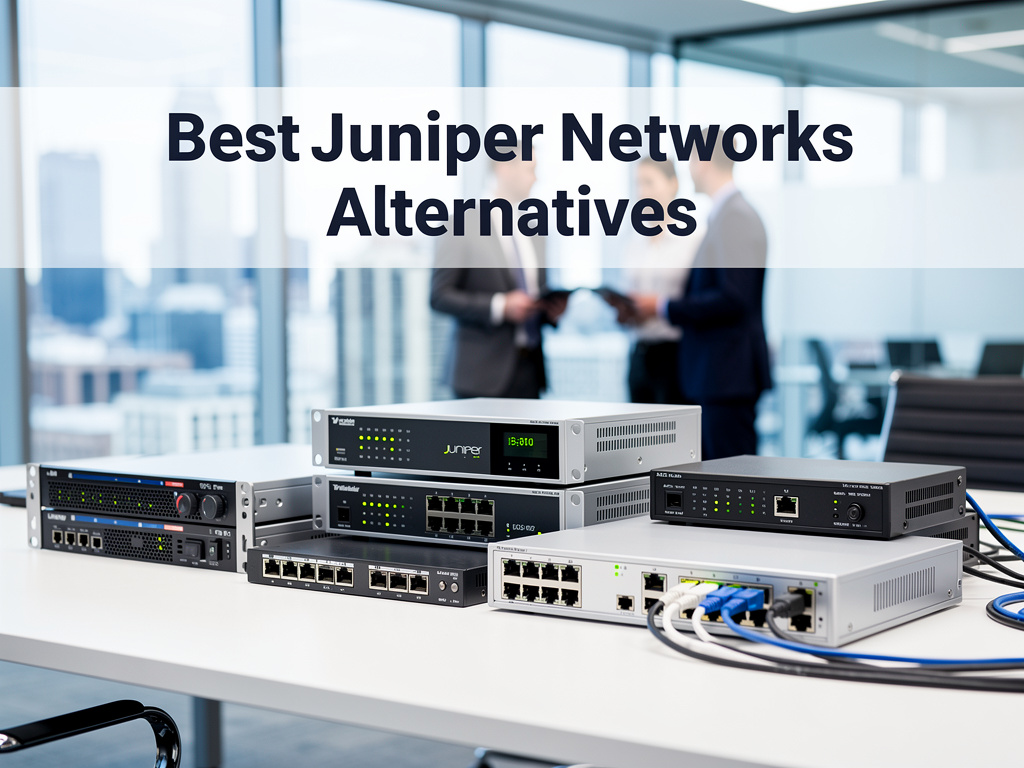
Top Juniper Networks Competitors: Complete Guide to Enterprise Networking Alternatives in 2026
Enterprise networking remains a critical foundation for modern business operations. Organizations worldwide rely on robust networking solutions to ensure seamless connectivity, security, and performance. While Juniper Networks has established itself as a prominent player in the networking space, numerous alternatives offer compelling features and capabilities. This comprehensive analysis examines the leading competitors to Juniper Networks, evaluating their strengths, weaknesses, and unique value propositions. From established giants like Cisco and Palo Alto Networks to emerging leaders like Cloudflare and Zscaler, each solution brings distinct advantages to the table. Understanding these alternatives empowers decision-makers to select the networking platform that best aligns with their organization’s specific requirements, budget constraints, and long-term strategic objectives.
Understanding the Enterprise Networking Landscape
The enterprise networking market has evolved dramatically in recent years. Traditional on-premises solutions now compete with cloud-native platforms and hybrid architectures. Organizations face increasing pressure to balance security, performance, and cost-effectiveness while maintaining operational flexibility.
Juniper Networks currently holds a significant position in this competitive landscape. The company offers comprehensive networking solutions spanning routing, switching, and security platforms. However, market dynamics continue shifting as businesses embrace digital transformation initiatives and remote work models.
Key market trends shaping the networking industry include:
- Migration to cloud-first architectures
- Increased emphasis on zero-trust security models
- Growing demand for SD-WAN solutions
- Integration of artificial intelligence and machine learning
- Focus on simplified management and automation
These trends create opportunities for both established vendors and innovative newcomers to challenge traditional market leaders. Understanding each competitor’s approach to these challenges provides valuable insight into their potential fit for specific use cases.
Cisco Systems: The Industry Heavyweight
Cisco Systems represents the most formidable competitor to Juniper Networks in the enterprise networking space. With decades of market leadership and an extensive product portfolio, Cisco maintains significant competitive advantages across multiple networking segments.
Product Portfolio Strengths:
Cisco’s Catalyst switching series directly competes with Juniper’s EX series switches. The Catalyst 9000 family offers advanced programmability, enhanced security features, and comprehensive automation capabilities. These switches integrate seamlessly with Cisco’s broader ecosystem, providing unified management and consistent policy enforcement.
The company’s routing solutions, including the ASR and ISR series, deliver enterprise-grade performance with robust security integration. Cisco’s approach to routing emphasizes software-defined capabilities and cloud integration, appealing to organizations pursuing digital transformation initiatives.
Security Integration:
Cisco’s security portfolio extends far beyond traditional networking. The company offers comprehensive threat detection, endpoint protection, and cloud security solutions. This breadth allows customers to standardize on a single vendor for multiple security requirements, simplifying procurement and management processes.
Market Position:
According to industry analysis, Cisco maintains approximately 21.19% market share in network administration and management, significantly outpacing Juniper’s position. This market leadership translates into extensive partner ecosystems, comprehensive support resources, and ongoing innovation investment.
Competitive Advantages:
- Extensive global partner network
- Comprehensive training and certification programs
- Strong enterprise relationships and trust
- Integrated security and networking solutions
- Continuous innovation through substantial R&D investment
Palo Alto Networks: Security-First Networking
Palo Alto Networks brings a unique security-centric approach to enterprise networking. While traditionally known for next-generation firewalls, the company has expanded into comprehensive networking solutions that prioritize security integration from the ground up.
Next-Generation Firewall Leadership:
Palo Alto’s firewall technology consistently outperforms traditional competitors in independent testing. The platform’s application visibility and control capabilities exceed what many traditional networking vendors offer, including Juniper’s SRX series. Advanced threat detection and prevention features provide superior protection against sophisticated cyber attacks.
Cloud Security Innovation:
The company’s Prisma platform addresses cloud security challenges that traditional networking vendors struggle to solve comprehensively. Prisma SASE combines networking and security functions in a cloud-native architecture, appealing to organizations seeking simplified infrastructure management.
Zero Trust Architecture:
Palo Alto Networks has positioned itself as a leader in zero trust networking. Their approach assumes no implicit trust and verifies every transaction, providing enhanced security compared to traditional perimeter-based models. This philosophy resonates with security-conscious organizations across all industries.
Key Differentiators:
- Industry-leading threat intelligence and research
- Seamless integration between networking and security functions
- Strong cloud-native security capabilities
- Comprehensive visibility and analytics
- Proven track record in enterprise security deployments
Organizations evaluating Palo Alto Networks versus Juniper often find the security integration capabilities compelling, particularly in highly regulated industries where compliance requirements drive technology decisions.
Fortinet: Unified Security and Networking
Fortinet offers a compelling alternative to Juniper Networks through its Security Fabric approach. The company integrates networking and security functions within a unified platform, reducing complexity while maintaining high performance standards.
Security Fabric Architecture:
Fortinet’s Security Fabric creates an integrated ecosystem where networking and security components share threat intelligence and policy enforcement. This approach differs from Juniper’s more traditional separation of networking and security functions, potentially offering operational advantages for security-focused organizations.
Performance Optimization:
The company’s custom ASIC technology delivers impressive performance across both networking and security functions. FortiASIC processors enable high-throughput security inspection without the performance penalties typically associated with software-based solutions.
SD-WAN Capabilities:
Fortinet’s SD-WAN solution combines routing, security, and WAN optimization in a single platform. This integration appeals to organizations seeking to simplify their WAN infrastructure while maintaining comprehensive security coverage. The solution directly competes with Juniper’s SD-WAN offerings while providing additional security features.
Cost-Effectiveness:
Fortinet frequently positions itself as a cost-effective alternative to premium networking vendors. The company’s pricing strategy emphasizes value through integrated functionality rather than best-of-breed individual components. This approach resonates with cost-conscious organizations seeking comprehensive solutions.
Competitive Strengths:
- Integrated security and networking platform
- Custom ASIC technology for enhanced performance
- Comprehensive SD-WAN and security integration
- Strong value proposition for mid-market customers
- Extensive global presence and support
Zscaler: Cloud-Native Network Security
Zscaler represents a fundamental shift in enterprise networking philosophy. Rather than traditional on-premises infrastructure, Zscaler delivers networking and security services through a global cloud platform, challenging conventional approaches to enterprise connectivity.
Zero Trust Exchange Platform:
Zscaler’s core platform eliminates traditional VPN requirements by creating secure, direct connections between users and applications. This approach reduces attack surface area while improving user experience, particularly for remote and mobile workers. Traditional vendors like Juniper must adapt their solutions to compete with this cloud-native model.
Global Cloud Infrastructure:
The company operates data centers worldwide, ensuring low-latency access regardless of user location. This global presence enables consistent security policy enforcement and performance optimization without requiring extensive on-premises infrastructure investment.
Scalability Advantages:
Cloud-native architecture enables rapid scaling to accommodate changing business requirements. Organizations can adjust capacity and coverage without hardware procurement or deployment delays. This flexibility particularly appeals to growing businesses and those with variable networking demands.
Internet-First Architecture:
Zscaler’s approach assumes internet connectivity as the primary network transport. This philosophy aligns with modern application architectures and cloud adoption trends but may require significant architectural changes for organizations with substantial on-premises infrastructure investments.
Key Benefits:
- Reduced on-premises infrastructure requirements
- Consistent global security policy enforcement
- Simplified remote access without VPN complexity
- Automatic scaling and capacity management
- Comprehensive visibility and analytics
Netskope: Cloud Access Security Broker Excellence
Netskope specializes in cloud access security broker (CASB) and secure access service edge (SASE) solutions. While not a direct networking infrastructure competitor, Netskope addresses critical security and connectivity challenges that complement or potentially replace traditional networking approaches.
Cloud Security Leadership:
Netskope’s platform provides comprehensive visibility and control over cloud application usage. The solution identifies shadow IT, enforces data loss prevention policies, and protects against cloud-based threats. This capability addresses gaps that traditional networking vendors, including Juniper, may not fully address.
SASE Integration:
The company’s SASE platform combines networking and security functions in a cloud-delivered service model. This approach eliminates the need for separate point solutions while providing comprehensive protection for cloud-first organizations. SASE represents a significant shift from traditional hardware-centric networking approaches.
Data Protection Focus:
Netskope emphasizes data protection across all cloud environments and applications. Advanced data classification and protection capabilities help organizations maintain compliance while enabling cloud adoption. This focus on data-centric security differentiates Netskope from infrastructure-focused competitors.
API-Driven Architecture:
The platform’s API-driven approach enables seamless integration with existing security and IT management tools. Organizations can incorporate Netskope capabilities into existing workflows without requiring extensive process changes or staff retraining.
Competitive Advantages:
- Deep cloud application visibility and control
- Advanced data loss prevention capabilities
- Comprehensive threat protection for cloud environments
- Seamless integration with existing security infrastructure
- Strong compliance and governance features
Versa Networks: SD-WAN Innovation
Versa Networks focuses specifically on software-defined wide area networking (SD-WAN) and secure access service edge (SASE) solutions. The company positions itself as an innovative alternative to traditional WAN vendors, including Juniper’s SD-WAN offerings.
Comprehensive SASE Platform:
Versa’s SASE solution integrates SD-WAN, security, and cloud networking functions within a unified platform. This comprehensive approach eliminates the need for multiple point solutions while providing consistent policy enforcement across all network edges.
Multi-Tenant Architecture:
The platform’s multi-tenant design appeals to managed service providers and large enterprises with complex organizational structures. Advanced segmentation and isolation capabilities enable secure resource sharing while maintaining strict access controls.
Analytics and Automation:
Versa emphasizes artificial intelligence and machine learning for network optimization and threat detection. Advanced analytics provide insights into application performance, user behavior, and security threats, enabling proactive network management and optimization.
Flexible Deployment Options:
The company supports multiple deployment models including on-premises, cloud-hosted, and hybrid configurations. This flexibility enables organizations to adopt Versa solutions gradually without requiring complete infrastructure replacement.
Key Differentiators:
- True SASE platform with integrated security
- Advanced multi-tenancy and segmentation
- AI-driven network optimization and security
- Flexible deployment and migration options
- Strong managed service provider support
Cloudflare: Edge Computing and Security
Cloudflare brings a unique edge computing perspective to enterprise networking challenges. While traditionally focused on content delivery and web security, the company has expanded into comprehensive networking and security solutions that challenge traditional infrastructure approaches.
Global Edge Network:
Cloudflare operates one of the world’s largest edge networks, providing low-latency access to applications and services globally. This infrastructure enables performance optimization and security enforcement closer to end users, reducing dependence on traditional WAN infrastructure.
Zero Trust Network Access:
Cloudflare Access provides zero trust network access without requiring traditional VPN infrastructure. Users authenticate directly to applications through Cloudflare’s edge network, eliminating many security risks associated with traditional remote access solutions.
Magic WAN Solution:
The company’s Magic WAN service replaces traditional WAN infrastructure with cloud-based networking. Organizations can connect branch offices, data centers, and cloud environments through Cloudflare’s global network, potentially eliminating the need for traditional routing and switching equipment.
DDoS Protection and Performance:
Cloudflare’s DDoS protection capabilities exceed what most traditional networking vendors provide. The platform absorbs and mitigates attacks at the edge, protecting backend infrastructure and maintaining service availability during security incidents.
Developer-Friendly Approach:
The company’s focus on developer tools and APIs enables rapid deployment and customization. Organizations with strong technical teams can leverage Cloudflare’s platform to build custom networking and security solutions tailored to specific requirements.
Competitive Strengths:
- Massive global edge network infrastructure
- Integrated performance and security optimization
- Simplified remote access without VPN complexity
- Superior DDoS protection and mitigation
- Developer-friendly tools and customization options
Perimeter 81: Cloud Network Security
Perimeter 81 focuses on cloud-based network security solutions designed for modern distributed workforces. The company offers an alternative approach to traditional networking that emphasizes security, simplicity, and cloud integration.
Secure Access Service Edge (SASE):
Perimeter 81’s SASE platform combines networking and security functions in a cloud-delivered service model. The solution provides secure remote access, network segmentation, and threat protection without requiring complex on-premises infrastructure.
Zero Trust Network Architecture:
The platform implements zero trust principles by default, requiring authentication and authorization for all network access requests. This approach provides enhanced security compared to traditional perimeter-based models while supporting distributed workforce requirements.
Simplified Management:
Perimeter 81 emphasizes ease of use and management simplicity. The platform’s intuitive interface enables IT teams to deploy and manage network security policies without extensive specialized training or experience.
Cloud-Native Integration:
The solution integrates seamlessly with major cloud platforms and SaaS applications. Organizations can extend consistent security policies across hybrid and multi-cloud environments without additional complexity or management overhead.
SMB Focus:
While capable of supporting enterprise deployments, Perimeter 81 particularly appeals to small and medium-sized businesses seeking enterprise-grade security without complexity or high costs associated with traditional solutions.
Key Benefits:
- Rapid deployment and implementation
- Intuitive management and administration
- Comprehensive cloud security integration
- Cost-effective pricing for growing businesses
- Strong support for remote workforce requirements
Cato Networks: SD-WAN and Security Convergence
Cato Networks delivers a comprehensive SASE platform that converges SD-WAN and security functions within a single cloud-native solution. The company challenges traditional networking approaches by eliminating the need for separate point solutions and complex integrations.
SASE Cloud Platform:
Cato’s cloud platform provides global networking and security services without requiring on-premises hardware beyond simple edge devices. The solution includes SD-WAN, firewall, secure web gateway, and zero trust network access capabilities in an integrated platform.
Global Private Backbone:
The company operates a private global backbone network optimized for business traffic. This infrastructure provides predictable performance and security while reducing dependence on public internet connectivity for business-critical applications.
Unified Management:
Cato’s management platform provides single-pane-of-glass visibility and control over all networking and security functions. IT teams can configure policies, monitor performance, and respond to security incidents through a unified interface, reducing operational complexity.
Advanced Threat Protection:
The platform includes comprehensive threat protection capabilities including next-generation firewall, intrusion prevention, anti-malware, and advanced threat detection. Security functions operate natively within the networking infrastructure, eliminating performance bottlenecks associated with separate security appliances.
Scalable Architecture:
Cato’s cloud-native architecture enables rapid scaling to accommodate business growth or changing requirements. Organizations can add locations, users, or capacity without hardware procurement or deployment delays.
Competitive Advantages:
- True convergence of networking and security functions
- Global private backbone for optimized performance
- Unified management and visibility platform
- Rapid deployment and scaling capabilities
- Comprehensive threat protection integration
Comparative Analysis: Key Evaluation Criteria
When evaluating Juniper Networks alternatives, organizations must consider multiple factors that impact both immediate deployment success and long-term operational effectiveness. Each competitor brings unique strengths and potential limitations that align differently with specific use cases and organizational requirements.
Performance and Scalability:
Traditional vendors like Cisco and Fortinet provide proven high-performance hardware platforms suitable for demanding enterprise environments. Cloud-native solutions like Zscaler and Cloudflare offer different scalability models based on elastic cloud infrastructure rather than fixed hardware capacity.
Security Integration:
Security integration approaches vary significantly among competitors. Palo Alto Networks and Fortinet emphasize deep security integration within networking platforms. Cloud-native vendors like Netskope and Perimeter 81 provide security-first architectures that may require less traditional networking infrastructure.
Management Complexity:
Management complexity remains a critical evaluation criterion for most organizations. Traditional vendors typically require specialized expertise and training. Cloud-native solutions often emphasize simplified management but may require architectural changes to existing environments.
Cost Considerations:
Total cost of ownership varies significantly among alternatives. Hardware-based solutions require capital expenditure for equipment plus ongoing maintenance costs. Cloud-based solutions typically use operational expenditure models with predictable monthly or annual costs.
Migration and Integration:
Migration complexity and existing infrastructure integration capabilities influence vendor selection decisions. Some alternatives integrate seamlessly with existing environments while others require significant architectural changes.
| Vendor | Primary Strength | Target Market | Deployment Model | Security Integration | Management Complexity |
|---|---|---|---|---|---|
| Cisco Systems | Market leadership and ecosystem | Large enterprise | On-premises/Hybrid | Comprehensive | High |
| Palo Alto Networks | Security-first networking | Security-conscious enterprises | On-premises/Cloud | Industry-leading | Moderate |
| Fortinet | Integrated security fabric | Mid to large enterprise | On-premises/Hybrid | Native integration | Moderate |
| Zscaler | Cloud-native architecture | Cloud-first organizations | Cloud-only | Built-in | Low |
| Netskope | Cloud security expertise | Cloud-heavy enterprises | Cloud-only | CASB/SASE leader | Low |
| Versa Networks | SD-WAN innovation | Distributed enterprises | Flexible | Integrated | Moderate |
| Cloudflare | Global edge network | Tech-forward companies | Cloud-only | Edge-based | Low |
| Perimeter 81 | Simplicity and ease of use | SMB to mid-market | Cloud-only | Zero trust focus | Very low |
| Cato Networks | Converged SASE platform | Mid-market to enterprise | Cloud-only | Native convergence | Low |
Selection Criteria and Decision Framework
Selecting the optimal Juniper Networks alternative requires systematic evaluation of organizational requirements, technical constraints, and strategic objectives. Decision-makers should consider both immediate needs and long-term technology roadmaps when evaluating alternatives.
Technical Requirements Assessment:
Organizations must first clearly define their technical requirements including performance specifications, security standards, and integration needs. High-performance computing environments may favor traditional hardware-based solutions, while distributed workforces might benefit more from cloud-native alternatives.
Security and Compliance Considerations:
Regulatory compliance requirements significantly influence vendor selection decisions. Industries with strict compliance mandates may prefer vendors with proven track records and comprehensive certification portfolios. Organizations prioritizing security should evaluate integrated security capabilities rather than relying on separate point solutions.
Operational Considerations:
Existing staff expertise and training requirements impact implementation success and ongoing operational costs. Organizations with strong Cisco expertise might favor Cisco alternatives, while those seeking to reduce complexity might prefer cloud-native solutions with simplified management interfaces.
Budget and Financial Constraints:
Financial considerations extend beyond initial purchase prices to include ongoing operational costs, maintenance expenses, and potential cost savings from consolidation. Cloud-based solutions may offer predictable costs and reduced maintenance overhead compared to traditional hardware-based alternatives.
Strategic Technology Direction:
Long-term technology strategy influences vendor selection decisions. Organizations pursuing cloud-first strategies should prioritize vendors with strong cloud integration capabilities. Those maintaining significant on-premises infrastructure may prefer hybrid solutions that bridge existing and future architectures.
Industry-Specific Considerations
Different industries have unique requirements that influence optimal vendor selection among Juniper Networks alternatives. Understanding these industry-specific considerations helps organizations identify vendors best positioned to address their particular challenges and requirements.
Financial Services:
Financial institutions prioritize security, compliance, and reliability above most other considerations. Vendors like Palo Alto Networks and Fortinet appeal to this sector through comprehensive security integration and proven compliance capabilities. Low-latency requirements for trading applications may favor traditional hardware vendors over cloud-based alternatives.
Healthcare Organizations:
Healthcare providers must balance security requirements with operational simplicity and cost-effectiveness. HIPAA compliance and patient data protection create stringent security requirements that favor vendors with strong healthcare industry experience and dedicated compliance programs.
Manufacturing and Industrial:
Manufacturing environments often require robust, reliable networking solutions that integrate with operational technology systems. Traditional vendors like Cisco maintain advantages in industrial environments where proven reliability and extensive partner ecosystems provide value.
Technology Companies:
Technology companies frequently embrace innovative solutions and may tolerate higher complexity in exchange for advanced capabilities. Vendors like Cloudflare and Zscaler appeal to tech-forward organizations seeking cutting-edge solutions and developer-friendly platforms.
Government and Public Sector:
Government organizations require vendors with appropriate security clearances, compliance certifications, and proven track records in public sector deployments. Established vendors like Cisco and Palo Alto Networks typically maintain advantages in government markets through existing relationships and certifications.
Implementation and Migration Strategies
Successfully transitioning from Juniper Networks to alternative solutions requires careful planning and phased implementation approaches. Each vendor offers different migration tools and support services that can significantly impact implementation success and timeline.
Phased Migration Approaches:
Most organizations benefit from phased migration strategies that minimize business disruption and operational risk. Starting with non-critical network segments allows teams to gain experience with new platforms before migrating business-critical infrastructure.
Parallel Operation Strategies:
Running parallel networks during transition periods provides fallback options and reduces migration risk. This approach requires additional resources but ensures business continuity during implementation phases.
Staff Training and Change Management:
Successful migrations require comprehensive staff training and change management programs. Vendors vary significantly in their training resources, certification programs, and implementation support services. Organizations should evaluate these factors when selecting alternatives.
Integration Testing:
Thorough integration testing identifies potential issues before they impact production environments. Testing should include performance validation, security verification, and operational procedure validation across all affected systems and processes.
Vendor Support and Professional Services:
Professional services quality and availability significantly impact implementation success. Organizations should evaluate vendor support capabilities, partner ecosystem strength, and available consulting resources when making selection decisions.
Future Technology Trends and Vendor Positioning
The networking industry continues evolving rapidly with emerging technologies reshaping competitive landscapes and customer requirements. Understanding vendor positioning relative to future trends helps organizations make forward-looking investment decisions.
Artificial Intelligence Integration:
AI and machine learning capabilities increasingly differentiate networking platforms. Vendors like Cisco and Versa Networks emphasize AI-driven network optimization and security threat detection. Organizations should evaluate AI capabilities and roadmaps when selecting long-term technology partners.
Edge Computing Evolution:
Edge computing requirements create new networking challenges and opportunities. Cloudflare’s edge network provides natural advantages for edge computing scenarios, while traditional vendors adapt their solutions to support distributed edge architectures.
5G Network Integration:
5G networks create new connectivity options and requirements that impact enterprise networking decisions. Vendors with strong telecommunications industry relationships and 5G integration capabilities may provide advantages for organizations adopting 5G technologies.
Quantum-Safe Security:
Emerging quantum computing threats require quantum-safe cryptographic implementations. Security-focused vendors like Palo Alto Networks and Fortinet invest heavily in quantum-safe security research and development to maintain competitive advantages.
Sustainability and Environmental Considerations:
Environmental impact and sustainability considerations increasingly influence technology purchasing decisions. Cloud-native vendors often provide better energy efficiency compared to traditional hardware-based solutions, appealing to environmentally conscious organizations.
Understanding these trends and vendor positioning helps organizations select partners that align with long-term strategic directions and emerging technology requirements.
Conclusion
The enterprise networking market offers numerous compelling alternatives to Juniper Networks, each bringing unique strengths and capabilities. Traditional vendors like Cisco maintain advantages through market leadership and comprehensive ecosystems, while security-focused companies like Palo Alto Networks and Fortinet excel in integrated security platforms. Cloud-native vendors such as Zscaler, Cloudflare, and Cato Networks represent the future of networking with simplified management and enhanced scalability. Successful vendor selection requires careful evaluation of technical requirements, security needs, operational constraints, and strategic objectives to identify the optimal solution for each organization’s specific circumstances.
Frequently Asked Questions About Juniper Networks Competitors
- Which vendor provides the best alternative to Juniper’s switching solutions?
Cisco Catalyst switches represent the most direct alternative to Juniper’s EX series, offering comparable performance with extensive ecosystem support and market-leading features. - What are the key advantages of cloud-native networking over traditional hardware solutions?
Cloud-native solutions offer simplified management, automatic scaling, reduced infrastructure costs, and faster deployment compared to traditional hardware-based platforms. - How do security-integrated platforms compare to separate networking and security solutions?
Integrated platforms like those from Palo Alto Networks and Fortinet provide better threat visibility, simplified management, and reduced complexity compared to separate point solutions. - Which vendors offer the best migration support from Juniper Networks?
Cisco provides extensive migration tools and professional services due to market leadership, while cloud-native vendors like Zscaler offer simplified migration through reduced infrastructure requirements. - What factors should organizations prioritize when selecting Juniper alternatives?
Key factors include technical performance requirements, security integration needs, management complexity tolerance, budget constraints, and long-term strategic technology direction. - How do pricing models differ among Juniper Networks competitors?
Traditional vendors typically use capital expenditure models with upfront hardware costs, while cloud-native vendors offer operational expenditure models with predictable subscription pricing. - Which alternatives work best for organizations with distributed remote workforces?
Cloud-native solutions like Zscaler, Perimeter 81, and Cato Networks excel in supporting distributed workforces through simplified remote access and centralized management capabilities. - What compliance and regulatory considerations affect vendor selection decisions?
Highly regulated industries should prioritize vendors with proven compliance track records, comprehensive certifications, and dedicated compliance support programs like those offered by established vendors.
References:
6sense – Juniper Networks Market Share Analysis
CloudTango – Cisco vs Juniper Competitive Analysis




 Stack Insight is intended to support informed decision-making by providing independent information about business software and services. Some product details, including pricing, features, and promotional offers, may be supplied by vendors or partners and can change without notice.