
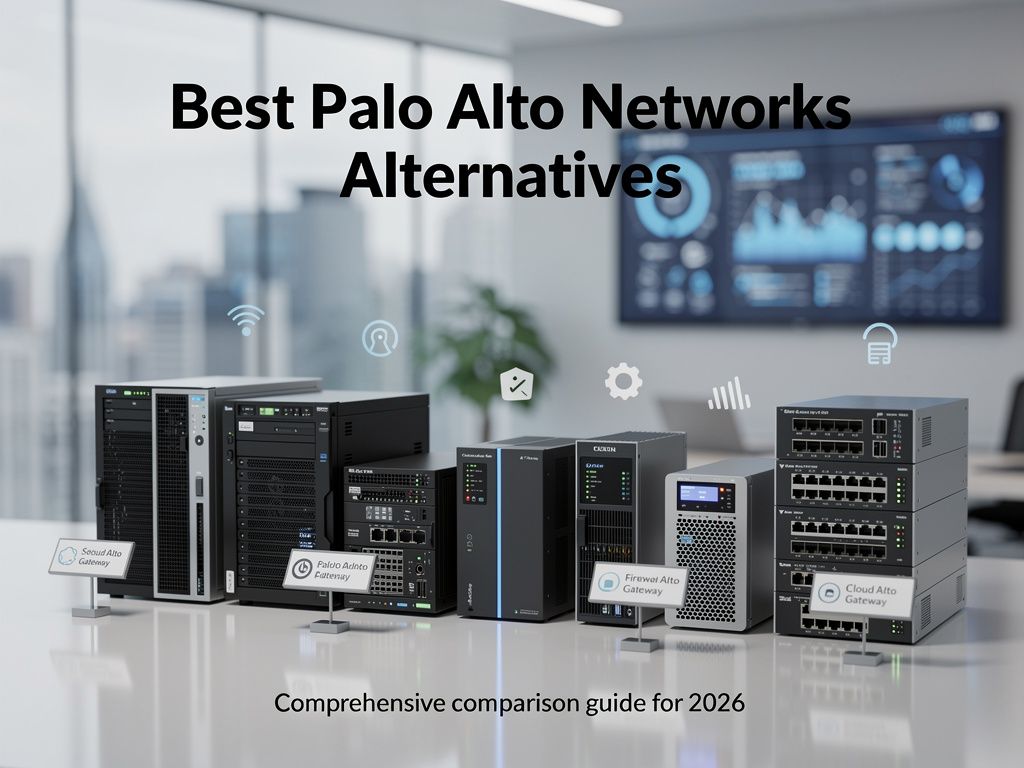
Top 10 Palo Alto Networks Alternatives: Complete Enterprise Security Platform Comparison Guide
Perimeter 81 Review
- Unified security console
- Zero Trust granular access
- Cloud native quick deployment
- Great for distributed teams
- Enterprise rollout can take weeks
- Policy setup needs planning

Cato Networks Review
- Single vendor SASE platform
- Global backbone performance
- Integrated security stack
- Fast deployment with sockets
- Best for multi site firms
- Subscription costs add up
- Needs PoP proximity
- Less on prem control

Zscaler Review
- Cloud native zero trust access
- Global scale low latency
- Replaces VPN complexity
- Strong compliance certifications
- Needs policy design expertise
- Subscription cost for small teams
- Training required for best results

Palo Alto Networks Review
- Leader in next gen firewalls
- Strong threat detection results
- Scales for enterprise needs
- Global support options
- Premium pricing
- Complex configuration setup
- Needs experienced security staff
- Migration requires careful planning

Netskope Review
- Strong cloud app visibility
- Unified SSE security stack
- Fast cloud native deployment
- Centralized easy management
- Enterprise grade pricing
- Network performance concerns
- Endpoint features need improvement

Cloudflare Review
- Generous free plan value
- Fast global Cdn network
- Strong Ddos protection
- Transparent pricing no bandwidth fees
- Limited free plan support
- Advanced setup can be complex
- False positive security blocks
- Potential vendor lock in

Fortinet Review
- Excellent price performance ratio
- Untegrated security fabric platform
- Handles heavy traffic well
- Scales for enterprises
- Support response can be slow
- Support expertise inconsistent
- Deployment can be complex

Juniper Review
- Unified centralized management
- Advanced threat prevention
- Scales for large enterprises
- Strong visibility and analytics
- Premium pricing
- Specialized training required
- Support quality can vary
- Ongoing licensing costs

Versa Networks Review
- Stable high availability connectivity
- Integrated zero trust security
- Advanced analytics and insights
- Multi tenancy for providers
- Subscription costs can scale
- Rollouts may take months
Cisco Review
- Comprehensive product portfolio
- Strong enterprise reliability
- Excellent work life balance
- Global partner ecosystem
- Premium pricing and licensing
- Support quality can vary
- Occasional hardware quality issues
- Documentation can be limited
Enterprise cybersecurity has evolved dramatically in recent years. Organizations are increasingly seeking network security solutions that offer flexibility, cost-effectiveness, and comprehensive protection. While Palo Alto Networks remains a market leader, many businesses are exploring alternatives that better align with their specific requirements and budget constraints.
This comprehensive guide examines ten leading Palo Alto Networks alternatives across multiple security domains. We’ll analyze next-generation firewalls, cloud security platforms, and unified threat management solutions. Each platform offers unique advantages, from cloud-native architectures to integrated SASE capabilities.
Whether you’re evaluating costs, seeking better cloud integration, or requiring specific compliance features, this analysis provides detailed insights. We’ll explore how each solution compares across key criteria including performance, pricing, deployment options, and security effectiveness. By the end, you’ll have a clear understanding of which alternative best fits your organization’s security strategy.
Understanding the Need for Palo Alto Networks Alternatives
Modern enterprises face unique cybersecurity challenges that extend beyond traditional perimeter defense. Cloud adoption, remote work, and digital transformation have fundamentally changed how organizations approach network security. Palo Alto Networks alternatives have emerged to address these evolving needs with innovative approaches.
Cost considerations often drive organizations to evaluate alternatives. Palo Alto Networks’ premium pricing can strain IT budgets, particularly for mid-market companies. Many alternatives offer comparable security capabilities at more accessible price points. This democratization of enterprise-grade security enables broader organizational protection.
Deployment flexibility represents another key differentiator. Some organizations require cloud-native solutions, while others need hybrid capabilities. Certain alternatives specialize in specific deployment models, offering optimized performance and management simplicity. This specialization often translates into better user experiences and reduced operational overhead.
Integration requirements also influence alternative selection. Organizations with existing technology stacks may benefit from solutions that seamlessly integrate with current infrastructure. Native cloud integrations, API compatibility, and ecosystem partnerships can significantly impact implementation success and ongoing management efficiency.
Evaluation Criteria for Network Security Platform Alternatives
Selecting the right security platform requires systematic evaluation across multiple dimensions. Our assessment framework examines six critical criteria that directly impact organizational success. These criteria reflect real-world deployment considerations and long-term operational requirements.
Security Effectiveness forms the foundation of any evaluation. This includes threat detection capabilities, prevention accuracy, and response automation. We examine how each platform handles advanced persistent threats, zero-day exploits, and emerging attack vectors. Machine learning integration and threat intelligence quality also factor into this assessment.
Performance and Scalability determine platform sustainability as organizations grow. Throughput capabilities, latency impact, and resource utilization directly affect user experience. We evaluate how platforms handle traffic spikes, concurrent connections, and distributed deployments across multiple locations.
Management and Usability impact operational efficiency and total cost of ownership. Intuitive interfaces, automation capabilities, and reporting features reduce administrative burden. We assess configuration complexity, policy management, and troubleshooting workflows to understand day-to-day operational requirements.
Cost and Licensing considerations extend beyond initial purchase prices. We examine licensing models, support costs, and hidden fees that impact total ownership expenses. Subscription flexibility, scalability pricing, and contract terms all influence long-term financial planning.
Integration and Ecosystem compatibility affects implementation success and future flexibility. API availability, third-party integrations, and vendor partnerships determine how well platforms fit existing infrastructure. We evaluate compatibility with cloud providers, identity systems, and security orchestration tools.
Support and Documentation quality impacts problem resolution and user adoption. Comprehensive documentation, training resources, and responsive technical support reduce implementation risks. We assess community resources, professional services availability, and knowledge base quality.
Cato Networks: Cloud-Native SASE Platform
Cato Networks pioneered the Secure Access Service Edge (SASE) model, delivering network security through a global cloud infrastructure. This approach eliminates traditional hardware appliances, instead providing security services through software-defined networking. Organizations benefit from simplified management and reduced infrastructure complexity.
The platform integrates multiple security functions including next-generation firewall, secure web gateway, and zero-trust network access. This consolidation reduces vendor proliferation and simplifies policy management. Cato’s global backbone ensures consistent performance across distributed locations while maintaining centralized security controls.
Security Effectiveness: Cato provides comprehensive threat protection through integrated security services. Machine learning algorithms analyze traffic patterns to identify anomalies and potential threats. The platform’s cloud-native architecture enables rapid threat intelligence updates and policy deployment across all locations.
Performance and Scalability: Global points of presence ensure low-latency access regardless of user location. The platform automatically scales to handle traffic fluctuations without manual intervention. Bandwidth allocation and quality of service features optimize application performance while maintaining security controls.
Management and Usability: Centralized management through a single console simplifies operations for distributed organizations. Policy configuration uses intuitive interfaces that reduce complexity compared to traditional firewall management. Real-time visibility and reporting provide comprehensive insights into network activity and security events.
Cost and Licensing: Subscription-based pricing scales with organizational needs and eliminates hardware capital expenses. Per-user or per-location pricing models provide predictable costs. The platform’s consolidation of multiple security functions can reduce overall security spending compared to point solutions.
Integration and Ecosystem: Native cloud integrations support major providers including AWS, Azure, and Google Cloud. API access enables custom integrations and automation workflows. The platform supports standard protocols for seamless integration with existing infrastructure and security tools.
Support and Documentation: Comprehensive documentation and training resources accelerate implementation and ongoing management. Professional services support complex deployments and migrations. Community forums and knowledge bases provide additional resources for troubleshooting and optimization.
Fortinet: Comprehensive Security Fabric
Fortinet’s Security Fabric approach integrates multiple security solutions into a cohesive platform. This architecture spans network, endpoint, cloud, and application security domains. Organizations benefit from unified visibility and coordinated threat response across their entire infrastructure. The platform’s broad integration capabilities support diverse deployment scenarios.
FortiGate next-generation firewalls serve as the platform’s foundation, offering high-performance threat protection. Custom security processing units (SPUs) accelerate cryptographic operations and deep packet inspection. This hardware optimization enables superior throughput compared to software-only solutions while maintaining comprehensive security coverage.
Security Effectiveness: FortiGuard Labs provides real-time threat intelligence that updates security policies automatically. The platform’s AI-driven analytics identify sophisticated attacks and automate response actions. Integrated sandboxing analyzes suspicious files in isolated environments before allowing network access.
Performance and Scalability: Purpose-built security processors deliver industry-leading throughput with minimal latency impact. Scalable architectures support everything from small branch offices to large data centers. High-availability configurations ensure continuous protection during hardware failures or maintenance windows.
Management and Usability: FortiManager centrally manages policies across distributed deployments, reducing configuration complexity. Single-pane-of-glass visibility spans the entire security fabric, simplifying monitoring and incident response. Automated workflows reduce manual tasks and accelerate threat response times.
Cost and Licensing: Flexible licensing models accommodate various organizational sizes and requirements. Bundled security services provide cost-effective comprehensive protection. The platform’s efficiency often enables organizations to handle increased traffic without additional hardware investments.
Integration and Ecosystem: Extensive fabric connectors integrate with over 400 third-party security solutions. Open APIs enable custom integrations and security orchestration platforms. The ecosystem includes specialized appliances for different use cases, from wireless access points to industrial control systems.
Support and Documentation: Comprehensive training programs and certifications develop internal expertise. Global support organization provides localized assistance and rapid issue resolution. Extensive documentation and best practice guides accelerate deployment and optimization efforts.
Zscaler: Zero Trust Security Platform
Zscaler revolutionizes network security through its zero trust architecture, treating all traffic as potentially hostile regardless of source. The platform’s cloud-native approach eliminates traditional VPN complexity while providing superior security and performance. This model particularly benefits organizations with distributed workforces and cloud-first strategies.
The platform processes over 200 billion transactions daily across its global infrastructure. This massive scale enables sophisticated machine learning algorithms to identify emerging threats and attack patterns. Inline inspection occurs at cloud scale without the performance penalties associated with traditional appliance-based solutions.
Security Effectiveness: Advanced threat protection includes sandboxing, SSL inspection, and data loss prevention capabilities. Machine learning algorithms continuously improve detection accuracy by analyzing global threat patterns. Zero trust principles ensure verification of every connection request regardless of user location or device type.
Performance and Scalability: Global cloud infrastructure ensures consistent performance regardless of user location or traffic volume. Automatic scaling handles demand fluctuations without manual intervention. The platform’s architecture eliminates bottlenecks associated with centralized security appliances.
Management and Usability: Centralized policy management simplifies administration across distributed organizations. Granular controls enable precise access policies based on user, application, and content criteria. Comprehensive reporting provides visibility into user activity, threat events, and policy violations.
Cost and Licensing: Subscription-based pricing eliminates hardware capital expenses and provides predictable operating costs. Per-user licensing scales with organizational growth. The platform’s efficiency often enables organizations to reduce overall networking and security infrastructure costs.
Integration and Ecosystem: Native integrations with major cloud providers streamline deployment and management. API access enables integration with security orchestration and automated response platforms. The ecosystem includes specialized applications for different use cases and industry requirements.
Support and Documentation: Comprehensive onboarding programs ensure successful deployments and user adoption. Global support organization provides expertise in cloud security and zero trust implementations. Extensive documentation and training resources accelerate time-to-value and ongoing optimization.
Netskope: Cloud-First Security Platform
Netskope specializes in cloud security with deep visibility into cloud applications and services. The platform’s data-centric approach focuses on protecting sensitive information regardless of location or access method. This specialization makes Netskope particularly valuable for organizations with extensive cloud adoption and data protection requirements.
The platform’s NewEdge network provides global coverage with optimized routing for cloud applications. Real-time risk scoring adapts security policies based on user behavior, device posture, and content sensitivity. This dynamic approach balances security requirements with user productivity needs.
Security Effectiveness: Advanced data loss prevention identifies and protects sensitive information across thousands of cloud applications. Machine learning algorithms detect insider threats and compromised account activity. The platform’s cloud application visibility extends to shadow IT discovery and risk assessment.
Performance and Scalability: Purpose-built cloud infrastructure optimizes performance for cloud application access. Intelligent routing selects optimal paths based on application requirements and network conditions. The platform scales automatically to handle traffic growth without performance degradation.
Management and Usability: Intuitive dashboards provide comprehensive visibility into cloud usage, risk exposure, and security events. Policy configuration uses natural language processing to simplify complex rule creation. Advanced analytics identify trends and provide actionable insights for security optimization.
Cost and Licensing: Flexible subscription models accommodate various organizational sizes and requirements. The platform’s cloud-native architecture eliminates infrastructure costs associated with traditional appliances. ROI calculators help organizations understand potential cost savings from cloud security consolidation.
Integration and Ecosystem: Native integrations with major cloud providers enable seamless deployment and management. API access supports integration with SIEM, SOAR, and other security platforms. The ecosystem includes specialized connectors for industry-specific applications and workflows.
Support and Documentation: Cloud security experts provide guidance on deployment strategies and optimization techniques. Comprehensive training programs develop internal expertise in cloud security management. Community resources include best practice guides and use case examples from similar organizations.
Versa Networks: Unified SASE and SD-WAN Platform
Versa Networks combines software-defined networking with integrated security services in a unified platform. This approach simplifies network architecture while providing comprehensive security coverage. Organizations benefit from reduced complexity and improved performance compared to traditional networking and security stack combinations.
The platform’s secure SD-WAN capabilities optimize application performance while maintaining security policies. Intelligent routing selects optimal paths based on application requirements, network conditions, and security policies. This integration eliminates the performance trade-offs often associated with separate networking and security solutions.
Security Effectiveness: Integrated next-generation firewall, intrusion prevention, and secure web gateway provide comprehensive threat protection. Advanced analytics identify performance issues and security threats across the entire network infrastructure. The platform’s unified approach ensures consistent security policies across all locations and connection types.
Performance and Scalability: Purpose-built networking and security integration optimizes performance for distributed organizations. Automatic failover and load balancing maintain connectivity during network disruptions. The platform scales from small branch offices to large data centers with consistent feature sets.
Management and Usability: Single management interface spans networking and security functions, reducing operational complexity. Template-based configuration accelerates deployment across multiple locations. Comprehensive monitoring and troubleshooting tools simplify network operations and incident response.
Cost and Licensing: Unified platform licensing reduces costs compared to separate networking and security solutions. Subscription models provide predictable costs and include ongoing support and updates. The platform’s efficiency often enables organizations to consolidate multiple point solutions.
Integration and Ecosystem: Native cloud integrations support hybrid and multi-cloud deployments. Standard APIs enable integration with existing network management and security platforms. The ecosystem includes certified hardware partners and professional services providers for complex deployments.
Support and Documentation: Networking and security expertise provides comprehensive deployment and optimization guidance. Training programs develop internal capabilities in SD-WAN and SASE technologies. Documentation includes reference architectures and deployment guides for various use cases.
Cisco: Integrated Security Architecture
Cisco’s integrated security architecture leverages the company’s extensive networking expertise to deliver comprehensive protection. The platform spans network, endpoint, cloud, and application security domains with tight integration between components. This approach provides visibility and control across the entire infrastructure stack.
Cisco SecureX serves as the platform’s central orchestration hub, correlating security events and automating response actions. Machine learning algorithms analyze patterns across multiple security domains to identify sophisticated attacks. The platform’s breadth enables comprehensive threat hunting and incident response capabilities.
Security Effectiveness: Talos threat intelligence provides real-time updates on emerging threats and attack patterns. Advanced malware protection uses machine learning and behavioral analysis to identify unknown threats. The platform’s integration enables coordinated response actions across network, endpoint, and cloud security components.
Performance and Scalability: Purpose-built security appliances deliver high performance with specialized processing capabilities. Scalable architectures support everything from small businesses to large enterprises and service providers. High-availability configurations ensure continuous protection during maintenance and upgrade cycles.
Management and Usability: Centralized management reduces complexity across diverse security components and deployment models. Automation capabilities accelerate routine tasks and improve response times. Comprehensive dashboards provide visibility into security posture and operational metrics.
Cost and Licensing: Enterprise Agreement programs provide predictable costs and simplified procurement processes. The platform’s integration often reduces total cost of ownership compared to multi-vendor environments. Flexible licensing accommodates various organizational sizes and requirements.
Integration and Ecosystem: Extensive partner ecosystem includes major technology vendors and specialized security providers. Open APIs and development tools enable custom integrations and applications. The platform supports industry standards for seamless integration with existing infrastructure.
Support and Documentation: Global support organization provides expertise across networking and security domains. Comprehensive training and certification programs develop internal capabilities. Extensive documentation includes implementation guides and best practice recommendations.
Cloudflare: Edge-Based Security Platform
Cloudflare’s edge-based security model processes traffic at over 270 global locations, providing protection close to users and applications. This distributed architecture reduces latency while improving security effectiveness. The platform’s massive scale enables it to absorb large-scale attacks while maintaining service availability.
The platform processes over 45 million HTTP requests per second, providing visibility into global threat patterns. Machine learning algorithms analyze this traffic to identify emerging threats and attack techniques. This intelligence automatically updates security policies across the entire global network.
Security Effectiveness: DDoS protection handles attacks up to multiple terabits per second without impacting legitimate traffic. Web application firewall uses machine learning to identify application-layer attacks and zero-day exploits. Bot management distinguishes between legitimate automation and malicious activity with high accuracy.
Performance and Scalability: Global anycast network routes traffic to the nearest data center, minimizing latency. Automatic scaling handles traffic spikes without manual intervention or performance degradation. The platform’s architecture eliminates single points of failure through geographic distribution.
Management and Usability: Intuitive dashboard provides real-time visibility into traffic patterns, security events, and performance metrics. One-click security features enable rapid deployment of protection measures. Comprehensive analytics help optimize security policies and performance configurations.
Cost and Licensing: Transparent pricing models include generous free tiers for small organizations and startups. Enterprise plans provide predictable costs with unlimited DDoS protection. The platform’s efficiency often enables organizations to reduce infrastructure and bandwidth costs.
Integration and Ecosystem: API-first architecture enables deep integration with existing systems and workflows. Cloudflare Workers platform supports custom security logic and applications at the edge. The ecosystem includes integrations with major cloud providers and security platforms.
Support and Documentation: Comprehensive documentation and learning resources accelerate deployment and optimization. Enterprise customers receive dedicated support and solution engineering assistance. Community forums provide peer support and knowledge sharing opportunities.
Perimeter 81: Modern Remote Access Security
Perimeter 81 modernizes remote access security through cloud-based zero trust networking. The platform eliminates traditional VPN complexity while providing superior security and user experience. This approach particularly benefits organizations with distributed workforces and cloud-first infrastructure strategies.
The platform’s software-defined perimeter creates encrypted micro-tunnels for each application connection. This granular approach reduces attack surface area and enables precise access controls. Users connect seamlessly to authorized resources without exposing the broader network infrastructure.
Security Effectiveness: Zero trust principles verify every connection request regardless of user location or device type. Multi-factor authentication and device compliance checks ensure authorized access. Advanced threat protection scans traffic for malware and suspicious activity.
Performance and Scalability: Global gateway network optimizes routing for application performance. Intelligent load balancing distributes connections across multiple servers. The platform scales automatically to handle user growth and traffic fluctuations.
Management and Usability: Centralized management console simplifies policy configuration and user administration. Single sign-on integration reduces password complexity for end users. Comprehensive reporting provides visibility into user activity and security events.
Cost and Licensing: Per-user subscription pricing provides predictable costs and scales with organizational growth. The platform eliminates hardware costs associated with traditional VPN appliances. Free tier accommodates small teams and trial deployments.
Integration and Ecosystem: Native integrations with major identity providers streamline user management. API access enables integration with existing security and IT management platforms. Cloud resource protection extends to major public cloud providers.
Support and Documentation: Onboarding assistance ensures successful deployment and user adoption. Comprehensive documentation covers configuration and troubleshooting procedures. Responsive support team provides technical assistance and optimization guidance.
Juniper Networks: AI-Driven Security Platform
Juniper Networks leverages artificial intelligence to automate network operations and security management. The platform’s AI-driven approach reduces operational complexity while improving threat detection accuracy. This automation particularly benefits organizations with limited security expertise or complex network infrastructures.
Juniper Mist AI provides insights into network performance, user experience, and security events. Machine learning algorithms identify patterns and anomalies that might indicate security threats or performance issues. This proactive approach enables organizations to address problems before they impact business operations.
Security Effectiveness: Advanced threat protection uses machine learning to identify sophisticated attacks and zero-day exploits. Integrated security services span the entire network infrastructure from campus to data center. The platform’s AI capabilities improve detection accuracy while reducing false positives.
Performance and Scalability: High-performance security appliances deliver throughput capabilities suitable for large enterprises and service providers. Scalable architectures accommodate growth without compromising performance or security effectiveness. Cloud-based management reduces infrastructure requirements for monitoring and administration.
Management and Usability: AI-driven insights simplify network troubleshooting and optimization tasks. Natural language queries enable administrators to quickly find relevant information. Automated remediation capabilities resolve common issues without manual intervention.
Cost and Licensing: Subscription models include cloud management and AI services without additional licensing fees. The platform’s automation often reduces operational costs through improved efficiency. Flexible licensing accommodates various deployment models and organizational sizes.
Integration and Ecosystem: Open APIs enable integration with existing network management and security platforms. Partner ecosystem includes major cloud providers and specialized security vendors. Standard protocols ensure compatibility with multi-vendor network environments.
Support and Documentation: AI-powered support tools provide intelligent troubleshooting assistance and knowledge recommendations. Professional services organization offers expertise in AI-driven network operations. Comprehensive training programs develop internal capabilities in AI-driven networking and security.
Comparative Analysis: Key Differentiators
Each Palo Alto Networks alternative offers unique advantages that address specific organizational requirements. Understanding these differentiators helps match platforms to particular use cases and architectural preferences. This analysis highlights the most significant distinguishing factors across our evaluation criteria.
Deployment Model Preferences vary significantly across alternatives. Cloud-native platforms like Zscaler and Cato Networks eliminate hardware dependencies entirely. Hybrid solutions like Fortinet and Cisco provide flexibility for organizations with diverse infrastructure requirements. This fundamental architectural difference impacts everything from initial deployment to ongoing management and scaling.
Specialization Areas create competitive advantages for specific use cases. Netskope excels in cloud security, while Perimeter 81 focuses on remote access. Organizations with particular security challenges may benefit from specialized platforms rather than general-purpose solutions. This specialization often translates into deeper feature sets and better integration within specific domains.
Management Philosophy differs substantially across platforms. Some prioritize simplicity and automation, while others provide granular control and customization. Organizations with limited security expertise may prefer platforms that emphasize ease of use. Enterprises with complex requirements might need more sophisticated configuration capabilities.
| Platform | Primary Strength | Deployment Model | Best Fit Organizations | Price Point |
|---|---|---|---|---|
| Cato Networks | SASE Integration | Cloud-Native | Distributed Organizations | Mid-Market |
| Fortinet | Security Fabric | Hybrid | Large Enterprises | Enterprise |
| Zscaler | Zero Trust | Cloud-Native | Cloud-First Organizations | Premium |
| Netskope | Cloud Security | Cloud-Native | Cloud-Heavy Workloads | Premium |
| Versa Networks | SD-WAN Integration | Hybrid | Multi-Site Organizations | Mid-Market |
| Cisco | Ecosystem Integration | Hybrid | Cisco-Centric Infrastructure | Enterprise |
| Cloudflare | Edge Performance | Cloud-Native | Web-Facing Applications | Value |
| Perimeter 81 | Remote Access | Cloud-Native | Remote-First Organizations | SMB |
| Juniper Networks | AI-Driven Operations | Hybrid | AI-Ready Organizations | Enterprise |
Cloud Security Considerations
Cloud security requirements have become increasingly important as organizations migrate workloads and adopt cloud-first strategies. Traditional network security models struggle to provide adequate protection for distributed cloud infrastructure. Modern alternatives must address these challenges through cloud-native architectures and specialized capabilities.
Container and serverless security present unique challenges that legacy platforms cannot effectively address. Runtime protection, vulnerability management, and compliance monitoring require different approaches than traditional network security. Platforms like Netskope and Zscaler provide specialized capabilities for these emerging deployment models.
Multi-cloud complexity adds another layer of security challenges. Organizations often use multiple cloud providers, each with different security models and native tools. Unified security platforms that work consistently across different cloud environments reduce complexity and improve security posture consistency.
Data sovereignty and compliance requirements vary significantly across geographic regions and industries. Cloud security platforms must provide granular controls over data location and processing. Some alternatives offer region-specific deployments and compliance certifications that address these requirements more effectively than global platforms.
Performance and Scalability Analysis
Performance characteristics vary significantly across different platform architectures and deployment models. Cloud-native solutions often provide better scalability but may introduce latency for certain use cases. On-premises and hybrid solutions offer predictable performance but require more complex capacity planning and management.
Throughput capabilities range from gigabits per second for small business solutions to terabits per second for enterprise platforms. Performance optimization techniques like hardware acceleration, intelligent routing, and edge processing can dramatically impact real-world performance. Organizations must match platform capabilities to their specific traffic patterns and growth projections.
Latency sensitivity affects platform selection for real-time applications and user experience requirements. Edge-based platforms like Cloudflare provide superior latency characteristics for web applications. Traditional appliance-based solutions may offer better performance for internal network traffic and data center workloads.
Scaling methodologies differ substantially between cloud and on-premises solutions. Auto-scaling capabilities eliminate manual capacity management but may introduce unpredictable costs. Fixed-capacity solutions provide cost predictability but require careful planning to avoid performance bottlenecks during peak usage periods.
Total Cost of Ownership Assessment
Total cost considerations extend far beyond initial licensing fees to include implementation, operation, and opportunity costs. Hidden costs like professional services, training, and infrastructure upgrades can significantly impact total ownership expenses. Organizations must evaluate all cost components when comparing alternatives.
Licensing models vary from perpetual licenses with annual maintenance to subscription-based pricing. Subscription models often provide predictable costs and include updates and support. However, perpetual licenses may offer lower long-term costs for stable deployments with minimal growth requirements.
Operational costs include staffing, training, and ongoing management expenses. Platforms that require specialized expertise may have higher operational costs despite lower licensing fees. Automation capabilities and ease of management can significantly reduce these ongoing expenses over time.
Infrastructure costs encompass hardware, networking, and facility requirements. Cloud-native platforms eliminate most infrastructure costs but shift them to subscription fees. Hybrid solutions require careful evaluation of infrastructure investments versus cloud service costs to determine optimal deployment models.
Implementation and Migration Strategies
Implementation complexity varies significantly across different platform types and organizational requirements. Cloud-native solutions often enable faster deployment but may require architectural changes. Traditional appliance-based solutions integrate more easily with existing infrastructure but require more complex configuration and optimization.
Migration planning becomes critical when replacing existing security infrastructure. Parallel deployment strategies reduce risk but increase complexity and costs during transition periods. Organizations must balance migration speed with risk tolerance and business continuity requirements.
Change management impacts user adoption and operational success. New platforms may require different workflows and procedures that affect daily operations. Training programs and documentation quality become essential factors in implementation success and long-term platform effectiveness.
Integration testing ensures compatibility with existing systems and workflows before full deployment. Performance validation, feature verification, and failover testing reduce the risk of unexpected issues during production deployment. Some platforms offer trial periods or proof-of-concept programs that facilitate thorough evaluation.
Future-Proofing and Technology Trends
Technology evolution continues to reshape network security requirements and solution architectures. Artificial intelligence, machine learning, and automation are becoming standard features rather than differentiators. Organizations must consider how platforms will adapt to future technological developments and changing threat landscapes.
Zero trust architecture has become the dominant security model for modern organizations. Platforms that embrace zero trust principles provide better alignment with evolving security best practices. Zero trust implementation requires comprehensive identity verification, device compliance, and application access controls that not all platforms support equally well.
Edge computing and 5G networks create new security challenges and opportunities. Distributed compute resources require security controls that can operate effectively at network edges. Platforms with edge capabilities will be better positioned to address these emerging requirements in 2026 and beyond.
Quantum computing threats may require new cryptographic approaches and security protocols. While still emerging, organizations should consider how their chosen platform vendor addresses quantum-resistant security. Cryptographic agility becomes important for adapting to new standards and requirements as they develop.
Industry-Specific Considerations
Industry regulations and compliance requirements significantly influence platform selection for many organizations. Healthcare, financial services, and government sectors have specific security mandates that affect architectural decisions. Some platforms provide industry-specific features and certifications that simplify compliance efforts.
Healthcare organizations must comply with HIPAA requirements for patient data protection. Data encryption, access controls, and audit logging capabilities vary across platforms. Some alternatives provide healthcare-specific features and compliance certifications that reduce implementation complexity and risk.
Financial services face stringent regulatory requirements including PCI DSS, SOX, and regional banking regulations. Multi-tenant isolation, geographic data restrictions, and comprehensive audit capabilities become essential platform features. Certain platforms specialize in financial services compliance and provide pre-configured policy templates.
Government and defense organizations require security clearances, geographic restrictions, and air-gapped deployment capabilities. Sovereignty requirements may eliminate cloud-based solutions in favor of on-premises alternatives. Some vendors offer government-specific versions with enhanced security and compliance features.
Vendor Ecosystem and Partnership Considerations
Vendor ecosystem strength affects long-term platform viability and integration capabilities. Established vendors with large partner networks provide greater flexibility and support options. However, emerging vendors may offer more innovative solutions and competitive pricing that offset ecosystem limitations.
Technology partnerships enable deeper integrations and coordinated support across multi-vendor environments. Strategic alliances with major cloud providers, system integrators, and technology vendors can significantly impact implementation success and ongoing operations.
Professional services availability varies significantly across vendors and geographic regions. Complex implementations may require specialized expertise that only certain vendors can provide. Partner networks can extend vendor reach but may introduce quality and consistency variations in service delivery.
Community support and third-party tools enhance platform value beyond vendor-provided resources. Active user communities provide peer support, knowledge sharing, and ecosystem development. Open-source components and third-party integrations can extend platform capabilities and reduce vendor lock-in risks.
Making the Final Decision
Selecting the optimal Palo Alto Networks alternative requires careful evaluation of organizational requirements, constraints, and future plans. No single platform excels in every dimension, making trade-off analysis essential for informed decision-making. Organizations must prioritize criteria based on their specific circumstances and strategic objectives.
Proof-of-concept testing provides valuable insights beyond vendor demonstrations and documentation. Real-world testing reveals performance characteristics, integration challenges, and operational considerations that impact long-term success. Many vendors offer trial periods or pilot programs that enable thorough evaluation.
Stakeholder alignment ensures that technical evaluations address business requirements and constraints. Security, networking, operations, and business teams may have different priorities that must be balanced in the final decision. Executive sponsorship becomes important for complex implementations that affect multiple organizational areas.
Risk assessment helps organizations understand potential impacts of platform changes on security posture and business operations. Migration risks, vendor viability, and technology obsolescence must be weighed against potential benefits. Mitigation strategies and contingency plans reduce implementation risks and improve success probability.
Conclusion
The landscape of Palo Alto Networks alternatives offers diverse solutions for every organizational requirement and budget constraint. From cloud-native SASE platforms to AI-driven security fabrics, modern alternatives provide compelling advantages over traditional approaches. Each platform brings unique strengths that address specific security challenges and operational requirements.
Success depends on thorough evaluation, careful planning, and alignment with organizational objectives. The right alternative can significantly improve security posture while reducing costs and complexity. Organizations that invest time in proper evaluation and implementation will realize substantial benefits from their platform selection.
Frequently Asked Questions About Palo Alto Networks Alternatives
- What are the main reasons organizations seek Palo Alto Networks alternatives?
Organizations typically explore alternatives due to cost considerations, deployment flexibility requirements, or specific feature needs. Many seek cloud-native architectures, simplified management, or specialized capabilities that better align with their infrastructure and security strategies. - Which Palo Alto Networks alternative offers the best value for small to medium businesses?
Cloudflare and Perimeter 81 typically provide the most cost-effective solutions for smaller organizations. Both offer generous free tiers and transparent pricing models that scale with organizational growth. Cloudflare excels for web application protection, while Perimeter 81 focuses on remote access security. - How do cloud-native alternatives compare to traditional appliance-based solutions?
Cloud-native platforms offer superior scalability, faster deployment, and reduced infrastructure requirements. Traditional appliances may provide better performance for specific use cases and offer more deployment control. The choice depends on organizational preferences for infrastructure management and architectural flexibility. - What should organizations prioritize when evaluating network security alternatives?
Security effectiveness should remain the top priority, followed by total cost of ownership and integration capabilities. Organizations must also consider scalability requirements, management complexity, and alignment with future technology strategies. Proof-of-concept testing helps validate vendor claims and identify potential issues. - Which alternative provides the best cloud security capabilities?
Netskope and Zscaler lead in cloud security specialization, offering comprehensive visibility and protection for cloud applications. Cato Networks provides strong cloud security as part of its SASE platform. The best choice depends on specific cloud usage patterns and existing infrastructure investments. - How important is vendor ecosystem and partnership strength?
Vendor ecosystem strength significantly impacts implementation success and long-term platform viability. Strong partner networks provide greater integration options, professional services availability, and community support. However, innovative smaller vendors may offer compelling solutions that offset ecosystem limitations. - What are the key considerations for multi-cloud security requirements?
Multi-cloud environments require platforms that provide consistent security policies and visibility across different cloud providers. Native cloud integrations, centralized management, and compliance capabilities become essential. Organizations should evaluate how platforms handle cloud-specific security challenges and integration complexity. - Which platforms offer the best performance for high-throughput environments?
Fortinet and Cisco typically provide the highest throughput capabilities through purpose-built hardware acceleration. Cloud platforms like Cloudflare offer excellent performance for web applications through edge processing. Organizations must match platform capabilities to their specific traffic patterns and performance requirements.
References:
Software Suggest – Palo Alto Networks Alternatives
Gartner Reviews – Network Firewall Alternatives





 Stack Insight is intended to support informed decision-making by providing independent information about business software and services. Some product details, including pricing, features, and promotional offers, may be supplied by vendors or partners and can change without notice.