
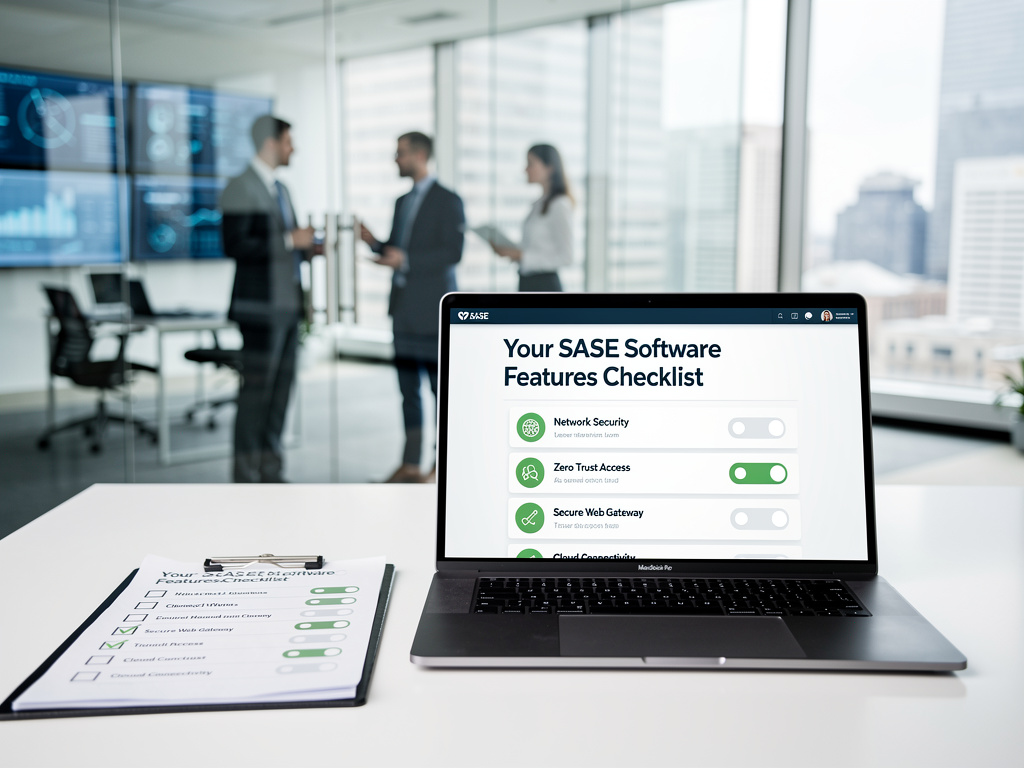
The Complete SASE Software Features Checklist: Essential Components for Modern Network Security
Secure Access Service Edge (SASE) has emerged as the cornerstone of modern network architecture. This comprehensive framework combines networking and security functions into a unified, cloud-delivered service model. Organizations worldwide are adopting SASE to address the challenges of hybrid work environments and distributed digital infrastructures.
The complexity of SASE implementations requires careful evaluation of core features and capabilities. Business leaders need a systematic approach to assess potential solutions against their specific requirements. Understanding the essential components helps organizations make informed decisions about their network security investments.
This detailed checklist examines critical SASE features across networking, security, management, and performance domains. Each component plays a vital role in delivering comprehensive protection for modern enterprises. The following analysis provides actionable insights for evaluating SASE platforms in 2026.
Understanding SASE Architecture Fundamentals
SASE represents a paradigm shift in network security design. Traditional approaches relied on hardware appliances positioned at network perimeters. Modern threats and distributed workforces demand more flexible solutions.
The architecture converges wide area networking with comprehensive security functions. Software-defined networking principles enable dynamic policy enforcement across all network edges. This convergence eliminates the complexity of managing separate point solutions.
Cloud-native delivery models provide scalability and global reach. Organizations can deploy consistent security policies regardless of user location or device type. The architecture extends seamlessly from corporate headquarters to remote home offices.
Key architectural attributes include:
- Converged network and security services
- Cloud-based elastic scaling capabilities
- Global availability and geographic distribution
- Universal edge extension to all connection points
Network administrators gain simplified management through unified control planes. Security teams benefit from consistent policy enforcement across hybrid environments. Business stakeholders enjoy reduced operational complexity and improved cost predictability.
Core Networking Components Assessment
Software-Defined WAN (SD-WAN) forms the networking foundation of SASE platforms. This technology virtualizes wide area network connections across multiple transport services. Organizations can leverage MPLS, broadband, LTE, and 5G connections simultaneously.
Quality of service (QoS) capabilities ensure optimal application performance. Dynamic path selection routes traffic across the best available connections in real-time. Advanced SD-WAN implementations provide application-aware routing for business-critical workflows.
Global backbone infrastructure determines overall performance and reliability. Leading SASE providers maintain extensive points of presence (PoPs) worldwide. These distributed nodes reduce latency and improve user experience for cloud application access.
Critical networking features to evaluate:
- Multi-transport connectivity options and failover capabilities
- Application-aware traffic steering and optimization
- Global backbone reach and performance metrics
- Edge computing integration and local breakout options
Network redundancy and high availability features prevent service disruptions. Automatic failover mechanisms maintain connectivity during transport failures. Comprehensive monitoring provides visibility into network performance and utilization patterns.
On-Ramp Capabilities and Access Methods
SASE platforms must support diverse connectivity requirements across different user types. Remote access VPN functionality enables secure connections for mobile workers. Site-to-site connectivity links branch offices and data centers to the SASE cloud.
Client-based access provides comprehensive application support for power users. Clientless access methods enable lightweight connections for web-based applications. Both approaches should deliver consistent security policy enforcement.
Zero-touch provisioning simplifies deployment across large user populations. Automated configuration reduces IT overhead and accelerates rollout timelines. Self-service portals enable users to establish connections without technical support.
Integration with existing network infrastructure minimizes disruption during migration. Hybrid deployment models allow gradual transition from legacy architectures. Organizations can maintain current investments while adopting SASE capabilities incrementally.
Security Function Requirements Evaluation
Firewall-as-a-Service (FWaaS) delivers essential network access control capabilities. Cloud-based firewalls eliminate the need for physical appliances at each location. Centralized policy management ensures consistent security enforcement across all network edges.
Next-generation firewall features include application visibility and control. Intrusion prevention systems detect and block sophisticated attack patterns. Deep packet inspection capabilities identify threats hidden in encrypted traffic flows.
Secure Web Gateway (SWG) functionality protects users from internet-based threats. URL filtering blocks access to malicious websites and inappropriate content. Real-time threat intelligence feeds enhance protection against emerging risks.
Essential security components include:
- Advanced threat detection and prevention capabilities
- SSL/TLS inspection and certificate management
- DNS security and malware domain blocking
- Content filtering and data loss prevention
Sandboxing technology provides advanced malware analysis in isolated environments. Suspicious files undergo detailed examination before reaching end users. Machine learning algorithms improve detection accuracy over time.
Zero Trust Network Access Implementation
Zero Trust Network Access (ZTNA) replaces traditional VPN architectures with application-specific access controls. Users receive access only to authorized applications and resources. Continuous authentication and authorization validate user identity throughout sessions.
Micro-segmentation capabilities limit lateral movement within network environments. Principle of least privilege ensures users access only necessary resources for their roles. Dynamic policy adjustment responds to changing risk profiles and user behaviors.
Device trust verification extends security controls to endpoint systems. Compliance checking ensures devices meet organizational security standards. Non-compliant devices receive restricted access until remediation occurs.
Application discovery and classification support comprehensive access policy development. Automatic resource identification reduces administrative overhead. Risk-based access controls adjust permissions based on application sensitivity and user context.
Cloud Access Security Broker Integration
Cloud Access Security Broker (CASB) functionality provides visibility and control over cloud application usage. Shadow IT discovery identifies unauthorized cloud services within the organization. Data classification capabilities protect sensitive information across SaaS platforms.
API-based integration enables comprehensive cloud security monitoring. Inline deployment models provide real-time policy enforcement for cloud traffic. Out-of-band analysis supplements real-time protection with detailed forensic capabilities.
Data loss prevention (DLP) features prevent unauthorized information sharing. Encryption and tokenization protect sensitive data at rest and in transit. Compliance reporting supports regulatory requirements across multiple jurisdictions.
Cloud configuration assessment identifies security misconfigurations in IaaS environments. Automated remediation capabilities address common security gaps. Continuous monitoring ensures ongoing compliance with security best practices.
Management and Operational Features
Unified management consoles consolidate network and security operations into single interfaces. Administrators gain comprehensive visibility across all SASE components and functions. Centralized policy management ensures consistent enforcement across distributed environments.
Role-based access controls enable appropriate administrative privileges. Delegation capabilities allow distributed management while maintaining centralized oversight. Audit trails provide comprehensive logging of all configuration changes and administrative actions.
Automated policy deployment reduces configuration errors and accelerates implementation. Template-based approaches standardize security policies across similar user groups. Exception handling processes manage unique requirements without compromising overall security posture.
Key management features include:
- Comprehensive dashboard and reporting capabilities
- Automated policy deployment and enforcement
- Multi-tenant management for distributed organizations
- Integration with existing IT service management tools
Real-time monitoring provides immediate visibility into security events and network performance. Alerting mechanisms notify administrators of critical issues requiring attention. Correlation engines reduce alert fatigue by consolidating related events.
Analytics and Reporting Capabilities
Advanced analytics capabilities transform network and security data into actionable insights. Machine learning algorithms identify patterns and anomalies in user behavior. Predictive analytics help organizations anticipate capacity and security requirements.
Compliance reporting supports regulatory requirements across multiple frameworks. Automated report generation reduces administrative overhead and ensures consistent documentation. Customizable dashboards provide stakeholder-specific views of organizational security posture.
Performance metrics enable data-driven optimization of network and security policies. Application performance monitoring identifies bottlenecks and optimization opportunities. User experience analytics guide infrastructure investment decisions.
Integration with security information and event management (SIEM) systems enhances threat detection capabilities. Standardized log formats facilitate analysis across multiple security tools. API access enables custom integration with existing operational workflows.
Performance and Scalability Considerations
Latency optimization directly impacts user experience and application performance. Global point of presence distribution minimizes distance between users and SASE services. Edge computing capabilities process traffic locally to reduce round-trip delays.
Bandwidth scalability accommodates growing organizational requirements without service degradation. Elastic scaling capabilities automatically adjust capacity based on demand patterns. Burst handling manages temporary traffic spikes during peak usage periods.
Application acceleration technologies improve performance for latency-sensitive workflows. Protocol optimization reduces overhead for common business applications. Caching mechanisms store frequently accessed content closer to end users.
Performance evaluation criteria:
- Global latency measurements and optimization techniques
- Throughput capacity and scalability limitations
- Application-specific performance acceleration features
- Quality of service (QoS) implementation and effectiveness
High availability architecture prevents single points of failure across SASE infrastructure. Redundant service deployment ensures continuous operation during maintenance activities. Disaster recovery capabilities maintain service availability during major outages.
Capacity Planning and Resource Management
Automated capacity planning eliminates guesswork from infrastructure scaling decisions. Machine learning algorithms predict future requirements based on historical usage patterns. Proactive scaling prevents performance degradation during growth periods.
Resource allocation policies optimize infrastructure utilization across different user groups. Priority-based processing ensures critical applications receive necessary resources during congestion. Fair queuing mechanisms prevent individual users from monopolizing shared resources.
Cost optimization features help organizations control SASE spending while maintaining performance. Usage-based billing models align costs with actual consumption patterns. Reserved capacity options provide cost savings for predictable workloads.
Monitoring and alerting systems notify administrators of capacity threshold breaches. Trending analysis helps identify gradual changes in resource requirements. Recommendation engines suggest optimization opportunities based on actual usage patterns.
Integration and Interoperability Assessment
API integration capabilities enable seamless connection with existing IT infrastructure and workflows. RESTful APIs provide programmatic access to SASE configuration and monitoring functions. Webhook support enables real-time integration with external systems and processes.
Identity provider integration supports single sign-on (SSO) across organizational applications. Multi-factor authentication compatibility ensures strong user verification without workflow disruption. Directory service integration maintains consistent user management across platforms.
SIEM and SOAR platform integration enhances security operations center capabilities. Standardized log formats facilitate analysis across multiple security tools. Automated response capabilities enable immediate reaction to detected threats.
Integration requirements checklist:
- Identity and access management system compatibility
- Security tool ecosystem integration capabilities
- Network management platform connectivity options
- Business application performance monitoring integration
Legacy system compatibility ensures smooth migration from existing network architectures. Hybrid deployment models support gradual transition timelines. Backward compatibility maintains existing security investments during modernization efforts.
Third-Party Ecosystem Support
Marketplace ecosystems expand SASE capabilities through certified partner integrations. Vetted security vendors provide specialized threat detection and response capabilities. Network optimization partners enhance application performance beyond core SASE features.
Certification programs ensure compatibility and performance standards across partner solutions. Testing and validation processes verify integration quality before customer deployment. Support coordination between SASE providers and ecosystem partners streamlines troubleshooting efforts.
Custom integration development support enables unique organizational requirements. Professional services teams assist with complex integration projects. Documentation and development resources facilitate self-service integration efforts.
Partner solution lifecycle management ensures ongoing compatibility as platforms evolve. Regular testing cycles validate continued integration performance. Migration assistance helps organizations adopt newer partner solutions without service disruption.
Compliance and Regulatory Features
Regulatory compliance requirements vary significantly across industries and geographic regions. SASE platforms must support multiple compliance frameworks simultaneously. Built-in controls reduce organizational effort required for audit preparation and demonstration.
Data residency controls ensure information remains within required geographic boundaries. Encryption key management maintains organizational control over sensitive data protection. Privacy controls support GDPR, CCPA, and other data protection regulations.
Audit trail capabilities provide comprehensive logging of all user and administrative activities. Immutable log storage prevents tampering with compliance evidence. Automated compliance reporting reduces manual effort required for regulatory submissions.
Compliance feature evaluation:
- Industry-specific compliance framework support
- Data residency and sovereignty control mechanisms
- Audit logging and evidence collection capabilities
- Automated compliance monitoring and reporting features
Risk assessment capabilities identify potential compliance gaps before they become violations. Remediation workflows guide organizations through corrective actions. Continuous monitoring ensures ongoing compliance as regulations evolve.
Data Protection and Privacy Controls
Comprehensive data protection extends beyond basic encryption to include advanced privacy controls. Data classification capabilities automatically identify sensitive information across network traffic. Policy enforcement prevents unauthorized access or transmission of protected data.
Tokenization and anonymization features protect personal information while maintaining business functionality. Right to be forgotten capabilities support individual privacy requests under modern data protection laws. Consent management integration ensures appropriate handling of personal data.
Cross-border data transfer controls comply with international privacy regulations. Safe harbor provisions enable legitimate business communications while maintaining compliance. Regular attestations verify ongoing adherence to privacy commitments.
Breach detection and notification capabilities identify potential privacy violations immediately. Automated response workflows initiate appropriate remediation actions. Reporting integration supports required breach notifications to regulatory authorities.
Vendor Evaluation and Selection Criteria
Vendor financial stability and long-term viability affect SASE investment success. Established companies with strong financial positions provide greater investment protection. Market leadership positions indicate sustained innovation and development capabilities.
Customer references and case studies demonstrate real-world implementation success. Peer networking opportunities enable knowledge sharing and best practice development. Industry analyst recognition validates vendor capabilities and market position.
Support quality and responsiveness directly impact operational success. 24/7 support availability ensures assistance during critical incidents. Escalation processes provide access to expert technical resources when needed.
Vendor assessment criteria:
- Financial stability and market position evaluation
- Customer satisfaction and reference availability
- Support quality and service level commitments
- Innovation roadmap and development investment levels
Geographic presence affects local support quality and regulatory compliance capabilities. Regional data centers improve performance and meet data residency requirements. Local professional services teams understand regional business requirements and practices.
Service Level Agreements and Support Models
Service level agreements define performance expectations and accountability measures. Uptime commitments typically exceed 99.9% for production SASE deployments. Performance guarantees establish minimum acceptable latency and throughput levels.
Support tier structure provides appropriate expertise levels for different issue types. Dedicated account management ensures consistent communication and relationship development. Technical account managers assist with optimization and best practice implementation.
Training and certification programs develop internal expertise on SASE platforms. Documentation quality affects self-service capability and reduces support requirements. Community forums enable peer-to-peer knowledge sharing and problem solving.
Professional services capabilities assist with implementation, migration, and optimization projects. Managed services options provide ongoing operational support for organizations lacking internal expertise. Consulting services help develop strategic roadmaps and architecture decisions.
Cost Analysis and Total Cost of Ownership
SASE pricing models significantly impact total cost of ownership compared to traditional approaches. Subscription-based pricing provides predictable operating expenses. Usage-based components allow cost scaling with organizational growth and requirements.
Hardware elimination reduces capital expenses and maintenance costs. Operational expense shifts improve cash flow management and financial flexibility. Reduced facility requirements decrease data center costs and complexity.
Staff productivity improvements offset service costs through reduced management overhead. Automation capabilities eliminate routine configuration and maintenance tasks. Centralized management reduces the need for distributed technical expertise.
Cost evaluation components:
- Subscription fees and usage-based pricing models
- Implementation and migration cost requirements
- Ongoing operational and support expense impacts
- Hidden costs and unexpected expense categories
Risk reduction benefits provide quantifiable value through improved security posture. Compliance automation reduces audit costs and regulatory risk exposure. Business continuity improvements prevent costly outages and productivity losses.
Return on Investment Calculation
ROI calculations must consider both direct cost savings and indirect business benefits. Hardware refresh avoidance provides immediate capital expense savings. Reduced operational complexity decreases ongoing IT staffing requirements.
Business agility improvements enable faster response to market opportunities. Enhanced security posture reduces breach risk and associated costs. Improved user experience increases productivity and employee satisfaction.
Scalability benefits reduce future infrastructure investment requirements. Cloud-native scaling eliminates capacity planning guesswork. Global deployment capabilities support business expansion without infrastructure investment.
Productivity measurements quantify user experience improvements and efficiency gains. Application performance optimization reduces workflow delays. Remote work enablement supports business continuity and talent retention efforts.
Future-Proofing and Technology Roadmap
Technology evolution requires SASE platforms that adapt to emerging requirements and standards. 5G network integration supports next-generation mobile connectivity. Edge computing capabilities accommodate distributed application architectures.
Artificial intelligence and machine learning integration enhance threat detection and network optimization. Automated policy development reduces administrative overhead and improves security effectiveness. Predictive analytics enable proactive issue resolution and capacity planning.
Standards compliance ensures interoperability with future technologies and platforms. Open architecture approaches prevent vendor lock-in and enable technology choice flexibility. API evolution maintains integration capabilities as platforms modernize.
Future-readiness evaluation:
- Emerging technology integration roadmaps
- Standards compliance and interoperability commitments
- Vendor innovation investment and development capabilities
- Architecture flexibility and extensibility features
Quantum computing preparedness includes post-quantum cryptography support. IoT device security accommodates growing connected device populations. Cloud architecture evolution supports multi-cloud and hybrid deployment models.
Implementation Planning and Best Practices
Successful SASE implementation requires careful planning and phased deployment strategies. Pilot programs validate platform capabilities in controlled environments. Gradual rollout minimizes risk while building operational expertise.
Change management processes ensure user adoption and minimize workflow disruption. Training programs develop necessary skills across IT teams and end users. Communication plans keep stakeholders informed throughout implementation timelines.
Migration strategies preserve existing security policies while enabling new capabilities. Parallel operation periods verify functionality before complete cutover. Rollback procedures provide safety nets during implementation phases.
Performance monitoring validates platform effectiveness and identifies optimization opportunities. Baseline measurements establish comparison points for improvement tracking. Regular assessment cycles ensure ongoing alignment with business requirements.
Comparing SASE Solutions: Feature Matrix
| Feature Category | Essential Requirements | Advanced Capabilities | Evaluation Priority |
|---|---|---|---|
| SD-WAN Networking | Multi-transport, QoS, Failover | Application optimization, Global backbone | High |
| Security Functions | FWaaS, SWG, ZTNA, CASB | Advanced threat detection, Sandboxing | Critical |
| Management Platform | Unified console, Policy management | Automation, Analytics, Reporting | High |
| Performance | Global PoPs, Latency optimization | Edge computing, Application acceleration | High |
| Integration | API access, SSO support | Ecosystem partnerships, Custom development | Medium |
| Compliance | Audit logging, Data residency | Automated compliance, Privacy controls | Medium |
| Vendor Support | 24/7 support, SLA commitments | Dedicated support, Professional services | Medium |
Conclusion
SASE platform selection requires comprehensive evaluation across multiple technical and business dimensions. Organizations must balance current requirements with future growth and technology evolution. The checklist framework provides systematic assessment criteria for informed decision-making.
Success depends on thorough requirements analysis and realistic implementation planning. Vendor capabilities must align with organizational priorities and resource constraints. Professional guidance often proves valuable for complex evaluation and deployment projects.
Frequently Asked Questions About SASE Software Features Checklist
- What are the most critical SASE features for small to medium businesses?
SMBs should prioritize unified security functions (FWaaS, SWG, ZTNA), simplified management interfaces, and cost-effective pricing models. Cloud-native deployment eliminates hardware investments while providing enterprise-grade security capabilities. - How do I evaluate SASE performance requirements for my organization?
Assess current bandwidth utilization, application latency sensitivity, and user distribution patterns. Consider growth projections and peak usage scenarios. Test candidate platforms with realistic traffic patterns and user loads. - Which SASE security features provide the highest value for threat protection?
Zero Trust Network Access (ZTNA) and Cloud Access Security Broker (CASB) deliver significant security improvements over traditional approaches. Advanced threat detection with machine learning provides proactive protection against emerging threats. - What integration capabilities should I prioritize in SASE platform selection?
Focus on identity provider integration, SIEM connectivity, and existing security tool compatibility. API availability enables custom integration development. Consider future technology roadmap alignment for long-term value. - How can I ensure SASE compliance with industry regulations?
Verify platform certifications for relevant compliance frameworks (SOC 2, ISO 27001, FedRAMP). Evaluate data residency controls and audit logging capabilities. Test compliance reporting features against actual regulatory requirements. - What factors determine SASE total cost of ownership?
Consider subscription fees, implementation costs, ongoing support expenses, and operational savings. Factor in hardware elimination, reduced staffing requirements, and productivity improvements. Evaluate scaling costs for future growth scenarios. - How do I plan for SASE implementation across a global organization?
Develop phased rollout strategies by region or user group. Ensure adequate global infrastructure coverage and local support availability. Consider regulatory differences and data residency requirements across jurisdictions. - What SASE management features reduce operational complexity?
Unified management consoles consolidate network and security operations. Automated policy deployment reduces configuration errors. Role-based access controls enable distributed administration without compromising security.
References:
Network Computing SASE Architecture Guide
Fortinet Essential SASE Checklist





 Stack Insight is intended to support informed decision-making by providing independent information about business software and services. Some product details, including pricing, features, and promotional offers, may be supplied by vendors or partners and can change without notice.