
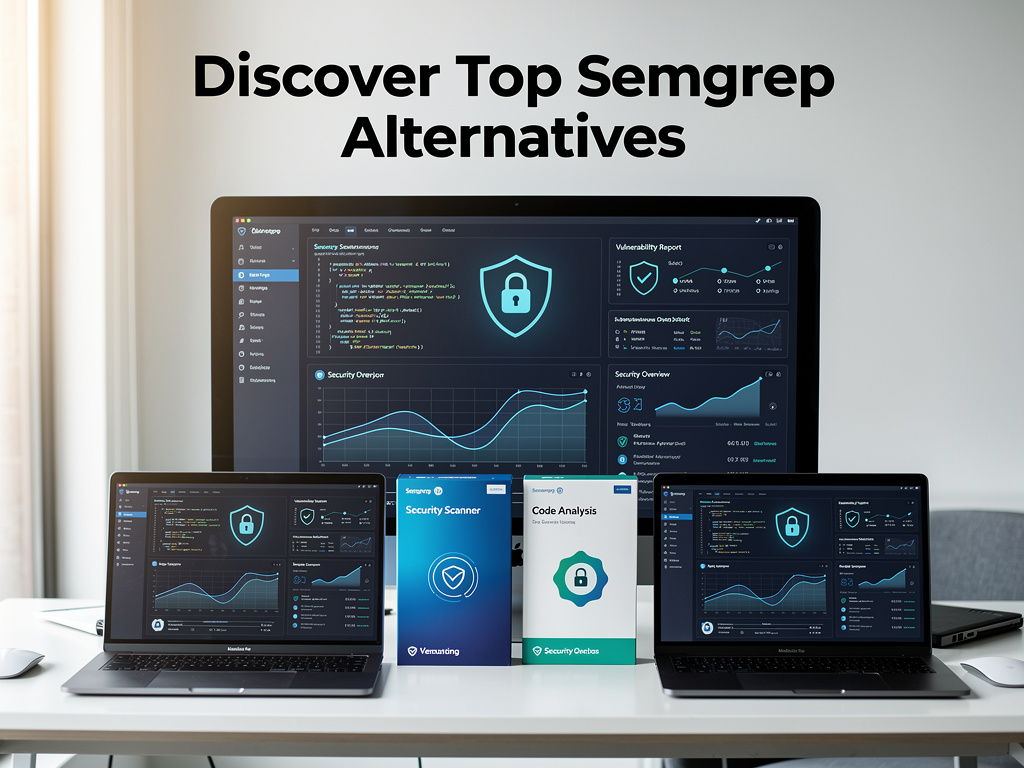
Best Semgrep Alternatives: Complete Guide to Top Application Security Testing Tools in 2026

JFrog Xray Review
- Deep artifact scanning
- Real time blocking protection
- Strong policy and compliance
- Broad cicd integrations
- Policy setup learning curve
- Resource heavy on large repos
- Possible peak performance impact

Snyk Review
- Actionable fix recommendations
- Seamless IDE and Git integration
- Broad language and package support
- Automated pull requests for fixes
- Advanced setup takes longer
- Enterprise features may cost more
Black Duck Review
- Extensive vulnerability knowledge base
- Strong license compliance tracking
- Deep binary and container scanning
- Broad CI CD integrations
- Higher enterprise pricing
- Setup can take weeks
- May need security expertise
- Policy tuning takes time
Apiiro Review
- Unified security visibility
- Real time risk insights
- Strong DevOps integrations
- Fewer false positives
- Enterprise focused pricing
- Longer full rollout timeline
- May be heavy for small teams
SonarQube Review
- Strong code quality metrics
- Broad language support
- Great CI CD integrations
- Finds security issues early
- Initial setup can be complex
- Needs configuration expertise
- Can produce false positives
- Resource intensive for large projects

Mend Review
- Fast scanning performance
- Strong integrations with workflows
- Broad language and framework support
- Developer friendly experience
- Fewer advanced niche features
- Legacy tool integration challenges
- Policy setup takes time

Checkmarx Review
- Accurate vulnerability detection
- Supports many languages
- Strong CI CD integrations
- Detailed remediation guidance
- Complex initial configuration
- Steep learning curve
- Long scans on large codebases

Semgrep Review
- Very fast scan speeds
- Low false positives
- Custom rules and transparency
- Strong CI CD integration
- Limited third party integrations
- Weaker compliance reporting
- Per developer pricing costs

Veracode Review
- Supports 80 plus languages
- Scales for large portfolios
- Strong compliance reporting
- Reduces false positives
- Premium pricing tier
- May feel complex for small teams

Fossa Review
- Manual vulnerability verification
- Over 500 package managers
- Strong license compliance
- Enterprise scale deployments
- Pricing requires sales call
- May be overkill small teams
Introduction
Static Application Security Testing (SAST) tools have become essential for modern development teams seeking to identify vulnerabilities early in the software development lifecycle. Semgrep has gained popularity as a lightweight, pattern-based scanning tool, but many organizations find themselves outgrowing its limitations.
Pattern-matching approaches can lead to accuracy issues and false positives. Enterprise teams often require more comprehensive security coverage beyond basic code scanning. This guide explores the top nine Semgrep alternatives that offer enhanced capabilities.
We’ll examine tools that provide deeper semantic analysis, better enterprise features, and broader security coverage. Each solution offers unique strengths for different organizational needs. From AI-powered platforms to comprehensive application security suites, these alternatives address Semgrep’s limitations while delivering superior results for growing development teams.
Why Consider Semgrep Alternatives
Organizations often seek Semgrep replacements due to several critical limitations. Pattern-matching approaches create significant accuracy challenges that impact developer productivity. False positives consume valuable time while false negatives leave vulnerabilities undetected.
Semgrep’s single-file analysis scope prevents detection of complex, multi-file vulnerabilities. Modern applications require understanding of data flow and control flow across entire codebases. Limited context awareness makes it difficult to identify sophisticated security issues.
Enterprise scalability concerns become apparent as teams grow. Semgrep lacks robust management features for large organizations. Integration capabilities remain limited compared to comprehensive security platforms.
Coverage gaps represent another significant limitation. Missing half the risk surface leaves organizations vulnerable to attacks. Modern security requires SAST, SCA, DAST, and Infrastructure as Code scanning in unified platforms.
Support and maintenance challenges affect enterprise adoption. Open-source limitations create dependency risks for mission-critical applications. Professional support options remain restricted for complex deployment scenarios.
Evaluation Criteria for Security Testing Tools
Selecting the right application security testing platform requires careful evaluation across multiple dimensions. Analysis accuracy stands as the primary consideration. Tools must minimize false positives while detecting genuine vulnerabilities effectively.
Coverage breadth determines overall security posture improvement. Modern platforms should address SAST, SCA, DAST, and container security requirements. Comprehensive solutions reduce tool sprawl and management complexity.
Integration capabilities affect developer adoption rates. DevOps workflow compatibility ensures security scanning doesn’t disrupt development velocity. API availability and CI/CD pipeline support become critical factors.
Enterprise features enable organizational scalability. Role-based access controls, compliance reporting, and audit trails support governance requirements. Multi-tenancy and SSO integration facilitate large-scale deployments.
Remediation support accelerates vulnerability resolution. Automated fixing capabilities and contextual guidance help developers address issues efficiently. Educational resources and best practice recommendations enhance security awareness.
Snyk: Developer-First Security Platform
Snyk has established itself as a leading developer-centric security platform that goes far beyond traditional SAST capabilities. The platform integrates seamlessly into development workflows while providing comprehensive vulnerability management across the entire application stack.
The developer experience represents Snyk’s core strength. Native IDE integrations allow developers to identify and fix vulnerabilities without leaving their preferred development environment. Real-time scanning provides immediate feedback during code creation.
Multi-vector security coverage addresses modern application requirements. Snyk Code handles SAST scanning with contextual analysis. Snyk Open Source manages dependency vulnerabilities through comprehensive SCA capabilities. Container and Infrastructure as Code scanning complete the security coverage.
Vulnerability prioritization helps teams focus on critical issues. Reachability analysis determines whether vulnerabilities can actually be exploited in specific contexts. Risk scoring considers business impact alongside technical severity.
Automated remediation capabilities accelerate fix deployment. Pull request generation includes tested patches for known vulnerabilities. Upgrade guidance helps teams maintain secure dependencies efficiently.
Snyk Strengths and Capabilities
Language support breadth covers all major development ecosystems. JavaScript, Python, Java, .NET, Go, PHP, Ruby, and Scala receive first-class treatment. Package manager integration works with npm, pip, Maven, NuGet, and others.
Cloud-native architecture ensures scalability and performance. Distributed scanning infrastructure handles large codebases efficiently. API-first design enables custom integrations and automation workflows.
Security intelligence leverages proprietary vulnerability databases. Research teams continuously identify new security issues. Community contributions expand detection capabilities across open source ecosystems.
Compliance support addresses regulatory requirements. Policy enforcement ensures organizational security standards. Detailed reporting satisfies audit and governance needs.
Training and education resources improve developer security awareness. Interactive lessons teach secure coding practices. Vulnerability explanations include context and remediation guidance.
Snyk Limitations
Cost considerations affect adoption for smaller teams. Per-developer pricing can become expensive for large organizations. Advanced features require higher-tier subscriptions.
On-premises deployment options remain limited compared to cloud offerings. Some enterprises require air-gapped installations for compliance reasons. Hybrid deployment complexity increases management overhead.
Custom rule creation requires technical expertise. Advanced customization capabilities lag behind specialized SAST tools. Complex organizational policies may require additional development effort.
Black Duck: Enterprise Software Composition Analysis Leader
Black Duck specializes in comprehensive Software Composition Analysis (SCA) with deep open source intelligence. The platform excels at identifying, tracking, and managing open source components across complex enterprise environments.
Open source detection capabilities surpass traditional dependency scanners. Binary analysis identifies components even when source code isn’t available. Snippet matching detects copied code fragments that may introduce licensing or security issues.
License compliance management addresses legal and business risks. Automated policy enforcement prevents incompatible license usage. Detailed reporting supports legal review processes and compliance audits.
Vulnerability intelligence draws from extensive databases. Proprietary research identifies security issues before public disclosure. Historical data provides context for risk assessment and remediation planning.
Enterprise scalability handles massive codebases and complex architectures. Distributed scanning infrastructure supports global development teams. API access enables integration with existing security and development tools.
Black Duck Advanced Features
Machine learning algorithms improve detection accuracy over time. Pattern recognition identifies new component variations automatically. False positive reduction algorithms learn from user feedback.
Container security extends beyond basic image scanning. Runtime monitoring tracks component behavior in production environments. Base image analysis provides recommendations for secure foundation layers.
Supply chain risk assessment evaluates component maintainer health. Project activity metrics indicate abandonment risks. Community engagement data suggests long-term viability.
Integration ecosystem supports diverse development environments. CI/CD pipeline integration enables automated security gates. IDE plugins provide developer-friendly interfaces for vulnerability management.
Remediation guidance includes specific upgrade paths and alternative components. Risk-based prioritization focuses attention on exploitable vulnerabilities. Automated patch suggestions accelerate resolution workflows.
Black Duck Considerations
Implementation complexity requires dedicated resources. Enterprise deployment involves significant configuration and customization effort. Training requirements affect time-to-value for new teams.
Cost structure reflects enterprise-focused positioning. Smaller organizations may find pricing prohibitive. Feature complexity can overwhelm simple use cases.
SAST capabilities remain secondary to core SCA functionality. Static analysis depth doesn’t match specialized code scanning tools. Multi-tool strategies may still be necessary for comprehensive coverage.
Apiiro: Code-to-Cloud Risk Management
Apiiro represents a new generation of application security platforms that combine multiple security disciplines into a unified risk management approach. The platform provides comprehensive visibility from code development through cloud deployment.
Risk-based approach prioritizes vulnerabilities based on business impact. Contextual analysis considers application architecture, data flows, and business criticality. Dynamic risk scoring adapts to changing threat landscapes automatically.
Code-to-cloud traceability maps security issues from development through production. Change impact analysis predicts risk implications of code modifications. Runtime correlation validates static analysis findings with actual application behavior.
Developer workflow integration minimizes security friction. Pull request automation includes security analysis in standard code review processes. IDE extensions provide real-time security feedback during development.
Business risk translation helps security teams communicate with executive stakeholders. Risk metrics align with business objectives and compliance requirements. Executive dashboards provide high-level visibility into application security posture.
Apiiro Innovation Areas
Machine learning models enhance vulnerability detection and prioritization accuracy. Behavioral analysis identifies anomalous patterns that suggest security issues. Predictive modeling anticipates future risk areas.
Application topology mapping provides architectural security insights. Data flow analysis identifies sensitive information processing paths. Component interaction mapping reveals potential attack vectors.
Automated security testing orchestrates multiple scanning tools efficiently. Test result correlation eliminates duplicate findings across tools. Unified reporting provides consolidated security status visibility.
Cloud security posture integration extends application security to infrastructure. Configuration analysis identifies security misconfigurations. Runtime protection capabilities bridge static and dynamic security testing.
Compliance automation maps security findings to regulatory requirements. Policy templates accelerate compliance program implementation. Audit trail generation supports regulatory reporting needs.
Apiiro Platform Considerations
Relative market newness means fewer implementation case studies. Maturity concerns may affect enterprise adoption decisions. Integration ecosystem continues expanding but remains limited.
Complexity management requires careful configuration to avoid information overload. Feature richness can overwhelm teams seeking simple security scanning. Training requirements affect rapid deployment scenarios.
Pricing transparency remains limited for budget planning purposes. Enterprise focus may exclude smaller development teams. Custom implementation requirements increase total cost of ownership.
Checkmarx: Comprehensive Application Security Testing Suite
Checkmarx delivers one of the most comprehensive application security testing platforms available, combining SAST, SCA, DAST, and Infrastructure as Code scanning in a unified solution. The platform addresses the complete application security lifecycle from development through production.
Static Analysis Security Testing (SAST) capabilities provide deep code analysis. Multi-language support covers over 25 programming languages with full framework awareness. Query language customization enables organization-specific security rule development.
Software Composition Analysis goes beyond basic dependency scanning. Binary analysis identifies components in compiled applications. License risk management addresses legal compliance requirements alongside security concerns.
Dynamic Application Security Testing (DAST) validates security issues in running applications. Interactive testing combines static and dynamic analysis for enhanced accuracy. API security testing addresses modern application architectures effectively.
Infrastructure as Code scanning extends security into cloud deployment configurations. Template analysis identifies misconfigurations before infrastructure deployment. Policy enforcement ensures compliance with security standards.
Checkmarx Enterprise Advantages
Scalability architecture supports the largest enterprise environments. Distributed scanning infrastructure handles massive codebases efficiently. Multi-tenancy capabilities enable organization-wide deployment with appropriate isolation.
Integration ecosystem provides connectivity to development and security tools. CI/CD pipeline integration enables automated security gates without workflow disruption. Ticketing system integration streamlines vulnerability management processes.
Customization capabilities address complex organizational requirements. Custom query development allows proprietary security rule creation. Workflow customization adapts to existing development processes seamlessly.
Compliance support addresses multiple regulatory frameworks simultaneously. Audit reporting satisfies requirements for SOX, PCI-DSS, GDPR, and other standards. Policy templates accelerate compliance program implementation.
Professional services support implementation and optimization efforts. Security consulting helps organizations develop effective application security programs. Training services ensure maximum platform value realization.
Checkmarx Implementation Considerations
Platform complexity requires significant implementation planning. Feature richness can overwhelm teams seeking simple security scanning solutions. Configuration options require security expertise to optimize effectively.
Cost structure reflects comprehensive capabilities but may exceed smaller organization budgets. License complexity requires careful planning to optimize spending. Advanced features often require higher-tier subscriptions.
Learning curve affects time-to-value for new implementations. Training requirements involve multiple stakeholder groups. Change management becomes critical for successful adoption.
Veracode: Cloud-Native Application Security Leader
Veracode pioneered cloud-based application security testing and continues leading innovation in Software-as-a-Service security platforms. The comprehensive solution addresses static analysis, dynamic testing, software composition analysis, and manual penetration testing.
Cloud-native architecture provides unlimited scalability without infrastructure investment. Multi-tenant security ensures data isolation while maximizing resource efficiency. Global availability ensures consistent performance across distributed development teams.
Static Analysis capabilities combine automated scanning with expert human review. Binary analysis eliminates source code sharing requirements. Language support covers all major development platforms comprehensively.
Dynamic Analysis testing validates vulnerabilities in running applications. Authenticated scanning tests application logic behind login controls. API testing addresses modern application architecture security requirements.
Software Composition Analysis identifies open source components and associated risks. License compliance tracking addresses legal requirements alongside security concerns. Vulnerability prioritization focuses remediation efforts efficiently.
Veracode Security Intelligence
Threat intelligence integration provides context for vulnerability prioritization. Attack method analysis helps developers understand exploitation scenarios. Remediation guidance includes specific code examples and best practices.
Machine learning algorithms improve detection accuracy continuously. False positive reduction minimizes developer disruption while maintaining security effectiveness. Pattern recognition identifies new vulnerability variants automatically.
Benchmarking capabilities compare application security posture against industry peers. Maturity assessments identify improvement opportunities systematically. Trend analysis tracks security posture evolution over time.
Integration platform connects security testing to development workflows seamlessly. API access enables custom automation and reporting solutions. Webhook capabilities provide real-time security event notifications.
Compliance automation maps security findings to regulatory requirements automatically. Policy templates accelerate governance program implementation. Audit documentation generates automatically from scanning results.
Veracode Service Limitations
Cloud-only deployment may conflict with data sovereignty requirements. On-premises options remain unavailable for air-gapped environments. Hybrid deployment scenarios require careful architecture planning.
Customization limitations affect organizations with unique security requirements. Custom rule development capabilities lag behind specialized static analysis tools. Complex organizational policies may require workaround solutions.
Cost optimization requires careful license management. Scanning frequency affects pricing significantly for active development teams. Feature packaging may include unnecessary capabilities for some use cases.
SonarQube: Code Quality and Security Platform
SonarQube combines code quality analysis with security vulnerability detection in a developer-focused platform. The solution emphasizes continuous code improvement alongside security scanning capabilities.
Code quality analysis addresses maintainability, reliability, and technical debt. Quality gates enforce standards before code promotion to production environments. Metrics tracking enables data-driven development process improvements.
Security vulnerability detection integrates with quality analysis workflows seamlessly. OWASP Top 10 coverage addresses common web application vulnerabilities. CWE mapping provides comprehensive vulnerability classification.
Pull request decoration provides immediate feedback on code changes. Differential analysis focuses attention on new issues introduced by recent modifications. Historical tracking shows security posture trends over time.
Self-hosted deployment addresses data sovereignty and compliance requirements. On-premises installation provides complete control over security scanning infrastructure. Cloud options offer simplified deployment for teams preferring managed services.
SonarQube Community and Enterprise Features
Open source foundation provides transparency and community-driven enhancement. Active contributor community ensures rapid response to emerging vulnerability patterns. Plugin ecosystem extends functionality for specialized requirements.
Enterprise features add portfolio management and advanced security capabilities. Branch analysis enables security scanning across development workflows. Executive reporting provides organizational visibility into code quality and security metrics.
Multi-language support covers 27+ programming languages with framework-specific analysis. Language-specific rules address platform security requirements accurately. Framework integration provides contextual analysis for popular development frameworks.
Integration capabilities connect to development and security tool chains. CI/CD pipeline integration enables automated quality and security gates. IDE plugins provide real-time feedback during development activities.
Custom rule development addresses organization-specific security requirements. Rule templates accelerate custom analysis creation. Community rule sharing expands detection capabilities across teams.
SonarQube Operational Considerations
Maintenance requirements affect total cost of ownership for self-hosted deployments. Infrastructure management requires dedicated resources for optimal performance. Backup and disaster recovery planning becomes organizational responsibility.
Scaling complexity increases with codebase size and scanning frequency. Database optimization requires ongoing attention for large implementations. Performance tuning becomes critical for acceptable scan completion times.
Security focus remains secondary to code quality analysis. Vulnerability detection depth doesn’t match specialized security testing tools. Multi-tool strategies may be necessary for comprehensive security coverage.
Mend: Software Supply Chain Security Specialist
Mend (formerly WhiteSource) specializes in software supply chain security with comprehensive open source component management. The platform addresses security vulnerabilities, license compliance, and operational risks in third-party dependencies.
Automated open source detection identifies components across all development environments. Real-time monitoring tracks new vulnerabilities in existing dependencies continuously. Impact analysis prioritizes remediation based on actual component usage.
License risk management prevents legal complications from open source usage. Policy automation enforces organizational compliance requirements. Detailed reporting supports legal review and approval processes.
Vulnerability database maintains comprehensive coverage of open source security issues. Proprietary research identifies vulnerabilities before public disclosure. Historical data provides context for long-term risk assessment.
Remediation automation accelerates vulnerability resolution workflows. Pull request generation includes tested security updates. Alternative component suggestions help teams avoid problematic dependencies.
Mend Advanced Capabilities
Supply chain attack detection identifies malicious components and suspicious behavior patterns. Machine learning algorithms recognize anomalous package characteristics. Behavioral analysis monitors component activity for security indicators.
Container security extends beyond basic image vulnerability scanning. Base image optimization recommends minimal configurations for reduced attack surface. Runtime monitoring tracks component behavior in production environments.
Operational risk assessment evaluates open source project health and maintainer activity. Community engagement metrics indicate long-term viability. Project abandonment risk analysis helps teams make informed dependency decisions.
Integration ecosystem supports diverse development and security tool chains. API access enables custom automation and reporting workflows. Webhook notifications provide real-time security event alerts.
Policy enforcement adapts to complex organizational requirements. Flexible rule configuration addresses varied compliance needs across business units. Exception management provides controlled policy deviation capabilities.
Mend Platform Limitations
SAST capabilities remain limited compared to specialized code analysis tools. Static analysis depth focuses primarily on open source components. Custom code vulnerability detection requires additional security tools.
Cost structure can become expensive for organizations with extensive open source usage. Per-component pricing models affect budgeting for large applications. Feature packaging may include unnecessary capabilities for simple use cases.
Implementation complexity requires dedicated resources for optimal configuration. Policy development demands understanding of organizational compliance requirements. Training needs affect time-to-value for new implementations.
JFrog Xray: DevOps Security Integration Leader
JFrog Xray provides comprehensive security and compliance analysis integrated deeply with DevOps artifact management workflows. The platform combines vulnerability detection with impact analysis across the entire software delivery pipeline.
Artifact-centric security analysis provides unprecedented visibility into component relationships. Dependency graph analysis traces vulnerabilities through complex application architectures. Impact assessment identifies all affected applications automatically.
Continuous monitoring tracks security posture changes as new vulnerabilities emerge. Automated scanning triggers when artifacts are updated or published. Policy enforcement prevents vulnerable components from reaching production environments.
CI/CD pipeline integration enables security gates without workflow disruption. Build failure automation stops deployments containing policy violations. Automated documentation maintains audit trails for compliance requirements.
Multi-package format support covers all major development ecosystems comprehensively. Docker, npm, Maven, NuGet, PyPI, and other formats receive unified security analysis. Cross-platform vulnerability correlation identifies related security issues.
JFrog Xray Enterprise Features
Scalability architecture handles massive artifact repositories efficiently. Distributed scanning infrastructure supports global development teams. Multi-tenancy capabilities enable organization-wide deployment with appropriate access controls.
Advanced policy management addresses complex organizational requirements. Conditional policies enable context-aware security enforcement. Risk-based policies prioritize critical vulnerabilities while managing development velocity.
Compliance automation maps security findings to regulatory frameworks automatically. Audit reporting generates documentation for SOX, FDA, and other regulatory requirements. Policy templates accelerate compliance program implementation.
Machine learning algorithms enhance vulnerability detection and prioritization accuracy. Contextual analysis reduces false positives while improving detection coverage. Behavioral modeling identifies suspicious artifact characteristics.
Integration ecosystem connects to security and development tool chains seamlessly. SIEM integration provides security event correlation. Ticketing system connectivity streamlines vulnerability management workflows.
JFrog Xray Deployment Considerations
Platform dependency on JFrog Artifactory may require infrastructure changes. Ecosystem lock-in affects organizations using alternative artifact management solutions. Migration complexity increases for existing artifact repositories.
Cost optimization requires understanding of scanning frequency and artifact volume impacts. Large repositories generate significant scanning overhead. Feature complexity may exceed simple vulnerability scanning requirements.
SAST capabilities remain limited compared to specialized static analysis tools. Code-level vulnerability detection focuses primarily on known patterns and dependencies. Custom vulnerability rule development capabilities remain restricted.
FOSSA: Open Source License and Security Management
FOSSA specializes in comprehensive open source management with equal emphasis on license compliance and security vulnerability detection. The platform addresses legal, security, and operational risks from third-party component usage.
Automated component discovery identifies open source usage across development environments comprehensively. Deep scanning detects components in binaries, containers, and deployed applications. Historical tracking maintains complete component inventory over time.
License compliance automation prevents legal complications from incompatible license combinations. Policy enforcement blocks problematic license usage automatically. Legal team integration streamlines review and approval workflows.
Vulnerability management integrates security analysis with license compliance workflows. Risk-based prioritization considers both legal and security implications simultaneously. Remediation guidance addresses compliance and security requirements together.
Attribution reporting generates legally compliant documentation automatically. License text compilation satisfies distribution requirements. Audit documentation supports compliance verification processes.
FOSSA Advanced Analysis Capabilities
Dependency analysis maps component relationships throughout application architectures. Transitive dependency tracking identifies indirect security and compliance risks. Conflict resolution helps teams address incompatible component combinations.
Machine learning algorithms improve component detection accuracy continuously. Fingerprinting technology identifies modified or customized open source components. Version analysis tracks component updates and associated risk changes.
Policy automation adapts to complex organizational compliance requirements. Flexible rule configuration addresses varied legal and security needs. Exception management provides controlled policy deviation capabilities.
Integration platform connects to development and security workflows seamlessly. API access enables custom reporting and automation solutions. Webhook notifications provide real-time compliance and security event alerts.
Vendor risk assessment evaluates open source project health and sustainability. Maintainer activity analysis indicates long-term viability risks. Community engagement metrics suggest project abandonment likelihood.
FOSSA Platform Constraints
SAST analysis capabilities remain minimal compared to specialized static analysis tools. Code-level vulnerability detection focuses primarily on known component vulnerabilities. Custom security rule development options remain limited.
Cost complexity affects budgeting for organizations with extensive open source usage. Component-based pricing models can become expensive for large applications. Feature bundling may include unnecessary capabilities for security-focused teams.
Implementation requires understanding of both legal and technical requirements. Policy configuration demands knowledge of organizational compliance obligations. Training needs span legal and development team stakeholders.
Comprehensive Comparison of Semgrep Alternatives
| Platform | Primary Strength | SAST Capability | SCA Coverage | Enterprise Features | Deployment Options | Best For |
|---|---|---|---|---|---|---|
| Snyk | Developer Experience | Excellent | Excellent | Strong | Cloud, On-Prem | DevSecOps Integration |
| Black Duck | SCA Intelligence | Good | Excellent | Excellent | Cloud, On-Prem | Enterprise SCA |
| Apiiro | Risk Management | Good | Good | Strong | Cloud | Code-to-Cloud Security |
| Checkmarx | Comprehensive Testing | Excellent | Good | Excellent | Cloud, On-Prem | Enterprise SAST |
| Veracode | Cloud-Native Security | Excellent | Good | Strong | Cloud | Scalable Security Testing |
| SonarQube | Code Quality + Security | Good | Limited | Good | On-Prem, Cloud | Development Teams |
| Mend | Supply Chain Security | Limited | Excellent | Strong | Cloud, On-Prem | Open Source Management |
| JFrog Xray | DevOps Integration | Limited | Excellent | Strong | Cloud, On-Prem | Artifact Security |
| FOSSA | License Compliance | Limited | Excellent | Good | Cloud, On-Prem | Compliance Management |
Selection Criteria by Organization Type
Startup and small teams benefit from developer-friendly platforms with minimal operational overhead. Snyk and SonarQube provide comprehensive security capabilities without extensive configuration requirements. Cloud deployment eliminates infrastructure management complexity.
Mid-size organizations require balanced capabilities across security testing disciplines. Checkmarx and Veracode offer comprehensive application security platforms. Scalability features support growing development teams effectively.
Enterprise organizations need complete security coverage with extensive customization capabilities. Black Duck and Checkmarx provide enterprise-grade features with professional services support. On-premises deployment options address compliance requirements.
DevOps-focused teams prioritize seamless workflow integration over comprehensive features. Snyk and JFrog Xray integrate naturally into CI/CD pipelines. Automated security gates maintain development velocity while improving security posture.
Compliance-heavy industries require detailed audit trails and regulatory reporting capabilities. FOSSA and Black Duck specialize in compliance automation and documentation. Policy enforcement prevents violations before they reach production environments.
Implementation Best Practices
Successful security tool implementation requires careful planning and stakeholder alignment. Pilot programs validate tool capabilities before organization-wide deployment. Limited scope implementations allow teams to understand tool strengths and limitations.
Developer training ensures effective tool adoption and value realization. Security awareness education helps teams understand vulnerability implications. Tool-specific training maximizes feature utilization and efficiency.
Policy development should align with organizational risk tolerance and compliance requirements. Gradual policy enforcement allows teams to adapt to new security requirements. Exception processes provide flexibility while maintaining security standards.
Integration planning addresses existing tool chain compatibility. API connectivity enables custom automation and reporting workflows. Webhook configurations provide real-time security event notifications.
Metrics collection enables data-driven security program improvement. Vulnerability trending tracks security posture evolution over time. Remediation time measurement identifies process improvement opportunities.
Common Implementation Challenges
False positive management affects developer productivity and tool adoption rates. Tuning detection rules requires balancing security coverage with developer experience. Exception management provides escape valves for unavoidable false positives.
Tool sprawl complicates security program management and increases operational overhead. Consolidation strategies reduce complexity while maintaining comprehensive coverage. Platform integration capabilities minimize tool count requirements.
Skill development requirements affect time-to-value for new security tool implementations. Training programs ensure teams can effectively utilize advanced platform capabilities. Knowledge sharing accelerates organization-wide security expertise development.
Change management becomes critical for successful security tool adoption. Developer buy-in determines long-term implementation success. Communication strategies emphasize security benefits alongside development workflow improvements.
Budget optimization requires understanding of licensing models and feature utilization. Regular usage audits identify optimization opportunities. Feature rationalization ensures alignment between capabilities and actual requirements.
Future Trends in Application Security Testing
Artificial intelligence integration transforms vulnerability detection accuracy and remediation efficiency. Machine learning algorithms reduce false positive rates while identifying complex vulnerability patterns. Automated fix generation accelerates security issue resolution.
DevSecOps maturation drives demand for seamless security workflow integration. Developer-centric tools become standard rather than specialized options. Security testing shifts left into development environments comprehensively.
Cloud-native architecture security requires new testing approaches beyond traditional application scanning. Container security and Infrastructure as Code analysis become essential capabilities. Runtime protection integrates with static analysis for comprehensive coverage.
Supply chain security gains prominence following high-profile attacks on software dependencies. Component risk assessment expands beyond vulnerability detection to include operational and legal risks. Vendor security evaluation becomes systematic rather than ad-hoc.
Compliance automation reduces manual overhead while improving accuracy and consistency. Regulatory mapping connects security findings to specific compliance requirements automatically. Audit documentation generates from security tool outputs directly.
Technology Evolution Impact
API security testing becomes essential as microservices architectures proliferate. Traditional web application security testing approaches require adaptation for API-first applications. Behavioral analysis complements static scanning for comprehensive API security coverage.
Low-code and no-code development platforms introduce new security testing challenges. Visual programming environments require specialized analysis approaches. Traditional source code scanning techniques need adaptation for configuration-driven applications.
Quantum computing implications drive cryptographic security analysis requirements. Current encryption algorithms face future obsolescence concerns. Security tools must identify quantum-vulnerable cryptographic implementations proactively.
Edge computing deployment models require distributed security testing capabilities. Decentralized application architectures complicate traditional security analysis approaches. Security tools must adapt to multi-location deployment scenarios.
Regulatory evolution continues driving compliance automation requirements. New privacy regulations expand data handling security analysis needs. Security tools must provide flexible policy frameworks for emerging compliance requirements.
Conclusion
Selecting the right Semgrep alternative depends on organizational priorities, team size, and security requirements. Comprehensive platforms like Checkmarx and Veracode suit enterprise environments needing full application security coverage.
Developer-focused solutions like Snyk excel in DevSecOps environments prioritizing workflow integration. Specialized tools like Black Duck and FOSSA address specific compliance and supply chain security needs effectively.
Successful implementation requires careful evaluation of technical capabilities alongside organizational readiness. Modern application security demands comprehensive coverage beyond traditional pattern-matching approaches for optimal protection.
Frequently Asked Questions About Semgrep Alternatives
- What are the main limitations of Semgrep that drive organizations to seek alternatives?
Pattern-matching approaches create accuracy issues with false positives and false negatives. Limited enterprise features and shallow analysis depth affect scalability for growing organizations. Missing coverage for SCA, DAST, and Infrastructure as Code scanning leaves security gaps. - Which Semgrep alternative offers the best developer experience?
Snyk provides the most developer-centric experience with native IDE integrations and pull request automation. SonarQube also offers excellent developer workflow integration with quality gate enforcement. Both platforms prioritize developer productivity while maintaining security effectiveness. - What should enterprises prioritize when evaluating Semgrep replacements?
Comprehensive security coverage across SAST, SCA, DAST, and IaC scanning capabilities. Enterprise scalability features including role-based access controls and audit trails. Integration capabilities with existing development and security tool chains. Professional support and services for implementation assistance. - How do costs compare between different Semgrep alternatives?
Enterprise platforms like Checkmarx and Black Duck typically require higher investment but provide comprehensive capabilities. Developer-focused tools like Snyk offer per-developer pricing that scales with team size. Open source options like SonarQube provide cost-effective solutions for smaller organizations. - Which alternatives provide the best Software Composition Analysis capabilities?
Black Duck leads in SCA with comprehensive open source intelligence and binary analysis. Mend specializes in supply chain security with automated vulnerability monitoring. FOSSA excels in license compliance alongside security vulnerability management. - Can organizations use multiple tools instead of a comprehensive platform?
Multi-tool approaches provide flexibility but increase operational complexity and management overhead. Tool integration becomes critical for efficient vulnerability management workflows. Comprehensive platforms offer unified interfaces and correlated analysis results for better efficiency. - What deployment options are available for Semgrep alternatives?
Cloud-native solutions like Veracode and Snyk offer scalability without infrastructure management. On-premises options like SonarQube and Checkmarx address data sovereignty requirements. Hybrid deployments provide flexibility for complex compliance scenarios. - How important are AI and machine learning capabilities in security testing tools?
AI-powered analysis significantly reduces false positive rates while improving detection accuracy. Machine learning algorithms help prioritize vulnerabilities based on exploitability and business impact. Automated remediation suggestions accelerate security issue resolution workflows. - What integration capabilities should organizations evaluate?
CI/CD pipeline integration enables automated security gates without disrupting development velocity. IDE plugins provide real-time security feedback during code development. API access allows custom automation and integration with existing security workflows. - How do organizations measure ROI from Semgrep alternative implementations?
Vulnerability reduction metrics demonstrate security posture improvement over time. Developer productivity measurements show workflow efficiency gains from better tool integration. Compliance automation savings reduce manual audit and documentation overhead significantly.





 Stack Insight is intended to support informed decision-making by providing independent information about business software and services. Some product details, including pricing, features, and promotional offers, may be supplied by vendors or partners and can change without notice.