
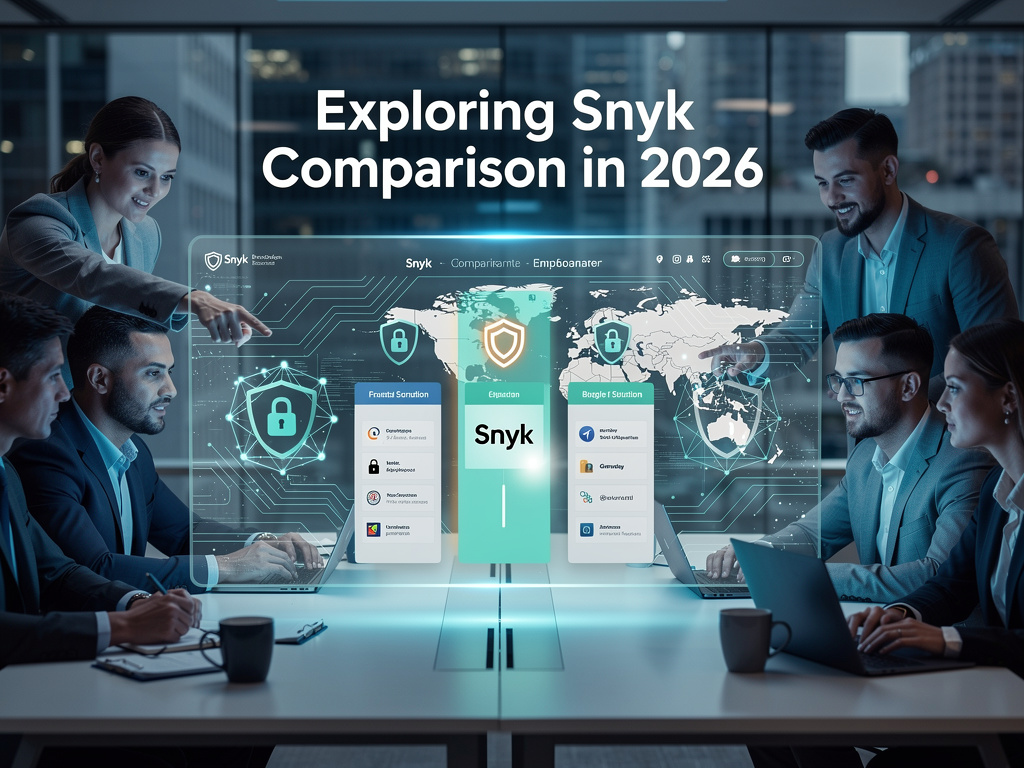
The Complete Snyk Comparison Guide: Best Application Security Platforms for 2026

JFrog Xray Review
- Deep artifact scanning
- Real time blocking protection
- Strong policy and compliance
- Broad cicd integrations
- Policy setup learning curve
- Resource heavy on large repos
- Possible peak performance impact

Snyk Review
- Actionable fix recommendations
- Seamless IDE and Git integration
- Broad language and package support
- Automated pull requests for fixes
- Advanced setup takes longer
- Enterprise features may cost more
Black Duck Review
- Extensive vulnerability knowledge base
- Strong license compliance tracking
- Deep binary and container scanning
- Broad CI CD integrations
- Higher enterprise pricing
- Setup can take weeks
- May need security expertise
- Policy tuning takes time
Apiiro Review
- Unified security visibility
- Real time risk insights
- Strong DevOps integrations
- Fewer false positives
- Enterprise focused pricing
- Longer full rollout timeline
- May be heavy for small teams
SonarQube Review
- Strong code quality metrics
- Broad language support
- Great CI CD integrations
- Finds security issues early
- Initial setup can be complex
- Needs configuration expertise
- Can produce false positives
- Resource intensive for large projects

Mend Review
- Fast scanning performance
- Strong integrations with workflows
- Broad language and framework support
- Developer friendly experience
- Fewer advanced niche features
- Legacy tool integration challenges
- Policy setup takes time

Checkmarx Review
- Accurate vulnerability detection
- Supports many languages
- Strong CI CD integrations
- Detailed remediation guidance
- Complex initial configuration
- Steep learning curve
- Long scans on large codebases

Semgrep Review
- Very fast scan speeds
- Low false positives
- Custom rules and transparency
- Strong CI CD integration
- Limited third party integrations
- Weaker compliance reporting
- Per developer pricing costs

Veracode Review
- Supports 80 plus languages
- Scales for large portfolios
- Strong compliance reporting
- Reduces false positives
- Premium pricing tier
- May feel complex for small teams

Fossa Review
- Manual vulnerability verification
- Over 500 package managers
- Strong license compliance
- Enterprise scale deployments
- Pricing requires sales call
- May be overkill small teams
Application security has become a critical concern for development teams worldwide. Organizations need robust solutions to protect their software supply chains from vulnerabilities. Snyk stands as a prominent player in this space, but it’s not the only option available.
This comprehensive comparison examines Snyk alongside its top competitors. We’ll analyze each platform’s strengths, weaknesses, and unique capabilities. Development teams require security tools that integrate seamlessly with their workflows while providing actionable insights.
Our evaluation covers essential features like Software Composition Analysis (SCA), Static Application Security Testing (SAST), container security, and Infrastructure as Code (IaC) scanning. We’ll also examine pricing models, integration capabilities, and user experience factors that influence platform selection.
Understanding Snyk’s Position in the Security Market
Snyk established itself as a developer-first application security platform. The company originally focused on open source software security through Software Composition Analysis. This approach resonated with development teams seeking security solutions that didn’t disrupt their workflows.
The platform has evolved significantly since its inception. Snyk now offers comprehensive scanning capabilities across multiple attack vectors. These include custom code analysis, container security, and cloud infrastructure assessment.
Developer adoption remains Snyk’s strongest competitive advantage. The platform integrates directly into development environments and CI/CD pipelines. This integration approach reduces friction between security requirements and development productivity.
However, some organizations find gaps in Snyk’s coverage. Critics point to limitations in binary analysis and comprehensive supply chain security. These limitations have created opportunities for competitors to differentiate their offerings.
Key Evaluation Criteria for Security Platform Assessment
Selecting the right application security platform requires careful evaluation across multiple dimensions. Our comparison framework examines each solution through standardized criteria that matter most to development and security teams.
Security Coverage represents the foundation of any effective platform. We evaluate each tool’s ability to detect vulnerabilities across different code types, dependencies, and infrastructure components.
Integration Capabilities determine how seamlessly tools fit into existing development workflows. Platforms must support popular IDEs, version control systems, and CI/CD tools without creating bottlenecks.
Accuracy and False Positives directly impact team productivity. Security tools that generate excessive noise or miss critical vulnerabilities undermine trust and effectiveness.
- Remediation Guidance: Quality of fix recommendations and automated patching capabilities
- Performance Impact: Scan speed and resource consumption during security testing
- Scalability: Ability to handle large codebases and high-velocity development teams
- Compliance Support: Built-in frameworks for regulatory requirements and industry standards
- Pricing Model: Cost structure and value proposition for different organization sizes
JFrog Xray: Comprehensive Software Supply Chain Security
JFrog positions itself as a full software supply chain security platform. Unlike Snyk’s developer-first approach, JFrog emphasizes comprehensive coverage across the entire software development lifecycle.
The platform excels in binary analysis capabilities that extend beyond source code scanning. JFrog Xray analyzes compiled artifacts, container images, and deployment packages. This comprehensive approach addresses security gaps that source-only scanners might miss.
Artifact Repository Integration represents JFrog’s core strength. The platform leverages deep integration with JFrog Artifactory to provide security insights at the artifact level. This integration enables security policies enforcement before artifacts reach production environments.
JFrog’s approach to vulnerability detection combines multiple intelligence sources. The platform uses proprietary research alongside public vulnerability databases. This multi-source approach often identifies risks before they appear in standard CVE databases.
However, some teams find JFrog’s interface less intuitive than Snyk’s developer-centric design. The platform requires more security expertise to configure and optimize effectively.
License compliance features in JFrog Xray surpass many competitors. Organizations dealing with complex licensing requirements often prefer JFrog’s comprehensive compliance reporting capabilities.
JFrog vs Snyk: Key Differentiators
The primary distinction lies in scope and approach. JFrog provides broader supply chain coverage while Snyk focuses on developer accessibility and ease of use.
JFrog’s binary analysis capabilities fill critical security gaps. Many organizations discover that source code scanning alone misses vulnerabilities introduced during compilation or packaging processes.
Snyk’s strength lies in developer adoption and workflow integration. Teams that prioritize minimal friction often prefer Snyk’s streamlined approach over JFrog’s comprehensive but complex platform.
Checkmarx: Enterprise-Grade Static Analysis Alternative
Checkmarx has established itself as an enterprise-focused security platform with deep Static Application Security Testing (SAST) capabilities. The company’s approach emphasizes comprehensive code analysis and enterprise-grade security governance.
The platform’s SAST engine analyzes custom code with remarkable depth. Checkmarx identifies complex vulnerability patterns that simpler tools might miss. This capability makes it particularly valuable for organizations with significant custom code development.
Enterprise Integration represents Checkmarx’s core strength. The platform supports complex organizational structures, advanced role-based access controls, and comprehensive audit trails required by large enterprises.
However, Checkmarx’s traditional approach can create friction with modern development practices. Many development teams find the platform’s scanning process slower and more disruptive than Snyk’s real-time analysis.
Recent platform updates have addressed some developer experience concerns. Checkmarx now offers IDE integrations and faster scanning options. Yet the fundamental philosophy remains enterprise security-first rather than developer-first.
Compliance reporting in Checkmarx exceeds most competitors. Organizations subject to strict regulatory requirements often choose Checkmarx for its comprehensive compliance documentation and audit capabilities.
When to Choose Checkmarx Over Snyk
Organizations with significant custom code development often benefit from Checkmarx’s deep SAST capabilities. The platform excels at identifying complex security flaws in proprietary applications.
Enterprise environments with strict governance requirements may prefer Checkmarx’s comprehensive controls. The platform provides granular policy enforcement and detailed audit trails.
Teams willing to trade some developer convenience for thorough security analysis find value in Checkmarx’s approach. The platform prioritizes security depth over development workflow optimization.
Endor Labs: Next-Generation Application Security Platform
Endor Labs represents a newer approach to application security that emphasizes actionable insights over comprehensive vulnerability lists. The platform focuses on reducing security noise while providing deep visibility into application and operating system layers.
The company’s correlation capabilities distinguish it from traditional security scanners. Endor Labs correlates findings across Software Composition Analysis and container scans to provide contextual security insights.
Noise Reduction stands as Endor Labs’ primary value proposition. The platform uses advanced analytics to identify vulnerabilities that pose real risks versus theoretical concerns. This approach helps security teams focus on actionable threats.
Deep application visibility extends beyond surface-level scanning. Endor Labs analyzes runtime behavior and actual code execution paths. This analysis provides more accurate risk assessment than static scanning approaches alone.
However, as a newer platform, Endor Labs lacks the extensive integration ecosystem that established players offer. Organizations with complex toolchains may find limited connectivity options.
Machine learning capabilities in Endor Labs continue evolving rapidly. The platform’s AI-driven analysis improves vulnerability prioritization accuracy over time through continuous learning.
Endor Labs vs Snyk Comparison
Endor Labs emphasizes quality over quantity in vulnerability detection. While Snyk provides comprehensive coverage, Endor Labs focuses on identifying truly exploitable vulnerabilities.
The platforms take different approaches to developer experience. Snyk prioritizes seamless workflow integration, while Endor Labs emphasizes providing security teams with actionable intelligence.
Organizations overwhelmed by security alert fatigue often prefer Endor Labs’ focused approach. Teams that need comprehensive coverage across all potential vulnerabilities typically choose Snyk’s broader scanning capabilities.
Cycode: AI-Native Application Security Platform
Cycode positions itself as an AI-native application security platform that unites security and development teams. The platform provides actionable context from code to runtime to identify and prioritize software risks.
The platform’s AI capabilities extend beyond simple vulnerability detection. Cycode uses machine learning to understand application context and provide intelligent risk prioritization. This approach reduces false positives while highlighting critical security issues.
Complete ASPM Platform functionality includes CI/CD pipeline security, secrets scanning, and comprehensive Application Security Testing (AST) capabilities. Cycode covers Static Application Security Testing (SAST) alongside Software Composition Analysis (SCA).
Infrastructure as Code security represents another key capability. The platform analyzes cloud infrastructure configurations to identify misconfigurations and security weaknesses before deployment.
However, Cycode’s comprehensive approach may overwhelm smaller development teams. Organizations with limited security expertise might find the platform’s extensive capabilities challenging to implement effectively.
Developer workflow integration in Cycode aims to minimize disruption while maximizing security coverage. The platform provides security insights within familiar development tools and processes.
Cycode’s Competitive Advantages
AI-native architecture enables intelligent vulnerability prioritization that adapts to organizational context. Traditional rule-based systems cannot match this adaptive capability.
Complete Application Security Posture Management (ASPM) coverage eliminates the need for multiple point solutions. Organizations can consolidate their security toolchain while maintaining comprehensive coverage.
The platform’s approach to context-aware security provides more actionable insights than traditional scanning approaches. Teams receive relevant security guidance rather than generic vulnerability reports.
Oligo Security: Runtime-First Vulnerability Prioritization
Oligo Security takes a fundamentally different approach to application security through runtime-first vulnerability analysis. The platform focuses on identifying exploitable vulnerabilities rather than comprehensive vulnerability catalogs.
Runtime analysis capabilities provide insights into actual application behavior. Oligo identifies which vulnerabilities can be exploited in real-world scenarios versus theoretical security concerns that never materialize.
Real-time Monitoring enables continuous security assessment throughout application lifecycles. The platform monitors running applications to identify new vulnerabilities and changing risk profiles.
This approach significantly reduces security noise compared to traditional scanning methods. Security teams can focus on vulnerabilities that pose genuine threats rather than managing extensive lists of theoretical risks.
However, runtime-first analysis requires different implementation approaches than traditional security scanners. Organizations must instrument their applications to enable effective runtime monitoring.
Integration complexity may challenge teams accustomed to simple scanning tools. Oligo’s approach requires deeper application integration to provide accurate runtime insights.
Runtime vs Traditional Scanning Approaches
Traditional scanners like Snyk analyze code and dependencies statically. Oligo’s runtime approach observes actual application behavior to identify exploitable vulnerabilities.
This fundamental difference creates distinct value propositions. Static scanning provides comprehensive coverage while runtime analysis offers precise risk assessment.
Organizations struggling with alert fatigue often prefer Oligo’s focused approach. Teams that need comprehensive security coverage typically combine runtime analysis with traditional scanning methods.
Mend (Formerly WhiteSource): Proactive Vulnerability Management
Mend bridges the gap between developer and security teams through proactive vulnerability management throughout the software development lifecycle. The platform emphasizes automated remediation alongside comprehensive vulnerability detection.
Automated remediation capabilities distinguish Mend from many competitors. The platform can automatically create pull requests with security fixes, reducing manual effort required for vulnerability resolution.
License compliance features in Mend provide comprehensive oversight of open source licensing obligations. Organizations with complex compliance requirements often choose Mend for its detailed license analysis and reporting.
Policy Enforcement capabilities enable organizations to implement security standards consistently across development teams. Mend can block builds that violate security policies or contain prohibited licenses.
However, some developers find Mend’s approach more restrictive than Snyk’s permissive methodology. The platform prioritizes security compliance over development velocity when conflicts arise.
Supply chain security features in Mend address risks beyond direct dependencies. The platform analyzes transitive dependencies and identifies potential supply chain attacks through dependency confusion or typosquatting.
Mend’s Automation Advantages
Automated fix generation reduces the manual effort required for vulnerability remediation. Mend creates actionable pull requests rather than simply identifying security issues.
Policy automation ensures consistent security standards across development teams. Organizations can implement security requirements without relying on manual review processes.
The platform’s approach to proactive security prevents vulnerabilities from reaching production environments through early detection and automated remediation.
Semgrep Supply Chain: Focused Software Composition Analysis
Semgrep Supply Chain specializes in Software Composition Analysis to identify security vulnerabilities caused by open-source dependencies. The platform focuses on this specific security domain rather than providing comprehensive application security coverage.
The platform’s precision approach to dependency analysis reduces false positives common in broader security platforms. Semgrep’s focused methodology provides more accurate vulnerability assessments for open source components.
Custom Rule Creation enables organizations to implement specific security policies tailored to their technology stacks. This flexibility allows teams to address unique security requirements that generic scanners might miss.
Integration with existing development workflows minimizes disruption while providing essential security insights. Semgrep works within familiar tools rather than requiring separate security platforms.
However, the platform’s narrow focus may require additional tools for comprehensive application security coverage. Organizations need complementary solutions for custom code analysis and infrastructure security.
Performance optimization in Semgrep enables fast scanning without significant impact on development velocity. The platform’s focused approach allows for efficient analysis of dependency security.
When Focused SCA Makes Sense
Organizations with extensive open source usage benefit from specialized dependency analysis. Semgrep’s focused approach provides deeper insights into supply chain risks than general-purpose scanners.
Teams that prefer best-of-breed solutions over comprehensive platforms often choose Semgrep for dependency security. The focused approach enables optimization for specific security requirements.
Development teams comfortable managing multiple security tools may prefer Semgrep’s specialized capabilities over all-in-one platforms that compromise depth for breadth.
Veracode: Enterprise Application Security Platform
Veracode provides enterprise-grade application security testing with comprehensive coverage across multiple security testing methodologies. The platform combines static analysis, dynamic testing, and software composition analysis.
Enterprise scalability represents Veracode’s core strength. The platform handles large-scale application portfolios with centralized management and reporting capabilities that enterprise security teams require.
Security expertise embedded in Veracode’s platform provides guidance that development teams often lack internally. The platform includes security consulting and managed services alongside automated scanning.
Compliance Framework support in Veracode addresses regulatory requirements across multiple industries. Organizations subject to strict compliance mandates often choose Veracode for its comprehensive audit and reporting capabilities.
However, Veracode’s enterprise focus can create friction with agile development practices. The platform’s thorough analysis processes may slow rapid development cycles compared to lighter-weight alternatives like Snyk.
Cloud-native applications receive strong support through Veracode’s container and Infrastructure as Code scanning capabilities. The platform adapts traditional enterprise security approaches to modern cloud architectures.
Enterprise vs Developer-First Approaches
Veracode prioritizes comprehensive security analysis over development velocity optimization. This approach suits organizations where security requirements outweigh speed concerns.
The platform’s enterprise features include advanced reporting, role-based access controls, and integration with enterprise security orchestration tools.
Organizations with dedicated security teams often prefer Veracode’s enterprise capabilities. Development-focused teams typically choose more streamlined alternatives that prioritize workflow integration.
Comparative Analysis: Feature Matrix and Capabilities
| Platform | SAST | SCA | Container Security | IaC Security | Runtime Analysis | Auto-Remediation |
|---|---|---|---|---|---|---|
| Snyk | Yes | Yes | Yes | Yes | Limited | Partial |
| JFrog Xray | Limited | Yes | Yes | Yes | No | No |
| Checkmarx | Advanced | Yes | Yes | Yes | No | Limited |
| Endor Labs | Yes | Yes | Yes | Limited | Yes | No |
| Cycode | Yes | Yes | Yes | Yes | Limited | Partial |
| Oligo Security | No | Runtime-based | Yes | No | Advanced | No |
| Mend | Limited | Yes | Yes | Limited | No | Yes |
| Semgrep | Custom Rules | Yes | Limited | Limited | No | No |
Integration and Developer Experience Comparison
Developer experience varies significantly across application security platforms. Snyk leads in developer adoption through seamless IDE integration and minimal workflow disruption.
JFrog excels in CI/CD pipeline integration but requires more configuration expertise. The platform’s artifact-centric approach aligns well with mature DevOps practices.
Checkmarx provides enterprise-grade integrations with advanced governance capabilities. However, these features often come at the cost of development velocity and simplicity.
Newer platforms like Endor Labs and Cycode focus on reducing security noise while maintaining developer-friendly interfaces. These solutions attempt to balance comprehensive coverage with usability.
Pricing Models and Value Propositions
Application security platform pricing varies dramatically based on features, scale, and organizational requirements. Understanding cost structures helps organizations make informed decisions beyond technical capabilities alone.
Snyk uses a tiered pricing model based on the number of projects and advanced features. The platform offers free tiers for open source projects while charging enterprise customers for advanced capabilities and support.
Per-developer licensing models common among several platforms can become expensive for large development teams. Organizations should calculate total cost of ownership including scaling scenarios.
Enterprise platforms like Checkmarx and Veracode typically use custom pricing based on application portfolios and organizational size. These models provide flexibility but lack pricing transparency.
Newer platforms often offer competitive pricing to gain market share. However, organizations should consider long-term costs including integration effort and ongoing maintenance requirements.
Value propositions extend beyond licensing costs. Platforms that reduce manual security work or prevent security incidents provide quantifiable returns on investment through improved efficiency and risk reduction.
Total Cost of Ownership Considerations
Implementation costs vary significantly based on platform complexity and organizational requirements. Simple platforms like Snyk require minimal setup while comprehensive solutions demand extensive configuration.
Training requirements differ across platforms based on user interface complexity and required security expertise. Developer-first platforms typically require less training investment than enterprise-focused solutions.
Integration maintenance represents an ongoing cost that organizations often underestimate. Platforms with extensive API ecosystems may require more maintenance but offer greater flexibility.
Making the Right Choice: Platform Selection Guidelines
Selecting the optimal application security platform requires careful consideration of organizational priorities, technical requirements, and team capabilities. No single solution fits every organization perfectly.
Development teams prioritizing velocity and minimal friction typically prefer Snyk’s developer-first approach. The platform’s seamless integration and comprehensive coverage balance security needs with development productivity.
Organizations with extensive custom code development may benefit from Checkmarx’s advanced SAST capabilities. Enterprise environments often require the comprehensive governance features that Checkmarx provides.
Supply chain security concerns may drive organizations toward JFrog’s comprehensive binary analysis capabilities. The platform addresses security gaps that source-only scanners miss.
Teams overwhelmed by security alert fatigue should consider runtime-first approaches like Oligo Security or focused solutions like Endor Labs. These platforms prioritize actionable insights over comprehensive vulnerability catalogs.
Emerging platforms like Cycode offer AI-native capabilities that may provide competitive advantages. However, organizations should balance innovative features against platform maturity and ecosystem support.
Implementation Strategy Recommendations
Start with pilot programs to evaluate platforms in real organizational contexts. Technical evaluations alone cannot capture workflow impact and team adoption challenges.
Consider hybrid approaches that combine multiple platforms for different security domains. Best-of-breed solutions may provide better coverage than comprehensive platforms that compromise on specialized capabilities.
Migration planning becomes critical when replacing existing security tools. Organizations should plan for integration work, team training, and policy migration to minimize disruption.
Future Trends in Application Security Platforms
Application security platforms continue evolving rapidly as threat landscapes and development practices change. AI-driven vulnerability prioritization represents a key trend across multiple platforms.
Runtime security analysis gains importance as organizations seek to reduce false positives. Platforms that combine static analysis with runtime insights provide more accurate risk assessments.
Cloud-native security becomes increasingly critical as organizations adopt containerized applications and Infrastructure as Code. Traditional security approaches must adapt to ephemeral and programmatic infrastructure.
Developer experience optimization remains a competitive differentiator. Platforms that reduce security friction while maintaining comprehensive coverage will likely gain market share.
Integration consolidation may drive platform selection as organizations seek to reduce tool sprawl. Comprehensive platforms that replace multiple point solutions offer operational advantages despite potential capability trade-offs.
Supply chain security continues growing in importance following high-profile attacks. Platforms with comprehensive dependency analysis and supply chain monitoring capabilities address this evolving threat landscape.
Application security platforms will likely consolidate advanced capabilities while improving developer experience. The winning platforms will balance comprehensive security coverage with minimal development friction.
Organizations should evaluate platforms based on current needs while considering future requirements. Technology investments in application security require long-term perspectives given integration complexity and team training investments. Choose platforms that provide growth paths aligned with organizational security maturity and development practice evolution.
Frequently Asked Questions About Snyk Comparison and Alternatives
Common Questions About Snyk vs Competitors
- Which platform offers the best developer experience compared to Snyk?
Snyk remains the leader in developer experience with seamless IDE integration and minimal workflow disruption. However, newer platforms like Cycode and Endor Labs are closing this gap by focusing on developer-friendly interfaces while reducing security noise. - How does JFrog Xray compare to Snyk for supply chain security?
JFrog Xray provides superior supply chain coverage through binary analysis and comprehensive artifact scanning. While Snyk focuses on source code and dependencies, JFrog analyzes compiled artifacts and deployment packages, addressing security gaps that source-only scanners miss. - What are the key benefits of choosing Checkmarx over Snyk?
Checkmarx excels in enterprise environments requiring advanced SAST capabilities and comprehensive governance controls. Organizations with significant custom code development and strict compliance requirements often prefer Checkmarx’s thorough analysis and enterprise-grade reporting features. - Why might organizations choose Oligo Security instead of traditional scanners like Snyk?
Oligo Security’s runtime-first approach identifies actually exploitable vulnerabilities rather than theoretical risks. Teams overwhelmed by alert fatigue prefer Oligo’s focused methodology that prioritizes genuine threats over comprehensive vulnerability catalogs. - How do newer platforms like Endor Labs differ from established solutions?
Newer platforms emphasize quality over quantity in vulnerability detection, using AI and machine learning to reduce false positives. Endor Labs correlates findings across multiple security domains to provide contextual insights that traditional scanners cannot match. - What factors should influence platform selection beyond technical capabilities?
Consider total cost of ownership, including implementation effort, training requirements, and ongoing maintenance. Evaluate integration complexity, team expertise requirements, and long-term scalability needs alongside security capabilities and pricing models. - Can organizations effectively use multiple security platforms together?
Yes, many organizations adopt best-of-breed approaches combining specialized platforms for different security domains. For example, using Snyk for developer workflow integration while adding JFrog for comprehensive supply chain security or Oligo for runtime vulnerability prioritization. - How important is AI and machine learning in modern application security platforms?
AI capabilities become increasingly important for vulnerability prioritization and false positive reduction. Platforms like Cycode and Endor Labs leverage AI to provide contextual security insights that traditional rule-based systems cannot achieve, improving security team efficiency.






 Stack Insight is intended to support informed decision-making by providing independent information about business software and services. Some product details, including pricing, features, and promotional offers, may be supplied by vendors or partners and can change without notice.