
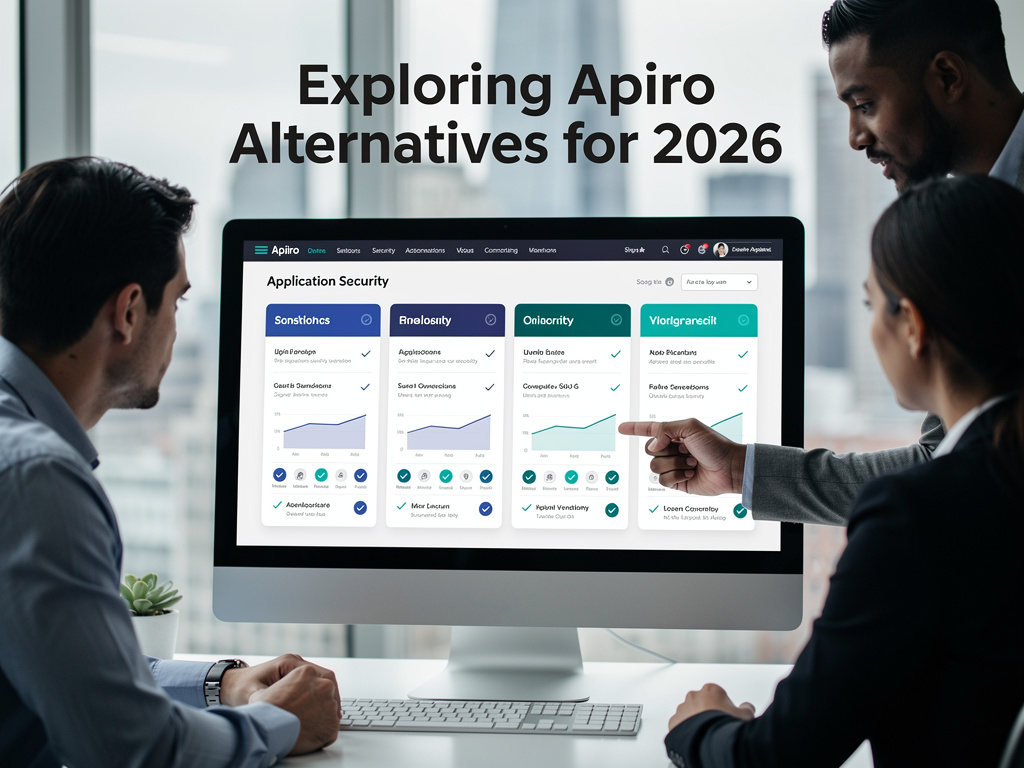
Top 9 Apiiro Alternatives for Application Security in 2026: Complete Comparison Guide

JFrog Xray Review
- Deep artifact scanning
- Real time blocking protection
- Strong policy and compliance
- Broad cicd integrations
- Policy setup learning curve
- Resource heavy on large repos
- Possible peak performance impact

Snyk Review
- Actionable fix recommendations
- Seamless IDE and Git integration
- Broad language and package support
- Automated pull requests for fixes
- Advanced setup takes longer
- Enterprise features may cost more
Black Duck Review
- Extensive vulnerability knowledge base
- Strong license compliance tracking
- Deep binary and container scanning
- Broad CI CD integrations
- Higher enterprise pricing
- Setup can take weeks
- May need security expertise
- Policy tuning takes time
Apiiro Review
- Unified security visibility
- Real time risk insights
- Strong DevOps integrations
- Fewer false positives
- Enterprise focused pricing
- Longer full rollout timeline
- May be heavy for small teams

SonarQube Review
- Strong code quality metrics
- Broad language support
- Great CI CD integrations
- Finds security issues early
- Initial setup can be complex
- Needs configuration expertise
- Can produce false positives
- Resource intensive for large projects

Mend Review
- Fast scanning performance
- Strong integrations with workflows
- Broad language and framework support
- Developer friendly experience
- Fewer advanced niche features
- Legacy tool integration challenges
- Policy setup takes time

Checkmarx Review
- Accurate vulnerability detection
- Supports many languages
- Strong CI CD integrations
- Detailed remediation guidance
- Complex initial configuration
- Steep learning curve
- Long scans on large codebases

Semgrep Review
- Very fast scan speeds
- Low false positives
- Custom rules and transparency
- Strong CI CD integration
- Limited third party integrations
- Weaker compliance reporting
- Per developer pricing costs

Veracode Review
- Supports 80 plus languages
- Scales for large portfolios
- Strong compliance reporting
- Reduces false positives
- Premium pricing tier
- May feel complex for small teams

Fossa Review
- Manual vulnerability verification
- Over 500 package managers
- Strong license compliance
- Enterprise scale deployments
- Pricing requires sales call
- May be overkill small teams
Application Security Posture Management (ASPM) platforms have become essential for modern development teams. Apiiro leads this space with unified code and cloud risk visibility capabilities. However, many organizations seek alternatives due to pricing concerns, alert fatigue, or developer friction issues.
Finding the right Apiiro replacement requires understanding different approaches to application security. Some tools focus primarily on static analysis, while others provide comprehensive cloud-to-code coverage. The best alternatives offer seamless developer integration without sacrificing security depth.
This comprehensive guide examines nine leading Apiiro competitors across key evaluation criteria. We’ll analyze each platform’s strengths, limitations, pricing models, and ideal use cases. Our comparison covers both established enterprise solutions and emerging developer-first alternatives that challenge traditional security approaches.
Understanding the Application Security Landscape
The application security market has evolved significantly beyond traditional vulnerability scanners. Modern platforms must address code analysis, dependency management, cloud configuration security, and supply chain risks within unified workflows.
ASPM platforms like Apiiro emerged to solve fragmented tooling problems. They correlate findings across multiple security layers while providing risk prioritization based on actual application context. This approach reduces noise and focuses teams on exploitable vulnerabilities.
However, implementation complexity often creates new challenges. Many organizations struggle with tool sprawl, false positives, and developer adoption resistance. The most successful alternatives balance comprehensive coverage with streamlined user experiences.
Key factors driving the search for Apiiro substitutes include:
- Cost optimization for growing development teams
- Reduced alert noise and better prioritization
- Improved developer experience and workflow integration
- Specialized requirements for specific technology stacks
Evaluation Criteria for Apiiro Alternatives
Selecting the right application security platform requires systematic evaluation across multiple dimensions. Our analysis framework examines both technical capabilities and practical implementation considerations.
Security Coverage Depth encompasses static analysis (SAST), software composition analysis (SCA), dynamic testing (DAST), and infrastructure scanning. The best platforms integrate these capabilities rather than treating them as separate tools.
Developer Integration measures how seamlessly security fits into existing workflows. This includes IDE plugins, CI/CD pipeline integration, and automated remediation capabilities. Poor integration leads to security becoming a bottleneck rather than an enabler.
Alert Quality and Prioritization determines practical value. Platforms must minimize false positives while highlighting genuinely critical risks. Context-aware prioritization based on exploitability and business impact proves essential for team productivity.
Additional evaluation criteria include:
- Deployment flexibility (cloud, on-premise, hybrid)
- Scalability for enterprise codebases
- Compliance support for regulatory requirements
- Total cost of ownership including implementation effort
Snyk: Developer-First Security Platform
Snyk has established itself as a leading developer-first security platform with comprehensive vulnerability management across code, dependencies, containers, and infrastructure. The platform emphasizes early-stage security integration and automated remediation.
The tool excels at software composition analysis with an extensive vulnerability database covering millions of packages across popular ecosystems. Snyk’s dependency scanning provides detailed remediation guidance, including automated pull requests for dependency updates.
Code analysis capabilities cover multiple languages with focus on identifying security-specific patterns. The static analysis engine balances accuracy with speed, enabling real-time scanning within developer workflows without significant performance impact.
Key Snyk strengths include:
- Extensive language support covering major development ecosystems
- Automated fix generation for many vulnerability types
- Strong CLI and IDE integration for seamless workflows
- Clear prioritization based on exploitability scoring
Container security scanning analyzes base images and application layers for known vulnerabilities. Integration with major container registries enables automated scanning during build processes. The platform provides actionable recommendations for base image upgrades and configuration hardening.
Infrastructure as Code scanning covers Terraform, Kubernetes, and CloudFormation templates. Snyk identifies misconfigurations that could lead to security exposures in cloud environments. Policy enforcement prevents risky configurations from reaching production.
Pricing follows a freemium model with generous free tiers for small teams. Enterprise plans scale based on active developers and include advanced features like custom rules and priority support. Implementation typically requires minimal setup effort with good documentation.
Limitations include occasional false positives in static analysis and dependency on external vulnerability databases for accuracy. Large enterprises may find advanced customization options somewhat limited compared to enterprise-focused alternatives.
Black Duck: Enterprise Software Composition Analysis
Black Duck (now part of Synopsys) represents one of the most mature approaches to software composition analysis and open source risk management. The platform emphasizes comprehensive license compliance alongside security vulnerability detection.
The tool’s knowledge base contains extensive information about millions of open source components, including detailed license obligations and security advisories. This depth makes Black Duck particularly valuable for organizations with strict compliance requirements.
Binary analysis capabilities can identify open source components even when source code isn’t directly accessible. This proves crucial for legacy applications or third-party components where traditional dependency scanning approaches fail.
Enterprise-focused features include:
- Comprehensive license analysis with legal risk assessment
- Policy enforcement for organizational compliance standards
- Detailed reporting for audit and governance processes
- Integration capabilities with enterprise development toolchains
Vulnerability management provides detailed information about security issues affecting detected components. The platform correlates multiple vulnerability databases and provides remediation guidance based on available patches or alternative components.
Container scanning extends analysis capabilities to containerized applications, examining both base layers and application components. Integration with major container platforms enables automated policy enforcement during deployment pipelines.
Black Duck’s strength lies in enterprise-grade compliance and extensive component knowledge. The platform handles complex licensing scenarios and provides detailed audit trails required for regulated industries.
However, the tool can be complex to implement and may overwhelm smaller teams with extensive reporting and configuration options. Pricing typically targets enterprise budgets and may not suit cost-conscious organizations or smaller development teams.
Checkmarx: Comprehensive Application Security Testing
Checkmarx offers one of the most comprehensive static application security testing (SAST) platforms available, with additional capabilities spanning software composition analysis and dynamic testing. The platform targets enterprises requiring deep code analysis across diverse technology stacks.
The static analysis engine supports an extensive range of programming languages and frameworks with deep semantic understanding. Checkmarx’s approach goes beyond pattern matching to understand data flow and identify complex vulnerability chains across application layers.
Custom rule creation enables organizations to codify specific security requirements and coding standards. This flexibility proves valuable for enterprises with unique compliance needs or proprietary framework usage.
Core platform capabilities include:
- Advanced SAST with minimal false positive rates
- Software composition analysis for open source risk management
- Interactive application security testing (IAST) for runtime analysis
- API security testing with automated discovery and analysis
Integration capabilities cover major IDEs, CI/CD platforms, and issue tracking systems. The platform provides detailed remediation guidance with code-level examples and training materials to help developers understand and fix identified issues.
Enterprise features include role-based access controls, detailed audit logging, and comprehensive reporting for compliance purposes. The platform scales to handle large codebases and high-velocity development environments.
Checkmarx excels in accuracy and depth of security analysis, making it suitable for organizations where thorough vulnerability identification outweighs speed considerations. The platform’s educational approach helps improve overall development team security awareness.
Challenges include longer scan times compared to lighter alternatives and complexity that may overwhelm smaller teams. Pricing reflects enterprise positioning and may not suit organizations with limited security budgets or simple application architectures.
Semgrep: Fast and Customizable Code Analysis
Semgrep represents a modern approach to static code analysis with emphasis on speed, customizability, and developer experience. The platform uses a unique pattern-matching syntax that enables both security professionals and developers to create effective custom rules.
The tool’s rule engine allows expressing complex security patterns using syntax that closely resembles target programming languages. This approach makes rule creation accessible to developers while maintaining the precision needed for accurate vulnerability detection.
Performance optimization enables Semgrep to scan large codebases quickly without sacrificing accuracy. The platform’s architecture supports incremental scanning, analyzing only changed code during continuous integration processes.
Key platform advantages include:
- Intuitive rule creation using familiar programming constructs
- Fast scanning performance suitable for real-time analysis
- Open source foundation with commercial enterprise features
- Strong community contribution of security rules and patterns
Rule marketplace provides access to thousands of pre-built security patterns covering common vulnerability types and framework-specific issues. Organizations can contribute their own rules while benefiting from community-maintained patterns.
CI/CD integration emphasizes minimal friction with existing development workflows. Semgrep provides actionable feedback directly within pull requests and supports automated fixing for certain vulnerability types.
The platform includes software composition analysis capabilities for dependency vulnerability scanning, though this area represents a newer addition compared to the mature static analysis features.
Semgrep works particularly well for organizations wanting to customize security analysis for specific frameworks or coding patterns. The balance between power and simplicity makes it accessible to development teams without dedicated security expertise.
Limitations include less comprehensive vulnerability coverage compared to established enterprise platforms and dependency on rule quality for effective results. Organizations may need to invest time in rule tuning for optimal performance.
Veracode: Enterprise Security Testing Platform
Veracode provides comprehensive application security testing through cloud-based static, dynamic, and interactive analysis capabilities. The platform emphasizes enterprise-grade security with extensive compliance support and detailed vulnerability management.
The static analysis offering supports numerous programming languages and frameworks with deep security expertise built into scanning logic. Veracode’s approach combines automated analysis with human security research to maintain high accuracy standards.
Dynamic analysis capabilities test running applications to identify vulnerabilities that static analysis might miss. The platform provides authenticated scanning for complex applications and API security testing for modern architectures.
Enterprise platform features include:
- Comprehensive testing portfolio covering multiple analysis types
- Detailed compliance reporting for regulatory requirements
- Security consultation services for complex implementation scenarios
- Scalable cloud architecture handling large enterprise workloads
Software composition analysis identifies open source components and associated security risks across application portfolios. The platform provides detailed license analysis and policy enforcement capabilities for compliance management.
Developer workflow integration includes IDE plugins and CI/CD pipeline connections, though the platform’s enterprise focus sometimes creates friction for individual developers seeking immediate feedback.
Veracode’s strength lies in comprehensive security coverage and enterprise support capabilities. The platform handles complex compliance scenarios and provides detailed audit trails required for regulated industries.
However, the tool can be expensive for smaller organizations and may require significant configuration effort for optimal results. Scan times for large applications can impact development velocity if not properly managed.
SonarQube: Code Quality and Security Platform
SonarQube combines code quality analysis with security vulnerability detection in a single platform. This approach makes security analysis part of broader code quality initiatives rather than treating it as a separate concern.
The platform’s quality gates enable organizations to enforce both code quality and security standards before code reaches production. This integration helps establish security as part of overall engineering excellence rather than an external compliance requirement.
Static analysis capabilities cover multiple programming languages with focus on identifying both security vulnerabilities and code quality issues. The unified approach helps teams understand relationships between code maintainability and security risks.
Platform capabilities include:
- Integrated quality and security analysis in unified workflows
- Detailed technical debt measurement including security-related debt
- Customizable quality gates for organizational standards
- Extensive language support across major development ecosystems
Community and commercial editions provide flexibility for different organizational needs. The open source foundation enables evaluation and small team usage, while commercial features support enterprise requirements.
Developer integration includes IDE plugins and pull request decoration that provides immediate feedback on code changes. The platform’s focus on code quality makes security guidance more palatable to development teams focused on engineering excellence.
SonarQube excels for organizations wanting to combine security and quality initiatives under unified governance. The platform’s maturity and extensive community support provide confidence for long-term adoption.
Limitations include less specialized security features compared to dedicated security platforms and potential complexity for teams seeking simple vulnerability scanning without broader quality analysis.
Mend: Software Supply Chain Security
Mend (formerly WhiteSource) specializes in software supply chain security with comprehensive open source risk management and automated remediation capabilities. The platform emphasizes reducing manual effort in vulnerability management through intelligent automation.
The tool’s database coverage includes extensive information about open source components, vulnerabilities, and licenses across major programming ecosystems. Real-time monitoring provides alerts when new vulnerabilities affect existing dependencies.
Automated remediation capabilities generate pull requests with appropriate dependency updates and security patches. This approach reduces the manual effort required to maintain secure dependency baselines across application portfolios.
Key platform strengths include:
- Comprehensive supply chain visibility across development portfolios
- Intelligent prioritization based on exploitability and context
- Automated fix generation for dependency vulnerabilities
- Policy enforcement for organizational security standards
Container security scanning extends analysis to containerized applications and infrastructure. The platform identifies vulnerabilities in base images and provides recommendations for security improvements.
License compliance management provides detailed analysis of open source license obligations and potential conflicts. This capability proves valuable for organizations with strict intellectual property policies or commercial software distribution.
Mend works particularly well for organizations heavily dependent on open source components where manual dependency management becomes impractical. The automation focus reduces security team workload while maintaining security standards.
Challenges include focus primarily on supply chain security rather than custom code analysis, which may require supplementing with additional static analysis tools. Pricing models may not suit all organizational structures or development team sizes.
JFrog Xray: DevOps Security and Compliance
JFrog Xray provides security and compliance analysis integrated with JFrog’s DevOps platform ecosystem. This deep integration enables comprehensive artifact analysis throughout development and deployment pipelines.
The platform’s artifact analysis capabilities extend beyond traditional vulnerability scanning to include license compliance, quality metrics, and policy enforcement. Integration with JFrog Artifactory provides complete visibility into artifact lifecycle and security status.
Binary analysis can identify security issues and license obligations even when source code isn’t directly available. This capability proves valuable for organizations using third-party components or legacy applications with limited source access.
Integration advantages include:
- Native DevOps platform integration within JFrog ecosystem
- Comprehensive artifact lifecycle security and compliance tracking
- Policy-based automation for security and compliance enforcement
- Detailed impact analysis for vulnerability remediation planning
Impact analysis helps organizations understand which applications and deployments are affected by newly discovered vulnerabilities. This capability enables targeted remediation efforts rather than broad scanning across entire portfolios.
Watch functionality provides continuous monitoring of artifacts and dependencies for new security issues. Automated alerts enable rapid response to emerging threats affecting organizational infrastructure.
JFrog Xray excels for organizations already using JFrog’s DevOps platform or those seeking tight integration between artifact management and security analysis. The unified approach reduces tool complexity and improves workflow efficiency.
Limitations include dependency on JFrog ecosystem for optimal value and less comprehensive static code analysis compared to specialized SAST platforms. Organizations using different artifact management solutions may find integration more complex.
FOSSA: Open Source Management Platform
FOSSA focuses specifically on open source component analysis, license compliance, and supply chain risk management. The platform provides comprehensive visibility into open source usage across organizational development portfolios.
The tool’s dependency analysis capabilities identify open source components including indirect dependencies that may not be immediately visible. Deep dependency tree analysis helps organizations understand complete supply chain exposure.
License compliance automation provides detailed analysis of license obligations and potential conflicts. FOSSA’s legal expertise helps organizations navigate complex open source licensing scenarios while maintaining compliance with organizational policies.
Specialized capabilities include:
- Comprehensive license analysis with legal risk assessment
- Supply chain risk management for open source dependencies
- Policy automation for organizational compliance requirements
- Detailed audit reporting for governance and compliance purposes
Vulnerability management focuses specifically on open source components with detailed remediation guidance and impact analysis. The platform correlates multiple vulnerability databases to provide comprehensive risk assessment.
API and CLI tools enable integration with existing development workflows and automation systems. FOSSA provides flexibility for organizations wanting to embed open source analysis within custom toolchains.
The platform excels for organizations where open source governance represents a primary concern, particularly in regulated industries or those with complex licensing requirements. FOSSA’s specialized focus provides depth in areas where general-purpose tools may lack expertise.
However, the platform’s focus on open source components means organizations may need supplemental tools for custom code analysis. Pricing typically targets enterprise scenarios and may not suit smaller organizations with simpler compliance needs.
Comparison Analysis: Choosing the Right Apiiro Alternative
Selecting the optimal Apiiro replacement depends heavily on organizational priorities, technical requirements, and existing toolchain integration needs. Each platform brings distinct strengths that appeal to different use cases and team structures.
Developer-first organizations often benefit from platforms like Snyk or Semgrep that prioritize workflow integration and minimal friction. These tools emphasize early-stage security feedback and automated remediation over comprehensive enterprise governance features.
Enterprise-focused requirements typically favor platforms like Veracode, Checkmarx, or Black Duck that provide comprehensive analysis capabilities, detailed compliance reporting, and extensive customization options. These solutions handle complex organizational needs at the cost of increased implementation complexity.
| Platform | Primary Strength | Best For | Integration | Pricing Model |
|---|---|---|---|---|
| Snyk | Developer Experience | DevOps Teams | Excellent | Freemium |
| Black Duck | License Compliance | Enterprise Governance | Good | Enterprise |
| Checkmarx | SAST Accuracy | Complex Applications | Good | Enterprise |
| Semgrep | Customizability | Custom Rules | Excellent | Open Source/Commercial |
| Veracode | Comprehensive Testing | Regulated Industries | Good | Enterprise |
| SonarQube | Quality Integration | Quality-focused Teams | Excellent | Community/Commercial |
| Mend | Supply Chain Automation | Dependency Management | Good | Commercial |
| JFrog Xray | DevOps Integration | JFrog Ecosystem | Excellent | Commercial |
| FOSSA | License Analysis | Compliance Teams | Good | Enterprise |
Cost considerations vary significantly across platforms. Open source and freemium options like SonarQube and Snyk provide entry points for budget-conscious organizations, while enterprise platforms require substantial investment but offer comprehensive feature sets.
Integration requirements often determine practical success regardless of feature completeness. Platforms that seamlessly integrate with existing development workflows typically achieve higher adoption rates and better security outcomes than more comprehensive but complex alternatives.
Implementation Considerations and Best Practices
Successful implementation of Apiiro substitutes requires careful planning around organizational change management, technical integration, and gradual rollout strategies. The most effective approaches balance comprehensive security coverage with developer productivity concerns.
Pilot programs enable organizations to evaluate platforms with real codebases and development workflows before committing to full implementations. Starting with smaller teams or specific applications provides learning opportunities and implementation refinement.
Developer training proves crucial for platforms requiring custom rule creation or complex configuration. Investment in education helps teams maximize platform value while reducing resistance to new security processes.
Key implementation best practices include:
- Gradual rollout across development teams and applications
- Clear ownership for platform administration and rule management
- Integration testing with existing CI/CD and development toolchains
- Feedback loops for continuous improvement and false positive reduction
Metrics and measurement help demonstrate security improvement and identify areas requiring attention. Tracking vulnerability identification rates, remediation times, and developer satisfaction provides insights for program optimization.
Policy development establishes clear expectations for security standards while providing flexibility for different application types and risk profiles. Effective policies balance security requirements with development velocity needs.
Future Trends in Application Security Platforms
The application security landscape continues evolving rapidly with emerging technologies and changing development practices driving new platform capabilities and approaches. Understanding these trends helps inform long-term platform selection decisions.
AI-powered analysis increasingly enhances traditional static analysis with improved accuracy and reduced false positive rates. Machine learning approaches help prioritize vulnerabilities based on exploitability and organizational context.
Developer experience focus continues driving platform design decisions as organizations recognize that security tools must enhance rather than hinder development productivity. Future platforms will likely emphasize even greater workflow integration and automation.
Emerging trends include:
- Cloud-native security integration with containerized and serverless architectures
- API security testing for microservices and distributed system architectures
- Supply chain security addressing sophisticated attacks against development toolchains
- Compliance automation for emerging regulatory requirements and standards
Platform consolidation may reduce tool sprawl as comprehensive solutions become more capable and easier to implement. Organizations increasingly prefer unified platforms over best-of-breed approaches when integration complexity outweighs specialized capabilities.
Conclusion
The search for effective Apiiro alternatives reveals a rich ecosystem of application security platforms addressing diverse organizational needs and preferences. From developer-first solutions like Snyk and Semgrep to enterprise-focused platforms like Veracode and Checkmarx, each option brings distinct advantages for specific use cases. Success depends on carefully evaluating organizational priorities, technical requirements, and implementation capabilities rather than simply comparing feature lists. The most effective choice balances comprehensive security coverage with practical workflow integration and sustainable adoption across development teams.
Frequently Asked Questions About Apiiro Alternatives
- What are the main reasons organizations seek Apiiro alternatives?
Organizations typically look for alternatives due to pricing concerns, alert fatigue from false positives, developer workflow friction, or specific feature requirements not met by Apiiro’s current offerings.
- Which Apiiro alternative offers the best value for small development teams?
Snyk and SonarQube provide excellent value for smaller teams through freemium pricing models and strong developer integration, while Semgrep offers powerful open-source capabilities with commercial enterprise features.
- How do enterprise Apiiro substitutes compare in terms of compliance support?
Veracode, Checkmarx, and Black Duck provide the most comprehensive compliance reporting and audit capabilities, with detailed documentation and policy enforcement suitable for regulated industries.
- What should organizations prioritize when evaluating Apiiro competitors?
Key priorities include developer workflow integration, security coverage depth, alert quality and prioritization, deployment flexibility, and total cost of ownership including implementation effort.
- Which platform provides the best automated remediation capabilities?
Snyk and Mend excel at automated remediation through intelligent dependency updates and pull request generation, while Semgrep offers strong automated fixing for custom code patterns.
- How important is open source component analysis in Apiiro alternatives?
Software composition analysis has become essential given widespread open source usage. FOSSA, Black Duck, and Mend specialize in this area, while most comprehensive platforms include SCA capabilities.
- What are the key differences between developer-first and enterprise-focused alternatives?
Developer-first platforms prioritize workflow integration and minimal friction, while enterprise solutions emphasize comprehensive analysis, detailed reporting, and extensive customization options at the cost of increased complexity.
- How do cloud-native organizations choose between Apiiro replacement options?
Cloud-native teams often benefit from platforms with strong container scanning, Kubernetes integration, and Infrastructure as Code analysis capabilities, making Snyk, JFrog Xray, and Checkmarx strong candidates.




 Stack Insight is intended to support informed decision-making by providing independent information about business software and services. Some product details, including pricing, features, and promotional offers, may be supplied by vendors or partners and can change without notice.