
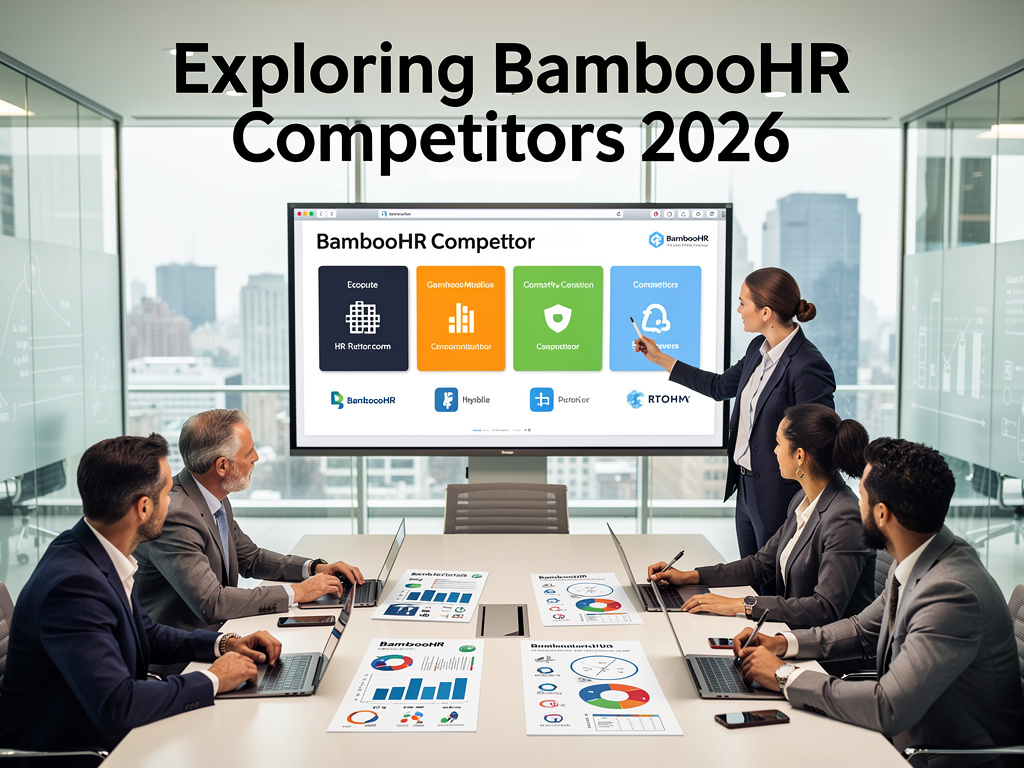
Best BambooHR Competitors and Alternatives in 2026: Top HR Software Solutions Compared

Hibob Review
- Intuitive user friendly interface
- Strong employee engagement tools
- Scales well for growing teams
- Dedicated customer success managers
- No native payroll processing
- Benefits need third party tools
- Advanced setup can be complex

Rippling Review
- All in one platform
- Powerful automation workflows
- Hundreds of integrations available
- Strong security compliance
- Complex setup for workflows
- Training across teams required
- Advanced modules raise costs

BambooHR Review
- Intuitive interface for SMBs
- Strong core HR modules
- Fast implementation timeline
- Excellent customer support
- Basic payroll and time tracking
- Benefits module still maturing
- Custom integrations can be tricky
- Limited industry specific features
Zoho People Review
- Centralized employee data
- Automated time and attendance
- Streamlined leave approvals
- Performance management tools
- Setup can take time
- May need Zoho ecosystem

Paylocity Review
- Unified HR and payroll suite
- Strong payroll accuracy
- Modern mobile self service
- Robust reporting and compliance
- Implementation can be complex
- Extra fees for add ons
- Support response times vary

Workday Review
- Cloud native architecture
- Integrated HR and finance
- Modern user experience
- Strong for compliance needs
- Implementation can be complex
- Limited customization flexibility
- Best for larger companies

SAP SuccessFactors Review
- Comprehensive talent management suite
- Strong global compliance coverage
- Scalable for large enterprises
- Advanced workforce analytics
- Complex implementation and rollout
- Steep user interface learning
- Long deployment timelines
- Change management heavy

ADP Workforce Now Review
- Best in class payroll accuracy
- Strong multi state compliance
- All in one HCM platform
- Extensive API integrations
- Complex for smaller teams
- Pricing adds up quickly
- Long implementation timeline
- Training required for users

UKG Ready Review
- All in one HR suite
- Cloud based scalable design
- Strong integrations and APISs
- Compliance tools and updates
- Limited international capabilities
- Moderate admin learning curve
- Complex reports need it help
- Support quality varies by tier

Namely Review
- Unified HR payroll benefits suite
- Modern intuitive interface
- Strong customization options
- Good implementation guidance
- Implementation can take weeks
- Integrations may add cost
- Support quality can vary
- Needs dedicated project resources
BambooHR has long been a popular choice for small to medium-sized businesses seeking comprehensive HR management solutions. However, the evolving landscape of human resources technology has introduced numerous compelling alternatives that may better serve specific organizational needs. These BambooHR competitors offer diverse features ranging from advanced payroll automation to global compliance management. Some excel in employee onboarding, while others provide superior analytics and reporting capabilities. Understanding the strengths and limitations of each platform helps businesses make informed decisions about their HR technology investments. This comprehensive analysis examines nine leading BambooHR alternatives, evaluating their core features, pricing structures, and ideal use cases to help you identify the perfect HR solution for your organization.
Understanding the HR Software Landscape: Why Consider BambooHR Alternatives
The human resources software market has experienced tremendous growth in recent years. Organizations increasingly recognize that HR technology directly impacts employee satisfaction and operational efficiency. While BambooHR offers solid foundational features, many businesses require more specialized functionality.
Modern HR platforms must address diverse challenges including remote workforce management, compliance requirements, and integration capabilities. Companies often outgrow their initial HR software as they scale operations or expand internationally. Others discover that industry-specific requirements demand more tailored solutions.
The competitive landscape now includes providers specializing in particular niches. Some focus exclusively on payroll processing, while others emphasize talent management or employee engagement. Understanding these distinctions helps organizations select platforms that align with their strategic objectives.
Key Evaluation Criteria for BambooHR Competitors
Selecting the right HR software requires careful consideration of multiple factors. Our analysis examines each platform across seven critical dimensions to provide comprehensive comparisons.
Core HR Functionality
Essential features include employee data management, document storage, and basic reporting capabilities. Advanced platforms offer customizable workflows, automated processes, and self-service portals. Integration with existing business systems becomes crucial for larger organizations.
Payroll and Benefits Management
Payroll accuracy and compliance are non-negotiable requirements. Leading solutions provide automated tax calculations, direct deposit capabilities, and comprehensive benefits administration. International payroll support becomes essential for global organizations.
User Experience and Interface Design
Intuitive interfaces reduce training time and improve adoption rates. Mobile accessibility enables remote workforce management. Clean, modern designs enhance daily user interactions with the platform.
Scalability and Customization Options
Growing businesses need platforms that adapt to changing requirements. Scalable solutions accommodate increased user volumes without performance degradation. Customization capabilities allow organizations to tailor workflows and reporting to specific needs.
Integration Capabilities
Modern HR platforms must connect seamlessly with accounting software, productivity tools, and specialized applications. API availability enables custom integrations. Pre-built connectors simplify implementation processes.
Pricing Structure and Value
Transparent pricing models help organizations budget effectively. Per-employee costs, implementation fees, and ongoing support charges impact total cost of ownership. Value assessment considers feature richness relative to pricing.
Customer Support and Implementation
Quality support reduces implementation risks and ensures ongoing success. Multiple support channels, comprehensive documentation, and training resources contribute to positive user experiences. Implementation timelines and complexity vary significantly between providers.
HiBob: Modern HR Platform for Mid-Market Companies
HiBob positions itself as a people management platform designed for modern, tech-savvy organizations. The platform emphasizes employee experience and cultural development alongside traditional HR functions.
Core Features and Functionality
HiBob’s core offering includes comprehensive employee data management, customizable workflows, and advanced reporting capabilities. The platform supports complete employee lifecycle management from onboarding through offboarding processes.
Performance management tools enable continuous feedback cycles and goal tracking. The system includes surveys and pulse tools for measuring employee engagement. Document management capabilities provide secure storage with version control.
Strengths and Advantages
User interface design stands out as HiBob’s primary strength. The modern, intuitive interface requires minimal training for most users. Mobile applications provide full functionality for remote and traveling employees.
Cultural emphasis differentiates HiBob from traditional HR platforms. Features like peer recognition, company announcements, and team directories foster employee engagement. Advanced analytics provide insights into workforce trends and performance metrics.
Limitations and Considerations
Payroll functionality remains limited compared to specialized providers. Organizations often require third-party integrations for comprehensive payroll processing. Pricing can be substantial for smaller organizations with basic requirements.
Implementation complexity may challenge organizations lacking technical resources. The feature-rich platform requires careful configuration to avoid overwhelming end users.
Rippling: All-in-One Employee Management Solution
Rippling offers an integrated approach to employee management that extends beyond traditional HR functions. The platform combines HR, payroll, benefits, and IT management in a unified system.
Comprehensive Platform Overview
The Rippling ecosystem includes modules for employee onboarding, payroll processing, benefits administration, and device management. Automated workflows connect different aspects of employee management for streamlined operations.
Time tracking integration enables accurate payroll calculations and project management. The platform supports multiple pay schedules and complex compensation structures. Benefits marketplace provides extensive carrier options.
Standout Features
Automation capabilities represent Rippling’s greatest strength. Single data entry triggers actions across multiple systems. Employee onboarding automatically provisions accounts, assigns equipment, and enrolls in benefits programs.
IT management functionality sets Rippling apart from traditional HR platforms. Device provisioning, application management, and security policies integrate seamlessly with HR processes. This convergence reduces administrative overhead significantly.
Potential Drawbacks
Platform complexity can overwhelm smaller organizations with simple requirements. Pricing structure includes multiple modules that may exceed budget constraints for basic HR needs.
Implementation requires significant planning and configuration. Organizations must dedicate substantial resources to achieve optimal platform utilization.
Zoho People: Affordable HR Solution for Growing Businesses
Zoho People provides comprehensive HR functionality at competitive pricing points. The platform integrates seamlessly with other Zoho applications for complete business management.
Feature Set and Capabilities
Core functionality includes employee database management, attendance tracking, and leave management. Performance appraisal tools support multiple review cycles and customizable evaluation criteria. Self-service portals enable employee autonomy for common tasks.
Recruitment modules streamline hiring processes with candidate tracking and interview scheduling. Expense management capabilities integrate with approval workflows and accounting systems.
Competitive Advantages
Affordability remains Zoho People’s primary competitive advantage. Flexible pricing plans accommodate organizations of various sizes. Integration with the broader Zoho ecosystem provides additional value for existing users.
Customization options enable organizations to tailor the platform to specific requirements. Workflow automation reduces manual administrative tasks. Mobile applications provide essential functionality for remote users.
Areas for Improvement
Payroll capabilities remain basic compared to specialized providers. Advanced reporting features may require additional configuration or third-party tools.
User interface design lags behind more modern competitors. Some users report learning curves for complex configurations.
ADP Workforce Now: Enterprise-Grade HR Management
ADP Workforce Now serves mid-sized to large organizations with comprehensive HR, payroll, and benefits management. The platform leverages ADP’s extensive experience in payroll processing.
Comprehensive Platform Analysis
Workforce Now includes complete HRIS functionality with robust payroll processing capabilities. Tax compliance automation covers federal, state, and local requirements across all jurisdictions.
Talent management modules support recruiting, performance management, and learning initiatives. Benefits administration includes carrier integrations and compliance reporting.
Key Strengths
Payroll accuracy and compliance represent ADP’s core competencies. Decades of experience handling complex payroll requirements provide confidence for large organizations.
Reporting and analytics capabilities offer deep insights into workforce metrics. Regulatory compliance updates occur automatically without additional administrative burden. Scalability supports organizations with thousands of employees.
Potential Limitations
User interface design feels dated compared to modern alternatives. Implementation complexity requires significant time and resource investments.
Pricing can be prohibitive for smaller organizations. Customization options may require additional fees or professional services.
Workday: Advanced Human Capital Management Platform
Workday provides enterprise-level human capital management with advanced analytics and AI-powered insights. The platform serves large organizations with complex requirements.
Platform Capabilities and Features
Comprehensive functionality includes core HR, payroll, talent management, and workforce planning. Advanced analytics provide predictive insights for strategic decision-making.
Machine learning capabilities enhance recruiting processes and identify retention risks. Global payroll support accommodates multinational organizations with diverse regulatory requirements.
Competitive Differentiators
Analytics and reporting capabilities distinguish Workday from competitors. Real-time dashboards provide executives with workforce insights. Predictive analytics support strategic planning initiatives.
User experience design emphasizes modern, consumer-grade interfaces. Mobile applications provide complete functionality for remote workforce management.
Implementation Considerations
Platform complexity requires substantial implementation resources. Pricing targets enterprise organizations with significant HR technology budgets.
Organizations must possess sophisticated HR processes to maximize platform value. Smaller companies may find functionality overwhelming for basic requirements.
SAP SuccessFactors: Integrated Talent Management Suite
SAP SuccessFactors focuses on talent management and employee development within the broader SAP ecosystem. The platform emphasizes performance optimization and career development.
Core Platform Components
Modular architecture allows organizations to implement specific functionality areas. Performance and goals management supports continuous development cycles.
Learning management capabilities include content libraries and certification tracking. Compensation planning tools enable complex reward structures and equity management.
Strategic Advantages
Integration with SAP enterprise systems provides seamless data flow. Organizations using SAP ERP benefit from unified data management across business functions.
Global capabilities support multinational organizations with diverse regulatory requirements. Advanced analytics provide insights into talent development and retention patterns.
Platform Limitations
Core HR functionality may require additional systems for complete coverage. Complexity can overwhelm organizations without dedicated HR technology resources.
Pricing structure targets large enterprises with substantial technology budgets. Implementation timelines extend significantly for comprehensive deployments.
UKG Ready: Unified HR and Payroll Solution
UKG Ready combines HR, payroll, and workforce management in an integrated platform designed for mid-market organizations. The solution emphasizes ease of use and comprehensive functionality.
Integrated Platform Overview
Complete HRIS functionality includes employee data management, benefits administration, and compliance tracking. Payroll processing covers complex scenarios including multiple pay groups and compensation structures.
Time and attendance capabilities integrate with scheduling and project tracking. Performance management tools support goal setting and continuous feedback processes.
Platform Strengths
Unified architecture eliminates integration challenges between HR and payroll systems. Single data source ensures accuracy across all employee-related processes.
Analytics engine provides comprehensive reporting capabilities with customizable dashboards. Mobile applications enable full functionality for remote workforce management.
Areas for Enhancement
User interface design could benefit from modernization efforts. Customization options may require technical expertise for complex implementations.
Third-party integration capabilities remain limited compared to more open platforms.
Paylocity: Modern Payroll and HR Platform
Paylocity delivers comprehensive payroll and HR functionality with emphasis on user experience and automation. The platform serves organizations ranging from small businesses to large enterprises.
Feature Set and Functionality
Robust payroll processing includes tax management, direct deposit, and complex compensation scenarios. HR modules cover employee data management, benefits administration, and compliance tracking.
Talent management capabilities include recruiting, onboarding, and performance management. Time tracking integrations ensure accurate payroll calculations and project costing.
Competitive Benefits
User experience design emphasizes modern, intuitive interfaces. Employee self-service capabilities reduce administrative burden while improving satisfaction.
Mobile applications provide complete functionality for remote and traveling employees. Automation features streamline routine tasks and reduce manual errors.
Platform Considerations
Advanced customization may require additional professional services. Pricing can escalate with feature additions and increased user counts.
International capabilities remain limited for global organizations with complex requirements.
Namely: People-First HR Technology
Namely positions itself as people-focused HR technology that emphasizes employee engagement and cultural development. The platform combines traditional HR functions with social and communication features.
Platform Architecture and Features
Comprehensive HR functionality includes employee data management, benefits administration, and compliance tracking. Payroll processing integrates seamlessly with HR data for accurate calculations.
Social features enable employee networking, recognition programs, and company communications. Performance management tools support goal tracking and feedback processes.
Unique Advantages
Employee engagement features differentiate Namely from traditional HR platforms. Social networking capabilities foster company culture and communication.
Modern user interface design requires minimal training for most users. Customization options enable organizations to tailor the platform to specific requirements.
Platform Limitations
Advanced analytics capabilities lag behind specialized competitors. Integration options may require additional development for complex business systems.
Scalability questions arise for very large organizations with thousands of employees.
Comparative Analysis: Feature Matrix and Pricing Overview
Understanding how these BambooHR alternatives compare across key dimensions helps organizations make informed decisions. The following analysis highlights strengths and trade-offs.
| Platform | Core HR | Payroll | Benefits | Analytics | Mobile | Starting Price | Best For |
|---|---|---|---|---|---|---|---|
| HiBob | Excellent | Basic | Good | Advanced | Excellent | $8-12/user/month | Modern mid-market companies |
| Rippling | Excellent | Excellent | Excellent | Good | Excellent | $8/user/month | All-in-one automation |
| Zoho People | Good | Basic | Good | Good | Good | $1-4/user/month | Budget-conscious organizations |
| ADP Workforce Now | Excellent | Excellent | Excellent | Advanced | Good | Custom pricing | Payroll compliance focus |
| Workday | Excellent | Excellent | Excellent | Best-in-class | Excellent | Enterprise pricing | Large enterprises |
| SAP SuccessFactors | Good | Good | Good | Advanced | Good | Enterprise pricing | SAP ecosystem integration |
| UKG Ready | Excellent | Excellent | Excellent | Advanced | Good | Custom pricing | Unified HR and payroll |
| Paylocity | Excellent | Excellent | Excellent | Good | Excellent | Custom pricing | Modern payroll focus |
| Namely | Good | Good | Good | Basic | Good | $12-20/user/month | Employee engagement |
Implementation Strategies: Choosing the Right BambooHR Alternative
Selecting the optimal HR platform requires systematic evaluation of organizational requirements and platform capabilities. Success depends on thorough planning and realistic expectations.
Assessing Organizational Needs
Begin with comprehensive requirements gathering across all stakeholder groups. HR administrators, payroll specialists, and end users have different priorities and expectations.
Document current processes and identify areas for improvement. Consider future growth plans and regulatory requirements that may impact platform selection.
Evaluation and Selection Process
Hands-on demonstrations provide the best platform insights. Request trials or pilot programs to test core functionality with real data scenarios.
Involve key users in evaluation processes to ensure platform adoption success. Consider implementation complexity and resource requirements during selection.
Migration and Change Management
Plan comprehensive data migration strategies with backup and validation procedures. Change management initiatives help ensure user adoption and minimize disruption.
Training programs should address different user groups and competency levels. Ongoing support structures facilitate long-term platform success.
Future Trends in HR Technology: What to Expect
The HR technology landscape continues evolving rapidly with emerging technologies and changing workforce expectations. Understanding trends helps organizations make forward-looking platform selections.
Artificial Intelligence and Automation
AI-powered features increasingly handle routine tasks like resume screening and benefits enrollment. Predictive analytics help identify retention risks and performance patterns.
Chatbots and virtual assistants provide 24/7 employee support for common inquiries. Automation workflows reduce administrative burden while improving accuracy.
Employee Experience Focus
Consumer-grade user experiences become standard expectations. Mobile-first design accommodates remote and distributed workforces.
Personalization features adapt interfaces and workflows to individual preferences. Social features and collaboration tools enhance employee engagement.
Integration and Ecosystem Approach
Open APIs enable seamless connections with specialized business applications. Platform ecosystems provide comprehensive business management beyond traditional HR functions.
Cloud-native architectures ensure scalability and reliability for growing organizations. Security features address increasing cybersecurity concerns.
Making Your Final Decision: BambooHR Alternatives Summary
Choosing among these BambooHR competitors depends on specific organizational priorities and requirements. Each platform offers distinct advantages for different use cases. Rippling excels in automation and integration capabilities. Workday provides enterprise-level analytics and scalability. Zoho People offers exceptional value for budget-conscious organizations. Consider implementation complexity, total cost of ownership, and long-term strategic alignment when making your final selection.
Frequently Asked Questions About BambooHR Competitors
Common Questions About BambooHR Alternatives
- Which BambooHR competitor offers the best value for small businesses?
Zoho People provides exceptional value with pricing starting at $1-4 per user per month. The platform includes core HR functionality, employee self-service, and basic reporting capabilities suitable for growing organizations. - What’s the best BambooHR alternative for companies needing advanced payroll features?
ADP Workforce Now and Rippling lead in payroll capabilities. ADP offers decades of payroll expertise with comprehensive compliance coverage. Rippling provides modern automation with integrated HR and IT management. - Which platform offers the most modern user interface among BambooHR competitors?
HiBob and Workday feature the most modern, consumer-grade interfaces. Both platforms emphasize user experience with intuitive navigation, mobile optimization, and engaging visual designs. - How do these BambooHR alternatives handle international operations?
Workday and ADP Workforce Now provide the strongest international capabilities. Both platforms support global payroll, multi-currency processing, and diverse regulatory requirements for multinational organizations. - What’s the typical implementation timeline for these BambooHR competitors?
Implementation timelines vary significantly by platform complexity. Simple deployments like Zoho People may complete in 2-4 weeks. Enterprise solutions like Workday often require 6-12 months for full implementation. - Which BambooHR alternative integrates best with existing business systems?
Rippling offers the most comprehensive integration capabilities with automated workflows connecting HR, IT, and payroll systems. SAP SuccessFactors provides seamless integration within SAP enterprise environments. - Do these platforms require technical expertise for ongoing management?
Complexity varies by platform. Zoho People and HiBob require minimal technical knowledge for daily operations. Enterprise solutions like Workday and SAP SuccessFactors benefit from dedicated technical resources. - What security features do these BambooHR competitors provide?
All platforms include enterprise-grade security with data encryption, access controls, and compliance certifications. Workday and ADP offer the most comprehensive security frameworks for regulated industries.
References:
G2 BambooHR Competitors Analysis
Gusto Resources on HR Software Alternatives




 Stack Insight is intended to support informed decision-making by providing independent information about business software and services. Some product details, including pricing, features, and promotional offers, may be supplied by vendors or partners and can change without notice.