
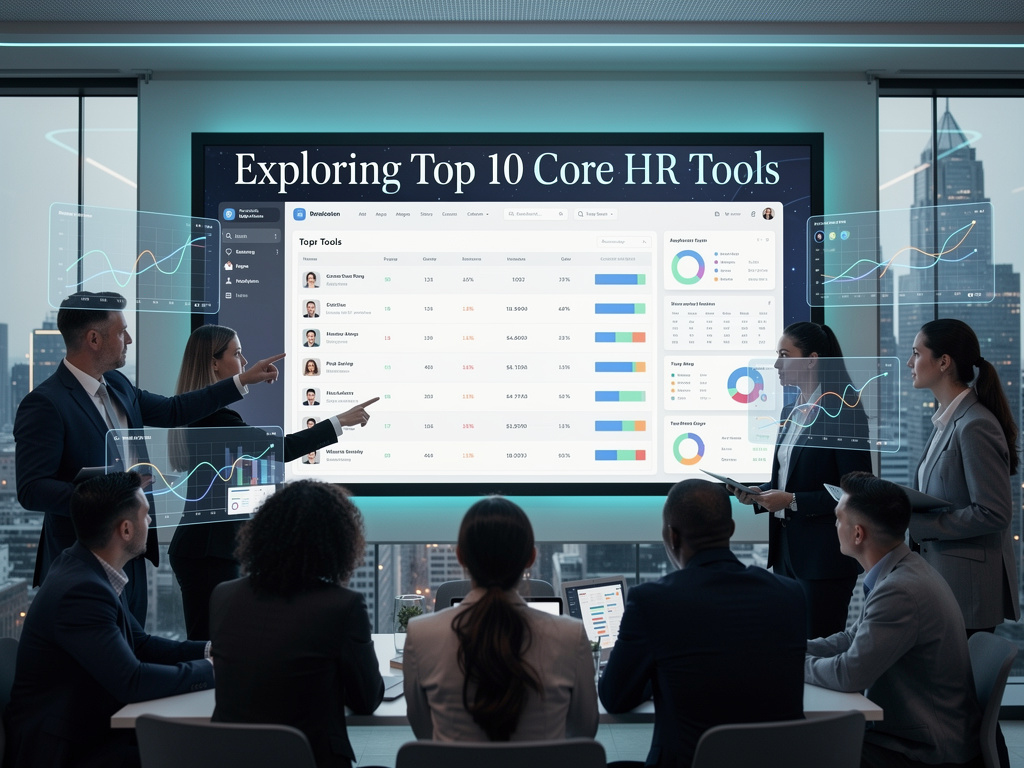
Top 10 Core HR Tools: Complete Guide to Human Resources Management Platforms for 2026

Hibob Review
- Intuitive user friendly interface
- Strong employee engagement tools
- Scales well for growing teams
- Dedicated customer success managers
- No native payroll processing
- Benefits need third party tools
- Advanced setup can be complex
Rippling Review
- All in one platform
- Powerful automation workflows
- Hundreds of integrations available
- Strong security compliance
- Complex setup for workflows
- Training across teams required
- Advanced modules raise costs

BambooHR Review
- Intuitive interface for SMBs
- Strong core HR modules
- Fast implementation timeline
- Excellent customer support
- Basic payroll and time tracking
- Benefits module still maturing
- Custom integrations can be tricky
- Limited industry specific features
Zoho People Review
- Centralized employee data
- Automated time and attendance
- Streamlined leave approvals
- Performance management tools
- Setup can take time
- May need Zoho ecosystem
Paylocity Review
- Unified HR and payroll suite
- Strong payroll accuracy
- Modern mobile self service
- Robust reporting and compliance
- Implementation can be complex
- Extra fees for add ons
- Support response times vary

Workday Review
- Cloud native architecture
- Integrated HR and finance
- Modern user experience
- Strong for compliance needs
- Implementation can be complex
- Limited customization flexibility
- Best for larger companies
SAP SuccessFactors Review
- Comprehensive talent management suite
- Strong global compliance coverage
- Scalable for large enterprises
- Advanced workforce analytics
- Complex implementation and rollout
- Steep user interface learning
- Long deployment timelines
- Change management heavy

ADP Workforce Now Review
- Best in class payroll accuracy
- Strong multi state compliance
- All in one HCM platform
- Extensive API integrations
- Complex for smaller teams
- Pricing adds up quickly
- Long implementation timeline
- Training required for users

UKG Ready Review
- All in one HR suite
- Cloud based scalable design
- Strong integrations and APISs
- Compliance tools and updates
- Limited international capabilities
- Moderate admin learning curve
- Complex reports need it help
- Support quality varies by tier

Namely Review
- Unified HR payroll benefits suite
- Modern intuitive interface
- Strong customization options
- Good implementation guidance
- Implementation can take weeks
- Integrations may add cost
- Support quality can vary
- Needs dedicated project resources
Selecting the right Core HR tool can transform how your organization manages its most valuable asset: people. Modern HR platforms have evolved far beyond simple employee record-keeping to become comprehensive workforce management ecosystems. These solutions streamline everything from payroll processing and benefits administration to compliance tracking and performance management.
The Core HR software market continues expanding rapidly as businesses recognize the need for centralized employee data management and automated workflow processes. Organizations of all sizes now rely on these platforms to reduce administrative burden, ensure regulatory compliance, and enhance employee experience. Whether you’re a startup seeking affordable solutions or an enterprise requiring sophisticated talent management capabilities, choosing the right platform requires careful evaluation of features, scalability, and integration options.
This comprehensive review examines the top 10 Core HR tools available in 2026, analyzing each platform’s strengths, weaknesses, and ideal use cases to help you make an informed decision for your organization’s needs.
Understanding Core HR Software Fundamentals
Core HR software serves as the foundation of human resources management, centralizing employee information and automating essential HR processes. These platforms typically include centralized employee data management, payroll processing, benefits administration, compliance tracking, and basic reporting capabilities.
Modern Core HR systems extend beyond traditional HRIS functionality. They integrate performance management, time tracking, recruitment tools, and employee self-service portals. This evolution reflects the changing nature of work and the need for more comprehensive people management solutions.
The distinction between Core HR and broader Human Capital Management (HCM) platforms continues blurring. Today’s leading solutions offer modular approaches, allowing organizations to start with essential HR functions and expand capabilities as needed. This flexibility makes these platforms suitable for businesses across various industries and growth stages.
Key components of effective Core HR platforms include:
- Employee database management with customizable fields and secure access controls
- Payroll processing with tax calculations and compliance features
- Benefits administration including enrollment and tracking capabilities
- Time and attendance management with various tracking methods
- Compliance management with automated reporting and document storage
- Employee self-service portals for reduced administrative overhead
Rippling: All-in-One Workforce Management Platform
Rippling stands out as a comprehensive workforce management platform that combines Core HR, payroll, benefits, and IT management in a single system. The platform’s unique approach integrates employee identity across all business systems, creating seamless workflows that extend beyond traditional HR functions.
The platform excels in automated employee onboarding and offboarding. When new employees join, Rippling automatically provisions access to necessary software applications, creates email accounts, and enrolls them in appropriate benefits plans. This automation significantly reduces manual work for HR teams and ensures consistent processes.
Rippling’s payroll capabilities support both domestic and international operations. The system handles complex payroll scenarios including multi-state compliance, contractor payments, and equity management. Global payroll features make it particularly attractive for companies with international teams or expansion plans.
Benefits administration through Rippling includes health insurance, retirement plans, and flexible spending accounts. The platform’s broker partnerships provide access to competitive rates and simplified enrollment processes. Employees can compare plans and make selections through an intuitive interface.
The IT management integration sets Rippling apart from traditional HR platforms. Companies can manage software licenses, hardware inventory, and access permissions alongside employee records. This unified approach reduces security risks and simplifies IT operations.
Strengths:
- Comprehensive integration of HR and IT functions
- Advanced automation capabilities
- Global payroll support
- Scalable pricing model
- Strong third-party integrations
Weaknesses:
- Complexity may overwhelm smaller organizations
- Limited customization for specific industry needs
- Higher learning curve for advanced features
BambooHR: Small to Mid-Size Business HR Specialist
BambooHR focuses specifically on small to medium-sized businesses, offering an intuitive interface and essential HR functionality without overwhelming complexity. The platform emphasizes ease of use and quick implementation, making it popular among growing companies.
Employee records management in BambooHR provides customizable fields and organized data structure. The system maintains complete employee histories including job changes, salary adjustments, and performance records. Document management features allow secure storage of contracts, reviews, and compliance documentation.
Time tracking capabilities include multiple clock-in methods and approval workflows. Managers can review and approve timesheets directly within the system. Integration with payroll processing ensures accurate compensation calculations and reduces manual data entry errors.
BambooHR’s performance management tools support goal setting, regular check-ins, and annual reviews. The system sends automated reminders to ensure timely completion of performance evaluations. 360-degree feedback options provide comprehensive employee assessments.
Reporting and analytics features offer pre-built reports and custom dashboard creation. HR teams can track key metrics including turnover rates, time-off balances, and compensation trends. Data visualization tools make it easy to share insights with leadership teams.
The platform’s mobile application enables employees to access their information, request time off, and update personal details from anywhere. Push notifications keep users informed about important updates and pending tasks.
Strengths:
- User-friendly interface designed for non-technical users
- Quick implementation process
- Excellent customer support and training resources
- Comprehensive employee self-service features
- Strong reporting capabilities for SMBs
Weaknesses:
- Limited scalability for large enterprises
- Basic payroll functionality requires third-party integration
- Fewer advanced features compared to enterprise solutions
Zoho People: Integrated Business Suite Advantage
Zoho People benefits from integration with the broader Zoho business application ecosystem, providing seamless data flow across CRM, finance, and project management systems. This integration advantage makes it particularly valuable for organizations already using other Zoho products.
The platform offers comprehensive attendance management with flexible policies and automated calculations. Multiple check-in options include web-based, mobile, and biometric integration. Overtime calculations and shift management support complex scheduling requirements.
Performance management in Zoho People includes goal setting, continuous feedback, and competency assessments. The system supports various review cycles and provides analytics to identify high performers and development opportunities. Learning management integration connects performance gaps with training recommendations.
Leave management features accommodate different policy types including accrual-based, fixed allocations, and unlimited PTO. Approval workflows ensure proper authorization while maintaining accurate balance tracking. Calendar integration provides visibility into team availability.
Zoho People’s case management system handles employee queries and HR requests through structured workflows. This feature reduces response times and ensures consistent handling of common issues. Knowledge base integration provides self-service options for frequently asked questions.
The platform’s customization capabilities allow organizations to adapt workflows and fields to specific requirements. Custom forms, approval processes, and notification rules provide flexibility without requiring technical expertise.
Strengths:
- Seamless integration with Zoho business suite
- Affordable pricing for comprehensive features
- Flexible customization options
- Strong mobile application
- Multi-language and multi-currency support
Weaknesses:
- Limited third-party integrations outside Zoho ecosystem
- Interface can feel outdated compared to modern alternatives
- Learning curve for advanced customization
ADP Workforce Now: Comprehensive Enterprise Solution
ADP Workforce Now represents a mature, enterprise-grade solution with decades of payroll expertise and compliance knowledge. The platform combines Core HR functionality with advanced talent management and workforce analytics capabilities.
Payroll processing through ADP leverages the company’s extensive experience and infrastructure. The system handles complex scenarios including multi-location operations, union agreements, and international compliance. Tax management features automatically calculate and file required reports across all jurisdictions.
Talent acquisition tools integrate with Core HR data to streamline recruiting processes. Applicant tracking, interview scheduling, and background check management connect directly to employee onboarding workflows. This integration reduces data duplication and ensures smooth transitions from candidate to employee.
Benefits administration includes partnerships with major insurance providers and automated enrollment processes. ADP’s broker relationships often provide access to better rates and more plan options. Compliance tracking ensures organizations meet ACA requirements and other regulatory obligations.
Advanced analytics and reporting capabilities provide insights into workforce trends, cost analysis, and predictive modeling. Benchmarking data from ADP’s large client base helps organizations understand their position relative to industry standards.
The platform’s security features include data encryption, role-based access controls, and comprehensive audit trails. ADP’s infrastructure investments ensure high availability and disaster recovery capabilities.
Strengths:
- Proven payroll expertise and compliance knowledge
- Comprehensive talent management features
- Strong security and infrastructure
- Extensive third-party integrations
- Industry benchmarking data
Weaknesses:
- Higher cost compared to modern alternatives
- Complex implementation process
- Interface feels less intuitive than newer platforms
- Limited customization flexibility
Workday: Cloud-Native Enterprise HR Platform
Workday pioneered cloud-native HR technology and continues leading enterprise HCM innovation. The platform’s unified architecture eliminates data silos and provides real-time insights across all HR functions.
Human Capital Management in Workday encompasses Core HR, talent management, and workforce planning in a single system. The platform’s object-oriented design maintains data relationships and enables sophisticated reporting and analytics capabilities.
Workday’s planning and analytics features support strategic workforce decisions through predictive modeling and scenario analysis. Organizations can model the impact of organizational changes, compensation adjustments, and hiring plans on overall business objectives.
The platform’s mobile-first design ensures optimal user experience across devices. Employees can access all HR functions through native mobile applications with full offline capability. Conversational interface options allow natural language queries for common tasks.
Financial management integration connects HR data with budgeting, forecasting, and cost accounting systems. This integration provides comprehensive labor cost analysis and supports strategic decision-making across the organization.
Workday’s continuous innovation includes machine learning capabilities for talent recommendations, automated compliance monitoring, and intelligent process optimization. The platform regularly adds new features through subscription updates rather than major version releases.
Strengths:
- Unified architecture eliminates data integration issues
- Advanced analytics and planning capabilities
- Mobile-first user experience
- Continuous innovation and feature updates
- Strong security and compliance features
Weaknesses:
- High total cost of ownership
- Complex implementation requiring significant resources
- Limited customization compared to traditional systems
- Best suited for large enterprises
SAP SuccessFactors: Global Enterprise HR Solution
SAP SuccessFactors provides comprehensive HCM capabilities designed for global enterprises with complex organizational structures. The platform’s modular approach allows organizations to implement specific components based on immediate needs and expand over time.
Employee Central serves as the Core HR foundation, maintaining global employee records with local compliance features. The system supports multiple languages, currencies, and regulatory requirements across different countries. Global assignment management handles expatriate tracking and compliance requirements.
Performance and Goals management includes continuous feedback, calibration processes, and succession planning tools. The platform’s analytics identify high-potential employees and skill gaps across the organization. Career development features connect performance data with learning and growth opportunities.
Compensation management tools support complex salary structures, variable pay programs, and equity administration. The system handles global compensation planning while maintaining local market competitiveness and regulatory compliance.
Learning management integration provides personalized development recommendations based on role requirements and career goals. The platform’s content library includes compliance training, skills development, and leadership programs.
SAP’s integration capabilities connect SuccessFactors with other enterprise systems including ERP, CRM, and business intelligence platforms. This integration ensures consistent data across all business functions and supports comprehensive reporting.
Strengths:
- Comprehensive global compliance capabilities
- Advanced talent management features
- Strong integration with SAP ecosystem
- Scalable modular architecture
- Extensive customization options
Weaknesses:
- Complex implementation and maintenance requirements
- Higher total cost of ownership
- Steep learning curve for end users
- Limited appeal for small to medium businesses
UKG Ready: Mid-Market Focus with Comprehensive Features
UKG Ready (formerly Kronos and Ultimate Software) targets mid-market organizations with comprehensive HR, payroll, and workforce management capabilities. The platform emphasizes ease of use while providing enterprise-level functionality.
Workforce management features include advanced scheduling, time tracking, and labor cost optimization. The system’s AI-powered scheduling considers employee preferences, skills, and business requirements to create optimal schedules while controlling labor costs.
Payroll processing integrates tightly with time and attendance data to ensure accurate compensation calculations. The system handles complex pay rules, multiple earning codes, and various deduction types. Tax compliance features automatically update with regulatory changes.
Talent acquisition tools streamline recruiting processes from job posting through onboarding. The platform’s candidate experience features include mobile-optimized applications and automated communication workflows. Background check integration accelerates the hiring process.
Employee engagement tools include pulse surveys, feedback collection, and recognition programs. The platform’s analytics identify engagement trends and provide actionable insights for improving workplace culture.
UKG Ready’s industry-specific features address unique requirements for healthcare, retail, manufacturing, and other sectors. Pre-configured workflows and compliance templates reduce implementation time and ensure best practices.
Strengths:
- Comprehensive workforce management capabilities
- Industry-specific features and templates
- Strong mobile user experience
- Advanced scheduling and labor optimization
- Integrated payroll and compliance features
Weaknesses:
- Higher cost compared to simpler solutions
- Implementation complexity for smaller organizations
- Limited customization flexibility
- Requires significant training for full utilization
Paylocity: Modern HR Platform with Strong Payroll Integration
Paylocity combines modern user experience design with comprehensive HR and payroll functionality. The platform focuses on employee engagement and streamlined administration for growing businesses.
Payroll processing includes automated tax calculations, direct deposit, and comprehensive reporting capabilities. The system handles complex scenarios including multiple pay frequencies, garnishments, and benefit deductions. Same-day payroll options provide flexibility for urgent payment needs.
Benefits administration features include online enrollment, COBRA management, and ACA compliance tracking. The platform’s decision support tools help employees compare plan options and estimate costs. HSA and FSA administration integrates with payroll processing for seamless deductions.
Performance management tools support goal setting, continuous feedback, and 360-degree reviews. The system’s social recognition features encourage peer-to-peer appreciation and reinforce company culture values.
Learning management capabilities provide compliance training, skill development, and onboarding programs. The platform tracks completion rates and provides reporting for audit purposes. Mobile learning support enables training completion from any device.
Paylocity’s community features create social networking opportunities within the organization. Employees can share updates, celebrate achievements, and participate in company-wide discussions through the platform.
Strengths:
- Modern, intuitive user interface
- Strong payroll and benefits integration
- Employee engagement and community features
- Comprehensive mobile application
- Excellent customer support and training
Weaknesses:
- Limited international capabilities
- Fewer advanced analytics compared to enterprise solutions
- Less suitable for complex organizational structures
- Higher pricing for smaller organizations
Namely: HR Platform Designed for Mid-Size Companies
Namely focuses specifically on mid-size companies, providing Core HR functionality with emphasis on user experience and company culture support. The platform combines essential HR tools with social features that enhance employee engagement.
Core HR features include employee records management, organizational charts, and document storage. The system’s visual directory helps employees connect with colleagues across different departments and locations. Photo integration and personal profiles create a more personal workplace environment.
Payroll capabilities handle standard processing requirements including tax calculations, direct deposit, and year-end reporting. Integration with benefits providers streamlines enrollment and administration processes. Time-off management includes accrual tracking and approval workflows.
Performance management tools support regular check-ins, goal tracking, and review cycles. The platform’s feedback features encourage ongoing communication between managers and employees. Career planning tools help employees identify growth opportunities within the organization.
Namely’s newsroom feature enables company-wide communication through posts, announcements, and employee spotlights. This social aspect helps maintain company culture and keeps remote employees connected.
Analytics and reporting capabilities provide insights into HR metrics including turnover, time-off usage, and performance trends. Custom report building allows HR teams to track specific KPIs relevant to their organization.
Strengths:
- Focus on company culture and employee engagement
- User-friendly interface designed for mid-size companies
- Strong social and communication features
- Integrated payroll and benefits administration
- Responsive customer support
Weaknesses:
- Limited scalability for large enterprises
- Fewer advanced features compared to enterprise platforms
- Basic reporting and analytics capabilities
- Limited third-party integration options
Personio: European-Focused HR Management Solution
Personio specializes in European markets with deep understanding of local compliance requirements and business practices. The platform provides comprehensive HR functionality optimized for small to medium-sized businesses operating in European countries.
Employee management features include digital personnel files, contract management, and compliance tracking. The system supports multiple languages and currencies while maintaining local regulatory compliance. GDPR compliance features ensure proper data handling and employee privacy protection.
Recruitment tools streamline hiring processes from job posting through candidate evaluation. The platform’s applicant tracking system integrates with popular job boards and social networks. Interview scheduling and feedback collection tools accelerate decision-making processes.
Performance management includes goal setting, regular feedback sessions, and development planning. The system’s 360-degree feedback capabilities provide comprehensive employee evaluations. Skill tracking features identify training needs and career development opportunities.
Time and attendance management accommodates European working time regulations and vacation policies. The system calculates overtime, tracks break requirements, and manages complex leave entitlements. Mobile time tracking supports flexible working arrangements.
Payroll integration connects with local payroll providers and accounting systems. The platform maintains employee cost centers and budget tracking for accurate financial planning and reporting.
Strengths:
- Deep European compliance knowledge and features
- Multi-language and multi-currency support
- Comprehensive recruitment and onboarding tools
- Strong integration with European payroll providers
- Intuitive user interface designed for SMBs
Weaknesses:
- Limited presence outside European markets
- Fewer enterprise-level features
- Basic analytics and reporting capabilities
- Limited customization options for complex requirements
Comparative Analysis: Feature Matrix and Evaluation Criteria
Selecting the optimal Core HR platform requires systematic evaluation across multiple criteria. The following analysis examines key factors including functionality breadth, implementation complexity, pricing models, and scalability considerations.
| Platform | Best For | Employee Range | Key Strength | Starting Price | Global Support |
|---|---|---|---|---|---|
| Rippling | Tech companies, rapid scaling | 50-5,000 | IT/HR integration | $8/employee/month | Yes |
| BambooHR | SMBs, ease of use priority | 10-1,000 | User experience | $6/employee/month | Limited |
| Zoho People | Zoho ecosystem users | 10-2,000 | Integration suite | $1.25/employee/month | Yes |
| ADP Workforce Now | Enterprises, compliance focus | 500+ | Payroll expertise | Custom pricing | Yes |
| Workday | Large enterprises | 1,000+ | Unified architecture | Custom pricing | Yes |
| SAP SuccessFactors | Global enterprises | 2,000+ | Global compliance | Custom pricing | Yes |
| UKG Ready | Mid-market, workforce management | 200-5,000 | Scheduling optimization | Custom pricing | Yes |
| Paylocity | Growing businesses | 50-2,000 | Modern UX, payroll | Custom pricing | US only |
| Namely | Culture-focused mid-size | 100-1,000 | Social features | $12/employee/month | US only |
| Personio | European SMBs | 10-2,000 | European compliance | €6/employee/month | Europe focused |
Implementation complexity varies significantly across platforms. BambooHR and Zoho People offer quickest deployment timelines, while enterprise solutions like Workday and SAP SuccessFactors require extensive planning and resources.
Integration capabilities represent critical evaluation criteria. Rippling excels in native integrations, while established platforms like ADP and Workday provide extensive third-party connectivity options.
Scalability considerations affect long-term platform viability. Organizations expecting rapid growth should prioritize solutions that accommodate expansion without major reimplementation efforts.
Implementation Best Practices and Success Factors
Successful Core HR platform implementation requires careful planning, stakeholder engagement, and change management strategies. Organizations should establish clear objectives and success metrics before beginning the selection process.
Data migration planning represents one of the most critical implementation components. Legacy system data often requires cleaning and reformatting to match new platform requirements. Organizations should allocate sufficient time and resources for this process.
User training and adoption strategies significantly impact implementation success. Comprehensive training programs should address different user groups including HR administrators, managers, and employees. Change management support helps organizations transition from existing processes to new workflows.
Integration requirements extend beyond technical connectivity to include business process alignment. Organizations should map existing workflows and identify opportunities for process improvement during implementation.
Testing protocols should encompass functional validation, data accuracy verification, and user acceptance criteria. Parallel running periods provide confidence in new system capabilities before full transition.
Key success factors include:
- Executive sponsorship ensuring adequate resources and organizational support
- Cross-functional team participation including IT, HR, and business stakeholders
- Clear communication strategies managing expectations throughout the process
- Phased rollout approaches minimizing risk and allowing iterative improvements
- Ongoing support planning ensuring long-term system success
Future Trends in Core HR Technology
The Core HR software landscape continues evolving with emerging technologies reshaping how organizations manage their workforce. Artificial intelligence integration increasingly supports predictive analytics, automated decision-making, and personalized employee experiences.
Machine learning capabilities enable platforms to identify patterns in employee behavior, predict turnover risks, and recommend interventions. These insights help HR teams make proactive decisions rather than reactive responses to workforce challenges.
Mobile-first design approaches reflect changing work patterns and employee expectations. Modern platforms prioritize mobile user experiences with full functionality available across devices and operating systems.
Integration ecosystems expand as organizations demand seamless connectivity between HR platforms and other business applications. API-first architectures enable flexible integration strategies and support evolving technology requirements.
Employee experience platforms combine Core HR functionality with engagement tools, communication features, and self-service capabilities. This convergence creates comprehensive solutions that address the full spectrum of employee interactions.
Compliance automation continues advancing as regulatory requirements become more complex. Platforms increasingly include built-in compliance monitoring, automated reporting, and risk assessment capabilities.
Future developments will likely include:
- Advanced analytics providing deeper workforce insights and predictive modeling
- Conversational interfaces enabling natural language interactions for common tasks
- Blockchain integration for secure credential verification and employment history
- IoT connectivity linking physical workplace sensors with HR data
- Virtual reality applications for immersive training and onboarding experiences
Making the Right Choice for Your Organization
Selecting the optimal Core HR platform requires balancing immediate needs with long-term strategic objectives. Organizations should evaluate current pain points, growth projections, and integration requirements before making final decisions.
Budget considerations extend beyond initial licensing costs to include implementation, training, and ongoing maintenance expenses. Total cost of ownership calculations should encompass all platform-related expenses over the expected usage period.
Vendor evaluation should include financial stability, product roadmap alignment, and customer support quality assessment. Reference customer conversations provide valuable insights into real-world implementation experiences and ongoing satisfaction levels.
Pilot programs or proof-of-concept implementations allow organizations to validate platform capabilities before full commitment. These limited deployments identify potential issues and confirm expected benefits.
Contract negotiation strategies should address implementation timelines, support levels, and future pricing adjustments. Flexible terms accommodate changing business requirements and protect against unexpected costs.
Conclusion
The Core HR platform market offers diverse solutions addressing varying organizational needs and preferences. From comprehensive enterprise systems like Workday and SAP SuccessFactors to user-friendly SMB solutions like BambooHR and Zoho People, organizations have numerous options for modernizing their HR operations. Success depends on careful evaluation of functional requirements, implementation capabilities, and long-term strategic alignment. The right platform choice will streamline HR processes, improve employee experience, and support organizational growth objectives while providing the flexibility to adapt to evolving business needs.
Frequently Asked Questions About Top 10 Core HR Tools
Common Questions About Core HR Platform Selection
- What are the most important features to look for in Core HR tools?
Essential features include centralized employee data management, payroll processing, benefits administration, compliance tracking, time and attendance management, and employee self-service portals. Advanced features like performance management, analytics, and mobile access add significant value for growing organizations. - How much should organizations expect to pay for Core HR software?
Pricing varies significantly based on company size and feature requirements. Small business solutions start around $1-6 per employee per month, while enterprise platforms typically require custom pricing starting at $15-25 per employee monthly. Implementation and training costs should also be factored into total investment calculations. - Which Core HR platform is best for small businesses versus large enterprises?
Small businesses benefit from user-friendly platforms like BambooHR, Zoho People, or Rippling that offer quick implementation and essential features. Large enterprises typically require comprehensive solutions like Workday, SAP SuccessFactors, or ADP Workforce Now that provide advanced functionality and global compliance capabilities. - How long does typical Core HR software implementation take?
Implementation timelines vary from 2-4 weeks for simple platforms like BambooHR to 6-18 months for enterprise solutions like Workday or SAP SuccessFactors. Factors affecting timeline include data migration complexity, integration requirements, and customization needs. - Can Core HR platforms integrate with existing business systems?
Most modern HR platforms offer extensive integration capabilities through APIs, pre-built connectors, and third-party integration tools. Popular integrations include accounting systems, applicant tracking systems, learning management platforms, and business intelligence tools. - What are the main benefits of switching from spreadsheets to Core HR software?
Key benefits include automated calculations reducing errors, centralized data improving accessibility, compliance features minimizing legal risks, employee self-service reducing administrative burden, and analytics providing workforce insights for better decision-making. - How do organizations ensure data security when using cloud-based HR platforms?
Reputable HR platforms implement enterprise-grade security including data encryption, role-based access controls, regular security audits, compliance certifications, and comprehensive backup procedures. Organizations should verify security credentials and compliance standards during vendor evaluation. - Should organizations choose specialized HR tools or comprehensive platforms?
The choice depends on organizational complexity and integration preferences. Comprehensive platforms offer better data consistency and user experience, while specialized tools may provide deeper functionality in specific areas. Most organizations benefit from integrated platforms that eliminate data silos.


 Stack Insight is intended to support informed decision-making by providing independent information about business software and services. Some product details, including pricing, features, and promotional offers, may be supplied by vendors or partners and can change without notice.