
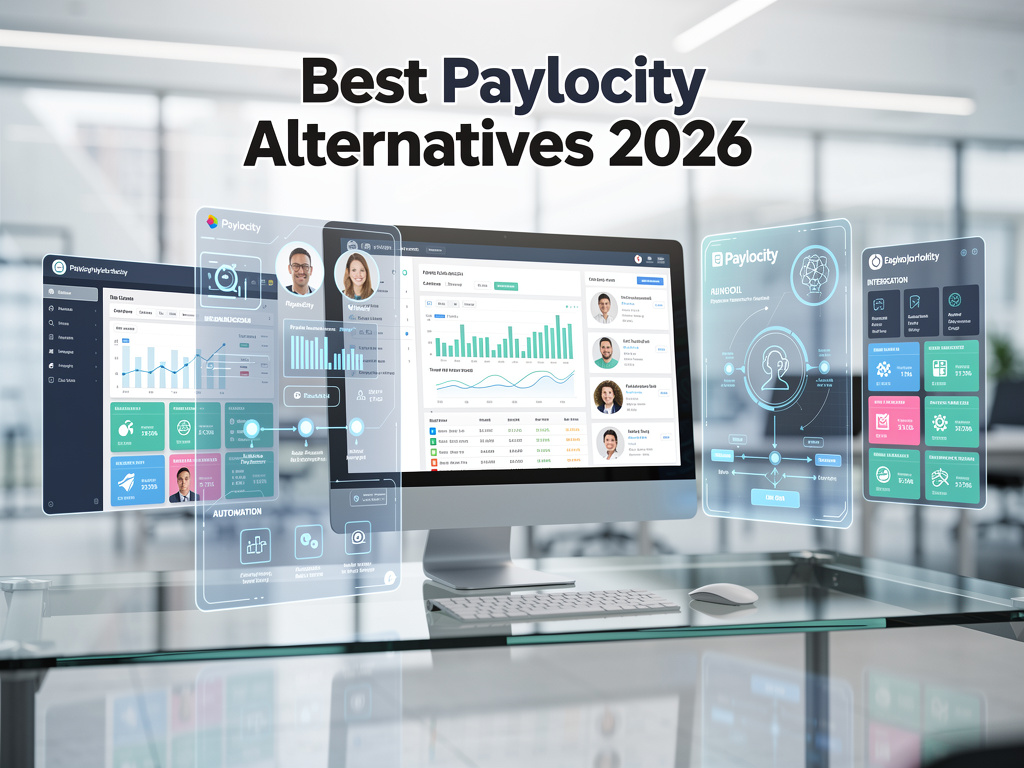
Best Paylocity Alternatives: Top HR & Payroll Software Solutions for 2026

Hibob Review
- Intuitive user friendly interface
- Strong employee engagement tools
- Scales well for growing teams
- Dedicated customer success managers
- No native payroll processing
- Benefits need third party tools
- Advanced setup can be complex
Rippling Review
- All in one platform
- Powerful automation workflows
- Hundreds of integrations available
- Strong security compliance
- Complex setup for workflows
- Training across teams required
- Advanced modules raise costs

BambooHR Review
- Intuitive interface for SMBs
- Strong core HR modules
- Fast implementation timeline
- Excellent customer support
- Basic payroll and time tracking
- Benefits module still maturing
- Custom integrations can be tricky
- Limited industry specific features
Zoho People Review
- Centralized employee data
- Automated time and attendance
- Streamlined leave approvals
- Performance management tools
- Setup can take time
- May need Zoho ecosystem
Paylocity Review
- Unified HR and payroll suite
- Strong payroll accuracy
- Modern mobile self service
- Robust reporting and compliance
- Implementation can be complex
- Extra fees for add ons
- Support response times vary

Workday Review
- Cloud native architecture
- Integrated HR and finance
- Modern user experience
- Strong for compliance needs
- Implementation can be complex
- Limited customization flexibility
- Best for larger companies
SAP SuccessFactors Review
- Comprehensive talent management suite
- Strong global compliance coverage
- Scalable for large enterprises
- Advanced workforce analytics
- Complex implementation and rollout
- Steep user interface learning
- Long deployment timelines
- Change management heavy

ADP Workforce Now Review
- Best in class payroll accuracy
- Strong multi state compliance
- All in one HCM platform
- Extensive API integrations
- Complex for smaller teams
- Pricing adds up quickly
- Long implementation timeline
- Training required for users

UKG Ready Review
- All in one HR suite
- Cloud based scalable design
- Strong integrations and APISs
- Compliance tools and updates
- Limited international capabilities
- Moderate admin learning curve
- Complex reports need it help
- Support quality varies by tier

Namely Review
- Unified HR payroll benefits suite
- Modern intuitive interface
- Strong customization options
- Good implementation guidance
- Implementation can take weeks
- Integrations may add cost
- Support quality can vary
- Needs dedicated project resources
Finding the right HR and payroll software can transform how your organization manages its workforce. While Paylocity has established itself as a popular choice, many businesses need alternatives that better fit their specific requirements, budget constraints, or company size. Whether you’re seeking more comprehensive features, better pricing, or enhanced user experience, numerous Paylocity substitutes offer compelling advantages.
This comprehensive guide examines the top nine Paylocity alternatives available in 2026. We’ll explore each platform’s strengths, weaknesses, pricing structures, and unique features. From enterprise-level solutions like Workday and SAP SuccessFactors to mid-market favorites like BambooHR and Rippling, we’ll help you identify the perfect HR management system for your organization’s needs.
Understanding Your HR Software Requirements
Before diving into specific platforms, it’s crucial to understand what makes an effective Paylocity replacement. Modern HR software should seamlessly integrate payroll processing, employee management, benefits administration, and compliance tracking. The best solutions offer intuitive interfaces that reduce administrative burden while providing employees with self-service capabilities.
Consider your organization’s size, industry requirements, and growth trajectory. Small businesses often prioritize ease of use and cost-effectiveness. Mid-sized companies typically need scalable solutions with robust reporting capabilities. Enterprise organizations require comprehensive platforms that handle complex hierarchies, multiple locations, and advanced compliance needs.
Integration capabilities represent another critical factor. Your chosen platform should connect smoothly with existing business systems, including accounting software, time tracking tools, and performance management applications. This connectivity ensures data consistency and reduces manual data entry across different platforms.
HiBob: Modern HR for Dynamic Companies
HiBob stands out among Paylocity competitors with its people-first approach to HR management. The platform targets modern, dynamic companies that prioritize employee engagement and data-driven decision-making. Bob’s intuitive interface makes it easy for HR teams to manage everything from onboarding to performance reviews.
Key Features:
- Comprehensive employee lifecycle management
- Advanced analytics and reporting dashboards
- Mobile-first design for remote workforce support
- Customizable workflows and approval processes
- Global payroll capabilities with local compliance
The platform excels in creating engaging employee experiences through its social features and recognition tools. Teams can celebrate achievements, share updates, and maintain connection regardless of their physical location. This focus on culture and engagement sets HiBob apart from more traditional HR platforms.
Pricing Structure: HiBob uses a per-employee monthly pricing model starting around $7-15 per employee. Enterprise pricing includes additional features like advanced analytics and dedicated support. The platform offers transparent pricing without hidden fees for core functionality.
Best For: Mid-sized to large companies with distributed teams who value employee engagement and modern HR practices. Particularly suitable for tech companies, startups scaling rapidly, and organizations prioritizing company culture.
Rippling: All-in-One Business Operations Platform
Rippling revolutionizes the concept of HR software by extending beyond traditional boundaries. This comprehensive platform manages not just HR and payroll, but also IT equipment, software licenses, and device management. For companies seeking a unified approach to employee lifecycle management, Rippling represents one of the most innovative alternatives to Paylocity.
The platform’s unique selling proposition lies in its interconnected systems. When you hire a new employee, Rippling automatically provisions their laptop, sets up software accounts, enrolls them in benefits, adds them to payroll, and creates their email address. This automation reduces onboarding time from days to minutes.
Core Capabilities:
- Unified employee database across all business functions
- Automated IT provisioning and device management
- Advanced payroll processing with multi-state compliance
- Benefits administration with carrier integrations
- Performance management and goal tracking
Rippling’s reporting capabilities provide unprecedented visibility into workforce metrics. You can track everything from software usage patterns to payroll costs across different departments and locations. This data-driven approach helps organizations make informed decisions about their human capital investments.
Pricing Model: Rippling starts at $8 per employee per month for core HR features. Additional modules like payroll, benefits, and IT management are priced separately, typically adding $2-6 per employee monthly depending on the specific functionality.
Ideal Users: Fast-growing companies that want to streamline all employee-related processes. Particularly valuable for remote-first organizations and tech companies that manage significant IT infrastructure alongside their workforce.
BambooHR: Simplified Human Resources Management
BambooHR has earned its reputation as one of the most user-friendly Paylocity alternatives available. The platform focuses on simplifying HR processes without sacrificing functionality. Small to medium-sized businesses appreciate BambooHR’s straightforward approach to employee management, making it an excellent choice for organizations without dedicated HR specialists.
The software emphasizes ease of implementation and daily use. Most companies can get BambooHR operational within a few weeks, compared to months required by more complex enterprise solutions. The intuitive interface requires minimal training, allowing HR teams to become productive quickly.
Feature Highlights:
- Clean, intuitive employee database management
- Streamlined applicant tracking and hiring workflows
- Employee self-service portal with mobile access
- Customizable reporting and analytics tools
- Performance management with goal setting
BambooHR’s strength lies in its core HR functionality rather than trying to be everything to everyone. The platform handles employee records, time-off requests, performance reviews, and basic reporting exceptionally well. While it may lack some advanced features found in enterprise platforms, this focused approach resonates with many organizations.
Investment Required: BambooHR pricing starts around $6-8 per employee monthly for core features. Additional modules like performance management, applicant tracking, and e-signatures are available for extra fees. The company offers transparent pricing with no setup costs.
Target Audience: Small to medium businesses seeking straightforward HR management without complexity. Perfect for companies with 25-500 employees who value ease of use over extensive customization options.
Zoho People: Integrated HR Within Zoho Ecosystem
Zoho People represents a compelling choice among Paylocity substitutes, especially for organizations already using other Zoho business applications. This HR platform integrates seamlessly with Zoho’s comprehensive business suite, including CRM, accounting, project management, and communication tools. The result is a unified business management experience that eliminates data silos.
The platform’s strength lies in its configurability and integration capabilities. Organizations can customize Zoho People to match their specific HR processes without requiring extensive technical expertise. The drag-and-drop interface makes it easy to create custom forms, workflows, and approval processes.
Notable Features:
- Seamless integration with 40+ Zoho applications
- Customizable employee database and forms
- Advanced time and attendance tracking
- Multi-location and multi-currency support
- Comprehensive leave management system
Zoho People excels in global workforce management. The platform supports multiple currencies, tax regimens, and compliance requirements across different countries. This makes it particularly valuable for companies with international operations or remote employees in various locations.
Cost Structure: Zoho People offers competitive pricing starting at $1-3 per employee monthly. Higher tiers include additional features like performance management and advanced analytics. The pricing becomes even more attractive when bundled with other Zoho applications.
Best Suited For: Companies already using Zoho products or seeking affordable HR solutions with extensive customization options. Particularly appealing to international businesses and organizations requiring tight integration between HR and other business functions.
ADP Workforce Now: Enterprise-Grade HR Solutions
ADP Workforce Now stands as one of the most established Paylocity competitors in the market. With decades of experience in payroll and HR services, ADP offers a mature platform that handles complex enterprise requirements. The solution combines comprehensive functionality with the reliability that comes from processing payroll for millions of employees worldwide.
The platform’s strength lies in its depth of features and compliance expertise. ADP maintains relationships with tax authorities, benefits providers, and regulatory agencies across all 50 states. This extensive network ensures that your payroll and HR processes remain compliant even as regulations change.
Comprehensive Capabilities:
- Full-service payroll with guaranteed compliance
- Advanced benefits administration and enrollment
- Talent management and succession planning
- Time and labor management with scheduling
- Comprehensive reporting and analytics suite
ADP Workforce Now particularly excels in handling complex payroll scenarios. Multi-state operations, union environments, and intricate pay structures are all managed seamlessly. The platform’s reporting capabilities provide detailed insights into labor costs, compliance status, and workforce trends.
Investment Considerations: ADP Workforce Now typically costs $15-25+ per employee monthly, depending on modules and company size. While more expensive than some alternatives, the pricing includes comprehensive support and compliance guarantees that can provide significant value.
Target Organizations: Medium to large enterprises with complex payroll requirements, multiple locations, or strict compliance needs. Ideal for companies that prioritize reliability and comprehensive support over cutting-edge user experience.
Workday: Cloud-Based Enterprise Human Capital Management
Workday represents the premium tier among alternatives to Paylocity, offering enterprise-grade human capital management capabilities. This cloud-based platform serves some of the world’s largest organizations, providing comprehensive functionality that extends far beyond basic HR and payroll processing. Workday’s strength lies in its unified data model and advanced analytics capabilities.
The platform takes a holistic approach to workforce management, connecting financial management, HR, and planning in a single system. This integration provides unprecedented visibility into how human capital investments impact business outcomes. Leaders can analyze workforce costs, productivity metrics, and talent pipeline health from a single dashboard.
Enterprise Features:
- Unified financial and HR data model
- Advanced workforce planning and analytics
- Global payroll and compliance management
- Sophisticated talent management suite
- Machine learning-powered insights and recommendations
Workday’s mobile experience sets new standards for enterprise software usability. Employees can access all HR functions, submit expenses, request time off, and complete performance reviews from their smartphones. The responsive design ensures consistent functionality across all devices and platforms.
Investment Requirements: Workday pricing typically starts around $25-50+ per employee monthly for large organizations. Implementation costs can be substantial, often requiring 6-18 months for full deployment. The total cost of ownership reflects Workday’s enterprise positioning and comprehensive capabilities.
Ideal Candidates: Large enterprises with 1,000+ employees requiring sophisticated workforce analytics and global capabilities. Best suited for organizations with complex reporting requirements and the resources to support comprehensive implementation projects.
SAP SuccessFactors: Integrated Talent Management Platform
SAP SuccessFactors delivers enterprise-level talent management capabilities that make it a formidable option among Paylocity replacements. The platform integrates deeply with SAP’s broader enterprise software ecosystem while offering standalone value for human capital management. Organizations already using SAP business applications will find particular value in the seamless data integration.
SuccessFactors excels in talent development and performance management. The platform’s learning management system, succession planning tools, and competency frameworks help organizations build and retain top talent. Advanced analytics identify skill gaps and provide recommendations for targeted development programs.
Talent-Focused Features:
- Comprehensive learning and development platform
- Advanced performance and goal management
- Succession planning and career pathing tools
- Compensation management and planning
- Employee engagement and pulse surveys
The platform’s global capabilities support complex multinational operations. SuccessFactors handles diverse regulatory requirements, multiple languages, and varying cultural practices across different regions. This makes it particularly valuable for companies with significant international presence.
Pricing Framework: SAP SuccessFactors uses module-based pricing starting around $15-30+ per employee monthly. Full suite implementations can reach $50+ per employee depending on selected modules and customization requirements. Enterprise licensing models are available for large deployments.
Target Market: Large enterprises with sophisticated talent management needs and existing SAP infrastructure. Particularly suitable for organizations prioritizing employee development, succession planning, and global workforce management.
UKG Ready: Unified Workforce Management Solution
UKG Ready emerges as a comprehensive alternative among Paylocity substitutes, combining the best elements of Ultimate Software and Kronos following their merger. The platform offers end-to-end workforce management capabilities, from recruiting and onboarding through payroll and performance management. UKG’s strength lies in its unified approach to people management.
The solution particularly excels in time and labor management, drawing from Kronos’s deep expertise in workforce scheduling and time tracking. Advanced scheduling algorithms optimize labor costs while ensuring adequate coverage. The platform handles complex scheduling scenarios including shift differentials, overtime rules, and union requirements.
Workforce Management Strengths:
- Advanced scheduling and labor optimization
- Comprehensive time and attendance tracking
- Integrated payroll with labor cost analysis
- Employee engagement and culture tools
- Robust compliance and reporting capabilities
UKG Ready’s employee experience features help organizations build stronger workplace cultures. The platform includes recognition tools, peer feedback systems, and engagement surveys that provide insights into workforce satisfaction. These capabilities help reduce turnover and improve productivity.
Cost Structure: UKG Ready pricing typically ranges from $8-20+ per employee monthly depending on modules and organization size. The platform offers scalable pricing that grows with your business needs. Implementation support is included to ensure successful deployment.
Best Applications: Organizations with complex scheduling needs, hourly workforces, or multiple locations. Particularly valuable for retail, healthcare, hospitality, and manufacturing companies that require sophisticated time and labor management.
Namely: HR Platform Built for Mid-Market Companies
Namely positions itself as the HR platform designed specifically for mid-market organizations seeking Paylocity alternatives. The company focuses on companies with 25-1,000 employees, offering enterprise-level features with the simplicity and affordability that growing businesses require. Namely’s approach balances comprehensive functionality with ease of use.
The platform emphasizes social HR features that help build company culture and employee engagement. News feeds, employee directories, and recognition tools create a more connected workplace experience. These social elements differentiate Namely from more traditional, transaction-focused HR platforms.
Mid-Market Focus Areas:
- Social HR features and employee engagement tools
- Streamlined payroll and benefits administration
- Performance management with continuous feedback
- Compliance tracking and automated reminders
- Custom reporting and analytics dashboards
Namely’s implementation process is designed for mid-market efficiency. Most organizations can be fully operational within 30-60 days, significantly faster than enterprise-level alternatives. The platform provides guided setup wizards and dedicated implementation support to ensure smooth transitions.
Pricing Model: Namely offers transparent per-employee monthly pricing starting around $12-18 per employee. All core features are included in base pricing, with minimal add-on costs. This predictable pricing model appeals to growing companies managing budget constraints.
Target Audience: Mid-market companies seeking enterprise features without enterprise complexity or costs. Ideal for growing businesses that have outgrown basic HR tools but aren’t ready for full enterprise solutions.
Key Evaluation Criteria for HR Software Selection
When comparing Paylocity competitors, several critical factors should guide your decision-making process. Functionality depth and breadth represent the foundation of any evaluation. Assess whether each platform handles your core requirements including payroll processing, benefits administration, time tracking, and employee self-service capabilities.
User experience significantly impacts adoption rates and daily productivity. The best HR platforms feature intuitive interfaces that require minimal training. Consider how easily employees can access information, submit requests, and complete tasks. Mobile accessibility has become essential for modern workforces, especially with remote and hybrid work arrangements.
Critical Assessment Areas:
- Integration capabilities with existing business systems
- Scalability to support future growth and changing needs
- Compliance support for industry and regulatory requirements
- Reporting and analytics for data-driven decision making
- Support quality and availability during implementation and ongoing use
Implementation complexity and timeline deserve careful consideration. Some platforms can be deployed quickly while others require extensive customization and training. Balance your need for quick deployment against requirements for customization and feature depth.
Total cost of ownership extends beyond monthly subscription fees. Consider implementation costs, training requirements, integration expenses, and potential savings from improved efficiency. The cheapest option may not provide the best value when all factors are considered.
Comprehensive Comparison Matrix
| Platform | Best For | Starting Price (per employee/month) | Key Strengths | Implementation Time |
|---|---|---|---|---|
| HiBob | Modern, dynamic companies | $7-15 | Employee engagement, mobile-first | 4-8 weeks |
| Rippling | Tech companies, remote teams | $8+ | IT integration, automation | 2-4 weeks |
| BambooHR | Small-medium businesses | $6-8 | Ease of use, quick implementation | 2-3 weeks |
| Zoho People | Zoho ecosystem users | $1-3 | Integration, affordability | 3-6 weeks |
| ADP Workforce Now | Complex payroll needs | $15-25 | Compliance, reliability | 8-12 weeks |
| Workday | Large enterprises | $25-50+ | Analytics, global capabilities | 6-18 months |
| SAP SuccessFactors | SAP ecosystem, talent focus | $15-30+ | Talent management, learning | 3-12 months |
| UKG Ready | Hourly workforces, scheduling | $8-20 | Time management, scheduling | 6-12 weeks |
| Namely | Mid-market companies | $12-18 | Social HR, culture building | 4-8 weeks |
Making Your Final Decision
Selecting the right HR software requires careful consideration of your organization’s unique needs, constraints, and growth plans. Start by clearly defining your must-have requirements versus nice-to-have features. This prioritization will help you focus on platforms that deliver the greatest value for your specific situation.
Consider conducting pilot programs or demos with your top 2-3 candidates. Many vendors offer trial periods that allow you to test functionality with real data and workflows. Involve key stakeholders including HR staff, managers, and employees who will use the system daily.
Don’t underestimate the importance of vendor relationship and support quality. Your chosen platform will become a critical business system that requires ongoing support, updates, and potentially customization. Choose a vendor with strong customer service, regular product updates, and a clear roadmap for future development.
Remember that switching HR systems is a significant undertaking that you’ll want to do infrequently. Consider not just your current needs but where your organization will be in 3-5 years. The right platform should support your growth trajectory without requiring another major system change.
Implementation Best Practices and Recommendations
Successful HR software implementation requires careful planning and change management. Begin by assembling a project team that includes representatives from HR, IT, finance, and key business units. This cross-functional team ensures that all perspectives are considered during the implementation process.
Data migration represents one of the most critical aspects of any HR system change. Audit your current data for accuracy and completeness before beginning the migration process. Clean up duplicate records, standardize data formats, and ensure that all required information is available. Poor data quality at the start will create ongoing problems in your new system.
Implementation Success Factors:
- Establish clear project timelines and milestones
- Provide comprehensive training for all user groups
- Conduct thorough testing before full deployment
- Develop communication plans for change management
- Plan for parallel operations during transition periods
User adoption often determines the success or failure of new HR software implementations. Invest in comprehensive training programs that address different user needs and technical skill levels. Create user guides, video tutorials, and quick reference materials that employees can access when needed.
Consider implementing in phases rather than all at once. Start with core functionality like employee records and payroll, then gradually add modules like performance management and benefits administration. This phased approach reduces risk and allows your team to become proficient with each component before adding complexity.
Future Trends in HR Technology
The HR software landscape continues evolving rapidly, driven by changing workforce expectations and technological advances. Artificial intelligence and machine learning are becoming standard features rather than premium add-ons. These technologies enable predictive analytics, automated decision-making, and personalized employee experiences.
Employee experience platforms are emerging as the next generation of HR software. These solutions go beyond traditional administrative functions to create engaging, consumer-grade experiences that help attract and retain talent. Features like personalized dashboards, intelligent recommendations, and seamless mobile experiences are becoming table stakes.
Integration capabilities will become even more important as organizations adopt specialized tools for recruiting, learning, performance management, and employee engagement. The best HR platforms will serve as central hubs that connect and coordinate data across multiple specialized applications.
Emerging Technology Trends:
- AI-powered recruitment and candidate matching
- Predictive analytics for turnover and performance
- Voice-enabled interfaces and chatbot assistants
- Blockchain for credential verification and security
- Advanced people analytics and workforce planning
Remote and hybrid work models will continue influencing HR technology requirements. Platforms that excel in employee engagement, virtual onboarding, and distributed team management will gain competitive advantages. Look for solutions that support asynchronous workflows and provide visibility into remote employee productivity and satisfaction.
The future belongs to platforms that combine comprehensive functionality with exceptional user experiences. Organizations should prioritize vendors that demonstrate consistent innovation, strong development roadmaps, and commitment to staying ahead of industry trends.
Conclusion
Choosing among the many Paylocity alternatives requires careful evaluation of your organization’s specific needs, budget constraints, and growth plans. Each platform offers unique strengths, from Rippling’s innovative automation to Workday’s enterprise-grade analytics capabilities. Success depends on selecting the solution that best aligns with your company culture, technical requirements, and long-term objectives.
The right HR software becomes a strategic asset that improves employee satisfaction, reduces administrative burden, and provides insights for better decision-making. Take time to thoroughly evaluate your options, involve key stakeholders in the decision process, and plan for comprehensive implementation support.
Frequently Asked Questions About Paylocity Alternatives
Common Questions About Paylocity Substitute Solutions
- What are the most cost-effective Paylocity alternatives for small businesses?
BambooHR and Zoho People offer the most affordable options for small businesses, with pricing starting at $1-8 per employee monthly. Both provide essential HR functionality without enterprise-level complexity or costs. - Which Paylocity competitors offer the best integration capabilities?
Rippling and Workday lead in integration capabilities. Rippling connects HR with IT management systems, while Workday integrates deeply with financial and business planning applications for comprehensive organizational oversight. - How long does it typically take to implement a new HR system?
Implementation timelines vary significantly by platform complexity. Simple solutions like BambooHR can be operational in 2-3 weeks, while enterprise platforms like Workday may require 6-18 months for full deployment. - What features should I prioritize when replacing Paylocity?
Focus on core requirements like payroll processing, employee self-service, benefits administration, and compliance management. Also consider mobile accessibility, reporting capabilities, and integration with existing business systems. - Are cloud-based HR solutions secure enough for sensitive employee data?
Leading HR platforms implement enterprise-grade security including encryption, multi-factor authentication, and compliance certifications. Many offer better security than on-premise solutions due to dedicated security teams and regular updates. - Which platforms work best for companies with remote employees?
HiBob, Rippling, and BambooHR excel in supporting remote workforces with mobile-first designs, employee engagement tools, and seamless self-service capabilities that work well for distributed teams. - How do I ensure successful user adoption of new HR software?
Success requires comprehensive training, clear communication about benefits, phased implementation, and ongoing support. Choose platforms with intuitive interfaces and provide multiple training resources for different learning styles. - What’s the difference between mid-market and enterprise HR solutions?
Mid-market solutions like Namely and BambooHR focus on ease of use and quick implementation. Enterprise platforms like Workday and SAP SuccessFactors offer advanced analytics, global capabilities, and extensive customization options. - Can I migrate data from Paylocity to alternative platforms?
Most reputable HR platforms provide data migration services and tools to transfer employee records, payroll history, and other critical information. Plan for data cleanup and validation during the migration process. - Which Paylocity alternatives offer the best customer support?
ADP Workforce Now and UKG Ready are known for comprehensive support services. However, support quality can vary by service tier and company size. Evaluate support options during your vendor selection process.
References:



 Stack Insight is intended to support informed decision-making by providing independent information about business software and services. Some product details, including pricing, features, and promotional offers, may be supplied by vendors or partners and can change without notice.