
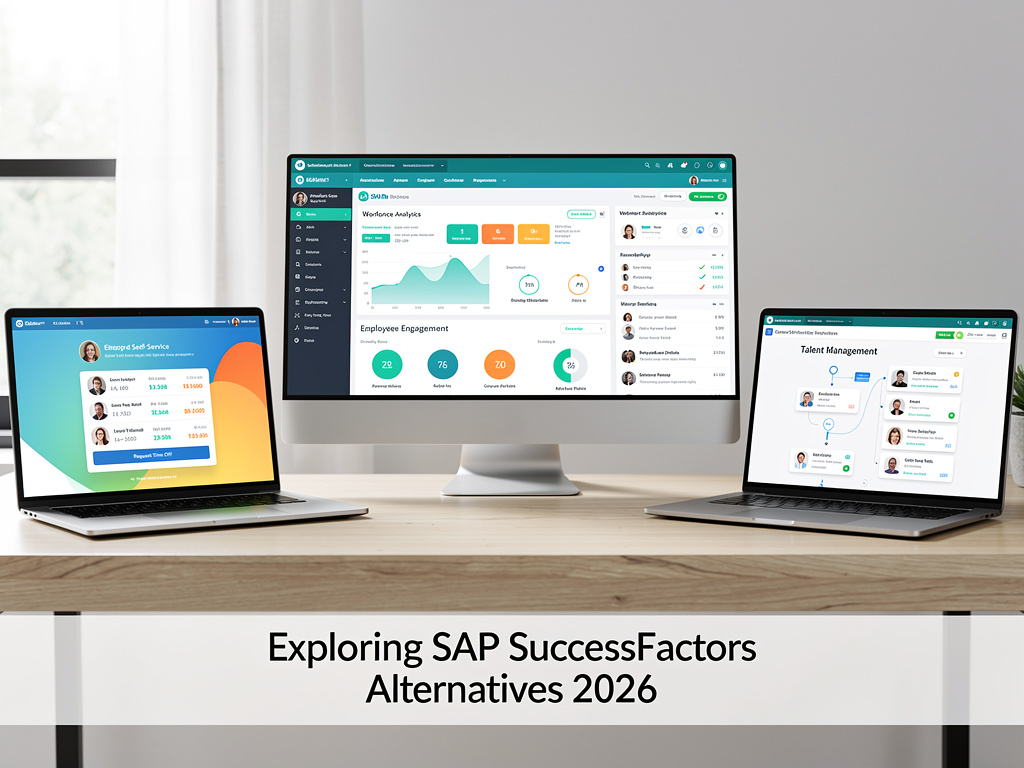
Top 9 SAP SuccessFactors Competitors and Alternatives for 2026: Complete Guide

Hibob Review
- Intuitive user friendly interface
- Strong employee engagement tools
- Scales well for growing teams
- Dedicated customer success managers
- No native payroll processing
- Benefits need third party tools
- Advanced setup can be complex

Rippling Review
- All in one platform
- Powerful automation workflows
- Hundreds of integrations available
- Strong security compliance
- Complex setup for workflows
- Training across teams required
- Advanced modules raise costs

BambooHR Review
- Intuitive interface for SMBs
- Strong core HR modules
- Fast implementation timeline
- Excellent customer support
- Basic payroll and time tracking
- Benefits module still maturing
- Custom integrations can be tricky
- Limited industry specific features
Zoho People Review
- Centralized employee data
- Automated time and attendance
- Streamlined leave approvals
- Performance management tools
- Setup can take time
- May need Zoho ecosystem
Paylocity Review
- Unified HR and payroll suite
- Strong payroll accuracy
- Modern mobile self service
- Robust reporting and compliance
- Implementation can be complex
- Extra fees for add ons
- Support response times vary

Workday Review
- Cloud native architecture
- Integrated HR and finance
- Modern user experience
- Strong for compliance needs
- Implementation can be complex
- Limited customization flexibility
- Best for larger companies

SAP SuccessFactors Review
- Comprehensive talent management suite
- Strong global compliance coverage
- Scalable for large enterprises
- Advanced workforce analytics
- Complex implementation and rollout
- Steep user interface learning
- Long deployment timelines
- Change management heavy

ADP Workforce Now Review
- Best in class payroll accuracy
- Strong multi state compliance
- All in one HCM platform
- Extensive API integrations
- Complex for smaller teams
- Pricing adds up quickly
- Long implementation timeline
- Training required for users

UKG Ready Review
- All in one HR suite
- Cloud based scalable design
- Strong integrations and APISs
- Compliance tools and updates
- Limited international capabilities
- Moderate admin learning curve
- Complex reports need it help
- Support quality varies by tier

Namely Review
- Unified HR payroll benefits suite
- Modern intuitive interface
- Strong customization options
- Good implementation guidance
- Implementation can take weeks
- Integrations may add cost
- Support quality can vary
- Needs dedicated project resources
SAP SuccessFactors has long dominated the human capital management landscape, but many organizations are now exploring alternatives that offer better user experiences, more flexible pricing, and enhanced functionality. The competitive landscape has evolved significantly, with innovative platforms delivering AI-driven insights, streamlined workflows, and comprehensive talent management solutions.
Choosing the right HCM platform is crucial for organizational success. Modern businesses require solutions that go beyond basic HR functions to support strategic talent management, employee engagement, and data-driven decision making. This comprehensive analysis examines nine leading SAP SuccessFactors alternatives, evaluating each platform across key criteria including features, pricing, user experience, integration capabilities, and customer support.
Our evaluation focuses on platforms that serve mid-market to enterprise organizations. Each solution offers unique strengths, from specialized features to comprehensive suites that rival SuccessFactors’ functionality.
Why Organizations Seek SAP SuccessFactors Alternatives
Many companies find SAP SuccessFactors overly complex and expensive for their needs. The platform’s enterprise-focused design often creates challenges for organizations seeking more intuitive, user-friendly solutions. Implementation costs can be substantial, with lengthy deployment timelines that delay return on investment.
Cost considerations drive many organizations to explore alternatives. SuccessFactors requires significant upfront investment and ongoing maintenance costs. Smaller companies particularly struggle with the platform’s pricing structure, which assumes large-scale deployments and complex requirements.
User experience concerns frequently surface in customer feedback. Employees and HR teams report that SuccessFactors feels outdated compared to modern alternatives. Navigation complexity and steep learning curves reduce adoption rates and productivity.
Integration limitations pose additional challenges. While SuccessFactors offers extensive functionality, connecting with third-party tools often requires custom development. Organizations with diverse technology stacks benefit from more flexible alternatives that offer pre-built integrations.
Essential Evaluation Criteria for HCM Platform Selection
Selecting the right HCM platform requires systematic evaluation across multiple dimensions. Our analysis employs five key criteria that directly impact organizational success and user satisfaction.
Feature completeness examines core HCM functionality including talent management, performance management, learning and development, and workforce analytics. The best platforms offer comprehensive suites that eliminate the need for multiple point solutions.
User experience evaluates interface design, navigation efficiency, and mobile accessibility. Modern employees expect consumer-grade experiences in enterprise software. Platforms with intuitive designs drive higher adoption and engagement.
Pricing transparency assesses cost structure, implementation fees, and ongoing expenses. Organizations need clear understanding of total cost of ownership to make informed decisions. Hidden fees and complex pricing models create budget challenges.
Integration capabilities review API availability, pre-built connectors, and data synchronization options. Seamless integration with existing systems reduces implementation complexity and ensures data consistency across platforms.
Support quality examines customer service responsiveness, training resources, and implementation assistance. Robust support programs accelerate deployment and maximize platform value.
HiBob: Modern HR Platform for Growing Companies
HiBob positions itself as the modern alternative to legacy HCM systems like SAP SuccessFactors. The platform targets mid-market companies seeking contemporary HR solutions without enterprise complexity. Bob’s design philosophy emphasizes simplicity and user engagement.
Core Features and Functionality:
- Comprehensive HRIS with employee lifecycle management
- Performance management with continuous feedback tools
- Advanced analytics and reporting dashboard
- Mobile-first design for remote workforce support
- Customizable workflows and approval processes
User Experience: HiBob excels in interface design and usability. The platform feels modern and intuitive, requiring minimal training for new users. Mobile functionality supports today’s hybrid workforce effectively. Employees appreciate the social features that encourage engagement and collaboration.
Pricing Model: HiBob offers transparent per-employee pricing starting around $8-12 per user monthly. Implementation costs remain reasonable for most mid-market organizations. The platform includes most core features in base pricing without extensive add-on fees.
Integration Capabilities: Strong API ecosystem supports connections with popular business tools. Pre-built integrations include Slack, Microsoft Teams, and major payroll providers. Data synchronization happens in real-time for most connected applications.
Customer Support: HiBob provides responsive support through multiple channels. Implementation teams offer guidance throughout deployment. Regular training sessions help customers maximize platform value.
Ideal For: Growing companies with 100-1,000 employees seeking modern HR technology. Organizations prioritizing user experience and employee engagement benefit most from HiBob’s approach.
Rippling: All-in-One Business Operations Platform
Rippling takes a unique approach by combining HR, IT, and finance functions in a single platform. This comprehensive solution addresses the fragmentation many organizations experience with multiple point solutions. The platform automates workflows across departments seamlessly.
Core Features and Functionality:
- Unified employee lifecycle from hiring to offboarding
- Integrated payroll and benefits administration
- IT asset management and device provisioning
- Learning management with compliance tracking
- Advanced workflow automation across functions
User Experience: Rippling’s interface balances functionality with usability effectively. The unified approach eliminates context switching between different systems. Setup processes are streamlined, though the breadth of features requires some learning curve for administrators.
Pricing Model: Pricing starts at approximately $8 per employee monthly for basic features. Additional modules increase costs but often replace multiple separate tools. Total cost of ownership frequently decreases compared to multi-vendor approaches.
Integration Capabilities: Extensive integration library covers most business applications. The platform’s architecture supports deep data sharing between modules. Third-party connections maintain data consistency across the entire ecosystem.
Customer Support: Comprehensive support includes dedicated customer success managers. Implementation assistance covers both HR and IT aspects. Ongoing training helps teams leverage the platform’s full capabilities.
Ideal For: Fast-growing companies needing integrated HR and IT management. Organizations seeking to consolidate vendors and streamline operations benefit significantly from Rippling’s approach.
BambooHR: Small to Mid-Market HR Specialist
BambooHR has established itself as a leading solution for small and medium-sized businesses. The platform focuses on core HR functions with exceptional usability. BambooHR’s strength lies in its simplicity and effectiveness for companies without complex HR requirements.
Core Features and Functionality:
- Employee database and self-service portal
- Applicant tracking and onboarding workflows
- Time tracking and PTO management
- Performance management tools
- Reporting and analytics dashboard
User Experience: BambooHR prioritizes ease of use above all else. The interface is clean and intuitive, requiring minimal training. Employees can complete most tasks independently through self-service features. Mobile access supports remote and field workers effectively.
Pricing Model: Competitive pricing starts around $6-8 per employee monthly. Implementation costs remain low for most organizations. The platform includes essential features without forcing expensive add-ons for basic functionality.
Integration Capabilities: Strong marketplace offers numerous pre-built integrations. Popular connections include accounting software, payroll providers, and recruiting tools. API access enables custom integrations when needed.
Customer Support: Excellent customer service reputation with responsive support teams. Implementation assistance ensures smooth deployments. Extensive knowledge base and training resources support ongoing usage.
Ideal For: Small to medium businesses with straightforward HR needs. Companies prioritizing ease of use over advanced functionality find BambooHR perfectly suited to their requirements.
Zoho People: Comprehensive HR Solution Within Zoho Ecosystem
Zoho People operates as part of the broader Zoho business application suite. This integration provides unique advantages for organizations already using Zoho products. The platform offers robust HR functionality at competitive pricing points.
Core Features and Functionality:
- Complete HRIS with customizable forms and fields
- Time and attendance tracking with biometric support
- Performance appraisal and goal management
- Learning management system with course creation
- Advanced analytics and custom reporting
User Experience: Interface design follows Zoho’s consistent design language. Users familiar with other Zoho applications adapt quickly. Mobile apps provide full functionality for remote access. Customization options allow organizations to tailor the experience to their needs.
Pricing Model: Very competitive pricing starts at $1-2 per employee monthly for basic features. Premium plans with advanced functionality remain affordable compared to competitors. Volume discounts make the platform attractive for larger organizations.
Integration Capabilities: Seamless integration with other Zoho applications creates powerful workflows. Third-party integrations cover most popular business tools. API access supports custom development and specialized integrations.
Customer Support: Support quality varies by pricing tier and geographic location. Higher-tier plans include phone support and dedicated assistance. Community forums and documentation provide self-help resources.
Ideal For: Organizations already using Zoho applications benefit most from People’s integration. Budget-conscious companies seeking comprehensive HR functionality appreciate the platform’s value proposition.
ADP Workforce Now: Enterprise-Grade HR for Mid-Market Companies
ADP Workforce Now brings enterprise-level HR functionality to mid-market organizations. The platform leverages ADP’s decades of payroll and HR expertise. Workforce Now offers comprehensive features while maintaining usability for smaller HR teams.
Core Features and Functionality:
- Integrated payroll and HR management
- Talent acquisition and onboarding tools
- Benefits administration and enrollment
- Time and labor management
- Compliance monitoring and reporting
User Experience: Interface has improved significantly in recent updates. Navigation remains somewhat complex but offers extensive functionality. Mobile access supports both managers and employees effectively. Self-service capabilities reduce administrative burden.
Pricing Model: Pricing structure includes base platform costs plus per-employee fees. Total costs can be significant but often less than SuccessFactors. Implementation and training costs should be factored into total investment.
Integration Capabilities: Extensive integration options connect with most business systems. ADP’s marketplace offers pre-built connections to popular applications. API access enables custom integrations and data sharing.
Customer Support: ADP provides comprehensive support including dedicated account management. Implementation assistance covers technical and process aspects. Ongoing training helps organizations maximize platform value.
Ideal For: Mid-market companies needing enterprise-grade functionality without full enterprise costs. Organizations requiring robust payroll integration benefit from ADP’s expertise in this area.
Workday: Enterprise HCM Platform Alternative
Workday represents the most direct alternative to SAP SuccessFactors in the enterprise market. The platform offers comprehensive HCM functionality with modern architecture. Workday’s strength lies in its unified data model and advanced analytics capabilities.
Core Features and Functionality:
- Complete HCM suite with talent management
- Advanced workforce planning and analytics
- Learning and development platform
- Compensation and benefits management
- Global payroll and compliance support
User Experience: Modern interface design emphasizes visual appeal and usability. Navigation can be complex given the platform’s extensive functionality. Mobile experience supports all major use cases effectively. Customization options allow organizations to tailor workflows.
Pricing Model: Enterprise-level pricing reflects the platform’s comprehensive capabilities. Costs typically align with or exceed SuccessFactors for similar functionality. Implementation requires significant investment in time and resources.
Integration Capabilities: Robust integration platform supports connections with enterprise systems. Pre-built connectors cover most common business applications. Custom integration development requires specialized expertise.
Customer Support: Enterprise-grade support includes dedicated customer success teams. Implementation services ensure successful deployments. Ongoing support maintains high service levels for mission-critical operations.
Ideal For: Large enterprises seeking comprehensive HCM functionality. Organizations requiring advanced analytics and global capabilities find Workday well-suited to their needs.
UKG Ready: Unified HR and Workforce Management
UKG Ready combines Ultimate Software and Kronos capabilities in a unified platform. The solution addresses both HR and workforce management needs comprehensively. UKG’s approach emphasizes employee experience and operational efficiency.
Core Features and Functionality:
- Integrated HR and payroll management
- Advanced scheduling and labor optimization
- Talent acquisition and performance management
- Learning management with compliance tracking
- Workforce analytics and business intelligence
User Experience: Interface design prioritizes functionality over visual appeal. Users appreciate the comprehensive feature set despite navigation complexity. Mobile functionality supports both office and frontline workers. Self-service options reduce administrative overhead.
Pricing Model: Pricing reflects the platform’s comprehensive capabilities and market position. Costs typically fall between mid-market and enterprise levels. Implementation services and training represent additional investments.
Integration Capabilities: Extensive integration options support enterprise requirements. The platform connects with most major business systems effectively. API access enables custom development and specialized workflows.
Customer Support: UKG provides comprehensive support including implementation assistance. Customer success programs help organizations maximize platform value. Training resources support both administrators and end users.
Ideal For: Organizations with significant frontline workforces benefit from UKG’s scheduling capabilities. Companies seeking integrated HR and workforce management find the platform well-suited to their needs.
Paylocity: Employee-Centric HR Platform
Paylocity focuses on creating engaging employee experiences while providing comprehensive HR functionality. The platform emphasizes communication, recognition, and employee development. Paylocity’s approach balances operational efficiency with employee satisfaction.
Core Features and Functionality:
- Integrated payroll and HR management
- Employee engagement and communication tools
- Performance management and goal tracking
- Learning and development platform
- Advanced reporting and analytics
User Experience: Modern, engaging interface encourages employee adoption. Social features and recognition tools drive engagement. Mobile experience supports both managers and employees effectively. Self-service capabilities are comprehensive and user-friendly.
Pricing Model: Competitive pricing for mid-market organizations with transparent fee structure. Per-employee costs remain reasonable compared to enterprise alternatives. Implementation costs are generally manageable for most organizations.
Integration Capabilities: Good integration options cover most common business applications. API access supports custom development needs. Data synchronization maintains consistency across connected systems.
Customer Support: Responsive customer support with multiple contact options. Implementation assistance ensures smooth deployments. Ongoing training helps customers leverage new features and capabilities.
Ideal For: Organizations prioritizing employee engagement alongside HR efficiency. Companies seeking to improve employee experience while maintaining operational effectiveness benefit from Paylocity’s approach.
Namely: Modern HR Platform for Mid-Market Companies
Namely targets mid-market companies seeking modern HR technology without enterprise complexity. The platform emphasizes ease of use and employee engagement. Namely’s approach balances comprehensive functionality with user-friendly design.
Core Features and Functionality:
- Complete HRIS with employee self-service
- Integrated payroll and benefits administration
- Performance management and reviews
- Time tracking and PTO management
- Reporting and analytics dashboard
User Experience: Clean, modern interface requires minimal training for new users. Social features encourage employee interaction and engagement. Mobile functionality supports remote and hybrid workforces. Navigation is intuitive and logical.
Pricing Model: Mid-market pricing with transparent per-employee costs. Implementation fees are reasonable for most organizations. The platform includes core features without forcing expensive add-ons.
Integration Capabilities: Solid integration options connect with popular business tools. API access supports custom development when needed. Data synchronization maintains accuracy across connected applications.
Customer Support: Good customer support with responsive service teams. Implementation assistance covers both technical and process aspects. Training resources help organizations maximize platform adoption.
Ideal For: Mid-market companies seeking modern HR technology with straightforward functionality. Organizations prioritizing user experience and employee engagement find Namely well-suited to their requirements.
Comprehensive Feature Comparison Analysis
Understanding how these platforms compare across key features helps organizations make informed decisions. Each solution offers unique strengths while addressing different organizational needs and priorities.
| Platform | Core HRIS | Payroll Integration | Performance Mgmt | Learning & Development | Analytics |
|---|---|---|---|---|---|
| HiBob | Excellent | Third-party | Strong | Good | Strong |
| Rippling | Excellent | Integrated | Good | Strong | Good |
| BambooHR | Strong | Third-party | Good | Basic | Good |
| Zoho People | Good | Integrated | Good | Strong | Excellent |
| ADP Workforce Now | Excellent | Integrated | Strong | Good | Strong |
| Workday | Excellent | Integrated | Excellent | Excellent | Excellent |
| UKG Ready | Excellent | Integrated | Strong | Strong | Excellent |
| Paylocity | Strong | Integrated | Strong | Good | Good |
| Namely | Good | Integrated | Good | Basic | Good |
This comparison reveals that enterprise platforms like Workday and UKG Ready offer the most comprehensive feature sets. Mid-market solutions like HiBob and Rippling provide excellent functionality for their target audience. Specialized platforms like BambooHR excel in their focus areas while maintaining simplicity.
Pricing and Total Cost of Ownership Comparison
Understanding the true cost of HCM platforms requires looking beyond basic per-user pricing. Implementation costs, training requirements, and ongoing support significantly impact total investment.
| Platform | Starting Price/User/Month | Implementation Cost | Training Requirements | Target Company Size |
|---|---|---|---|---|
| HiBob | $8-12 | Moderate | Low | 100-1,000 |
| Rippling | $8-15 | Moderate | Moderate | 50-2,000 |
| BambooHR | $6-10 | Low | Low | 25-500 |
| Zoho People | $1-5 | Low | Moderate | 10-1,000 |
| ADP Workforce Now | $12-20 | High | High | 500-5,000 |
| Workday | Enterprise Pricing | Very High | High | 1,000+ |
| UKG Ready | $15-25 | High | High | 250-2,500 |
| Paylocity | $10-18 | Moderate | Moderate | 100-1,500 |
| Namely | $9-15 | Moderate | Low | 50-1,000 |
Budget-conscious organizations benefit from platforms like Zoho People and BambooHR. These solutions offer excellent value while maintaining essential functionality. Mid-market companies often find HiBob, Rippling, and Paylocity provide the best balance of features and cost.
Enterprise organizations considering Workday or UKG Ready should budget for substantial implementation and training costs. However, these platforms offer comprehensive functionality that can replace multiple systems.
Making the Right Choice for Your Organization
Selecting the optimal SAP SuccessFactors alternative requires careful consideration of organizational needs, budget constraints, and growth plans. The right platform should align with current requirements while supporting future expansion.
Small businesses (under 100 employees) typically benefit from BambooHR or Zoho People. These platforms offer essential HR functionality without overwhelming complexity. Cost efficiency remains critical for smaller organizations with limited budgets.
Growing mid-market companies (100-1,000 employees) should consider HiBob, Rippling, or Paylocity. These platforms scale effectively while maintaining user-friendly experiences. Integration capabilities support expanding technology stacks.
Large enterprises (1,000+ employees) need comprehensive platforms like Workday or UKG Ready. These solutions offer advanced functionality, global support, and enterprise-grade security. Implementation complexity is offset by extensive capabilities.
Organizations should prioritize platforms that align with their industry requirements and compliance needs. Manufacturing companies benefit from UKG Ready’s workforce management capabilities. Technology companies often prefer modern platforms like HiBob or Rippling.
Consider conducting pilot programs with top contenders before making final decisions. Most vendors offer trial periods or proof-of-concept implementations. This approach helps validate functionality and user acceptance before full deployment.
For additional insights on HCM platform selection, consider reviewing detailed comparison resources and customer reviews from verified users.
Conclusion
The HCM landscape offers numerous compelling alternatives to SAP SuccessFactors in 2026. Each platform provides unique strengths, from BambooHR’s simplicity to Workday’s enterprise capabilities. Organizations benefit from carefully evaluating options against their specific requirements, budget constraints, and growth plans. The right choice will enhance HR efficiency, improve employee experience, and support strategic business objectives while delivering strong return on investment.
Frequently Asked Questions About SAP SuccessFactors Competitors
- What are the main advantages of switching from SAP SuccessFactors to an alternative platform?
Alternative platforms often provide better user experience, lower total cost of ownership, faster implementation times, and more intuitive interfaces. Many competitors offer modern cloud-native architecture, improved mobile functionality, and simplified administration that reduces the need for specialized technical expertise. - Which SAP SuccessFactors alternative offers the best value for mid-market companies?
HiBob and Rippling typically provide the best value for mid-market organizations. Both platforms offer comprehensive functionality at competitive pricing with modern user experiences. HiBob excels in employee engagement features, while Rippling provides broader business operations integration beyond just HR. - How do implementation timelines compare between SuccessFactors alternatives?
Most alternatives offer significantly faster implementation than SuccessFactors. BambooHR and Zoho People can be deployed in 2-4 weeks, while HiBob and Paylocity typically require 6-12 weeks. Enterprise platforms like Workday may take 6-18 months but still often deploy faster than SuccessFactors due to more modern architecture. - What should organizations consider when evaluating integration capabilities?
Evaluate existing technology stack compatibility, API availability, pre-built connectors to current systems, data synchronization capabilities, and future integration needs. Platforms like Rippling and Workday offer extensive integration ecosystems, while others may require third-party middleware for complex connections. - Which platforms are best suited for companies with global operations?
Workday and UKG Ready offer the most comprehensive global functionality, including multi-country payroll, international compliance management, and localized features. ADP Workforce Now also provides strong global capabilities, particularly for payroll and compliance management across multiple jurisdictions. - How do support and training offerings differ among SuccessFactors competitors?
Support quality varies significantly across platforms. BambooHR and HiBob are known for excellent customer service and user-friendly interfaces requiring minimal training. Enterprise platforms like Workday and UKG Ready provide dedicated customer success managers and comprehensive training programs, though they require more extensive user education. - What are the key factors that determine successful migration from SuccessFactors?
Successful migration depends on thorough data mapping and cleansing, comprehensive user training, phased rollout planning, strong project management, and realistic timeline expectations. Organizations should also ensure adequate change management support and maintain parallel systems during transition periods to minimize business disruption.




 Stack Insight is intended to support informed decision-making by providing independent information about business software and services. Some product details, including pricing, features, and promotional offers, may be supplied by vendors or partners and can change without notice.