
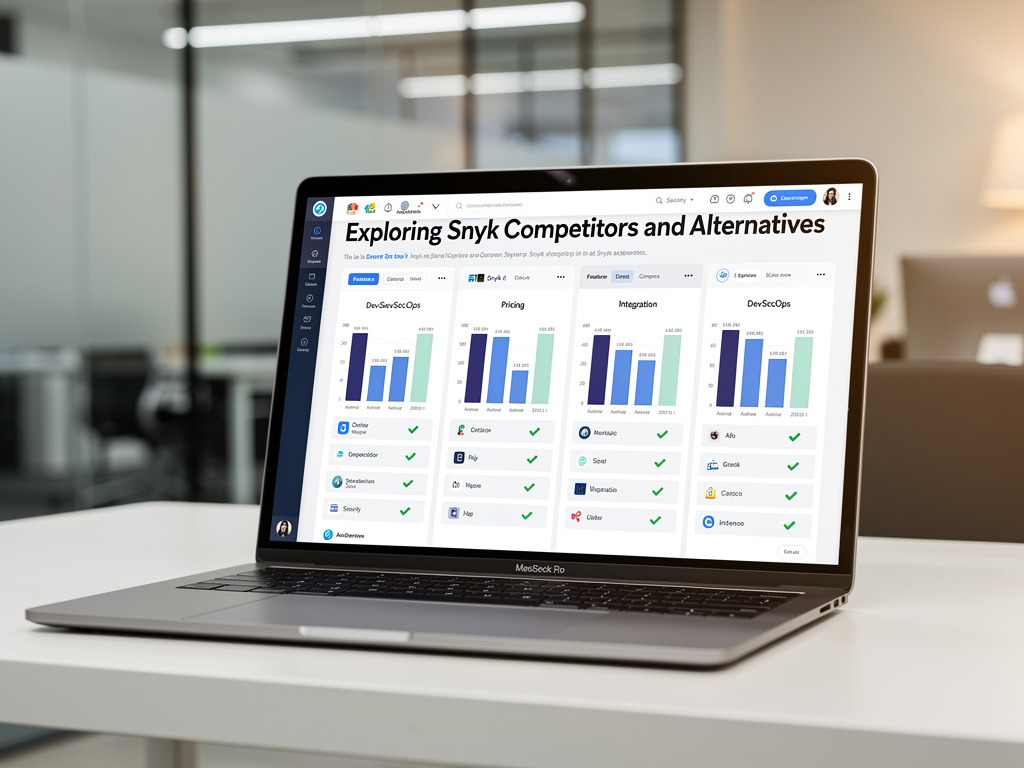
Top 9 Snyk Competitors and Alternatives: A Comprehensive Comparison for 2026

JFrog Xray Review
- Deep artifact scanning
- Real time blocking protection
- Strong policy and compliance
- Broad cicd integrations
- Policy setup learning curve
- Resource heavy on large repos
- Possible peak performance impact

Snyk Review
- Actionable fix recommendations
- Seamless IDE and Git integration
- Broad language and package support
- Automated pull requests for fixes
- Advanced setup takes longer
- Enterprise features may cost more
Black Duck Review
- Extensive vulnerability knowledge base
- Strong license compliance tracking
- Deep binary and container scanning
- Broad CI CD integrations
- Higher enterprise pricing
- Setup can take weeks
- May need security expertise
- Policy tuning takes time
Apiiro Review
- Unified security visibility
- Real time risk insights
- Strong DevOps integrations
- Fewer false positives
- Enterprise focused pricing
- Longer full rollout timeline
- May be heavy for small teams
SonarQube Review
- Strong code quality metrics
- Broad language support
- Great CI CD integrations
- Finds security issues early
- Initial setup can be complex
- Needs configuration expertise
- Can produce false positives
- Resource intensive for large projects

Mend Review
- Fast scanning performance
- Strong integrations with workflows
- Broad language and framework support
- Developer friendly experience
- Fewer advanced niche features
- Legacy tool integration challenges
- Policy setup takes time

Checkmarx Review
- Accurate vulnerability detection
- Supports many languages
- Strong CI CD integrations
- Detailed remediation guidance
- Complex initial configuration
- Steep learning curve
- Long scans on large codebases

Semgrep Review
- Very fast scan speeds
- Low false positives
- Custom rules and transparency
- Strong CI CD integration
- Limited third party integrations
- Weaker compliance reporting
- Per developer pricing costs

Veracode Review
- Supports 80 plus languages
- Scales for large portfolios
- Strong compliance reporting
- Reduces false positives
- Premium pricing tier
- May feel complex for small teams

Fossa Review
- Manual vulnerability verification
- Over 500 package managers
- Strong license compliance
- Enterprise scale deployments
- Pricing requires sales call
- May be overkill small teams
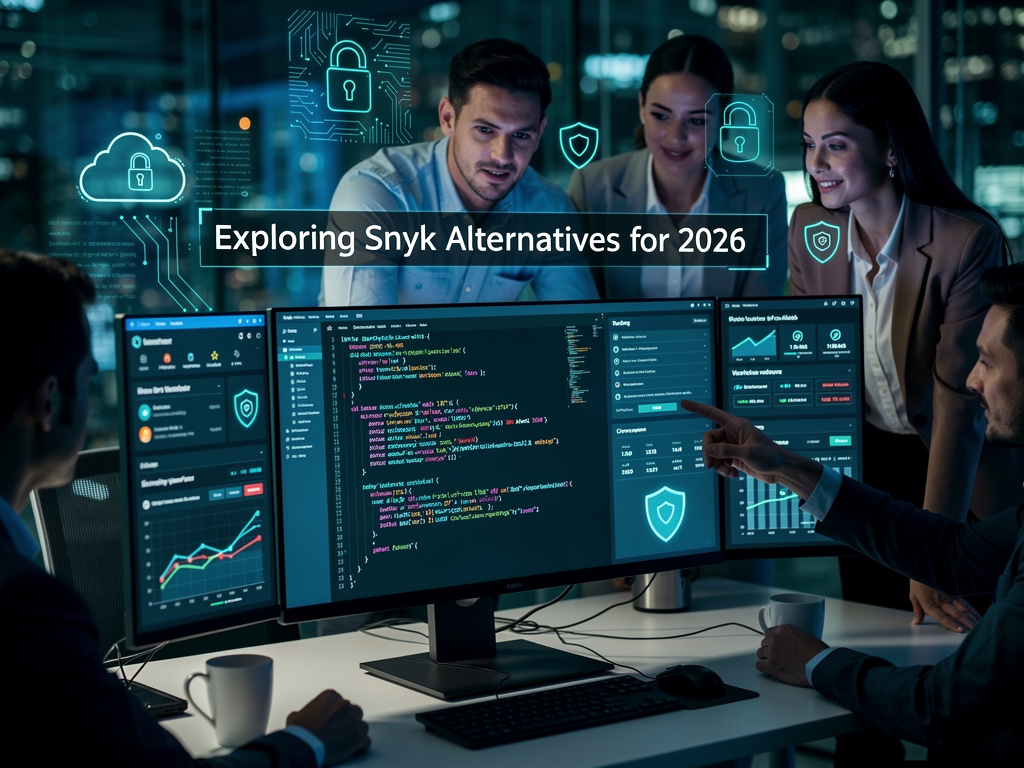
Developer security has become a critical priority for organizations worldwide. As software development accelerates, protecting applications from vulnerabilities requires robust security platforms. Snyk has established itself as a leading DevSecOps solution, helping teams find and fix vulnerabilities in open-source dependencies, containers, and code.
However, Snyk isn’t the only player in this space. Organizations need alternatives that offer different strengths, pricing models, and capabilities. This comprehensive analysis examines nine powerful Snyk competitors that provide compelling alternatives for application security testing, software composition analysis, and vulnerability management.
Each platform brings unique advantages to the table. From enterprise-grade solutions like Checkmarx to specialized tools like Semgrep, these alternatives cater to diverse organizational needs. Understanding their capabilities, pricing, and integration options helps teams make informed decisions about their security toolchain. Let’s explore these solutions in detail.
Understanding the Application Security Landscape
The application security market has evolved dramatically over recent years. Organizations face increasing pressure to deliver secure software quickly while managing complex supply chains and dependencies.
Modern security platforms must address multiple attack vectors simultaneously. These include vulnerable open-source components, insecure code patterns, container misconfigurations, and infrastructure as code (IaC) vulnerabilities.
Developer-first security has emerged as a key trend. Teams want tools that integrate seamlessly into existing workflows without slowing development velocity. This shift has created demand for platforms offering:
- IDE integration for real-time vulnerability detection
- CI/CD pipeline integration for automated security testing
- Developer-friendly remediation guidance with actionable fixes
- Comprehensive scanning capabilities across multiple asset types
The market now offers specialized solutions for different use cases. Some platforms excel at static analysis, while others focus on software composition analysis or container security. Understanding these distinctions helps organizations choose the right tools for their specific requirements.
Key Evaluation Criteria for Security Platforms
Selecting the right security platform requires careful evaluation across multiple dimensions. Our analysis focuses on seven critical criteria that determine platform effectiveness and organizational fit.
Scanning Capabilities represent the foundation of any security platform. Comprehensive solutions should offer SAST (Static Application Security Testing), SCA (Software Composition Analysis), DAST (Dynamic Application Security Testing), and infrastructure scanning capabilities.
Integration Quality determines how well platforms fit into existing development workflows. Seamless IDE, CI/CD, and repository integrations reduce friction and improve developer adoption rates.
Accuracy and False Positives directly impact developer productivity. Platforms generating excessive false positives create alert fatigue and reduce trust in security findings.
Developer Experience encompasses ease of use, learning curve, and workflow integration. Developer-friendly platforms see higher adoption and more consistent usage across teams.
Enterprise Features include role-based access controls, compliance reporting, policy management, and advanced analytics capabilities required by larger organizations.
Pricing and Licensing models vary significantly across platforms. Understanding total cost of ownership helps organizations budget appropriately for security investments.
Support and Documentation quality affects implementation success and ongoing platform utilization. Comprehensive resources accelerate onboarding and troubleshooting.
Black Duck by Synopsis: Enterprise-Grade SCA Solution
Black Duck stands as one of the most established names in software composition analysis. Synopsis acquired the platform to enhance their application security portfolio, creating a comprehensive enterprise solution.
The platform excels at identifying vulnerabilities in open-source components across massive codebases. Black Duck’s extensive vulnerability database covers millions of open-source projects, providing detailed risk assessments and remediation guidance.
Scanning Capabilities: Black Duck offers robust SCA functionality with deep open-source intelligence. The platform identifies vulnerable dependencies, license compliance issues, and operational risks across development lifecycles.
Integration Quality: Enterprise-focused integrations support major CI/CD platforms, IDEs, and repository systems. API access enables custom workflow implementations for complex environments.
Accuracy: The platform maintains high accuracy rates with minimal false positives. Extensive vulnerability research and automated verification processes ensure reliable results.
Developer Experience: While comprehensive, Black Duck’s interface targets security professionals more than developers. The learning curve can be steep for teams new to SCA tools.
Enterprise Features: Comprehensive policy management, detailed compliance reporting, and advanced analytics make Black Duck suitable for large organizations with complex requirements.
Pricing: Enterprise-focused pricing reflects the platform’s comprehensive capabilities. Organizations should expect significant investment for full feature access.
Support: Synopsis provides extensive support resources, training programs, and professional services to ensure successful platform adoption.
Apiiro: Cloud-Native Application Risk Management
Apiiro represents a new generation of application security platforms designed specifically for cloud-native environments. The platform combines security scanning with business risk context.
Unlike traditional security tools, Apiiro correlates security findings with business impact, helping teams prioritize vulnerabilities based on actual risk exposure rather than theoretical severity scores.
Scanning Capabilities: Comprehensive scanning covers code, dependencies, containers, and infrastructure. Apiiro’s risk-based approach contextualizes findings within business workflows.
Integration Quality: Cloud-native architecture enables seamless integration with modern development tools and platforms. API-first design supports flexible implementation approaches.
Accuracy: Advanced correlation engines reduce false positives by considering application context and runtime behavior. Risk scoring improves over time through machine learning.
Developer Experience: Modern interface design prioritizes developer usability. Risk-based prioritization helps developers focus on vulnerabilities that matter most.
Enterprise Features: Advanced analytics, custom risk policies, and compliance frameworks support enterprise security programs. Integration with business systems provides additional context.
Pricing: Flexible pricing models accommodate different organizational sizes and requirements. Cloud-native architecture can reduce infrastructure costs.
Support: Growing support ecosystem includes documentation, training resources, and professional services for platform implementation.
Checkmarx: Comprehensive Application Security Testing
Checkmarx has established itself as a comprehensive application security platform offering the full spectrum of security testing capabilities. The platform serves enterprises requiring integrated SAST, SCA, and DAST functionality.
According to industry data, Checkmarx customers typically invest around $35,000 annually, reflecting the platform’s enterprise positioning and comprehensive feature set.
Scanning Capabilities: Checkmarx One platform integrates SAST, SCA, container security, API security, and IaC scanning. This comprehensive approach provides complete application visibility.
Integration Quality: Extensive integration ecosystem supports popular development tools, CI/CD platforms, and enterprise systems. Native integrations reduce implementation complexity.
Accuracy: Advanced scanning engines minimize false positives while maintaining comprehensive vulnerability coverage. Customizable rules adapt to organizational coding standards.
Developer Experience: Recent platform updates have improved developer usability. IDE plugins and automated remediation suggestions enhance developer workflow integration.
Enterprise Features: Robust policy management, detailed compliance reporting, and advanced analytics support large-scale security programs. Role-based access controls ensure appropriate visibility.
Pricing: Enterprise pricing model reflects comprehensive capabilities and extensive support services. Investment typically requires significant budget allocation.
Support: Comprehensive support services include training, professional services, and dedicated customer success management for enterprise customers.
Semgrep: Developer-Centric Static Analysis
Semgrep has gained significant traction as a developer-friendly static analysis platform. The tool emphasizes ease of use, fast scanning, and customizable rules that adapt to specific organizational needs.
Semgrep’s approach focuses on reducing noise and improving signal quality. Developers appreciate the platform’s ability to create custom rules without requiring deep security expertise.
Scanning Capabilities: Strong SAST functionality with growing SCA capabilities through Semgrep Supply Chain. Custom rule creation enables organization-specific security requirements.
Integration Quality: Lightweight integrations work across multiple IDEs and CI/CD platforms. Simple setup process reduces implementation barriers for development teams.
Accuracy: Focus on rule quality and customization results in fewer false positives. Community-driven rule development improves detection capabilities over time.
Developer Experience: Excellent developer experience with fast scanning, clear results presentation, and minimal workflow disruption. Learning curve is relatively gentle.
Enterprise Features: Growing enterprise functionality includes policy management, team collaboration features, and compliance reporting capabilities.
Pricing: Competitive pricing model with free tier for open-source projects. Commercial plans scale based on repository and user count.
Support: Active community support complemented by growing commercial support options for enterprise customers.
Veracode: Established Application Security Platform
Veracode represents one of the most established players in application security testing. The platform offers comprehensive scanning capabilities backed by extensive security research and threat intelligence.
Veracode’s strength lies in its mature platform capabilities and extensive compliance framework support. Organizations in regulated industries often choose Veracode for its proven track record and comprehensive audit capabilities.
Scanning Capabilities: Full spectrum security testing includes SAST, DAST, SCA, container security, and penetration testing services. Comprehensive coverage addresses multiple attack vectors.
Integration Quality: Mature integration ecosystem supports enterprise development environments. APIs enable custom workflow implementations and reporting integrations.
Accuracy: Extensive vulnerability research and verification processes maintain high accuracy levels. Manual verification options provide additional confidence for critical findings.
Developer Experience: Traditional interface design may feel less modern compared to newer platforms. Recent updates have improved developer workflow integration.
Enterprise Features: Comprehensive policy management, detailed compliance reporting, and advanced analytics support complex enterprise requirements. Audit trails meet regulatory demands.
Pricing: Enterprise-focused pricing reflects comprehensive capabilities and extensive support services. Budget planning should account for full feature access costs.
Support: Extensive support services include training, professional services, and dedicated customer success management for enterprise implementations.
SonarQube: Code Quality and Security Platform
SonarQube combines code quality analysis with security vulnerability detection. The platform emphasizes code maintainability, reliability, and security as interconnected aspects of software quality.
SonarQube’s unique positioning as a code quality platform with security capabilities appeals to teams wanting unified quality gates across their development process.
Scanning Capabilities: Strong SAST capabilities combined with code quality analysis. Security rules cover common vulnerability patterns across multiple programming languages.
Integration Quality: Excellent CI/CD integration with quality gates that can block deployments based on security findings. IDE plugins provide real-time feedback during development.
Accuracy: Focus on code quality reduces false positives for security findings. Customizable quality profiles adapt to organizational standards and requirements.
Developer Experience: Excellent developer experience with clear issue presentation and remediation guidance. Quality-focused approach resonates with development teams.
Enterprise Features: Portfolio-level analytics, advanced security reporting, and policy management support enterprise quality programs. Branch analysis enables comprehensive coverage.
Pricing: Community edition provides significant value for smaller teams. Commercial editions scale based on lines of code and advanced feature requirements.
Support: Strong community support complemented by commercial support options. Extensive documentation and training resources accelerate adoption.
Mend (formerly WhiteSource): SCA and License Compliance
Mend focuses specifically on software composition analysis and open-source license compliance. The platform excels at managing open-source risks across development and production environments.
Mend’s approach bridges developer and security teams by providing actionable insights about open-source component risks while maintaining development velocity.
Scanning Capabilities: Comprehensive SCA functionality with detailed license compliance analysis. Container scanning and infrastructure monitoring extend coverage beyond source code.
Integration Quality: Strong integration capabilities across development tools and CI/CD platforms. Automated policy enforcement enables consistent compliance management.
Accuracy: Extensive open-source database and advanced detection algorithms minimize false positives while providing comprehensive vulnerability coverage.
Developer Experience: Developer-friendly interface with clear remediation guidance. Automated fix suggestions reduce time spent on vulnerability resolution.
Enterprise Features: Advanced policy management, detailed compliance reporting, and license risk analysis support complex enterprise open-source strategies.
Pricing: Flexible pricing models accommodate different organizational sizes. Open-source focused approach can provide cost advantages for SCA-specific requirements.
Support: Comprehensive support services including implementation assistance, training programs, and ongoing customer success management.
JFrog Xray: DevOps-Integrated Security Analysis
JFrog Xray integrates security scanning directly into the DevOps toolchain through deep integration with JFrog’s Artifactory platform. This positioning makes Xray particularly attractive for organizations already using JFrog infrastructure.
The platform’s strength lies in its ability to provide security insights at the artifact level, enabling precise tracking of vulnerabilities across build and deployment processes.
Scanning Capabilities: Comprehensive SCA functionality with container and binary analysis. Integration with Artifactory enables analysis of artifacts throughout the development lifecycle.
Integration Quality: Seamless integration with JFrog ecosystem and strong third-party CI/CD platform support. Artifact-level scanning provides unique visibility.
Accuracy: Advanced vulnerability databases and analysis engines provide accurate results with minimal false positives. Continuous monitoring enables real-time threat detection.
Developer Experience: Integration with existing JFrog workflows minimizes learning curve for current users. Clear reporting and remediation guidance improve developer productivity.
Enterprise Features: Advanced policy management, compliance reporting, and impact analysis support enterprise security requirements. License compliance analysis addresses legal risks.
Pricing: Pricing typically bundles with other JFrog products. Standalone pricing available but ecosystem adoption provides better value proposition.
Support: Comprehensive JFrog support ecosystem includes training, professional services, and extensive documentation resources.
FOSSA: Open Source Management Platform
FOSSA specializes in open-source license compliance and dependency management. The platform provides comprehensive visibility into open-source usage across development environments.
FOSSA’s focus on license compliance and legal risk management makes it particularly valuable for organizations with strict intellectual property requirements or complex licensing obligations.
Scanning Capabilities: Comprehensive dependency analysis with detailed license identification and vulnerability scanning. Container and binary analysis extend coverage beyond source code repositories.
Integration Quality: Strong integration capabilities across development tools and CI/CD platforms. Automated scanning and policy enforcement reduce manual compliance overhead.
Accuracy: Extensive license database and advanced identification algorithms ensure accurate compliance analysis. Regular updates maintain currency with evolving license landscape.
Developer Experience: Clean interface with clear license and vulnerability reporting. Automated compliance checking reduces developer burden while maintaining visibility.
Enterprise Features: Advanced policy management, detailed compliance reporting, and legal review workflows support complex enterprise compliance requirements.
Pricing: Flexible pricing models based on repository count and feature requirements. Open-source focus can provide cost advantages for compliance-specific needs.
Support: Comprehensive support services include implementation assistance, compliance consulting, and ongoing customer success management.
Platform Comparison Analysis
Understanding how these platforms compare across key criteria helps organizations make informed decisions. Each solution offers distinct advantages depending on organizational priorities and requirements.
| Platform | SAST | SCA | Container Security | DAST | Developer Experience | Enterprise Features | Pricing Level |
|---|---|---|---|---|---|---|---|
| Black Duck | Limited | Excellent | Good | No | Good | Excellent | High |
| Apiiro | Good | Good | Excellent | Limited | Excellent | Good | Medium |
| Checkmarx | Excellent | Good | Good | Excellent | Good | Excellent | High |
| Semgrep | Excellent | Good | Limited | No | Excellent | Good | Medium |
| Veracode | Excellent | Good | Good | Excellent | Good | Excellent | High |
| SonarQube | Good | Limited | Limited | No | Excellent | Good | Low-Medium |
| Mend | Limited | Excellent | Good | No | Good | Good | Medium |
| JFrog Xray | Limited | Excellent | Excellent | No | Good | Good | Medium |
| FOSSA | No | Good | Limited | No | Good | Good | Medium |
This comparison reveals distinct platform strengths and positioning. Comprehensive platforms like Checkmarx and Veracode offer full-spectrum security testing capabilities but require significant investment.
Specialized solutions like Black Duck and Mend excel in specific areas like SCA while providing focused functionality at potentially lower costs.
Developer-centric platforms like Semgrep and SonarQube prioritize ease of use and workflow integration, making them attractive for teams emphasizing developer adoption.
Cost Considerations and Pricing Models
Understanding total cost of ownership extends beyond initial licensing fees. Organizations must consider implementation costs, training requirements, and ongoing maintenance expenses.
Enterprise platforms like Checkmarx and Veracode typically require investments of $35,000-$100,000+ annually for comprehensive deployments. These costs reflect extensive feature sets and support services.
Mid-market solutions like Semgrep and Apiiro offer more accessible pricing starting around $10,000-$30,000 annually. Feature sets may be more focused but often sufficient for many organizational requirements.
Open-source and freemium models like SonarQube provide entry-level options with community editions. Commercial features require investment but initial adoption costs remain minimal.
Hidden costs include training, professional services, and integration development. Organizations should budget 20-50% beyond licensing costs for successful platform adoption and ongoing optimization.
Integration and Implementation Strategies
Successful security platform adoption depends heavily on integration strategy and implementation approach. Organizations must balance comprehensive coverage with developer workflow integration.
Phased rollout approaches reduce implementation risk while allowing teams to learn platform capabilities gradually. Starting with pilot projects enables optimization before full-scale deployment.
CI/CD integration represents the critical success factor for most platforms. Automated scanning and policy enforcement ensure consistent security coverage without manual intervention.
Developer training accelerates adoption and reduces resistance to new tools. Platforms with better developer experience typically see higher adoption rates and more consistent usage.
Policy customization enables alignment with organizational security standards and compliance requirements. Flexible rule configuration reduces false positives and improves signal quality.
API integrations enable custom workflow implementations and reporting integrations with existing security and development tools.
Making the Right Choice: Selection Framework
Choosing among Snyk alternatives requires careful consideration of organizational priorities, technical requirements, and resource constraints. A structured evaluation framework improves decision quality.
Assess current security coverage gaps to understand specific capability requirements. Organizations with strong SAST capabilities might prioritize SCA solutions, while teams lacking comprehensive testing need full-spectrum platforms.
Evaluate developer workflow requirements to ensure selected platforms integrate effectively with existing processes. Developer resistance significantly impacts platform success regardless of technical capabilities.
Consider organizational maturity in security practices and tooling. Advanced platforms may overwhelm teams new to application security, while mature organizations require sophisticated capabilities.
Budget planning should include licensing, implementation, training, and ongoing operational costs. Total cost of ownership often exceeds initial licensing fees by significant margins.
Vendor evaluation should include financial stability, product roadmap alignment, and support quality assessment. Long-term platform viability affects ongoing organizational investment.
Proof of concept testing with real organizational code provides practical evaluation of accuracy, performance, and workflow integration before making final decisions.
Future Trends in Application Security
The application security landscape continues evolving rapidly. Understanding emerging trends helps organizations make forward-looking platform investments that remain relevant over time.
AI and machine learning integration will improve vulnerability detection accuracy while reducing false positives. Platforms investing in these capabilities will provide better developer experiences.
Runtime security integration bridges traditional static analysis with dynamic application protection. This convergence provides more complete security coverage across development and production environments.
Supply chain security emphasis will grow as attacks targeting development infrastructure increase. Platforms providing comprehensive supply chain visibility gain competitive advantages.
Developer security education integration helps teams understand and address security issues more effectively. Platforms combining detection with educational resources improve overall security posture.
Cloud-native optimization enables better integration with modern development practices and infrastructure. Platforms designed for cloud environments provide scalability and flexibility advantages.
Conclusion
The application security platform landscape offers diverse alternatives to Snyk, each with distinct strengths and positioning. Organizations must carefully evaluate platforms against their specific requirements, considering technical capabilities, developer experience, enterprise features, and total cost of ownership.
Enterprise organizations with comprehensive security requirements may find value in full-spectrum platforms like Checkmarx or Veracode. Developer-focused teams often prefer solutions like Semgrep or SonarQube that prioritize ease of use and workflow integration. Specialized needs around SCA or compliance may be best served by focused solutions like Black Duck or FOSSA.
Success ultimately depends on alignment between platform capabilities and organizational priorities, combined with effective implementation and adoption strategies.
Frequently Asked Questions About Snyk Competitors
- Which Snyk alternative offers the best value for small development teams?
SonarQube Community Edition provides excellent value for smaller teams, offering robust code quality analysis with security scanning at no cost. Semgrep also offers competitive pricing with strong developer experience for teams focused on static analysis. - What are the main advantages of Checkmarx over Snyk?
Checkmarx offers more comprehensive DAST capabilities, stronger enterprise policy management, and broader application security testing coverage. Organizations requiring full-spectrum security testing often prefer Checkmarx’s integrated approach. - Which platform provides the best software composition analysis capabilities?
Black Duck and Mend lead in SCA functionality, offering extensive vulnerability databases, license compliance analysis, and detailed open-source risk management. JFrog Xray also excels when integrated with existing JFrog infrastructure. - How do these alternatives compare in terms of false positive rates?
Semgrep and SonarQube generally produce fewer false positives due to their focus on rule quality and customization. Apiiro’s risk-based approach also reduces noise by contextualizing findings with business impact. - Which Snyk competitor offers the best developer experience?
Semgrep and SonarQube consistently receive high marks for developer experience, featuring intuitive interfaces, fast scanning, and minimal workflow disruption. Apiiro also provides excellent developer experience with its modern, cloud-native design. - What should organizations consider when migrating from Snyk to alternatives?
Key considerations include integration complexity, team training requirements, policy migration, and potential gaps in security coverage. Organizations should plan phased migrations and maintain parallel scanning during transition periods. - Which platforms offer the strongest enterprise features and compliance support?
Veracode, Checkmarx, and Black Duck provide the most comprehensive enterprise features, including advanced policy management, detailed compliance reporting, and extensive audit capabilities required by regulated industries. - How do pricing models differ across these Snyk alternatives?
Pricing varies significantly, with enterprise platforms like Checkmarx ($35,000+ annually) commanding premium prices, while developer-focused solutions like Semgrep offer more accessible pricing. Many platforms offer tiered pricing based on repository count, user count, or lines of code scanned.



 Stack Insight is intended to support informed decision-making by providing independent information about business software and services. Some product details, including pricing, features, and promotional offers, may be supplied by vendors or partners and can change without notice.