

Best LLM Pulse Alternatives in 2026: 20 Tools for AI Search Visibility and Monitoring
Finding out where your brand shows up in AI-generated answers has become a real challenge. LLM Pulse helped many teams track their visibility across ChatGPT, Perplexity, and other AI platforms. But it’s not the only option out there.
Maybe you need better pricing. Maybe you want more features. Or perhaps you’re looking for something that fits your specific workflow better. Whatever the reason, the market now offers dozens of solid LLM Pulse alternatives worth checking out.
This guide covers 20 tools that can help you monitor AI search visibility, track citations, and understand how your content performs across major language models. We’ll break down each one using the same criteria so you can compare them fairly. You’ll learn about pricing, key features, ideal users, and where each tool shines or falls short.
Let’s get into it.
Why Look for LLM Pulse Alternatives?
LLM Pulse does a decent job at what it does. But one size rarely fits all in the software world.
Some teams need deeper analytics. They want to dig into prompt-level data and understand exactly why their content gets cited or ignored.
Others need better pricing. Startups and small agencies can’t always justify enterprise-level costs for AI monitoring.
Many need specific integrations. Your tech stack matters. If a tool doesn’t connect with your existing workflow, it creates friction.
The AI search monitoring space has grown fast. New players bring fresh approaches. Some focus on real-time tracking. Others specialize in competitor analysis. A few combine AI visibility with content optimization in ways LLM Pulse doesn’t.
Understanding your options helps you make a smarter choice.
How We Evaluated These LLM Pulse Competitors
We used consistent criteria across all 20 tools. This keeps comparisons fair and useful.
Here’s what we looked at:
- LLM Coverage: Which AI platforms does the tool track? ChatGPT, Perplexity, Claude, Gemini, Grok, and AI Overviews are the big ones.
- Core Features: What can you actually do with the tool? Citation tracking, visibility scores, competitor monitoring, and content recommendations all matter.
- Ease of Use: How quickly can a new user get value? Complex tools need to justify their learning curve.
- Pricing: What does it cost, and does the value match the price tag?
- Best For: Who gets the most value from this tool? Agencies, enterprises, startups, or specific industries?
- Limitations: Where does each tool fall short? Every product has weak spots.
Now let’s look at each alternative in detail.
1. Whitebox: Deep AI Transparency and Model Analysis
Whitebox takes a different approach to AI monitoring. It focuses on understanding how language models work rather than just tracking mentions.
LLM Coverage: Whitebox tracks major models including ChatGPT, Claude, and Gemini. It also provides insights into model behavior patterns that other tools miss.
Core Features:
- Model interpretation dashboards
- Response pattern analysis
- Citation source tracking
- Prompt testing environments
- API access for custom integrations
What Makes It Different: Whitebox shows you why AI models respond the way they do. This goes beyond simple visibility tracking. You can test different prompts and see how models process your content.
Pricing: Starts at $149/month for teams. Enterprise pricing available.
Best For: Technical teams and developers who want to understand AI behavior at a deeper level. Also works well for companies building AI-first products.
Limitations: The learning curve is steeper than most alternatives. Marketing teams without technical support might struggle to get full value.
Bottom Line: Whitebox is great if you need to understand the mechanics behind AI responses. It’s overkill for basic visibility tracking.
2. Profound: Comprehensive AI Search Visibility Platform
Profound has quickly become one of the most talked-about LLM Pulse substitutes in the market. It combines visibility tracking with actionable recommendations.
LLM Coverage: Tracks all major platforms including ChatGPT, Perplexity, Claude, Gemini, Grok, and Google AI Overviews.
Core Features:
- Real-time AI visibility scores
- Citation monitoring across platforms
- Competitor benchmarking
- Content optimization suggestions
- Topic cluster analysis
- Weekly and daily reporting options
What Makes It Different: Profound doesn’t just show you where you appear. It tells you what to do about it. The recommendations are specific and actionable, not generic advice.
Pricing: Starts at $99/month. Free trial available for 14 days.
Best For: Marketing teams and SEO agencies who need both monitoring and strategy guidance. Works especially well for mid-size companies.
Limitations: The reporting interface can feel overwhelming at first. Some users report that certain features take time to master.
Bottom Line: Profound delivers strong value for teams ready to act on their AI visibility data. It’s a solid all-around choice.
3. Otterly AI: Focused Citation Tracking Made Simple
Otterly AI strips away complexity. It does citation tracking really well without trying to be everything to everyone.
LLM Coverage: Monitors ChatGPT, Perplexity, and Claude. Google AI Overviews support is in beta.
Core Features:
- Citation alerts in real-time
- Brand mention tracking
- Competitor citation comparison
- Simple visibility dashboard
- Slack integration for alerts
- CSV export for reporting
What Makes It Different: Otterly AI focuses on speed and simplicity. You can set it up in under 10 minutes and start getting useful data the same day.
Pricing: Starts at $49/month. Affordable option for smaller teams.
Best For: Small businesses and solo marketers who need quick answers without complex setup. Also good for agencies managing many clients.
Limitations: The feature set is intentionally limited. You won’t find advanced analytics or content optimization tools here.
Bottom Line: Otterly AI proves that sometimes less is more. Great for teams who just need citation tracking done well.
4. Peec AI: Multi-Brand Management for Agencies
Peec AI was built with agencies in mind. Managing AI visibility across multiple brands is its specialty.
LLM Coverage: Full coverage of ChatGPT, Perplexity, Claude, Gemini, and AI Overviews.
Core Features:
- Multi-brand dashboards
- White-label reporting
- Client-specific visibility tracking
- Bulk monitoring setup
- Team collaboration tools
- Automated client reports
- Custom branding options
What Makes It Different: Peec AI handles the agency workflow challenge. You can manage 50 clients from one interface without constant switching.
Pricing: Agency plans start at $199/month. Per-client pricing also available.
Best For: Digital marketing agencies and consultants managing multiple client accounts. Perfect for teams billing clients for AI visibility services.
Limitations: Pricing can add up quickly with many clients. Single-brand companies might find it more complex than needed.
Bottom Line: Peec AI solves the multi-client headache that other tools create. Agencies should put this high on their evaluation list.
5. AthenaHQ: AI Search Strategy and Optimization
AthenaHQ positions itself as an AI search optimization platform, not just a monitoring tool. It helps you actually improve your visibility, not just measure it.
LLM Coverage: Tracks ChatGPT, Perplexity, Claude, Gemini, Grok, and Google AI Overviews.
Core Features:
- AI search visibility scores
- Content gap analysis for AI answers
- Structured data recommendations
- Entity optimization guidance
- Competitor strategy analysis
- Content brief generation
- Integration with major CMS platforms
What Makes It Different: AthenaHQ connects the dots between monitoring and action. It tells you exactly what content to create or update to improve your AI visibility.
Pricing: Starts at $179/month. Enterprise plans include custom onboarding.
Best For: Content teams and SEO professionals who want to optimize specifically for AI search. Works well for brands investing heavily in content marketing.
Limitations: The optimization features require time investment to use properly. Quick wins are harder to find here.
Bottom Line: AthenaHQ is for teams serious about AI search strategy, not just tracking. It requires commitment but delivers results.
6. Goodie AI: Affordable Entry Point for AI Monitoring
Goodie AI targets smaller teams and startups who can’t justify enterprise pricing. It offers solid basics at accessible prices.
LLM Coverage: Covers ChatGPT, Perplexity, and Gemini. Claude support coming soon.
Core Features:
- Basic visibility tracking
- Citation alerts
- Simple competitor comparison
- Weekly summary reports
- Email notifications
- Basic API access
What Makes It Different: Goodie AI strips away premium features to offer a genuinely affordable option. You get core functionality without paying for bells and whistles you won’t use.
Pricing: Free tier available. Paid plans start at $29/month.
Best For: Startups, freelancers, and small businesses testing the AI monitoring waters. Also works as a secondary tool for agencies.
Limitations: Limited LLM coverage compared to premium alternatives. Advanced features simply aren’t available.
Bottom Line: Goodie AI is the best LLM Pulse alternative for budget-conscious teams. It won’t wow you with features, but it gets the job done.
7. Bluefish AI: Real-Time Monitoring with Speed Focus
Bluefish AI differentiates itself through speed. While most tools offer weekly or daily updates, Bluefish tracks changes as they happen.
LLM Coverage: Full coverage including ChatGPT, Perplexity, Claude, Gemini, and AI Overviews.
Core Features:
- Real-time visibility tracking
- Instant citation alerts
- Live competitor monitoring
- Trend detection for emerging topics
- Mobile app for on-the-go monitoring
- Webhook integrations
- Custom alert rules
What Makes It Different: Bluefish AI’s real-time approach means you catch changes before your competitors. This matters for fast-moving industries and breaking news.
Pricing: Starts at $129/month. Real-time features require higher tiers.
Best For: News organizations, PR teams, and brands in competitive markets where timing matters. Also valuable for crisis monitoring.
Limitations: Real-time data can be overwhelming without proper alert management. Higher cost than alternatives with less frequent updates.
Bottom Line: Bluefish AI is worth the premium if speed matters to your business. Otherwise, daily updates might be enough.
8. Scrunch: Enterprise-Grade AI Visibility for Large Teams
Scrunch AI targets enterprise customers with complex needs. It handles scale and segmentation that smaller tools can’t match.
LLM Coverage: Comprehensive tracking of all major LLMs plus some specialized models used in specific industries.
Core Features:
- Enterprise-level segmentation
- Custom taxonomy support
- Role-based access controls
- Advanced API capabilities
- Data warehousing integration
- Custom reporting engines
- Dedicated support teams
- SSO and security compliance
What Makes It Different: Scrunch AI handles complexity that would break simpler tools. Large organizations with multiple business units find real value here.
Pricing: Custom enterprise pricing. Expect $1,000+ monthly for serious deployments.
Best For: Enterprise companies with complex organizational structures. Also works for large agencies with sophisticated client needs.
Limitations: Overkill for small and mid-size businesses. Implementation takes time and resources.
Bottom Line: Scrunch AI is the right LLM Pulse competitor for enterprises. Smaller teams should look elsewhere.
9. Brandlight: Brand-Focused AI Reputation Management
Brandlight combines AI visibility tracking with reputation management. It cares about how your brand appears, not just where.
LLM Coverage: Tracks ChatGPT, Perplexity, Claude, and Gemini with sentiment analysis included.
Core Features:
- AI sentiment tracking
- Brand perception analysis
- Citation context monitoring
- Reputation score over time
- Negative mention alerts
- Competitor perception comparison
- Crisis detection tools
What Makes It Different: Brandlight asks a different question. Instead of “are we mentioned?” it asks “how are we mentioned?” This matters for brand managers and PR teams.
Pricing: Starts at $159/month. PR agency plans available.
Best For: Brand managers, PR professionals, and companies concerned about AI-powered reputation. Great for consumer brands.
Limitations: Less focus on pure visibility metrics. May not satisfy SEO teams looking for ranking-style data.
Bottom Line: Brandlight fills a gap that pure visibility tools miss. If brand perception matters, check it out.
10. Writesonic: Content Creation with AI Visibility in Mind
Writesonic approaches AI visibility from the content creation side. It helps you write content that AI models want to cite.
LLM Coverage: Focuses on understanding what types of content get cited rather than tracking specific platforms.
Core Features:
- AI-optimized content creation
- Entity and structure guidance
- Citation-friendly formatting
- Topic research tools
- Content scoring for AI readability
- Bulk content generation
- SEO integration features
What Makes It Different: Writesonic tackles the problem from a different angle. Instead of monitoring, it helps you create content designed to be cited.
Pricing: Free tier available. Premium starts at $19/month for basic features.
Best For: Content creators, copywriters, and marketing teams focused on production. Works alongside other monitoring tools.
Limitations: Not a monitoring tool at all. You’ll need something else to track actual visibility.
Bottom Line: Writesonic complements monitoring tools but doesn’t replace them. Use it with another LLM Pulse alternative.
11. Trakkr: Influencer and AI Visibility Combined
Trakkr started as an influencer marketing platform. It now includes AI visibility features that connect influencer content to AI citations.
LLM Coverage: Monitors ChatGPT, Perplexity, and Claude for influencer-related citations.
Core Features:
- Influencer content tracking in AI
- Campaign visibility measurement
- Cross-platform citation analysis
- ROI tracking for influencer AI mentions
- Brand safety monitoring
- Collaboration workflow tools
What Makes It Different: Trakkr connects influencer marketing to AI visibility in ways other tools don’t. If influencers drive your brand awareness, this connection matters.
Pricing: Starts at $249/month. Influencer marketing features bundled.
Best For: Brands with active influencer programs. Consumer products and lifestyle brands benefit most.
Limitations: The AI visibility features feel secondary to influencer tools. Pure AI monitoring needs might be better served elsewhere.
Bottom Line: Trakkr is a niche choice for specific use cases. Don’t pick it unless influencer marketing is central to your strategy.
12. Qwairy: Research-Focused AI Answer Tracking
Qwairy positions itself as a research tool first. It helps you understand what questions AI models answer and how they source information.
LLM Coverage: Comprehensive tracking of ChatGPT, Perplexity, Claude, Gemini, and specialized research tools.
Core Features:
- Question and answer mapping
- Source attribution analysis
- Topic trend research
- Knowledge gap identification
- Academic and research citations
- Fact-checking integration
- Research report generation
What Makes It Different: Qwairy focuses on the informational side of AI answers. It’s less about brand visibility and more about understanding how AI learns and shares information.
Pricing: Academic pricing available. Commercial plans start at $89/month.
Best For: Research teams, academics, think tanks, and companies in knowledge-intensive industries. Also useful for publishers.
Limitations: Less practical for typical marketing use cases. The research focus may not translate to business value for all teams.
Bottom Line: Qwairy serves a specific audience well. General marketers should probably look elsewhere.
13. Azoma: Local Business AI Visibility Tracking
Azoma focuses on local businesses and how they appear in AI answers for location-based queries.
LLM Coverage: Tracks ChatGPT, Perplexity, and Google AI Overviews with location context.
Core Features:
- Location-based AI visibility
- Local citation tracking
- Multi-location management
- Review sentiment in AI answers
- Local competitor analysis
- Google Business Profile integration
- Local SEO recommendations
What Makes It Different: Azoma answers “how does my business show up when someone asks AI about services in my area?” This local focus is unique.
Pricing: Starts at $79/month per location. Multi-location discounts available.
Best For: Local businesses, franchises, and agencies serving local clients. Restaurant chains, retail stores, and service businesses benefit most.
Limitations: Not designed for national or international brand monitoring. The local focus limits its broader applications.
Bottom Line: Azoma is the best LLM Pulse alternative for local businesses. It fills a gap that general tools miss.
14. Gauge: Performance Metrics and AI Visibility Combined
Gauge connects AI visibility to broader marketing performance. It helps you understand how AI citations impact actual business results.
LLM Coverage: Tracks ChatGPT, Perplexity, Claude, and Gemini.
Core Features:
- AI visibility to conversion tracking
- Attribution modeling for AI traffic
- Revenue impact analysis
- Cross-channel performance comparison
- A/B testing integration
- Custom metric dashboards
- Marketing mix modeling
What Makes It Different: Gauge answers the question executives ask: “What’s the ROI of AI visibility?” It connects monitoring to business outcomes.
Pricing: Starts at $199/month. Attribution features require higher tiers.
Best For: Data-driven marketing teams and executives who need to justify AI visibility investments. Works well for e-commerce and lead generation businesses.
Limitations: Requires good analytics infrastructure to work properly. Setup can be complex.
Bottom Line: Gauge is valuable for teams that need to prove ROI. It’s not just monitoring for monitoring’s sake.
15. Semrush: All-in-One Marketing Suite with AI Visibility
Semrush is a giant in SEO and marketing software. Its AI visibility features are newer but backed by serious infrastructure.
LLM Coverage: Tracks 6 major LLMs including ChatGPT, Perplexity, Claude, Grok, AI Overviews, and Gemini.
Core Features:
- AI visibility tracking within broader SEO suite
- Keyword research with AI intent
- Competitor analysis across traditional and AI search
- Content optimization recommendations
- Backlink data combined with citation tracking
- Position tracking across all channels
- Reporting and white-label options
What Makes It Different: Semrush combines AI visibility with everything else you do in SEO. One platform handles traditional search and AI search together.
Pricing: AI features included in Pro plans starting at $129/month. Some AI tools require Guru tier at $249/month.
Best For: Teams already using Semrush who want AI visibility without adding another tool. Also good for those wanting an all-in-one solution.
Limitations: AI visibility features aren’t as deep as specialized alternatives. You’re paying for a lot of features you might not use.
Bottom Line: Semrush is a safe choice if you want one platform for everything. Specialized tools go deeper on AI specifically.
16. Searchable: Technical SEO Meets AI Optimization
Searchable bridges technical SEO and AI visibility. It focuses on how site structure affects AI citation likelihood.
LLM Coverage: Monitors ChatGPT, Perplexity, and Google AI Overviews.
Core Features:
- Technical SEO audits for AI
- Structured data analysis
- Entity markup recommendations
- Site speed and AI correlation
- Crawlability for AI training data
- Schema implementation guidance
- JavaScript rendering analysis
What Makes It Different: Searchable asks “Is your site technically ready for AI to understand and cite it?” This technical angle complements content-focused tools.
Pricing: Starts at $119/month. Technical audit features are add-ons.
Best For: Technical SEO teams and developers. Useful for sites with complex architectures that struggle with AI visibility.
Limitations: Requires technical knowledge to use effectively. Less useful for marketing-focused teams.
Bottom Line: Searchable handles the technical side that other LLM Pulse alternatives ignore. Pair it with a monitoring tool for complete coverage.
17. Spotlight: Media Monitoring Extended to AI
Spotlight started in traditional media monitoring. It now extends that capability to track how AI systems cover brands and topics.
LLM Coverage: Tracks ChatGPT, Perplexity, Claude, and news-focused AI tools.
Core Features:
- Combined media and AI monitoring
- News cycle AI impact tracking
- Executive visibility in AI answers
- Industry topic monitoring
- Media relations AI insights
- Press release effectiveness for AI
- Crisis communication tracking
What Makes It Different: Spotlight connects traditional PR metrics to AI visibility. It shows how media coverage translates into AI citations.
Pricing: Starts at $299/month. Enterprise media monitoring bundles available.
Best For: PR teams, communications professionals, and corporate communications. Also valuable for public companies.
Limitations: The price point is higher than pure AI monitoring tools. Less useful for SEO-focused teams.
Bottom Line: Spotlight is the LLM Pulse competitor for PR and communications teams. It connects worlds that other tools don’t.
18. Citation Junction: Pure Citation Tracking Focus
Citation Junction does one thing really well. It tracks exactly where and when AI models cite your content.
LLM Coverage: Comprehensive tracking of ChatGPT, Perplexity, Claude, Gemini, and AI Overviews.
Core Features:
- Exact citation tracking with timestamps
- Source URL matching
- Citation context capture
- Historical citation archives
- Competitor citation alerts
- Citation growth trends
- API for custom integrations
What Makes It Different: Citation Junction doesn’t try to be more than it is. Pure citation tracking with excellent accuracy and depth.
Pricing: Starts at $69/month. Higher tiers add more tracked URLs.
Best For: Teams who just want citation data without extra features. Publishers and content teams benefit most.
Limitations: No optimization features, no recommendations, no content tools. Just data.
Bottom Line: Citation Junction is refreshingly simple. Great for teams with other optimization tools who need pure monitoring.
19. AirOps: Workflow Automation for AI Visibility
AirOps takes a workflow-first approach. It helps you automate AI visibility tasks and connect monitoring to action.
LLM Coverage: Integrates with multiple AI monitoring APIs rather than tracking directly.
Core Features:
- Workflow automation for AI monitoring
- Multi-tool integration hub
- Automated reporting pipelines
- Alert routing and escalation
- Custom trigger actions
- Team task assignment
- Slack, email, and webhook outputs
What Makes It Different: AirOps isn’t a monitoring tool itself. It’s the glue that connects monitoring tools to your workflow and automates what happens next.
Pricing: Starts at $49/month. Workflow complexity affects pricing.
Best For: Teams using multiple tools who need better automation. Also valuable for agencies managing complex client workflows.
Limitations: You still need other monitoring tools. AirOps amplifies but doesn’t replace them.
Bottom Line: AirOps is a force multiplier for AI visibility work. Use it with dedicated monitoring tools, not instead of them.
20. iGEO: Geographic AI Visibility Intelligence
iGEO specializes in how AI answers vary by geography. It tracks the same questions across different regions and languages.
LLM Coverage: Tracks ChatGPT, Perplexity, and Gemini with geographic segmentation.
Core Features:
- Multi-region AI tracking
- Language-specific visibility
- Geographic answer variations
- Local market competitor analysis
- Regional content recommendations
- International brand monitoring
- Localization insights
What Makes It Different: AI answers differ by region. iGEO shows you exactly how and helps you optimize for different markets.
Pricing: Starts at $149/month. Additional regions add cost.
Best For: International brands and companies operating in multiple markets. Also useful for localization teams.
Limitations: Less valuable for single-market businesses. The geographic focus may be overkill for many teams.
Bottom Line: iGEO fills an important gap for international businesses. Skip it if you only operate in one market.
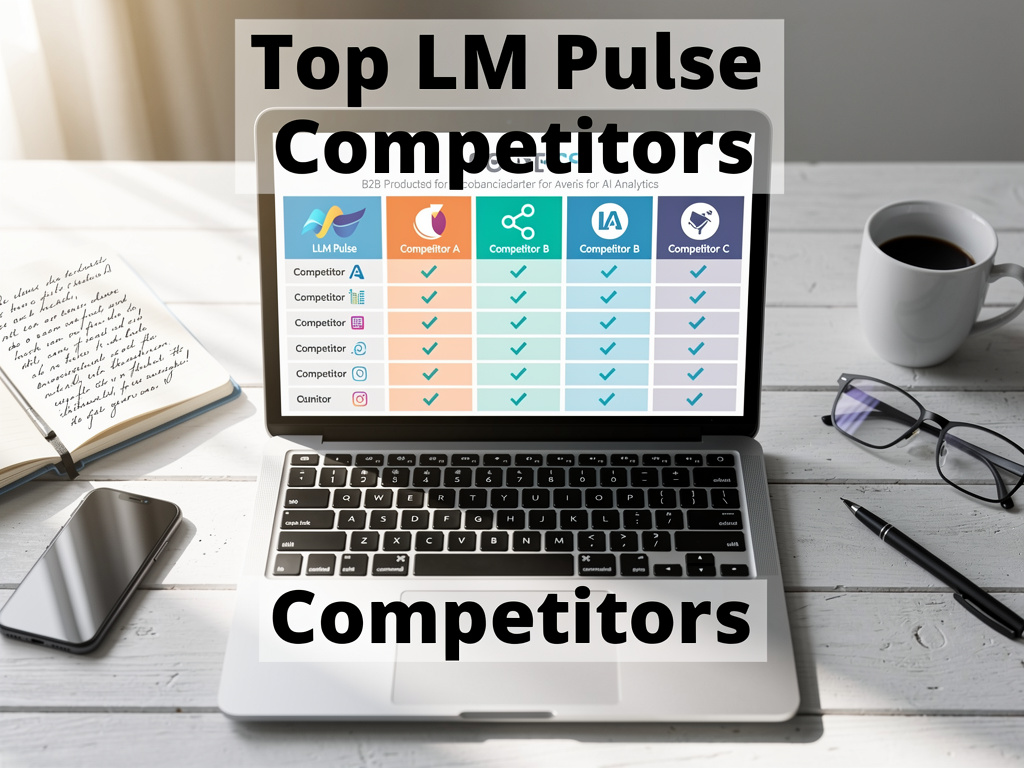
Comparison Table: All 20 LLM Pulse Alternatives
| Tool | Starting Price | LLM Coverage | Best For | Key Strength |
|---|---|---|---|---|
| Whitebox | $149/month | ChatGPT, Claude, Gemini | Technical teams | Model behavior analysis |
| Profound | $99/month | All 6 major LLMs | Marketing teams, agencies | Actionable recommendations |
| Otterly AI | $49/month | ChatGPT, Perplexity, Claude | Small teams | Simplicity and speed |
| Peec AI | $199/month | All 5 major LLMs | Agencies | Multi-brand management |
| AthenaHQ | $179/month | All 6 major LLMs | Content teams | AI search strategy |
| Goodie AI | $29/month | ChatGPT, Perplexity, Gemini | Startups, freelancers | Budget-friendly |
| Bluefish AI | $129/month | All 5 major LLMs | News, PR teams | Real-time tracking |
| Scrunch | $1,000+/month | Comprehensive | Enterprises | Enterprise segmentation |
| Brandlight | $159/month | ChatGPT, Perplexity, Claude, Gemini | Brand managers | Sentiment tracking |
| Writesonic | $19/month | Content focus | Content creators | AI-optimized writing |
| Trakkr | $249/month | ChatGPT, Perplexity, Claude | Influencer marketers | Influencer AI connection |
| Qwairy | $89/month | All major LLMs + research tools | Research teams | Q&A mapping |
| Azoma | $79/month | ChatGPT, Perplexity, AI Overviews | Local businesses | Location-based tracking |
| Gauge | $199/month | ChatGPT, Perplexity, Claude, Gemini | Data teams | ROI attribution |
| Semrush | $129/month | All 6 major LLMs | SEO teams | All-in-one platform |
| Searchable | $119/month | ChatGPT, Perplexity, AI Overviews | Technical SEO | Technical audits |
| Spotlight | $299/month | ChatGPT, Perplexity, Claude | PR professionals | Media + AI combined |
| Citation Junction | $69/month | All 5 major LLMs | Publishers | Pure citation tracking |
| AirOps | $49/month | Via integrations | Operations teams | Workflow automation |
| iGEO | $149/month | ChatGPT, Perplexity, Gemini | International brands | Geographic tracking |
How to Choose the Right LLM Pulse Alternative for Your Team
With 20 options on the table, choosing gets tricky. Here’s how to narrow it down.
Start with your budget. If you’re under $50/month, Goodie AI or Otterly AI are your realistic options. For $100-200/month, the field opens up considerably.
Consider your team type. Agencies should prioritize multi-brand features in Peec AI. Enterprises need Scrunch’s segmentation. Small teams can stick with simpler tools.
Think about what you’ll actually do with the data. If you just want to monitor and report, Citation Junction or Otterly AI work fine. If you want optimization guidance, AthenaHQ or Profound add more value.
Check LLM coverage requirements. Do you care about Grok or Claude specifically? Some tools skip certain platforms. Make sure your must-haves are covered.
Look at integrations. Your existing tools matter. Semrush users might stick with their platform. Slack-heavy teams need good alert integrations.
Test before committing. Most tools offer free trials. Use them. A tool that looks great on paper might not fit your actual workflow.
AI Search Monitoring Tools: Feature Categories Explained
Understanding feature categories helps you compare tools more effectively.
Visibility Tracking
This is the foundation. Every tool tracks some version of “where does my brand appear in AI answers?” The differences are in frequency, depth, and presentation.
Citation Monitoring
More specific than visibility. Citation tools track when AI models actually reference your content as a source. Not all mentions are citations.
Competitor Analysis
Seeing your own data matters less without context. Good tools show how you compare to competitors in the same space.
Content Optimization
Some tools don’t just monitor. They tell you what to fix. This moves from observation to action.
Reporting and Alerts
How do you get the information? Real-time alerts, daily summaries, weekly reports, and custom dashboards all serve different needs.
Integration Capabilities
Can the tool connect to your existing workflow? API access, webhooks, and native integrations determine how well it fits.
Common Mistakes When Choosing AI Visibility Tools
Teams make predictable errors when evaluating these tools. Avoid these:
Choosing based on feature count alone. More features doesn’t mean better fit. A focused tool that does what you need beats a bloated platform.
Ignoring the learning curve. Complex tools require investment. If nobody on your team will learn it properly, simpler options deliver more actual value.
Forgetting about LLM coverage gaps. If a tool doesn’t track the platforms your audience uses, its data won’t help you.
Underestimating pricing growth. Many tools charge more as you scale. That $99/month starter plan might be $500/month when you add the features you actually need.
Skipping the trial period. Reading about a tool isn’t the same as using it. Every tool on this list has quirks you won’t discover without hands-on testing.
The Future of AI Search Visibility Monitoring
This market is changing fast. A few trends are shaping where things go.
More LLMs to track. New AI models launch regularly. Tools need to keep up or become incomplete.
Real-time becomes standard. Weekly data is increasingly outdated. Expect faster monitoring across all tools.
Better attribution models. Connecting AI visibility to business results is still rough. Expect improvements here.
Consolidation likely. Some of these tools will be acquired or shut down. The market can’t sustain 50+ similar products.
Integration with content tools. Monitoring and creation will merge more. Creating and optimizing in one workflow makes sense.
Teams investing in AI visibility now are building capabilities that will matter more each year.
Summary: Finding Your Best LLM Pulse Replacement
The AI visibility monitoring space offers real options now. Whether you need budget-friendly basics like Goodie AI, agency-focused management like Peec AI, or enterprise power like Scrunch, there’s a tool that fits. The key is matching your specific needs to the right solution rather than chasing the most features. Start with your requirements, test a few options, and invest in the tool that actually fits how your team works.
Frequently Asked Questions About LLM Pulse Alternatives
| What is the best free LLM Pulse alternative in 2026? | Goodie AI offers the most complete free tier among these alternatives. It covers basic visibility tracking for ChatGPT, Perplexity, and Gemini without requiring a credit card. Writesonic also has a free tier but focuses on content creation rather than monitoring. |
| Which LLM Pulse competitor is best for agencies managing multiple clients? | Peec AI was built specifically for agencies. It offers multi-brand dashboards, white-label reporting, and client-specific workflows that other tools lack. The per-client pricing model also makes sense for agency billing structures. |
| How do AI visibility tools track citations across different LLMs? | Most tools use a combination of API access and real-user tracking. Tools like AI Peekaboo track from real AI interfaces rather than APIs to reflect actual user experience. Each tool’s methodology affects data accuracy, so check how your chosen tool collects data. |
| Can I use multiple AI monitoring tools together? | Yes, and many teams do. You might use Citation Junction for pure monitoring data, AthenaHQ for optimization recommendations, and AirOps to connect them. Different tools excel at different things, and combining them can fill gaps. |
| What’s the difference between AI visibility and AI citation tracking? | Visibility measures whether your brand appears in AI answers at all. Citation tracking is more specific and measures when AI models actually reference your content as a source. All citations create visibility, but not all visibility comes from citations. |
| Which alternative to LLM Pulse works best for local businesses? | Azoma specializes in local business AI visibility. It tracks how businesses appear in location-based AI queries and integrates with Google Business Profiles. Most other tools focus on national or global tracking. |
| How much should I expect to pay for AI visibility monitoring tools? | Entry-level tools start around $30-50/month. Mid-tier options with full features run $100-200/month. Enterprise solutions start at $500+/month and can reach several thousand for large deployments. Your needs determine the appropriate investment level. |
| Do I need separate tools for traditional SEO and AI search visibility? | Not necessarily. Semrush combines both in one platform. But specialized AI tools like Profound or AthenaHQ often go deeper on AI visibility than all-in-one platforms. Many teams use their existing SEO tool plus a dedicated AI visibility tool. |
| How quickly can I see results after implementing an AI visibility tool? | You’ll see monitoring data immediately after setup. Improving your actual AI visibility takes longer and depends on your content strategy. Most teams see meaningful visibility improvements within 2-3 months of acting on tool recommendations. |
| Which LLM Pulse alternative offers the best real-time monitoring? | Bluefish AI specifically focuses on real-time tracking as its main feature. It offers instant alerts and continuous monitoring rather than the daily or weekly updates most tools provide. The speed focus comes with a higher price point. |




 Stack Insight is intended to support informed decision-making by providing independent information about business software and services. Some product details, including pricing, features, and promotional offers, may be supplied by vendors or partners and can change without notice.