
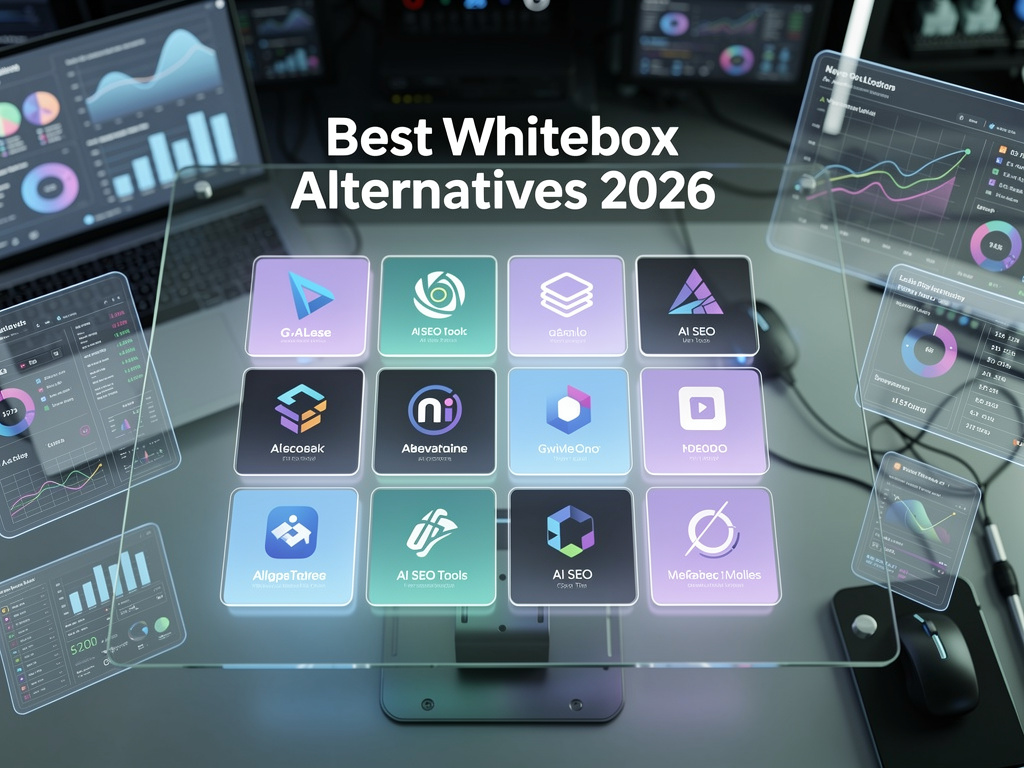
20 Best Whitebox Alternatives for AI-Powered Marketing and SEO in 2026
Finding the right AI tool for your marketing stack can feel overwhelming. There are hundreds of options out there. Each one promises to change how you work. But which ones actually deliver?
Whitebox has been a popular choice for many marketers. It helps with content optimization and AI-driven insights. But it’s not the only player in town. And depending on your specific needs, it might not be the best fit for your team.
That’s why we spent weeks testing and researching the top Whitebox alternatives. We looked at 20 different tools across various categories. Each one offers something unique for content creators, SEO specialists, and marketing teams.
In this guide, you’ll find detailed reviews of each platform. We cover pricing, features, ease of use, and real-world performance. Whether you need better AI content generation, improved search visibility tracking, or smarter competitive analysis, there’s a tool here for you.
What to Look for in Whitebox Substitutes
Before diving into specific tools, let’s talk about what matters most. Not every alternative will fit your workflow. You need to know what to prioritize.
Core Features That Matter
When evaluating Whitebox replacement options, focus on these key areas:
- AI Content Quality – How natural and accurate is the output?
- SEO Integration – Does it connect with your existing SEO tools?
- Ease of Use – Can your team get started without extensive training?
- Pricing Structure – Is it affordable for your budget and team size?
- Customer Support – How responsive is the team when issues arise?
- Data Security – Are your inputs and outputs protected?
These criteria guided our evaluation of every tool in this list. We tested each platform with real projects. We talked to actual users. And we dug into the technical details that matter.
Different Use Cases Need Different Tools
Some tools excel at content generation. Others focus on search analytics. A few try to do everything at once. Your choice depends on your biggest pain point right now.
Are you struggling with content production speed? Look for tools with strong AI writing capabilities. Need better visibility into search performance? Prioritize analytics platforms. Want to track how AI search engines reference your brand? Focus on LLM monitoring tools.
Let’s break down each option so you can make the right choice.
Profound: Enterprise-Grade AI Research Platform
Profound takes a different approach than most AI tools. It focuses on deep research and market intelligence. Instead of just generating content, it helps you understand your audience better.
Key Features of Profound
The platform offers several standout capabilities:
- Automated Research Reports – Generate detailed market analysis in minutes
- Competitor Intelligence – Track what rivals are doing across channels
- Consumer Insights – Understand audience behavior and preferences
- Trend Detection – Spot emerging patterns before they go mainstream
- Custom Dashboards – Build views that match your reporting needs
Strengths and Limitations
Profound shines when you need data-driven insights for strategic decisions. The AI doesn’t just summarize information. It finds connections and patterns you might miss. Marketing teams use it to inform content strategy and campaign planning.
The learning curve is steeper than simpler tools. You’ll need time to set up custom reports. And the pricing targets enterprise budgets. Small teams might find it more than they need.
Best For
Large marketing teams and agencies that need research capabilities built into their workflow. If you’re making decisions based on market data, Profound delivers real value.
Pricing
Profound uses custom pricing based on features and team size. Expect enterprise-level costs. Contact their sales team for specific quotes.
Otterly AI: AI Search Visibility Monitoring
Here’s a newer category that’s becoming critical. AI search engines like ChatGPT and Perplexity now answer questions directly. They often cite sources. Otterly AI helps you track when and how your brand appears in these AI-generated responses.
What Otterly AI Does
The platform monitors your brand’s presence across AI search platforms:
- Citation Tracking – See when AI tools mention your content
- Competitor Comparison – Know how often rivals get cited versus you
- Prompt Analysis – Understand which queries trigger your brand mentions
- Trend Reports – Track changes in AI visibility over time
- Alert System – Get notified when important changes happen
Why This Matters in 2026
Traditional SEO focuses on Google rankings. But users increasingly get answers from AI assistants. If ChatGPT never mentions your brand when answering relevant questions, you’re invisible to a growing audience segment.
Otterly AI fills this gap. It shows you exactly where you stand in the AI search world. And it helps you figure out how to improve.
Strengths and Limitations
The tool does one thing well. It tracks AI search visibility better than most alternatives. The interface is clean and easy to understand. Reports export nicely for client presentations.
The platform is still maturing. Some AI platforms aren’t fully covered yet. And the pricing might feel steep for what’s essentially a monitoring tool.
Best For
SEO professionals and content marketers who want to understand their AI search presence. Agencies managing multiple brands will find the comparison features useful.
Pricing
Plans start around $99 per month for basic monitoring. Enterprise plans with more keywords and brands cost more. They offer a free trial to test the platform.
Peec AI: Video Content Intelligence
Video content keeps growing in importance. But analyzing video performance and creating video content efficiently remains challenging. Peec AI tackles both problems with its AI-powered video platform.
Core Capabilities
Peec AI offers a range of video-focused features:
- Automated Video Editing – Cut long videos into short clips automatically
- Performance Analytics – Understand which video segments resonate most
- Transcription and Captions – Generate accurate text from video content
- Content Repurposing – Turn videos into blog posts, social content, and more
- Thumbnail Generation – Create engaging thumbnails using AI
How It Compares to Whitebox
While Whitebox focuses more on text content, Peec AI specializes in video. If your content strategy leans heavily on YouTube, TikTok, or LinkedIn video, this might be a better fit.
The AI understands context within videos. It can identify key moments, emotional peaks, and quotable segments. This saves hours of manual review.
Strengths and Limitations
Peec AI excels at video workflows. The automated editing saves real time. The analytics help you make better content decisions.
Text content capabilities are limited. If you need help with blog posts or articles, you’ll need another tool. The learning curve takes a few weeks to master.
Best For
Content teams producing regular video content. YouTubers, podcasters, and brands with active video channels will get the most value.
Pricing
Peec AI starts at $49 per month for creators. Business plans with more features run $199 per month and up.
AthenaHQ: AI-Powered Competitive Intelligence
Knowing what your competitors are doing matters. AthenaHQ builds on this idea with an AI system that tracks, analyzes, and summarizes competitive movements across channels.
What AthenaHQ Tracks
The platform monitors multiple competitive signals:
- Website Changes – Detect when competitors update messaging or features
- Pricing Updates – Get alerts when rivals change their pricing
- Content Strategy – See what topics competitors are covering
- Product Launches – Know about new features or products quickly
- Social Activity – Track competitor engagement and campaigns
The AI Advantage
What sets AthenaHQ apart is the analysis layer. Raw data is useless without context. The AI summarizes changes and explains why they might matter. It connects dots across different signals.
For example, if a competitor drops prices and launches new content about a specific feature, AthenaHQ might flag this as a coordinated push into a market segment.
Strengths and Limitations
The intelligence quality is high. Reports feel like they were written by a human analyst. The alert system prevents information overload.
Setup takes time. You need to configure which competitors and signals to track. The platform works better for B2B software companies than other industries.
Best For
Product marketing teams and strategy leaders who need competitive awareness. Sales teams also benefit from the insights during deals.
Pricing
AthenaHQ uses tiered pricing based on competitors tracked. Basic plans start around $299 per month. Enterprise plans offer unlimited tracking.
Goodie AI: Content Brief Generator
Creating content briefs takes time. Writers need clear direction. Goodie AI automates brief creation with AI that researches topics and structures content requirements.
How Goodie AI Works
The workflow is straightforward:
- Enter your target keyword or topic
- Goodie AI analyzes top-ranking content
- The system generates a detailed content brief
- Writers use the brief to create better content faster
Briefs include suggested headings, word count targets, questions to answer, and related topics to cover.
Integration With Writing Workflows
Goodie AI connects with popular tools like Google Docs and Notion. Teams can generate briefs and start writing without switching platforms. The collaboration features let editors and writers work together on briefs.
Strengths and Limitations
Brief quality is consistently good. Writers report needing less revision when working from Goodie AI briefs. The time savings are real.
The tool focuses specifically on briefs. It doesn’t write full articles or handle other content types. You’ll need additional tools for actual content creation.
Best For
Content managers overseeing multiple writers. Agencies producing high volumes of content will see immediate productivity gains.
Pricing
Plans start at $39 per month for 20 briefs. Higher tiers offer unlimited briefs and additional features.
Bluefish AI: Automated Content Distribution
Creating content is half the battle. Getting it in front of the right audience is equally important. Bluefish AI helps automate content distribution across channels.
Distribution Capabilities
Bluefish AI handles multiple distribution tasks:
- Social Scheduling – Post to multiple platforms at optimal times
- Content Adaptation – Automatically resize and reformat for each channel
- Audience Targeting – Suggest best channels and times for your content
- Performance Tracking – Monitor how distributed content performs
- Repurposing Suggestions – Get ideas for extending content reach
The AI Component
The platform uses AI to optimize distribution timing and channel selection. It learns from your audience engagement patterns. Over time, recommendations get more accurate.
Strengths and Limitations
The automation saves significant time for teams managing multiple channels. The cross-platform analytics provide a unified view of performance.
Content creation isn’t included. You need to bring your own content to distribute. Some niche platforms aren’t supported yet.
Best For
Marketing teams with active social media presence across multiple platforms. Brands with consistent content production will benefit most.
Pricing
Bluefish AI starts at $79 per month for small teams. Enterprise pricing includes additional channels and seats.
Scrunch: Influencer Marketing Intelligence
Influencer marketing remains effective when done right. Scrunch provides data and AI insights to help brands find and work with the right influencers.
What Scrunch Offers
The platform covers the full influencer workflow:
- Influencer Discovery – Find creators matching your brand and budget
- Audience Analysis – Understand who follows potential partners
- Fraud Detection – Identify fake followers and suspicious engagement
- Campaign Management – Track partnerships and deliverables
- ROI Measurement – Calculate actual return from influencer campaigns
Data Quality Matters
Scrunch maintains a large database of influencers across platforms. The data updates regularly. Audience demographics and engagement rates stay current.
The fraud detection alone can save brands from wasting money on influencers with fake engagement.
Strengths and Limitations
Scrunch excels at influencer discovery and vetting. The filters help narrow down options quickly. Campaign tracking keeps everyone organized.
The platform focuses on influencer marketing specifically. It doesn’t help with other content marketing needs. Pricing can add up for brands running many campaigns.
Best For
Brands and agencies running regular influencer campaigns. E-commerce companies and consumer brands see the clearest ROI.
Pricing
Scrunch offers tiered plans starting around $199 per month. Enterprise plans include dedicated support and custom integrations.
Brandlight: Brand Monitoring and Sentiment Analysis
Your brand reputation lives online. Brandlight helps track mentions, analyze sentiment, and respond to conversations about your brand across the web.
Monitoring Capabilities
Brandlight tracks brand mentions across:
- Social Media – All major platforms plus niche communities
- News Sites – Traditional media and online publications
- Forums and Reddit – Where honest conversations happen
- Review Sites – Customer feedback on G2, Capterra, and others
- Blogs and Podcasts – References in long-form content
AI-Powered Sentiment Analysis
The platform doesn’t just find mentions. It analyzes the tone and context. Is someone praising your product or complaining? The AI categorizes mentions automatically.
This helps teams prioritize responses. Negative mentions that could go viral get flagged for immediate attention.
Strengths and Limitations
Coverage is broad and thorough. The sentiment analysis accuracy is impressive. Real-time alerts help teams respond quickly.
The tool focuses on monitoring. It doesn’t help create responses or manage social engagement. Integration with customer service tools could be stronger.
Best For
PR teams and brand managers who need to stay on top of brand perception. Companies in sensitive industries benefit from the early warning capabilities.
Pricing
Plans start at $149 per month for single brand monitoring. Multi-brand and agency plans available at higher tiers.
Writesonic: AI Writing and Content Generation
Writesonic is one of the more established AI writing tools. It competes directly with ChatGPT and other general-purpose AI assistants but focuses specifically on marketing content.
Content Types Supported
Writesonic generates multiple content formats:
- Blog Posts – Full articles from outlines or keywords
- Ad Copy – Facebook, Google, and LinkedIn ad variations
- Product Descriptions – E-commerce content at scale
- Landing Pages – Conversion-focused page copy
- Email Sequences – Marketing and sales email content
- Social Media – Posts optimized for each platform
Quality and Customization
Output quality varies by content type. Short-form content like ads and social posts tends to be stronger. Long-form articles need more editing.
The platform lets you set tone, style, and brand guidelines. This helps maintain consistency across generated content.
Strengths and Limitations
Writesonic offers good value for teams needing lots of marketing content quickly. The variety of templates covers most use cases. The interface is beginner-friendly.
Like all AI writers, output requires human review. Factual accuracy can’t be guaranteed. And the content sometimes feels generic without careful prompting.
Best For
Marketing teams needing to produce content at scale. Small businesses without dedicated writers can benefit from the templates.
Pricing
Free tier available with limited words. Paid plans start at $19 per month. Business plans with more features cost $99 per month and up.
Trakkr: Link Building and Outreach Automation
Link building remains important for SEO. Trakkr automates the tedious parts of finding link opportunities and managing outreach campaigns.
Core Functionality
Trakkr streamlines link building with:
- Prospect Discovery – Find relevant sites for link opportunities
- Contact Finding – Locate email addresses and contact info
- Email Automation – Send personalized outreach at scale
- Response Tracking – Manage conversations and follow-ups
- Link Monitoring – Track acquired links over time
AI Personalization
The platform uses AI to personalize outreach emails. Generic templates get low response rates. AI-powered personalization references specific content and makes pitches more relevant.
Strengths and Limitations
Trakkr significantly speeds up link building campaigns. The prospect database saves hours of manual research. Email deliverability rates are strong.
Success still depends on your pitch quality and the value you offer. The tool helps with efficiency but can’t make bad link building ideas work.
Best For
SEO agencies and in-house SEO teams running active link building programs. Sites focused on content marketing for organic growth will see clear benefits.
Pricing
Plans start at $99 per month for basic outreach. Agency plans with more campaigns and seats cost $249 per month and up.
Qwairy: AI Research Assistant for Content Teams
Research takes time. Qwairy acts as an AI research assistant that finds, organizes, and summarizes information for content projects.
Research Capabilities
The platform helps with various research tasks:
- Topic Research – Gather background information quickly
- Source Finding – Locate credible sources for claims and stats
- Expert Identification – Find people to quote or interview
- Trend Analysis – Understand what’s happening in a topic area
- Content Gap Analysis – Identify what’s missing from existing coverage
How Writers Use Qwairy
Writers start by describing what they’re working on. Qwairy gathers relevant information and presents it in a usable format. Sources are cited so writers can verify and reference them.
This cuts research time dramatically. Writers spend more time actually writing instead of searching.
Strengths and Limitations
Qwairy excels at accelerating the research phase. Information quality is generally high. The interface makes it easy to organize findings.
The tool doesn’t write content. It just provides research support. Some niche topics have limited coverage in the system.
Best For
Content writers and journalists who need thorough research. Teams producing data-driven or technical content will find it especially helpful.
Pricing
Qwairy offers plans starting at $29 per month. Team plans with collaboration features cost $79 per month per seat.
Azoma: AI Content Optimization Platform
Azoma focuses on improving content after it’s written. The platform analyzes content for SEO, readability, and engagement potential, then suggests improvements.
Optimization Features
Azoma helps improve content through:
- SEO Scoring – See how well content is optimized for target keywords
- Readability Analysis – Get suggestions for clearer writing
- Engagement Prediction – Estimate how content will perform
- Competitive Comparison – See how your content stacks up against ranking pages
- Improvement Suggestions – Get specific recommendations for enhancement
Integration Options
Azoma integrates with popular content platforms. You can analyze content in Google Docs, WordPress, and other tools without copying and pasting.
Strengths and Limitations
The optimization suggestions are actionable and specific. Writers report improved rankings after implementing recommendations. The learning curve is minimal.
Azoma works best for text content. Video and other formats aren’t supported. Some suggestions feel formulaic for experienced writers.
Best For
SEO-focused content teams wanting to improve existing content performance. Sites with large content libraries benefit from systematic optimization.
Pricing
Plans start at $59 per month for individual users. Team plans with more content checks cost $199 per month and up.
Gauge: Content Performance Analytics
Publishing content is just the beginning. Gauge helps you understand how content performs and what’s driving results.
Analytics Capabilities
Gauge tracks multiple performance dimensions:
- Traffic Attribution – See which content drives visitors and conversions
- Engagement Metrics – Understand how users interact with content
- Revenue Impact – Connect content to actual business outcomes
- Content Decay Tracking – Identify content losing traffic over time
- Topic Performance – See which topic areas deliver best results
Beyond Basic Analytics
While Google Analytics shows raw numbers, Gauge provides context and recommendations. The AI identifies patterns and suggests actions. You see not just what happened but what to do about it.
Strengths and Limitations
The insights are actionable and business-focused. Content teams can prove ROI more easily. The reporting saves hours of manual analysis.
Setup requires integration with your analytics and CRM systems. The value increases with data volume, so newer sites might not see as much benefit.
Best For
Content marketing teams needing to demonstrate business impact. B2B companies with longer sales cycles benefit from the attribution features.
Pricing
Gauge pricing starts at $199 per month. Enterprise plans with custom integrations and support are available.
LLM Pulse: Large Language Model Monitoring
LLM Pulse represents a new category of tools. It monitors how various large language models respond to queries about your brand, products, and industry.
What LLM Pulse Tracks
The platform monitors AI responses across:
- ChatGPT – OpenAI’s popular assistant
- Claude – Anthropic’s AI model
- Gemini – Google’s AI assistant
- Perplexity – The AI-powered search engine
- Other LLMs – Additional models as they emerge
Why Monitor LLM Responses?
AI models form opinions about brands based on training data. If an LLM consistently recommends competitors over you, that affects real purchasing decisions.
LLM Pulse shows you exactly what these models say about you. You can track changes over time and see how your efforts to improve AI visibility are working.
Strengths and Limitations
The tool fills a gap that traditional SEO tools miss. Tracking is comprehensive across major LLMs. Reports clearly show your position versus competitors.
The space is still emerging. Best practices for improving LLM visibility aren’t fully established yet. The tool shows the problem but solving it requires separate effort.
Best For
Forward-thinking marketing teams preparing for AI-first search. Brands in competitive markets need to understand their AI search presence.
Pricing
LLM Pulse offers plans starting at $149 per month. Enterprise pricing includes more queries and custom reporting.
Semrush: Comprehensive SEO and Marketing Platform
Semrush needs less introduction. It’s one of the most complete SEO and marketing platforms available. While not a direct Whitebox competitor, it offers overlapping capabilities.
Feature Set Overview
Semrush covers an enormous range of functions:
- Keyword Research – Extensive database with difficulty and volume data
- Competitive Analysis – See competitor keywords, backlinks, and ads
- Site Audits – Technical SEO analysis and recommendations
- Position Tracking – Monitor rankings over time
- Content Tools – Templates, optimization, and planning features
- Social Media – Scheduling and analytics across platforms
- Advertising – PPC research and management tools
AI-Powered Features
Semrush has added AI throughout the platform. The writing assistant helps create content. The site audit explains issues in plain language. Keyword suggestions use AI to find opportunities.
Strengths and Limitations
The breadth of features is unmatched. Most marketing teams can consolidate multiple tools into Semrush. The data quality is excellent.
The platform can feel overwhelming for new users. Pricing adds up as you add features and users. Some specialized tools do individual tasks better.
Best For
Marketing teams wanting a comprehensive platform. Agencies managing multiple clients benefit from the all-in-one approach.
Pricing
Plans start at $129.95 per month for Pro. Guru plans cost $249.95 per month. Business plans run $499.95 per month.
Searchable: AI Search Optimization
Searchable focuses specifically on helping content rank in AI-powered search engines. It’s a more specialized alternative to Whitebox for teams focused on this emerging channel.
Core Capabilities
Searchable helps with AI search optimization through:
- Content Analysis – See how AI-friendly your content is
- Recommendation Engine – Get suggestions for improving AI visibility
- Competitor Tracking – Monitor how rivals perform in AI search
- Citation Monitoring – Track when AI tools reference your content
- Reporting – Demonstrate AI search performance over time
The AI Search Challenge
Traditional SEO focuses on Google’s algorithm. AI search works differently. Content structure, factual accuracy, and authority signals matter in new ways.
Searchable helps you understand these differences and adapt your content accordingly.
Strengths and Limitations
The focus on AI search is timely and valuable. Recommendations are specific and actionable. The interface is clean and easy to use.
Traditional SEO features are limited. You’ll need other tools for keyword research and technical SEO. The space is evolving quickly, requiring constant updates.
Best For
SEO teams preparing for the AI search future. Brands already seeing traffic from AI assistants will get immediate value.
Pricing
Searchable offers plans starting at $89 per month. Enterprise plans with more features and support are available.
Spotlight: Content Personalization Engine
Spotlight helps websites deliver personalized content experiences. Different visitors see different content based on their behavior, preferences, and history.
Personalization Features
The platform enables personalization through:
- Visitor Segmentation – Group visitors by behavior and attributes
- Dynamic Content – Show different content to different segments
- Recommendation Widgets – Suggest relevant content to visitors
- A/B Testing – Test which personalization strategies work best
- Analytics – Measure the impact of personalization on engagement
AI-Powered Recommendations
Spotlight uses AI to determine what content to show each visitor. It learns from user behavior over time. Recommendations get more accurate as the system gathers more data.
Strengths and Limitations
Personalization can significantly improve engagement metrics. The setup is relatively straightforward. Integration with major CMS platforms is smooth.
You need enough traffic and content for personalization to matter. Small sites might not see meaningful differences. Privacy considerations require careful handling.
Best For
Publishers and content-heavy websites with significant traffic. E-commerce sites benefit from product recommendation capabilities.
Pricing
Spotlight pricing starts at $299 per month based on traffic levels. Enterprise plans offer custom pricing.
Citation Junction: Academic and Research Citation Tool
Citation Junction helps content creators find and properly cite sources. This matters for building trust and improving AI search visibility.
What Citation Junction Does
The tool helps with citation management:
- Source Discovery – Find credible sources for any topic
- Citation Formatting – Generate properly formatted citations
- Fact Verification – Check claims against authoritative sources
- Link Suggestions – Recommend relevant outbound links
- Citation Organization – Manage sources across content projects
Why Citations Matter
Well-cited content performs better in both traditional and AI search. Citations signal expertise and trustworthiness. They also provide value to readers who want to learn more.
Strengths and Limitations
Citation Junction saves time finding and formatting sources. The source quality is generally high. Integration with writing tools makes it easy to use.
The tool focuses narrowly on citations. Broader content creation features aren’t included. Some niche topics have limited source availability.
Best For
Content teams producing research-heavy or technical content. Sites building authority through thought leadership benefit from better citations.
Pricing
Plans start at $39 per month for individuals. Team plans cost $99 per month and up.
AirOps: AI Workflow Automation for Content
AirOps takes a different approach. Instead of being a single tool, it helps you build custom AI workflows for your specific content needs.
Workflow Capabilities
AirOps enables custom automations:
- Multi-Step Workflows – Chain multiple AI actions together
- Data Integration – Connect your data sources and destinations
- Template Building – Create reusable workflows for common tasks
- Quality Controls – Add human review steps where needed
- Scaling – Run workflows on large content sets
Example Use Cases
Teams use AirOps for various workflows:
- Generate product descriptions from spreadsheet data
- Create localized content versions automatically
- Extract insights from customer feedback at scale
- Build content briefs from keyword research data
- Automate content audits and optimization recommendations
Strengths and Limitations
Flexibility is the main advantage. You can build exactly what you need. The automation potential is significant for repetitive tasks.
Setup requires technical knowledge. You need to design workflows carefully. The learning curve is steeper than simpler tools.
Best For
Technical content teams wanting to build custom AI solutions. Agencies with repetitive workflows across clients will see the most benefit.
Pricing
AirOps offers usage-based pricing starting at $99 per month. Enterprise plans include support for building custom workflows.
iGEO: Generative Engine Optimization Platform
iGEO focuses specifically on generative engine optimization. This emerging field deals with optimizing content for AI-powered search engines and assistants.
GEO-Specific Features
The platform covers generative engine optimization with:
- AI Visibility Tracking – Monitor your presence across AI platforms
- Content Recommendations – Get specific suggestions for GEO improvement
- Competitor Analysis – See how rivals perform in AI search
- Keyword Research – Find queries where AI search matters most
- Performance Reporting – Track GEO progress over time
The GEO Difference
Traditional SEO optimizes for search engine results pages. GEO optimizes for AI-generated responses. The tactics overlap but aren’t identical.
iGEO helps you understand and capitalize on these differences. The platform is built specifically for this emerging opportunity.
Strengths and Limitations
Focus on GEO makes iGEO more specialized than general SEO tools. Recommendations are specific to AI search. The team updates the platform as the space evolves.
Traditional SEO features are limited. You’ll need other tools for comprehensive SEO. Best practices for GEO are still being established.
Best For
Forward-thinking SEO teams investing in AI search visibility. Brands in categories where AI assistants answer purchase questions should prioritize this.
Pricing
iGEO offers plans starting at $129 per month. Enterprise plans include additional features and dedicated support.
Comparison Table: Whitebox Alternatives at a Glance
| Tool | Primary Use Case | Starting Price | Best For | AI Features |
|---|---|---|---|---|
| Profound | Market Research | Custom | Enterprise Teams | Research Analysis |
| Otterly AI | AI Search Monitoring | $99/mo | SEO Professionals | Citation Tracking |
| Peec AI | Video Intelligence | $49/mo | Video Creators | Automated Editing |
| AthenaHQ | Competitive Intelligence | $299/mo | Product Marketing | Signal Analysis |
| Goodie AI | Content Briefs | $39/mo | Content Managers | Brief Generation |
| Bluefish AI | Content Distribution | $79/mo | Social Media Teams | Timing Optimization |
| Scrunch | Influencer Marketing | $199/mo | Brand Marketing | Fraud Detection |
| Brandlight | Brand Monitoring | $149/mo | PR Teams | Sentiment Analysis |
| Writesonic | AI Writing | $19/mo | Marketing Teams | Content Generation |
| Trakkr | Link Building | $99/mo | SEO Agencies | Outreach Personalization |
| Qwairy | Research Assistant | $29/mo | Content Writers | Source Finding |
| Azoma | Content Optimization | $59/mo | SEO Content Teams | Improvement Suggestions |
| Gauge | Content Analytics | $199/mo | Content Marketing | Performance Prediction |
| LLM Pulse | LLM Monitoring | $149/mo | Marketing Leaders | Response Tracking |
| Semrush | Comprehensive SEO | $129.95/mo | Marketing Agencies | Multiple AI Tools |
| Searchable | AI Search Optimization | $89/mo | SEO Teams | Visibility Analysis |
| Spotlight | Content Personalization | $299/mo | Publishers | Smart Recommendations |
| Citation Junction | Citation Management | $39/mo | Research Writers | Source Discovery |
| AirOps | AI Workflow Automation | $99/mo | Technical Teams | Custom Workflows |
| iGEO | Generative Engine Optimization | $129/mo | Forward-Thinking SEO | GEO Recommendations |
How to Choose the Right Whitebox Alternative
With 20 options to consider, picking the right tool can feel overwhelming. Here’s how to narrow down your choices.
Start With Your Biggest Problem
What’s causing you the most pain right now? Be specific:
- Content production speed – Look at Writesonic or Goodie AI
- Traditional SEO performance – Consider Semrush or Azoma
- AI search visibility – Try Otterly AI, LLM Pulse, or iGEO
- Content performance tracking – Evaluate Gauge
- Competitive awareness – Look at AthenaHQ or Brandlight
Consider Your Budget
Prices range from $19 per month to enterprise pricing. Set a realistic budget before evaluating tools. Remember to account for:
- Number of users who need access
- Content volume requirements
- Integration needs with existing tools
- Training and onboarding time
Think About Integration
Tools work best when connected to your existing workflow. Check whether each option integrates with:
- Your CMS (WordPress, Webflow, etc.)
- Your project management tools
- Your analytics platforms
- Your team communication tools
Start With Free Trials
Most tools offer free trials or free tiers. Use these to test before committing. Create a specific test project and evaluate each tool against your actual needs.
Conclusion
The market for AI-powered marketing tools keeps expanding. Whitebox alternatives range from comprehensive platforms like Semrush to specialized tools like LLM Pulse. Your best choice depends on your specific needs, budget, and existing workflow.
Don’t try to solve everything at once. Pick the tool that addresses your biggest challenge today. Add more tools as your needs evolve. The goal is better marketing results, not more software subscriptions.
Test before you buy. Most platforms offer trials. Use them to make informed decisions based on real experience, not just feature lists.
Frequently Asked Questions About Whitebox Alternatives
| What are the best Whitebox alternatives for AI search optimization? | For AI search visibility specifically, look at Otterly AI, LLM Pulse, Searchable, and iGEO. These tools focus on tracking and improving your presence in AI-generated search results. They monitor platforms like ChatGPT, Perplexity, and Claude to show how often your brand gets mentioned and recommended. |
| Which Whitebox replacement is most affordable for small teams? | Writesonic starts at $19 per month with a free tier available. Qwairy offers plans at $29 per month. Goodie AI and Citation Junction both start at $39 per month. These tools provide solid value for teams watching their budgets while still needing AI-powered features. |
| Do I need multiple Whitebox substitutes or can one tool do everything? | Semrush comes closest to an all-in-one solution with SEO, content, social, and competitive features. But most teams benefit from combining a few specialized tools. A typical stack might include one tool for content creation, one for SEO, and one for AI search monitoring. |
| How do I know if a Whitebox alternative is worth the investment? | Calculate the time savings first. If a tool saves 5 hours per week and costs $100 per month, that’s $5 per hour saved. Then consider the quality improvement. Better content and SEO typically leads to measurable traffic and conversion gains over time. |
| What’s the difference between traditional SEO tools and AI search tools? | Traditional SEO tools like Semrush track Google rankings and optimize for search engine results pages. AI search tools like Otterly AI and iGEO monitor your visibility in AI assistant responses. As more users get answers from ChatGPT and Perplexity, both types of tools become important. |
| Which Whitebox alternative works best for content agencies? | Agencies typically need multi-client support and scalable workflows. Semrush offers strong agency features. AirOps enables custom automation across clients. Goodie AI helps produce consistent content briefs. The best choice depends on which part of your agency workflow needs the most help. |
| How long does it take to see results from these Whitebox alternatives? | Content generation tools show immediate time savings. SEO improvements typically take 3 to 6 months to show ranking gains. AI search visibility improvements vary widely as this space is still evolving. Set realistic expectations based on the specific tool and your goals. |
| Can these Whitebox alternatives integrate with my existing tools? | Most tools offer integrations with popular platforms like Google Docs, WordPress, and major analytics tools. Check each tool’s integration page before signing up. Some tools like AirOps specialize in connecting different systems together for custom workflows. |



 Stack Insight is intended to support informed decision-making by providing independent information about business software and services. Some product details, including pricing, features, and promotional offers, may be supplied by vendors or partners and can change without notice.