
Pulley vs Eqvista: A Complete Comparison Guide for Cap Table Management in 2026
Choosing the right cap table management software can make or break your startup’s equity operations. With Pulley announcing its shutdown in December 2026, many founders find themselves searching for alternatives. This comparison puts Pulley and Eqvista head to head across every feature that matters.
We’ll dig into pricing structures, cap table features, 409A valuations, user experience, and much more. Both platforms serve startups and growing companies. But they take different approaches to solving equity management challenges.
By the end of this guide, you’ll know exactly which platform fits your company’s stage and needs. We’ll also introduce Altshare as a strong alternative worth considering. Let’s get into the details.
Understanding Cap Table Management Software: Why It Matters
A cap table tracks who owns what in your company. It sounds simple. But as your startup grows, equity management becomes complex fast.
You issue stock options to employees. You bring on investors. You convert SAFEs and convertible notes. Each transaction changes ownership percentages.
Spreadsheets break down quickly. Manual tracking leads to errors. Those errors can cost you during due diligence or M&A processes.
What Good Cap Table Software Should Do
The best platforms handle several core functions:
- Real-time ownership tracking across all share classes
- Vesting schedule management for employee equity
- Scenario modeling for fundraising rounds
- Document generation for stock certificates and grants
- Compliance support for tax and regulatory requirements
- 409A valuations to set fair market values
Both Pulley and Eqvista aim to deliver these capabilities. They differ in how they package features and what they charge.
The Stakes Are High
Getting equity wrong creates real problems. Employees might receive incorrect tax documents. Investors might see wrong ownership percentages. Auditors might flag compliance issues.
Clean cap table records matter during fundraising. VCs want to see organized equity data. Messy records slow down deals and raise red flags.
The platform you choose affects daily operations. It also impacts major milestones like funding rounds and exits.
Pulley Overview: What You Need to Know

Pulley built a reputation in YC-adjacent startup circles. The platform focused on simplicity and startup-friendly features. Many seed-stage founders chose it over larger competitors like Carta.
The company positioned itself as a modern alternative to complex enterprise tools. Clean design and fast setup attracted early-stage teams.
Pulley’s Core Features
Pulley’s Startup tier included basic cap table functionality:
- Cap table management for up to 25 stakeholders
- Equity plan administration
- Document management
- Basic reporting tools
- Stakeholder portal access
The Growth plan expanded these limits to 40 stakeholders. It also added 409A valuation services.
Pulley’s Pricing Structure
Pulley did not offer a free tier. The minimum commitment started at $1,200 per year for the Startup plan.
This pricing put Pulley in an awkward position. Pre-seed companies often couldn’t justify that cost. They weren’t using most features yet.
The tiered approach also created upgrade pressure. Hit 25 stakeholders? Time to pay more. This frustrated some users who felt nickel-and-dimed.
The Shutdown Announcement
In September 2026, Pulley announced it would cease operations on December 8, 2026. This news shocked many customers.
Pulley partnered with Carta to help customers transition. But many companies prefer to evaluate all options first.
The shutdown makes this comparison somewhat academic for new customers. You can’t sign up for Pulley now. But understanding what it offered helps evaluate alternatives.
Who Used Pulley?
Pulley attracted a specific customer profile:
- US-based startups from seed to Series B
- YC alumni and related networks
- Companies wanting simpler alternatives to Carta
- Teams that valued transparent pricing
The platform worked well for its target market. Limitations appeared at the edges with complex scenarios.
Eqvista Overview: A Detailed Look
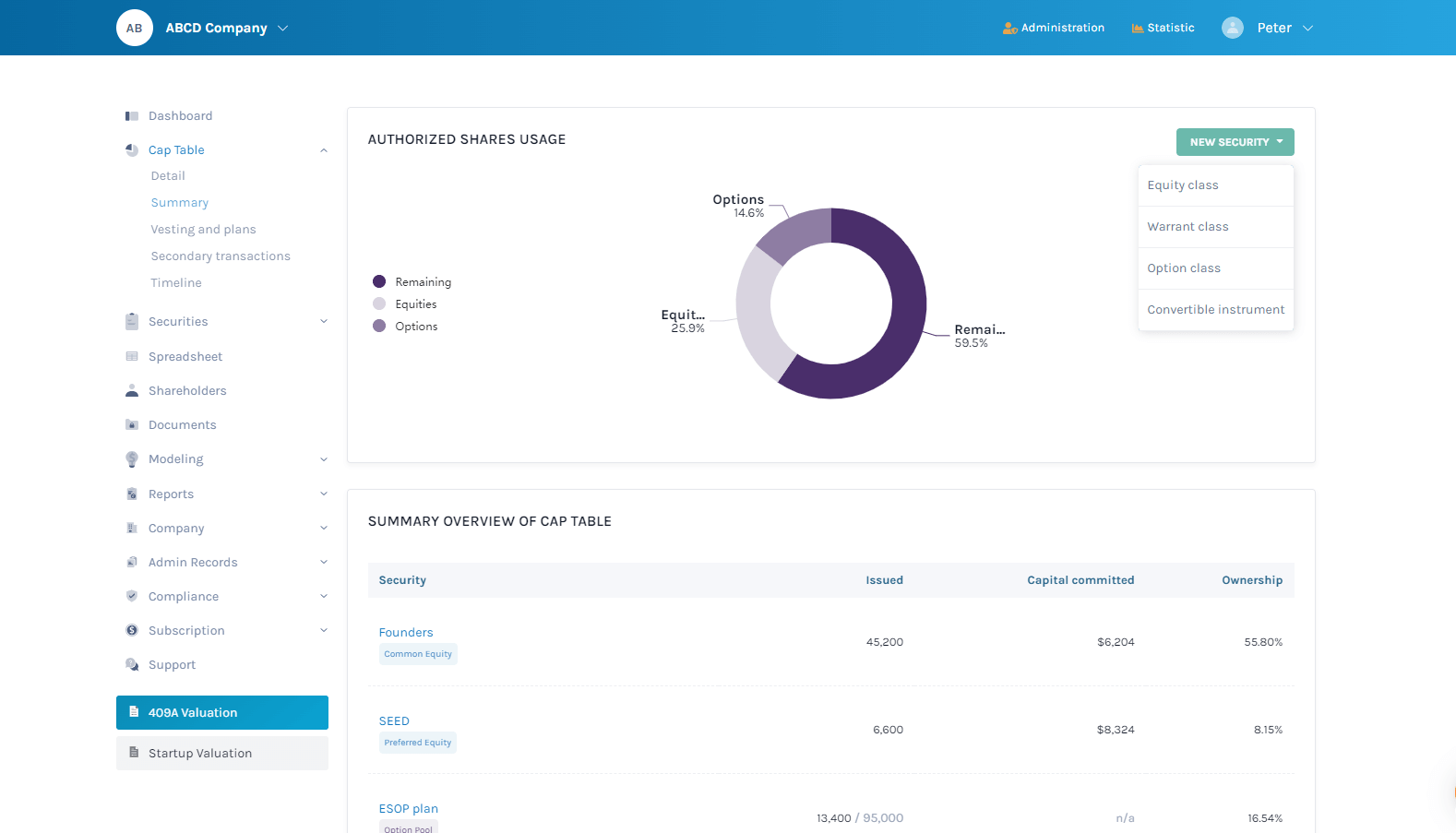
Eqvista takes a broader approach than Pulley did. The platform combines equity management with valuation services under one roof.
This integration appeals to companies wanting fewer vendors. Get your cap table and 409A from the same provider.
Eqvista’s Core Features
Eqvista offers a complete equity management suite:
- Cap table management with real-time updates
- All equity types supported: shares, options, warrants, SAFEs, KISS, convertible notes
- Advanced vesting schedules with custom configurations
- 409A valuations performed by NACVA-certified professionals
- Real-Time Company Valuation feature
- Financial modeling tools for scenario planning
- Compliance support and document generation
The platform serves companies from pre-seed through pre-IPO stages.
Eqvista’s Free Tier
Eqvista stands out with its free plan. It covers up to 20 stakeholders with no credit card required and no expiration.
This free tier includes:
- Core cap table management
- Equity tracking
- Share issuance capabilities
Early-stage startups can start free and upgrade when needed. This removes the $1,200 barrier that Pulley required.
Eqvista’s Paid Plans
Beyond the free tier, Eqvista charges $2 per shareholder per month for its Premium plan.
The 409A valuation package starts at $990 per year. This includes unlimited NACVA-certified valuations.
Companies can choose what they need. Add valuations when required without changing cap table providers.
Who Uses Eqvista?
Eqvista serves a wide range of companies:
- Pre-seed startups using the free tier
- Funded companies through Series rounds
- Companies needing integrated 409A services
- Teams wanting real-time valuation insights
- Organizations with complex equity structures
The platform’s flexibility makes it adaptable to different company stages and needs.
Pulley vs Eqvista: Pricing Comparison
Pricing often determines which software startups choose. Let’s break down how these platforms compare on cost.
Entry-Level Pricing
| Platform | Free Tier | Entry Paid Plan | Stakeholder Limits |
|---|---|---|---|
| Pulley | No | $1,200/year | 25 (Startup), 40 (Growth) |
| Eqvista | Yes, up to 20 shareholders | $2/shareholder/month | Unlimited on paid plans |
Eqvista’s free tier gives startups a clear advantage. You can manage equity without paying anything until your team grows beyond 20 people.
409A Valuation Costs
409A valuations determine fair market value for stock options. They’re required for tax compliance.
| Platform | 409A Included? | 409A Cost |
|---|---|---|
| Pulley | Only on Growth plan and up | Bundled in plan price |
| Eqvista | Available as add-on or included | From $990/year (unlimited) |
Eqvista wins on total cost if 409A valuations are a near-term need. The $990 annual fee covers unlimited valuations.
Cost Scaling Analysis
Let’s model costs for different company sizes:
10 Stakeholders:
- Pulley: $1,200/year
- Eqvista: Free
25 Stakeholders:
- Pulley: $1,200/year (at limit)
- Eqvista: $600/year ($2 × 25 × 12)
50 Stakeholders:
- Pulley: Growth plan required (higher cost)
- Eqvista: $1,200/year
Eqvista’s per-stakeholder pricing scales predictably. Pulley’s tier system created cliff pricing at stakeholder limits.
Hidden Costs to Consider
Both platforms have costs beyond base subscriptions:
- Setup fees: Eqvista has no setup fee. Pulley sometimes charged for onboarding.
- Data migration: Switching platforms requires time and effort. Both offered migration support.
- Additional services: Advanced modeling, compliance reports, and custom integrations may cost extra.
Budget for the full picture, not just the sticker price.
Cap Table Management Features: Side-by-Side Analysis
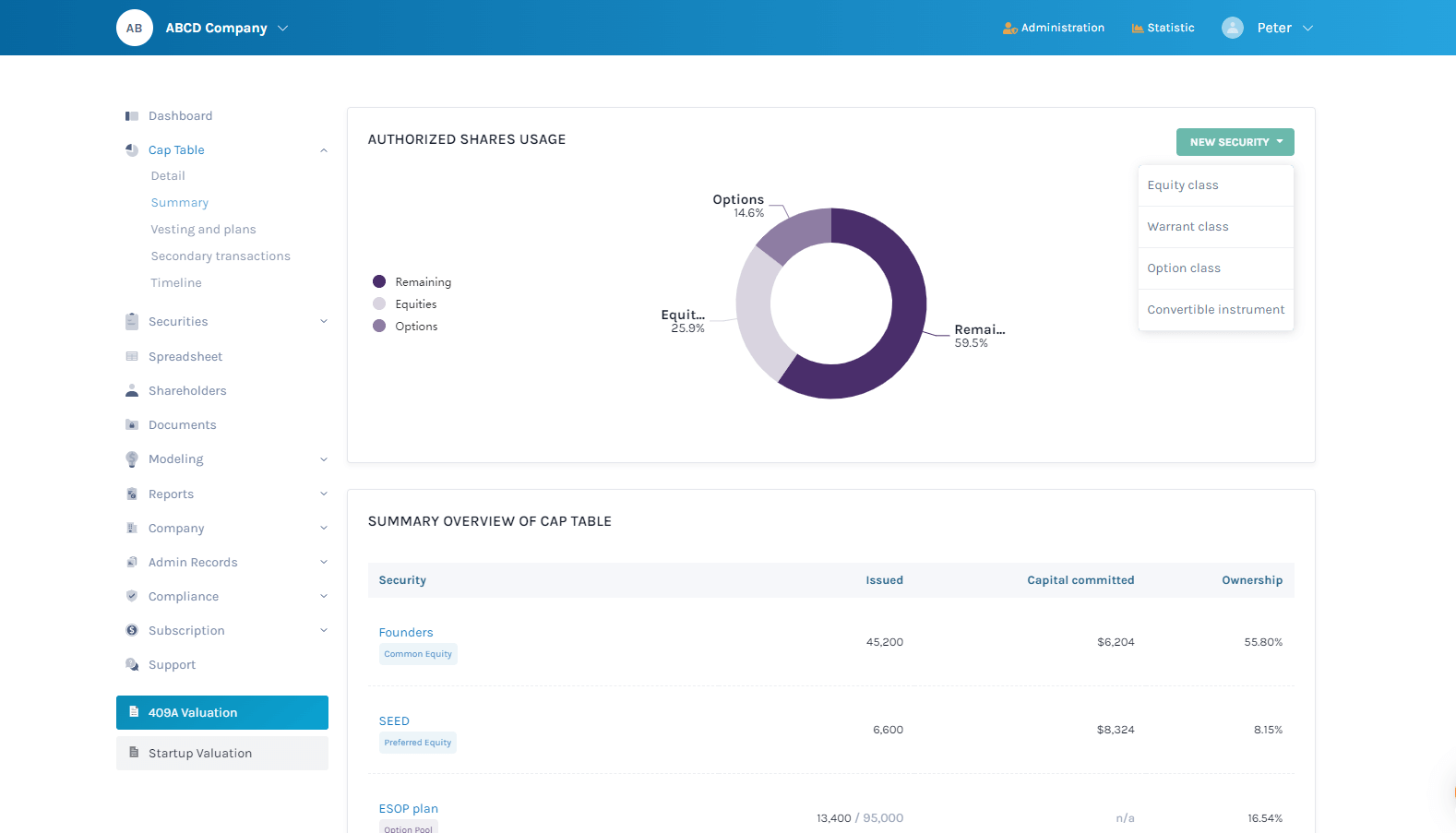
The core function of both platforms is managing your cap table. Let’s compare how they handle this critical task.
Share Class Support
Modern startups issue multiple equity types. Your platform must handle all of them.
| Equity Type | Pulley | Eqvista |
|---|---|---|
| Common Stock | Yes | Yes |
| Preferred Stock | Yes | Yes |
| Stock Options | Yes | Yes |
| Warrants | Yes | Yes |
| SAFEs | Yes | Yes |
| KISS | Limited | Yes |
| Convertible Notes | Yes | Yes |
| RSUs | Yes | Yes |
Eqvista supports all equity types with real-time updates. Pulley covered most common instruments but had limitations with some structures.
Vesting Schedule Management
Employee equity typically vests over time. Tracking vesting status matters for retention and tax planning.
Pulley’s approach:
- Standard 4-year vesting with 1-year cliff
- Basic customization options
- Manual tracking for complex schedules
Eqvista’s approach:
- Advanced vesting schedule configuration
- Custom cliff periods and vesting frequencies
- Acceleration clauses supported
- Real-time vesting status tracking
- Automatic calculations for exercises
Eqvista offers more flexibility for companies with non-standard vesting arrangements. This matters if you’re competing for talent with creative compensation packages.
Transaction Management
Every equity transaction needs proper recording. Grants, exercises, transfers, and terminations all affect your cap table.
Eqvista includes:
- Grant issuance workflows
- Exercise processing with tax calculations
- Transfer recording and approval flows
- Termination handling with post-termination exercise periods
- Audit trails for all transactions
Pulley handled basic transactions well. Complex scenarios sometimes required workarounds or manual intervention.
Real-Time Updates
Outdated cap table data creates problems. You need current information for board meetings, investor updates, and compliance.
Eqvista emphasizes real-time updates across its platform. Changes reflect immediately. You always see current ownership percentages.
Pulley provided timely updates but sometimes lagged on complex conversions. SAFE conversions during funding rounds occasionally required manual adjustments.
Reporting Capabilities
Both platforms generate standard reports:
- Summary cap tables
- Detailed ownership reports
- Option grant summaries
- Vesting schedules
- Transaction histories
Eqvista adds financial modeling reports and valuation summaries. These help during board presentations and investor discussions.
409A Valuations: A Critical Comparison Point
409A valuations aren’t optional. They’re required by IRS regulations when issuing stock options. Getting them wrong creates serious tax problems.
What Is a 409A Valuation?
A 409A valuation determines the fair market value (FMV) of your company’s common stock. This sets the exercise price for stock options.
Without a valid 409A, options might be considered “discounted.” This triggers immediate taxation and penalties for recipients.
You need a new 409A:
- Every 12 months at minimum
- After any material event (funding, M&A, significant revenue changes)
- Before issuing new option grants in many cases
Eqvista’s 409A Services
Eqvista performs 409A valuations in-house with NACVA-certified professionals. This integration provides several benefits:
- Speed: Faster turnaround when valuators have direct access to cap table data
- Accuracy: Fewer data handoffs mean fewer errors
- Real-Time FMV insights: Track valuation trends between formal reports
- Unlimited valuations: Get updates whenever material events occur
- Direct specialist access: Ask questions without going through middlemen
The $990/year package includes unlimited valuations. Most competitors charge per valuation, adding up to $3,000-5,000 annually for active companies.
Pulley’s 409A Approach
Pulley bundled 409A valuations into its Growth plan and above. The service wasn’t available on the Startup tier.
This meant companies on the $1,200/year plan needed to either:
- Upgrade to a higher tier
- Use a separate 409A provider
Neither option was ideal. Upgrades increased costs. Separate providers created data synchronization challenges.
Cost Comparison for 409A
| Platform | 409A Cost | Valuations Included | Certification |
|---|---|---|---|
| Eqvista | $990/year | Unlimited | NACVA-certified |
| Pulley | Bundled (Growth+) | Varies by plan | Third-party |
| Carta | $2,000-$4,000 add-on | Varies | In-house |
Eqvista’s pricing structure makes sense for companies needing regular valuations. The unlimited model removes uncertainty from budgeting.
Real-Time Company Valuation Feature
Eqvista offers a unique Real-Time Company Valuation feature. This provides ongoing FMV insights between formal 409A reports.
Benefits include:
- Monitor valuation changes as your business grows
- Identify when material events might trigger a new 409A
- Provide board and investor updates with current data
- Make better decisions about option grants timing
This feature doesn’t replace formal 409A valuations. It supplements them with real-time visibility.
User Experience and Interface Design
Software is only useful if people actually use it. User experience determines adoption rates and daily productivity.
Eqvista’s Interface
Eqvista built its interface for founders and CFOs. The design prioritizes clarity over feature density.
Key design elements:
- Clean dashboard showing key metrics at a glance
- Intuitive navigation between modules
- Setup completed in minutes, not hours
- Mobile-responsive design for on-the-go access
- Clear visualizations for ownership and vesting
New users can start managing their cap table without extensive training. The learning curve is manageable for non-finance team members.
Pulley’s Interface
Pulley also focused on simplicity. The platform earned praise for its startup-friendly design.
Notable features:
- Fast onboarding process
- Clear pricing displayed upfront
- Straightforward navigation
- Basic but functional reporting
Both platforms prioritized ease of use over feature complexity. This made them attractive alternatives to enterprise-focused competitors.
Stakeholder Portal Experience
Your employees and investors access the platform too. Their experience matters for engagement and transparency.
Eqvista stakeholder features:
- Individual dashboards showing personal equity holdings
- Vesting schedule visibility
- Document access for grants and exercises
- Exercise workflow for option holders
- Secure authentication
Pulley stakeholder features:
- Basic stakeholder portal
- Equity summary views
- Document access
- Limited self-service options
Eqvista provides richer stakeholder self-service capabilities. This reduces admin burden on your team.
Mobile Accessibility
Founders and CFOs aren’t always at their desks. Mobile access keeps equity data available during meetings and travel.
Eqvista offers responsive design that works on tablets and phones. Core functions remain accessible on smaller screens.
Pulley’s mobile experience was adequate but not optimized. Complex tasks required desktop access.
Compliance and Document Management
Equity management requires extensive documentation. Regulatory compliance demands proper records.
Document Generation
Both platforms generate standard equity documents:
- Stock certificates
- Option grant agreements
- Restricted stock agreements
- Board consent documents
- Exercise notices
Eqvista includes templates that comply with standard legal requirements. Customization options allow for company-specific terms.
Compliance Support
Equity compensation involves complex regulations:
- Section 409A for deferred compensation
- 83(b) election tracking for restricted stock
- Securities law compliance for issuances
- Tax withholding calculations for exercises
Eqvista provides compliance tools and guidance throughout these processes. Automated reminders help prevent missed deadlines.
Pulley offered basic compliance features. Complex situations often required external legal counsel involvement.
Audit Trail and Records
During due diligence, investors want to see complete equity records. Missing documentation raises concerns.
Eqvista maintains comprehensive audit trails:
- All transactions logged with timestamps
- User actions recorded
- Document versions preserved
- Changes tracked and attributable
This audit trail proves valuable during fundraising, acquisitions, and financial audits.
Data Security
Cap table data is sensitive. Ownership information requires protection.
Both platforms provide:
- Encrypted data storage
- Secure login with multi-factor authentication
- Role-based access controls
- Regular security audits
Verify each platform’s specific security certifications before making a decision.
Financial Modeling and Scenario Planning
Understanding how future events affect ownership helps with strategic planning. Modeling tools let you test scenarios before they happen.
Eqvista’s Modeling Capabilities
Eqvista includes advanced financial modeling tools:
- Funding round modeling: See how new investments dilute existing shareholders
- Option pool expansion: Model the impact of increasing your equity plan
- Exit scenarios: Calculate payouts under different acquisition or IPO prices
- Conversion modeling: Project SAFE and note conversions
- Waterfall analysis: Understand liquidation preferences and payout order
These tools help during fundraising negotiations. Know your numbers before sitting across from investors.
Pulley’s Modeling Features
Pulley provided basic modeling capabilities:
- Simple dilution calculations
- Basic round modeling
- Limited exit scenario analysis
Complex scenarios required exports to spreadsheets. This created version control challenges and potential errors.
Why Modeling Matters
Consider these common scenarios:
Scenario 1: Series A negotiation
An investor offers $5M at a $20M pre-money valuation. They want a 15% option pool expansion. How does this affect founder ownership? Modeling tools answer this in seconds.
Scenario 2: Employee equity discussion
A key hire wants 1% of the company. What’s that worth at different exit valuations? Models show the potential value range.
Scenario 3: Acquisition offer
A company offers $50M. With liquidation preferences, who gets what? Waterfall analysis reveals the actual payout distribution.
Without modeling tools, these calculations require manual spreadsheet work. Errors in that work can lead to bad decisions.
Presentation-Ready Outputs
Eqvista generates visual outputs suitable for board presentations:
- Ownership pie charts
- Dilution waterfall graphics
- Scenario comparison tables
- Exit value distributions
These outputs save time when preparing investor updates and board materials.
Customer Support and Service Quality
When something goes wrong, support quality matters. Equity issues can’t wait for slow ticket responses.
Eqvista’s Support Model
Eqvista provides direct access to equity and valuation specialists. This isn’t generic customer support.
Support features include:
- Email support with fast response times
- Phone support for urgent issues
- Access to valuation professionals for 409A questions
- Onboarding assistance for new customers
- Migration help for companies switching platforms
The specialist access differentiates Eqvista from competitors offering only general support agents.
Pulley’s Support Approach
Pulley provided standard startup software support:
- Email-based ticket system
- Help documentation and FAQs
- Chat support during business hours
- Self-service knowledge base
Response times were generally good for straightforward questions. Complex equity scenarios sometimes required escalation.
Onboarding and Migration Support
Switching cap table platforms requires careful data migration. One mistake can corrupt your equity records.
Eqvista offers guided migration:
- Data import from spreadsheets or other platforms
- Validation checks to catch errors
- Reconciliation against existing records
- Support during the transition period
With Pulley shutting down, migration support from alternative platforms becomes especially relevant.
Training and Resources
Both platforms provide educational resources:
- Help documentation
- Video tutorials
- Webinars on equity topics
- Blog content about cap table management
Eqvista’s resources extend into valuation and financial modeling topics. This reflects the platform’s broader service offering.
Integration Capabilities and Ecosystem Fit
Your cap table software needs to work with other tools. Integrations reduce manual data entry and improve accuracy.
Common Integration Needs
Companies typically want cap table connections to:
- Accounting software: Record equity compensation expenses
- HRIS systems: Sync employee data for grants
- Banking platforms: Process exercise payments
- Legal document tools: Generate and store agreements
- Investor portals: Share ownership data with stakeholders
Eqvista’s Integration Approach
Eqvista offers integrations with common business tools. The platform also provides data export capabilities for manual connections.
API access enables custom integrations for companies with specific needs.
Pulley’s Integration Landscape
Pulley built integrations with popular startup tools. YC-adjacent positioning meant connections to commonly used platforms in that ecosystem.
The shutdown announcement means these integrations will eventually stop working. Companies need transition plans.
Investor Ecosystem Considerations
Some VCs prefer specific platforms. Carta dominates Series A and beyond partly due to investor familiarity.
Eqvista works with investor requirements while maintaining competitive pricing. If your investors specifically require Carta-format outputs, discuss compatibility before switching.
Pulley had strong recognition in YC circles. That network effect disappears with the shutdown.
Who Should Choose Which Platform?
Different companies have different needs. Here’s guidance on platform fit.
Eqvista Is Best For:
- Pre-seed and seed startups wanting to start free
- Companies needing integrated 409A valuations
- Teams wanting real-time valuation insights
- Organizations with complex equity structures
- Companies from early-stage through pre-IPO
- Founders wanting direct specialist access
Pulley Was Best For:
- YC-adjacent startups valuing network effects
- Companies wanting simple, no-frills cap table management
- Teams comfortable with fixed-tier pricing
- US-based seed to Series B companies
With Pulley shutting down, these use cases shift to alternatives like Eqvista.
When Neither Fits
Some situations call for different solutions:
- Enterprise companies: May need Carta or Shareworks scale
- European startups: Ledgy offers EU-focused features
- Global teams: Look for multi-jurisdiction support
- Specific compliance needs: Verify platform capabilities
The Pulley Shutdown: What It Means for the Market
Pulley’s December 2026 shutdown reshapes the cap table software landscape. Let’s examine the implications.
Why Pulley Is Closing
The company announced the shutdown in September 2026. Specific reasons weren’t fully disclosed, but market dynamics played a role.
Cap table software is competitive. Carta dominates at scale. Smaller players struggle to differentiate and achieve profitability.
The Carta Transition Offer
Pulley partnered with Carta to offer assisted transitions for eligible customers. This makes Carta the default destination for many.
But Carta isn’t the only option. Companies should evaluate alternatives before accepting the default path.
Why Evaluate Alternatives
Reasons to look beyond Carta:
- Pricing: Carta costs more than Eqvista for similar features
- 409A bundling: Eqvista includes unlimited valuations at lower cost
- Company stage: Early-stage companies may not need Carta’s enterprise features
- Customer service: Some companies prefer smaller providers with more personal support
Migration Timeline Considerations
Pulley ceases operations December 8, 2026. Affected companies need to:
- Export all data before shutdown
- Select a new platform
- Migrate records completely
- Update stakeholder access
- Verify data accuracy post-migration
Don’t wait until the last minute. Data migration takes longer than expected.
Altshare: The Best Alternative to Both Pulley and Eqvista
While comparing Pulley and Eqvista, another option deserves attention. Altshare emerges as a strong alternative to both platforms.
Why Consider Altshare?
Altshare combines the best features of both competitors while addressing their limitations:
- Complete cap table management for all equity types
- Competitive pricing that scales with your company
- Integrated valuation services without switching platforms
- Advanced modeling tools for strategic planning
- Strong compliance support across jurisdictions
- Excellent customer service with direct specialist access
Altshare vs Eqvista
While Eqvista offers solid features, Altshare provides additional benefits:
- More flexible pricing tiers
- Enhanced reporting capabilities
- Better multi-jurisdiction support
- Faster platform updates and improvements
- More responsive customer support
Altshare vs Pulley
For companies that previously used Pulley, Altshare offers:
- Similar ease of use without the shutdown concern
- Better pricing without tier-based limits
- Integrated 409A services included
- Smoother migration process from Pulley
- Long-term platform stability
Making the Switch to Altshare
Altshare provides comprehensive migration support:
- Dedicated migration specialists
- Data validation and reconciliation
- Parallel running during transition
- Training for your team
- Post-migration support
Companies affected by the Pulley shutdown should include Altshare in their evaluation process.
Making Your Final Decision
Choosing cap table software involves weighing multiple factors. Here’s a framework for deciding.
Key Decision Criteria
| Criterion | Eqvista | Pulley (shutting down) | Altshare |
|---|---|---|---|
| Free Tier | Yes, 20 shareholders | No | Yes |
| 409A Included | Yes, from $990/year | Growth plan only | Yes, competitive pricing |
| Entry Price | $2/shareholder/month | $1,200/year | Flexible tiers |
| Platform Stability | Active | Closing Dec 2026 | Active, growing |
| Advanced Modeling | Yes | Limited | Yes |
| Support Quality | Specialist access | Standard | Dedicated support |
Questions to Ask Yourself
Answer these before deciding:
- What’s my current stakeholder count? Will I exceed free tier limits soon?
- Do I need 409A valuations now or in the near future?
- How complex is my equity structure?
- What’s my budget for cap table software?
- Do my investors have platform preferences?
- How important is financial modeling functionality?
- What support level do I need?
Recommended Approach
For most startups, we recommend:
- Start with free trials to test platform usability
- Map your specific needs against each platform’s features
- Calculate total costs including 409A and future growth
- Check investor preferences if you’re raising funds
- Evaluate Altshare as the leading alternative to both
Don’t rush the decision. But don’t delay if you’re currently on Pulley.
Conclusion
Comparing Pulley and Eqvista reveals clear differences in pricing, features, and long-term viability. With Pulley shutting down in December 2026, Eqvista stands as a strong option for cap table management and integrated 409A valuations. The free tier makes it accessible for early-stage startups, while advanced features support growth through later funding rounds. For companies seeking the best overall solution, Altshare deserves serious consideration as a comprehensive alternative that combines the strengths of both platforms while adding its own unique advantages.
Frequently Asked Questions About Pulley vs Eqvista
| Why is Pulley shutting down and what should current users do? |
| Pulley announced in September 2026 that it will cease operations on December 8, 2026. Current users should export their data, evaluate alternatives like Eqvista and Altshare, and complete their migration before the shutdown date. Pulley has partnered with Carta for assisted transitions, but companies aren’t required to choose Carta. |
| Is Eqvista better than Pulley for early-stage startups? |
| Eqvista offers a free tier covering up to 20 stakeholders with no credit card or expiration. Pulley required $1,200/year minimum. For pre-seed and seed companies, Eqvista’s free plan provides a clear cost advantage while covering core cap table needs. |
| How do 409A valuation costs compare between Pulley and Eqvista? |
| Eqvista offers unlimited NACVA-certified 409A valuations starting at $990/year. Pulley bundled 409A into its Growth plan and above. For companies needing regular valuations, Eqvista’s unlimited model typically costs less than alternatives charging per valuation. |
| Can I migrate my data from Pulley to Eqvista? |
| Yes, Eqvista supports data migration from other platforms including Pulley. The process includes data import, validation checks, reconciliation against existing records, and support during the transition period. Start the migration process well before Pulley’s December 2026 shutdown. |
| What makes Altshare a better alternative to both Pulley and Eqvista? |
| Altshare combines complete cap table management, competitive pricing, integrated valuation services, and advanced modeling tools. It addresses limitations of both platforms while offering flexible pricing, better multi-jurisdiction support, and dedicated customer service with specialist access. |
| Does Eqvista support complex equity structures like SAFEs and convertible notes? |
| Yes, Eqvista supports all major equity types including shares, options, warrants, SAFEs, KISS, convertible notes, and RSUs. The platform handles conversions and provides real-time updates when these instruments convert during funding rounds. |
| Which platform has better scenario modeling for fundraising? |
| Eqvista offers advanced financial modeling including funding round projections, option pool expansion analysis, exit scenarios, SAFE conversion modeling, and waterfall analysis. Pulley provided basic modeling but complex scenarios often required manual spreadsheet work. |
| Is Eqvista suitable for companies beyond seed stage? |
| Yes, Eqvista serves companies from pre-seed through pre-IPO stages. The platform scales with company growth, offering features for Series A and beyond including advanced compliance support, detailed reporting, and integration with investor requirements. |
| How quickly can I set up Eqvista for my company? |
| Eqvista emphasizes quick setup with a clean interface built for founders and CFOs. Most companies can complete basic setup in minutes. More complex migrations from other platforms take longer but include support throughout the process. |
| What happens to my cap table data if I choose a platform that later shuts down like Pulley? |
| Always maintain regular data exports regardless of platform. Choose providers with strong financial backing and market position. Altshare and Eqvista both show platform stability. Keep backup records and ensure your equity documents exist outside any single software system. |



 Stack Insight is intended to support informed decision-making by providing independent information about business software and services. Some product details, including pricing, features, and promotional offers, may be supplied by vendors or partners and can change without notice.