Ledgy Review


Ledgy Review: A Complete Look at Europe’s Leading Equity Management Platform
Managing equity is one of the trickiest parts of running a growing company. Cap tables get messy. Employee stock options create confusion. Compliance headaches pile up. And spreadsheets? They break when you need them most.
Ledgy was built to solve these problems. Founded in 2017 in Zurich, Switzerland, this equity management platform has become the go-to solution for European companies looking to handle their ownership structures properly. From early-stage startups to post-IPO businesses, Ledgy promises to turn chaotic cap tables into clear, accurate, and actionable data.
In this detailed Ledgy review, we’ll break down everything you need to know. We’ll explore its features, pricing approach, migration process, security standards, and how it stacks up against competitors like Carta. Whether you’re a founder, CFO, or HR leader trying to figure out if Ledgy fits your needs, this guide covers it all.
What Is Ledgy and Who Built It?
Ledgy is an equity management software company based in Zurich, Switzerland. The company launched in 2017 with a clear mission: make equity management simple for fast-growing companies. Today, it serves businesses across Europe and beyond, handling everything from basic cap tables to complex employee participation plans.
Company Background and Leadership
The company operates from its headquarters at Sihlquai 125 in Zurich. You can reach them at +41 445852123 if you prefer phone contact. Over the years, Ledgy has grown from a small startup to what many consider the leading European equity management solution.
In recent leadership news, Ledgy appointed Arnaud Bistoquet as Chief Executive Officer. Bistoquet brings experience from pharmaceutical strategy consulting, digital health startups, and medtech organizations. His background at the intersection of healthcare, data, and strategy suggests Ledgy is thinking seriously about data-driven equity management.
The company has also consolidated under a sole CEO structure. This streamlined leadership approach often signals a maturing organization focused on clear decision-making and faster execution.
Core Philosophy Behind the Platform
Ledgy positions itself as a tool that grows with your company. The platform supports businesses at every stage:
- Early incorporation when you’re just getting started
- Growth stages when funding rounds happen frequently
- Pre-IPO preparation when compliance becomes critical
- Post-IPO management when public company requirements kick in
This end-to-end approach means you don’t need to switch platforms as your company evolves. That’s a big deal. Migrating equity data is painful, time-consuming, and risky. Starting with a platform that handles your future needs saves headaches later.
Target Audience for Ledgy
Ledgy serves multiple teams within an organization. Finance teams use it for cap table accuracy and financial reporting. Legal teams rely on it for compliance and documentation. People teams (HR) use it to manage employee stock option plans and communicate equity benefits to staff.
The platform works for both private and public companies. This flexibility is rare in the equity management space. Many competitors focus exclusively on private companies or public companies, but not both.
Key Features of Ledgy Explained in Detail
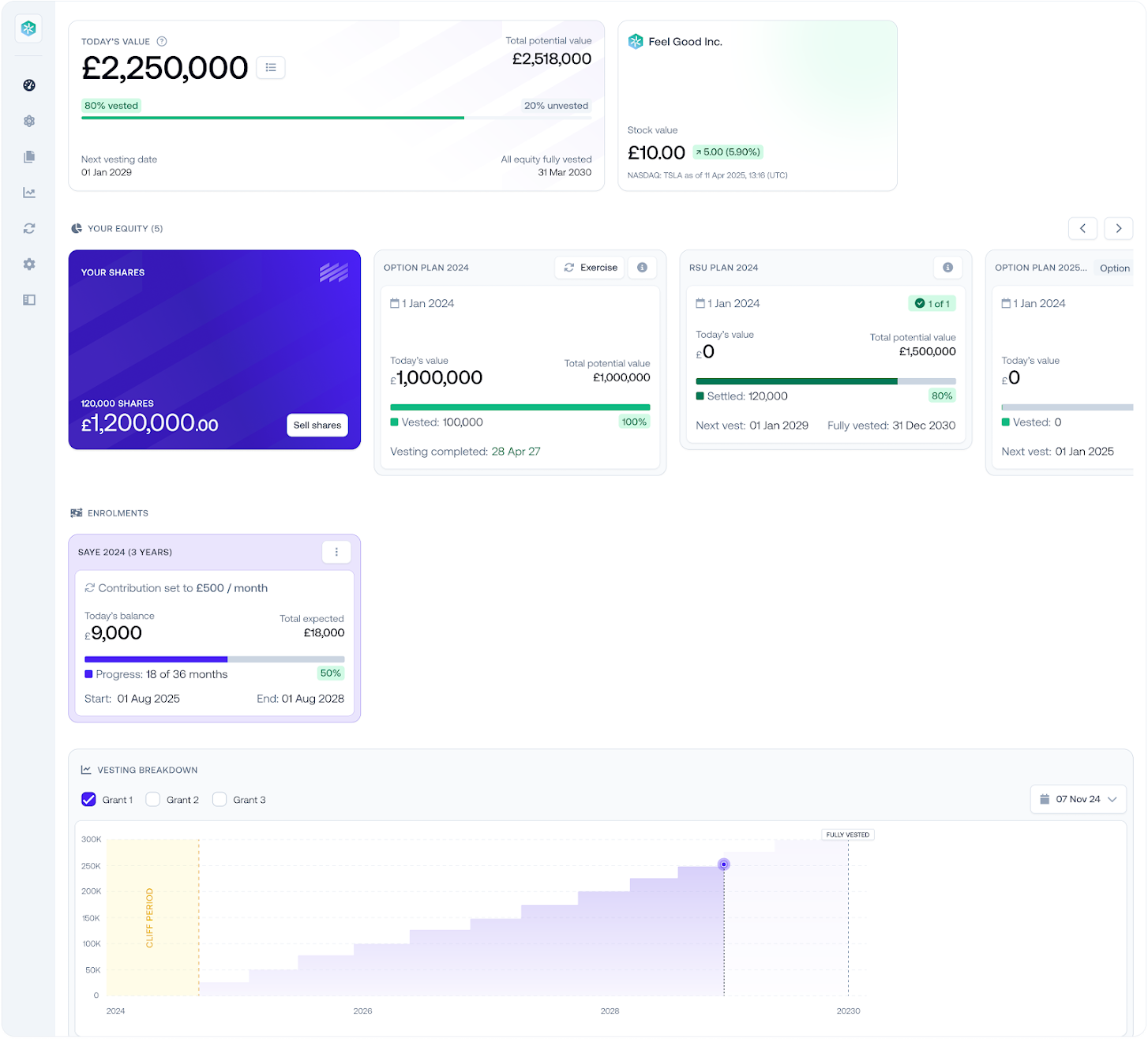
Ledgy bundles a lot of functionality into one platform. Let’s break down each major feature area and explain what it actually does for your business.
Cap Table Management
Your cap table shows who owns what percentage of your company. Sounds simple, but it gets complicated fast. Every funding round, every employee option grant, every conversion of convertible notes changes the picture.
Ledgy calls cap table management a way to “turn your cap table into a strategic asset.” That’s marketing speak, but the underlying value is real. An accurate cap table helps you:
- Make informed decisions about future fundraising
- Answer investor questions without scrambling
- Avoid nasty surprises during due diligence
- Model different scenarios before committing to deals
The platform keeps your ownership data accurate and intuitive. No more hunting through old spreadsheets or wondering if last quarter’s share issuance was recorded correctly.
Equity and Share Plan Automation
Employee stock options are powerful retention tools. But managing them manually creates administrative nightmares. Vesting schedules, exercise windows, tax implications, termination handling… it adds up quickly.
Ledgy automates much of this work. The platform handles:
- ESOPs (Employee Stock Ownership Plans)
- Virtual Shares for countries where real equity is complicated
- Warrants and various stock instruments
Automation reduces errors. When someone leaves the company, the system knows how to handle their unvested options. When vesting milestones hit, records update automatically. This consistency matters when you have hundreds of employees on equity plans.
Employee Communications and Dashboards
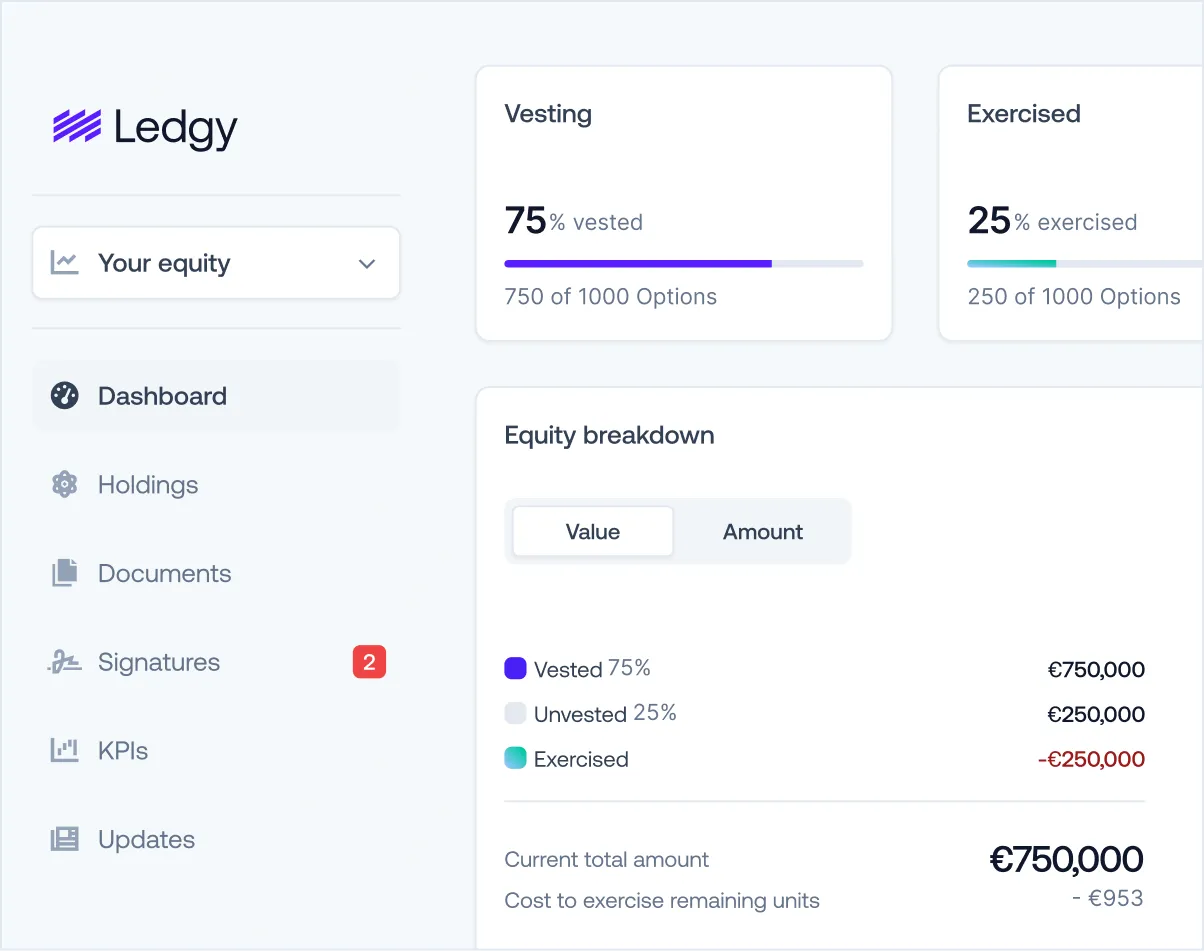
Here’s where Ledgy shines compared to many competitors. Employees get their own dashboards to monitor their shareholdings. They can see their vesting schedules and track their future stake in the company’s success.
Why does this matter? Transparency builds trust. When employees understand their equity, they value it more. They see the connection between company performance and their personal wealth. This drives engagement and retention.
The dashboard approach also reduces HR workload. Instead of fielding constant questions about “how much stock do I have” or “when does my next tranche vest,” employees can check themselves. Self-service saves everyone time.
Compliance Features
Equity compliance varies by country, company stage, and share type. Getting it wrong can mean tax penalties, legal disputes, or failed audits. Ledgy promises to help you “stay error-free, get IPO-ready and go global with confidence.”
The platform includes compliance tools for:
- Multiple jurisdictions (important for European companies with cross-border operations)
- IPO preparation requirements
- Ongoing public company compliance
- Global equity plan management
Global confidence matters if you’re hiring internationally. Each country has different rules about employee equity. A platform that handles this complexity saves you from hiring country-specific consultants for every hire.
Financial Reporting
Finance teams need to report on equity for accounting purposes. Stock-based compensation affects your income statement. Ownership changes affect your balance sheet. Auditors want documentation.
Ledgy generates financial reports you can trust, according to the company. The goal is meeting deadlines with instantly generated reports. No more late nights before quarterly closes trying to reconcile equity data with your accounting system.
Reliable financial reporting also builds investor confidence. When your numbers match your cap table matches your option pool, everyone trusts the data. Discrepancies create doubt and slow down deals.
Scenario and Exit Modeling
What happens if you raise at a $50 million valuation? $100 million? What if there’s an acquisition with a certain earnout structure? These scenarios affect everyone’s equity differently.
Ledgy includes scenario modeling to help you understand outcomes before they happen. You can model:
- Different funding round structures
- Various exit valuations
- Option pool expansions
- Convertible note conversions
This modeling makes financing rounds more successful. You can show investors exactly what happens to ownership at different price points. You can explain to employees what their options might be worth in various scenarios.
Trading and Settlement
For companies that allow secondary trading (employees selling shares to other investors), Ledgy provides trading and settlement features. This is more relevant for later-stage companies or those approaching IPO.
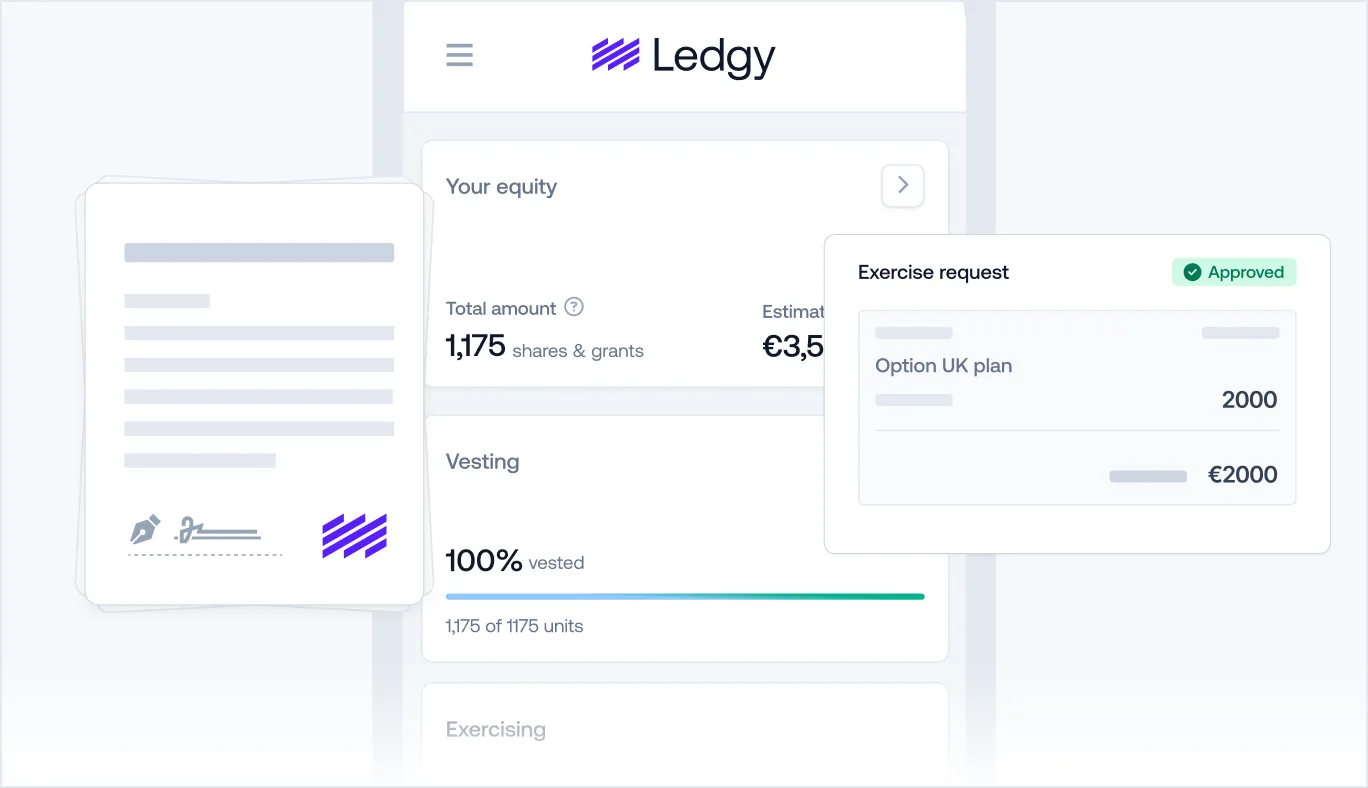
Tom Giles, Deputy Head of WBS Solutions Ltd Corporate and Trustee Markets, shared his experience: “Ledgy’s fully automated trading flow provides sellers with a modern and efficient experience. Its reliability simplifies our processes as brokers, while its flexibility allows us to adapt to each client’s unique needs.”
This testimonial highlights three things: automation, reliability, and flexibility. For brokers handling secondary transactions, these qualities reduce friction and speed up deals.
Executive Compensation Management
Executive comp is a sensitive topic. Boards need to approve packages. Compensation committees need data. Proxy statements require disclosure. Ledgy includes tools for managing this complexity.
Having executive compensation in the same platform as your broader equity management creates consistency. You’re not reconciling data between systems or worrying about version control issues.
Ledgy User Experience Analysis
Features matter, but so does usability. A platform with great functionality that nobody can figure out isn’t actually useful. Let’s look at the Ledgy user experience from multiple angles.
Interface Design Philosophy
Ledgy describes its dashboards as “intuitive.” The company emphasizes bringing “equity to life with intuitive dashboards for the whole team.” This suggests a focus on visual clarity and ease of navigation.
Modern equity platforms tend to use visual representations of ownership. Pie charts showing cap table breakdown. Timeline views of vesting schedules. Waterfall charts for exit scenarios. These visual tools help non-financial users understand complex concepts.
Learning Curve Considerations
Any new software requires adjustment. The question is how steep that adjustment curve looks. Ledgy positions itself as “easy to use for end-to-end equity management.” That’s a bold claim given the complexity of equity administration.
Based on the platform’s structure, different users probably have different experiences:
| User Type | Learning Curve | Key Challenges |
|---|---|---|
| Employees viewing their equity | Low | Understanding equity concepts, not the platform itself |
| HR managing option grants | Medium | Learning grant workflows, approval processes |
| Finance handling reports | Medium | Mapping Ledgy outputs to accounting requirements |
| Legal managing compliance | Medium-High | Configuring rules for different jurisdictions |
| Admins doing initial setup | High | Migration, data validation, scheme configuration |
The initial setup is always the hardest part. Once data is in and configured correctly, ongoing use becomes routine.
Multi-Department Collaboration
Equity touches multiple teams. Finance, legal, HR, and executives all need access to different parts of the data. Ledgy explicitly serves these cross-functional needs.
Ann-Sophie Manzeschke from Personio shared: “With Ledgy, we now found an employee-friendly and multi-departmental tool that accurately manages all aspects of our equity.”
This quote highlights two things. First, the platform works for employees, not just administrators. Second, multiple departments can use the same system rather than maintaining separate data sources.
Self-Service Capabilities
Modern software trends toward self-service. Users want to find answers themselves rather than submitting tickets and waiting. Ledgy’s employee dashboards align with this philosophy.
But self-service only works when the information is clear. If employees see their equity data but can’t understand what it means, they’ll still bombard HR with questions. The quality of explanation and visualization determines whether self-service actually reduces support burden.
Migrating to Ledgy from Carta: Process and Timeline
Many companies considering Ledgy are currently using Carta, the dominant US-based equity management platform. Migration between platforms is a common concern, so let’s examine how Ledgy handles this transition.
Why Companies Switch from Carta to Ledgy
European companies often start with Carta because of its market presence. But over time, they discover pain points:
- European compliance gaps: Carta was built primarily for US companies. European rules differ significantly.
- Time zone challenges: Support and communication during European business hours can lag.
- Pricing structure: Some find Carta’s pricing model doesn’t fit their needs.
- Feature requirements: Virtual share schemes common in Europe may have limited support.
- Data sovereignty: European companies may prefer data stored in Europe.
Ledgy positions itself as the European alternative built with European requirements in mind from the start.
Migration Timeline and Process
A typical cap table migration from Carta to Ledgy takes 10 days on an Enterprise plan. That’s faster than many enterprise software transitions. Here’s how the process works:
Step 1: Structured Review
A Ledgy specialist reviews your cap table, option holders, and schemes. This isn’t just a data dump. The review examines your current structure to understand the full picture.
Step 2: Identifying Inconsistencies
Migration is also an opportunity to find and fix problems. Many companies have errors in their cap tables they don’t know about. Wrong vesting dates, incorrect share counts, missing transactions. The review process catches these issues early.
Step 3: Data Transfer
Your data moves from Carta to Ledgy with validation at each step. The goal is ensuring nothing gets lost or corrupted during transfer.
Step 4: Verification and Testing
Before going live, you verify that the migrated data matches your source of truth. Reports should match. Employee views should be accurate. Scenario models should produce expected results.
Migration Support Quality
The quality of migration support often determines whether transitions succeed or fail. Ledgy emphasizes specialist involvement in the process. You’re not left to figure things out alone with documentation.
Dedicated migration support matters because equity data is sensitive and complex. A mistake during migration can create legal problems, tax issues, or employee disputes. Having experts guide the process reduces these risks.
What to Prepare Before Migration
If you’re considering switching to Ledgy, preparation makes the process smoother. Gather:
- Complete historical transaction records
- All equity plan documents and amendments
- Current vesting schedules for all participants
- Any special terms or side agreements
- Recent cap table reports for comparison
Clean data going in means clean data coming out. Garbage in, garbage out applies to migrations too.
Security and Privacy Standards at Ledgy
Equity data is sensitive. Ownership information, compensation details, and financial projections all require protection. Ledgy emphasizes “best-in-class security and privacy.” Let’s examine what that means in practice.
Why Equity Data Security Matters
Your cap table contains information competitors would love to have. Employee equity data is personally identifiable information with compensation details attached. Board documents and scenario models reveal strategic thinking.
A breach of equity data can lead to:
- Competitive intelligence leaking to rivals
- Employee privacy violations
- Regulatory fines under GDPR and similar laws
- Loss of investor and employee trust
- Potential impact on funding rounds or M&A deals
Security isn’t optional for equity platforms. It’s fundamental.
European Data Protection Alignment
Being headquartered in Switzerland gives Ledgy natural alignment with European data protection standards. Switzerland has strong privacy laws and is considered adequate under GDPR for data transfers.
For European companies, using a European-based vendor simplifies compliance. You avoid complex data processing agreements required for transferring personal data outside the EU/EEA. This reduces legal overhead and audit complexity.
Infrastructure and Access Controls
While Ledgy doesn’t publish detailed technical specifications publicly, enterprise-grade security typically includes:
- Encryption in transit and at rest: Data protected during transmission and storage
- Role-based access controls: Users only see what they need
- Audit logging: Tracking who accessed what and when
- Multi-factor authentication: Additional verification beyond passwords
- Regular security assessments: External testing of defenses
When evaluating Ledgy, ask directly about SOC 2 compliance, penetration testing, and specific security certifications. These details matter for enterprise procurement.
Privacy for Employees
Employee equity dashboards create a privacy consideration within your organization. How much can different people see? Can managers view their direct reports’ equity? Can executives see all compensation?
Good equity platforms let you configure visibility rules. Employees see their own data. HR sees what they need for administration. Executives see aggregate reports without individual details. Legal sees documentation. Finance sees what’s needed for reporting.
Getting these permissions right protects employee privacy while enabling necessary business functions.
Ledgy Pricing Structure and Value Assessment
Ledgy doesn’t publish detailed pricing on its website. This is common for enterprise B2B software. Pricing typically depends on company size, feature requirements, and negotiation. Still, we can analyze the value proposition and what factors likely affect cost.
Pricing Factors in Equity Management
Equity platforms typically price based on several variables:
| Pricing Factor | How It Affects Cost |
|---|---|
| Number of stakeholders | More shareholders and option holders usually means higher pricing |
| Company stage | Pre-seed vs. Series D vs. public company have different needs and budgets |
| Feature requirements | Basic cap table vs. full compliance and trading modules |
| Support level | Self-service vs. dedicated account management |
| Implementation complexity | Simple setup vs. complex migration with historical data |
Enterprise plans that include dedicated migration support, as mentioned for the Carta migration, likely cost more than self-service options.
Evaluating Return on Investment
Equity management platforms save money in several ways. Understanding these savings helps justify the investment:
Reduced professional service costs: Without a platform, companies pay lawyers and accountants to maintain cap tables, draft equity documents, and ensure compliance. A good platform reduces these billable hours.
Faster fundraising: Clean cap tables and quick due diligence responses speed up funding rounds. Time matters when negotiating with investors. Delays can kill deals or weaken terms.
Fewer errors: Mistakes in equity records create expensive problems. Fixing a miscalculated option grant after the fact costs far more than getting it right initially.
Time savings: Administrative time spent on manual equity work could go toward higher-value activities. When your CFO isn’t rebuilding spreadsheets, they’re doing strategic work.
Better retention: Clear equity communication helps retain employees. The cost of losing a key engineer because they didn’t understand their options far exceeds any software subscription.
Total Cost of Ownership Considerations
Look beyond the subscription price. Consider:
- Implementation and migration costs (time and money)
- Training time for your team
- Ongoing administrative time using the platform
- Integration costs with other systems
- Potential switching costs if you need to change later
A cheaper platform that requires more manual work may cost more overall. An expensive platform that saves significant time may be the better value.
Getting Pricing Information
To get Ledgy pricing, you’ll need to contact them directly. When requesting quotes:
- Be clear about your current number of shareholders and option holders
- Specify which features you need
- Explain your growth trajectory (they’ll want to know you’ll stay)
- Ask about implementation and migration costs separately
- Request references from similar-sized companies
Good vendors provide transparent pricing discussions. If getting basic pricing information feels like pulling teeth, that might tell you something about the sales experience.
How Ledgy Compares to Competitors
Understanding where Ledgy fits in the market helps you make an informed decision. The equity management space has several established players with different strengths.
Ledgy vs. Carta
Carta is the 800-pound gorilla in equity management. They’re the largest player, particularly dominant in the US market. Here’s how the comparison breaks down:
| Aspect | Ledgy | Carta |
|---|---|---|
| Geographic focus | Europe-first design | US-first design |
| Headquarters | Zurich, Switzerland | San Francisco, USA |
| European compliance | Native support for European structures | Added support, but not core focus |
| Virtual shares | Strong support (common in Europe) | Limited support historically |
| Market position | Leading European solution | Global market leader |
| Data location | European infrastructure | Primarily US infrastructure |
If you’re a European company or have significant European operations, Ledgy’s native design for your market is a strong advantage. If you’re US-based with no European plans, Carta’s market dominance and ecosystem might be more relevant.
Ledgy vs. Capdesk
Capdesk is another European competitor in the equity management space. Both platforms target similar markets with similar features. Key differences often come down to:
- Specific feature depth in areas you care about
- User interface preferences
- Customer support quality
- Pricing structure alignment with your needs
- Integration with tools you already use
When evaluating similar competitors, request demos from both. The daily experience of using the platform matters as much as feature lists.
Ledgy vs. Spreadsheets
Many early-stage companies manage equity in Excel or Google Sheets. This works initially but breaks down as complexity grows. Here’s when to switch:
- More than 20 shareholders: Manual tracking becomes error-prone
- Employee option plans: Vesting calculations in spreadsheets are dangerous
- Preparing for fundraising: Investors expect professional cap table management
- Multiple equity types: Options, warrants, convertibles, SAFEs all interacting
- Compliance requirements: Regulatory needs beyond spreadsheet capabilities
Spreadsheets are free but cost more in time, errors, and professional services. The breakeven point for switching to a platform usually comes earlier than founders expect.
Ledgy vs. Legal Firm Management
Some companies outsource equity management to their law firm. Lawyers maintain the cap table, draft documents, and handle compliance. This works but has drawbacks:
- Expensive hourly rates for routine maintenance
- Delays when you need quick information
- Less visibility for internal stakeholders
- No employee self-service capabilities
- Dependence on specific lawyers who know your history
A platform like Ledgy lets you keep lawyers involved for strategic advice while handling routine operations internally at lower cost.
Customer Feedback and Market Reputation
What do actual users say about Ledgy? Let’s examine available feedback and what it tells us about the platform.
Trustpilot Reviews Analysis
Ledgy has a claimed profile on Trustpilot since March 2021. The platform shows 2 reviews with a TrustScore of 2.9 out of 5. This limited sample makes drawing broad conclusions difficult.
A small review count isn’t unusual for B2B enterprise software. Unlike consumer products where thousands review on Trustpilot, enterprise platforms rarely see high review volumes there. Business users typically share feedback through:
- G2 and Capterra (B2B review platforms)
- Direct references during sales processes
- Industry word-of-mouth
- LinkedIn recommendations
When evaluating Ledgy, ask for customer references directly. Speaking with current users in similar situations provides more valuable insight than anonymous review aggregation.
Customer Testimonials Analysis
Ledgy publishes testimonials from named customers. Let’s analyze what they reveal:
From Personio (HR software company): “With Ledgy, we now found an employee-friendly and multi-departmental tool that accurately manages all aspects of our equity.”
This testimonial suggests Personio tried other solutions before finding Ledgy (“we now found”). They value the employee-facing features and cross-departmental usage. Personio is a significant tech company, so their endorsement carries weight in the European startup ecosystem.
From WBS Solutions Ltd (broker): “Ledgy’s fully automated trading flow provides sellers with a modern and efficient experience. Its reliability simplifies our processes as brokers, while its flexibility allows us to adapt to each client’s unique needs.”
A broker’s perspective is interesting. They see many different companies using various platforms. Their endorsement of Ledgy’s trading features suggests the platform handles secondary transaction complexity well.
Questions to Ask References
When speaking with Ledgy references, dig beyond general satisfaction:
- What was implementation like? How long did it actually take?
- What problems have you encountered? How were they resolved?
- How responsive is support when issues arise?
- What features do you wish existed?
- If you were deciding again today, would you choose Ledgy?
- What surprised you about using the platform (positive or negative)?
Real users with experience over time provide insights that marketing materials can’t match.
Market Positioning and Recognition
Ledgy positions itself as “the leading European equity management solution.” CB Insights tracks the company in their database, indicating institutional recognition in the fintech and enterprise software space.
Market leadership claims are common in B2B software. What matters more is whether the company is solving problems for companies like yours. A “leader” serving large enterprises may not be the right fit for a seed-stage startup, and vice versa.
Implementation and Onboarding Process
Getting started with any enterprise software involves setup, configuration, and learning. Here’s what to expect when implementing Ledgy.
Initial Setup Steps
Setting up Ledgy typically involves these phases:
Phase 1: Discovery and Planning
- Review current equity structure and documentation
- Identify stakeholders who need access
- Define roles and permissions
- Plan data migration approach
Phase 2: Data Migration
- Import historical transactions
- Configure equity plan rules
- Set up stakeholder profiles
- Validate migrated data against source records
Phase 3: Configuration
- Customize workflows for your processes
- Configure reporting formats
- Set up compliance rules for your jurisdictions
- Integrate with other systems if needed
Phase 4: Training and Rollout
- Train administrators on full functionality
- Train department users on their specific needs
- Communicate to employees about new dashboard access
- Establish ongoing support processes
Common Implementation Challenges
Equity platform implementations often stumble on predictable issues:
Historical data gaps: Your records may be incomplete. Old documents might be missing. Early transactions might be poorly documented. Filling these gaps takes time and sometimes requires legal review.
Inconsistency between sources: Your cap table spreadsheet might not match your legal documents which might not match your accounting records. Resolving discrepancies before migration prevents carrying errors forward.
Change resistance: People who’ve managed equity their way for years may resist new tools. Getting buy-in from key users early smooths adoption.
Scope creep: Starting simple and expanding is usually better than trying to configure everything at once. Phase your rollout.
Timeline Expectations
The Carta to Ledgy migration reference point of 10 days on Enterprise plans suggests rapid timelines are possible with dedicated support. Factors affecting your timeline:
| Factor | Impact on Timeline |
|---|---|
| Clean, well-organized historical data | Faster implementation |
| Messy or incomplete records | Slower, requires cleanup |
| Simple cap table structure | Faster configuration |
| Complex multi-class structures | More configuration time |
| Dedicated internal project owner | Faster decisions and progress |
| Decisions by committee | Delays from coordination |
| Enterprise plan with migration support | Faster with expert help |
| Self-service implementation | More internal effort required |
Getting Value Quickly
To see value from Ledgy quickly, focus on your highest-pain areas first. If cap table accuracy is your biggest issue, prioritize that. If employee questions about equity eat HR time, prioritize employee dashboards.
Don’t wait for perfect implementation before using the platform. Get core functionality working, then refine. Incremental improvement beats waiting for perfection.
Integration Capabilities and Ecosystem
No software works in isolation. Ledgy needs to connect with your other business systems. Let’s examine integration considerations.
HR System Integrations
Equity management and HR systems overlap significantly. When someone joins, they might get an option grant. When they leave, their equity status changes. Connecting these systems reduces manual work.
Common HR integrations include:
- Pulling new hire data to set up option grants
- Syncing employment status changes
- Coordinating vesting with employment milestones
- Sharing equity data for total compensation views
Ask Ledgy about specific integrations with HR platforms you use. Pre-built integrations save significant custom development.
Accounting System Connections
Equity affects financial statements. Stock-based compensation is an expense. Share issuances affect capital accounts. Connecting Ledgy to your accounting system can automate these entries.
Key accounting integrations:
- Journal entries for stock-based compensation
- Reconciliation reports for auditors
- Capital structure data for financial statements
- Share count data for EPS calculations
Legal Document Management
Equity involves lots of documents. Stock option agreements. Share certificates. Board resolutions. Plan documents. Keeping these organized and accessible matters.
Ledgy should store or link to relevant documents associated with each transaction. When auditors ask for the board resolution approving an option grant, you should find it easily.
Investor Reporting Connections
Investors want updates on their holdings. Connecting Ledgy to investor communication tools can automate some of this reporting. At minimum, generating investor-friendly reports from Ledgy data should be straightforward.
Single Sign-On and Directory Services
Enterprise companies typically require single sign-on (SSO) integration. Employees shouldn’t need another username and password. They should access Ledgy through their existing corporate identity system.
Ask about:
- SAML or OIDC support for SSO
- Integration with specific identity providers (Okta, Azure AD, Google Workspace)
- Automatic user provisioning and deprovisioning
- Group-based access control synced from directories
Use Cases: When Ledgy Makes the Most Sense
Not every company needs Ledgy. And Ledgy isn’t the right fit for everyone. Let’s identify scenarios where the platform makes the most sense.
European Companies with Employee Equity Plans
If you’re based in Europe and offering equity to employees, Ledgy’s European focus aligns with your needs. Virtual share schemes, country-specific compliance, and European data storage all matter for this audience.
The platform’s design for European structures means you’re not working around a system built for US rules. Native support beats bolted-on features.
Companies Preparing for Significant Funding Rounds
Due diligence during fundraising scrutinizes your cap table. Messy equity records raise red flags. Clean, auditable data in a professional platform accelerates deal closure.
Ledgy’s scenario modeling also helps during negotiations. Understanding dilution impacts at different valuations gives you confidence in discussions with investors.
Growing Companies Outgrowing Spreadsheets
There’s a natural progression from spreadsheets to platforms. When your equity administration starts taking significant time, when errors start appearing, when questions pile up… it’s time to switch.
Ledgy’s scalability means you can implement it now and grow into advanced features later. You’re not paying for complexity you don’t need yet, but it’s available when you do.
Companies Planning IPO or Significant Exit
Public company requirements are strict. IPO-readiness means having equity records that withstand public scrutiny. Ledgy’s compliance features and financial reporting capabilities support this transition.
Starting preparation years before a potential IPO is smart. Cleaning up equity records under time pressure is stressful and expensive.
Multi-National Companies with Cross-Border Complexity
If you have employees in multiple countries, each with different equity rules, centralized management becomes essential. Ledgy’s global capabilities help manage this complexity from one platform.
Alternative approaches like country-specific solutions or heavy legal involvement cost more and create fragmentation. A unified platform provides consistency.
When Ledgy Might Not Be the Right Fit
Ledgy may not suit everyone. Consider alternatives if:
- You’re a very early startup: Seed-stage companies with simple cap tables might not need a full platform yet
- You’re US-focused exclusively: US-centric competitors might have deeper US market features
- You have minimal employee equity: If only founders have equity, the overhead may not be justified
- Budget is extremely constrained: Enterprise software costs money; verify the ROI before committing
Getting the Most from Ledgy: Best Practices
Buying software is just the beginning. How you use it determines the value you get. Here are practices for maximizing Ledgy’s impact.
Keep Data Current
An equity platform is only as good as its data. Outdated information creates confusion and distrust. Build habits for keeping Ledgy current:
- Enter transactions as they happen, not in batches
- Review data quarterly at minimum
- Reconcile with legal documents regularly
- Audit before major events (funding rounds, audits, transactions)
Train Your Team Properly
Different users need different training. An HR person managing option grants needs different skills than an employee checking their dashboard. Tailored training by role ensures everyone knows what they need.
Don’t just train once. Follow up after 30 days, 90 days, and when new features roll out. Reinforcement builds competence.
Use Employee Dashboards Actively
Employee dashboards only reduce HR burden if employees know about them and use them. Communicate about this benefit:
- Announce the dashboard during onboarding
- Remind employees during equity-related events (vesting, grants)
- Include dashboard links in equity communications
- Show employees how to find their information
Self-service adoption takes effort. Push awareness repeatedly.
Build Processes Around the Platform
Ledgy should become your source of truth for equity. Build processes that center on the platform:
- Option grants start in Ledgy, then legal documents follow
- Board reports pull directly from Ledgy data
- Due diligence responses use Ledgy exports
- Employee questions get answered by pointing to dashboards
When the platform is central, data stays consistent and processes stay efficient.
Review Reports Regularly
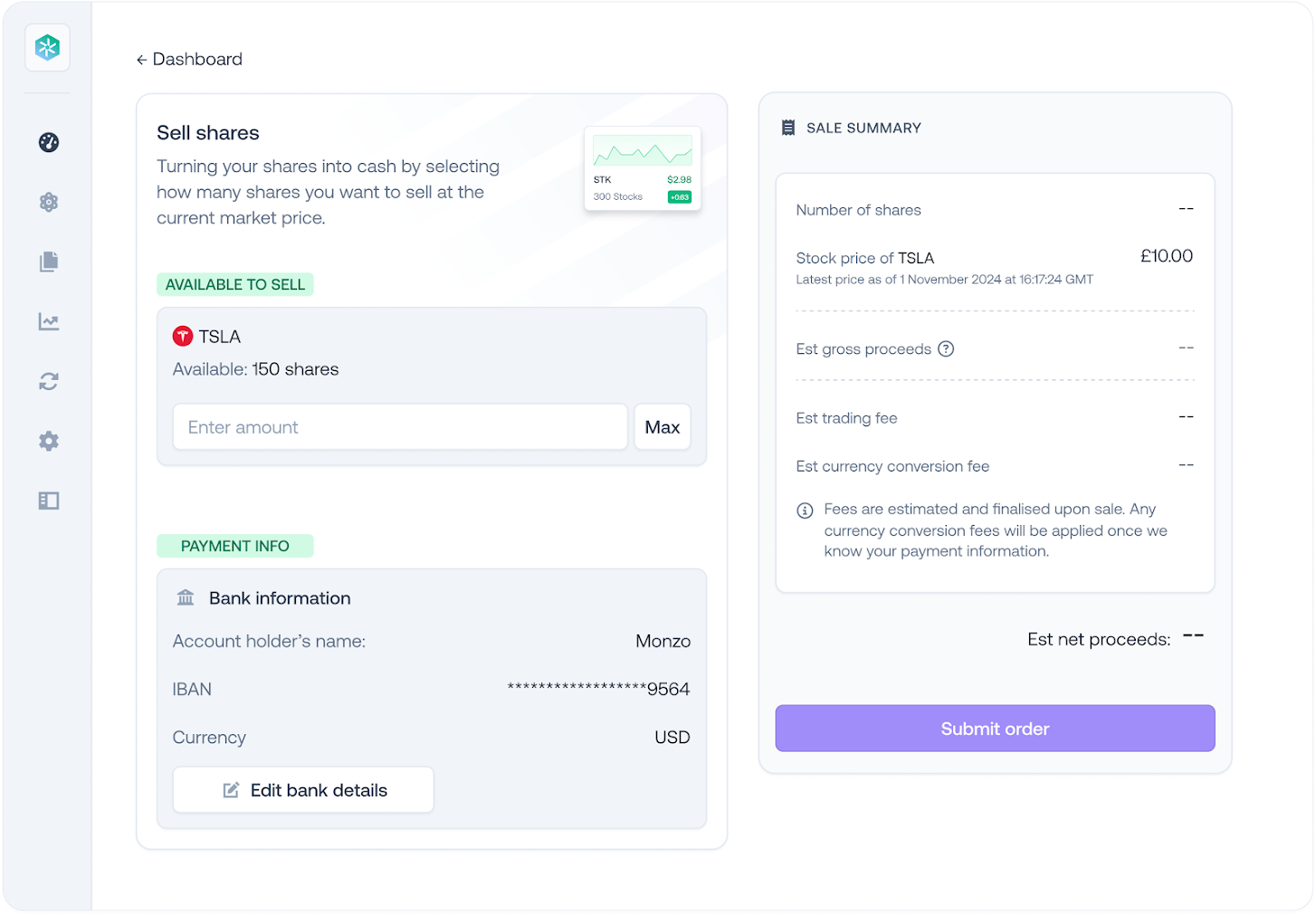
Ledgy generates reports for various purposes. Review them regularly, not just when someone asks. Proactive review catches issues early:
- Monthly: Basic cap table summary, option pool status
- Quarterly: Vesting schedule review, compliance check
- Annually: Full equity audit, board reporting preparation
- Event-driven: Pre-funding, pre-audit, pre-transaction reviews
Engage with Ledgy Support and Resources
Enterprise software vendors provide more than technology. They offer expertise. Take advantage:
- Ask questions during onboarding, not just technical how-to
- Attend webinars and training sessions
- Read documentation and release notes
- Provide feedback on features you need
- Build relationships with your account contacts
Active engagement gets you better service and helps shape product development toward your needs.
Future of Equity Management and Ledgy’s Position
The equity management market continues evolving. Understanding trends helps you evaluate Ledgy’s long-term viability.
Market Growth Drivers
Several trends fuel equity management platform adoption:
Increased employee equity participation: More companies offer equity to more employees. This creates administrative complexity that platforms solve.
Regulatory complexity: Rules around equity, particularly employee equity, keep getting more complex. Tax laws change. Reporting requirements expand. Platforms that handle this complexity become more valuable.
Secondary market activity: More private company shares trade before IPOs. This creates needs for trading, settlement, and record-keeping that platforms address.
Globalization of hiring: Remote work means global teams. Global teams mean cross-border equity complexity. Centralized platforms manage this better than fragmented approaches.
Technology Trends Affecting Equity Platforms
Several technology shifts affect equity management:
AI and automation: Manual processes become automated. Compliance checking, document generation, and reporting increasingly use AI assistance.
Integration expectations: Companies expect all their tools to connect. Standalone platforms without integration capabilities fall behind.
Mobile access: Employees expect to check their equity status from phones, not just desktops.
Real-time data: Batch processing gives way to real-time updates. Stakeholders expect current information immediately.
Ledgy’s Position for the Future
Ledgy’s European foundation positions it well as European tech ecosystems grow. The continent produces more tech companies requiring equity management. Ledgy grows with that market.
The platform’s span from early-stage through post-IPO suggests long-term vision. Companies that start with Ledgy can stay as they grow. That reduces churn and builds deep customer relationships.
Leadership changes like the CEO appointment suggest active development and investment. Growing companies need growing platforms.
Conclusion: Is Ledgy Right for Your Company?
Ledgy offers a comprehensive equity management solution built with European companies in mind. Its features span cap table management, employee equity plans, compliance, and financial reporting. The platform serves multiple teams and company stages from startup through public company.
For European companies with employee equity plans, Ledgy deserves serious consideration. The native European design, dedicated migration support, and multi-departmental approach address real needs in this market. Request a demo, ask for references from similar companies, and evaluate whether the platform fits your specific situation.
Frequently Asked Questions About Ledgy
| Who should use Ledgy? | Ledgy fits best for European companies with employee equity plans, businesses preparing for funding rounds, growing companies outgrowing spreadsheets, and organizations planning IPO or significant exits. Finance, legal, and HR teams all benefit from the platform. |
| How long does it take to migrate from Carta to Ledgy? | A typical cap table migration from Carta to Ledgy takes about 10 days on an Enterprise plan. This includes a structured review of your equity setup, data transfer, and validation. The timeline can vary based on complexity and data quality. |
| Is Ledgy suitable for US-based companies? | Ledgy primarily focuses on European markets. US-based companies without European operations might find US-focused competitors like Carta better suited to their needs. Companies with cross-Atlantic operations may benefit from Ledgy’s global capabilities. |
| What makes Ledgy different from competitors? | Ledgy’s European design is its key differentiator. Native support for European equity structures like virtual shares, European compliance requirements, and data residency in Europe distinguishes it from US-centric competitors. |
| Does Ledgy provide employee self-service features? | Yes, employees get their own dashboards to monitor shareholdings, view vesting schedules, and track their stake in the company. This self-service approach reduces HR workload while increasing employee transparency. |
| What company stages does Ledgy support? | Ledgy supports companies from early incorporation through post-IPO. The platform grows with you, so you don’t need to switch systems as your company evolves through funding rounds and eventual public listing. |
| How does Ledgy handle compliance across multiple countries? | The platform includes compliance features for multiple jurisdictions, helping companies with cross-border operations manage different equity rules. This includes support for various share types and regulatory requirements across European countries. |
| Does Ledgy publish pricing on its website? | No, Ledgy doesn’t publish detailed pricing publicly. You need to contact them directly for quotes. Pricing typically depends on company size, stakeholder count, feature requirements, and support level needed. |
| What security standards does Ledgy follow? | Ledgy emphasizes “best-in-class security and privacy.” Being based in Switzerland aligns with strong European data protection standards. For specific certifications and technical details, contact Ledgy directly during your evaluation. |
| Can Ledgy integrate with other business systems? | Ledgy supports integrations with HR systems, accounting platforms, and other business tools. Ask about specific integrations with your existing software stack during the evaluation process to confirm compatibility. |




 Stack Insight is intended to support informed decision-making by providing independent information about business software and services. Some product details, including pricing, features, and promotional offers, may be supplied by vendors or partners and can change without notice.