
Astrella Review


Astrella Review: Complete Guide to Cap Table Management Software for Private Companies
Managing equity in a private company gets complicated fast. Between tracking founders, investors, employees with stock options, and multiple funding rounds, things can spiral into a mess of spreadsheets and confusion. That’s where cap table management software comes in. Astrella, developed by EQ Private Company Solutions, positions itself as a modern solution for startups and private companies looking to get control over their ownership data.
In this Astrella review, we’ll break down everything you need to know about the platform. We’ll look at its features, pricing approach, setup process, and how it stacks up against competitors like Carta, Pulley, and Ledgy. Whether you’re a first-time founder trying to figure out equity management or a CFO evaluating software options, this guide covers the full picture.
What Is Astrella? A Complete Overview of the Platform
Astrella is a cloud-based cap table management platform. It helps private companies track and manage ownership data. This includes equity stakes, stock options, vesting schedules, and shareholder information. The platform launched in 2019 and operates as part of EQ Private Company Solutions, which is an affiliate of Equiniti.
The company is headquartered in New York. It was built by professionals with backgrounds in private markets and stock plan administration. That experience shows in how the platform handles compliance requirements and complex equity scenarios.
Core Purpose of Astrella’s Cap Table Software
At its heart, Astrella solves one big problem. It replaces the spreadsheet-based approach to cap table management. Many startups start with Excel files tracking who owns what. That works fine with two founders. It falls apart quickly once you add:
- Angel investors
- Seed round participants
- Employee stock option pools
- Convertible notes
- Multiple share classes
- Advisory shares
Astrella provides a single source of truth. Everyone with access sees the same accurate data. No more version control nightmares or conflicting spreadsheet copies floating around.
Who Built Astrella and Why It Matters
The platform comes from AST Private Company Solutions, now operating under the EQ brand. This matters because the parent company has deep roots in stock transfer and administration services. They’re not a startup trying to figure out compliance as they go.
EQ (formerly Equiniti) is a large financial services company. They handle shareholder services for major public companies. Astrella brings that expertise to the private company market. This background gives users confidence in security and regulatory compliance.
In 2022, AST Private Company Solutions and Psagot Equity Ltd. announced a strategic partnership. This expanded Astrella’s reach into international markets. It also signaled the company’s growth ambitions beyond the U.S. startup ecosystem.
The Technology Behind Astrella’s Platform
Astrella runs entirely in the cloud. There’s no software to install or servers to maintain. Users access everything through a web browser. The platform uses what they describe as an “immutable ledger” to track share genealogies.
What does immutable ledger mean in practice? Every transaction gets recorded permanently. You can trace the history of any share from its original issuance through every transfer. This creates an audit trail that’s useful for due diligence, legal reviews, and compliance checks.
The platform also connects users with service providers directly. Need a 409A valuation? Astrella can connect you with providers. This ecosystem approach aims to simplify the whole equity management workflow.
Astrella Features Breakdown: What the Platform Actually Does
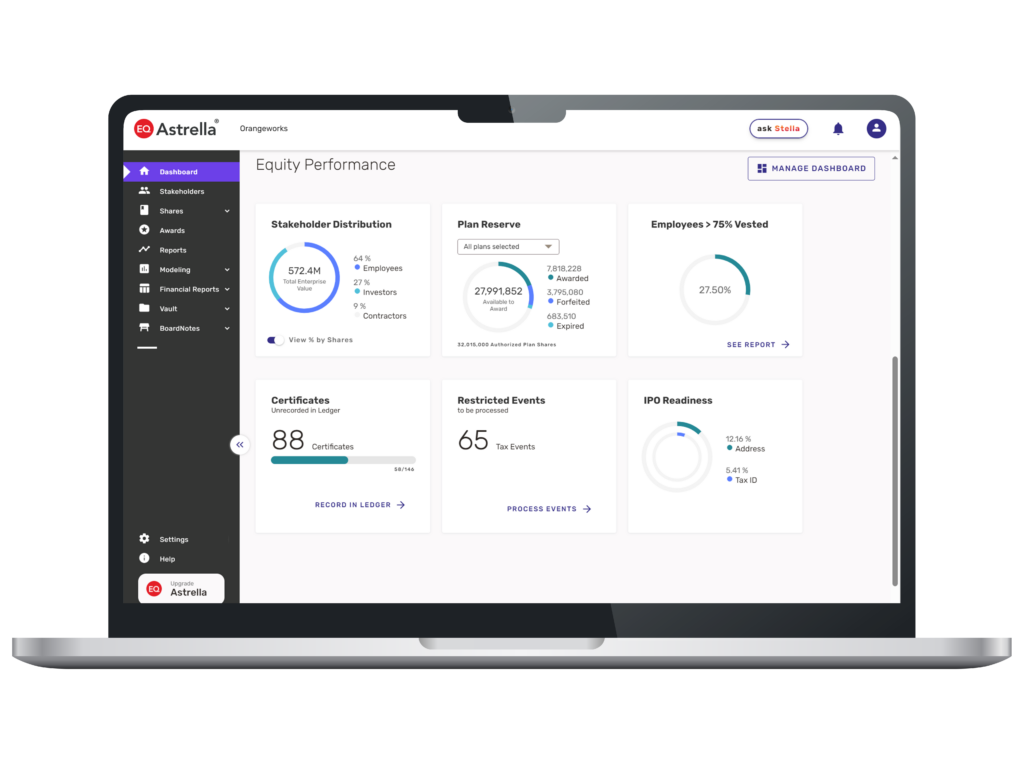
Let’s dig into the specific features Astrella offers. Understanding these will help you decide if the platform fits your needs. We’ll cover each major feature set in detail.
Cap Table Management Core Features
The cap table itself is the foundation of everything. Astrella lets you build and maintain a complete ownership record. Here’s what that includes:
Shareholder Registry: Track every person or entity that holds equity. This includes founders, investors, employees, advisors, and board members. Each shareholder gets a profile with contact information and ownership details.
Share Class Management: Most companies have multiple share classes. Common stock, preferred stock, and various series (Series A, B, C, etc.) each have different rights and preferences. Astrella tracks all of these separately while showing the complete picture.
Transaction History: Every equity event gets recorded. Stock grants, option exercises, transfers, repurchases, and conversions all show up in the ledger. You can see exactly what happened and when.
Ownership Calculations: The platform automatically calculates ownership percentages. It handles fully-diluted calculations that include unexercised options and convertible instruments. These calculations update in real-time as you enter new data.
Employee Stock Plan Tracking
Equity compensation is a major draw for startup employees. Managing it properly is a headache for companies. Astrella includes tools specifically for employee stock plans.
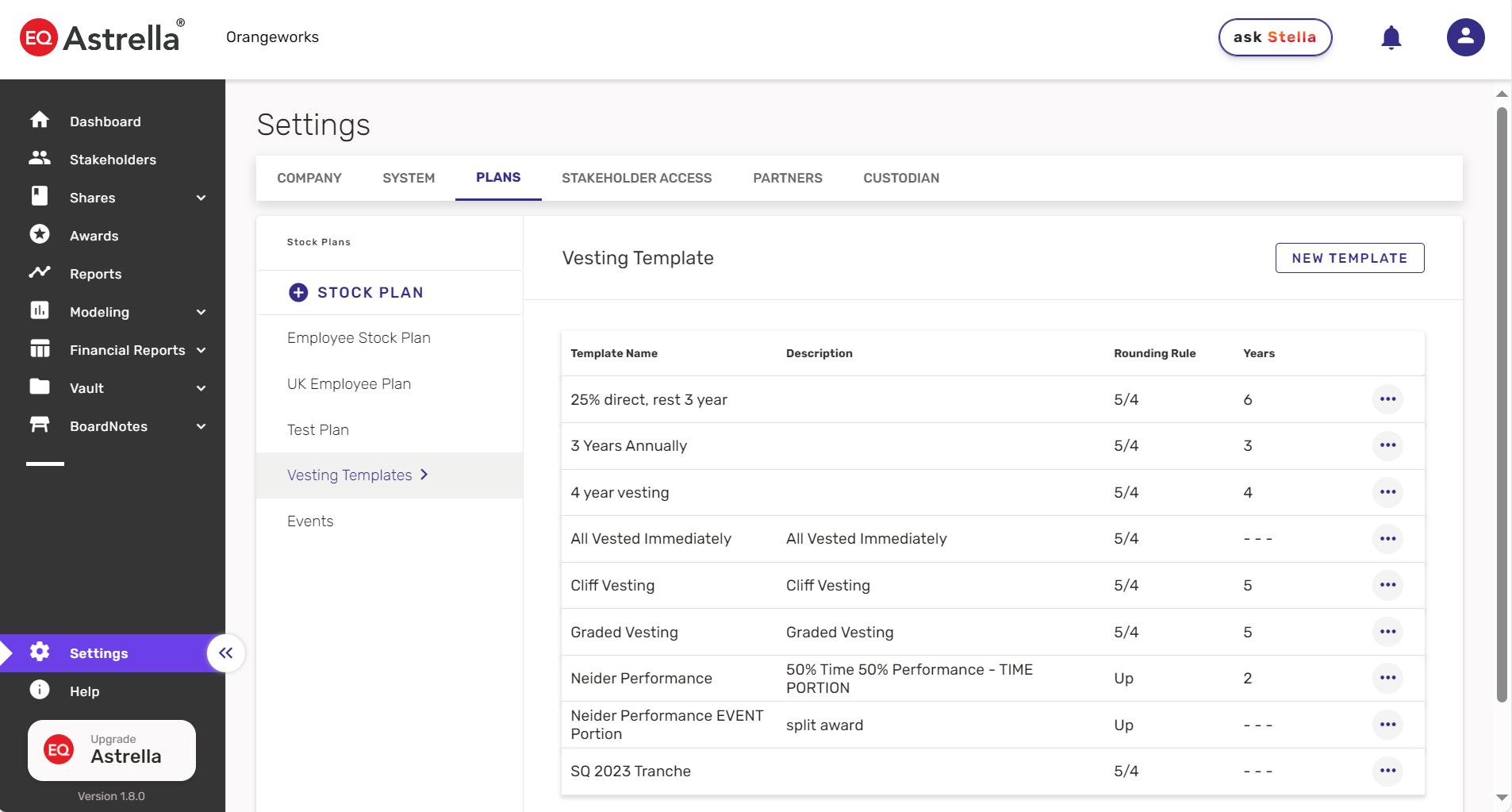
Option Grant Management: Create and track stock option grants. Enter the grant date, exercise price, number of shares, and vesting terms. The system handles the math from there.
Vesting Schedule Tracking: Most equity grants vest over time. The standard is four years with a one-year cliff. Astrella tracks vesting automatically. It shows exactly how many shares have vested for each employee at any point.
Exercise Management: When employees exercise options, you need to record the transaction. Astrella handles the paperwork side. It tracks who exercised, when, and at what price.
Employee Portal Access: Employees can log in and see their own equity. They don’t need to ask HR or finance for updates. This self-service approach saves everyone time and reduces questions.
Scenario Planning and Modeling Tools
What happens to ownership if you raise a new round? What if you create a bigger option pool? Astrella’s scenario planning tools let you model these situations before they happen.
Funding Round Modeling: Input potential terms for a new funding round. See how it affects ownership for existing shareholders. Compare different scenarios side by side.
Dilution Analysis: Understand how future events will dilute current shareholders. This helps founders negotiate better terms and helps investors understand their potential outcomes.
Exit Scenario Modeling: Model what happens in different exit scenarios. See how proceeds would be distributed at various valuations. This is especially useful when dealing with liquidation preferences and participating preferred stock.
Document Vault and Storage
Equity comes with a lot of paperwork. Astrella provides secure storage for all those documents.
Centralized Document Repository: Store stock purchase agreements, option agreements, board consents, and other equity-related documents. Everything stays in one place.
Document Association: Link documents to specific shareholders or transactions. When you need to find a particular agreement, you don’t have to dig through folders.
Secure Access Controls: Not everyone should see everything. Set permissions so users only access documents relevant to their role.
Compliance and Reporting Features
Equity compensation triggers compliance requirements. Astrella helps companies stay on top of these obligations.
ASC 718 Reporting Support: Public companies and some private companies need to account for stock-based compensation under ASC 718. Astrella provides reports that help with this accounting requirement.
409A Valuation Integration: Private company stock options need 409A valuations to set exercise prices. Astrella connects with valuation providers and integrates the results into your cap table.
Board Meeting Documentation: Board approval is required for many equity actions. Astrella helps track and store board meeting documentation related to equity matters.
Astrella Setup Process: Getting Started With the Platform
One of the biggest concerns when switching to cap table software is the initial setup. Getting all your historical data into a new system can be daunting. Let’s look at how Astrella handles this.
Initial Account Creation and Onboarding
Astrella promotes a “simple and secure setup” process. According to their messaging, startup founders can establish a clean cap table quickly. The basic process involves signing up, entering your ownership data, and gaining immediate access to equity management tools.
But “simple” is relative. The actual complexity depends on your current situation. A pre-seed startup with two founders and no outside investment? That’s genuinely simple. A Series B company with 50 employees holding options, three investor rounds, and convertible notes? That takes more work.
Data Migration From Spreadsheets
Most companies coming to Astrella are moving from Excel. The platform allows data import, but cleaning up that data often takes effort. Here’s what typically needs to happen:
- Gather all historical equity documents
- Reconcile any discrepancies in your records
- Format data for import (or enter manually)
- Verify everything matches legal documents
- Have legal counsel review the final cap table
This isn’t an Astrella-specific challenge. Any cap table software requires accurate input data. Garbage in, garbage out applies here.
Support During Setup
One customer, Sean Griffin from Disaster Technologies, shared his experience. He noted that “Astrella was really instrumental in giving us the support to build [our cap table] out properly.” According to Kohn, they “provided information that was really important; it allowed me to save money in the long run.”
The key insight? He “could set up the cap table with Astrella and then get my legal team to review it, rather than hiring my legal team to set up the entire cap table.” That’s a meaningful cost savings for startups watching every dollar.
This suggests Astrella provides hands-on support during setup. The team helps guide users through building their cap table correctly. Then legal review validates the work. This approach costs less than paying lawyers hourly rates to build everything from scratch.
Timeline Expectations for Implementation
How long does setup actually take? It varies based on company complexity. A simple cap table might be ready in a few hours. More complex situations could take days or weeks.
Factors that affect timeline:
- Number of shareholders: More people means more data entry
- Historical transactions: Years of equity events take time to record
- Document availability: Missing paperwork slows things down
- Data quality: Messy spreadsheets need cleanup first
- Share class complexity: Multiple rounds with different terms add work
Plan for some back-and-forth with the Astrella team during setup. They’ll likely have questions as they review your data. Budget time for this collaboration.
User Experience and Interface Assessment

Software only helps if people actually use it. Let’s evaluate Astrella’s user experience from multiple perspectives.
Admin Dashboard and Navigation
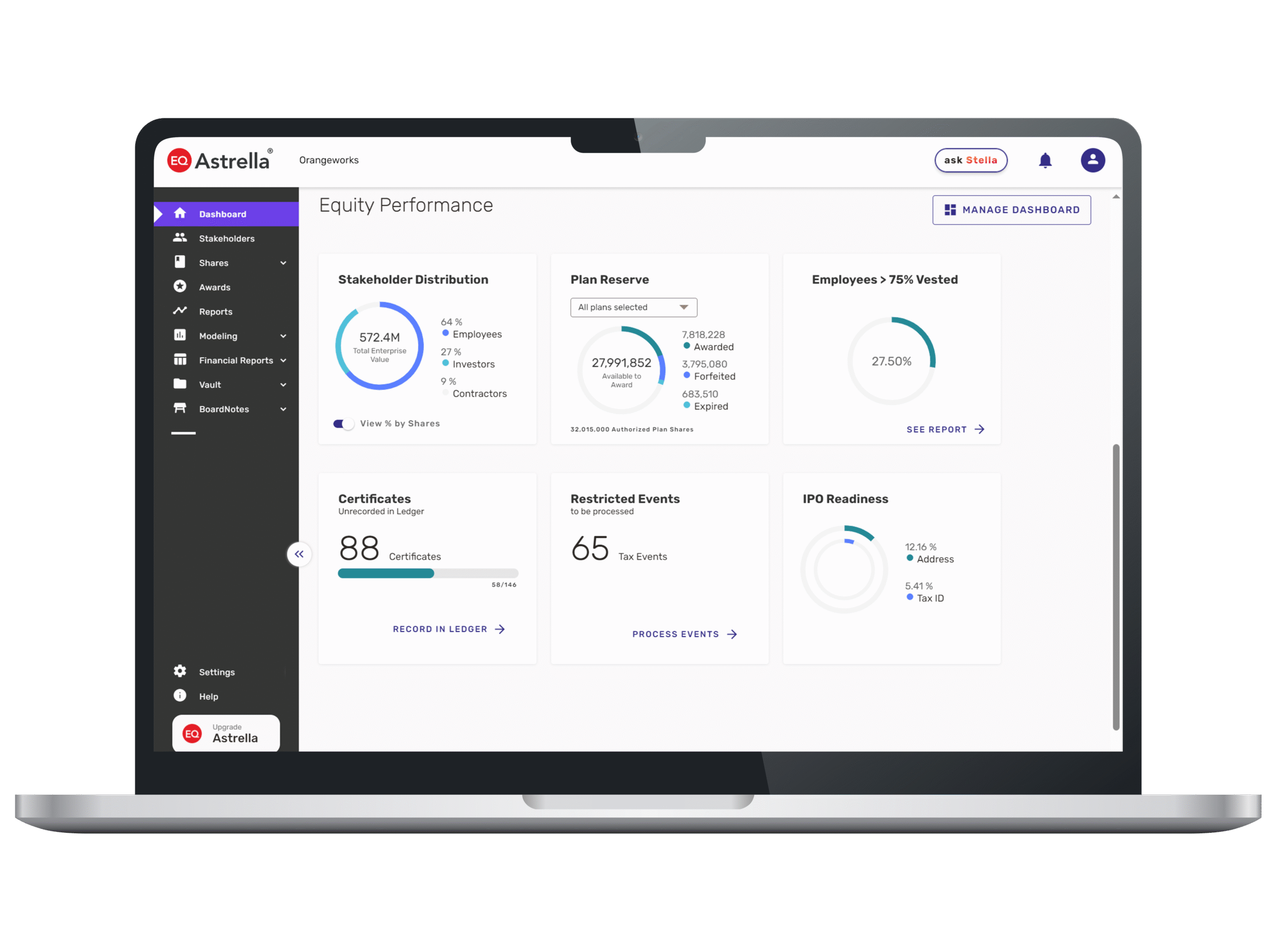
Astrella positions itself as having an “intuitive” interface. The platform is designed for startup founders and finance teams who may not be equity experts. Major functions are accessible from the main dashboard.
The navigation typically includes sections for:
- Cap table overview
- Shareholder management
- Equity plans
- Documents
- Reporting
- Scenario modeling
- Settings and user management
Most tasks follow a logical workflow. Adding a new shareholder, recording a transaction, or generating a report should take just a few clicks. The goal is reducing time spent on administration so founders can focus on building their business.
Stakeholder Portal Experience
Beyond admins, other people need access to cap table information. Investors want to see their holdings. Employees want to track their vesting. Astrella provides portal access for these stakeholders.
As one customer noted, Astrella “provides investors with significantly improved visibility.” Instead of “waiting to receive an updated spreadsheet every so often, investors can log in directly to the portal and see the cap table for themselves.”
This self-service approach has several benefits:
- Investors get real-time information
- Employees can check vesting without asking HR
- Founders spend less time answering status questions
- Everyone sees the same accurate data
The platform “serves as one reliable source of truth that investors and employees alike can access.” This wasn’t possible when teams relied on Excel spreadsheets that quickly became outdated.
Mobile Access and Availability
As a cloud-based platform, Astrella is accessible from any device with a web browser. This includes smartphones and tablets. The responsive design should work across screen sizes.
That said, cap table management isn’t typically a mobile-first activity. Most users will do serious work on a desktop or laptop. Mobile access is more useful for quick checks and reference.
Learning Curve Considerations
How quickly can new users become productive with Astrella? The learning curve depends on prior experience. Someone familiar with cap tables and equity concepts will pick it up faster than a first-time founder who’s never thought about share classes.
Astrella’s interface aims to be accessible to non-experts. But understanding the underlying concepts still matters. The software can calculate dilution, but you need to understand what dilution means to use those calculations effectively.
Training resources, documentation, and support availability all factor into the learning experience. Companies should budget time for team members to get comfortable with the platform.
Security and Compliance Capabilities
Cap table data is sensitive. It reveals who owns what in your company and how much they paid. Security matters here. Let’s examine Astrella’s approach.
Data Security Measures
Astrella emphasizes “secure” in its messaging around setup and operations. As a financial services technology platform backed by EQ (Equiniti), they inherit enterprise-grade security practices.
Standard security measures for platforms like this typically include:
- Encryption: Data encrypted in transit and at rest
- Access controls: Role-based permissions limiting who sees what
- Audit logging: Records of who accessed or changed data
- Secure authentication: Password requirements and multi-factor authentication options
- Regular security assessments: Testing for vulnerabilities
The immutable ledger feature adds another layer. Every transaction is permanently recorded. This creates accountability and makes tampering difficult.
Regulatory Compliance Support
Equity management triggers various compliance requirements. Astrella helps companies handle these obligations.
409A Valuations: Private companies issuing stock options need independent valuations to set exercise prices. Astrella integrates with 409A valuation providers. The results flow into your cap table data.
ASC 718 Accounting: Stock-based compensation has specific accounting rules. Astrella provides reports that support ASC 718 compliance. Your finance team or accountants can use these for financial reporting.
Securities Law Documentation: Issuing equity involves securities laws. Astrella’s document vault helps track the paperwork required for compliance. This includes stock purchase agreements, option grants, and board approvals.
Data Privacy Considerations
Cap table data includes personal information about shareholders and employees. Names, addresses, SSN or tax IDs, and financial details all live in the system. Privacy protections matter.
The platform should comply with relevant privacy regulations. This includes general data protection standards and potentially industry-specific requirements depending on your company’s situation.
Access controls let you limit who sees sensitive information. Not every team member needs to see every shareholder’s personal details. Permissions should be configured thoughtfully.
Astrella Pricing Analysis: What Does It Cost?
Pricing is always a key consideration when evaluating software. Let’s look at what we know about Astrella’s pricing approach.
Pricing Model Structure
Astrella offers a free trial, allowing companies to test the platform before committing. This reduces the risk of choosing the wrong solution. You can evaluate whether it meets your needs before paying.
Beyond the trial, specific pricing details aren’t published prominently. This is common in B2B software where pricing varies based on company needs. Factors that typically influence cap table software pricing include:
- Number of shareholders
- Number of securities/transactions
- Features needed
- Support level required
- Company stage (seed vs. growth stage)
To get accurate pricing, you’ll likely need to contact Astrella directly. They can provide a quote based on your specific situation.
Cost Comparison Framework
When evaluating Astrella’s cost, compare it to alternatives:
| Option | Typical Cost Range | Considerations |
|---|---|---|
| Excel spreadsheets | Free (software cost) | High error risk, no audit trail, time-intensive |
| Basic cap table tools | $0-$200/month | Limited features, may outgrow quickly |
| Mid-tier platforms | $200-$1,000/month | More features, better support |
| Enterprise solutions | $1,000+/month | Full feature set, dedicated support |
| Lawyer-managed cap table | $300-$500/hour | Expert handling but very expensive over time |
Hidden Cost Savings to Consider
The sticker price isn’t the full picture. Consider what cap table software saves:
Legal fees: One customer mentioned being able to “set up the cap table with Astrella and then get my legal team to review it, rather than hiring my legal team to set up the entire cap table.” That review vs. build difference can save thousands of dollars.
Time savings: Every hour spent maintaining spreadsheets has a cost. Automating calculations and reducing manual work frees up founder time for higher-value activities.
Error prevention: Cap table mistakes are expensive to fix. Correcting errors during due diligence or a funding round causes delays and legal fees. Accurate software reduces this risk.
Due diligence speed: Clean, organized cap table data speeds up fundraising and M&A processes. Investors and acquirers can review quickly instead of waiting for cleanup.
Astrella Compared to Competitors: Market Position Analysis
Astrella operates in a competitive market. Several other platforms offer cap table management. Let’s see how they compare.
Major Competitors Overview
According to the FeaturedCustomers Spring 2024 Cap Table Management Software Customer Success Report, the market includes several notable players:
Market Leaders (highest award category):
- Carta
- Global Shares
Top Performers:
- Diligent Equity
- insightsoftware
- Ledgy
- Pulley
- SeedLegals
- Vestd
These rankings reflect factors like market share, customer references, and social media presence. Carta and Global Shares lead in overall market presence. The “Top Performers” category includes strong alternatives that may be better fits for certain company profiles.
Astrella vs. Carta Comparison
Carta is often the first name people think of for cap table management. They have the largest market presence and have raised hundreds of millions in funding. Here’s how Astrella compares:
| Factor | Astrella | Carta |
|---|---|---|
| Company backing | EQ (Equiniti) – established financial services | VC-backed startup |
| Market focus | Private companies | Private companies + expanding services |
| Founded | 2019 | 2012 |
| Pricing approach | Contact for quote | Published tiered pricing |
| Feature depth | Core cap table + equity management | Extensive ecosystem (409A, fund admin, etc.) |
Why choose Astrella over Carta? Companies might prefer Astrella if they value the backing of an established financial services firm. Carta has faced some controversies and competition concerns. Astrella’s parent company brings decades of experience in shareholder services.
Why choose Carta over Astrella? Carta has more integrations, a larger user community, and more published educational content. Their market leadership means more third parties (lawyers, accountants, investors) are familiar with the platform.
Astrella vs. Pulley Comparison
Pulley positions itself as a modern alternative to Carta, focusing on simplicity and fair pricing. Here’s the comparison:
| Factor | Astrella | Pulley |
|---|---|---|
| Target market | Private companies broadly | Startups specifically |
| Pricing transparency | Contact for quote | Published pricing starting at $0/month |
| Brand positioning | Professional, enterprise-backed | Startup-friendly, modern |
| Integration ecosystem | Growing | Growing |
Why choose Astrella over Pulley? Astrella may appeal to companies wanting a platform backed by established financial services infrastructure. The EQ connection provides stability and compliance expertise.
Why choose Pulley over Astrella? Pulley’s transparent pricing and startup-focused positioning attract early-stage companies. Their free tier lets companies start without any cost.
Astrella vs. Ledgy Comparison
Ledgy is a European-based alternative with strong presence in the UK and EU markets. Comparison:
| Factor | Astrella | Ledgy |
|---|---|---|
| Geographic strength | U.S. based, expanding internationally | European focus, expanding globally |
| Compliance focus | U.S. regulations (409A, ASC 718) | European regulations (EMI, CSOP, etc.) |
| Company backing | EQ (Equiniti) | VC-backed |
Why choose Astrella over Ledgy? U.S.-based companies will find Astrella’s compliance features more relevant. The 409A and ASC 718 support matters for American companies.
Why choose Ledgy over Astrella? European companies benefit from Ledgy’s focus on EU/UK equity schemes. If you have employees in multiple European countries, Ledgy’s localized knowledge helps.
Market Position Summary
Astrella occupies a middle position in the market. It’s not the dominant market leader (that’s Carta), but it’s not a tiny startup either. The EQ backing provides credibility and resources that pure startups can’t match.
This position works well for companies that want:
- More stability than a VC-backed startup offers
- Less complexity than massive enterprise systems
- Professional support during setup and ongoing use
- A platform with room to grow as their company scales
Customer Experience and Support Evaluation
What do actual users say about Astrella? Let’s look at customer experiences and the support available.
Real Customer Stories
Astrella publishes customer stories on their website. One detailed example comes from Disaster Technologies, Inc. (Disaster Tech), a disaster recovery service provider.
Sean Griffin, co-founder and CEO, shared why they chose Astrella. As a “fast-growing startup in a highly competitive industry,” they needed to “stay in line with financial obligations without compromising business agility or transparency for employees and stockholders.”
Their experience highlights several benefits:
Setup support: “Astrella was really instrumental in giving us the support to build [our cap table] out properly.”
Cost efficiency: They could “set up the cap table with Astrella and then get my legal team to review it, rather than hiring my legal team to set up the entire cap table.”
Investor visibility: Astrella “provides investors with significantly improved visibility.” Investors can “log in directly to the portal and see the cap table for themselves.”
Single source of truth: The platform “serves as one reliable source of truth that investors and employees alike can access.”
Support Availability and Quality
Based on customer feedback, Astrella provides meaningful support during implementation. This isn’t just software that you’re left to figure out alone. The team guides you through setup and provides information that helps you build your cap table correctly.
Support channels typically include:
- Implementation assistance for new customers
- Email support for ongoing questions
- Knowledge base and documentation
- Training resources
The level of support may vary based on your plan. Higher-tier customers often get more dedicated assistance. Ask about support specifics when evaluating pricing options.
Areas Where Users Report Challenges
No software is perfect. Based on common challenges with cap table platforms generally, areas to watch include:
Initial data migration: Getting historical data into any new system takes effort. Even with good support, this requires time and attention to detail.
Learning curve: New users need time to understand both the software and underlying equity concepts. Budget for training.
Integration limitations: Smaller platforms may have fewer integrations with other tools. Check if Astrella connects with your existing software stack.
Feature gaps vs. larger competitors: Market leaders like Carta have more features. If you need something specific, verify Astrella offers it before committing.
Best Use Cases for Astrella: Who Should Consider This Platform?
Not every company needs the same cap table solution. Let’s identify who benefits most from Astrella.
Ideal Company Profiles
Early-stage startups leaving spreadsheets behind: If you’re still on Excel but know you need to upgrade, Astrella’s quick setup and support makes the transition manageable. The cost savings from avoiding extensive legal fees for cap table creation helps bootstrap budgets.
Funded startups needing investor transparency: Once you have outside investors, they expect professional cap table management. Astrella’s investor portal lets them check their holdings anytime. This professionalism reflects well on your company.
Companies issuing employee equity: The stock option tracking and vesting management features matter if you’re using equity compensation. Employees can see their equity through the portal. This improves satisfaction and reduces HR questions.
U.S.-based private companies: Astrella’s compliance features focus on U.S. regulations like 409A valuations and ASC 718 accounting. American companies get the most value from these capabilities.
Companies valuing stability over bleeding-edge features: The EQ backing provides corporate stability. If you’re concerned about your software vendor running out of funding or pivoting away from cap table management, Astrella’s parent company offers reassurance.
Company Stages That Fit Well
| Stage | Fit Rating | Notes |
|---|---|---|
| Pre-seed / Founding | Good | Simple setup works well for basic cap tables |
| Seed | Excellent | Growing complexity benefits from proper tooling |
| Series A | Excellent | Investor expectations require professional systems |
| Series B+ | Good | May need to evaluate if complexity requires larger platform |
| Pre-IPO | Varies | Depends on specific needs; may need enterprise solution |
Who Might Look Elsewhere
Astrella isn’t the right fit for every company. Consider alternatives if you’re:
A very early founder who wants free forever: Some competitors offer permanent free tiers. If you have a simple cap table and want to pay nothing, other options exist.
A European company focused on EU equity schemes: Platforms like Ledgy or Vestd specialize in European regulations. Their localized features may serve you better.
A large enterprise needing extensive customization: Massive companies with complex requirements may need enterprise-grade solutions with more customization options.
Someone who needs a specific integration: Check Astrella’s integration list. If you need connection to a specific tool they don’t support, that’s a dealbreaker.
Implementation Best Practices: Getting the Most From Astrella
Choosing cap table software is just the start. How you set it up and use it determines the value you get. Here are best practices for Astrella implementation.
Pre-Implementation Preparation
Before starting setup, gather your materials:
Collect all equity documents: Find every stock purchase agreement, option grant, board resolution, and investor agreement. Missing documents create gaps in your cap table.
Reconcile your current records: If you have a spreadsheet, review it for accuracy. Check that totals make sense. Identify any discrepancies before importing data.
List all shareholders: Make sure you have current contact information for every equity holder. You’ll need this for the shareholder registry.
Document share classes and terms: Understand your company’s share structure. Know the rights and preferences of each class. This information drives how you configure the system.
Identify outstanding convertible instruments: SAFEs, convertible notes, and warrants all affect your cap table. Gather the terms for each one.
Setup and Configuration Tips
Work closely with Astrella support: Take advantage of implementation assistance. Ask questions. Get their guidance on configuring things correctly.
Start with founding shares: Build the cap table chronologically. Begin with initial incorporation and founding shares. Then add each subsequent transaction in order.
Double-check calculations: After entering data, verify the totals match your records and legal documents. Have someone else review independently.
Get legal review: Once you’ve built the cap table, have your lawyer review it. They can spot issues you might miss. This review is cheaper than having them build from scratch.
Set up user permissions thoughtfully: Decide who needs access to what. Not everyone should see everything. Configure roles based on actual needs.
Ongoing Maintenance Practices
Update in real-time: Don’t let transactions pile up. Record equity events as they happen. This keeps your cap table current.
Establish approval workflows: Define who can make changes. Have processes for reviewing and approving transactions before they’re finalized.
Regular reconciliation: Periodically compare your cap table to legal documents and bank records. Catch any discrepancies early.
Keep documents attached: When recording transactions, upload supporting documents. This maintains the connection between data and paperwork.
Train new team members: As your company grows, new people will need access. Budget time to train them on proper usage.
Astrella’s Future Development and Roadmap Considerations
When choosing software, think about where it’s headed. Will it meet your needs in two or three years? Let’s consider Astrella’s trajectory.
Company Growth and Partnerships
Astrella has shown continued development since its 2019 founding. The 2022 partnership between AST Private Company Solutions and Psagot Equity Ltd. demonstrates expansion efforts. This partnership aims to support “global private company ownership management.”
Being part of EQ (Equiniti) provides resources for ongoing development. Unlike bootstrapped startups that might struggle for funding, Astrella has corporate backing to invest in the platform.
Feature Development Expectations
Cap table software continues evolving. Common areas of development across the industry include:
- More integrations with accounting, HR, and banking software
- Improved scenario modeling and analytics
- Better mobile experiences
- International expansion and compliance support
- AI-powered insights and recommendations
While specific roadmap details aren’t public, expect Astrella to continue developing along these lines. The competitive market drives ongoing improvement.
Platform Stability Considerations
The cap table software market has seen consolidation. Some smaller players have been acquired or shut down. When evaluating any vendor, consider their long-term viability.
Astrella’s position as part of EQ provides stability advantages. EQ is a large, established company. They’re not dependent on the next funding round. This reduces the risk of your cap table software suddenly disappearing or being acquired and sunsetted.
Common Questions and Concerns About Astrella
Let’s address questions that frequently come up when evaluating Astrella.
Data Migration Concerns
Q: What if I need to switch away from Astrella later?
Any good cap table software should let you export your data. Before committing, verify Astrella’s export capabilities. Can you get your data in usable formats? This protects you if you ever need to move platforms.
Complexity Handling
Q: Can Astrella handle complex cap tables?
Astrella supports multiple share classes, option pools, convertible instruments, and complex scenarios. For most private companies, the feature set is sufficient. Very complex situations (multiple subsidiaries, international structures) may need evaluation to confirm fit.
Integration Questions
Q: What other software does Astrella integrate with?
Astrella connects users with service providers like 409A valuation firms. For specific software integrations, check their current offerings. Integration ecosystems grow over time, so what’s available today may expand.
Pricing Transparency
Q: Why isn’t pricing published on the website?
Many B2B software companies quote pricing based on company specifics. This allows them to offer appropriate plans for different company sizes and needs. The free trial lets you evaluate before discussing pricing. Request a quote to get accurate numbers for your situation.
Compared to Spreadsheets
Q: We’ve managed fine with Excel. Why switch?
Spreadsheets work until they don’t. Common breaking points include:
- Errors that go unnoticed until due diligence
- Multiple versions creating confusion
- Time spent on manual calculations
- Lack of investor visibility
- Compliance documentation challenges
If you’re raising funding or granting equity to employees, professional software reduces risk and saves time. The question is when, not if, you’ll need to upgrade.
Making the Decision: Is Astrella Right for Your Company?
After this deep analysis, how do you decide? Here’s a framework for making the call.
Evaluation Checklist
Go through these questions:
| Question | If Yes, Astrella might fit | If No, consider alternatives |
|---|---|---|
| Are you a U.S.-based private company? | Compliance features align | Look at localized options for your region |
| Do you value implementation support? | Astrella emphasizes hands-on help | Self-service platforms may work |
| Do you want corporate backing stability? | EQ provides that foundation | Startup-backed tools might suit you |
| Do you have investors expecting professional tools? | Investor portal meets this need | Simpler tools may suffice for now |
| Are you issuing employee equity? | Stock plan tracking features help | Basic cap table might be enough |
Steps to Take Next
- Start the free trial: Get hands-on experience before deciding. No amount of reading replaces actually using the software.
- Prepare your data: Gather equity documents and clean up any existing records during the trial period.
- Schedule a demo: Talk to the Astrella team. Ask questions specific to your situation. Get a pricing quote.
- Compare alternatives: Evaluate at least one or two other options. This confirms you’re making an informed choice.
- Involve stakeholders: If you have co-founders, a CFO, or legal counsel, include them in the evaluation. They’ll have valuable perspectives.
- Decide with confidence: Pick the platform that best fits your current needs while allowing room to grow.
Conclusion: Final Thoughts on This Astrella Platform Review
Astrella offers a solid cap table management solution backed by an established financial services company. Its strengths lie in simplifying equity administration, providing investor and employee transparency, and supporting U.S. compliance requirements. For startups moving beyond spreadsheets and growing companies needing professional equity management, it’s worth serious consideration.
The platform won’t be the perfect fit for everyone. Larger competitors have more market presence. Newer startups offer different pricing approaches. But Astrella’s combination of functionality, support, and corporate stability makes it a strong contender in the market.
Frequently Asked Questions About Astrella Review
| What is Astrella and what does it do? | Astrella is a cloud-based cap table management platform for private companies. It helps businesses track equity ownership, manage stock option plans, model funding scenarios, and maintain compliance with regulations like 409A and ASC 718. The platform is part of EQ Private Company Solutions. |
| Who should use Astrella for cap table management? | Astrella works best for U.S.-based startups and private companies that have outgrown spreadsheet-based cap table management. It’s particularly useful for companies with outside investors, employee stock option plans, or multiple funding rounds. Founders, CFOs, and finance teams are typical users. |
| How does Astrella compare to Carta? | Carta is the market leader with more features and integrations. Astrella offers similar core functionality with the backing of an established financial services company (EQ/Equiniti). Astrella may appeal to companies wanting corporate stability, while Carta offers a broader ecosystem and more public resources. |
| Is Astrella free to use? | Astrella offers a free trial so you can test the platform before committing. For ongoing use, pricing depends on your company’s specific needs. Contact Astrella directly for a quote based on your situation. |
| How difficult is it to set up Astrella? | Astrella promotes quick and easy setup. Customer feedback suggests the team provides meaningful support during implementation. The actual difficulty depends on your company’s complexity. Simple cap tables can be ready in hours. More complex situations with years of history take longer. |
| Can employees and investors access their equity information in Astrella? | Yes. Astrella provides portal access for stakeholders. Investors can log in and view the cap table directly instead of waiting for spreadsheet updates. Employees can check their vesting status. This self-service approach reduces questions and provides transparency. |
| What compliance features does Astrella support? | Astrella supports U.S. compliance requirements including 409A valuation integration and ASC 718 reporting for stock-based compensation accounting. The platform also helps maintain documentation for board approvals and securities law compliance. |
| What makes Astrella different from other cap table software? | Astrella is backed by EQ (Equiniti), an established financial services company with experience in shareholder services. This provides corporate stability and compliance expertise that pure startup competitors may lack. The platform focuses on private company needs with professional support during implementation. |
| Can I switch from spreadsheets to Astrella easily? | Yes, though “easy” depends on your current data quality. Astrella’s support team helps during implementation. One customer noted they could build their cap table with Astrella and have legal review it, rather than paying lawyers to build it from scratch. This approach saves time and money. |
| Is my data secure with Astrella? | Astrella operates as part of EQ, a financial services company with enterprise security practices. The platform uses an immutable ledger to track all transactions, creating a permanent audit trail. Standard security measures like encryption and access controls protect your data. |






 Stack Insight is intended to support informed decision-making by providing independent information about business software and services. Some product details, including pricing, features, and promotional offers, may be supplied by vendors or partners and can change without notice.