

Altshare vs Ledgy: The Complete Cap Table Management Comparison for 2026
Choosing the right cap table management software can make or break your equity operations. Two platforms that often come up in conversations are Altshare and Ledgy. Both promise to replace your error-prone spreadsheets with automated, real-time cap table tracking. But they’re built for different audiences, different markets, and different stages of company growth.
In this comparison, we’ll break down everything you need to know about Altshare vs Ledgy. We’ll cover pricing, features, reporting capabilities, geographic focus, integrations, security, and customer support. By the end, you’ll have a clear picture of which platform fits your company’s needs.
Whether you’re a seed-stage startup or a scaling enterprise, this guide will help you make an informed decision. Let’s dig in.
What Is Cap Table Management Software and Why Does It Matter?
Before we compare Altshare and Ledgy, let’s talk about what cap table software actually does. A cap table, short for capitalization table, is a record of who owns what in your company. It tracks shares, stock options, convertible notes, SAFEs, and every other form of equity.
The Problem with Spreadsheets
Most early-stage startups start with Excel or Google Sheets. It works fine when you have three founders and maybe an angel investor. But things get complicated fast.
- You raise a Series A with preferred shares and anti-dilution provisions
- You launch an employee stock option plan with vesting schedules
- You issue convertible notes that convert at different caps
- You do a stock split or secondary transaction
Suddenly, your spreadsheet becomes a monster. One wrong formula and your ownership percentages are off. Investors get nervous. Employees don’t trust their grant calculations. Your lawyers charge extra to audit everything before a funding round.
How Cap Table Software Solves This
Dedicated cap table platforms like Altshare and Ledgy automate these calculations. They maintain a single source of truth that updates in real time. Documents attach directly to transactions. Audit trails track every change. Financial reports generate instantly.
The best platforms also handle compliance requirements. They calculate taxes, generate regulatory filings, and keep you ready for due diligence at any moment.
The Stakes Are High
Getting your cap table wrong has real consequences. Founders have lost board seats because of miscalculated ownership. Employees have sued over incorrect option grants. M&A deals have fallen apart during due diligence.
Choosing between Altshare vs Ledgy isn’t just about features. It’s about protecting your company’s most sensitive ownership data.
Altshare Overview: Equity Management Intelligence

Altshare positions itself as an Equity Management Intelligence platform. The company is based in Ramat Gan, in the Tel Aviv region of Israel. It targets companies that want more than just cap table tracking. The platform aims to transform how equity is managed, analyzed, and used for strategic decisions.
Company Background
Altshare operates within the financial services space with a focus on centralized equity management. The platform consolidates all equity-related activity into a single interface. This includes cap tables, stock options, financial reporting, and scenario modeling.
The company describes itself as a mid-sized player in the equity management market. It serves companies ranging from early-stage startups to complex growth-stage organizations.
Core Philosophy
Altshare’s tagline emphasizes “Real-Time Cap Table Management Powered by Equity Management Intelligence.” This means the platform doesn’t just record data. It helps you analyze and act on that data.
The focus on “intelligence” suggests features like scenario modeling, dilution analysis, and strategic planning tools. These go beyond basic cap table maintenance.
Target Market
Based on available information, Altshare appears to focus on:
- Companies in the Israeli startup ecosystem
- Growth-stage organizations with complex equity structures
- Teams that need advanced reporting for 409A valuations
- Companies looking to replace spreadsheet-driven processes
The platform scales from early-stage startups to more complex organizational structures. This flexibility makes it suitable for companies planning rapid growth.
Key Messaging
Altshare emphasizes automation as a core benefit. The platform promises to “reduce manual work and eliminate spreadsheet-driven errors.” This addresses the biggest pain point for companies managing equity in Excel.
The company also highlights real-time visibility. Your cap table updates automatically, so you always have current and accurate information for reporting and decision-making.
Ledgy Overview: European-First Equity Management
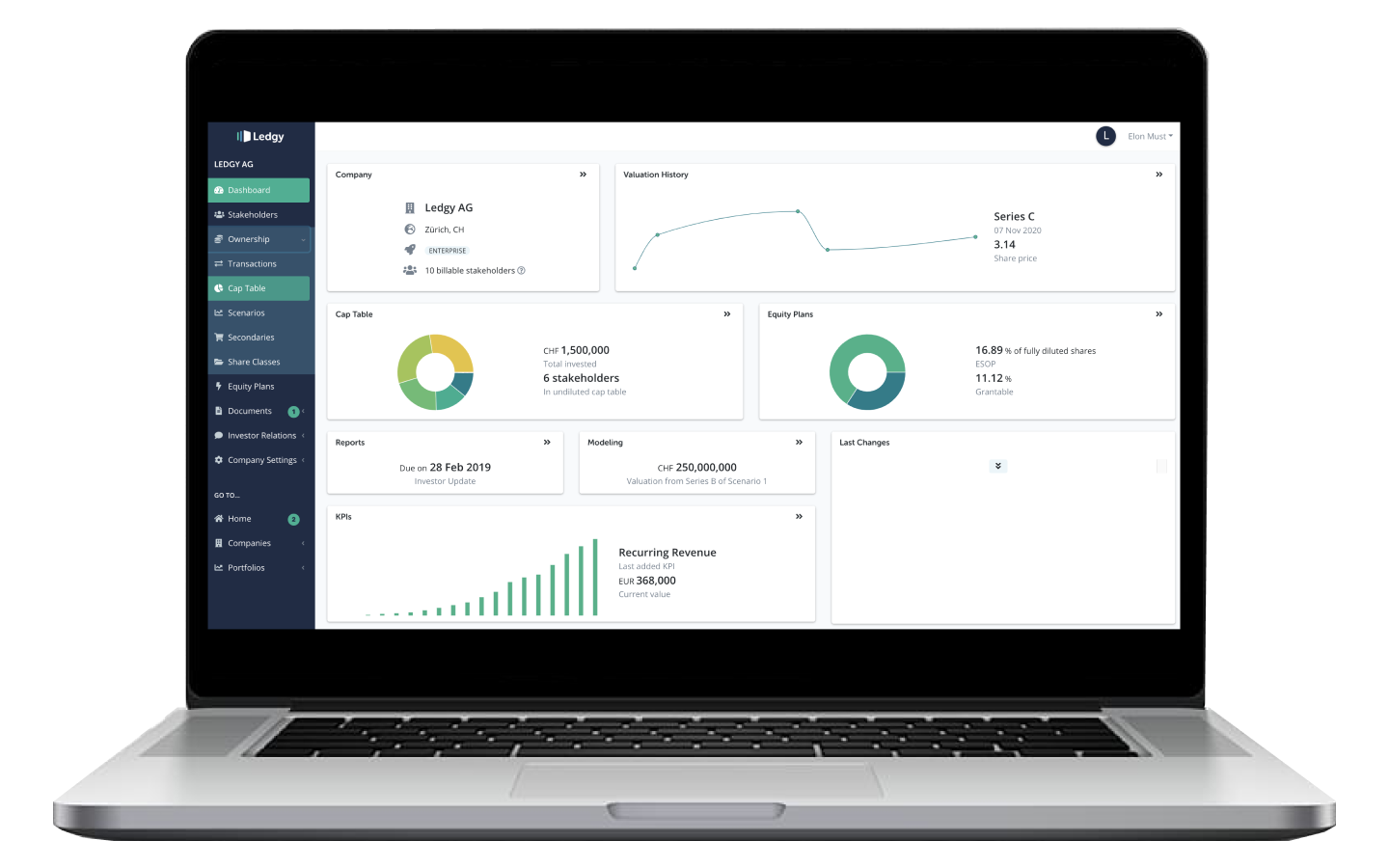
Ledgy is a software company specializing in equity management for private and public companies. Founded in 2017, the company is headquartered in Zurich, Switzerland. This European base shapes much of the platform’s design and feature set.
Company Background
Ledgy operates in the financial technology sector. The platform includes cap table management, financial reporting, and compliance tools for equity plans. The company serves companies across various growth stages.
According to CB Insights data, Ledgy has established itself as a player in the European equity management space. The company recently consolidated under a sole CEO structure, suggesting organizational maturation.
European Focus
What sets Ledgy apart is its purpose-built design for European markets. The platform includes:
- Multicurrency support for companies operating across borders
- IFRS reporting that meets European accounting standards
- Localized tax support for different European jurisdictions
- Country-specific addendums for equity plans
This makes Ledgy particularly attractive for startups operating across European countries. If you have employees in Germany, France, and the UK, each with different tax implications for stock options, Ledgy is built to handle that complexity.
Target Market
Ledgy targets several company types:
- European startups and scaleups
- Companies with cross-border equity plans
- Organizations needing IFRS-compliant reporting
- Teams planning international expansion
The platform also maintains “US investor familiarity.” This means European startups can present cap tables in formats that American investors expect to see.
Key Messaging
Ledgy describes itself as “your second pair of eyes” for cap table management. The platform promises to keep your cap table “error-free with dynamic transactions and attached documentation.”
Real-time updates and accuracy are central themes. The company emphasizes having “all your data in one place” as a core benefit.
Altshare vs Ledgy: Feature-by-Feature Comparison
Let’s break down how these two platforms compare across specific features. This section provides a detailed look at what each platform offers.
Cap Table Management Core Features
| Feature | Altshare | Ledgy |
|---|---|---|
| Real-time updates | Yes | Yes |
| Transaction history | Yes | Yes, with attached documents |
| Multiple share classes | Yes | Yes |
| Convertible instruments | Yes | Yes |
| Scenario modeling | Yes (Intelligence features) | Yes |
| Document attachment | Yes | Yes |
| Audit trail | Yes | Yes |
Both platforms cover the basics well. They track ownership, handle multiple share classes, and maintain transaction histories. The differences emerge in how they handle specific use cases.
Altshare’s Approach to Cap Table Management
Altshare positions its cap table as “a powerful tool for any type of report generation.” The platform emphasizes easy integration with existing data sources. If you’re migrating from spreadsheets, Altshare promises to make that transition smooth.
The “Equity Management Intelligence” framework suggests deeper analytical capabilities. This could include:
- Dilution modeling for future funding rounds
- Waterfall analysis for exit scenarios
- Option pool planning and refresh calculations
- Strategic equity allocation recommendations
Altshare also highlights automation. The platform shows “total shares” screens that give instant visibility into ownership distribution. Manual work decreases because calculations happen automatically.
Ledgy’s Approach to Cap Table Management
Ledgy focuses on accuracy and audit-readiness. The platform lets you “bring historical transaction data into your cap table, with documents attached for maximum visibility and accuracy.”
This document-centric approach matters during due diligence. Investors and lawyers can see not just the numbers, but the underlying agreements. Everything connects back to signed documents.
Ledgy also emphasizes IPO-readiness. The platform promises to keep your cap table “error-free and IPO-ready.” This suggests features designed for companies planning public offerings.
The ability to “manipulate data how you want” indicates flexible reporting and analysis tools. Users can slice and dice their equity data in various ways.
Winner for Core Cap Table Features
Both platforms handle standard cap table management well. Ledgy edges ahead for companies that prioritize document attachment and audit-readiness. Altshare may appeal more to companies wanting deeper analytical and intelligence features.
Comparing Altshare and Ledgy on Financial Reporting
Financial reporting capabilities separate basic cap table tools from professional-grade platforms. Both Altshare and Ledgy offer reporting features, but they approach them differently.
Altshare’s Reporting Capabilities
Altshare positions its cap table as ready for 409A valuations. This is significant because 409A valuations determine the fair market value of your company’s common stock. Getting this wrong has serious tax implications.
When you need to file a report, Altshare promises that “all your data is readily available, saving you time and effort.” The system’s automatic updates ensure information stays current.
Key reporting features include:
- 409A valuation support
- Ownership reports by stakeholder
- Dilution analysis reports
- Vesting schedule tracking
The emphasis on “Equity Management Intelligence” suggests reports go beyond basic data dumps. You likely get insights and analysis alongside raw numbers.
Ledgy’s Reporting Capabilities
Ledgy highlights IFRS reporting as a key strength. IFRS (International Financial Reporting Standards) compliance matters for European companies and any startup with international investors.
The platform promises “instantly generated financial reports you can trust.” This speed matters when you’re preparing for board meetings or investor updates.
Specific reporting features include:
- IFRS-compliant equity reports
- Multicurrency reporting
- Localized tax calculations
- Audit-ready documentation
Ledgy also produces a “State of Share Plans” report that companies can download. This suggests thought leadership content alongside practical reporting tools.
Reporting Standards Comparison
| Reporting Type | Altshare | Ledgy |
|---|---|---|
| 409A Valuation Support | Strong | Available |
| IFRS Compliance | Not emphasized | Strong |
| US GAAP Support | Yes | Yes |
| Multicurrency | Available | Strong |
| Tax Calculations | Yes | Localized by country |
Winner for Financial Reporting
Your choice depends on your geography and reporting needs. Ledgy wins for European companies needing IFRS compliance and multicurrency support. Altshare wins for companies focused primarily on US reporting standards and 409A valuations.
Geographic Focus: Ledgy vs Altshare Regional Strengths
Where a company is headquartered shapes its product. Altshare and Ledgy come from different parts of the world, and this influences their feature sets.
Altshare’s Geographic Strengths
Altshare is based in Israel, one of the world’s most active startup ecosystems. The Tel Aviv region produces more startups per capita than almost anywhere else. This environment shapes Altshare’s design.
Israeli startups typically:
- Raise money from both Israeli and US investors
- Structure equity to appeal to Silicon Valley VCs
- Plan for US-style exits (M&A or NASDAQ IPOs)
- Need 409A valuations for US tax compliance
Altshare appears built for this reality. The platform handles equity structures familiar to American investors while serving companies outside the US.
For companies in Israel or similar ecosystems (like the UK pre-Brexit), Altshare offers relevant features without European regulatory complexity.
Ledgy’s Geographic Strengths
Ledgy’s Swiss headquarters puts it at the heart of Europe. The company explicitly markets itself as “purpose-built for Europe.”
European equity management brings unique challenges:
- 27+ EU countries with different employment laws
- Multiple currencies (Euro, Swiss Franc, Swedish Krona, etc.)
- Varied tax treatments for stock options
- IFRS accounting requirements
- GDPR data protection rules
Ledgy addresses these head-on. The platform includes localized tax support, country-specific addendums for equity plans, and multicurrency handling built into the core product.
Story.law, a legal services firm, specifically partners with Ledgy for “clients that need European ESOP design, country addendums, and audit-ready reporting.” This endorsement validates Ledgy’s European focus.
Cross-Border Considerations
| Scenario | Better Choice | Why |
|---|---|---|
| Israeli startup with US investors | Altshare | 409A focus, US investor familiarity |
| German startup with EU expansion | Ledgy | IFRS, multicurrency, localized tax |
| UK startup post-Brexit | Either | Depends on investor base |
| US startup with European employees | Ledgy | Cross-border equity plan support |
| Middle East startup | Altshare | Regional proximity and focus |
Winner for Geographic Coverage
Ledgy wins for European operations. If you have employees or subsidiaries across multiple EU countries, Ledgy’s localized approach saves significant time and reduces compliance risk.
Altshare wins for Israel and similar markets. Companies that primarily deal with US investors and reporting standards will find Altshare’s approach more directly relevant.
Equity Plan Management: Altshare vs Ledgy for Stock Options
Managing employee stock options is about more than tracking grants. You need vesting schedules, exercise windows, tax calculations, and employee communications. Both platforms handle equity plans, but with different emphases.
Altshare’s Equity Plan Features
Altshare includes stock option management as part of its Equity Management Intelligence platform. The system tracks:
- Option grants and vesting schedules
- Exercise events and deadlines
- Option pool utilization
- Employee equity communications
The platform’s automation focus extends to equity plans. Vesting calculations happen automatically. You don’t manually update spreadsheets each month to reflect newly vested shares.
Altshare emphasizes that it supports companies as they grow. Early-stage startups can start with simple option plans. As complexity increases, the platform scales with you.
Ledgy’s Equity Plan Features
Ledgy offers what it calls “compliance for equity plans.” This goes beyond basic tracking to include regulatory requirements across different jurisdictions.
Key features include:
- Cross-border equity plan administration
- Country-specific tax calculations
- Localized employee communications
- Compliance documentation
The European focus shines here. If you grant options to an employee in France, the tax implications differ from grants in Germany or Spain. Ledgy handles these variations automatically.
Ledgy produces annual “State of Share Plans” research. This indicates deep expertise in equity compensation trends and best practices.
Employee Portal Comparison
Both platforms let employees see their own equity. But the experience differs.
Altshare provides visibility into vesting schedules and current values. Employees can track their equity without bothering HR or finance teams.
Ledgy emphasizes localized experiences. An employee in the Netherlands sees information relevant to Dutch tax treatment. An employee in the UK sees British-specific details.
ESOP Administration
| Feature | Altshare | Ledgy |
|---|---|---|
| Vesting schedule tracking | Yes | Yes |
| Exercise management | Yes | Yes |
| Tax calculations | Yes | Yes, localized by country |
| Employee self-service | Yes | Yes |
| Multi-country support | Limited info | Strong |
| Compliance documentation | Yes | Yes, with country addendums |
Winner for Equity Plan Management
Ledgy wins for international teams. If you have employees across multiple countries, Ledgy’s localized tax and compliance features save significant administrative burden.
Altshare works well for single-country operations. If your team is concentrated in one jurisdiction, you may not need Ledgy’s international complexity.
User Experience and Interface Design
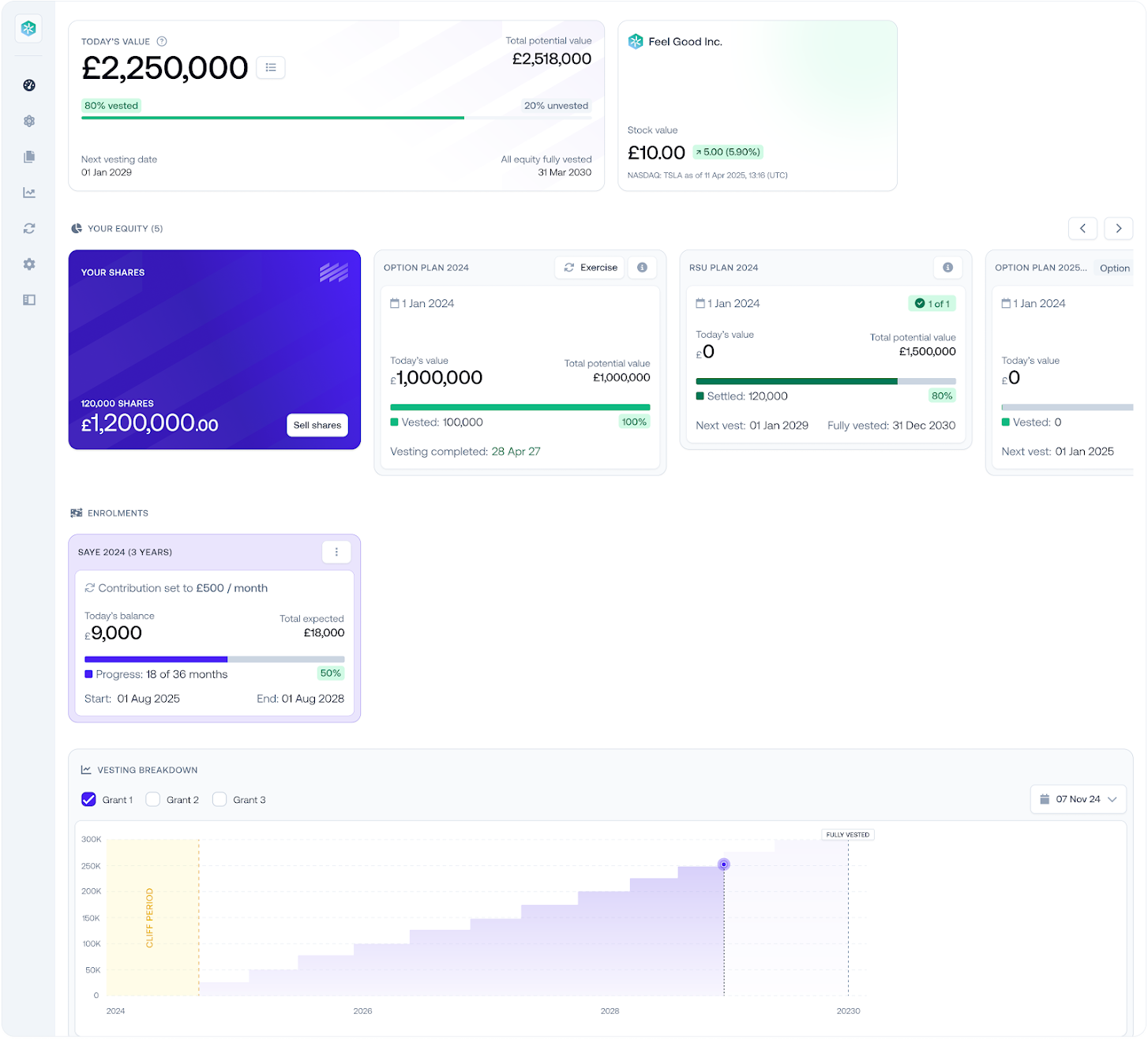
Software that’s hard to use doesn’t get used. Both Altshare and Ledgy invest in user experience, but they approach it differently.
Altshare’s Interface
Altshare markets its cap table management as “accurate and intuitive, every time.” The emphasis on intuition suggests a focus on ease of use.
From available screenshots and descriptions, Altshare’s interface includes:
- Total shares screens showing ownership at a glance
- Ready report screens for quick data access
- Clean data visualization for complex information
The platform promises “easy integration with your data.” This suggests smooth onboarding when migrating from spreadsheets or other systems.
Altshare aims to turn your cap table into a “strategic asset.” This positioning implies dashboards and visualizations that support decision-making, not just record-keeping.
Ledgy’s Interface
Ledgy describes its cap table UI as offering “real-time data” with “different data types” clearly presented. The platform lets users “manipulate data how you want.”
Interface features include:
- Dynamic transactions that update automatically
- Attached documentation visible alongside records
- Flexible data views for different use cases
Ledgy invests in making complex equity data accessible. The platform handles sophisticated scenarios (multiple share classes, convertible instruments, cross-border grants) while keeping the interface manageable.
Learning Curve Considerations
One concern noted about Ledgy is that “configuration complexity requires careful setup.” The platform’s power comes with a learning curve. You need to configure it correctly to get full value.
Altshare’s emphasis on being “intuitive” suggests a lower barrier to entry. But this may also mean fewer advanced configuration options.
Mobile Access
Neither platform heavily markets mobile apps in available materials. Cap table management typically happens on desktop, where you’re reviewing detailed financial data and documents.
Both platforms appear to use web-based interfaces accessible from any device with a browser.
Winner for User Experience
Without hands-on testing, it’s hard to declare a definitive winner. Altshare appears more approachable for teams new to cap table software. Ledgy offers more power but requires more careful setup.
The best approach: request demos from both platforms and have your actual users test them.
Pricing Structure: Altshare vs Ledgy Cost Comparison
Pricing for cap table software varies widely. Both Altshare and Ledgy use quote-based pricing, which makes direct comparison challenging.
Altshare’s Pricing Approach
Altshare doesn’t publish fixed pricing on its website. The company uses a “Contact Sales” model. This suggests pricing customized to each company’s needs.
Factors that likely influence Altshare pricing:
- Number of stakeholders on your cap table
- Complexity of your equity structure
- Modules and features you need
- Company stage and funding
The “Book a Demo” call-to-action indicates Altshare wants to understand your needs before quoting. This can be good (tailored pricing) or frustrating (no quick self-service option).
Ledgy’s Pricing Approach
Ledgy also uses quote-based pricing. The platform offers different tiers based on company size and needs.
One note from market research: “Pricing can rise with growth and advanced modules.” This suggests Ledgy charges more as your cap table complexity increases.
Factors influencing Ledgy pricing likely include:
- Number of stakeholders
- Number of countries with employees
- Reporting and compliance modules needed
- Integration requirements
Pricing Transparency Comparison
| Aspect | Altshare | Ledgy |
|---|---|---|
| Published pricing | No | No |
| Pricing model | Quote-based | Quote-based |
| Free trial | Demo available | Demo available |
| Pricing scales with growth | Likely | Yes, confirmed |
Total Cost of Ownership
When evaluating pricing, consider more than the monthly subscription:
- Setup costs for data migration and configuration
- Training time for your team to learn the platform
- Integration costs if you need custom connections
- Growth costs as your cap table expands
A cheaper platform that requires more manual work may cost more in the long run. An expensive platform that saves significant time may be worth it.
Winner for Pricing
No clear winner without specific quotes. Contact both companies with your actual requirements to get comparable pricing. Ask about pricing as you scale, not just current costs.
Security and Data Protection
Your cap table contains your company’s most sensitive ownership information. Security isn’t optional. Both platforms address security, but with different emphases.
Altshare’s Security Approach
Altshare addresses security directly on its website with the question “Is my data secure?” This indicates awareness that customers care about this issue.
Key security considerations for Altshare:
- Data encryption in transit and at rest
- Access controls for different user roles
- Audit trails for all changes
- Secure document storage
The Israeli tech ecosystem has strong security expertise, which may benefit Altshare’s infrastructure decisions.
Ledgy’s Security Approach
Ledgy’s Swiss headquarters brings certain security advantages. Switzerland has strong data protection laws. GDPR compliance is built into European operations.
However, market research notes “recent press indicates data usage concerns and product complaints.” This suggests some customers have raised questions about how Ledgy handles data.
If data privacy is a top concern, ask Ledgy directly about these issues during your evaluation. Understand their data processing practices and any recent changes.
Compliance Certifications
Both platforms likely maintain standard security certifications. When evaluating, ask about:
- SOC 2 Type II certification
- GDPR compliance measures
- Data residency options
- Backup and disaster recovery procedures
Winner for Security
Inconclusive without detailed security documentation. Ask both vendors for their security whitepapers and compliance certifications. Given the data usage concerns mentioned about Ledgy, dig deeper during your evaluation process.
Integration Capabilities: How Altshare and Ledgy Connect
Cap table software doesn’t exist in isolation. It needs to work with your accounting system, HR platform, banking relationships, and legal tools. Integration capabilities matter.
Altshare’s Integration Approach
Altshare emphasizes “easy integration with your data.” This suggests smooth connections to existing systems and data sources.
Likely integration capabilities include:
- Data import from spreadsheets (Excel, CSV)
- Accounting system connections
- HR system integration for employee data
- API access for custom integrations
The “single interface” positioning suggests Altshare consolidates data from multiple sources. You manage equity in one place while data flows from various systems.
Ledgy’s Integration Approach
Ledgy supports bringing “historical transaction data into your cap table.” This indicates robust data migration capabilities.
The platform works with legal partners like Story.law, suggesting ecosystem relationships beyond pure software integrations.
Expected Ledgy integrations include:
- Accounting platforms (especially European systems)
- HR and payroll systems
- Document management tools
- API access for developers
Integration Comparison Table
| Integration Type | Altshare | Ledgy |
|---|---|---|
| Spreadsheet import | Yes | Yes |
| Accounting systems | Yes | Yes |
| HR platforms | Yes | Yes |
| Document attachment | Yes | Strong emphasis |
| API access | Likely | Likely |
| Legal partner ecosystem | Limited info | Yes (Story.law) |
Winner for Integrations
Ledgy appears stronger for companies needing ecosystem partnerships, especially in legal and compliance areas. Altshare focuses on direct integrations with your internal systems.
Customer Support and Onboarding Experience
Switching cap table systems isn’t trivial. You’re migrating sensitive data with complex calculations. Support quality during and after implementation matters.
Altshare’s Support Approach
Altshare offers “Book a Demo” and “Contact Sales” entry points. This suggests hands-on engagement from the start.
The platform serves companies “from early-stage startups to complex growth-stage organizations.” This range requires flexible support approaches for different customer sophistication levels.
Support likely includes:
- Demo and evaluation support
- Implementation assistance
- Data migration help
- Ongoing customer success
Ledgy’s Support Approach
Ledgy offers “Speak with an expert” as a primary call-to-action. This positions the company as providing consultative support rather than just software.
The company is “trusted by the world’s best teams” according to its marketing. This suggests experience with demanding enterprise customers.
One concern noted: “configuration complexity requires careful setup.” This means you’ll likely need Ledgy’s support team during implementation. The platform isn’t plug-and-play.
Onboarding Considerations
When evaluating either platform, ask about:
- Implementation timeline: How long until you’re fully operational?
- Data migration process: Who does the work? What’s validated?
- Training included: How many users get trained? What format?
- Ongoing support: Response times, channels, dedicated contacts
Winner for Support
No clear winner from available information. Both companies emphasize expert guidance. Ask for customer references and speak with current users about their support experiences.
Scenario Modeling and What-If Analysis
Cap table software shouldn’t just record the past. It should help you plan the future. Scenario modeling lets you test funding rounds, exits, and other events before they happen.
Altshare’s Scenario Capabilities
Altshare’s “Equity Management Intelligence” framework suggests strong analytical capabilities. The platform aims to help you “analyze and leverage” equity data, not just store it.
Likely scenario features include:
- Funding round modeling: See how a new round affects ownership
- Dilution analysis: Track how founder ownership decreases over time
- Exit waterfall analysis: Understand payout distributions at different exit values
- Option pool planning: Model ESOP refreshes and their dilutive impact
The “Intelligence” positioning suggests these features go beyond basic what-if tables. You might get recommendations or insights alongside raw projections.
Ledgy’s Scenario Capabilities
Ledgy lets users “manipulate data how you want.” This flexibility supports scenario planning and analysis.
Scenario features likely include:
- Pro forma cap tables: Model future rounds
- Multiple scenario comparison: Compare different deal structures
- Exit analysis: Waterfall modeling for M&A or IPO
- Report generation: Present scenarios to boards and investors
The emphasis on being “IPO-ready” suggests sophisticated exit modeling capabilities.
Why Scenario Modeling Matters
Before negotiating a funding round, you need to understand the impact. If you accept $10M at a $50M pre-money valuation with a 10% option pool increase, what happens to founder ownership? What about existing investors?
Good scenario modeling lets you test these questions in minutes. You can present multiple options to your board. You can negotiate from a position of knowledge.
Winner for Scenario Modeling
Altshare may have an edge based on its Intelligence positioning, but both platforms offer this capability. Ask for demonstrations of specific scenarios relevant to your situation.
Compliance and Regulatory Support
Equity compliance isn’t optional. Securities laws, tax regulations, and accounting standards all affect how you manage your cap table. Getting this wrong creates legal and financial risk.
Altshare’s Compliance Features
Altshare emphasizes 409A valuation readiness. Section 409A of the US Internal Revenue Code requires private companies to set fair market value for stock options. Underprice them, and employees face tax penalties.
Having your cap table data ready for 409A valuations means:
- Accurate share class tracking
- Complete transaction history
- Proper option grant documentation
- Clean audit trail
Altshare appears designed to support US-style compliance requirements.
Ledgy’s Compliance Features
Ledgy takes a different approach with “compliance for equity plans” across multiple jurisdictions. European compliance requirements vary by country.
Specific compliance features include:
- IFRS reporting: International accounting standard compliance
- Localized tax support: Country-specific calculations
- Country addendums: Legal documents for different jurisdictions
- Audit-ready documentation: All records accessible for review
Story.law specifically notes Ledgy helps with “audit-ready reporting that aligns with local requirements while maintaining US investor familiarity.” This dual focus serves European companies with American investors.
Compliance Comparison
| Compliance Area | Altshare | Ledgy |
|---|---|---|
| US 409A Support | Strong | Available |
| IFRS Reporting | Limited info | Strong |
| Multi-country tax | Limited info | Strong |
| Audit trail | Yes | Yes |
| Document management | Yes | Strong emphasis |
Winner for Compliance
Ledgy wins for international compliance complexity. If you operate across multiple countries, Ledgy’s localized approach reduces risk. Altshare works well for US-focused compliance needs.
Company Stage Fit: Which Platform for Which Stage?
Your company stage affects which platform makes sense. A seed-stage startup has different needs than a Series C company preparing for IPO.
Early Stage (Seed to Series A)
At early stages, you need:
- Simple setup and quick onboarding
- Affordable pricing for tight budgets
- Basic cap table tracking
- Option plan management for first employees
Altshare mentions scaling from “early-stage startups” upward. The platform appears designed to grow with you.
Ledgy may have more complexity than early-stage companies need. The configuration requirements could be overkill for a simple cap table.
Best fit: Altshare may be easier for early-stage simplicity.
Growth Stage (Series B to Series D)
Growth stage companies face:
- Multiple funding rounds to track
- Growing employee option pools
- International expansion and hiring
- More complex reporting requirements
Both platforms handle this stage well. Your choice depends on geography and specific needs.
Best fit: Ledgy for European expansion, Altshare for US-focused growth.
Late Stage (Pre-IPO and Beyond)
Late-stage companies need:
- IPO-ready documentation
- Sophisticated compliance and reporting
- High-volume stakeholder management
- Integration with bankers and legal teams
Ledgy explicitly markets being “IPO-ready.” The platform’s document attachment and audit trail features support due diligence.
Altshare’s Intelligence features may help with the strategic decisions around going public.
Best fit: Both can work, evaluate specific IPO-readiness features.
Stage Comparison Table
| Company Stage | Altshare | Ledgy |
|---|---|---|
| Seed | Good fit | May be overbuilt |
| Series A | Good fit | Good fit |
| Series B-C | Good fit | Good fit |
| Pre-IPO | Evaluate features | Strong IPO focus |
| Post-IPO | Limited info | Serves public companies |
Altshare vs Ledgy: Strengths and Weaknesses Summary
Let’s consolidate everything into clear strengths and weaknesses for each platform.
Altshare Strengths
- Equity Management Intelligence: Goes beyond tracking to analysis and strategy
- 409A readiness: Strong support for US valuation requirements
- Intuitive interface: Emphasis on ease of use
- Scalability: Works from early-stage to growth-stage
- Automation: Reduces manual work and errors
- Israeli ecosystem expertise: Understands startup equity needs
Altshare Weaknesses
- European coverage: Less emphasis on multi-country European compliance
- IFRS reporting: Not a marketed strength
- Smaller market presence: Less information available publicly
- Ecosystem partnerships: Fewer documented legal/accounting partnerships
Ledgy Strengths
- European focus: Purpose-built for multi-country operations
- IFRS compliance: Strong international accounting support
- Multicurrency: Native handling of multiple currencies
- Document attachment: Strong audit trail with linked documentation
- IPO readiness: Designed for companies going public
- Partner ecosystem: Relationships with legal firms and advisors
- Localized tax support: Country-specific calculations
Ledgy Weaknesses
- Configuration complexity: Requires careful setup
- Pricing growth: Costs can rise with advanced modules
- Data usage concerns: Some press about data handling questions
- May be overbuilt: Complexity could overwhelm early-stage companies
Head-to-Head Summary Table
| Category | Altshare | Ledgy | Winner |
|---|---|---|---|
| European operations | Limited | Strong | Ledgy |
| US compliance (409A) | Strong | Available | Altshare |
| Ease of use | Intuitive | Complex setup | Altshare |
| IPO readiness | Available | Strong | Ledgy |
| Multicurrency | Available | Strong | Ledgy |
| Early-stage fit | Good | May be complex | Altshare |
| Analytical features | Intelligence focus | Standard | Altshare |
How to Choose Between Altshare and Ledgy
After this deep comparison, here’s a framework for making your decision.
Choose Altshare If:
- You’re based in Israel or similar ecosystems
- Your primary investors are US-based
- You prioritize 409A valuation readiness
- You want an intuitive, easy-to-use interface
- You’re early-stage and want room to grow
- You value analytical intelligence features
- You operate primarily in one country
Choose Ledgy If:
- You’re a European company or expanding to Europe
- You have employees in multiple EU countries
- You need IFRS-compliant reporting
- Multicurrency support is a requirement
- You’re planning an IPO and need audit-ready documentation
- You need localized tax calculations by country
- You value strong legal and advisory partnerships
Questions to Ask During Evaluation
Request demos from both platforms and ask these specific questions:
- Data migration: How do you handle our existing spreadsheet or system data?
- Timeline: How long from signing to full implementation?
- Training: What training is included? How many users?
- Pricing: What’s the cost today and as we grow?
- Support: What response times can we expect? Dedicated contact?
- Security: What certifications do you hold? Where is data stored?
- References: Can we speak with similar customers?
Trial Period
If possible, run a trial with your actual data. Load your cap table, run reports, and have your team use the platform. Software that looks good in demos doesn’t always work in practice.
Conclusion: Altshare vs Ledgy Final Verdict
Both Altshare and Ledgy offer solid cap table management capabilities. The right choice depends on your specific situation. Ledgy stands out for European companies needing multi-country compliance, IFRS reporting, and localized tax support. Altshare fits companies prioritizing 409A readiness, analytical intelligence, and intuitive interfaces. Consider your geography, compliance needs, and company stage when deciding. Request demos from both, test with real scenarios, and talk to current customers before committing.
Frequently Asked Questions About Altshare vs Ledgy
| What is the main difference between Altshare and Ledgy? | The main difference is geographic focus. Ledgy is purpose-built for European markets with IFRS reporting, multicurrency support, and localized tax calculations. Altshare focuses on equity intelligence with strong 409A valuation support, making it better suited for companies with US investors. |
| Which platform is better for early-stage startups? | Altshare appears more approachable for early-stage companies due to its emphasis on intuitive design and scalability from seed stage upward. Ledgy’s configuration complexity may be overkill for companies with simple cap tables. |
| Does Ledgy support US companies? | Yes, Ledgy serves US companies and maintains “US investor familiarity” in its reporting. But its core strength is European operations. US-only companies might find other platforms more directly relevant to their needs. |
| Can Altshare handle international employees? | Altshare can track equity for international employees, but it doesn’t emphasize localized tax calculations by country like Ledgy does. If you have employees across multiple European countries with complex tax implications, Ledgy may be stronger. |
| How much do Altshare and Ledgy cost? | Both platforms use quote-based pricing rather than published rates. Costs depend on number of stakeholders, complexity of your equity structure, and modules needed. Ledgy pricing notably rises with growth and advanced features. |
| Which platform is better for IPO preparation? | Ledgy explicitly markets IPO-readiness as a feature, with document attachment and audit trails designed for due diligence. Altshare offers strong reporting but doesn’t emphasize IPO preparation as heavily in its marketing. |
| Are there security concerns with either platform? | Both platforms address security, but market research notes data usage concerns and product complaints related to Ledgy. Ask both vendors for detailed security documentation and compliance certifications during your evaluation. |
| Can I migrate from spreadsheets to either platform? | Yes, both Altshare and Ledgy support data migration from spreadsheets. Ledgy specifically mentions bringing “historical transaction data into your cap table with documents attached.” Altshare emphasizes “easy integration with your data.” |
| Which platform has better scenario modeling? | Altshare’s “Equity Management Intelligence” framework suggests strong analytical capabilities for scenario modeling. Ledgy offers scenario features as well. Request demonstrations of specific scenarios relevant to your situation from both platforms. |
| What if I have both European and US investors? | Ledgy handles this scenario well with “audit-ready reporting that aligns with local requirements while maintaining US investor familiarity.” This dual focus makes Ledgy suitable for European companies raising American capital. |


 Stack Insight is intended to support informed decision-making by providing independent information about business software and services. Some product details, including pricing, features, and promotional offers, may be supplied by vendors or partners and can change without notice.