

Best Vestd Alternatives in 2026: 10 Cap Table and Equity Management Platforms Compared
If you’re running a startup or scaling business outside the UK, Vestd might not fit your needs perfectly. Vestd works best for UK companies using EMI schemes and Companies House integration. But what if you’re based in the US, Europe, or Asia? What if you need different features or pricing that matches your stage?
That’s where Vestd alternatives come in. The cap table and equity management space has grown a lot. You now have solid options whether you’re a two-person startup or a pre-IPO company with hundreds of employees. Each platform brings something different to the table.
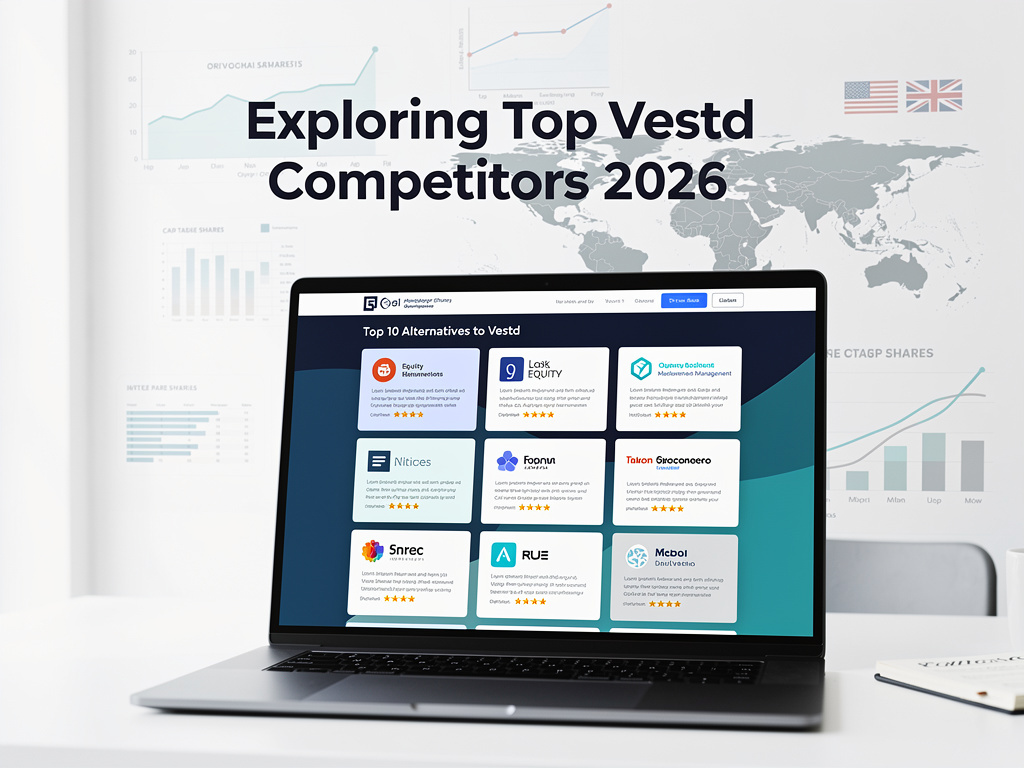
This guide breaks down 10 of the best Vestd alternatives for 2026. We’ll look at Altshare, Carta, Qapita, Ledgy, Cake Equity, Eqvista, EquityList, Fidelity Private Shares, Astrella, and Capbase. We’ll dig into pricing, features, ease of use, and which company stage each platform serves best.
What Makes a Good Cap Table Management Platform?
Before we jump into individual reviews, let’s talk about what actually matters when picking equity management software. Not every feature will matter to every company. Your stage, location, and goals shape what you need most.
Core Features to Look For
A good cap table platform should handle the basics well. That means tracking ownership percentages accurately. It means managing option grants and vesting schedules without manual spreadsheets. And it means keeping everything updated when you raise new rounds.
- Cap table tracking: Real-time ownership visibility for founders, employees, and investors
- Equity plan administration: Managing stock options, RSUs, and other equity awards
- Scenario modeling: Running “what if” calculations for fundraising rounds
- Document management: Storing and generating equity-related legal documents
- Compliance support: Handling 409A valuations, tax reporting, and local regulations
- Stakeholder portals: Giving employees and investors self-service access to their holdings
Regional Considerations
Where your company is incorporated matters a lot. A US Delaware C-Corp has different needs than a UK Ltd or a Singapore Pte Ltd. Some platforms specialize in specific regions. Others try to cover multiple jurisdictions but may lack depth in local compliance.
Vestd excels at UK compliance with native Companies House integration. If you’re not UK-based, you’ll want a platform that handles your local requirements just as smoothly. US companies need 409A valuation support. European companies need GDPR compliance and local tax scheme support. Asian companies often need multi-currency and multi-entity features.
Company Stage and Pricing
Pricing structures vary wildly across these platforms. Some offer free tiers for early-stage startups. Others start at $1,200 per year or more. The “free” plans usually come with stakeholder caps or feature limits.
Here’s what we found across the platforms we reviewed:
- Free tiers typically cap at 5-50 stakeholders
- Entry-level paid plans range from $1,200 to $3,000 annually
- Growth-stage pricing often runs $5,000 to $20,000 per year
- Enterprise pricing is usually custom and can exceed $50,000 annually
1. Altshare: Regional Equity Management for Middle East and Africa
Altshare takes a different approach than most platforms on this list. Instead of trying to serve everyone everywhere, it focuses on the Middle East and Africa region. This specialization gives it an edge for companies operating in those markets.
Company Background and Market Position
Altshare launched to fill a gap in regional equity management. Companies in the UAE, Saudi Arabia, and other MENA countries faced a tough choice. They could use US-focused platforms that didn’t understand local regulations. Or they could rely on spreadsheets and manual processes.
The platform now serves startups and established companies across the region. It handles local compliance requirements that global platforms often miss. This includes supporting regional share structures and regulatory frameworks.
Key Features and Functionality
Altshare covers the core cap table management features you’d expect. But it adds regional customizations that make a real difference for its target market.
- Cap table management: Track ownership across multiple share classes
- ESOP administration: Manage employee equity programs with regional tax considerations
- Scenario modeling: Plan for funding rounds and exits
- Document generation: Create locally compliant equity documents
- Stakeholder portals: Self-service access for team members and investors
- Regional compliance: Built-in support for MENA regulatory requirements
Pricing Structure
Altshare’s pricing isn’t as publicly transparent as some competitors. They generally work with companies to create custom pricing based on company size and needs. Early-stage startups can often access more affordable entry points.
If you’re comparing Altshare to Vestd alternatives that publish clear pricing, you’ll need to request a quote directly. This approach works better for some companies but can slow down your evaluation process.
Best Fit For
Altshare makes the most sense for companies with strong ties to the Middle East or Africa. If you’re headquartered in Dubai, Riyadh, or Lagos, it probably belongs on your shortlist. The regional expertise can save you headaches that global platforms might cause.
For companies based in the US, UK, or Europe without MENA operations, other Vestd alternatives will likely serve you better. The regional focus that makes Altshare valuable for some makes it less relevant for others.
2. Carta: The Industry Standard for US Venture-Backed Startups
Carta is probably the name you’ve heard most often when researching equity management. It’s the biggest player in this space, especially for US startups. When Pulley shut down its standalone product, Carta became their official transition partner. That tells you something about their market position.
Company Background and Market Position
Carta started in 2012 as eShares before rebranding. The company has raised over $1 billion in venture funding. It now manages equity for tens of thousands of companies, from seed-stage startups to public companies.
The platform’s strength comes partly from network effects. Many investors and law firms already use Carta. When your investors are on Carta, it simplifies data sharing and fundraising workflows. This ecosystem advantage is hard for smaller competitors to match.
As of August 2026, Carta had 233 reviews on major software platforms. The review volume and generally positive ratings reflect its widespread adoption.
Key Features and Functionality
Carta offers a full suite of equity management tools. The feature set expands as you move up their pricing tiers.
- Cap table management: Industry-leading accuracy and flexibility
- 409A valuations: In-house valuation services with audit defense
- Equity plan administration: Stock options, RSUs, and more
- Investor services: Portfolio management tools for investors
- Fund administration: Services for VC funds
- Liquidity programs: Tender offer support for shareholder liquidity
- ASC 718 reporting: Stock-based compensation accounting
- SEC compliance: Support for public company requirements
Pricing Structure
Carta’s pricing starts with a free tier but scales up quickly as you grow.
Free Launch tier: Covers up to 25 stakeholders with less than $1M raised. This gives early startups a no-cost way to get started. But you’ll hit the limits fast if you’re growing.
Paid tiers: Carta doesn’t publicly list all their pricing. Plans generally range from $2,000 to $10,000+ annually for growth-stage companies. Enterprise pricing goes much higher.
Many companies find Carta’s pricing steep compared to alternatives. The value proposition makes more sense if you need their full feature set and ecosystem benefits.
Strengths and Weaknesses
Strengths:
- Deep US compliance expertise
- Strong investor and law firm network
- Full-service 409A valuations
- Scales from startup to public company
- Excellent fundraising workflow tools
Weaknesses:
- Premium pricing compared to alternatives
- Can feel overpowered for simple needs
- International support less mature than US
- Customer support quality varies by tier
Best Fit For
Carta works best for US venture-backed startups planning to raise multiple rounds. If your investors already use Carta, joining the ecosystem simplifies your life. Companies focused on fundraising and investor management will get the most value.
For bootstrapped companies or those outside the US, other Vestd alternatives might deliver better value. The premium pricing makes less sense when you don’t need the full feature set.
3. Qapita: Full-Lifecycle Equity Management with Global Reach
Qapita has emerged as one of the strongest Carta alternatives for companies wanting published pricing and multi-entity support. The platform takes a full-lifecycle approach to equity management. It covers everything from cap table basics to liquidity events.
Company Background and Market Position
Qapita started in Singapore and has expanded across Asia, with growing presence in other regions. The company targets growth-stage businesses, mid-market companies, and enterprises. This positions it slightly upmarket from pure early-stage tools.
Review volumes tell an interesting story about Qapita’s traction. As of August 2026, Qapita had 324 reviews on major platforms. That’s more than Carta’s 233 reviews. High review volume combined with strong ratings suggests real customer satisfaction, not just marketing hype.
Key Features and Functionality
Qapita offers a comprehensive platform that goes beyond basic cap table management. The feature set targets companies at growth stage and beyond.
- Cap table management: Multi-entity and multi-currency support
- ESOP administration: Full equity plan management with automation
- Scenario modeling: Funding round and exit planning tools
- Liquidity solutions: Tender offer and secondary transaction support
- Valuations: Integrated valuation services
- Document management: Digital grant letters and agreement storage
- Stakeholder portals: Self-service access for all equity holders
- Compliance reporting: Support for multiple jurisdictions
Pricing Structure
Qapita publishes their pricing more openly than some competitors. This transparency helps companies budget and compare options.
Free tier: Covers up to 25 stakeholders with less than $1M raised. Similar to Carta’s free Launch tier. Good starting point for early-stage companies.
Paid plans: Pricing scales based on stakeholder count and feature needs. Growth-stage companies can expect to pay $3,000 to $15,000 annually depending on complexity.
The published pricing gives Qapita an advantage over platforms that require sales calls for quotes. You can evaluate fit before engaging with their team.
Multi-Entity and International Support
One area where Qapita stands out is multi-entity support. If you have subsidiaries in different countries, managing equity across entities gets complicated. Qapita built this capability into the platform from the start.
Companies with employees in multiple countries benefit from multi-currency support and local compliance features. This makes Qapita particularly appealing for Asia-headquartered companies with global teams.
Best Fit For
Qapita works best for growth-stage businesses that need more than basic cap table tracking. Companies with international operations and multi-entity structures will find real value. The published pricing and strong review volume make it worth serious consideration.
Early-stage startups might find the platform more complex than needed. If you just need simple cap table management, lighter-weight alternatives might fit better.
4. Ledgy: The European Equity Management Leader
Ledgy has carved out a strong position as the go-to equity platform for European companies. While other platforms treat international support as an add-on, Ledgy built European compliance into its DNA. This makes it a natural Vestd alternative for companies that need similar regional depth but different geography.
Company Background and Market Position
Ledgy was founded in Zurich and has grown to serve companies across Europe and beyond. The platform specifically targets companies with international and multi-entity equity requirements. This focus gives it advantages that US-first platforms can’t match in European markets.
The company has raised venture funding from notable investors including Sequoia. As of August 2026, Ledgy had 74 reviews on major platforms. While lower than Carta or Qapita, the reviews skew positive and reflect the platform’s specialized appeal.
Key Features and Functionality
Ledgy covers standard cap table features while adding European-specific capabilities that matter for local compliance.
- Cap table management: Accurate ownership tracking across complex structures
- European scheme support: EMI, growth shares, and other UK/EU equity types
- ESOP administration: Employee equity programs with local tax handling
- Scenario modeling: Funding round and dilution planning
- 409A equivalent valuations: Support for US companies too
- Document generation: Locally compliant equity documents
- Stakeholder portals: Self-service access for team members
- GDPR compliance: Data privacy handling built in
Pricing Structure
Ledgy offers one of the more generous free tiers among Vestd alternatives.
Free Launch tier: Covers up to 50 stakeholders. That’s double Carta’s free tier limit. For very early-stage companies, this extra headroom delays the jump to paid plans.
Paid plans: Pricing scales based on company stage and feature needs. Growth plans typically run $3,000 to $10,000 annually. Enterprise pricing is custom.
The expanded free tier makes Ledgy appealing for bootstrapped companies or those with larger founding teams. You get more room to grow before paying.
UK and European Scheme Support
Ledgy’s European focus shows up in its equity scheme support. The platform handles UK EMI options, French BSPCE, German VSOP, and other local equity types. This matters because equity taxation varies dramatically across European countries.
For UK companies specifically, Ledgy provides an alternative to Vestd with strong EMI support. While Vestd has direct Companies House integration that Ledgy doesn’t match, Ledgy offers more flexibility for companies operating across multiple European countries.
Best Fit For
Ledgy works best for European companies with international equity requirements. UK startups that want EMI support without being locked to a UK-only platform will find value. Companies with employees in multiple European countries benefit from the local scheme expertise.
For US-only companies, Ledgy works fine but doesn’t offer advantages over US-focused alternatives. The European expertise is the main differentiator.
5. Cake Equity: Fast Setup and Growing International Presence
Cake Equity takes a different approach than some competitors. The platform emphasizes speed and simplicity. You can get up and running quickly without extensive setup or training. This appeals to companies that want equity management without heavy implementation.
Company Background and Market Position
Cake Equity was founded in Australia and has expanded internationally. The platform targets growing companies that need straightforward equity administration. It positions itself as a faster, simpler alternative to enterprise-focused tools.
As of August 2026, Cake Equity had 135 reviews on major platforms. The review volume falls between mid-tier and top-tier platforms. Customer feedback generally highlights ease of use and quick onboarding.
Key Features and Functionality
Cake Equity covers the core features without overwhelming complexity. The platform focuses on doing essential things well.
- Cap table management: Clean, accurate ownership tracking
- ESOP administration: Employee equity program management
- Scenario modeling: Funding round planning and dilution analysis
- Document management: Digital equity documents and storage
- Stakeholder portals: Employee and investor access
- Quick setup: Get started in hours, not weeks
- International support: Growing multi-jurisdiction capabilities
Pricing Structure
Cake Equity offers an accessible entry point for early-stage companies.
Free tier: Covers up to 5 stakeholders with no funding condition attached. While the stakeholder cap is lower than some competitors, there’s no $1M raised requirement.
Paid plans: Pricing scales reasonably as you grow. Growth-stage companies can expect to pay $2,000 to $8,000 annually depending on needs.
The no-funding-condition free tier appeals to bootstrapped companies that might have more stakeholders relative to funding raised.
Speed and Simplicity Focus
What sets Cake Equity apart is the emphasis on getting started quickly. The platform doesn’t require extensive configuration or training. This reduces the barrier to moving from spreadsheets to proper equity management.
Companies often delay implementing cap table software because setup seems daunting. Cake Equity addresses this hesitation directly. The tradeoff is that power users might find the platform less customizable than enterprise alternatives.
Best Fit For
Cake Equity works best for growing companies that want fast setup and straightforward equity administration. Australian companies get native support, but the international expansion means companies elsewhere can use it too.
Companies with complex multi-entity structures or heavy compliance requirements might outgrow Cake Equity’s capabilities. For those cases, platforms like Qapita or Carta might serve better.
6. Eqvista: Budget-Friendly Equity Management with Built-In Valuations
Eqvista stands out as one of the most affordable Vestd alternatives available. The platform combines cap table management with unlimited 409A valuations. This bundling creates real savings for US companies that need regular valuations.
Company Background and Market Position
Eqvista positions itself as the value option in the equity management space. The company targets budget-conscious startups and bootstrapped companies that need professional equity tools without premium pricing.
The platform has grown by offering features typically found in more expensive tools at lower price points. This includes 409A valuations that other platforms charge separately for or don’t offer at all.
Key Features and Functionality
Eqvista packs a surprising amount of functionality for its price point.
- Cap table management: Full ownership tracking and history
- Unlimited 409A valuations: Included in paid plans, not charged separately
- Real-time company valuation: Continuous valuation visibility
- ESOP administration: Stock option and equity plan management
- Financial modeling: Scenario planning and forecasting tools
- Document management: Equity agreement storage and generation
- Stakeholder portals: Employee and investor access
- Liquidity solutions: Support for tender offers and secondary sales
Pricing Structure
Eqvista’s pricing gives it a clear advantage for cost-sensitive companies.
Free tier: Basic cap table features with stakeholder limits. Good for very early exploration.
Paid plans: Start at competitive rates below most alternatives. The inclusion of unlimited 409A valuations in paid plans creates substantial savings. US companies typically pay $3,000 to $10,000+ for standalone 409A valuations annually.
When you factor in the valuation savings, Eqvista’s total cost of ownership often beats seemingly cheaper alternatives.
Valuation Services Integration
The built-in valuation capabilities deserve special attention. Most cap table platforms either don’t offer valuations or charge substantial fees for them. Eqvista built valuations into the platform with unlimited annual assessments.
For US companies issuing stock options, 409A valuations aren’t optional. You need them to set exercise prices and stay compliant. Having valuations included removes a significant cost and coordination burden.
Best Fit For
Eqvista works best for budget-conscious and bootstrapped companies that need professional equity tools. US startups that want cap table management plus 409A valuations in one package get excellent value. The pricing advantage is most clear when you compare total cost including valuations.
Companies prioritizing brand recognition or extensive investor network features might prefer Carta despite higher costs. Eqvista wins on value but not on ecosystem effects.
7. EquityList: Venture-Backed Startup Focus with Aggressive Free Tier
EquityList targets venture-backed startups and high-growth companies specifically. The platform has gained traction in India and other markets where it provides focused equity management for funded companies.
Company Background and Market Position
EquityList operates in the cap table management space with a clear focus on VC-backed companies. The platform appears on lists like Tracxn’s cap table management software rankings. As of August 2026, EquityList had 117 reviews on major platforms, showing decent market traction.
The company positions itself alongside other growth-focused equity platforms. Its feature set and pricing target companies that have raised or plan to raise venture funding.
Key Features and Functionality
EquityList covers the features that venture-backed startups need most.
- Cap table management: Ownership tracking optimized for VC structures
- ESOP administration: Employee equity program management
- Scenario modeling: Funding round planning and dilution analysis
- Document management: Equity documents and investor agreements
- Stakeholder portals: Access for founders, employees, and investors
- Compliance support: Regulatory handling for target markets
Pricing Structure
EquityList’s free tier has different parameters than competitors.
Free tier: Covers up to 10 stakeholders with no funding condition attached. The stakeholder cap is lower than Carta or Qapita’s 25, but there’s no “$1M raised” requirement.
Paid plans: Pricing scales based on stakeholder count and feature needs. Competitive with other growth-stage equity platforms.
The structure works well for small founding teams that haven’t raised yet but want to start managing equity properly from the beginning.
India and International Markets
EquityList has particular strength in India and other emerging startup markets. Vestd’s article on best ESOP platforms in India ranks EquityList among the top options for VC-backed startups.
For companies operating in India or hiring Indian employees, EquityList’s local expertise adds value. The platform understands regional compliance requirements and taxation rules.
Best Fit For
EquityList works best for VC-backed startups and high-growth companies, particularly in India and similar markets. Companies planning to raise venture funding will find the platform aligned with their needs. The regional expertise makes it worth considering even against larger global competitors.
For bootstrapped companies or those in markets where EquityList doesn’t have strong presence, other Vestd alternatives might fit better.
8. Fidelity Private Shares: Enterprise Backing with Startup Accessibility
Fidelity Private Shares brings the resources of a major financial institution to the startup equity space. The platform offers cap table management backed by Fidelity’s broader financial services infrastructure.
Company Background and Market Position
Fidelity Private Shares is Fidelity Investments’ entry into cap table management for private companies. Fidelity is one of the largest financial services firms in the world. This backing provides stability and resources that pure-play startups can’t match.
As of August 2026, Fidelity Private Shares had 32 reviews on major platforms. The lower review volume reflects the platform’s newer position in this specific market rather than concerns about quality.
Key Features and Functionality
Fidelity Private Shares covers core equity management needs with enterprise-grade infrastructure.
- Cap table management: Ownership tracking with institutional-grade accuracy
- ESOP administration: Employee equity program management
- Scenario modeling: Funding round and exit planning
- Document management: Secure document storage and sharing
- Stakeholder portals: Access for all equity holders
- Fidelity integration: Connection to broader Fidelity services
- Compliance support: US regulatory handling
Pricing Structure
Fidelity Private Shares matches competitive free tier structures.
Free tier: Covers up to 25 stakeholders with less than $1M raised. This matches Carta’s free Launch tier parameters exactly.
Paid plans: Pricing scales based on company stage and needs. The Fidelity name brings credibility that might influence investor perception.
Enterprise Backing Advantages
What makes Fidelity Private Shares different is the backing of a major financial institution. This creates several potential advantages:
- Long-term stability: Fidelity isn’t going anywhere. You won’t need to migrate because the company shut down.
- Integration potential: As you grow, Fidelity offers other services you might need.
- Credibility: The Fidelity name can add legitimacy when working with investors or acquirers.
- Security investment: Fidelity has deep security and compliance resources.
Best Fit For
Fidelity Private Shares works best for companies that value institutional backing and long-term stability. US companies planning eventual IPO or acquisition might appreciate the Fidelity connection. The platform makes sense for those who might use other Fidelity services over time.
Companies looking for the most specialized features or lowest prices might find better fits elsewhere. The institutional approach means less startup-focused innovation than pure-play competitors.
9. Astrella: Early-Stage Focus with Clear Entry Pricing
Astrella positions itself clearly in the early-stage startup market. Unlike platforms that try to serve everyone, Astrella focuses on the needs of companies just getting started with equity management.
Company Background and Market Position
Astrella operates in the startup equity space with a defined focus on early-stage companies. The platform doesn’t try to compete for enterprise customers. This focus helps it serve its target market better.
Key Features and Functionality
Astrella covers the features that early-stage companies need without enterprise complexity.
- Cap table management: Clean, simple ownership tracking
- ESOP administration: Basic equity program management
- Scenario modeling: Funding round planning tools
- Document management: Essential document storage
- Stakeholder portals: Self-service access for team members
Pricing Structure
Astrella takes a different approach than platforms offering free tiers.
No free tier: Astrella starts with paid plans from day one. This differs from Carta, Qapita, Ledgy, and others.
Early Stage plan: $1,200 per year covering 0-25 stakeholders. This matches Pulley’s old startup tier pricing before their transition to Carta.
The paid-from-day-one approach means Astrella isn’t trying to compete for companies that want to pay nothing. Instead, it targets companies ready to invest in proper equity management.
Clear Pricing Transparency
One advantage of Astrella’s approach is pricing clarity. You know exactly what you’ll pay. There’s no wondering when you’ll hit limits on a free tier or what the next pricing step looks like.
At $1,200 annually for up to 25 stakeholders, Astrella costs about $100 per month. For companies serious about equity management, this is a reasonable investment.
Best Fit For
Astrella works best for early-stage companies ready to pay for proper equity management from the start. If you’ve already decided to invest in this area, skipping free tiers makes sense. The clear pricing helps with budgeting and planning.
Companies that want to try platforms for free first should look elsewhere. Astrella doesn’t compete for the “start free and upgrade later” market.
10. Capbase: Incorporation to Equity in One Platform
Capbase takes a different approach than pure cap table platforms. The company offers incorporation services alongside equity management. This combination targets founders at the very beginning of their startup journey.
Company Background and Market Position
Capbase positions itself as a startup formation and equity platform. Instead of assuming you already have a company, Capbase helps you create one. Then it manages your equity from that starting point.
This integration creates a more complete offering for first-time founders. You don’t need to piece together incorporation, cap table, and equity management from different providers.
Key Features and Functionality
Capbase combines formation services with ongoing equity management.
- Delaware C-Corp incorporation: Full incorporation service for US companies
- Cap table management: Ownership tracking from day one
- ESOP administration: Employee equity programs
- Document generation: Formation and equity documents
- Founder agreements: Vesting schedules and IP assignment
- Scenario modeling: Funding round planning
- Stakeholder portals: Team and investor access
- Legal document library: Templates for common startup needs
Pricing Structure
Capbase’s pricing reflects the combined incorporation and equity services.
The platform typically bundles incorporation fees with ongoing equity management costs. This creates a single relationship instead of separate vendors for different functions.
For founders comparing total cost, factor in what you’d pay separately for incorporation services plus a standalone cap table tool.
Formation Integration Value
Capbase’s formation integration creates real value for specific situations:
- First-time founders: Less coordination between different services
- Non-US founders: Guidance on US incorporation for international founders
- Speed to market: Single process from idea to incorporated company with equity structured
- Consistency: Formation documents and cap table match perfectly from the start
Best Fit For
Capbase works best for founders who haven’t incorporated yet and want to start right. If you’re planning a Delaware C-Corp and want equity management from day one, the integration makes sense. First-time founders especially benefit from the simplified process.
Companies already incorporated should consider pure cap table platforms instead. The formation value doesn’t apply when you’ve already formed your company.
Comparison Table: All 10 Vestd Alternatives Side by Side
This table summarizes the key differences across all platforms we reviewed. Use it to narrow down your shortlist based on what matters most to your company.
| Platform | Best For | Free Tier | Entry Paid Price | Key Strength | Review Count (2026) |
|---|---|---|---|---|---|
| Altshare | MENA-based companies | Contact for details | Custom | Regional compliance | N/A |
| Carta | US venture-backed startups | 25 stakeholders, <$1M raised | $2,000+/year | Investor network and ecosystem | 233 |
| Qapita | Growth-stage with multi-entity | 25 stakeholders, <$1M raised | $3,000+/year | Full-lifecycle, published pricing | 324 |
| Ledgy | European companies | 50 stakeholders | $3,000+/year | European scheme support | 74 |
| Cake Equity | Fast setup needs | 5 stakeholders | $2,000+/year | Quick onboarding | 135 |
| Eqvista | Budget-conscious companies | Yes (limited) | Competitive | Unlimited 409A valuations | N/A |
| EquityList | VC-backed startups, India | 10 stakeholders | Varies | Regional expertise | 117 |
| Fidelity Private Shares | Institutional backing seekers | 25 stakeholders, <$1M raised | Contact | Enterprise stability | 32 |
| Astrella | Early-stage, ready to pay | No free tier | $1,200/year | Clear pricing from start | N/A |
| Capbase | Pre-incorporation founders | Contact | Bundle pricing | Incorporation + equity | N/A |
How to Choose the Right Vestd Alternative for Your Company
Picking the right equity management platform depends on several factors specific to your situation. There’s no universally “best” platform. There’s only the best platform for your needs.
By Company Location
UK companies: Vestd remains a strong choice for pure UK operations. For UK companies with international plans, Ledgy offers EMI support plus broader European coverage.
US companies: Carta provides the deepest US ecosystem. Eqvista offers better value with included 409A valuations. Fidelity Private Shares adds institutional backing.
European companies: Ledgy dominates for European scheme support. Qapita provides good multi-entity features for complex structures.
Asian companies: Qapita and EquityList have strong regional presence. Multi-currency and local compliance features matter here.
MENA companies: Altshare offers specialized regional support that global platforms lack.
By Company Stage
Pre-incorporation: Capbase combines formation with equity management. Start with everything integrated from day one.
Early-stage (0-25 stakeholders): Most platforms offer free or low-cost tiers here. Carta, Qapita, Fidelity Private Shares, and Ledgy all provide options.
Growth-stage: Qapita and Carta offer the most features for scaling companies. Look for scenario modeling, liquidity support, and compliance tools.
Pre-IPO/Enterprise: Carta and Morgan Stanley at Work (not reviewed here) dominate this segment. Enterprise needs require enterprise solutions.
By Budget
Free or near-free: Ledgy’s 50-stakeholder free tier is the most generous. Carta and others cap at 25.
Budget-conscious: Eqvista provides the best total value when you factor in 409A valuations. Cake Equity offers reasonable growth-stage pricing.
Premium: Carta commands premium pricing but delivers premium ecosystem benefits. Worth it if you’ll use the full feature set.
By Feature Priority
409A valuations: Eqvista includes unlimited valuations. Most others charge separately or don’t offer them.
Multi-entity support: Qapita built this into the platform core. Others add it as a feature.
Investor network: Carta’s ecosystem includes investors and law firms. This creates workflow benefits other platforms can’t match.
Fast setup: Cake Equity emphasizes quick onboarding. Good when you need to get started immediately.
Formation services: Only Capbase combines incorporation with equity management.
Migration Considerations: Moving from Vestd or Another Platform
Switching equity management platforms isn’t trivial. Your cap table data needs to move accurately. Historical records must stay intact. And you need to retrain your team on new tools.
What to Expect in Migration
Most platforms offer migration assistance. The quality and cost of this help varies. Some include migration in their setup. Others charge additional fees.
Typical migration steps include:
- Data export: Get your current cap table data in a portable format
- Data validation: Verify the export matches your actual records
- Import setup: Configure the new platform with your company structure
- Data import: Load your historical equity data
- Verification: Confirm everything transferred correctly
- Document migration: Move equity documents to the new platform
- Stakeholder notification: Let equity holders know about new portals
Migration Timing
Don’t migrate right before a funding round or option grant cycle. Pick a quiet period when you have time to verify everything. A migration that corrupts your cap table creates problems during due diligence.
Plan at least 2-4 weeks for migration. Complex structures or large stakeholder counts take longer. Build in buffer time for unexpected issues.
Questions to Ask Before Migrating
When evaluating new platforms, ask specific migration questions:
- What migration support do you provide? Is it included or extra cost?
- How long does typical migration take for companies our size?
- Can you import our historical transaction data, not just current state?
- What happens to our data on the old platform after migration?
- Do you have experience migrating from our current platform specifically?
Conclusion: Picking Your Vestd Alternative
The right Vestd alternative depends on where you’re based, what stage you’re at, and what features matter most. Carta dominates for US venture-backed startups with investor network benefits. Ledgy leads for European companies needing local scheme support. Qapita offers the best full-lifecycle option with published pricing. And Eqvista provides the best value when you need 409A valuations.
Start with the comparison table above. Narrow your list to 2-3 platforms that match your criteria. Then request demos to see how each actually works. The best platform is the one your team will actually use consistently.
FAQs About Vestd Alternatives and Cap Table Software
| What is the best free Vestd alternative for early-stage startups? | Ledgy offers the most generous free tier at 50 stakeholders. Carta, Qapita, and Fidelity Private Shares all cap at 25 stakeholders with a $1M raised condition. For the longest free runway, Ledgy wins. For ecosystem benefits, Carta’s free tier connects you to their investor network. |
| Which Vestd alternative works best for US companies needing 409A valuations? | Eqvista includes unlimited 409A valuations in paid plans. Most other platforms either don’t offer valuations or charge separately for them. When you factor in valuation costs, Eqvista often provides the best total value for US companies issuing stock options. |
| What’s the best Vestd alternative for European companies? | Ledgy built European compliance into its core. The platform supports UK EMI options, French BSPCE, German VSOP, and other local equity schemes. For companies operating across multiple European countries, Ledgy’s regional expertise creates real advantages. |
| How does Carta compare to other Vestd alternatives? | Carta is the largest platform with the strongest US investor and law firm network. It commands premium pricing but delivers ecosystem benefits others can’t match. For US venture-backed startups planning multiple funding rounds, Carta’s network effects often justify the cost. For simpler needs, other platforms provide better value. |
| Which cap table platforms offer multi-entity support? | Qapita stands out for multi-entity and multi-currency support built into the platform core. Ledgy also handles complex international structures well. Most other platforms can manage multiple entities but may require workarounds or additional configuration. |
| Should I switch from Vestd if my company is UK-based? | Vestd remains excellent for pure UK operations with its native Companies House integration and EMI focus. Consider switching only if you’re expanding internationally or need features Vestd doesn’t offer. For UK companies with European expansion plans, Ledgy provides similar EMI support plus broader international capabilities. |
| What’s the fastest Vestd alternative to set up? | Cake Equity emphasizes quick onboarding and fast setup. The platform is designed to get you running in hours rather than days or weeks. If you need to move from spreadsheets to proper equity management quickly, Cake is worth considering. |
| Which Vestd alternative should I choose for a pre-revenue startup? | For pre-revenue startups, free tiers matter most. Ledgy’s 50-stakeholder free tier gives the most headroom. Cake Equity’s free tier has no funding condition attached. If you’re pre-incorporation, Capbase combines company formation with equity management in one package. |
| How much do Vestd alternatives typically cost for growth-stage companies? | Growth-stage pricing typically runs $3,000 to $15,000 annually depending on stakeholder count and feature needs. Carta and Qapita sit at the higher end with more features. Cake Equity and Eqvista offer more affordable options. Always factor in valuation costs if you need 409A services. |
| Can I migrate from Vestd to another platform easily? | Most platforms offer migration assistance. The process typically takes 2-4 weeks depending on complexity. Ask potential new platforms about their specific experience migrating from Vestd. Plan migrations during quiet periods, not right before funding rounds or option grant cycles. |



 Stack Insight is intended to support informed decision-making by providing independent information about business software and services. Some product details, including pricing, features, and promotional offers, may be supplied by vendors or partners and can change without notice.