
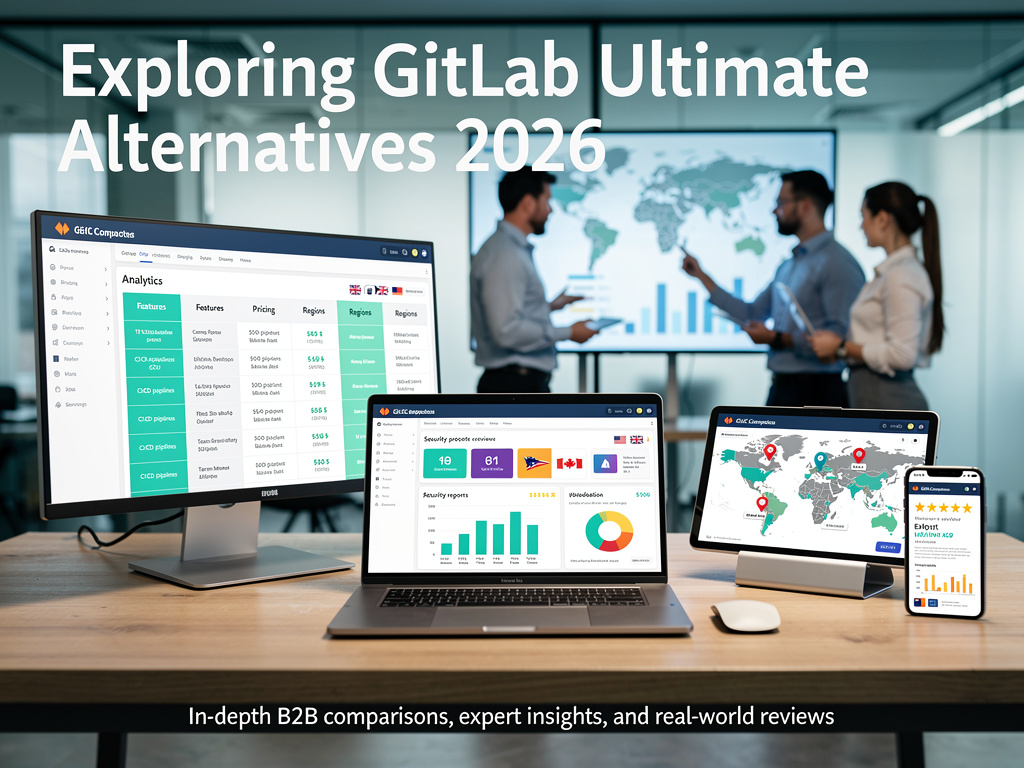
Best GitLab Ultimate Alternatives in 2026: Complete Comparison Guide
GitLab Ultimate packs a lot of features into one platform. Code scanning, dependency checks, container security, and compliance tools all live under one roof. But here’s the thing: many teams don’t need everything GitLab offers. Some find the price too steep. Others want specialized tools that go deeper on specific security needs.
Maybe you’re running a lean startup that can’t justify the Ultimate tier pricing. Or perhaps your enterprise security team needs features GitLab doesn’t cover well. Whatever your reason, plenty of solid options exist in 2026.
This guide breaks down 14 application security platforms that can replace or complement GitLab Ultimate. We’ll look at what each tool does best, where it falls short, and who should consider it. You’ll find detailed reviews based on real-world use cases, pricing structures, and integration capabilities. By the end, you’ll know exactly which GitLab Ultimate replacement fits your team.
Why Teams Look for GitLab Ultimate Substitutes
Before we dig into specific tools, let’s talk about why teams switch away from GitLab Ultimate. Understanding these pain points helps you pick the right alternative.
Pricing Concerns
GitLab Ultimate costs $99 per user per month. For a team of 50 developers, that’s nearly $60,000 per year. Many organizations find this hard to justify when they only use a fraction of the included features.
Some teams estimate they use maybe 30% of what Ultimate offers. They’re paying for compliance dashboards they never open. Security reports they don’t read. Features that sit dormant while the bill keeps coming.
Feature Depth Issues
GitLab does many things well but nothing exceptionally deep. Its SAST scanner catches common issues but misses complex vulnerabilities. The SCA component flags dependencies but lacks reachability analysis. Container scanning works but doesn’t match dedicated tools.
Security-focused teams often need more specialized capabilities. They want advanced taint analysis. Sophisticated false positive reduction. Deep supply chain visibility. GitLab’s jack-of-all-trades approach doesn’t cut it for mature security programs.
Integration Flexibility
GitLab works best when you use GitLab for everything. But most enterprises run mixed environments. They have repos on GitHub. Legacy apps on Bitbucket. Cloud infrastructure on AWS, Azure, and GCP. GitLab’s security features don’t always play nice with these external systems.
Scan Performance
Some teams complain about scan times slowing their pipelines. When a security check adds 10 minutes to every build, developers start looking for workarounds. They might skip scans entirely or push them to nightly runs where issues go unnoticed for days.
Now let’s examine the alternatives that address these challenges.
OX Security: Application Security Posture Management Leader
OX Security takes a different approach than traditional scanning tools. It focuses on Application Security Posture Management, or ASPM. This means it doesn’t just find vulnerabilities. It helps you understand and manage your overall security position across the software development lifecycle.
Core Capabilities
OX Security aggregates findings from multiple security tools into one platform. You can connect your existing SAST, DAST, SCA, and container scanners. OX then normalizes the data, removes duplicates, and prioritizes what actually matters.
The platform maps your entire software supply chain. You see exactly how code flows from developer commits through CI/CD pipelines to production. This visibility helps identify weak points and gaps in your security coverage.
Key features include:
- Pipeline security monitoring and policy enforcement
- Automated triage using business context and exploitability data
- Risk scoring based on asset criticality
- Compliance mapping for SOC 2, ISO 27001, and other frameworks
- Integration with 100+ security and DevOps tools
Strengths Over GitLab Ultimate
OX Security excels at reducing alert noise. Instead of showing you 10,000 vulnerabilities, it highlights the 50 that actually threaten your production environment. The platform considers factors like whether vulnerable code is reachable, whether exploits exist in the wild, and whether affected assets are internet-facing.
The pipeline security features also surpass GitLab. OX monitors your entire CI/CD process for misconfigurations, exposed secrets, and supply chain risks. It catches issues GitLab’s built-in tools miss.
Limitations to Consider
OX Security isn’t a scanner itself. You still need underlying tools to find vulnerabilities. This means additional licensing costs and integration work. For teams starting from scratch, the total investment might exceed GitLab Ultimate.
The platform targets enterprise buyers with complex environments. Smaller teams might find it overkill for their needs.
Best Fit
OX Security works best for enterprises already using multiple security tools who need better orchestration and prioritization. It’s ideal if alert fatigue is killing your security program’s effectiveness.
Snyk: Developer-First Security Platform
Snyk built its reputation on making security accessible to developers. The platform started with open-source dependency scanning and expanded into code analysis, container security, and infrastructure as code checking.
Core Capabilities
Snyk offers four main products:
Snyk Open Source scans your dependencies for known vulnerabilities. It goes beyond basic CVE matching to analyze whether vulnerable functions are actually called in your code. This reduces false positives significantly.
Snyk Code provides SAST analysis with AI-powered findings. The scanner runs fast enough to check code as developers write it, not just during CI builds. It catches security issues before they ever hit the repository.
Snyk Container analyzes your Docker images and Kubernetes workloads. It recommends base image upgrades that fix multiple vulnerabilities at once.
Snyk Infrastructure as Code checks Terraform, CloudFormation, and Kubernetes manifests for misconfigurations. It catches issues before they create production vulnerabilities.
Developer Experience Focus
Snyk integrates directly into developer workflows. IDE plugins show vulnerabilities as you code. PR checks explain issues in plain language with fix suggestions. The CLI works smoothly in local development.
This approach means developers actually use the tool. They don’t see security as a gate that blocks their work. Instead, it becomes part of their normal process.
Strengths Over GitLab Ultimate
Snyk’s vulnerability database includes issues that haven’t received CVE numbers yet. The company’s research team discovers and adds threats before they become public knowledge. GitLab relies more heavily on public CVE data, so it misses emerging threats.
The fix recommendations also outshine GitLab. Snyk doesn’t just tell you something’s wrong. It shows exactly how to fix it, often with one-click PR creation to upgrade a vulnerable package.
Integration breadth beats GitLab too. Snyk works with GitHub, Bitbucket, Azure DevOps, and yes, GitLab itself. You’re not locked into one SCM platform.
Limitations to Consider
Snyk’s pricing can climb quickly. The free tier covers only limited projects. Team and Enterprise tiers charge per developer, and costs add up for larger organizations.
Some users report that Snyk’s SAST capabilities lag behind its SCA features. The code analysis engine is newer and catches fewer issues than dedicated SAST tools.
Pricing Structure
Snyk offers a free tier for individual developers and small open-source projects. Team pricing starts around $52 per month per developer. Enterprise pricing requires custom quotes but typically runs higher.
Best Fit
Snyk works well for development teams that want security without friction. If you’re struggling to get developers to care about vulnerabilities, Snyk’s experience-focused approach might change that.
Checkmarx: Enterprise-Grade Application Security Testing
Checkmarx has operated in the application security market for over 15 years. The platform offers comprehensive testing capabilities including SAST, SCA, DAST, API security, and supply chain analysis.
Core Capabilities
Checkmarx One consolidates multiple testing engines into a single cloud platform. This unified approach means you manage one tool instead of several, with correlated findings across different scan types.
Static Application Security Testing: Checkmarx’s SAST engine remains one of the most thorough in the industry. It supports 25+ programming languages with deep dataflow analysis. The scanner traces how data moves through applications to find complex injection and manipulation vulnerabilities.
Software Composition Analysis: The SCA component identifies open-source components and their licenses. It maps transitive dependencies several levels deep and tracks vulnerabilities across your entire software bill of materials.
Dynamic Testing: DAST capabilities probe running applications for runtime vulnerabilities. The scanner simulates attacks to find issues that static analysis misses.
API Security: Specialized testing for REST and GraphQL APIs identifies authentication flaws, excessive data exposure, and business logic vulnerabilities.
Strengths Over GitLab Ultimate
Checkmarx catches more complex vulnerabilities than GitLab. Its taint analysis tracks data across function calls, classes, and even microservice boundaries. GitLab’s scanner works at a shallower level.
The platform’s query customization is unmatched. Security teams can write custom rules for organization-specific patterns. If your company has internal coding standards or unique vulnerability patterns, Checkmarx adapts to catch them.
Compliance reporting also exceeds GitLab. Checkmarx maps findings to regulatory requirements and generates audit-ready documentation. For teams in regulated industries, this saves significant manual effort.
Limitations to Consider
Checkmarx scans run slower than some competitors. Complex projects might take 30-60 minutes for full analysis. This doesn’t fit well in fast CI/CD pipelines where developers expect quick feedback.
The platform requires security expertise to configure and tune effectively. Out-of-the-box results often include many false positives. Teams need to invest time in customization to get useful findings.
Pricing sits at the high end of the market. Enterprise contracts typically start at six figures annually.
Best Fit
Checkmarx suits enterprises with dedicated security teams and complex applications. If you’re in a regulated industry needing thorough compliance documentation, Checkmarx delivers.
Veracode: Established SaaS Security Testing Platform
Veracode pioneered the SaaS model for application security testing. The platform has scanned billions of lines of code across thousands of organizations over its 15+ year history.
Core Capabilities
Veracode offers multiple scanning approaches:
Static Analysis: Upload compiled binaries for thorough security analysis. Veracode’s engine doesn’t need source code access, which appeals to organizations with IP concerns or legacy applications.
Software Composition Analysis: Identify vulnerable open-source libraries and check license compliance across your portfolio.
Dynamic Analysis: Test running web applications for vulnerabilities that only appear at runtime.
Manual Penetration Testing: Veracode’s human security experts perform targeted testing for critical applications.
The Binary Scanning Approach
Veracode’s binary analysis sets it apart. You upload compiled code rather than source files. The scanner then analyzes the actual executable that runs in production.
This approach catches issues that source analysis misses. Compiler optimizations, third-party libraries linked at build time, and framework behaviors all appear in binary analysis.
But there’s a downside. Binary scanning requires compilation first, which slows the feedback loop. Developers can’t scan code in their IDE before committing. The delay between writing code and seeing results frustrates modern development teams.
Strengths Over GitLab Ultimate
Veracode’s policy engine helps manage security at scale. You define acceptable risk thresholds, and the platform automatically enforces them across all applications. This governance capability exceeds what GitLab offers.
The eLearning integration also stands out. When developers introduce vulnerabilities, Veracode assigns targeted training to address knowledge gaps. This educational approach reduces repeat issues over time.
Limitations to Consider
Modern teams increasingly find Veracode’s workflow outdated. The binary upload requirement doesn’t fit well with microservices architectures where you might deploy dozens of times daily.
Scan times remain a frequent complaint. Full analysis can take 30 minutes to several hours depending on application size. Teams often push scans to nightly runs, delaying vulnerability discovery.
Pricing follows an annual subscription model with per-application fees. Costs become unpredictable for organizations adding new applications frequently.
Best Fit
Veracode works for enterprises with established security programs who can accept longer scan cycles. It’s particularly strong for organizations needing to scan applications without source code access.
ArmorCode: ASPM Platform for Risk Management
ArmorCode focuses on Application Security Posture Management, similar to OX Security. The platform aggregates, correlates, and prioritizes security findings across your development environment.
Core Capabilities
ArmorCode connects to your existing security tools and developer platforms. It pulls findings from SAST, DAST, SCA, cloud security, and penetration testing tools into one unified view.
The platform’s correlation engine identifies when multiple tools report the same underlying issue. This deduplication alone can reduce apparent vulnerability counts by 30-50%.
Risk-based prioritization considers multiple factors:
- Business criticality of affected applications
- Whether vulnerable code paths are reachable
- Existence of active exploits in the wild
- Exposure level of affected assets
- Age and trend of the vulnerability
Workflow Integration
ArmorCode pushes prioritized issues directly to developer tools like Jira and ServiceNow. Security teams don’t manually create tickets. Developers receive actionable items in their normal workflow.
The platform tracks remediation progress and measures mean time to fix across the organization. This data helps identify bottlenecks and improve security processes over time.
Strengths Over GitLab Ultimate
ArmorCode’s cross-tool correlation catches duplicate findings that inflate GitLab’s vulnerability counts. You see the true number of issues needing attention, not redundant alerts from different scanners.
The risk scoring model provides better prioritization than GitLab’s severity-based approach. A critical vulnerability in a test environment matters less than a medium vulnerability in a payment processing service. ArmorCode understands this context.
Limitations to Consider
Like OX Security, ArmorCode doesn’t scan code itself. You need separate tools for vulnerability detection, adding to total costs.
The platform requires significant setup to integrate all your tools and configure business context. Plan for a multi-week implementation timeline.
Best Fit
ArmorCode fits organizations drowning in security findings from multiple tools. If your team spends more time triaging alerts than fixing real issues, ArmorCode helps cut through the noise.
Apiiro: Risk-Based Code Security Platform
Apiiro takes a different approach by analyzing risk at the design level, not just looking for code vulnerabilities. The platform maps application architecture and identifies risky changes before they become security problems.
Core Capabilities
Apiiro builds a knowledge graph of your entire codebase. It understands how components connect, where sensitive data flows, and which areas carry the most risk.
Risk detection capabilities include:
- Design flaws like missing authentication or authorization
- Sensitive data exposure across service boundaries
- Business logic vulnerabilities that scanners miss
- Supply chain risks from open-source components
- Developer behavior patterns that indicate risk
The Design-Level Approach
Traditional scanners look for specific vulnerability patterns in code. Apiiro steps back to examine the bigger picture. It asks questions like: Does this new API endpoint handle payment data? Is it properly authenticated? Does it log sensitive information?
This architectural view catches issues that code scanners miss entirely. A perfectly secure function might still create risk if it exposes sensitive data to the wrong service.
Strengths Over GitLab Ultimate
Apiiro finds categories of risk that GitLab can’t detect. Business logic flaws, architectural weaknesses, and design-level issues all appear in Apiiro’s analysis. GitLab focuses on code-level vulnerabilities only.
The change risk analysis also stands out. When developers submit pull requests, Apiiro assesses the security impact of those specific changes. High-risk PRs get flagged for security review while low-risk changes flow through automatically.
Limitations to Consider
Apiiro requires deep code access to build its knowledge graph. Some organizations have concerns about a third-party service analyzing their entire codebase.
The platform works best with full repository history. New projects or recently migrated codebases might not get accurate risk assessments initially.
Best Fit
Apiiro suits organizations concerned about architectural and design-level security issues. It’s particularly valuable for teams building complex distributed systems where component interactions create risk.
Cycode: Complete ASPM and Code Security Platform
Cycode combines native scanning capabilities with ASPM features. Unlike pure aggregation platforms, Cycode can find vulnerabilities directly while also correlating findings from other tools.
Core Capabilities
Cycode provides several native scanning engines:
Secrets Detection: The platform scans code, configurations, and build logs for exposed credentials. It monitors Git history to find secrets that were committed and later deleted.
Software Composition Analysis: Identify vulnerable dependencies with reachability analysis that filters out unused components.
SAST: Static code analysis for common vulnerability patterns across multiple languages.
Infrastructure as Code Security: Check Terraform, CloudFormation, and Kubernetes configurations for misconfigurations.
CI/CD Security: Analyze pipeline configurations for security weaknesses and excessive permissions.
Pipeline Security Focus
Cycode puts special emphasis on CI/CD security. The platform monitors your build pipelines for:
- Hardcoded secrets in pipeline configurations
- Excessive permissions granted to pipeline jobs
- Unsigned or unverified build artifacts
- Tampering with build processes
- Drift from approved pipeline configurations
This coverage addresses supply chain attacks that target build infrastructure rather than application code directly.
Strengths Over GitLab Ultimate
Cycode’s secrets detection surpasses GitLab’s capabilities. It catches more credential types with fewer false positives. The Git history scanning finds secrets that current-state analysis misses.
Pipeline security monitoring also exceeds GitLab. While GitLab secures its own pipelines reasonably well, Cycode monitors pipelines across multiple CI/CD platforms including GitHub Actions, Jenkins, and CircleCI.
Limitations to Consider
Cycode’s SAST engine isn’t as comprehensive as dedicated tools like Checkmarx or Veracode. For complex vulnerability detection, you might need additional scanners.
The platform is relatively newer to the market, so documentation and community resources are less extensive than established competitors.
Best Fit
Cycode works well for teams prioritizing secrets management and pipeline security. It’s a good choice if supply chain attacks concern you more than traditional code vulnerabilities.
Legit Security: Software Supply Chain Security Platform
Legit Security focuses specifically on securing the software supply chain. The platform monitors your entire development environment for risks that attackers could exploit to compromise your software.
Core Capabilities
Legit Security provides visibility into:
SDLC Security Posture: See security controls across your development environment. Identify gaps in scanning coverage, policy enforcement, and access management.
Code Integrity: Ensure code hasn’t been tampered with between development and deployment. Track changes through the entire pipeline.
Build Integrity: Verify that build processes execute as expected without unauthorized modifications.
Developer Identity: Monitor developer accounts for suspicious behavior like unusual access patterns or commits from unexpected locations.
Supply Chain Attack Prevention
Modern attacks increasingly target the development process rather than the running application. Attackers compromise developer accounts, inject malicious code into build systems, or tamper with deployment pipelines.
Legit Security addresses these threats directly. The platform monitors for:
- Unauthorized changes to pipeline configurations
- Suspicious commits from compromised accounts
- Missing or modified security controls
- Branch protection bypasses
- Unreviewed code reaching production
Strengths Over GitLab Ultimate
Legit Security provides supply chain visibility that GitLab can’t match. While GitLab secures code within its platform, Legit Security monitors your entire development ecosystem including external tools and services.
The developer behavior monitoring also goes beyond GitLab. Legit Security creates baselines of normal developer activity and alerts on anomalies that might indicate account compromise.
Limitations to Consider
Legit Security doesn’t replace traditional vulnerability scanning. You still need SAST, SCA, and other tools to find code-level issues.
The platform requires read access to your SCM, CI/CD, and cloud environments. Some organizations hesitate to grant this level of access to a security vendor.
Best Fit
Legit Security suits organizations concerned about supply chain attacks and insider threats. It’s valuable for teams in high-security environments where code integrity is paramount.
Aikido Security: All-in-One Developer Security Platform
Aikido Security combines multiple security scanning capabilities into one developer-friendly platform. The company aims to provide complete coverage without the complexity of managing separate tools.
Core Capabilities
Aikido Security includes:
Static Application Security Testing: Code analysis for vulnerability patterns across multiple languages. The scanner runs fast enough for CI/CD integration without slowing pipelines.
Software Composition Analysis: Dependency scanning with intelligent prioritization. Aikido filters out vulnerabilities that don’t affect your specific usage of a library.
Dynamic Testing: Runtime analysis of web applications to find issues that static analysis misses.
Container Security: Image scanning for vulnerabilities and misconfigurations in your container infrastructure.
Infrastructure as Code: Check Terraform, CloudFormation, and Kubernetes files for security issues.
Secrets Detection: Find exposed credentials in code and configurations.
Cloud Configuration: Analyze AWS, Azure, and GCP settings for misconfigurations.
The Unified Approach
Aikido Security’s value comes from integration. Instead of managing seven different tools, you get one platform. Findings correlate automatically. One dashboard shows your complete security posture.
The platform targets teams migrating from point solutions. If you’re currently using Mend.io for SCA, a separate SAST tool, and manual cloud reviews, Aikido consolidates everything.
Strengths Over GitLab Ultimate
Aikido Security offers comparable feature breadth at lower cost for many teams. The platform includes cloud configuration scanning that GitLab Ultimate lacks entirely.
Prioritization also surpasses GitLab. Aikido uses reachability analysis and exploitability data to surface the most critical issues first. GitLab relies more heavily on raw severity scores.
The developer experience rivals Snyk. IDE plugins, clear fix guidance, and fast scans all contribute to actual usage rather than tool shelfware.
Limitations to Consider
Aikido Security is newer to the market than established players. Enterprise features like advanced compliance reporting and audit logging may not match mature platforms.
For organizations needing only one or two security capabilities, a specialized tool might provide deeper coverage.
Best Fit
Aikido Security works well for growing teams that need broad security coverage without enterprise complexity. It’s particularly appealing for startups and mid-market companies watching costs carefully.
Mend.io: Software Composition Analysis Specialist
Mend.io, formerly known as WhiteSource, built its reputation on open-source security scanning. The platform helps teams manage vulnerabilities and license risks in their dependencies.
Core Capabilities
Open Source Vulnerability Management: Mend.io maintains one of the largest databases of open-source vulnerabilities. The platform identifies issues in direct and transitive dependencies across your entire codebase.
License Compliance: Track open-source licenses across your portfolio. Get alerts when dependencies use licenses incompatible with your product’s licensing model.
Automated Remediation: Mend.io can automatically create pull requests to upgrade vulnerable dependencies. This speeds up fix times significantly.
SAST Capabilities: The platform now includes static code analysis, though this remains a secondary feature to SCA.
Dependency Intelligence
Mend.io goes beyond simple CVE matching. The platform considers:
- Whether vulnerable code paths execute in your application
- Fix availability and upgrade paths
- Breaking changes that upgrades might introduce
- Historical vulnerability patterns in libraries
This context helps teams make informed decisions about remediation urgency and approach.
Strengths Over GitLab Ultimate
Mend.io’s dependency database exceeds GitLab’s coverage. It includes vulnerabilities that haven’t received CVE numbers and issues found through Mend’s own research team.
The license compliance features also surpass GitLab. For teams distributing software, understanding license obligations is critical. Mend.io provides detailed analysis that GitLab’s basic license scanning can’t match.
Limitations to Consider
Users report that Mend.io generates many low-priority alerts. Without careful tuning, teams can drown in noise from vulnerabilities that don’t actually affect their applications.
The platform has limited GitLab Cloud integration capabilities. Teams heavily invested in GitLab may face workflow friction.
SAST features lag behind dedicated code scanning tools. If you need deep code analysis, plan on supplementing Mend.io with another scanner.
Best Fit
Mend.io suits organizations where open-source security and license compliance are primary concerns. It’s strong for software vendors and any team distributing code commercially.
GitHub Advanced Security: Native GitHub Security Features
GitHub Advanced Security brings security capabilities directly into the world’s most popular code hosting platform. For teams already on GitHub, it offers a natural extension of their existing workflow.
Core Capabilities
Code Scanning: Powered by CodeQL, GitHub’s semantic code analysis engine. The scanner finds vulnerabilities by understanding how data flows through your application, not just pattern matching.
Secret Scanning: Detect exposed credentials in your repository. GitHub can also alert you when your secrets appear in public repositories elsewhere.
Dependency Review: Analyze dependency changes in pull requests before merging. See new vulnerabilities that upgrades would introduce.
Security Overview: Dashboard showing security status across your organization’s repositories.
The CodeQL Advantage
CodeQL treats code as queryable data. Security researchers write queries that describe vulnerability patterns, and the engine finds matching code. This approach catches complex issues that signature-based scanners miss.
The CodeQL community contributes queries regularly. As researchers discover new vulnerability patterns, they share queries that benefit all users.
Strengths Over GitLab Ultimate
If you’re on GitHub, the integration can’t be beat. Security findings appear directly in pull requests. Developers fix issues in their normal workflow without context switching to external tools.
CodeQL’s analysis depth rivals specialized SAST tools. It catches injection vulnerabilities, authentication flaws, and data exposure issues that simpler scanners miss.
The secret scanning partner program also stands out. GitHub partners with service providers who alert you when secrets for their services appear in public repositories.
Limitations to Consider
GitHub Advanced Security only works with GitHub. If you use GitLab, Bitbucket, or other platforms, this isn’t an option.
Container security and infrastructure as code scanning aren’t included. You need additional tools for complete coverage.
Pricing is per-committer, which becomes expensive for organizations with many occasional contributors.
Best Fit
GitHub Advanced Security is the natural choice for GitHub-centric organizations wanting integrated security without external tools. It’s particularly strong for open-source projects that get the features free.
Semgrep: Lightweight and Customizable Code Analysis
Semgrep takes a different philosophy than traditional SAST tools. It emphasizes speed, customization, and developer accessibility over exhaustive scanning.
Core Capabilities
Static Analysis: Fast pattern-based code scanning across 30+ languages. Semgrep can analyze a typical codebase in seconds, not minutes or hours.
Custom Rules: Write your own scanning rules in a syntax that looks like the code you’re searching for. No complex query languages to learn.
Community Rules: Access thousands of community-contributed rules covering OWASP Top 10, language-specific issues, and framework vulnerabilities.
Supply Chain: Dependency scanning to complement code analysis.
The Speed Factor
Semgrep’s scanning speed changes how teams use security tools. When analysis takes seconds, developers run it constantly. IDE plugins provide real-time feedback. Pre-commit hooks catch issues before code reaches the repository.
This shifts security left in a practical way. Developers fix issues immediately rather than days later when CI/CD scans finally report results.
Rule Customization
Semgrep rules read almost like the code they match. To find hardcoded passwords, you write a pattern that looks like code with a hardcoded password. This accessibility means developers can write security rules, not just security specialists.
Teams create rules for:
- Organization-specific coding standards
- Custom framework security patterns
- Deprecated function usage
- Architecture compliance checks
Strengths Over GitLab Ultimate
Semgrep’s speed and customization exceed GitLab’s built-in scanning. For teams with specific security requirements or unique codebases, custom rules provide coverage GitLab can’t match.
The open-source core means you can inspect exactly what rules check for. No black-box scanning engine hiding its logic.
Limitations to Consider
Semgrep’s pattern-based approach catches fewer complex vulnerabilities than dataflow analysis tools. Cross-function taint tracking isn’t as thorough as Checkmarx or CodeQL.
The platform doesn’t include DAST, container scanning, or infrastructure as code checking. You need additional tools for complete coverage.
Best Fit
Semgrep works well for developer-led security programs and teams needing custom scanning rules. It’s particularly valuable when speed matters more than exhaustive analysis.
SonarQube: Code Quality and Security Combined
SonarQube started as a code quality tool and added security analysis over time. The platform helps teams maintain clean, secure, and reliable codebases.
Core Capabilities
Code Quality Analysis: Detect bugs, code smells, and maintainability issues across your codebase. Track quality trends over time.
Security Vulnerability Detection: Find common vulnerability patterns like injection, XSS, and authentication issues.
Quality Gates: Define pass/fail criteria for code changes. Block merges that don’t meet quality and security standards.
Technical Debt Tracking: Estimate the effort required to fix code issues and track debt reduction over time.
The Quality-Security Connection
SonarQube positions security as part of overall code quality. This perspective helps organizations that struggle to get developer buy-in for security-only tools.
Developers already accept feedback on code quality. Adding security findings to that feedback stream feels natural rather than intrusive.
Deployment Options
SonarQube offers multiple deployment models:
- Self-hosted: Run SonarQube on your own infrastructure for complete control
- SonarCloud: Managed cloud service with simpler setup
- Data Center Edition: High-availability deployment for large enterprises
This flexibility appeals to organizations with specific hosting requirements or data residency needs.
Strengths Over GitLab Ultimate
SonarQube’s code quality features exceed GitLab’s limited linting. If you care about maintainability alongside security, SonarQube covers both in one analysis.
The quality gate concept provides clearer enforcement than GitLab’s security approvals. Teams define exactly what standards code must meet, and SonarQube enforces them automatically.
Limitations to Consider
Security analysis depth doesn’t match specialized SAST tools. SonarQube catches common patterns but misses complex vulnerabilities that require deep dataflow analysis.
The platform doesn’t include SCA, container security, or infrastructure as code scanning. For complete security coverage, you need additional tools.
Resource requirements for self-hosted deployments can be substantial, especially for large codebases.
Best Fit
SonarQube suits teams that want combined code quality and basic security analysis. It’s particularly valuable for organizations with self-hosting requirements or those starting their security journey.
Endor Labs: Dependency Security with Intelligence
Endor Labs focuses specifically on software supply chain security with an emphasis on intelligent dependency analysis. The platform helps teams understand and manage risks from open-source components.
Core Capabilities
Dependency Discovery: Map all open-source components in your codebase including transitive dependencies several levels deep.
Reachability Analysis: Determine whether vulnerable code paths actually execute in your application. Filter out issues that can’t be exploited in practice.
Prioritization: Score dependencies based on security, quality, and maintenance factors. Identify risky components before vulnerabilities appear.
Policy Enforcement: Define rules about acceptable dependencies and automatically block problematic components.
The Reachability Advantage
Most SCA tools report vulnerabilities in any dependency you use. But if your code never calls the vulnerable function, the issue can’t be exploited. You’re drowning in false positives.
Endor Labs analyzes call graphs to determine reachability. A vulnerability in a logging library’s rarely-used feature gets deprioritized if your code doesn’t touch that feature. This focus dramatically reduces alert noise.
Dependency Health Scoring
Beyond known vulnerabilities, Endor Labs evaluates dependency health:
- Maintainer activity and responsiveness
- Vulnerability history and fix times
- Code quality indicators
- License and compliance factors
- Dependency freshness and update frequency
This proactive view helps identify risky dependencies before they become problems.
Strengths Over GitLab Ultimate
Endor Labs’ reachability analysis far exceeds GitLab’s dependency scanning. You see fewer false positives and can focus on issues that actually matter.
The dependency health scoring provides insights GitLab doesn’t offer. Understanding which components carry risk helps you make better architecture decisions.
Limitations to Consider
Endor Labs targets enterprises with sophisticated needs. Pricing and complexity may not fit smaller teams.
The platform focuses on dependency security. You still need separate tools for code scanning, container security, and other coverage areas.
Best Fit
Endor Labs suits teams struggling with SCA false positives and needing intelligent dependency risk management. It’s valuable for organizations with large, complex codebases using many open-source components.
Comprehensive Feature Comparison Table
This table compares all 14 GitLab Ultimate alternatives across key capabilities:
| Tool | SAST | SCA | DAST | Container | IaC | Secrets | ASPM |
|---|---|---|---|---|---|---|---|
| OX Security | Aggregation | Aggregation | Aggregation | Aggregation | Aggregation | Aggregation | Yes |
| Snyk | Yes | Yes | Limited | Yes | Yes | Limited | No |
| Checkmarx | Yes | Yes | Yes | Limited | Limited | Limited | Limited |
| Veracode | Yes | Yes | Yes | Yes | Limited | Limited | Limited |
| ArmorCode | Aggregation | Aggregation | Aggregation | Aggregation | Aggregation | Aggregation | Yes |
| Apiiro | Yes | Yes | No | Limited | Limited | Yes | Yes |
| Cycode | Yes | Yes | No | No | Yes | Yes | Yes |
| Legit Security | Aggregation | Aggregation | Aggregation | Aggregation | Aggregation | Yes | Yes |
| Aikido Security | Yes | Yes | Yes | Yes | Yes | Yes | Limited |
| Mend.io | Limited | Yes | No | Yes | No | No | No |
| GitHub Advanced | Yes | Yes | No | No | No | Yes | No |
| Semgrep | Yes | Yes | No | No | Limited | Yes | No |
| SonarQube | Yes | Limited | No | No | Limited | Limited | No |
| Endor Labs | No | Yes | No | No | No | No | Limited |
Pricing and Deployment Comparison
Security tool pricing varies widely based on team size, application count, and features needed. This comparison provides general guidance:
| Tool | Free Tier | Starting Price | Pricing Model | Deployment |
|---|---|---|---|---|
| OX Security | No | Contact sales | Application-based | Cloud |
| Snyk | Yes (limited) | $52/dev/month | Per developer | Cloud |
| Checkmarx | No | Contact sales | Application-based | Cloud/On-prem |
| Veracode | No | Contact sales | Application-based | Cloud |
| ArmorCode | No | Contact sales | Application-based | Cloud |
| Apiiro | No | Contact sales | Developer-based | Cloud |
| Cycode | Yes (limited) | Contact sales | Developer-based | Cloud |
| Legit Security | No | Contact sales | Application-based | Cloud |
| Aikido Security | Yes | $314/month (team) | Tiered plans | Cloud |
| Mend.io | Yes (limited) | Contact sales | Developer-based | Cloud/On-prem |
| GitHub Advanced | Yes (OSS) | $49/committer/month | Per committer | Cloud |
| Semgrep | Yes | Contact sales | Tiered plans | Cloud/On-prem |
| SonarQube | Yes (community) | $150/year (dev) | Lines of code | Cloud/On-prem |
| Endor Labs | Yes (limited) | Contact sales | Application-based | Cloud |
How to Choose the Right GitLab Ultimate Alternative
Selecting the best security platform depends on your specific situation. Consider these factors:
Team Size and Budget
Smaller teams with tight budgets should look at Aikido Security, Semgrep, or SonarQube. These offer good coverage at accessible price points.
Mid-market organizations can consider Snyk, GitHub Advanced Security (if on GitHub), or Cycode. The pricing scales reasonably with team growth.
Enterprises with larger budgets and complex needs should evaluate Checkmarx, Veracode, OX Security, or ArmorCode. These platforms handle sophisticated requirements but come with higher price tags.
Current Tool Landscape
If you already use multiple security tools, ASPM platforms like OX Security or ArmorCode help you get value from those investments.
If you’re starting fresh, all-in-one platforms like Aikido Security or Snyk reduce complexity and integration work.
Primary Concerns
Open-source security: Endor Labs, Mend.io, or Snyk offer the deepest dependency analysis.
Supply chain attacks: Legit Security or Cycode focus specifically on these emerging threats.
Code vulnerabilities: Checkmarx, Veracode, or Semgrep provide strong SAST capabilities.
Developer experience: Snyk or Aikido Security prioritize developer workflows.
Architecture risks: Apiiro uniquely addresses design-level security issues.
SCM Platform
GitHub users should seriously consider GitHub Advanced Security for its native integration.
GitLab users need tools that integrate well with GitLab’s CI/CD. Snyk, Semgrep, and Aikido Security all offer strong GitLab support.
Multi-platform organizations benefit from tools that work across SCM systems like Checkmarx, Snyk, or OX Security.
Making the Switch from GitLab Ultimate
Migrating away from GitLab Ultimate requires planning. Here’s how to approach it:
Audit Current Usage
Before switching, understand what GitLab features you actually use. Many teams discover they only touch a fraction of Ultimate’s capabilities. Focus your replacement search on those specific needs.
Run Parallel Evaluation
Most alternatives offer trials or free tiers. Run your candidate tool alongside GitLab for a few weeks. Compare:
- Vulnerability counts and severity distribution
- False positive rates
- Scan times and pipeline impact
- Developer feedback on experience
- Integration smoothness with your workflow
Plan the Transition
Don’t rip out GitLab Ultimate overnight. Phase the transition:
Week 1-2: Deploy the new tool on a few pilot repositories. Get developer feedback.
Week 3-4: Expand to more repositories. Tune configurations to reduce noise.
Week 5-8: Roll out organization-wide. Disable GitLab scanning as the new tool takes over.
Week 9+: Downgrade GitLab tier and capture cost savings.
Final Recommendations
Picking a GitLab Ultimate alternative comes down to your priorities. Snyk offers the best developer experience with broad coverage. Checkmarx provides the deepest vulnerability detection for enterprises. Aikido Security delivers excellent value for teams wanting comprehensive coverage without complexity.
If you’re drowning in alerts from multiple tools, consider OX Security or ArmorCode to make sense of the noise. For teams worried about supply chain attacks, Legit Security or Endor Labs address those specific threats effectively.
Most importantly, trial before you buy. Every organization’s needs differ. What works for one team might frustrate another. Test your top candidates against real code and real workflows before committing.
Frequently Asked Questions About GitLab Ultimate Alternatives
| What’s the best free alternative to GitLab Ultimate for application security? |
| SonarQube Community Edition offers free SAST capabilities with code quality analysis. Semgrep’s free tier provides flexible static analysis. For open-source projects, GitHub Advanced Security comes free and offers strong scanning. Each has limitations compared to GitLab Ultimate’s full feature set, but they provide solid starting points for teams with tight budgets. |
| Can I use multiple security tools together instead of one platform like GitLab Ultimate? |
| Yes, many organizations combine specialized tools. For example, you might use Endor Labs for SCA, Semgrep for SAST, and Cycode for secrets detection. ASPM platforms like OX Security or ArmorCode help aggregate and manage findings from multiple tools. This approach often provides deeper coverage than any single platform, though it increases complexity. |
| Which GitLab Ultimate replacement works best for small development teams? |
| Aikido Security and Snyk both target smaller teams with accessible pricing and good developer experience. Aikido Security’s all-in-one approach reduces tool sprawl. Snyk’s free tier lets small teams start without budget approval. Both integrate well with common CI/CD pipelines and provide clear fix guidance that developers appreciate. |
| How do ASPM platforms differ from traditional scanning tools? |
| Traditional scanners like Checkmarx or Veracode find vulnerabilities in code. ASPM platforms like OX Security or ArmorCode don’t scan code themselves. Instead, they aggregate findings from multiple scanners, correlate duplicates, and prioritize based on business context. ASPM helps you manage security findings at scale rather than finding them initially. |
| What should I prioritize when choosing a replacement for GitLab Ultimate security features? |
| Start with your biggest pain points. If GitLab’s SCA misses too many issues, prioritize tools like Endor Labs or Snyk with deeper dependency analysis. If scan times slow your pipeline, look at Semgrep or Snyk for faster feedback. If you’re drowning in false positives, consider tools with reachability analysis or ASPM platforms that help prioritize. |
| Do any GitLab Ultimate alternatives offer on-premises deployment? |
| Yes, several alternatives support on-premises deployment. SonarQube is commonly self-hosted. Checkmarx offers on-premises options for enterprises. Semgrep can run locally. Mend.io provides server deployment options. Most newer platforms like OX Security, Aikido Security, and Legit Security are cloud-only, which may not suit organizations with strict data residency requirements. |
| How do I calculate the true cost of switching from GitLab Ultimate? |
| Count more than tool licensing. Factor in implementation time, training effort, potential productivity loss during transition, and integration work. Compare against your current GitLab Ultimate spend per user per month. Some teams find that even expensive alternatives cost less than Ultimate when they only needed specific features rather than the full package. |
| Which tool offers the best developer experience compared to GitLab’s built-in security? |
| Snyk consistently wins developer experience comparisons. IDE plugins work smoothly. PR comments explain issues clearly. Fix suggestions are actionable. Aikido Security and GitHub Advanced Security also prioritize developer workflow integration. Checkmarx and Veracode, while thorough, often frustrate developers with slower feedback loops and less intuitive interfaces. |



 Stack Insight is intended to support informed decision-making by providing independent information about business software and services. Some product details, including pricing, features, and promotional offers, may be supplied by vendors or partners and can change without notice.