
Legit Security Review


Legit Security Review: A Complete Analysis of the AI-Native ASPM Platform for 2026
Application security has become a serious headache for most development teams. Code moves fast. AI assistants write chunks of it now. And traditional security tools? They can’t keep up. That’s where Legit Security enters the picture. This Boston-based company built an AI-native Application Security Posture Management (ASPM) platform that promises to change how organizations handle AppSec.
In this Legit Security review, we’ll dig into every angle of the platform. You’ll learn what it does, how it works, and whether it fits your needs. We’ll cover features, pricing considerations, comparisons with competitors like Apiiro, and real customer feedback. By the end, you’ll know if Legit Security deserves a spot in your security stack.
What Is Legit Security? Understanding the Platform Basics
Legit Security is an ASPM platform. ASPM stands for Application Security Posture Management. Think of it as a control center for all your application security needs.
The platform does three main things:
- Discovery – finds security issues across your entire software development lifecycle
- Prioritization – ranks those issues by actual business risk
- Remediation – helps fix problems at their root cause
But here’s what makes Legit different from older security tools. It’s built from the ground up with AI at its core. Not AI bolted on as an afterthought. The platform was designed for a world where developers use AI code assistants daily.
The Problem Legit Security Solves
Modern software development faces a visibility crisis. Teams use dozens of tools. Code flows through complex pipelines. AI generates portions of the codebase. Security teams struggle to see what’s happening.
Traditional approaches create more noise than signal. Alert fatigue is real. Developers get bombarded with findings they can’t prioritize. Security teams waste time on false positives. And actual risks slip through the cracks.
One customer put it this way: “Legit is providing us with visibility across the entire software supply chain, which helps us minimize risk and raise analyst and engineering productivity.”
That visibility piece is key. You can’t secure what you can’t see. And most organizations have blind spots they don’t even know about.
Who Built Legit Security?
Legit Security was founded by security veterans who understood the gap between how security tools worked and how modern development actually happens. The company is based in Boston, Massachusetts.
They’ve earned recognition as a 2026 Leader in ASPM and an AI Code Innovator. These aren’t just marketing claims. Industry analysts have validated their approach.
The company serves enterprise customers across various industries. Their focus? Organizations where software is a competitive advantage and security can’t slow down development.
Core Features of Legit Security: A Deep Dive
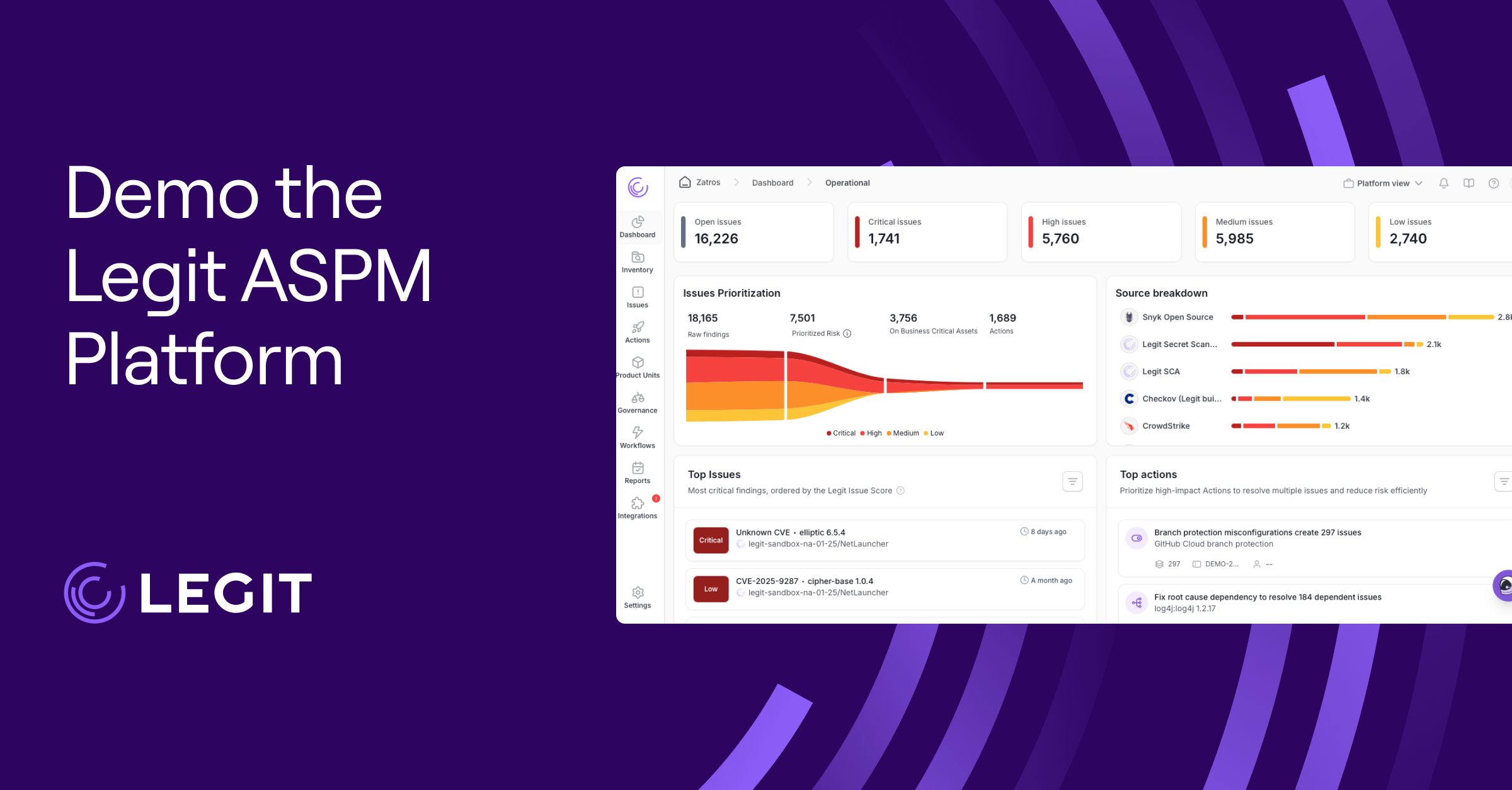
Let’s break down what you actually get with Legit Security. The platform packs a lot of capability, so we’ll examine each major feature area.
Software Development Lifecycle (SDLC) Discovery
Before you can secure your development environment, you need to map it. Legit automatically discovers your entire SDLC. This includes:
- Source code repositories
- CI/CD pipelines
- Build systems
- Deployment environments
- Security tools already in place
- Developer activity patterns
The platform creates a visual graph of SDLC build assets. This gives you full visibility into your pipeline and the path from code to production.
Why does this matter? Because most security incidents trace back to blind spots. Shadow IT exists in development too. Teams spin up new repos, add tools, change configurations. Without automated discovery, you’re always playing catch-up.
A customer shared this experience: “We’re able to inventory all our SDLC systems and security tools, view developer activity, and use this visibility and context to remediate vulnerabilities faster.”
Secrets Detection and Prevention
Exposed secrets remain one of the most common attack vectors. API keys, credentials, tokens. They end up in code, logs, and configuration files. Sometimes they sit there for years before someone notices.
Legit Security includes built-in secrets detection. But it goes beyond just finding exposed secrets. The platform helps with:
- Detection – scanning code and pipelines for exposed credentials
- Prevention – stopping secrets before they enter the codebase
- Remediation – guiding teams through proper rotation and removal
The prevention angle is what separates good secrets management from great. Finding a secret after it’s committed is valuable. Stopping it from being committed in the first place? That’s better.
Vulnerability Management and Prioritization
Every security scanner produces findings. The problem isn’t finding vulnerabilities. It’s knowing which ones actually matter.
Legit Security takes a risk-based approach to vulnerability management. Not every high-severity CVE deserves immediate attention. Context matters. Is the vulnerable component actually reachable? Is it in production? Does it handle sensitive data?
The platform factors in:
| Risk Factor | Why It Matters |
|---|---|
| Reachability | A vulnerability in unused code poses less risk than one in active execution paths |
| Environment | Production issues outweigh development environment findings |
| Data sensitivity | Components handling PII or financial data get higher priority |
| Exploit availability | Known exploits in the wild increase urgency |
| Business impact | Critical applications deserve faster remediation |
This approach cuts through the noise. Instead of 10,000 findings of varying importance, you get a prioritized list based on actual risk to your business.
Software Supply Chain Security
Modern applications aren’t built from scratch. They’re assembled from open-source components, third-party libraries, and external dependencies. Your supply chain is as much a part of your attack surface as your own code.
Legit Security provides supply chain visibility through:
- Dependency tracking – knowing every component in your builds
- Vulnerability correlation – matching dependencies to known CVEs
- Pipeline security – protecting CI/CD from tampering
- Build integrity – ensuring code hasn’t been modified in transit
The SolarWinds attack showed what happens when supply chains get compromised. Attackers don’t always target your code directly. Sometimes they poison the well upstream.
Another customer noted: “Legit helps us secure our CI/CD pipelines including tracking the security posture of different teams, addressing SDLC configuration drifts, and applying security resources where it can help us most.”
Code Security: SAST and SCA Integration
Static Application Security Testing (SAST) and Software Composition Analysis (SCA) are foundational security practices. Legit Security integrates both into its platform.
SAST examines your source code for security flaws. It finds issues like:
- SQL injection vulnerabilities
- Cross-site scripting (XSS)
- Buffer overflows
- Hardcoded credentials
- Insecure cryptographic implementations
SCA focuses on your dependencies. It identifies:
- Vulnerable open-source components
- License compliance issues
- Outdated packages
- Dependency confusion risks
The value of having both in one platform? Unified visibility. You don’t need to correlate findings from multiple tools manually. Legit handles that consolidation.
VibeGuard: Securing AI-Generated Code
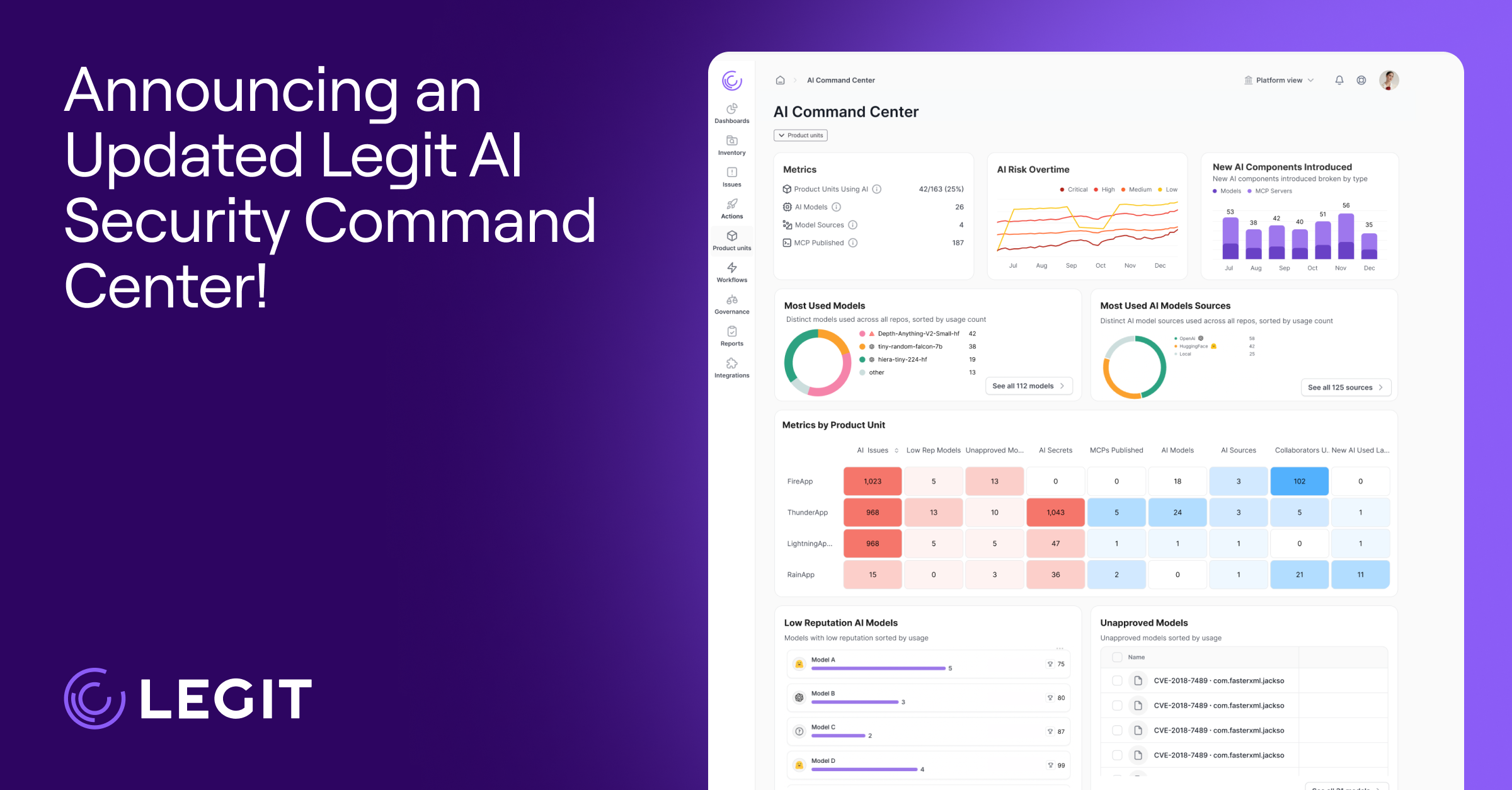
AI code assistants have changed how developers work. GitHub Copilot, ChatGPT, Claude. They all generate code now. This creates a new security challenge.
AI-generated code can contain vulnerabilities. It can expose secrets. It can introduce insecure patterns. And it happens at the developer endpoint, before traditional security tools ever see it.
What Is VibeGuard?
VibeGuard is Legit Security’s answer to AI code security. The official description: “VibeGuard is Application Security for AI-led development. VibeGuard prevents vulnerabilities, secrets and risk at the developer endpoint – where AI code is generated.”
This is shift-left taken to its logical extreme. Instead of catching issues after code is committed, VibeGuard operates where the code is created.
Key VibeGuard Capabilities
VibeGuard provides:
- Real-time scanning – analyzes AI-generated code as it’s created
- Vulnerability prevention – stops insecure patterns before they enter the codebase
- Secrets blocking – prevents credentials from being suggested or committed
- Developer visibility – shows security status without leaving the IDE
The timing of this feature is smart. AI code generation is exploding. Some estimates suggest 30-40% of code in enterprise environments will be AI-generated by end of 2026. Traditional scanning that happens after commit can’t keep pace.
Why AI Code Needs Special Attention
AI code assistants are trained on public code. That includes code with security flaws. They can and do suggest vulnerable patterns.
A few specific risks with AI-generated code:
| Risk | Example |
|---|---|
| Outdated practices | AI suggests deprecated crypto functions that are no longer secure |
| Training data pollution | Malicious code in training sets gets reproduced |
| Context blindness | AI doesn’t know your security requirements or compliance needs |
| Overconfidence | Developers trust AI suggestions without review |
| Speed over security | Faster coding means less time for manual security review |
VibeGuard addresses these risks at the source. It’s a recognition that security needs to move where development is happening, not the other way around.
Advanced Code Change Management
In July 2025, Legit Security announced enhanced capabilities for code change management and workflow orchestration. This addresses a persistent pain point: knowing where code changes are happening and routing them through appropriate security workflows.
The Code Change Problem
Large organizations struggle with code change visibility. Multiple teams. Hundreds or thousands of repositories. Different branching strategies. Code flows through the SDLC in ways that aren’t always predictable.
This creates several issues:
- Disconnected tool sprawl – security tools that don’t talk to each other
- Duplicate alerts – same finding reported multiple times from different sources
- Remediation without context – developers fix symptoms, not root causes
- Hidden code – changes that bypass normal review processes
Legit Security’s code change management addresses all four.
How Code Change Management Works
The platform provides visibility into where everyday code changes occur. But visibility alone isn’t enough. You need appropriate workflows to resolve issues.
The workflow orchestration piece connects detection to action. When Legit finds an issue, it can:
- Route it to the right team based on code ownership
- Create tickets in your existing tracking system
- Trigger automated remediation where possible
- Provide context for manual fixes
This eliminates the “throw it over the wall” problem. Security findings don’t just pile up in a dashboard. They flow into developer workflows where they can actually be addressed.
Root Cause Remediation
Here’s something that sets Legit apart from competitors. The platform supports root cause remediation actions. Legit claims to be the only ASPM platform with this capability.
What does root cause remediation mean in practice?
Consider a vulnerability that appears in multiple applications because they all use the same internal library. Traditional remediation treats each instance as a separate issue. You fix the same problem ten times in ten places.
Root cause remediation identifies the source. Fix the library once, and all downstream applications benefit. It’s the difference between treating symptoms and curing the disease.
This approach reduces:
- Developer time spent on repeated fixes
- Security team time triaging duplicate issues
- Overall remediation cycles
- Risk window (faster fixes mean shorter exposure)
Legit Security vs Apiiro: A Detailed Comparison
Apiiro is one of Legit Security’s main competitors in the ASPM space. Both platforms aim to help security teams manage application security programs. But they take different approaches.
Scope of Focus
The most fundamental difference comes down to scope:
- Apiiro focuses primarily on the security of source code
- Legit focuses on a comprehensive view of application risk
This isn’t just marketing speak. It reflects real differences in what each platform covers. Apiiro goes deep on code analysis. Legit goes broad across the entire SDLC.
Feature Comparison Table
| Capability | Legit Security | Apiiro |
|---|---|---|
| SDLC Discovery | Full discovery with visual graph of build assets | Limited SDLC discovery |
| Pipeline Visibility | Complete pipeline and code-to-production path | Does not offer this capability |
| Secrets Detection | Yes, with remediation | Yes, with remediation |
| Vulnerability Management | Yes | Yes |
| Root Cause Remediation | Yes (only ASPM with this feature) | No |
| AI Code Security | VibeGuard for AI-generated code | Not specified |
| Supply Chain Security | Comprehensive | Source code focused |
Visual SDLC Mapping
Legit offers something Apiiro doesn’t: a visual graph of SDLC build assets with full visibility into pipeline and code-to-production paths.
Why does this matter? Because security decisions require context. Knowing a vulnerability exists isn’t enough. You need to know:
- Where in the pipeline it was introduced
- What path it takes to production
- What other systems it touches
- Who owns the code
The visual representation makes these relationships clear. It’s not just data in a spreadsheet. It’s a map of your development environment.
Remediation Approach
Both platforms offer remediation guidance. But Legit’s root cause remediation is a differentiator.
Traditional remediation: find issue, fix issue, repeat. Root cause remediation: find issue, trace it to its source, fix the source, prevent recurrence.
For organizations with complex codebases and shared components, this difference adds up. Fixing symptoms is expensive. Fixing causes is efficient.
When to Choose Legit Over Apiiro
Legit Security is likely the better choice if you:
- Need full SDLC visibility, not just code analysis
- Want to secure CI/CD pipelines, not just source code
- Use AI code assistants and need to secure that workflow
- Care about the path from code to production
- Want root cause remediation to reduce duplicate work
Apiiro might be a better fit if you’re primarily concerned with deep code analysis and don’t need the broader SDLC coverage.
How Legit Security Fits Into the Modern AppSec Stack
No security tool works in isolation. Legit Security is designed to complement and unify your existing security investments.
Integration Philosophy
Legit takes a platform approach. Instead of replacing all your existing tools, it sits on top of them as a unified control plane.
You likely already have:
- SAST tools scanning your code
- SCA tools checking dependencies
- DAST tools testing running applications
- Container scanning for your images
- Infrastructure as Code scanning
Each of these tools produces findings. Each has its own dashboard. Each reports risk differently. Legit pulls these together.
The platform consolidates findings from multiple sources. It normalizes risk scores. It correlates related issues. It gives you one place to understand your overall security posture.
Developer Workflow Integration
Security tools that disrupt developer workflows don’t get used. Legit understands this.
The platform integrates with:
- Source control – GitHub, GitLab, Bitbucket, Azure DevOps
- CI/CD systems – Jenkins, CircleCI, GitHub Actions, and others
- Issue tracking – Jira, ServiceNow, Azure Boards
- Communication tools – Slack, Microsoft Teams
Security findings flow into tools developers already use. No context switching required. No separate dashboard to check.
Governance and Compliance
Enterprise security isn’t just about finding vulnerabilities. It’s about proving compliance. Auditors want evidence. Regulators want documentation.
One customer noted: “Legit gives us governance out of the box, and the ability to have visualization across our SDLC to improve our developer collaboration and security best practices.”
The platform provides:
- Policy enforcement across the SDLC
- Configuration drift detection
- Security posture tracking over time
- Evidence collection for audits
- Compliance reporting
For organizations dealing with SOC 2, ISO 27001, PCI DSS, or other frameworks, this out-of-box governance is valuable. It turns continuous compliance from a manual exercise into an automated process.
Customer Success Stories and Real-World Results
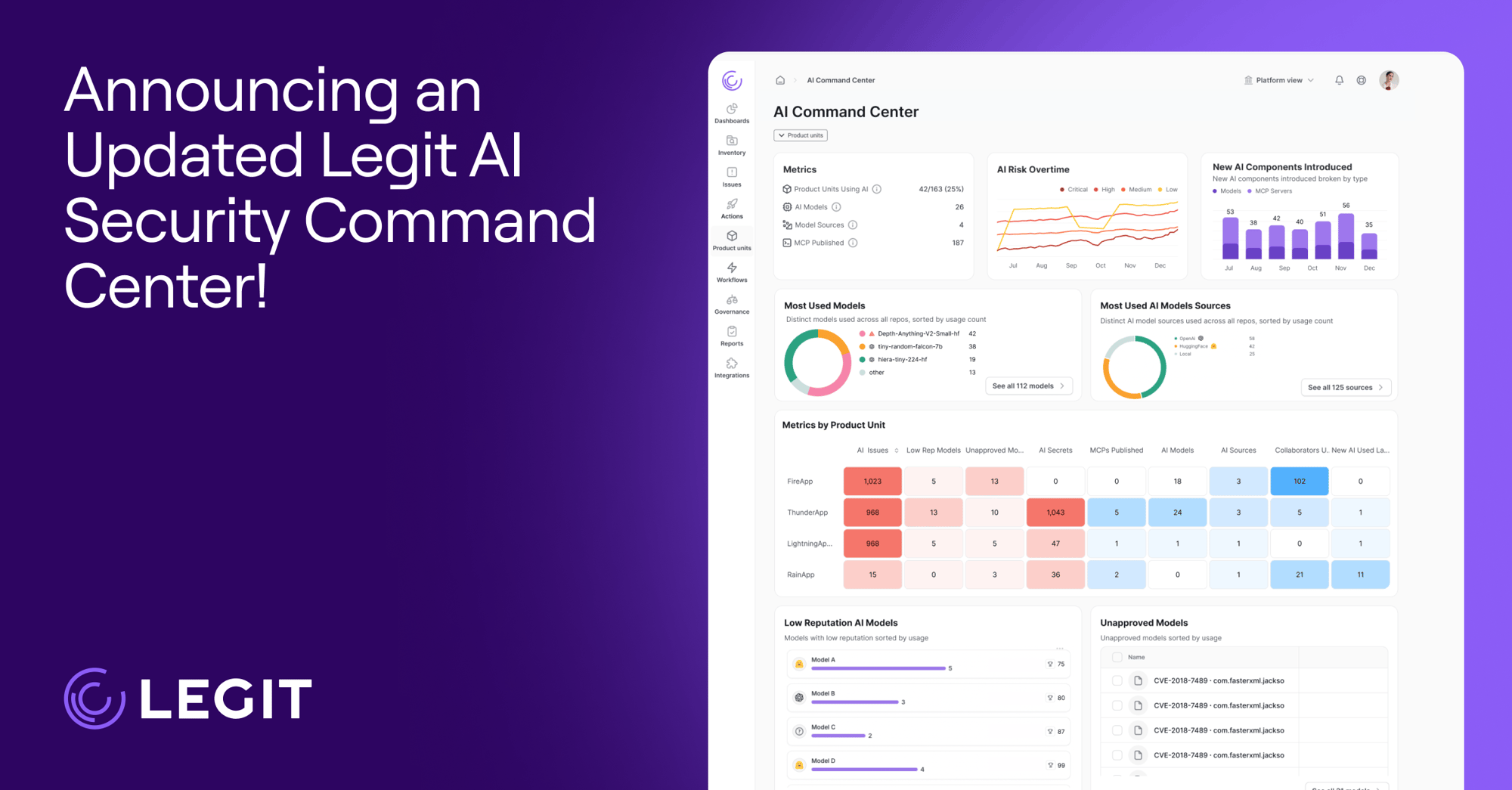
Marketing claims only go so far. Let’s look at what actual customers say about using Legit Security.
Visibility and Productivity Gains
Multiple customers highlight visibility as the primary benefit. One stated: “Legit is providing us with visibility across the entire software supply chain, which helps us minimize risk and raise analyst and engineering productivity.”
Note the productivity mention. Security tools often create work. They generate findings that someone has to triage, investigate, and fix. Good tools reduce net work by making that process more efficient.
When you can see your entire supply chain, you spend less time hunting for information. When findings are prioritized by actual risk, you spend less time on false positives. When remediation targets root causes, you fix things once instead of repeatedly.
Modernizing AppSec Programs
Another customer shared: “Legit significantly helps organizations to modernize application security programs by seamlessly integrating security into agile development and our modern application stack.”
This touches on a common challenge. Most organizations have legacy security processes. Waterfall-era approaches. Manual reviews. Gates that slow development.
Modern development is agile. It’s continuous. Code deploys daily or even hourly. Security needs to match that cadence. Legit helps bridge the gap between old security practices and new development realities.
CI/CD Pipeline Security
Pipeline security is a specific use case where Legit shines. One customer explained: “Legit helps us secure our CI/CD pipelines including tracking the security posture of different teams, addressing SDLC configuration drifts, and applying security resources where it can help us most.”
Configuration drift is an underappreciated risk. You set up security controls. Over time, they degrade. Someone changes a setting. A new pipeline bypasses existing checks. Entropy wins.
Legit detects these drifts. It alerts when configurations move away from your security baseline. This continuous monitoring keeps your security posture from degrading over time.
Inventory and Developer Activity
Another customer highlighted inventory and visibility: “We’re able to inventory all our SDLC systems and security tools, view developer activity, and use this visibility and context to remediate vulnerabilities faster.”
The inventory piece is foundational. You can’t secure systems you don’t know exist. And in large organizations, shadow SDLC is real. Teams adopt tools without security team awareness.
Developer activity visibility is also valuable. Not for surveillance, but for understanding where security investment should focus. Which teams are most active? Where are changes happening most frequently? Where should you prioritize security reviews?
Who Should Consider Legit Security?
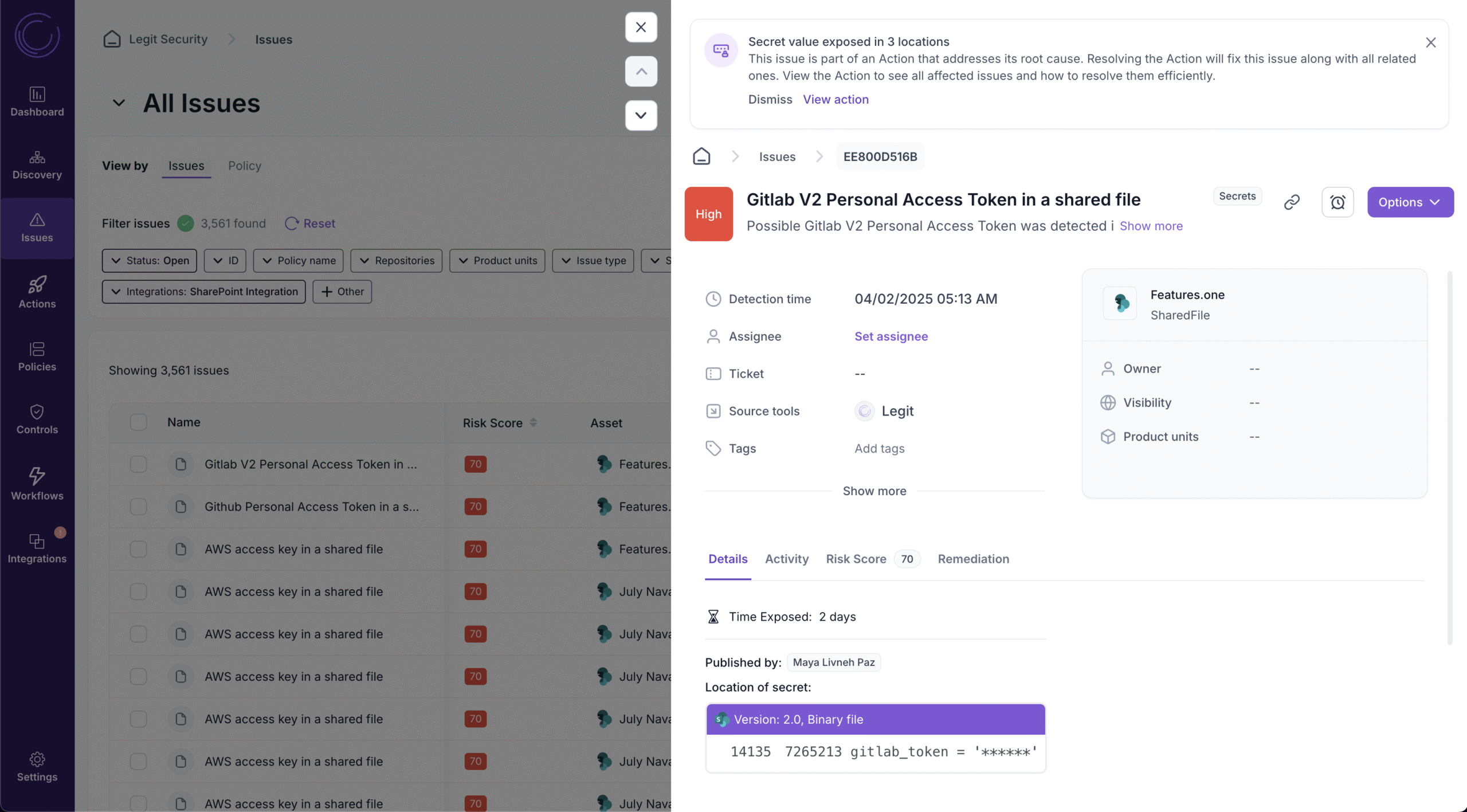
Not every organization needs an ASPM platform. Here’s who gets the most value from Legit Security.
Ideal Organization Profile
You’re a good fit for Legit Security if:
- Your development velocity is high – multiple releases per day or week
- You have multiple development teams – coordination is a challenge
- You use diverse tools – multiple scanners, platforms, and environments
- AI code assistants are in use – or you’re planning to adopt them
- Supply chain security matters – you use open-source extensively
- Compliance requirements exist – you need governance and audit trails
Team Roles That Benefit
| Role | Primary Benefit |
|---|---|
| Security Engineers | Unified view of security posture, reduced tool sprawl |
| AppSec Managers | Program visibility, metrics, and governance |
| Developers | Prioritized findings, contextual remediation guidance |
| DevOps/Platform Teams | Pipeline security, configuration management |
| Compliance Officers | Audit evidence, policy enforcement |
| CISOs | Risk visibility, security posture trends |
When Legit Might Not Be the Right Fit
Be honest about fit. Legit Security might not be ideal if:
- You have a very small development team (under 10 developers)
- Your development process is simple with few moving parts
- You’re satisfied with point solutions and don’t need consolidation
- Budget constraints prevent enterprise security investment
- Your organization isn’t ready for process change
ASPM platforms require organizational commitment. They work best when security and development teams collaborate. If that collaboration isn’t possible yet, address that first.
Getting Started With Legit Security
Interested in trying Legit Security? Here’s what the process looks like.
Requesting a Demo
Legit offers personalized demos. During a demo, you’ll see how the platform helps security teams:
- Discover and map their SDLC
- Detect and prioritize security issues
- Remediate vulnerabilities at root cause
- Secure CI/CD pipelines
- Handle AI-generated code with VibeGuard
The demo is tailored to your environment. Come prepared with questions about your specific use cases and challenges.
What to Evaluate
When assessing Legit Security, focus on:
- Discovery accuracy – does it find your entire SDLC?
- Integration quality – does it work with your existing tools?
- Prioritization relevance – do the risk scores make sense for your business?
- Remediation guidance – is it actionable for your developers?
- Time to value – how quickly can you get meaningful results?
Proof of Concept Best Practices
If you move to a proof of concept, set yourself up for success:
- Choose a representative subset of your SDLC
- Include at least one complex application with many dependencies
- Involve both security and development team members
- Define success criteria upfront
- Give the platform time to discover and learn your environment
Don’t judge an ASPM platform on day one. These tools get better as they learn your environment. A two-week evaluation is more meaningful than a two-day one.
Pricing Considerations for Legit Security
Legit Security doesn’t publish pricing publicly. This is typical for enterprise security platforms. Pricing usually depends on factors like:
- Number of developers
- Number of repositories
- Number of applications
- Feature tiers selected
- Support level required
Understanding Total Cost of Ownership
Don’t just look at license cost. Consider total cost of ownership:
- Implementation effort – time to set up and configure
- Integration work – connecting to existing tools and workflows
- Training – getting teams up to speed
- Ongoing administration – maintaining the platform over time
- Tool consolidation savings – can you retire other tools?
ASPM platforms often provide ROI through consolidation. If Legit replaces three or four point solutions, the net cost might be lower even if the sticker price seems high.
Building a Business Case
To justify the investment, quantify current pain:
- How much time do teams spend triaging false positives?
- How long does it take to remediate vulnerabilities today?
- How many tools are you paying for separately?
- What’s the cost of security incidents you’ve experienced?
- How much developer time is lost to security friction?
Good ASPM platforms show measurable improvement in these areas. Ask Legit for customer case studies with specific metrics to help build your business case.
The Future of ASPM and Where Legit Security Is Heading
ASPM is a growing category. Analyst firms are paying attention. Investment is flowing in. But where is it heading?
AI-Native Is the New Standard
Legit’s positioning as “AI-native” isn’t just marketing. It reflects where the industry is going. AI code generation is here. It’s not slowing down. Security platforms need to handle AI-generated code natively.
Older platforms that bolt on AI features will struggle. Platforms built for an AI-first world have an advantage. Legit’s VibeGuard is an example of this native approach.
Shift-Left Continues Shifting
Security keeps moving earlier in the development lifecycle. First it was at deployment. Then at build. Then at commit. Now it’s at code generation.
Expect continued movement toward developer-centric security. Tools that work in the IDE. Security that’s invisible when code is safe and apparent when it’s not. Legit’s focus on developer workflow integration aligns with this trend.
Supply Chain Gets More Attention
High-profile supply chain attacks have raised awareness. Organizations now understand that their security depends on their dependencies. Expect continued investment in supply chain visibility and protection.
Legit’s comprehensive supply chain coverage positions it well for this continued focus.
Consolidation Over Point Solutions
Tool sprawl creates problems. Integration work. Training overhead. Gaps between tools. Conflicting findings. The market is moving toward platforms that consolidate capabilities.
ASPM is by definition a consolidation play. It brings together capabilities that previously required separate tools. This trend favors platforms like Legit Security.
Strengths and Limitations: A Balanced View
No platform is perfect. Here’s an honest assessment of Legit Security’s strengths and limitations based on available information.
Key Strengths
- Comprehensive SDLC coverage – goes beyond just code to cover pipelines, builds, and deployments
- Visual SDLC mapping – makes complex environments understandable
- AI code security (VibeGuard) – addresses a real and growing threat
- Root cause remediation – fixes sources, not just symptoms
- Governance out of the box – reduces compliance burden
- Risk-based prioritization – cuts through alert noise
- Strong customer testimonials – real users report real value
Potential Limitations
- Enterprise focus – may be overkill for smaller organizations
- Pricing not transparent – hard to budget without a conversation
- Requires organizational readiness – benefits need security/dev collaboration
- Market category still maturing – ASPM is relatively new
- Learning curve – comprehensive platforms take time to master
Questions to Ask Before Buying
If you’re evaluating Legit Security, get answers to these questions:
- How long does typical implementation take for an organization our size?
- What integrations are out of the box vs. requiring custom work?
- How does pricing scale as we grow?
- What support is included vs. additional cost?
- Can we see reference customers in our industry?
- What does the product roadmap look like for 2026 and beyond?
Conclusion
Legit Security offers a comprehensive ASPM platform built for modern development realities. Its AI-native approach, visual SDLC mapping, and root cause remediation set it apart from competitors like Apiiro. The platform addresses real challenges that security teams face: visibility gaps, alert fatigue, and the security risks of AI-generated code. For organizations where software development velocity is high and security needs to keep pace, Legit Security deserves serious consideration.
Frequently Asked Questions About Legit Security
| Who is Legit Security designed for? | Legit Security targets enterprise organizations with complex software development environments. It’s best suited for companies with multiple development teams, high release velocity, and significant use of open-source components. Security teams, AppSec managers, and DevOps teams are the primary users. |
| What makes Legit Security different from other ASPM platforms? | Legit differentiates through several features: visual SDLC mapping with code-to-production path visibility, VibeGuard for AI-generated code security, root cause remediation that fixes issues at the source, and comprehensive supply chain coverage. It’s also positioned as truly AI-native rather than having AI added later. |
| Does Legit Security replace existing security tools? | Not necessarily. Legit Security works as a unified control plane that can integrate with existing SAST, SCA, DAST, and other security tools. It consolidates and normalizes findings from multiple sources. Some organizations do retire redundant tools, but the platform is designed to complement existing investments. |
| How does Legit Security handle AI-generated code? | Legit Security includes VibeGuard, a feature specifically designed to secure AI-led development. VibeGuard operates at the developer endpoint where AI code is generated, preventing vulnerabilities, secrets, and risks before they enter the codebase. This is proactive rather than reactive security. |
| How long does it take to implement Legit Security? | Implementation time varies based on organization size and complexity. The platform’s automated discovery capabilities speed up initial setup. However, getting full value typically takes weeks as the platform learns your environment and teams adopt new workflows. Ask for specific timelines during your demo. |
| Can Legit Security help with compliance requirements? | Yes. The platform provides governance out of the box, including policy enforcement, configuration drift detection, security posture tracking, and evidence collection for audits. Customers cite compliance support as a key benefit for SOC 2, ISO 27001, PCI DSS, and other frameworks. |
| How does Legit Security compare to Apiiro? | Both are ASPM platforms, but they differ in scope. Apiiro focuses primarily on source code security. Legit provides broader coverage including CI/CD pipelines, build systems, and the full code-to-production path. Legit also offers root cause remediation and VibeGuard for AI code security, which Apiiro does not. |
| Is Legit Security suitable for small development teams? | Legit Security is enterprise-focused. Small teams with simple development processes might find it more capability than they need. The platform provides the most value in complex environments with multiple teams, tools, and compliance requirements. For smaller organizations, evaluate whether the investment matches your actual needs. |
| What integrations does Legit Security support? | Legit integrates with major source control systems (GitHub, GitLab, Bitbucket, Azure DevOps), CI/CD platforms (Jenkins, CircleCI, GitHub Actions), issue tracking (Jira, ServiceNow), and communication tools (Slack, Teams). It also integrates with existing security scanners to consolidate findings. |
| How do I get a demo of Legit Security? | You can request a personalized demo through the Legit Security website. The demo will be tailored to your environment and use cases. Come prepared with questions about your specific challenges and requirements to get the most value from the session. |



 Stack Insight is intended to support informed decision-making by providing independent information about business software and services. Some product details, including pricing, features, and promotional offers, may be supplied by vendors or partners and can change without notice.