
Endor Labs Review


Endor Labs Review: A Complete Look at the AI-Native Application Security Platform
Security teams are drowning in alerts. Most of them don’t matter. That’s the problem Endor Labs set out to solve. This platform takes a different approach to application security by focusing on what actually puts your code at risk. Instead of flooding you with thousands of warnings, it filters down to the ones that count.
In this Endor Labs review, we’ll break down everything you need to know about this fast-growing AppSec company. We’ll cover its core features, pricing model, how it stacks up against competitors, and whether it’s the right fit for your team. By the end, you’ll have a clear picture of what Endor Labs does, who should use it, and what makes it stand out in a crowded market.
What Is Endor Labs? Company Background and Mission
Endor Labs calls itself the fastest-growing AppSec company ever. That’s a bold claim. But looking at their trajectory and funding, they’ve got numbers to back it up. The company launched with a clear mission: help security teams cut through the noise and fix what matters.
The Founding Team and Vision
The people behind Endor Labs come from major tech companies. We’re talking about builders from Meta, Uber, Amazon, Splunk, Cisco, and Palo Alto Networks. These aren’t folks who stumbled into security. They’ve lived the frustrations of modern software development firsthand.
Sriram Subramanian serves as Managing Director and R&D Head for India. The team combines security expertise with deep engineering experience. That mix shows in how the product works.
Their pitch is simple. Modern software development has changed. Open source code makes up about 80% of most applications. Now AI-generated code is adding another layer of complexity. Traditional security tools weren’t built for this reality.
The Problem They’re Solving
Here’s what happens with legacy security tools:
- They scan your code and dependencies
- They find thousands of vulnerabilities
- They dump all those alerts on your team
- Your developers spend hours triaging
- Most of those vulnerabilities never actually affect your application
That last point is the key. A vulnerability might exist in a library you use. But if your code never calls the vulnerable function, does it matter? Traditional tools say yes. Endor Labs says no.
The company positions itself as an “AI-native” platform. That’s not just marketing speak. They’ve built agentic AI directly into how the product works. This becomes clear when you look at features like their AI Security Code Review.
Core Technology: Function-Level Reachability Analysis Explained
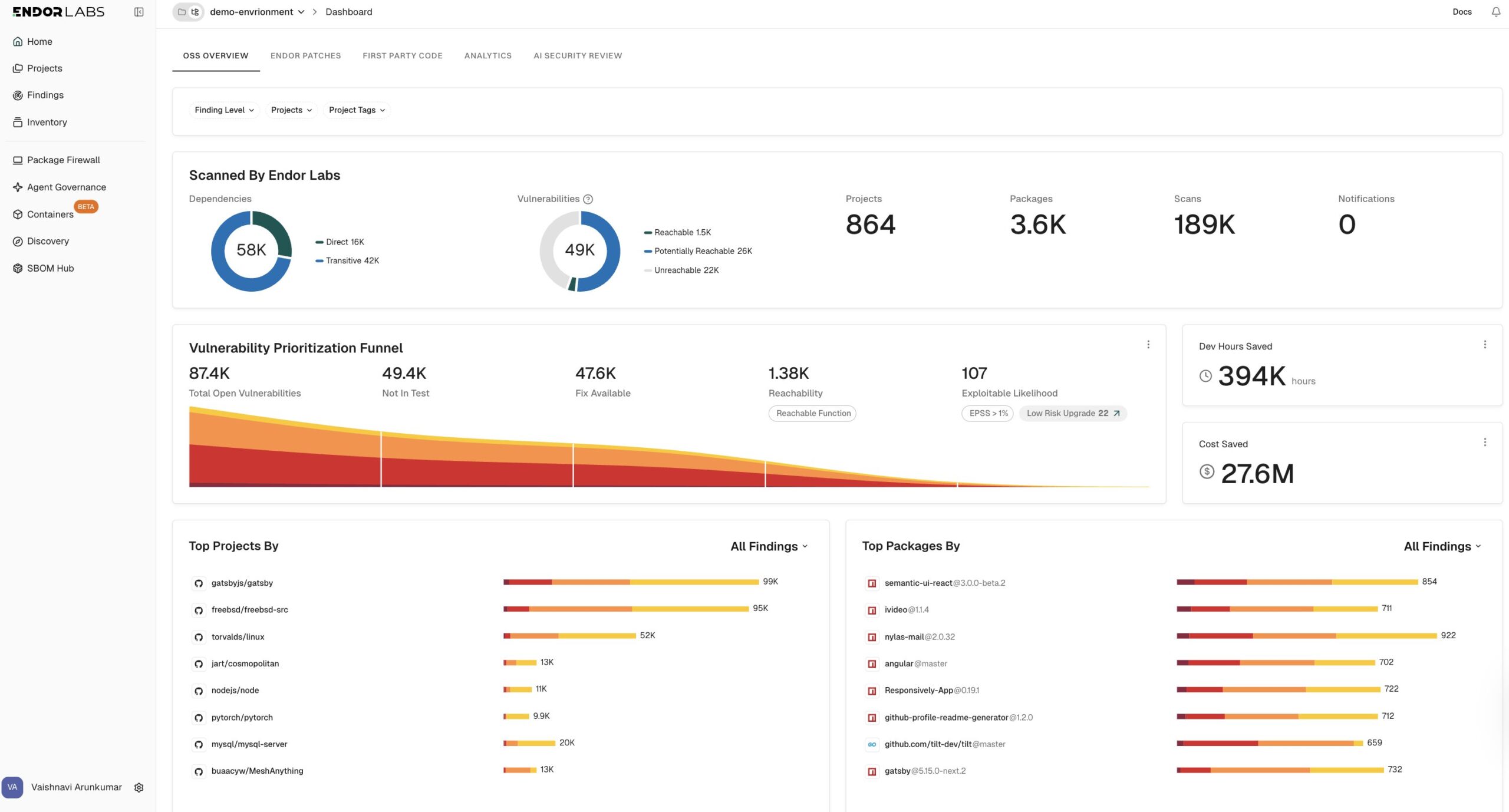
The heart of Endor Labs is something called function-level reachability analysis. This is where the platform really separates itself from traditional SCA tools. Let’s break down what this means and why it matters.
How Traditional SCA Works
Standard Software Composition Analysis tools work like this:
- They scan your project’s dependencies
- They check those dependencies against vulnerability databases
- If a dependency has a known CVE, you get an alert
The problem? This approach ignores context. You might import a library with 50 functions but only use 3 of them. If the vulnerability sits in function #47, you’ll still get the alert. Even though your code never touches that function.
This creates alert fatigue. Developers start ignoring security warnings. “They’re probably false positives anyway,” becomes the team’s attitude. And then real issues slip through.
Reachability Analysis Changes the Game
Endor Labs does something different. It maps out how your code actually flows. The platform traces execution paths from your application to its dependencies. It answers a simple question: Can your code actually reach the vulnerable function?
If the answer is no, the alert gets filtered out. Or at least deprioritized.
The company claims up to 97% reduction in SCA alert noise. Let’s be clear about that number. It comes from Endor Labs’ own customer data. It’s a best-case figure, not an independent benchmark. Your mileage will vary depending on your codebase.
But even a 50% reduction would be meaningful. That’s half as many alerts for your team to investigate. Half as much time spent on vulnerabilities that don’t affect you.
Technical Deep-Dive: How It Works
The reachability analysis works across 40+ programming languages. That’s broad coverage. Here’s a simplified view of the process:
| Step | What Happens | Why It Matters |
|---|---|---|
| Dependency Mapping | Endor Labs catalogs all direct and transitive dependencies | Creates complete picture of your software supply chain |
| Call Graph Generation | Builds a map of function calls throughout your application | Shows how code execution flows between components |
| Vulnerability Correlation | Matches known CVEs to specific functions in dependencies | Pinpoints exactly where risks live |
| Path Analysis | Traces if your code can reach vulnerable functions | Determines if the vulnerability actually affects you |
| Risk Scoring | Assigns priority based on reachability and severity | Helps teams focus on what matters first |
This approach requires deep program analysis. Surface-level scanning won’t cut it. Endor Labs invests heavily in understanding code at a fundamental level.
Platform Capabilities: Beyond Just SCA
Endor Labs started with Software Composition Analysis. But the platform now covers much more. Let’s walk through each capability and what it offers.
Static Application Security Testing (SAST)
SAST scans your source code for security flaws. Things like SQL injection vulnerabilities, cross-site scripting risks, and hardcoded credentials. Endor Labs includes SAST as part of its unified platform.
Having SAST and SCA in one tool matters. Vulnerabilities don’t care whether they came from your code or a dependency. Your security team shouldn’t need to context-switch between different platforms to get the full picture.
The SAST engine integrates with the same reachability analysis used for dependencies. This helps prioritize findings based on actual risk, not just theoretical exposure.
Container Security Scanning
Modern applications run in containers. Those containers include base images, system packages, and application dependencies. Each layer can introduce vulnerabilities.
Endor Labs scans container images for:
- OS-level vulnerabilities in the base image
- Package manager dependencies like apt or yum packages
- Application dependencies bundled in the container
- Configuration issues that could expose your workloads
Again, reachability analysis applies here. A vulnerable package in your container might never be invoked by your application. Endor Labs can identify those cases and adjust risk scores accordingly.
Secrets Detection
Hardcoded secrets are one of the most common security mistakes. API keys, database passwords, private certificates. They end up in code all the time. Endor Labs scans for these.
The secrets detection covers:
- API keys and tokens
- Database connection strings
- Cloud provider credentials
- Private keys and certificates
- OAuth secrets
Finding secrets in code is one thing. Finding them before they hit production is what matters. Endor Labs can scan pull requests and block merges when secrets are detected.
Malware Detection
Supply chain attacks are on the rise. Attackers compromise legitimate packages or create typosquatted versions. When you install them, you’re pulling malware directly into your build.
Endor Labs includes malware detection to catch these threats. The platform analyzes packages for:
- Known malicious code patterns
- Suspicious behaviors like data exfiltration attempts
- Typosquatting of popular package names
- Dependency confusion attacks
This is table stakes for modern supply chain security. But having it integrated into the same platform as your SCA and SAST makes the workflow much smoother.
AI Security Code Review: The Newest Feature
In 2026, Endor Labs introduced AI Security Code Review. This represents the company’s push into agentic AI. Let’s examine what it does and why it matters.
The Problem with Traditional Code Review
Most security tools look for specific patterns. SQL injection. XSS. Authentication bypasses. They’re good at finding these known vulnerability types.
But they miss something bigger: architectural changes.
What happens when a developer:
- Adds a new API endpoint without proper authorization?
- Modifies authentication logic in subtle ways?
- Starts collecting new types of sensitive data?
- Changes how data flows through the system?
These changes are “technically valid.” They don’t trigger traditional security alerts. But they can shift your security posture in meaningful ways. That’s the gap AI Security Code Review fills.
How AI Security Code Review Works
The feature uses multiple AI agents to review pull requests. Each agent looks at different aspects of the change:
| AI Agent Focus | What It Looks For |
|---|---|
| API Surface Changes | New endpoints, modified routes, changed authentication requirements |
| Authentication Logic | Changes to login flows, session handling, permission checks |
| Data Handling | New sensitive data collection, storage changes, transmission patterns |
| Design Patterns | Architectural decisions that affect security posture |
The goal isn’t to replace human security review. It’s to help AppSec teams identify which code changes deserve their attention. Out of thousands of pull requests, which ones actually impact security architecture?
False Negatives vs False Positives
Endor Labs frames this feature around a different problem than most tools address. Traditional tools focus on reducing false positives. AI Security Code Review focuses on catching false negatives.
A false negative is a security issue that never triggers an alert. The code change is “valid” from a syntax perspective. No known vulnerability patterns appear. But it still creates risk.
The company states their mission includes “catching false negatives — high-impact security changes that never trigger an alert in the first place.”
This is a mature perspective on application security. It acknowledges that finding more issues isn’t always the goal. Finding the right issues is what matters.
Practical Applications
Let’s say your team processes 500 pull requests per week. Your AppSec team can’t review all of them manually. They have to pick and choose.
AI Security Code Review scans every PR. It flags the ones that:
- Introduce new attack surface
- Modify security-sensitive code paths
- Change data handling in ways that affect compliance
- Alter authentication or authorization patterns
Now your AppSec team knows which 20 pull requests out of 500 need human eyes. That’s a much better use of limited security resources.
Language and Framework Support
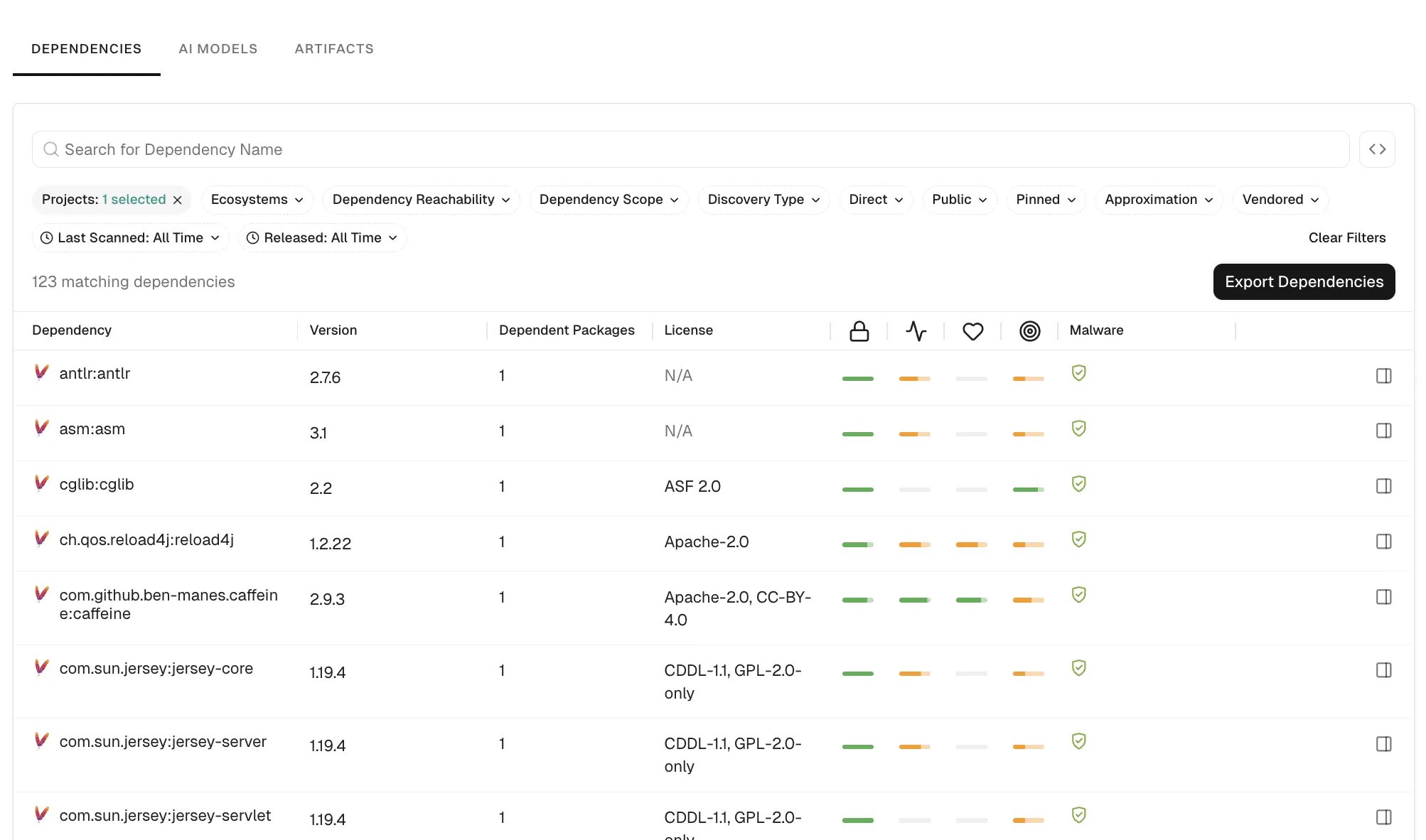
Coverage matters. If a security tool doesn’t support your stack, it’s useless. Endor Labs claims support for 40+ programming languages. Let’s look at what that means in practice.
Primary Language Support
The platform provides full analysis capabilities for major languages:
| Language | SCA Support | SAST Support | Reachability Analysis |
|---|---|---|---|
| Java | Yes | Yes | Full |
| JavaScript/TypeScript | Yes | Yes | Full |
| Python | Yes | Yes | Full |
| Go | Yes | Yes | Full |
| C/C++ | Yes | Yes | Full |
| C#/.NET | Yes | Yes | Full |
| Ruby | Yes | Yes | Full |
| PHP | Yes | Yes | Full |
| Rust | Yes | Yes | Full |
| Kotlin | Yes | Yes | Full |
| Scala | Yes | Yes | Full |
| Swift | Yes | Yes | Full |
The depth of reachability analysis varies by language. Some languages have more mature tooling for call graph generation. Endor Labs continues to improve coverage over time.
Package Manager Support
For SCA, package manager support is just as important as language support. Endor Labs covers:
- npm/yarn for JavaScript
- pip/Poetry/Pipenv for Python
- Maven/Gradle for Java
- NuGet for .NET
- Go modules for Go
- Cargo for Rust
- RubyGems/Bundler for Ruby
- Composer for PHP
- CocoaPods/Swift Package Manager for iOS
This breadth means most enterprise codebases can use Endor Labs without worrying about gaps in coverage.
Framework-Specific Analysis
Generic language support isn’t enough. Modern applications use frameworks that affect how code executes. Endor Labs understands common frameworks:
- Spring Boot for Java applications
- React/Vue/Angular for frontend applications
- Django/Flask/FastAPI for Python
- Express/Nest.js for Node.js
- Rails for Ruby
- ASP.NET for C#
Framework awareness improves reachability analysis accuracy. The platform understands how dependency injection works. It knows how routing directs requests. This context makes vulnerability prioritization more accurate.
Integration Capabilities and Developer Experience
A security tool only works if developers use it. Endor Labs puts significant effort into integration and developer experience. Let’s examine how it fits into existing workflows.
Source Control Integrations
The platform connects to where your code lives:
- GitHub (Cloud and Enterprise)
- GitLab (Cloud and Self-Managed)
- Bitbucket (Cloud and Data Center)
- Azure DevOps
These aren’t just one-way connections. Endor Labs can:
- Scan code automatically on push
- Comment on pull requests with findings
- Block merges when critical issues are found
- Create issues or tickets for discovered vulnerabilities
The pull request workflow is where AI Security Code Review shines. It evaluates changes in context. You see findings before code hits your main branch.
CI/CD Pipeline Integration
For teams with custom build pipelines, Endor Labs offers CLI tools and plugins:
| CI/CD Platform | Integration Method |
|---|---|
| GitHub Actions | Native Action |
| GitLab CI | CLI + Container |
| Jenkins | Plugin + CLI |
| CircleCI | Orb |
| Azure Pipelines | Extension |
| Bitbucket Pipelines | Pipe |
The CLI is lightweight. It doesn’t require significant build time additions. This matters for teams with fast feedback expectations.
IDE Integrations
Shifting security left means getting feedback to developers early. Endor Labs offers IDE plugins for:
- VS Code
- IntelliJ IDEA
- JetBrains suite
In the IDE, developers see security issues as they code. They don’t have to wait for a CI run or a security team report. This accelerates remediation significantly.
Ticketing and Communication
Security findings need to reach the right people. Endor Labs integrates with:
- Jira for issue tracking
- Slack for notifications
- Microsoft Teams for enterprise communications
- PagerDuty for critical alerts
- Webhooks for custom integrations
You can configure which findings create tickets automatically. Critical vulnerabilities in reachable code? Create a Jira ticket. Low-severity issues in unreachable code? Log them but don’t interrupt anyone.
API Access
For teams that want to build custom workflows, Endor Labs provides a REST API. You can:
- Query scan results programmatically
- Trigger scans on demand
- Export data for custom reporting
- Build integrations with internal tools
The API documentation is comprehensive. This opens up possibilities for teams with unique requirements.
User Reviews and Real-World Feedback
Marketing claims only tell part of the story. Let’s look at what actual users say about Endor Labs. We’ll examine feedback from Gartner reviews and other sources.
What Users Love
Based on Gartner reviews and customer testimonials, several themes emerge:
Ease of Setup: One reviewer stated, “Great product! Very simple to use and setup.” This contrasts with many enterprise security tools that require weeks of configuration.
Reduced False Positives: The same reviewer noted the platform “Reduced our FP rates significantly compared to the competitor we were using.” This aligns with Endor Labs’ core value proposition around reachability analysis.
Support Quality: “Support is quick and great.” For enterprise buyers, responsive support can make or break a tool’s success.
Common Praise Themes
Across reviews, users frequently mention:
- Noise reduction compared to previous tools
- Developer-friendly interface and workflow integration
- Fast onboarding for new projects
- Actionable findings that teams can actually address
- Unified platform replacing multiple point solutions
Areas for Improvement
No tool is perfect. Based on user feedback and market analysis, potential concerns include:
- Newer in market: Less track record than established players like Snyk or Sonatype
- Language depth: Some newer languages may have less mature reachability analysis
- Enterprise features: Large organizations may find some governance features still maturing
These concerns are typical for a fast-growing company. Endor Labs continues to ship features rapidly, so gaps tend to close over time.
Gartner Recognition
Endor Labs appears in Gartner’s reviews for application security platforms. While specific ratings vary, the presence in Gartner’s coverage indicates market validation. Enterprise buyers often require Gartner coverage before considering a vendor.
Endor Labs Compared to Competitors
How does Endor Labs stack up against other options? Let’s compare it to major players in the application security space.
Endor Labs vs Snyk
Snyk is the 800-pound gorilla in developer-first security. Here’s how they compare:
| Criteria | Endor Labs | Snyk |
|---|---|---|
| Core Strength | Reachability analysis | Developer experience |
| Alert Noise | Up to 97% reduction claimed | Standard SCA approach |
| AI Capabilities | Agentic AI code review | AI-assisted remediation |
| Market Position | Fast-growing challenger | Established leader |
| Language Coverage | 40+ languages | Broad coverage |
| Pricing Model | Contact for pricing | Tiered plans available |
The main differentiator: reachability analysis. Snyk finds vulnerabilities. Endor Labs finds vulnerabilities that matter to your specific application.
Endor Labs vs Sonatype
Sonatype pioneered SCA with Nexus products. Here’s the comparison:
| Criteria | Endor Labs | Sonatype |
|---|---|---|
| Approach | Reachability-first | Repository-centric |
| Beyond SCA | Full AppSec platform | Focused on supply chain |
| Modern Architecture | AI-native from ground up | Established but evolving |
| Target User | Security and dev teams | Often DevOps-focused |
Sonatype excels at repository management and policy enforcement. Endor Labs focuses more on helping security teams prioritize findings across the full application.
Endor Labs vs Veracode
Veracode offers a comprehensive application security platform. Comparison:
| Criteria | Endor Labs | Veracode |
|---|---|---|
| Legacy vs Modern | Built for modern development | Established, evolving |
| SAST Approach | Integrated with reachability | Traditional SAST strength |
| Speed | Fast, developer-friendly | Can be slower |
| Enterprise Features | Growing | Mature |
Veracode has years of enterprise deployments. Endor Labs brings a more modern approach but with a shorter track record.
When to Choose Endor Labs
Endor Labs makes the most sense when:
- Alert fatigue is killing your team’s productivity
- You need to prioritize vulnerabilities by actual risk
- Your codebase has heavy open source usage
- You want a unified platform vs point solutions
- AI-assisted security review aligns with your goals
- You’re comfortable with a newer vendor
When to Consider Alternatives
Other tools might fit better when:
- You need maximum enterprise governance features today
- Your language stack has limited Endor Labs support
- You require specific compliance certifications the platform doesn’t have yet
- You prefer established vendors with longer track records
Pricing and Licensing Model
Let’s talk money. Endor Labs doesn’t publish pricing on their website. This is common for enterprise security tools. But we can discuss what to expect.
Pricing Approach
Like most enterprise security platforms, Endor Labs uses a contact-sales model. Pricing typically depends on:
- Number of developers: Many tools price per developer seat
- Repository count: Some pricing ties to how many repos you scan
- Scan volume: Enterprise deals may include scan limits
- Feature tiers: Advanced features like AI code review may be add-ons
Expected Investment
Based on market positioning, expect Endor Labs to fall in the mid-to-upper range for AppSec platforms. They’re not a budget option. But the ROI argument centers on time saved from reduced alert noise.
Consider this math: If your security team spends 20 hours per week triaging alerts, and Endor Labs cuts that to 5 hours, you’ve reclaimed 15 hours. At loaded engineer costs, that adds up fast.
ROI Considerations
When evaluating cost, factor in:
| Cost Factor | Consideration |
|---|---|
| Developer time saved | Less time triaging false positives |
| Security team efficiency | Focus on real risks vs noise |
| Tool consolidation | Potential to replace multiple tools |
| Incident prevention | Value of catching real issues |
| Compliance cost | Easier audit preparation |
Getting a Quote
To get pricing, you’ll need to:
- Request a demo through endorlabs.com
- Discuss your specific requirements
- Receive a customized proposal
Many vendors offer pilot programs. Ask about trying the platform on a subset of repositories before committing to a full license.
Implementation and Onboarding Process
Getting started with a new security tool can be painful. How does Endor Labs handle onboarding?
Initial Setup
Based on user feedback, Endor Labs prioritizes quick time-to-value. The basic setup involves:
- Connect source control: Authorize access to GitHub, GitLab, or Bitbucket
- Select repositories: Choose which projects to scan
- Initial scan: Platform analyzes your code and dependencies
- Review findings: Examine prioritized vulnerabilities
Users report this process takes hours, not weeks. That’s fast for enterprise security tools.
Configuration Options
After initial setup, you can customize:
- Severity thresholds: What counts as critical vs low?
- Ignore patterns: Exclude certain paths or dependencies
- Policy rules: Define what blocks builds vs warns
- Team assignments: Route findings to appropriate owners
- Integration settings: Configure ticketing and notifications
Rolling Out to Teams
For enterprise deployments, consider a phased approach:
| Phase | Activities | Duration |
|---|---|---|
| Pilot | Deploy to 2-3 teams, gather feedback | 2-4 weeks |
| Tune | Adjust policies based on pilot learnings | 1-2 weeks |
| Expand | Roll out to additional teams incrementally | 4-8 weeks |
| Enterprise | Full deployment with governance policies | Ongoing |
Training and Enablement
Endor Labs provides:
- Documentation: Comprehensive guides and tutorials
- Support: Customer success team assistance
- Learning resources: Blog posts and webinars
The platform is designed to be self-service for most tasks. But enterprise customers get dedicated support for complex deployments.
Security, Compliance, and Data Handling
When evaluating a security tool, you need to trust its own security. Let’s examine how Endor Labs handles your data.
Data Access Model
Endor Labs needs access to your code to analyze it. Understanding what access they require matters:
- Source code access: Required for SAST and reachability analysis
- Dependency manifests: Read for SCA scanning
- Pull request content: Accessed for AI Security Code Review
The platform processes code to build call graphs and perform analysis. You should understand their data retention policies before deploying.
Deployment Options
Endor Labs offers multiple deployment models:
- SaaS: Cloud-hosted, fastest to deploy
- Private deployment options: For organizations with strict data residency requirements
Most customers use the SaaS model. But regulated industries may require on-premises or private cloud options.
Compliance Considerations
For compliance-driven organizations, evaluate:
- SOC 2 Type II certification status
- GDPR compliance for European data
- Data residency options
- Audit logging capabilities
- Role-based access controls
Ask your Endor Labs representative about specific compliance certifications relevant to your industry.
Best Practices for Getting Value from Endor Labs
Buying a tool is easy. Getting value from it is harder. Here’s how to maximize your Endor Labs investment.
Start with Clear Goals
Define what success looks like before deploying:
- What percentage alert reduction would be meaningful?
- How much developer time do you want to reclaim?
- What vulnerability types matter most to your organization?
- How will you measure improvement?
Without clear goals, you can’t evaluate success.
Configure Policies Thoughtfully
Don’t just accept defaults. Customize for your organization:
- Set realistic blocking policies: Start permissive, tighten over time
- Tune severity based on context: A vulnerability in an internal tool differs from customer-facing code
- Create exception processes: Sometimes you need to accept risk temporarily
Integrate with Existing Workflows
Security tools fail when they exist outside normal development flows. Make sure:
- Findings appear where developers already work (IDE, pull requests)
- Issues route to appropriate team members automatically
- Dashboards connect to existing security metrics
Build Developer Trust
If developers don’t trust the tool, they’ll work around it. To build trust:
- Show them the reachability analysis working
- Demonstrate actual false positives that were filtered
- Celebrate when the tool catches real issues
- Respond quickly when developers report problems with findings
Review and Iterate
Security tools need ongoing attention:
- Review policies quarterly
- Analyze false positive rates over time
- Gather developer feedback regularly
- Stay current with new features
The Future of Endor Labs
Where is Endor Labs headed? Based on their trajectory and market positioning, here’s what to expect.
AI Investment Continues
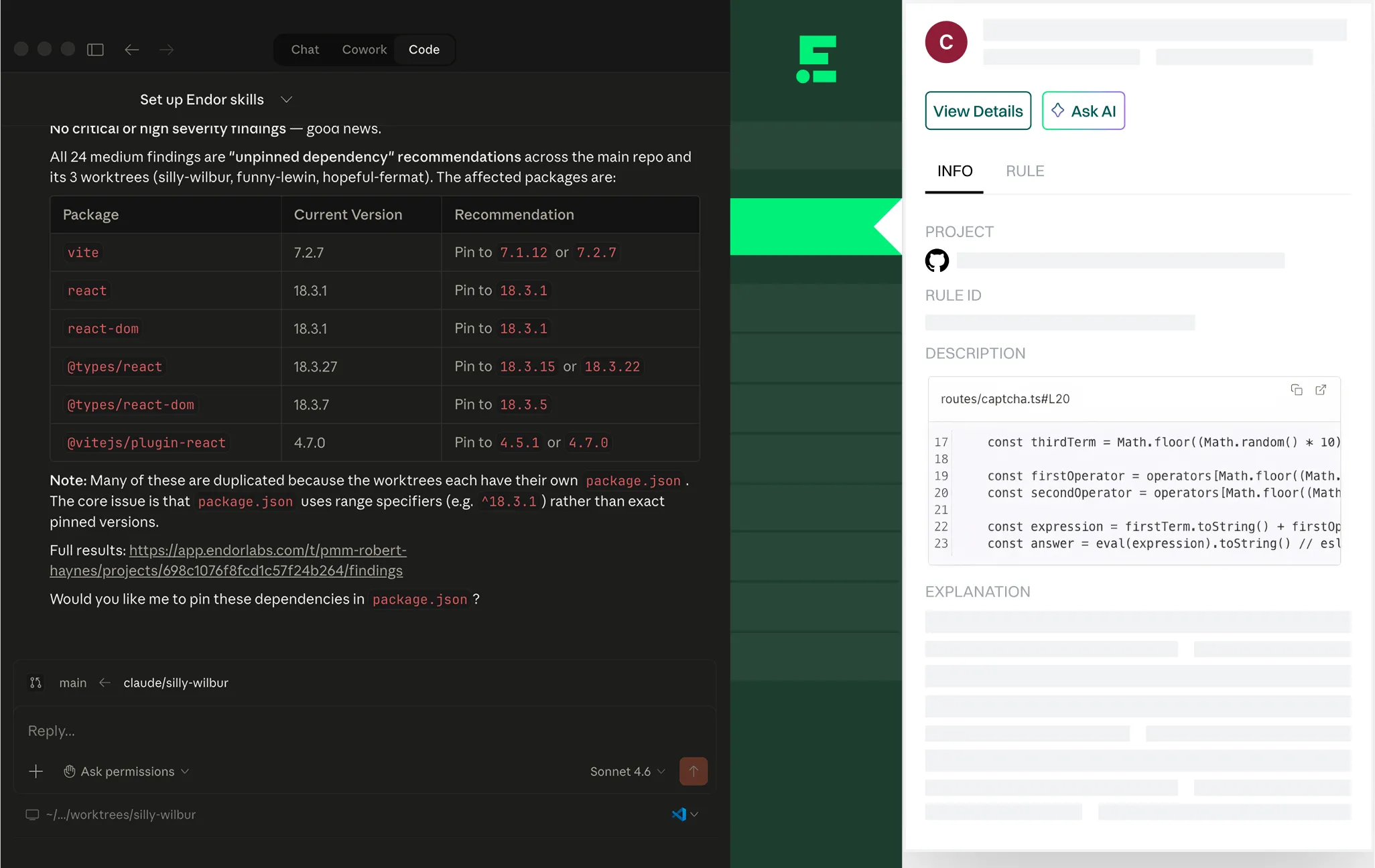
The company describes itself as building for the “vibe coding era.” That’s a reference to AI-generated code becoming mainstream. Expect continued investment in:
- AI-native analysis capabilities
- Better understanding of AI-generated code patterns
- More agentic AI features beyond code review
Platform Expansion
Endor Labs already covers SAST, SCA, containers, secrets, and malware. Additional capabilities may include:
- API security testing
- Runtime protection integration
- Cloud security posture management
Enterprise Features Maturing
As the company grows, expect more enterprise governance:
- Advanced role-based access controls
- More compliance certifications
- Enhanced audit capabilities
- Expanded deployment options
Market Position
The application security market is competitive. Endor Labs positions itself as the modern alternative to legacy tools. Their growth suggests the market is receptive to this message.
Success will depend on continued differentiation through reachability analysis and AI capabilities. If competitors close that gap, Endor Labs will need new innovations.
Final Verdict on Endor Labs
After this deep examination, what’s the bottom line on Endor Labs?
Strengths Summary
- Reachability analysis genuinely differentiates from traditional SCA
- Unified platform reduces tool sprawl
- AI capabilities address emerging security challenges
- Developer experience prioritized in design
- Fast setup according to user reports
- Strong team with relevant backgrounds
Weaknesses Summary
- Newer vendor with less track record than established players
- Pricing transparency limited (common in enterprise)
- Some features still maturing for large enterprise
Who Should Use Endor Labs?
Ideal for:
- Security teams drowning in alerts from legacy tools
- Organizations with heavy open source dependency usage
- Teams wanting to consolidate multiple security tools
- Companies embracing AI-generated code
- Organizations willing to try modern approaches
Who Should Look Elsewhere?
Consider alternatives if:
- You need maximum enterprise governance features today
- Your organization requires vendors with 10+ year track records
- Your tech stack has limited Endor Labs coverage
- Budget is extremely constrained
Conclusion
Endor Labs takes a different approach to application security. By focusing on reachability analysis and AI-native capabilities, they address real problems that plague security teams. The claimed 97% reduction in alert noise sounds aggressive, but even partial delivery on that promise would be valuable.
For teams tired of triaging thousands of irrelevant vulnerabilities, Endor Labs deserves serious evaluation. It’s a modern tool built for modern development practices.
Frequently Asked Questions About Endor Labs Review
| What is Endor Labs and what does it do? | Endor Labs is an AI-native application security platform. It combines SCA, SAST, container scanning, secrets detection, and malware detection. The platform’s standout feature is function-level reachability analysis, which filters vulnerabilities based on whether your code actually reaches them. |
| Who is Endor Labs best suited for? | Endor Labs works best for security teams struggling with alert fatigue from traditional tools. Organizations with heavy open source usage benefit most from reachability analysis. Development teams wanting to consolidate multiple security tools into one platform also find value here. |
| How does Endor Labs compare to Snyk? | Snyk is an established leader known for developer experience. Endor Labs differentiates through reachability analysis, claiming up to 97% alert reduction. Snyk uses traditional SCA approaches. Both support broad language coverage. Endor Labs is newer but growing fast. |
| What is function-level reachability analysis? | Reachability analysis traces code execution paths from your application to its dependencies. If a vulnerability exists in a function your code never calls, the platform filters or deprioritizes that alert. This reduces noise from vulnerabilities that don’t actually affect your application. |
| What programming languages does Endor Labs support? | Endor Labs supports 40+ programming languages. Major languages with full reachability support include Java, JavaScript, TypeScript, Python, Go, C, C++, C#, Ruby, PHP, Rust, Kotlin, Scala, and Swift. Coverage continues to expand. |
| How long does it take to set up Endor Labs? | Users report setup takes hours rather than weeks. The basic process involves connecting source control, selecting repositories, running initial scans, and reviewing findings. Customization and policy tuning adds additional time but can happen incrementally. |
| What is AI Security Code Review in Endor Labs? | AI Security Code Review uses multiple AI agents to scan pull requests for architectural security changes. It catches issues traditional tools miss, like new API endpoints without proper authorization, authentication logic changes, and new sensitive data collection. It helps AppSec teams focus human review time on the most impactful changes. |
| How much does Endor Labs cost? | Endor Labs doesn’t publish pricing publicly. Like most enterprise security platforms, pricing requires contacting sales. Cost typically depends on developer count, repository volume, and feature tiers. ROI calculations should factor in time saved from reduced alert triage. |
| Is Endor Labs suitable for enterprise organizations? | Yes, though some enterprise governance features continue maturing. The platform supports enterprise source control options, CI/CD integrations, and compliance-relevant capabilities. Large organizations should discuss specific requirements with Endor Labs before purchasing. |
| What makes Endor Labs different from traditional SCA tools? | Traditional SCA tools flag any vulnerability in any dependency. Endor Labs analyzes whether your code can actually reach the vulnerable function. This context-aware approach claims to reduce alerts by up to 97%. The platform also unifies SAST, SCA, containers, secrets, and malware detection in one tool. |

 Stack Insight is intended to support informed decision-making by providing independent information about business software and services. Some product details, including pricing, features, and promotional offers, may be supplied by vendors or partners and can change without notice.