
ArmorCode Review


ArmorCode Review 2026: The Complete Guide to AI-Powered Application Security Posture Management
Security teams are drowning in alerts. They run dozens of scanning tools. Each tool spits out its own findings. Nothing connects. Developers get frustrated. Vulnerabilities slip through. Sound familiar?
ArmorCode steps in to fix this mess. It’s an AI-powered Application Security Posture Management (ASPM) platform that pulls findings from over 320 security tools into one place. The company processes more than 40 billion findings across Fortune 1000 companies. That’s not a typo. Forty billion.
In this ArmorCode review, we’ll break down everything you need to know. We’ll cover features, pricing, real customer results, and how it stacks up against competitors. By the end, you’ll know exactly whether ArmorCode fits your security program or not.
What Is ArmorCode and Why Does It Exist?
ArmorCode was founded in 2020. The company is based in Palo Alto, California. Its founders saw a growing problem in enterprise security.
Companies were buying more security tools every year. SAST scanners. DAST tools. SCA analyzers. Container security platforms. Cloud security posture management solutions. The list kept growing.
But here’s what happened. Each tool created its own silo. Security teams had to log into 10, 20, sometimes 30 different dashboards. They couldn’t see the full picture. Prioritization became guesswork.
The Core Problem ArmorCode Solves
Imagine you’re a security engineer at a Fortune 500 company. You’ve got:
- Checkmarx for static analysis
- Snyk for open source dependencies
- Qualys for infrastructure vulnerabilities
- Prisma Cloud for container security
- Burp Suite for dynamic testing
- SonarQube for code quality
That’s six tools. Six dashboards. Six different ways of measuring severity. Six separate backlogs. How do you decide what to fix first?
ArmorCode answers this question. It pulls findings from all these tools into one unified view. It correlates duplicates. It adds business context. And it tells you exactly what matters most.
ASPM: The Category ArmorCode Helped Define
Application Security Posture Management (ASPM) is a relatively new category. Gartner coined the term. IDC now tracks it closely.
In September 2025, IDC released its MarketScape: Worldwide Application Security Posture Management 2025 Vendor Assessment. ArmorCode was named a Leader. That’s a big deal in enterprise software.
ASPM platforms do several things:
- Aggregate findings from multiple security tools
- Correlate and deduplicate to reduce noise
- Add business context like asset criticality
- Prioritize based on risk not just severity scores
- Automate workflows to speed up remediation
- Track metrics to measure security program health
ArmorCode does all of this. But it goes further with AI-powered features that we’ll dig into later.
ArmorCode Platform Features: A Deep Analysis
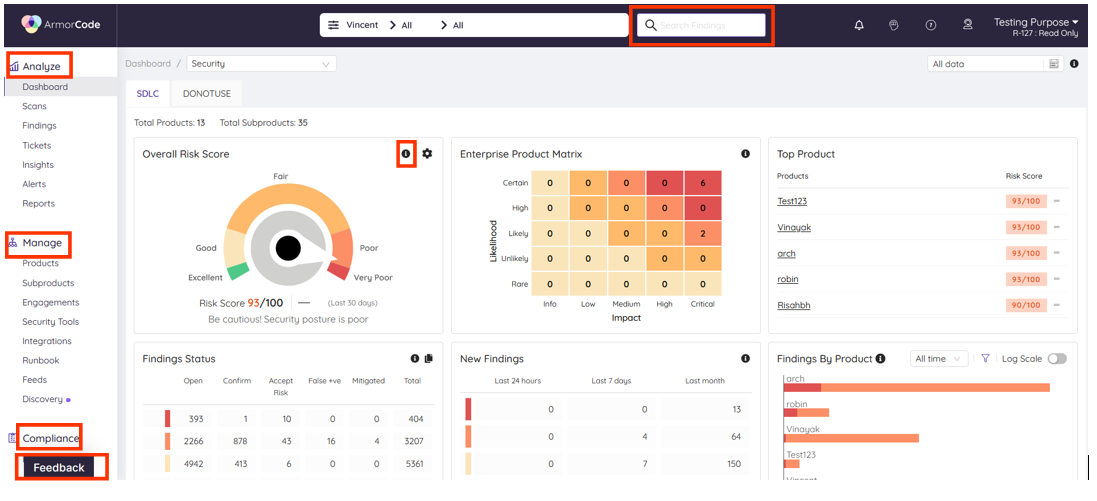
Let’s get into the specifics. What exactly does the ArmorCode platform do? How does it work day-to-day?
Integration with 320+ Security Tools
This is ArmorCode’s foundation. The platform connects to over 320 security tools. That’s more than most competitors offer.
Here’s a partial list of supported tools:
| Category | Supported Tools |
|---|---|
| SAST (Static Analysis) | Checkmarx, Fortify, SonarQube, Veracode, Semgrep |
| DAST (Dynamic Testing) | Burp Suite, OWASP ZAP, Qualys WAS, Rapid7 |
| SCA (Software Composition) | Snyk, Black Duck, WhiteSource, Dependabot |
| Container Security | Prisma Cloud, Aqua, Twistlock, Anchore |
| Cloud Security | AWS Security Hub, Azure Defender, GCP Security Command |
| Infrastructure Scanners | Tenable, Qualys, Rapid7 InsightVM, Nessus |
| Secret Scanners | GitLeaks, TruffleHog, HashiCorp Vault |
| Bug Bounty Platforms | HackerOne, Bugcrowd |
Why does this matter? Because you don’t have to rip and replace your existing tools. ArmorCode works with what you already own. It becomes the layer that sits on top.
One customer, NetApp, consolidated findings from 30+ scanners into a single view using ArmorCode. That’s the kind of complexity this platform handles.
Finding Correlation and Deduplication
Security tools love to find the same vulnerability multiple times. Your SAST tool flags a SQL injection. Your DAST tool finds it too. Your penetration tester reports it as well.
Without correlation, that’s three separate tickets. Three separate discussions. Three separate remediation efforts that should have been one.
ArmorCode automatically correlates findings across tools. It recognizes when different scanners are reporting the same underlying issue. It merges them into a single finding with enriched context from all sources.
This alone can cut your backlog by 30-50% in many cases.
AI-Powered Risk Prioritization
Not all vulnerabilities are equal. A critical SQL injection in your payment processing service is very different from a medium-severity XSS in an internal admin tool that three people use.
ArmorCode’s risk scoring considers:
- CVSS scores from the underlying vulnerability
- EPSS data on exploitation probability
- Reachability analysis to see if the vulnerable code is actually executed
- Asset criticality based on business importance
- Internet exposure of the affected application
- Data sensitivity in the application
- Compliance requirements that apply to the asset
The platform combines all these factors into a unified risk score. This score tells you what to fix first. It’s not guesswork anymore. It’s data-driven prioritization.
Anya: The Agentic AI Assistant
ArmorCode’s AI assistant is called Anya. This isn’t just a chatbot slapped onto the product. Anya is an agentic AI that can answer natural-language questions across your security data.
Here’s what that means in practice. You can ask Anya questions like:
- “What are our riskiest applications right now?”
- “Show me all critical vulnerabilities in the payments service”
- “Which teams have the most overdue findings?”
- “What’s our mean time to remediate this quarter versus last?”
- “Find all instances of Log4j in production systems”
Anya queries the data and returns answers. No need to build custom reports. No need to export to Excel and pivot tables. Just ask the question.
For CISOs preparing board presentations, this is huge. For security engineers trying to understand their posture, it’s a time-saver.
No-Code Workflow Automation
Security teams spend too much time on manual tasks. Routing findings to the right team. Creating Jira tickets. Following up on overdue items. Escalating to managers.
ArmorCode includes a no-code workflow builder. You can create automation rules without writing scripts.
Example workflows:
- Auto-routing: Critical findings in the payments service automatically go to the payments security champion
- Ticket creation: New high-severity findings create Jira tickets with all context attached
- SLA tracking: If a finding isn’t addressed within 30 days, escalate to the team lead
- Compliance tagging: Findings affecting PCI-scope applications get tagged automatically
- Risk-based assignment: Route to senior engineers when risk score exceeds threshold
This automation removes friction. Developers get tickets in their existing workflow tools. Security teams don’t have to manually triage everything.
Real Customer Results: What Companies Achieved with ArmorCode
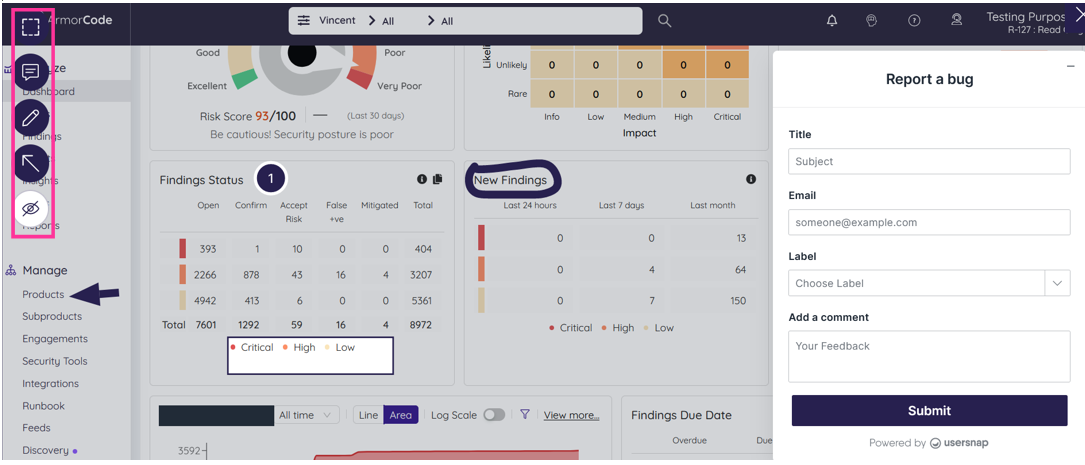
Features are nice. Results matter more. Let’s look at what actual customers have achieved using ArmorCode.
Shutterfly: From 240 Days to 7 Days
This is ArmorCode’s most impressive case study. Shutterfly, the photo printing and sharing company, had a serious problem.
Their vulnerability remediation time averaged 240 days. That’s eight months from finding a vulnerability to fixing it. That’s a long time for attackers to exploit known issues.
After putting ArmorCode in place, Shutterfly reduced that to 7 days. That’s a 97% improvement. What changed?
- Findings were prioritized correctly, so developers fixed the right things first
- Context from multiple tools helped developers understand what to fix
- Automated workflows removed manual handoffs
- Clear ownership meant no findings fell through cracks
Going from 240 days to 7 days isn’t incremental improvement. That’s a fundamental change in how security operates.
NetApp: Consolidating 30+ Scanners
NetApp runs one of the largest enterprise storage and cloud data services businesses in the world. Their security team managed findings from over 30 different scanning tools.
Before ArmorCode, each tool had its own dashboard. Each tool had its own reports. Correlating findings manually was nearly impossible at scale.
ArmorCode gave them one view across all 30+ tools. Findings automatically correlated. Duplicates merged. Business context added.
A NetApp representative described it this way: “ArmorCode is becoming the conductor of our company’s product security symphony of scanning tools.”
That quote captures the value proposition perfectly. ArmorCode doesn’t replace your scanners. It orchestrates them.
Integration Time Cut in Half
Another customer testimonial highlights operational efficiency: “ArmorCode has reduced our time to integrate with new tools and teams across the company in half.”
When security teams add new scanning tools, integration used to take weeks. Building connectors. Mapping data. Creating reports. Training teams.
With ArmorCode’s pre-built integrations and standardized data model, that time drops dramatically. This matters especially for growing companies that are constantly adding new tools and acquiring new teams.
Customer Satisfaction Ratings
Independent review platforms show strong customer satisfaction. Here’s what users say:
| Aspect | Customer Feedback |
|---|---|
| Vendor Responsiveness | “Most responsive, helpful, and approachable cybersecurity vendor we’ve worked with” |
| Overall Rating | “5/5 stars! Best investment a company could make in their application security program” |
| Multi-tool Consolidation | “Allows us to consolidate data from multiple AppSec tools” |
| Vulnerability Management | “Amazing platform for managing AppSec and infrastructure vulnerabilities” |
These aren’t cherry-picked quotes from a press release. They come from independent review sites and customer testimonials on ArmorCode’s website.
Understanding ArmorCode’s Approach to ASPM
ArmorCode describes its mission as providing “a 360° view of your application security posture from code to underlying infrastructure.” Let’s break down what this means.
From Code to Cloud
Modern applications span multiple layers:
- Source code: The actual application logic developers write
- Dependencies: Open source libraries and packages
- Containers: Docker images and Kubernetes configurations
- Infrastructure: Cloud services, databases, storage
- Runtime: The deployed application in production
Each layer has its own security tools. Each tool has its own view. ArmorCode stitches these together.
When you look at an application in ArmorCode, you see everything. Static analysis findings. Dependency vulnerabilities. Container misconfigurations. Cloud security issues. All in one place, all connected.
Asset-Centric vs. Finding-Centric
Most security tools are finding-centric. They show you a list of vulnerabilities. You work through that list. But you lose context about the actual applications.
ArmorCode is asset-centric. Applications are the organizing principle. Findings are grouped by the assets they affect. This changes how you think about security.
Instead of asking “What vulnerabilities do we have?” you ask “Which applications are riskiest?” The second question is more actionable for business decisions.
Security Debt Tracking
Over time, unfixed vulnerabilities accumulate. This is security debt. It’s similar to technical debt in software development.
ArmorCode tracks security debt explicitly. You can see:
- How much debt exists per application
- How debt is trending over time
- Which teams are burning down debt fastest
- Where debt is growing out of control
This visibility helps security leaders have better conversations with engineering leadership. Instead of vague warnings about “lots of vulnerabilities,” you can show specific data about security debt trends.
ArmorCode for Different Stakeholders
Different people use ArmorCode differently. Let’s look at the platform from multiple perspectives.
For CISOs and Security Leaders
If you’re a CISO, you care about big-picture questions:
- What’s our overall security posture?
- Are we getting better or worse over time?
- Where should we invest more resources?
- Can we demonstrate compliance to auditors?
- What story do I tell the board?
ArmorCode provides executive dashboards for these questions. You see risk trends across the entire application portfolio. You can drill into problem areas. You can export reports for board presentations.
The Anya AI assistant is particularly useful for executives. Ask questions in plain English. Get answers without needing technical expertise to query databases.
For Security Engineers
Security engineers do the daily work. They triage findings. They work with developers on remediation. They tune scanning tools. They investigate incidents.
For these users, ArmorCode provides:
- Unified queue: One place to see all findings that need attention
- Rich context: Information from multiple sources about each finding
- Workflow automation: Rules that handle routine routing and escalation
- Remediation guidance: Information to help developers fix issues
- Metrics: Data on remediation SLAs and team performance
Security engineers reported that ArmorCode cuts down context-switching. Instead of jumping between 10 different tool dashboards, they work in one interface.
For Development Teams
Developers don’t want to learn another security tool. They want security information in their existing workflows.
ArmorCode integrates with:
- Jira: Findings become tickets with full context
- Azure DevOps: Work items created automatically
- GitHub: Issues and pull request comments
- Slack: Notifications in team channels
- ServiceNow: Enterprise ticketing integration
Developers receive findings where they already work. They don’t need to log into ArmorCode. The information comes to them.
For Compliance Teams
Auditors want evidence. They want to see controls in place. They want proof that vulnerabilities get fixed.
ArmorCode generates compliance reports for:
- PCI DSS
- SOC 2
- HIPAA
- ISO 27001
- NIST frameworks
These reports map findings to specific compliance requirements. They show remediation timelines. They provide evidence trails for audit purposes.
ArmorCode vs. Competitors: How It Compares
ArmorCode isn’t the only ASPM platform. How does it stack up against alternatives?
ArmorCode vs. Dazz
| Capability | ArmorCode | Dazz |
|---|---|---|
| Tool Integrations | 320+ | 100+ |
| AI Assistant | Anya (agentic AI) | Limited AI features |
| No-Code Workflows | Full workflow builder | Basic automation |
| IDC Recognition | Leader (2025) | Contender |
| Findings Processed | 40 billion+ | Not disclosed |
ArmorCode has broader integrations and more mature AI features. Dazz is a capable competitor but hasn’t reached the same scale.
ArmorCode vs. Apiiro
| Capability | ArmorCode | Apiiro |
|---|---|---|
| Focus | Full ASPM (aggregation + orchestration) | Risk-based code analysis |
| Data Source | Ingests from existing tools | Primarily its own analysis |
| Infrastructure Coverage | Strong | Limited |
| Workflow Automation | Extensive | Basic |
Apiiro takes a different approach. It does its own code analysis and risk assessment. ArmorCode aggregates from tools you already own. If you’ve invested heavily in existing scanners, ArmorCode makes more sense.
ArmorCode vs. Brinqa
| Capability | ArmorCode | Brinqa |
|---|---|---|
| Primary Focus | Application security | Broader vulnerability management |
| AI Features | Advanced (Anya) | Limited |
| Implementation | Cloud-native | Some on-prem options |
| Developer Experience | Strong focus | Security team focused |
Brinqa is a veteran in vulnerability management. It covers broader ground beyond just application security. ArmorCode is more focused on the application security posture specifically, with stronger developer-oriented features.
ArmorCode vs. Building Your Own
Some organizations try to build ASPM capabilities internally. They create custom integrations. They build data lakes. They write scripts to correlate findings.
This approach has problems:
- Maintenance burden: Every tool update breaks your integration
- Limited correlation: Hard to match ArmorCode’s deduplication logic
- No AI: Building your own Anya-equivalent takes years
- Opportunity cost: Your security engineers should find vulnerabilities, not build tools
DIY makes sense for very large organizations with unique requirements. For most enterprises, a commercial ASPM platform like ArmorCode is more practical.
Technical Architecture and Deployment
Let’s get into the technical details. How does ArmorCode actually work under the hood?
Cloud-Native Platform
ArmorCode is a cloud-native SaaS platform. You don’t need to deploy servers. You don’t need to manage infrastructure. You access ArmorCode through a web browser.
This has advantages:
- Fast deployment: Get started in days, not months
- Automatic updates: New features and integrations appear automatically
- Scalability: Platform handles any volume of findings
- Availability: ArmorCode manages uptime and reliability
For organizations with strict data residency requirements, ArmorCode offers deployment options to meet compliance needs.
Data Integration Methods
ArmorCode connects to security tools in several ways:
- API integrations: Direct connections to tool APIs for real-time data
- File imports: Upload scan reports in standard formats
- CI/CD plugins: Integrations with Jenkins, GitHub Actions, GitLab CI
- Webhooks: Receive data pushed from scanning tools
Most integrations are read-only. ArmorCode pulls data from your tools. It doesn’t change configurations or create risk by having write access.
Data Model and Correlation
ArmorCode normalizes data from all sources into a unified model. A vulnerability from Checkmarx looks the same as one from Snyk in the ArmorCode database.
Correlation happens through multiple matching algorithms:
- Location matching: Same file, line number, function
- Vulnerability type matching: Same CWE or vulnerability category
- Asset matching: Same application or service
- Fuzzy matching: Similar but not identical findings
The platform learns from manual correlation decisions. If a user links two findings that didn’t auto-correlate, ArmorCode learns that pattern for future matching.
Security of the Platform Itself
A security tool needs to be secure itself. ArmorCode handles sensitive vulnerability data. What protections exist?
- SOC 2 Type II certification: Independent audit of security controls
- Data encryption: At rest and in transit
- Role-based access control: Granular permissions
- SSO integration: Works with Okta, Azure AD, and others
- Audit logging: Track who did what and when
ArmorCode doesn’t store your source code. It stores metadata about vulnerabilities. This reduces the sensitivity of data in the platform.
Getting Started with ArmorCode
How do you actually start using ArmorCode? What does the onboarding process look like?
Typical Implementation Timeline
| Phase | Duration | Activities |
|---|---|---|
| Week 1 | 5 days | Connect first 3-5 security tools, import initial findings |
| Week 2 | 5 days | Map applications and assets, define ownership |
| Week 3 | 5 days | Configure risk scoring, set up initial workflows |
| Week 4 | 5 days | Train users, integrate with ticketing systems |
| Ongoing | Continuous | Add more tools, refine workflows, expand coverage |
Most customers see initial value within the first month. Full deployment across all tools and teams typically takes 2-3 months.
Prerequisites for Success
Before starting with ArmorCode, you should have:
- Multiple security tools: ArmorCode shines when consolidating many tools
- Asset inventory: At least a rough list of your applications
- API access: Credentials for your security tools
- Stakeholder buy-in: Security and development leadership support
- Remediation process: Even informal, you need to know how fixes happen
If you only have one or two security tools, ArmorCode might be overkill. The value comes from consolidation and correlation across many sources.
Quick Wins to Expect
In the first few weeks, most organizations see:
- Duplicate reduction: 30-50% fewer findings after correlation
- Visibility: Finally seeing all findings in one place
- Prioritization: Clear list of what matters most
- Accountability: Every finding has an owner
These quick wins build momentum. They show value to stakeholders who might be skeptical of yet another security tool.
ArmorCode Pricing and Total Cost of Ownership
ArmorCode doesn’t publish pricing on its website. This is typical for enterprise security software. Let’s discuss what we know and how to think about costs.
Pricing Model
Based on available information, ArmorCode pricing typically considers:
- Number of applications: More applications mean higher cost
- Number of findings: Volume of data processed
- Number of integrations: How many tools you connect
- User count: How many people access the platform
Expect enterprise pricing. This isn’t a $500/month SaaS tool. For Fortune 1000 companies, deals likely range from low six figures to seven figures annually, depending on scale.
ROI Considerations
The cost question should be “compared to what?” Consider these ROI factors:
- Security engineer time: How many hours spent manually correlating findings?
- Remediation efficiency: Faster fixes mean less risk exposure
- Tool consolidation: Some customers reduce redundant tool licenses
- Breach prevention: What’s a breach worth avoiding?
- Compliance efficiency: Reduced audit preparation time
Shutterfly’s case is instructive. Going from 240 days to 7 days remediation time has massive risk reduction value. That’s worth serious investment.
Hidden Costs to Consider
Beyond license costs, budget for:
- Implementation services: ArmorCode or partner consulting
- Internal time: Your team’s effort during setup
- Process changes: Training and workflow adjustments
- Ongoing administration: Someone needs to maintain the platform
These costs exist for any enterprise software. ArmorCode isn’t unusual here. Just plan for them.
Strengths and Weaknesses: An Honest Assessment
Every product has pros and cons. Here’s an honest ArmorCode evaluation.
What ArmorCode Does Well
Breadth of integrations: 320+ tools is industry-leading. Whatever scanners you use, ArmorCode probably supports them.
AI capabilities: Anya is genuinely useful. Natural language queries across security data save real time.
Customer success focus: Multiple testimonials mention ArmorCode’s responsiveness. In enterprise software, vendor support matters.
Scale proof: 40 billion findings processed. Fortune 1000 deployments. This platform handles enterprise volume.
IDC recognition: Being named a Leader in the IDC MarketScape validates the platform’s capabilities.
Potential Challenges
Enterprise focus: Smaller organizations may find ArmorCode oversized for their needs. It’s built for complexity that startups don’t have.
Implementation effort: Full value requires thoughtful setup. This isn’t plug-and-play software.
Pricing transparency: No public pricing makes evaluation harder. You need to engage sales to understand costs.
Process change required: ArmorCode works best when teams change how they handle findings. That organizational change takes effort.
Dependency on source tools: ArmorCode is only as good as the scanners feeding it. Garbage in, garbage out still applies.
Best Fit Scenarios
ArmorCode works best when you have:
- 5+ different security scanning tools
- More than 50 applications to secure
- Multiple development teams needing findings
- Compliance requirements for reporting
- Security debt that’s growing out of control
- Budget for enterprise security tooling
If these describe your situation, ArmorCode deserves serious consideration.
When to Look Elsewhere
ArmorCode might not be the best fit if:
- You only use 1-2 security tools
- You have fewer than 10 applications
- You’re a small team without complex workflows
- Budget is extremely constrained
- You need on-premises deployment only
Smaller organizations might look at lighter-weight ASPM options or even build simple integrations themselves.
The Future of ArmorCode and ASPM
Where is ArmorCode heading? What trends will shape ASPM in 2026 and beyond?
AI Evolution
Anya is just the beginning. Expect ArmorCode to expand AI capabilities:
- Automated remediation suggestions: AI-generated fix recommendations
- Predictive risk scoring: Predicting which vulnerabilities will be exploited
- Natural language report generation: Ask for a board report, get one
- Anomaly detection: Spotting unusual patterns in finding data
The AI competition in security tools is heating up. ArmorCode has a head start with Anya.
Deeper Developer Integration
The shift-left movement continues. Security must move earlier in development. ArmorCode will likely deepen IDE integrations and developer experience features.
Imagine getting prioritized findings right in VS Code or IntelliJ. That’s where things are heading.
Supply Chain Security
Software supply chain attacks increased dramatically. SBOM requirements are becoming mandatory. ArmorCode will expand capabilities around:
- SBOM generation and management
- Supply chain risk visualization
- VEX (Vulnerability Exploitability eXchange) support
- Dependency relationship mapping
Market Consolidation
The ASPM market is growing fast. Consolidation is likely. Either through:
- ASPM vendors acquiring point solution vendors
- Large platform vendors acquiring ASPM capabilities
- Smaller ASPM vendors merging
ArmorCode’s position as an IDC Leader and its Fortune 1000 customer base make it well-positioned, whether as an acquirer or acquisition target.
Community Perspectives on ArmorCode
What do practitioners say about ArmorCode in community forums and discussions?
Reddit DevSecOps Community Feedback
Discussions on Reddit’s r/devsecops forum about ArmorCode and DevSecOps orchestration tools reveal several themes:
Positive observations:
- Good at handling large volumes of findings
- Helpful for organizations with tool sprawl
- Responsive customer support mentioned multiple times
- API quality praised for custom integrations
Questions and concerns:
- Pricing not publicly available makes comparison difficult
- Learning curve for advanced workflow features
- Some wanted more self-service trial options
Community discussions are generally positive but emphasize doing proper proof-of-concept before committing.
Industry Analyst Perspectives
Beyond the IDC MarketScape Leader designation, analysts note:
- ArmorCode’s focus on correlation and deduplication stands out
- The platform’s scale with 40 billion findings demonstrates enterprise readiness
- AI features are more mature than many competitors
- Strong roadmap for supply chain and developer experience
Implementation Best Practices
Based on customer experiences and vendor guidance, here are recommendations for successful ArmorCode deployment.
Start with Your Biggest Pain Points
Don’t try to boil the ocean. Identify your top 2-3 problems:
- Are you drowning in duplicate findings?
- Can’t prioritize effectively?
- No visibility across tools?
- SLAs being missed constantly?
Focus initial configuration on solving those specific problems. Expand from there.
Get Executive Sponsorship
ASPM touches security and development teams. It changes processes. Without executive support, adoption struggles.
Secure commitment from:
- CISO or VP of Security
- VP of Engineering or CTO
- At least one development leader
These sponsors can drive adoption when teams resist change.
Define Your Asset Model Carefully
How you define “applications” in ArmorCode shapes everything. Think about:
- Granularity: Is a microservice an application, or is the whole product?
- Ownership: Who owns each application?
- Criticality: How do you rate business importance?
- Compliance scope: Which applications are in-scope for regulations?
Spend time on this early. Changing your asset model later is painful.
Start Simple with Workflows
ArmorCode’s workflow automation is powerful. It’s tempting to build complex rules immediately. Don’t.
Start with basic workflows:
- Route findings to correct team based on application ownership
- Create tickets for high and critical findings
- Send weekly digest to security engineers
Add complexity gradually as you understand your patterns better.
Measure Baseline Metrics First
Before claiming improvements, document your current state:
- Mean time to remediate
- Finding backlog size
- Time spent on manual correlation
- Number of tools being managed
- Compliance audit preparation time
With baselines, you can prove ArmorCode’s value with real numbers. Without them, success is just a feeling.
Conclusion
ArmorCode solves a real problem that enterprises face. Too many security tools. Too many findings. No unified view. The platform brings order to chaos by consolidating findings from 320+ tools into one prioritized backlog.
Real customers see real results. Shutterfly’s 97% improvement in remediation time isn’t marketing fluff. It’s documented success. If your security team struggles with tool sprawl and finding overload, ArmorCode deserves a serious look.
FAQs About ArmorCode Review
| Who should use ArmorCode? | ArmorCode works best for mid-size to large enterprises with multiple security scanning tools, many applications, and complex development environments. If you have fewer than 5 security tools and 10 applications, lighter solutions may fit better. |
| How does ArmorCode compare to other ASPM tools? | ArmorCode stands out for its 320+ integrations, AI-powered Anya assistant, and proven scale at 40 billion findings. It was named a Leader in the IDC MarketScape 2025. Competitors like Dazz and Apiiro offer different approaches but fewer integrations. |
| How long does ArmorCode take to set up? | Most organizations see initial value within 2-4 weeks. Full deployment across all tools and teams typically takes 2-3 months. The timeline depends on how many tools you’re integrating and how complex your environment is. |
| Does ArmorCode replace my existing security tools? | No. ArmorCode sits on top of your existing scanners. It aggregates and correlates their findings. You keep using Checkmarx, Snyk, Qualys, or whatever tools you have. ArmorCode makes them work together better. |
| What’s the pricing for ArmorCode? | ArmorCode doesn’t publish pricing publicly. It’s enterprise software with pricing based on applications, findings volume, and users. Expect enterprise-level investment. Contact ArmorCode directly for specific quotes. |
| What makes Anya different from other AI assistants? | Anya is an agentic AI that can query across all your security data using natural language. Ask questions like “what are our riskiest applications?” and get real answers. It’s more capable than basic chatbot interfaces. |
| Can ArmorCode help with compliance reporting? | Yes. ArmorCode generates reports for PCI DSS, SOC 2, HIPAA, ISO 27001, and NIST frameworks. It maps findings to compliance requirements and provides evidence trails for auditors. |
| What results have customers achieved with ArmorCode? | Shutterfly reduced remediation time from 240 days to 7 days (97% improvement). NetApp consolidated 30+ scanner findings into one view. Customers consistently report 5/5 satisfaction ratings and praise vendor responsiveness. |
| Is ArmorCode secure itself? | ArmorCode is SOC 2 Type II certified, uses encryption at rest and in transit, supports SSO integration, and provides role-based access control. It stores vulnerability metadata, not your actual source code. |
| What if ArmorCode doesn’t support my security tool? | With 320+ integrations, most tools are covered. If yours isn’t, ArmorCode offers file import options and APIs for custom integration. You can also request new integrations from their product team. |



 Stack Insight is intended to support informed decision-making by providing independent information about business software and services. Some product details, including pricing, features, and promotional offers, may be supplied by vendors or partners and can change without notice.