
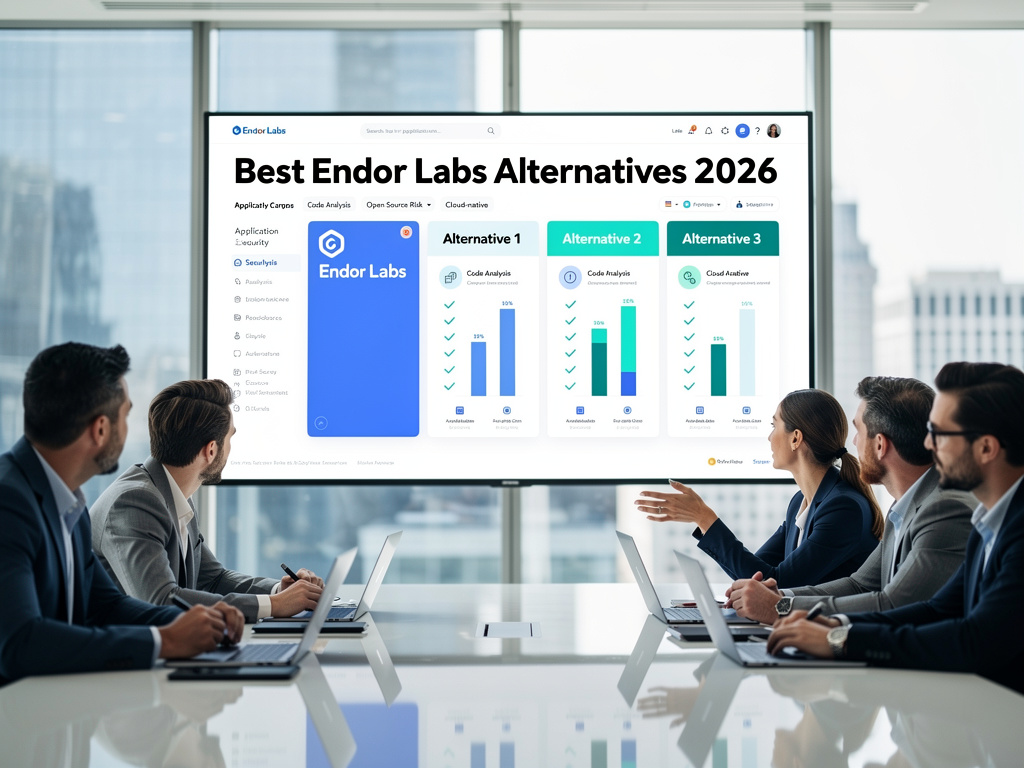
Best Endor Labs Alternatives in 2026: Complete Guide to Application Security Platforms
Introduction: Finding the Right Endor Labs Competitor for Your Team
Endor Labs has built a solid reputation in software supply chain security. Its function reachability analysis helps teams cut through vulnerability noise by showing which issues actually affect running code. But it’s not the right fit for everyone.
Some teams need broader coverage beyond dependency management. Others want better pricing for smaller dev teams. And many organizations require features like DAST, container scanning, or cloud posture management that Endor doesn’t prioritize.
This guide breaks down 14 Endor Labs alternatives. We’ll look at what each tool does well, where it falls short, and which teams should consider it. Whether you’re a startup with five developers or an enterprise with thousands of engineers, you’ll find options that match your security needs and budget.
Let’s dig into what makes each platform different and help you pick the right one.
Why Teams Look for Endor Labs Substitutes
The Limits of Focused Supply Chain Security
Endor Labs does one thing really well: it maps open-source components and finds vulnerabilities that matter. The reachability analysis is genuinely useful. It shows you which vulnerable functions your code actually calls.
But here’s the problem. Modern application security needs more than dependency scanning.
Your code has bugs too. Your containers need checking. Your infrastructure-as-code templates might expose sensitive data. And your APIs could have issues that no SCA tool will catch.
Teams typically outgrow Endor Labs when:
- They need SAST to find bugs in first-party code
- Compliance requirements demand DAST scanning
- Cloud security posture becomes a priority
- They want one platform instead of multiple tools
- Budget constraints push them toward all-in-one solutions
Enterprise Governance Gaps
Larger organizations face different challenges. They need audit trails, role-based access controls, and compliance reporting that satisfies regulators.
Endor Labs targets enterprise buyers, but some teams find its governance features don’t match what established players offer. If you’re dealing with FedRAMP, SOC 2, or the Cyber Resilience Act, you might need deeper compliance tooling.
Price and Value Considerations
Endor Labs positions itself as an enterprise tool. That means enterprise pricing.
Smaller teams and startups often can’t justify the cost for a specialized SCA platform. They’d rather spend that budget on broader coverage.
This is where alternatives like Aikido Security or open-source options like SonarQube become attractive. You get more security capabilities for less money.
OX Security: Full Pipeline Protection
What OX Security Does
OX Security takes a different approach than Endor Labs. Instead of focusing on dependencies, it secures your entire software delivery pipeline.
The platform connects to your CI/CD systems, source control, and artifact registries. It watches for security issues from code commit to production deployment.
Key capabilities include:
- Pipeline security monitoring and alerting
- Software bill of materials (SBOM) generation
- Vulnerability correlation across multiple scanners
- Risk-based prioritization using context
- Developer workflow integration
How OX Security Compares to Endor Labs
OX Security gives you a wider view of your security posture. Where Endor focuses on what’s in your code, OX looks at how that code moves through your organization.
Think of it this way: Endor asks “are your dependencies safe?” OX asks “is your entire software factory safe?”
The pipeline-centric approach catches issues Endor would miss. Compromised build systems. Insecure artifact storage. Misconfigured deployment scripts. These attack vectors have caused major breaches in recent years.
OX Security strengths:
- Visibility across the entire SDLC
- Consolidates findings from multiple security tools
- Strong CI/CD security features
- Good for organizations worried about supply chain attacks
Where OX falls short:
- Less depth in dependency analysis than Endor
- No native reachability analysis
- Can create tool sprawl if you already have scanners
Best Fit for OX Security
OX Security works well for teams that want pipeline protection and already use other scanners. It acts as an orchestration layer that pulls everything together.
If your main concern is supply chain attacks targeting your build process, OX deserves consideration. But if you need deep SCA with reachability analysis, look elsewhere.
Snyk: Developer-First Security at Scale
Understanding Snyk’s Approach
Snyk has become one of the most popular names in application security. The company pioneered the “developer-first” approach that others now copy.
The platform covers four main areas: open-source dependencies (Snyk Open Source), your own code (Snyk Code), container images (Snyk Container), and infrastructure-as-code (Snyk IaC).
Snyk’s big selling point? Developers actually use it. The tooling fits naturally into coding workflows through IDE plugins, CLI tools, and Git integrations.
Snyk vs Endor Labs: A Direct Comparison
Both platforms handle SCA well. But they differ in scope and philosophy.
Snyk advantages over Endor Labs:
- Broader coverage: SAST, container scanning, and IaC checks included
- Bigger vulnerability database: Snyk maintains extensive research
- Free tier available: Good for trying before buying
- Stronger ecosystem: More integrations with dev tools
- Better brand recognition: Easier to get team buy-in
Endor Labs advantages over Snyk:
- Deeper reachability analysis: More accurate prioritization
- Better dependency mapping: Shows transitive relationships clearly
- Less noise: Focuses on exploitable vulnerabilities
- License compliance: Stronger open-source license management
Snyk Pricing Reality
Snyk’s free tier works for small projects and individual developers. But enterprise pricing climbs quickly.
The per-developer model means costs scale with your team size. Large organizations report spending six figures annually for full coverage.
Some teams find Snyk’s pricing unpredictable. The scanning-based billing can surprise you if usage spikes.
When to Choose Snyk Over Endor Labs
Pick Snyk if you want an established platform with broad coverage and strong developer adoption. It’s a safe choice that checks most boxes.
Stick with Endor Labs if accurate dependency prioritization matters more than breadth. Endor’s reachability analysis produces fewer false positives.
Checkmarx: Enterprise Application Security Testing
Checkmarx One Platform Overview
Checkmarx has been in application security for over two decades. The company helped define the SAST market before expanding into other areas.
Checkmarx One brings together their scanning technologies into a unified platform. You get SAST, SCA, API security, and supply chain security in one place.
The platform targets large enterprises with complex security requirements. It’s built for organizations running hundreds of applications across multiple teams.
Technical Capabilities Deep Dive
SAST Engine: Checkmarx built its reputation on static analysis. The engine understands data flow through applications, catching issues that simpler scanners miss. It supports dozens of programming languages and frameworks.
SCA Features: The software composition analysis catches vulnerable dependencies, but also tracks license compliance and generates SBOMs. It monitors open-source projects for future vulnerabilities.
API Security: Checkmarx discovers APIs in your codebase and tests them for common weaknesses. This catches issues early, before deployment.
Supply Chain Security: The platform analyzes your software supply chain for risks. It evaluates the health and security of open-source projects you depend on.
Checkmarx vs Endor Labs Analysis
These tools serve different primary purposes. Checkmarx is a broad application security platform. Endor Labs specializes in supply chain security.
| Feature | Checkmarx | Endor Labs |
|---|---|---|
| Primary Focus | Full AppSec coverage | Supply chain security |
| SAST | Strong native engine | Not a focus |
| SCA Depth | Good | Excellent with reachability |
| Enterprise Features | Extensive | Growing |
| Pricing | High | High |
Implementation Considerations
Checkmarx requires more setup than lightweight alternatives. Plan for professional services if you’re new to the platform.
The learning curve is steeper too. Your security team needs training to get full value from the platform’s capabilities.
But once running, Checkmarx handles enterprise scale well. It’s battle-tested in organizations with thousands of developers.
Veracode: Managed Security Testing Services
What Makes Veracode Different
Veracode combines automated scanning with human expertise. The platform includes access to security consultants who review findings and help fix issues.
This approach appeals to organizations without large security teams. You get expert guidance alongside the tools.
Veracode offers multiple scanning types: static analysis, dynamic analysis, software composition analysis, and manual penetration testing.
Veracode’s Scanning Technologies
Static Analysis: Upload your code or binaries for analysis. Veracode’s engine checks for hundreds of vulnerability types across major languages. The binary analysis is particularly useful for teams that can’t share source code.
Dynamic Analysis: Veracode tests running applications for vulnerabilities. This catches issues that only appear at runtime, like authentication flaws and injection vulnerabilities.
SCA Capabilities: The platform identifies open-source components and their vulnerabilities. It tracks where vulnerable libraries appear across your application portfolio.
Manual Testing: Security researchers manually test your applications. This finds complex vulnerabilities that automated tools miss.
Comparing Veracode to Endor Labs
Veracode offers much broader security coverage than Endor Labs. But it lacks the specialized dependency analysis that makes Endor valuable.
Choose Veracode when you need:
- Multiple testing methodologies in one platform
- Access to security expertise and consulting
- Binary analysis capabilities
- Compliance reporting for regulations
- Manual penetration testing services
Stick with Endor Labs when you need:
- Deep understanding of dependency relationships
- Reachability analysis to cut false positives
- Focus on open-source risk specifically
- Detailed SBOM generation
Veracode Pricing Model
Veracode uses an application-based pricing model. You pay based on how many applications you scan, not developer count.
This works well for organizations with fewer apps and many developers. It hurts if you have many small applications.
Expect enterprise pricing. Veracode targets larger organizations willing to invest in comprehensive security.
ArmorCode: ASPM Orchestration Layer
Understanding Application Security Posture Management
ArmorCode doesn’t replace your existing scanners. Instead, it sits on top of them and makes sense of all their findings.
This is the ASPM (Application Security Posture Management) approach. You keep the tools you’ve invested in, but gain a unified view of risk.
ArmorCode pulls findings from SAST tools, SCA scanners, DAST platforms, and cloud security tools. It correlates and prioritizes everything in one place.
How ArmorCode Works
The platform connects to your existing security tools through integrations. It ingests their findings and applies additional context.
Key features include:
- Finding correlation: Links related vulnerabilities across tools
- Risk scoring: Prioritizes issues based on exploitability and impact
- Workflow automation: Routes findings to the right teams
- Metrics and reporting: Shows security posture over time
- Compliance mapping: Maps findings to regulatory frameworks
ArmorCode vs Endor Labs: Different Problems
These tools solve different problems. Endor Labs is a scanner. ArmorCode is an orchestration platform.
You might actually use both together. Endor Labs for dependency scanning, ArmorCode to correlate those findings with output from other tools.
ArmorCode makes sense when:
- You already own multiple security scanners
- Alert fatigue overwhelms your security team
- Findings get lost between tools
- You need unified reporting for executives
- Compliance requires aggregated risk views
ArmorCode isn’t right when:
- You need native scanning capabilities
- You’re starting from scratch on security tooling
- Budget limits you to one platform
Implementation Effort
ArmorCode takes time to configure properly. Each scanner integration needs setup. Risk scoring rules need tuning.
Plan for a few weeks of configuration to get full value. The platform shines once all your tools feed into it.
Apiiro: Code to Cloud Risk Context
Apiiro’s Risk Graph Technology
Apiiro builds a graph of your entire development environment. It connects code changes to security risks to cloud resources.
This “code-to-cloud” visibility shows how a vulnerability in source code becomes an exploitable issue in production.
The platform also detects risky development patterns. It catches things like developers bypassing code review or committing sensitive data.
Native Scanning Plus Orchestration
Apiiro includes native SAST, SCA, and secrets detection. But it also ingests findings from other tools.
This hybrid approach gives you flexibility. Use Apiiro’s scanners where they’re strong, keep existing tools where you prefer them.
Native capabilities:
- Static code analysis
- Software composition analysis
- Secrets and credential detection
- Code risk scoring
- Developer behavior analysis
GenAI Security Features
Apiiro has added features for AI-generated code security. It detects when developers use GenAI frameworks and flags associated risks.
As AI coding assistants become common, this capability grows more valuable. Teams need visibility into AI-generated code security.
Apiiro vs Endor Labs Comparison
Both platforms focus on understanding code context. But Apiiro takes a broader view.
Endor Labs drills deep into dependencies. Apiiro connects dependencies to the larger risk picture.
| Aspect | Apiiro | Endor Labs |
|---|---|---|
| Core Strength | Code-to-cloud context | Dependency reachability |
| Risk Analysis | Holistic risk graph | Function-level analysis |
| Scanning | Native + third-party | Native SCA focus |
| Developer Insights | Behavior analysis | Limited |
| Target Buyer | Enterprise security teams | Security-conscious dev teams |
Cycode: Complete ASPM Platform
Cycode’s Full-Stack Approach
Cycode aims to be the only application security tool you need. It covers code security, pipeline security, and developer environment protection.
The platform has evolved from pipeline security into a full ASPM solution. It now includes native scanning plus orchestration capabilities.
Key Platform Components
Code Security: SAST scanning for your applications, secrets detection, and SCA for dependencies. The scanners run in your CI/CD pipeline.
Pipeline Security: Monitors your CI/CD systems for misconfigurations and attacks. Catches things like poisoned pipelines and malicious dependencies.
Governance: Enforces security policies across development. Ensures code review happens, tests pass, and secrets don’t leak.
Risk Prioritization: Uses context to rank findings by actual risk. Connects code issues to their potential production impact.
How Cycode Stacks Up Against Endor Labs
Cycode offers broader coverage but less specialized dependency analysis. It’s a platform play versus Endor’s focused approach.
Cycode advantages:
- Single platform for multiple security needs
- Strong pipeline security features
- Policy enforcement capabilities
- Good for consolidating tools
Endor Labs advantages:
- Deeper dependency understanding
- More accurate reachability analysis
- Better open-source project intelligence
- Stronger license compliance
Best Use Cases for Cycode
Cycode works well for organizations that want one platform for application security. It reduces tool sprawl and simplifies management.
Teams concerned about CI/CD security specifically should look closely at Cycode. The pipeline protection features are mature.
Legit Security: SDLC Integrity Platform
Focus on Development Environment Security
Legit Security protects the entire software development lifecycle. It focuses on securing the systems developers use, not just the code they write.
The platform monitors source control, build systems, artifact registries, and deployment pipelines. It catches security issues in development infrastructure.
Supply Chain Attack Prevention
Recent high-profile breaches targeted software supply chains. SolarWinds. Codecov. Log4j. These attacks showed that securing code isn’t enough.
Legit Security addresses these risks directly. It watches for signs of compromise in your development environment.
Protection includes:
- Detecting unauthorized access to source control
- Monitoring build system integrity
- Validating artifact authenticity
- Tracking sensitive data in development
- Enforcing secure development practices
Legit Security vs Endor Labs Positioning
Both platforms target supply chain security. But they approach it differently.
Endor Labs focuses on what’s inside your software: the components and their vulnerabilities. Legit Security focuses on how your software gets built: the systems and processes.
An organization worried about both would benefit from using both tools. They’re complementary rather than competitive.
Enterprise Readiness
Legit Security targets large enterprises with complex development environments. The platform handles organizations with hundreds of repositories and multiple development teams.
Features like compliance reporting, audit logging, and role-based access appeal to regulated industries. Financial services and healthcare organizations often choose Legit.
Aikido Security: Developer-Friendly All-in-One
Aikido’s Consolidated Approach
Aikido Security bundles 16 different security scanners into one platform. You get SAST, SCA, DAST, container scanning, IaC checks, secrets detection, and more.
The pitch is simple: get comprehensive coverage without buying multiple tools. Pay one price, get everything.
This appeals to startups and mid-size companies that want security coverage but can’t afford enterprise tool stacks.
What’s Included in Aikido
Code Scanning: SAST powered by Semgrep finds vulnerabilities in your code. Works with most popular languages and frameworks.
Dependency Scanning: SCA powered by Trivy checks open-source components. Not as deep as Endor Labs, but catches known vulnerabilities.
Container Security: Scans Docker images for vulnerable packages and misconfigurations. Integrates with container registries.
Infrastructure-as-Code: Checks Terraform, CloudFormation, and Kubernetes manifests for security issues.
DAST: Tests running applications for vulnerabilities. Finds issues that static analysis misses.
Cloud Security: CSPM features check your cloud configuration. Catches exposed resources and risky settings.
Aikido vs Endor Labs: Value Comparison
Aikido offers much broader coverage at lower cost. But it sacrifices depth in any single area.
Choose Aikido when:
- Budget limits tool purchases
- You want broad coverage quickly
- Your team is small to medium sized
- Good-enough scanning beats perfect scanning
Choose Endor Labs when:
- Dependency risk is your top concern
- Accurate prioritization matters more than breadth
- You’re drowning in false positives
- Open-source license compliance is required
Pricing Advantage
Aikido prices at $350-$1,050 per month for 10 users. That’s significantly less than buying separate tools for each capability.
For teams that would otherwise use free tiers or skip security entirely, Aikido provides real value. Getting something in place beats having nothing.
Mend.io: Open Source Security Specialist
Mend.io Platform Overview
Mend.io (formerly WhiteSource) focuses on open-source security and license compliance. It’s been in the market since 2011, making it one of the older SCA players.
The platform offers SCA, SAST, container security, and supply chain protection. But open-source security remains the core strength.
Technical Depth in SCA
Mend.io maintains a large vulnerability database covering open-source packages. It tracks vulnerabilities from public sources plus its own research team.
Scanning capabilities:
- Direct and transitive dependency detection
- Vulnerability matching and prioritization
- License identification and compliance checking
- Automatic fix suggestions and pull requests
- Policy enforcement for dependency rules
Mend.io vs Endor Labs Analysis
Both platforms specialize in software composition analysis. They compete directly for the same buyers.
Endor Labs differentiates on reachability analysis. Mend.io differentiates on database size and automated remediation.
| Capability | Mend.io | Endor Labs |
|---|---|---|
| Vulnerability Database | Very large | Large |
| Reachability Analysis | Basic | Advanced |
| Auto-Remediation | Strong | Good |
| License Compliance | Excellent | Very good |
| Market Presence | Established | Newer |
Best Fit for Mend.io
Mend.io works well for organizations that need proven SCA with strong license compliance. Legal teams often prefer it for the detailed license analysis.
If automated remediation matters, Mend.io’s pull request generation saves developer time. The platform creates ready-to-merge fixes for many vulnerabilities.
GitHub Advanced Security: Native to Your Workflow
Built Into Where Developers Work
GitHub Advanced Security (GHAS) runs inside GitHub. If your code already lives there, security scanning requires no new tools.
This tight integration is GHAS’s biggest advantage. Developers see security findings without leaving their normal workflow.
GHAS Capabilities
Code Scanning: Powered by CodeQL, GitHub’s semantic analysis engine. Finds vulnerabilities by understanding how data flows through your code.
Secret Scanning: Detects credentials and API keys committed to repositories. Partners with token providers to invalidate leaked secrets.
Dependency Review: Shows vulnerable dependencies in pull requests. Blocks merging when critical vulnerabilities exist.
Security Overview: Dashboard showing security status across your organization’s repositories.
GitHub Advanced Security vs Endor Labs
GHAS and Endor Labs both handle dependency scanning. But Endor goes much deeper on the SCA side.
GHAS wins on:
- Integration simplicity (it’s already there)
- Developer adoption (no new tool to learn)
- CodeQL for custom security queries
- Bundled with GitHub Enterprise
Endor Labs wins on:
- Reachability analysis accuracy
- Dependency relationship mapping
- Cross-platform support (not just GitHub)
- Dedicated supply chain security features
Pricing Considerations
GHAS costs $49 per committer per month on top of GitHub Enterprise. That adds up quickly for large organizations.
But if you’re already paying for GitHub Enterprise, adding GHAS is simpler than buying a separate tool. No new vendor relationship required.
Semgrep: Lightweight Code Analysis
Semgrep’s Open Source Roots
Semgrep started as an open-source static analysis tool. It uses pattern matching to find bugs and vulnerabilities in code.
The open-source version is completely free. Many organizations use it as their primary SAST tool without paying anything.
Semgrep Inc. offers a commercial platform with additional features. But the core scanning engine remains open source.
How Semgrep Works
Semgrep uses rules that look like code. You write patterns describing what vulnerable code looks like, and Semgrep finds matches.
This approach makes it easy to create custom rules. Security teams can encode their organization’s specific requirements.
Platform components:
- Semgrep Code: SAST scanning with thousands of built-in rules
- Semgrep Supply Chain: SCA for dependency vulnerabilities
- Semgrep Secrets: Credential detection in code
- Semgrep Registry: Community-maintained rule library
Semgrep vs Endor Labs Comparison
Semgrep offers broader scanning (SAST plus SCA). Endor Labs offers deeper dependency analysis.
Teams that need SAST and want decent SCA might prefer Semgrep. Teams focused specifically on dependency risk should look at Endor.
Semgrep strengths:
- Excellent SAST capabilities
- Free open-source option
- Easy custom rule creation
- Fast scanning performance
Semgrep weaknesses compared to Endor:
- Less sophisticated dependency analysis
- No function-level reachability
- Weaker SBOM generation
- Less focus on supply chain context
When Semgrep Makes Sense
Semgrep is perfect for teams that need strong SAST and acceptable SCA. The combination of capabilities at low cost is hard to beat.
If you’re budget-constrained but need code scanning, start with open-source Semgrep. Upgrade to commercial tiers as needs grow.
SonarQube: Code Quality and Security Combined
The Code Quality Pioneer
SonarQube has been around since 2007. It’s known primarily for code quality analysis: finding bugs, code smells, and maintainability issues.
Security scanning is newer to SonarQube. But the platform now includes vulnerability detection alongside quality checks.
SonarQube Editions Explained
Community Edition: Free and open source. Basic quality and security scanning for 30+ languages.
Developer Edition: Adds branch analysis, security reports, and more language support.
Enterprise Edition: Portfolio management, executive reporting, and parallel analysis.
Data Center Edition: High availability and horizontal scaling for large deployments.
SonarQube Security Features
SonarQube detects security issues in your code. It covers the OWASP Top 10 and other common vulnerability categories.
The platform also provides security hotspots: code patterns that might be vulnerable depending on context. These require human review.
Recent versions added taint analysis. This tracks data flow from untrusted sources to dangerous sinks.
SonarQube vs Endor Labs: Different Tools
SonarQube focuses on code you write. Endor Labs focuses on code you import. They’re complementary.
Most organizations need both first-party code scanning and dependency scanning. Using SonarQube for SAST and Endor Labs for SCA makes sense.
SonarQube provides:
- SAST for your code
- Code quality metrics
- Technical debt tracking
- On-premise deployment option
Endor Labs provides:
- Deep SCA for dependencies
- Reachability analysis
- Supply chain intelligence
- License compliance
GitLab Ultimate: All-in-One DevSecOps
Security Built Into the DevOps Platform
GitLab Ultimate includes security scanning as part of the DevOps platform. If you use GitLab for source control and CI/CD, security comes included.
This bundled approach reduces tool sprawl. You get version control, CI/CD, issue tracking, and security in one platform.
GitLab Security Capabilities
SAST: Static analysis using multiple engines including Semgrep. Supports 20+ languages.
DAST: Dynamic application security testing for running applications. Browser-based scanning for modern web apps.
Dependency Scanning: Finds vulnerable dependencies in your projects. Supports major package managers.
Container Scanning: Checks container images for known vulnerabilities.
Secret Detection: Finds credentials and keys in commits.
License Compliance: Tracks open-source licenses in your dependencies.
GitLab vs Endor Labs Analysis
GitLab offers broader DevOps coverage. Endor Labs offers deeper dependency analysis.
Teams already using GitLab often start with its built-in security. They add specialized tools like Endor Labs when they need more depth.
| Factor | GitLab Ultimate | Endor Labs |
|---|---|---|
| Platform Scope | Full DevOps | Security focused |
| SCA Depth | Moderate | Deep |
| Reachability | No | Yes |
| SAST | Yes | No |
| DAST | Yes | No |
| Pricing Model | Per user | Custom |
When GitLab Ultimate Works
GitLab Ultimate makes sense for organizations committed to GitLab as their DevOps platform. The integrated experience saves time and reduces context switching.
If security scanning is a checkbox requirement rather than a core competency, GitLab’s built-in tools might be enough.
Comparison Table: All Endor Labs Alternatives
| Platform | Primary Strength | SCA | SAST | DAST | Reachability | Best For |
|---|---|---|---|---|---|---|
| OX Security | Pipeline security | Via integration | Via integration | No | No | CI/CD protection |
| Snyk | Developer experience | Yes | Yes | No | Limited | Dev teams wanting broad coverage |
| Checkmarx | Enterprise SAST | Yes | Yes | Limited | No | Large enterprises |
| Veracode | Managed security | Yes | Yes | Yes | No | Teams needing expert guidance |
| ArmorCode | ASPM orchestration | Via integration | Via integration | Via integration | No | Tool consolidation |
| Apiiro | Risk context | Yes | Yes | No | Partial | Code-to-cloud visibility |
| Cycode | Full ASPM | Yes | Yes | No | No | Single platform teams |
| Legit Security | SDLC protection | Limited | No | No | No | Dev environment security |
| Aikido Security | Value bundling | Yes | Yes | Yes | No | Budget-conscious teams |
| Mend.io | SCA depth | Yes | Yes | No | Limited | License compliance focus |
| GitHub Advanced Security | GitHub integration | Yes | Yes | No | No | GitHub-native teams |
| Semgrep | Lightweight SAST | Yes | Yes | No | No | Custom rule needs |
| SonarQube | Code quality | Limited | Yes | No | No | Quality + security combined |
| GitLab Ultimate | DevOps integration | Yes | Yes | Yes | No | GitLab-committed orgs |
How to Choose the Right Alternative
Decision Framework
Picking the right Endor Labs alternative depends on your specific situation. Ask these questions:
1. What’s your primary security concern?
- Dependencies only → Mend.io, Snyk
- Code + dependencies → Checkmarx, Semgrep
- Full application security → Veracode, Aikido
- Pipeline/supply chain → OX Security, Legit Security
2. What’s your budget?
- Free/minimal → Semgrep, SonarQube Community
- Startup budget → Aikido Security
- Mid-market → Snyk, Mend.io
- Enterprise → Checkmarx, Veracode
3. Do you need reachability analysis?
- Yes → Stay with Endor Labs or evaluate Apiiro
- Nice to have → Snyk has limited reachability
- Not critical → Most alternatives work
4. What tools do you already use?
- GitHub → GitHub Advanced Security
- GitLab → GitLab Ultimate
- Multiple scanners → ArmorCode, Apiiro
- Nothing yet → Aikido, Snyk, Checkmarx
Sizing Your Requirements
Small teams (under 20 developers): Focus on getting coverage in place. Aikido Security or Snyk’s free tier provides quick value. Don’t over-engineer early.
Growing teams (20-100 developers): Balance breadth and depth. Snyk or Semgrep commercial tiers offer good middle ground. Consider GitHub or GitLab built-in if you’re on those platforms.
Large organizations (100+ developers): Evaluate enterprise platforms carefully. Checkmarx, Veracode, and Apiiro handle scale well. Consider ASPM platforms like ArmorCode if you have existing tooling.
Conclusion: Finding Your Best Endor Labs Replacement
Endor Labs does dependency analysis and reachability well. But it’s not the only option, and it’s not right for everyone.
Teams needing broader coverage should look at Snyk, Checkmarx, or Aikido. Those wanting pipeline security should evaluate OX Security or Legit Security. Organizations with existing tools might benefit from ArmorCode or Apiiro as orchestration layers.
The best choice depends on your security priorities, budget, and existing toolchain. Use this guide’s comparisons and decision framework to narrow your options, then run trials with your top two or three picks.
FAQs About Endor Labs Alternatives
| Who should look for Endor Labs alternatives? | Teams that need broader security coverage beyond dependency scanning, organizations with budget constraints, or companies that want SAST, DAST, and container scanning in addition to SCA. Also teams not satisfied with the current pricing model or feature set. |
| What’s the biggest difference between Endor Labs and Snyk? | Endor Labs focuses deeply on dependency analysis with function-level reachability. Snyk offers broader coverage including SAST, container scanning, and IaC checks. Endor produces fewer false positives in SCA. Snyk provides more scanning types. |
| Are there free alternatives to Endor Labs? | Yes. Semgrep open source offers free SAST and basic SCA. SonarQube Community Edition provides free code scanning. GitHub’s Dependabot offers free dependency alerts. Snyk has a free tier for individual developers. |
| Which Endor Labs competitor is best for startups? | Aikido Security offers the best value for startups. It bundles 16 scanners at $350-$1,050 monthly for 10 users. Snyk’s free tier also works for very small teams just getting started with security. |
| Can I use multiple alternatives together? | Yes. Many organizations combine tools. For example: SonarQube for SAST, Snyk or Mend.io for SCA, and ArmorCode to orchestrate findings. The ASPM platforms specifically support multi-tool environments. |
| Which alternative offers the best reachability analysis? | No alternative matches Endor Labs’ reachability analysis depth. Apiiro offers partial reachability. Snyk has limited reachability features. If reachability is critical, you may want to keep Endor for SCA while adding other tools for SAST/DAST. |
| What’s the best enterprise-grade Endor Labs alternative? | Checkmarx and Veracode are the most established enterprise options. Both offer comprehensive features, strong compliance support, and proven scale. Apiiro and Cycode are newer but growing quickly in the enterprise segment. |
| How do GitLab and GitHub security compare to dedicated alternatives? | GitLab Ultimate and GitHub Advanced Security provide good-enough scanning for many teams. They lack the depth of dedicated tools but offer excellent integration. Start with built-in security, add specialized tools when you need more. |

 Stack Insight is intended to support informed decision-making by providing independent information about business software and services. Some product details, including pricing, features, and promotional offers, may be supplied by vendors or partners and can change without notice.