
15 Best Sysdig Secure Competitors and Alternatives for Cloud Security in 2026
Cloud security has become a battleground. Every organization running workloads in AWS, Azure, or GCP needs protection that goes beyond basic monitoring. Sysdig Secure built its reputation on runtime security and open-source Falco. But the market has exploded with alternatives that challenge Sysdig’s approach in different ways.
Some competitors focus on agentless scanning. Others double down on runtime detection. A few try to do everything at once. Choosing the right Cloud Native Application Protection Platform (CNAPP) means understanding what each vendor does well and where they fall short.
This guide breaks down 15 Sysdig Secure competitors. We’ll look at their strengths, weaknesses, pricing models, and ideal use cases. Whether you’re evaluating your first CNAPP or looking to switch from Sysdig, you’ll find the details you need to make a smart decision.
What Makes a Strong Sysdig Secure Alternative?
Before diving into individual products, let’s establish what matters most when comparing cloud security platforms. Sysdig built its foundation on a few key principles that any competitor needs to match or exceed.
Runtime Security Capabilities
Sysdig’s biggest selling point is runtime insights. The platform watches what’s actually happening in your containers and cloud workloads. It detects threats as they occur. It shows which vulnerabilities are actually being exploited.
Any serious alternative needs to answer: How do you handle runtime detection? Some vendors skip runtime entirely and focus on scanning. Others have built detection engines that rival or exceed Sysdig’s capabilities.
Cloud Security Posture Management (CSPM)
Misconfigurations cause most cloud breaches. A good CNAPP spots risky settings before attackers do. It checks your cloud accounts against security benchmarks. It flags publicly exposed storage buckets, overly permissive IAM roles, and unencrypted databases.
Look for platforms that go beyond checkbox compliance. The best tools explain why a misconfiguration matters and how to fix it.
Vulnerability Management
Every CNAPP scans for vulnerabilities. The difference lies in prioritization. Scanning produces thousands of findings. Most teams can’t fix them all. Smart platforms use runtime context to highlight vulnerabilities that are actually exploitable.
Ask: Does this tool show me which vulnerable packages are loaded in memory? Does it know which containers have network exposure? Context separates useful findings from noise.
Identity and Access Security
Cloud Identity and Entitlement Management (CIEM) has become table stakes. Attackers love overprivileged identities. A service account with admin access is a goldmine for lateral movement.
Strong alternatives map out who can access what. They spot unused permissions. They recommend least-privilege policies based on actual usage patterns.
Deployment Model: Agent vs. Agentless
This is where the market splits. Sysdig uses agents for deep runtime visibility. Agents see system calls, process execution, and network connections in real time. The tradeoff? Agents require installation and consume resources.
Agentless approaches scan cloud APIs and snapshots. They’re easier to deploy. But they miss real-time activity. Many modern platforms offer both options, letting you choose based on workload sensitivity.
Sweet Security: Runtime-First Cloud Detection
Sweet Security represents the new generation of cloud security startups that bet big on runtime detection. Founded by former military cybersecurity experts, Sweet focuses on what’s actually happening in your environment rather than theoretical risks.
Core Approach and Technology
Sweet positions itself as a “runtime-first” CNAPP. The platform uses lightweight sensors to monitor workload behavior. It builds baseline profiles of normal activity. When something deviates, Sweet flags it immediately.
The detection engine goes beyond signature matching. It uses behavioral analysis to spot novel attacks. If a container suddenly starts making unusual network connections or spawning unexpected processes, Sweet catches it even without a known attack signature.
Cloud Detection and Response (CDR)
Sweet’s CDR capabilities stand out. The platform correlates signals across multiple sources:
- Workload telemetry from containers and VMs
- Cloud provider logs from AWS, Azure, and GCP
- Kubernetes audit logs
- Identity and access events
This correlation helps Sweet build attack narratives. Instead of isolated alerts, you see the full story: how an attacker got in, what they accessed, and where they moved.
Strengths Compared to Sysdig
Sweet’s detection engine is purpose-built for modern attacks. The platform excels at catching living-off-the-land techniques where attackers use legitimate tools for malicious purposes. Sweet also offers faster time-to-value than Sysdig’s more complex deployment.
Key advantage: Sweet’s alert quality tends to be high. The platform focuses on confirmed threats rather than flooding teams with low-confidence warnings.
Limitations to Consider
Sweet is a younger company with a smaller customer base. Enterprise features like advanced compliance reporting and extensive integrations are still maturing. Organizations with complex compliance requirements might find gaps.
The platform also requires runtime agents for its core functionality. If you’re looking for purely agentless scanning, Sweet isn’t the right fit.
Best For
Security teams that prioritize threat detection over compliance checklists. Sweet works well for organizations that want to catch active attacks rather than just catalog potential vulnerabilities.
Wiz: The Agentless Scanning Powerhouse
Wiz changed the CNAPP market by proving that agentless scanning could work at scale. The company reached a $10 billion valuation faster than almost any enterprise software startup. There’s a reason: Wiz makes cloud security accessible.
The Agentless Advantage
Wiz connects to your cloud accounts through APIs. It takes snapshots of your environment. Then it analyzes everything: configurations, vulnerabilities, secrets, identities, and more. No agents to deploy. No performance impact on workloads.
This approach lets security teams get visibility in hours instead of weeks. You don’t need cooperation from every application team. You don’t need to modify deployment pipelines. Just connect your cloud accounts and start scanning.
The Security Graph
Wiz’s real innovation is its security graph. The platform maps relationships between cloud resources. It understands that a vulnerable container running in a public subnet with an overprivileged service account is more dangerous than the same vulnerability in an isolated environment.
This context-aware prioritization helps teams focus. Instead of 10,000 vulnerabilities, you see the 50 that actually matter because they’re exposed and exploitable.
Wiz Defend: Addressing the Runtime Gap
Wiz’s historical weakness has been runtime protection. Agentless scanning can’t see real-time attacks. The company addressed this with Wiz Defend, their runtime security offering still in preview stages as of early 2026.
Early reports suggest Wiz Defend is “a good step in a necessary direction” but “continues to be the weakest point of the platform.” The detection capabilities trail dedicated runtime security vendors like Sysdig and Sweet.
Wiz Code for Application Security
Wiz Code brought application security posture management (ASPM) into the platform. It surfaces code vulnerabilities within cloud context. Security teams can trace issues from source code through CI/CD pipelines to production workloads.
This was a strong entry into application security from a CNAPP provider. Many competitors stumbled here. Wiz succeeded by keeping the focus on cloud context rather than trying to replace dedicated SAST and DAST tools.
Pricing and Market Position
Wiz is expensive. The platform targets enterprises with large cloud footprints and security budgets to match. Smaller organizations often find the pricing prohibitive, especially for comprehensive coverage across multiple cloud accounts.
The company’s rapid growth has also led to some customer service challenges. Support quality varies. Complex deployments sometimes require more hand-holding than expected.
Strengths vs. Sysdig
- Faster deployment: No agents means quicker time-to-value
- Broader visibility: Sees everything in your cloud accounts
- Better risk prioritization: The security graph provides excellent context
- Easier maintenance: No agent updates or compatibility issues
Limitations vs. Sysdig
- Weaker runtime detection: Can’t match Sysdig’s real-time visibility
- Higher cost: Premium pricing across the board
- Less open-source alignment: Sysdig’s Falco community offers advantages
Best For
Large enterprises that want comprehensive cloud visibility without operational complexity. Organizations that prioritize risk assessment over real-time threat detection. Teams with limited security engineering resources who need quick deployment.
Prisma Cloud by Palo Alto Networks: The Enterprise Suite
Palo Alto Networks built Prisma Cloud through acquisitions and internal development. The platform aims to be a complete cloud security suite covering everything from code to runtime. It’s ambitious. Results are mixed.
Platform Components
Prisma Cloud bundles multiple capabilities:
- Cloud Security Posture Management (CSPM): Configuration scanning and compliance
- Cloud Workload Protection (CWPP): Runtime security for containers and VMs
- Cloud Infrastructure Entitlement Management (CIEM): Identity and access analysis
- Cloud Code Security: Shift-left scanning for IaC and source code
- Web Application and API Security (WAAS): Application layer protection
The breadth is impressive. Few competitors offer this range of capabilities in a single platform.
Integration with Palo Alto Ecosystem
Prisma Cloud works best when combined with other Palo Alto products. If you’re already running Palo Alto firewalls, Cortex XDR, and Cortex XSOAR, Prisma Cloud fits naturally. The shared data and unified management add real value.
For organizations without existing Palo Alto investments, this integration advantage disappears. You’re just getting the cloud security piece without the ecosystem benefits.
The Cortex Cloud Transition
Palo Alto has been consolidating its cloud security offerings under the Cortex brand. This creates some confusion in the market. Product names change. Capabilities move between platforms. Customers sometimes struggle to understand what they’re actually buying.
The long-term vision makes sense: unified security operations across endpoints, network, and cloud. The short-term reality involves some growing pains.
Strengths Compared to Sysdig
- Broader capability set: More features under one roof
- Enterprise sales support: Palo Alto’s global presence helps large deployments
- Platform consolidation: Potential to reduce tool sprawl
- Compliance coverage: Strong regulatory framework support
Limitations Compared to Sysdig
- Complexity: The platform can be overwhelming to configure and operate
- Acquisition integration issues: Some features feel bolted together
- Runtime detection depth: Sysdig’s Falco-based detection often proves more capable
- Pricing complexity: Module-based pricing creates confusion
Best For
Enterprises already invested in Palo Alto products. Organizations seeking to consolidate security vendors. Teams that need comprehensive compliance reporting. Companies with dedicated security engineering staff to manage complexity.
Orca Security: Graph-Based Risk Analysis
Orca pioneered the agentless approach to cloud security. The company launched before Wiz and proved the model could work. Today, Orca competes directly with Wiz while maintaining its own technical approach.
SideScanning Technology
Orca’s “SideScanning” technology reads workload file systems and memory from cloud provider snapshots. This gives deep visibility without touching running workloads. The scans reveal vulnerabilities, malware, misconfigurations, and sensitive data.
The technology works across AWS, Azure, GCP, and Oracle Cloud. It handles containers, VMs, serverless functions, and managed services. Coverage is comprehensive.
Unified Data Model
Orca builds a unified data model of your cloud environment. This model connects assets, identities, vulnerabilities, and configurations. Like Wiz’s security graph, it enables context-aware risk prioritization.
Attack path analysis shows how an attacker could chain multiple weaknesses. A low-severity vulnerability becomes high priority when it’s in a workload that can access your customer database.
Shift-Left Security
Orca offers code security and CI/CD pipeline scanning. Developers can catch issues before deployment. The platform integrates with major code repositories and build systems.
The shift-left capabilities are solid but not market-leading. Dedicated application security tools often provide deeper analysis. Orca’s value is integration with cloud context rather than code analysis depth.
Pricing Model
Orca uses asset-based pricing. You pay based on the number of cloud resources being protected. This model can be predictable, but costs grow quickly as cloud footprints expand.
Compared to Wiz, Orca often comes in at a lower price point for similar coverage. This makes Orca attractive for organizations that found Wiz too expensive.
Strengths vs. Sysdig
- No agent overhead: Zero performance impact on workloads
- Rapid deployment: Days instead of weeks to get value
- Multi-cloud coverage: Strong support across all major providers
- Attack path visualization: Clear view of potential attack chains
Limitations vs. Sysdig
- Real-time blind spots: Can’t detect active attacks as they happen
- Scan latency: Findings reflect point-in-time snapshots, not current state
- Container runtime gaps: Less visibility into container behavior
Best For
Organizations that want agentless security without Wiz’s premium pricing. Multi-cloud environments needing consistent coverage. Teams focused on vulnerability and configuration management rather than runtime threat detection.
CrowdStrike Falcon Cloud Security: Endpoint Heritage Meets Cloud
CrowdStrike built its reputation on endpoint detection and response. Falcon Cloud Security extends that expertise to cloud workloads. The approach differs from cloud-native vendors like Sysdig.
Agent-Based Architecture
CrowdStrike uses its Falcon agent for cloud workload protection. The same agent that monitors laptops and servers also covers cloud VMs and containers. This unified agent simplifies management for organizations already running CrowdStrike.
The agent provides deep visibility into workload behavior. It watches process execution, file access, network connections, and more. This mirrors Sysdig’s runtime approach.
Threat Intelligence Integration
CrowdStrike’s threat intelligence is world-class. The company tracks adversary groups across the globe. This intelligence feeds directly into Falcon Cloud Security detections.
When CrowdStrike sees a new attack technique in the wild, detection rules propagate quickly. This gives customers protection against emerging threats faster than most competitors.
Falcon Cloud Security Components
The platform includes several modules:
- Cloud Workload Protection: Runtime security for containers and VMs
- Cloud Security Posture Management: Configuration and compliance scanning
- Container Security: Image scanning and Kubernetes protection
- Identity Protection: Detection of identity-based attacks
These components integrate within the broader Falcon platform. Security teams get unified visibility across endpoints and cloud.
Comparison from Sysdig’s Perspective
Sysdig positions itself against CrowdStrike by emphasizing cloud-native expertise. According to Sysdig, they “detect and respond to threats in real time anywhere in the cloud with 360-degree visibility.” The claim is that Sysdig’s cloud-first architecture provides better coverage for containerized environments.
CrowdStrike counters that their endpoint heritage gives them unmatched detection capabilities. The debate continues in countless sales cycles.
Strengths vs. Sysdig
- Unified agent: Single agent for endpoints and cloud
- Threat intelligence: Superior adversary tracking
- Incident response: Strong forensics and remediation tools
- Brand recognition: Easier procurement in security-focused organizations
Limitations vs. Sysdig
- Cloud-native depth: Less specialized for container and Kubernetes environments
- Open-source community: Lacks Sysdig’s Falco ecosystem
- Agent overhead: Resource consumption can be higher
- Pricing: Premium pricing across the board
Best For
Organizations already using CrowdStrike for endpoint protection. Security teams that prioritize threat intelligence and incident response. Enterprises seeking unified visibility across traditional and cloud infrastructure.
Microsoft Defender for Cloud: Native Azure Protection
Microsoft Defender for Cloud comes built into Azure. It’s the obvious choice for Azure-first organizations. But it also supports AWS and GCP, making it a legitimate multi-cloud option.
Native Integration Advantages
Nothing integrates with Azure like a Microsoft product. Defender for Cloud sees everything in your Azure subscriptions automatically. No configuration required. No additional agents for basic CSPM.
The platform provides security recommendations based on Azure Security Benchmark. It flags misconfigurations specific to Azure services. It integrates with Azure Policy for automated remediation.
Multi-Cloud Support
Microsoft expanded Defender for Cloud to cover AWS and GCP. You can see all three cloud environments in a single dashboard. The experience isn’t quite as seamless as Azure, but it works.
For organizations running workloads across multiple clouds, this consolidation has value. You’re not managing separate tools for each provider.
Workload Protection Plans
Defender for Cloud offers different protection plans:
- Defender for Servers: VM protection and vulnerability assessment
- Defender for Containers: Kubernetes and container registry scanning
- Defender for Databases: SQL and other database protection
- Defender for Storage: Blob storage threat detection
- Defender for Key Vault: Secrets management protection
Each plan adds capabilities beyond the free tier. Costs add up as you enable more protection.
DevOps Security
Microsoft added DevOps security capabilities that connect to Azure DevOps, GitHub, and other platforms. Security teams can see pipeline security posture alongside cloud infrastructure.
The GitHub integration makes particular sense given Microsoft’s ownership. Organizations using GitHub Actions for CI/CD get tighter security integration.
Strengths vs. Sysdig
- Azure integration: Unmatched for Azure-heavy environments
- Cost efficiency: Basic features included with Azure subscriptions
- Microsoft ecosystem: Works with Sentinel, Entra ID, and other Microsoft tools
- Compliance templates: Extensive regulatory framework coverage
Limitations vs. Sysdig
- Runtime detection: Less sophisticated than dedicated CNAPPs
- Container depth: Kubernetes visibility trails specialized vendors
- Multi-cloud experience: AWS and GCP support isn’t as polished
- Alert noise: Can generate many low-value findings
Best For
Azure-first organizations seeking cost-effective security. Microsoft shops already invested in the ecosystem. Teams that want good-enough security without dedicated CNAPP investment. Smaller organizations with limited security budgets.
Aqua Security: Container Security Pioneer
Aqua Security has been in cloud-native security longer than most competitors. The company focused on container security from its founding. This expertise shows in deep Kubernetes and container capabilities.
Container-First Philosophy
While competitors added container support to broader platforms, Aqua built for containers from day one. The platform understands container lifecycles, Kubernetes orchestration, and cloud-native development patterns.
This heritage translates to sophisticated capabilities. Aqua’s image scanning goes deep. Its runtime protection understands container-specific attacks. Its Kubernetes policy management is mature.
Supply Chain Security
Aqua expanded into software supply chain security. The platform covers:
- Image scanning: Vulnerability and malware detection in container images
- SBOM generation: Software bill of materials for transparency
- Registry security: Protection for container registries
- Pipeline integration: Security gates in CI/CD workflows
Supply chain attacks have grown common. Aqua’s focus here addresses a real need.
Runtime Protection
Aqua’s runtime security competes directly with Sysdig. The platform monitors container behavior, detects anomalies, and can enforce policies that block suspicious activity.
The detection engine uses behavioral baselines. It learns what normal looks like for each workload. Deviations trigger alerts. This approach catches unknown threats that signature-based detection misses.
Open Source Contributions
Aqua maintains several open-source projects including Trivy for vulnerability scanning. This community involvement builds goodwill and demonstrates technical expertise. The open-source tools serve as an on-ramp to commercial products.
Strengths vs. Sysdig
- Container expertise: Deep knowledge of container security challenges
- Supply chain focus: Strong SBOM and pipeline security
- Open source: Trivy and other projects add value
- Kubernetes policy: Mature admission control and policy management
Limitations vs. Sysdig
- Broader cloud security: CSPM and CIEM aren’t as strong
- Market momentum: Less buzz than newer entrants
- Agentless options: Primarily agent-based approach
Best For
Organizations with heavy container and Kubernetes usage. Teams focused on software supply chain security. DevOps-centric environments that want container-native tooling. Companies that value open-source involvement.
Lacework FortiCNAPP: Behavioral Analytics Approach
Lacework, now part of Fortinet as FortiCNAPP, built its platform around behavioral analytics. The technology learns normal patterns and flags deviations. Fortinet’s acquisition added resources and distribution channels.
Polygraph Data Platform
Lacework’s core technology is the Polygraph data platform. It ingests telemetry from cloud APIs, workloads, and applications. Machine learning models process this data to establish baselines and detect anomalies.
The approach reduces reliance on predefined rules. Instead of maintaining signature databases, Polygraph adapts to each environment. This helps catch novel attacks and insider threats that don’t match known patterns.
Fortinet Integration
The Fortinet acquisition changed Lacework’s positioning. The platform now fits within Fortinet’s broader security fabric. Organizations using Fortinet firewalls, SASE, and other products get integration benefits.
FortiCNAPP appears in Fortinet’s security platform roadmap. The company positions it as the cloud piece of unified security architecture.
Composite Alerts
Lacework’s composite alerts combine multiple signals into coherent stories. Instead of separate alerts for network activity, process execution, and file access, you get a single alert explaining the full attack chain.
This approach reduces alert fatigue. Security teams see fewer, more actionable findings. The context helps prioritize response.
Strengths vs. Sysdig
- Behavioral detection: Strong anomaly detection without heavy rule management
- Alert quality: Composite alerts reduce noise
- Fortinet ecosystem: Value for existing Fortinet customers
- Cloud forensics: Good investigation capabilities
Limitations vs. Sysdig
- Integration uncertainty: Post-acquisition product direction still evolving
- Open-source community: Lacks Sysdig’s Falco ecosystem
- Container depth: Less specialized than container-focused vendors
Best For
Fortinet customers seeking cloud security. Organizations that prefer behavioral detection over rule-based approaches. Teams frustrated with alert fatigue from other platforms. Companies comfortable with recent acquisition transitions.
Check Point CloudGuard: Security Vendor Expansion
Check Point expanded from network security into cloud with CloudGuard. The platform covers CSPM, workload protection, and application security. It fits within Check Point’s unified security management.
Platform Components
CloudGuard includes several modules:
- Posture Management: Cloud configuration and compliance
- Workload Protection: Runtime security for cloud workloads
- Network Security: Cloud firewall and network controls
- AppSec: Web application and API protection
- Intelligence: Threat intelligence and hunting
The breadth covers most cloud security needs. Depth varies by component.
Unified Security Management
Organizations using Check Point firewalls and security gateways get unified management. CloudGuard feeds into the same dashboards and workflows. This consolidation appeals to teams managing Check Point infrastructure.
Automated Security
CloudGuard emphasizes automated remediation. The platform can fix certain misconfigurations automatically. It integrates with infrastructure-as-code tools to prevent issues from recurring.
Automation reduces manual toil. But it requires careful tuning to avoid unintended changes in production environments.
Strengths vs. Sysdig
- Network security heritage: Strong firewall and network controls
- Check Point integration: Value for existing customers
- Automated remediation: Can fix issues without manual intervention
Limitations vs. Sysdig
- Container and Kubernetes depth: Less specialized than cloud-native vendors
- Runtime detection: Not as sophisticated as dedicated CNAPPs
- Market focus: Cloud security isn’t Check Point’s primary business
Best For
Check Point customers seeking cloud security. Organizations that prioritize network security controls in cloud. Teams wanting automated remediation capabilities. Enterprises consolidating security vendors.
Tenable Cloud Security: Vulnerability Management Expansion
Tenable built its business on vulnerability management. Tenable Cloud Security extends that expertise to cloud environments. The platform combines traditional vulnerability scanning with cloud-native security.
Exposure Management Approach
Tenable positions cloud security as part of broader exposure management. The idea: understand your total attack surface across on-premises, cloud, and everything in between.
This philosophy shapes the product. Tenable Cloud Security focuses on understanding what’s exposed and how attackers might reach it.
Identity Security
Tenable acquired several identity security companies. This expertise now appears in Tenable Cloud Security. The platform analyzes cloud identities, permissions, and access patterns.
CIEM capabilities help right-size permissions. The platform identifies overprivileged accounts and recommends least-privilege policies.
Just-in-Time Access
Tenable offers just-in-time access controls. Instead of permanent elevated privileges, users request access when needed. Access automatically expires after a set period.
This approach reduces the window of opportunity for attackers. Even if credentials are compromised, the access might not be active.
Strengths vs. Sysdig
- Vulnerability expertise: Deep knowledge of CVEs and vulnerability management
- Identity security: Strong CIEM capabilities
- Exposure management: Unified view across environments
- Just-in-time access: Modern privileged access management
Limitations vs. Sysdig
- Runtime detection: Less focus on real-time threat detection
- Container depth: Not as specialized for Kubernetes environments
- Cloud-native architecture: Product built by extending existing platforms
Best For
Organizations seeking unified vulnerability management across environments. Teams focused on identity and access security. Tenable customers wanting to extend into cloud. Companies prioritizing exposure reduction over threat detection.
Upwind: Next-Generation Runtime Security
Upwind represents the newest generation of cloud security startups. The company focuses on runtime-powered cloud security. Upwind’s approach uses runtime data to prioritize and contextualize all security findings.
Runtime-First Architecture
Upwind believes runtime context changes everything. A vulnerability in a package that’s never loaded doesn’t matter. A misconfiguration on a workload that’s not running doesn’t need immediate attention.
The platform uses lightweight eBPF-based sensors to understand what’s actually happening. This runtime data informs all other security capabilities.
Competitive Positioning
According to sales data, Upwind competes most frequently with Orca Security and Sysdig. Other common competitors include Aqua Security, Check Point, CrowdStrike, Lacework, Palo Alto Networks, and Tenable.
This competitor set shows Upwind fighting across the CNAPP market. The company isn’t niche. It’s going after the full cloud security opportunity.
Real-Time Prioritization
Upwind’s prioritization engine stands out. The platform answers questions like:
- Is this vulnerable package actually loaded in memory?
- Is this misconfigured workload exposed to the internet?
- Is this overprivileged identity actually being used?
The answers help teams focus on what matters now rather than theoretical risks.
Strengths vs. Sysdig
- Modern architecture: Built recently with latest technology
- Runtime prioritization: Strong use of runtime context
- Lightweight sensors: eBPF-based approach minimizes overhead
- Detection engine: Purpose-built for modern cloud attacks
Limitations vs. Sysdig
- Market maturity: Younger company with smaller customer base
- Enterprise features: Some capabilities still maturing
- Brand recognition: Less established than Sysdig
Best For
Organizations that want cutting-edge runtime security. Teams frustrated with alert noise from agentless scanners. Companies willing to adopt newer vendors. Security teams that prioritize detection over compliance.
ARMO: Kubernetes Security Specialist
ARMO focuses specifically on Kubernetes security. The company created Kubescape, an open-source Kubernetes security scanner. The commercial platform extends this foundation with enterprise capabilities.
Kubescape Foundation
Kubescape is one of the most popular open-source Kubernetes security tools. It checks clusters against multiple security frameworks including NSA-CISA guidelines. The tool runs from CLI, CI/CD pipelines, or as an in-cluster operator.
This open-source foundation gives ARMO credibility in the Kubernetes community. Users try Kubescape for free and upgrade to the commercial platform for additional features.
Runtime Security Focus
ARMO’s commercial platform adds runtime security to Kubescape’s posture management. The platform uses eBPF for lightweight workload monitoring. It detects threats and anomalies in Kubernetes environments.
The runtime focus aligns ARMO with vendors like Sweet and Upwind. All three bet that runtime insights are essential for cloud security.
Kubernetes-Native Approach
ARMO thinks in Kubernetes terms. The platform understands pods, deployments, services, and other Kubernetes objects. It speaks the language of platform engineers and DevOps teams.
This specialization is both strength and limitation. ARMO excels in Kubernetes but doesn’t cover VMs, serverless, or cloud-native services as comprehensively.
Strengths vs. Sysdig
- Kubernetes depth: Purpose-built for Kubernetes environments
- Open source: Kubescape community builds trust
- Developer experience: CLI and CI/CD integrations work well
- Pricing: Often more accessible than enterprise CNAPPs
Limitations vs. Sysdig
- Scope: Less coverage beyond Kubernetes
- CSPM depth: Cloud posture management isn’t the focus
- Enterprise scale: Large deployments may need more support
Best For
Kubernetes-heavy organizations. Platform engineering teams building internal developer platforms. DevOps-centric companies that value open-source tools. Teams that want specialized Kubernetes security rather than general CNAPP.
Qualys TotalCloud: Legacy Vendor Evolution
Qualys pioneered vulnerability scanning decades ago. TotalCloud brings that heritage to cloud environments. The platform combines vulnerability management with cloud-native security capabilities.
Vulnerability Management Heritage
Qualys knows vulnerabilities. The company has been tracking CVEs and helping organizations patch for over 20 years. TotalCloud applies this expertise to cloud workloads and container images.
The vulnerability intelligence is strong. Qualys understands exploit availability, severity scoring, and remediation guidance. This knowledge informs TotalCloud’s prioritization.
Unified Agent Architecture
Qualys uses a unified cloud agent across endpoints and cloud workloads. Organizations already running Qualys agents can extend coverage to cloud without deploying new software.
The agent provides vulnerability scanning, configuration assessment, and some runtime visibility. It’s a natural extension of existing Qualys deployments.
CSPM and CIEM
TotalCloud includes cloud security posture management and identity security. These capabilities were built more recently than the vulnerability management core. They’re functional but not market-leading.
Strengths vs. Sysdig
- Vulnerability expertise: Deep CVE knowledge and intelligence
- Unified platform: Single agent for endpoints and cloud
- Compliance coverage: Strong regulatory framework support
- Enterprise stability: Established vendor with long track record
Limitations vs. Sysdig
- Cloud-native depth: Not built for containers and Kubernetes first
- Runtime detection: Less sophisticated than dedicated CNAPPs
- Innovation pace: Slower feature development than startups
Best For
Organizations already using Qualys for vulnerability management. Compliance-focused teams needing audit support. Enterprises seeking vendor consolidation. Companies prioritizing vulnerability management over threat detection.
Trend Micro Cloud One: Security Platform Extension
Trend Micro extended its security platform to cloud with Cloud One. The suite covers workload security, container security, network security, and more. It fits within Trend Micro’s broader Vision One platform.
Workload Security
Cloud One Workload Security provides anti-malware, intrusion prevention, and integrity monitoring for cloud workloads. The technology derives from Trend Micro’s endpoint security heritage.
The protection is solid for traditional threats. It’s less specialized for cloud-native attack techniques.
Container Security
Container Security scans images and provides runtime protection. The platform integrates with container registries and Kubernetes clusters. Coverage is good but not exceptional.
Conformity
Cloud One Conformity handles CSPM. The tool checks cloud configurations against best practices and compliance frameworks. It provides clear remediation guidance.
Conformity was an acquisition that Trend Micro integrated into Cloud One. It’s a capable CSPM tool that competes with dedicated alternatives.
Strengths vs. Sysdig
- Security platform: Part of broader Trend Micro ecosystem
- Anti-malware: Strong malware detection heritage
- Global presence: Enterprise sales and support infrastructure
- Modular approach: Buy only what you need
Limitations vs. Sysdig
- Cloud-native depth: Not built for containers first
- Runtime detection: Less sophisticated for cloud attacks
- Integration cohesion: Acquired products sometimes feel separate
Best For
Trend Micro customers extending to cloud. Organizations seeking modular cloud security. Teams that value anti-malware capabilities. Enterprises consolidating on the Trend Micro platform.
Uptycs: Unified Security Analytics
Uptycs takes a data-driven approach to cloud security. The platform collects telemetry from endpoints, cloud workloads, and cloud services. It applies analytics to detect threats and manage risk.
Data Platform Foundation
Uptycs built on osquery, the open-source endpoint telemetry tool Facebook created. This foundation provides deep visibility into workload state and behavior. The platform extends osquery with cloud-native data sources.
Proactive Security Approach
According to Uptycs, they “empower proactive security throughout the software pipeline, tracing threats from image builds to runtime.” The platform connects security findings across the development lifecycle.
Uptycs also claims to enable “preventative guardrails based on pipeline security posture and activity in GitHub.” This shift-left focus helps catch issues before production.
Comparing to Sysdig
Uptycs directly compares itself to Sysdig. They claim Sysdig “relies solely on image scanning for limited visibility” and “can’t give you the breadth of historical and real-time data needed to proactively hunt for threats.”
These are marketing claims that deserve scrutiny. Sysdig’s runtime capabilities are well-documented. But Uptycs’ focus on data breadth and historical analysis does differentiate their approach.
Threat Hunting
Uptycs emphasizes threat hunting. The platform stores historical telemetry that security teams can query. This helps investigate incidents and hunt for threats that evaded real-time detection.
The SQL-based query interface lets analysts ask complex questions. Organizations with dedicated threat hunting teams find this valuable.
Strengths vs. Sysdig
- Data breadth: Extensive telemetry collection across environments
- Threat hunting: Strong investigation and query capabilities
- Historical analysis: Long-term data retention for forensics
- Unified platform: Same tool for endpoints and cloud
Limitations vs. Sysdig
- Container specialization: Less focused on container-native security
- Open-source community: Lacks Sysdig’s Falco ecosystem
- Real-time detection: Strength is analysis rather than instant alerts
Best For
Organizations with mature security operations. Teams that prioritize threat hunting and forensics. Companies wanting unified visibility across endpoints and cloud. Security analysts who value query-based investigation.
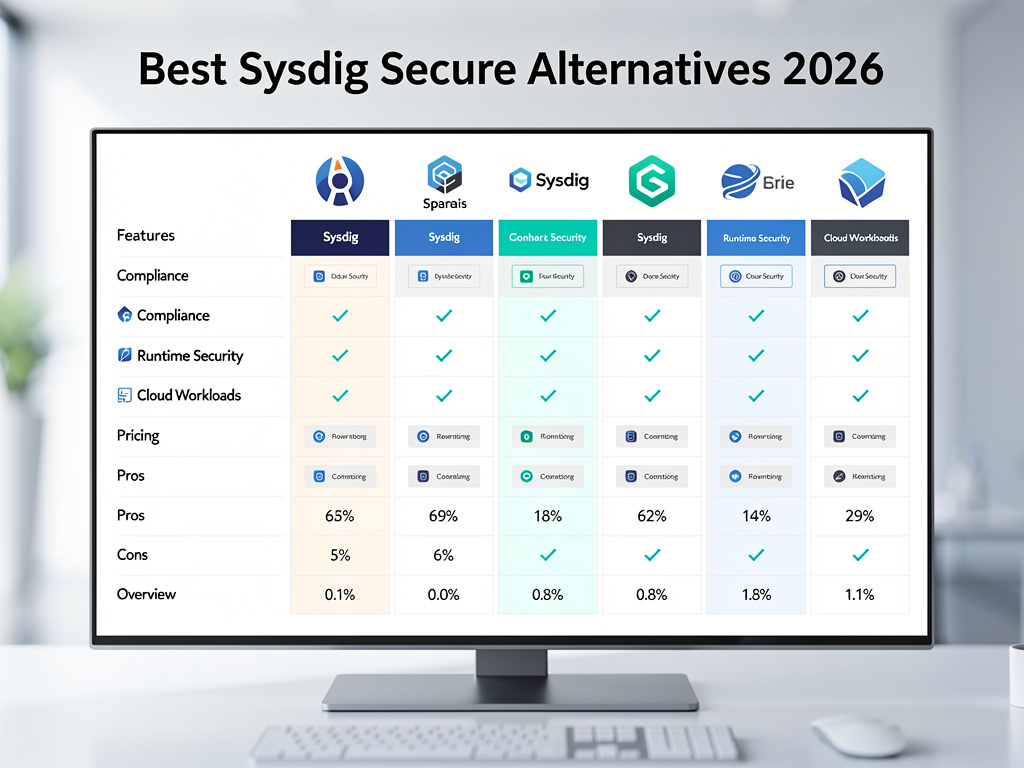
Comparison Table: Sysdig Secure Alternatives at a Glance
| Platform | Primary Approach | Runtime Security | Deployment Model | Best For | Pricing Tier |
|---|---|---|---|---|---|
| Sweet Security | Runtime-first detection | Excellent | Agent-based | Threat detection focus | Mid-range |
| Wiz | Agentless scanning | Developing | Agentless + optional agent | Large enterprises | Premium |
| Prisma Cloud | Full platform suite | Good | Both options | Palo Alto customers | Premium |
| Orca Security | Agentless scanning | Limited | Agentless | Multi-cloud visibility | Mid-range to Premium |
| CrowdStrike Falcon | Endpoint heritage | Excellent | Agent-based | CrowdStrike customers | Premium |
| Microsoft Defender | Native Azure security | Moderate | Agentless + agent | Azure-first organizations | Budget to Mid-range |
| Aqua Security | Container-first | Excellent | Agent-based | Container-heavy environments | Mid-range |
| Lacework FortiCNAPP | Behavioral analytics | Good | Both options | Fortinet customers | Mid-range |
| Check Point CloudGuard | Network security extension | Moderate | Both options | Check Point customers | Mid-range |
| Tenable Cloud | Vulnerability management | Limited | Agentless + agent | Exposure management | Mid-range |
| Upwind | Runtime-powered | Excellent | Agent-based | Modern cloud-native orgs | Mid-range |
| ARMO | Kubernetes specialist | Good | Agent-based | Kubernetes-heavy teams | Budget to Mid-range |
| Qualys TotalCloud | Vulnerability heritage | Limited | Agent-based | Qualys customers | Mid-range |
| Trend Micro Cloud One | Security platform | Moderate | Agent-based | Trend Micro customers | Mid-range |
| Uptycs | Security analytics | Good | Agent-based | Threat hunting teams | Mid-range |
How to Choose the Right Sysdig Alternative
Selecting a cloud security platform isn’t simple. The right choice depends on your specific situation. Here’s a framework for evaluating options.
Consider Your Cloud Footprint
Single cloud vs. multi-cloud: If you’re primarily on Azure, Microsoft Defender offers compelling value. AWS-heavy organizations might prefer Wiz or Orca’s polished multi-cloud support. Multi-cloud environments need platforms that work consistently across providers.
Containerization level: Organizations running extensive Kubernetes deployments should prioritize container-native vendors like Aqua, ARMO, or Sysdig alternatives with strong container capabilities. Traditional VMs need different tooling.
Evaluate Your Security Priorities
Threat detection vs. risk management: Do you want to catch active attacks or reduce potential vulnerabilities? Runtime-focused platforms like Sweet, Upwind, and CrowdStrike excel at detection. Agentless scanners like Wiz and Orca focus on risk assessment.
Compliance requirements: Heavy compliance burdens favor platforms with extensive framework coverage and audit reporting. Prisma Cloud, Microsoft Defender, and Qualys TotalCloud have mature compliance features.
Account for Existing Investments
Vendor consolidation: If you’re already running CrowdStrike, Palo Alto, Fortinet, Check Point, or Microsoft security products, their cloud security offerings provide integration benefits. Starting fresh? You have more options.
Open source alignment: Teams that value open source might prefer Sysdig (Falco), ARMO (Kubescape), or Aqua (Trivy). These communities add value beyond the commercial products.
Test Before Committing
Proof of concept: Most vendors offer trials or pilots. Test in your actual environment with your actual workloads. Marketing claims don’t always match reality.
Alert quality: Pay attention to signal-to-noise ratio during evaluation. Some platforms generate overwhelming alerts. Others provide actionable findings. This difference matters for daily operations.
Conclusion: Finding Your Best Sysdig Secure Alternative
The cloud security market offers real choices. Sysdig built a strong position with runtime security and open-source Falco. But competitors have caught up in some areas and pulled ahead in others.
Wiz and Orca prove agentless scanning works at scale. Sweet, Upwind, and ARMO show the new generation of runtime-focused platforms. Enterprise vendors like Palo Alto, CrowdStrike, and Microsoft offer platform consolidation.
Your best choice depends on your priorities. Runtime detection? Look at Sweet or Upwind. Risk visibility? Consider Wiz or Orca. Existing vendor relationships? Check what your current vendors offer. The right answer is the one that fits your specific situation.
FAQs About Sysdig Secure Competitors and Alternatives
| What is the main difference between Sysdig and Wiz? | Sysdig focuses on agent-based runtime security with deep visibility into container behavior. Wiz uses agentless scanning for faster deployment and broader coverage. Sysdig catches active threats better. Wiz excels at risk prioritization and initial visibility. |
| Which Sysdig Secure competitor is best for Kubernetes environments? | ARMO and Aqua Security specialize in Kubernetes. ARMO offers Kubescape as an open-source foundation. Aqua has deep container expertise from years of focus. Upwind and Sweet also provide strong Kubernetes runtime protection. |
| Are agentless cloud security platforms better than agent-based ones? | Neither is universally better. Agentless platforms like Wiz and Orca deploy faster and don’t impact workload performance. Agent-based platforms like Sysdig and CrowdStrike provide deeper runtime visibility and real-time threat detection. Many organizations use both approaches. |
| What Sysdig alternative works best with Microsoft Azure? | Microsoft Defender for Cloud offers the deepest Azure integration at a competitive price. For organizations seeking third-party alternatives, Wiz and Orca both provide strong Azure support. Prisma Cloud also covers Azure well. |
| How do pricing models differ among Sysdig Secure competitors? | Pricing varies by asset count, features enabled, and deployment scale. Wiz and CrowdStrike sit at the premium end. Microsoft Defender offers budget options. ARMO and Upwind provide mid-range pricing. Most vendors require custom quotes for enterprise deployments. |
| Which alternative to Sysdig is best for small teams? | Microsoft Defender for Cloud offers good value with minimal management overhead. ARMO provides accessible pricing for Kubernetes-focused teams. Wiz and Orca require less operational investment than agent-based alternatives. |
| Do any Sysdig competitors offer open-source components? | Yes. ARMO maintains Kubescape for Kubernetes security. Aqua Security offers Trivy for vulnerability scanning. Uptycs builds on osquery. These open-source tools let you evaluate approaches before buying commercial products. |
| What’s the best Sysdig Secure alternative for runtime threat detection? | Sweet Security and Upwind focus specifically on runtime detection and often exceed Sysdig in this area. CrowdStrike brings strong threat intelligence to runtime protection. Aqua Security also offers mature runtime capabilities. |
| Can I replace Sysdig with multiple specialized tools instead of one CNAPP? | Yes, but management complexity increases. Some organizations use dedicated CSPM, vulnerability scanning, and runtime detection tools. Integrated CNAPPs reduce tool sprawl and improve correlation. The right approach depends on team size and capabilities. |

 Stack Insight is intended to support informed decision-making by providing independent information about business software and services. Some product details, including pricing, features, and promotional offers, may be supplied by vendors or partners and can change without notice.