
Sweet Security Review


Sweet Security Review: A Complete Analysis of the Runtime-Powered CNAPP Platform
Cloud security has changed a lot over the past few years. Traditional tools that scan for risks before deployment aren’t cutting it anymore. Organizations need protection that works in real time, catching threats as they happen in production environments. That’s where Sweet Security comes in.
Sweet Security offers what they call a Runtime-Powered CNAPP. In plain terms, it’s a cloud security platform that watches your applications while they’re actually running. Not just before. Not just after. Right now, in the moment. This approach has caught the attention of enterprise security teams worldwide.
In this review, we’ll break down everything about Sweet Security. We’ll look at features, pricing, real user feedback, and how it stacks up against competitors. By the end, you’ll know if it’s the right fit for your organization.
What Is Sweet Security? Understanding the Platform
Sweet Security is a Cloud-Native Application Protection Platform, commonly known as CNAPP. But calling it just another CNAPP misses the point. The company has built its entire approach around runtime security. This means protecting cloud workloads, applications, and infrastructure while they’re actually doing work.
The Core Philosophy Behind Sweet Security
Most security tools focus on finding problems before you deploy code. They scan configurations. They check for vulnerabilities in your codebase. They flag potential issues during the build process. All of this matters, but it’s only half the picture.
Sweet Security flips this approach. Their platform assumes that threats will get through. Bad actors will find ways in. Misconfigurations will slip past reviews. Zero-day vulnerabilities exist that nobody knows about yet. So instead of only trying to prevent problems, Sweet watches for them in real time.
The company describes this as “runtime context.” Every alert, every finding, every security insight gets filtered through what’s actually happening in production. This changes how teams prioritize their work.
Company Background and Recent Growth
Sweet Security raised $75 million in Series B funding in 2025. This brought their total funding to over $100 million. The investment came from top-tier venture firms who saw the shift toward runtime-first security.
The company reported some impressive numbers along with the funding:
- 6x ARR growth year over year
- 10x enterprise customer expansion
- Global deployments across multiple industries
- Recognition as a leader in the runtime CNAPP space
These numbers suggest real market traction. Enterprises aren’t just testing Sweet Security. They’re adopting it as their primary cloud security platform and expanding usage over time.
Market Position and Industry Rankings
According to PeerSpot research, Sweet Security holds several notable positions:
| Category | Ranking |
|---|---|
| Cloud Detection and Response (CDR) | #4 |
| Identity Threat Detection and Response (ITDR) | #8 |
| Cloud Workload Protection Platforms | #14 |
| Cloud-Native Application Protection Platforms | #14 |
| Cloud Security Posture Management (CSPM) | #19 |
| Vulnerability Management | #33 |
The CDR ranking at #4 stands out. This is Sweet Security’s core strength. They built the platform around detection and response first, then added other capabilities around it.
Sweet Security Features: A Detailed Breakdown
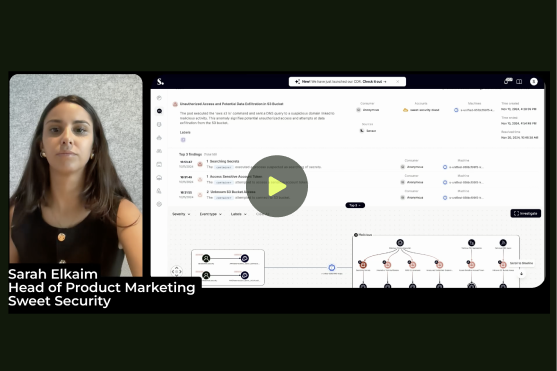
Sweet Security packs a lot of functionality into one platform. Let’s walk through each major feature area and what it actually does for security teams.
Cloud Application Detection and Response (CADR)
This is Sweet Security’s flagship capability. CADR monitors cloud applications in real time and responds to threats automatically. Here’s how it works in practice.
The platform deploys lightweight sensors across your cloud environment. These sensors watch network traffic, process behavior, file system changes, and API calls. They’re looking for anything suspicious.
When something looks wrong, Sweet doesn’t just send an alert. The platform correlates that signal with other data points. It asks questions like:
- Is this process supposed to be running here?
- Has this network connection happened before?
- Does this user typically access this resource?
- What else is happening in the environment right now?
By asking these questions automatically, Sweet reduces false positives. You get fewer alerts, but the ones you get actually matter.
Automated Incident Response
Detection without response is just noise. Sweet Security includes automated response capabilities that can take action when threats appear.
Response actions range from simple to complex:
- Isolation: Cut off compromised workloads from the network
- Process termination: Kill malicious processes immediately
- Evidence collection: Capture forensic data before it disappears
- Notification: Alert the right people through the right channels
- Ticket creation: Open incidents in your existing workflow tools
Security teams configure these responses based on their risk tolerance. Some organizations want aggressive automatic action. Others prefer human approval for anything beyond basic containment.
Cloud Visibility
You can’t protect what you can’t see. Sweet Security provides visibility across cloud-native resources in ways that traditional tools struggle with.
The platform maps out your entire cloud environment. This includes:
- Running containers and their relationships
- Kubernetes clusters and their configurations
- Serverless functions and their triggers
- Cloud services and how they connect
- Data flows between components
- API connections internal and external
This visibility updates continuously. When you deploy a new service, Sweet sees it. When a container spins up, it appears on the map. When traffic patterns change, the platform notices.
Vulnerability Management with Runtime Context
Every cloud environment has vulnerabilities. The question is which ones actually matter. Sweet Security takes a runtime-first approach to vulnerability management that changes how teams prioritize fixes.
Traditional vulnerability scanners find thousands of issues. They assign severity scores based on theoretical impact. A critical vulnerability gets flagged whether it’s in a forgotten test server or your production payment system.
Sweet adds runtime context to every vulnerability finding:
- Is the vulnerable code actually running? A library with a critical CVE that never gets loaded isn’t an immediate threat.
- Is the vulnerable service exposed? An internal tool with no network access has lower risk than a public-facing API.
- Is the vulnerable function being called? Code that exists but never executes isn’t the same as code running in production.
- What would happen if exploited? The blast radius matters when prioritizing fixes.
This context cuts through the noise. Security teams stop fixing theoretical problems and focus on actual risks.
Identity Threat Detection and Response (ITDR)
Identity attacks have become a primary way bad actors compromise cloud environments. Stolen credentials. Privilege escalation. Session hijacking. These attacks bypass network-level security entirely.
Sweet Security monitors identity-related activity in real time. The platform watches for:
- Unusual login patterns
- Credential use from unexpected locations
- Privilege escalation attempts
- Service account misuse
- Token theft indicators
- Lateral movement between services
When identity-based threats appear, Sweet can respond automatically. This might mean revoking access tokens, forcing re-authentication, or alerting security teams for investigation.
Cloud Security Posture Management (CSPM)
CSPM is about configuration. Are your cloud resources set up correctly? Are you following security best practices? Are you compliant with relevant standards?
Sweet Security includes CSPM capabilities that check configurations across major cloud providers. The platform identifies misconfigurations like:
- Open storage buckets
- Overly permissive IAM policies
- Missing encryption settings
- Exposed management interfaces
- Logging gaps
- Network security group problems
The difference from standalone CSPM tools is context. Sweet correlates configuration findings with runtime data. A misconfigured security group matters more if the affected resource is actually handling sensitive data.
API Security
APIs power modern cloud applications. They’re also a major attack surface. Sweet Security provides visibility and protection for API traffic.
The platform discovers APIs automatically by watching network traffic. You don’t need to manually document every endpoint. Sweet finds them by observing what’s actually running.
API security features include:
- Discovery: Find all APIs in your environment
- Classification: Identify which APIs handle sensitive data
- Monitoring: Watch for unusual API usage patterns
- Protection: Block malicious API requests
- Compliance: Ensure APIs meet security requirements
Sweet Security AI Capabilities: What’s New in 2026
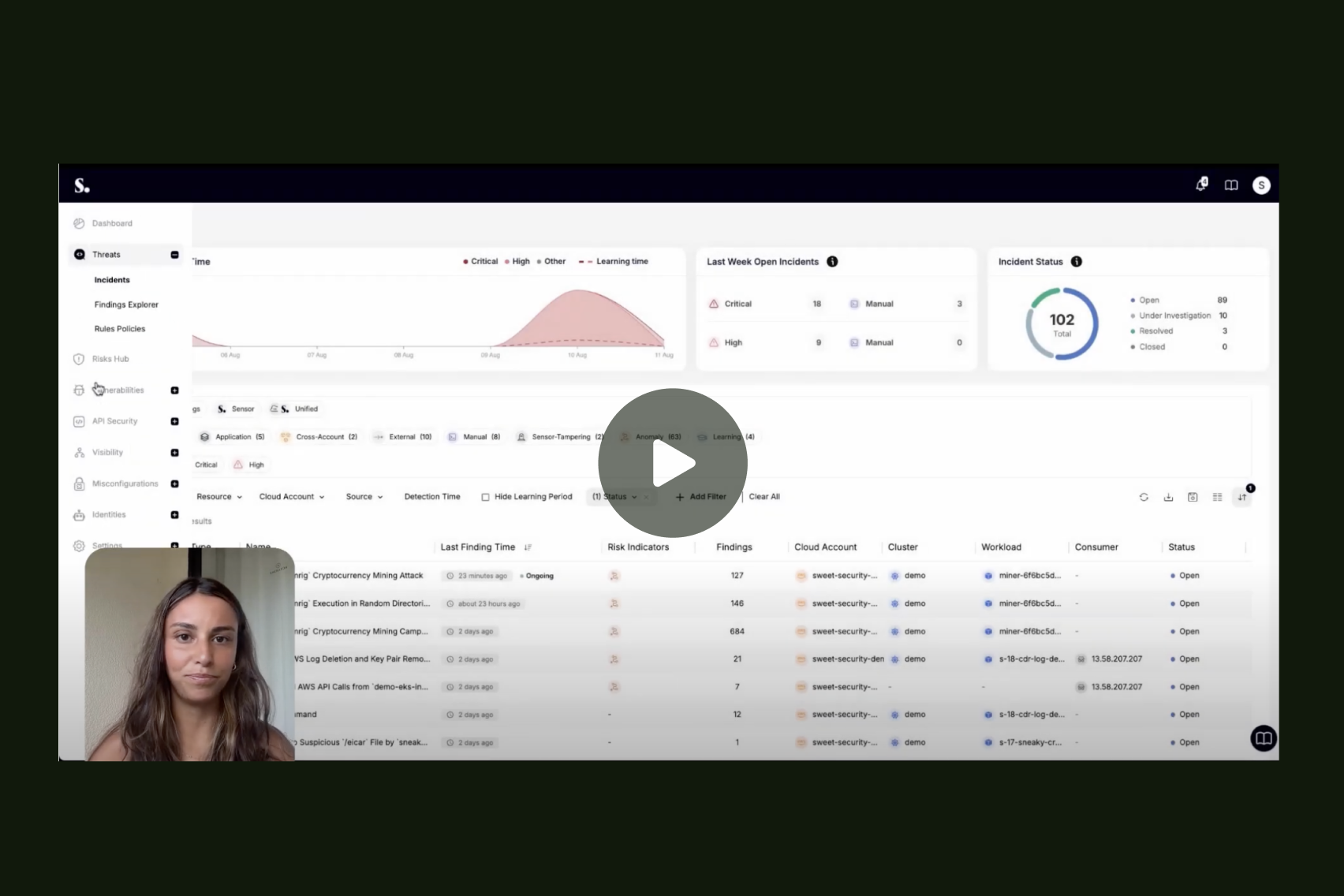
AI security isn’t just a feature for Sweet. It’s becoming a core focus area. The company unveiled new AI security capabilities alongside their Series B funding.
Protecting AI Models and Agents
Organizations are deploying AI throughout their applications. Large language models. Machine learning pipelines. Autonomous agents. Each brings new security challenges.
Sweet Security now offers protection for the AI lifecycle:
- Model protection: Secure AI models from tampering and theft
- Agent monitoring: Watch AI agents for unexpected behavior
- Data security: Protect training data and inference inputs
- Prompt injection detection: Identify attempts to manipulate AI systems
- Output monitoring: Watch for sensitive data leakage in AI responses
These capabilities matter as AI becomes more central to business operations. An AI agent with access to production systems needs the same security attention as any other privileged workload.
AI-Powered Threat Detection
Sweet doesn’t just protect AI systems. They use AI to improve their own detection capabilities. Machine learning models analyze behavior patterns and identify anomalies that rule-based systems would miss.
This AI-powered approach helps with:
- Reducing false positives by learning normal behavior
- Identifying novel attack patterns
- Correlating events across the environment
- Predicting potential threats before they materialize
- Automating investigation tasks
The combination of runtime visibility and AI analysis creates what Sweet calls “advanced AI intelligence.” It’s not just watching what happens. It’s understanding what it means.
User Reviews and Real-World Feedback
Marketing materials tell one story. Real users tell another. Let’s look at what people actually say about Sweet Security.
What Users Like About Sweet Security
Gartner reviews highlight several strengths that appear repeatedly in user feedback:
“Strong Runtime Security with Excellent AWS Integration”
Users consistently praise the AWS integration. Sweet Security works well with AWS-native services and provides deep visibility into AWS workloads. Organizations running primarily on AWS report smooth deployments and useful insights quickly.
Other commonly mentioned positives include:
- Quick time to value: Teams see useful results within days, not months
- Accurate detection: Low false positive rates compared to other tools
- Helpful support: The Sweet Security team responds quickly to questions
- Easy deployment: Lightweight sensors don’t require major infrastructure changes
- Good documentation: Clear guides for setup and configuration
Areas Users Mention for Improvement
No product is perfect. Users have mentioned some limitations in their reviews:
“Limited API and Reporting Flexibility”
Some users want more control over APIs and reporting. Specifically:
- API coverage could be broader for custom integrations
- Reporting options sometimes lack flexibility
- Some advanced configurations require support assistance
- Multi-cloud deployments can be more complex than single-cloud
These seem like typical early-stage product gaps. The core detection and response capabilities get high marks. The surrounding features are still catching up.
User Segments and Adoption Patterns
According to PeerSpot data, Sweet Security users break down by company size:
| Company Size | Percentage of Users |
|---|---|
| Midsize Enterprise | 36% |
| Large Enterprise | Significant portion |
| Small Business | Smaller portion |
The midsize enterprise segment represents the largest group researching Sweet Security. This makes sense. These organizations have complex enough environments to need real security tools, but may not have huge security teams to manage them.
Sweet Security vs CrowdStrike Falcon: Head-to-Head Comparison
CrowdStrike Falcon is the most common comparison point for Sweet Security. Let’s look at how they stack up across different criteria.
Approach to Cloud Security
CrowdStrike Falcon started as an endpoint detection and response (EDR) platform. They’ve expanded into cloud security over time. Their cloud capabilities build on their endpoint heritage.
Sweet Security started with cloud-native detection and response. They built the platform for containers, Kubernetes, and serverless from day one. There’s no legacy architecture to work around.
| Criteria | Sweet Security | CrowdStrike Falcon |
|---|---|---|
| Primary Focus | Runtime cloud security | Endpoint security expanded to cloud |
| Cloud-Native Architecture | Built from scratch for cloud | Adapted from endpoint platform |
| Container Support | Deep, native support | Good, added over time |
| Kubernetes Integration | Full lifecycle coverage | Solid monitoring capabilities |
| Market Maturity | Growing rapidly | Well established |
Detection and Response Capabilities
Both platforms detect threats and enable response. The differences are in specifics.
Sweet Security focuses on cloud-specific threats. Their detection models understand cloud attack patterns, container escapes, Kubernetes misuse, and serverless risks. Everything is tuned for cloud environments.
CrowdStrike brings their threat intelligence network. They’ve seen millions of attacks across their customer base. This breadth of data helps identify known threat actors and techniques.
For organizations running primarily in the cloud, Sweet Security’s specialized approach often provides more relevant detection. For organizations with mixed environments including traditional endpoints, CrowdStrike’s broader coverage might fit better.
Pricing and Licensing Differences
Both platforms use subscription-based pricing. Exact costs vary based on:
- Number of protected workloads
- Features included in the package
- Contract length and terms
- Support level required
Sweet Security tends to price based on cloud resource consumption. CrowdStrike typically prices per endpoint or workload. For cloud-heavy organizations, Sweet’s model often works out more favorably.
Sweet Security for Different Team Types
Sweet Security serves different audiences within an organization. The company publishes specific solution briefs for each group.
Sweet Security for SOC and Incident Response Teams
Security Operations Centers need fast, accurate information when investigating threats. Sweet Security provides:
- Real-time alerts: Know about threats as they happen
- Attack context: Understand the full scope of an incident
- Investigation tools: Dig into details without switching platforms
- Response automation: Take action directly from the interface
- Integration: Connect with existing SIEM and SOAR tools
For incident responders, the runtime visibility is particularly valuable. Instead of reconstructing what happened from logs, they can see the actual behavior that triggered an alert.
Sweet Security for Application Security Teams
AppSec teams care about vulnerabilities and secure coding. Sweet Security helps them by:
- Prioritizing vulnerabilities: Focus on what’s actually exploitable in production
- Tracking fixes: See when remediation takes effect
- Understanding exposure: Know which vulnerabilities face the internet
- Measuring risk: Quantify application security posture over time
- Collaborating with developers: Share context that makes remediation easier
The runtime context changes how AppSec teams prioritize work. Instead of fixing every critical CVE, they focus on the ones that pose real risk in their environment.
Sweet Security for Cloud Security and DevSecOps
Cloud security teams manage overall posture and governance. DevSecOps teams embed security into development workflows. Both groups benefit from:
- Configuration monitoring: Catch drift and misconfigurations
- Compliance tracking: Map controls to frameworks
- Pipeline integration: Add security gates to CI/CD
- Policy enforcement: Block risky deployments automatically
- Visibility dashboards: See security posture at a glance
Sweet Security for CISOs
Chief Information Security Officers need a different view. Less technical detail. More strategic insight. Sweet Security provides CISO-focused capabilities:
- Executive dashboards: High-level security metrics
- Risk scoring: Quantified risk for business discussions
- Compliance reporting: Audit-ready documentation
- Trend analysis: Security posture over time
- ROI metrics: Demonstrate security program value
Technical Architecture: How Sweet Security Works
Understanding the technical architecture helps evaluate if Sweet Security fits your environment. Let’s dig into how the platform actually operates.
Sensor Deployment Model
Sweet Security uses lightweight sensors to collect runtime data. These sensors deploy across your cloud environment through several methods:
- Container sidecars: Run alongside your application containers
- DaemonSets: Deploy across Kubernetes nodes automatically
- Agent installation: For VM-based workloads
- Agentless scanning: For some cloud service integrations
The sensors are designed to have minimal performance impact. They watch and report without affecting application behavior. Sweet publishes benchmark data showing resource consumption stays low even under heavy load.
Data Collection and Processing
Sensors collect various types of runtime data:
- Process execution events
- Network connections and traffic metadata
- File system operations
- System calls and kernel events
- Container and Kubernetes API calls
- Cloud provider API interactions
This data streams to Sweet Security’s analysis platform. The platform processes events in real time, applying detection rules and machine learning models to identify threats.
Cloud Provider Integrations
Sweet Security integrates with major cloud providers:
| Cloud Provider | Integration Level |
|---|---|
| Amazon Web Services | Deep integration with native services |
| Microsoft Azure | Full support for Azure workloads |
| Google Cloud Platform | GCP resource monitoring |
AWS integration receives the most praise in user reviews. This suggests the platform has deeper functionality on AWS, though all major clouds are supported.
Integration with Security Tools
Sweet Security doesn’t try to replace your entire security stack. It integrates with existing tools:
- SIEM platforms: Splunk, Elastic, others
- SOAR tools: Automated response orchestration
- Ticketing systems: Jira, ServiceNow, others
- Communication tools: Slack, Teams, PagerDuty
- CI/CD pipelines: Jenkins, GitLab, GitHub Actions
These integrations let Sweet Security fit into existing workflows. Security teams don’t need to change how they operate. They just get better data from their cloud environments.
Deployment and Getting Started
How hard is it to deploy Sweet Security? What does the onboarding process look like? Let’s walk through typical implementations.
Initial Setup Process
Most organizations follow a phased approach to deployment:
Phase 1: Discovery (Days 1-3)
- Connect cloud provider accounts
- Deploy initial sensors to a subset of workloads
- Begin collecting configuration and runtime data
- Generate initial visibility reports
Phase 2: Baseline (Days 4-14)
- Expand sensor deployment across the environment
- Let the platform learn normal behavior patterns
- Tune detection rules to reduce noise
- Configure integrations with existing tools
Phase 3: Protection (Days 15+)
- Enable automated response capabilities
- Build out custom detection rules
- Establish incident response procedures
- Train team members on the platform
Resource Requirements
Sweet Security’s sensors require minimal resources:
- CPU: Typically 1-2% of node capacity
- Memory: A few hundred MB per node
- Network: Minimal bandwidth for telemetry
- Storage: Local caching only, no persistent storage
The exact requirements vary based on workload density and configuration. Sweet Security’s team can help size deployments during evaluation.
Common Deployment Challenges
Organizations sometimes hit bumps during deployment. Common challenges include:
- Sensor compatibility: Some custom container configurations need adjustment
- Network policies: Restrictive policies may need updates for sensor communication
- Initial noise: Detection rules need tuning for each environment
- Tool integration: Custom integrations may require additional work
Sweet Security’s support team helps address these issues. User reviews specifically praise their responsiveness during implementation.
Pricing Model and Cost Considerations
Sweet Security uses a subscription pricing model. Let’s explore what this means for budgeting and cost planning.
How Sweet Security Pricing Works
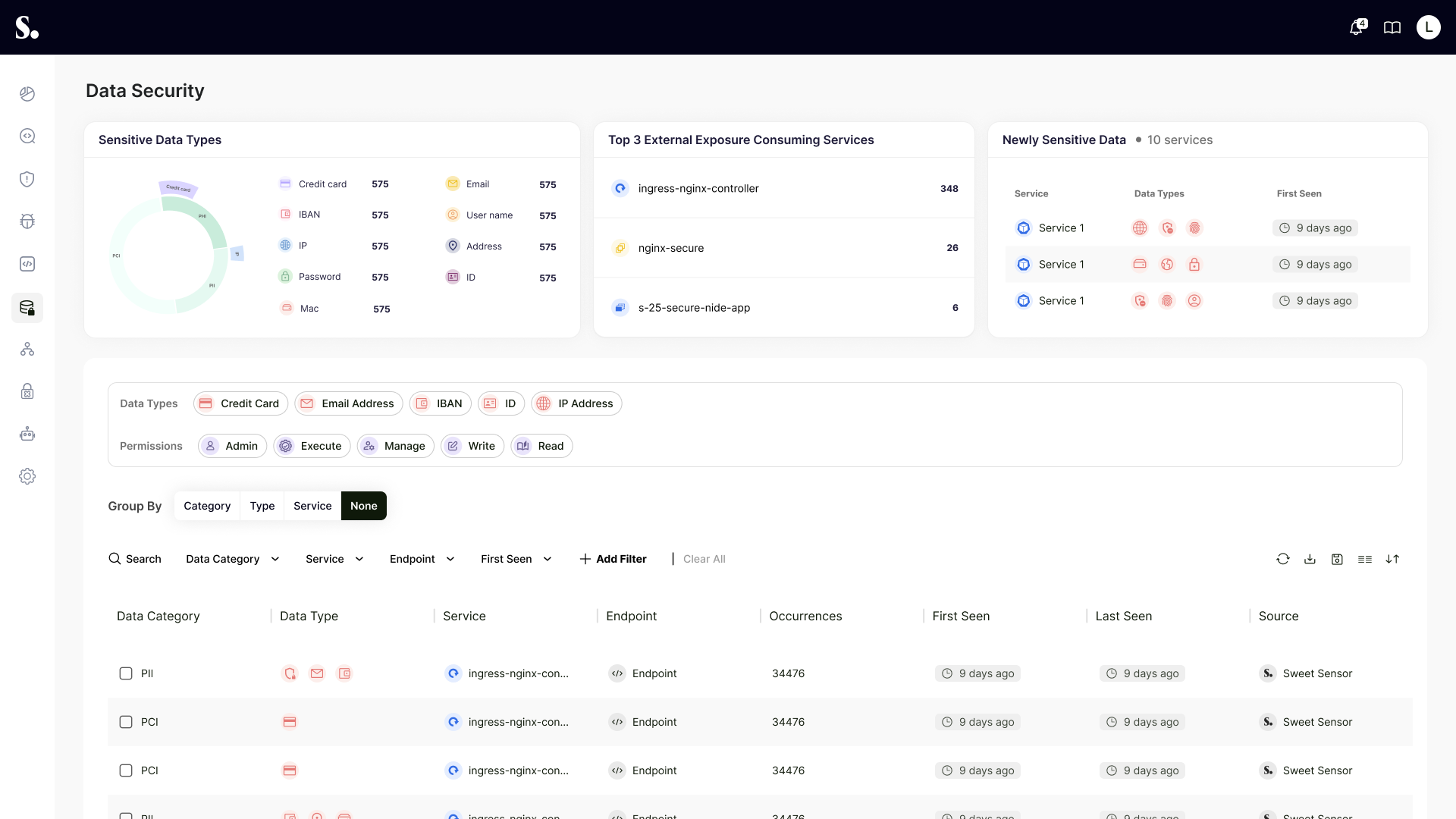
Sweet Security offers pricing based on monthly or annual subscriptions. The specific cost depends on several factors:
- Protected resources: Number and type of cloud workloads
- Feature tier: Which capabilities are included
- Data retention: How long historical data is kept
- Support level: Standard versus premium support
- Contract term: Annual commitments often include discounts
Sweet doesn’t publish specific pricing publicly. This is common for enterprise security tools. Organizations typically request a quote based on their environment size.
Comparing Costs with Alternatives
When evaluating Sweet Security costs, consider the total cost of ownership:
Direct costs:
- License fees for Sweet Security
- Any additional modules or features
- Support and services
Indirect costs:
- Time to deploy and manage
- Training and skill development
- Integration work
Cost savings:
- Reduced incident response time
- Fewer false positives to investigate
- Consolidated tool coverage
- Better vulnerability prioritization
Some organizations find Sweet Security replaces multiple point tools. The combined cost may be lower than maintaining several separate products.
Building a Business Case
When justifying Sweet Security investment, focus on:
- Risk reduction: Faster detection means smaller breach impact
- Efficiency gains: Less time chasing false positives
- Tool consolidation: Replace multiple overlapping products
- Compliance: Meet requirements without manual effort
- Team productivity: Focus on real threats instead of noise
Industry Recognition and Analyst Perspectives
How do industry analysts view Sweet Security? What do independent evaluations say?
Analyst James Berthoty’s Review
Security analyst James Berthoty published a detailed review of Sweet Security. His evaluation covered technical capabilities, market positioning, and competitive differentiation.
Key points from his analysis:
- Strong technical foundation for runtime security
- Differentiated approach compared to traditional CNAPP vendors
- Clear focus on detection and response capabilities
- Growing traction with enterprise customers
Analyst coverage like this helps validate Sweet Security’s approach. Independent evaluation matters when comparing vendor claims.
Gartner Perspective
Gartner includes Sweet Security in their Cloud-Native Application Protection Platforms coverage. Reviews on Gartner Peer Insights show the platform gaining attention from enterprise buyers.
User reviews on Gartner highlight:
- Strong runtime security capabilities
- Good AWS integration quality
- Areas for improvement in reporting and APIs
- Positive overall experience ratings
Latio Tech Cloud Security Report 2025
Sweet Security appears in the Latio Tech Cloud Security Report for 2025. This independent research evaluates cloud security vendors across multiple criteria.
The report positions Sweet Security among vendors to watch in the runtime security space. Their unique approach to combining CNAPP with strong detection and response stands out.
Security Use Cases: Where Sweet Security Excels
Different organizations use Sweet Security for different purposes. Let’s explore common use cases where the platform delivers strong results.
Container and Kubernetes Security
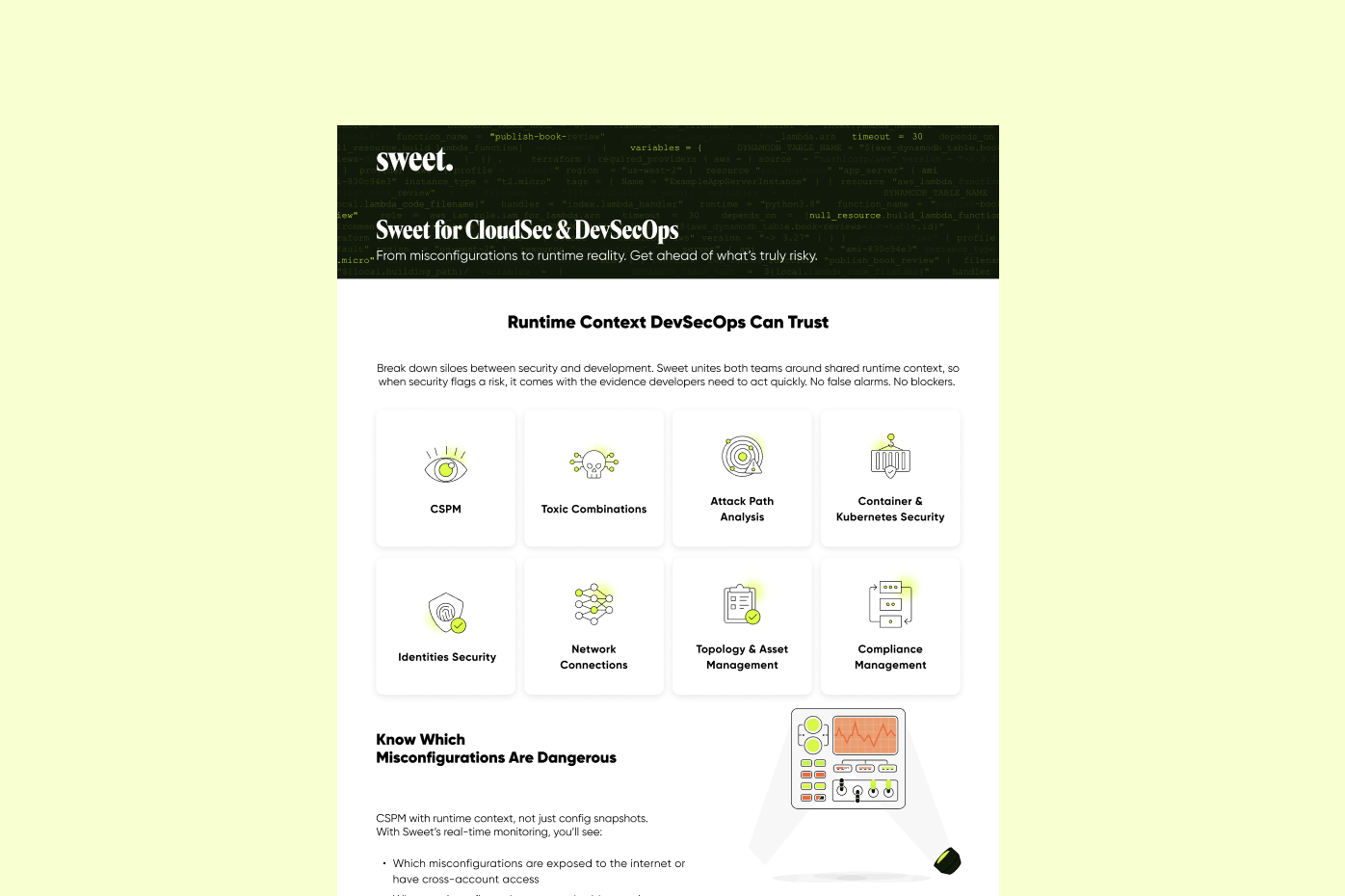
Organizations running containerized workloads face unique security challenges. Traditional tools weren’t built for ephemeral, distributed workloads.
Sweet Security addresses container security through:
- Runtime monitoring: Watch containers while they run
- Behavior baselining: Learn normal container behavior
- Escape detection: Identify container breakout attempts
- Image scanning: Check images for vulnerabilities
- Network segmentation: Enforce container network policies
For Kubernetes specifically, Sweet Security provides:
- Cluster configuration monitoring
- RBAC analysis and recommendations
- Pod security policy enforcement
- Admission control integration
- Workload identity management
Cloud Incident Response
When a security incident occurs, time matters. Every minute of investigation delay gives attackers more opportunity.
Sweet Security speeds incident response by:
- Providing immediate context when alerts fire
- Correlating events across the environment automatically
- Enabling direct response actions from the investigation interface
- Preserving evidence for later analysis
- Generating timeline views of attack progression
Security teams report faster mean time to response (MTTR) after deploying Sweet Security. The runtime context eliminates many investigation steps.
Compliance and Audit Support
Many organizations face compliance requirements that include cloud security controls. Sweet Security helps meet these requirements:
| Framework | How Sweet Security Helps |
|---|---|
| SOC 2 | Continuous monitoring and access controls |
| PCI DSS | Network segmentation and vulnerability management |
| HIPAA | Access logging and incident detection |
| GDPR | Data protection and breach detection |
| ISO 27001 | Security controls across multiple domains |
The platform generates compliance reports that auditors can use. This reduces manual evidence collection during audit periods.
Multi-Cloud Security
Organizations using multiple cloud providers need consistent security across all of them. Sweet Security provides:
- Unified visibility across cloud providers
- Consistent detection capabilities regardless of cloud
- Cross-cloud correlation of security events
- Single pane of glass for security management
Some users mention that multi-cloud deployments require more setup work. The capability exists, but the AWS integration is currently the most mature.
Limitations and Considerations
No security product solves everything. Understanding limitations helps set realistic expectations.
Where Sweet Security May Not Be the Best Fit
Consider alternatives if your organization:
- Runs primarily on-premises: Sweet Security focuses on cloud environments
- Has minimal cloud workloads: The value comes from cloud-native protection
- Needs endpoint coverage: Sweet doesn’t replace traditional EDR
- Wants a free or very low-cost solution: Enterprise pricing applies
Technical Limitations to Consider
Based on user feedback and product documentation:
- API flexibility: Some custom integrations may be limited
- Reporting customization: Fixed reports may not fit all needs
- Multi-cloud parity: AWS integration is currently stronger
- Learning curve: Full capabilities take time to understand
Resource and Staffing Considerations
Sweet Security still requires people to operate effectively:
- Someone needs to tune detection rules
- Alerts require investigation, even with good context
- Integrations need setup and maintenance
- The platform should be monitored for operational issues
Organizations expecting fully autonomous security will be disappointed. Sweet Security makes security teams more effective. It doesn’t eliminate the need for them.
Future Direction and Product Roadmap
Where is Sweet Security heading? What can customers expect going forward?
AI Security Expansion
The $75 million Series B funding announcement emphasized AI security as a focus area. Expect continued investment in:
- Protection for AI models and agents
- Detection of AI-specific threats
- Security for AI development pipelines
- Governance and compliance for AI systems
As organizations deploy more AI, this focus will become increasingly relevant.
Platform Capabilities Growth
Based on market direction and user feedback, likely improvements include:
- Expanded API coverage and flexibility
- More customizable reporting options
- Deeper multi-cloud support
- Additional integration options
- Improved automation capabilities
Market Position Evolution
Sweet Security is positioning itself as the leader in runtime CNAPP. They’re moving to “displace incumbent vendors” in the cloud security space.
The 6x ARR growth and 10x customer expansion suggest this positioning is resonating. Enterprise buyers are choosing Sweet Security over established alternatives.
Making the Decision: Is Sweet Security Right for You?
After all this analysis, how do you decide if Sweet Security fits your needs?
Sweet Security Is a Good Fit If You:
- Run cloud-native workloads and need runtime protection
- Use containers and Kubernetes at scale
- Want detection and response not just prevention
- Have AWS as your primary cloud (though others work)
- Need to prioritize vulnerabilities based on actual risk
- Want to consolidate tools into a unified platform
- Have budget for enterprise security tools
Consider Alternatives If You:
- Primarily run on-premises workloads
- Need endpoint protection as the main use case
- Have very limited cloud footprint
- Want extensive customization from day one
- Need lowest-cost options over full capabilities
Evaluation Process Recommendations
If Sweet Security looks like a potential fit:
- Request a demo: See the platform with your environment in mind
- Define success criteria: Know what you need to see during evaluation
- Test in your environment: Deploy sensors on representative workloads
- Evaluate detection quality: How relevant are the alerts you receive?
- Test response capabilities: Can you take action when needed?
- Check integrations: Does it work with your existing tools?
- Review pricing: Does the cost make sense for your organization?
Final Assessment of Sweet Security
Sweet Security brings a fresh approach to cloud security. Their focus on runtime protection fills a gap that many traditional tools leave open. The platform detects threats as they happen, not just risks that might lead to threats.
Real users report positive experiences, particularly with AWS integration and detection accuracy. Some areas like API flexibility and reporting customization still need work. That’s expected for a growing platform.
For organizations with cloud-native workloads who want real-time protection, Sweet Security deserves serious evaluation. The combination of CNAPP capabilities with strong detection and response sets it apart from alternatives. The AI security additions position it well for future challenges too.
Frequently Asked Questions About Sweet Security
| Who is Sweet Security designed for? | Sweet Security targets organizations running cloud-native workloads. This includes midsize to large enterprises using containers, Kubernetes, and serverless functions. Security teams, SOC analysts, DevSecOps engineers, and CISOs all find value in different platform capabilities. |
| How does Sweet Security compare to CrowdStrike Falcon? | Sweet Security was built cloud-native from the start, while CrowdStrike Falcon expanded from endpoint security. Sweet focuses on runtime cloud protection, while CrowdStrike offers broader endpoint coverage. For cloud-heavy organizations, Sweet often provides more relevant detection. For mixed environments, CrowdStrike’s breadth may fit better. |
| What cloud providers does Sweet Security support? | Sweet Security supports AWS, Azure, and Google Cloud Platform. User reviews indicate AWS integration is currently the most mature. All major cloud providers work with the platform for core detection and response capabilities. |
| How long does it take to deploy Sweet Security? | Most organizations see initial value within days. Full deployment with tuned detection rules typically takes two to three weeks. The lightweight sensor model enables faster deployment than agent-heavy alternatives. |
| What is runtime security and why does it matter? | Runtime security protects applications while they’re actually running in production. This catches threats that slip past pre-deployment scanning. It also provides context about what’s really happening, not just what could theoretically happen. |
| Does Sweet Security replace vulnerability scanning tools? | Sweet Security includes vulnerability management with runtime context. It may replace some scanning tools, but the bigger benefit is prioritization. The platform shows which vulnerabilities pose real risk based on actual production behavior. |
| What are the main limitations of Sweet Security? | Users mention limited API flexibility and reporting customization as areas for improvement. Multi-cloud deployments can be more complex than single-cloud. The platform focuses on cloud workloads, so it won’t replace on-premises or endpoint security tools. |
| How does Sweet Security pricing work? | Sweet Security uses subscription-based pricing, either monthly or annually. Costs depend on protected resources, feature tiers, and support levels. Specific pricing requires requesting a quote based on your environment size. |
| Can Sweet Security help with compliance requirements? | Yes. The platform maps controls to frameworks like SOC 2, PCI DSS, HIPAA, and GDPR. It generates compliance reports and provides continuous monitoring evidence that auditors need. |
| What AI security capabilities does Sweet Security offer? | Sweet Security protects AI models, agents, and development pipelines. This includes prompt injection detection, model protection, training data security, and output monitoring. The company announced expanded AI security capabilities with their 2025 Series B funding. |





 Stack Insight is intended to support informed decision-making by providing independent information about business software and services. Some product details, including pricing, features, and promotional offers, may be supplied by vendors or partners and can change without notice.