
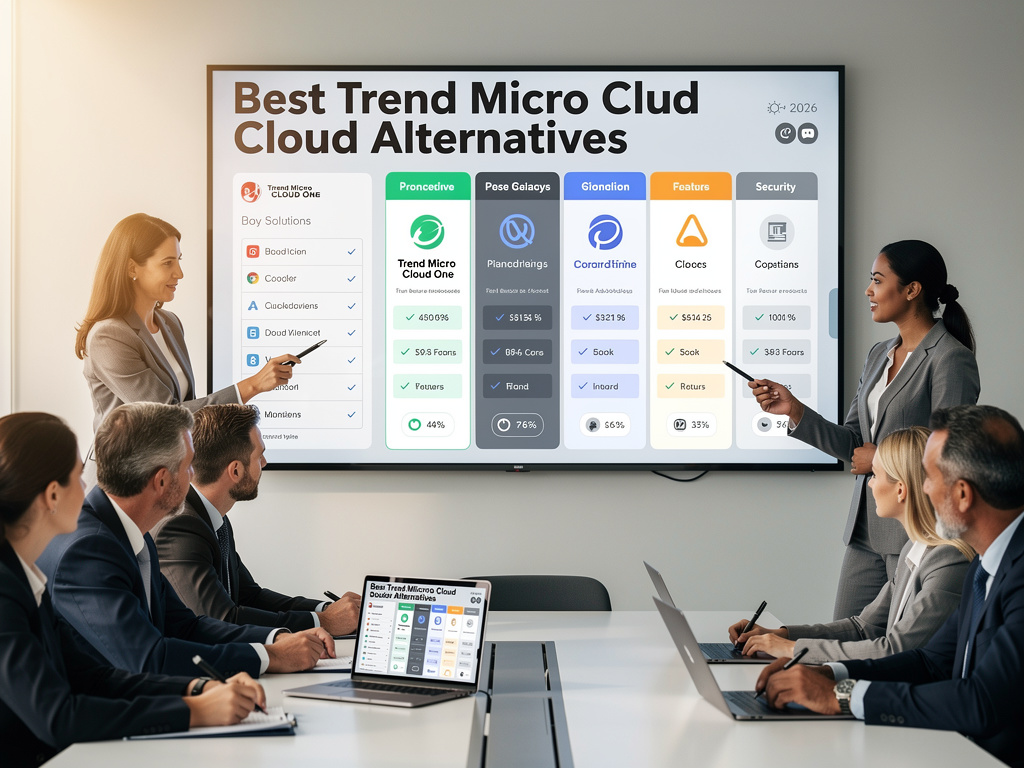
15 Best Trend Micro Cloud One Alternatives for 2026: Complete Comparison Guide
Trend Micro Cloud One has served many organizations well over the years. But cloud security keeps changing. And your needs might have evolved beyond what Trend Micro offers today.
Maybe you’re dealing with alert fatigue. Perhaps you need better container security. Or your multi-cloud setup has grown more complex than one platform can handle effectively.
Whatever brought you here, you’re looking for options. Good news: there are plenty of strong Trend Micro Cloud One alternatives worth considering in 2026.
This guide breaks down 15 cloud security platforms that companies actually switch to when moving away from Trend Micro. We’ll dig into what each one does well, where they fall short, and which types of organizations get the most value from them.
You’ll find detailed analysis of pricing approaches, deployment models, and real-world use cases. No fluff. Just the information you need to make a smart decision for your security stack.
Why Organizations Look for Trend Micro Cloud One Competitors
Before jumping into alternatives, let’s talk about why companies start shopping around in the first place. Understanding these pain points helps you evaluate which replacement actually solves your specific problems.
Common Reasons Teams Switch Away
Alert overload is a big one. Security teams get buried under thousands of notifications. Many turn out to be false positives or low-priority issues. When everything screams for attention, nothing gets the focus it deserves.
Container and Kubernetes gaps show up frequently. Cloud-native workloads need specialized protection. Some organizations find Trend Micro’s container security doesn’t go deep enough for their DevOps workflows.
Multi-cloud complexity creates friction. Running workloads across AWS, Azure, and Google Cloud requires consistent visibility. Inconsistent coverage across clouds makes security teams work harder than they should.
Integration headaches slow everything down. Your security platform needs to play nice with CI/CD pipelines, ticketing systems, and existing tools. Clunky integrations mean manual work and missed connections.
Pricing models don’t always fit. Some organizations find per-workload pricing unpredictable. Others need clearer cost forecasting as their cloud footprint grows.
What to Look for in a Replacement
When evaluating Trend Micro Cloud One substitutes, focus on these areas:
- Deployment flexibility: Agent-based, agentless, or hybrid approaches
- Cloud coverage: Support for your specific cloud providers
- Runtime protection: Real-time threat detection and response
- Posture management: Configuration scanning and compliance checks
- Container security: Image scanning, Kubernetes protection, registry integration
- Identity security: Cloud permission analysis and least-privilege enforcement
- Integration ecosystem: Connections to your existing toolchain
Now let’s look at each alternative in detail.
1. Sweet Security: Runtime-First Cloud Protection
Sweet Security takes a different angle than most cloud security platforms. Instead of focusing mainly on posture management, they built their product around runtime protection from day one.
Core Capabilities and Approach
Sweet Security uses lightweight sensors to monitor cloud workloads in real time. This gives you visibility into what’s actually happening during execution, not just what might happen based on configuration.
The platform excels at:
- Detecting active attacks and suspicious behavior
- Correlating events across containers, VMs, and serverless functions
- Reducing noise by focusing on runtime context
- Providing investigation tools for security analysts
Sweet Security connects runtime findings to your cloud configuration. This combination helps prioritize which misconfigurations actually matter because they’re being actively targeted or exposed.
Best Fit and Limitations
Sweet Security works well for: Organizations that want strong runtime detection alongside posture management. Teams tired of alert fatigue appreciate the context-driven approach.
Potential drawbacks: Newer vendor compared to established players. Some organizations prefer the depth of pure-play CSPM tools for compliance-heavy environments.
If your main concern is catching attacks in progress rather than just preventing misconfigurations, Sweet Security deserves a close look.
2. Wiz: The Agentless CNAPP Leader
Wiz changed how many organizations think about cloud security. Their agentless approach connects directly to cloud APIs, scanning everything without deploying sensors on every workload.
What Makes Wiz Stand Out
Wiz builds a complete graph of your cloud environment. Every VM, container, storage bucket, identity, and network connection gets mapped. Then the platform analyzes how these pieces connect to find attack paths.
Key strengths include:
- Full visibility without agents: Scan workloads, containers, and data stores from outside
- Attack path analysis: See how an attacker could chain vulnerabilities together
- Multi-cloud support: Consistent experience across AWS, Azure, GCP, and more
- Fast deployment: Get scanning results within hours, not weeks
- Data security posture: Find sensitive data exposure automatically
The platform covers CSPM, vulnerability management, container security, and cloud identity security. Wiz calls this their CNAPP approach, combining multiple security functions into one tool.
Wiz Pricing and Deployment
Wiz doesn’t publish pricing publicly. Most estimates put enterprise deployments in the six-figure range annually. The exact cost depends on your cloud footprint size and which modules you need.
Deployment happens through read-only cloud API connections. You don’t install anything on workloads themselves. This makes initial setup fast but means you miss some runtime behaviors that agent-based tools catch.
Where Wiz Falls Short
No on-premises support: If you run hybrid environments with significant on-prem infrastructure, Wiz won’t cover that piece.
Runtime protection gaps: Agentless scanning shows point-in-time state. It doesn’t monitor what happens between scans or detect attacks in progress.
Cost concerns: For smaller organizations, Wiz can feel expensive compared to alternatives with similar feature sets.
One security leader put it well: “Wiz is great at finding problems that already exist in production, but it can’t prevent them from getting there in the first place.”
Who Should Consider Wiz
Large enterprises with complex multi-cloud deployments get the most from Wiz. If you want comprehensive cloud visibility without managing agents across thousands of workloads, Wiz delivers that simplicity.
Organizations with strict compliance requirements also appreciate the built-in frameworks and automated evidence collection.
3. Prisma Cloud by Palo Alto Networks: Enterprise-Grade Full Stack Security
Prisma Cloud comes from Palo Alto Networks, one of the biggest names in security. The platform aims to cover everything cloud security related in one product.
Platform Components and Coverage
Prisma Cloud breaks down into multiple modules:
- Cloud Security Posture Management: Configuration monitoring across clouds
- Cloud Workload Protection: Runtime security for VMs, containers, and serverless
- Cloud Code Security: Scanning infrastructure-as-code templates
- Cloud Network Security: Network segmentation and policy enforcement
- Cloud Identity Security: Permission analysis and identity governance
The breadth here is impressive. You can genuinely run most cloud security functions through Prisma Cloud if you want a single vendor approach.
Integration with Palo Alto Ecosystem
If you already use Palo Alto firewalls, Cortex XDR, or other Palo Alto products, Prisma Cloud ties in nicely. Data flows between products, and you get unified management through their Cortex XSIAM platform.
This integration cuts both ways. Organizations not invested in the Palo Alto ecosystem might find they’re paying for integration capabilities they won’t use.
Strengths and Weaknesses
Prisma Cloud does these things well:
- Covering the full cloud security stack in one platform
- Supporting major clouds plus some private cloud environments
- Providing granular policy controls for enterprises
- Offering both agent-based and agentless scanning options
Common complaints include:
- Complex licensing that makes budgeting tricky
- Steep learning curve for administrators
- Resource-intensive agents on some workloads
- Module overlap creates confusion about what covers what
Pricing Approach
Prisma Cloud uses credit-based pricing. You buy credits and consume them based on workloads protected and features used. This gives flexibility but makes cost prediction harder than straightforward per-asset pricing.
Enterprise deals typically start around $100,000 annually and scale up significantly for large deployments.
4. Orca Security: Agentless Cloud-Native Security
Orca Security pioneered the agentless cloud security approach, launching before Wiz entered the market. Their SideScanning technology reads workload snapshots without deploying any agents.
How Orca’s Technology Works
Orca connects to your cloud accounts and takes snapshots of workload storage. Then it analyzes those snapshots in Orca’s environment, looking for vulnerabilities, malware, misconfigurations, and sensitive data.
This approach means zero performance impact on your workloads. No agents to manage, no compatibility issues, no CPU overhead.
Orca covers:
- Vulnerability detection across VMs and containers
- Malware and suspicious file discovery
- Misconfiguration and compliance checking
- Identity and access analysis
- Sensitive data discovery
- Attack path visualization
Orca vs Wiz: Key Differences
Both platforms use agentless approaches, so they get compared frequently. Here’s where they differ:
Orca advantages:
- Often lower pricing for comparable deployments
- Strong malware detection capabilities
- Earlier market entry means more mature in some areas
Wiz advantages:
- More extensive attack path analysis
- Faster scan times reported by many users
- Larger customer base and partner ecosystem
Who Picks Orca
Mid-market companies often find Orca hits a sweet spot. You get enterprise-grade agentless scanning without the enterprise-grade price tag.
Organizations that want comprehensive coverage without agent deployment overhead should evaluate Orca seriously.
5. CrowdStrike Falcon Cloud Security: From Endpoint to Cloud
CrowdStrike built their reputation on endpoint detection and response. Falcon Cloud Security extends that same approach into cloud environments.
The Falcon Platform Advantage
If you already run CrowdStrike Falcon on endpoints, adding cloud security keeps everything in one place. The same lightweight agent works across laptops, servers, VMs, and containers.
Falcon Cloud Security includes:
- Cloud Workload Protection: Runtime security for cloud instances and containers
- CSPM capabilities: Configuration and compliance monitoring
- Container security: Image scanning and Kubernetes protection
- Cloud identity protection: Permission analysis and anomaly detection
The platform shines at runtime protection. CrowdStrike’s threat intelligence feeds and behavior-based detection translate well from endpoints to cloud workloads.
Falcon Complete MDR Option
CrowdStrike offers Falcon Complete, their managed detection and response service. They’ll run investigations and take response actions on your behalf, 24/7.
This matters for organizations without large security teams. You get expert analysts watching your environment without hiring them yourself.
Deployment Considerations
Falcon requires agent deployment on workloads you want to protect. This gives deep visibility but means more operational overhead than agentless alternatives.
The agent is lightweight, but you still need to manage deployment across your environment. Container images need the agent included, and you’ll need processes to keep agents updated.
When CrowdStrike Makes Sense
Choose CrowdStrike if:
- You already use Falcon for endpoints
- Runtime protection matters more than agentless simplicity
- You want optional MDR services from the same vendor
- Threat intelligence and behavioral detection are priorities
Look elsewhere if:
- You want purely agentless cloud security
- Managing agents across cloud workloads feels burdensome
- Your budget is tight and you’re not already a CrowdStrike customer
6. Microsoft Defender for Cloud: Native Azure Security with Multi-Cloud Reach
Microsoft Defender for Cloud comes built into Azure. But it also extends to AWS and Google Cloud, making it a legitimate multi-cloud option.
Native Azure Integration
If Azure is your primary cloud, Defender for Cloud integrates at a level third-party tools can’t match. It’s built into the Azure portal, uses Azure’s identity system, and ties directly to Azure services.
Azure-specific capabilities include:
- Automatic discovery of all Azure resources
- Native integration with Azure Policy
- Built-in connection to Microsoft Sentinel SIEM
- Unified billing through Azure subscriptions
Multi-Cloud Support
Defender for Cloud connects to AWS and GCP through agents and API integrations. You get CSPM coverage across all three major clouds from one dashboard.
The multi-cloud experience isn’t quite as smooth as native Azure coverage. Some features work better on Azure. But for organizations standardizing on Microsoft security tools, this consistency helps.
Pricing Model
Defender for Cloud uses a free tier plus paid plans. The free tier covers basic CSPM for Azure. Paid plans unlock advanced workload protection, container security, and multi-cloud support.
Pricing scales based on resources protected. Azure customers often find it cost-effective since it’s part of their existing Microsoft relationship.
Strengths and Limitations
Microsoft Defender for Cloud excels at:
- Deep Azure integration and visibility
- Connecting to the broader Microsoft security ecosystem
- Providing solid value for existing Microsoft customers
- Offering regulatory compliance dashboards
Watch out for:
- AWS and GCP coverage not as deep as native Azure
- Can feel complex to configure across multiple clouds
- Some advanced features require additional licensing
7. Aqua Security: Container and Kubernetes Specialists
Aqua Security built their platform around container security before expanding to broader cloud protection. That heritage shows in their depth of Kubernetes and container capabilities.
Container Security Depth
Aqua provides end-to-end container security:
- Image scanning: Check container images for vulnerabilities before deployment
- Registry security: Protect images stored in container registries
- Runtime protection: Monitor containers during execution
- Kubernetes security: Policy enforcement and cluster hardening
- CI/CD integration: Scan images during build pipelines
This depth matters for organizations running serious Kubernetes deployments. Aqua understands the container ecosystem better than vendors who added container support as an afterthought.
Supply Chain Security Focus
Software supply chain attacks worry many security teams. Aqua addresses this with:
- Software composition analysis
- SBOM generation and management
- Image provenance verification
- Pipeline integrity monitoring
If you’re concerned about the security of your build process and dependencies, Aqua offers tools specifically designed for that challenge.
Broader CNAPP Capabilities
Aqua has expanded beyond containers to cover:
- VM workload protection
- Serverless function security
- CSPM and compliance
- Infrastructure-as-code scanning
They’re competitive across the CNAPP spectrum now, though container security remains their strength.
Best Fit for Aqua
Organizations with heavy container and Kubernetes usage get the most from Aqua. If you’re running hundreds of microservices and want specialized expertise protecting that environment, Aqua delivers.
Teams less focused on containers might find other platforms offer better value for their specific workload mix.
8. Sysdig Secure: Runtime Security Built on Open Source
Sysdig started with the open-source Falco project for runtime security. Their commercial Sysdig Secure platform builds on that foundation.
Falco and Open Source Roots
Falco is a CNCF graduated project for runtime threat detection. Sysdig Secure uses Falco rules as its detection engine, which means:
- Large community contributing detection rules
- Transparency about how detection works
- Ability to customize and extend with your own rules
- Active development and rapid updates
Organizations comfortable with open-source tools appreciate this approach. You’re not locked into proprietary detection logic.
Runtime Visibility Strength
Sysdig excels at showing what’s actually happening inside containers and workloads. System call monitoring gives deep visibility into:
- Process execution and behavior
- Network connections and traffic patterns
- File system access and modifications
- User activity within containers
This runtime focus helps catch attacks that configuration scanning alone misses.
Complete CNAPP Coverage
Beyond runtime, Sysdig Secure covers:
- Vulnerability management
- CSPM and compliance
- Image scanning
- Kubernetes security posture
- Identity and access analysis
The platform competes across the full CNAPP feature set while maintaining runtime as a differentiator.
Considerations for Sysdig
Sysdig works well when:
- Runtime detection is a top priority
- You value open-source transparency
- Your team can write and tune Falco rules
- Kubernetes and containers are core to your infrastructure
Potential concerns:
- Agent deployment required for full capabilities
- Learning curve for teams new to Falco
- May need more configuration than some alternatives
9. Lacework FortiCNAPP: Anomaly Detection at Scale
Lacework, now part of Fortinet as FortiCNAPP, takes a behavior-based approach to cloud security. Instead of just looking for known bad configurations, it learns what normal looks like and alerts on anomalies.
Polygraph Data Platform
Lacework’s Polygraph analyzes billions of events to build behavioral baselines. When something deviates from normal patterns, it generates an alert.
This approach catches threats that rule-based systems miss. Attackers using novel techniques or legitimate tools for malicious purposes still create anomalies that Polygraph can detect.
Automated Baseline Learning
You don’t manually define what’s normal. Lacework watches your environment for about a week, learns typical behavior, and then starts alerting on deviations.
This automation reduces initial setup work. But it also means you need to trust the system’s judgment about what constitutes an anomaly worth investigating.
FortiCNAPP Integration
Fortinet acquired Lacework in 2024. The platform now integrates with Fortinet’s broader security fabric:
- FortiGate firewall policy coordination
- FortiSIEM event correlation
- FortiSOAR playbook automation
- Unified management through Fortinet console
If you’re already using Fortinet products, FortiCNAPP becomes a natural extension. Organizations without existing Fortinet infrastructure may not benefit as much from these integrations.
Standard CNAPP Features
Beyond anomaly detection, FortiCNAPP provides:
- Vulnerability assessment
- CSPM and compliance
- Container and Kubernetes security
- Infrastructure-as-code scanning
- Attack path analysis
Who Should Evaluate FortiCNAPP
Organizations interested in behavioral detection should look at FortiCNAPP. The anomaly-based approach catches things other platforms miss.
Existing Fortinet customers get extra value from integration capabilities. Mid-to-large enterprises with complex environments benefit from the scalable architecture.
10. Check Point CloudGuard: Network Security Heritage in the Cloud
Check Point brings decades of network security experience to cloud environments. CloudGuard extends their firewall and threat prevention expertise to cloud-native workloads.
Security Architecture
CloudGuard offers multiple components:
- CloudGuard Network Security: Virtual firewalls and network protection
- CloudGuard Posture Management: CSPM and compliance
- CloudGuard Workload Protection: Runtime security for workloads
- CloudGuard AppSec: Application and API security
- CloudGuard Intelligence: Threat hunting and forensics
This modular approach lets you pick what you need. But it also means more components to understand and manage.
Threat Prevention Heritage
Check Point’s strength comes from their threat prevention technology. The same engines that protect networks translate to cloud environments:
- Anti-malware and sandboxing
- Intrusion prevention
- Bot detection
- Threat intelligence feeds
Organizations that trust Check Point’s threat prevention capabilities can extend that trust to their cloud deployments.
Unified Security Management
CloudGuard connects to Check Point’s unified management platform. If you run Check Point firewalls on-premises, you can manage everything together:
- Single policy framework across environments
- Consolidated logging and reporting
- Unified threat intelligence
- Consistent security controls
When CloudGuard Fits
Consider CloudGuard if:
- You use Check Point products elsewhere
- Network security is a primary concern
- You want virtual firewalls in cloud environments
- Unified management across hybrid environments matters
Other options might work better if:
- You’re purely cloud-native with no on-premises Check Point
- Container security is your main focus
- You want simpler deployment without multiple modules
11. Tenable Cloud Security: Exposure Management Focus
Tenable built their reputation on vulnerability management with Nessus. Tenable Cloud Security extends that exposure-focused approach to cloud environments.
Exposure Management Philosophy
Tenable doesn’t just find vulnerabilities. They help you understand exposure and prioritize what to fix first.
The platform correlates:
- Vulnerabilities in workloads
- Configuration weaknesses
- Identity and access risks
- External attack surface exposure
By combining these factors, Tenable helps answer “what’s actually at risk” rather than just “what’s technically misconfigured.”
Cloud Security Posture Management
Tenable Cloud Security provides standard CSPM capabilities:
- Multi-cloud configuration scanning
- Compliance framework mapping
- Policy enforcement
- Drift detection
The platform supports AWS, Azure, and Google Cloud with consistent coverage across environments.
Identity Analysis
Cloud identity has become a major attack vector. Tenable analyzes:
- Permission sprawl and over-privileged identities
- Cross-account access risks
- Service account vulnerabilities
- Identity-based attack paths
This identity focus helps organizations implement least-privilege access in complex cloud environments.
Best Fit for Tenable
Organizations already using Tenable for vulnerability management get natural benefits from adding cloud security. The unified view across on-premises and cloud vulnerabilities helps prioritization.
Security teams focused on risk-based prioritization rather than just finding issues appreciate Tenable’s exposure management approach.
12. Upwind: Real-Time Cloud Security Platform
Upwind focuses on real-time protection for cloud workloads. They combine runtime visibility with cloud context for faster threat detection and response.
Runtime-First Architecture
Upwind deploys lightweight sensors that monitor workload behavior in real time. This gives visibility into:
- Process execution and system calls
- Network connections and data flows
- File system activity
- API calls and cloud service interactions
The platform correlates runtime activity with cloud context. When a container makes an unusual API call, Upwind knows what permissions that container has and what data it could access.
Cloud Context Enrichment
Raw runtime events need context to be useful. Upwind adds:
- Cloud resource relationships
- Identity and permission information
- Network topology
- Data classification
This enrichment helps analysts understand the real impact of detected activity without switching between multiple tools.
API Security Capabilities
API security has become a major concern. Upwind provides:
- Automatic API discovery
- Traffic analysis and anomaly detection
- Sensitive data exposure monitoring
- Authentication and authorization checking
When Upwind Makes Sense
Organizations prioritizing runtime protection over static scanning should evaluate Upwind. If you want to catch attacks in progress rather than just find misconfigurations, Upwind’s approach fits.
Teams frustrated with slow feedback loops between scanning and remediation appreciate real-time visibility.
13. ARMO: Kubernetes-Native Security
ARMO focuses specifically on Kubernetes security. Their platform, built around the Kubescape open-source project, provides deep protection for containerized environments.
Kubescape Foundation
Kubescape is an open-source Kubernetes security scanner that ARMO created. The commercial platform extends Kubescape with:
- Continuous scanning and monitoring
- Enterprise management features
- Advanced visualization
- Team collaboration tools
Organizations using Kubescape already can upgrade to the commercial version for additional capabilities.
Kubernetes Security Focus
ARMO covers Kubernetes-specific security concerns:
- Configuration scanning: Check clusters against CIS benchmarks and security frameworks
- Vulnerability management: Scan images and identify vulnerable components
- Runtime protection: Monitor workloads for suspicious behavior
- RBAC analysis: Review Kubernetes permissions and access controls
- Network policy: Analyze and recommend network segmentation
Developer Experience
ARMO integrates into developer workflows:
- IDE plugins for early security feedback
- CI/CD pipeline scanning
- Git repository integration
- Helm chart and manifest scanning
This shift-left approach helps developers fix security issues before deployment rather than scrambling after production scans find problems.
Who Benefits from ARMO
Organizations running significant Kubernetes deployments should evaluate ARMO. If Kubernetes security is your primary concern, ARMO’s specialization provides depth that broader platforms may lack.
Teams already using Kubescape have a natural upgrade path to commercial support and features.
14. Qualys TotalCloud: Vulnerability-First Cloud Security
Qualys extends their vulnerability management heritage to cloud environments with TotalCloud. The platform brings comprehensive scanning to cloud workloads and configurations.
Vulnerability Management Foundation
Qualys built their business on vulnerability scanning. TotalCloud applies that expertise to:
- Cloud workload vulnerabilities
- Container image scanning
- Infrastructure-as-code analysis
- Cloud configuration weaknesses
If you already use Qualys for vulnerability management, TotalCloud provides consistent coverage as workloads move to the cloud.
Cloud Security Posture Management
TotalCloud includes CSPM capabilities:
- Multi-cloud configuration assessment
- Compliance framework mapping
- Continuous monitoring and drift detection
- Automated remediation recommendations
The platform supports AWS, Azure, and Google Cloud with unified policy management.
Agent and Agentless Options
Qualys offers flexibility in deployment:
- Agentless scanning: API-based assessment without workload agents
- Lightweight agents: Deeper visibility where needed
- Cloud connectors: Direct integration with cloud provider APIs
This hybrid approach lets you balance depth of visibility against operational overhead.
TotalCloud Strengths
Organizations benefit from TotalCloud when:
- Vulnerability management is a core priority
- They already use Qualys products
- They need consistent scanning across hybrid environments
- Compliance reporting is a major requirement
15. Uptycs: Unified Security Telemetry
Uptycs collects security telemetry from endpoints, servers, containers, and cloud services. Their platform provides unified visibility across your entire infrastructure.
Telemetry Collection Approach
Uptycs uses osquery-based agents to collect detailed system information. This gives visibility into:
- Running processes and system state
- Configuration and software inventory
- User activity and authentication
- Network connections and file changes
The platform normalizes this data across different system types, providing consistent visibility whether you’re looking at a laptop, server, container, or cloud instance.
XDR and CNAPP Convergence
Uptycs positions themselves at the intersection of XDR and CNAPP. They cover:
- Endpoint detection and response: Traditional EDR capabilities
- Cloud workload protection: Runtime security for cloud instances
- CSPM: Cloud configuration and compliance
- Container security: Image scanning and runtime protection
- Kubernetes security: Cluster configuration and workload monitoring
This convergence helps organizations consolidate tools. Instead of separate EDR and cloud security platforms, Uptycs provides both.
Detection and Investigation
The platform combines detection rules with investigation capabilities:
- Pre-built detection rules for common threats
- Custom rule creation with SQL-like queries
- Historical data retention for investigation
- Threat hunting workflows
Security analysts can dig into incidents across environments from one interface.
When to Consider Uptycs
Organizations looking to consolidate endpoint and cloud security should evaluate Uptycs. The unified telemetry approach reduces tool sprawl and provides consistent visibility.
Teams comfortable with osquery-style data collection will find the platform familiar and flexible.
Comparison Table: Trend Micro Cloud One Alternatives at a Glance
| Platform | Deployment Model | Best For | Runtime Protection | Container Depth | Multi-Cloud |
|---|---|---|---|---|---|
| Sweet Security | Agent-based | Runtime-first security | Strong | Good | Yes |
| Wiz | Agentless | Large enterprises, fast deployment | Limited | Good | Yes |
| Prisma Cloud | Hybrid | Full-stack enterprise security | Strong | Strong | Yes |
| Orca Security | Agentless | Mid-market, no agent overhead | Limited | Good | Yes |
| CrowdStrike Falcon | Agent-based | Existing CrowdStrike customers | Strong | Good | Yes |
| Microsoft Defender | Hybrid | Azure-primary organizations | Good | Good | Yes |
| Aqua Security | Agent-based | Container and Kubernetes focus | Strong | Very Strong | Yes |
| Sysdig Secure | Agent-based | Runtime detection, open source | Very Strong | Strong | Yes |
| Lacework FortiCNAPP | Hybrid | Behavioral anomaly detection | Good | Good | Yes |
| Check Point CloudGuard | Hybrid | Network security heritage | Good | Good | Yes |
| Tenable Cloud Security | Hybrid | Exposure management focus | Moderate | Good | Yes |
| Upwind | Agent-based | Real-time runtime security | Very Strong | Strong | Yes |
| ARMO | Hybrid | Kubernetes specialists | Good | Very Strong | Yes |
| Qualys TotalCloud | Hybrid | Vulnerability-first approach | Moderate | Good | Yes |
| Uptycs | Agent-based | Unified EDR and cloud security | Strong | Good | Yes |
How to Choose the Right Trend Micro Cloud One Replacement
With 15 options on the table, how do you narrow down? Start with your specific situation rather than feature checklists.
Consider Your Current Stack
If you’re already using a vendor’s products elsewhere:
- CrowdStrike endpoint users should evaluate Falcon Cloud Security first
- Microsoft shops benefit from Defender for Cloud integration
- Palo Alto customers get value from Prisma Cloud connections
- Fortinet users should look at FortiCNAPP
- Check Point firewall customers might prefer CloudGuard
Vendor consolidation reduces integration headaches and often unlocks better pricing.
Prioritize Your Security Concerns
Container and Kubernetes security: Look at Aqua Security, Sysdig Secure, or ARMO
Runtime threat detection: Consider Sysdig, Sweet Security, Upwind, or CrowdStrike
Agentless simplicity: Evaluate Wiz or Orca Security
Vulnerability management: Check out Tenable or Qualys TotalCloud
Behavioral anomaly detection: FortiCNAPP focuses here
Match Deployment Preferences
Agent-based platforms provide deeper visibility but require more operational work. If your team struggles to maintain agents across cloud workloads, agentless options reduce that burden.
Agentless platforms miss some runtime behaviors but deploy quickly and simply. For organizations prioritizing speed and simplicity over detection depth, agentless makes sense.
Hybrid approaches let you use agents where needed and agentless scanning elsewhere. This flexibility comes with complexity.
Evaluate Pricing Models
Pricing varies significantly:
- Per-workload pricing: Scales predictably but can get expensive at scale
- Credit-based systems: Flexible but harder to forecast
- Consumption-based: Pay for what you use, but budgeting is tricky
- Flat licensing: Predictable but may include features you don’t need
Ask vendors for realistic pricing based on your actual environment. Beware of demos that don’t reflect production costs.
Test Before Committing
Most platforms offer trials or proof-of-concept deployments. Use these to:
- Verify coverage for your specific cloud environment
- Test integration with your existing tools
- Evaluate alert quality and false positive rates
- Assess usability for your team’s skill level
- Confirm performance impact is acceptable
Don’t commit to annual contracts without hands-on evaluation.
Making the Switch: Migration Considerations
Switching cloud security platforms takes planning. Here’s what to think about.
Running Parallel Operations
Plan for overlap between old and new platforms. This lets you:
- Validate the new platform catches what the old one found
- Train your team on new workflows
- Build confidence before fully cutting over
- Maintain coverage during transition
Expect parallel operation for 30 to 90 days depending on environment complexity.
Handling Historical Data
Consider what happens to historical data from Trend Micro:
- Export important reports and findings
- Document baseline configurations
- Archive compliance evidence if needed for audits
- Plan retention for investigation purposes
New platforms won’t have history from day one. Make sure you don’t lose data you’ll need later.
Updating Workflows and Integrations
Your security operations probably connect to Trend Micro in various ways:
- SIEM integrations need reconfiguration
- Ticketing system workflows require updates
- Automated remediation scripts may need rewriting
- Team runbooks and procedures must be revised
Map these dependencies before starting migration. Budget time for the integration work.
Team Training
New platforms mean new skills for your team:
- Schedule vendor training sessions
- Build internal documentation and guides
- Designate platform champions who go deep
- Allow time for learning curves to flatten
Don’t assume your team will figure it out on their own. Invest in proper training upfront.
Conclusion
Choosing a Trend Micro Cloud One alternative comes down to your specific needs. No single platform is best for everyone. Agentless tools like Wiz and Orca offer simplicity. Runtime-focused options like Sysdig and Sweet Security catch threats others miss. Specialists like Aqua and ARMO go deep on containers. Existing vendor relationships often point the way.
Take time to evaluate properly. Run trials with real workloads. Talk to your team about what frustrates them today. The right choice solves your actual problems, not just checks feature boxes.
FAQs About Trend Micro Cloud One Alternatives
| What’s the best Trend Micro Cloud One alternative for small teams? | Microsoft Defender for Cloud offers a free tier that covers basic CSPM for Azure users. Orca Security and Wiz provide agentless approaches that reduce operational overhead. For teams without dedicated cloud security staff, managed services from CrowdStrike (Falcon Complete) add expert monitoring. |
| Should I choose agentless or agent-based cloud security? | Agentless platforms deploy faster and require less maintenance. They work well for configuration scanning and point-in-time vulnerability assessment. Agent-based tools provide deeper runtime visibility and catch attacks in progress. Many organizations use both approaches for different workloads. |
| Which Trend Micro Cloud One competitor is best for Kubernetes? | Aqua Security and ARMO specialize in Kubernetes environments with deep coverage of cluster configuration, workload protection, and container security. Sysdig Secure also provides strong Kubernetes capabilities with its Falco-based runtime detection. |
| How long does migration from Trend Micro Cloud One typically take? | Most organizations need 30 to 90 days for a complete transition. This includes parallel operation of both platforms, integration updates, team training, and validation that the new tool provides adequate coverage. Complex environments with many integrations take longer. |
| Can I use multiple cloud security platforms together? | Yes, many organizations run multiple tools. You might use Wiz for agentless CSPM while running Sysdig for runtime protection. This approach adds complexity and cost but provides layered coverage. Evaluate whether one platform can meet your needs before adding tools. |
| What’s the typical cost difference between Trend Micro Cloud One alternatives? | Pricing varies widely. Enterprise platforms like Wiz and Prisma Cloud often start above $100,000 annually for large deployments. Mid-market options and specialized tools may cost less. Request quotes based on your actual environment size and required features. |
| Which alternative works best if I already use CrowdStrike for endpoints? | CrowdStrike Falcon Cloud Security is the natural choice. It uses the same agent infrastructure, integrates with your existing Falcon console, and shares threat intelligence across endpoint and cloud workloads. This consolidation simplifies operations and often reduces total cost. |
| Do any Trend Micro Cloud One alternatives support on-premises infrastructure? | Several platforms extend to on-premises environments. Prisma Cloud, CrowdStrike Falcon, and Microsoft Defender for Cloud support hybrid deployments. Pure agentless tools like Wiz focus only on public cloud environments and won’t cover on-prem workloads. |


 Stack Insight is intended to support informed decision-making by providing independent information about business software and services. Some product details, including pricing, features, and promotional offers, may be supplied by vendors or partners and can change without notice.