
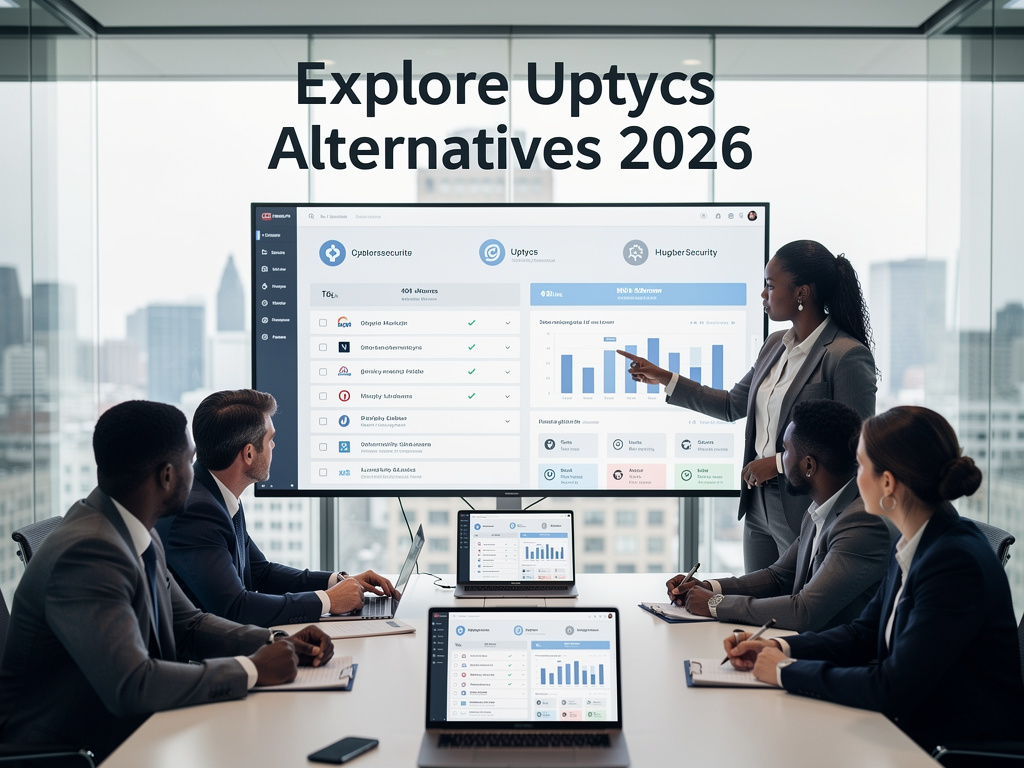
Best 15 Uptycs Alternatives for 2026: Complete Cloud Security Platform Comparison
Cloud security keeps getting more complex. If you’ve been using Uptycs and wondering what else is out there, you’re not alone. Many security teams are exploring Uptycs competitors to find tools that better match their specific needs. Maybe you need stronger runtime protection. Perhaps you want better compliance automation. Or your organization requires on-premises support that Uptycs doesn’t deliver.
This guide breaks down 15 of the best Uptycs alternatives available in 2026. We’ll look at each platform’s strengths, weaknesses, pricing approach, and ideal use cases. You’ll also find a detailed comparison table to help you make a smart decision. Whether you’re doing due diligence before a renewal or actively shopping for a new CNAPP solution, this analysis gives you the full picture.
Why Organizations Look for Uptycs Competitors in 2026
Uptycs built its reputation on deep data analysis and forensic capabilities. The platform can query security data going back 13 months. That’s impressive for threat hunting and investigations. But not every organization needs that level of historical depth.
Some teams find Uptycs too complex for their workflows. Others hit limitations around specific cloud providers or container orchestration platforms. Budget concerns also push organizations to evaluate alternatives.
Common Reasons Teams Switch from Uptycs
- Alert fatigue: Too many findings without clear prioritization
- Integration gaps: Limited connections to existing security tools
- Pricing structure: Cost models that don’t fit consumption patterns
- Remediation support: Lacking automated fix capabilities
- Compliance needs: Missing frameworks or audit requirements
- Runtime protection: Wanting stronger real-time threat blocking
The CNAPP market has matured since Uptycs entered the space. New players offer features that didn’t exist a few years ago. Established vendors have expanded their capabilities. Understanding what each alternative brings helps you make the right choice for your environment.
Sweet Security: AI-Powered Cloud Detection and Response
Sweet Security takes a different approach to cloud security. Instead of trying to do everything, it focuses heavily on detection and response. The platform uses AI to analyze cloud workload behavior and spot anomalies that signature-based tools miss.
Key Strengths of Sweet Security
Sweet’s runtime protection stands out in the market. The platform monitors actual execution patterns rather than just scanning for known vulnerabilities. This behavioral approach catches zero-day attacks and insider threats that other tools overlook.
- Real-time threat detection: Spots active attacks as they happen
- Automated response actions: Can isolate compromised workloads automatically
- Low false positive rate: AI reduces noise compared to rule-based systems
- Investigation tools: Built-in forensics for incident response
Where Sweet Security Falls Short
Sweet doesn’t try to be a full CNAPP. You won’t find comprehensive CSPM capabilities here. Organizations need to pair Sweet with other tools for posture management and compliance reporting. The platform also requires agents for full functionality, which some teams prefer to avoid.
Best for: Organizations that already have posture management covered but need stronger runtime protection and threat detection capabilities.
Pricing: Consumption-based model tied to monitored workloads. Expect mid-range pricing compared to full CNAPP platforms.
Wiz: The CNAPP Market Leader
Wiz changed how the industry thinks about cloud security. The platform’s agentless architecture provides visibility across multi-cloud environments without deploying software on every workload. That simplicity helped Wiz grow faster than almost any enterprise software company in history.
What Makes Wiz Stand Out
The Wiz Security Graph is the platform’s secret weapon. It maps relationships between cloud resources, identities, vulnerabilities, and data. This context helps teams understand which issues actually matter. A critical vulnerability on an internet-exposed server with access to sensitive data ranks higher than the same CVE on an isolated test instance.
- Agentless scanning: No deployment overhead or performance impact
- Attack path analysis: Shows how attackers could chain issues together
- Multi-cloud support: Works across AWS, Azure, GCP, and more
- Fast deployment: Get visibility in hours, not weeks
- Data security posture: Finds sensitive data exposure automatically
Limitations to Consider
Wiz excels at finding problems. It’s less helpful at fixing them. The platform identifies risks after they exist in your environment. It can’t prevent bad configurations from reaching production in the first place. Teams with thousands of findings often struggle to prioritize remediation without additional tooling.
Wiz also lacks on-premises support. If your infrastructure includes traditional data centers alongside cloud workloads, you’ll need another solution for those environments.
Best for: Cloud-native organizations wanting comprehensive visibility and risk prioritization across multiple cloud providers.
Pricing: Enterprise pricing based on cloud resource count. Wiz isn’t cheap, but the breadth of coverage justifies the cost for many organizations.
Prisma Cloud by Palo Alto Networks
Prisma Cloud brings Palo Alto’s security expertise to cloud-native environments. The platform started as separate products and evolved into an integrated CNAPP. That history shows in the depth of individual modules, though integration between them sometimes feels uneven.
Prisma Cloud’s Core Capabilities
Palo Alto designed Prisma Cloud to cover the entire application lifecycle. The platform includes code security, infrastructure security, runtime protection, and compliance management. Few competitors match this breadth.
- Code to Cloud: Security checks from development through production
- Compute protection: Agent-based runtime security for containers and hosts
- Identity security: Tracks cloud identities and their permissions
- Network visibility: Maps traffic flows between workloads
- Compliance frameworks: Supports dozens of regulatory standards
Challenges with Prisma Cloud
The platform’s complexity creates a learning curve. Organizations often need professional services to get full value from their investment. Some teams find the console confusing, with features spread across different sections that don’t always connect logically.
Licensing adds another layer of complexity. Different modules have different pricing, and costs can grow quickly as you add capabilities. Understanding what you’re actually paying for requires careful attention during procurement.
Best for: Large enterprises already invested in Palo Alto products who want a single vendor for cloud security.
Pricing: Module-based licensing. Full platform deployments run into six figures annually for most enterprises.
Orca Security: Agentless Full-Stack Protection
Orca Security pioneered agentless cloud security alongside Wiz. The two companies emerged around the same time with similar approaches. Orca uses SideScanning technology to analyze workloads without deploying agents or sending data outside your environment.
Orca’s Distinctive Features
Orca provides what the company calls “context-aware security.” The platform correlates findings across layers to show complete risk pictures. A vulnerable package matters more when combined with excessive permissions and sensitive data access.
- Unified data model: Single view of risks across cloud assets
- Container security: Scans container images and running containers
- API security: Discovers and tests API endpoints
- Shift left integration: CI/CD pipeline scanning for early detection
- Attack surface management: External exposure analysis
Areas Where Orca Needs Improvement
Orca’s agentless approach limits runtime protection capabilities. The platform can’t block attacks in real-time without agents. Some organizations need that active protection, especially for production workloads handling sensitive data.
Smaller teams sometimes find Orca overwhelming. The platform generates lots of findings. Without dedicated security staff to triage and prioritize, alert fatigue becomes a real problem.
Best for: Mid-size to large organizations wanting agentless visibility without agent deployment challenges.
Pricing: Asset-based pricing model. Competitive with Wiz for similar coverage levels.
CrowdStrike Falcon Cloud Security
CrowdStrike built its reputation on endpoint security. Falcon Cloud Security extends that expertise to cloud workloads. The platform combines CrowdStrike’s threat intelligence with cloud-specific capabilities.
CrowdStrike’s Cloud Security Strengths
Nobody matches CrowdStrike’s threat intelligence. The company sees attacks across millions of endpoints worldwide. That visibility feeds into cloud security, helping teams understand real threat actor behavior rather than theoretical risks.
- Threat intelligence integration: Real adversary insights inform prioritization
- EDR for cloud: Endpoint detection capabilities for cloud workloads
- Managed threat hunting: Falcon OverWatch service available
- Identity protection: Integrates with Falcon Identity Threat Protection
- Multi-platform support: Windows, Linux, containers, Kubernetes
Limitations of Falcon Cloud Security
CrowdStrike’s CSPM capabilities lag behind pure-play cloud security vendors. The platform is stronger on threat detection than posture management. Organizations needing comprehensive compliance reporting often supplement with other tools.
Agent deployment is required for full functionality. While the Falcon agent is lightweight, some cloud-native teams prefer agentless approaches for ephemeral workloads.
Best for: Organizations already using CrowdStrike for endpoints who want unified security operations across environments.
Pricing: Module-based pricing. Cloud security adds to existing Falcon platform costs.
Microsoft Defender for Cloud
Microsoft Defender for Cloud provides native security for Azure environments. The platform also supports AWS and GCP, though Azure integration runs deeper. For organizations heavily invested in Microsoft’s ecosystem, Defender offers compelling advantages.
Why Choose Microsoft Defender for Cloud
Native Azure integration means faster deployment and tighter coverage. Defender for Cloud connects automatically to Azure subscriptions. It understands Azure services at a deeper level than third-party tools can achieve.
- Free tier available: Basic CSPM at no additional cost for Azure
- Azure Arc integration: Extends coverage to on-premises and multi-cloud
- Microsoft ecosystem: Works with Sentinel, Intune, Entra ID
- Regulatory compliance: Built-in compliance assessments
- JIT VM access: Just-in-time access controls for VMs
Defender for Cloud Drawbacks
Multi-cloud support exists but feels like an afterthought. AWS and GCP coverage lacks the depth of Azure-native capabilities. Organizations running primarily outside Azure should look elsewhere.
Advanced features require paid plans. The free tier provides basic visibility but lacks workload protection and advanced threat detection. Costs add up for comprehensive coverage.
Best for: Azure-first organizations wanting native security that integrates tightly with Microsoft’s broader ecosystem.
Pricing: Free CSPM basics. Advanced plans charge per resource type per month.
Aqua Security: Container and Kubernetes Specialists
Aqua Security focused on container security before CNAPP became a category. That heritage shows in the platform’s depth around Kubernetes and container runtime protection. Organizations running heavy container workloads find Aqua’s specialization valuable.
Aqua’s Container Security Expertise
Aqua protects containers throughout their lifecycle. From image scanning in development to runtime protection in production, the platform covers each stage. Kubernetes-native features set Aqua apart from generalist CNAPP vendors.
- Image scanning: Deep analysis of container images for vulnerabilities
- Runtime protection: Blocks malicious activity in running containers
- Kubernetes security: Native understanding of K8s resources and risks
- Supply chain security: Verifies image provenance and integrity
- CI/CD integration: Fits into existing development pipelines
Where Aqua Falls Behind
Aqua’s broader CSPM capabilities developed later. The platform handles container security expertly but general cloud posture management feels less mature than specialists like Wiz or Orca.
Organizations running traditional VM workloads alongside containers may find coverage gaps. Aqua’s strengths target modern, cloud-native architectures specifically.
Best for: Container-heavy organizations, especially those running Kubernetes at scale, who need deep workload protection.
Pricing: Workload-based pricing. Container and Kubernetes focus means costs scale with containerized estate.
Sysdig Secure: Runtime Visibility and Protection
Sysdig Secure brings runtime intelligence to cloud security. The platform started with container monitoring and expanded into security. That foundation provides unique visibility into what actually happens inside workloads.
Sysdig’s Runtime Approach
Sysdig captures system calls and network activity in real-time. This telemetry powers both security detection and forensic investigation. Understanding actual behavior, not just static configurations, changes how teams prioritize and respond.
- Runtime threat detection: Spots attacks based on actual behavior
- Drift prevention: Catches changes from baseline configurations
- Kubernetes context: Deep understanding of K8s environments
- Forensics and audit: Detailed records for investigation
- Open source foundation: Built on Falco and other projects
Sysdig Limitations
Agent requirements add deployment complexity. Sysdig’s runtime capabilities need software running on workloads. That’s unavoidable for deep visibility but creates operational overhead.
The platform’s broader CNAPP features continue developing. Sysdig excels at runtime security but lags in areas like data security posture and identity analysis compared to some competitors.
Best for: Organizations prioritizing runtime protection and incident response capabilities over static posture management.
Pricing: Host-based pricing. Costs scale with monitored workload count.
Lacework FortiCNAPP
Lacework joined Fortinet and became FortiCNAPP. The platform uses machine learning to establish behavioral baselines and detect anomalies. This approach reduces rule maintenance while catching novel attacks.
FortiCNAPP’s Machine Learning Approach
Instead of writing detection rules manually, Lacework learns what normal looks like in your environment. Deviations trigger alerts. This works well for catching insider threats and sophisticated attacks that evade signature-based detection.
- Polygraph technology: Automated baseline and anomaly detection
- Composite alerts: Groups related findings into meaningful incidents
- Attack path analysis: Shows potential routes through your environment
- Compliance reporting: Maps to major regulatory frameworks
- Fortinet integration: Connects with broader Fortinet security fabric
Challenges with FortiCNAPP
Machine learning needs time to train. New environments generate more false positives initially. Teams must invest in tuning before the platform reaches optimal effectiveness.
The Fortinet acquisition creates uncertainty. Product direction may shift as integration with Fortinet’s portfolio progresses. Existing customers should watch roadmap announcements carefully.
Best for: Organizations comfortable with ML-based detection who want reduced rule maintenance overhead.
Pricing: Workload-based pricing. Fortinet enterprise agreements may offer bundling opportunities.
Check Point CloudGuard
Check Point brings decades of security experience to cloud environments. CloudGuard extends the company’s prevention-first philosophy to cloud-native workloads. Organizations familiar with Check Point’s approach find CloudGuard’s model intuitive.
CloudGuard’s Prevention Focus
Check Point emphasizes blocking attacks rather than just detecting them. CloudGuard includes active protection capabilities that prevent malicious activity. This reduces incident response burden compared to detection-only approaches.
- Workload protection: Runtime prevention for containers and serverless
- Network security: Cloud-native firewall and micro-segmentation
- AppSec: Application security testing and protection
- Intelligence integration: Check Point ThreatCloud feeds
- Unified management: Single console across Check Point products
CloudGuard Weaknesses
Check Point’s cloud security evolved from traditional products. Some capabilities feel adapted rather than cloud-native. Agentless visibility options lag behind purpose-built CNAPP vendors.
The user interface needs modernization. Teams accustomed to consumer-grade UX find CloudGuard’s console dated. Training requirements are higher than some competitors.
Best for: Organizations already using Check Point products wanting unified security management across on-premises and cloud.
Pricing: Credit-based consumption model. Complexity requires careful capacity planning.
Tenable Cloud Security
Tenable Cloud Security builds on the company’s vulnerability management heritage. The platform emphasizes exposure management, helping teams understand which vulnerabilities attackers could actually reach and exploit.
Tenable’s Exposure Management Approach
Not all vulnerabilities matter equally. Tenable prioritizes based on exploitability, asset criticality, and exposure. This context-aware approach helps teams focus remediation efforts where they’ll have the most impact.
- Unified exposure view: Correlates cloud risks with other environments
- Identity analysis: Tracks excessive permissions and access paths
- IaC scanning: Checks infrastructure code before deployment
- Just-in-time access: Reduces standing privilege accumulation
- Vulnerability prioritization: Builds on Tenable’s VPR scoring
Tenable Cloud Security Gaps
Container runtime protection isn’t Tenable’s strength. Organizations needing active workload protection should consider supplementing with dedicated runtime tools.
The platform’s breadth of CNAPP features continues expanding. Some capabilities feel newer and less mature than Tenable’s core vulnerability management offerings.
Best for: Organizations already using Tenable for vulnerability management who want unified exposure visibility across environments.
Pricing: Asset-based pricing model. Existing Tenable customers may get bundled rates.
Upwind: Cloud Security Built on eBPF
Upwind uses eBPF technology for lightweight runtime visibility. This approach provides deep workload insights without the overhead of traditional agents. The platform focuses on connecting runtime context with vulnerability findings.
Upwind’s eBPF Advantage
eBPF runs in the Linux kernel, capturing system activity with minimal performance impact. Upwind uses this technology to understand actual workload behavior. Runtime context transforms how teams prioritize vulnerabilities.
- Lightweight collection: Low overhead even on busy workloads
- Runtime prioritization: Focus on vulnerabilities in active use
- Network visibility: Maps actual communication patterns
- Kubernetes native: Deep integration with K8s environments
- Threat detection: Behavioral analysis for attack identification
Upwind Limitations
Upwind is newer than established competitors. The platform continues building out CSPM and compliance capabilities. Organizations needing comprehensive posture management may find gaps.
eBPF requires modern Linux kernels. Older operating systems can’t take advantage of Upwind’s core technology. Windows support is limited.
Best for: Organizations running modern Linux workloads who want runtime context for vulnerability prioritization.
Pricing: Workload-based pricing. Competitive for runtime-focused security.
ARMO: Kubernetes Security Specialists
ARMO focuses specifically on Kubernetes security. The company created Kubescape, an open-source K8s security scanner. The commercial platform builds on that foundation with enterprise features.
ARMO’s Kubernetes Focus
Kubernetes security requires specialized knowledge. ARMO’s team understands K8s deeply. The platform catches issues that generalist tools miss because they don’t understand Kubernetes architecture.
- Kubescape foundation: Battle-tested open-source core
- K8s-native controls: Security policies that understand K8s
- RBAC analysis: Maps Kubernetes permission structures
- Network policy management: Helps build proper segmentation
- Compliance frameworks: NSA, MITRE, CIS benchmarks
ARMO’s Scope Limitations
ARMO doesn’t try to be a full CNAPP. The platform focuses on Kubernetes. Organizations running mixed workloads need additional tools for VMs, serverless, and other environments.
Smaller company means fewer resources for support and feature development compared to large vendors. Evaluate ARMO’s roadmap carefully against your long-term needs.
Best for: Kubernetes-first organizations wanting deep K8s security without paying for broader CNAPP features they won’t use.
Pricing: Node-based pricing. Very competitive for Kubernetes-specific coverage.
Qualys TotalCloud
Qualys TotalCloud extends the company’s vulnerability management platform to cloud environments. Organizations using Qualys for traditional infrastructure find natural synergies.
TotalCloud’s Vulnerability Expertise
Qualys has scanned for vulnerabilities for over two decades. That experience translates to cloud environments. The platform’s vulnerability detection is thorough and well-tested.
- Agent and agentless: Flexible deployment options
- Container security: Image scanning and runtime protection
- IaC scanning: Catches issues in infrastructure code
- Asset inventory: Comprehensive cloud resource tracking
- Compliance reporting: Extensive regulatory framework support
TotalCloud Weaknesses
Qualys’s platform can feel dated. The user experience doesn’t match modern cloud security tools. Younger security teams may find the interface frustrating.
Innovation pace lags behind cloud-native vendors. Qualys adds features over time, but new capabilities arrive more slowly than competitors focused exclusively on cloud.
Best for: Organizations with mature Qualys deployments wanting consistent vulnerability management across cloud and traditional infrastructure.
Pricing: Asset-based pricing. Bundling with existing Qualys subscriptions offers cost advantages.
Trend Micro Cloud One
Trend Micro Cloud One brings the company’s security expertise to cloud-native environments. The platform covers workload protection, container security, file storage scanning, and application security.
Cloud One’s Broad Protection
Trend Micro designed Cloud One as a services platform. Organizations pick the modules they need. This flexibility helps teams avoid paying for capabilities they won’t use.
- Workload Security: Server and container protection
- Container Security: Image scanning and admission control
- File Storage Security: Scans files in object storage
- Application Security: Runtime application self-protection
- Conformity: Cloud posture management
- Network Security: Cloud network intrusion prevention
Cloud One Challenges
The modular approach creates complexity. Different services have different consoles and experiences. Managing multiple modules requires more administrative effort than unified platforms.
Some modules evolved from Trend Micro’s traditional security products. They work well but don’t always feel cloud-native. Organizations used to modern SaaS experiences may find friction.
Best for: Organizations wanting à la carte cloud security modules they can adopt incrementally.
Pricing: Per-module pricing based on protected resources. Costs are predictable but can accumulate across multiple services.
Comparison Table: All 15 Uptycs Alternatives
| Platform | Deployment Model | Best For | CSPM Strength | Runtime Protection | Container Focus | Pricing Model |
|---|---|---|---|---|---|---|
| Sweet Security | Agent-based | Threat detection | Medium | Strong | Medium | Workload-based |
| Wiz | Agentless | Multi-cloud visibility | Strong | Limited | Strong | Asset-based |
| Prisma Cloud | Both | Full lifecycle | Strong | Strong | Strong | Module-based |
| Orca Security | Agentless | Full-stack visibility | Strong | Limited | Strong | Asset-based |
| CrowdStrike Falcon | Agent-based | Threat intelligence | Medium | Strong | Medium | Module-based |
| Microsoft Defender | Both | Azure environments | Strong (Azure) | Medium | Medium | Resource-based |
| Aqua Security | Agent-based | Container security | Medium | Strong | Very Strong | Workload-based |
| Sysdig Secure | Agent-based | Runtime visibility | Medium | Strong | Strong | Host-based |
| Lacework FortiCNAPP | Both | ML-based detection | Strong | Medium | Medium | Workload-based |
| Check Point CloudGuard | Both | Prevention-first | Medium | Strong | Medium | Credit-based |
| Tenable Cloud Security | Both | Exposure management | Strong | Limited | Medium | Asset-based |
| Upwind | eBPF-based | Runtime context | Medium | Strong | Strong | Workload-based |
| ARMO | Both | Kubernetes security | K8s-focused | Medium | Very Strong | Node-based |
| Qualys TotalCloud | Both | Vulnerability management | Strong | Medium | Medium | Asset-based |
| Trend Micro Cloud One | Both | Modular security | Medium | Strong | Strong | Module-based |
How to Choose the Right Uptycs Alternative
Picking the best Uptycs competitor for your organization requires honest assessment of your priorities. No platform does everything perfectly. Understanding your most pressing needs helps narrow the options.
Questions to Guide Your Decision
What’s your primary cloud provider? Azure-heavy organizations should seriously consider Microsoft Defender. Multi-cloud environments benefit from Wiz or Orca’s broad support.
How important is runtime protection? Teams needing active threat blocking should look at Aqua, Sysdig, or CrowdStrike. Agentless tools like Wiz prioritize visibility over prevention.
What’s your container maturity? Kubernetes-native organizations get more value from ARMO, Aqua, or Sysdig. Teams running mostly VMs don’t need deep container specialization.
Do you need on-premises support? Some alternatives like Microsoft Defender (via Azure Arc) and Check Point CloudGuard support hybrid environments. Pure cloud-native tools don’t.
What’s your budget reality? Enterprise platforms like Wiz and Prisma Cloud require significant investment. ARMO and the Qualys offer more accessible entry points.
Evaluation Best Practices
- Run proof-of-concept trials: Most vendors offer time-limited evaluations
- Test with real workloads: Demo environments don’t reveal integration challenges
- Involve development teams: Security tools that frustrate developers don’t get adopted
- Check support quality: Response times matter during incidents
- Review the roadmap: Ensure the vendor’s direction aligns with your strategy
The Shift from Detection to Remediation
The CNAPP market is moving beyond visibility. Finding problems matters, but fixing them matters more. Teams drowning in thousands of findings need help prioritizing and automating remediation.
Uptycs built its reputation on deep data analysis. The platform excels at investigation and forensics. But many organizations want tools that fix issues automatically rather than just reporting them.
What Modern Teams Need
- Automated remediation: Fix common issues without manual intervention
- Developer workflows: Push fixes through existing PR processes
- Risk prioritization: Focus on what attackers would actually exploit
- Context awareness: Understand business impact, not just technical severity
- Feedback loops: Learn from remediation to prevent recurrence
The best Uptycs alternatives in 2026 combine strong detection with practical remediation support. Visibility alone isn’t enough anymore. Your security platform should reduce work, not create it.
Conclusion
Choosing among Uptycs alternatives comes down to your specific needs. Wiz and Orca lead in agentless visibility. Aqua and Sysdig excel at container runtime protection. CrowdStrike brings unmatched threat intelligence. Microsoft Defender makes sense for Azure-native organizations. Each platform has strengths worth considering. Evaluate based on your cloud providers, workload types, team capabilities, and budget constraints. The right choice improves your security posture without overwhelming your team.
Frequently Asked Questions About Uptycs Alternatives
| What is the best Uptycs alternative for small security teams? | Wiz or Orca provide comprehensive coverage with minimal operational overhead. Their agentless approaches reduce deployment and maintenance work. ARMO offers a cost-effective option for teams focused specifically on Kubernetes. |
| Which Uptycs competitors offer the strongest runtime protection? | Aqua Security, Sysdig Secure, and CrowdStrike Falcon Cloud Security provide the strongest runtime protection capabilities. These platforms use agents to block attacks in real-time rather than just detecting them after the fact. |
| How do agentless Uptycs alternatives compare to agent-based options? | Agentless tools like Wiz and Orca deploy faster and have no performance impact. Agent-based options like Sysdig and Aqua provide deeper runtime visibility and active protection. The right choice depends on whether you prioritize deployment simplicity or runtime security. |
| What Uptycs alternative works best for multi-cloud environments? | Wiz, Orca, and Prisma Cloud all provide strong multi-cloud support across AWS, Azure, and GCP. Wiz’s Security Graph particularly excels at mapping cross-cloud attack paths and relationships. |
| Are there free Uptycs alternatives available? | Microsoft Defender for Cloud offers free CSPM capabilities for Azure environments. ARMO’s Kubescape is open-source for Kubernetes scanning. Most other enterprise-grade alternatives require paid subscriptions. |
| Which Uptycs competitor offers the best container security? | Aqua Security leads in container-specific protection, followed closely by Sysdig Secure. Both companies specialized in containers before expanding to broader CNAPP capabilities. ARMO excels specifically for Kubernetes environments. |
| How much do Uptycs alternatives typically cost? | Pricing varies widely. Enterprise platforms like Wiz and Prisma Cloud often cost six figures annually. Mid-market options and specialized tools may start in the low five figures. Most vendors price based on protected assets or workloads. |
| What should I prioritize when replacing Uptycs? | Identify your biggest pain points with Uptycs first. If you need stronger remediation, look at platforms with automated fix capabilities. If runtime protection matters most, focus on agent-based alternatives. Match the replacement to your specific gaps. |



 Stack Insight is intended to support informed decision-making by providing independent information about business software and services. Some product details, including pricing, features, and promotional offers, may be supplied by vendors or partners and can change without notice.