
Qapita vs Ledgy: A Complete Comparison of Equity Management Platforms for 2026
Choosing the right cap table management software can shape how your company handles equity for years. Two platforms stand out for companies with international teams: Qapita and Ledgy. Both offer tools to track ownership, manage ESOPs, and handle compliance. But they serve different markets and take different approaches.
This comparison breaks down everything you need to know about Qapita vs Ledgy. We’ll look at features, pricing, regional strengths, user experience, and more. Whether you’re a Singapore startup eyeing Series A or a European scale-up expanding globally, this guide will help you pick the right platform.
By the end, you’ll understand which solution fits your company’s stage, geography, and equity management needs.
Understanding Cap Table Management Software
What These Platforms Actually Do
Cap table management software replaces spreadsheets. Instead of maintaining complex Excel files that break when someone changes a formula, you get a single source of truth for equity ownership.
These platforms track:
- Share classes and ownership percentages
- Stock option grants and vesting schedules
- Convertible notes and SAFEs
- Historical transactions and amendments
- Waterfall analysis for exits
Both Qapita and Ledgy do all of this. The differences lie in how they do it, where they excel, and what extra features they offer.
Why Spreadsheets Fall Short
Most founders start with spreadsheets. It makes sense when you have three founders and no investors. Problems appear fast once you add employees with options, multiple funding rounds, and secondary transactions.
Common spreadsheet issues include:
- Version control nightmares
- Formula errors that go unnoticed
- No audit trail for changes
- Difficulty modeling future scenarios
- Compliance gaps with tax reporting
A cap table mistake during a funding round can delay closing by weeks. Worse, it can lead to legal disputes or regulatory problems. Both Qapita and Ledgy solve these problems, but they target different company profiles.
Company Backgrounds: Qapita and Ledgy Origins
Qapita: The APAC-Focused Platform
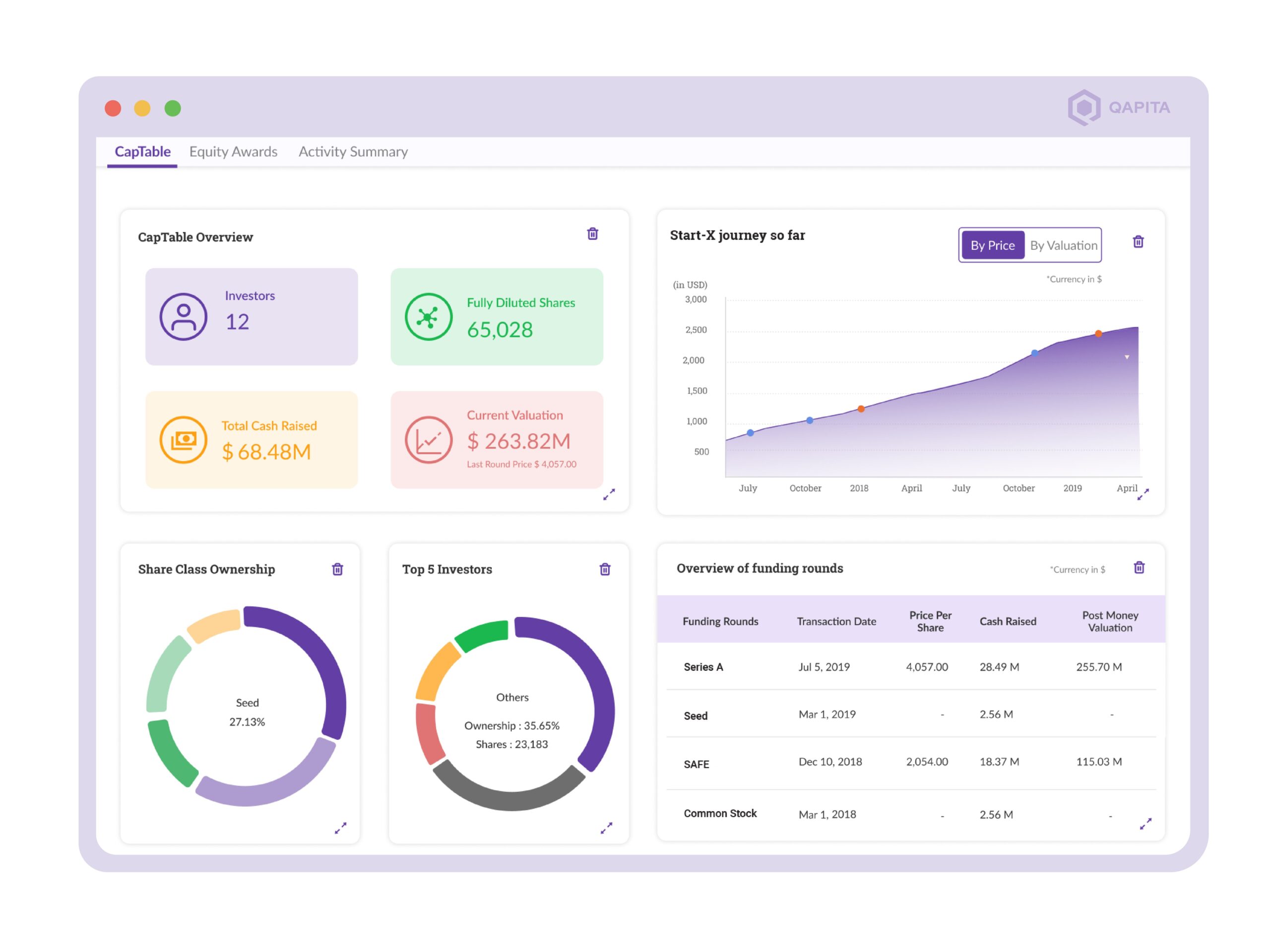
Qapita launched in 2019 in Singapore. The company built its platform specifically for emerging markets, with a strong focus on India, Southeast Asia, and the broader Asia-Pacific region.
The platform has raised $65.5 million across multiple rounds. Investors include Vulcan Capital, East Ventures, and 38 other firms. This backing reflects confidence in Qapita’s regional strategy.
Qapita’s founding team understood something important: companies in Asia face different equity challenges than Silicon Valley startups. Tax regulations vary wildly between countries. ESOP structures that work in the US don’t translate directly to India or Indonesia.
The company markets itself as an “end to end cap table management solution for startups and growth stage companies.” That positioning tells you a lot. They want to own the entire equity lifecycle, from formation through IPO.
Ledgy: The European Leader
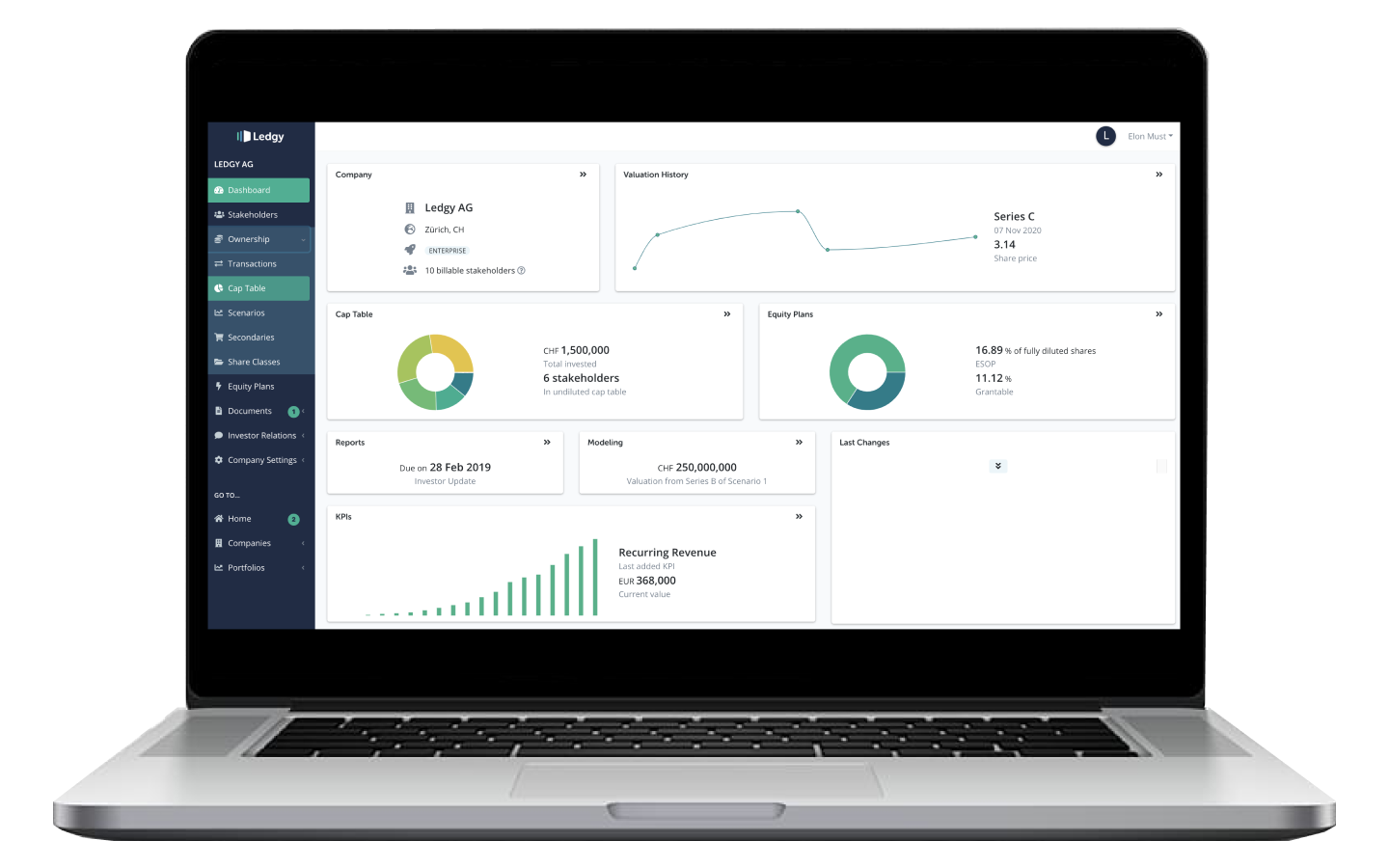
Ledgy was founded in 2017 in Zurich, Switzerland. The company focused first on European markets before expanding globally.
The platform specializes in financial reporting, cap table management, and compliance for equity plans. Ledgy serves both private and public companies, giving it a broader scope than some competitors.
European regulations drove much of Ledgy’s early development. IFRS 2 reporting requirements, local tax schemes across different EU countries, and complex employment laws all shaped the product. This regulatory expertise became a selling point for companies with international teams.
Ledgy’s Swiss origins also matter. Data privacy and security standards in Switzerland are among the world’s strictest. Companies worried about equity data security often see Swiss hosting as a benefit.
Target Market Comparison: Who Each Platform Serves Best
Qapita’s Ideal Customer Profile
Qapita works best for companies based in or expanding into Asia-Pacific markets. The platform offers:
- Regional compliance support for India, Singapore, Indonesia, and other APAC countries
- Employee tax guides covering 160+ countries
- ESOP administration tailored to local regulations
- Integration with regional banking and legal systems
A Singapore startup with employees in India, Vietnam, and Australia would find Qapita’s regional expertise valuable. The platform understands local nuances that global competitors might miss.
Qapita also serves companies at different stages. The “inception to IPO” messaging suggests they can handle early-stage simplicity and late-stage complexity. Growth-stage companies planning expansion across Asia often find good fit here.
Ledgy’s Ideal Customer Profile
Ledgy suits companies with multi-entity structures and cross-border teams, especially those with European headquarters or significant European operations.
The platform excels for:
- Scale-ups with employees across multiple jurisdictions
- Companies needing automated expense reporting under IFRS 2, US GAAP, ASC 718, or UK GAAP
- Organizations requiring detailed investor reporting
- Businesses preparing for IPO or acquisition
A German company with subsidiaries in the UK, France, and the US would benefit from Ledgy’s multi-jurisdiction capabilities. The platform handles complex ESOP structures that vary by country without requiring manual workarounds.
Head-to-Head: Market Focus Comparison
| Criteria | Qapita | Ledgy |
|---|---|---|
| Primary Geography | Asia-Pacific (Singapore, India, Southeast Asia) | Europe (Switzerland, UK, Germany, France) |
| Secondary Markets | Emerging markets globally | North America, Global |
| Company Stage | Startups through growth stage | Growth stage through IPO |
| Best For | APAC-based companies with regional complexity | European companies with multi-jurisdiction teams |
| Tax Coverage | 160+ countries with APAC depth | Strong European and US coverage |
Core Features: Cap Table Management Capabilities
Qapita’s Cap Table Features
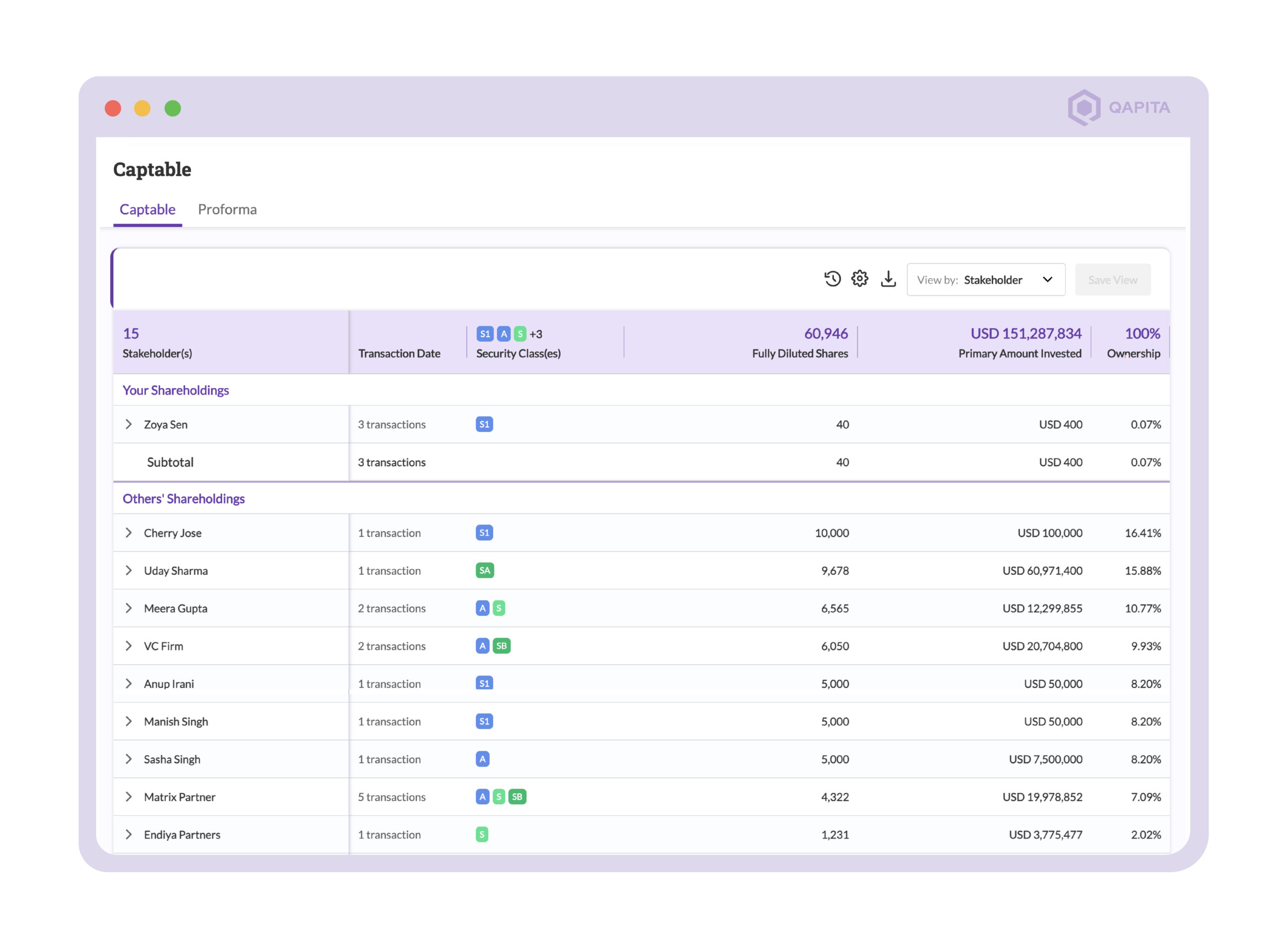
Qapita positions itself as helping “teams set up a clean cap table from day one.” This focus on starting right matters more than many founders realize.
Key cap table capabilities include:
- Equity event tracking with proper approvals and documentation
- Scenario modeling for new rounds, option pool changes, and exits
- Customizable reports for different stakeholder needs
- Secure data management with audit trails
- Single source of truth for ownership data
The platform emphasizes automation. Qapita “automates the tracking of equity transactions, updates ownership records, and generates detailed reports.” For companies tired of manual spreadsheet updates, this automation saves hours each month.
Scenario planning stands out as a strength. Founders and CFOs can model different round structures, see how dilution plays out, and make informed decisions about option pools. This forward-looking capability helps during fundraising negotiations.
Ledgy’s Cap Table Features
Ledgy built its reputation on multi-entity and multi-jurisdiction support. The platform handles complexity that simpler tools can’t manage.
Core features include:
- Multi-entity cap table management
- Cross-border equity tracking
- Investor reporting and communication tools
- Scenario modeling for rounds and exits
- Dilution tracking and visualization
Ledgy’s scenario modeling tools help “founders and CFOs track dilution, communicate ownership clearly, and simulate round and exit outcomes.” This language mirrors Qapita’s positioning, suggesting both platforms compete directly on scenario planning.
The investor reporting capabilities deserve attention. Companies with multiple investors need ways to share information without giving everyone admin access. Ledgy provides filtered views and automated reports that satisfy investor needs while maintaining data security.
Feature Comparison Table
| Feature | Qapita | Ledgy |
|---|---|---|
| Basic Cap Table | Yes | Yes |
| Multiple Share Classes | Yes | Yes |
| Convertible Tracking | Yes | Yes |
| Scenario Modeling | Strong | Strong |
| Multi-Entity Support | Available | Core Strength |
| Investor Portal | Yes | Yes, Advanced |
| Audit Trails | Yes | Yes |
| Document Storage | Yes | Yes |
| Waterfall Analysis | Yes | Yes |
ESOP and Employee Equity Management
Qapita’s ESOP Administration
Employee stock option plans require more than just tracking. You need grant letters, vesting calculations, exercise processing, and tax compliance. Qapita built these capabilities specifically for APAC markets.
The platform handles:
- Option grant management with customizable vesting schedules
- Employee self-service portals where team members can view their equity
- Exercise processing including payment collection and share issuance
- Tax calculations for various jurisdictions
- Termination handling with proper vesting acceleration or clawback
Tax guides covering 160+ countries set Qapita apart for companies with distributed teams. An employee in India faces different tax implications than one in Singapore or Australia. The platform helps companies communicate these differences clearly.
ESOP communication matters too. Employees who don’t understand their equity often undervalue it. Qapita’s employee-facing features help team members grasp what their options are worth today and potentially at exit.
Ledgy’s ESOP Capabilities
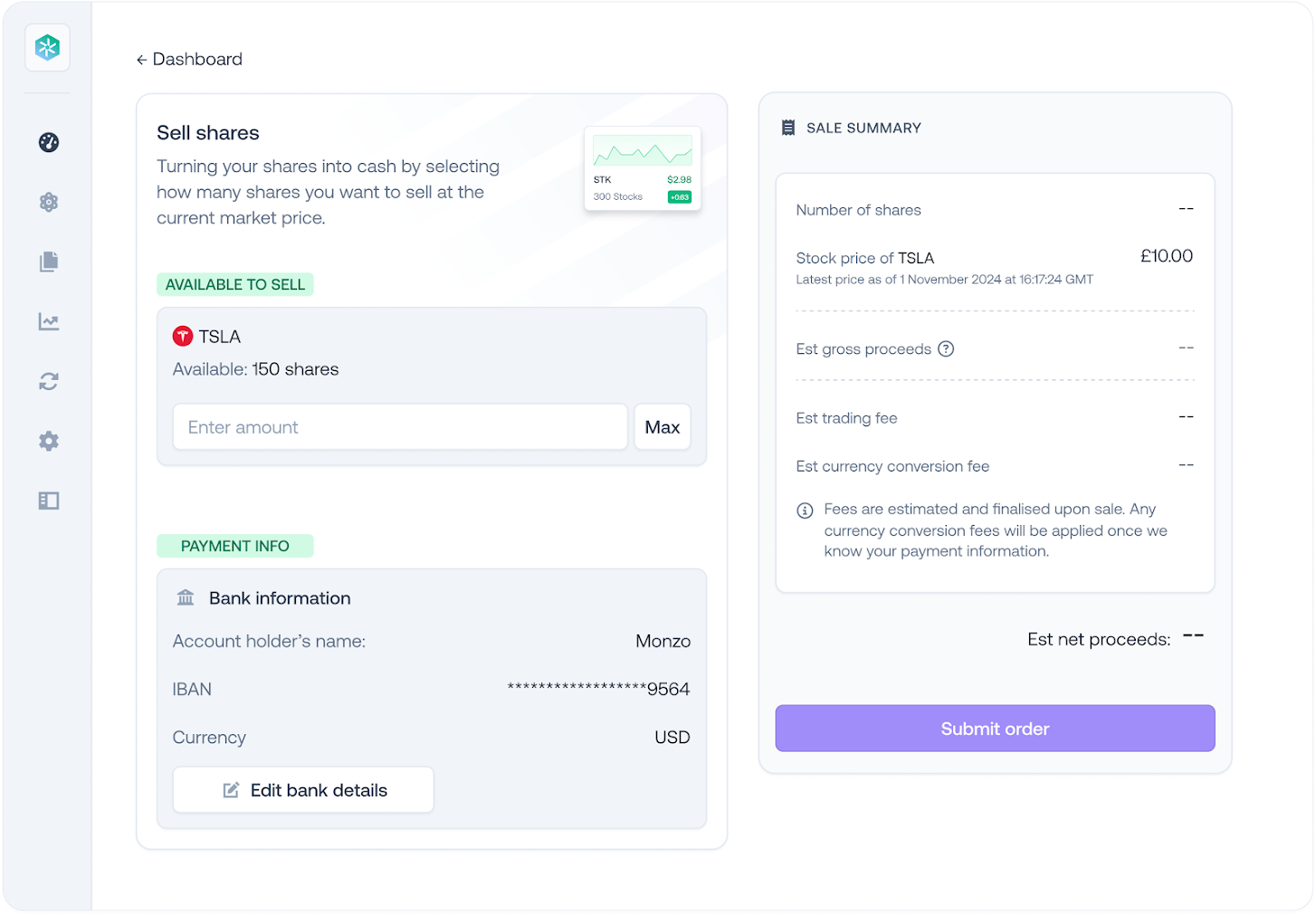
Ledgy handles “a wide range of ESOP structures and local tax schemes.” This flexibility matters for European companies where each country has unique requirements.
French BSPCE plans work differently than German virtual options. UK EMI schemes have specific qualifying criteria. Ledgy accommodates these variations without forcing workarounds.
Key ESOP features include:
- Support for real and phantom equity plans
- Local tax scheme compliance across multiple countries
- Automated expense and disclosure reporting
- Employee equity portals
- Custom vesting schedule support
The expense reporting automation deserves special attention. Companies using IFRS 2, US GAAP, ASC 718, or UK GAAP face ongoing reporting requirements. Manual calculations create audit risk and consume finance team time. Ledgy automates these reports.
ESOP Feature Comparison
| ESOP Capability | Qapita | Ledgy |
|---|---|---|
| Grant Management | Yes | Yes |
| Vesting Tracking | Yes | Yes |
| Exercise Processing | Yes | Yes |
| Employee Portal | Yes | Yes |
| Tax Guide Coverage | 160+ countries | Strong European + US |
| IFRS 2 Reporting | Available | Automated |
| US GAAP/ASC 718 | Available | Automated |
| UK GAAP Reporting | Available | Automated |
| Phantom Equity | Yes | Yes |
Compliance and Regulatory Features
Regional Compliance: Where Qapita Excels
Equity compliance in Asia-Pacific isn’t straightforward. Indian regulations around ESOP taxation changed significantly in recent years. Singapore has specific rules for qualified stock options. Indonesia and Vietnam add more complexity.
Qapita built regional compliance support into its core product. The platform helps companies:
- Stay current with APAC regulatory changes
- Generate country-specific reports
- Handle local filing requirements
- Manage cross-border equity grants
For companies headquartered in Singapore with employees across Asia, this regional depth prevents costly mistakes. A tax miscalculation on an Indian employee’s option exercise can create liability for both company and employee.
Qapita’s focus on emerging markets means they understand nuances that global platforms might miss. Local banking integrations, regulatory relationships, and market-specific features reflect this focus.
European Compliance: Ledgy’s Strength
European equity compliance presents its own challenges. GDPR affects how equity data can be stored and shared. Each EU member state has unique tax treatment for employee equity.
Ledgy’s Swiss base provides advantages here. Swiss data protection standards align well with GDPR requirements. The company’s European roots mean deep understanding of local regulations.
Compliance features include:
- Automated IFRS 2 expense calculations
- US GAAP ASC 718 reporting
- UK GAAP disclosure support
- Multi-jurisdiction tax handling
- GDPR-compliant data management
The automated expense reporting stands out. Ledgy handles “automated expense and disclosure reporting under IFRS 2, US GAAP, ASC 718, and UK GAAP.” This automation matters for companies approaching IPO or those with institutional investors requiring audited financials.
Compliance Comparison Table
| Compliance Area | Qapita | Ledgy |
|---|---|---|
| APAC Regulations | Core Strength | Available |
| European Regulations | Available | Core Strength |
| US Regulations | Available | Strong |
| GDPR Compliance | Yes | Yes, Swiss Standard |
| Automated Expense Reporting | Available | Automated |
| Tax Scheme Support | 160+ Countries | Strong European Coverage |
| Audit Trail | Yes | Yes |
Pricing Structure Analysis
Understanding Ledgy’s Pricing Model
Ledgy offers a tiered pricing structure. The free Launch plan lets early-stage companies get started without commitment. Paid tiers scale based on stakeholder count, with larger deployments receiving custom quotes.
This stakeholder-based pricing model has implications:
- Costs grow as your team grows
- Adding investors or option holders increases your bill
- Enterprise needs require sales conversations
User reviews note that “pricing is premium compared to most competitors.” Ledgy positions itself at the higher end of the market, justifying costs with comprehensive features and strong compliance support.
For bootstrapped startups or early-stage companies watching every dollar, Ledgy might feel expensive before you need its full feature set. The free Launch plan helps address this concern for very early companies.
Qapita’s Pricing Approach
Qapita’s pricing information isn’t as publicly detailed as some competitors. The company’s Series B funding suggests resources to compete on price while building features.
Common pricing factors for platforms like Qapita include:
- Company stage and complexity
- Number of stakeholders managed
- Feature tier selected
- Add-on services needed
The positioning as serving “startups and growth stage companies” suggests pricing accessible to earlier-stage businesses. Regional pricing often runs lower than US or European equivalents, potentially making Qapita cost-effective for APAC companies.
Pricing Considerations for Your Decision
When comparing Qapita vs Ledgy pricing, consider:
- Total cost of ownership including implementation and training
- How pricing scales as you add employees and investors
- What features come standard versus add-on pricing
- Contract terms and flexibility
- True cost of switching platforms later
The cheapest option today might not be the best value over three to five years. Switching equity platforms creates work and risk, so factor in where you’ll be after your next two funding rounds.
| Pricing Factor | Qapita | Ledgy |
|---|---|---|
| Free Tier | Contact for details | Yes (Launch plan) |
| Pricing Model | Contact for details | Stakeholder-based tiers |
| Enterprise Pricing | Custom | Custom quoted |
| Market Position | Mid-market for APAC | Premium |
| Contract Flexibility | Contact for details | Annual typically |
User Experience and Interface Design
Qapita’s User Interface
Qapita describes its platform as “user-friendly.” This positioning targets founders and finance teams who aren’t equity specialists.
Key UX elements include:
- Clean dashboard views showing ownership at a glance
- Guided workflows for common equity tasks
- Reporting tools that don’t require technical expertise
- Employee portals designed for non-financial users
The focus on automation supports good UX. When the platform “automates the tracking of equity transactions,” users spend less time on manual data entry and more time on decisions that matter.
Scenario planning interfaces need particular attention. Qapita lets users “turn ownership data into clear scenarios for new rounds, option pool changes, and exits.” The quality of these visualizations affects how useful the feature actually is.
Ledgy’s User Experience
Ledgy’s UX reflects its enterprise positioning. The platform offers powerful features that come with learning curves.
User reviews mention mixed experiences. “User reviews often praise the breadth of features but mention slower customer support and a more rigid UX for edge-case structures.” This feedback suggests Ledgy works well for standard workflows but can frustrate users with unusual requirements.
Compared with “newer, more founder-centric tools,” Ledgy may feel less intuitive for first-time equity managers. The tradeoff is capability: Ledgy handles complex scenarios that simpler tools can’t manage.
Onboarding complexity also appears in feedback. “Onboarding can require more upfront configuration if you’re juggling many entities, jurisdictions, or legacy grants.” Companies migrating from spreadsheets with messy historical data should plan for implementation time.
UX Comparison
| UX Aspect | Qapita | Ledgy |
|---|---|---|
| Learning Curve | Moderate | Steeper for complex setups |
| Founder-Friendliness | Designed for non-experts | More enterprise-focused |
| Custom Workflows | Good flexibility | Powerful but rigid for edge cases |
| Employee Portal | User-friendly | Comprehensive |
| Onboarding Time | Varies by complexity | Can require significant setup |
| Mobile Experience | Available | Available |
Reporting and Analytics Capabilities
Qapita’s Reporting Features
Reports matter at different moments in a company’s life. Board meetings need summary views. Fundraising requires detailed cap tables and scenario models. Tax time demands specific calculations.
Qapita offers “customizable reports” that serve different stakeholder needs. Key reporting capabilities include:
- Ownership summaries for board and investor updates
- Detailed transaction histories for audits
- Scenario comparisons for fundraising decisions
- Employee equity statements
- Tax-related reports by jurisdiction
The customization aspect matters. Standard reports work for standard situations. But every company has unique needs, whether different board formats, specific investor requirements, or unusual equity structures.
Ledgy’s Reporting Strengths
Ledgy built strong investor reporting into its core product. Companies with multiple investors need to share information regularly without exposing sensitive details to the wrong parties.
Ledgy’s reporting handles:
- Automated investor updates
- Filtered views by stakeholder type
- Expense reporting for accounting standards
- Disclosure reports for compliance
- Custom analytics for finance teams
One noted tradeoff: “While Ledgy’s reporting is powerful, some power users find highly custom or bespoke reports harder to configure.” If you need reports that don’t match Ledgy’s templates, expect extra work.
The automated expense reporting under IFRS 2, US GAAP, ASC 718, and UK GAAP saves significant time. These calculations involve complex fair value models and tracking over grant lifespans. Automation reduces errors and audit issues.
Reporting Comparison
| Reporting Feature | Qapita | Ledgy |
|---|---|---|
| Standard Reports | Comprehensive | Comprehensive |
| Custom Reports | Flexible | Powerful but complex to configure |
| Investor Reporting | Yes | Advanced |
| Automated Expense Reports | Available | Core strength |
| Tax Reports | Multi-jurisdiction | Multi-jurisdiction |
| Board Report Templates | Yes | Yes |
Integration Ecosystem and Connectivity
How Qapita Connects with Other Tools
Cap table software doesn’t exist in isolation. Companies need connections to HRIS systems, accounting software, payment processors, and legal document tools.
Qapita’s APAC focus shapes its integration priorities. Regional banking integrations, local legal system connections, and compliance reporting tools matter more for their target market than US-centric integrations might.
Common integration needs include:
- HR systems for employee data sync
- Accounting software for expense recognition
- Payment processors for option exercises
- Document signing tools for grant agreements
- Banking connections for fund transfers
The quality of integrations matters as much as quantity. A brittle Slack integration that breaks monthly creates more work than it saves.
Ledgy’s Integration Approach
Ledgy serves enterprise-scale companies that expect integrations with their existing stack. European companies often use different tools than US counterparts, requiring broader integration coverage.
Ledgy’s integration strategy supports:
- Major HRIS platforms including European providers
- Accounting systems for automated expense booking
- Document management tools
- SSO providers for enterprise security
- API access for custom integrations
The API matters for larger organizations. When pre-built integrations don’t cover your needs, API access lets you build custom connections or hire developers to do so.
Integration Considerations
| Integration Type | Qapita | Ledgy |
|---|---|---|
| HRIS Connections | Yes, APAC focus | Yes, European focus |
| Accounting Software | Yes | Yes |
| Document Signing | Yes | Yes |
| Banking/Payments | Regional coverage | European coverage |
| API Access | Available | Available |
| SSO Support | Yes | Yes |
Customer Support and Service Quality
Qapita’s Support Approach
Support quality varies by plan level and company needs. Equity questions often require specialized knowledge. Standard support agents may struggle with complex tax or legal questions.
Qapita’s regional focus means support teams understand APAC-specific issues. A support agent who knows Indian ESOP taxation can solve problems faster than one learning on the job.
Support channels typically include:
- Email support for non-urgent questions
- Chat support for quick issues
- Phone support for complex situations
- Dedicated account managers for larger customers
- Knowledge base and documentation
Implementation support matters especially for companies migrating from spreadsheets. Cleaning up historical data and configuring the platform correctly prevents future headaches.
Ledgy’s Support Experience
User feedback on Ledgy’s support is mixed. Reviews “often praise the breadth of features but mention slower customer support.” This pattern suggests capable support that may be resource-constrained.
For complex implementations, Ledgy offers professional services. Companies with multiple entities, complex historical data, or unusual equity structures should budget for implementation support.
Enterprise customers typically receive:
- Dedicated customer success managers
- Priority support queues
- Implementation assistance
- Training for admin users
- Quarterly business reviews
The support experience often correlates with spending level. Premium customers receive better service. Early-stage companies on free or low-cost plans may experience longer wait times.
Support Comparison
| Support Aspect | Qapita | Ledgy |
|---|---|---|
| Response Speed | Generally responsive | Mixed reviews, can be slower |
| Regional Expertise | Strong APAC knowledge | Strong European knowledge |
| Implementation Help | Available | Available, may need professional services |
| Dedicated Account Managers | For larger customers | For enterprise customers |
| Self-Service Resources | Knowledge base available | Knowledge base available |
Security and Data Protection
Why Security Matters for Equity Data
Cap table data is sensitive. It reveals ownership stakes, compensation details, investor terms, and financial projections. A breach could expose information that competitors, journalists, or bad actors shouldn’t see.
Both Qapita and Ledgy take security seriously. The question is whether their security approaches match your requirements.
Qapita’s Security Framework
Qapita emphasizes “secure data management” as a core feature. Standard security measures include:
- Data encryption in transit and at rest
- Access controls limiting who sees what
- Audit trails tracking every change
- Regular security assessments
- Backup and recovery procedures
For APAC companies, data residency may matter. Some jurisdictions require certain data to stay within national borders. Qapita’s regional infrastructure can address these requirements.
Ledgy’s Security Approach
Ledgy’s Swiss headquarters provide security advantages. Swiss data protection laws are among the world’s strongest. GDPR compliance comes standard for European operations.
Enterprise security features include:
- SOC 2 Type II certification or equivalent
- Single sign-on (SSO) integration
- Role-based access controls
- Data encryption standards
- Regular penetration testing
Companies with strict security requirements should verify specific certifications and compliance standards during evaluation.
Security Comparison
| Security Feature | Qapita | Ledgy |
|---|---|---|
| Data Encryption | Yes | Yes |
| Access Controls | Role-based | Role-based |
| Audit Trails | Yes | Yes |
| SSO Support | Yes | Yes |
| GDPR Compliance | Yes | Yes, Swiss standard |
| Data Residency Options | APAC options available | European hosting |
Implementation and Onboarding Process
Getting Started with Qapita
Qapita positions itself for companies building “a clean cap table from day one.” This suggests streamlined onboarding for new companies without legacy data.
Typical implementation steps include:
- Initial setup including company structure and share classes
- Historical data import for existing equity
- User configuration and access permissions
- Integration setup with other tools
- Training for key users
Companies with clean records can onboard quickly. Those with years of spreadsheet history, multiple rounds, and numerous option grants need more time to import and verify data.
Ledgy Implementation Considerations
Ledgy’s enterprise focus means implementation can be complex. “Onboarding can require more upfront configuration if you’re juggling many entities, jurisdictions, or legacy grants, especially for scale-ups migrating from spreadsheets.”
This complexity isn’t necessarily bad. Proper setup prevents problems later. But budget time and resources accordingly.
Implementation factors to consider:
- Number of entities to configure
- Historical data complexity
- Integration requirements
- Training needs across teams
- Compliance setup for multiple jurisdictions
Professional services may be necessary for complex implementations. Factor this cost into your total investment calculation.
Implementation Timeline Expectations
| Company Type | Qapita Timeline | Ledgy Timeline |
|---|---|---|
| New Company (No History) | Days to 1 week | Days to 1 week |
| Early Stage (Simple History) | 1-2 weeks | 1-2 weeks |
| Growth Stage (Complex History) | 2-4 weeks | 3-6 weeks |
| Multi-Entity Enterprise | 4-8 weeks | 6-12 weeks |
Making the Right Choice: Decision Framework
Choose Qapita If:
Qapita makes sense for specific company profiles. Consider Qapita when:
- You’re headquartered in Asia-Pacific (Singapore, India, Southeast Asia)
- You have distributed teams across APAC needing regional tax support
- You want ESOP administration tailored to emerging markets
- You’re startup to growth stage needing end-to-end equity management
- You value regional expertise over global brand recognition
Qapita’s $65.5 million in funding suggests long-term viability. The company isn’t going anywhere. You can commit knowing the platform will continue developing.
Choose Ledgy If:
Ledgy fits different needs. Consider Ledgy when:
- You’re headquartered in Europe or have significant European operations
- You need automated IFRS 2, US GAAP, or UK GAAP reporting
- You have multiple entities across jurisdictions
- You’re scale-up stage through IPO preparation
- You prioritize enterprise-grade compliance over simplicity
Ledgy’s premium positioning means you pay more but get comprehensive features. Companies planning IPOs or acquisitions benefit from having compliance tooling in place early.
Consider Alternatives If:
Neither Qapita nor Ledgy may be right if:
- You’re US-only and want US-focused platforms like Carta or Pulley
- You’re very early stage and need the cheapest option available
- You have simple needs that spreadsheets still handle adequately
- You need specific features neither platform offers
The cap table software market has many options. Mantle, Carta, Pulley, Cake Equity, and others each serve different niches. Don’t force fit if another platform matches better.
Decision Matrix
| Your Situation | Recommended Choice | Reasoning |
|---|---|---|
| APAC startup, seed to Series B | Qapita | Regional expertise, appropriate scale |
| European company, Series A to IPO | Ledgy | Compliance automation, multi-entity support |
| Multi-entity, cross-border teams | Either | Depends on primary geography |
| Simple cap table, any geography | Compare both, possibly alternatives | May not need full feature sets |
| IPO preparation, heavy compliance needs | Ledgy | Automated reporting strengths |
| India-focused with employee options | Qapita | Deep India ESOP expertise |
Conclusion
Qapita and Ledgy both solve real equity management problems. They just solve them for different companies. Qapita excels for APAC-based organizations needing regional compliance and ESOP support. Ledgy shines for European companies requiring multi-jurisdiction compliance and automated expense reporting.
Your choice should match your geography, company stage, and specific needs. Neither platform is universally better. Evaluate demos, talk to reference customers in your region, and consider where you’ll be in three years, not just today.
FAQs About Qapita vs Ledgy Cap Table Comparison
| Which platform is better for Singapore-based startups: Qapita or Ledgy? |
| Qapita is generally better for Singapore-based startups. The company was founded in Singapore and built specific features for APAC markets. Regional tax guides, local compliance support, and understanding of Singapore ESOP structures give Qapita an edge for companies based in the region. |
| Does Ledgy have a free plan for early-stage startups? |
| Yes, Ledgy offers a free Launch plan for early-stage companies. This lets you start managing your cap table without financial commitment. Paid tiers scale based on stakeholder count as your company grows. |
| Can Qapita handle IFRS 2 expense reporting like Ledgy? |
| Qapita offers expense reporting capabilities, but Ledgy has automated IFRS 2, US GAAP, ASC 718, and UK GAAP reporting as a core strength. If automated expense reporting under these standards is a priority, Ledgy’s automation is more developed. |
| How do Qapita and Ledgy compare for companies with employees in multiple countries? |
| Both platforms support multi-country teams. Qapita offers tax guides for 160+ countries with deep APAC expertise. Ledgy has strong European and US coverage with automated compliance reporting. Choose based on where most of your employees are located. |
| Is Ledgy or Qapita easier to set up and use? |
| Qapita positions itself as user-friendly for non-experts. Ledgy is powerful but can require more configuration, especially for complex multi-entity setups. User reviews note Ledgy has a steeper learning curve for edge-case structures. |
| Which platform is more expensive: Qapita or Ledgy? |
| Ledgy is positioned as premium-priced compared to most competitors. Qapita’s pricing targets startups and growth-stage companies in emerging markets, suggesting potentially lower costs. Request quotes from both platforms to compare for your specific situation. |
| Can I switch from Qapita to Ledgy or vice versa later? |
| Yes, but switching equity platforms involves work and risk. You’ll need to export data, import to the new platform, verify accuracy, and retrain users. Factor this switching cost into your initial decision rather than planning to migrate later. |
| Do Qapita and Ledgy offer customer support in local languages? |
| Qapita’s APAC focus suggests support in regional languages. Ledgy, based in Switzerland, likely offers support in major European languages. Confirm specific language support during your evaluation if this matters for your team. |
| Which platform is better for companies preparing for IPO? |
| Ledgy’s automated compliance reporting under IFRS 2, US GAAP, and UK GAAP makes it well-suited for IPO preparation. The platform serves companies through IPO stage with enterprise-grade features. Qapita also supports companies through IPO but may require more manual compliance work. |
| Can I try both Qapita and Ledgy before deciding? |
| Ledgy’s free Launch plan lets you try the platform without commitment. Contact both companies to request demos and trials. Testing with your actual cap table data, or a simplified version, gives you the best comparison. |


 Stack Insight is intended to support informed decision-making by providing independent information about business software and services. Some product details, including pricing, features, and promotional offers, may be supplied by vendors or partners and can change without notice.