
Sweet Security vs CrowdStrike Falcon Cloud Security: A Complete Comparison for 2026
Picking the right cloud security platform can feel like a big decision. And honestly, it is. Your choice affects how well you spot threats, how fast your team responds to incidents, and ultimately how safe your cloud workloads stay. Two names keep coming up in conversations about cloud-native application protection: Sweet Security and CrowdStrike Falcon Cloud Security.
Both platforms promise to protect your cloud infrastructure. But they take different approaches, target different audiences, and come with different price tags. In this comparison, we’ll break down exactly how these two solutions stack up against each other. We’ll look at features, pricing, deployment, threat detection, runtime protection, and much more. By the end, you’ll have a clear picture of which solution fits your organization’s needs.
What is CNAPP and Why Does It Matter?
Before we dig into the Sweet Security and CrowdStrike comparison, let’s talk about what CNAPP actually means. The term stands for Cloud Native Application Protection Platform. Gartner defines it as a unified set of security and compliance capabilities designed to protect cloud-native infrastructure and applications.
The Evolution of Cloud Security
Cloud security used to be fragmented. You had one tool for posture management. Another for workload protection. A third for vulnerability scanning. This created gaps. Attackers love gaps.
CNAPP emerged as a response to this problem. It combines multiple security functions into one platform. Think of it as a Swiss Army knife for cloud security.
The main components of CNAPP include:
- Cloud Security Posture Management (CSPM): Finds misconfigurations and compliance issues in your cloud setup
- Cloud Workload Protection Platform (CWPP): Monitors and protects running workloads like containers and VMs
- Infrastructure as Code (IaC) Scanning: Catches security issues before deployment
- Runtime Protection: Detects and stops threats while applications run
- Identity and Access Management: Controls who can access what in your cloud environment
Both Sweet Security and CrowdStrike Falcon Cloud Security fall into this CNAPP category. But they approach these capabilities differently.
Why Organizations Need CNAPP in 2026
Cloud environments keep getting more complex. Companies run workloads across multiple cloud providers. They deploy thousands of containers daily. Serverless functions spin up and down constantly.
Traditional security tools can’t keep pace. They weren’t built for this level of speed and scale. CNAPP platforms address this reality by providing:
- Visibility across your entire cloud footprint
- Real-time threat detection at the workload level
- Automated remediation to fix issues quickly
- Compliance monitoring to meet regulatory requirements
- Unified dashboards that reduce alert fatigue
Sweet Security Overview: The Newcomer with Fresh Ideas

Sweet Security entered the cloud security market more recently than CrowdStrike. But don’t let that fool you. The company has built a platform focused specifically on cloud-native runtime protection. Their approach puts runtime security front and center.
Company Background and Philosophy
Sweet Security was founded by security veterans who saw a gap in the market. Most CNAPP solutions focused heavily on posture management and vulnerability scanning. Runtime protection often felt like an afterthought.
Sweet Security flipped this model. They built their platform around the idea that real-time threat detection matters most. Finding misconfigurations is important, sure. But stopping active attacks? That’s where the real value lies.
Core Capabilities of Sweet Security
Sweet Security’s platform includes several key features:
- Runtime Protection: Monitors workloads as they run and detects suspicious behavior
- Cloud Detection and Response (CDR): Identifies threats and helps teams respond quickly
- Vulnerability Management: Prioritizes vulnerabilities based on actual runtime context
- Kubernetes Security: Deep visibility into container orchestration environments
- Identity Threat Detection: Spots abnormal identity-related activities
The platform uses behavioral analysis to understand what normal looks like in your environment. When something deviates from that baseline, it raises an alert.
What Makes Sweet Security Different
Sweet Security takes a runtime-first approach. While other vendors bolt on runtime capabilities, Sweet Security built theirs from the ground up.
This means their detection algorithms are tuned specifically for cloud workload behaviors. They focus on what’s actually happening in your environment right now, not just what could happen based on configuration scans.
Another differentiator is their deployment model. Sweet Security aims for quick setup times and minimal operational overhead. For organizations with limited security resources, this matters a lot.
User satisfaction data shows that 100% of Sweet Security users would recommend the solution. That’s a strong signal about customer experience.
CrowdStrike Falcon Cloud Security Overview: The Enterprise Powerhouse

CrowdStrike needs little introduction. The company built its reputation on endpoint detection and response. Their Falcon platform has become synonymous with modern threat protection. CrowdStrike Falcon Cloud Security extends that capability into cloud environments.
Company Background and Market Position
CrowdStrike has been in the security business for over a decade. They’ve protected some of the world’s largest organizations from sophisticated attacks. Their threat intelligence is widely considered among the best in the industry.
When CrowdStrike moved into cloud security, they brought this expertise with them. Falcon Cloud Security isn’t a standalone product. It’s part of the broader Falcon platform ecosystem.
This integration creates advantages. Organizations already using CrowdStrike for endpoint protection get a unified experience. Their SOC teams work from familiar interfaces. Their existing workflows extend naturally into cloud security.
Core Capabilities of CrowdStrike Falcon Cloud Security
CrowdStrike Falcon Cloud Security offers a comprehensive feature set:
- Cloud Security Posture Management (CSPM): Continuous monitoring of cloud configurations
- Cloud Workload Protection: Agent-based protection for VMs, containers, and serverless
- Agentless Visibility: Discovers assets without deploying agents everywhere
- Threat Intelligence Integration: Correlates cloud events with global threat data
- Infrastructure as Code Scanning: Catches issues before they reach production
- Container Security: Full lifecycle protection for containerized applications
- Data Security: Protects sensitive data across cloud environments
- AI Security: Secures AI applications and data
CrowdStrike was named a Leader in the 2026 Frost Radar for Cloud-Native Application Protection Platforms for the fourth consecutive time. Industry analysts consistently rank them among the top vendors.
The CrowdStrike Approach to Cloud Security
CrowdStrike combines agent-based and agentless capabilities. Their lightweight agent provides deep visibility into workload behavior. Agentless scanning fills in gaps where agents can’t go.
Threat intelligence sets CrowdStrike apart. Their research teams track threat actors globally. They know the tactics, techniques, and procedures attackers use. This knowledge feeds directly into detection rules.
When CrowdStrike spots a new attack method anywhere in their customer base, they update protections for everyone. You benefit from the collective defense of thousands of organizations.
97% of CrowdStrike users would recommend the solution. That’s slightly lower than Sweet Security’s 100%, but still an excellent rating.
Feature Comparison: Sweet Security vs CrowdStrike Falcon Cloud Security
Let’s put these two platforms side by side. This detailed feature comparison will help you understand exactly what each solution offers.
Side-by-Side Feature Matrix
| Feature | Sweet Security | CrowdStrike Falcon Cloud Security |
|---|---|---|
| Runtime Protection | Core focus, built from ground up | Strong capability, agent-based |
| CSPM | Available | Comprehensive, industry-leading |
| CWPP | Yes, runtime-focused | Yes, full lifecycle |
| Container Security | Strong Kubernetes focus | Full container lifecycle coverage |
| Agentless Scanning | Available | Yes, combined with agent approach |
| IaC Scanning | Available | Yes, with demo capabilities |
| Threat Intelligence | Focused threat data | Industry-leading global intelligence |
| Identity Threat Detection | Yes | Yes |
| Multi-Cloud Support | AWS, Azure, GCP | AWS, Azure, GCP |
| API Security | Available | Available |
| Compliance Monitoring | Yes | Extensive frameworks supported |
| AI/ML Detection | Behavioral analysis | Advanced ML with threat intel correlation |
Breaking Down the Feature Differences
Looking at this table, a few patterns emerge. CrowdStrike offers broader coverage across the CNAPP spectrum. Sweet Security goes deeper on runtime protection specifically.
For organizations that need a complete cloud security platform with proven enterprise capabilities, CrowdStrike has the edge. For teams that prioritize runtime detection above all else, Sweet Security deserves serious consideration.
Neither platform has major capability gaps. Both cover the core CNAPP functions. The differences lie in emphasis and depth.
Threat Detection and Response: How Each Platform Handles Attacks
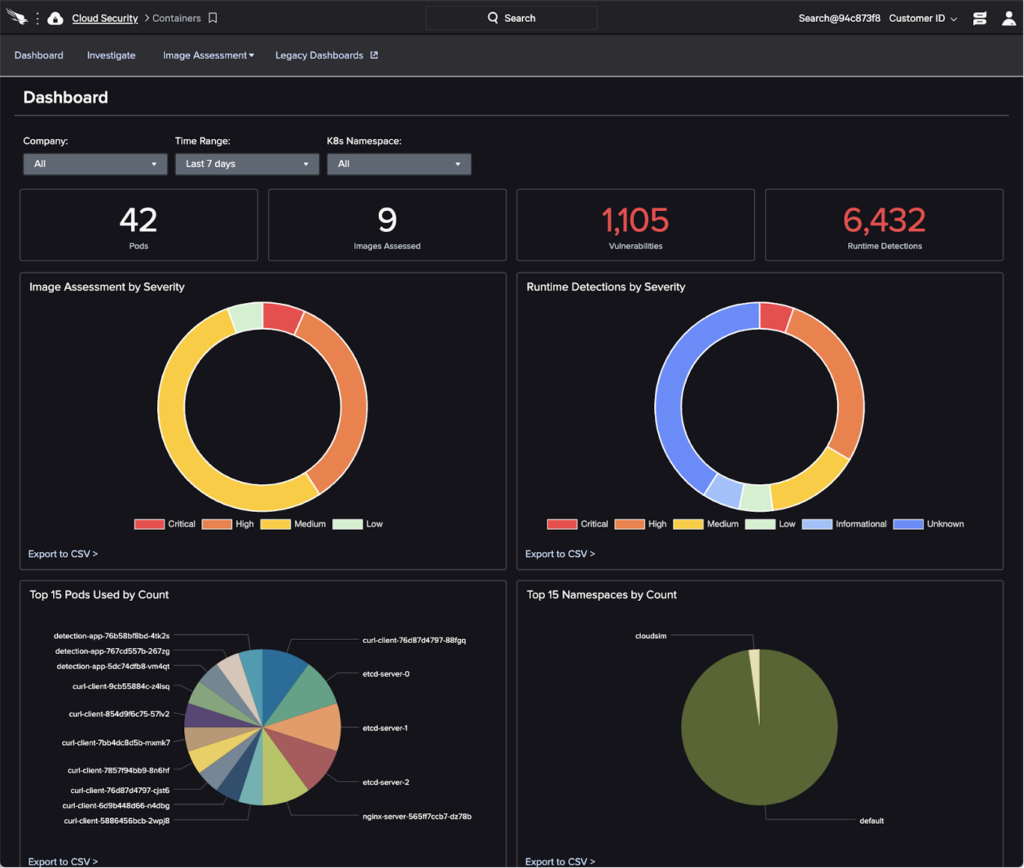
Threat detection sits at the heart of any cloud security platform. Both Sweet Security and CrowdStrike Falcon claim strong detection capabilities. But how do they actually work?
Sweet Security’s Detection Approach
Sweet Security built their detection engine around behavioral analysis. The platform learns what normal looks like in your specific environment. It builds baselines for process behavior, network connections, file access patterns, and more.
When something unusual happens, Sweet Security notices. A container suddenly making connections to an unfamiliar IP address? Flagged. A process reading files it’s never accessed before? Alert generated.
Key aspects of Sweet Security’s detection:
- Environment-specific baselines reduce false positives
- Real-time monitoring catches threats as they happen
- Context-aware alerts help prioritize response
- Focus on cloud-native attack patterns
Sweet Security’s runtime-first philosophy means they’ve invested heavily in detection quality. They want to catch real attacks, not drown you in noise.
CrowdStrike’s Detection Approach
CrowdStrike brings something unique to detection: massive threat intelligence. Their researchers track over 200 adversary groups. They know how attackers operate, what tools they use, and what indicators to look for.
This intelligence feeds into detection rules across the Falcon platform. When CrowdStrike sees a new attack technique in one customer environment, they create detections for all customers.
CrowdStrike’s detection strengths include:
- Correlation with global threat intelligence
- Knowledge of specific adversary behaviors
- Proven detection of advanced persistent threats
- Machine learning models trained on massive datasets
- Integration with endpoint telemetry for full attack chain visibility
CrowdStrike’s detection philosophy combines signatures, behavioral analysis, and threat intelligence. They layer multiple techniques to catch both known and unknown threats.
Detection Comparison Summary
Both platforms will catch most common cloud attacks. The difference shows up in advanced scenarios.
CrowdStrike’s threat intelligence gives them an edge against nation-state actors and sophisticated attackers. If you’re worried about targeted attacks from skilled adversaries, CrowdStrike’s intelligence network provides real value.
Sweet Security’s behavioral approach excels at catching anomalies specific to your environment. If an insider threat or compromised credential starts acting strangely, Sweet Security’s baselines will notice.
Deployment and Setup: Getting Started with Each Platform
How quickly can you get value from these platforms? Deployment complexity varies significantly between solutions. Let’s examine what it takes to get each one running.
Sweet Security Deployment
Sweet Security emphasizes fast time-to-value. They’ve designed their platform for efficient deployment with minimal overhead. Organizations can typically get started in days rather than weeks.
Sweet Security deployment characteristics:
- Lightweight agents: Minimal resource consumption on workloads
- Quick installation: Streamlined setup process
- Low complexity: Fewer moving parts to configure
- Fast baseline creation: Platform learns your environment quickly
For organizations with limited security staff or DevOps resources, Sweet Security’s simplicity matters. You don’t need a large team to deploy and manage the platform.
The downside? Less complexity sometimes means fewer customization options. If you need highly specific configurations, you might find Sweet Security’s options limited.
CrowdStrike Falcon Cloud Security Deployment
CrowdStrike’s deployment is more involved. The Falcon platform offers extensive features, and that means more configuration options. Setup typically takes longer than Sweet Security.
CrowdStrike deployment characteristics:
- Agent and agentless options: Choose the right approach for each workload
- Integration capabilities: Connects with existing CrowdStrike deployments
- More configuration options: Tune the platform to your specific needs
- Professional services available: CrowdStrike offers deployment assistance
If you already use CrowdStrike for endpoint protection, adding cloud security is straightforward. The platforms share infrastructure, and your team already knows the interface.
For net-new CrowdStrike deployments, expect a longer ramp-up period. The platform’s power comes with complexity. You’ll need to invest time in configuration and tuning.
Deployment Comparison Table
| Deployment Factor | Sweet Security | CrowdStrike Falcon |
|---|---|---|
| Typical Time to Deploy | Days | Weeks |
| Complexity Level | Low to Medium | Medium to High |
| Resource Requirements | Lower | Higher |
| Professional Services | Available | Extensive options |
| Existing CrowdStrike Integration | N/A | Native integration |
| Customization Options | Moderate | Extensive |
Pricing and Cost of Ownership: Sweet Security vs CrowdStrike
Budget matters. Let’s look at what these platforms cost and the total investment required.
Sweet Security Pricing
Sweet Security positions itself as the budget-friendly option. They target organizations that want strong cloud security without enterprise-level pricing.
Sweet Security pricing characteristics:
- Lower initial setup costs
- Competitive per-workload pricing
- Strong ROI for resource-constrained organizations
- Transparent pricing model
For mid-market companies or startups watching their spending, Sweet Security’s pricing makes advanced cloud security accessible. You don’t need a Fortune 500 budget.
The trade-off? You get fewer features than CrowdStrike. But if Sweet Security covers your core needs, paying less for what you actually use makes sense.
CrowdStrike Falcon Cloud Security Pricing
CrowdStrike sits at the higher end of the market. Their pricing reflects the breadth of their platform and the depth of their threat intelligence.
CrowdStrike pricing characteristics:
- Higher setup costs with more extensive features
- Premium pricing justified by comprehensive capabilities
- Potential savings if already using CrowdStrike products
- Forrester TEI study shows 264% ROI and payback in six months
That Forrester study deserves attention. While CrowdStrike costs more upfront, the research shows organizations recover that investment quickly. Better threat detection means fewer breaches. Fewer breaches mean lower incident costs.
For large enterprises with complex security requirements, CrowdStrike’s premium pricing often makes sense. The cost of a breach far exceeds the difference in licensing fees.
Total Cost of Ownership Comparison
Licensing is just one piece of the cost puzzle. Consider these factors too:
- Staff time for management: Sweet Security requires less ongoing effort
- Training costs: CrowdStrike’s complexity means more training
- Integration expenses: Existing CrowdStrike users save on integration
- Incident costs avoided: Better detection reduces breach expenses
A smaller organization might find Sweet Security cheaper overall. A large enterprise with existing CrowdStrike infrastructure might find Falcon Cloud Security more cost-effective despite higher licensing fees.
Runtime Protection Compared: Sweet Security vs CrowdStrike Cloud Security
Runtime protection stops attacks while your applications run. It’s the last line of defense when other controls fail. Both platforms offer runtime capabilities, but their approaches differ.
Sweet Security Runtime Protection
Runtime protection is Sweet Security’s bread and butter. They didn’t bolt it on later. They built the entire platform around it.
How Sweet Security handles runtime protection:
- Continuous monitoring of running workloads
- Behavioral analysis detects anomalies in real-time
- Context-aware alerts reduce false positives
- Deep visibility into container and Kubernetes behavior
- Fast detection of lateral movement and privilege escalation
Sweet Security watches what processes do, not just what they are. A legitimate binary acting maliciously still gets caught. This matters because attackers increasingly use living-off-the-land techniques with legitimate tools.
The platform creates behavioral profiles for each workload. When behavior deviates from the profile, Sweet Security investigates. This approach catches zero-day attacks that signature-based detection misses.
CrowdStrike Runtime Protection
CrowdStrike’s Falcon agent has protected endpoints for years. That experience carries over to cloud workloads. The agent is lightweight but powerful.
How CrowdStrike handles runtime protection:
- Proven agent technology adapted for cloud workloads
- Combines behavioral and signature-based detection
- Threat intelligence correlates runtime events with known attack patterns
- Protection extends across VMs, containers, and serverless
- Automated response capabilities contain threats quickly
CrowdStrike’s intelligence network gives their runtime protection unique context. When the agent sees suspicious behavior, it can check against known adversary tactics. This correlation improves detection accuracy.
The Falcon agent also enables response actions. Block a process. Isolate a container. Contain a threat before it spreads. This automated response reduces dwell time.
Runtime Protection Verdict
Both platforms deliver strong runtime protection. Sweet Security focuses more narrowly on this capability and arguably goes deeper. CrowdStrike’s runtime protection benefits from broader platform integration and threat intelligence.
For pure runtime detection, Sweet Security edges ahead. For runtime protection combined with broader security capabilities, CrowdStrike wins.
Cloud Security Posture Management: Scanning Your Cloud Configuration
CSPM finds misconfigurations and compliance violations in your cloud setup. An S3 bucket left public. An overly permissive IAM role. A security group allowing too much traffic. CSPM catches these issues.
Sweet Security CSPM Capabilities
Sweet Security includes CSPM, but it’s not their primary focus. The feature exists to provide complete coverage, but runtime protection gets more attention.
Sweet Security CSPM includes:
- Cloud configuration scanning
- Compliance framework support
- Misconfiguration detection
- Multi-cloud support
The CSPM features work well enough for most organizations. You’ll find common misconfigurations and get compliance reports. But don’t expect the deepest possible analysis.
Sweet Security’s philosophy connects CSPM findings to runtime context. A misconfiguration matters more if the affected workload is actively running and exposed. This prioritization helps teams focus.
CrowdStrike CSPM Capabilities
CrowdStrike’s CSPM capabilities rank among the most comprehensive in the market. They’ve invested heavily in this area.
CrowdStrike CSPM includes:
- Continuous configuration monitoring
- Extensive compliance framework support (CIS, SOC 2, PCI DSS, HIPAA, etc.)
- Automated remediation for common issues
- Custom policy creation
- Deep multi-cloud visibility
- Asset inventory and relationship mapping
CrowdStrike can show you exactly what’s running in your cloud, how it’s configured, and whether that configuration meets your standards. The platform maps relationships between resources to understand blast radius if something goes wrong.
Automated remediation takes CSPM further. When CrowdStrike finds certain misconfigurations, it can fix them automatically. This reduces the burden on your team and closes security gaps faster.
CSPM Comparison
CrowdStrike clearly leads in CSPM capabilities. They offer more frameworks, deeper analysis, and automated remediation. For organizations with strict compliance requirements, CrowdStrike is the better choice.
Sweet Security provides solid CSPM. It covers the basics well. For organizations that prioritize runtime security over posture management, Sweet Security’s CSPM is sufficient.
Container and Kubernetes Security: Protecting Modern Workloads
Containers and Kubernetes dominate modern cloud deployments. Both platforms support these workloads, but with different emphases.
Sweet Security Container Security
Sweet Security has strong Kubernetes support. Their platform understands container orchestration and the unique security challenges it creates.
Sweet Security container capabilities:
- Deep Kubernetes visibility and monitoring
- Container runtime protection
- Pod-level security policies
- Network monitoring between containers
- Detection of container escape attempts
Sweet Security monitors what happens inside containers at runtime. They see process execution, network connections, and file system changes. This visibility catches attacks that other tools miss.
Kubernetes-native attacks get special attention. Compromised pods, malicious images, unauthorized deployments. Sweet Security detects these cloud-native threats.
CrowdStrike Container Security
CrowdStrike provides full lifecycle container security. From image building to runtime, they cover every phase.
CrowdStrike container capabilities:
- Image scanning in CI/CD pipelines
- Registry scanning for vulnerabilities
- Container runtime protection
- Kubernetes admission control
- Full visibility into cluster activity
- Container forensics after incidents
CrowdStrike’s lifecycle approach catches issues early. Scanning images before they deploy prevents vulnerable containers from reaching production. Admission control blocks deployments that violate policy.
Runtime protection continues monitoring once containers run. The Falcon sensor works inside containers without impacting performance.
Container Security Comparison
| Container Capability | Sweet Security | CrowdStrike |
|---|---|---|
| Image Scanning | Available | Comprehensive |
| Registry Scanning | Available | Yes |
| Runtime Protection | Deep focus | Strong |
| Kubernetes Visibility | Excellent | Excellent |
| Admission Control | Available | Yes |
| Container Forensics | Available | Yes |
| Lifecycle Coverage | Focus on runtime | Full lifecycle |
CrowdStrike offers broader container security with full lifecycle coverage. Sweet Security provides deeper runtime detection for running containers. Your choice depends on where you want the emphasis.
Integration and Ecosystem: How Each Platform Connects
No security tool works in isolation. Integrations with your existing stack determine how smoothly a platform fits into your operations.
Sweet Security Integrations
Sweet Security integrates with common cloud and security tools. They focus on the integrations that matter most for cloud-native organizations.
Sweet Security integration capabilities:
- Major cloud providers (AWS, Azure, GCP)
- Kubernetes and container platforms
- CI/CD pipelines
- SIEM platforms for alert correlation
- Ticketing systems for workflow automation
The integration set covers typical needs. You can get alerts into your SIEM. You can create tickets automatically. You can scan images in your pipeline.
What you won’t find is the extensive ecosystem of a larger vendor. Sweet Security hasn’t been around long enough to build hundreds of integrations.
CrowdStrike Integrations
CrowdStrike’s Falcon platform has one of the largest integration ecosystems in security. They’ve partnered with hundreds of vendors.
CrowdStrike integration capabilities:
- All major cloud providers with deep integrations
- SIEM platforms (Splunk, Microsoft Sentinel, etc.)
- SOAR platforms for automated response
- Identity providers
- IT service management tools
- DevOps and CI/CD toolchains
- Third-party threat intelligence sources
If you use a major security or IT tool, chances are CrowdStrike integrates with it. This connectivity makes Falcon Cloud Security easier to adopt in complex environments.
The CrowdStrike Marketplace offers pre-built integrations. Download an app, configure it, and you’re connected. No custom development required.
For organizations already using CrowdStrike products, integration is even smoother. Falcon Cloud Security shares data with Falcon Endpoint, Falcon Identity, and other modules. Your SOC sees everything in one place.
Integration Comparison
CrowdStrike wins on integration breadth. Their ecosystem is simply larger. For complex enterprise environments with many tools, CrowdStrike fits better.
Sweet Security covers the basics well. For simpler environments or cloud-native organizations without legacy tooling, their integrations may be sufficient.
User Experience and Management: Day-to-Day Operations
Features matter, but so does usability. How easy is it to operate these platforms daily? Let’s look at the user experience.
Sweet Security User Experience
Sweet Security designed their interface for simplicity. They want security teams to find threats quickly without wading through complex menus.
Sweet Security UX characteristics:
- Clean, intuitive dashboard
- Prioritized alerts to focus attention
- Context provided with each alert
- Faster learning curve for new users
- Less training required
Teams can get productive quickly with Sweet Security. The platform doesn’t overwhelm with options. It focuses on what matters: detecting and responding to threats.
This simplicity has trade-offs. Power users might want more customization. Complex workflows might require workarounds. But for most teams, Sweet Security’s approach works well.
CrowdStrike User Experience
CrowdStrike’s Falcon console has evolved over years. It’s powerful but more complex than Sweet Security’s interface.
CrowdStrike UX characteristics:
- Feature-rich dashboard with many views
- Extensive customization options
- Powerful search and investigation tools
- Unified view across all Falcon modules
- Steeper learning curve
Teams already using CrowdStrike will feel at home. The Falcon Cloud Security interface follows the same patterns as other Falcon products.
New users need more time to learn the platform. CrowdStrike offers extensive documentation, training courses, and certifications. The investment pays off in capability.
Investigation tools deserve mention. When you find a threat, CrowdStrike helps you understand it. Timeline views, process trees, and network connections make analysis easier.
Management Comparison
| Management Factor | Sweet Security | CrowdStrike |
|---|---|---|
| Learning Curve | Shorter | Longer |
| Interface Complexity | Simpler | More complex |
| Customization | Moderate | Extensive |
| Investigation Tools | Good | Excellent |
| Training Required | Less | More |
| Daily Operations | Streamlined | Feature-rich |
Support and Customer Success: Getting Help When Needed
When things go wrong, you need help fast. Support quality varies between vendors. Let’s examine what each offers.
Sweet Security Support
As a newer company, Sweet Security puts extra effort into customer success. They know they need to prove themselves.
Sweet Security support includes:
- Responsive technical support
- Customer success managers
- Onboarding assistance
- Documentation and knowledge base
User satisfaction data shows Sweet Security customers are happy. That 100% recommendation rate reflects positive support experiences.
Smaller companies often provide more personalized support. You’re more likely to talk to someone who knows your environment. Sweet Security’s size works in their favor here.
CrowdStrike Support
CrowdStrike has built extensive support infrastructure. They serve some of the world’s largest organizations and need to scale accordingly.
CrowdStrike support includes:
- 24/7 technical support
- Multiple support tiers
- Professional services for implementation
- Extensive documentation and training
- CrowdStrike University for certifications
- Community forums
- Managed threat hunting services
CrowdStrike’s 97% recommendation rate demonstrates strong customer satisfaction. Not quite as high as Sweet Security, but excellent for a company their size.
For organizations needing premium support or managed services, CrowdStrike offers more options. Their Falcon Complete managed detection and response can handle security operations for you.
Support Comparison
Both vendors provide solid support. Sweet Security offers more personalized attention from a smaller team. CrowdStrike offers broader resources and managed service options.
Enterprise organizations with complex needs will appreciate CrowdStrike’s extensive support infrastructure. Smaller organizations might prefer Sweet Security’s more personal approach.
Best Use Cases: When to Choose Each Platform
Different organizations have different needs. Let’s identify ideal scenarios for each platform.
When Sweet Security Makes Sense
Sweet Security fits best for:
- Mid-market companies: Organizations that want advanced protection without enterprise complexity
- Cloud-native startups: Companies built entirely on modern cloud architecture
- Runtime-focused teams: Security teams that prioritize stopping active attacks
- Budget-conscious organizations: Companies that need strong security at lower cost
- Kubernetes-heavy environments: Organizations running extensively on container orchestration
- Lean security teams: Small teams that can’t manage complex platforms
If you’re a growing technology company running everything in containers on Kubernetes, Sweet Security aligns with your environment. Their runtime focus matches cloud-native security needs.
If your security team has three people and limited budget, Sweet Security’s simplicity and pricing make sense. You’ll get strong protection without overwhelming your resources.
When CrowdStrike Falcon Makes Sense
CrowdStrike Falcon Cloud Security fits best for:
- Large enterprises: Organizations with complex multi-cloud environments
- Existing CrowdStrike customers: Companies already using Falcon for endpoints
- Compliance-heavy industries: Organizations with strict regulatory requirements
- Security operations centers: Teams with mature security operations
- Organizations facing advanced threats: Companies targeted by sophisticated attackers
- Hybrid environments: Organizations with cloud, on-premises, and endpoint security needs
If you already use CrowdStrike Falcon for endpoint protection, adding cloud security creates a unified platform. Your team works from one console. Your data correlates automatically.
If your industry requires extensive compliance reporting, CrowdStrike’s CSPM capabilities provide the coverage you need. Healthcare, finance, and government organizations often find CrowdStrike’s compliance features necessary.
If nation-state actors or organized crime groups target your organization, CrowdStrike’s threat intelligence provides valuable protection. They track these adversaries and know how they operate.
Industry Recognition and Analyst Opinions
What do industry analysts say about these platforms? Their evaluations provide additional perspective.
CrowdStrike Industry Recognition
CrowdStrike consistently earns top rankings from major analyst firms.
Notable recognitions include:
- Named Leader in the 2026 Frost Radar for CNAPP for the fourth consecutive time
- Recognized leader in multiple Gartner and Forrester reports
- 264% ROI documented in Forrester TEI study
- High marks for threat intelligence capabilities
Analyst firms evaluate vendors based on extensive research. CrowdStrike’s consistent leadership positions reflect sustained investment and execution.
Sweet Security Industry Recognition
Sweet Security is newer to the market. They have fewer analyst recognitions simply because they haven’t been evaluated as often.
What stands out for Sweet Security:
- 100% user recommendation rate from peer review sites
- Positive reviews for runtime-focused approach
- Recognition for deployment simplicity
- Strong marks for cloud-native design
User reviews sometimes matter more than analyst reports. Sweet Security’s perfect recommendation score suggests customers find real value in the platform.
Future Direction and Roadmap Considerations
Security is a long-term investment. Where are these platforms headed?
Sweet Security’s Direction
Sweet Security continues building out their platform. Expect them to:
- Expand CSPM and vulnerability management capabilities
- Deepen cloud provider integrations
- Build more partnerships and integrations
- Continue refining runtime detection algorithms
As a younger company, Sweet Security can move fast. They’ll likely add features based on customer feedback without legacy constraints.
CrowdStrike’s Direction
CrowdStrike keeps expanding the Falcon platform. Their recent moves include:
- AI and machine learning investments for detection
- Expansion into AI workload protection
- Data security capabilities
- Continued threat intelligence growth
- Platform consolidation to reduce tool sprawl
CrowdStrike’s vision is a single platform for all security needs. They want to replace multiple point products with one unified solution.
Final Verdict: Sweet Security vs CrowdStrike Falcon Cloud Security
After this extensive comparison, which platform should you choose? The answer depends on your specific situation.
Choose Sweet Security if:
- Runtime protection is your top priority
- You want quick deployment and simplicity
- Budget constraints limit your options
- Your environment is primarily cloud-native and containerized
- You have a smaller security team
Choose CrowdStrike Falcon Cloud Security if:
- You need comprehensive CNAPP coverage
- You already use other CrowdStrike products
- Compliance requirements demand extensive capabilities
- You face sophisticated adversaries
- You want an extensive integration ecosystem
- You have resources to manage a feature-rich platform
Both platforms will protect your cloud environment. Neither is a wrong choice. The best fit depends on your priorities, budget, and existing infrastructure.
Conclusion
Sweet Security and CrowdStrike Falcon Cloud Security take different approaches to cloud protection. Sweet Security excels at runtime detection with a simpler, more affordable platform. CrowdStrike offers broader capabilities, deeper threat intelligence, and enterprise-grade features. Your choice should match your organization’s size, security maturity, budget, and specific needs. Test both platforms if possible before committing. The right cloud security platform can prevent breaches and protect your business for years to come.
FAQs: Sweet Security vs CrowdStrike Falcon Cloud Security Comparison
| Who should use Sweet Security instead of CrowdStrike? | Sweet Security works best for mid-market companies, cloud-native startups, and organizations with smaller security teams. If your priority is runtime protection and you need a simpler platform with faster deployment, Sweet Security is a strong choice. Organizations with limited budgets will also appreciate Sweet Security’s more affordable pricing model. |
| Why would I choose CrowdStrike Falcon Cloud Security over Sweet Security? | Choose CrowdStrike if you need comprehensive CNAPP coverage, already use CrowdStrike for endpoint protection, or face sophisticated threat actors. CrowdStrike’s threat intelligence is industry-leading, and their CSPM capabilities are more extensive. Large enterprises with complex compliance requirements typically find CrowdStrike’s feature set necessary. |
| What are the main differences between Sweet Security and CrowdStrike Falcon? | Sweet Security focuses primarily on runtime protection with a simpler, more affordable platform. CrowdStrike offers broader CNAPP capabilities including comprehensive CSPM, extensive integrations, and world-class threat intelligence. Sweet Security deploys faster but has fewer features. CrowdStrike takes longer to implement but provides more capabilities. |
| Is Sweet Security cheaper than CrowdStrike Falcon Cloud Security? | Yes, Sweet Security typically costs less than CrowdStrike Falcon Cloud Security. Sweet Security positions itself as a budget-friendly option with lower setup costs and competitive per-workload pricing. CrowdStrike has higher costs but justifies this with extensive features. A Forrester study shows CrowdStrike delivers 264% ROI with payback in six months. |
| Can I use both Sweet Security and CrowdStrike together? | Technically possible, but not recommended. Using both platforms creates operational complexity and adds cost. Most organizations should choose one CNAPP solution and use it comprehensively. If you need capabilities from both, evaluate which platform meets more of your needs or consider alternating during contract renewals to test both. |
| Which platform has better container and Kubernetes security? | Both platforms offer strong container security. Sweet Security has deep Kubernetes focus with excellent runtime detection for containerized workloads. CrowdStrike provides full container lifecycle security from image scanning through runtime. If runtime detection matters most, Sweet Security edges ahead. For lifecycle coverage, CrowdStrike wins. |
| How long does it take to deploy Sweet Security vs CrowdStrike? | Sweet Security typically deploys in days with minimal complexity. CrowdStrike Falcon Cloud Security usually takes weeks due to more configuration options and features. If you already use CrowdStrike products, adding cloud security is faster. For net-new deployments, Sweet Security gets you operational more quickly. |
| Which platform has better threat detection capabilities? | Both platforms detect threats effectively but use different approaches. Sweet Security excels at behavioral detection specific to your environment. CrowdStrike combines behavioral analysis with global threat intelligence tracking over 200 adversary groups. For advanced persistent threats and nation-state actors, CrowdStrike’s intelligence provides an edge. |
| What user satisfaction ratings do Sweet Security and CrowdStrike have? | Sweet Security has a 100% user recommendation rate according to peer review sites. CrowdStrike has a 97% recommendation rate. Both scores indicate high customer satisfaction. Sweet Security’s higher rating may reflect more personalized support from a smaller company. CrowdStrike’s slightly lower rating is still excellent for an enterprise vendor. |
| Do I need a large security team to manage either platform? | Sweet Security requires less staff time due to its simpler interface and streamlined operations. Small security teams can effectively manage the platform. CrowdStrike offers more features but requires more expertise to use fully. Organizations with mature security operations get more value from CrowdStrike’s extensive capabilities. |



 Stack Insight is intended to support informed decision-making by providing independent information about business software and services. Some product details, including pricing, features, and promotional offers, may be supplied by vendors or partners and can change without notice.