
Sweet Security vs Orca Security: The Complete 2026 Comparison Guide
Picking the right Cloud Native Application Protection Platform (CNAPP) can feel overwhelming. The market keeps growing, and vendors promise similar things. Two names that keep coming up in conversations are Sweet Security and Orca Security.
Both platforms aim to protect your cloud workloads, containers, and applications. But they take different approaches to get there. Orca Security has built its reputation on agentless scanning and broad cloud visibility. Sweet Security focuses on real-time runtime protection and business logic insights.
This comparison breaks down everything you need to know. We’ll look at core features, deployment methods, detection capabilities, pricing models, and real-world use cases. By the end, you’ll have a clear picture of which platform fits your organization’s needs. Let’s dig in.
Understanding CNAPP: What These Platforms Actually Do
Before comparing Sweet Security and Orca Security directly, we need to understand what CNAPP means in 2026.
The Evolution of Cloud Security Categories
Cloud security used to be fragmented. You had separate tools for different jobs. Cloud Security Posture Management (CSPM) handled misconfigurations. Cloud Workload Protection Platforms (CWPP) dealt with runtime threats. Identity management lived in another silo entirely.
This fragmentation created problems. Security teams juggled multiple dashboards. Alert fatigue became real. Worse, nobody could see the full picture. Attack paths that crossed multiple domains went unnoticed.
Gartner recognized this gap. They defined CNAPP as a unified approach. The idea was simple: bring together proactive and reactive security in one platform. Stop context-switching between tools.
Core Capabilities Every CNAPP Should Have
According to Gartner’s framework, a true CNAPP includes several components:
- Cloud Security Posture Management (CSPM) – Finds misconfigurations and compliance gaps
- Cloud Workload Protection Platform (CWPP) – Protects VMs, containers, and serverless functions
- Cloud Infrastructure Entitlement Management (CIEM) – Manages identities and permissions
- Data Security Posture Management (DSPM) – Discovers and protects sensitive data
- Kubernetes Security Posture Management (KSPM) – Secures container orchestration
Both Sweet Security and Orca Security cover these areas. But their emphasis differs. Understanding these differences helps you choose wisely.
Why CNAPP Adoption Keeps Growing
Organizations move workloads to the cloud faster than ever. Multi-cloud deployments are common now. Containers and Kubernetes have become standard. This complexity demands unified security.
Point solutions can’t keep up. They miss connections between risks. A misconfigured S3 bucket combined with an overprivileged IAM role creates an attack path. Separate tools might catch each issue individually. But they won’t show you why the combination matters.
That’s what CNAPPs promise. Full visibility. Context. Prioritization based on actual risk, not just individual findings.
Orca Security Platform: A Complete Overview
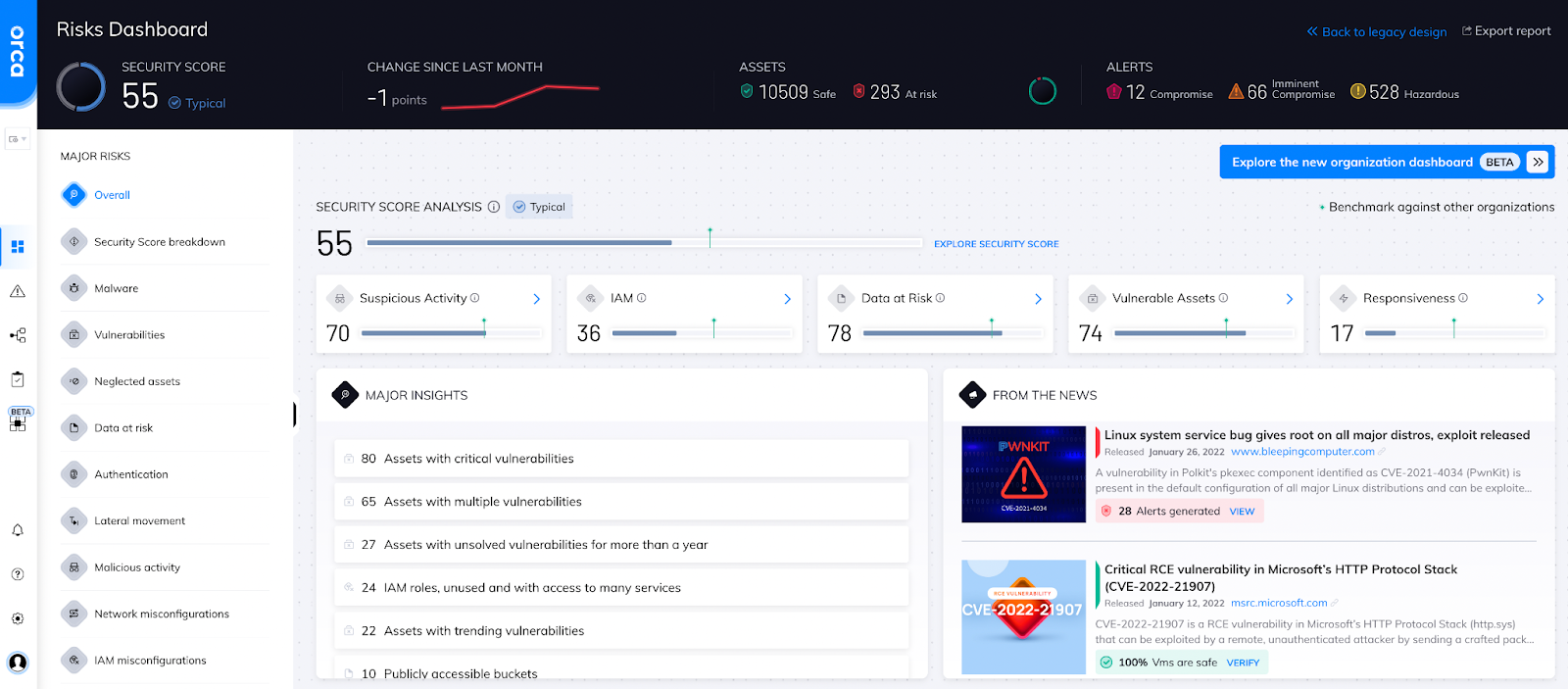
Orca Security launched with a bold promise: complete cloud visibility without agents. This approach changed how security teams think about cloud protection.
The Agentless SideScanning Technology
Orca’s core innovation is called SideScanning. Instead of installing agents on every workload, Orca reads your cloud storage directly. It creates a snapshot of your environment and scans it outside your production systems.
This method has clear benefits:
- No performance impact – Scanning happens externally
- No deployment friction – Security teams can start immediately
- Full coverage – Even forgotten or shadow workloads get scanned
- Historical analysis – Past snapshots reveal how risks evolved
Orca claims you can get full visibility within 24 hours of connecting your cloud accounts. For organizations tired of lengthy agent rollouts, this sounds appealing.
Multi-Cloud Coverage and Supported Environments
Orca Security supports the three major cloud providers natively:
- Amazon Web Services (AWS)
- Microsoft Azure
- Google Cloud Platform (GCP)
The platform also covers Kubernetes clusters running on these clouds. This includes managed services like EKS, AKS, and GKE. Self-managed Kubernetes gets support too.
One thing worth noting: Orca’s multi-cloud set is smaller than some competitors. Platforms like Wiz also support Oracle Cloud Infrastructure (OCI), Alibaba Cloud, and VMware vSphere. If your organization runs workloads on these platforms, factor that into your decision.
Orca’s Unified Security Model
Orca combines multiple security functions in one console. The platform includes:
- CSPM – Continuous configuration monitoring
- CWPP – Workload vulnerability assessment
- CIEM – Identity risk analysis
- DSPM – Sensitive data discovery
- AI-SPM – Security for AI/ML workloads (newer addition)
Everything feeds into what Orca calls a “unified data model.” This means findings from different domains connect automatically. A vulnerable container running with excessive permissions in an environment with exposed data shows up as a high-priority risk.
Vulnerability Management and AI-Driven Prioritization
Finding vulnerabilities is easy. The hard part is knowing which ones matter. Orca addresses this with AI-driven prioritization.
The platform scores vulnerabilities based on context:
- Is the vulnerable asset internet-facing?
- Does it have access to sensitive data?
- Are there exploits available in the wild?
- What permissions does the workload have?
This context transforms a list of CVEs into actionable priorities. A critical vulnerability in an isolated test environment ranks lower than a medium vulnerability on a production database server.
Compliance and Regulatory Frameworks
Orca supports a wide range of compliance frameworks out of the box. This includes:
- SOC 2
- PCI DSS
- HIPAA
- GDPR
- NIST
- CIS Benchmarks
The compliance dashboard shows your current posture against each framework. You can track progress over time and generate reports for auditors.
One notable achievement: Orca received FedRAMP Moderate authorization in February 2025. If you work with US government agencies or need FedRAMP compliance, this matters. Many competitors still lack this certification.
CI/CD Pipeline Integration
Orca extends beyond runtime scanning into the development pipeline. The platform integrates with popular CI/CD tools to scan code before deployment.
Supported integrations include:
- Jenkins
- GitHub Actions
- GitLab CI
- Azure DevOps
- CircleCI
This “shift left” approach catches issues early. Finding a vulnerability in development costs less than finding it in production. Orca’s pipeline scanning covers infrastructure as code (IaC) templates, container images, and source code.
Sweet Security Platform: A Complete Overview

Sweet Security takes a different approach to cloud protection. While it includes posture management features, its core strength lies in runtime security and real-time threat detection.
Runtime-First Philosophy
Sweet Security built its platform around the belief that runtime matters most. Knowing your misconfigurations helps. But knowing when someone exploits them helps more.
The platform monitors workloads as they run. It watches system calls, network connections, process executions, and file access patterns. This behavioral analysis catches threats that static scanning misses.
Consider this scenario: An attacker compromises a container through a zero-day vulnerability. Static scans won’t catch it because there’s no known signature. But Sweet Security notices unusual behavior. The container suddenly makes network connections it never made before. It spawns processes that don’t match its baseline. These anomalies trigger alerts.
Business Logic Insights
One feature that sets Sweet Security apart is its focus on business logic. The platform doesn’t just look at technical indicators. It tries to understand what your applications actually do.
This approach helps in several ways:
- Reduced false positives – Understanding normal behavior means fewer bogus alerts
- Better context – Alerts include business impact information
- Smarter prioritization – Threats to critical business functions rank higher
For example, Sweet Security might learn that your payment processing service normally connects to specific API endpoints during business hours. A connection to an unknown server at 3 AM raises immediate concern.
Cloud Detection and Response Capabilities
Sweet Security emphasizes detection and response alongside prevention. The platform includes:
- Real-time threat detection – Catches attacks as they happen
- Incident investigation tools – Helps security teams understand what occurred
- Automated response options – Contains threats before they spread
- Forensics support – Collects evidence for post-incident analysis
This focus on the “D” and “R” in CDR (Cloud Detection and Response) differentiates Sweet Security from more scan-focused platforms.
Container and Kubernetes Protection
Sweet Security pays special attention to containerized environments. The platform offers deep visibility into:
- Container runtime behavior
- Kubernetes cluster security
- Pod-to-pod communication
- Service mesh interactions
- Serverless function execution
For organizations running microservices architectures, this granular visibility matters. Traditional security tools struggle with the ephemeral nature of containers. Sweet Security designed its platform with these workloads in mind.
Vulnerability Context and Prioritization
Sweet Security also handles vulnerability management, but with a runtime twist. Instead of just scanning for known CVEs, the platform considers whether vulnerabilities are actually exploitable in your specific environment.
A vulnerability in a library that your application never calls is less urgent than one in an actively used function. Sweet Security’s runtime visibility helps make this distinction. This approach dramatically reduces the “vulnerability noise” that overwhelms security teams.
Agent-Based Architecture
Unlike Orca’s agentless approach, Sweet Security uses lightweight agents. These sensors deploy to your workloads and collect runtime data.
This architecture has trade-offs:
Benefits:
- Real-time visibility into running processes
- Behavioral analysis at the workload level
- Faster detection of active threats
- Lower-latency response capabilities
Considerations:
- Requires deployment across workloads
- Some performance overhead (usually minimal)
- Coverage depends on successful agent installation
Sweet Security worked to minimize deployment friction. The agents are designed to be lightweight and easy to install through common orchestration tools.
Sweet Security vs Orca Security: Detection Approach Comparison
How these platforms find threats differs fundamentally. This difference shapes their strengths and limitations.
Agentless Scanning vs Runtime Monitoring
Orca’s agentless approach scans your environment periodically. It reads storage snapshots and analyzes them externally. This method finds:
- Known vulnerabilities
- Misconfigurations
- Sensitive data exposure
- Identity risks
- Compliance gaps
But it operates on snapshots, not live systems. If something happens between scans, you won’t know immediately. The time between scans creates a visibility gap.
Sweet Security’s runtime monitoring works differently. It watches what’s happening right now. This catches:
- Active exploitation attempts
- Unusual process behavior
- Suspicious network connections
- Unauthorized file modifications
- Privilege escalation attempts
The trade-off is coverage. Agents must be deployed to provide visibility. Unmonitored workloads remain blind spots.
Proactive vs Reactive Security
| Aspect | Orca Security | Sweet Security |
|---|---|---|
| Primary Focus | Proactive risk identification | Reactive threat detection |
| Time to Detection | Hours (scan-dependent) | Seconds to minutes (real-time) |
| Coverage Model | Broad, automatic | Deep, deployment-dependent |
| Best For | Risk posture improvement | Active threat hunting |
| Zero-Day Handling | Limited until signatures exist | Behavioral detection possible |
Neither approach is inherently better. They serve different purposes. Many mature security programs use both proactive and reactive tools together.
Attack Path Analysis
Both platforms analyze attack paths, but differently.
Orca builds attack paths from its unified data model. It connects misconfigurations, vulnerabilities, identities, and data exposure. The result shows how an attacker could theoretically move through your environment.
Sweet Security adds runtime context to attack paths. It shows not just what’s possible, but what’s actually happening. If an attacker begins moving laterally, Sweet Security can trace the path in real-time.
False Positive Rates
False positives plague security teams. Too many bogus alerts lead to alert fatigue. Real threats get lost in the noise.
Orca reduces false positives through contextual prioritization. Vulnerabilities without exposure paths rank lower. But some noise remains because static analysis can’t determine what’s actually running.
Sweet Security’s runtime approach helps here. Behavioral analysis distinguishes normal from abnormal activity. If a process always makes certain network calls, those aren’t suspicious. Deviations matter more than absolutes.
User reviews on PeerSpot suggest both platforms perform reasonably well on false positive reduction. Sweet Security users particularly mention the value of business logic insights in filtering noise.
Feature-by-Feature Comparison Table
Let’s break down specific capabilities side by side. This comparison helps identify gaps and overlaps.
| Feature | Orca Security | Sweet Security |
|---|---|---|
| Deployment Model | Agentless (SideScanning) | Lightweight agents |
| Time to Value | 24 hours for full visibility | Varies by deployment scope |
| CSPM | Full support | Included |
| CWPP | Scan-based | Runtime-focused |
| CIEM | Full support | Included |
| DSPM | Full support | Basic support |
| KSPM | Full support | Strong support |
| Container Security | Scan-based analysis | Runtime monitoring |
| Serverless Security | Supported | Supported |
| Real-time Detection | Limited | Core strength |
| Threat Response | Alert-focused | Detection and response |
| CI/CD Integration | Extensive | Available |
| FedRAMP Status | Moderate (Feb 2025) | Not listed |
| AWS Support | Native | Supported |
| Azure Support | Native | Supported |
| GCP Support | Native | Supported |
Deep Dive: Where Each Platform Excels
Orca Security shines when:
- You need fast deployment without agent management
- Shadow IT and forgotten workloads concern you
- FedRAMP compliance is required
- CI/CD pipeline integration matters most
- You want a single platform for posture management
Sweet Security excels when:
- Active threat detection is your priority
- Container and Kubernetes workloads dominate
- Business logic context improves your workflow
- You need real-time incident response
- Behavioral analysis helps reduce false positives
Vulnerability Management: Orca vs Sweet Security
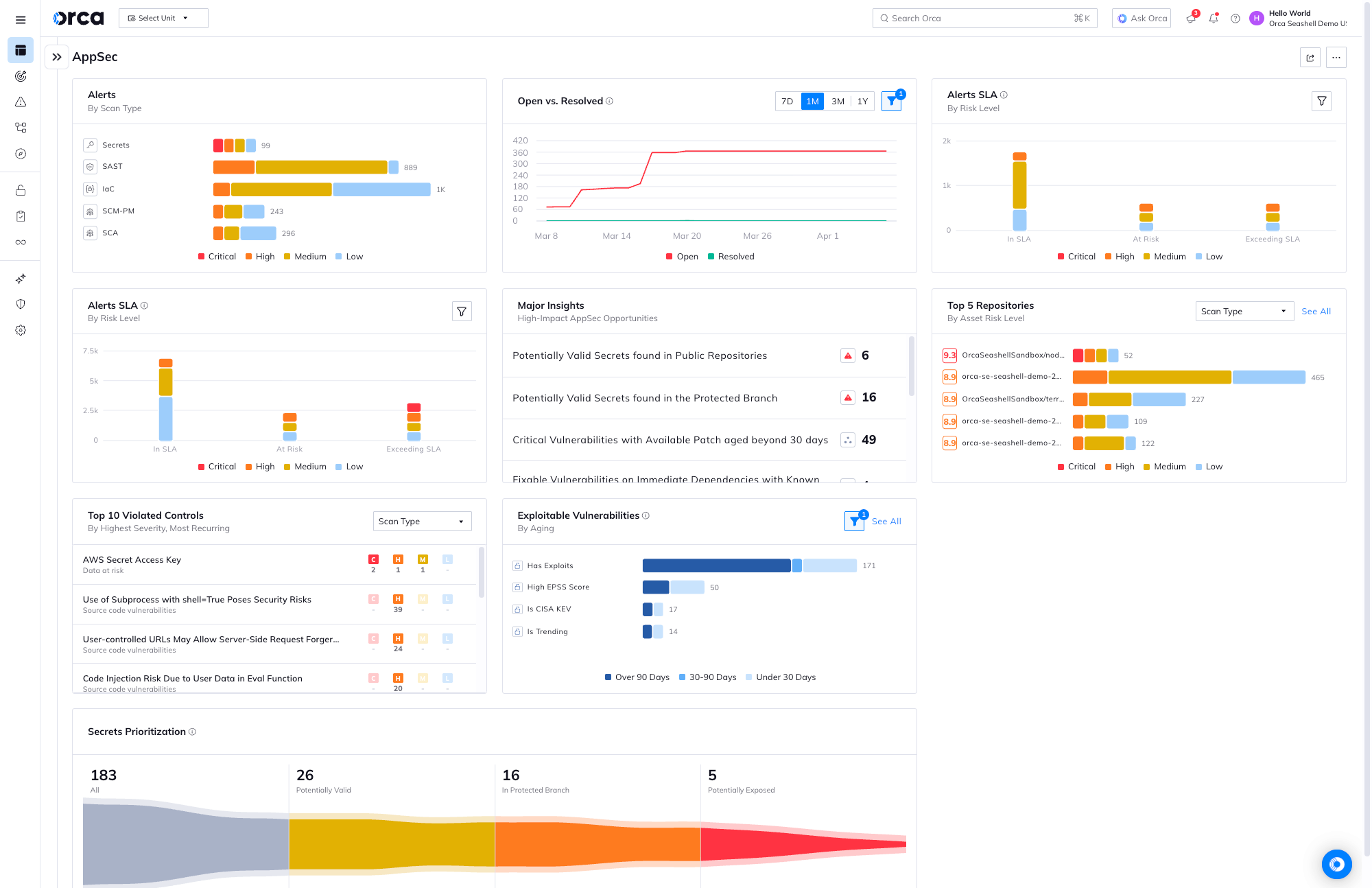
Vulnerability management is core to both platforms. But their approaches create different outcomes for security teams.
Discovery and Scanning Methods
Orca discovers vulnerabilities through its SideScanning technology. The platform reads workload storage and analyzes installed packages, libraries, and configurations. This covers:
- Operating system vulnerabilities
- Application dependencies
- Container image vulnerabilities
- Infrastructure as code issues
- Secrets in code or configuration
The agentless approach means comprehensive coverage. Even workloads without monitoring agents get scanned. This catches drift and shadow IT that other tools miss.
Sweet Security combines traditional scanning with runtime analysis. The platform identifies vulnerabilities but adds context about actual usage. Questions like “Is this vulnerable library actually loaded in memory?” get answered.
Prioritization Strategies
Both platforms go beyond simple CVSS scores. Raw severity ratings don’t tell you what to fix first.
Orca’s prioritization factors:
- Internet exposure
- Data sensitivity nearby
- Identity permissions
- Exploit availability
- Attack path position
Sweet Security’s prioritization factors:
- Runtime exploitability
- Active usage patterns
- Business function impact
- Network accessibility
- Observed exploitation attempts
The difference matters in practice. Orca tells you what could be exploited. Sweet Security tells you what’s being exploited or is most likely to be based on actual behavior.
Remediation Workflows
Finding vulnerabilities is step one. Fixing them requires actionable guidance.
Orca provides remediation instructions for each finding. Integration with ticketing systems (Jira, ServiceNow) streamlines workflow. The platform can assign issues to the right teams based on asset ownership.
Sweet Security also offers remediation guidance with an emphasis on context. The platform highlights which fixes would have the biggest real-world impact based on observed behavior.
Coverage Gaps and Blind Spots
Every tool has limitations. Understanding them helps set realistic expectations.
Orca’s blind spots:
- Activity between scans goes undetected
- Runtime behavior isn’t monitored
- Zero-day exploits active in memory won’t appear
Sweet Security’s blind spots:
- Workloads without agents lack visibility
- Dormant vulnerabilities may rank lower than appropriate
- Coverage requires successful deployment
Neither platform offers perfect coverage. Organizations should consider whether their primary risk is unknown vulnerabilities (favor Orca) or active exploitation (favor Sweet Security).
Identity and Access Management Security
Cloud breaches often involve identity compromise. Both platforms address identity risks, but with different depths.
CIEM Capabilities Compared
Cloud Infrastructure Entitlement Management (CIEM) helps organizations understand and control who can access what. Overprivileged identities create unnecessary risk.
Orca’s CIEM features include:
- Identity inventory across cloud accounts
- Effective permissions analysis
- Cross-account access mapping
- Unused permission detection
- Service account risk assessment
The platform maps what each identity can actually do, not just what policies say. This effective permissions view cuts through policy complexity.
Sweet Security includes CIEM capabilities focused on runtime. The platform monitors:
- What identities actually do versus what they can do
- Unusual access patterns
- Privilege escalation attempts
- Cross-service identity abuse
This runtime lens adds behavioral context. An identity that suddenly accesses resources it never touched before raises alerts.
Attack Path Implications
Identity risks rarely exist in isolation. An overprivileged service account becomes dangerous when combined with other weaknesses.
Orca connects identity risks to attack paths. A compromised container with access to an overprivileged role that can reach sensitive data represents a high-severity finding.
Sweet Security tracks identity abuse in real-time. If an attacker compromises credentials and begins using them, the platform detects the abnormal activity pattern.
Least Privilege Recommendations
Both platforms help organizations move toward least privilege. This security principle says identities should have only the permissions they need.
Orca identifies excessive permissions through static analysis. The platform shows what could be removed based on policy analysis.
Sweet Security adds usage data. By observing what permissions identities actually use, the platform provides data-driven recommendations. Removing permissions that are never used is safer than guessing.
Container and Kubernetes Security
Containers changed application deployment. They also changed security requirements. Both platforms address container security, but Sweet Security has a particular focus here.
Container Image Scanning
Orca scans container images stored in registries and running in your environment. The platform identifies:
- Vulnerable base images
- Outdated packages
- Embedded secrets
- Malware presence
- Compliance violations
Integration with container registries (ECR, ACR, GCR, Docker Hub) enables scanning before deployment. This “shift left” catches issues early.
Sweet Security also scans images but emphasizes runtime container behavior. The platform builds behavioral profiles for containers. Deviations from normal behavior trigger investigation.
Kubernetes Security Posture
Kubernetes introduces unique security challenges. Misconfigurations in cluster settings, RBAC policies, and network policies create risk.
Orca’s KSPM covers:
- CIS Benchmark compliance for Kubernetes
- RBAC analysis and excessive permissions
- Network policy gaps
- Pod security policy violations
- Secrets management issues
Sweet Security’s Kubernetes focus includes:
- Real-time cluster activity monitoring
- Pod-to-pod communication analysis
- Lateral movement detection within clusters
- Kubernetes audit log analysis
- Container escape attempt detection
Runtime Container Protection
This is where Sweet Security differentiates most clearly. The platform monitors containers as they run:
- Process monitoring – What’s executing inside containers
- File integrity – Unexpected file system changes
- Network behavior – Connection patterns and anomalies
- System calls – Low-level activity analysis
Orca’s agentless model limits runtime visibility. The platform excels at pre-deployment scanning but doesn’t monitor container behavior continuously.
Service Mesh and Microservices Visibility
Modern applications often use service meshes like Istio or Linkerd. These add complexity to security monitoring.
Sweet Security handles service mesh environments well. The platform understands service-to-service communication patterns. It detects when communication deviates from established baselines.
Orca provides less depth here. The platform identifies vulnerabilities in service mesh components but doesn’t monitor traffic patterns in real-time.
Compliance and Reporting
Meeting regulatory requirements remains a top concern. Both platforms help, but with different strengths.
Supported Compliance Frameworks
Orca Security supports:
- SOC 2 Type I and Type II
- PCI DSS 3.2.1 and 4.0
- HIPAA
- GDPR
- ISO 27001
- NIST 800-53
- NIST CSF
- CIS Benchmarks (multiple versions)
- HITRUST
- FedRAMP
Sweet Security supports:
- SOC 2
- PCI DSS
- HIPAA
- GDPR
- NIST frameworks
- CIS Benchmarks
Orca’s compliance coverage appears broader. The FedRAMP Moderate authorization stands out for government-focused organizations.
Compliance Dashboards and Tracking
Orca provides dedicated compliance dashboards. You can see your current posture against each framework. Historical trending shows improvement over time. Drill-down capabilities reveal specific failing controls.
The platform generates audit-ready reports. These show evidence of compliance controls and their current status. Many organizations use these reports directly with auditors.
Sweet Security includes compliance features but emphasizes runtime compliance. The platform monitors for compliance violations as they happen, not just at scan time.
Custom Policy Creation
Standard frameworks don’t cover everything. Both platforms allow custom policies.
Orca lets you create custom compliance checks. You can define what constitutes a violation for your specific requirements. These custom policies appear alongside built-in framework checks.
Sweet Security allows custom behavioral rules. You can define what activities should trigger alerts based on your organization’s risk appetite.
Integration Ecosystem
No security tool operates alone. Integration with existing workflows matters for adoption.
CI/CD Pipeline Integrations
Orca emphasizes CI/CD integration heavily. The platform integrates with:
- Jenkins
- GitHub Actions
- GitLab CI/CD
- Azure DevOps
- CircleCI
- Terraform
- AWS CodePipeline
- Google Cloud Build
These integrations enable scanning at build time. Pull requests can be blocked if they introduce security issues. Infrastructure as code templates get validated before deployment.
Sweet Security offers CI/CD integrations as well but focuses more on runtime environments. The platform’s value proposition centers on what happens after deployment.
SIEM and SOAR Integrations
Security teams need findings in their existing tools. Both platforms integrate with major SIEM and SOAR platforms:
- Splunk
- Microsoft Sentinel
- IBM QRadar
- Palo Alto Cortex XSOAR
- ServiceNow SecOps
Sweet Security’s real-time detection makes SIEM integration particularly valuable. Alerts flow immediately to where analysts work.
Ticketing and Notification Systems
Both platforms support common ticketing systems:
- Jira
- ServiceNow
- Slack
- Microsoft Teams
- PagerDuty
- Opsgenie
Automatic ticket creation reduces manual work. Issues get routed to the right teams based on asset ownership and severity.
API Availability
Both platforms offer REST APIs for custom integrations. Organizations can build workflows that combine multiple tools. Automated response playbooks can pull data from either platform.
User Experience and Interface
A powerful platform that’s hard to use won’t get adopted. Let’s compare how these tools feel in daily operation.
Dashboard Design
Orca’s interface centers on a risk-prioritized view. The main dashboard shows your top risks across categories. Drill-down from high-level views to specific findings is straightforward.
The platform includes a compliance dashboard, an assets view, and alert management screens. Visual attack paths help communicate risk to non-technical stakeholders.
Sweet Security emphasizes real-time activity. The interface shows what’s happening now alongside historical context. Threat detection screens highlight active incidents.
Both platforms use modern web interfaces. Navigation is intuitive in both cases. Neither requires extensive training to start using.
Alert Management
Alert fatigue kills security programs. Both platforms address this through prioritization, but differently.
Orca reduces alert volume through contextual scoring. Not every misconfiguration becomes an alert. The platform filters based on exploitability and impact.
Sweet Security’s behavioral approach helps too. By learning normal patterns, the platform avoids alerting on expected behavior. Only true anomalies surface.
Investigation Workflows
When something needs investigation, workflow matters.
Orca provides investigation context for each finding. You can see related assets, connected risks, and recommended remediation. The attack path view shows how one finding connects to others.
Sweet Security excels at incident investigation. The platform provides timeline views of activity. You can trace what happened before, during, and after an alert. Forensics capabilities help understand full attack scope.
User Ratings and Feedback
According to PeerSpot ratings:
- Orca Security: 8.5 average rating, 100% would recommend
- Sweet Security: 8.6 average rating, 100% would recommend
Both platforms receive positive feedback. Sweet Security’s slightly higher rating comes with a smaller sample size. Orca has more reviews due to larger market presence.
Orca holds 5.8% mindshare in the CNAPP category. Sweet Security holds 1.5%. This reflects Orca’s earlier market entry and larger customer base.
Deployment and Time to Value
How quickly can you get started? Deployment models create different timelines.
Orca Security Deployment
Orca’s agentless model enables fast deployment. The process typically involves:
- Connect cloud accounts (AWS, Azure, GCP) through API
- Grant read access to storage for SideScanning
- Configure notifications and integrations
- Wait for initial scan completion
Orca claims full visibility within 24 hours. Many organizations confirm this timeline is achievable. No agent rollout means no coordination with application teams.
Sweet Security Deployment
Sweet Security requires agent deployment. This adds steps:
- Connect cloud accounts for basic integration
- Deploy agents to workloads (containers, VMs)
- Configure agent communication and policies
- Allow time for behavioral baseline creation
Deployment time varies by environment size and complexity. Container environments can use DaemonSets for automated deployment. VM environments may require more manual work.
The behavioral baseline period is worth noting. Sweet Security needs to learn normal patterns before it can detect anomalies accurately. This learning period may take days or weeks depending on traffic patterns.
Resource Requirements
Orca Security:
- No agents to manage
- Read access to cloud storage
- API connectivity
- Minimal ongoing maintenance
Sweet Security:
- Agent resources (CPU, memory)
- Network connectivity for agent communication
- Deployment infrastructure (Kubernetes, configuration management)
- Ongoing agent updates
Organizational Readiness Considerations
Orca works well for organizations that want quick wins. Security teams can demonstrate value without lengthy deployment projects. This suits understaffed teams or those with urgent compliance deadlines.
Sweet Security fits organizations ready to invest in deployment for deeper protection. If you have mature DevOps practices and can manage agent rollouts, the runtime visibility pays off.
Pricing and Licensing Models
Cost matters. Both platforms use consumption-based pricing, but the details differ.
Orca Security Pricing
Orca typically prices based on cloud assets. Factors include:
- Number of cloud accounts
- Workload count (VMs, containers, serverless functions)
- Feature modules selected
- Contract length (annual discounts available)
Pricing isn’t publicly listed. Organizations must request quotes. Enterprise deals often include negotiated terms.
Sweet Security Pricing
Sweet Security also uses asset-based pricing. Factors include:
- Number of monitored workloads
- Feature set selected
- Data retention requirements
- Support level
Like Orca, pricing requires direct engagement. Free trials or POC periods are typically available.
Total Cost of Ownership Considerations
Sticker price doesn’t tell the whole story. Consider:
- Deployment costs – Agent-based solutions require more initial effort
- Operational costs – Agent management has ongoing overhead
- Integration costs – Both platforms may require custom integration work
- Training costs – Teams need time to learn any new platform
- Opportunity costs – Longer deployment delays time to value
Orca’s agentless model typically has lower total cost of ownership for large, diverse environments. Sweet Security’s agent model pays off through reduced incident costs when real-time detection matters.
ROI Factors
Return on investment depends on your threat landscape:
- If misconfiguration-related incidents are your main risk, Orca’s proactive approach prevents them
- If active attacks concern you most, Sweet Security’s detection capabilities reduce breach impact
- If compliance penalties threaten your business, either platform helps but Orca’s FedRAMP status may matter
Use Cases: When to Choose Each Platform
Context matters more than features. Let’s explore scenarios where each platform fits best.
Choose Orca Security When:
You’re starting your cloud security program. Orca’s fast deployment and broad coverage provide immediate visibility. You’ll understand your risk posture within days.
Shadow IT and cloud sprawl concern you. Agentless scanning finds workloads you didn’t know existed. Nothing gets overlooked because nothing requires deployment.
FedRAMP compliance is required. Orca’s Moderate authorization simplifies government-focused security programs. This certification takes years to achieve.
You want to shift security left. Orca’s CI/CD integrations catch issues before deployment. This prevention-focused approach reduces runtime risk.
Your team lacks capacity for agent management. Small security teams benefit from agentless architectures. There’s no deployment project, no agent updates, no troubleshooting connectivity issues.
You operate a multi-cloud environment on AWS, Azure, and GCP. Orca covers all three natively with deep integration.
Choose Sweet Security When:
Active threat detection is your top priority. Sweet Security excels at catching attacks in progress. Real-time monitoring means faster response.
Container and Kubernetes dominate your environment. The platform’s deep container visibility and behavioral analysis shine in microservices architectures.
You’ve experienced incidents that static scanning missed. Runtime protection catches threats that vulnerability scans overlook. Zero-days, credential theft, and insider threats need behavioral detection.
Business logic context improves your security decisions. Understanding what applications actually do helps prioritize and investigate. Sweet Security’s focus here differentiates it.
You have mature DevOps practices. Agent deployment is straightforward when you have solid orchestration and configuration management. The overhead becomes manageable.
Incident response capabilities matter. Sweet Security’s detection and response features support active threat hunting and forensics.
Consider Using Both When:
You need comprehensive coverage. Some organizations run both platforms. Orca handles posture management and shift-left scanning. Sweet Security provides runtime detection. Together they cover proactive and reactive needs.
You’re transitioning between approaches. Starting with Orca for quick visibility makes sense. Adding Sweet Security later for runtime protection builds depth over time.
Different teams have different needs. Security operations teams may prefer Sweet Security’s detection capabilities. GRC teams may prefer Orca’s compliance features. Both can coexist.
Market Position and Future Direction
Understanding where these vendors fit in the market helps predict their evolution.
Orca Security Market Position
Orca pioneered the agentless CNAPP approach. The company established significant market presence with 5.8% mindshare in the category. Major enterprises and government agencies use the platform.
The company continues expanding capabilities. AI-SPM (security posture management for AI workloads) is a recent addition. Expect continued investment in coverage breadth.
Orca remains independent as of 2026. Some competitors have been acquired (Wiz by Google). Independence gives Orca flexibility in roadmap decisions.
Sweet Security Market Position
Sweet Security is a newer entrant with 1.5% mindshare. The company differentiates through runtime focus and business logic insights. Growth comes from organizations seeking detection capabilities beyond static scanning.
The platform continues developing its behavioral analysis capabilities. Expect deeper container visibility and expanded detection scenarios.
Industry Trends Affecting Both
Several trends shape where both platforms head:
- AI/ML security – Protecting AI workloads becomes mandatory as adoption grows
- Supply chain security – SBOM and dependency analysis matter more
- Regulatory expansion – More compliance frameworks emerge globally
- Platform consolidation – Customers want fewer tools, not more
- Detection and response integration – CDR capabilities join CNAPP offerings
Making Your Decision: Key Questions to Answer
Before choosing between Sweet Security and Orca Security, answer these questions honestly.
Questions About Your Environment
- What percentage of workloads run in containers vs traditional VMs?
- Which cloud providers do you use today? Will that change?
- How dynamic is your environment? Do workloads come and go frequently?
- Do you have visibility into all cloud accounts and regions?
- What compliance frameworks must you meet?
Questions About Your Team
- How large is your security team?
- Do you have capacity for agent deployment and management?
- What’s your current alert volume? Can you handle more?
- Does your team have incident response capabilities?
- What tools do you use today? How will the new platform integrate?
Questions About Your Risks
- What incidents have you experienced? What caused them?
- Are misconfigurations your biggest concern, or active threats?
- Do you face targeted attacks or primarily opportunistic ones?
- How quickly must you detect breaches to limit impact?
- What’s the cost of a security incident in your business?
Questions About Your Goals
- What does success look like in 6 months? 12 months?
- Are you building a new program or improving an existing one?
- How important is speed to initial value?
- What budget is available for this initiative?
- Will this tool replace existing solutions or augment them?
Conclusion
Sweet Security and Orca Security both protect cloud environments, but they take fundamentally different paths. Orca delivers fast, agentless visibility across your cloud estate with strong posture management and compliance features. Sweet Security provides deep runtime protection with behavioral analysis and business context.
Your choice depends on what you need most. Want quick visibility and prevention? Lean toward Orca. Need real-time detection and response? Consider Sweet Security. Many organizations will find value in using both approaches together. The best decision comes from understanding your specific environment, team capabilities, and risk priorities.
FAQs About Sweet Security vs Orca Security Comparison
| What’s the main difference between Sweet Security and Orca Security? Orca Security uses agentless scanning to find vulnerabilities and misconfigurations. Sweet Security deploys lightweight agents for real-time runtime monitoring and threat detection. Orca focuses on proactive risk identification while Sweet Security emphasizes active threat detection and response. |
| Which platform is faster to deploy? Orca Security deploys faster due to its agentless architecture. You can achieve full cloud visibility within 24 hours by connecting cloud accounts. Sweet Security requires agent deployment across workloads, which takes longer and varies by environment size. |
| Do I need agents for either platform? Orca Security is fully agentless. It scans your environment through API access and storage snapshots. Sweet Security requires lightweight agents on workloads you want to monitor for runtime threats. Some organizations use both approaches for comprehensive coverage. |
| Which platform is better for Kubernetes security? Both platforms offer Kubernetes Security Posture Management (KSPM). Orca provides comprehensive configuration scanning and compliance checking. Sweet Security adds runtime container monitoring, behavioral analysis, and real-time detection of threats within clusters. For container-heavy environments, Sweet Security’s runtime focus may provide deeper protection. |
| Does Orca Security provide real-time threat detection? Orca’s agentless model limits real-time capabilities. The platform scans periodically and identifies risks at scan time. For continuous runtime monitoring and immediate threat detection, Sweet Security’s agent-based approach provides faster alerting. |
| Which platform has better compliance features? Orca Security offers broader compliance framework coverage and achieved FedRAMP Moderate authorization in February 2025. If government compliance or extensive regulatory frameworks matter, Orca has an advantage. Sweet Security covers common frameworks but with less breadth. |
| Can I use both Sweet Security and Orca Security together? Yes. Some organizations use Orca for posture management and shift-left scanning while using Sweet Security for runtime protection. This combination provides both proactive risk identification and reactive threat detection. |
| Which platform is better for smaller security teams? Orca Security typically suits smaller teams better. The agentless deployment requires no ongoing agent management. Teams get comprehensive visibility without deployment projects. Sweet Security’s agent model requires more operational investment. |
| How do the platforms compare on false positive rates? Both platforms work to reduce false positives through contextual prioritization. Orca uses attack path analysis and exploitability factors. Sweet Security uses behavioral baselines to distinguish normal from abnormal activity. User reviews suggest both perform reasonably well here. |
| What cloud providers do these platforms support? Orca Security natively supports AWS, Azure, and GCP. Sweet Security also supports these major providers. If you use OCI, Alibaba Cloud, or VMware, you may need to evaluate support availability directly with each vendor. |

 Stack Insight is intended to support informed decision-making by providing independent information about business software and services. Some product details, including pricing, features, and promotional offers, may be supplied by vendors or partners and can change without notice.