
Sweet Security vs Uptycs: The Complete Cloud Security Platform Comparison for 2026
Picking the right cloud-native application protection platform (CNAPP) can feel overwhelming. Two names keep showing up in conversations: Sweet Security and Uptycs. Both promise to secure your cloud workloads, containers, and Kubernetes environments. But they take different paths to get there.
This comparison breaks down everything you need to know. We’ll look at how each platform handles runtime protection, threat detection, vulnerability management, and more. You’ll see their strengths, their gaps, and where each one shines brightest.
By the end, you’ll have a clear picture of which platform fits your team’s needs. Whether you’re a security engineer, DevOps lead, or CISO making a buying decision, this guide gives you the details that matter. Let’s dig in.
Understanding CNAPP: Why These Platforms Matter
Before comparing Sweet Security and Uptycs head-to-head, let’s talk about what CNAPP actually means. Gartner defines it as a unified set of security and compliance capabilities built to protect cloud-native infrastructure and applications.
The term came from merging two older categories:
- Cloud Security Posture Management (CSPM) – finds misconfigurations and compliance issues
- Cloud Workload Protection Platforms (CWPP) – monitors and protects running workloads
CNAPP combines proactive and reactive security into one platform. Some solutions lean toward vulnerability scanning. Others focus on runtime protection. The best ones do both well.
Why Runtime Protection Changes Everything
Static scanning catches problems before deployment. But what about threats that show up after your code goes live? Runtime protection watches your containers and workloads as they run. It spots attacks happening right now, not just potential weaknesses.
Both Sweet Security and Uptycs handle runtime. But they approach it differently. We’ll cover those differences throughout this comparison.
The Shift Toward AI-Powered Security
Cloud environments generate massive amounts of data. Security teams can’t review every alert manually. AI and machine learning help filter noise, find real threats, and speed up investigations.
Sweet Security built its platform around AI from the start. Uptycs added AI capabilities more recently with features like Juno AI Analyst. How well each uses AI affects alert quality, response time, and team workload.
Company Background: Sweet Security vs Uptycs Origins
Knowing where each company came from helps you understand their design choices. Sweet Security and Uptycs started with different goals. Those origins still shape their products today.
Sweet Security: Built for Runtime-First Cloud Security

Sweet Security launched with a clear focus: runtime protection for cloud-native environments. The company positions itself as a runtime CNAPP with AI-powered security for cloud and AI stacks. Their approach puts real-time threat detection at the center.
They’ve expanded into AI security posture management (AI-SPM) as organizations adopt more machine learning models and AI agents. The Sweet AI Security Platform covers models, agents, and runtime protection end-to-end.
According to recent market data, Sweet Security ranks #14 in the CNAPP space with an average rating of 8.6. They hold about 1.5% mindshare in the cloud-native application protection market.
Uptycs: Security Analytics Meets Cloud Protection
Uptycs started as a security analytics platform. They built tools to help teams ask questions and get answers about their entire IT estate. Over time, they expanded into CNAPP capabilities.
Their mission focuses on security observability. They want to equip security teams and their DevOps partners with visibility across cloud-native applications. The platform now covers workload protection, container scanning, and Kubernetes security.
Uptycs ranks #23 in CNAPP with roughly 1.0% market mindshare. They position themselves as a top choice for teams collaborating with developers to protect application pipelines.
Heritage Comparison Table
| Factor | Sweet Security | Uptycs |
|---|---|---|
| Primary Origin | Runtime cloud security | Security analytics platform |
| CNAPP Ranking | #14 | #23 |
| Average Rating | 8.6 | Not specified |
| Market Mindshare | 1.5% | 1.0% |
| Core Philosophy | Runtime-first, AI-powered | Observability and analytics |
Runtime Protection Capabilities: A Deep Comparison
Runtime protection separates good CNAPP solutions from great ones. Static scans only catch known issues. Runtime monitoring spots active attacks, unusual behavior, and zero-day threats. Here’s how Sweet Security and Uptycs stack up.
Sweet Security Runtime Protection Approach
Sweet Security built their entire platform around runtime. They describe it as a “Runtime CNAPP with AI-powered cloud and AI stack security platform.” Real-time monitoring sits at the core of everything they do.
Key aspects of their runtime approach include:
- Behavioral analysis – watches how containers and workloads normally behave, flags deviations
- AI-driven threat detection – uses machine learning to spot attack patterns
- Cloud and AI stack coverage – monitors traditional workloads plus AI models and agents
- Real-time alerting – sends warnings as threats happen, not hours later
Their runtime focus means faster detection of active attacks. Security teams see what’s happening now, not just what could happen based on scan results.
Uptycs Runtime Protection Approach
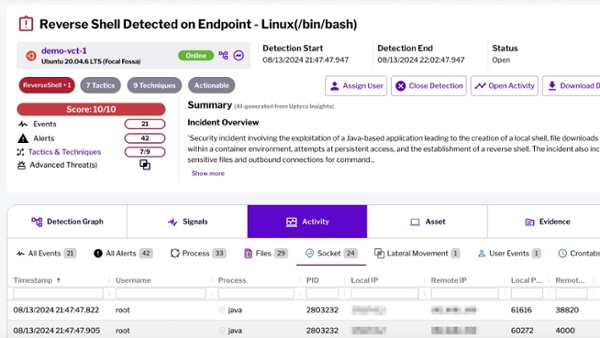
Uptycs takes what they call a telemetry-powered approach. They collect data from across your environment and analyze it for security signals. Runtime protection fits into their broader security analytics strategy.
Uptycs runtime capabilities include:
- Workload monitoring – tracks virtual machines, containers, and serverless functions
- Investigation and remediation – helps teams dig into security threats and fix them
- Kubernetes runtime visibility – watches K8s clusters across private and public clouds
- Threat detection – identifies malicious activity in running workloads
Uptycs positions runtime as part of their unified platform rather than the centerpiece. They want to give teams full visibility from buildtime to runtime.
Runtime Coverage Comparison
| Runtime Capability | Sweet Security | Uptycs |
|---|---|---|
| Container Runtime Monitoring | Yes – core focus | Yes |
| Kubernetes Protection | Yes | Yes – strong K8s inventory |
| Serverless Monitoring | Yes | Yes |
| AI Workload Protection | Yes – specialized AI-SPM | Limited |
| Behavioral Analysis | AI-driven | Analytics-based |
| Real-time Detection Speed | Emphasized as core strength | Part of broader platform |
Which Runtime Approach Works Better?
Sweet Security’s runtime-first design gives them an edge for teams who prioritize active threat detection. If catching attacks as they happen matters most, their architecture aligns with that goal.
Uptycs offers solid runtime capabilities within a more balanced platform. Teams who want equal weight on buildtime and runtime protection might prefer their approach. The telemetry-powered model works well for teams already comfortable with security analytics.
Cloud Security Posture Management (CSPM) Features
CSPM finds misconfigurations before attackers do. It scans your cloud setup against security best practices and compliance frameworks. Both Sweet Security and Uptycs include CSPM, but with different emphasis.
Sweet Security CSPM Capabilities
Sweet Security includes CSPM as part of their unified CNAPP. Gartner identifies CSPM as one of the core capabilities any CNAPP should have, and Sweet Security covers the basics.
Their CSPM features include:
- Configuration scanning – checks cloud resources against security benchmarks
- Compliance monitoring – maps findings to regulatory frameworks
- Risk prioritization – ranks issues based on actual exposure
- Context from runtime – uses runtime data to show which misconfigs matter most
The interesting angle with Sweet Security is how they connect CSPM findings to runtime context. A misconfiguration that’s actively being exploited gets higher priority than one in an unused resource.
Uptycs CSPM Capabilities
Uptycs positions CSPM as a key part of their unified risk visibility model. They want teams to see misconfigurations alongside vulnerabilities and threats in one view.
Their CSPM approach covers:
- Multi-cloud posture assessment – works across AWS, Azure, GCP, and private clouds
- Compliance frameworks – maps to CIS, SOC 2, PCI-DSS, and others
- Attack path analysis – shows how misconfigs could lead to breaches
- CI/CD pipeline checks – catches issues in code repos and pipelines
Uptycs extends CSPM into the development workflow. They scan not just running infrastructure but also the pipelines that build it.
CSPM Feature Comparison Table
| CSPM Feature | Sweet Security | Uptycs |
|---|---|---|
| Multi-Cloud Support | Yes | Yes – explicit hybrid cloud focus |
| Compliance Frameworks | Standard frameworks | Extensive framework coverage |
| CI/CD Pipeline Scanning | Limited | Yes – strong pipeline integration |
| Attack Path Visualization | Yes | Yes – emphasized feature |
| Runtime Context Integration | Strong – core differentiator | Available |
| Prioritization Method | Runtime-informed risk scoring | Unified context from multiple sources |
CSPM Verdict
Uptycs has broader CSPM capabilities, especially around CI/CD integration and compliance coverage. Teams with strong compliance requirements or complex pipelines will appreciate their depth.
Sweet Security’s CSPM stands out for runtime-informed prioritization. Instead of showing every misconfiguration equally, they help teams focus on what’s actually risky right now.
Vulnerability Management and Container Scanning
Finding vulnerabilities before attackers exploit them is basic security hygiene. Both platforms scan for weaknesses, but when and how they scan differs. Let’s break down their vulnerability management approaches.
Sweet Security Vulnerability Management
Sweet Security handles vulnerability detection as part of their runtime-first model. They scan containers and workloads, then add runtime context to prioritize findings.
Key aspects include:
- Container image scanning – checks images for known CVEs
- Runtime vulnerability context – shows which vulns are actually reachable
- AI-assisted prioritization – uses machine learning to rank issues
- Continuous monitoring – watches for new vulnerabilities as they’re disclosed
Their strength is connecting static scan results to runtime reality. A vulnerability in a package that never gets loaded is less urgent than one in active code paths.
Uptycs Vulnerability Management
Uptycs built container scanning into their CI/CD pipeline approach. They check images during build and deploy stages, then continue monitoring at runtime.
Their vulnerability features include:
- Pipeline-integrated scanning – catches issues before deployment
- Malicious component detection – finds not just vulns but suspicious packages
- Runtime vulnerability assessment – continues scanning after deployment
- Cluster-level vulnerability posture – shows vuln status per K8s cluster
Uptycs gives DevOps teams an overall inventory of K8s clusters with vulnerability posture for each. This helps teams see which clusters need attention first.
Scanning Coverage Comparison
| Vulnerability Feature | Sweet Security | Uptycs |
|---|---|---|
| Pre-deployment Scanning | Yes | Yes – strong CI/CD focus |
| Runtime Scanning | Yes – emphasized | Yes |
| Malicious Package Detection | Yes | Yes – explicit feature |
| Kubernetes Inventory | Yes | Yes – comprehensive cluster view |
| Reachability Analysis | Yes – runtime context | Limited |
| Shift-Left Integration | Moderate | Strong – developer collaboration focus |
Vulnerability Management Verdict
Uptycs wins for shift-left scenarios. Their pipeline integration helps developers catch issues before code reaches production. The DevOps collaboration focus makes them appealing for teams with mature CI/CD practices.
Sweet Security excels at runtime vulnerability context. They help security teams understand which vulnerabilities actually matter based on how workloads behave. This reduces alert fatigue from false positives.
AI and Machine Learning Capabilities
AI separates modern security platforms from legacy tools. Both Sweet Security and Uptycs use AI, but their implementations differ significantly. Here’s what each brings to the table.
Sweet Security AI Features
Sweet Security built AI into their foundation. They offer two related products: Sweet Security Runtime CNAPP and Sweet AI Security Platform (AISP). The AISP provides end-to-end AI security for models, agents, and runtime protection.
Their AI capabilities include:
- AI-powered threat detection – machine learning models identify attack patterns
- Behavioral anomaly detection – learns normal behavior, flags deviations
- AI workload protection – secures ML models and AI agents specifically
- Automated correlation – connects related events across the environment
What sets Sweet Security apart is their focus on protecting AI workloads, not just using AI for security. As organizations deploy more ML models, securing those models becomes a distinct challenge.
Uptycs AI Features
Uptycs added AI capabilities through their Juno AI Analyst. This feature lets teams ask security questions in natural language and get analyzed answers.
Juno AI Analyst provides:
- Natural language queries – ask questions about your security posture
- Detection analysis – AI explains what alerts mean and why they matter
- Finding verification – confirms whether detections are real threats
- Cross-context analysis – pulls together cloud, workload, and runtime data
Uptycs positions Juno AI as a team productivity tool. It helps analysts work faster by answering questions they’d otherwise research manually.
AI Capability Comparison
| AI Feature | Sweet Security | Uptycs |
|---|---|---|
| AI-Powered Detection | Core platform capability | Supported |
| Natural Language Interface | Limited | Yes – Juno AI Analyst |
| AI Workload Security | Yes – AI-SPM product | Not specialized |
| Behavioral Analysis | AI-driven | Analytics-based |
| Automated Correlation | Yes | Yes |
| Investigation Assistance | AI-assisted | Juno AI explanations |
AI Implementation Comparison
Sweet Security uses AI primarily for detection and protection. Their models learn what normal looks like and catch threats that signature-based tools miss. They also lead in AI workload security, which matters as organizations adopt more ML.
Uptycs uses AI primarily for analyst productivity. Juno AI Analyst helps teams work faster and understand findings better. It’s more about augmenting human analysts than autonomous detection.
Neither approach is wrong. They reflect different priorities. Sweet Security bets on AI catching threats humans would miss. Uptycs bets on AI helping humans work more efficiently.
Kubernetes Security and Container Protection
Kubernetes runs most modern cloud-native applications. Securing K8s clusters requires specialized capabilities beyond traditional workload protection. Here’s how each platform handles container orchestration security.
Sweet Security Kubernetes Protection
Sweet Security protects Kubernetes as part of their runtime focus. They monitor container behavior within K8s clusters and detect threats targeting the orchestration layer.
K8s-specific features include:
- Runtime container monitoring – watches pods and containers as they run
- Kubernetes threat detection – identifies K8s-specific attack techniques
- Namespace visibility – tracks activity across namespaces
- Pod security analysis – checks pod configurations for weaknesses
Their runtime-first approach means continuous monitoring of K8s behavior, not just periodic scans.
Uptycs Kubernetes Protection
Uptycs provides comprehensive K8s inventory management. They give teams visibility into all clusters across private and public clouds.
Their K8s capabilities include:
- Complete cluster inventory – catalogs all K8s clusters in your environment
- Per-cluster security posture – shows vulnerability, threat, and compliance status
- Cross-cloud visibility – works across AWS EKS, Azure AKS, GKE, and on-prem
- K8s misconfiguration detection – finds insecure cluster configurations
Uptycs emphasizes giving Security and DevOps teams a single view of their entire K8s footprint.
Kubernetes Feature Comparison
| Kubernetes Feature | Sweet Security | Uptycs |
|---|---|---|
| Cluster Inventory | Yes | Yes – emphasized feature |
| Runtime Monitoring | Yes – core strength | Yes |
| Configuration Assessment | Yes | Yes |
| Multi-Cloud K8s Support | Yes | Yes – private and public |
| Per-Cluster Posture View | Available | Yes – explicit feature |
| K8s Threat Detection | AI-powered | Analytics-powered |
Container Security Beyond Kubernetes
Both platforms handle containers running outside K8s too. Docker containers, container instances on cloud platforms, and serverless containers all need protection.
Sweet Security covers containerized AI workloads specifically. As ML models increasingly run in containers, this specialized coverage matters.
Uptycs maintains visibility across hybrid environments. Teams running containers in both cloud and on-prem benefit from their unified view.
Threat Detection and Response Capabilities
Finding threats is only half the job. Security teams need to understand attacks and respond quickly. Both platforms provide detection and response features, but with different strengths.
Sweet Security Threat Detection
Sweet Security’s AI-powered detection forms their core value proposition. They catch threats through behavioral analysis, pattern recognition, and runtime monitoring.
Detection capabilities include:
- Real-time threat identification – spots attacks as they happen
- Behavioral baseline comparison – flags deviations from normal
- Attack chain correlation – connects related malicious activities
- Zero-day threat detection – catches novel attacks without signatures
Their response features focus on speed. When you’re watching runtime, fast response matters more than comprehensive post-incident analysis.
Uptycs Threat Detection
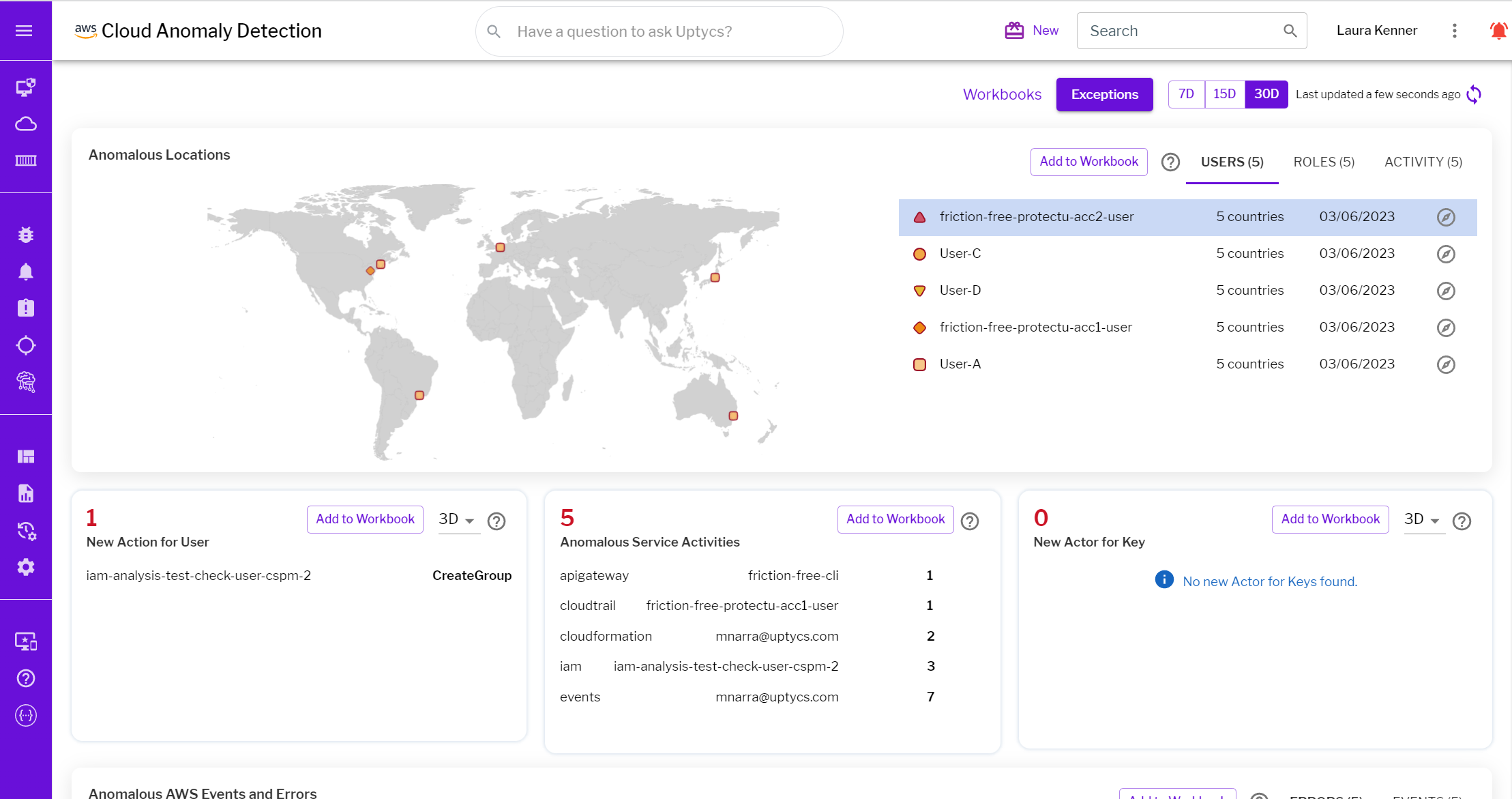
Uptycs built detection on their security analytics foundation. They collect telemetry from across environments and analyze it for threats.
Their detection approach includes:
- Telemetry-powered analysis – uses data from multiple sources
- Investigation workflows – helps teams dig into threats
- Remediation guidance – provides steps to fix issues
- Juno AI-assisted analysis – explains detections and verifies findings
Uptycs positions themselves for collaborative investigation. Security teams can ask questions and get answers about threats across their entire IT estate.
Detection and Response Comparison
| Detection/Response Feature | Sweet Security | Uptycs |
|---|---|---|
| Detection Method | AI-powered behavioral | Telemetry analytics |
| Real-time Alerting | Emphasized | Supported |
| Investigation Tools | Available | Strong – core feature |
| Automated Response | Yes | Limited |
| AI-Assisted Analysis | Built-in | Juno AI Analyst |
| Remediation Guidance | Yes | Yes – emphasized |
Response Speed vs Investigation Depth
Sweet Security optimizes for fast response. Their runtime focus means catching and stopping threats quickly. This works well for teams facing active attacks on production workloads.
Uptycs optimizes for thorough investigation. Their analytics approach helps teams understand the full scope of incidents. This works well for teams doing detailed post-incident analysis.
Neither approach is universally better. Your choice depends on whether you prioritize stopping threats fast or understanding them completely.
Integration Capabilities and Ecosystem Support
No security tool works in isolation. CNAPP platforms need to connect with CI/CD pipelines, SIEM systems, ticketing tools, and cloud providers. Integration depth affects how well each platform fits your existing stack.
Sweet Security Integrations
Sweet Security connects to major cloud providers and common security tools. Their integration focus supports their runtime-first approach.
Key integrations include:
- Cloud providers – AWS, Azure, GCP
- Container platforms – Docker, Kubernetes, container registries
- SIEM tools – common security information platforms
- Notification systems – Slack, PagerDuty, email alerting
Their AI security platform also integrates with ML infrastructure for organizations running AI workloads.
Uptycs Integrations
Uptycs emphasizes CI/CD and developer tool integrations. They position themselves for Security and DevOps collaboration.
Their integration ecosystem covers:
- CI/CD pipelines – Jenkins, GitHub Actions, GitLab CI, and others
- Code repositories – GitHub, GitLab, Bitbucket
- Cloud providers – AWS, Azure, GCP, plus private clouds
- Kubernetes platforms – EKS, AKS, GKE, on-prem K8s
- SIEM and SOAR – security orchestration platforms
Uptycs specifically calls out code repo and CI/CD pipeline integration as a strength. They scan for misconfigurations in pipelines, not just running infrastructure.
Integration Comparison Table
| Integration Category | Sweet Security | Uptycs |
|---|---|---|
| Major Cloud Providers | Yes | Yes |
| Private Cloud/Hybrid | Supported | Emphasized |
| CI/CD Pipelines | Basic | Strong |
| Code Repositories | Limited | Yes |
| Container Registries | Yes | Yes |
| SIEM/SOAR Tools | Yes | Yes |
| AI/ML Infrastructure | Strong | Limited |
Integration Verdict
Uptycs has broader integration coverage, especially for development tools. Teams with mature DevOps practices will find more pre-built connections.
Sweet Security has specialized integrations for AI infrastructure. Organizations running ML workloads in production benefit from these connections.
User Experience and Deployment
How easy is each platform to set up and use daily? Deployment complexity and interface quality affect how much value you get from any tool.
Sweet Security User Experience
Sweet Security designed their interface around runtime visibility. The dashboard emphasizes what’s happening now in your cloud environment.
UX highlights include:
- Real-time dashboards – current threat and posture status
- AI-driven prioritization – shows what needs attention first
- Unified view – cloud security and AI security in one place
- Alert context – explains why detections matter
Users praise their high average rating of 8.6 in the CNAPP category. This suggests strong satisfaction with the overall experience.
Uptycs User Experience
Uptycs focuses on security observability. Their interface lets teams ask questions and explore their security posture interactively.
UX strengths include:
- Unified risk visibility – all security data in one platform
- Juno AI natural language – ask questions in plain English
- Investigation workflows – guided paths for analyzing threats
- Customizable dashboards – adapt views to team needs
Their analytics heritage shows in the query capabilities. Teams comfortable with data exploration will appreciate the flexibility.
Deployment Considerations
Both platforms require agent deployment for full runtime visibility. Here’s what to expect:
Sweet Security deployment:
- Lightweight agents for container and workload monitoring
- Cloud API connections for posture assessment
- AI model integrations for AI workload protection
- Relatively fast time-to-value with runtime focus
Uptycs deployment:
- Agents across workloads for telemetry collection
- CI/CD pipeline integration setup
- Cloud connector configuration
- More extensive initial setup for full coverage
Deployment Comparison
| Deployment Factor | Sweet Security | Uptycs |
|---|---|---|
| Agent Requirements | Lightweight agents | Agents for telemetry |
| Cloud API Setup | Standard connections | Multiple cloud connectors |
| Pipeline Integration | Optional | Recommended for full value |
| Time to Initial Value | Fast – runtime focus | Moderate – broader setup |
| Hybrid Cloud Support | Yes | Strong emphasis |
Pricing and Value Considerations
Neither Sweet Security nor Uptycs publishes fixed pricing publicly. CNAPP platforms typically price based on workload count, cloud resources, or usage tiers. Here’s what to consider when evaluating costs.
Sweet Security Pricing Model
Sweet Security operates on a commercial model with custom pricing. Factors that likely affect cost include:
- Number of monitored workloads – containers, pods, VMs
- Cloud account coverage – AWS accounts, Azure subscriptions, GCP projects
- AI workload volume – if using AI-SPM features
- Support tier – standard vs premium support levels
Their #14 market ranking suggests competitive positioning. Contact their sales team for specific quotes.
Uptycs Pricing Model
Uptycs also uses custom commercial pricing. Their model likely considers:
- Protected workload count – endpoints, containers, cloud resources
- Data retention requirements – telemetry storage duration
- Module selection – which capabilities you need
- Support and services – implementation assistance levels
Their broader feature set may mean higher complexity in pricing discussions.
Value Factors to Consider
Price alone doesn’t tell the full story. Consider these factors when comparing value:
Alert reduction value: How much time does each platform save by reducing false positives? Sweet Security’s runtime context may cut noise significantly.
Shift-left savings: Catching vulnerabilities before production saves remediation costs. Uptycs’ pipeline integration may prevent expensive late-stage fixes.
Team efficiency: AI features affect analyst productivity. Juno AI’s natural language queries might speed up investigations.
Coverage completeness: Running multiple tools for gaps costs money. A more complete platform may reduce total security spend.
Use Case Scenarios: When to Choose Each Platform
Different organizations have different needs. Here’s guidance on which platform fits various scenarios better.
Choose Sweet Security When:
- Runtime threats are your biggest concern – Their architecture prioritizes catching active attacks
- You run AI workloads in production – Their AI-SPM coverage is unmatched
- Alert fatigue hurts your team – Runtime context reduces false positives
- You need fast detection – Real-time monitoring catches threats quickly
- Your team is smaller – AI-driven prioritization helps focused teams
Choose Uptycs When:
- Shift-left security matters most – Pipeline integration catches issues early
- You have mature DevOps practices – Developer collaboration is built in
- Hybrid cloud is your reality – Strong private and public cloud support
- Investigation depth is a priority – Analytics enable thorough analysis
- Compliance drives decisions – Extensive framework coverage helps audits
Scenario Comparison Table
| Scenario | Better Choice | Reason |
|---|---|---|
| High-threat environment | Sweet Security | Faster runtime detection |
| Strong DevOps culture | Uptycs | Better pipeline integration |
| AI/ML production workloads | Sweet Security | Specialized AI security |
| Complex compliance needs | Uptycs | Broader framework coverage |
| Limited security staff | Sweet Security | AI-driven prioritization |
| Security analytics focus | Uptycs | Query-based exploration |
| Hybrid on-prem/cloud | Uptycs | Stronger hybrid support |
Market Position and Future Direction
Understanding where each vendor is headed helps with long-term planning. CNAPP is evolving fast, and both companies are adapting.
Sweet Security Market Position
With a #14 ranking and 1.5% mindshare, Sweet Security has carved out a position as a runtime-focused challenger. Their 8.6 average rating shows strong customer satisfaction.
Future direction indicators:
- AI workload focus – well positioned as ML adoption grows
- Runtime specialization – differentiated from scan-heavy competitors
- Integration expansion – likely building more ecosystem connections
Uptycs Market Position
Ranked #23 with 1.0% mindshare, Uptycs positions itself for hybrid cloud and DevOps collaboration. Their security analytics heritage gives them unique capabilities.
Future direction indicators:
- Beyond CNAPP – they’re thinking about what comes next in cloud security
- AI analyst expansion – Juno AI will likely gain capabilities
- Telemetry depth – continued investment in security observability
Industry Trends Affecting Both
Several trends will shape how both platforms evolve:
AI security requirements: As organizations deploy more AI, protecting those workloads becomes mandatory. Sweet Security has a head start here.
Cloud complexity growth: Multi-cloud and hybrid environments keep getting more complex. Both platforms will need to expand coverage.
Alert volume increases: More cloud resources mean more potential alerts. AI-driven filtering becomes more valuable.
Regulation expansion: New compliance requirements keep appearing. Broader framework coverage helps.
Strengths and Limitations Summary
Let’s bring together the key points from our comparison. Here’s a balanced view of what each platform does well and where it has gaps.
Sweet Security Strengths
- Runtime-first architecture – catches active threats faster
- AI-powered detection – finds threats without signatures
- AI workload protection – secures ML models and agents
- High customer satisfaction – 8.6 average rating
- Runtime-informed prioritization – reduces false positives
- Faster time to value – focused approach speeds deployment
Sweet Security Limitations
- CI/CD integration depth – not as strong as specialized shift-left tools
- Hybrid cloud emphasis – less focus on on-prem scenarios
- Natural language queries – no equivalent to Juno AI for exploration
- Compliance breadth – fewer pre-built framework mappings
Uptycs Strengths
- Comprehensive CNAPP coverage – buildtime to runtime protection
- Strong CI/CD integration – catches issues in pipelines
- Hybrid cloud support – private and public cloud visibility
- Juno AI Analyst – natural language security queries
- K8s inventory management – complete cluster visibility
- DevOps collaboration – built for Security and DevOps teams
Uptycs Limitations
- Runtime specialization – less focused than Sweet Security
- AI workload protection – no specialized AI security features
- Detection speed – analytics approach may be slower than behavioral
- Complexity – broader platform means more to configure
Final Strengths and Limitations Table
| Category | Sweet Security Verdict | Uptycs Verdict |
|---|---|---|
| Runtime Protection | Excellent – core strength | Good |
| Shift-Left Security | Adequate | Excellent |
| AI/ML Security | Excellent – unique offering | Limited |
| Kubernetes Coverage | Good | Excellent |
| Investigation Tools | Good | Excellent |
| Ease of Use | Strong – focused interface | Good – more complexity |
| Compliance Support | Good | Excellent |
Making Your Decision: Sweet Security vs Uptycs
After examining both platforms in depth, the choice comes down to priorities. Neither platform is universally better. Each excels in different areas.
Questions to Ask Your Team
Before deciding, answer these questions honestly:
- What’s your biggest security gap right now? Runtime threats point to Sweet Security. Pipeline vulnerabilities point to Uptycs.
- Do you run AI/ML workloads? If yes, Sweet Security’s AI-SPM matters.
- How mature is your DevOps practice? Mature DevOps benefits more from Uptycs.
- What’s your hybrid cloud situation? Significant on-prem favors Uptycs.
- How stretched is your security team? Small teams benefit from Sweet Security’s AI prioritization.
Trial and Evaluation Recommendations
Both vendors offer ways to evaluate their platforms. Here’s how to get the most from trials:
- Test with real workloads – demos don’t show actual performance
- Measure alert quality – count false positives during the trial
- Involve DevOps – see how well each platform fits their workflows
- Check integration effort – how long does setup actually take?
- Review detection coverage – test with known attack scenarios
Conclusion: Choosing Between Sweet Security and Uptycs
Sweet Security and Uptycs both deliver strong cloud-native application protection. Sweet Security wins for runtime-first security and AI workload protection, with their 8.6 rating reflecting customer satisfaction. Uptycs excels at shift-left security, pipeline integration, and comprehensive coverage from buildtime to runtime.
Your decision depends on what matters most: catching active threats fast or building security into your development process from the start. Either choice puts you ahead of organizations without CNAPP protection at all.
Frequently Asked Questions: Sweet Security vs Uptycs Comparison
| What is the main difference between Sweet Security and Uptycs? | Sweet Security focuses on runtime-first protection with AI-powered threat detection. Uptycs takes a broader approach covering buildtime to runtime with strong CI/CD integration. Sweet Security excels at catching active threats, while Uptycs shines at preventing issues before deployment. |
| Which platform is better for Kubernetes security? | Both handle Kubernetes well, but they emphasize different aspects. Uptycs provides comprehensive K8s inventory management across all your clusters. Sweet Security offers strong runtime monitoring within K8s environments. For inventory visibility, choose Uptycs. For threat detection in running pods, choose Sweet Security. |
| Does Sweet Security or Uptycs support AI workload protection? | Sweet Security has specialized AI security features through their AI Security Platform (AISP). It protects ML models, AI agents, and AI runtime. Uptycs doesn’t offer specialized AI workload security. If you run production AI workloads, Sweet Security is the better choice. |
| How do Sweet Security and Uptycs compare on pricing? | Neither publishes fixed pricing. Both use custom commercial models based on workload count, cloud resources, and selected features. Contact each vendor directly for quotes tailored to your environment size and requirements. |
| Which CNAPP platform has better market ratings? | Sweet Security ranks #14 in the CNAPP market with an 8.6 average rating and 1.5% mindshare. Uptycs ranks #23 with 1.0% mindshare. Sweet Security’s higher rating and ranking suggest stronger customer satisfaction in 2026. |
| Can Uptycs integrate with CI/CD pipelines better than Sweet Security? | Yes, Uptycs has stronger CI/CD integration. They scan container images and check for misconfigurations in code repos and pipelines. Sweet Security focuses more on runtime protection. For shift-left security in development workflows, Uptycs is the stronger choice. |
| Which platform is easier to deploy? | Sweet Security typically deploys faster because of their focused runtime approach. Uptycs requires more setup for full value, including CI/CD integration and pipeline configuration. Teams wanting quick time-to-value may prefer Sweet Security. |
| Do both platforms support hybrid cloud environments? | Yes, but Uptycs emphasizes hybrid cloud more strongly. They explicitly support private clouds alongside AWS, Azure, and GCP. Organizations with significant on-premises infrastructure may find Uptycs a better fit. |
| What AI features do Sweet Security and Uptycs offer? | Sweet Security uses AI primarily for threat detection and behavioral analysis. Uptycs offers Juno AI Analyst for natural language security queries and investigation assistance. Sweet Security’s AI catches threats. Uptycs’ AI helps analysts work faster. |
| Who should use Sweet Security vs who should use Uptycs? | Choose Sweet Security if you prioritize runtime threat detection, run AI workloads, or have a smaller security team needing AI-driven prioritization. Choose Uptycs if you have mature DevOps practices, need strong compliance coverage, or want comprehensive buildtime-to-runtime protection with pipeline integration. |





 Stack Insight is intended to support informed decision-making by providing independent information about business software and services. Some product details, including pricing, features, and promotional offers, may be supplied by vendors or partners and can change without notice.