

Carta vs Eqvista: The Complete 2026 Comparison Guide for Cap Table Management
Choosing the right cap table software can save your startup thousands of dollars and countless hours. Two platforms come up again and again in conversations with founders: Carta and Eqvista. Both handle equity management, 409A valuations, and shareholder tracking. But they take very different approaches to pricing, features, and support.
This guide breaks down every angle of the Carta vs Eqvista decision. We’ll look at pricing structures, 409A valuation services, cap table features, user experience, customer support, and more. Whether you’re a pre-seed startup or a Series B company, you’ll find the details you need to make a confident choice. Let’s dig into what actually matters when picking between these two platforms.
Understanding Cap Table Management Software in 2026
Before we compare Carta and Eqvista directly, let’s cover what cap table software actually does. And why it matters more than ever for private companies.
What Is Cap Table Software?
A cap table (capitalization table) tracks who owns what in your company. It shows founders, investors, employees with stock options, and anyone else holding equity. Sounds simple. But as your company grows, it gets complicated fast.
Manual spreadsheets break down quickly. One wrong formula can misrepresent ownership percentages. A missed vesting date creates legal headaches. And when investors want accurate numbers during due diligence, scrambling through Excel files isn’t a good look.
Cap table software solves these problems by:
- Automating equity calculations across share classes
- Tracking vesting schedules for employee stock options
- Managing convertible notes and SAFEs
- Running scenario modeling for fundraising rounds
- Generating investor reports and compliance documents
- Storing legal documents like stock purchase agreements
Why 409A Valuations Matter
If you’re granting stock options to employees, you need a 409A valuation. This is an IRS requirement. It determines the fair market value of your common stock. Get it wrong, and your employees face tax penalties. Your company could too.
Most startups need a new 409A valuation every 12 months. Or after any material event like a funding round. Some cap table platforms include valuations in their pricing. Others charge separately. This difference alone can mean thousands of dollars saved or spent.
The Stakes Are Higher Than You Think
Your cap table isn’t just a record-keeping tool. It’s a strategic asset. Investors scrutinize it during funding rounds. Acquirers examine it during M&A. Employees check it when evaluating job offers. A messy cap table signals operational chaos. A clean one builds trust.
The software you choose shapes how you manage this critical piece of your business. So let’s look at how Carta and Eqvista stack up.
Company Background: Carta and Eqvista Overview
Understanding where each platform comes from helps explain their different approaches.
Carta’s History and Market Position
Carta launched in 2012 as eShares. It rebranded to Carta in 2017. The company raised over $1 billion in venture funding and reached unicorn status. Carta serves thousands of companies, from early-stage startups to public companies.
Over the years, Carta expanded beyond cap tables. It now offers fund administration for VCs, liquidity programs for shareholders, and compensation benchmarking tools. This growth brought complexity. Some users say the platform has gotten bloated. Others appreciate the full suite of services.
Carta’s target customer has shifted toward larger companies. Pricing reflects this. Early-stage startups sometimes feel priced out or underserved.
Eqvista’s History and Market Position
Eqvista entered the market as a direct alternative to Carta. The company focused on two things: affordability and simplicity. From the start, Eqvista targeted early-stage companies frustrated with high prices and complex interfaces.
Eqvista built its reputation around 409A valuations. The company employs NACVA-certified valuation experts. They offer unlimited 409A valuations bundled into subscription pricing. This model disrupted the per-valuation pricing that dominates the industry.
Today, Eqvista ranks as a top-rated equity management platform on G2 and Clutch. It serves thousands of startups globally. The company continues to focus on its core market: startups that need reliable cap table management without enterprise-level pricing.
Quick Company Comparison
| Attribute | Carta | Eqvista |
|---|---|---|
| Founded | 2012 | 2016 |
| Headquarters | San Francisco, CA | Seattle, WA |
| Primary Focus | Full equity platform + fund administration | Cap table management + 409A valuations |
| Target Market | Seed to public companies, VCs | Early to late-stage startups |
| G2 Rating | 4.2/5 | 4.3/5 |
| Capterra Rating | 4.5/5 | 4.5/5 |
Pricing Comparison: Carta vs Eqvista Costs
Pricing is often the deciding factor. Let’s break down what each platform actually costs.
Eqvista’s Pricing Structure
Eqvista uses a per-stakeholder pricing model. This makes costs predictable. You know exactly what you’ll pay as your company grows.
Eqvista Pricing Tiers:
- Freemium: $0/month for up to 20 shareholders. Basic cap table features included.
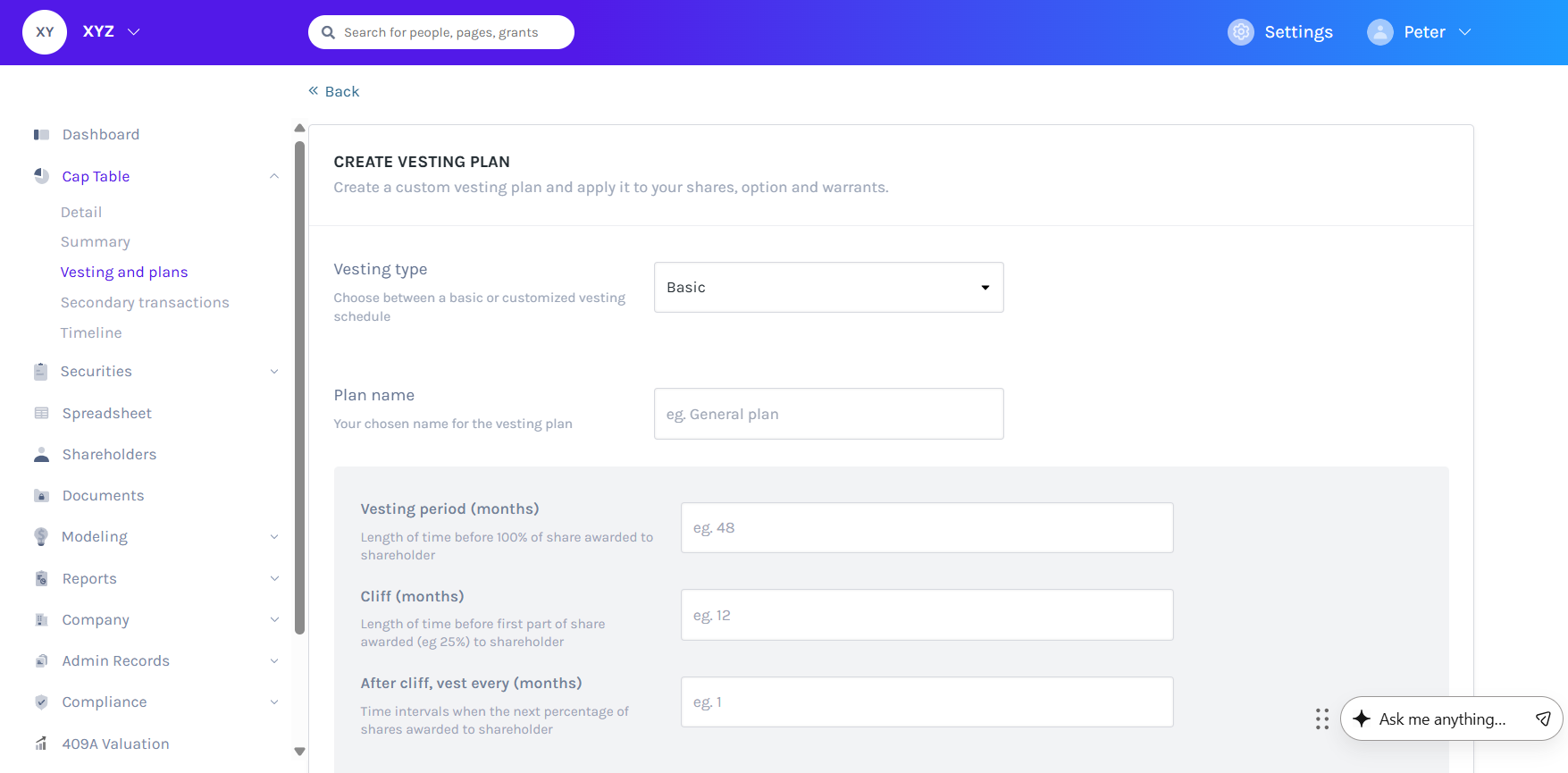
- Premium: $2/shareholder/month. Full cap table management, equity tracking, advanced vesting schedules.
- Unlimited 409A Bundle: $990/year. Includes unlimited valuations from NACVA-certified experts.
The freemium tier is genuinely useful. A pre-seed startup with founders and a few angel investors can manage their cap table for free. No credit card required. No feature restrictions on core functionality.
The $2/shareholder/month model scales smoothly. A company with 50 shareholders pays $100/month. With 100 shareholders, $200/month. Simple math.
But the real savings come from the 409A bundle. At $990/year for unlimited valuations, Eqvista saves companies thousands compared to per-valuation pricing.
Carta’s Pricing Structure
Carta’s pricing is less transparent. The company doesn’t publish detailed pricing on its website. Costs vary based on company stage, features needed, and negotiation.
Reported Carta Pricing (2026):
- Launch Plan: Around $3,000/year for early-stage companies. Limited features.
- Build Plan: $6,000-$12,000/year. More features, larger cap tables.
- Scale Plan: $15,000+/year. Enterprise features, dedicated support.
- 409A Valuations: $3,500-$10,000+ per valuation, charged separately.
Carta’s pricing has frustrated many users. The median cost for 409A valuations through Carta reportedly hits $14,000 when combined with platform fees. Early-stage founders often feel the platform isn’t built for them anymore.
Real Cost Comparison: A Practical Example
Let’s run the numbers for a typical Series A startup. 75 shareholders. Needs two 409A valuations per year (one annual, one after funding round).
| Cost Category | Eqvista Annual Cost | Carta Annual Cost |
|---|---|---|
| Platform Subscription | $1,800 (75 × $2 × 12 months) | $6,000-$12,000 (Build Plan) |
| 409A Valuations (2x) | $990 (unlimited bundle) | $7,000-$14,000 (2 × $3,500-$7,000) |
| Total Annual Cost | $2,790 | $13,000-$26,000 |
| Potential Savings | $10,210-$23,210 with Eqvista | |
The savings are real. A company choosing Eqvista over Carta could save 70% or more on equity management costs. That’s money that goes back into product development, hiring, or extending runway.
Hidden Costs to Watch
Both platforms may have additional costs. Watch for these:
- Document generation fees: Some platforms charge for creating legal documents.
- Migration costs: Switching platforms can involve data transfer fees.
- Premium support: Dedicated account managers cost extra on some plans.
- Add-on features: Advanced reporting or integrations may not be included.
Eqvista’s straightforward pricing avoids most of these surprises. Carta’s tiered approach means you might hit feature walls that require upgrading.
409A Valuation Services: A Critical Difference
409A valuations deserve their own section. This is where Carta and Eqvista differ most.
How Eqvista Handles 409A Valuations
Eqvista built its 409A service differently than competitors. The company doesn’t fully automate the process. Instead, clients work with a dedicated analyst from start to finish.
Key features of Eqvista’s 409A service:
- NACVA-certified analysts: Real experts review every valuation. Not just algorithms.
- IRS-defensible reports: Analysts understand the full picture of your company.
- Unlimited valuations: $990/year covers as many valuations as you need.
- Lifetime audit support: If the IRS questions your valuation, Eqvista helps defend it.
- Fast turnaround: Testing showed faster-than-expected delivery times.
The human element matters here. Automated valuations miss context. They can’t ask follow-up questions about your business model. They don’t catch red flags that could trigger IRS scrutiny. Eqvista’s approach combines technology with expert judgment.
One user review captures this well:
“The Eqvista team offered amazing support while performing my valuation process.” – Jason F., Legal Advisor
How Carta Handles 409A Valuations
Carta offers 409A valuations as a separate service. Pricing is per-valuation, typically $3,500-$10,000+ depending on company complexity.
Carta’s 409A process includes:
- Certified valuation professionals: Carta employs qualified appraisers.
- Integration with cap table: Data flows directly from your existing Carta records.
- Audit defense: Support available if IRS questions arise.
- Standard turnaround: Typically 2-3 weeks for completion.
Carta’s integration advantage is real. If you’re already using Carta for cap table management, the valuation team has instant access to your equity data. Less data entry means fewer errors.
But the per-valuation pricing adds up quickly. A company needing quarterly valuations (common after rapid growth or multiple funding events) could spend $20,000+ annually just on valuations. That’s before platform subscription costs.
409A Valuation Comparison Table
| Feature | Eqvista | Carta |
|---|---|---|
| Pricing Model | $990/year unlimited | $3,500-$10,000+ per valuation |
| Analyst Approach | Dedicated human analyst | Professional appraisers |
| Certifications | NACVA-certified experts | Certified valuation professionals |
| Audit Support | Lifetime included | Available (terms vary) |
| Turnaround Time | Faster than expected (per testing) | 2-3 weeks standard |
| Integration | Direct with Eqvista cap table | Direct with Carta cap table |
| Cost for 2 Valuations/Year | $990 | $7,000-$20,000 |
Why the 409A Pricing Gap Matters
Startups issuing stock options regularly feel this difference most. Every time you make a significant hire and grant equity, you want a current 409A. Every funding round requires one. Material business changes trigger new requirements.
With per-valuation pricing, companies start rationing. They delay valuations to save money. This creates compliance risk. Or they rush hiring decisions to bunch them before the next valuation. Neither is ideal.
Eqvista’s unlimited model removes this friction. Need a valuation after a bridge round? No extra cost. Hiring a VP and want current pricing? Already covered. This flexibility lets companies operate without constantly calculating valuation costs.
Cap Table Management Features: Eqvista vs Carta
At the core, both platforms manage cap tables. But the experience and capabilities differ.
Eqvista’s Cap Table Features
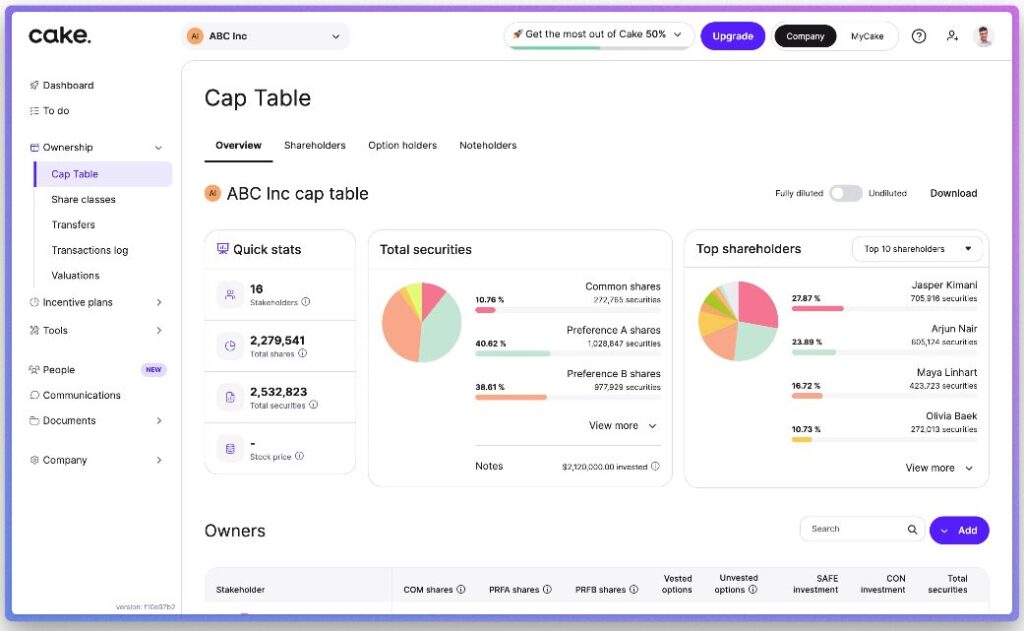
Eqvista focuses on making cap table management straightforward. The platform handles standard equity types and scenarios without overwhelming users with options they don’t need.
Core features include:
- Share issuance: Issue common stock, preferred stock, and other equity types.
- Vesting schedules: Advanced vesting tracking for stock options and RSUs.
- Convertible instruments: Manage SAFEs, convertible notes, and warrants.
- Scenario modeling: Run waterfall analyses for funding rounds.
- Real-time updates: Changes reflect immediately across reports.
- Document storage: Keep stock purchase agreements and other legal documents organized.
Users describe the interface as clean and intuitive. Setup takes minutes, not hours. Founders and CFOs can navigate the platform without extensive training.
Eqvista also offers something unique: Real-Time Company Valuation®. This feature combines cap table management with ongoing valuation intelligence. Instead of seeing static numbers, companies get a clearer picture of what their shares are worth as the business evolves.
Carta’s Cap Table Features
Carta offers a broader feature set. This makes sense given its enterprise focus. Larger companies need more capabilities.
Core features include:
- Comprehensive equity types: All standard share classes plus complex structures.
- Advanced vesting: Multiple vesting schedule types and acceleration options.
- Global equity support: International compliance features for distributed teams.
- Portfolio management: Track investments across multiple companies.
- Liquidity programs: Facilitate secondary sales for shareholders.
- Fund administration: Full back-office support for venture funds.
- Compensation benchmarking: Market data for equity and salary decisions.
The trade-off is complexity. G2 reviewers report a steeper learning curve with Carta. Some users describe the interface as complex, especially for newcomers trying to understand equity reports.
If you need SPV administration or fund management, Carta has clear advantages. If you need clean cap table management without the extras, those features add clutter.
Feature Comparison by Category
| Feature Category | Eqvista | Carta |
|---|---|---|
| Basic Cap Table | ✓ Full support | ✓ Full support |
| Stock Options | ✓ All standard types | ✓ All standard types |
| RSUs | ✓ Supported | ✓ Supported |
| SAFEs & Convertibles | ✓ Supported | ✓ Supported |
| Vesting Schedules | ✓ Advanced options | ✓ Advanced options |
| Scenario Modeling | ✓ Waterfall analysis | ✓ Advanced modeling |
| Real-Time Valuation | ✓ Real-Time Company Valuation® | ✗ Separate service |
| Fund Administration | ✗ Not offered | ✓ Full service |
| Liquidity Programs | ✗ Not offered | ✓ CartaX marketplace |
| Global Compliance | Limited | ✓ Strong international support |
| Interface Simplicity | Clean, intuitive | Feature-rich, steeper learning curve |
Round Modeling and Waterfall Analysis
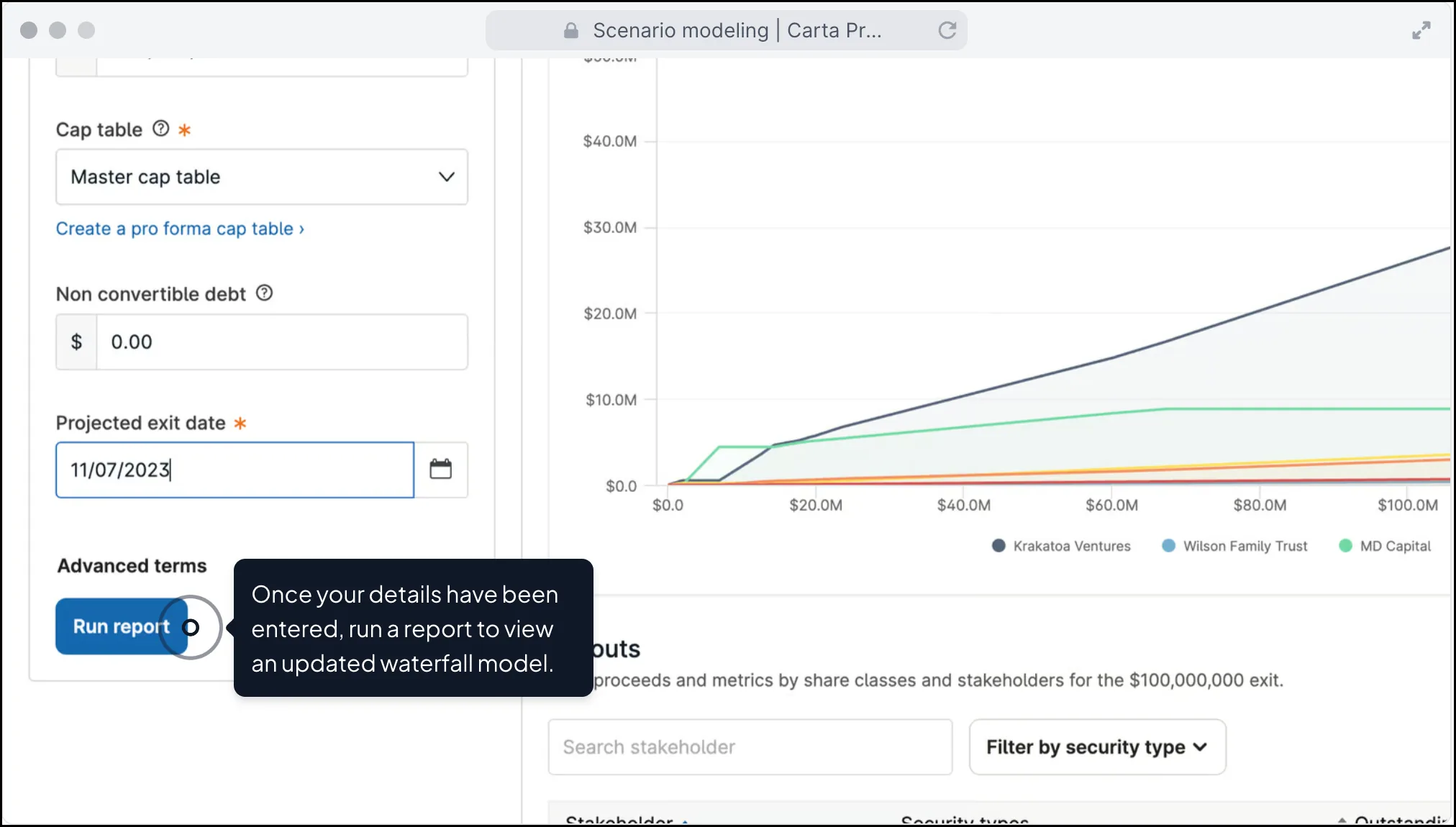
Both platforms let you model funding rounds before they close. This helps founders understand dilution and investors see their potential ownership.
Eqvista’s modeling is straightforward. Enter the terms of a proposed round. See how ownership percentages shift. Run multiple scenarios to compare term sheets. The output is clear even if you’re not a finance expert.
Carta’s modeling goes deeper. Complex liquidation preferences, participation rights, and anti-dilution provisions are all supported. If you have multiple preferred stock series with different terms, Carta handles the math.
For most early-stage companies, Eqvista’s modeling is sufficient. You’re usually dealing with standard terms. Once you reach Series B or C with complex cap structures, Carta’s advanced modeling becomes more valuable.
User Experience and Interface Design
Software you hate using is software you’ll use poorly. Or avoid entirely. Interface design matters.
Eqvista’s User Experience
Eqvista was built with simplicity as a core principle. The company targets founders who don’t have dedicated equity administrators. The interface reflects this.
What users appreciate:
- Fast setup: Creating your first cap table takes minutes.
- Logical navigation: Features are where you expect them.
- Clear dashboards: Key metrics visible without digging.
- Readable reports: Output that non-finance people understand.
- Mobile-friendly: Check your cap table on any device.
The platform is described as “built for founders and CFOs.” This shows in the design choices. Jargon is minimized. Complex concepts are explained. You don’t need equity administration experience to get value from day one.
Eqvista ranks highly for ease of use on review platforms. The clean interface earns consistent praise.
Carta’s User Experience
Carta’s interface has evolved over 10+ years. This brings both depth and complexity.
What users experience:
- Feature density: Lots of options, which can overwhelm new users.
- Professional design: Polished, enterprise-grade appearance.
- Learning curve: Expect time investment to master the platform.
- Powerful reporting: Deep customization for those who need it.
- Training resources: Extensive documentation and support materials.
G2 reviewers note the learning curve repeatedly. New users often feel lost initially. The wealth of features means more menus, more options, more decisions at every step.
For companies with dedicated finance teams, this depth is valuable. An experienced equity administrator can unlock Carta’s full potential. A solo founder trying to issue their first options might struggle.
Onboarding Comparison
Getting started sets the tone for the entire relationship with your cap table software.
Eqvista onboarding:
- Create account (free)
- Add company information
- Import or enter existing shareholders
- Start managing equity
- Timeline: Under 30 minutes for basic setup
Carta onboarding:
- Contact sales or sign up for appropriate tier
- Scheduled implementation calls
- Data migration assistance
- Training sessions recommended
- Timeline: Days to weeks depending on complexity
The difference reflects their target markets. Eqvista wants you up and running fast. Carta invests in more guided implementation, which makes sense for enterprise clients but slows down smaller companies.
Customer Support and Service Quality
When something goes wrong with your cap table, support quality determines how painful the experience becomes.
Eqvista’s Support Approach
Eqvista emphasizes responsive, personalized support. Users consistently highlight this in reviews.
Support features:
- Dedicated analyst access: For 409A valuations, you work with the same person.
- Quick response times: Support requests addressed promptly.
- Human interaction: Real people, not just chatbots.
- Lifetime audit support: Ongoing help if IRS questions your valuations.
User testimonials regularly mention support quality. One user who switched from Carta noted: “Eqvista offers a more cost-effective and user-friendly solution, with simpler cap table management and responsive support compared to other platforms.”
For startups without dedicated finance staff, accessible support is critical. You need help when you need it. Waiting days for a response while a funding round looms isn’t acceptable.
Carta’s Support Approach
Carta’s support structure reflects its enterprise focus. Support quality often correlates with pricing tier.
Support features:
- Tiered support: Higher-paying customers get priority.
- Dedicated success managers: Available on premium plans.
- Extensive knowledge base: Self-service documentation.
- Community forums: Peer support and discussion.
- Phone support: Available for enterprise customers.
User experiences with Carta support vary widely. Enterprise customers with dedicated managers report excellent service. Smaller companies on lower tiers sometimes feel underserved. This inconsistency appears in reviews.
If you’re on a Carta plan that includes dedicated support, you’ll likely have a good experience. If you’re on a basic plan, expect more self-service and longer wait times.
Support Comparison Summary
| Support Aspect | Eqvista | Carta |
|---|---|---|
| Response Speed | Fast, consistent | Varies by tier |
| Personal Touch | Dedicated analysts | Premium plans only |
| Self-Service Resources | Good | Extensive |
| Audit Defense | Lifetime included | Available |
| User Satisfaction | Consistently praised | Mixed reviews |
Security, Compliance, and Data Protection
Your cap table contains sensitive information. Ownership percentages, valuations, employee compensation details. Security isn’t optional.
Eqvista’s Security Measures
Eqvista takes security seriously, implementing industry-standard protections.
Security features include:
- Data encryption: Both in transit and at rest.
- Secure access controls: Role-based permissions.
- Regular backups: Data protection against loss.
- Compliance focus: IRS-defensible valuations built into process.
- Audit trails: Track changes to your cap table.
For startups, these measures cover the essentials. Your data is protected. Your valuations are compliant. Your equity records are backed up.
Carta’s Security Measures
As an enterprise platform, Carta invests heavily in security and compliance.
Security features include:
- SOC 1 and SOC 2 compliance: Third-party audited controls.
- Data encryption: Enterprise-grade protection.
- Multi-factor authentication: Additional login security.
- Detailed audit logs: Comprehensive change tracking.
- Global compliance: GDPR and international standards.
- Regular security assessments: Ongoing vulnerability testing.
Carta’s security credentials satisfy enterprise requirements. If you’re dealing with investors who demand SOC 2 compliance from vendors, Carta checks that box clearly.
Compliance Considerations
Both platforms help with 409A compliance. But broader equity compliance varies.
Carta’s global features support international tax and securities requirements. If you have employees in multiple countries receiving equity, Carta’s infrastructure handles country-specific rules.
Eqvista focuses primarily on US compliance. Companies with primarily domestic operations are well served. International expansion may require additional compliance support.
Integration and Ecosystem
Cap table software doesn’t exist in isolation. It connects to payroll, accounting, HR, and other systems.
Eqvista’s Integrations
Eqvista offers core integrations while keeping the platform focused.
Available integrations:
- Accounting software: Connect with major platforms for financial reporting.
- Data export: Flexible export options for custom integrations.
- API access: Available for custom development needs.
The integration approach matches the platform philosophy: cover what’s needed without overwhelming complexity. Most startups can connect Eqvista to their key systems.
Carta’s Integrations
Carta offers broader integration options, reflecting its enterprise positioning.
Available integrations:
- Payroll systems: Direct connections to major providers.
- HRIS platforms: Sync employee data automatically.
- Accounting software: Comprehensive financial integrations.
- Tax prep services: Streamlined 83(b) election filing.
- Legal document services: E-signature and storage.
- Banking and payments: Dividend distribution capabilities.
For companies with complex tech stacks, Carta’s integration depth reduces manual data entry. Information flows between systems automatically. This saves time but requires setup and maintenance.
API and Custom Development
Both platforms offer API access for custom integrations. Carta’s API is more mature and extensively documented. Eqvista’s API covers core use cases.
If you’re building custom equity administration workflows, evaluate each platform’s API capabilities against your specific needs. For standard integrations, both work fine.
Best Use Cases: When to Choose Each Platform
Different companies have different needs. Here’s where each platform shines.
Choose Eqvista When:
- Budget matters: You need to maximize equity savings.
- You’re early stage: Pre-seed to Series B companies fit well.
- 409A valuations are frequent: Unlimited valuations save thousands.
- Simplicity is valued: You want clean, intuitive software.
- Support responsiveness is key: You need help when you need it.
- You’re US-focused: Domestic operations are well supported.
- You’re switching from Carta: Many users migrate for cost savings.
Eqvista excels for the majority of startups. If you’re trying to control costs while maintaining professional equity management, it’s hard to beat the value proposition.
Choose Carta When:
- You’re later stage: Series C+ companies with complex structures.
- You need fund administration: VCs and GPs managing multiple funds.
- Liquidity programs matter: You want secondary sale capabilities.
- You operate globally: International equity compliance is required.
- Enterprise features are needed: SPVs, advanced modeling, benchmarking.
- Integration depth is critical: Complex tech stacks requiring connections.
- Budget is less constrained: You can afford premium pricing.
Carta fits companies that have outgrown simpler solutions. If you’re raising significant capital, managing multiple entities, or need the full platform ecosystem, Carta delivers.
Decision Framework by Company Stage
| Company Stage | Recommended Platform | Reasoning |
|---|---|---|
| Pre-seed | Eqvista | Free tier for up to 20 shareholders. Zero cost to start. |
| Seed | Eqvista | Low cost, unlimited 409A bundle. Focus resources on growth. |
| Series A | Eqvista or Carta | Depends on complexity and international needs. |
| Series B | Either works | Evaluate specific feature requirements. |
| Series C+ | Carta | Enterprise features become more valuable. |
| VC Funds | Carta | Fund administration is Carta’s strength. |
Migration and Switching Considerations
If you’re currently using Carta and considering Eqvista (or vice versa), here’s what to know.
Switching from Carta to Eqvista
Many companies make this switch to reduce costs. The process involves:
- Data export: Download your cap table data from Carta.
- Import to Eqvista: Upload existing shareholder and equity information.
- Verification: Confirm all data transferred correctly.
- Stakeholder notification: Update shareholders on the new portal.
- Document migration: Move relevant legal documents.
Eqvista supports migration from Carta. Their team can assist with the process. Users who’ve made the switch report that it’s manageable, though allow time for verification.
One user who switched shared: “I made the switch from Carta because Eqvista offers a more cost-effective and user-friendly solution.”
Switching from Eqvista to Carta
Less common, but sometimes companies outgrow their initial platform. Reasons for this switch:
- International expansion: Needing global compliance features.
- Fund formation: Starting a fund that needs administration.
- Investor requirements: Some investors prefer Carta’s ecosystem.
- Complex equity structures: Outgrowing simpler modeling.
Carta has migration support for incoming companies. The process is similar: export, import, verify, communicate.
Migration Best Practices
Regardless of direction, follow these steps:
- Audit current data first. Clean up errors before migrating them.
- Create backups. Never migrate without safety copies.
- Test thoroughly. Verify ownership percentages match exactly.
- Time it right. Don’t migrate during a funding round or option grants.
- Communicate clearly. Tell stakeholders about the change and new access.
- Keep old access temporarily. Maintain historical reference during transition.
User Reviews and Real-World Feedback
What do actual users say? Let’s look at review platform feedback.
Eqvista User Reviews
G2 Rating: 4.3/5 stars
Capterra Rating: 4.5/5 stars
Eqvista ranks as a top-rated equity management platform. Common themes in reviews:
Positive feedback:
- “Cost-effective solution” appears repeatedly.
- “User-friendly” and “intuitive interface” mentioned often.
- “Responsive support” highlighted by many users.
- “409A valuations are excellent value.”
- “Setup was quick and easy.”
Areas for improvement:
- Investor CRM features less specialized than some competitors.
- International compliance features limited.
- Some users want more advanced reporting options.
Eqvista ranks #1 for value on G2 as a 409A Valuation Provider. Users consistently highlight the price-to-value ratio.
Carta User Reviews
G2 Rating: 4.2/5 stars
Capterra Rating: 4.5/5 stars
Carta reviews reflect its position as an established platform. Common themes:
Positive feedback:
- “Comprehensive features” appreciated by larger companies.
- “Industry standard” seen as validation for investors.
- “Powerful reporting” valued by finance teams.
- “Integration ecosystem” helpful for complex setups.
Areas for improvement:
- “Steep learning curve” mentioned frequently.
- “Pricing has increased” frustrates long-term users.
- “Interface is complex” challenging for new users.
- “Support varies” depending on pricing tier.
- “Feels enterprise-focused” alienating smaller companies.
Carta’s reviews show a platform that’s powerful but not always accessible. Users who invest time to learn it appreciate the depth. Others feel overwhelmed.
Head-to-Head User Sentiment
| Category | Eqvista User Sentiment | Carta User Sentiment |
|---|---|---|
| Value for Money | Highly positive | Mixed (price concerns) |
| Ease of Use | Positive | Mixed (learning curve) |
| Feature Depth | Good for most needs | Very positive |
| Customer Support | Positive | Varies by tier |
| 409A Service | Excellent value | Good quality, high cost |
| Overall Satisfaction | High | Moderate to High |
Future Roadmap and Platform Evolution
Where are these platforms headed? Platform trajectory matters for long-term decisions.
Eqvista’s Direction
Eqvista continues building on its core strengths. Recent developments include:
- Real-Time Company Valuation®: Integration of live valuation intelligence with cap table management.
- Improved modeling tools: Expanded scenario capabilities.
- Mobile experience: Better access across devices.
The company’s focus remains on serving startups well. Expect continued emphasis on value, simplicity, and 409A services. Eqvista isn’t trying to become an enterprise platform. It’s trying to be the best option for companies that don’t need one.
Carta’s Direction
Carta has expanded in multiple directions:
- CartaX: Secondary trading marketplace for private company shares.
- Compensation benchmarking: Market data for hiring decisions.
- Fund administration growth: Expanding VC services.
- Total compensation tools: Broader HR analytics.
Carta is becoming more than a cap table platform. It’s building a comprehensive private markets ecosystem. This brings value for companies that use multiple services. It also means the cap table product is one piece of a larger strategy, not the sole focus.
Platform Risk Considerations
When choosing software, consider platform sustainability:
- Eqvista: Profitable focus on core services. Sustainable business model. Growth tied to customer success.
- Carta: Venture-backed with expansion pressure. Has faced layoffs and strategic pivots. Strong market position but evolving strategy.
Both platforms are established and likely to continue operating. But their trajectories differ. Eqvista stays focused on its niche. Carta pursues broader ambitions.
Making Your Final Decision: Carta vs Eqvista
Let’s bring everything together into actionable guidance.
Summary Comparison Table
| Criteria | Eqvista | Carta | Winner |
|---|---|---|---|
| Pricing | $2/shareholder/month + $990/year 409A | $3,000-$15,000+/year + per-valuation | Eqvista |
| 409A Value | Unlimited for $990/year | $3,500-$10,000+ each | Eqvista |
| Ease of Use | Simple, intuitive | Steeper learning curve | Eqvista |
| Feature Depth | Good for most startups | Comprehensive | Carta |
| Support Quality | Consistently praised | Varies by tier | Eqvista |
| Global Compliance | Limited | Strong | Carta |
| Fund Administration | Not offered | Full service | Carta |
| Early-Stage Fit | Excellent | Mixed | Eqvista |
| Late-Stage Fit | Good | Excellent | Carta |
| G2 Rating | 4.3/5 | 4.2/5 | Eqvista |
The Bottom Line Recommendation
For most startups from pre-seed through Series B, Eqvista is the better choice. The cost savings are substantial. The platform handles standard cap table needs well. The 409A unlimited bundle alone justifies consideration. And the user experience favors founders without dedicated equity administrators.
For later-stage companies with complex needs, Carta has advantages. If you need fund administration, global compliance, liquidity programs, or deep integrations, Carta’s ecosystem delivers. Budget constraints matter less at this stage, making the pricing premium acceptable.
Questions to Ask Yourself
Before deciding, answer these:
- What’s your annual budget for equity management and 409A valuations?
- How many shareholders do you have now? In two years?
- Do you have dedicated finance staff to manage the platform?
- Do you operate internationally with equity grants in multiple countries?
- Do you need fund administration or SPV management?
- How important is ease of use versus feature depth?
- What do your investors expect or prefer?
Your answers shape the right choice. Most early-stage companies land on Eqvista. Most enterprise-scale operations lean Carta. The middle ground depends on your priorities.
Conclusion
Choosing between Carta and Eqvista comes down to your company’s stage, budget, and complexity needs. Eqvista delivers excellent value with its unlimited 409A bundle, simple interface, and responsive support. Carta offers depth for companies needing enterprise features, global compliance, and fund administration. For most startups, Eqvista saves money while covering what matters. Evaluate your specific needs, test both platforms if possible, and choose the one that fits where you are today and where you’re headed.
Frequently Asked Questions About Carta vs Eqvista
| What’s the main difference between Carta and Eqvista? |
| The biggest difference is pricing and target market. Eqvista offers affordable per-stakeholder pricing with unlimited 409A valuations for $990/year. Carta charges higher platform fees plus $3,500-$10,000+ per 409A valuation. Eqvista targets startups seeking simplicity and value. Carta serves larger companies needing enterprise features, fund administration, and global compliance. |
| Which platform is better for early-stage startups? |
| Eqvista is generally better for early-stage startups. The free tier supports up to 20 shareholders at no cost. The premium tier costs just $2 per shareholder per month. The unlimited 409A bundle saves thousands compared to Carta. The interface is simpler, and setup takes minutes. Early-stage companies rarely need Carta’s enterprise features. |
| How much can I save by choosing Eqvista over Carta? |
| Savings vary by company size and 409A needs. A typical Series A company with 75 shareholders needing two 409A valuations annually might pay $2,790 with Eqvista versus $13,000-$26,000 with Carta. That’s potential savings of $10,000-$23,000 per year. Eqvista’s unlimited 409A bundle accounts for most of these savings. |
| Are Eqvista’s 409A valuations as reliable as Carta’s? |
| Yes, Eqvista’s 409A valuations are IRS-defensible and performed by NACVA-certified experts. Unlike fully automated services, Eqvista assigns a dedicated analyst who understands your company’s full picture. The service includes lifetime audit support if the IRS ever questions your valuation. Eqvista ranks #1 for value on G2 as a 409A Valuation Provider. |
| Can I switch from Carta to Eqvista easily? |
| Yes, many companies have made this switch. The process involves exporting your cap table data from Carta, importing it to Eqvista, and verifying accuracy. Eqvista’s team can assist with migration. Users who’ve switched report manageable transitions. Don’t migrate during a funding round, and allow time for thorough verification. |
| When should I choose Carta instead of Eqvista? |
| Choose Carta if you need fund administration for a VC fund, require global equity compliance for international employees, want liquidity programs like CartaX for secondary sales, have complex cap structures needing advanced modeling, or have a budget that accommodates enterprise pricing. Series C+ companies and venture funds often benefit from Carta’s ecosystem. |
| Does Eqvista support international companies? |
| Eqvista primarily focuses on US compliance. Companies with mainly domestic operations are well served. If you have significant international equity grants requiring country-specific compliance, Carta offers stronger global features. Evaluate your specific international needs before deciding. |
| What is Eqvista’s Real-Time Company Valuation® feature? |
| Real-Time Company Valuation® combines cap table management with ongoing valuation intelligence. Instead of static snapshots, companies get clearer visibility into what their shares are worth as the business evolves. This feature integrates equity management, valuation services, and real-time visibility in one system. |
| How do user reviews compare between Carta and Eqvista? |
| Eqvista has a 4.3/5 rating on G2 and 4.5/5 on Capterra. Carta has 4.2/5 on G2 and 4.5/5 on Capterra. Eqvista users praise cost-effectiveness, ease of use, and responsive support. Carta users appreciate feature depth but note learning curves and pricing concerns. Eqvista ranks highest for value among 409A providers. |
| Is there a free version of either platform? |
| Eqvista offers a freemium tier that supports up to 20 shareholders at no cost. This includes basic cap table features with no credit card required. Carta doesn’t offer a comparable free tier. Their lowest plans start around $3,000 annually. For pre-seed startups, Eqvista’s free option is a significant advantage. |




 Stack Insight is intended to support informed decision-making by providing independent information about business software and services. Some product details, including pricing, features, and promotional offers, may be supplied by vendors or partners and can change without notice.