
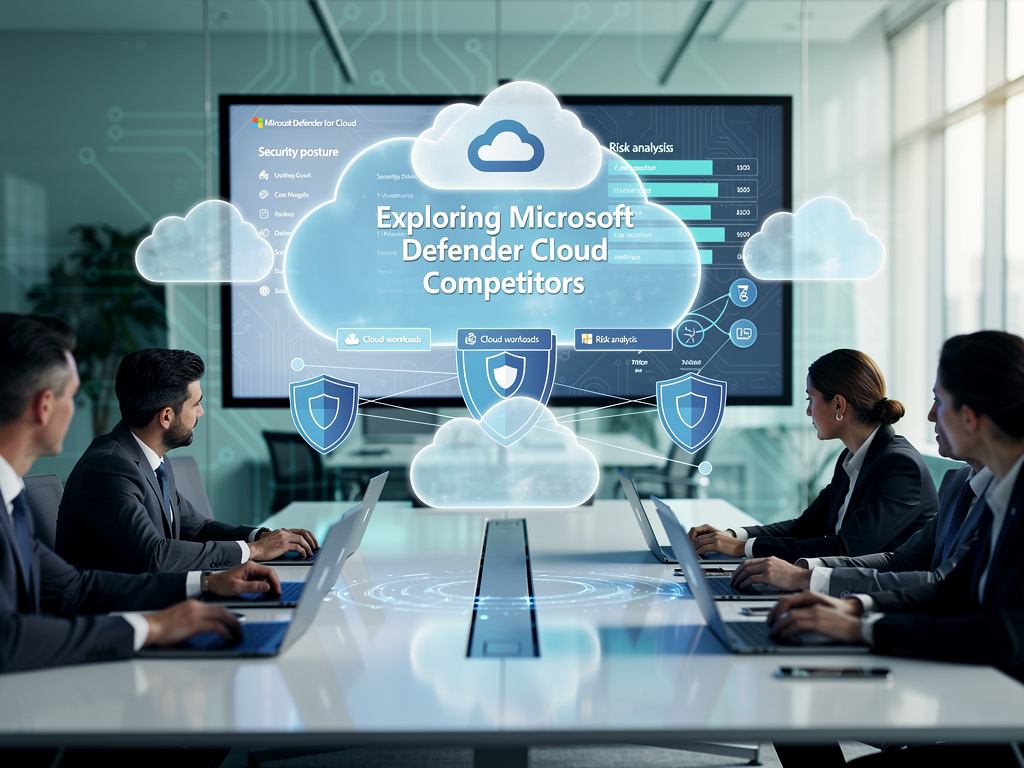
Microsoft Defender for Cloud Competitors: 15 Top Alternatives Compared for 2026
Microsoft Defender for Cloud works well if you’re fully committed to Azure. But what happens when your workloads span AWS, GCP, and on-premises infrastructure? That’s where its limitations become clear. Multi-cloud visibility often feels stitched together rather than native. Alert fatigue hits hard. And runtime protection can feel like an afterthought.
Security teams are actively hunting for alternatives that deliver better coverage across cloud providers. They want faster time-to-value, stronger runtime detection, and fewer false positives drowning their dashboards. The CNAPP market has exploded with options. Some focus purely on posture management. Others bring runtime workload protection into the mix. A few try to do everything.
This guide breaks down 15 leading Microsoft Defender for Cloud competitors. You’ll find detailed analysis of each platform’s architecture, deployment model, detection capabilities, compliance support, and real-world fit. Whether you’re running containers in Kubernetes, serverless functions, or traditional VMs, there’s a platform here that matches your needs.
What Makes a Strong Cloud Security Platform in 2026?
Before jumping into individual products, let’s establish what actually matters when evaluating cloud-native security tools. The CNAPP market has matured quickly. Vendors have converged on similar feature sets, making differentiation harder to spot.
Core Evaluation Criteria
We analyzed each platform against these specific criteria:
- Multi-cloud coverage: Native support for AWS, Azure, and GCP without bolted-on integrations
- Deployment model: Agentless scanning, agent-based runtime protection, or hybrid approaches
- Time-to-value: How quickly can you see meaningful results after connecting cloud accounts?
- Detection quality: Accuracy of findings, context around alerts, and false positive rates
- Runtime protection: Workload protection, threat detection, and response capabilities
- Compliance frameworks: Built-in support for SOC 2, PCI-DSS, HIPAA, GDPR, DORA, and NIS2
- Pricing transparency: Clear cost structure versus opaque enterprise-only quotes
- Integration ecosystem: Connections to SIEM, ticketing, CI/CD, and DevOps tooling
The Agentless vs. Agent Debate
This remains the central architectural question in cloud security. Agentless platforms connect through cloud provider APIs. They scan storage, configurations, and snapshots without touching your workloads. Setup takes minutes. Coverage is immediate.
Agent-based tools install sensors on your instances. They see runtime behavior, process execution, and network flows in real time. But they add operational overhead. You need to manage deployment, updates, and compatibility.
The best platforms in 2026 offer both. Agentless scanning gets you visibility fast. Optional agents or eBPF sensors add runtime depth where you need it. Watch out for vendors claiming you need one or the other exclusively. Reality is messier than marketing.
Sweet Security: Runtime-First Cloud Detection
Sweet Security represents the new wave of cloud security platforms built from the ground up around runtime detection. While legacy CNAPPs added runtime as an afterthought, Sweet made it the foundation.
Architecture and Approach
Sweet deploys lightweight eBPF-based sensors across your cloud workloads. These sensors capture system calls, network connections, and process behavior without kernel modules. The overhead stays minimal. Performance impact rarely exceeds 1-2% CPU.
What sets Sweet apart is behavioral baselining. The platform learns what normal looks like for each application. It tracks which processes typically run, what network connections are expected, and which files get accessed. Deviations from baseline trigger alerts.
Detection Capabilities
Sweet excels at catching active threats that posture-only tools miss entirely:
- Cryptomining: Detects mining processes within seconds of execution
- Reverse shells: Identifies outbound shells establishing connections to attacker infrastructure
- Container escapes: Catches privilege escalation attempts breaking container boundaries
- Credential theft: Monitors access to sensitive credential stores and API tokens
Best Fit
Sweet fits teams that already have posture management handled. If you’re running Wiz or another CSPM for configuration scanning, Sweet adds the runtime layer they lack. It’s particularly strong for container-heavy environments where behavioral detection catches what static scans miss.
Pricing: Consumption-based model tied to protected workloads. Contact for quotes.
Strengths: Industry-leading runtime detection, low performance overhead, fast threat identification.
Weaknesses: Limited posture management capabilities, requires complementary CSPM tool.
Wiz: The Speed-to-Value Leader
Wiz has become the default choice for organizations wanting fast cloud visibility. Their agentless architecture connects to cloud provider APIs and delivers a complete inventory within hours. No agents. No complex deployment. Just connect and scan.
How Wiz Works
Wiz uses a graph-based approach to cloud security. Every asset becomes a node. Relationships between assets form edges. This structure lets Wiz identify toxic combinations that isolated findings would miss.
For example, a publicly exposed storage bucket alone might be low severity. But connect that to an IAM role with admin privileges, running on an unpatched instance, and you’ve got a critical attack path. Wiz surfaces these combinations automatically.
The Security Graph
Wiz’s graph database contains:
- Compute instances, containers, and serverless functions
- Network configurations and exposure paths
- IAM roles, policies, and permission chains
- Data stores and their classification
- Vulnerabilities mapped to running workloads
- Secrets and credentials in code and configuration
Queries across this graph answer questions like “show me all internet-exposed workloads with critical vulnerabilities that can access production databases.” That context changes how you prioritize fixes.
Wiz Defend: Addressing the Runtime Gap
Wiz’s historical weakness has been runtime protection. The agentless model gives great visibility but can’t see active threats in real time. Wiz Defend aims to close this gap.
As one industry analyst noted: “Wiz Defend represents a necessary direction for the company, but aside from one major advantage, it continues to be the weakest point of the platform.” The sensor-based approach is newer and less mature than competitors like Sysdig or Aqua who’ve focused on runtime for years.
Best Fit
Wiz works best for large enterprises wanting unified cloud visibility across hundreds of accounts. Teams prioritizing speed-to-value over runtime detection will appreciate the frictionless onboarding. It’s particularly strong for organizations with compliance requirements driving their security program.
Pricing: Enterprise agreements typically start at six figures annually. Based on cloud spend or asset count.
Strengths: Fastest time-to-value in the market, excellent multi-cloud coverage, strong security graph context.
Weaknesses: Runtime capabilities still maturing, premium pricing, limited application security depth.
Prisma Cloud: The Palo Alto Networks Powerhouse
Prisma Cloud brings Palo Alto Networks’ security heritage to cloud-native protection. It’s one of the most complete platforms available, covering everything from code scanning to runtime defense. That completeness comes with complexity.
Module Architecture
Prisma Cloud isn’t a single product. It’s a collection of capabilities assembled under one roof:
- Cloud Security Posture Management (CSPM): Configuration and compliance monitoring
- Cloud Workload Protection (CWPP): Runtime defense for hosts and containers
- Cloud Infrastructure Entitlement Management (CIEM): Identity and access governance
- Cloud Network Security: Network segmentation and microsegmentation
- Cloud Code Security: Infrastructure-as-code scanning and secrets detection
Depth Over Speed
Where Wiz wins on time-to-value, Prisma wins on depth. Organizations with mature security programs appreciate the granular controls. You can define custom policies, build complex compliance frameworks, and tune detection rules precisely.
This depth requires investment. Deployment takes longer. Training takes longer. Tuning takes longer. But the payoff is a platform that can handle enterprise edge cases other tools gloss over.
Integration with Palo Alto Ecosystem
If you’re already running Palo Alto firewalls, Cortex XDR, or other Palo Alto products, Prisma Cloud integrates tightly. Threat intelligence flows between products. Incidents correlate across network and cloud. Management consolidates into shared dashboards.
This integration is a double-edged sword. It creates tremendous value for existing Palo Alto customers. It creates lock-in concerns for those who prefer best-of-breed approaches.
Best Fit
Prisma Cloud fits large enterprises with dedicated security teams and existing Palo Alto relationships. Organizations in regulated industries benefit from the compliance depth. Teams needing strong runtime protection alongside posture management find value in the unified platform.
Pricing: Module-based pricing creates flexibility but also complexity. Enterprise agreements required.
Strengths: Most complete feature set, excellent compliance coverage, strong Palo Alto integration.
Weaknesses: Complexity requires dedicated resources, slower deployment than agentless competitors, pricing can escalate.
Orca Security: SideScanning Innovation
Orca Security pioneered the agentless approach that Wiz later popularized. Their patented SideScanning technology reads cloud workload storage directly without deploying agents or impacting performance.
How SideScanning Works
Traditional agent-based scanning runs on your instances, consuming CPU and memory. Agentless approaches using snapshots can miss running processes. Orca’s SideScanning reads block storage directly from the cloud provider layer.
This approach captures:
- Installed packages and their versions
- Configuration files and settings
- Running services and their parameters
- Stored credentials and secrets
- Malware signatures in dormant files
The result is deep visibility without any workload impact. Scans happen outside your instances entirely.
Unified Data Model
Orca builds what they call a “Unified Data Model” across your cloud estate. Every asset, vulnerability, misconfiguration, and risk factor gets normalized into a single queryable structure. You can pivot from a specific CVE to all affected workloads to their network exposure in seconds.
Attack Path Analysis
Like Wiz, Orca maps potential attack paths through your environment. The platform identifies chains of weaknesses that could lead to compromise. A vulnerable package on a public-facing workload with IAM credentials stored in environment variables shows up as a critical path, not three separate medium-severity findings.
Best Fit
Orca works well for organizations wanting comprehensive coverage without agent deployment overhead. Mid-market companies appreciate the balance of capability and complexity. Teams moving from legacy vulnerability scanners find the unified view refreshing.
Pricing: Based on cloud spend or asset count. Generally positioned below Wiz but above smaller competitors.
Strengths: Proven agentless technology, strong attack path visualization, good balance of depth and usability.
Weaknesses: Runtime detection limited by agentless architecture, brand awareness lower than Wiz despite similar capabilities.
CrowdStrike Falcon Cloud Security: Endpoint Heritage in the Cloud
CrowdStrike built their reputation protecting endpoints. Falcon Cloud Security extends that expertise to cloud workloads. The transition brings both advantages and baggage.
The Falcon Platform Foundation
All CrowdStrike products run on the same Falcon platform. This means your cloud security data sits alongside endpoint telemetry, threat intelligence, and incident response capabilities. For teams already using CrowdStrike, the extension to cloud is natural.
The Falcon agent deploys to cloud instances just like it does to laptops and servers. It collects behavioral data, blocks threats, and reports back to the central console. This agent-first approach gives strong runtime visibility but requires deployment management.
Threat Intelligence Integration
CrowdStrike’s threat intelligence team tracks adversary groups worldwide. That intelligence feeds directly into cloud security. When a new attack technique emerges, detection rules update automatically. This connection between threat research and product capability is a real differentiator.
Cloud Security Posture Management
CrowdStrike added CSPM capabilities to address the configuration and compliance side. These features feel newer than their workload protection. Integration between posture findings and runtime detection could be tighter. But the trajectory is toward a more unified platform.
Best Fit
CrowdStrike Falcon Cloud Security fits organizations already running CrowdStrike for endpoint protection. The unified platform and shared console simplify operations. Teams prioritizing threat detection over compliance will appreciate the intelligence integration.
Pricing: Module-based within the Falcon platform. Competitive for existing CrowdStrike customers.
Strengths: Elite threat intelligence, proven detection engine, unified endpoint and cloud visibility.
Weaknesses: CSPM capabilities less mature than pure-play competitors, agent deployment required for full capability.
Aqua Security: Container Security Pioneer
Aqua Security was protecting containers before Kubernetes hit 1.0. That head start shows in their platform’s depth for container and Kubernetes environments. If your workloads are primarily containerized, Aqua deserves serious consideration.
Container-Native Design
Aqua thinks in containers first. Their scanning happens at the image level, identifying vulnerabilities before deployment. Runtime protection watches container behavior, blocking anomalies in real time. Kubernetes admission control prevents non-compliant images from reaching production.
This container-native approach extends to:
- Image scanning: Deep analysis of container images in registries
- Runtime policies: Behavioral rules specific to container workloads
- Network policies: Automatic microsegmentation for container communication
- Drift prevention: Blocking changes to running containers that differ from images
Supply Chain Security
Aqua has invested heavily in software supply chain protection. Their platform scans open-source dependencies, validates image provenance, and generates SBOMs (Software Bill of Materials). With attacks on software supply chains increasing, these capabilities matter more each year.
Runtime Protection Depth
Where newer agentless platforms scan periodically, Aqua watches continuously. Their runtime protection catches threats as they happen, not during the next scan cycle. This real-time visibility requires agents, but for containerized workloads, Aqua’s DaemonSet deployment model simplifies management.
Best Fit
Aqua fits organizations running container-heavy workloads, especially in Kubernetes. Teams with mature DevSecOps practices appreciate the shift-left capabilities. Organizations concerned about supply chain security find Aqua’s depth valuable.
Pricing: Based on protected nodes and container images. Flexible licensing options available.
Strengths: Deepest container security capabilities, strong runtime protection, excellent supply chain focus.
Weaknesses: Less suited for VM-heavy or serverless environments, complexity can overwhelm smaller teams.
Sysdig Secure: Kubernetes Observability Meets Security
Sysdig started in the observability space before moving into security. That heritage gives them unique visibility into runtime behavior that pure security vendors struggle to match.
The Observability Advantage
Sysdig’s agent captures system calls at the kernel level using eBPF technology. This same data serves both observability (troubleshooting, performance monitoring) and security (threat detection, forensics). Running one agent for two purposes reduces overhead and improves correlation.
When an incident occurs, you don’t just see that something happened. You see exactly what processes ran, what files were accessed, what network connections were made. This forensic depth accelerates investigations.
Runtime Threat Detection
Sysdig’s detection engine runs Falco rules against their runtime data. Falco, an open-source project Sysdig created, has become the standard for Kubernetes runtime security. Thousands of community-contributed rules catch known attack patterns. Custom rules handle organization-specific policies.
Cloud Security Posture Management
Sysdig added CSPM capabilities to complement their runtime strengths. Configuration scanning covers AWS, Azure, and GCP. Compliance frameworks map to industry standards. The integration between posture findings and runtime context creates useful correlation.
Best Fit
Sysdig fits organizations running Kubernetes at scale who want unified observability and security. Platform engineering teams appreciate the dual-use agent. Security teams benefit from forensic depth during incident response.
Pricing: Based on agent deployment and cloud accounts. Separate pricing for observability and security.
Strengths: Best-in-class runtime visibility, Falco detection engine, unified observability and security.
Weaknesses: Agent required for full capability, CSPM less mature than posture-first competitors, complexity for security-only use cases.
Lacework FortiCNAPP: Anomaly Detection Focus
Lacework built their platform around anomaly detection and behavioral analytics. Fortinet acquired them in 2024, rebranding to FortiCNAPP. The core technology remains the same, now backed by Fortinet’s enterprise reach.
Polygraph Data Platform
Lacework’s Polygraph technology builds behavioral baselines for your entire cloud environment. It learns normal patterns for users, workloads, and network traffic. Deviations from baseline generate alerts. This approach catches unknown threats that signature-based detection misses.
The machine learning models train on your specific environment, not generic patterns. What’s normal for a development account differs from production. Polygraph understands these differences and adjusts accordingly.
Composite Alerts
Rather than flooding you with individual events, Lacework groups related activities into composite alerts. A user authentication followed by privilege escalation followed by data access becomes one alert with context. This grouping dramatically reduces alert volume while preserving investigative detail.
Fortinet Integration
The Fortinet acquisition brings integration with FortiGate firewalls, FortiSIEM, and the broader Security Fabric. Organizations already running Fortinet infrastructure can consolidate their cloud security into familiar tools. Whether this integration helps or creates lock-in depends on your existing environment.
Best Fit
Lacework FortiCNAPP fits organizations wanting behavior-based detection without writing custom rules. Teams struggling with alert fatigue appreciate the anomaly approach. Fortinet customers benefit from platform integration.
Pricing: Based on cloud resource count. Fortinet enterprise agreements available.
Strengths: Strong anomaly detection, reduced alert fatigue through composite alerts, Fortinet ecosystem integration.
Weaknesses: Machine learning requires training period, may miss novel attacks during baseline building, acquisition transition uncertainty.
Check Point CloudGuard: Network Security DNA
Check Point has protected enterprise networks for decades. CloudGuard brings that experience to cloud environments. The transition works better for some use cases than others.
Network-Centric Approach
CloudGuard’s posture management covers standard CSPM capabilities. But where it shines is network security. Integration with Check Point’s virtual firewalls enables consistent policy across on-premises and cloud. Network segmentation, traffic inspection, and threat prevention follow workloads wherever they run.
Workload Protection
CloudGuard’s workload protection includes anti-malware, intrusion prevention, and application control. These capabilities mirror Check Point’s traditional endpoint protection adapted for cloud workloads. The approach works well for organizations extending existing security models to the cloud.
Intelligence Feeds
ThreatCloud, Check Point’s threat intelligence network, feeds CloudGuard. Real-time updates about emerging threats adjust protection automatically. The intelligence scope covers malware, phishing, command-and-control infrastructure, and exploitation attempts.
Best Fit
CloudGuard fits organizations with existing Check Point deployments wanting consistent policy across environments. Teams prioritizing network security in their cloud strategy appreciate the integration. Legacy enterprises extending to cloud find familiar paradigms.
Pricing: Based on protected assets and capabilities enabled. Check Point enterprise licensing applies.
Strengths: Strong network security integration, proven threat intelligence, familiar management for Check Point customers.
Weaknesses: Cloud-native capabilities less mature than pure-play competitors, complexity for organizations without Check Point experience.
Tenable Cloud Security: Vulnerability Management Extended
Tenable built their business on vulnerability management. Tenable Cloud Security extends that expertise to cloud infrastructure with their characteristic focus on risk prioritization.
Exposure Management
Tenable’s cloud platform emphasizes exposure management. Rather than listing every vulnerability, it identifies which exposures actually matter given your specific environment. Public accessibility, exploit availability, and asset criticality factor into prioritization.
Identity and Access Analysis
CIEM capabilities analyze identity and access patterns across your cloud accounts. Over-privileged roles, unused permissions, and risky access patterns surface for remediation. The analysis extends to federated identities, service accounts, and cross-account access.
Integration with Tenable Products
Organizations running Tenable.io or Tenable.sc for vulnerability management get unified visibility. Cloud vulnerabilities appear alongside traditional infrastructure findings. Risk scoring applies consistently. Remediation workflows span both environments.
Best Fit
Tenable Cloud Security fits organizations with existing Tenable deployments wanting consistent vulnerability management across cloud and traditional infrastructure. Security teams familiar with Tenable’s approach appreciate the extension.
Pricing: Based on cloud asset count. Bundled pricing with other Tenable products available.
Strengths: Excellent vulnerability prioritization, strong identity analysis, unified view with traditional vulnerability management.
Weaknesses: Runtime protection limited, posture management capabilities less comprehensive than competitors.
Upwind: Next-Generation Runtime Focus
Upwind represents the newest generation of cloud security platforms. Built by former Wiz engineers, they aimed to address the runtime detection gaps they experienced firsthand.
eBPF-Based Architecture
Upwind deploys eBPF sensors that capture runtime behavior with minimal overhead. The technology watches system calls, network connections, and process execution in real time. Unlike agentless scanning, this approach sees active threats as they happen.
Context-Aware Detection
Upwind correlates runtime behavior with infrastructure context. A suspicious process on an internet-exposed workload with access to sensitive data gets prioritized higher than the same process on an internal development instance. This context reduces alert fatigue while highlighting genuine risks.
API Security
Upwind includes API discovery and security capabilities. The platform identifies APIs exposed by your workloads, maps their authentication methods, and detects anomalous usage patterns. As API attacks increase, this visibility becomes more relevant.
Best Fit
Upwind fits organizations wanting strong runtime detection without sacrificing posture management. Teams frustrated by the limitations of agentless-only platforms find value in the sensor-based approach. Modern cloud-native environments benefit most.
Pricing: Based on protected workloads. Startup and growth pricing available.
Strengths: Strong runtime detection, modern architecture, good posture and runtime integration.
Weaknesses: Newer platform with less market validation, requires sensor deployment.
ARMO: Kubernetes Security Specialist
ARMO focuses specifically on Kubernetes security. If Kubernetes is your primary platform, this specialization delivers depth that broader tools can’t match.
Kubescape Foundation
ARMO’s commercial platform builds on Kubescape, the popular open-source Kubernetes security scanner they maintain. Kubescape has become a standard tool for Kubernetes security assessment. The commercial platform adds runtime protection, compliance reporting, and enterprise support.
Kubernetes-Native Controls
ARMO’s security controls understand Kubernetes concepts natively:
- Pod Security Standards: Enforcement of Kubernetes security contexts
- Network Policies: Automatic generation and enforcement of pod-to-pod rules
- RBAC Analysis: Risk assessment of Kubernetes role-based access control
- Admission Control: Prevention of non-compliant workloads at deployment time
Runtime Protection
ARMO’s runtime protection uses eBPF technology to monitor Kubernetes workloads. The platform builds behavioral profiles for each application and detects deviations. The Kubernetes-native approach means detection rules understand container and pod contexts.
Best Fit
ARMO fits organizations running significant Kubernetes workloads wanting deep security coverage for that specific platform. Teams using other tools for VM and serverless workloads can layer ARMO for Kubernetes depth.
Pricing: Based on Kubernetes node count. Free tier available for small clusters.
Strengths: Deepest Kubernetes-specific security, strong open-source foundation, excellent RBAC analysis.
Weaknesses: Limited coverage for non-Kubernetes workloads, may require complementary tools for full coverage.
Qualys TotalCloud: Vulnerability Roots
Qualys has scanned for vulnerabilities since the early days of the internet. TotalCloud brings that heritage to cloud-native environments with a comprehensive approach to cloud security.
Agent and Agentless Options
TotalCloud offers both deployment models. Agentless scanning connects through cloud APIs for configuration and vulnerability assessment. The Qualys Cloud Agent provides deeper visibility including real-time vulnerability detection and compliance checking.
Container Security
TotalCloud’s container security covers the full lifecycle. Image scanning in registries identifies vulnerabilities before deployment. Runtime protection watches container behavior. Integration with CI/CD pipelines shifts security left.
Compliance Automation
Qualys has extensive compliance content. TotalCloud includes policies for PCI-DSS, HIPAA, SOC 2, GDPR, and dozens of other frameworks. Automated assessment against these frameworks generates audit-ready reports.
Best Fit
TotalCloud fits organizations with existing Qualys deployments wanting to extend coverage to cloud-native workloads. Teams familiar with Qualys’ vulnerability management approach will find similar paradigms in the cloud context.
Pricing: Based on assets protected. Part of Qualys Cloud Platform subscription.
Strengths: Deep vulnerability assessment, strong compliance coverage, familiar interface for Qualys customers.
Weaknesses: Runtime detection less mature than focused competitors, platform can feel dated compared to newer offerings.
Trend Micro Cloud One: Comprehensive Security Suite
Trend Micro Cloud One bundles multiple security capabilities into a unified platform. The breadth of coverage suits organizations wanting to consolidate vendors.
Component Architecture
Cloud One consists of several integrated components:
- Workload Security: Host-based protection for cloud instances
- Container Security: Image scanning and runtime protection
- File Storage Security: Scanning of cloud storage services
- Network Security: Network layer intrusion prevention
- Application Security: Runtime application protection
- Conformity: Cloud security posture management
Deployment Flexibility
Trend Micro offers deployment options for different operational models. Fully managed SaaS reduces operational burden. Self-managed options suit air-gapped or highly controlled environments. Hybrid approaches let you balance convenience and control.
File and Storage Security
Cloud One’s file storage security scans objects uploaded to cloud storage services. Malware, sensitive data, and compliance violations get detected before files propagate through your environment. This capability addresses a gap many competitors ignore.
Best Fit
Cloud One fits enterprises wanting comprehensive coverage from a single vendor. Organizations in regulated industries appreciate the compliance capabilities. Teams with limited security staffing benefit from managed options.
Pricing: Component-based pricing. Volume discounts for enterprise agreements.
Strengths: Comprehensive coverage across security domains, flexible deployment options, strong file storage security.
Weaknesses: Individual components may lack depth of specialized competitors, complexity of managing multiple components.
Uptycs: XDR Meets Cloud Security
Uptycs brings extended detection and response (XDR) principles to cloud security. Their unified approach combines endpoint, cloud, and identity telemetry for correlated threat detection.
Osquery Foundation
Uptycs builds on osquery, the open-source endpoint visibility tool originally developed at Facebook. Osquery provides consistent, SQL-queryable access to system state across Linux, Windows, macOS, and containers. This foundation gives Uptycs deep visibility across diverse workloads.
Unified Detection
Uptycs correlates signals across endpoints, cloud infrastructure, and identities. An attack that spans multiple systems shows up as a single incident with full context. This correlation catches sophisticated attacks that appear benign when viewed in isolation.
Threat Intelligence
Uptycs maintains their own threat intelligence team tracking adversary activity. Detection rules update continuously based on observed attacks. The intelligence covers cloud-specific threats like cryptomining, container escapes, and IAM abuse.
Best Fit
Uptycs fits organizations wanting unified detection across endpoints and cloud. Teams building modern SOC capabilities appreciate the XDR approach. Security operations centers benefit from the correlated view.
Pricing: Based on endpoints and cloud assets protected. Unified licensing covers all capabilities.
Strengths: Strong cross-platform detection, unified endpoint and cloud visibility, osquery flexibility.
Weaknesses: Requires agent deployment for full capability, CSPM capabilities less mature than posture-focused competitors.
Comparison Table: Microsoft Defender for Cloud Alternatives
| Platform | Deployment Model | Best For | Runtime Protection | CSPM Strength | Pricing Model |
|---|---|---|---|---|---|
| Sweet Security | eBPF sensors | Runtime-first detection | Excellent | Limited | Consumption-based |
| Wiz | Agentless | Fast visibility, large enterprises | Developing | Excellent | Enterprise agreements |
| Prisma Cloud | Hybrid | Full-featured, Palo Alto customers | Strong | Excellent | Module-based |
| Orca Security | Agentless | Mid-market, balanced coverage | Limited | Strong | Asset-based |
| CrowdStrike Falcon | Agent-based | Existing CrowdStrike customers | Excellent | Developing | Module-based |
| Aqua Security | Agent-based | Container-heavy environments | Excellent | Good | Node-based |
| Sysdig Secure | eBPF sensors | Kubernetes, observability teams | Excellent | Good | Agent-based |
| Lacework FortiCNAPP | Hybrid | Anomaly detection, Fortinet customers | Good | Strong | Resource-based |
| Check Point CloudGuard | Hybrid | Check Point customers, network focus | Good | Good | Asset-based |
| Tenable Cloud Security | Agentless | Vulnerability management teams | Limited | Good | Asset-based |
| Upwind | eBPF sensors | Modern runtime detection | Excellent | Good | Workload-based |
| ARMO | eBPF sensors | Kubernetes specialists | Excellent | Good (K8s focus) | Node-based |
| Qualys TotalCloud | Hybrid | Qualys customers, compliance focus | Good | Strong | Asset-based |
| Trend Micro Cloud One | Hybrid | Comprehensive coverage | Good | Good | Component-based |
| Uptycs | Agent-based | XDR, unified detection | Strong | Good | Unified licensing |
Choosing the Right Platform for Your Environment
No single platform wins for every organization. The right choice depends on your specific context. Let’s walk through decision criteria that actually matter.
If You’re Coming from Microsoft Defender
You likely chose Defender because you’re heavily invested in Azure. If you’re now looking at alternatives, you probably have multi-cloud requirements or need deeper runtime protection. Consider:
- Wiz or Orca: For fast multi-cloud visibility without agents
- Prisma Cloud: For comprehensive coverage if you have resources to manage complexity
- CrowdStrike: If you’re already running Falcon agents on endpoints
If Runtime Detection is Priority
Agentless platforms excel at visibility but struggle with active threat detection. For strong runtime capabilities, look at:
- Sweet Security: Purpose-built for runtime detection
- Sysdig: Deep runtime visibility with Falco detection
- Aqua: Container-focused runtime protection
- Upwind: Modern runtime-first architecture
If Kubernetes Dominates Your Environment
Container and Kubernetes specialists offer depth that general-purpose platforms can’t match:
- ARMO: Kubernetes-specific focus with Kubescape foundation
- Aqua: Container lifecycle security from image to runtime
- Sysdig: Kubernetes observability and security combined
If You’re Budget Constrained
Enterprise platforms carry enterprise pricing. More accessible options include:
- ARMO: Free tier for small Kubernetes clusters
- Sysdig: Open-source Falco provides base capabilities
- Qualys: Bundled pricing with existing vulnerability management
If Compliance Drives Your Program
Regulatory requirements like DORA and NIS2 demand specific capabilities:
- Prisma Cloud: Most comprehensive compliance framework coverage
- Wiz: Strong compliance mapping with fast deployment
- Qualys: Deep compliance content from vulnerability management heritage
Conclusion
Microsoft Defender for Cloud works for Azure-centric environments but struggles in multi-cloud reality. The 15 alternatives reviewed here each bring different strengths. Wiz and Orca deliver fast agentless visibility. Sysdig and Aqua provide runtime depth. Sweet Security and Upwind represent the new generation focused on behavioral detection. Your choice depends on workload types, existing tools, team size, and budget. Start with a proof-of-concept in your actual environment. Marketing claims mean nothing until you see how the platform handles your specific cloud configuration.
FAQs About Microsoft Defender for Cloud Competitors
| What are the main limitations of Microsoft Defender for Cloud that drive organizations to competitors? | Defender works best in Azure-only environments. Multi-cloud visibility can feel disjointed. Runtime protection capabilities lag behind specialized competitors. Alert fatigue is common due to limited contextual prioritization. Organizations with AWS and GCP workloads often need alternatives with truly native multi-cloud support. |
| Should I choose an agentless or agent-based cloud security platform? | It depends on your priorities. Agentless platforms like Wiz and Orca deploy faster and avoid workload impact. Agent-based platforms like Sysdig and Aqua provide real-time runtime detection. Many organizations now use both. Start agentless for visibility. Add sensors where you need runtime protection. |
| Which Microsoft Defender for Cloud alternative is best for Kubernetes environments? | ARMO and Aqua specialize in Kubernetes security. Sysdig provides excellent Kubernetes visibility combined with observability. For Kubernetes-only environments, specialized tools offer depth that general-purpose platforms can’t match. |
| How do Wiz and Orca Security compare as Defender for Cloud alternatives? | Both offer agentless, graph-based approaches. Wiz typically wins on time-to-value and brand recognition. Orca pioneered the technology and offers comparable capabilities often at lower price points. Both struggle with runtime detection compared to agent-based competitors. |
| What’s the most cost-effective alternative to Microsoft Defender for Cloud? | ARMO offers a free tier for small Kubernetes deployments. Sysdig’s open-source Falco provides base runtime detection. For enterprises, bundling with existing vendors like Qualys or CrowdStrike often reduces total cost. Pure-play platforms like Wiz typically carry premium pricing. |
| Which Defender for Cloud competitors support DORA and NIS2 compliance? | Prisma Cloud has the most comprehensive compliance framework coverage. Wiz has added European regulatory support. Lacework FortiCNAPP addresses DORA requirements through Fortinet’s financial services focus. Check vendor documentation for specific framework mapping. |
| Can I use multiple cloud security platforms together? | Yes, and many organizations do. A common pattern pairs agentless CSPM like Wiz for posture management with runtime-focused tools like Sweet Security or Sysdig for workload protection. The key is avoiding redundant capabilities while covering gaps. |
| How long does it take to deploy these Microsoft Defender for Cloud alternatives? | Agentless platforms like Wiz and Orca can provide initial visibility within hours of connecting cloud accounts. Agent-based platforms require deployment cycles that vary with your infrastructure size. Full deployment including tuning and integration typically takes 2-8 weeks depending on complexity. |
| Which alternative works best for organizations already using CrowdStrike? | CrowdStrike Falcon Cloud Security naturally extends existing deployments. The unified platform shares threat intelligence and management. For organizations heavily invested in Falcon agents, the cloud security extension offers the smoothest path. |
| What’s the difference between CSPM and CNAPP platforms? | CSPM (Cloud Security Posture Management) focuses on configuration and compliance. CNAPP (Cloud Native Application Protection Platform) combines CSPM with workload protection, vulnerability management, and often runtime detection. Most modern platforms position as CNAPP, though depth varies significantly. |

 Stack Insight is intended to support informed decision-making by providing independent information about business software and services. Some product details, including pricing, features, and promotional offers, may be supplied by vendors or partners and can change without notice.