
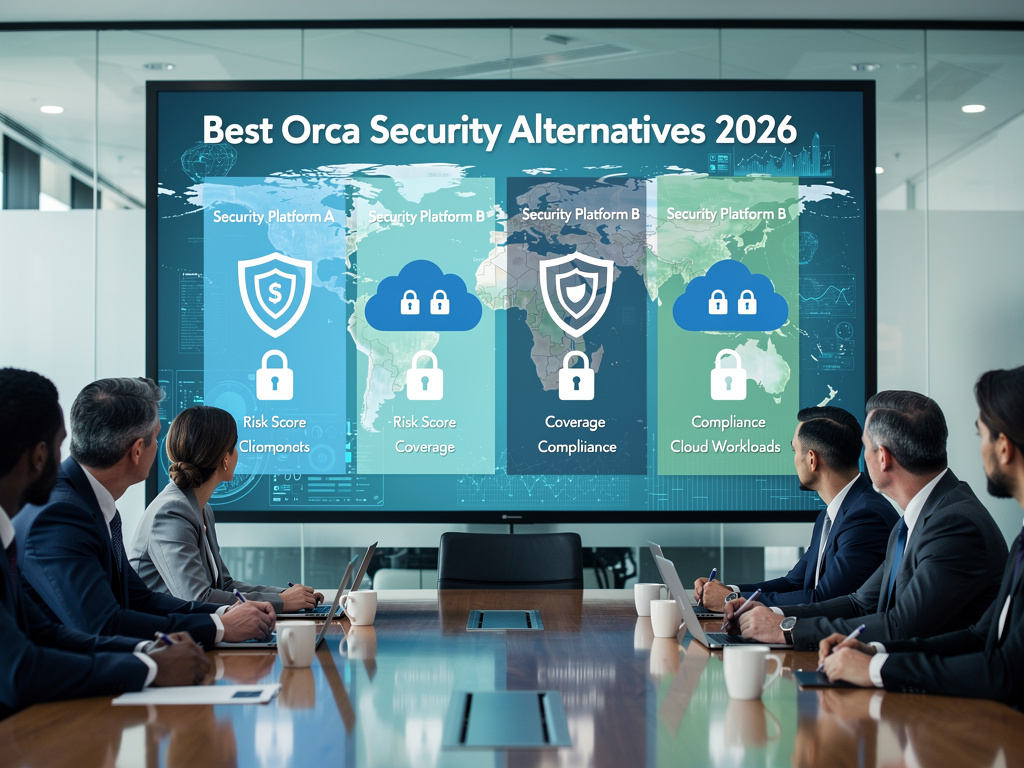
15 Best Orca Security Alternatives for Cloud Protection in 2026
Finding the right cloud security platform can feel overwhelming. Orca Security has made a name for itself with agentless scanning and solid visibility across cloud environments. But it’s not the only game in town.
Maybe you’re hitting limitations with Orca’s pricing model. Perhaps you need stronger runtime protection or better compliance automation. Or you’re simply doing your homework before committing to a long-term vendor relationship.
Whatever brought you here, this guide breaks down 15 strong Orca Security alternatives. We’ll dig into each platform’s strengths, weaknesses, pricing approach, and ideal use cases. You’ll find tools ranging from full-blown CNAPPs to specialized solutions that excel in specific areas like container security or cloud detection.
By the end, you’ll have a clear picture of which platforms deserve a spot on your shortlist. Let’s get into it.
Why Organizations Look for Orca Security Competitors
Orca Security holds about 5.8% mindshare in the Cloud-Native Application Protection Platform space. That’s solid positioning. But market share doesn’t mean it’s right for everyone.
Common Reasons Teams Explore Other Options
Runtime protection gaps. Orca’s agentless approach works great for posture management. But some teams need deeper runtime visibility. Agent-based solutions can catch threats that agentless scanning misses.
Pricing concerns at scale. As cloud footprints grow, costs can climb quickly. Some alternatives offer more predictable pricing models. Others bundle more features into base packages.
On-premises requirements. Not everything lives in the cloud. Hybrid environments need tools that can see both worlds. Orca focuses primarily on cloud-native workloads.
Compliance automation needs. GRC workflows matter for regulated industries. Some platforms tie compliance reporting more tightly into their core functionality. Orca covers compliance, but integration depth varies.
Consolidation goals. Security teams often run too many tools. A different CNAPP might replace more point solutions. Fewer vendors means less complexity.
What Makes a Good Alternative?
The best Orca Security replacement depends on your specific situation. Consider these factors:
- Cloud coverage: Which providers do you use? AWS, Azure, GCP, or all three?
- Deployment model: Agentless, agent-based, or hybrid approach?
- Team size: How much security expertise do you have in-house?
- Budget: What’s your realistic spending range?
- Integration needs: Which tools must connect to your security platform?
Keep these questions in mind as we explore each alternative below.
Sweet Security: Real-Time Cloud Detection and Response
Sweet Security takes a different approach than Orca. Where Orca excels at finding existing problems, Sweet Security focuses on catching threats as they happen. It’s ranked #14 in the CNAPP space with an 8.6 average rating.
Core Capabilities
Real-time monitoring sits at the heart of Sweet Security’s value proposition. The platform watches cloud workloads continuously. It doesn’t just scan periodically and report findings.
Business logic insights set Sweet Security apart from many competitors. The platform understands how your applications actually work. This context helps separate real threats from noise.
Cloud detection and response capabilities give security teams immediate visibility. When something suspicious happens, you know about it fast. Response options help contain threats before they spread.
How Sweet Security Compares to Orca
According to user reviews, both platforms earn 100% recommendation rates. But they solve different problems. Orca shines with its agentless SideScanning for broad visibility. Sweet Security wins on real-time threat detection.
Orca offers stronger framework integration and CI/CD pipeline compatibility. Sweet Security provides deeper runtime insights. Your priority determines which matters more.
Best Fit For
Sweet Security works well for teams that prioritize threat detection over posture management. If you already have solid visibility but need better runtime protection, it’s worth evaluating.
Organizations dealing with active threats or operating in high-risk environments benefit most. The real-time focus helps catch attacks that periodic scanning would miss.
Potential Drawbacks
Sweet Security holds only 1.5% mindshare compared to Orca’s 5.8%. Smaller market presence can mean fewer integrations and community resources. The platform is newer, so long-term track record is limited.
Wiz: The Market-Leading CNAPP Platform
Wiz has become one of the most widely adopted CNAPPs available. Sales professionals at companies like Upwind see Wiz as a top competitor in almost every deal. There’s good reason for that dominance.
What Wiz Does Well
The platform connects directly to your cloud environment without agents. It provides complete visibility into misconfigurations across AWS, Azure, and GCP. Teams can spot critical issues quickly.
Attack path analysis helps prioritize what actually matters. Not every vulnerability poses equal risk. Wiz maps how attackers could chain issues together to reach sensitive assets.
Under one roof, Wiz covers:
- Infrastructure security
- Data security posture management
- Identity security
- Cloud detection and response
- AI security posture
- Code security
- Container security
- Cloud compliance
That breadth is rare. Most competitors cover only a portion of these areas. You’d typically need three to five other tools to match Wiz’s scope.
Wiz vs Orca: Head-to-Head
Both platforms use agentless approaches. Both provide strong multi-cloud visibility. The differences come down to details.
Wiz generally offers broader coverage across security domains. Orca’s SideScanning technology provides deep workload visibility without performance impact. Wiz’s attack path visualization tends to be more sophisticated.
Pricing models differ too. Enterprise deals vary significantly based on cloud resource counts and selected modules.
Limitations to Consider
Wiz is reactive, not proactive. It finds problems that already exist in production. It can’t prevent vulnerabilities from getting deployed in the first place.
On-premises support is limited. If you’re running hybrid infrastructure, you’ll need additional tools. The platform was built for cloud-native environments specifically.
Runtime protection has gaps compared to agent-based solutions. Agentless scanning catches configuration issues well. It’s less effective at detecting active attacks in real-time.
Pricing Approach
Wiz doesn’t publish standard pricing. Enterprise agreements are custom-negotiated. Expect significant investment for large deployments. Mid-market pricing is more accessible but still substantial.
Ideal Use Cases
Wiz fits organizations with large, complex cloud environments. If you’re running multiple cloud providers and want consolidated visibility, it delivers. Teams with mature security programs get the most value.
Startups and smaller companies might find Wiz overkill. The platform’s depth requires resources to use effectively.
Prisma Cloud by Palo Alto Networks
Palo Alto Networks brings serious enterprise credibility to cloud security. Prisma Cloud represents their CNAPP offering. It competes directly with both Orca and Wiz in major enterprise deals.
Platform Overview
Prisma Cloud covers the full application lifecycle. Code security, infrastructure security, runtime protection, and compliance all live in one platform. The integration with Palo Alto’s broader security portfolio adds value for existing customers.
Key modules include:
- Cloud Security Posture Management (CSPM)
- Cloud Workload Protection Platform (CWPP)
- Cloud Infrastructure Entitlement Management (CIEM)
- Cloud Network Security
- Web Application and API Security
Strengths of Prisma Cloud
Shift-left capabilities stand out. The platform scans infrastructure-as-code templates before deployment. It checks container images in CI/CD pipelines. Problems get caught early.
Runtime protection uses a combination of agents and agentless scanning. This hybrid approach provides deeper visibility than pure agentless solutions. You get posture management plus threat detection.
The Palo Alto ecosystem matters for many enterprises. If you’re already using their firewalls, endpoint protection, or SIEM, Prisma Cloud integrates naturally. Data flows between products.
Prisma Cloud vs Orca Comparison
Orca’s pure agentless model is simpler to deploy. Prisma Cloud’s agent requirements add complexity but improve runtime visibility. Organizations must choose their priority.
Prisma Cloud’s broader security portfolio gives it an edge for Palo Alto shops. Orca works better as a standalone CNAPP without existing vendor relationships.
Both platforms support major cloud providers. Multi-cloud coverage is comparable. The difference is in deployment approach and ecosystem integration.
Pricing and Licensing
Prisma Cloud uses credit-based licensing. You purchase credits and allocate them across modules. This provides flexibility but can complicate budgeting. Costs vary based on workload counts and selected features.
Enterprise agreements typically require significant commitment. Smaller organizations may find the complexity overwhelming.
Best Fit For
Prisma Cloud works best for large enterprises already invested in Palo Alto products. The integration benefits compound over time. Teams wanting runtime protection alongside posture management should evaluate it seriously.
CrowdStrike Falcon Cloud Security
CrowdStrike built its reputation in endpoint protection. Falcon Cloud Security extends that expertise to cloud workloads. The combination of EDR experience and cloud visibility creates a strong offering.
What Makes CrowdStrike Different
The Falcon platform already protects millions of endpoints. That same agent technology now covers cloud workloads. You get proven detection capabilities applied to new environments.
Threat intelligence is a major differentiator. CrowdStrike’s threat research team tracks adversaries globally. Their findings feed directly into detection rules. You benefit from intelligence gathered across their entire customer base.
The unified console matters too. Endpoint security and cloud security live in one place. Security teams don’t need to switch between tools to see the full picture.
Core Capabilities
Falcon Cloud Security includes:
- Cloud Security Posture Management: Finds misconfigurations across cloud providers
- Cloud Workload Protection: Runtime security for containers and VMs
- Identity Threat Detection: Monitors cloud identity behavior for compromise
- Container Security: Image scanning and runtime protection for Kubernetes
The agent-based approach provides deep visibility into running workloads. CrowdStrike can see process execution, network connections, and file activity in real-time.
Wiz vs CrowdStrike: Key Differences
Wiz uses agentless scanning exclusively. CrowdStrike relies on its lightweight agent. This fundamental difference shapes everything else.
Agentless means faster deployment and no performance impact. Agent-based means deeper runtime visibility and better threat detection. Neither approach is objectively better. Your requirements determine the right choice.
CrowdStrike excels at detecting active attacks. Wiz excels at finding vulnerabilities and misconfigurations. The best security programs often use both approaches together.
Strengths Over Orca
Runtime threat detection is CrowdStrike’s biggest advantage over Orca. The Falcon agent catches malicious behavior that agentless scanning simply can’t see.
Threat intelligence depth is another edge. CrowdStrike’s research team publishes regular reports on cloud-specific threats. This knowledge improves detection accuracy over time.
Potential Concerns
Agent deployment adds operational overhead. Some organizations can’t or won’t install agents on every workload. Ephemeral containers pose particular challenges.
Pricing can climb quickly at scale. Per-workload licensing models multiply as cloud footprints grow. Budget carefully for large deployments.
Ideal Customers
Organizations already using CrowdStrike for endpoint protection should evaluate Falcon Cloud Security first. The unified platform reduces tool sprawl significantly.
Teams prioritizing threat detection over pure posture management will appreciate CrowdStrike’s strengths. If you’re worried about active attackers, this platform delivers.
Microsoft Defender for Cloud
Microsoft has a built-in advantage for Azure customers. Defender for Cloud integrates natively with Azure services. But it also supports AWS and GCP, making it a legitimate multi-cloud option.
Native Azure Integration
If you’re running Azure workloads, Defender for Cloud activates with a few clicks. No separate deployment required. Security recommendations appear automatically in the Azure portal.
This native integration extends to:
- Azure Security Center
- Microsoft Sentinel (SIEM)
- Microsoft 365 Defender
- Azure Active Directory
- Azure DevOps
The Microsoft security ecosystem is extensive. Defender for Cloud fits naturally into existing workflows for Microsoft shops.
Multi-Cloud Capabilities
Don’t assume Defender only works with Azure. AWS and GCP connectors provide visibility across all three major cloud providers. The experience isn’t as seamless as native Azure, but it’s functional.
AWS coverage includes:
- EC2 instance security
- S3 bucket configuration
- IAM policy analysis
- EKS cluster protection
GCP coverage includes:
- Compute Engine security
- GKE cluster protection
- IAM analysis
- Storage bucket configuration
Security Features
Defender for Cloud offers tiered protection. The free tier provides basic posture management. Paid tiers add:
- Defender for Servers: VM and physical server protection
- Defender for Containers: Kubernetes and container security
- Defender for Databases: SQL, Cosmos DB, and other database protection
- Defender for Storage: Blob, file, and queue protection
- Defender for App Service: Web application security
Comparison with Orca Security
Orca provides more consistent multi-cloud experience. Defender for Cloud is strongest on Azure, decent on other clouds. Organizations running primarily Azure should seriously consider Defender.
Orca’s agentless scanning is more comprehensive for workload visibility. Defender combines agentless and agent-based approaches depending on the resource type.
Pricing favors Defender for Azure-heavy environments. The platform’s deep integration reduces the need for additional tools.
Cost Considerations
Defender for Cloud’s pricing model is complex. Each Defender plan has separate pricing. Costs are calculated per resource, per hour. Azure Hybrid Benefit can reduce costs for existing Microsoft customers.
For pure Azure environments, Defender often costs less than third-party alternatives. Multi-cloud deployments may find dedicated CNAPPs more cost-effective.
Best Fit For
Microsoft Defender for Cloud makes the most sense for organizations heavily invested in Azure. If you’re running 70% or more of workloads on Microsoft’s cloud, start here.
Companies already using Microsoft 365 and Azure AD benefit from ecosystem integration. The unified security experience reduces complexity.
Aqua Security: Container and Kubernetes Specialists
Aqua Security built its reputation on container security. The platform has expanded into full CNAPP territory, but containerized workloads remain its sweet spot.
Container Security Depth
Few platforms match Aqua’s container expertise. The company has focused on this space since 2015. That experience shows in feature depth and operational maturity.
Container security capabilities include:
- Image scanning in registries and CI/CD pipelines
- Runtime protection for running containers
- Kubernetes-native security policies
- Network micro-segmentation
- Drift prevention for immutable workloads
The platform understands Kubernetes deeply. Pod security policies, admission controllers, and network policies integrate naturally. Teams running complex Kubernetes environments appreciate this focus.
Broader CNAPP Features
Aqua has expanded beyond containers into:
- Cloud Security Posture Management: Configuration scanning for cloud resources
- Infrastructure as Code Security: Terraform, CloudFormation, and Kubernetes manifest scanning
- Software Supply Chain Security: SBOM generation and dependency analysis
- Serverless Security: Function scanning and runtime protection
These additions make Aqua a fuller Orca alternative. You’re not limited to container security anymore. But containers remain the core strength.
CI/CD Integration
Development workflow integration is strong. Aqua fits into:
- Jenkins pipelines
- GitLab CI/CD
- GitHub Actions
- Azure DevOps
- CircleCI
- Argo CD
Shift-left security becomes practical with these integrations. Developers see security feedback without leaving their tools. Vulnerabilities get caught before reaching production.
Aqua vs Orca: Where They Differ
Orca takes an agentless, breadth-first approach. Aqua focuses on container depth with agent-based runtime protection. The philosophical difference is clear.
For organizations running primarily containerized workloads, Aqua’s depth wins. For mixed environments with VMs, serverless, and containers, Orca’s breadth might matter more.
Aqua’s runtime protection catches threats Orca’s agentless scanning misses. Orca’s deployment simplicity appeals to teams without container expertise.
Open Source Contributions
Aqua maintains several popular open source projects:
- Trivy: Vulnerability scanner for containers and IaC
- Tracee: Runtime security and forensics tool
- Kube-bench: CIS Kubernetes benchmark checker
- Kube-hunter: Kubernetes penetration testing tool
These projects demonstrate Aqua’s technical credibility. They also provide free tools for teams not ready to purchase commercial solutions.
Ideal Use Cases
Aqua Security fits best for organizations running significant containerized workloads. If Kubernetes is your primary deployment target, evaluate Aqua seriously.
DevSecOps teams appreciate the CI/CD integration depth. Security becomes part of the development process rather than a gate at the end.
Sysdig Secure: Runtime Visibility and Threat Detection
Sysdig approaches cloud security from a monitoring background. The platform excels at runtime visibility and threat detection. It’s built on open source foundations that have proven themselves at scale.
Runtime Security Focus
Sysdig’s agent captures system calls from workloads. This deep instrumentation provides visibility that agentless tools can’t match. Every process, file access, and network connection gets recorded.
Runtime detection capabilities include:
- Behavioral anomaly detection
- File integrity monitoring
- Network traffic analysis
- Process execution tracking
- Container escape detection
The Falco open source project powers much of this detection. Sysdig created and maintains Falco, which has become the standard for Kubernetes runtime security.
Falco Integration
Falco is a CNCF graduated project. That’s the highest maturity level in the cloud native ecosystem. Thousands of organizations use Falco independently of Sysdig’s commercial offering.
Sysdig Secure builds on Falco with:
- Managed rule sets tuned by security researchers
- Centralized policy management
- Investigation and forensics tools
- Compliance mapping for detection rules
Organizations comfortable with Falco can adopt Sysdig Secure with minimal learning curve.
CNAPP Capabilities
Sysdig has expanded into posture management and vulnerability scanning:
- Cloud Security Posture Management: Multi-cloud configuration scanning
- Vulnerability Management: Image and host scanning
- Compliance: Mapping to standards like PCI, SOC 2, and HIPAA
- Identity Security: IAM analysis and least-privilege recommendations
These additions create a more complete CNAPP. But runtime security remains Sysdig’s differentiation point.
Sysdig vs Orca Comparison
The fundamental difference is depth versus simplicity. Sysdig’s agent provides unmatched runtime visibility. Orca’s agentless approach means faster deployment with less operational overhead.
For threat detection and incident response, Sysdig wins. For posture management and compliance, the platforms are more comparable.
Sysdig requires more expertise to operate effectively. The depth of data can overwhelm teams without security experience. Orca’s simpler approach suits lean security teams.
Pricing Model
Sysdig prices by monitored node. Container density doesn’t affect pricing, which benefits organizations running many containers per host. Large Kubernetes clusters can be cost-effective.
The pricing model rewards consolidation. Running fewer, larger nodes reduces costs compared to many small nodes.
Best Fit For
Sysdig Secure works best for organizations prioritizing runtime security. If threat detection matters more than posture management, start here.
Teams already using Falco should evaluate Sysdig for commercial support and additional features. The learning curve is minimal if you know Falco already.
Lacework FortiCNAPP
Fortinet acquired Lacework to strengthen its cloud security offering. The combination brings network security expertise to cloud-native protection. The rebranded platform is now called FortiCNAPP.
Anomaly Detection Approach
Lacework pioneered using machine learning for cloud security anomaly detection. The platform builds behavioral baselines for your environment. Deviations from normal patterns trigger alerts.
This approach catches:
- Unusual API calls
- Abnormal network traffic patterns
- Unexpected process execution
- Configuration drift
- Credential misuse
The ML-based detection reduces reliance on signature-based rules. Novel attacks that don’t match known patterns can still get caught.
Polygraph Data Platform
Lacework’s Polygraph technology is central to its value. The platform collects data across cloud accounts, builds relationship graphs, and identifies anomalies automatically.
Polygraph understands:
- Which users access which resources
- Normal traffic flows between services
- Typical deployment patterns
- Expected configuration states
When something changes, Polygraph notices. This contextual awareness helps reduce false positives.
Fortinet Integration
The Fortinet acquisition brings new integration possibilities:
- FortiGate: Network firewall coordination
- FortiSIEM: Security information and event management
- FortiAnalyzer: Log aggregation and analysis
- FortiSOAR: Security orchestration and response
Organizations already using Fortinet products can consolidate their security stack. The integration benefits will grow over time as the acquisition matures.
Wiz vs Lacework: Key Differences
Wiz provides more comprehensive posture management out of the box. Lacework’s anomaly detection provides stronger behavioral analysis. The platforms complement different priorities.
Wiz excels at attack path visualization and risk prioritization. Lacework excels at detecting threats that bypass traditional detection methods.
For pure CSPM needs, Wiz is stronger. For cloud detection and response, Lacework holds its own.
Limitations
Lacework’s acquisition transition creates some uncertainty. Product roadmaps may shift as Fortinet integrates the technology. Customers should clarify long-term plans before purchasing.
The ML-based approach requires training time. New deployments may generate noise until baselines stabilize. Expect a tuning period.
Ideal Customers
Lacework FortiCNAPP fits organizations wanting behavioral detection alongside posture management. If you’re concerned about sophisticated attacks that evade signature detection, evaluate this platform.
Fortinet customers should consider FortiCNAPP for ecosystem benefits. The integration story will only improve over time.
Check Point CloudGuard
Check Point has protected networks for decades. CloudGuard extends that expertise to cloud environments. The platform combines traditional security principles with cloud-native capabilities.
Network Security Heritage
Check Point invented the stateful firewall. That network security DNA shows in CloudGuard’s approach. The platform thinks about traffic flows, network segmentation, and perimeter protection.
Network-focused features include:
- Cloud network security with threat prevention
- Micro-segmentation for workload isolation
- Network traffic analysis and visualization
- DDoS protection for cloud workloads
Organizations comfortable with network security concepts will find CloudGuard intuitive.
CloudGuard CNAPP Components
The platform includes multiple integrated modules:
- CloudGuard Posture Management: CSPM and compliance scanning
- CloudGuard Workload Protection: Runtime security for VMs and containers
- CloudGuard Network Security: Cloud-native firewall and threat prevention
- CloudGuard Intelligence: Threat intelligence and investigation tools
These modules work together but can also be purchased separately. Flexibility helps organizations adopt gradually.
Threat Prevention Capabilities
Check Point’s threat intelligence feeds into CloudGuard. The ThreatCloud database tracks malware, command-and-control servers, and attack patterns globally. This intelligence improves detection accuracy.
CloudGuard includes:
- Anti-malware for cloud workloads
- Intrusion prevention system
- Anti-bot protection
- URL filtering
- Application control
CloudGuard vs Orca
Orca focuses on agentless visibility and risk prioritization. CloudGuard emphasizes active threat prevention. The philosophical approaches differ significantly.
Orca finds problems. CloudGuard blocks threats. Both are valuable, but they solve different problems.
For organizations wanting prevention alongside detection, CloudGuard’s approach appeals. For teams prioritizing visibility and risk management, Orca fits better.
SmartConsole Management
CloudGuard integrates with Check Point’s SmartConsole. If you’re already managing Check Point firewalls through SmartConsole, CloudGuard fits naturally into existing workflows.
The unified management reduces operational complexity. Policies, logs, and alerts live in one place across network and cloud security.
Best Fit For
CloudGuard makes sense for Check Point customers extending their security architecture to the cloud. The integration benefits are substantial for existing users.
Organizations prioritizing threat prevention over posture management should evaluate CloudGuard. If you want to block attacks rather than just detect them, this platform delivers.
Tenable Cloud Security
Tenable built its reputation in vulnerability management with Nessus. Tenable Cloud Security applies that expertise to cloud environments. The platform focuses on exposure management across hybrid infrastructure.
Vulnerability Management Heritage
Nessus has been the industry standard vulnerability scanner for years. That experience informs Tenable’s cloud security approach. Vulnerability prioritization is a core strength.
Vulnerability capabilities include:
- Container image scanning
- Cloud workload vulnerability assessment
- Infrastructure as code scanning
- Web application vulnerability scanning
- Exploitability scoring for prioritization
Tenable’s vulnerability database is extensive. Decades of research back the detection capabilities.
Exposure Management Platform
Tenable One brings together multiple products into a unified exposure management platform. Cloud security is one component alongside:
- Vulnerability management
- Web application scanning
- Active Directory security
- Attack surface management
- Identity exposure
This unified view helps organizations understand their total risk posture. Cloud security doesn’t exist in isolation.
Cloud Security Features
Tenable Cloud Security includes:
- Cloud Security Posture Management: Multi-cloud configuration scanning
- Cloud Infrastructure Entitlement Management: IAM analysis and least-privilege recommendations
- Container Security: Image scanning and Kubernetes security
- Infrastructure as Code Security: Pre-deployment scanning
The platform provides solid CNAPP coverage. It’s not as deep as specialized tools in any single area, but breadth is strong.
Tenable vs Orca Comparison
Orca’s agentless approach is more elegant for pure cloud environments. Tenable’s strength is hybrid visibility across cloud and on-premises systems.
If you’re running significant on-premises infrastructure alongside cloud, Tenable’s unified view helps. Pure cloud organizations may find Orca more focused.
Vulnerability management depth favors Tenable. Orca handles vulnerabilities well, but Tenable’s heritage shows in this area.
Pricing Considerations
Tenable offers various pricing models depending on the product combination. The Tenable One platform bundles multiple capabilities with potential cost savings compared to buying separately.
Asset-based pricing can favor or penalize depending on your environment. Evaluate carefully against your specific infrastructure.
Best Fit For
Tenable Cloud Security fits organizations wanting unified exposure management across hybrid infrastructure. If you need to see cloud and on-premises vulnerabilities together, start here.
Existing Tenable customers should evaluate cloud security additions. The integration with vulnerability management creates a more complete picture.
Upwind Security: Cloud Security Built for Speed
Upwind is a newer entrant focused on cloud-native security. According to sales data, Orca Security is their primary competitor. The platform emphasizes real-time detection and response capabilities.
Real-Time Focus
Upwind prioritizes speed. The platform aims to detect and respond to threats faster than traditional CNAPP tools. Real-time visibility drives the product design.
Speed-focused capabilities include:
- Instant threat detection
- Real-time asset inventory
- Rapid response automation
- Live attack path visualization
This emphasis on speed differentiates Upwind from slower, scan-based approaches.
Modern Architecture
Upwind built from scratch for modern cloud environments. There’s no legacy code or acquisitions to integrate. The architecture is native to containers, Kubernetes, and serverless.
The platform uses eBPF technology for lightweight instrumentation. This approach provides deep visibility without heavy performance impact. Modern Linux kernels support eBPF natively.
Competitive Positioning
Upwind competes directly with both Orca and Wiz. Sales professionals encounter these vendors frequently in deals. The startup positioning allows more aggressive pricing.
Against Orca specifically, Upwind emphasizes:
- Faster detection of runtime threats
- More modern technical architecture
- Better developer experience
- Competitive pricing for the features offered
CNAPP Capabilities
Upwind covers standard CNAPP ground:
- Cloud Security Posture Management
- Cloud Workload Protection
- Container and Kubernetes Security
- Infrastructure as Code Scanning
- Cloud Detection and Response
Feature breadth is solid for a newer platform. Depth in specific areas continues to develop.
Best Fit For
Upwind appeals to organizations wanting modern technology without legacy baggage. If you’re frustrated with older platforms, Upwind’s fresh approach may resonate.
Teams prioritizing real-time detection should evaluate Upwind against more established alternatives. The speed focus is genuine and measurable.
ARMO: Kubernetes-Native Security Platform
ARMO focuses specifically on Kubernetes security. The company created Kubescape, an open source Kubernetes security scanner. The commercial platform builds on that foundation.
Open Source Roots
Kubescape has become one of the most popular Kubernetes security tools. It scans clusters against security frameworks and identifies misconfigurations. ARMO maintains the project and offers commercial support.
Kubescape capabilities include:
- NSA/CISA Kubernetes Hardening Guide scanning
- CIS Kubernetes Benchmark checks
- MITRE ATT&CK framework mapping
- Image vulnerability scanning
- RBAC analysis
Organizations can start with free Kubescape and upgrade to ARMO’s platform for additional features.
ARMO Platform Features
The commercial offering extends Kubescape with:
- Centralized management across clusters
- Historical tracking and trending
- Compliance reporting
- Integration with ticketing systems
- Runtime security capabilities
The focus remains Kubernetes-centric. This isn’t a general-purpose CNAPP. It’s a specialized tool for container orchestration security.
ARMO vs Orca
Orca provides broader cloud security coverage. ARMO provides deeper Kubernetes-specific security. The choice depends on your infrastructure mix.
Organizations running primarily Kubernetes workloads may prefer ARMO’s focused approach. Teams with diverse cloud resources need Orca’s breadth.
Pricing typically favors ARMO for pure Kubernetes environments. The specialized focus allows competitive positioning.
Best Fit For
ARMO fits organizations with Kubernetes as their primary deployment platform. If you’re running hundreds of clusters and need specialized tooling, evaluate ARMO seriously.
Teams already using Kubescape should consider ARMO for enterprise features. The transition is smooth with existing familiarity.
Qualys TotalCloud, Trend Micro Cloud One, and Uptycs
Three additional platforms deserve mention for organizations evaluating Orca Security alternatives. Each brings unique strengths to cloud security.
Qualys TotalCloud
Qualys has provided vulnerability management for over 20 years. TotalCloud extends that expertise to cloud-native environments.
Key strengths:
- Extensive vulnerability database and scanning accuracy
- Unified agent for cloud and traditional workloads
- Strong compliance reporting capabilities
- Integration with existing Qualys deployments
TotalCloud works best for organizations already using Qualys products. The integration creates unified visibility across vulnerability management and cloud security.
Trend Micro Cloud One
Trend Micro offers a modular cloud security platform. Cloud One includes multiple services that can be purchased individually or together.
Cloud One modules:
- Workload Security: Server and VM protection
- Container Security: Image scanning and runtime protection
- File Storage Security: Malware scanning for cloud storage
- Application Security: Runtime application self-protection
- Network Security: Cloud network IDS/IPS
- Conformity: Cloud posture management
This modularity lets organizations adopt specific capabilities without purchasing the full platform. Flexibility can help with budget constraints.
Uptycs
Uptycs takes a unified approach to cloud and endpoint security. The platform uses osquery for data collection across diverse environments.
Distinguishing features:
- Single platform for cloud, containers, and endpoints
- XDR capabilities integrated with CNAPP
- Strong detection and response focus
- Threat hunting tools for security teams
Uptycs appeals to organizations wanting consolidated cloud and endpoint security. The unified data model enables correlation across different asset types.
Comparison Table: Orca Security Alternatives at a Glance
| Platform | Deployment Model | Best For | Key Strength | Primary Limitation |
|---|---|---|---|---|
| Sweet Security | Agent-based | Real-time threat detection | Business logic insights | Smaller market presence |
| Wiz | Agentless | Large multi-cloud environments | Comprehensive coverage | Reactive, not preventive |
| Prisma Cloud | Hybrid | Palo Alto ecosystem users | Shift-left integration | Complex licensing |
| CrowdStrike Falcon | Agent-based | Threat detection focus | Threat intelligence | Agent deployment overhead |
| Microsoft Defender | Hybrid | Azure-heavy environments | Native Azure integration | Weaker multi-cloud |
| Aqua Security | Agent-based | Container-focused teams | Container/K8s depth | Less broad cloud coverage |
| Sysdig Secure | Agent-based | Runtime security priority | Falco-based detection | Complexity for small teams |
| Lacework FortiCNAPP | Agentless | Behavioral detection needs | ML anomaly detection | Acquisition transition |
| Check Point CloudGuard | Hybrid | Check Point customers | Threat prevention | Network-centric approach |
| Tenable Cloud Security | Hybrid | Hybrid infrastructure | Vulnerability management | Less cloud-native feel |
| Upwind | eBPF-based | Modern, fast detection | Real-time speed | Newer, less proven |
| ARMO | Agent-based | Kubernetes specialists | K8s focus and depth | Limited beyond K8s |
| Qualys TotalCloud | Agent-based | Qualys customers | Vulnerability expertise | Legacy platform feel |
| Trend Micro Cloud One | Hybrid | Modular adoption needs | Flexible modules | Integration complexity |
| Uptycs | Agent-based | Unified cloud/endpoint | XDR integration | Requires security expertise |
How to Choose the Right Orca Security Alternative
Selecting a cloud security platform requires matching capabilities to your specific needs. Here’s a framework for making the decision.
Start with Your Cloud Footprint
Which cloud providers do you use? In what proportion?
- Azure-heavy: Microsoft Defender for Cloud makes sense
- Multi-cloud (AWS, Azure, GCP): Wiz, Orca alternatives like Prisma Cloud or Lacework
- Single cloud: Native tools or specialized CNAPPs both work
Consider Your Workload Types
What are you actually protecting?
- Primarily containers/Kubernetes: Aqua, ARMO, or Sysdig
- Mixed VMs and containers: Broader CNAPPs like Wiz or Prisma Cloud
- Serverless-heavy: Ensure the platform covers Lambda, Cloud Functions, etc.
Evaluate Your Team’s Expertise
Security platforms vary in complexity.
- Small team, limited expertise: Agentless tools like Wiz or Orca reduce operational burden
- Dedicated security team: Agent-based tools like Sysdig or CrowdStrike provide more depth
- DevOps-driven security: Platforms with strong CI/CD integration like Aqua
Prioritize Your Security Goals
What matters most right now?
- Visibility and compliance: Posture management focus (Wiz, Orca)
- Threat detection: Runtime security focus (CrowdStrike, Sysdig, Sweet Security)
- Prevention: Active blocking capabilities (Check Point CloudGuard)
- Developer integration: Shift-left tools (Aqua, Prisma Cloud)
Plan for the Long Term
Consider vendor stability and roadmap.
- Established vendors have proven track records but may move slower
- Startups offer modern technology but carry more risk
- Acquired companies may face integration challenges
Conclusion
Orca Security is a solid CNAPP, but it’s not the only option. The 15 alternatives we’ve covered each bring unique strengths. Wiz offers the broadest coverage. CrowdStrike and Sysdig excel at runtime detection. Aqua and ARMO provide container depth. Microsoft Defender integrates naturally with Azure.
Your choice depends on your specific cloud environment, team capabilities, and security priorities. Run proofs of concept with your top two or three options. The right platform will become clear once you see it working with your actual infrastructure.
FAQs About Orca Security Alternatives
| What is the main difference between Orca Security and Wiz? | Both use agentless scanning, but Wiz generally offers broader coverage across security domains. Orca’s SideScanning provides deep workload visibility. Wiz has more sophisticated attack path visualization. The platforms are similar in approach but differ in feature depth and focus areas. |
| Which Orca Security alternative is best for small teams? | Agentless platforms like Wiz or Microsoft Defender for Cloud reduce operational burden. Small teams should avoid complex agent-based solutions unless they have specific runtime detection requirements. Simplicity matters when resources are limited. |
| Can I replace Orca Security with a free tool? | Free tools like Kubescape (for Kubernetes) or Trivy (for vulnerability scanning) cover specific areas. But no free tool matches Orca’s full CNAPP capabilities. You’d need to combine multiple open source projects and manage them yourself. |
| Which alternative offers the best runtime protection? | CrowdStrike Falcon Cloud Security and Sysdig Secure provide the strongest runtime protection. Their agent-based approaches enable real-time threat detection that agentless tools can’t match. Sweet Security and Upwind also emphasize runtime capabilities. |
| What’s the best Orca alternative for Azure environments? | Microsoft Defender for Cloud integrates natively with Azure and offers competitive pricing for Azure-heavy organizations. If you’re running 70% or more of workloads on Azure, start there before evaluating third-party options. |
| How do I evaluate CNAPP alternatives effectively? | Run proofs of concept in your actual environment. Connect the platforms to your cloud accounts and see what they find. Pay attention to false positive rates, ease of use, and integration with your existing tools. Paper evaluations miss real-world operational fit. |
| Is it worth switching from Orca to another platform? | Switching costs are real. Consider migration only if you’ve identified specific gaps that Orca can’t address. If you’re hitting limitations in runtime protection, on-premises support, or compliance automation, evaluating alternatives makes sense. Minor feature differences rarely justify the switching effort. |
| Which Orca Security competitors work best for Kubernetes? | ARMO, Aqua Security, and Sysdig Secure specialize in Kubernetes security. They offer deeper container and orchestration capabilities than general-purpose CNAPPs. Organizations running significant Kubernetes workloads should evaluate these specialized tools alongside broader platforms. |



 Stack Insight is intended to support informed decision-making by providing independent information about business software and services. Some product details, including pricing, features, and promotional offers, may be supplied by vendors or partners and can change without notice.