
Sysdig Secure Review


Sysdig Secure Review: A Complete Analysis of This Cloud-Native Security Platform
Cloud security has become a headache for most organizations. Containers spin up and down in seconds. Kubernetes clusters grow complex fast. Traditional security tools can’t keep pace. That’s where Sysdig Secure enters the picture.
Sysdig Secure is a Cloud-Native Application Protection Platform, or CNAPP for short. It brings together threat detection, vulnerability management, posture management, and identity controls into one place. More than 700 enterprise customers rely on it today.
In this Sysdig Secure review, we’ll break down every angle of this platform. You’ll learn what it does well, where it falls short, and whether it fits your needs. We’ll look at real user feedback from Gartner reviews, dig into technical specs, and compare it against alternatives. By the end, you’ll know if Sysdig Secure deserves a spot in your security stack.
What Is Sysdig Secure and Why Does It Matter?
Sysdig Secure positions itself as a unified security platform for cloud-native environments. But what does that actually mean in practice?
The Core Purpose of Sysdig Secure
At its heart, Sysdig Secure protects applications from development through production. It watches your containers, Kubernetes clusters, and cloud workloads around the clock. When something suspicious happens, it alerts you in real time.
The platform tackles several security challenges at once:
- Threat detection catches malicious activity as it happens
- Vulnerability management finds and prioritizes security flaws
- Posture management checks your configurations against security standards
- Identity management controls who can access what
Most security teams juggle five or six different tools to cover these bases. Sysdig Secure tries to replace that patchwork with one platform.
The Runtime Insights Difference
Sysdig makes a big deal about “runtime insights.” This isn’t just marketing speak. It refers to how the platform uses real-time data about what’s actually running in your environment.
Here’s why this matters. A vulnerability scanner might flag 10,000 issues in your container images. But how many of those vulnerable packages are actually loaded in memory right now? Maybe 500. Runtime insights help you focus on those 500 instead of chasing 10,000 ghosts.
This approach changes how security teams prioritize work. Instead of drowning in alerts, you can zero in on risks that are active and exploitable right now.
Built on Open Source Foundations
Sysdig Secure uses Falco as its threat detection engine. Falco is an open-source project that Sysdig created and donated to the Cloud Native Computing Foundation. It’s now a graduated project, which means it’s mature and battle-tested.
Why does this matter for buyers? A few reasons:
- Falco has a huge community contributing detection rules
- You’re not locked into proprietary detection logic
- The core technology is transparent and auditable
- Many engineers already know Falco from other projects
Using open source doesn’t mean you get less. It means you get a foundation with broad industry support plus Sysdig’s commercial features layered on top.
Sysdig Secure Features: A Detailed Breakdown
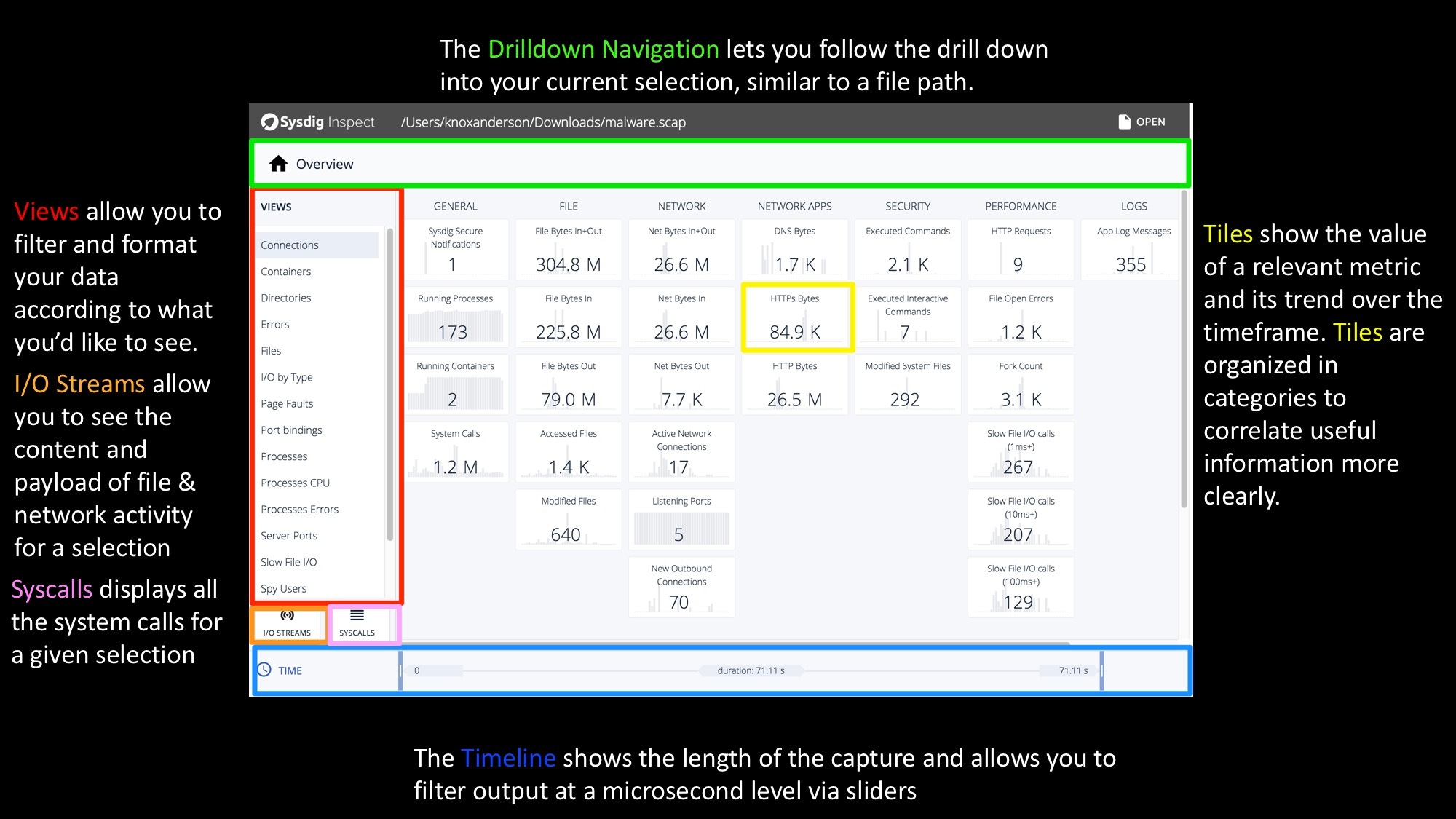
Let’s dig into what Sysdig Secure actually offers. We’ll examine each major feature area and explain how it works in real scenarios.
Runtime Threat Detection and Response
This is Sysdig’s flagship capability. The platform monitors running workloads for suspicious activities. When something bad happens, you know within seconds.
How detection works:
Sysdig deploys agents that watch system calls at the kernel level. Every file access, network connection, and process execution gets logged. The platform then applies detection rules to spot anomalies.
For example, if a container suddenly spawns a shell process when it never has before, that’s suspicious. If a workload starts making connections to known malicious IP addresses, that triggers an alert.
Detection rule types include:
- Predefined rules from Sysdig’s threat research team
- Community rules from the Falco ecosystem
- Custom rules you write for your specific environment
- Machine learning-based anomaly detection
Response capabilities:
Detection means nothing if you can’t act fast. Sysdig Secure lets you automate responses. You can kill a compromised container, isolate a node, or trigger a playbook in your SOAR platform.
The platform also captures forensic data. When an incident happens, you can review the full timeline of system activity. This helps with root cause analysis and post-incident reports.
Vulnerability Management
Every CNAPP includes vulnerability scanning. But Sysdig’s approach stands out because of how it prioritizes findings.
Scanning coverage:
- Container images in registries
- Running containers in production
- Host operating systems
- Infrastructure as Code files
- CI/CD pipeline integration
The prioritization magic:
Here’s where runtime insights shine. Sysdig knows which packages are actually loaded in memory. A vulnerable library sitting unused in an image is lower risk than one actively processing requests.
The platform assigns risk scores based on:
- CVSS severity of the vulnerability
- Whether the package is in use at runtime
- Public exploit availability
- Network exposure of the affected workload
- Presence of fix versions
This context collapses thousands of vulnerabilities into a manageable list. Security teams can fix what matters first instead of guessing.
Cloud Security Posture Management (CSPM)
Misconfigurations cause more breaches than sophisticated attacks. Sysdig Secure checks your cloud setup against security benchmarks automatically.
What it monitors:
- AWS, Azure, and Google Cloud configurations
- Kubernetes cluster settings
- IAM policies and permissions
- Network security groups
- Storage bucket policies
- Encryption settings
Compliance frameworks supported:
| Framework | Coverage |
|---|---|
| CIS Benchmarks | Full coverage for major cloud providers |
| SOC 2 | Mapped controls and evidence collection |
| PCI DSS | Payment card industry requirements |
| HIPAA | Healthcare data protection |
| NIST | US federal security standards |
| GDPR | European data privacy requirements |
Posture management runs continuously. When someone creates a public S3 bucket or opens a security group too wide, you’ll know immediately.
Cloud Infrastructure Entitlement Management (CIEM)
Cloud permissions get messy fast. Developers request access, projects end, but permissions stick around. CIEM helps clean up this mess.
What Sysdig’s CIEM does:
- Maps all identities and their permissions across clouds
- Identifies overly permissive policies
- Spots unused permissions that should be revoked
- Detects risky permission combinations
- Recommends least-privilege policies
The platform uses actual access patterns to make recommendations. If an IAM role has admin permissions but only ever reads from S3, Sysdig suggests tightening that policy.
This feature helps organizations implement least-privilege principles without breaking things. You can see what permissions are actually used before making changes.
Sysdig Sage: AI-Powered Security Assistance
Sysdig introduced Sysdig Sage as an AI assistant built into the platform. It’s designed to help security teams work faster through natural language interactions.
What Sysdig Sage can do:
- Search acceleration: Ask questions in plain English instead of building complex queries
- Vulnerability triage: Get AI explanations of risk context and remediation steps
- Threat investigation: Walk through incident timelines with guided analysis
- Navigation help: Find features and data in the interface faster
Example interaction:
You might ask: “Show me all containers running with root privileges in production that have critical vulnerabilities.”
Sysdig Sage translates that into the right query and shows you results. It can then explain why each finding matters and suggest fixes.
This AI capability addresses a real problem. Security tools are often complex. Junior analysts struggle to use them well. Sysdig Sage lowers that barrier by letting people ask questions naturally.
Container and Kubernetes Security
Sysdig started as a container security company. These capabilities remain a core strength.
Container security features:
- Image scanning before deployment
- Runtime monitoring of container behavior
- File integrity monitoring inside containers
- Network policy enforcement
- Secrets detection in images and configs
Kubernetes-specific features:
- Admission controller to block risky deployments
- Pod security policy enforcement
- Kubernetes audit log analysis
- RBAC review and recommendations
- Network segmentation visibility
The platform understands Kubernetes concepts natively. Alerts include context like namespace, deployment name, and pod labels. This makes triage faster for teams running complex clusters.
How Sysdig Secure Compares to Competitors
No product exists in a vacuum. Let’s see how Sysdig Secure stacks up against other CNAPP platforms in 2026.
Sysdig Secure vs. Palo Alto Prisma Cloud
Prisma Cloud is the market share leader in CNAPP. It comes from Palo Alto Networks, which has deep pockets and broad security offerings.
| Criteria | Sysdig Secure | Prisma Cloud |
|---|---|---|
| Runtime detection depth | Kernel-level visibility with Falco | Agent-based but less granular |
| Open source foundation | Yes, built on Falco | No, proprietary throughout |
| AI capabilities | Sysdig Sage conversational AI | Basic ML features |
| Pricing | Generally lower cost | Premium pricing |
| Vendor ecosystem | Focused on cloud security | Part of larger security suite |
| Container expertise | Deep, original focus | Acquired through acquisitions |
When to choose Sysdig: You want best-in-class runtime detection, prefer open source foundations, or need strong container security specifically.
When to choose Prisma: You’re already using Palo Alto products, want a single vendor for network and cloud security, or need broader cloud coverage.
Sysdig Secure vs. Wiz
Wiz has grown fast in the CNAPP market. They focus on agentless scanning and attack path analysis.
| Criteria | Sysdig Secure | Wiz |
|---|---|---|
| Deployment approach | Agent-based for runtime | Agentless scanning |
| Runtime detection | Strong, real-time | Limited without agents |
| Time to value | Longer due to agent deployment | Faster initial setup |
| Detection speed | Real-time (seconds) | Periodic scans (hours) |
| Attack path analysis | Good | Strong |
| Resource overhead | Agents consume resources | No runtime overhead |
When to choose Sysdig: Runtime detection is a priority, you need real-time response capabilities, or you’re heavily invested in containers.
When to choose Wiz: You prefer agentless deployment, want fast time-to-value, or focus more on posture than runtime.
Sysdig Secure vs. Aqua Security
Aqua Security competes directly with Sysdig in the container security space. Both companies started focused on containers and expanded to full CNAPP.
| Criteria | Sysdig Secure | Aqua Security |
|---|---|---|
| Detection engine | Falco (CNCF project) | Proprietary |
| Community | Large open source community | Smaller, product-focused |
| Kubernetes depth | Strong | Strong |
| Supply chain security | Good | Strong focus |
| VM workloads | Supported | Supported |
| Market presence | Larger customer base | Strong in specific verticals |
When to choose Sysdig: Open source matters to you, you want CNCF alignment, or you prefer the Falco ecosystem.
When to choose Aqua: Software supply chain is your top priority, or you prefer Aqua’s specific feature approach.
Real User Reviews: What Customers Say About Sysdig Secure
Marketing materials tell one story. Actual users tell another. Let’s look at feedback from verified Sysdig Secure customers.
Positive Feedback Themes
Across Gartner reviews and other sources, several themes emerge consistently.
Runtime detection quality:
Users praise the depth of visibility Sysdig provides. One reviewer noted they can “see exactly what’s happening inside containers in real time.” The Falco-based detection catches threats that other tools miss.
Kubernetes expertise:
Teams running complex Kubernetes environments appreciate Sysdig’s native understanding. The platform speaks Kubernetes fluently. Alerts include relevant context like pod names, namespaces, and labels.
Vulnerability prioritization:
The runtime-informed vulnerability triage gets consistent praise. Users report reducing their vulnerability backlog by 80% or more by focusing only on in-use packages. This saves security teams countless hours.
Support and customer success:
Multiple reviews mention strong support experiences. Sysdig’s team helps with deployment, tuning, and ongoing optimization. Enterprise customers get dedicated success managers.
Common Criticisms
No product is perfect. Here’s what users complain about.
Learning curve:
Sysdig Secure has many features. New users sometimes feel overwhelmed. The interface has improved, but it still takes time to master everything.
Agent deployment:
Some organizations struggle with deploying agents across their infrastructure. Teams with strict change management processes find this friction. The agentless competitors don’t have this issue.
Pricing transparency:
Like most enterprise security vendors, Sysdig doesn’t publish pricing. Some users wish for clearer pricing models upfront. Costs can surprise organizations as they scale.
Alert tuning:
Out of the box, Sysdig can generate many alerts. Teams need to invest time tuning rules to reduce noise. This is true of any detection platform, but it’s worth noting.
Gartner Peer Insights Summary
On Gartner Peer Insights, Sysdig Secure receives strong ratings. Users particularly score it well for:
- Product capabilities
- Integration and deployment
- Evaluation and contracting
- Service and support
The platform competes well against larger vendors despite being a smaller company. This reflects Sysdig’s focus on doing cloud-native security well rather than trying to be everything to everyone.
Sysdig Secure Pricing and Licensing
Let’s talk money. Sysdig doesn’t publish prices on their website, but we can share general guidance based on market information.
Pricing Model Structure
Sysdig Secure uses consumption-based pricing. The main factors that affect cost:
- Number of hosts or nodes: Virtual machines, physical servers, Kubernetes nodes
- Cloud accounts: AWS, Azure, GCP accounts monitored
- Features selected: Different tiers include different capabilities
- Contract length: Annual vs. multi-year commitments affect rates
Product Tiers
Sysdig offers different packages based on needs:
| Tier | Primary Use Case | Key Features |
|---|---|---|
| Secure Essentials | Basic vulnerability and compliance | Vulnerability scanning, compliance checks |
| Secure Advanced | Runtime threat detection | Adds Falco-based detection, forensics |
| Secure Enterprise | Full CNAPP capabilities | Adds CIEM, Sysdig Sage, advanced features |
Pricing Compared to Alternatives
In competitive evaluations, Sysdig typically comes in below Prisma Cloud and similar to or slightly above Aqua Security. Wiz often prices competitively for agentless-only needs.
The total cost depends heavily on your environment size and specific requirements. Organizations should request detailed quotes from multiple vendors.
Hidden Costs to Consider
Beyond licensing fees, account for:
- Agent resource consumption: Sysdig agents use CPU and memory on each host
- Implementation services: Professional services for complex deployments
- Training: Getting your team up to speed on the platform
- Integration work: Connecting to your existing tools and workflows
Get a full picture of costs before making decisions. The sticker price rarely tells the whole story.
Deployment and Implementation
How hard is it to actually get Sysdig Secure running? Let’s walk through the process.
Deployment Options
Sysdig offers multiple deployment models:
SaaS (Software as a Service):
Most customers use the SaaS option. Sysdig hosts the backend. You deploy agents that send data to their cloud. This is the fastest path to value.
On-premises:
Some organizations need to keep data in their own environment. Sysdig supports on-premises deployment for these cases. It requires more infrastructure management.
Hybrid:
You can mix approaches. Some data stays on-prem while other capabilities use SaaS. This works for organizations with specific compliance requirements.
Agent Deployment Process
For runtime features, you’ll deploy Sysdig agents. Here’s how it typically works:
For Kubernetes:
- Add the Sysdig Helm repository
- Configure values for your environment
- Deploy the Helm chart to your cluster
- Agents install as a DaemonSet on each node
For virtual machines or bare metal:
- Download the agent package for your OS
- Install using package manager (apt, yum, etc.)
- Configure with your Sysdig API key
- Start the agent service
The agents are lightweight but do consume resources. Expect around 1-2% CPU overhead and 256-512MB memory per host.
Cloud Account Connection
For posture management and CIEM, you connect your cloud accounts:
AWS: Deploy a CloudFormation stack or Terraform module
Azure: Configure Azure AD and subscription access
GCP: Set up service account with appropriate permissions
These connections are read-only for most features. Sysdig doesn’t need write access to your cloud accounts unless you enable auto-remediation.
Timeline Expectations
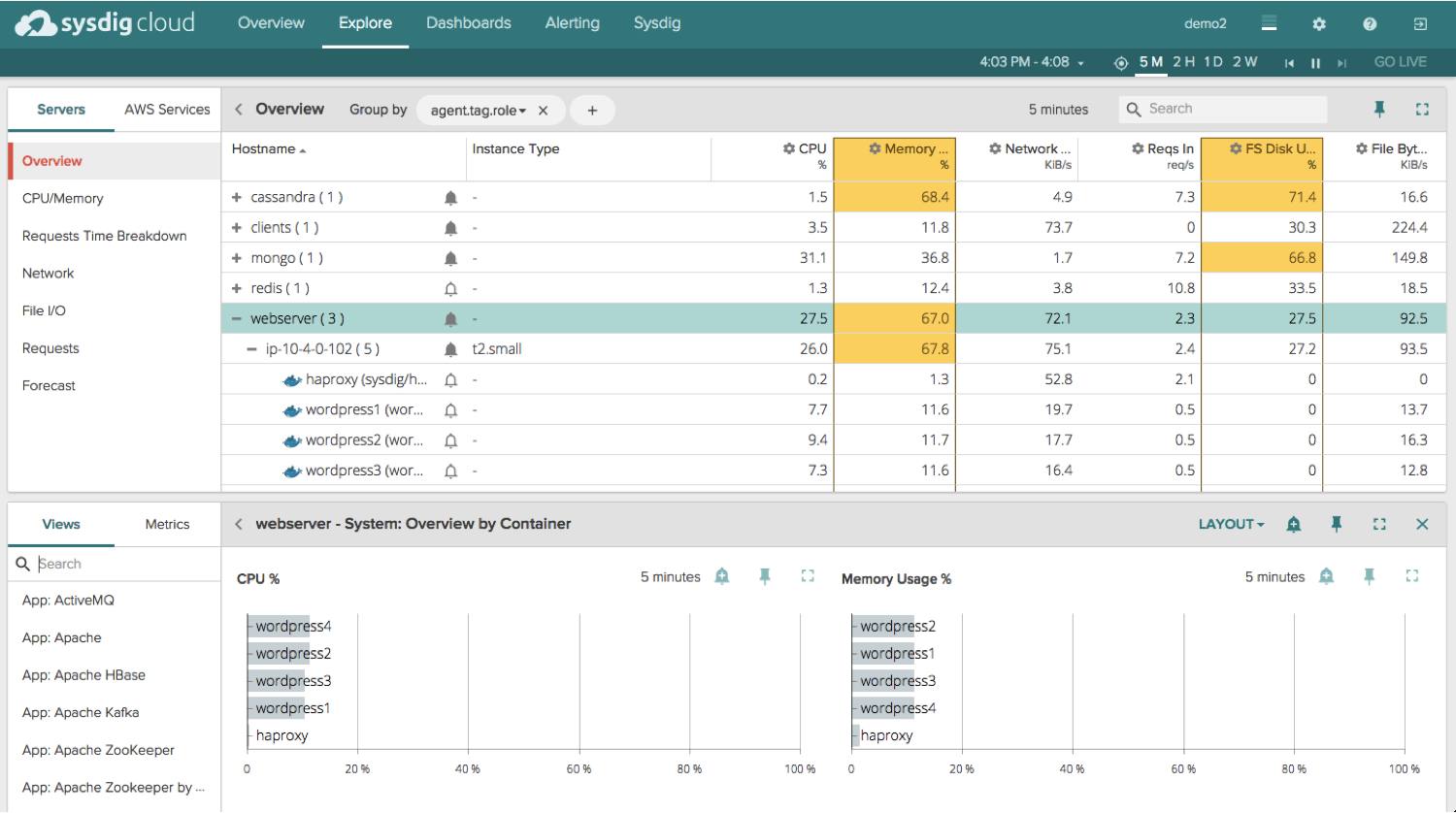
Realistic deployment timelines:
| Scope | Timeline | Notes |
|---|---|---|
| Proof of concept | 1-2 weeks | Limited scope, basic features |
| Initial production deployment | 4-8 weeks | Core features, primary environments |
| Full rollout | 3-6 months | All environments, full feature set |
| Tuning and optimization | Ongoing | Never really ends |
Don’t rush deployment. Taking time to configure properly pays off in fewer false positives and better detection quality.
Integration Capabilities
Security tools don’t work in isolation. Sysdig Secure connects to your existing stack in several ways.
CI/CD Pipeline Integration
Shift-left security requires pipeline integration. Sysdig supports:
- Jenkins: Plugin for image scanning in builds
- GitHub Actions: Native action for scanning
- GitLab CI: Integration for pipeline security
- CircleCI: Orb available for scanning
- Azure DevOps: Extension for pipeline integration
You can fail builds that contain critical vulnerabilities. Or just report findings without blocking. The choice depends on your risk tolerance.
Container Registry Integration
Sysdig scans images in your registries automatically:
- Docker Hub
- Amazon ECR
- Google Container Registry
- Azure Container Registry
- Harbor
- JFrog Artifactory
- Quay
New images get scanned when pushed. You see vulnerabilities before deployment, not after.
SIEM and SOAR Integration
Security operations teams need alerts flowing to their platforms:
SIEM integrations:
- Splunk
- IBM QRadar
- Microsoft Sentinel
- Elastic Security
- Generic Syslog output
SOAR and ticketing:
- PagerDuty
- Slack
- ServiceNow
- Jira
- Webhook for custom integrations
These integrations let you use Sysdig data in your existing workflows. Analysts don’t need to check another dashboard.
API Access
Sysdig provides comprehensive APIs for automation:
- REST APIs for most platform functions
- Python SDK for scripting
- Terraform provider for infrastructure as code
- Command line interface for automation
If there’s something you can do in the UI, you can probably do it via API. This enables custom automation and integration with internal tools.
Who Should Use Sysdig Secure?
Not every organization needs Sysdig Secure. Let’s define who benefits most.
Ideal Customer Profile
You’re a good fit if:
- You run containers in production at scale
- Kubernetes is central to your infrastructure
- Runtime threat detection is a priority
- You want unified security instead of multiple tools
- Your team values open source and CNCF projects
- You need real-time response to threats
Company size considerations:
Sysdig serves enterprises well. Their customer base includes many Fortune 500 companies. But mid-market organizations with serious cloud-native deployments also benefit.
Very small teams might find the platform more than they need. If you’re running a handful of containers, simpler tools might suffice.
Less Ideal Scenarios
You might look elsewhere if:
- Your workloads are mostly traditional VMs without containers
- You prefer completely agentless security
- Budget is extremely constrained
- You need a single vendor for all security functions
- Your team lacks bandwidth to tune and manage the platform
Alternative considerations:
If you’re primarily concerned with posture management and don’t need deep runtime visibility, agentless tools like Wiz might be simpler. If you want everything from one vendor, Prisma Cloud or Microsoft Defender for Cloud might appeal more.
Industry Fit
Sysdig Secure works across industries. Some see particular value:
- Financial services: Strong compliance reporting, audit trails
- Healthcare: HIPAA compliance support, sensitive data protection
- Technology: Deep container and Kubernetes capabilities
- Retail: PCI DSS compliance, protecting customer data
- Government: FedRAMP authorized options available
Any organization running cloud-native applications at scale can benefit. The specific features used might vary by industry.
The Cloud Attack Graph Explained
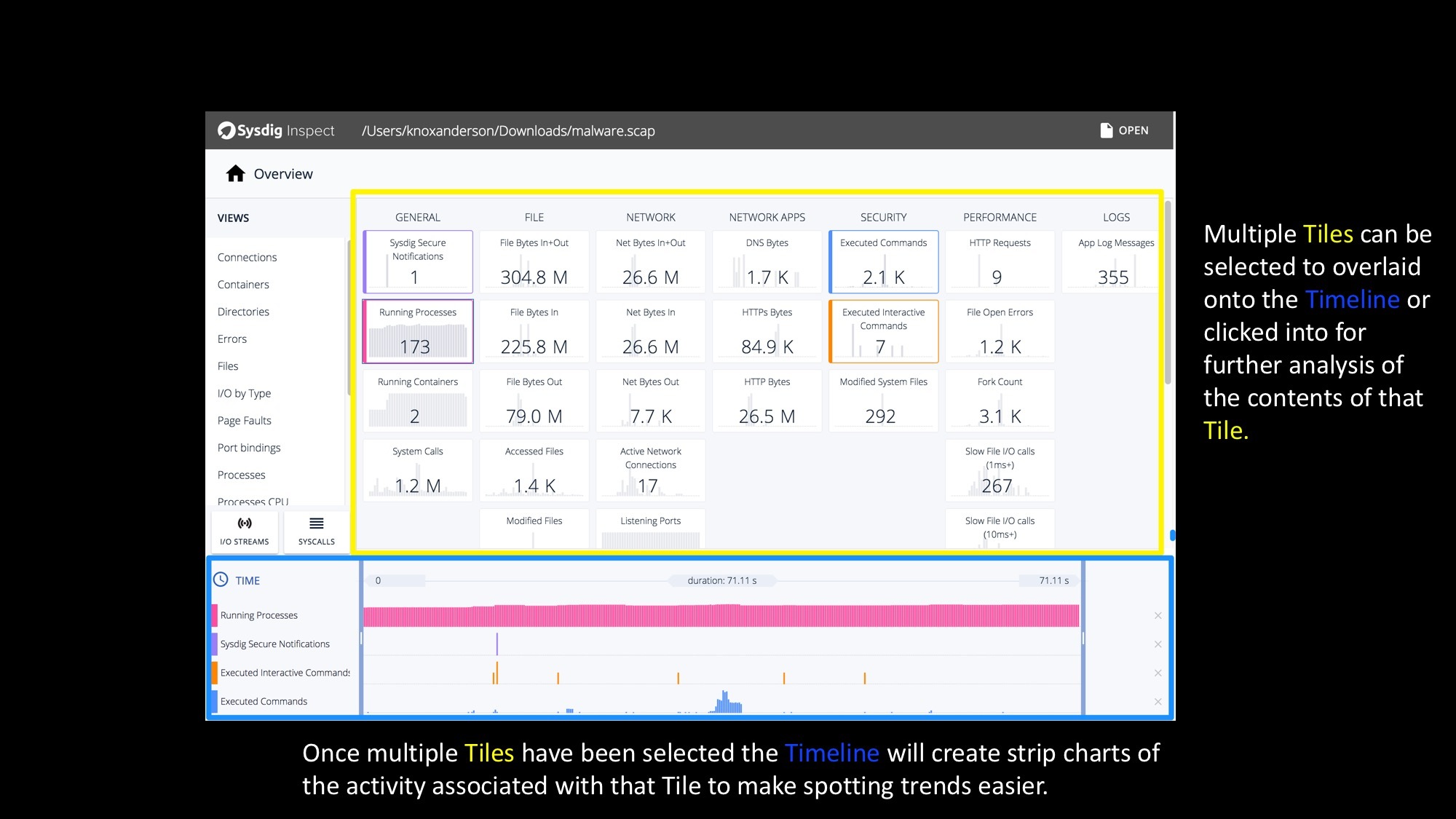
Sysdig’s Cloud Attack Graph deserves its own section. This capability connects the dots between different security findings.
What Is the Cloud Attack Graph?
The Cloud Attack Graph visualizes relationships between assets, vulnerabilities, permissions, and runtime findings. It shows potential attack paths through your environment.
Traditional security tools show you a list of problems. The Cloud Attack Graph shows how those problems connect. A medium-severity vulnerability might combine with excessive permissions and network exposure to create a critical risk.
How It Works
The system ingests data from multiple sources:
- Vulnerability scan results
- Posture findings
- Identity and permission analysis
- Network topology
- Runtime observations
It then builds a graph database showing relationships. Machine learning identifies risky combinations. The result is prioritized attack paths you should address first.
Practical Example
Imagine this scenario:
- A container image has a known vulnerability with a public exploit
- That container runs with root privileges
- The container’s service account has permissions to access secrets
- Those secrets include database credentials
- The database contains customer PII
Each finding alone might seem manageable. Together, they create a path from initial access to sensitive data. The Cloud Attack Graph surfaces this connection and prioritizes remediation.
Using Attack Paths for Prioritization
Security teams can’t fix everything at once. Attack path analysis helps decide what to fix first.
The system scores paths based on:
- Likelihood of exploitation
- Potential impact if exploited
- Number of steps required
- Ease of remediation
You focus on high-likelihood, high-impact paths. Lower-risk paths can wait. This approach makes limited security resources more effective.
Getting the Most from Sysdig Secure
Buying a tool is easy. Getting value from it is harder. Here’s how to succeed with Sysdig Secure.
Start with Clear Goals
Before deployment, define what success looks like:
- What specific problems are you trying to solve?
- Which compliance requirements must you meet?
- How will you measure improvement?
- What does your team have capacity to manage?
Vague goals lead to shelfware. Specific goals lead to value.
Phase Your Rollout
Don’t try to deploy everything at once. A phased approach works better:
Phase 1: Vulnerability scanning and basic posture management
Phase 2: Runtime detection in non-production environments
Phase 3: Runtime detection in production with alert tuning
Phase 4: CIEM and advanced features
Phase 5: Full integration with SOC workflows
Each phase builds on the previous. You learn the platform gradually while delivering value incrementally.
Invest in Alert Tuning
Out-of-the-box rules generate noise. Every environment is different. You’ll need to:
- Suppress known-good behaviors specific to your applications
- Adjust severity levels based on your risk tolerance
- Create custom rules for your specific threats
- Set up proper notification routing
Expect to spend significant time tuning during the first few months. The investment pays off in signal-to-noise ratio.
Build Internal Expertise
The platform is powerful but complex. Invest in training your team:
- Complete Sysdig’s training courses
- Attend user community events
- Participate in Falco community for detection expertise
- Document internal procedures and playbooks
Relying solely on vendor support creates dependency. Internal expertise drives long-term success.
Measure and Report
Track metrics that show security improvement:
- Mean time to detect threats
- Mean time to respond to incidents
- Vulnerability reduction over time
- Compliance posture scores
- Number of prevented deployments
Regular reporting justifies continued investment. It also identifies areas needing attention.
Limitations and Considerations
Every product has weaknesses. Understanding limitations helps set proper expectations.
Agent Requirements
Full runtime capabilities require agent deployment. This presents challenges:
- Agents consume host resources
- Some organizations restrict what runs on production systems
- Managed Kubernetes services may limit agent capabilities
- Legacy systems might not support the agent
Sysdig has added some agentless capabilities, but runtime detection still needs agents. If your organization strongly prefers agentless security, this is a real constraint.
Learning Curve
Sysdig Secure has many features. Mastering them takes time:
- The interface has improved but still has complexity
- Writing effective Falco rules requires skill
- Tuning for your environment needs expertise
- Integrations require configuration
Plan for adequate onboarding and training. Don’t expect immediate productivity.
Focus Area
Sysdig focuses on cloud-native security. This means:
- Traditional on-premises servers get less attention
- Legacy application types aren’t the priority
- Non-container workloads have fewer features
If your infrastructure is mixed between cloud-native and traditional, you might need additional tools for comprehensive coverage.
Vendor Size
Sysdig is smaller than giants like Palo Alto or Microsoft. This has implications:
- Fewer global support resources
- Smaller partner ecosystem
- Platform acquisitions are possible
- Feature development may be slower than well-funded competitors
Sysdig has strong backing and a healthy customer base. But vendor risk is worth considering in your evaluation.
Future Direction and Roadmap
Where is Sysdig Secure heading? While specific roadmaps are confidential, trends are visible.
AI and Automation
Sysdig Sage signals their AI direction. Expect continued investment in:
- Automated investigation and response
- AI-assisted rule creation
- Natural language querying
- Predictive risk analysis
The security skills gap makes automation increasingly valuable. AI features help smaller teams do more.
Platform Consolidation
The CNAPP market is consolidating. Customers want fewer tools, not more. Sysdig will likely expand:
- Broader workload coverage beyond containers
- Deeper code security capabilities
- More compliance frameworks and certifications
- Extended third-party integrations
The goal is being the single platform for cloud-native security.
Open Source Commitment
Sysdig’s open source roots remain central. Falco continues evolving with community input. This benefits customers through:
- Faster detection rule development
- Broader testing and validation
- Ecosystem compatibility
- Talent availability
Expect Sysdig to maintain and deepen their CNCF involvement.
Making Your Decision
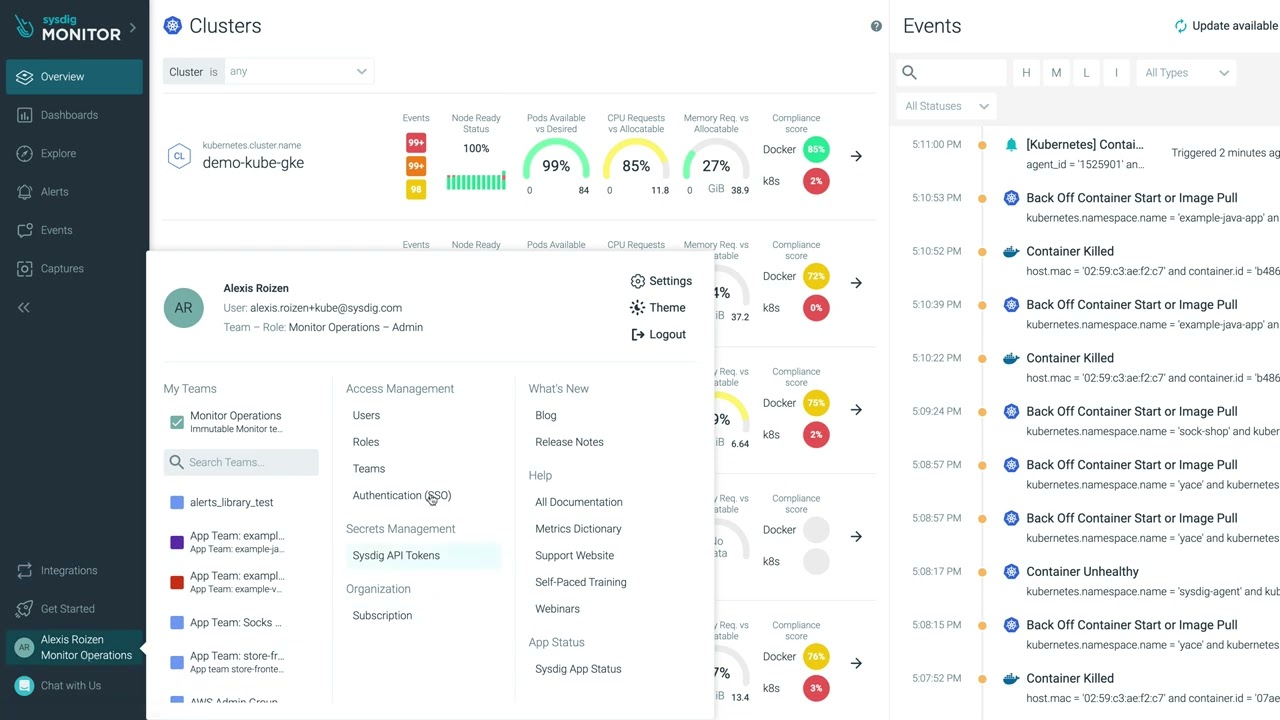
You’ve read a lot about Sysdig Secure. Here’s how to decide if it’s right for you.
Evaluation Checklist
Run through these questions:
| Question | If Yes, Sysdig Is… | If No, Consider… |
|---|---|---|
| Do you run containers at scale? | Strong fit | May be overkill |
| Is runtime detection a priority? | Strong fit | Agentless alternatives |
| Do you value open source? | Strong fit | Proprietary options work too |
| Can you deploy agents everywhere? | Full value available | Limited functionality |
| Do you have staff to manage it? | Can maximize value | Consider managed services |
Proof of Concept Recommendations
If Sysdig looks promising, run a proper evaluation:
- Define specific use cases to test
- Select representative environments (not just easy ones)
- Involve the people who will actually use it
- Test integrations with your existing tools
- Evaluate support responsiveness
- Get reference calls with similar customers
A thorough proof of concept prevents surprises after purchase.
Contract Negotiation Tips
When you’re ready to buy:
- Push for multi-year discounts if you’re confident
- Negotiate implementation services inclusion
- Clarify growth pricing as your environment scales
- Understand renewal terms upfront
- Ask about training credits
Enterprise software pricing has flexibility. Don’t accept the first quote.
Conclusion
Sysdig Secure stands out as a strong CNAPP choice for organizations running containers and Kubernetes at scale. Its runtime detection capabilities, built on open source Falco, provide visibility that agentless alternatives can’t match. The platform brings together vulnerability management, posture management, and threat detection in a unified experience. It’s not the cheapest option, and it requires investment in agent deployment and tuning. But for teams that need real-time cloud-native security, Sysdig Secure delivers.
Frequently Asked Questions About Sysdig Secure Review
| Who is Sysdig Secure best suited for? | Sysdig Secure works best for organizations running containers and Kubernetes at scale in production. Teams that prioritize runtime threat detection and value open source foundations will find the most value. Mid-market to enterprise companies with dedicated security staff get the best results. |
| How does Sysdig Secure pricing compare to competitors? | Sysdig typically costs less than Prisma Cloud and prices similarly to Aqua Security. Exact pricing depends on your environment size, features selected, and contract terms. Request quotes from multiple vendors to compare accurately for your specific situation. |
| Can Sysdig Secure work without agents? | Some features work agentless, including cloud posture management and registry scanning. Full runtime threat detection requires agent deployment. If you need completely agentless security, competitors like Wiz might be better fits. |
| How long does it take to deploy Sysdig Secure? | A proof of concept takes one to two weeks. Initial production deployment typically requires four to eight weeks. Full rollout across large environments takes three to six months. Proper tuning is ongoing work. |
| What makes Sysdig Secure different from other CNAPP platforms? | Sysdig’s main differentiators are its Falco-based runtime detection, open source foundations, and runtime insights that prioritize vulnerabilities based on what’s actually running. The platform started as a container security tool and has deep Kubernetes expertise. |
| Does Sysdig Secure support multi-cloud environments? | Yes, Sysdig supports AWS, Azure, and Google Cloud Platform. You can monitor all three from a single console. The platform also supports hybrid environments that mix cloud and on-premises infrastructure. |
| What compliance frameworks does Sysdig Secure support? | Sysdig supports major frameworks including CIS Benchmarks, SOC 2, PCI DSS, HIPAA, NIST, and GDPR. The platform provides out-of-the-box policies and evidence collection for audit purposes. |
| How does Sysdig Sage AI assistant work? | Sysdig Sage lets you ask questions in natural language instead of building complex queries. It helps with searching data, triaging vulnerabilities, investigating threats, and navigating the platform. It acts as an AI analyst that accelerates security workflows. |
| What kind of support does Sysdig provide? | Sysdig offers tiered support including standard and premium options. Enterprise customers get dedicated customer success managers. The company receives positive reviews for support quality. Professional services are available for complex deployments. |
| Should I choose Sysdig Secure or Wiz? | Choose Sysdig if runtime detection is your priority and you can deploy agents. Choose Wiz if you prefer agentless deployment and focus more on posture management. Both are strong platforms with different strengths. Your specific requirements should guide the decision. |


 Stack Insight is intended to support informed decision-making by providing independent information about business software and services. Some product details, including pricing, features, and promotional offers, may be supplied by vendors or partners and can change without notice.