
OX Security vs Aikido Security: Complete Comparison Guide for 2026
Picking the right application security platform isn’t easy. The market keeps growing, and every vendor claims to do everything better than the rest. Two names that come up often in 2026 are OX Security and Aikido Security. Both promise to help development and security teams find vulnerabilities, fix them fast, and ship safer code.
But they’re not the same product. They take different approaches. They serve different needs. And they work better for different types of organizations.
This guide breaks down everything you need to know about OX Security vs Aikido Security. We’ll cover their core features, pricing structures, integration options, and real-world performance. By the end, you’ll have a clear picture of which platform fits your team’s workflow and security requirements.
Understanding Modern Application Security Platforms
Before we dig into the specifics of OX Security versus Aikido Security, let’s talk about what these platforms actually do. Application security has changed a lot over the past few years. Teams can’t just scan code once and call it a day anymore.
Why Traditional Security Tools Fall Short
Old-school security tools worked in silos. You had one tool for static analysis. Another for dependency scanning. A third for container security. Maybe a fourth for infrastructure-as-code checks. Managing all these separate tools created headaches.
Security teams spent more time switching between dashboards than actually fixing problems. Developers got alert fatigue from too many notifications. And nobody could see the full picture of their application’s security posture.
Modern platforms like OX Security and Aikido Security try to solve this by bringing everything together. They combine multiple scanning types into one interface. They connect findings to real runtime risk. And they help teams focus on what actually matters.
The Shift Toward Developer-First Security
Another big change is who uses these tools. Security used to be something that happened after development. A security team would audit code right before release. They’d find problems. Developers would scramble to fix them. Everyone hated it.
Now, security needs to happen throughout development. Developers need tools that fit into their existing workflows. They need findings that make sense. And they need fixes they can apply quickly without becoming security experts themselves.
Both OX Security and Aikido Security market themselves as developer-friendly. But they interpret that differently. We’ll explore those differences throughout this comparison.
OX Security: Platform Overview and Core Philosophy
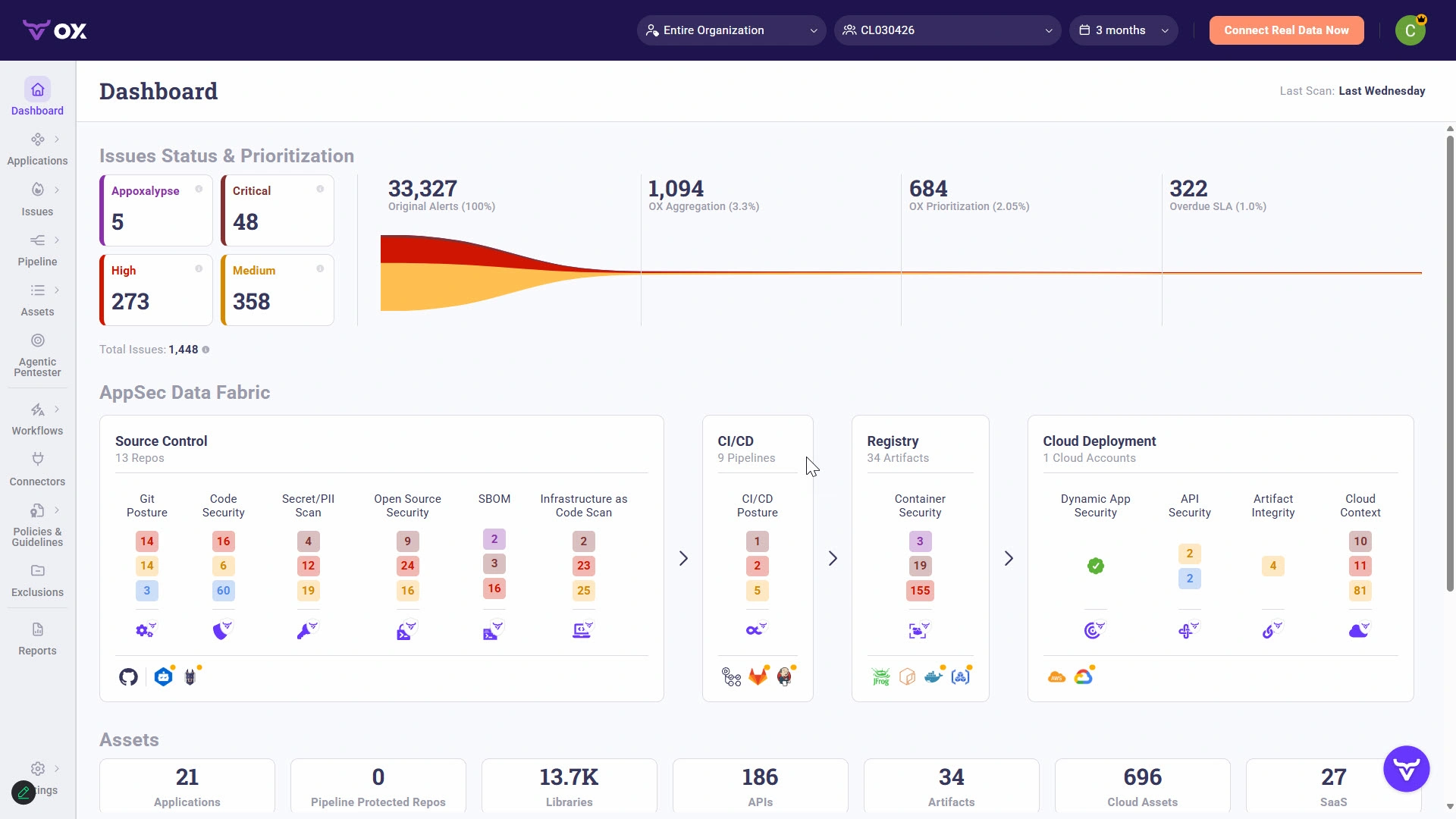
OX Security positions itself as an enterprise-grade application security platform. Their tagline focuses on covering “AI code to cloud” in a single platform. The company emphasizes finding, prioritizing, and fixing issues that “actually matter.”
What Makes OX Security Different
OX Security’s main selling point is their code-to-cloud traceability. They don’t just scan your code and hand you a list of vulnerabilities. Instead, they trace how code moves through your entire software supply chain. From the moment a developer writes it to when it runs in production.
This matters because not every vulnerability is equally dangerous. A critical flaw in code that never reaches production is less urgent than a medium-severity issue in your most exposed service. OX Security tries to provide that context.
Key features of the OX Security platform include:
- Pipeline Bill of Materials (PBOM) for full visibility into software composition
- Active ASPM that connects code findings to runtime behavior
- Vibe Security for real-time protection of AI-generated code
- Centralized policy management across multiple pipelines
- OSC&R-based threat modeling framework
- Code-to-cloud context for every finding
OX Security’s Approach to AI-Generated Code
One area where OX Security stands out is AI code security. As more developers use tools like GitHub Copilot, ChatGPT, and other AI assistants, new risks emerge. AI-generated code can contain vulnerabilities that developers might not catch during normal review.
OX Security introduced what they call “Vibe Security.” This feature applies security policies at the moment of code creation. Rather than waiting until code is committed and then scanning it, OX Security checks AI-generated code in real time. This prevents vulnerable code from ever entering your codebase.
The platform also tracks which parts of your application came from AI tools. This helps security teams understand their exposure to AI-related risks. It’s a forward-looking feature that addresses where software development is heading.
Enterprise Focus and Scale
OX Security clearly targets larger organizations. Their messaging emphasizes handling “complex environments” and “higher scale.” The platform is built for companies with multiple development teams, numerous repositories, and sophisticated CI/CD pipelines.
This enterprise focus shows in their feature set. OX Security offers extensive governance capabilities. You can set policies that apply across your entire organization. You can enforce standards without requiring individual teams to configure everything themselves.
The downside is complexity. Smaller teams might find OX Security more powerful than they need. The learning curve is steeper. And the pricing typically reflects enterprise positioning.
Aikido Security: Platform Overview and Core Philosophy
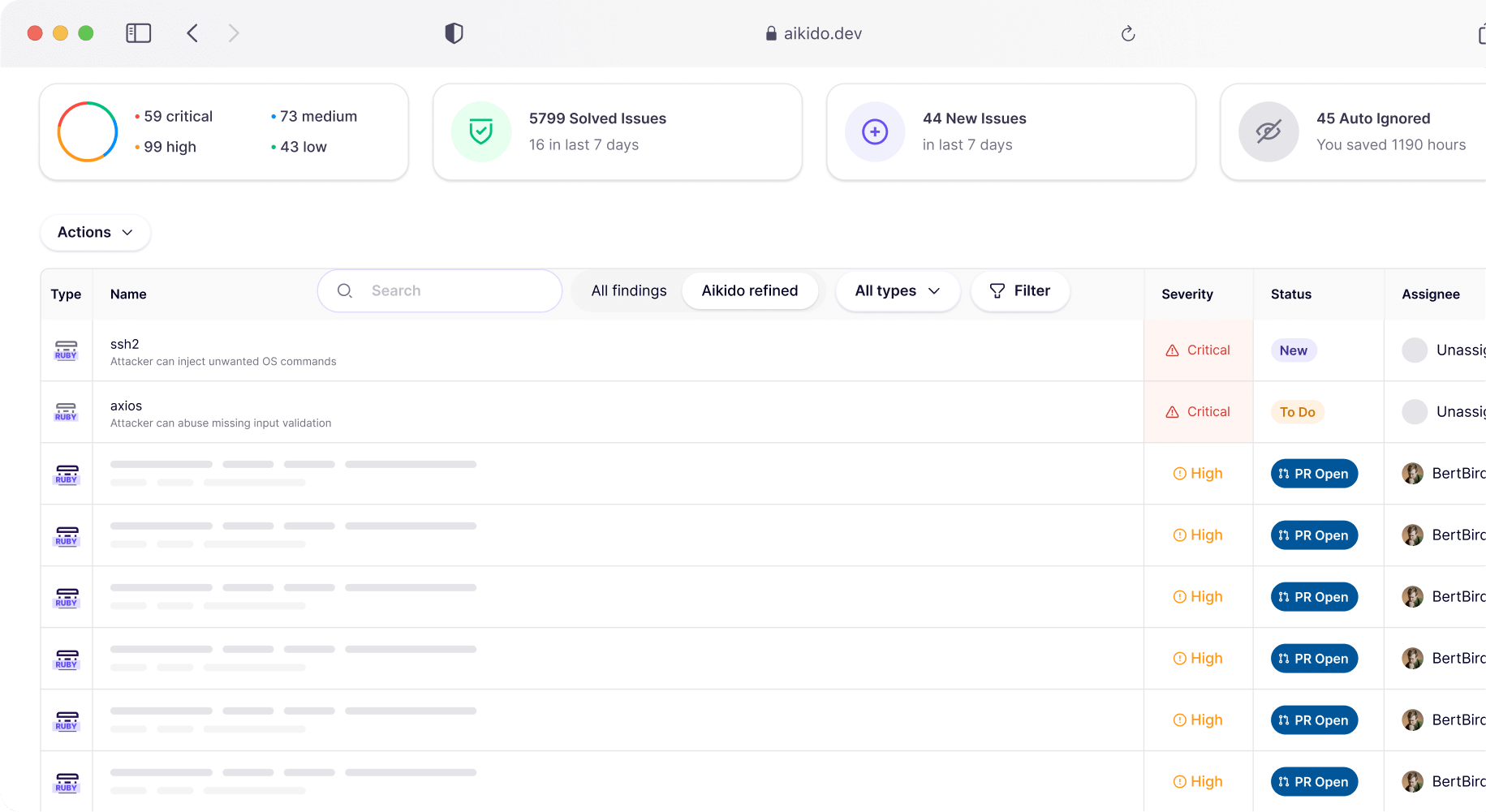
Aikido Security takes a different approach. They describe themselves as an “all-in-one security platform loved by developers and security teams alike.” The emphasis is on simplicity and accessibility.
Aikido’s Developer-Centric Design
Aikido Security built their platform around developer experience. The interface is clean. The onboarding is straightforward. And many features work out of the box without extensive configuration.
This design philosophy shows in how Aikido handles integrations. The platform provides read-only access to your repositories. It doesn’t require complex setup processes. Small teams can get started quickly and see results the same day.
Core capabilities of Aikido Security include:
- Static Application Security Testing (SAST) for all major languages
- Software Composition Analysis (SCA) for dependency vulnerabilities
- Dynamic Application Security Testing (DAST) including authenticated scans
- Container security scanning for operating system packages
- Infrastructure-as-Code (IaC) scanning
- Secrets detection across repositories
- Cloud Security Posture Management (CSPM)
- Runtime protection through Zen by Aikido
- AI-powered Autotriage and Autofix capabilities
The Zen Runtime Protection Feature
One standout feature in Aikido’s lineup is Zen, their runtime protection component. Zen acts as an in-app firewall that detects threats while your application runs. It can stop attacks in real time before they reach your database.
This goes beyond traditional scanning. Most security tools find vulnerabilities in code and tell you to fix them. Zen actually blocks exploitation attempts as they happen. This provides an additional layer of defense even if some vulnerabilities slip through.
Zen monitors for common attack patterns like SQL injection, cross-site scripting (XSS), and cross-site request forgery (CSRF). It works at the application level rather than the network level. This means it can catch attacks that traditional firewalls might miss.
AI Features for Faster Remediation
Aikido Security also invests heavily in AI-powered features. Their AI Autotriage capability helps reduce false positives. Not every finding from a security scan represents a real risk. AI Autotriage analyzes context to determine which issues deserve attention.
The AI Autofix feature takes this further. For many common vulnerabilities, Aikido can generate fixes automatically. Developers can apply these fixes with one click. This dramatically reduces the time from finding a problem to resolving it.
Aikido also offers AI-powered penetration testing. These automated pentests simulate real-world attacks against your applications. They go beyond simple vulnerability scanning to test how attackers might chain multiple issues together.
Head-to-Head Feature Comparison: OX Security vs Aikido Security
Now let’s compare these platforms directly. We’ll look at specific capabilities and how each vendor approaches them.
Static Application Security Testing (SAST)
Both platforms offer SAST capabilities, but with different strengths.
OX Security’s SAST approach focuses on preventing vulnerabilities at creation. This is especially true for AI-generated code. The platform scans code as it’s written, not just after it’s committed. This shift-left approach catches problems earlier in the development cycle.
OX Security also connects SAST findings to runtime context. A vulnerability in your source code might or might not be exploitable depending on how that code gets deployed. OX Security tries to tell you which findings represent actual runtime risk.
Aikido Security’s SAST capabilities support all major programming languages out of the box. The platform works immediately after connecting to your repositories. You don’t need extensive configuration to start seeing results.
Aikido emphasizes automatic fixes for SAST findings. Their AI Autofix can generate patches for many common vulnerability types. Developers can review and apply these fixes without deep security expertise.
| SAST Feature | OX Security | Aikido Security |
|---|---|---|
| Language Support | Major languages covered | All major languages out-of-the-box |
| AI Code Scanning | Real-time Vibe Security | Standard scanning post-commit |
| Runtime Context | Full code-to-cloud traceability | Limited runtime correlation |
| Auto-Remediation | Available | One-click AI Autofix |
| False Positive Handling | Risk-based prioritization | AI Autotriage |
Software Composition Analysis (SCA)
Open-source dependencies make up a large portion of modern applications. Both platforms scan these dependencies for known vulnerabilities.
OX Security’s SCA capabilities integrate into their broader PBOM approach. The platform doesn’t just tell you which dependencies have vulnerabilities. It shows you how those dependencies flow through your entire software supply chain.
This matters because the same vulnerable library might appear in multiple places. OX Security helps you understand the blast radius. If you update a dependency in one location, where else might that change need to happen?
The platform also tracks licensing issues. Open-source licenses can create legal complications if not managed properly. OX Security identifies license compliance risks alongside security vulnerabilities.
Aikido Security’s SCA scanning focuses on practical remediation. The platform identifies vulnerable dependencies and shows you which versions fix the problem. The AI Autofix feature can generate pull requests that update dependencies automatically.
Aikido also includes open-source license scanning in their SCA module. You can see which licenses your dependencies use and identify potential compliance issues.
Dynamic Application Security Testing (DAST)
DAST tests running applications for vulnerabilities. It simulates real attacks rather than just analyzing code.
OX Security includes DAST capabilities within their broader platform. These integrate with their code-to-cloud visibility. Findings from dynamic testing connect back to the underlying code that caused them.
Aikido Security offers both surface-level and authenticated DAST scanning. Authenticated scans can log into your application and test functionality that requires user sessions. This catches vulnerabilities in protected areas that unauthenticated scans would miss.
Aikido’s DAST scanner is built on Nuclei, a well-known open-source vulnerability scanner. This gives it a large library of detection signatures. The platform scans APIs as well as traditional web interfaces.
Aikido also checks self-hosted applications for common vulnerabilities. This helps teams that run their own infrastructure rather than relying entirely on cloud services.
Container and Infrastructure Security
Modern applications often run in containers. Both platforms scan container images for security issues.
OX Security’s container scanning fits into their supply chain visibility. The platform tracks which base images you use, what packages they contain, and whether any have known vulnerabilities. This information connects to the broader context of how containers get deployed.
Aikido Security scans container operating systems for vulnerable packages. Their infrastructure-as-code scanning also covers misconfigurations in Kubernetes manifests, Terraform files, and other deployment configurations.
Aikido’s Cloud Security Posture Management (CSPM) adds another layer. It monitors your cloud infrastructure for misconfigurations that could create security risks. This goes beyond individual containers to examine your overall cloud architecture.
| Infrastructure Security | OX Security | Aikido Security |
|---|---|---|
| Container Scanning | Yes, with supply chain context | Yes, OS package detection |
| IaC Scanning | Yes | Yes |
| CSPM | Available | Available |
| Kubernetes Security | Yes | Yes |
| Secrets Detection | Yes | Yes |
Runtime Protection and Threat Detection
Finding vulnerabilities is one thing. Stopping active attacks is another.
OX Security emphasizes proving “runtime-relevant risk.” Their platform shows which vulnerabilities actually exist in your production environment. This helps prioritize remediation based on real exposure rather than theoretical risk.
The code-to-cloud traceability lets you see exactly which deployed services contain which vulnerabilities. You can focus on fixing issues in your most critical production systems first.
Aikido Security’s Zen provides active runtime protection. It doesn’t just detect that a vulnerability exists. It blocks exploitation attempts as they happen. This in-app firewall approach adds a defensive layer on top of vulnerability scanning.
Zen detects threats like SQL injection, XSS, and CSRF in real time. It can stop attacks before they succeed. This matters because fixing every vulnerability immediately isn’t always possible. Zen provides protection while you work through your backlog.
Code-to-Cloud Visibility: A Detailed Look
One of the biggest differences between these platforms is how they handle visibility across the software development lifecycle. Let’s examine this in detail.
OX Security’s Pipeline Bill of Materials (PBOM)
OX Security builds their visibility on the concept of a Pipeline Bill of Materials. This goes beyond traditional Software Bill of Materials (SBOM) approaches. PBOM tracks not just what’s in your software, but how it got there.
The PBOM records every step in your CI/CD pipeline. It tracks which tools touched your code. It documents which tests ran. It notes who approved what. This creates a complete audit trail from development to deployment.
Why does this matter? Software supply chain attacks have become more common. Attackers don’t always target your code directly. Sometimes they compromise build tools, inject malicious dependencies, or manipulate deployment scripts. PBOM helps you detect these attacks.
PBOM provides visibility into:
- Source code origins and contributors
- Third-party dependencies and their sources
- Build tool configurations and versions
- CI/CD pipeline stages and approvals
- Container image layers and base images
- Deployment targets and configurations
- Runtime environments and connections
This level of detail helps enterprise security teams understand their attack surface. They can trace a vulnerability in production back to exactly where it originated. They can identify which other applications might share the same risk.
OX Security’s OSC&R Framework
OX Security also uses the OSC&R (Open Software Supply Chain Attack Reference) framework for threat modeling. This framework categorizes different types of software supply chain attacks. It helps security teams think systematically about risks.
By mapping their findings to OSC&R categories, OX Security provides more than just a list of vulnerabilities. They show how those vulnerabilities relate to real attack patterns. This helps prioritization decisions and security planning.
Aikido Security’s Approach to Visibility
Aikido Security takes a simpler approach to visibility. They provide a centralized dashboard that shows all security findings in one place. You can see SAST results, SCA findings, DAST discoveries, and infrastructure issues together.
This centralization helps smaller teams that don’t have dedicated security operations centers. Everything is in one interface. You don’t need to switch between multiple tools to understand your security posture.
Aikido’s visibility focuses on what developers need. The platform integrates with IDEs, task managers, and CI/CD systems. Findings appear where developers already work. This reduces context switching and makes security part of the natural development workflow.
However, Aikido’s visibility doesn’t go as deep into supply chain context as OX Security. You can see what vulnerabilities exist, but the traceability through complex pipelines is more limited. For smaller teams with straightforward pipelines, this might be sufficient. For enterprises with complex build systems, it might fall short.
Risk Prioritization and False Positive Reduction
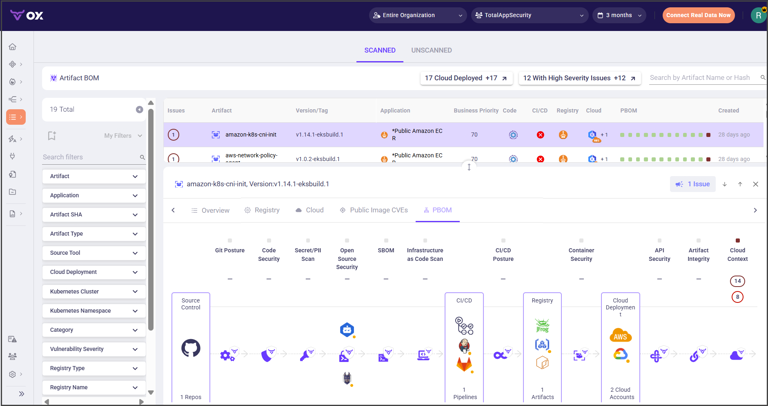
Every security scanner finds more issues than any team can fix immediately. Prioritization separates useful tools from noisy ones. Both platforms address this challenge, but differently.
How OX Security Prioritizes Findings
OX Security’s prioritization centers on runtime relevance. The platform doesn’t just look at vulnerability severity scores. It considers whether vulnerable code actually runs in production. It examines whether exploitation paths exist.
A critical vulnerability in a function that never executes isn’t urgent. A medium-severity issue in code that handles authentication might be more pressing. OX Security tries to make these distinctions automatically.
The platform also considers your specific environment. The same vulnerability might have different risk levels depending on your architecture. OX Security incorporates this context into prioritization decisions.
Factors OX Security considers for prioritization:
- CVSS severity score
- Whether vulnerable code reaches production
- Exploitation complexity
- Network exposure of affected components
- Sensitivity of data handled by vulnerable code
- Availability of exploit code
- Active exploitation in the wild
This comprehensive approach helps security teams focus on issues that represent real risk. It reduces time spent investigating findings that don’t matter.
How Aikido Security Prioritizes Findings
Aikido Security uses AI Autotriage for prioritization. This feature analyzes findings automatically and determines which ones deserve attention. It considers multiple factors to separate real issues from false positives.
The AI learns from feedback. When you mark a finding as a false positive, the system gets smarter. Over time, it becomes better at recognizing which findings in your specific codebase represent real risks.
Aikido also provides clear explanations for why it prioritizes findings the way it does. Developers can understand the reasoning, not just accept a score blindly. This transparency builds trust in the tool’s recommendations.
The platform highlights what matters most through its interface. Critical issues appear prominently. Lower-priority findings stay accessible but don’t demand immediate attention. This design helps teams process findings efficiently.
Comparing False Positive Rates
False positives plague security tools. When scanners cry wolf too often, developers start ignoring them. Both platforms claim to reduce false positives, but they use different methods.
OX Security reduces false positives through runtime context. If they can prove that vulnerable code never executes in production, that finding becomes less urgent. This doesn’t eliminate the finding entirely, but it changes its priority.
Aikido Security reduces false positives through AI analysis and feedback loops. The system learns what real issues look like in your codebase. It gets better over time at filtering out noise.
Neither approach is perfect. You’ll still see some false positives with both platforms. The question is whether the false positive rate is low enough that developers trust the tool’s findings.
Remediation Capabilities: Fixing What You Find
Finding vulnerabilities doesn’t improve security. Fixing them does. Let’s compare how these platforms help with remediation.
OX Security’s Remediation Approach
OX Security connects findings to their root causes. Because the platform tracks code through the entire pipeline, it can show developers exactly where problems originate. This makes fixing issues more straightforward.
The platform also helps prevent new vulnerabilities from entering your codebase. This is especially true for AI-generated code. By catching problems at creation time, OX Security reduces the remediation burden later.
OX Security provides remediation guidance alongside findings. Developers see not just what’s wrong, but how to fix it. This guidance considers your specific technology stack and coding patterns.
For enterprise teams, OX Security offers workflow automation. You can create tickets automatically when certain types of issues appear. You can route findings to appropriate teams based on code ownership. This automation helps large organizations manage remediation at scale.
Aikido Security’s Remediation Approach
Aikido Security emphasizes speed and simplicity in remediation. Their one-click AI Autofix generates patches for many common vulnerabilities. Developers can review and apply these fixes without becoming security experts.
The AI Autofix feature works across different vulnerability types. It can generate code changes for security issues in your application code. It can create dependency updates for vulnerable libraries. It can fix infrastructure misconfigurations.
Aikido’s remediation workflow typically looks like:
- Vulnerability appears in dashboard
- AI Autotriage confirms it’s a real issue
- AI Autofix generates a proposed fix
- Developer reviews the proposed change
- One-click applies the fix
- CI/CD pipeline verifies the fix works
This streamlined process gets vulnerabilities fixed faster. Developers spend less time figuring out how to fix issues and more time shipping features.
Aikido also integrates with CI/CD pipelines for enforcement. You can gate deployments on security checks. This prevents vulnerable code from reaching production in the first place.
Remediation Speed Comparison
Time-to-fix is a key metric for security teams. The longer vulnerabilities stay open, the longer attackers have to exploit them.
Aikido Security’s automated approach typically produces faster fixes for common vulnerability types. The one-click workflow minimizes friction. Developers can fix issues in minutes rather than hours.
OX Security’s approach provides better context for complex issues. When vulnerabilities require careful analysis, the code-to-cloud visibility helps. Security teams can make informed decisions about remediation priorities.
For organizations with lots of straightforward vulnerabilities, Aikido’s speed advantage matters more. For organizations with complex architectures and interdependent systems, OX Security’s context matters more.
Integration Ecosystem and Developer Workflow
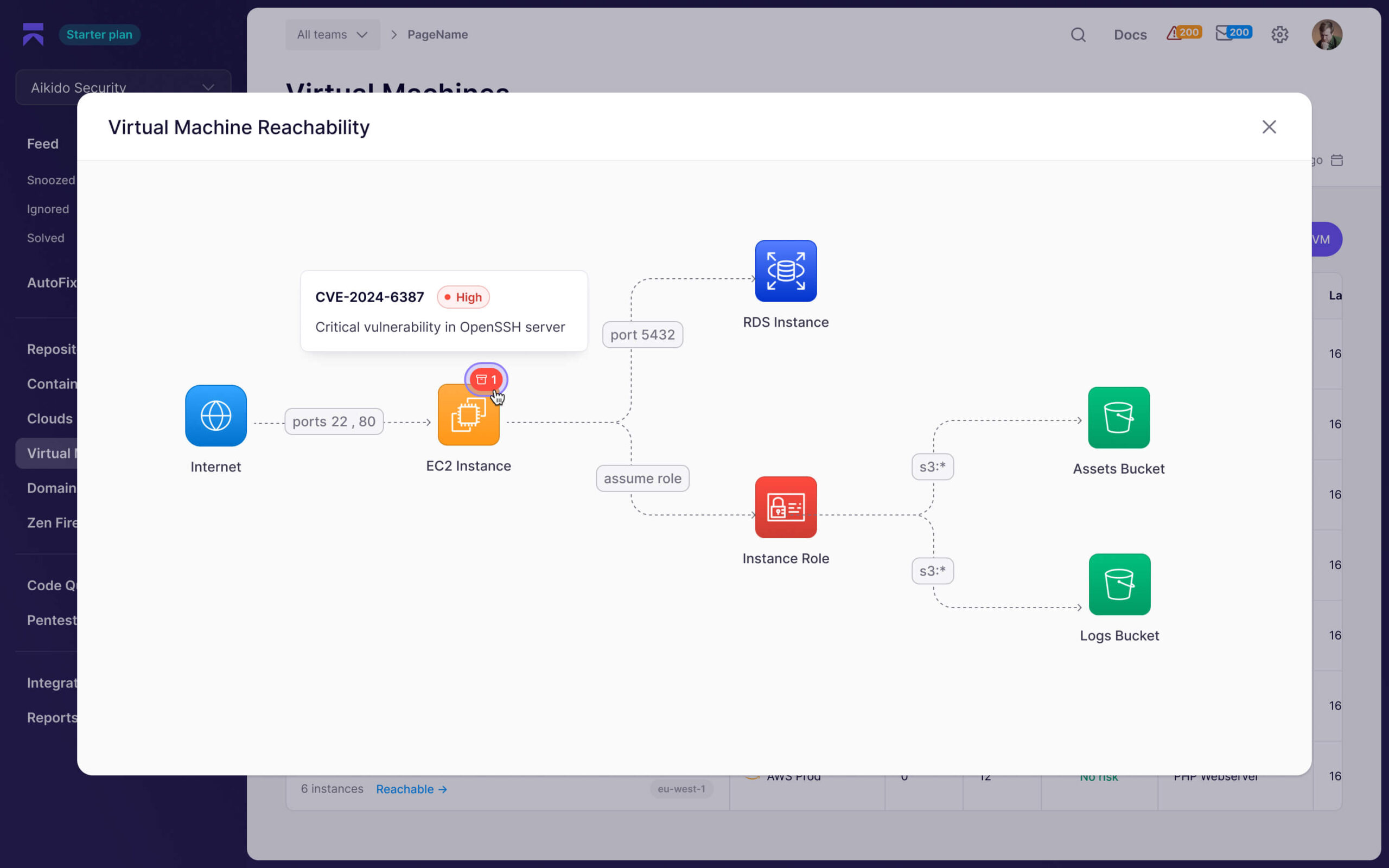
Security tools only work if developers actually use them. Integration into existing workflows determines adoption rates.
OX Security Integrations
OX Security connects to the tools enterprises already use. The platform integrates with major source control systems, CI/CD platforms, and cloud providers. These integrations enable the code-to-cloud visibility that defines the platform.
OX Security integrates with:
- GitHub, GitLab, Bitbucket for source control
- Jenkins, CircleCI, GitHub Actions for CI/CD
- AWS, Azure, GCP for cloud infrastructure
- Jira, ServiceNow for ticket management
- Slack, Teams for notifications
- Various SIEM and security tools for enterprise workflows
The depth of these integrations matters for enterprise customers. OX Security doesn’t just connect to these tools. It pulls detailed information that enables PBOM and supply chain visibility.
OX Security also offers API access for custom integrations. Enterprises with proprietary tools can build connections that work for their specific environments.
Aikido Security Integrations
Aikido Security emphasizes ease of integration. The platform uses read-only access to repositories. Setup is straightforward. You can connect your codebase and start scanning quickly.
Aikido integrates deeply with developer workflows. The platform connects to IDEs so developers see findings while they write code. It integrates with task managers so security issues become trackable work items. It connects to CI/CD systems for automated scanning and gating.
Aikido Security’s integration approach includes:
- IDE plugins for real-time feedback
- Pull request comments with findings
- CI/CD pipeline checks and gates
- Task manager integration for issue tracking
- Webhook support for custom workflows
- API access for automation
The focus is on meeting developers where they already work. Security findings appear in context. Developers don’t need to switch to a separate security dashboard for routine issues.
This developer-first integration philosophy helps adoption. When security fits naturally into existing workflows, developers actually pay attention to it.
CI/CD Pipeline Integration Comparison
Both platforms integrate with CI/CD pipelines, but they emphasize different aspects.
OX Security focuses on pipeline visibility and governance. The platform monitors what happens during builds. It enforces policies across the organization. This matters for enterprises that need to prove compliance or investigate incidents.
Aikido Security focuses on practical gates and fast feedback. Scans run automatically on pull requests. Builds can fail if critical issues appear. Developers get feedback quickly so they can fix problems before merging.
For teams that want security to stay out of the way until something’s wrong, Aikido’s lightweight approach works well. For organizations that need detailed audit trails and centralized governance, OX Security provides more control.
Compliance and Governance Capabilities
Many organizations choose security tools partly for compliance reasons. Let’s examine how these platforms address regulatory requirements.
OX Security’s Compliance Features
OX Security builds compliance into their platform architecture. The PBOM provides audit trails that compliance auditors love. You can prove exactly what went into your software and how it got there.
The platform helps with multiple compliance frameworks. Whether you need SOC 2, ISO 27001, PCI DSS, or other certifications, OX Security can help demonstrate controls. The supply chain visibility is especially valuable for software-related compliance requirements.
OX Security also enables policy enforcement at scale. You can define security standards once and apply them across your organization. Exceptions require explicit approval. This governance model fits enterprise compliance needs.
Compliance capabilities in OX Security:
- Complete audit trails through PBOM
- Policy templates for common frameworks
- Automated evidence collection
- Role-based access controls
- Approval workflows for exceptions
- Compliance reporting dashboards
Aikido Security’s Compliance Features
Aikido Security includes automated compliance features. The platform maps findings to compliance requirements. It helps teams understand which vulnerabilities affect their compliance status.
Aikido provides compliance reporting out of the box. You can generate reports showing your security posture relative to specific frameworks. These reports work for auditors and internal stakeholders.
The platform also includes open-source license scanning. License compliance is a separate but related concern. Aikido helps identify dependencies that might create licensing issues.
For smaller organizations, Aikido’s compliance features may be sufficient. The platform covers common requirements without overwhelming complexity. For enterprises with sophisticated compliance programs, OX Security’s deeper governance might be necessary.
Audit Trail and Reporting Comparison
Audit trails document what happened and when. Both platforms maintain records, but with different levels of detail.
OX Security’s PBOM creates comprehensive audit trails. You can trace any component back through the entire pipeline. This level of detail supports investigations and incident response. It also satisfies auditors who need to verify controls.
Aikido Security maintains audit logs for security findings and remediation activities. You can see when issues were found, who fixed them, and when. This covers the security-specific audit needs most teams have.
For organizations under heavy regulatory scrutiny, OX Security’s comprehensive approach provides more documentation. For organizations with standard compliance needs, Aikido’s logging may be adequate.
Pricing and Cost Considerations
Budget matters. Let’s look at how these platforms approach pricing and what affects total cost of ownership.
OX Security Pricing Model
OX Security uses enterprise pricing. They don’t publish fixed prices on their website. Instead, you need to contact sales for a quote based on your specific requirements.
This approach is common for enterprise security platforms. Pricing typically depends on factors like:
- Number of developers or users
- Number of repositories scanned
- Amount of CI/CD pipeline activity
- Which features and modules you need
- Support level required
Enterprise pricing often means higher costs but also includes more support, customization, and integration assistance. For large organizations, the price usually includes implementation help and ongoing account management.
Aikido Security Pricing Model
Aikido Security positions itself as providing “more for less” compared to competitors. Their messaging emphasizes cost-effectiveness. The platform is designed to replace multiple separate tools, which can reduce total spending.
Aikido offers different pricing tiers based on team size and needs. Smaller teams can access the platform at lower price points. This makes Aikido more accessible to startups and mid-sized companies.
The all-in-one approach also affects pricing. Instead of paying separately for SAST, SCA, DAST, container scanning, and other capabilities, you get everything in one package. This simplifies budgeting and often reduces total cost.
Total Cost of Ownership
Sticker price isn’t everything. Consider the full cost of ownership.
For OX Security, factor in:
- License fees (typically higher)
- Implementation time and resources
- Training for complex features
- Ongoing administration requirements
- Integration development for custom needs
For Aikido Security, factor in:
- License fees (typically lower)
- Faster implementation (less staff time)
- Simpler training requirements
- Lower administrative overhead
- Potential gaps for complex enterprise needs
Larger organizations with dedicated security teams might find OX Security’s higher price worthwhile. The advanced features save time that would otherwise go to manual analysis. The comprehensive visibility reduces risk.
Smaller organizations might find Aikido’s lower price point more sustainable. The simpler approach means less investment in training and administration. The automated features reduce the need for security expertise.
Ideal Use Cases: When to Choose Each Platform
Different organizations have different needs. Here’s guidance on which platform fits which scenarios.
When OX Security is the Better Choice
Choose OX Security if you have:
- Complex software supply chains with many dependencies
- Multiple development teams across the organization
- Sophisticated CI/CD pipelines requiring visibility
- Heavy use of AI code generation tools
- Strict compliance requirements needing detailed audit trails
- Dedicated security teams who can use advanced features
- Budget for enterprise-grade tooling
- Need to prove runtime risk for prioritization
OX Security excels in enterprise environments where complexity is unavoidable. The platform handles scale well. It provides the visibility that large organizations need. And it offers the governance controls that enterprise security programs require.
If you’re dealing with supply chain security concerns specifically, OX Security’s PBOM and OSC&R framework provide relevant capabilities. The platform was designed with supply chain threats in mind.
When Aikido Security is the Better Choice
Choose Aikido Security if you have:
- Smaller development teams needing accessible security
- Limited security expertise on staff
- Straightforward CI/CD pipelines
- Desire for quick time-to-value
- Budget constraints requiring cost efficiency
- Need for runtime protection alongside scanning
- Focus on developer experience and adoption
- Standard compliance requirements
Aikido Security works well for organizations that want solid security without massive complexity. The platform gets you scanning quickly. The AI features reduce manual work. And the developer-friendly design helps adoption.
If runtime protection matters to you, Aikido’s Zen feature provides unique value. The ability to block attacks in real time goes beyond what most scanning tools offer.
Team Size Considerations
Team size often determines which platform fits better.
For teams under 50 developers, Aikido Security typically provides adequate coverage. The platform is designed for this scale. Setup is quick. Administration is minimal. You don’t need a dedicated security team to get value.
For teams of 50-200 developers, either platform might work depending on your specific needs. Consider your compliance requirements, pipeline complexity, and security maturity. Both can handle this scale.
For teams over 200 developers, OX Security’s enterprise capabilities become more relevant. Managing security across many teams requires governance features. Complex pipelines need comprehensive visibility. The investment in enterprise tooling pays off at scale.
User Feedback and Market Perception
What do actual users say about these platforms? Let’s look at community feedback and market positioning.
OX Security User Feedback
Users typically praise OX Security for its comprehensive visibility. Security teams appreciate seeing the full picture of their software supply chain. The PBOM concept resonates with organizations concerned about supply chain attacks.
Some users note that OX Security requires investment to get full value. The platform has many features. Learning to use them all takes time. Organizations without dedicated security staff may find the learning curve steep.
Enterprise customers appreciate the governance and compliance capabilities. The platform meets needs that simpler tools don’t address. This matters for regulated industries and security-conscious organizations.
Aikido Security User Feedback
Users consistently mention Aikido Security’s ease of use. The platform works quickly after setup. Developers actually adopt it because it doesn’t slow them down. The interface is intuitive even for people without security backgrounds.
The AI features receive positive feedback. Autotriage and Autofix reduce manual work substantially. Teams report fixing vulnerabilities faster than with previous tools.
Some users note that Aikido lacks depth for complex enterprise scenarios. As organizations grow, they sometimes need capabilities that Aikido doesn’t offer. The platform works best within its intended use case.
Market Positioning Comparison
OX Security positions itself as the platform that “replaces the fragmented tool stack.” Their messaging targets organizations frustrated with managing multiple security tools. The promise is consolidation plus superior supply chain visibility.
Aikido Security positions itself as the “all-round alternative” that “covers more for less.” Their messaging targets organizations seeking practical security without enterprise complexity. The promise is developer-friendly security that just works.
These positioning statements reflect real differences in approach. OX Security aims higher on the enterprise spectrum. Aikido Security aims for broader accessibility. Both positions have valid markets.
Future Directions and Product Roadmaps
Where are these platforms heading? Let’s consider likely future developments.
OX Security’s Direction
OX Security continues investing in AI code security. Their Vibe Security feature addresses a growing concern as AI coding assistants become more common. Expect continued development in this area.
The platform also keeps expanding supply chain visibility capabilities. As software supply chain attacks evolve, OX Security will likely add new detection and prevention features.
Enterprise features will probably continue deepening. Larger customers drive product priorities. Governance, compliance, and integration capabilities will advance.
Aikido Security’s Direction
Aikido Security keeps improving their AI capabilities. Autotriage and Autofix will get smarter. The platform will handle more vulnerability types automatically.
Zen runtime protection will likely expand. Active defense at runtime is a differentiator. Expect more attack types covered and better protection capabilities.
Developer experience remains a priority. Aikido will continue making security easier for developers who aren’t security experts. Expect better integrations and simpler workflows.
Industry Trends Affecting Both
Several trends will affect both platforms:
- AI code generation creates new security challenges. Both platforms need to address these.
- Software supply chain attacks keep increasing. Supply chain visibility becomes more valuable.
- Developer experience matters more as security shifts left. Tools that developers won’t use don’t help.
- Runtime security complements static analysis. Finding vulnerabilities isn’t enough; stopping attacks matters too.
- Regulatory requirements keep expanding. Compliance features become table stakes.
Making Your Decision: OX Security vs Aikido Security
After this detailed comparison, how do you choose? Here’s a framework for decision-making.
Questions to Ask Yourself
Before selecting a platform, consider these questions:
- How complex is your software supply chain?
- How many development teams need coverage?
- What’s your security team’s maturity level?
- How important is developer adoption?
- What compliance requirements do you face?
- Do you use AI code generation tools?
- What’s your realistic budget?
- How quickly do you need to see results?
Your answers point toward one platform or the other. Complex supply chains, mature security teams, and enterprise compliance needs suggest OX Security. Simpler environments, developer-focused culture, and budget constraints suggest Aikido Security.
Trial and Evaluation Recommendations
Don’t choose based on marketing alone. Both platforms offer ways to evaluate them before committing.
When evaluating OX Security:
- Request a demo focused on your specific use cases
- Ask about pilot programs for your organization size
- Evaluate PBOM capabilities with your actual pipelines
- Test AI code security features if relevant
- Assess integration depth with your existing tools
When evaluating Aikido Security:
- Use their free trial with your actual repositories
- Test Autotriage and Autofix on real findings
- Evaluate Zen runtime protection if relevant
- Check integration quality with your workflows
- Assess ease of use with your developers
Real-world testing reveals things that feature comparisons can’t. See how each platform handles your specific codebase, your actual vulnerabilities, and your team’s workflow.
Summary Comparison Table
| Criteria | OX Security | Aikido Security |
|---|---|---|
| Best For | Enterprise, complex environments | SMB, developer-focused teams |
| Main Strength | Code-to-cloud visibility, PBOM | Ease of use, AI automation |
| AI Code Security | Real-time Vibe Security | Standard post-commit scanning |
| Runtime Protection | Risk context and prioritization | Active blocking with Zen |
| Remediation | Context-rich guidance | One-click AI Autofix |
| Setup Complexity | Higher, enterprise implementation | Lower, quick start |
| Pricing | Enterprise (contact sales) | More accessible tiers |
| Compliance | Deep audit trails, governance | Automated compliance features |
| Learning Curve | Steeper, more features | Gentler, intuitive design |
Conclusion
OX Security and Aikido Security both provide strong application security capabilities, but they serve different needs. OX Security delivers enterprise-grade supply chain visibility and advanced features for complex environments. Aikido Security offers developer-friendly scanning with AI automation and accessible pricing. Your choice depends on your organization’s size, complexity, security maturity, and budget. Evaluate both platforms with your actual codebase before deciding. The right tool is the one your team will actually use effectively.
Frequently Asked Questions About OX Security vs Aikido Security
| What’s the main difference between OX Security and Aikido Security? | OX Security focuses on enterprise-grade code-to-cloud visibility with comprehensive supply chain tracking through their PBOM feature. Aikido Security emphasizes developer-friendly simplicity with AI-powered automation for finding and fixing vulnerabilities quickly. OX targets larger organizations with complex pipelines, while Aikido serves smaller teams wanting accessible security. |
| Which platform is better for startups and small development teams? | Aikido Security typically fits startups and small teams better. It offers quicker setup, simpler administration, more accessible pricing, and AI features that reduce the need for dedicated security expertise. Teams can start scanning within minutes and fix issues with one-click automation. |
| Does OX Security or Aikido Security offer runtime protection? | Both offer runtime capabilities but differently. Aikido Security provides Zen, an in-app firewall that actively blocks attacks like SQL injection and XSS in real time. OX Security focuses on proving which vulnerabilities pose actual runtime risk, helping prioritize fixes based on production exposure rather than blocking attacks directly. |
| How do OX Security and Aikido Security handle AI-generated code? | OX Security has a specific feature called Vibe Security that scans AI-generated code in real time as developers write it, applying security policies at creation. Aikido Security scans code after it’s committed using their standard SAST capabilities without specialized real-time AI code protection. |
| Which platform provides better false positive reduction? | Both platforms address false positives through different methods. OX Security uses runtime context to determine whether vulnerabilities actually pose real risk in production. Aikido Security uses AI Autotriage that learns from your feedback over time to filter out findings that don’t represent genuine threats. |
| Can smaller companies afford OX Security? | OX Security uses enterprise pricing requiring sales contact for quotes, which typically means higher costs. Smaller companies may find this beyond their budget. Aikido Security offers more accessible pricing tiers designed for different team sizes, making it more realistic for companies with limited security budgets. |
| Which platform is easier to set up and use? | Aikido Security is generally easier to set up and use. The platform uses read-only repository access and works out-of-the-box without extensive configuration. OX Security offers more features but requires more implementation effort and has a steeper learning curve, especially to use its advanced capabilities fully. |
| Do OX Security and Aikido Security support compliance requirements? | Both support compliance but with different depth. OX Security provides comprehensive audit trails through PBOM, policy enforcement, and detailed governance controls suited for strict regulatory requirements. Aikido Security offers automated compliance mapping and reporting that covers standard frameworks adequately for most organizations. |
| How do these platforms integrate with existing developer workflows? | Aikido Security deeply integrates with developer tools including IDEs, task managers, and CI/CD systems, showing findings where developers already work. OX Security integrates with enterprise tools and provides comprehensive pipeline monitoring, but focuses more on security team workflows and organizational governance. |
| Should I choose OX Security or Aikido Security for supply chain security? | For dedicated supply chain security, OX Security is stronger. Their Pipeline Bill of Materials tracks every component through your entire software delivery pipeline. The OSC&R framework helps model supply chain threats specifically. Aikido Security covers dependencies and containers but lacks the same supply chain depth. |

 Stack Insight is intended to support informed decision-making by providing independent information about business software and services. Some product details, including pricing, features, and promotional offers, may be supplied by vendors or partners and can change without notice.