
OX Security vs Mend.io: Complete Comparison for Application Security in 2026
Choosing the right application security tool can make or break your development workflow. Two names keep popping up in conversations: OX Security and Mend.io. Both promise to protect your code, but they take different approaches.
This comparison breaks down everything you need to know about these two platforms. We’ll look at how each one handles code scanning, vulnerability detection, container security, and AI-powered features. You’ll see real pricing differences, setup requirements, and the types of teams each tool fits best.
Security teams face mounting pressure to secure code faster without slowing developers down. The choice between OX Security and Mend.io isn’t simple. Each has strengths that matter more depending on your specific situation. By the end of this article, you’ll have a clear picture of which platform aligns with your organization’s needs, budget, and technical requirements.
Understanding the Application Security Market in 2026
The application security testing market has changed dramatically over the past few years. Companies aren’t just scanning code anymore. They’re dealing with AI-generated code, containerized applications, and complex software supply chains.
Both OX Security and Mend.io have evolved to address these new challenges. But their approaches differ in meaningful ways.
Why Traditional Security Tools Fall Short
Old-school security scanners looked at code in isolation. They’d flag vulnerabilities without context. Developers got buried under thousands of alerts. Many of those alerts turned out to be false positives or low-priority issues.
Modern tools like OX Security and Mend.io try to fix this problem. They add context. They prioritize risks based on real-world exploitability. They integrate directly into developer workflows.
The shift toward DevSecOps has accelerated this change. Security can’t be a bottleneck anymore. It needs to flow alongside development, not against it.
The Rise of AI Native Security Platforms
Mend.io positions itself as “the first AI Native AppSec Platform.” That’s a bold claim. OX Security also uses AI, but frames it differently. The distinction matters because it affects how each platform approaches problems.
AI native means the platform was built from the ground up with artificial intelligence at its core. It’s not bolted on as an afterthought. For Mend.io, this shapes how they handle vulnerability detection, code remediation, and threat analysis.
OX Security uses AI too, particularly for prioritization and pipeline security. But their focus tends toward the software supply chain and CI/CD pipeline protection.
OX Security: Platform Overview and Core Capabilities
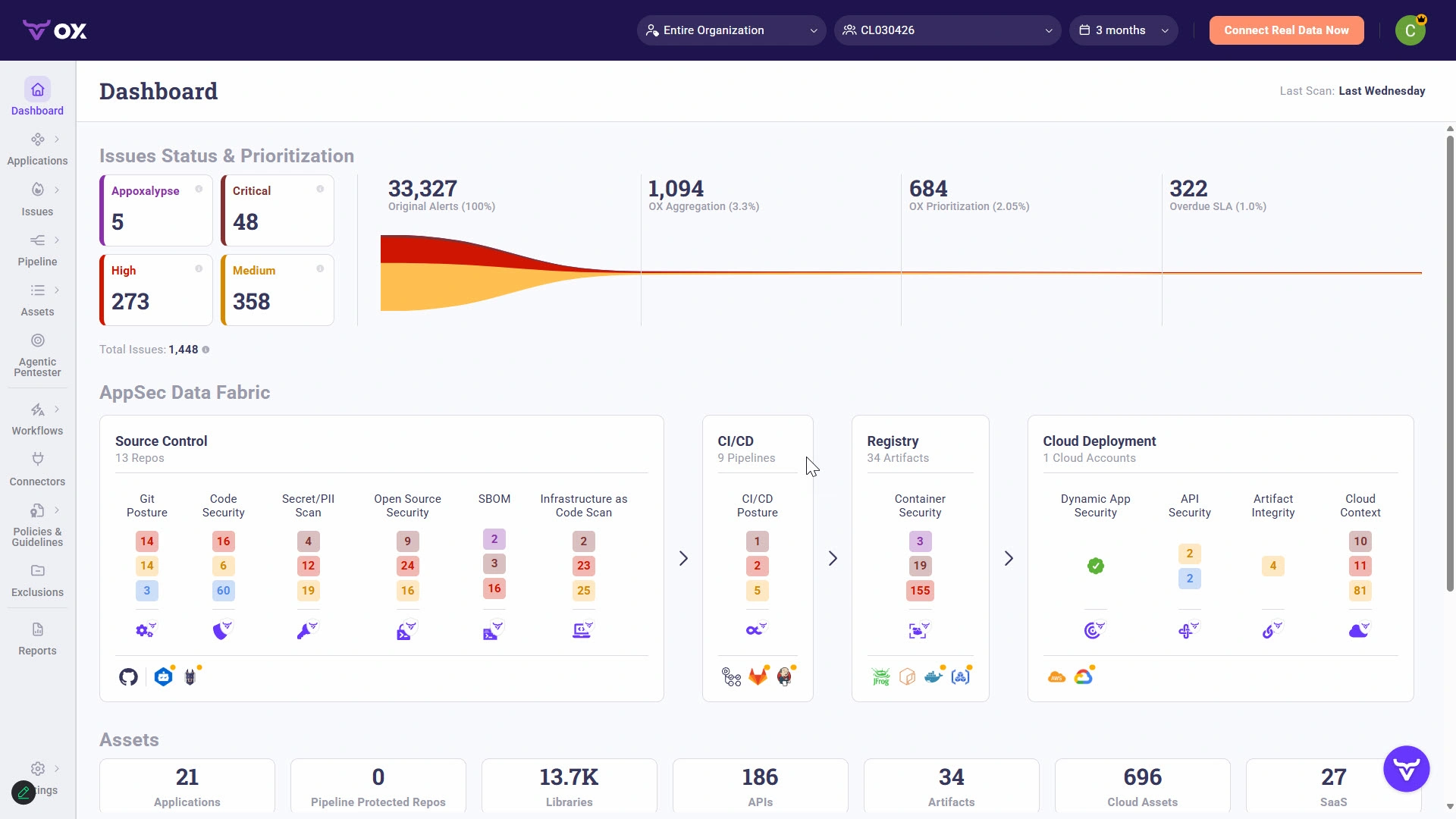
OX Security focuses heavily on software supply chain security. They built their platform around the idea that modern applications have complex dependencies, pipelines, and infrastructure. Each piece creates potential attack surfaces.
Pipeline Security and SDLC Protection
OX Security’s core strength lies in protecting the entire software development lifecycle. They monitor:
- CI/CD pipelines for misconfigurations and vulnerabilities
- Source code repositories for exposed secrets and risky code patterns
- Build systems for tampering and integrity issues
- Artifact registries for malicious packages and compromised components
- Cloud infrastructure for security gaps that affect applications
This end-to-end visibility sets OX Security apart from tools that only scan code. They’re watching the whole pipeline, not just individual components.
Active ASPM (Application Security Posture Management)
OX Security pioneered what they call Active ASPM. Traditional application security posture management shows you problems. Active ASPM helps you fix them automatically.
The platform correlates findings across multiple security tools. It maps vulnerabilities to specific applications and teams. Then it prioritizes based on actual risk, not theoretical severity scores.
For example, a critical vulnerability in code that never runs in production gets deprioritized. A medium-severity issue in an internet-facing API gets pushed to the top. This context-aware approach reduces alert fatigue.
Code Security Scanning in OX Security
OX Security provides both SAST (Static Application Security Testing) and SCA (Software Composition Analysis). Their scanners look for:
- Vulnerabilities in your custom code
- Risks in open source dependencies
- Exposed secrets and credentials
- License compliance issues
- Malicious packages in your supply chain
The scanning integrates with popular IDEs and code repositories. Developers see issues before they commit code, not days later in a security report.
OX Security’s Approach to Vulnerability Prioritization
Raw vulnerability counts don’t tell you much. OX Security knows this. Their platform uses multiple factors to rank issues:
Reachability analysis checks if vulnerable code actually executes. Many vulnerabilities exist in code paths that applications never use.
Exploitability scoring considers whether a working exploit exists in the wild. Theoretical vulnerabilities rank lower than actively exploited ones.
Business context weighs the importance of affected applications. A vulnerability in a customer-facing payment system matters more than one in an internal testing tool.
Remediation effort factors in how hard issues are to fix. Sometimes a slightly lower-severity issue with an easy fix should come first.
Mend.io: Platform Overview and Core Capabilities
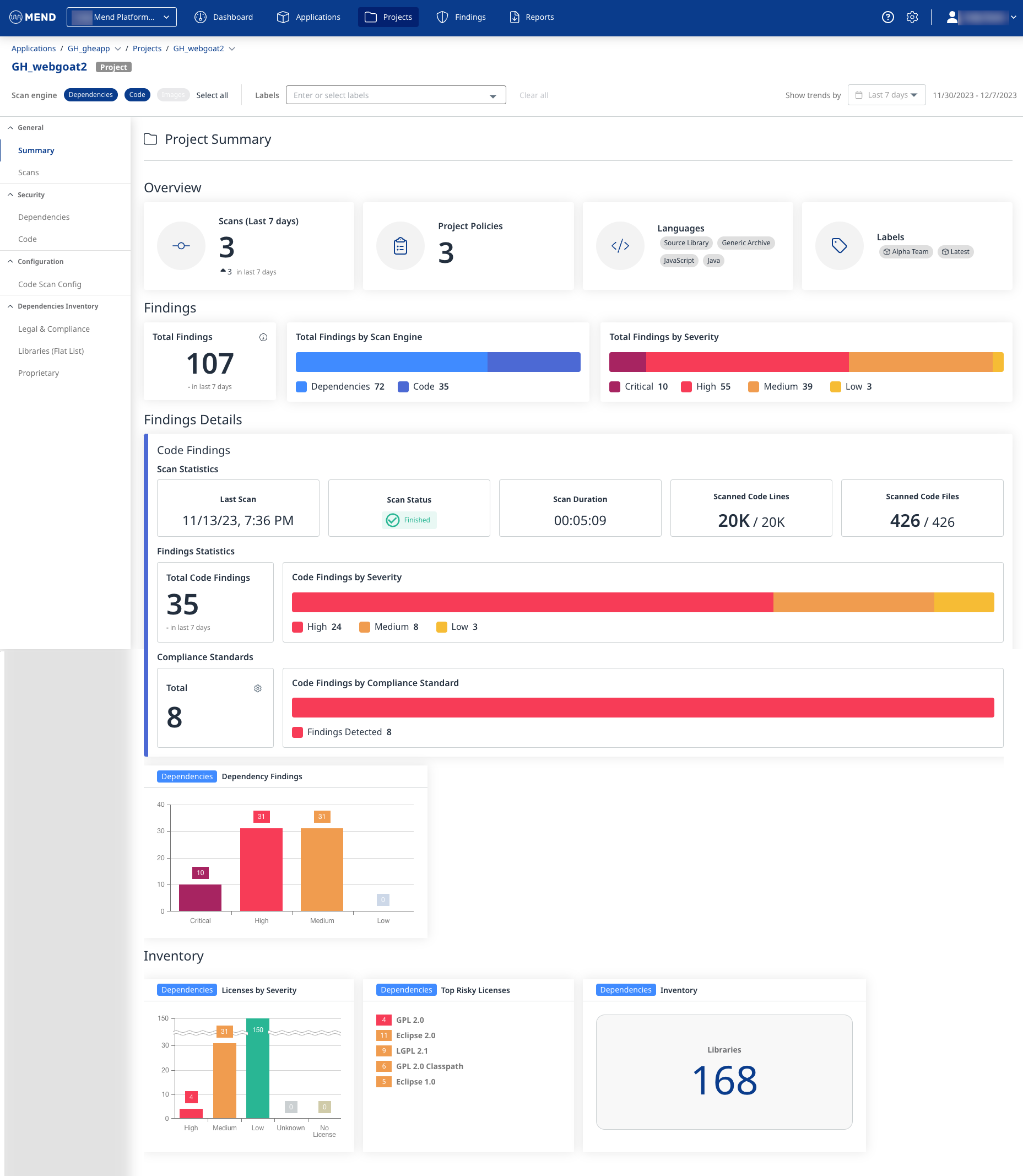
Mend.io (formerly WhiteSource) has been in the application security space for years. They’ve evolved from a pure SCA tool to a full application security platform. Their recent push into AI-native capabilities marks their latest major transformation.
The Mend AppSec Platform Architecture
Mend.io CEO Rami Sass explained their vision: “To gain true visibility into security risk, customers need a variety of AST tools, all in a single platform.” The Mend AppSec platform delivers on this by combining:
- SCA (Software Composition Analysis) for open source security
- SAST (Static Application Security Testing) for custom code
- Container scanning for cloud-native applications
- AI security for code generated by and incorporating AI
This unified approach simplifies deployment. One vendor, one contract, one interface. Teams don’t need to stitch together multiple point solutions.
Open Source Security and SCA Capabilities
Mend.io built their reputation on SCA. Their database of open source vulnerabilities is extensive. They track issues in millions of components across all major ecosystems:
- npm packages for JavaScript and TypeScript
- PyPI for Python
- Maven Central for Java
- NuGet for .NET
- RubyGems for Ruby
- Go modules
- Container base images
Beyond known vulnerabilities, Mend.io identifies license risks. Using an open source library with a GPL license might force you to open source your own code. Their scanning catches these legal landmines.
SAST and Custom Code Analysis
Mend.io’s SAST capabilities scan your proprietary code for security flaws. They detect common issues like:
Injection vulnerabilities including SQL injection, command injection, and cross-site scripting (XSS).
Authentication weaknesses such as hardcoded credentials, weak password handling, and broken session management.
Cryptographic failures including weak algorithms, improper key handling, and insufficient randomness.
Access control issues where users can access resources they shouldn’t.
Compared to some competitors, reviewers note that Mend.io is “easier to administer” according to PeerSpot comparisons. This matters for teams without dedicated security tool administrators.
Container and Cloud-Native Security
Modern applications run in containers. Mend.io scans container images to find vulnerabilities in:
- Base operating system packages
- Application dependencies bundled into images
- Configuration issues that weaken security
- Exposed secrets accidentally baked into layers
Their container scanning works with Docker, Kubernetes, and major cloud container services. It fits into existing CI/CD pipelines without major workflow changes.
Mend AI: Securing AI-Powered Applications
This is where Mend.io makes their boldest claims. The platform “secures what modern developers create – including applications built with and by AI.”
Mend AI addresses several specific AI-related risks:
AI-generated code security: Code from GitHub Copilot, ChatGPT, or other AI assistants can contain vulnerabilities. Mend.io scans this code like any other, but with awareness of patterns AI tends to produce.
Embedded AI component governance: Applications that include AI models, embeddings, or LLM integrations need security review. Mend.io inventories these components and tracks their risks.
Shadow AI detection: Developers sometimes add AI capabilities without approval. Mend.io flags unauthorized AI usage that might violate policies or introduce risks.
Prompt hardening: For applications using LLMs, Mend.io helps secure system prompts against injection attacks and manipulation.
AI Red Teaming: The platform simulates attacks against AI components to find weaknesses before attackers do.
OX Security vs Mend.io: Security Scanning Comparison
Both platforms scan code for vulnerabilities. But they do it differently. Let’s compare their approaches across key scanning dimensions.
Static Application Security Testing (SAST) Face-Off
| Feature | OX Security | Mend.io |
|---|---|---|
| Language support | 30+ languages | 30+ languages |
| IDE integration | VS Code, JetBrains, others | VS Code, JetBrains, others |
| Custom rule creation | Yes, with query language | Yes, policy-based |
| Incremental scanning | Yes | Yes |
| False positive rate | Low (with context) | Low (with tuning) |
| Scan speed | Fast | Fast |
Both platforms deliver solid SAST capabilities. The differences show up in how they handle results, not in raw scanning ability.
OX Security emphasizes reachability analysis. They check if vulnerable code actually runs. This reduces noise significantly.
Mend.io focuses on remediation guidance. When they find an issue, they often suggest specific code fixes. Their AI-powered remediation accelerates the fix process.
Software Composition Analysis (SCA) Comparison
SCA is arguably Mend.io’s strongest capability. They’ve been doing this longer than most competitors.
| Feature | OX Security | Mend.io |
|---|---|---|
| Vulnerability database size | Large | Very large (proprietary + public) |
| License detection | Yes | Yes, with legal context |
| Dependency depth | Transitive dependencies | Transitive dependencies |
| Automated updates | Renovation-based | Mend Renovate (built-in) |
| Supply chain attack detection | Strong focus | Yes |
| Malicious package detection | Yes, proactive | Yes |
OX Security differentiates on supply chain attack detection. They watch for typosquatting, dependency confusion, and compromised packages. Their focus on the entire pipeline gives them visibility others lack.
Mend.io’s advantage comes from database depth and Renovate integration. Mend Renovate automatically creates pull requests to update vulnerable dependencies. This automation handles a huge chunk of SCA work.
Container Security Scanning Differences
Container security matters for any team running Kubernetes or Docker in production. Both platforms provide container scanning, but with different emphases.
OX Security’s container approach:
- Scans images in registries and CI/CD pipelines
- Checks runtime configurations
- Monitors container orchestration security
- Tracks image lineage and provenance
Mend.io’s container approach:
- Deep OS package vulnerability scanning
- Application dependency analysis within containers
- Base image recommendations
- Integration with container registries
OX Security provides broader pipeline context. They understand how containers fit into your overall deployment. Mend.io goes deeper on the container contents themselves.
Comparing AI and Machine Learning Security Features
AI security has become a major battleground. Applications increasingly include AI components. Code increasingly comes from AI assistants. Both create new security challenges.
How OX Security Handles AI-Related Risks
OX Security approaches AI security through their pipeline lens. They ask questions like:
- Is AI-generated code properly reviewed before merge?
- Are AI model artifacts stored securely?
- Do AI components come from trusted sources?
- Is data flowing to AI services properly controlled?
Their platform tracks AI components as part of the broader software supply chain. This means AI models get the same security treatment as any other dependency.
OX Security also watches for AI-generated code patterns that often indicate vulnerabilities. Certain coding styles common in AI output correlate with security issues.
Mend.io’s AI Native Security Approach
Mend.io positions themselves as purpose-built for AI security. Their platform “secures AI generated code, embedded AI components, and traditional application elements.”
Key Mend AI capabilities include:
AI component inventory: The platform automatically discovers and catalogs AI components across your applications. You see which teams use which AI tools and how.
Shadow AI detection: Unauthorized AI usage creates security and compliance risks. Mend.io flags when developers add AI capabilities outside approved channels.
Policy enforcement: You define rules about acceptable AI usage. The platform enforces them automatically. Violations block deployments or trigger alerts.
System prompt hardening: For LLM-based applications, Mend.io analyzes system prompts for weaknesses. Prompt injection is a real attack vector, and they help you defend against it.
AI Red Teaming: The platform simulates attacks against your AI components. This proactive testing finds problems before malicious actors do.
Comparing AI Security: OX vs Mend Side by Side
| AI Security Feature | OX Security | Mend.io |
|---|---|---|
| AI-generated code scanning | Yes, via SAST | Yes, AI-aware SAST |
| AI component discovery | Yes | Yes, comprehensive |
| Shadow AI detection | Basic | Advanced |
| LLM prompt security | Limited | System prompt hardening |
| AI Red Teaming | No native feature | Yes |
| ML model vulnerability scanning | Dependency-focused | Full lifecycle |
Mend.io clearly leads in AI-specific security features. Their “AI Native” positioning reflects real capabilities.
OX Security handles AI through their existing strengths: pipeline security and supply chain visibility. This works well for many scenarios, but lacks Mend.io’s depth in AI-specific risks.
Software Supply Chain Security: A Detailed Comparison
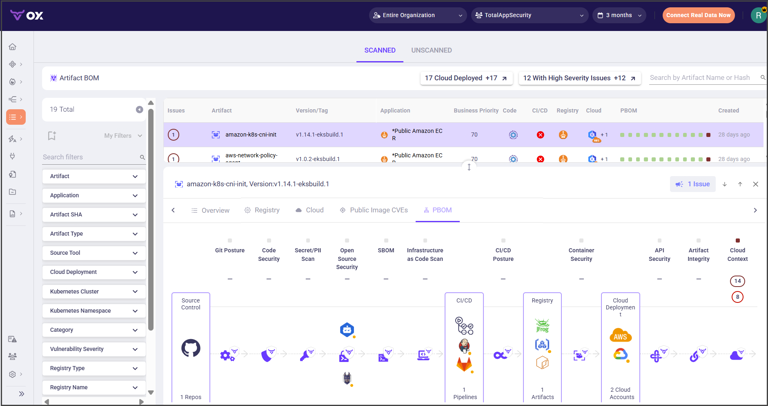
Software supply chain attacks have surged in recent years. Bad actors target build systems, package registries, and CI/CD pipelines. Both OX Security and Mend.io address these threats, but from different angles.
OX Security’s Supply Chain Protection Philosophy
OX Security was built around software supply chain security. It’s not a feature they added later. It’s their foundation.
Their platform protects against:
Dependency confusion attacks: When attackers upload malicious packages with names similar to internal packages. OX Security monitors for namespace collisions and suspicious packages.
Compromised build systems: If your CI/CD pipeline gets hacked, attackers can inject malicious code into any build. OX Security monitors build integrity and detects tampering.
Malicious maintainer takeovers: When attackers gain control of legitimate open source projects. OX Security tracks maintainer changes and flags suspicious activity.
CI/CD misconfigurations: Poorly configured pipelines create attack opportunities. OX Security audits pipeline configurations and suggests hardening measures.
Secrets exposure: Credentials accidentally committed to code or exposed in build logs. OX Security scans for over 700 types of secrets.
Mend.io’s Approach to Supply Chain Risks
Mend.io addresses supply chain security primarily through deep SCA capabilities. They focus on knowing exactly what’s in your software and whether it’s safe.
Their supply chain protection includes:
Comprehensive dependency tracking: Mend.io maps all your dependencies, including transitive ones several layers deep. You see the full picture of what your application actually uses.
Vulnerability intelligence: Their database includes both public CVEs and proprietary research. They often know about vulnerabilities before they’re publicly disclosed.
Automated remediation: When they find vulnerable dependencies, Mend Renovate can automatically create pull requests with safe updates. This shortens the window of exposure.
Policy enforcement: You can define rules about acceptable components. Block all packages below a certain age. Require approval for packages from certain registries. The platform enforces these automatically.
Which Platform Offers Better Supply Chain Security?
The answer depends on your biggest concerns.
Choose OX Security if:
- You worry about pipeline attacks and build system compromise
- You need visibility into CI/CD configurations across many repositories
- You want to detect attacks early, during the development process
- Your threat model includes sophisticated supply chain attackers
Choose Mend.io if:
- Your primary concern is vulnerable open source components
- You want automated dependency updates to fix issues fast
- You need deep visibility into what’s actually in your software
- License compliance is a major concern alongside security
Many organizations actually need both perspectives. OX Security’s pipeline protection complements Mend.io’s dependency intelligence. But if you must choose one, pick based on your highest-priority risks.
Developer Experience: OX Security vs Mend.io Integration
Security tools that developers hate don’t get used. Both OX Security and Mend.io understand this. They’ve invested heavily in developer experience. But their approaches differ.
IDE Integration Comparison
Catching issues early saves time and money. Both platforms integrate with popular IDEs to surface findings where developers work.
OX Security IDE support:
- VS Code extension with real-time scanning
- JetBrains plugin (IntelliJ, WebStorm, etc.)
- Findings show inline with code
- Quick actions for common fixes
Mend.io IDE support:
- VS Code extension
- JetBrains plugins
- Real-time dependency analysis
- Vulnerability details and remediation suggestions
Both platforms deliver similar IDE experiences. The extensions work well and don’t significantly slow down development.
Source Code Repository Integration
Most teams manage code in GitHub, GitLab, Bitbucket, or Azure DevOps. Integration depth matters.
| Repository Feature | OX Security | Mend.io |
|---|---|---|
| GitHub integration | Deep, with App support | Deep, with Renovate |
| GitLab integration | Yes | Yes |
| Bitbucket integration | Yes | Yes |
| Azure DevOps integration | Yes | Yes |
| PR/MR comments | Yes, with context | Yes, actionable |
| Automated fix PRs | Yes | Yes (Renovate strength) |
| Branch protection rules | Yes | Yes |
Mend.io has a clear advantage with Mend Renovate. This tool automatically creates pull requests to update dependencies. It’s widely used, well-documented, and handles complex upgrade scenarios gracefully.
OX Security provides similar automation but focuses more on blocking risky changes before they merge. Their approach is more preventive than reactive.
CI/CD Pipeline Integration
Security needs to run in your build pipeline. Both tools integrate with major CI/CD platforms.
Supported CI/CD systems for both platforms:
- GitHub Actions
- GitLab CI/CD
- Jenkins
- CircleCI
- Azure Pipelines
- AWS CodeBuild
- Bitbucket Pipelines
OX Security goes further in pipeline security. They don’t just run as a step in your pipeline. They analyze the pipeline itself for security issues. This meta-level visibility is unique to their platform.
Mend.io focuses on scanning within the pipeline. They do it efficiently, with caching and incremental analysis to keep builds fast.
How Developers Actually Feel About Each Tool
Reviews from real users reveal interesting patterns.
Developers using Mend.io appreciate the automated fixes. One common sentiment: “It finds problems and fixes them for me.” The Renovate integration particularly gets praise.
Developers using OX Security value the reduced noise. “Finally, a tool that tells me what actually matters.” The prioritization features resonate with teams drowning in alerts.
Both platforms have learning curves. Neither is plug-and-play simple. But both offer good documentation and support to help teams get started.
Pricing and Licensing: What Each Platform Costs
Security tool pricing is notoriously opaque. Both OX Security and Mend.io require contacting sales for quotes. But we can outline their general approaches.
OX Security Pricing Model
OX Security typically prices based on:
- Number of applications/repositories
- Number of developers
- Features included in your tier
- Support level required
They offer different packages for different organization sizes. Startups and smaller teams can access core features at accessible price points. Enterprise pricing scales with usage and requirements.
OX Security is available on AWS Marketplace, which simplifies procurement for AWS customers. You can pay through your existing AWS bill and potentially use committed spend.
Mend.io Pricing Structure
Mend.io’s pricing follows a similar model. According to their positioning, “The Mend AppSec platform offers customers everything needed to build proactive application security through one solution at one price.”
Their pricing factors include:
- Number of contributing developers
- Scan volume and frequency
- Features and modules needed
- Support and SLA requirements
Mend.io also appears on AWS Marketplace, offering the same procurement benefits.
Total Cost of Ownership Considerations
Sticker price isn’t everything. Consider these factors:
Implementation costs: How long until you see value? OX Security and Mend.io both require setup time. Budget for initial configuration and team training.
Operational overhead: Who manages the tool? PeerSpot reviewers note Mend.io is “easier to administer.” This could mean lower ongoing costs.
Tool consolidation: Can one platform replace multiple point solutions? Both try to deliver comprehensive coverage. Consolidating tools saves money and reduces complexity.
Developer time saved: Good prioritization and automation reduce time developers spend on security tasks. This is hard to quantify but real.
Risk reduction value: What’s a prevented breach worth? Better security tools reduce likelihood of costly incidents.
Which Platform Offers Better Value?
Value depends on your situation.
OX Security may offer better value if:
- You have complex CI/CD pipelines that need security review
- Software supply chain attacks are your top concern
- You want to consolidate multiple security tools into one platform
- You need visibility across many repositories and applications
Mend.io may offer better value if:
- Open source vulnerability management is your primary need
- You want maximum automation in dependency updates
- AI security features are high priority
- You prefer a tool that’s easier to administer with limited staff
Enterprise Features: Scale, Compliance, and Governance
Enterprise organizations have requirements beyond basic scanning. Compliance, governance, and scale all matter. Let’s compare how each platform handles enterprise needs.
Compliance and Reporting Capabilities
Regulated industries need audit trails and compliance reports. Both platforms address this.
| Compliance Feature | OX Security | Mend.io |
|---|---|---|
| SBOM generation | Yes, multiple formats | Yes, multiple formats |
| Audit logs | Comprehensive | Comprehensive |
| Compliance reports | Pre-built templates | Pre-built templates |
| Custom reporting | Yes | Yes |
| Executive dashboards | Yes | Yes |
| Trend analysis | Yes | Yes |
SBOM (Software Bill of Materials) generation is increasingly required by regulation. Both platforms produce SBOMs in standard formats like CycloneDX and SPDX.
Mend.io’s compliance features have matured over their long time in market. They understand what auditors want to see.
OX Security provides compliance visibility across the entire pipeline, not just code. This broader view helps demonstrate comprehensive security practices.
Role-Based Access Control and Permissions
Enterprise teams need fine-grained access control. Different people need different permissions.
Both platforms provide:
- Role-based access control (RBAC)
- SSO integration (SAML, OIDC)
- Team-based permissions
- Project/application-level access controls
- API token management
OX Security emphasizes organizational hierarchy mapping. You can structure access by business unit, product line, or team. This helps large organizations manage permissions at scale.
Mend.io integrates tightly with existing identity providers. If you’ve already defined groups in your directory, Mend.io can use them.
Scalability for Large Organizations
Can these platforms handle thousands of repositories and hundreds of developers?
Both OX Security and Mend.io serve enterprise customers with large footprints. Gartner reviews show Mend.io competing with major players like Snyk, Checkmarx, Sonatype, and Veracode in the application security testing market.
Scalability considerations:
Scan performance: How fast can each platform scan your entire codebase? Both use parallel scanning and caching to handle large volumes.
Multi-repository support: Organizations with hundreds of repos need efficient onboarding. Both platforms offer bulk import and discovery features.
Cross-organization visibility: Enterprises with multiple business units need aggregated views. Both provide organizational dashboards.
API capacity: Automation at scale requires robust APIs. Both platforms provide comprehensive REST APIs.
Policy Management and Governance
Centralized policy management helps maintain consistency. Security teams define rules once, enforce everywhere.
OX Security policy features:
- Global policies across all repositories
- Team-specific policy overrides
- Automated enforcement in CI/CD
- Exception workflows for approved deviations
- Policy-as-code support
Mend.io policy features:
- Centralized policy definition
- Automated enforcement
- Flexible rule conditions
- Integration with governance workflows
- AI usage policies
Mend.io’s policy system specifically supports AI governance. You can define rules about acceptable AI tools, approved models, and required reviews for AI-generated code.
Remediation Capabilities: Fixing What You Find
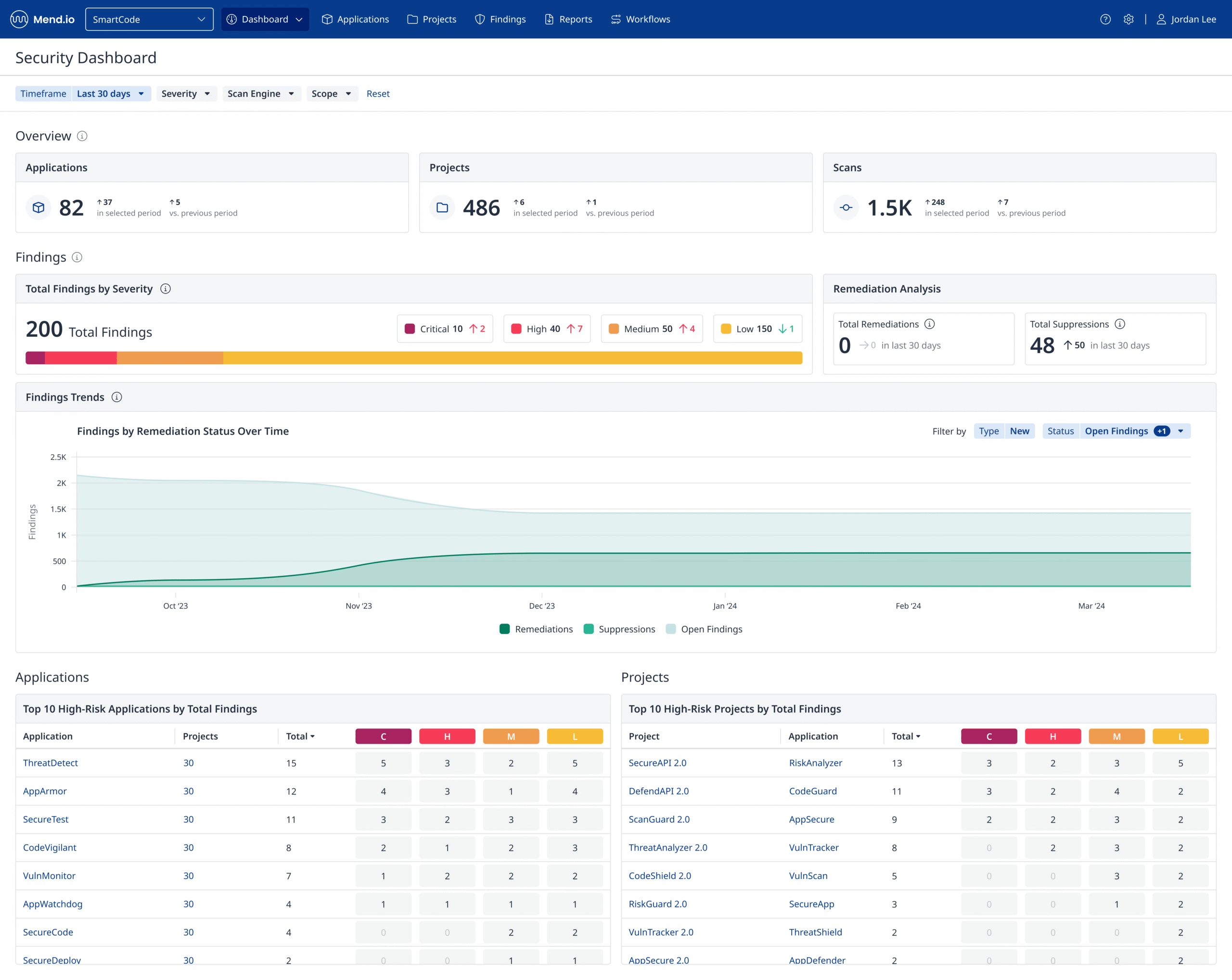
Finding vulnerabilities is just the first step. Fixing them matters more. Let’s compare how OX Security and Mend.io help teams remediate issues.
Automated Fix Suggestions
Both platforms suggest fixes for common vulnerabilities. The quality and automation level differ.
OX Security’s remediation approach:
- Contextual fix suggestions based on code analysis
- One-click remediation for certain issue types
- Links to relevant documentation and examples
- Developer guidance for manual fixes
Mend.io’s remediation approach:
- Automated pull requests via Renovate
- AI-powered remediation suggestions
- Upgrade path recommendations
- Breaking change warnings
Mend.io leads in automated remediation. Their AI-powered fixes go beyond simple dependency updates. The platform can suggest code changes to fix SAST findings.
OX Security provides good guidance but relies more on developers to implement fixes manually.
Dependency Update Automation
Most vulnerabilities in production code come from dependencies. Keeping dependencies updated prevents many issues.
Mend Renovate is a standout feature. This tool:
- Monitors all your dependencies continuously
- Creates pull requests for available updates
- Groups related updates to reduce PR noise
- Includes changelog information in PRs
- Respects your update preferences and schedules
- Handles complex monorepo scenarios
OX Security provides similar capabilities but they’re not as deeply developed. Mend.io’s years of experience with dependency management show here.
Prioritization for Remediation
You can’t fix everything at once. Prioritization helps teams focus on what matters most.
OX Security’s prioritization considers:
- Vulnerability severity (CVSS and other scores)
- Exploitability in your specific context
- Reachability of vulnerable code paths
- Business importance of affected applications
- Ease of remediation
Mend.io’s prioritization considers:
- Vulnerability severity scores
- Whether exploits exist in the wild
- Fix availability and complexity
- Dependency popularity and maintainability
- Your defined policies and SLAs
Both platforms move beyond simple severity rankings. They apply context to surface what truly needs attention first.
Real-World Use Cases: When to Choose Each Platform
Theory only takes you so far. Let’s look at specific scenarios where one platform might fit better than the other.
Startup with Limited Security Resources
A 50-person startup needs security but can’t dedicate staff to manage tools full-time.
Better choice: Mend.io
Why? Reviewers consistently note Mend.io is “easier to administer.” The automated remediation via Renovate reduces manual work. The centralized platform approach means one tool to learn, not several.
OX Security’s deep pipeline analysis might be overkill for a startup with simple CI/CD. The additional visibility comes with additional complexity.
Enterprise with Complex CI/CD Infrastructure
A large financial services company runs thousands of repositories with complex build pipelines across multiple cloud providers.
Better choice: OX Security
Why? Their focus on pipeline security addresses risks that pure code scanners miss. The ability to analyze CI/CD configurations across the entire organization provides unique value. Build system compromises are a real threat in enterprises.
Company Building AI-Powered Products
A tech company builds products that heavily use LLMs and AI models. Their developers use AI coding assistants daily.
Better choice: Mend.io
Why? Mend.io’s AI Native positioning delivers concrete capabilities: Shadow AI detection, system prompt hardening, AI Red Teaming. These features address risks specific to AI-powered applications that OX Security doesn’t handle as comprehensively.
Organization Focused on Open Source Compliance
A software vendor ships products to customers who require detailed SBOMs and license compliance documentation.
Better choice: Mend.io
Why? Their deep SCA heritage means comprehensive license detection and compliance reporting. Mend.io has been solving this problem longer than most competitors.
Security Team Drowning in Alerts
A medium-sized company deployed multiple security tools and now faces thousands of alerts with no clear prioritization.
Better choice: OX Security
Why? Their Active ASPM approach correlates findings across tools and applies context-aware prioritization. They specifically aim to reduce alert fatigue and surface what actually matters.
Implementation and Onboarding Comparison
Getting started with a new security platform takes time and effort. Let’s compare what onboarding looks like for each.
Getting Started with OX Security
OX Security onboarding typically involves:
Step 1: Connect your repositories. Install the GitHub App or connect your GitLab/Bitbucket instance. OX Security discovers your repositories automatically.
Step 2: Connect your CI/CD. Provide access to your build systems. This enables pipeline security analysis.
Step 3: Initial scan. The platform scans your code, dependencies, and configurations. This takes a few hours for large organizations.
Step 4: Review findings. Work through initial results. Tune false positives. Set severity thresholds.
Step 5: Configure policies. Define what should block builds, what requires review, and what’s informational.
Step 6: Roll out to teams. Enable IDE extensions. Train developers. Establish workflow patterns.
Timeline: Expect 2-4 weeks for basic deployment, longer for full enterprise rollout.
Getting Started with Mend.io
Mend.io onboarding follows a similar pattern:
Step 1: Connect source control. Integrate with GitHub, GitLab, or other platforms.
Step 2: Enable scanning. Configure SCA, SAST, and container scanning based on your needs.
Step 3: Set up Renovate. If using automated dependency updates, configure Renovate preferences.
Step 4: Initial scan and triage. Review results. Establish baselines. Mark acceptable risks.
Step 5: Configure policies. Define blocking rules and approval workflows.
Step 6: Enable AI features. If using Mend AI, configure AI inventory and governance policies.
Timeline: Similar to OX Security, expect 2-4 weeks minimum. Mend.io’s reputation for easier administration might speed this up.
Common Onboarding Challenges
Both platforms share common onboarding hurdles:
Alert overload: Initial scans often find thousands of issues. Don’t try to fix everything immediately. Focus on critical items first.
False positive tuning: Every security tool produces false positives. Budget time to review and suppress irrelevant findings.
Developer resistance: New tools in the workflow create friction. Communicate benefits clearly. Show developers how the tool helps them.
Integration gaps: Your specific CI/CD setup might not match documented patterns. Expect some custom configuration.
Support and Customer Success
Enterprise software vendors differ in how they support customers. Good support accelerates value realization.
OX Security Support Options
OX Security provides:
- Documentation and knowledge base
- Email and chat support
- Dedicated customer success managers for enterprise accounts
- Professional services for complex deployments
- Training programs for security and development teams
Their focus on Active ASPM means they often help customers tune prioritization rules and optimize workflows.
Mend.io Support Options
Mend.io offers:
- Extensive documentation
- Community forums
- Technical support via multiple channels
- Customer success programs
- Professional services
- Training and certification
Mend.io’s longer market presence means more accumulated knowledge. Their community is larger, so you’ll find more answers to common questions online.
Comparing Customer Satisfaction
Gartner reviews show Mend.io competing well against major players like Snyk, Checkmarx, Sonatype, and Veracode. This suggests solid customer satisfaction.
OX Security is newer but has gained traction quickly, particularly among organizations focused on software supply chain security.
Both platforms maintain active development. Features improve regularly. Customer feedback influences roadmaps.
Future Roadmap and Platform Direction
Choosing a security platform means partnering with a vendor for years. Their direction matters.
Where OX Security Is Heading
OX Security continues investing in:
- Deeper CI/CD security analysis
- More sophisticated prioritization algorithms
- Expanded supply chain threat intelligence
- Broader compliance framework support
- Enhanced automation capabilities
Their core thesis: security needs to understand the entire development pipeline, not just code. Expect continued expansion in this direction.
Where Mend.io Is Heading
Mend.io’s roadmap emphasizes:
- Deeper AI security capabilities
- More automated remediation
- Expanded cloud and container support
- Enhanced developer experience
- Broader platform consolidation
Their “AI Native” positioning suggests continued investment in securing AI-powered development. As AI-generated code becomes more common, this focus gains relevance.
Making Your Decision: OX Security vs Mend.io
After examining both platforms deeply, some patterns emerge. Here’s a framework for making your choice.
Summary Comparison Table
| Criteria | OX Security Strength | Mend.io Strength |
|---|---|---|
| SAST capabilities | Strong with reachability | Strong with AI remediation |
| SCA capabilities | Good | Excellent (heritage) |
| Container security | Good with pipeline context | Good |
| Pipeline/CI/CD security | Excellent (differentiator) | Basic |
| Supply chain security | Excellent (core focus) | Good |
| AI security | Basic | Excellent (AI Native) |
| Automated remediation | Good | Excellent (Renovate) |
| Prioritization | Excellent (Active ASPM) | Good |
| Ease of administration | Moderate | Good |
| Developer experience | Good | Good |
| Enterprise features | Strong | Strong |
Choose OX Security When…
- Software supply chain attacks are your primary concern
- You need visibility into CI/CD pipeline security
- Alert fatigue from multiple tools is a major problem
- You want to understand risk across the entire SDLC
- Build system integrity matters for your threat model
- You need to consolidate multiple security tools
Choose Mend.io When…
- Open source security and SCA are your primary needs
- You want maximum automation in vulnerability remediation
- AI security features are high priority for your roadmap
- You prefer a tool that’s easier to administer
- License compliance is important alongside security
- You’re already using or want Mend Renovate
Conclusion
OX Security and Mend.io both offer strong application security capabilities. They approach the problem differently. OX Security excels at pipeline security and prioritization through their Active ASPM approach. Mend.io leads in SCA, automated remediation, and AI security with their AI Native platform.
Your choice depends on your specific risks, team capabilities, and priorities. Consider running pilots with both to see which fits better. The right tool is the one your team will actually use effectively.
FAQs About OX Security vs Mend.io
| What’s the main difference between OX Security and Mend.io? | OX Security focuses on software supply chain and CI/CD pipeline security with strong prioritization through Active ASPM. Mend.io emphasizes comprehensive SCA, automated remediation via Renovate, and AI-native security capabilities. OX is better for pipeline security, while Mend.io excels at open source management and AI security. |
| Which platform is easier to set up and manage? | Reviews consistently indicate Mend.io is “easier to administer.” This makes it a better choice for teams with limited dedicated security tool management resources. OX Security’s deeper pipeline analysis capabilities come with additional complexity. |
| Can I use OX Security and Mend.io together? | Yes, some organizations use both. OX Security’s pipeline security complements Mend.io’s SCA depth. But this adds cost and complexity. Most teams should choose one as their primary platform unless they have specific needs for both. |
| Which platform is better for securing AI-generated code? | Mend.io has stronger AI security features. Their AI Native platform includes Shadow AI detection, system prompt hardening, and AI Red Teaming. OX Security handles AI-generated code through standard scanning but lacks these specialized capabilities. |
| How do OX Security and Mend.io compare on pricing? | Both require contacting sales for quotes. Pricing typically depends on developer count, repositories, and features needed. Both are available on AWS Marketplace. Mend.io’s easier administration might reduce total cost of ownership for smaller teams. |
| Which tool provides better vulnerability prioritization? | OX Security leads here with their Active ASPM approach. They correlate findings across tools and apply reachability analysis to reduce noise. Mend.io provides good prioritization but doesn’t go as deep on contextual risk assessment. |
| Who should use OX Security over Mend.io? | Organizations concerned about software supply chain attacks, those with complex CI/CD pipelines, and teams struggling with alert fatigue should consider OX Security. Their pipeline-level visibility addresses risks that pure code scanners miss. |
| Who should use Mend.io over OX Security? | Teams focused on open source security, those wanting automated dependency updates, and organizations building AI-powered applications should consider Mend.io. Their SCA heritage and Renovate integration are hard to match. |
| Do both platforms support SBOM generation? | Yes, both OX Security and Mend.io generate Software Bills of Materials in standard formats like CycloneDX and SPDX. This supports compliance requirements from regulations and customer contracts. |
| How long does it take to implement each platform? | Both platforms typically require 2-4 weeks for basic deployment in mid-sized organizations. Enterprise rollouts take longer. Mend.io’s easier administration might speed up implementation slightly. |

 Stack Insight is intended to support informed decision-making by providing independent information about business software and services. Some product details, including pricing, features, and promotional offers, may be supplied by vendors or partners and can change without notice.