
Sweet Security vs Prisma Cloud: A Complete Comparison for 2026
Picking the right cloud security platform isn’t easy. The market keeps expanding. New threats pop up weekly. And vendors love to throw around buzzwords that make everything sound the same.
But Sweet Security and Prisma Cloud are not the same. They approach cloud protection from different angles. They serve different needs. And they fit different types of organizations.
This comparison breaks down everything you need to know. We’ll look at how each platform handles detection, runtime protection, compliance, pricing, and more. You’ll see real differences, not marketing fluff.
By the end, you’ll have a clear picture of which platform makes sense for your team. Whether you’re running a fast-growing startup or managing enterprise infrastructure across multiple clouds, this guide will help you decide.
Let’s dig in.
Understanding the Cloud Security Market in 2026
Cloud security has changed dramatically over the past few years. The old approach of bolting security onto existing systems doesn’t work anymore. Organizations need protection that’s built for cloud environments from the ground up.
The Rise of CNAPP Solutions
Cloud-native application protection platforms (CNAPP) have become the standard. These platforms combine multiple security functions into one tool. You get workload protection, posture management, and runtime security together.
Frost & Sullivan research shows that 69% of organizations now host more than half of their workloads in the cloud. That’s a massive shift. And it’s created huge demand for tools that can protect these environments.
The CNAPP market has exploded. Vendors are racing to offer the most complete coverage. But “complete” means different things to different providers.
Why Organizations Are Reevaluating Their Tools
Many security teams are taking a fresh look at their cloud security stack. Here’s why:
- Cloud architectures keep evolving – Kubernetes, serverless, and hybrid setups require new approaches
- Team workflows have changed – DevSecOps means security must fit into development processes
- Costs are under scrutiny – Companies want value, not just features
- Alert fatigue is real – Too many false positives waste time and resources
- Compliance requirements grow – New regulations demand better visibility
This is exactly why comparing Sweet Security vs Prisma Cloud matters. Both platforms promise comprehensive protection. But they deliver it differently.
What Makes This Comparison Different
Most comparison articles list features and call it a day. That’s not helpful. Features on paper don’t tell you how a tool actually works in your environment.
We’re going deeper. We’ll look at:
- How each platform handles specific scenarios
- Real deployment considerations
- Team impact and learning curves
- Hidden costs and gotchas
- Which types of organizations fit each tool best
Let’s start with the basics of who these vendors are and where they come from.
Company Background: Sweet Security vs Palo Alto Networks
Understanding where each vendor comes from helps explain their approach to cloud security. Their histories shape their products.
Palo Alto Networks and Prisma Cloud
Palo Alto Networks is a security giant. They’ve been in the cybersecurity business for nearly two decades. The company started with next-generation firewalls and expanded into cloud security through acquisitions and organic growth.
Prisma Cloud emerged from this expansion. It combines multiple acquired technologies into one platform. Palo Alto bought companies like RedLock, Twistlock, and PureSec to build out their cloud security offering.
Key facts about Palo Alto Networks:
- Founded in 2005
- Publicly traded (PANW)
- Revenue exceeds $6 billion annually
- Over 80,000 customers globally
- Ranked #11 in cloud security with an average rating of 8.6
Frost & Sullivan named Palo Alto Networks the “CNAPP Company of the Year” and noted they were “one of the first vendors in the market that can provide a full-stack CNAPP platform.”
The company recently integrated Prisma Cloud into their Cortex XDR platform. This move aims to create a more unified security experience across cloud and endpoint protection.
Sweet Security’s Origins
Sweet Security takes a different path. They’re a newer player focused specifically on cloud-native security. The company was built from scratch to address modern cloud challenges.
Rather than acquiring and combining existing tools, Sweet Security developed their platform with cloud environments in mind from day one. This cloud-first approach shapes everything they do.
Key facts about Sweet Security:
- Cloud-native security specialist
- Focus on runtime protection and detection
- Ranked #14 with an average rating of 8.6
- Emphasis on reducing alert noise
- Built for modern DevSecOps workflows
Sweet Security positions itself as a solution for teams frustrated with traditional security tools. They emphasize speed, accuracy, and ease of use.
What Their Backgrounds Mean for You
These different origins matter for several reasons:
Palo Alto’s approach: You get the stability of a large vendor with extensive resources. Their platform integrates with a broader security ecosystem. But you may encounter complexity from the combined acquisitions.
Sweet Security’s approach: You get a focused tool built for specific cloud challenges. There’s less legacy baggage. But you’re working with a smaller vendor with less market presence.
Neither approach is inherently better. It depends on what your organization values most.
Core Features: What Each Platform Offers
Both platforms market themselves as comprehensive cloud security solutions. But their feature sets have meaningful differences. Let’s break down what each offers.
Prisma Cloud’s Feature Set
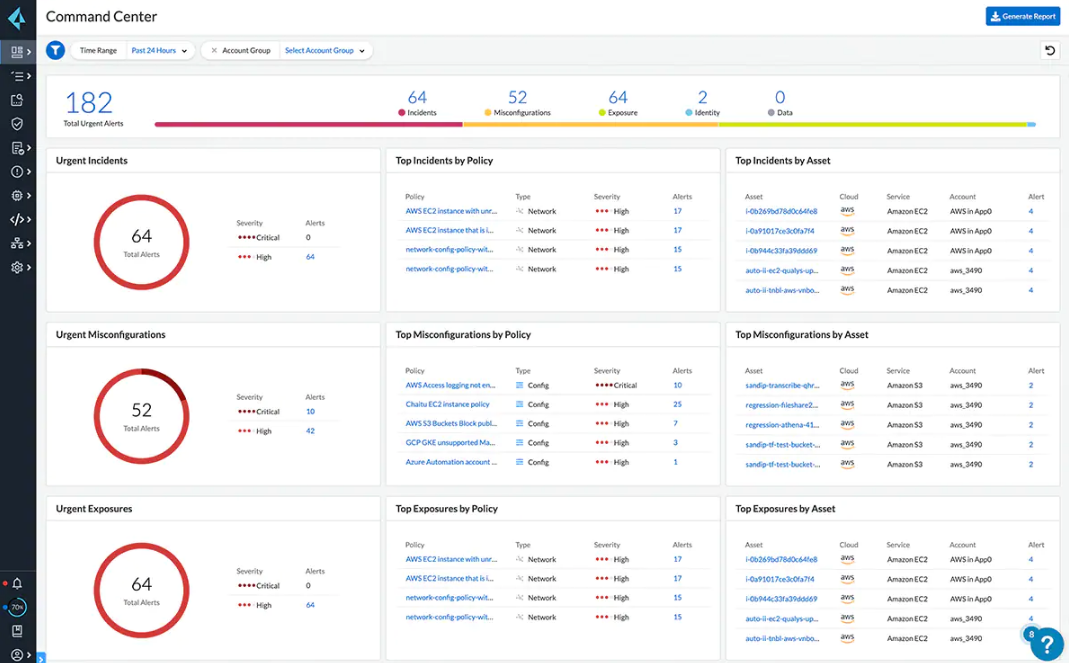
Prisma Cloud positions itself as “the industry’s largest and only code-to-cloud CNAPP.” That’s a bold claim. Here’s what backs it up:
Cloud Security Posture Management (CSPM):
- Continuous monitoring of cloud configurations
- Automated compliance checking across standards
- Risk prioritization based on exposure
- Multi-cloud support for AWS, Azure, GCP, and more
- Identity and access management analysis
Cloud Workload Protection (CWP):
- Host and container security
- Vulnerability management
- Runtime protection
- Serverless function security
- Web application and API security
Code Security:
- Infrastructure-as-code scanning
- Software composition analysis
- Secret detection in repositories
- CI/CD pipeline integration
- Developer-friendly remediation guidance
Cloud Network Security:
- Network segmentation
- Traffic analysis
- Identity-based microsegmentation
- Automated policy enforcement
Palo Alto describes Prisma Cloud as providing “security visibility and control throughout the lifecycle.” The platform aims to cover everything from writing code to running it in production.
Sweet Security’s Feature Set

Sweet Security takes a more focused approach. Their platform concentrates on runtime protection and threat detection in cloud environments.
Runtime Detection and Response:
- Real-time threat detection in containers
- Behavioral analysis of workloads
- Automated response capabilities
- Kubernetes-native protection
- Low-noise alerting
Cloud Detection and Response:
- Cloud activity monitoring
- Threat hunting capabilities
- Attack path analysis
- Incident investigation tools
- Integration with existing security workflows
Vulnerability Management:
- Container image scanning
- Runtime vulnerability assessment
- Risk-based prioritization
- Context-aware remediation
Cloud Security Posture:
- Configuration assessment
- Compliance monitoring
- Policy management
- Drift detection
Feature Comparison Table
| Feature Category | Prisma Cloud | Sweet Security |
|---|---|---|
| Cloud Posture Management | Full coverage | Available |
| Runtime Protection | Available | Core strength |
| Code Security | Full coverage | Limited |
| Container Security | Full coverage | Core strength |
| Serverless Security | Full coverage | Available |
| Network Security | Full coverage | Limited |
| Threat Detection | Available | Core strength |
| Kubernetes Security | Full coverage | Core strength |
| API Security | Full coverage | Available |
| Identity Security | Full coverage | Limited |
The table shows a clear pattern. Prisma Cloud offers broader coverage. Sweet Security goes deeper on specific capabilities, especially runtime protection.
Detection and Threat Response: A Deep Comparison
Detection capability separates good security tools from great ones. Both platforms claim strong detection. But their approaches differ significantly.
How Prisma Cloud Handles Detection
Prisma Cloud uses multiple detection methods across its platform. The system combines signature-based detection with behavioral analysis.
Detection mechanisms include:
- Machine learning models trained on threat data from Palo Alto’s massive customer base
- Rule-based detection for known attack patterns
- Anomaly detection based on baseline behavior
- Threat intelligence integration from Unit 42 research team
- Configuration drift monitoring for posture changes
The platform benefits from Palo Alto’s extensive threat research. Unit 42, their threat intelligence team, provides regular updates on emerging threats and attack techniques.
Response capabilities in Prisma Cloud:
When threats are detected, Prisma Cloud offers several response options. Automated remediation can fix misconfigurations. Manual workflows help teams investigate incidents. Integration with Cortex XSOAR enables complex playbook automation.
The challenge? Alert volume can be high. Organizations often report needing to tune the system carefully to avoid overwhelming security teams with notifications.
How Sweet Security Handles Detection
Sweet Security built their detection engine specifically for cloud-native environments. They focus heavily on reducing false positives while catching real threats.
Their detection approach includes:
- Runtime behavioral analysis that learns normal application behavior
- Context-aware detection that considers the full environment
- Attack chain analysis that connects related events
- Cloud API monitoring for suspicious activity
- Container-specific threat detection
Sweet Security emphasizes accuracy over volume. Their goal is to surface the threats that matter without burying teams in noise.
Response capabilities in Sweet Security:
The platform provides investigation tools built for cloud environments. Teams can trace attacks across containers and cloud resources. Automated response options help contain threats quickly.
Integration with existing security tools allows teams to incorporate Sweet Security into established workflows.
Detection Accuracy: What the Numbers Show
Measuring detection accuracy is tricky. Both vendors claim high accuracy rates. But real-world performance depends on your specific environment.
Factors that affect detection accuracy:
- Types of workloads you’re running
- Complexity of your cloud architecture
- How well the tool is configured
- Integration with other security tools
- Tuning and customization efforts
Organizations evaluating Prisma Cloud vs Sweet Security should request proof-of-concept deployments. Test each tool against your actual workloads. That’s the only way to measure real detection capability.
Alert Fatigue: A Critical Consideration
Alert fatigue kills security effectiveness. When teams get too many alerts, they start ignoring them. Real threats slip through.
Prisma Cloud’s approach: The platform offers alert prioritization features. Risk scoring helps teams focus on high-priority issues. But the breadth of the platform means more alert sources. Configuration takes work.
Sweet Security’s approach: Alert reduction is a core focus. The platform aims to send fewer, more accurate alerts. Context helps teams understand why an alert matters.
Teams dealing with serious alert fatigue often find Sweet Security’s approach appealing. Those wanting comprehensive coverage may prefer Prisma Cloud’s broader alerting, despite the tuning required.
Runtime Protection: Protecting Workloads in Production
Runtime protection matters because attacks don’t just happen at deployment. Threats emerge while applications run. Both platforms offer runtime security, but with different emphases.
Prisma Cloud Runtime Security
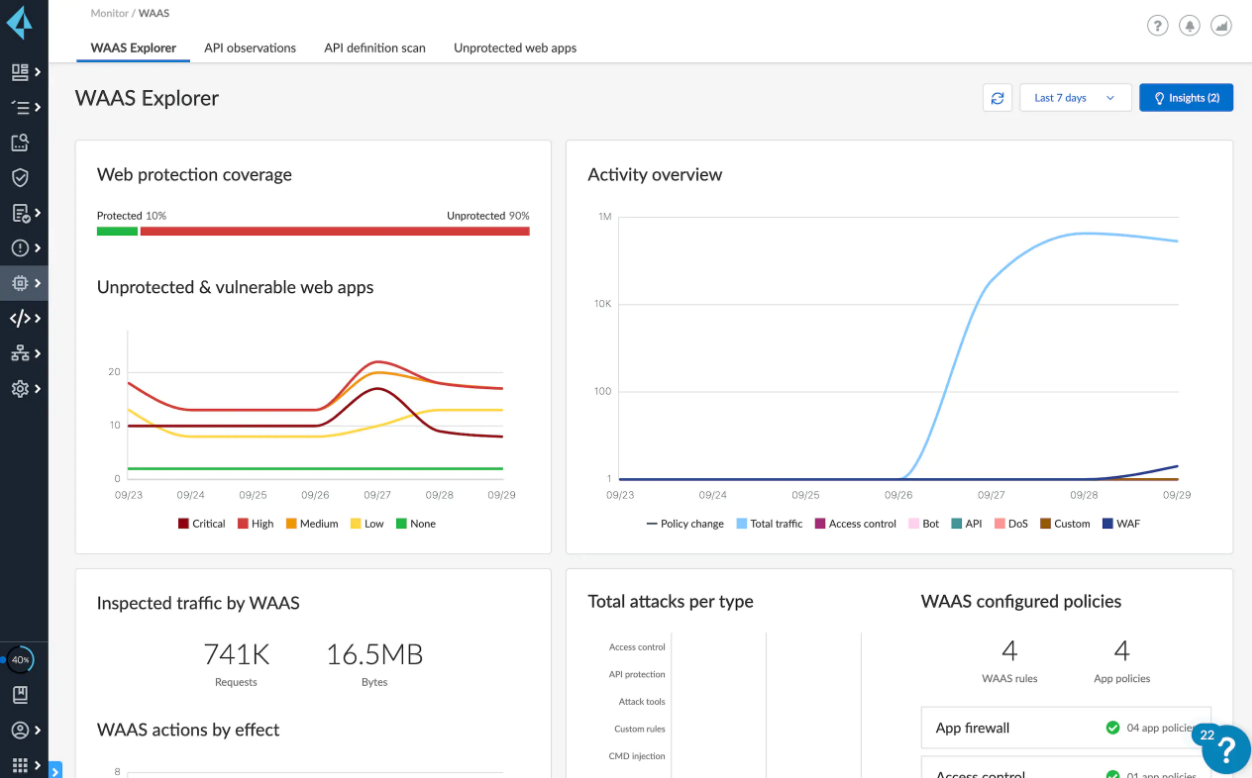
Prisma Cloud’s runtime protection covers multiple workload types. The platform protects hosts, containers, serverless functions, and web applications.
Container runtime protection includes:
- Process monitoring and control
- Network traffic analysis
- File system integrity monitoring
- Cryptominer detection
- Anti-malware scanning
Host runtime protection offers:
- Vulnerability patching guidance
- Compliance monitoring
- Log inspection
- Forensic data collection
Prisma Cloud uses a defender model. You deploy defenders (agents) across your environment. These defenders report back to the central console and enforce policies.
The platform can block suspicious activities automatically. Or it can alert without blocking, depending on your configuration.
Sweet Security Runtime Security
Sweet Security treats runtime as their specialty. The platform was built with runtime protection as a primary focus, not an add-on.
Key runtime capabilities:
- Deep container visibility without heavy agents
- Real-time process and network monitoring
- Behavioral baselines for anomaly detection
- Kubernetes-native integration
- Automatic threat response
Sweet Security emphasizes lightweight protection. Their approach aims to provide security without significantly impacting workload performance.
The platform learns normal behavior patterns for your applications. When something deviates, it triggers investigation or automated response.
Performance Impact Comparison
Security tools that slow down applications create problems. Development teams resist deploying them. Operations teams worry about latency.
| Performance Factor | Prisma Cloud | Sweet Security |
|---|---|---|
| Agent/Sensor Footprint | Moderate to heavy | Light |
| CPU Overhead | Variable by feature | Minimal |
| Memory Usage | Moderate | Low |
| Network Impact | Some traffic analysis overhead | Minimal |
| Startup Time Impact | May add delay | Negligible |
Organizations running performance-sensitive workloads should test both platforms carefully. Measure latency, throughput, and resource consumption in your specific environment.
Serverless Runtime Protection
Serverless functions present unique security challenges. Traditional agents don’t work well with ephemeral execution environments.
Prisma Cloud’s serverless approach: The platform wraps functions with a security layer. This layer monitors execution and enforces policies. Coverage spans AWS Lambda, Azure Functions, and Google Cloud Functions.
Sweet Security’s serverless approach: The platform focuses on detection and monitoring rather than wrapping. They analyze function behavior through API monitoring and cloud-level visibility.
Both approaches have tradeoffs. Wrapping provides deeper control but adds latency. Monitoring offers lighter touch but less direct control.
Compliance and Governance: Meeting Regulatory Requirements
Compliance isn’t optional for most organizations. Regulations like SOC 2, PCI-DSS, HIPAA, and GDPR require specific security controls. Both platforms help meet these requirements.
Prisma Cloud Compliance Capabilities
Prisma Cloud offers extensive compliance features. The platform covers dozens of regulatory frameworks out of the box.
Supported compliance standards include:
- SOC 2
- PCI-DSS
- HIPAA
- GDPR
- NIST 800-53
- CIS Benchmarks
- ISO 27001
- FedRAMP
- And many more
The platform continuously monitors configurations against compliance requirements. When something falls out of compliance, you get alerts. Reports help during audits.
Key compliance features:
- Automated compliance checks running continuously
- Custom policy creation for internal standards
- Audit-ready reports for various frameworks
- Historical tracking of compliance posture
- Remediation guidance for fixing issues
Prisma Cloud’s breadth shows here. The platform covers compliance across code, infrastructure, and runtime.
Sweet Security Compliance Capabilities
Sweet Security approaches compliance differently. Their focus is more on runtime compliance and security controls that protect workloads.
Compliance capabilities include:
- Configuration monitoring against standards
- Runtime security controls for compliance
- Audit logging and reporting
- Policy enforcement
- Evidence collection for auditors
The platform may not match Prisma Cloud’s breadth of built-in compliance frameworks. But it provides strong coverage for common requirements.
Organizations with specific compliance needs should verify coverage. Make sure your required frameworks are supported before committing.
Compliance Reporting Comparison
| Compliance Feature | Prisma Cloud | Sweet Security |
|---|---|---|
| Number of frameworks | 50+ | Core frameworks |
| Custom policy creation | Yes | Yes |
| Automated reporting | Yes | Yes |
| Real-time monitoring | Yes | Yes |
| Audit trail | Comprehensive | Available |
| Remediation guidance | Detailed | Available |
For organizations in heavily regulated industries, Prisma Cloud’s compliance breadth is compelling. The platform’s extensive framework coverage reduces manual work.
Sweet Security works well for organizations with focused compliance needs. If you primarily need SOC 2 or CIS benchmarks, either platform can help.
Preparing for Audits
Audits stress security teams. Having the right evidence ready makes a huge difference.
Prisma Cloud audit preparation: Generate reports showing compliance status. Pull historical data demonstrating continuous monitoring. Export evidence of security controls in place.
Sweet Security audit preparation: Similar reporting capabilities for runtime controls. Evidence of threat detection and response. Logs showing security monitoring activities.
Both platforms reduce audit preparation time compared to manual approaches. The question is which features match your specific audit requirements.
Deployment and Integration: Getting Started
A security tool only works if you can actually deploy it. Both platforms require setup effort. But the experience differs.
Deploying Prisma Cloud
Prisma Cloud deployment involves multiple components. The platform’s breadth means more setup steps.
Deployment components:
- Cloud account onboarding – Connect AWS, Azure, GCP accounts
- Defender deployment – Install agents on hosts and in containers
- CI/CD integration – Connect to your pipelines
- Network configuration – Set up traffic analysis
- Policy configuration – Define security rules
Palo Alto provides documentation and support for deployment. But expect the process to take weeks for larger environments. Smaller deployments can happen faster.
Common deployment challenges:
- Defender deployment across diverse infrastructure
- Fine-tuning policies to reduce noise
- Integrating with existing security workflows
- Training teams on the console interface
Organizations often bring in professional services for Prisma Cloud deployment. Palo Alto and partners offer these services.
Deploying Sweet Security
Sweet Security emphasizes quick deployment. The platform is designed to provide value fast.
Deployment typically involves:
- Cloud account connection – Link your cloud environments
- Sensor deployment – Deploy lightweight sensors to clusters
- Initial configuration – Basic policy setup
- Learning period – System learns normal behavior
Sweet Security’s focused scope simplifies deployment. Less surface area means fewer components to configure.
Deployment advantages:
- Faster time to value
- Simpler initial setup
- Less tuning required out of the box
- Kubernetes-native deployment options
Teams comfortable with Kubernetes often find Sweet Security deployment straightforward. The platform fits naturally into cloud-native operations.
Integration with Existing Tools
Security tools don’t exist in isolation. Integration with your existing stack matters.
Prisma Cloud integrations:
- SIEM platforms (Splunk, QRadar, etc.)
- Ticketing systems (Jira, ServiceNow)
- CI/CD tools (Jenkins, GitLab, GitHub)
- Notification platforms (Slack, Teams, PagerDuty)
- Palo Alto ecosystem (Cortex XDR, XSOAR)
The Palo Alto ecosystem integration is notable. If you use other Palo Alto products, Prisma Cloud fits naturally.
Sweet Security integrations:
- SIEM platforms
- Ticketing and notification systems
- Cloud-native observability tools
- Kubernetes ecosystem tools
- API-based custom integrations
Sweet Security’s API-first approach enables flexible integration. Teams can connect the platform to existing workflows.
Deployment Complexity Comparison
| Deployment Factor | Prisma Cloud | Sweet Security |
|---|---|---|
| Time to initial deployment | Days to weeks | Hours to days |
| Time to full value | Weeks to months | Days to weeks |
| Professional services needed | Often recommended | Usually not needed |
| Tuning effort required | Significant | Moderate |
| Documentation quality | Extensive | Good |
| Support availability | Tiered support | Direct support |
User Experience and Interface: Daily Operations
Security teams live in their tools. User experience affects productivity, accuracy, and job satisfaction. Let’s compare how each platform handles daily operations.
Prisma Cloud Console Experience
Prisma Cloud’s console reflects its comprehensive nature. There’s a lot to navigate.
Interface characteristics:
- Multiple modules for different functions
- Deep drill-down capabilities
- Customizable dashboards
- Extensive filtering and search
- Role-based access controls
The breadth comes with complexity. New users face a learning curve. Finding specific information can require clicking through multiple screens.
Strengths of the Prisma Cloud interface:
- Comprehensive visibility when you know where to look
- Good visualization of cloud resources
- Detailed investigation capabilities
- Strong reporting features
Challenges users report:
- Steep learning curve
- Can feel overwhelming initially
- Navigation between modules can be confusing
- Different parts of the console have different feels (reflecting acquired products)
Training helps. Palo Alto offers training programs for Prisma Cloud. Teams that invest in training report better experiences.
Sweet Security Console Experience
Sweet Security focuses on simplicity. The interface aims to surface what matters without overwhelming users.
Interface characteristics:
- Clean, focused design
- Emphasis on actionable information
- Context provided with alerts
- Modern cloud-native feel
- Faster navigation
The narrower scope helps here. Less functionality means less complexity in the interface.
Strengths of Sweet Security’s interface:
- Quick time to productivity
- Less training required
- Clear presentation of threats
- Good investigation workflow
Potential limitations:
- Less depth in some areas
- May need other tools for complete visibility
- Fewer customization options
Teams that value simplicity often prefer Sweet Security’s approach. The interface doesn’t fight you.
Investigation Workflow Comparison
When an incident happens, investigation speed matters. How each platform handles this affects your mean time to respond.
Prisma Cloud investigation workflow:
- Alert arrives in the console
- Click through to see details
- Navigate to related resources
- Check historical data
- Correlate with other events
- Determine remediation steps
The platform provides extensive data for investigation. But gathering it may require visiting multiple parts of the console.
Sweet Security investigation workflow:
- Alert arrives with context included
- See related events in same view
- Trace attack path visually
- Access remediation guidance
- Take action directly
Sweet Security aims to reduce clicks to resolution. The investigation experience is designed for speed.
Reporting and Dashboards
Management needs reports. Security teams need dashboards. Both platforms deliver these differently.
Prisma Cloud reporting:
- Extensive built-in reports
- Compliance-specific reporting
- Custom report creation
- Scheduled report delivery
- Executive dashboard views
Sweet Security reporting:
- Focused runtime and threat reports
- Clean visualization
- Export capabilities
- Dashboard customization
Prisma Cloud offers more reporting options overall. Sweet Security’s reports are simpler but may meet most needs.
Pricing and Total Cost: What You’ll Actually Pay
Pricing matters. Security budgets are finite. Understanding true costs helps you plan.
Prisma Cloud Pricing Model
Palo Alto uses a credit-based pricing system for Prisma Cloud. You buy credits and consume them based on usage.
Credit consumption factors:
- Number of cloud resources monitored
- Features enabled
- Volume of workloads protected
- API call volume
- Compute hours monitored
The credit model can be complex to predict. Costs vary significantly based on your environment and feature usage.
Additional cost considerations:
- Training for team members
- Professional services for deployment
- Potential for unexpected overages
- Multi-year commitment requirements
Organizations often find Prisma Cloud costs higher than initial estimates. The comprehensive platform has comprehensive pricing.
Large enterprises may find the pricing acceptable given the breadth of coverage. Smaller organizations sometimes struggle with costs.
Sweet Security Pricing Model
Sweet Security typically offers more straightforward pricing. The focused scope makes costs more predictable.
Pricing factors usually include:
- Number of nodes or workloads
- Feature tier selected
- Support level required
The simpler pricing model helps with budgeting. You can estimate costs more accurately.
Cost advantages may include:
- Faster deployment reducing implementation costs
- Less training required
- More predictable billing
- Potentially lower total spend
Sweet Security’s focused approach often means lower total cost. But you may need additional tools for complete coverage.
Total Cost of Ownership Comparison
Purchase price isn’t the full picture. Total cost includes many factors.
| Cost Factor | Prisma Cloud | Sweet Security |
|---|---|---|
| License/Subscription | Higher | Lower to moderate |
| Deployment time | More hours | Fewer hours |
| Professional services | Often needed | Usually not |
| Training | More required | Less required |
| Ongoing tuning | More effort | Less effort |
| Additional tools needed | Fewer | May need more |
The right choice depends on your situation. A comprehensive platform that requires less tooling around it might be worth more. A focused tool that costs less might need supplementation.
ROI Considerations
Return on investment extends beyond direct costs. Consider:
- Risk reduction – What’s a prevented breach worth?
- Efficiency gains – How much analyst time do you save?
- Compliance savings – What audit preparation costs drop?
- Developer productivity – Do security tools slow down shipping?
Both platforms deliver value. The question is which delivers more value for your specific situation.
Multi-Cloud and Hybrid Support: Coverage Across Environments
Most organizations don’t use just one cloud. Multi-cloud and hybrid environments are common. Both platforms address this reality.
Prisma Cloud Multi-Cloud Coverage
Prisma Cloud supports major cloud providers comprehensively.
Supported platforms:
- Amazon Web Services (AWS)
- Microsoft Azure
- Google Cloud Platform (GCP)
- Oracle Cloud
- Alibaba Cloud
- On-premises environments
The platform aims to provide consistent security across all these environments. Policies can span multiple clouds. Reporting consolidates across providers.
Multi-cloud strengths:
- Unified view across cloud providers
- Consistent policy enforcement
- Cross-cloud compliance reporting
- Single console for all environments
Organizations running complex multi-cloud architectures find this valuable. Managing security across providers from one place simplifies operations.
Sweet Security Multi-Cloud Coverage
Sweet Security also supports multiple cloud environments, with a focus on cloud-native workloads.
Typical coverage includes:
- AWS
- Azure
- GCP
- Kubernetes clusters anywhere
The platform’s Kubernetes focus provides strong coverage for containerized workloads regardless of where they run.
Multi-cloud approach:
- Kubernetes-centric view
- Consistent container protection
- Cloud API monitoring across providers
- Unified threat detection
Sweet Security works well for organizations standardizing on Kubernetes. The platform excels at protecting containerized applications across clouds.
Hybrid Environment Considerations
Hybrid environments mixing cloud and on-premises infrastructure add complexity.
Prisma Cloud hybrid support:
- Defenders can deploy on-premises
- Protection for private cloud
- Integration with existing on-premises security
- Unified visibility across hybrid environments
Sweet Security hybrid approach:
- Sensors can deploy in private environments
- Focus on Kubernetes workloads anywhere
- May have less coverage for legacy on-premises infrastructure
Organizations with significant legacy on-premises infrastructure may find Prisma Cloud’s broader support more suitable.
Vendor Support and Community: Getting Help When You Need It
Support quality affects your experience. When things go wrong, you need help fast.
Palo Alto Networks Support
Palo Alto offers tiered support for Prisma Cloud.
Support tiers typically include:
- Standard support – Business hours coverage
- Premium support – 24/7 coverage
- Elite support – Dedicated resources
Support resources:
- Documentation library
- Knowledge base articles
- Community forums
- Training courses
- Professional services
As a large vendor, Palo Alto has extensive resources. The challenge can be navigating them effectively.
User feedback on support is mixed. Some report excellent experiences. Others mention slow response times or difficulty reaching experts.
Sweet Security Support
Sweet Security, as a focused vendor, often provides more direct support.
Support characteristics:
- More direct access to technical experts
- Faster response times often reported
- Closer relationship with customers
- Product feedback loops shorter
Smaller vendors often deliver more personalized support. You’re not just a ticket number.
The tradeoff? Fewer total resources. Less documentation. Smaller community.
Community and Ecosystem
Prisma Cloud ecosystem:
- Large user community
- Extensive partner network
- Many third-party integrations
- Abundant training resources
- Conference presence (Ignite)
Sweet Security ecosystem:
- Growing community
- Developing partner network
- Focused integrations
- Improving documentation
Organizations valuing mature ecosystems lean toward Prisma Cloud. Those preferring closer vendor relationships may favor Sweet Security.
Scalability and Performance: Growing with Your Environment
Cloud environments grow. Sometimes rapidly. Your security platform must keep pace.
Prisma Cloud Scalability
Prisma Cloud handles large-scale deployments. The platform protects massive enterprise environments.
Scale capabilities:
- Supports millions of cloud resources
- Handles enterprise-scale workloads
- Distributed architecture
- SaaS delivery reduces operational burden
The platform was built for enterprise scale. Large organizations with complex environments use it successfully.
Scaling considerations:
- Credit consumption increases with scale
- Management complexity grows
- More tuning needed at larger scales
- Cost grows with environment size
Sweet Security Scalability
Sweet Security supports scaling cloud-native environments.
Scale approach:
- Kubernetes-native architecture
- Lightweight sensors scale efficiently
- Cloud-native delivery
- Handles growing container environments
The platform’s lightweight approach helps with scaling. Less resource consumption per workload means smoother growth.
Scaling considerations:
- Works well for container-heavy environments
- May need evaluation at extreme scales
- Growing track record with larger deployments
Performance at Scale
Both platforms face performance challenges at scale. More workloads mean more data. More data means more processing.
Questions to evaluate:
- How does alert latency change with scale?
- Does console performance degrade?
- Can the platform keep up with rapid scaling events?
- What happens during traffic spikes?
Organizations planning significant growth should test scalability specifically. Don’t assume current performance will continue at 10x scale.
Best Fit Scenarios: Which Organizations Should Choose Which Platform
No platform fits everyone perfectly. Let’s match scenarios to solutions.
When Prisma Cloud Fits Best
Ideal Prisma Cloud customers:
- Large enterprises needing comprehensive coverage
- Organizations using other Palo Alto products wanting ecosystem integration
- Companies with diverse workloads including VMs, containers, and serverless
- Teams requiring extensive compliance coverage across many frameworks
- Organizations with dedicated security staff who can manage complexity
- Companies wanting code-to-cloud coverage in one platform
Specific scenarios:
- A financial services firm needing PCI-DSS, SOX, and multiple other compliance frameworks
- A large enterprise running AWS, Azure, and on-premises with mixed workload types
- An organization already using Cortex XDR wanting unified cloud security
- A company with large security teams who can dedicate resources to the platform
When Sweet Security Fits Best
Ideal Sweet Security customers:
- Cloud-native organizations running primarily containers and Kubernetes
- Teams wanting quick time to value without lengthy deployment
- Organizations frustrated with alert fatigue from other tools
- Companies with lean security teams needing simple tools
- DevSecOps organizations wanting security that fits developer workflows
- Companies prioritizing runtime protection over breadth
Specific scenarios:
- A growing startup running everything on Kubernetes wanting focused cloud security
- A company replacing an existing tool that generated too many false positives
- An organization with small security team needing quick wins
- A DevOps-heavy team wanting security that doesn’t slow them down
Decision Framework
Use these questions to guide your decision:
- What’s your primary workload type? Mostly containers = Sweet Security leans. Mixed = Prisma Cloud leans.
- How complex are your compliance needs? Many frameworks = Prisma Cloud. Core frameworks = either works.
- What’s your security team size? Large team = Prisma Cloud manageable. Small team = Sweet Security simpler.
- Do you use other Palo Alto products? Yes = Prisma Cloud integration benefits. No = evaluate independently.
- What’s your timeline? Need results fast = Sweet Security deploys quicker.
- What’s your budget? Limited = Sweet Security often more affordable. Substantial = Prisma Cloud ROI may justify.
Future Direction: Where Each Platform Is Heading
Cloud security keeps evolving. Understanding vendor direction helps with long-term decisions.
Prisma Cloud’s Trajectory
Palo Alto continues investing heavily in Prisma Cloud. Recent integration with Cortex XDR signals their vision of unified security.
Expected developments:
- Deeper Cortex integration
- Enhanced AI/ML capabilities
- Expanded code security features
- More automation options
- Continued acquisition integration
As a large vendor, Palo Alto has resources to keep pace with market changes. They’re committed to the cloud security space.
Risk factors include platform complexity growing as more features add. Integration of acquisitions sometimes creates rough edges.
Sweet Security’s Trajectory
Sweet Security focuses on deepening their cloud-native capabilities. The company continues building out their runtime protection focus.
Expected developments:
- Enhanced detection capabilities
- Broader cloud platform support
- More integrations
- Improved compliance features
- Continued focus on alert quality
Smaller vendors can move faster. Sweet Security can adapt to market changes quickly. They’re less burdened by legacy.
Risk factors include typical startup concerns around funding and competition. The CNAPP market is crowded.
Market Evolution
The cloud security market itself is changing. Watch for:
- Consolidation continuing
- AI integration becoming standard
- Runtime focus growing
- Compliance automation increasing
- Developer experience mattering more
Both platforms are positioned for this evolving market. Prisma Cloud covers breadth. Sweet Security covers depth. Both approaches have merit.
Making Your Final Decision: A Practical Approach
Theory only goes so far. Here’s how to actually decide between these platforms.
Step 1: Define Your Requirements
Before evaluating either platform, document what you actually need.
- What workloads must be protected?
- What compliance frameworks apply?
- What’s your team’s capacity?
- What’s your budget?
- What existing tools must integrate?
- What timeline are you working against?
Written requirements prevent scope creep during evaluation. They give you objective criteria for comparison.
Step 2: Request Demonstrations
Both vendors offer demos. See the platforms in action.
During demos, watch for:
- How intuitive is the interface?
- How does investigation workflow feel?
- What does alert quality look like?
- How responsive is the system?
- How well does it match your requirements?
Ask to see scenarios relevant to your environment. Don’t accept canned demos that show only ideal cases.
Step 3: Run Proof of Concepts
Demos show potential. POCs show reality.
Deploy both platforms in your actual environment. Even a limited trial reveals:
- True deployment complexity
- Real detection accuracy
- Actual performance impact
- Integration challenges
- Team fit
A POC investment pays off. Making the wrong choice is far more expensive.
Step 4: Talk to References
Ask each vendor for customer references. Talk to organizations similar to yours.
Questions to ask references:
- What problems did you solve?
- What surprised you after deployment?
- How responsive is support?
- What would you do differently?
- Would you choose this platform again?
References provide real-world perspective that vendors can’t.
Step 5: Make the Decision
With requirements, demos, POCs, and references complete, you have the information to decide.
Use a scoring framework if helpful. Weight criteria by importance. Score each platform. Let data guide the choice.
But also trust your team’s instincts. If one platform felt better to use, that matters. Your team will be using it daily.
Summary: Sweet Security vs Prisma Cloud
Choosing between Sweet Security and Prisma Cloud comes down to what you need most. Prisma Cloud delivers comprehensive code-to-cloud coverage for organizations wanting everything in one platform. Sweet Security provides focused runtime protection with simpler deployment for teams prioritizing containers and Kubernetes.
Both platforms receive strong ratings in the market. Your choice depends on your specific environment, team, and priorities. Take time to evaluate properly. The right platform makes your security team more effective. The wrong one creates frustration.
Frequently Asked Questions: Sweet Security vs Prisma Cloud
| What is the main difference between Sweet Security and Prisma Cloud? | Prisma Cloud offers comprehensive code-to-cloud coverage including CSPM, CWP, code security, and network security. Sweet Security focuses specifically on runtime protection and threat detection for cloud-native workloads, particularly containers and Kubernetes. Prisma Cloud is broader, Sweet Security is deeper in its focus area. |
| Which platform is better for Kubernetes security? | Both platforms support Kubernetes, but Sweet Security was built specifically for cloud-native and Kubernetes environments. Their Kubernetes-native approach often provides deeper visibility and easier deployment in container environments. Prisma Cloud also offers strong Kubernetes protection as part of its broader platform. |
| How do the pricing models compare for Sweet Security vs Prisma Cloud? | Prisma Cloud uses a credit-based consumption model where costs vary based on resources monitored and features used. Sweet Security typically offers more straightforward per-node or per-workload pricing. Generally, Sweet Security costs less, but Prisma Cloud’s comprehensive coverage might mean fewer additional tools needed. |
| Which platform has better detection accuracy? | Both platforms receive similar ratings (8.6 average) for effectiveness. Prisma Cloud benefits from Palo Alto’s extensive threat intelligence. Sweet Security emphasizes fewer, more accurate alerts to reduce false positives. Actual accuracy depends on your specific environment, so POC testing is recommended. |
| How long does deployment take for each platform? | Sweet Security typically deploys in hours to days with value achieved in days to weeks. Prisma Cloud deployment usually takes days to weeks with full value in weeks to months. Sweet Security’s focused scope makes it faster to deploy, while Prisma Cloud’s comprehensive coverage requires more setup time. |
| Which platform is better for multi-cloud environments? | Both platforms support major cloud providers (AWS, Azure, GCP). Prisma Cloud offers slightly broader coverage including Oracle Cloud and Alibaba Cloud, plus stronger on-premises support. Sweet Security provides strong multi-cloud coverage for Kubernetes workloads specifically. |
| Do I need a large security team to manage these platforms? | Prisma Cloud’s comprehensive nature means more complexity to manage, benefiting from larger teams. Sweet Security’s focused approach and emphasis on reducing alert noise makes it more suitable for smaller teams. Organizations with lean security staff often find Sweet Security easier to operate. |
| Which platform has better compliance support? | Prisma Cloud offers more built-in compliance frameworks (50+ standards) and more extensive compliance reporting. Sweet Security supports core compliance frameworks effectively. Organizations in heavily regulated industries with multiple compliance requirements typically find Prisma Cloud’s coverage more complete. |
| Can I use Sweet Security and Prisma Cloud together? | Yes, some organizations use both platforms. They might use Prisma Cloud for posture management and compliance while using Sweet Security for runtime detection. This approach adds cost and complexity but might make sense for specific requirements. |
| Which platform is better for startups versus enterprises? | Startups often prefer Sweet Security for its faster deployment, simpler operation, and focus on cloud-native workloads. Enterprises with complex, mixed environments often choose Prisma Cloud for its comprehensive coverage and integration with the broader Palo Alto ecosystem. But there are exceptions in both directions. |

 Stack Insight is intended to support informed decision-making by providing independent information about business software and services. Some product details, including pricing, features, and promotional offers, may be supplied by vendors or partners and can change without notice.