
Sweet Security vs Qualys TotalCloud: The Complete 2026 Comparison Guide
Picking the right cloud security platform can feel overwhelming. The market’s packed with options, and they all claim to do everything. Two names that keep coming up in 2026 are Sweet Security and Qualys TotalCloud. Both fall under the CNAPP (Cloud-Native Application Protection Platform) category. But they take different approaches to protecting your cloud environment.
Sweet Security focuses heavily on runtime protection and real-time threat detection. It combines application detection, cloud detection, and workload protection into one package. Qualys TotalCloud comes from a company with decades of security experience. It brings vulnerability management expertise to cloud-native environments.
This comparison breaks down both platforms across every angle that matters. We’ll look at features, pricing models, deployment options, and real user feedback. By the end, you’ll know which one fits your organization’s needs better.
Understanding CNAPP: Why These Platforms Matter in 2026
Cloud-native application protection platforms aren’t just another security acronym. They represent a shift in how organizations think about cloud security. Gone are the days when you could bolt on security after building your cloud infrastructure.
A CNAPP typically combines several components:
- Cloud Workload Protection Platform (CWPP) – Secures code across cloud repositories and provides runtime protection
- Cloud Security Posture Management (CSPM) – Combines threat intelligence with remediation capabilities
- Identity and Access Management – Controls who can access what resources
- API Security – Protects the connections between your services
The complexity of modern cloud architectures drives the need for these integrated approaches. Organizations run workloads across multiple cloud providers. They use containers, serverless functions, and traditional VMs. All of these need protection.
IT and security managers want accurate threat detection above all else. They need support for all workloads across multiple cloud deployments. And they need ways to put preventive controls in place without slowing down development teams.
Both Sweet Security and Qualys TotalCloud aim to deliver on these requirements. But they come at the problem from different angles. Understanding these differences helps you make a smarter choice.
The Evolution of Cloud Security Tools
Cloud security started with basic monitoring and logging. Organizations would watch their cloud environments and react when something went wrong. This reactive approach left gaps that attackers exploited regularly.
Then came point solutions. Companies would buy one tool for vulnerability scanning. Another for compliance. A third for workload protection. Managing all these tools became a nightmare. Security teams spent more time switching between dashboards than actually securing things.
CNAPPs emerged to solve this fragmentation. By bringing everything under one roof, they promise simpler operations and better visibility. The question is which CNAPP delivers on that promise for your specific situation.
Sweet Security: Platform Overview and Core Philosophy

Sweet Security positions itself as a Runtime CNAPP. That word “runtime” appears throughout their messaging. It’s not just marketing speak. It reflects their core belief that real-time protection matters more than periodic scanning.
The platform unifies insights from three layers:
- Applications – What your code is doing right now
- Workloads – Your containers, VMs, and serverless functions
- Cloud Infrastructure – The underlying resources and configurations
Sweet describes itself as “ADR, CDR, and CWPP combined.” Let’s break that down. ADR stands for Application Detection and Response. CDR means Cloud Detection and Response. CWPP is Cloud Workload Protection Platform. Three capabilities in one product.
Sweet Security’s Key Capabilities
The platform includes several distinct modules that work together:
Cloud Detection and Response (CDR)
This module detects, investigates, and resolves cloud attacks in real time. It watches your cloud environment constantly. When something suspicious happens, it alerts you immediately. But it goes beyond alerts. The platform provides investigation tools so you can understand what happened and how to fix it.
Cloud Application Detection and Response (CADR)
CADR provides visibility and threat detection across your cloud, workload, and applications. It connects the dots between different layers of your stack. An attack that starts in your application layer might spread to your infrastructure. CADR tracks these movements.
Vulnerability Management
Sweet Security handles vulnerability management from code to cloud. This means scanning your repositories before deployment. It also means checking running workloads for known vulnerabilities. The platform prioritizes vulnerabilities based on runtime context. A vulnerability in code that’s actually executing matters more than one in dormant code.
Identity Threat Detection and Response (ITDR)
Compromised identities cause many cloud breaches. ITDR watches for suspicious identity-related activity. This includes unusual login patterns, privilege escalation attempts, and credential abuse.
Cloud Security Posture Management (CSPM)
CSPM checks your cloud configurations against best practices and compliance requirements. Misconfigured storage buckets, overly permissive network rules, and other common issues get flagged.
API Security
APIs connect your services together. They also represent attack surfaces. Sweet Security monitors API traffic and protects against common API attacks.
Sweet Security’s AI Integration
Sweet Security describes itself as a provider of “Runtime CNAPP and AI Security solutions.” The platform uses AI to unify runtime context with advanced intelligence. This helps protect modern enterprises operating at cloud speed.
The AI component isn’t just a checkbox feature. It helps reduce alert fatigue by correlating events across your environment. Instead of getting hundreds of disconnected alerts, you get contextual insights about actual threats.
Qualys TotalCloud: Platform Overview and Heritage
Qualys brings serious pedigree to the cloud security market. The company has operated in the vulnerability management space for over two decades. TotalCloud represents their cloud-native evolution.
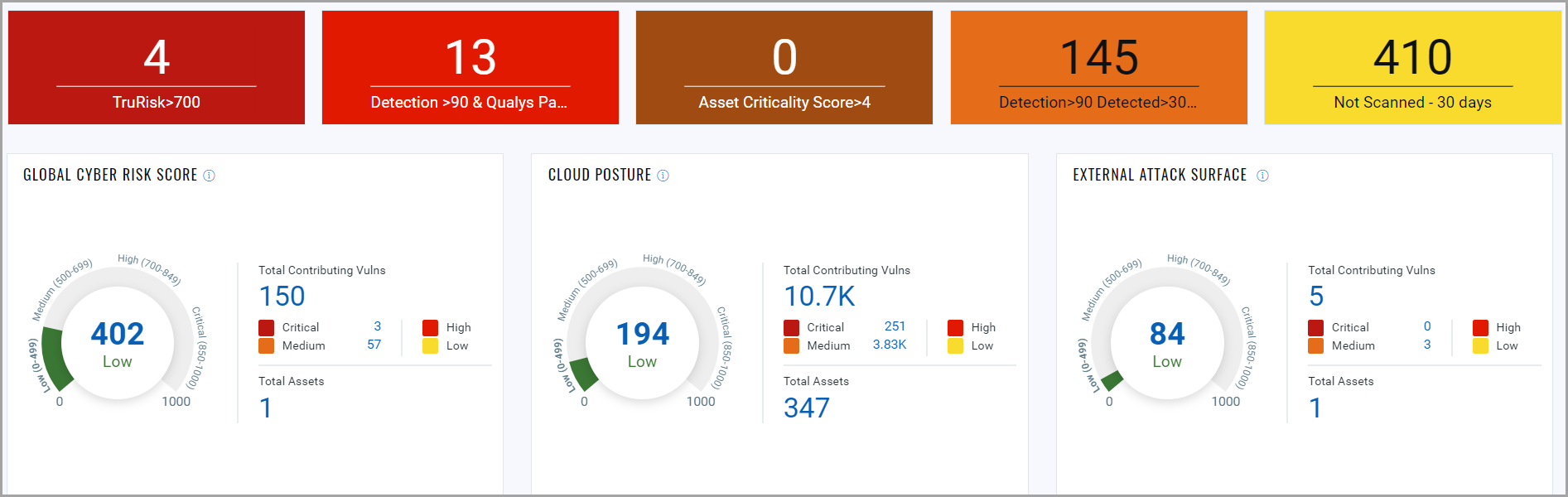
The platform falls under the Qualys Enterprise TruRisk Platform umbrella. This parent platform aims to measure, manage, and reduce cyber risk from one place. TotalCloud focuses specifically on cloud environments within this broader ecosystem.
Qualys TotalCloud Core Capabilities
TotalCloud bundles multiple security functions:
Vulnerability and Configuration Management
This is Qualys’s traditional strength. The platform scans cloud workloads for vulnerabilities and misconfigurations. Decades of vulnerability data make their scanning particularly thorough.
Compliance
Meeting regulatory requirements matters for most organizations. TotalCloud includes compliance reporting for major frameworks. Think SOC 2, PCI-DSS, HIPAA, and others. Automated compliance checks save hours of manual work.
Asset Management
You can’t protect what you don’t know about. TotalCloud discovers and inventories cloud assets automatically. This includes ephemeral resources that spin up and down frequently.
Risk Remediation
Finding problems is one thing. Fixing them is another. TotalCloud includes remediation guidance and workflow integration. Security teams can track fixes from discovery to resolution.
Threat Detection and Response
Beyond vulnerability scanning, TotalCloud detects active threats. This includes malware, suspicious behavior, and known attack patterns.
Cloud Security
The platform supports AWS, Azure, GCP, and other cloud providers. Multi-cloud environments get unified visibility through a single console.
The TruRisk Platform Context
TotalCloud doesn’t exist in isolation. It connects to the broader Qualys TruRisk Platform. This platform includes:
- Risk Operations Center (ROC) – Centralized risk visibility
- Vulnerability Management – Traditional scanning capabilities
- Compliance Management – Regulatory compliance tools
- Asset Management – Discovery and inventory
- Threat Detection – Security monitoring
Organizations already using Qualys for traditional IT security can extend their investment to cloud environments. This integration provides a unified view across on-premises and cloud assets.
Feature-by-Feature Comparison: Sweet Security vs Qualys TotalCloud
Let’s put these platforms side by side. The following table summarizes key differences:
| Feature | Sweet Security | Qualys TotalCloud |
|---|---|---|
| Primary Focus | Runtime detection and response | Vulnerability and risk management |
| Detection Approach | Real-time, behavior-based | Scan-based with threat detection |
| CSPM | Included | Included |
| CWPP | Included | Included |
| API Security | Dedicated module | Basic coverage |
| Identity Security | ITDR included | Available through integration |
| Vulnerability Management | Runtime-prioritized | Comprehensive scanning |
| Compliance | Basic compliance checks | Extensive compliance frameworks |
| AI/ML Capabilities | Core to platform | Incorporated in threat detection |
| Market Position (CNAP) | Ranked #14 | Ranked #8 |
| Average Rating | 8.6/10 | 8.6/10 |
| Market Mindshare | Growing presence | 1.8% mindshare |
Both platforms score identically on average user ratings at 8.6 out of 10. But Qualys holds a higher market position, ranking #8 compared to Sweet Security’s #14. This reflects Qualys’s longer market presence rather than a quality difference.
Runtime Protection Capabilities Compared
Here’s where Sweet Security really differentiates itself. The platform was built around runtime protection from day one. Every feature connects back to what’s happening in your environment right now.
Sweet Security monitors running processes, network connections, and system calls. When malicious behavior occurs, detection happens in milliseconds. The platform doesn’t wait for a scheduled scan to find problems.
Qualys TotalCloud includes threat detection capabilities. But their heritage lies in vulnerability scanning. The platform excels at finding known vulnerabilities and misconfigurations. Runtime behavior monitoring came later to the platform.
For organizations prioritizing real-time threat detection, Sweet Security has an edge. For those focused on vulnerability management with some runtime protection, Qualys serves well.
Vulnerability Management Comparison
Flip the perspective and Qualys shows its strength. Vulnerability management defined the company for years. Their vulnerability database ranks among the most comprehensive available.
TotalCloud scans cloud workloads against this database. It identifies missing patches, outdated software, and known vulnerabilities. Qualys assigns severity scores and prioritizes remediation.
Sweet Security approaches vulnerability management differently. The platform emphasizes runtime context. A critical vulnerability in code that never executes ranks lower than a medium vulnerability in active code. This prioritization reduces noise for security teams.
Organizations with mature vulnerability management programs might prefer Qualys’s depth. Teams overwhelmed by vulnerability backlogs might appreciate Sweet Security’s contextual approach.
Detection and Response: How Each Platform Handles Threats
Detection speed matters. Every minute an attacker spends undetected in your environment increases damage potential. Let’s examine how each platform approaches this challenge.
Sweet Security’s Detection Approach
Sweet Security detects, investigates, and resolves cloud attacks in real time. The platform watches three layers simultaneously:
- Application layer – Code behavior, API calls, data access
- Workload layer – Container activity, process execution, network traffic
- Infrastructure layer – Cloud resource changes, configuration modifications
When the platform spots suspicious activity, it correlates events across these layers. An attacker who compromises an application container might try to move laterally. Sweet Security tracks this movement and alerts your team with full context.
The investigation tools help teams understand attack chains. Instead of isolated alerts, you see the complete story. This speeds up response time significantly.
Response capabilities include automated actions. You can configure the platform to isolate compromised workloads, block suspicious IPs, or revoke credentials automatically. Manual response options exist for teams preferring human oversight.
Qualys TotalCloud’s Detection Approach
Qualys TotalCloud combines scheduled scanning with ongoing threat detection. The platform scans cloud assets on configurable intervals. It also monitors for known threat patterns continuously.
Detection relies heavily on Qualys’s threat intelligence database. Years of vulnerability research feed into this database. Known malware signatures, attack patterns, and indicators of compromise all get checked.
When threats get detected, TotalCloud provides investigation tools through the TruRisk platform. Security teams can drill into findings, understand risk levels, and track remediation progress.
Response capabilities integrate with existing workflows. Qualys plays well with ticketing systems, SIEM platforms, and other security tools. This integration helps organizations that already have established processes.
Detection Speed Comparison
Sweet Security’s real-time approach generally delivers faster detection for active attacks. Behavior-based detection catches threats as they happen. This matters most for sophisticated attackers who avoid known signatures.
Qualys’s approach excels at finding known threats during scans. Organizations with compliance requirements often need this systematic coverage. Regular scanning ensures nothing gets missed over time.
The ideal choice depends on your threat model. Face advanced persistent threats? Prioritize real-time detection. Managing compliance across large cloud estates? Systematic scanning serves well.
Cloud Coverage and Multi-Cloud Support
Most organizations run workloads across multiple cloud providers. Your security platform needs to cover all of them consistently.
Sweet Security Cloud Support
Sweet Security protects workloads across your entire cloud ecosystem. The platform supports major cloud providers including AWS, Azure, and GCP. Kubernetes environments get full coverage regardless of where they run.
The platform’s unified approach means consistent protection everywhere. You don’t get different features for different clouds. Security policies apply universally across your multi-cloud environment.
Sweet Security also handles hybrid scenarios. Organizations running some workloads on-premises alongside cloud resources can extend protection to both environments.
Qualys TotalCloud Cloud Support
TotalCloud supports AWS, Azure, GCP, and other cloud platforms. The platform automatically discovers cloud assets and begins monitoring them. This discovery happens continuously as your cloud environment changes.
Qualys’s broader platform extends beyond cloud to traditional infrastructure. Organizations with mixed environments benefit from this unified visibility. One console shows risk across cloud and on-premises assets.
Container and Kubernetes support comes included. TotalCloud scans container images and monitors running containers for vulnerabilities and threats.
Multi-Cloud Comparison
| Cloud Support | Sweet Security | Qualys TotalCloud |
|---|---|---|
| AWS | Full support | Full support |
| Azure | Full support | Full support |
| GCP | Full support | Full support |
| Kubernetes | Native support | Supported |
| Serverless | Supported | Supported |
| Containers | Runtime protection | Scanning and monitoring |
| On-premises integration | Available | Strong through TruRisk |
Both platforms deliver solid multi-cloud coverage. Qualys edges ahead for organizations with significant on-premises infrastructure alongside cloud. Sweet Security wins for pure cloud-native environments prioritizing runtime protection.
Compliance and Regulatory Support
Compliance drives many security decisions. Auditors don’t care which platform you prefer. They care whether you meet requirements.
Sweet Security Compliance Features
Sweet Security includes CSPM capabilities that check configurations against compliance standards. The platform identifies deviations from required configurations and helps you fix them.
Basic compliance frameworks get covered. Most organizations can demonstrate compliance using Sweet Security’s reports. But compliance isn’t the platform’s primary focus. Runtime protection comes first.
Organizations with straightforward compliance needs will find Sweet Security adequate. Those facing complex regulatory environments might want more specialized tools.
Qualys TotalCloud Compliance Features
Qualys built compliance capabilities over many years. TotalCloud includes extensive compliance framework support. Major frameworks covered include:
- SOC 2 Type I and II
- PCI-DSS
- HIPAA
- ISO 27001
- NIST frameworks
- CIS benchmarks
- GDPR requirements
Automated compliance reporting saves significant time. Instead of manually collecting evidence, TotalCloud generates reports showing compliance status. These reports often satisfy auditor requirements directly.
Continuous compliance monitoring alerts you when configurations drift from required states. This prevents compliance violations from accumulating between audits.
Compliance Comparison Summary
Qualys TotalCloud clearly leads for compliance-focused organizations. The depth and breadth of compliance support reflects years of development. Organizations in heavily regulated industries should weigh this advantage carefully.
Sweet Security covers basic compliance needs adequately. But it won’t replace dedicated compliance tooling for complex requirements. Consider your specific regulatory obligations when choosing.
User Experience and Interface Design
The best features mean nothing if your team can’t use them effectively. Interface design and user experience matter for daily operations.
Sweet Security Interface
Sweet Security emphasizes real-time visibility. The interface shows what’s happening across your cloud environment at any moment. Dashboards highlight active threats, recent incidents, and security posture metrics.
The platform groups related information logically. Application issues appear together. Cloud infrastructure findings show in their own section. This organization helps teams find what they need quickly.
Investigation workflows guide users through incident response. Instead of jumping between screens, you follow a logical path from detection to resolution. This reduces training time for new team members.
Alert management helps prevent fatigue. The platform groups and correlates related alerts. You see incidents, not individual events. This dramatically reduces the daily alert burden.
Qualys TotalCloud Interface
TotalCloud inherits interface elements from the broader Qualys platform. Users familiar with other Qualys products will feel at home. The learning curve decreases for existing Qualys customers.
The dashboard shows risk scores prominently. Qualys’s TruRisk scoring helps prioritize findings. High-risk items bubble to the top. Lower-risk findings wait their turn.
Reports come in various formats. Executive summaries for leadership. Technical details for security teams. Compliance reports for auditors. This flexibility helps different stakeholders get what they need.
Integration with other Qualys modules happens through a unified console. Organizations using multiple Qualys products manage everything from one place.
Interface Comparison
Sweet Security’s interface feels more modern and focused. The platform was built recently with contemporary design principles. New users often find it intuitive.
Qualys TotalCloud’s interface reflects its evolution over time. Some sections feel more polished than others. But the depth of functionality compensates for any design inconsistencies.
Choose Sweet Security for teams prioritizing usability. Choose Qualys for teams needing deep functionality who can invest in learning the platform.
Integration Capabilities and Ecosystem
Security tools don’t work alone. They need to connect with your existing infrastructure. Integration capabilities determine how well each platform fits your environment.
Sweet Security Integrations
Sweet Security connects to common security and development tools. Key integrations include:
- SIEM platforms – Forward alerts and events to your central security console
- Ticketing systems – Create tickets automatically for findings
- CI/CD pipelines – Scan code and containers during builds
- Slack and Teams – Get alerts in your collaboration tools
- Cloud provider services – Native integration with cloud platforms
API access enables custom integrations. Organizations with unique requirements can build connections to their specific tools. Documentation supports these development efforts.
The platform emphasizes developer workflow integration. Security findings appear where developers already work. This shift-left approach reduces friction between security and development teams.
Qualys TotalCloud Integrations
Qualys offers extensive integration options. Years of enterprise deployments have driven integration development. Key integrations include:
- SIEM platforms – Splunk, IBM QRadar, Microsoft Sentinel, and others
- SOAR platforms – Automated response integration
- Ticketing systems – ServiceNow, Jira, and more
- Cloud providers – Deep integration with AWS, Azure, GCP
- Identity providers – SSO and identity management
- IT management platforms – Configuration management integration
The Qualys API provides programmatic access to all platform functions. Large enterprises often build custom workflows around this API.
Other Qualys products integrate natively. Organizations using Qualys for vulnerability management, endpoint detection, or web application scanning get unified data across products.
Integration Comparison
| Integration Type | Sweet Security | Qualys TotalCloud |
|---|---|---|
| SIEM | Good coverage | Extensive coverage |
| Ticketing | Major platforms | Major platforms plus custom |
| CI/CD | Strong focus | Available |
| Cloud native | Deep integration | Deep integration |
| API access | Full API | Full API |
| Ecosystem size | Growing | Mature and extensive |
Qualys wins on integration breadth. The platform connects to virtually anything enterprise organizations use. Sweet Security covers common needs well but has a smaller ecosystem.
For organizations heavily invested in specific tools, verify integrations exist before choosing either platform.
Deployment and Implementation Considerations
Getting a security platform running matters almost as much as its features. Deployment complexity affects time-to-value and ongoing operations.
Deploying Sweet Security
Sweet Security was designed for cloud-native environments. Deployment typically involves:
- Cloud account connection – Grant the platform access to your cloud accounts
- Agent deployment – Install lightweight agents on workloads
- Configuration – Set policies and alert thresholds
- Integration setup – Connect to your existing tools
Most organizations get initial visibility within hours. Full deployment across large environments takes longer. But the time-to-value tends to be quick.
Agents use minimal resources. The platform was built to avoid performance impact on protected workloads. Organizations sensitive to overhead appreciate this design.
Ongoing maintenance stays light. The platform updates automatically. Policy management happens through the cloud console. No on-premises infrastructure needs management.
Deploying Qualys TotalCloud
TotalCloud deployment follows Qualys’s established patterns. Steps typically include:
- Qualys platform setup – Configure your Qualys subscription
- Cloud connector configuration – Link cloud accounts to the platform
- Scanner deployment – Deploy scanning infrastructure
- Policy configuration – Define scanning policies and schedules
- Integration setup – Connect to existing tools and workflows
Organizations new to Qualys face a learning curve. The platform offers extensive options. Understanding which options matter for your environment takes time.
Existing Qualys customers deploy TotalCloud more quickly. They already understand the platform’s concepts and interfaces. Adding cloud coverage extends their existing investment.
Enterprise support assists complex deployments. Qualys offers professional services for organizations needing help.
Deployment Comparison
Sweet Security offers faster initial deployment for most organizations. The cloud-native architecture minimizes setup complexity.
Qualys TotalCloud fits naturally into existing Qualys environments. New Qualys customers should budget more time for learning and configuration.
Consider your team’s experience when estimating deployment timelines. Cloud-native expertise speeds Sweet Security deployment. Qualys experience speeds TotalCloud deployment.
Pricing Models and Total Cost of Ownership
Cost matters. Security budgets face constant pressure. Understanding pricing models helps plan accurately.
Sweet Security Pricing
Sweet Security uses subscription-based pricing. Costs typically depend on:
- Number of protected workloads
- Features included in your tier
- Support level selected
The company positions itself as cost-effective compared to enterprise alternatives. Startups and growing organizations often find the pricing accessible.
No on-premises infrastructure reduces total cost. You don’t need dedicated servers or storage. Cloud delivery handles everything.
Contact Sweet Security directly for specific pricing. Like most security vendors, they customize quotes based on requirements.
Qualys TotalCloud Pricing
Qualys uses asset-based pricing. Costs depend on:
- Number of cloud assets protected
- Modules included in your subscription
- Platform tier selected
Qualys offers consumption flexibility. You can add or remove modules as needs change. This helps organizations scale costs with usage.
Enterprise pricing includes volume discounts. Large organizations often negotiate favorable rates. Multi-year commitments can reduce per-asset costs.
The TruRisk platform bundles can improve economics. Organizations needing multiple Qualys products might find bundled pricing attractive.
Cost Comparison Considerations
| Cost Factor | Sweet Security | Qualys TotalCloud |
|---|---|---|
| Pricing model | Subscription | Asset-based subscription |
| Entry cost | Generally lower | Higher for full platform |
| Scaling cost | Linear with workloads | Volume discounts available |
| Infrastructure cost | None (SaaS) | None (SaaS) |
| Implementation cost | Lower | Higher for new customers |
| Training cost | Lower learning curve | More training needed |
Sweet Security typically costs less for smaller deployments. Qualys pricing becomes competitive at enterprise scale with volume discounts.
Factor in implementation and training costs. A cheaper license doesn’t save money if deployment takes three times longer.
Real User Feedback and Market Position
Vendor claims only tell part of the story. User feedback reveals how products perform in real environments.
Sweet Security User Feedback
Sweet Security holds an average rating of 8.6 out of 10 on peer review sites. Users frequently highlight:
Strengths mentioned:
- Real-time detection capabilities
- Easy deployment process
- Good visibility across cloud environments
- Responsive customer support
- Modern, intuitive interface
Areas for improvement:
- Smaller market presence creates uncertainty
- Fewer integrations than established vendors
- Documentation could be more extensive
Sweet Security ranks #14 in the CNAP category. This reflects their newer market entry rather than product quality issues.
Qualys TotalCloud User Feedback
Qualys TotalCloud also scores 8.6 out of 10. User sentiment includes:
Strengths mentioned:
- Comprehensive vulnerability coverage
- Strong compliance reporting
- Reliable and consistent scanning
- Integration with other Qualys products
- Established vendor stability
Areas for improvement:
- Interface feels dated in places
- Learning curve for new users
- Pricing complexity
Qualys ranks #8 in the CNAP category with 1.8% market mindshare. The broader TruRisk platform ranks #16 with 0.8% mindshare in CNAP specifically.
Market Position Analysis
Both platforms earn identical user ratings. This suggests comparable quality levels. Market position differences reflect history more than capability.
Qualys brings enterprise credibility. Large organizations trust established vendors. Sweet Security brings innovation and fresh approaches. Organizations prioritizing modern capabilities lean toward newer vendors.
Neither platform has complaints about critical failures. Both deliver what they promise. The choice comes down to which approach fits your needs better.
Ideal Use Cases: Which Platform Fits Your Organization?
Different organizations have different needs. Here’s how to match each platform to specific situations.
Choose Sweet Security When:
Real-time threat detection is your priority
If you face sophisticated attackers who evade traditional detection, Sweet Security’s runtime approach provides better protection. Behavior-based detection catches what signature scanning misses.
You’re primarily cloud-native
Organizations born in the cloud or migrating fully to cloud benefit from Sweet Security’s cloud-first design. The platform doesn’t carry legacy baggage from on-premises security.
Development speed matters
Fast-moving development teams need security that keeps pace. Sweet Security integrates into developer workflows without creating bottlenecks.
You want quick time-to-value
Organizations needing immediate protection appreciate Sweet Security’s rapid deployment. Get visibility in hours, not weeks.
Budget constraints exist
Smaller organizations and startups often find Sweet Security more affordable. Lower entry costs make advanced protection accessible.
Choose Qualys TotalCloud When:
Compliance drives requirements
Heavily regulated industries need extensive compliance support. Qualys delivers more compliance frameworks and automated reporting.
Vulnerability management is paramount
Organizations with vulnerability management programs appreciate Qualys’s depth. Decades of vulnerability data provide comprehensive coverage.
You already use Qualys products
Existing Qualys customers extend their investment naturally. Unified visibility across all Qualys products simplifies operations.
Enterprise scale requires proven solutions
Large organizations managing thousands of cloud assets need proven scalability. Qualys demonstrates this at scale regularly.
Hybrid environments need coverage
Organizations with significant on-premises infrastructure alongside cloud get unified visibility through the TruRisk platform.
Use Case Summary Table
| Organization Type | Recommended Platform | Primary Reason |
|---|---|---|
| Cloud-native startup | Sweet Security | Fast deployment, modern approach |
| Regulated enterprise | Qualys TotalCloud | Compliance depth |
| DevOps-focused organization | Sweet Security | Developer workflow integration |
| Existing Qualys customer | Qualys TotalCloud | Platform consistency |
| Hybrid cloud/on-prem | Qualys TotalCloud | Unified visibility |
| APT threat targets | Sweet Security | Runtime detection |
| Multi-cloud enterprise | Either | Both cover major clouds |
Security Effectiveness: How Well Do They Actually Protect?
Features and ratings matter less than actual protection. Let’s examine security effectiveness more deeply.
Sweet Security’s Protection Approach
Sweet Security’s runtime focus catches threats that other approaches miss. Traditional scanning finds known vulnerabilities. But attackers increasingly use novel techniques that don’t match known signatures.
By watching actual behavior, Sweet Security detects anomalies. A process that suddenly starts making unusual network connections gets flagged. A container accessing files it’s never touched before triggers alerts. This behavior-based approach catches zero-day attacks.
The platform’s speed matters too. Detecting an attack five minutes after it starts beats detecting it during tomorrow’s scheduled scan. Real-time response limits damage.
Correlation across layers provides context. An isolated alert might seem benign. But when combined with other signals, patterns emerge. Sweet Security connects these dots automatically.
Qualys TotalCloud’s Protection Approach
Qualys brings decades of vulnerability research to cloud security. Their vulnerability database ranks among the most comprehensive globally. This knowledge translates to thorough scanning coverage.
Regular scanning ensures systematic coverage. Every asset gets checked against known vulnerabilities. Nothing falls through the cracks due to ephemeral infrastructure. Scheduled scans catch what continuous monitoring might miss.
Risk prioritization helps focus effort. Not every vulnerability requires immediate attention. Qualys’s TruRisk scoring identifies what matters most. Security teams fix high-risk items first.
Compliance-focused protection satisfies auditor requirements. Meeting compliance frameworks reduces organizational risk beyond just technical threats. Regulatory penalties hurt as much as breaches sometimes.
Effectiveness Comparison
Both platforms provide solid protection. They just protect against different primary threats.
Sweet Security excels at detecting active attacks and unknown threats. Organizations facing sophisticated adversaries benefit from this approach.
Qualys TotalCloud excels at finding and managing known vulnerabilities. Organizations with large attack surfaces benefit from systematic scanning.
Ideal security programs use both approaches. Real-time detection catches attacks in progress. Vulnerability management prevents attacks from succeeding in the first place. Some organizations deploy both platforms for defense-in-depth.
Future Direction and Platform Evolution
Technology changes rapidly. Understanding each platform’s direction helps make forward-looking decisions.
Sweet Security’s Direction
Sweet Security continues investing in AI-powered security. The company describes itself as a provider of “Runtime CNAPP and AI Security solutions.” This suggests continued AI innovation.
Application security features keep expanding. The CADR (Cloud Application Detection and Response) capability shows commitment to application-layer protection. Expect deeper application security integration over time.
The platform’s focus on developer experience suggests continued DevSecOps investments. Security that integrates into development workflows will likely become even smoother.
Qualys’s Direction
Qualys continues consolidating its platform. The TruRisk Platform brings everything together under unified risk management. This consolidation will likely continue and deepen.
Cloud-native capabilities keep expanding. TotalCloud receives ongoing investment as cloud workloads grow industry-wide. Expect new cloud security features regularly.
The company’s enterprise focus suggests continued investment in compliance and governance features. Large organizations drive Qualys’s roadmap significantly.
Market Direction
CNAPP continues growing as a category. Organizations increasingly want unified cloud security rather than point solutions. Both platforms benefit from this trend.
AI integration intensifies across the market. Both vendors invest in AI capabilities. Expect significant AI-powered features from both platforms in coming years.
Regulatory requirements keep expanding. More compliance frameworks mean more compliance features. Both platforms will likely expand compliance coverage.
Making the Final Decision: Sweet Security or Qualys TotalCloud
You’ve read through detailed comparisons. Now comes decision time. Here’s a framework for choosing.
Questions to Ask Yourself
- What’s your primary security concern? Active attackers point toward Sweet Security. Vulnerability backlogs point toward Qualys.
- How mature is your cloud environment? Pure cloud-native fits Sweet Security. Hybrid environments fit Qualys better.
- What compliance frameworks apply? Complex compliance needs suggest Qualys. Simple requirements work with either.
- What’s your budget? Smaller budgets often fit Sweet Security better. Enterprise budgets can negotiate good Qualys pricing.
- What tools do you already use? Existing Qualys deployments favor TotalCloud. Clean slates can go either way.
- How important is deployment speed? Urgent needs favor Sweet Security’s rapid deployment.
- What does your team know? Qualys experience reduces TotalCloud learning curves. Cloud-native expertise helps with Sweet Security.
Trial Recommendations
Both vendors offer evaluation options. Take advantage of them. Real hands-on experience reveals what feature lists cannot.
Test each platform against your actual environment. Use your real workloads and configurations. Synthetic tests don’t show how the platform handles your specific situation.
Involve your security team in evaluations. They’ll use the platform daily. Their input matters more than executive preferences.
Check integration with your existing tools during trials. Make sure connections work before committing.
The Bottom Line
Sweet Security and Qualys TotalCloud both deserve consideration. Neither platform clearly dominates all use cases. Your specific needs determine the right choice.
Sweet Security fits organizations prioritizing real-time detection, modern interfaces, and rapid deployment. Qualys TotalCloud fits organizations prioritizing vulnerability management, compliance depth, and enterprise integration.
Both platforms receive identical 8.6 ratings from users. Both cover major cloud providers. Both protect cloud-native workloads effectively. The difference lies in approach and emphasis.
Choose based on your requirements, not vendor marketing. Evaluate both platforms hands-on. Make the decision that fits your organization’s specific security posture needs.
Conclusion
Choosing between Sweet Security and Qualys TotalCloud requires understanding your priorities. Sweet Security’s runtime approach delivers real-time protection and rapid deployment. Qualys TotalCloud brings vulnerability management depth and compliance expertise. Both platforms score identically in user satisfaction. Your decision should reflect whether you prioritize active threat detection or systematic vulnerability management. Consider running trials of both platforms against your actual environment before committing.
Frequently Asked Questions About Sweet Security vs Qualys TotalCloud
| What’s the main difference between Sweet Security and Qualys TotalCloud? | Sweet Security focuses on real-time runtime protection and behavior-based threat detection. Qualys TotalCloud emphasizes vulnerability management, compliance reporting, and systematic scanning. Both are CNAPPs but approach cloud security from different angles. |
| Which platform is better for compliance requirements? | Qualys TotalCloud offers more extensive compliance support. It covers major frameworks like SOC 2, PCI-DSS, HIPAA, ISO 27001, and others with automated reporting. Sweet Security handles basic compliance but doesn’t match Qualys’s depth in this area. |
| How do the user ratings compare between Sweet Security and Qualys TotalCloud? | Both platforms score 8.6 out of 10 on peer review sites. Qualys ranks higher in market position (#8 vs #14 in CNAP category), but this reflects market presence rather than quality differences. |
| Which platform deploys faster? | Sweet Security typically deploys faster for most organizations. Its cloud-native architecture minimizes setup complexity. Organizations can get initial visibility within hours. Qualys TotalCloud takes longer, especially for organizations new to the Qualys platform. |
| Can either platform protect multi-cloud environments? | Yes, both platforms support AWS, Azure, GCP, and Kubernetes environments. They provide consistent coverage across multiple cloud providers. Qualys has an edge for hybrid cloud/on-premises environments through the broader TruRisk platform. |
| Which platform costs less? | Sweet Security generally has lower entry costs and simpler pricing. Qualys TotalCloud can become cost-competitive at enterprise scale through volume discounts. Total cost depends on deployment size and specific requirements. |
| Who should choose Sweet Security over Qualys TotalCloud? | Organizations prioritizing real-time threat detection, cloud-native environments, rapid deployment, and modern interfaces should consider Sweet Security. It’s particularly good for DevOps-focused teams and startups. |
| Who should choose Qualys TotalCloud over Sweet Security? | Organizations with complex compliance requirements, existing Qualys deployments, hybrid environments, or mature vulnerability management programs should consider Qualys TotalCloud. It suits regulated enterprises well. |
| Do both platforms include API security features? | Sweet Security includes a dedicated API security module as part of its platform. Qualys TotalCloud provides basic API coverage but doesn’t emphasize it as heavily. Organizations with significant API exposure might prefer Sweet Security’s approach. |
| Which platform is better for detecting advanced threats? | Sweet Security’s runtime behavior-based detection better catches sophisticated attacks that evade signature-based scanning. Qualys excels at finding known vulnerabilities. For advanced persistent threats, Sweet Security has an advantage. |

 Stack Insight is intended to support informed decision-making by providing independent information about business software and services. Some product details, including pricing, features, and promotional offers, may be supplied by vendors or partners and can change without notice.