
OX Security vs Veracode: Complete Comparison Guide for 2026
Picking the right application security platform can feel overwhelming. The market has dozens of options, and they all promise similar results. But dig deeper, and you’ll find real differences that matter for your team.
This comparison breaks down OX Security and Veracode side by side. We’ll look at how each tool handles code scanning, pipeline security, pricing, and integration. Both platforms serve the application security space, but they take different approaches.
OX Security focuses on software supply chain security and full code-to-runtime visibility. Veracode brings decades of experience in static and dynamic testing. Your choice depends on your team size, development workflow, and security priorities.
By the end of this guide, you’ll know which platform fits your needs. Let’s get into the details.
What Is OX Security? A Full Platform Overview
OX Security is an Application Security Posture Management (ASPM) tool built for modern development teams. The company designed it from the ground up for today’s fast-moving CI/CD pipelines.
At its core, OX Security focuses on software supply chain security. This means it watches your entire development process. From the first line of code to production deployment, OX tracks potential risks.
The PBOM Approach
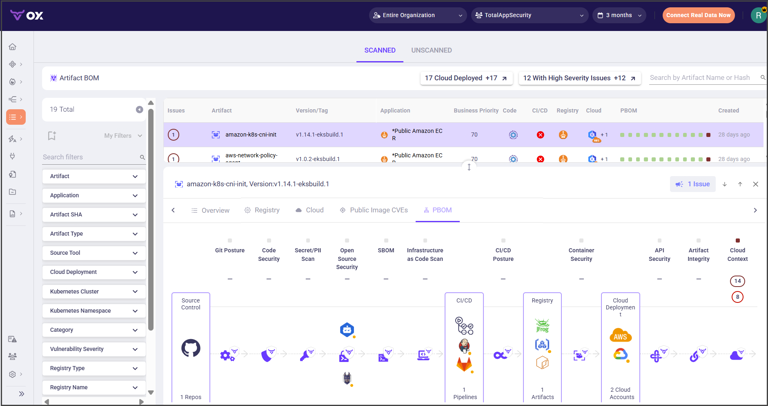
OX Security introduced something called PBOM, or Pipeline Bill of Materials. This feature maps every component, dependency, and tool in your software pipeline. It gives security teams a complete picture of what’s running and where.
PBOM helps teams:
- Track all dependencies across repositories
- Identify risky open-source packages
- Map connections between code changes and runtime behavior
- Predict real risk before code reaches production
This predictive approach sets OX apart from traditional scanners. Instead of just finding bugs, it helps teams understand which bugs actually matter.
Core Features of OX Security
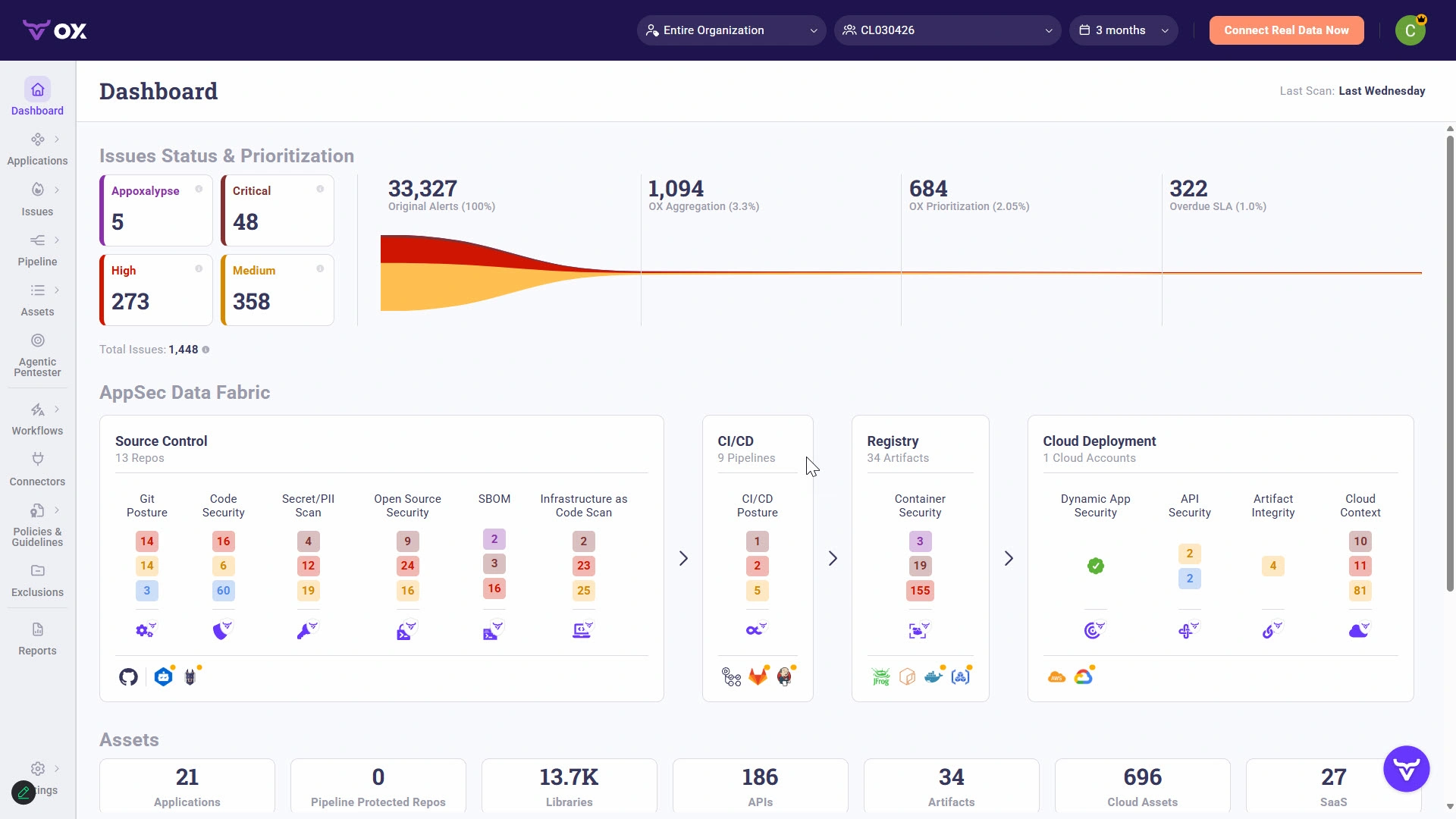
OX Security packs several capabilities into one platform:
- Static Application Security Testing (SAST): Scans source code for vulnerabilities
- Software Composition Analysis (SCA): Checks open-source components for known issues
- Pipeline Security: Monitors CI/CD configurations for misconfigurations
- Secret Detection: Finds exposed credentials and API keys
- Container Security: Scans container images for vulnerabilities
- Infrastructure as Code (IaC) Scanning: Reviews cloud configurations
The platform consolidates these tools into a single dashboard. Teams don’t need to jump between five different products. Everything lives in one place.
Target Users for OX Security
OX Security works best for teams that:
- Run complex CI/CD pipelines with multiple repositories
- Care about supply chain security and dependency management
- Want developer-friendly tools that don’t slow down releases
- Need visibility across code, containers, and cloud
Startups and mid-sized companies often pick OX for its modern approach. But larger enterprises also use it when they need full pipeline visibility.
What Is Veracode? Understanding the Enterprise Standard
Veracode has been in the application security business since 2006. That’s almost two decades of experience. The company helped define what enterprise security testing looks like.
Many Fortune 500 companies rely on Veracode. It’s a name that security professionals recognize. The platform offers multiple testing types and has deep integrations with enterprise tools.
Veracode’s Testing Capabilities
Veracode built its reputation on thorough testing. The platform includes:
- Static Analysis (SAST): Deep code review without running the application
- Dynamic Analysis (DAST): Testing running applications for vulnerabilities
- Software Composition Analysis (SCA): Open-source risk assessment
- Interactive Analysis (IAST): Combines static and dynamic approaches
- Manual Penetration Testing: Human experts reviewing your code
This range of options gives security teams flexibility. They can choose the testing type that fits each project.
Enterprise Features and Compliance
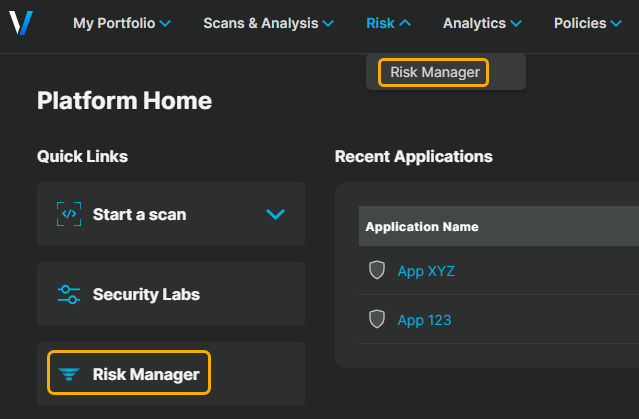
Veracode shines in regulated industries. Banks, healthcare companies, and government contractors often choose it because of its compliance features.
The platform supports:
- SOC 2 compliance reporting
- PCI DSS requirements
- HIPAA security controls
- FedRAMP authorization
- ISO 27001 alignment
Veracode also offers policy management tools. Security teams can set rules for what code can and can’t do. If code violates a policy, it gets flagged before deployment.
The Veracode User Experience
Veracode works well for security teams who want detailed reports. The platform generates comprehensive documentation. Auditors appreciate this level of detail.
On developer forums and community discussions, some users mention that Veracode can feel heavy. Scans take time. Integration with newer CI/CD tools sometimes requires extra setup.
But for organizations that prioritize thoroughness over speed, Veracode delivers. It catches issues that faster scanners might miss.
OX Security vs Veracode: Architecture and Technical Approach
The biggest difference between these platforms comes down to philosophy. How do they think about application security? What problems are they trying to solve first?
OX Security’s Pipeline-First Design
OX Security treats the development pipeline as the primary security boundary. Everything flows through the pipeline. So securing the pipeline secures everything else.
This approach works well for cloud-native applications. Modern apps use dozens of dependencies, multiple build tools, and complex deployment processes. OX maps all of this automatically.
The PBOM feature creates a living document of your software supply chain. When a new vulnerability appears in a popular package, OX can tell you instantly if you’re affected. It knows exactly which applications use that package and where they’re deployed.
Key architectural features:
- Agent-less deployment for quick setup
- Direct integration with source control systems
- Real-time pipeline monitoring
- Automatic asset discovery across repositories
Veracode’s Analysis-First Design
Veracode approaches security from the analysis angle. It wants to find every possible vulnerability in your code. The platform uses sophisticated techniques to identify issues that other tools miss.
Veracode’s static analysis engine has been refined over many years. It understands dozens of programming languages deeply. The analysis goes beyond pattern matching to understand data flow through applications.
Technical strengths include:
- Deep binary analysis without source code access
- Comprehensive language support
- Mature machine learning models for false positive reduction
- Detailed remediation guidance
The trade-off is speed. Thorough analysis takes time. Veracode scans can run for hours on large codebases. This works fine for nightly builds but can slow down rapid development cycles.
Comparing the Two Approaches
| Aspect | OX Security | Veracode |
|---|---|---|
| Primary Focus | Supply chain and pipeline security | Deep code analysis |
| Scan Speed | Fast, designed for CI/CD | Thorough, longer scan times |
| Setup Time | Quick, often same-day | Longer, requires configuration |
| Best For | Cloud-native, fast-moving teams | Regulated industries, large enterprises |
| Coverage Model | Unified platform | Multiple specialized tools |
Neither approach is wrong. They solve different problems. Your choice depends on what matters most to your organization.
Static Application Security Testing: SAST Comparison
Both OX Security and Veracode offer SAST capabilities. But they handle static analysis differently. Let’s break down how each platform scans source code.
How OX Security Handles SAST
OX Security integrated SAST into its unified platform. The scanning happens automatically as part of the pipeline. Developers don’t need to kick off separate scans or wait for results.
When code gets pushed to a repository, OX picks it up. The analysis runs in the background. Results appear in the developer’s existing tools. Pull request comments, IDE notifications, and Slack alerts are all available.
OX SAST features:
- Incremental scanning for faster results
- Context-aware prioritization based on reachability
- Direct integration with developer workflows
- Low false positive rates through pipeline context
The reachability analysis deserves special attention. OX doesn’t just find vulnerabilities. It checks if those vulnerabilities can actually be triggered. A bug in code that never runs is less urgent than one in a critical path.
How Veracode Handles SAST
Veracode’s static analysis is the company’s flagship product. It’s been refined over many years and catches issues that other scanners miss.
The platform can analyze compiled binaries, not just source code. This matters for organizations that work with third-party components. You can scan a library even if you don’t have its source code.
Veracode SAST features:
- Binary analysis capabilities
- Support for 100+ programming languages and frameworks
- Detailed data flow analysis
- Compliance-ready reporting
Veracode also offers a “Pipeline Scan” option for faster results. This lighter-weight scan fits into CI/CD workflows better than the full analysis. But you lose some depth for speed.
SAST Feature Comparison Table
| Feature | OX Security | Veracode |
|---|---|---|
| Scan Speed | Minutes for most projects | Hours for full analysis, minutes for pipeline scan |
| Language Coverage | Modern languages, growing support | 100+ languages, extensive framework support |
| Binary Analysis | Limited | Full support |
| Reachability Analysis | Yes, built-in | Available in newer versions |
| IDE Integration | Yes, multiple IDEs | Yes, Veracode IDE plugins |
| CI/CD Integration | Native, first-class support | Good, requires some configuration |
Which SAST Approach Works Better?
For teams shipping code multiple times per day, OX’s faster scans fit better. The results come back quickly enough to be part of the normal development flow.
For organizations that need the deepest possible analysis, Veracode’s full SAST still leads. The binary analysis feature alone makes it worth considering for certain use cases.
Many teams actually use both. They run fast scans in the pipeline with OX and run thorough Veracode scans weekly or before major releases.
Software Composition Analysis: Comparing SCA Features
Open-source code makes up most of modern applications. Some estimates put it at 80% or higher. SCA tools track these components and flag known vulnerabilities.
OX Security’s Approach to SCA
OX Security treats SCA as part of its supply chain security mission. The platform maps every dependency in your application. It tracks direct dependencies and transitive ones too.
Transitive dependencies are packages that your packages depend on. They’re often invisible to developers. But they can contain serious vulnerabilities.
OX SCA capabilities:
- Complete dependency tree mapping
- License compliance checking
- Vulnerability prioritization based on exploitability
- Automatic update recommendations
- SBOM generation for compliance
The PBOM feature enhances SCA. OX knows not just what dependencies you have, but how they’re used. A vulnerable package in a test environment gets different priority than one in production.
Veracode’s Approach to SCA
Veracode offers SCA as part of its platform. The tool scans applications and identifies open-source components. It checks these against vulnerability databases.
Veracode SCA capabilities:
- Continuous monitoring of dependencies
- Vulnerability database with regular updates
- License risk detection
- Integration with the broader Veracode platform
- Developer-focused remediation advice
Veracode’s SCA integrates well with its other testing tools. If SAST finds an issue in open-source code, SCA can provide context about that component’s overall health.
SCA Comparison at a Glance
| Feature | OX Security | Veracode |
|---|---|---|
| Dependency Depth | Full transitive dependency mapping | Good coverage of dependency trees |
| Risk Prioritization | Context-aware, based on usage | Based on vulnerability severity |
| SBOM Generation | Native support, multiple formats | Available |
| License Compliance | Yes | Yes |
| Remediation Guidance | Automated fix suggestions | Detailed guidance |
| Container Dependencies | Strong support | Good support |
Real-World SCA Scenarios
Imagine the Log4j vulnerability hits. With OX Security, you can instantly see every application using Log4j. The platform shows which versions are affected and which environments they’re in.
Veracode also identifies the issue. It provides detailed information about the vulnerability and how to fix it. The reporting features help communicate risk to leadership.
Both platforms handle this scenario well. The difference is in speed and workflow integration. OX aims for instant answers. Veracode aims for complete answers.
Pipeline and CI/CD Security: Where OX Security Shines
Modern software doesn’t just live in source code. It lives in pipelines. Build scripts, deployment configurations, and CI/CD workflows all present security risks.
OX Security’s Pipeline Protection
OX Security was built with pipelines in mind. The platform monitors your CI/CD environment continuously. It catches misconfigurations before they cause problems.
Pipeline security features include:
- GitHub Actions security monitoring
- GitLab CI/CD scanning
- Jenkins pipeline analysis
- Azure DevOps protection
- Bitbucket Pipelines support
The platform looks for common mistakes. Are secrets exposed in build logs? Do pipeline scripts run with excessive permissions? Can outside contributors trigger builds that access sensitive resources?
These questions matter. Supply chain attacks increasingly target build systems. Attackers know that compromising a pipeline gives access to everything that pipeline produces.
Veracode’s Pipeline Integration
Veracode integrates with CI/CD pipelines, but the focus is different. The platform uses pipelines as a trigger for scans rather than a target for security analysis.
You can configure Veracode to:
- Run scans automatically on code commits
- Block deployments if critical vulnerabilities exist
- Generate reports after each build
- Notify teams of new issues
This integration works well for many teams. But Veracode doesn’t analyze the pipeline itself. It focuses on the code that moves through the pipeline.
Pipeline Security Comparison
| Capability | OX Security | Veracode |
|---|---|---|
| Pipeline Configuration Scanning | Yes, primary feature | Limited |
| Build System Monitoring | Yes | No |
| Secret Detection in Pipelines | Yes | Separate tool needed |
| CI/CD Tool Coverage | Broad, modern tools | Good integration options |
| Pipeline as Code Review | Yes | No |
| Supply Chain Attack Detection | Yes | Limited |
Why Pipeline Security Matters in 2026
The SolarWinds attack showed what happens when pipelines get compromised. Attackers inserted malicious code into a build process. Thousands of organizations received infected updates.
Since then, pipeline security has become a priority. Governments now require software bills of materials. Compliance frameworks include supply chain requirements.
OX Security addresses this shift directly. The platform treats pipeline security as equal to code security. For organizations worried about supply chain attacks, this focus matters.
Veracode excels at finding bugs in code. But if an attacker compromises your build system, those bugs might be the least of your problems.
Dynamic Application Security Testing (DAST): Veracode’s Strength
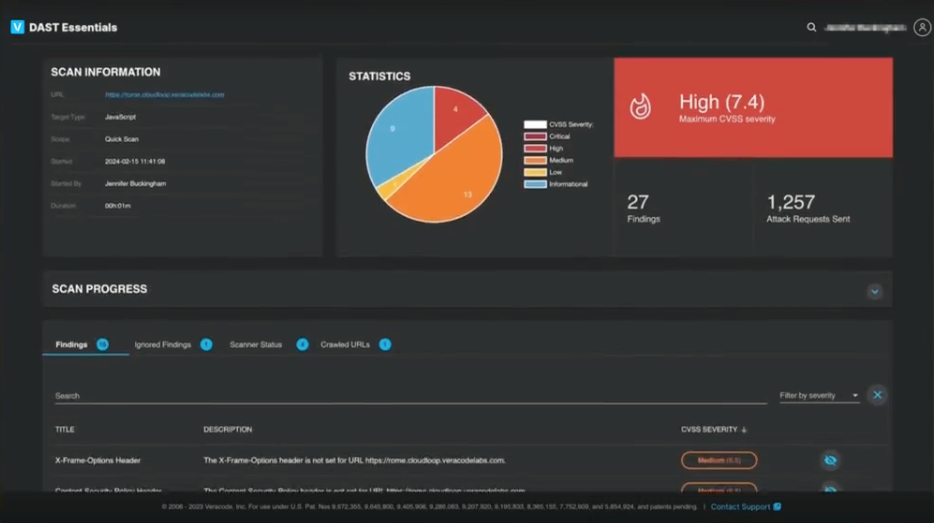
DAST tests running applications. Instead of looking at code, it probes the application from outside. This catches issues that only appear at runtime.
Veracode’s DAST Capabilities
Veracode offers mature DAST tools. The platform can test web applications and APIs for vulnerabilities. It simulates attacks to find weaknesses.
Veracode DAST features:
- Automated web application scanning
- API security testing
- Authentication handling for protected areas
- JavaScript and single-page application support
- Scheduled scans for continuous monitoring
The DAST engine finds injection vulnerabilities, cross-site scripting, authentication flaws, and more. It provides detailed reproduction steps so developers can fix issues.
OX Security’s DAST Position
OX Security focuses more on pre-production security. The platform emphasizes finding issues in code before applications run. This left shift approach catches problems earlier.
OX does offer some runtime capabilities through its container and cloud security features. But dedicated DAST isn’t the platform’s primary strength.
Teams that need DAST alongside OX Security often pair it with a dedicated tool. Some use Veracode’s DAST specifically for this purpose.
DAST Comparison Summary
| Feature | OX Security | Veracode |
|---|---|---|
| Web Application DAST | Limited | Full featured |
| API Testing | Some coverage | Dedicated API scanning |
| Authenticated Scanning | Limited | Yes |
| Scheduling Options | N/A | Flexible scheduling |
| Runtime Protection | Container focus | DAST plus IAST options |
When DAST Matters Most
DAST catches issues that SAST misses. Some vulnerabilities only appear when an application runs. Configuration issues, for example, don’t exist in source code.
Regulated industries often require DAST as part of compliance. PCI DSS specifically mentions testing running applications. Healthcare and financial services follow similar requirements.
If your compliance framework requires DAST, Veracode has the edge here. The platform provides everything you need in one place.
Pricing Models: OX Security vs Veracode Cost Comparison
Security tools can get expensive quickly. Both OX Security and Veracode offer enterprise-grade features. But their pricing models differ.
OX Security Pricing Structure
OX Security typically prices based on the number of developers or applications. The unified platform approach means you get multiple capabilities for one price.
OX Security pricing typically includes:
- SAST scanning
- SCA analysis
- Pipeline security
- Secret detection
- Container scanning
- IaC security
The bundled approach saves money compared to buying separate tools. Teams don’t need to budget for six different products.
OX Security often offers free trials. You can test the platform with real projects before committing. This reduces risk for buyers.
Veracode Pricing Structure
Veracode uses a more traditional enterprise pricing model. Different capabilities often have separate pricing. SAST, DAST, and SCA might each have their own costs.
Veracode pricing factors include:
- Number of applications scanned
- Types of testing needed
- Scan frequency requirements
- Support level
- Training and onboarding
Enterprise contracts often include volume discounts. Large organizations can negotiate better rates. But the base prices tend to be higher than newer competitors.
Total Cost of Ownership Comparison
| Cost Factor | OX Security | Veracode |
|---|---|---|
| Initial License Cost | Lower to moderate | Higher |
| Setup Costs | Lower (faster deployment) | Higher (more configuration) |
| Training Requirements | Moderate | Higher |
| Tool Consolidation Savings | Significant | Good within Veracode suite |
| Scaling Costs | Grows with team size | Can increase significantly |
| Hidden Costs | Fewer | Professional services sometimes needed |
Budget Considerations for Different Team Sizes
Small teams (under 20 developers): OX Security often provides better value. The unified platform gives you everything you need without overpaying for enterprise features you won’t use.
Mid-sized teams (20-100 developers): Both platforms work well. Compare specific quotes based on your needs. Consider which features you’ll actually use.
Large enterprises (100+ developers): Veracode’s enterprise features justify the cost for some organizations. But OX Security can still provide savings through consolidation.
Get quotes from both vendors. Security tool pricing isn’t transparent. What you pay depends on negotiation, commitment length, and specific requirements.
Developer Experience and Workflow Integration
Security tools only work if developers use them. A powerful scanner that sits unused doesn’t improve security. Both OX Security and Veracode invest in developer experience.
OX Security’s Developer Focus
OX Security built its platform for developer workflows. The tools fit into existing processes rather than requiring new ones.
Developer-friendly features:
- Pull request comments with fix suggestions
- IDE plugins for immediate feedback
- Slack and Teams notifications
- Clear, actionable remediation guidance
- False positive management tools
Developers see security results where they already work. In their IDE. In their pull request. In their chat tool. This reduces friction.
The platform also prioritizes findings. Not every vulnerability needs immediate attention. OX helps developers focus on what matters most.
Veracode’s Developer Tools
Veracode has improved its developer experience over the years. The company added IDE plugins, better CI/CD integration, and faster scanning options.
Developer features include:
- Veracode IDE plugin for real-time scanning
- Pipeline Scan for fast CI/CD feedback
- Developer training through Veracode Security Labs
- Greenlight for instant local scanning
- API access for custom integrations
Veracode Security Labs deserves mention. The training platform helps developers learn secure coding. This investment in education shows commitment to developer success.
Developer Experience Comparison
| Feature | OX Security | Veracode |
|---|---|---|
| Time to First Results | Minutes | Minutes to hours depending on scan type |
| Learning Curve | Lower | Moderate |
| IDE Support | Good | Good |
| Pull Request Integration | Native, smooth | Available, requires setup |
| Remediation Guidance | Context-aware suggestions | Detailed documentation |
| Training Resources | Documentation and support | Security Labs, extensive training |
What Developers Say
On community forums, developers often praise OX Security for speed. Results come back fast enough to be part of the normal development flow. This matters for teams practicing continuous deployment.
Veracode users appreciate the depth of analysis. The detailed reports help developers understand not just what’s wrong, but why it matters. The training resources also get positive feedback.
Developer adoption often determines security tool success. Pick the platform your developers will actually use.
Reporting, Compliance, and Governance Features
Security teams need more than just scan results. They need reports for executives, evidence for auditors, and metrics to track progress.
OX Security Reporting
OX Security provides dashboards and reports focused on actionable insights. The platform shows trends, risk scores, and remediation progress.
Reporting features include:
- Executive dashboards with risk summaries
- SBOM exports in standard formats
- Trend analysis over time
- Team and repository comparisons
- Custom report generation
The platform emphasizes clarity. Reports should tell a story, not just dump data. Security leaders can share these reports with non-technical stakeholders.
Veracode Reporting
Veracode built its reporting for enterprise compliance. The platform generates detailed documentation that auditors expect.
Reporting features include:
- Compliance-ready reports for major frameworks
- Executive summary views
- Detailed technical reports for developers
- Policy violation tracking
- Historical analysis and trending
- Third-party attestation services
Veracode’s VerAfied attestation service provides independent verification of your security posture. This matters for organizations that need to prove security to customers or regulators.
Compliance Support Comparison
| Compliance Area | OX Security | Veracode |
|---|---|---|
| SBOM Generation | Native support | Available |
| SOC 2 Reporting | Good support | Extensive support |
| PCI DSS | Supports requirements | Full compliance suite |
| HIPAA | Supports requirements | Healthcare-focused features |
| FedRAMP | Growing support | FedRAMP authorized |
| Third-Party Attestation | Not offered | VerAfied service available |
Governance and Policy Management
Veracode offers more mature governance features. Security teams can define policies and enforce them across the organization. If code violates a policy, builds can be blocked automatically.
OX Security provides policy features too, but with a different focus. The platform emphasizes risk-based prioritization over hard blocking. This approach works better for teams that need flexibility.
Choose based on your governance needs. Strict compliance requirements favor Veracode. Agile environments often prefer OX Security’s approach.
Integration Ecosystem: Tools and Platforms
No security tool works alone. Integration with your existing stack determines how well a platform fits your environment.
OX Security Integrations
OX Security connects with modern development tools. The platform prioritizes the tools that today’s teams actually use.
Source control integrations:
- GitHub (including GitHub Enterprise)
- GitLab (including self-hosted)
- Bitbucket
- Azure Repos
CI/CD integrations:
- GitHub Actions
- GitLab CI
- Jenkins
- CircleCI
- Azure DevOps
Communication integrations:
- Slack
- Microsoft Teams
- PagerDuty
- Jira
Cloud integrations:
- AWS
- Azure
- Google Cloud
Veracode Integrations
Veracode offers extensive integrations built over many years. The platform connects with both modern and legacy systems.
IDE integrations:
- Visual Studio
- VS Code
- IntelliJ
- Eclipse
CI/CD integrations:
- Jenkins
- Azure DevOps
- GitHub Actions
- GitLab CI
- Bamboo
- TeamCity
Issue tracking integrations:
- Jira
- ServiceNow
- Azure Boards
Additional integrations:
- Archer GRC
- RSA Archer
- Splunk
- Various SIEM platforms
Integration Comparison
| Category | OX Security | Veracode |
|---|---|---|
| Modern CI/CD Tools | Excellent coverage | Good coverage |
| Legacy Build Systems | Limited | Broad support |
| Enterprise GRC Tools | Growing | Extensive |
| SIEM Integration | Basic | Full featured |
| API Quality | Modern, well-documented | Mature, comprehensive |
| Custom Integration Support | Good API access | Good API access |
Integration Considerations
If your stack uses modern tools, both platforms integrate well. OX Security might connect more smoothly with GitHub Actions or GitLab CI. Veracode might work better with legacy Jenkins setups.
For enterprise environments with GRC platforms and SIEM systems, Veracode’s longer integration list helps. These integrations took years to build.
Check specific integrations before buying. Don’t assume a platform supports your exact setup. Ask for demos with your tools.
Customer Support and Professional Services
When things break, support matters. Both vendors offer support, but the experience differs.
OX Security Support
OX Security provides responsive support for customers. The company is smaller than Veracode, which can mean more personalized attention.
Support options include:
- Email support
- Dedicated customer success managers for larger accounts
- Documentation and knowledge base
- Community resources
Customers often report quick response times. The team knows the product deeply. Issues get resolved without being bounced between departments.
Veracode Support
Veracode offers tiered support based on your contract level. Premium support options provide faster response times and dedicated resources.
Support options include:
- Standard support (email, portal)
- Premium support (faster SLAs)
- Dedicated technical account managers
- Professional services for complex deployments
- Veracode University training
The professional services team can help with complex implementations. Large enterprises often use these services for initial deployment.
Support Comparison
| Aspect | OX Security | Veracode |
|---|---|---|
| Response Time | Generally fast | Varies by support tier |
| Personalized Attention | More personal, smaller team | Account-based |
| Professional Services | Available | Extensive options |
| Training | Documentation-focused | Veracode University |
| Community | Growing | Established |
Use Cases: Which Platform Fits Your Needs?
Different organizations have different needs. Let’s look at specific scenarios.
Scenario 1: Fast-Moving Startup
A startup ships code multiple times per day. They use GitHub, GitHub Actions, and Kubernetes. The team of 15 developers needs security without slowing down.
Best fit: OX Security
Why? OX Security’s speed matches the startup’s pace. The unified platform provides everything they need. Setup takes hours, not weeks. Developers get results fast enough to fix issues before merging.
Scenario 2: Regulated Financial Institution
A bank needs application security for compliance. They face audits twice per year. The security team needs detailed reports for regulators. They have 200 applications across multiple languages.
Best fit: Veracode
Why? Veracode’s compliance features shine here. The detailed reports satisfy auditors. Language coverage handles the diverse application portfolio. FedRAMP authorization matters for regulated environments.
Scenario 3: Enterprise Moving to Cloud-Native
A large company is modernizing. They’re moving from monoliths to microservices. The team uses Kubernetes, GitLab, and Terraform. They worry about supply chain security.
Best fit: OX Security
Why? OX Security’s pipeline and supply chain focus addresses their main concern. The platform understands modern infrastructure. PBOM provides visibility into the complex new environment.
Scenario 4: Software Vendor Needing Attestation
A software company sells to enterprises. Customers demand security evidence. The company needs third-party validation of their security practices.
Best fit: Veracode
Why? VerAfied attestation services provide what customers want. Veracode’s reputation carries weight with enterprise buyers. The compliance reports speak the language customers expect.
Scenario 5: Mid-Sized Company Seeking Value
A company with 50 developers needs security tools. Budget is tight. They want good coverage without buying five separate products.
Best fit: OX Security
Why? The unified platform provides multiple capabilities at one price. SAST, SCA, pipeline security, and more come together. The company avoids paying separately for each capability.
Making Your Final Decision: OX Security or Veracode
Both platforms solve real security problems. Neither is universally better. Your choice depends on your specific situation.
Choose OX Security If You Need:
- Fast scanning that fits rapid deployment cycles
- Strong supply chain and pipeline security
- A unified platform that consolidates tools
- Modern CI/CD integration
- Lower initial costs and faster deployment
- Context-aware risk prioritization
Choose Veracode If You Need:
- Deep code analysis with binary scanning
- Mature DAST capabilities
- Extensive compliance reporting
- Third-party attestation services
- Broad language and framework support
- Enterprise governance features
Questions to Ask Yourself
Before deciding, consider these questions:
- How fast do you ship code? Daily releases favor OX Security. Monthly releases work fine with Veracode.
- What’s your compliance burden? Heavy compliance needs favor Veracode. Light compliance works with either.
- How concerned are you about supply chain attacks? High concern favors OX Security.
- What’s your budget? Tight budgets favor OX Security’s consolidated approach.
- Do you need DAST? Strong DAST needs favor Veracode.
- What tools do you already use? Check integration compatibility before deciding.
Try Before You Buy
Both vendors offer ways to evaluate their platforms. Take advantage of trials and demos. Run real scans on real code. See how results integrate with your workflow.
Involve developers in the evaluation. They’re the ones who’ll use the tools daily. Their feedback matters more than feature checklists.
Conclusion
OX Security and Veracode both deliver strong application security. OX Security excels at supply chain security, pipeline protection, and fast CI/CD integration. Veracode brings mature analysis, extensive compliance features, and deep DAST capabilities.
For modern cloud-native teams prioritizing speed and supply chain security, OX Security often fits better. For regulated enterprises needing thorough analysis and compliance documentation, Veracode remains a strong choice. Evaluate both against your specific needs.
Frequently Asked Questions About OX Security vs Veracode
| What is the main difference between OX Security and Veracode? | OX Security focuses on software supply chain security and pipeline protection with fast scanning. Veracode specializes in deep code analysis with mature SAST and DAST capabilities. OX is built for modern CI/CD workflows. Veracode excels at compliance and thorough testing. |
| Which platform is better for startups? | OX Security typically works better for startups. It offers faster deployment, lower initial costs, and better integration with modern development tools. The unified platform means startups don’t need to buy multiple separate tools. |
| Which platform provides better compliance reporting? | Veracode offers more mature compliance reporting features. The platform supports major compliance frameworks with detailed documentation. The VerAfied attestation service provides third-party validation that enterprise customers often require. |
| Can I use both OX Security and Veracode together? | Yes, some organizations use both platforms. They run OX Security for fast pipeline scanning and supply chain visibility. They use Veracode for deep periodic analysis and compliance reporting. This combination provides comprehensive coverage. |
| Which platform offers better DAST capabilities? | Veracode has stronger DAST capabilities. The platform offers full-featured dynamic scanning for web applications and APIs. OX Security focuses more on pre-production security and doesn’t emphasize DAST as heavily. |
| How do OX Security and Veracode compare on price? | OX Security generally costs less initially and offers more capabilities in a bundled price. Veracode uses traditional enterprise pricing with separate costs for different features. Get quotes from both vendors for accurate comparisons. |
| Which platform is easier to set up? | OX Security typically deploys faster. Many teams get it running in hours. Veracode requires more configuration and often takes longer to fully implement. Veracode may need professional services for complex environments. |
| What is PBOM and why does it matter? | PBOM stands for Pipeline Bill of Materials. It’s an OX Security feature that maps every component in your software pipeline. This helps teams understand their entire software supply chain and predict which vulnerabilities actually create risk. |
| Which platform has better developer experience? | Both platforms invest in developer experience. OX Security often gets praised for faster results that fit into rapid development cycles. Veracode offers strong IDE plugins and the Security Labs training platform. Developer preference varies by team. |
| Who should not use OX Security? | Organizations needing strong DAST, binary analysis without source code, or extensive compliance attestation services might find OX Security lacking. Heavily regulated industries with strict audit requirements may prefer Veracode’s more mature compliance features. |

 Stack Insight is intended to support informed decision-making by providing independent information about business software and services. Some product details, including pricing, features, and promotional offers, may be supplied by vendors or partners and can change without notice.