OX Security vs ArmorCode: A Complete Comparison of Leading ASPM Platforms in 2026
Picking the right Application Security Posture Management (ASPM) platform can feel overwhelming. The market has grown fast, and two names keep popping up in conversations: OX Security and ArmorCode. Both promise to help security teams cut through the noise, prioritize what matters, and work better with developers. But they take different paths to get there.
This comparison breaks down how each platform handles the challenges modern security teams face. We’ll look at everything from how they pull in findings from your existing tools to how they help you actually fix problems faster. Whether you’re running security for a mid-sized company or managing application security at enterprise scale, the differences between these two platforms matter.
By the end, you’ll have a clear picture of what sets OX Security and ArmorCode apart. Let’s dig in.
Understanding ASPM: Why This Category Matters Now
Application Security Posture Management isn’t just another acronym to remember. It’s a response to a real problem security teams face every day.
Most organizations run dozens of security tools. SAST scanners, DAST tools, container security, dependency checkers, secret scanners. The list goes on. Each tool produces its own findings, in its own format, with its own severity ratings. The result? Security teams drown in alerts while developers get frustrated by noise.
The Core Problem ASPM Solves
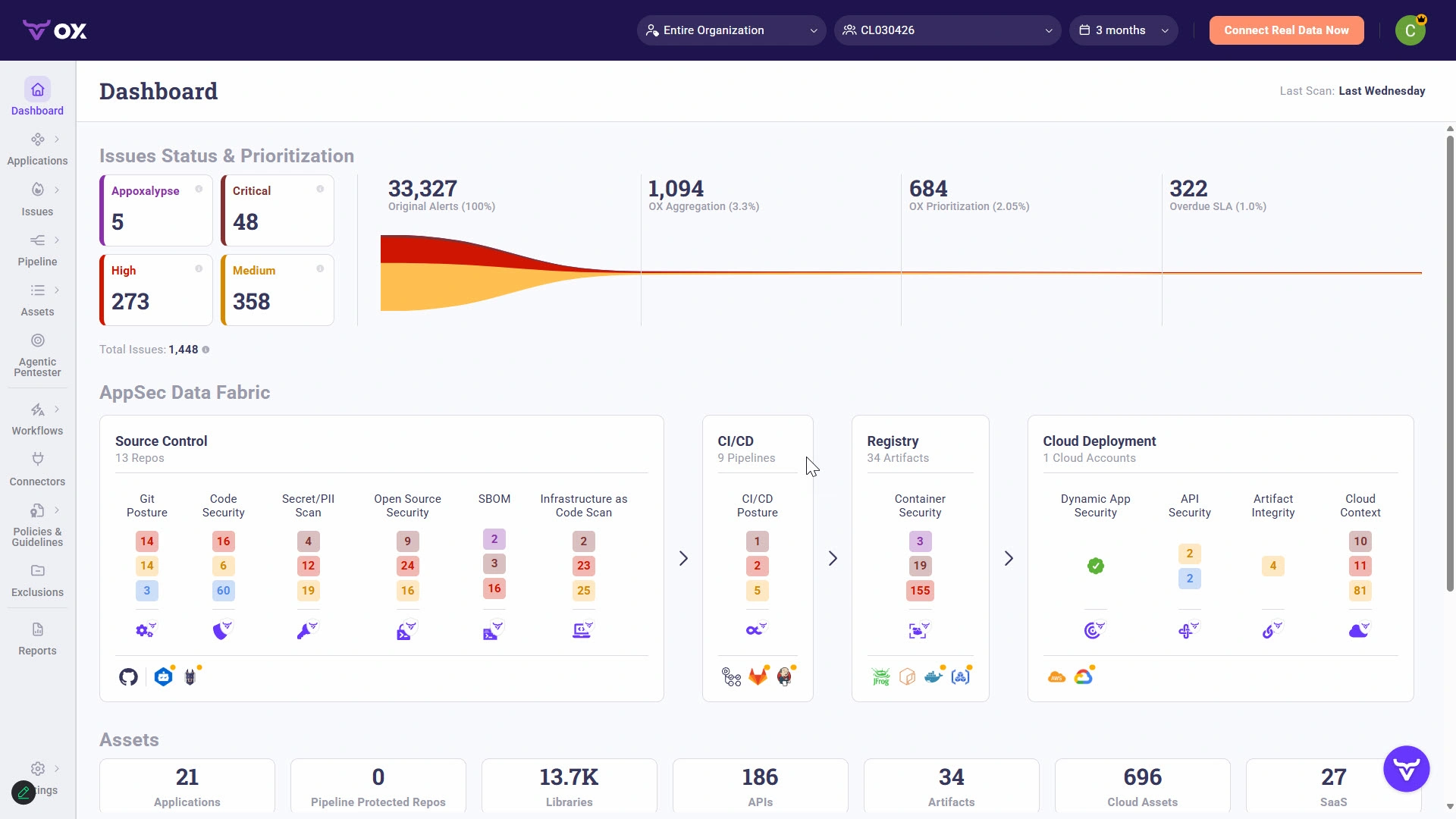
ASPM platforms like OX Security and ArmorCode act as a central hub. They pull findings from all your existing scanners and correlate them into something useful. Instead of checking ten dashboards, you get one view. Instead of guessing which findings matter most, you get context-driven prioritization.
The IDC MarketScape’s 2025 assessment of ASPM vendors highlighted both OX Security and ArmorCode as Leaders. That recognition matters because it shows independent analysts see real value in what these platforms deliver.
But being in the same category doesn’t mean being the same product. The differences in approach, architecture, and focus areas between OX Security and ArmorCode create meaningful distinctions for buyers.
How Modern AppSec Teams Work
Today’s security teams don’t just find vulnerabilities. They need to:
- Understand which findings actually pose risk to their specific environment
- Route issues to the right developers without creating ticket chaos
- Track remediation progress across hundreds of applications
- Report on security posture to leadership and auditors
- Secure the entire software supply chain, not just the code they write
Both OX Security and ArmorCode address these needs. But they emphasize different aspects and serve different organizational profiles best.
Company Background and Market Position
Before comparing features, it helps to understand where each company comes from. Their origins shape their product philosophy.
OX Security: Origins and Philosophy
OX Security built its platform with a clear focus on software supply chain security from day one. The company recognized early that securing applications means securing everything involved in building them. Code, dependencies, pipelines, infrastructure as code, container images. All of it.
Being named a Leader in Application Security Posture Management by the IDC MarketScape validates this approach. According to OX Security, the recognition “reinforces what OX customers already experience: a platform that reduces noise, strengthens collaboration between developers and security teams, and provides the clarity needed to manage application security risk at enterprise scale.”
OX Security’s differentiation centers on delivering “a consolidated, context-rich view of application risk across the entire software lifecycle.” That lifecycle focus means they pay attention to where code comes from and how it gets built, not just what vulnerabilities exist in the final product.
ArmorCode: Origins and Philosophy
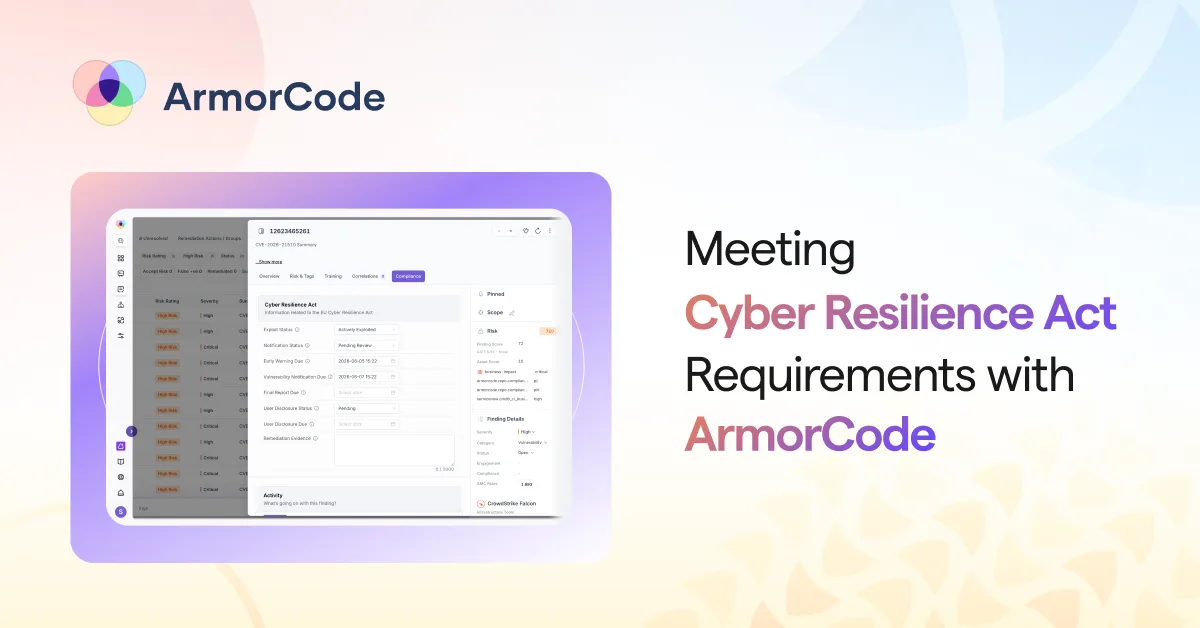
ArmorCode was founded in 2020 and is headquartered in Palo Alto, California. The company has grown rapidly, with the platform processing over 40 billion findings across Fortune 1000 deployments.
ArmorCode’s approach centers on being AI-powered and scanner-agnostic. The platform ingests findings from over 320 security tools. That broad integration story matters for organizations with diverse, established security toolchains.
Like OX Security, ArmorCode earned recognition as a Leader in the IDC MarketScape: Worldwide ASPM 2025 Vendor Assessment. The company emphasizes consolidation: “ArmorCode is an AI-powered ASPM platform that consolidates findings from the scanners a security team already owns.”
Side-by-Side Company Comparison
| Aspect | OX Security | ArmorCode |
|---|---|---|
| Core Focus | Software supply chain security and lifecycle risk | AI-powered consolidation and prioritization |
| Market Recognition | IDC MarketScape ASPM Leader | IDC MarketScape ASPM Leader |
| Scale Indicators | Enterprise deployments with supply chain focus | 40+ billion findings processed, Fortune 1000 customers |
| Headquarters | Israel | Palo Alto, California |
| Founded | 2021 | 2020 |
Integration Capabilities: Connecting Your Security Tools
An ASPM platform is only as good as its ability to pull data from your existing tools. Both OX Security and ArmorCode understand this. But their integration approaches differ in meaningful ways.
ArmorCode’s Integration Breadth
ArmorCode makes a bold claim: integration with 320+ security tools. That number is impressive and reflects the company’s strategy of being the ultimate aggregator. If you run a tool, chances are ArmorCode can ingest its findings.
This breadth matters for large enterprises with legacy toolchains. You might have old SAST tools you can’t replace yet, plus newer cloud security platforms, plus specialized scanners for specific tech stacks. ArmorCode aims to bring all of it together.
The platform’s no-code workflow builder helps route findings from any connected tool to the right teams. This flexibility lets security teams design processes that match how their organization actually works.
Example scenario: A financial services firm runs Checkmarx for SAST, Snyk for dependencies, Aqua for container security, and Tenable for infrastructure scanning. ArmorCode can pull findings from all four, deduplicate issues that appear in multiple tools, and present one prioritized backlog.
OX Security’s Integration Depth
OX Security takes a different approach. While the platform connects to major security tools, its integration story goes deeper into the software development lifecycle.
OX Security integrates with:
- Source code management: GitHub, GitLab, Bitbucket, Azure DevOps
- CI/CD pipelines: Jenkins, CircleCI, GitHub Actions, and more
- Security scanners: Major SAST, DAST, SCA, and secret scanning tools
- Cloud environments: AWS, Azure, GCP
- Artifact registries: Container registries and package managers
The focus on pipeline integration reflects OX Security’s supply chain emphasis. Understanding where code comes from and how it moves through the build process adds context that purely scanner-focused integrations miss.
Integration Quality vs Quantity
ArmorCode wins on raw numbers. 320+ integrations is hard to beat. But numbers don’t tell the whole story.
OX Security’s integrations tend to go deeper into development infrastructure. They don’t just pull findings. They understand the pipeline, the code flow, the dependencies between components. This depth enables features like root cause analysis and exploitability assessment.
For organizations still building their security tool stack, OX Security’s focused integrations might be enough. For those with sprawling, legacy toolchains, ArmorCode’s breadth becomes more attractive.
Vulnerability Prioritization: Cutting Through the Noise
Every security team faces the same challenge: too many findings, not enough time. Prioritization is where ASPM platforms earn their keep.
How OX Security Prioritizes Findings
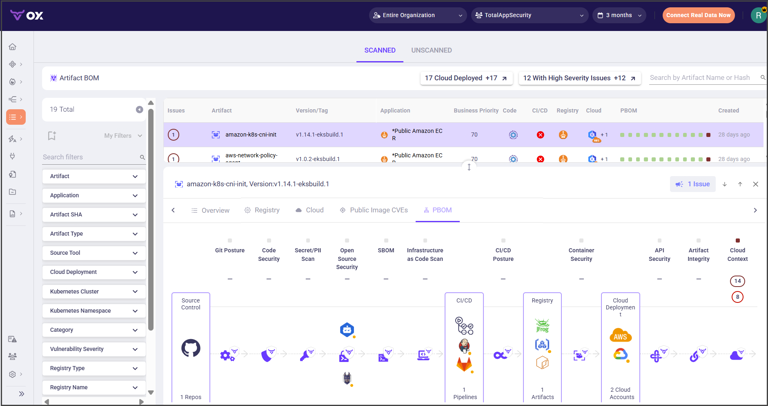
OX Security’s prioritization model centers on exploitability. A critical vulnerability that isn’t exploitable in your specific environment shouldn’t get the same attention as a medium-severity issue that’s exposed to the internet.
The platform analyzes:
- Reachability: Can the vulnerable code actually be reached by an attacker?
- Exposure: Is the component internet-facing or buried in internal systems?
- Business context: What does this application do, and how sensitive is the data it handles?
- Exploit availability: Are there known exploits in the wild?
According to OX Security, their “focus on exploitability” helps “ensure teams spend their time where it matters most.” This approach can dramatically reduce the number of findings that require immediate attention.
Real impact: Organizations often see 80-90% of their findings deprioritized when exploitability analysis gets applied. That doesn’t mean ignoring those issues forever. It means handling urgent risks first.
How ArmorCode Prioritizes Findings
ArmorCode’s prioritization engine is AI-powered. The platform learns from the billions of findings it has processed to identify patterns and predict which issues pose the greatest risk.
Key prioritization factors include:
- Severity scores from source tools, normalized for comparison
- Asset criticality based on business context you provide
- Threat intelligence about active exploitation
- Historical patterns from similar organizations and deployments
ArmorCode’s “Anya” agentic AI adds another layer. It answers natural-language questions across your security data, helping teams quickly understand their risk posture without building complex queries.
The Shutterfly case study demonstrates ArmorCode’s prioritization impact: vulnerability remediation time dropped from 240 days to 7 days. That’s a 97% acceleration. While many factors contribute to such improvements, effective prioritization is foundational.
Prioritization Approaches Compared
| Factor | OX Security | ArmorCode |
|---|---|---|
| Primary Method | Exploitability and reachability analysis | AI/ML-powered risk scoring |
| Context Sources | Code analysis, pipeline data, exposure mapping | Cross-customer intelligence, threat feeds |
| Customization | Business context configuration | No-code workflow rules |
| Unique Advantage | Deep understanding of software supply chain | Scale of data for AI training (40B+ findings) |
Software Supply Chain Security: Protecting the Pipeline
Supply chain attacks have become a major concern. SolarWinds, Log4j, and countless smaller incidents showed that attackers don’t always target your code directly. They go after the tools and dependencies you rely on.
OX Security’s Supply Chain Focus
OX Security was built with software supply chain security as a core pillar. The platform doesn’t just scan code. It maps your entire software factory.
Supply chain capabilities include:
- Pipeline security: Monitoring CI/CD configurations for misconfigurations and risks
- Dependency tracking: Understanding not just direct dependencies but transitive ones
- Build integrity: Verifying that what gets deployed matches what was approved
- SBOM generation: Creating software bills of materials for compliance and visibility
- Third-party risk: Assessing the security posture of open-source components
OX Security’s “comprehensive supply chain coverage” means teams can see risks that traditional scanners miss. A compromised build script or a malicious dependency doesn’t show up in SAST results. It requires a different kind of visibility.
Example scenario: A developer adds a new npm package. OX Security can identify that this package has maintainers who recently changed, shows signs of typosquatting, or includes code that reaches out to external servers during installation. These are supply chain risks that code scanning alone won’t catch.
ArmorCode’s Supply Chain Approach
ArmorCode addresses supply chain security through its integrations with SCA (Software Composition Analysis) tools and its correlation capabilities.
When you connect tools like Snyk, Black Duck, or similar SCA scanners to ArmorCode, the platform pulls in dependency vulnerability data and incorporates it into its unified view.
ArmorCode’s strength here is consolidation. If you’re running multiple SCA tools across different parts of your organization, ArmorCode brings those findings together and deduplicates them.
The platform also tracks remediation across your dependency portfolio. You can see which teams have addressed Log4j-style vulnerabilities and which still have work to do.
Supply Chain Security: Head-to-Head
OX Security has the edge for organizations prioritizing supply chain security. The platform was designed with this use case in mind, and it shows in the depth of capabilities.
ArmorCode provides solid supply chain visibility through its integrations, but it’s more dependent on the capabilities of the source tools you connect. OX Security adds its own supply chain analysis layer.
| Capability | OX Security | ArmorCode |
|---|---|---|
| Pipeline Security Monitoring | Native capability | Via integrations |
| SBOM Generation | Built-in | Via connected SCA tools |
| Dependency Analysis Depth | Transitive dependencies with risk scoring | Aggregates from SCA tools |
| Build Integrity Verification | Yes | Limited |
| Third-Party Package Risk Assessment | Native scoring model | Via integrated tools |
Developer Experience and Remediation Workflows
Finding vulnerabilities is only half the job. Getting them fixed is where the real work happens. Both platforms recognize that developer experience matters for actual security improvements.
OX Security’s Developer-Centric Approach
OX Security emphasizes “collaboration between developers and security teams.” The platform is designed to reduce friction, not create more.
Key developer experience features:
- IDE integration: Developers see findings where they work, not in a separate security portal
- Pull request decoration: Security findings appear directly in code reviews
- Context-rich notifications: Alerts include enough information to take action
- Fix guidance: Recommendations for how to resolve issues, not just what’s wrong
- Low noise: Prioritization means developers only see what actually matters
The “reduces noise” message comes up repeatedly in OX Security’s positioning. For developers, fewer irrelevant alerts means more trust in the alerts that do come through.
OX Security also supports root cause remediation. Instead of fixing the same issue in fifty places, teams can identify the common source. Maybe a shared library needs updating, or a pipeline configuration needs changing. Addressing root causes is faster than playing whack-a-mole with individual findings.
ArmorCode’s Workflow Automation
ArmorCode’s no-code workflow builder gives teams flexibility in how findings reach developers. You can create custom routing rules based on:
- Application ownership
- Severity thresholds
- Tool source
- Business unit
- Risk score
The Shutterfly case study highlights workflow automation as a key factor in their dramatic remediation improvement. Getting the right finding to the right developer at the right time makes a huge difference.
ArmorCode’s Anya AI assistant helps with remediation planning too. Teams can ask questions like “What are our highest-risk open findings in the payments application?” and get instant answers without building reports.
The NetApp example shows another strength: consolidating findings from 30+ scanners into one view. Before ArmorCode, their security team had to check dozens of dashboards. After, developers got unified tickets with all relevant context.
Ticketing and Issue Tracker Integration
Both platforms integrate with common issue tracking systems:
- Jira
- ServiceNow
- Azure DevOps Boards
- GitHub Issues
- GitLab Issues
Bidirectional sync means changes in the ticketing system (like marking an issue resolved) flow back to the ASPM platform. This keeps security teams informed without requiring developers to update multiple systems.
Developer Experience Comparison
| Feature | OX Security | ArmorCode |
|---|---|---|
| IDE Integration | Yes | Limited |
| PR/MR Decoration | Yes | Yes |
| Custom Workflow Builder | Yes | Yes (no-code) |
| Root Cause Analysis | Strong | Basic |
| AI Assistant for Queries | Limited | Anya AI (natural language) |
| Fix Recommendations | Detailed | Tool-dependent |
AI and Automation Capabilities
AI is everywhere in security marketing. But the actual capabilities vary widely between vendors. Let’s look at what OX Security and ArmorCode actually deliver.
ArmorCode’s AI-First Strategy
ArmorCode positions itself as an “AI-powered” platform. This isn’t just marketing. The AI capabilities touch multiple parts of the product.
Anya Agentic AI:
ArmorCode’s Anya assistant lets users ask natural-language questions about their security data. Instead of building complex queries or filtering through dashboards, you can ask:
- “What are our most critical open vulnerabilities?”
- “Which applications have the most unfixed high-severity findings?”
- “Show me remediation trends for the last quarter”
- “Which team has the highest mean time to remediation?”
This interface lowers the barrier for security leaders and others who need insights but don’t want to become platform power users.
AI-Powered Prioritization:
ArmorCode’s prioritization uses machine learning trained on 40+ billion findings. The scale of this training data is hard to match. The AI can identify patterns across industries, technologies, and attack trends.
Automated Remediation Guidance:
The platform can suggest fixes and, in some cases, automate remediation steps. The level of automation depends on the finding type and the connected tools.
OX Security’s Analytical Intelligence
OX Security uses AI and automation differently. The focus is less on chat interfaces and more on analytical depth.
Exploitability Assessment:
OX Security’s analysis engine determines whether vulnerabilities are actually exploitable in your environment. This requires understanding code paths, network exposure, and runtime behavior. Machine learning helps scale this analysis across thousands of findings.
Correlation and Deduplication:
The platform automatically correlates findings that represent the same underlying issue. When three tools report the same vulnerability in slightly different ways, OX Security recognizes them as one issue. This prevents duplicate remediation efforts.
Continuous Pentesting:
OX Security mentions moving “from annual audit to always-on” security testing. Continuous pentesting capabilities use automation to verify that vulnerabilities are actually exploitable, not just theoretically present.
AI Capabilities Comparison
| Capability | OX Security | ArmorCode |
|---|---|---|
| Natural Language Queries | Limited | Anya AI (advanced) |
| ML-Based Prioritization | Yes (exploitability focus) | Yes (scale-based) |
| Automated Remediation | Guidance and suggestions | Guidance and some automation |
| Training Data Scale | Not disclosed | 40+ billion findings |
| Continuous Verification | Yes | Limited |
Reporting and Compliance Features
Security teams don’t just fix vulnerabilities. They answer to auditors, regulators, and executives. Reporting capabilities matter for proving value and meeting requirements.
OX Security’s Reporting Strengths
OX Security provides visibility across the entire software lifecycle. This scope translates into comprehensive reporting options.
Available reports include:
- Application risk scorecards: See which applications pose the highest risk
- Remediation tracking: Monitor how quickly teams address findings
- Supply chain posture: Assess risks in dependencies and pipelines
- Trend analysis: Track security posture improvement over time
- Compliance mapping: Align findings with frameworks like SOC 2, PCI DSS, and HIPAA
The platform generates SBOM (Software Bill of Materials) reports required by some regulations and enterprise customers. As software supply chain requirements grow stricter, this capability becomes more valuable.
Executive dashboards provide high-level views for leadership audiences. Risk trends, SLA compliance, and remediation velocity appear in formats suitable for board presentations.
ArmorCode’s Reporting Capabilities
ArmorCode’s reporting takes advantage of its massive data aggregation. With findings from 320+ tools consolidated, the platform can generate comprehensive views.
Key reporting features:
- Unified vulnerability reports: Cross-tool visibility in single reports
- Compliance dashboards: Track alignment with security frameworks
- Team performance metrics: Mean time to remediation by team, application, or business unit
- Coverage analysis: Identify gaps in scanning coverage
- Custom report builder: Create reports tailored to specific audiences
Anya AI can generate ad-hoc reports through natural language requests. Ask for a summary of your Q3 security posture, and the AI produces it without manual report building.
ArmorCode’s experience with Fortune 1000 customers shows in its enterprise reporting options. Audit trails, role-based access to reports, and scheduled distribution meet common enterprise requirements.
Compliance Framework Support
| Framework | OX Security | ArmorCode |
|---|---|---|
| SOC 2 | Yes | Yes |
| PCI DSS | Yes | Yes |
| HIPAA | Yes | Yes |
| NIST | Yes | Yes |
| ISO 27001 | Yes | Yes |
| SBOM Generation | Native | Via integrations |
| Custom Framework Mapping | Yes | Yes |
Deployment Options and Architecture
How you deploy an ASPM platform affects security, performance, and operational overhead. Both vendors offer flexibility, but with different emphases.
OX Security Deployment
OX Security offers cloud-based deployment as its primary model. The platform connects to your development infrastructure through secure integrations.
Key architectural elements:
- SaaS delivery: No infrastructure to manage
- API-first design: Everything available through APIs for automation
- Lightweight agents: Optional agents for deeper pipeline integration
- Data residency options: Support for geographic data requirements
For organizations with strict data sovereignty requirements, OX Security can accommodate specific deployment configurations. This matters for regulated industries and government customers.
ArmorCode Deployment
ArmorCode is also primarily a SaaS platform. The focus on ingesting data from existing tools means the architecture prioritizes connectivity over on-premises components.
Deployment characteristics:
- Cloud-native: Built for scale and availability
- Extensive APIs: Support for custom integrations and automation
- Connector framework: Standardized approach to adding new tool integrations
- SSO support: Integration with enterprise identity providers
The platform’s ability to process 40+ billion findings demonstrates its scalability. Fortune 1000 customers with massive finding volumes haven’t overwhelmed the system.
Deployment Comparison
| Aspect | OX Security | ArmorCode |
|---|---|---|
| Primary Model | SaaS | SaaS |
| On-Premises Option | Limited/By request | Limited/By request |
| Private Cloud | Available | Available |
| API Coverage | Comprehensive | Comprehensive |
| SSO Support | Yes | Yes |
| Data Residency | Configurable | Configurable |
Pricing and Value Considerations
Neither OX Security nor ArmorCode publishes detailed pricing on their websites. Both follow enterprise software pricing models based on factors like:
- Number of applications managed
- Number of developers or users
- Volume of findings processed
- Feature tiers and add-ons
OX Security Pricing Approach
OX Security pricing discussions typically start with understanding your application portfolio. The platform’s lifecycle focus means they want to know how many repositories, pipelines, and applications you’re securing.
Organizations report that OX Security offers competitive pricing for the value delivered, especially for those prioritizing supply chain security. The reduction in alert volume alone can justify costs through time savings.
ArmorCode Pricing Approach
ArmorCode pricing often considers the number of scanners you’re consolidating and the volume of findings. With 320+ integrations, they expect customers to connect multiple tools.
The platform can deliver fast ROI through remediation time reduction. The Shutterfly example of going from 240-day to 7-day remediation represents massive cost savings beyond the platform subscription.
Value Assessment Framework
When evaluating ROI for either platform, consider:
- Time saved on triage: How much time does your team spend sorting through findings today?
- Remediation acceleration: What’s your current mean time to remediation, and what’s improvement worth?
- Tool consolidation: Can you retire any existing tools?
- Risk reduction: What’s the cost of a security incident the platform might prevent?
- Compliance efficiency: How much does audit preparation cost today?
Customer Success Stories and Real-World Performance
Marketing claims are one thing. Real customer results matter more. Let’s look at documented outcomes.
ArmorCode Customer Results
Shutterfly: The photo product company reduced vulnerability remediation time from 240 days to just 7 days after deploying ArmorCode. That 97% improvement came from better prioritization and workflow automation. When developers fix issues faster, risk exposure shrinks.
NetApp: The storage company consolidated findings from over 30 different security scanners into ArmorCode. Before, their security team switched between dozens of dashboards. After, they had one unified view with clear priorities.
These Fortune 1000 examples demonstrate ArmorCode’s ability to handle enterprise-scale complexity.
OX Security Customer Feedback
According to Gartner peer reviews, users report that “OX Security Platform Scored Higher” compared to alternatives in several categories. The specific positive feedback mentions visibility, workflow automation, and consolidation of security findings.
Customers particularly appreciate OX Security’s supply chain visibility. Organizations dealing with software supply chain regulations find the platform’s SBOM capabilities and pipeline security features valuable.
Enterprise customers highlight the reduction in false positives and alert fatigue. When developers trust that alerts are real issues, they respond faster.
Analyst Recognition
Both platforms earned Leader status in the IDC MarketScape: Worldwide ASPM 2025 Vendor Assessment. This recognition validates that independent analysts see strong capabilities in both solutions.
Gartner peer reviews similarly show positive sentiment for both platforms, with specific strengths depending on use case priorities.
Ideal Use Cases: Matching Platform to Need
Not every organization needs the same things from an ASPM platform. Here’s guidance on matching your situation to the right choice.
OX Security Fits Best When:
- Supply chain security is a top priority and you need deep visibility into pipelines and dependencies
- You want exploitability-based prioritization that understands your specific environment
- Complex development environments require understanding code flow and build processes
- Regulated industries demand SBOM generation and supply chain documentation
- Developer experience matters and you want strong IDE and PR integration
- Root cause remediation is important to prevent fixing the same issue repeatedly
OX Security works well for organizations building their security programs with a modern, lifecycle-focused approach.
ArmorCode Fits Best When:
- You run many different security scanners and need to consolidate findings from 20+ tools
- AI-powered insights and natural language queries appeal to your team
- Fast remediation acceleration is the primary goal
- Enterprise scale requires proven performance with billions of findings
- Legacy toolchains include older scanners that still produce value
- No-code workflow flexibility is important for matching existing processes
ArmorCode excels for organizations with established, diverse security tool portfolios that need unification.
Use Case Decision Matrix
| Your Situation | Better Choice | Why |
|---|---|---|
| Heavy focus on supply chain risk | OX Security | Native supply chain capabilities are deeper |
| 30+ existing security tools | ArmorCode | 320+ integrations handle diverse toolchains |
| Developer-centric security program | OX Security | Stronger IDE and developer workflow integration |
| Need AI chat interface for queries | ArmorCode | Anya AI provides natural language access |
| Pipeline security is a concern | OX Security | Built-in CI/CD security monitoring |
| Fortune 1000 scale requirements | Either | Both have proven enterprise deployments |
| Strict compliance requirements | OX Security | Native SBOM and framework mapping |
| Rapid remediation improvement focus | ArmorCode | Documented 97% remediation time reduction |
Competitive Landscape Context
OX Security and ArmorCode don’t operate in a vacuum. Other players in the ASPM space include Legit Security, Apiiro, and cloud security platforms expanding into application security.
How OX Security Positions Against Others
OX Security emphasizes supply chain coverage and exploitability focus as differentiators. The platform competes by going deep into the software lifecycle rather than just aggregating scanner results.
Against Legit Security specifically, OX Security offers similar enterprise capabilities with particular strength in prioritization and developer experience. Both target large organizations with complex development environments.
How ArmorCode Positions Against Others
ArmorCode leans into its AI capabilities and integration breadth. The scale of data processed (40+ billion findings) gives the platform training advantages for its machine learning models.
Against scanner vendors expanding into ASPM, ArmorCode’s tool-agnostic approach is attractive. You keep your existing investments and add ArmorCode as the consolidation layer.
The Broader Market Direction
ASPM is becoming a must-have category. Gartner, Forrester, and IDC all recognize it as distinct from traditional scanner categories. Organizations can’t scale application security by adding more point tools. They need platforms that make sense of what those tools find.
Both OX Security and ArmorCode are well-positioned as the market grows. Their Leader recognition from IDC MarketScape validates their capabilities against the broader competitive field.
Making Your Decision: OX Security vs ArmorCode
After this detailed comparison, the right choice depends on your priorities and environment.
Choose OX Security If:
Your organization cares deeply about software supply chain security. You want a platform that understands not just what vulnerabilities exist, but where they come from and how they flow through your build process.
You value exploitability-based prioritization that considers your actual runtime environment. You’d rather fix ten real issues than sort through a hundred theoretical ones.
Developer experience and collaboration between security and engineering teams is a strategic priority. The platform’s IDE integration and root cause remediation features support this goal.
Choose ArmorCode If:
You have an extensive existing security toolchain with many different scanners. ArmorCode’s 320+ integrations mean you can bring everything together without ripping and replacing.
AI-powered interfaces appeal to your team. Anya’s natural language capabilities make security data accessible to more stakeholders.
Fast remediation improvement is the primary success metric. ArmorCode’s documented customer results show dramatic remediation time reductions.
Evaluation Next Steps
Both vendors offer demonstrations and proof of concept engagements. When evaluating:
- Bring your real data: Test with actual findings from your environment
- Involve developers: Get feedback on the developer experience
- Test integrations: Verify compatibility with your specific tools
- Compare prioritization: See how each platform ranks the same findings
- Review pricing models: Understand total cost based on your scale
Conclusion
Both OX Security and ArmorCode deliver strong ASPM capabilities. OX Security shines with supply chain security depth and exploitability-focused prioritization. ArmorCode excels at massive-scale consolidation and AI-powered insights. Your best choice depends on whether supply chain visibility or tool consolidation matters more to your organization. Either platform can dramatically improve how your security team manages application risk.
Frequently Asked Questions About OX Security vs ArmorCode
| What’s the main difference between OX Security and ArmorCode? | OX Security focuses on software supply chain security with deep pipeline visibility and exploitability-based prioritization. ArmorCode emphasizes AI-powered consolidation with 320+ tool integrations and natural language query capabilities through its Anya assistant. |
| Which platform has more integrations, OX Security or ArmorCode? | ArmorCode has more integrations, with support for 320+ security tools. OX Security has fewer but deeper integrations, especially for CI/CD pipelines and software supply chain components. |
| Is OX Security or ArmorCode better for large enterprises? | Both serve large enterprises well. ArmorCode has documented Fortune 1000 deployments and has processed 40+ billion findings. OX Security is recognized for handling enterprise-scale complexity, especially in regulated industries. |
| How do OX Security and ArmorCode handle vulnerability prioritization differently? | OX Security prioritizes based on exploitability and reachability analysis. It determines if vulnerabilities can actually be reached and exploited in your environment. ArmorCode uses AI trained on billions of findings to score risk based on patterns across customers. |
| Which platform is better for software supply chain security? | OX Security has stronger native supply chain capabilities. It monitors CI/CD pipelines, tracks transitive dependencies, generates SBOMs, and assesses third-party package risk. ArmorCode handles supply chain through its SCA tool integrations. |
| Does ArmorCode or OX Security have better AI features? | ArmorCode has more visible AI features, including the Anya natural language assistant that answers questions about your security data. OX Security uses AI for analytical tasks like exploitability assessment but has a less prominent chat interface. |
| How do the developer experiences compare between these ASPM platforms? | OX Security offers stronger IDE integration and focuses on reducing noise for developers. ArmorCode provides flexible no-code workflows for routing findings. Both integrate with common ticketing systems for remediation tracking. |
| What do customers say about OX Security vs ArmorCode? | OX Security receives praise for visibility and noise reduction. ArmorCode customers highlight dramatic remediation improvements, with Shutterfly reducing vulnerability fix time from 240 days to 7 days. |
| Are both OX Security and ArmorCode recognized as industry leaders? | Yes. Both were named Leaders in the IDC MarketScape: Worldwide ASPM 2025 Vendor Assessment. This recognition validates their capabilities in the application security posture management market. |
| How should I decide between OX Security and ArmorCode for my organization? | Choose OX Security if supply chain security, exploitability analysis, and deep pipeline visibility are priorities. Choose ArmorCode if you need to consolidate many existing security tools and want AI-powered natural language access to your security data. |

 Stack Insight is intended to support informed decision-making by providing independent information about business software and services. Some product details, including pricing, features, and promotional offers, may be supplied by vendors or partners and can change without notice.