
OX Security vs Legit Security: The Complete 2026 Comparison Guide for AppSec Teams
Picking the right Application Security Posture Management (ASPM) platform can make or break your security program. Two names keep coming up in conversations: OX Security and Legit Security. Both promise to help security teams cut through noise, find real risks, and fix problems fast. But they’re not the same tool.
In this comparison, we’ll break down how each platform handles everything from vulnerability scanning to supply chain protection. We’ll look at real features, actual capabilities, and the situations where one beats the other. Whether you’re running security for a startup or managing AppSec at an enterprise with hundreds of developers, this guide will help you decide.
Let’s dig into what makes each platform tick. And more importantly, which one fits your specific needs.
Understanding the ASPM Market in 2026
The application security world has changed dramatically. Teams aren’t just scanning code anymore. They’re protecting entire software factories.
Modern development involves dozens of tools. CI/CD pipelines stretch across multiple platforms. Developers use AI to write code. Third-party dependencies number in the thousands. This complexity created a new problem: too many alerts, not enough context.
Why Traditional Security Tools Fall Short
Old-school security scanners worked in isolation. Your SAST tool found issues. Your SCA tool found different issues. Your container scanner found more issues. Nobody could tell you which ones actually mattered.
AppSec teams ended up drowning in alerts. A single application might generate thousands of findings. Most were duplicates. Many were false positives. The real risks got buried.
ASPM platforms emerged to solve this exact problem. They connect to all your security tools. They pull findings into one place. They add context about your actual environment. Then they tell you what to fix first.
The Rise of AI-Native Security Platforms
2026 brought another shift. AI-generated code is everywhere now. Developers use coding assistants daily. This creates new security challenges that traditional tools weren’t built to handle.
Both OX Security and Legit Security recognized this shift. Both built features to address AI-related risks. But their approaches differ in ways that matter.
Legit Security describes itself as an “AI-native ASPM platform that automates AppSec issue discovery, prioritization, and remediation.” OX Security focuses on covering the entire journey “from AI coding to Runtime” with what they call prompt-to-runtime security.
Company Background: OX Security and Legit Security Origins
Understanding where these companies come from helps explain their product choices. Both are relatively young. Both grew fast. But their founding stories shaped different priorities.
OX Security: Building From the Pipeline Out
OX Security started with a focus on the software supply chain. Their founders saw that attackers weren’t just targeting applications. They were targeting the systems that build applications.
The platform earned recognition as a Leader in the first-ever 2026 Gartner Magic Quadrant for Software Supply Chain Security. This placement tells you something about their core strength. They’ve invested heavily in understanding how code moves from developer keyboards to production systems.
Early customers came for specific problems. One customer testimonial describes searching for “an effective solution to upscale application security stack” with particular emphasis on catching issues early in CI pipelines.
Legit Security: Enterprise Focus From Day One
Legit Security took a different path. They built specifically for large enterprises dealing with complex environments. Their pitch centers on helping organizations in “highly regulated industries” manage sprawling development operations.
The company emphasizes framework mapping and compliance capabilities. When you’re dealing with SOC 2, PCI-DSS, HIPAA, and other regulatory requirements, this focus matters. Legit built features that map security findings directly to compliance frameworks.
Their platform also prioritizes what they call “root cause remediation.” Rather than just flagging issues, Legit tries to identify why problems keep happening. This appeals to enterprises dealing with recurring vulnerability patterns across hundreds of repositories.
Market Positioning Comparison
| Aspect | OX Security | Legit Security |
|---|---|---|
| Primary Focus | Software supply chain security | Enterprise AppSec program management |
| Target Customer | DevOps-heavy organizations | Large enterprises in regulated industries |
| Key Differentiator | Pipeline-to-runtime coverage | Framework mapping and compliance |
| Industry Recognition | Gartner Magic Quadrant Leader (2026) | Trusted ASPM vendor designation |
Core Features: What Each Platform Actually Does
Marketing language can obscure what tools actually do. Let’s break down the real capabilities of each platform. We’ll look at what you can actually accomplish with each one.
OX Security Core Capabilities
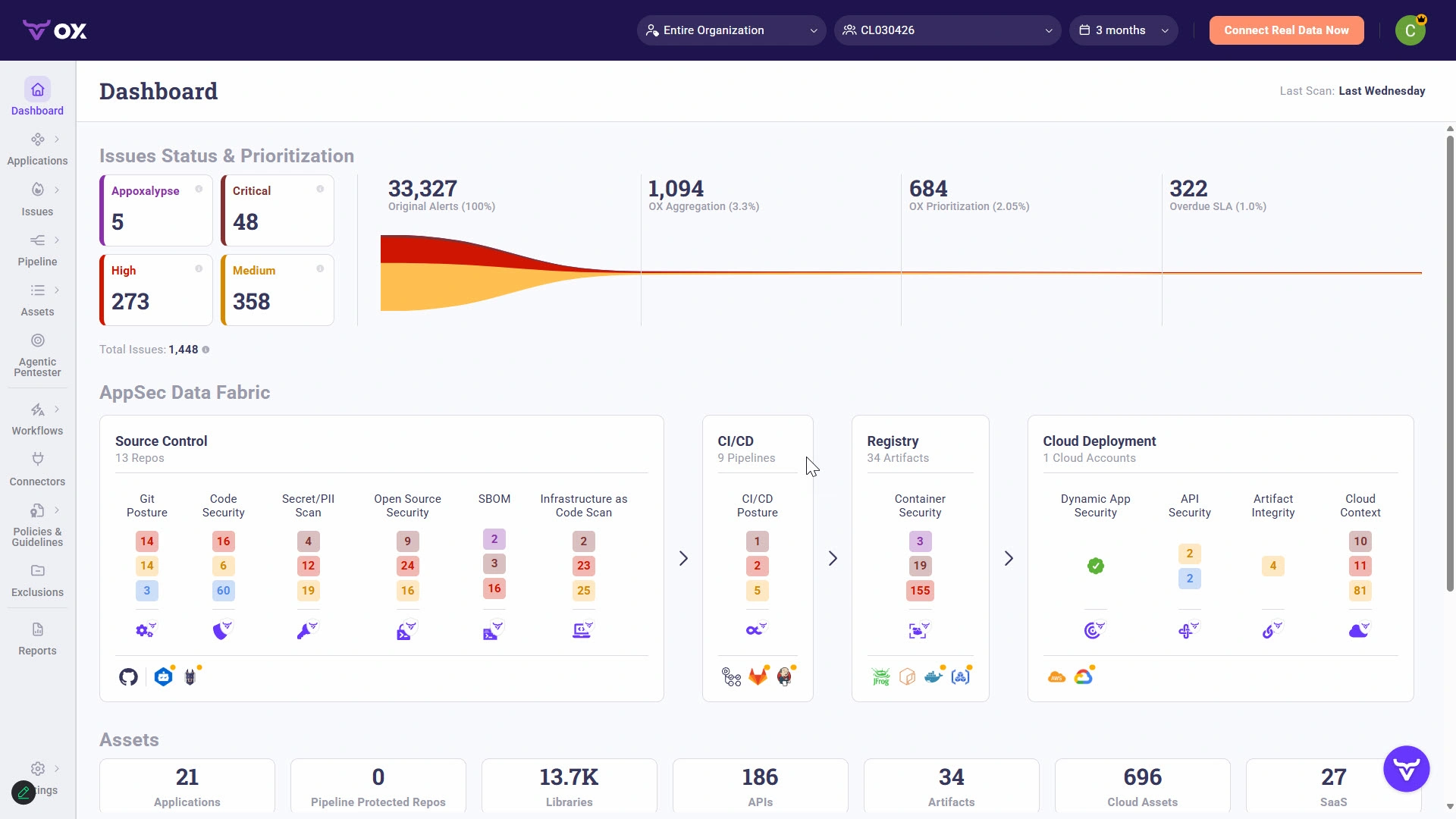
OX Security built their platform around what they call “prompt to runtime security.” This phrase describes their coverage model. They want to catch issues from the moment code gets written until it’s running in production.
Key features include:
- AI-Generated Code Security: Automatic prevention of vulnerabilities in code created by AI assistants
- Supply Chain Visibility: Unified view across the entire software supply chain, including third-party tools
- Early Detection: Issue identification in CI pipelines before code reaches production
- Vulnerability Prioritization: Context-based ranking that considers reachability and exploitability
- Code-Level Investigation: Ability to pinpoint and trace issues back to their exact source
The platform emphasizes what they call finding risk “at its exact point of creation” and eliminating it “at the source.” This philosophy shapes how OX approaches everything from scanning to remediation.
Legit Security Core Capabilities
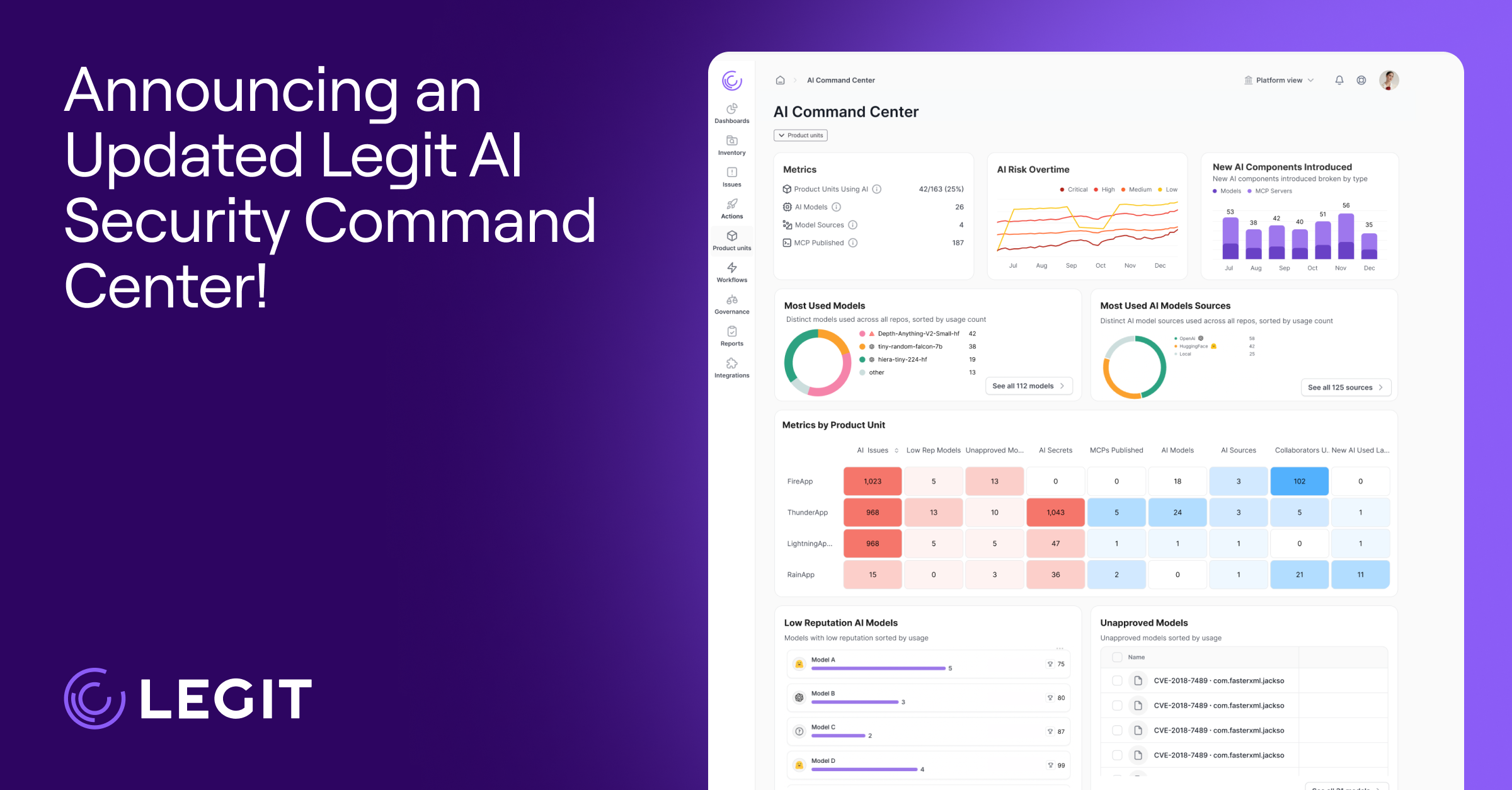
Legit Security positions itself as discovering and visualizing “all aspects of both applications and the software factory producing these assets.” Their approach emphasizes complete visibility over the development environment.
Key features include:
- Application Discovery: Automatic identification of all applications and their components
- Security Control Mapping: Visibility into what security controls exist and where gaps remain
- Framework Compliance: Direct mapping of findings to regulatory requirements
- Root Cause Analysis: Identification of why vulnerabilities keep appearing
- Contextual Prioritization: Ranking based on business context and environment specifics
Legit emphasizes their ability to show “common areas of AppSec posture risk” through comprehensive discovery. They want security teams to understand not just individual findings, but patterns across the entire organization.
Feature-by-Feature Comparison
| Feature Category | OX Security | Legit Security |
|---|---|---|
| SAST (Static Analysis) | Yes, integrated | Yes, integrated |
| SCA (Software Composition) | Yes, with dependency tracking | Yes, with license management |
| Supply Chain Security | Core focus area | Included capability |
| AI Code Security | Dedicated prevention system | AI-native platform approach |
| Compliance Mapping | Available | Strong emphasis |
| Root Cause Analysis | Source-level tracing | Pattern-based root cause |
| Runtime Protection | Yes, prompt-to-runtime | Limited |
Vulnerability Prioritization: Cutting Through Alert Fatigue
Alert fatigue kills security programs. When everything is urgent, nothing is urgent. Both platforms tackle this problem, but with different approaches.
How OX Security Handles Prioritization
OX Security built a dedicated vulnerability prioritization system. They describe the problem clearly: “AppSec teams are dealing with an unmanageable volume of software vulnerability alerts.”
These alerts create what OX calls “significant complexity in the vulnerability remediation process.” The issues aren’t just numerous. They’re constantly changing as codebases evolve.
OX’s prioritization considers three main factors:
- Reachability: Can an attacker actually reach this vulnerability through your application?
- Exploitability: How easy is it to exploit? Are there known exploit kits?
- Potential Impact: What’s the damage if someone exploits this issue?
The platform provides what OX describes as “greater context to determine how the alert applies to their organization.” Generic severity scores get replaced with organization-specific risk ratings.
This approach helps teams create what OX calls “a plan to address the highest-priority vulnerabilities in the software supply chain.” Rather than chasing every alert, teams focus on issues that actually threaten their specific environment.
How Legit Security Handles Prioritization
Legit Security approaches prioritization through comprehensive context gathering. They emphasize their ability to “highlight the context around security findings.”
The platform starts by understanding your complete environment. It maps applications, development pipelines, security controls, and organizational structure. This foundation enables smarter prioritization.
Legit’s prioritization factors include:
- Business Context: Is this a customer-facing application? Internal tool? Critical infrastructure?
- Security Control Coverage: What existing controls might mitigate this risk?
- Development Activity: Is this codebase actively maintained? Scheduled for deprecation?
- Regulatory Impact: Does this finding affect compliance status?
Legit positions this as “adding clarity and prioritization to AppSec findings.” The goal is helping security teams communicate effectively with development teams about what needs attention.
Prioritization Approach Comparison
OX Security takes a more technical approach. Their prioritization emphasizes code-level details like reachability analysis. This works well when your security team has strong technical skills and wants granular control.
Legit Security takes a more organizational approach. Their prioritization emphasizes business context and compliance requirements. This works better when you need to justify priorities to non-technical stakeholders.
Neither approach is universally better. The right choice depends on how your organization makes security decisions.
Software Supply Chain Security: Protecting the Build Process
Supply chain attacks grew dramatically over the past few years. Attackers realized that compromising build systems or dependencies can affect thousands of downstream organizations. Both platforms address this threat, but with different depth.
OX Security’s Supply Chain Focus
Supply chain security sits at the heart of OX Security’s platform. The Gartner Magic Quadrant recognition for Software Supply Chain Security reflects this emphasis.
OX provides what they describe as “a unified view across the software supply chain, including third-party tools.” This visibility matters because modern supply chains involve dozens of interconnected systems.
OX Security’s supply chain capabilities include:
- Pipeline Visibility: Complete mapping of CI/CD workflows across tools
- Third-Party Tool Monitoring: Tracking security across integrated development tools
- Dependency Analysis: Understanding the full tree of software components
- Build Integrity: Verification that builds haven’t been tampered with
- Artifact Security: Protection of container images and deployment packages
One customer testimonial mentions valuing OX for “early issue detection in the CI pipeline and valuable insights.” This suggests the platform delivers real visibility into the build process.
Legit Security’s Supply Chain Approach
Legit Security includes supply chain security as part of their broader platform. They describe their capability to discover and visualize “the software factory producing these assets.”
The platform maps development environments comprehensively. This includes source code repositories, build systems, artifact repositories, and deployment targets. Legit emphasizes understanding the complete picture.
Legit Security’s supply chain capabilities include:
- Factory Discovery: Automatic identification of all development infrastructure
- Control Gap Analysis: Finding where security controls are missing
- Access Review: Understanding who can modify what in the supply chain
- Configuration Assessment: Checking for misconfigurations in development tools
- Compliance Alignment: Mapping supply chain controls to regulatory requirements
Legit positions supply chain security as one component of overall AppSec posture management. It’s included, but it’s not the central focus.
Supply Chain Comparison Summary
| Capability | OX Security | Legit Security |
|---|---|---|
| Industry Recognition | Gartner Magic Quadrant Leader | No specific supply chain recognition |
| Pipeline Monitoring | Deep, real-time monitoring | Discovery and assessment |
| Third-Party Tools | Unified view emphasized | Included in discovery |
| Build Integrity | Core capability | Available |
| Focus Level | Primary platform focus | One of several focus areas |
If supply chain security is your primary concern, OX Security offers deeper capabilities. If supply chain is one of many concerns, Legit Security may provide sufficient coverage within a broader platform.
AI-Generated Code Security: Handling the New Reality
AI coding assistants changed how developers write code. They also introduced new security risks. Both platforms recognize this shift, but their responses differ.
OX Security’s AI Code Protection
OX Security built specific capabilities for AI-generated code. Their platform “automatically prevents vulnerabilities in AI-generated code, ensuring security from the first line.”
This isn’t just marketing language. AI coding assistants can introduce subtle vulnerabilities. They might suggest deprecated functions. They might generate code that works but isn’t secure. They might pull patterns from training data that included vulnerable examples.
OX Security addresses AI code risks through:
- Automatic Prevention: Blocking vulnerable patterns before they enter the codebase
- Real-Time Analysis: Checking AI-generated code as developers accept suggestions
- Pattern Recognition: Identifying common AI-introduced vulnerability types
- Training Data Risks: Detecting code that might originate from insecure sources
The “prompt to runtime” positioning includes AI prompts as the starting point. OX wants to catch issues from the moment a developer asks an AI for help until the resulting code runs in production.
Legit Security’s AI-Native Approach
Legit Security describes itself as an “AI-native ASPM platform.” This means AI is built into how the platform operates, not just what it protects.
The platform uses AI to “automate AppSec issue discovery, prioritization, and remediation.” Rather than just scanning AI-generated code, Legit uses AI to improve the entire security workflow.
Legit Security’s AI capabilities include:
- Automated Discovery: AI-powered identification of applications and risks
- Intelligent Prioritization: Machine learning for risk ranking
- Remediation Automation: AI-assisted fix generation and deployment
- Pattern Learning: Continuous improvement based on organizational data
The distinction matters. OX Security focuses on securing code that AI generates. Legit Security focuses on using AI to improve security operations. Both approaches have value, but they solve different problems.
Comparing AI Security Approaches
| Aspect | OX Security | Legit Security |
|---|---|---|
| Primary AI Focus | Securing AI-generated code | Using AI to improve security operations |
| Code Prevention | Yes, automatic blocking | Standard scanning applies |
| Workflow Automation | Available | Core platform feature |
| Coverage Timing | From prompt onwards | During analysis phase |
Organizations heavily using AI coding assistants might prefer OX Security’s dedicated prevention. Organizations wanting AI to improve their security workflows might prefer Legit Security’s operational automation.
Integration Capabilities: Working With Your Existing Stack
No security platform works alone. Both OX Security and Legit Security need to integrate with development tools, security scanners, ticketing systems, and more. Integration depth affects real-world usefulness.
OX Security Integrations
OX Security emphasizes integration across the entire software supply chain. Their platform connects to source code management systems, CI/CD platforms, artifact repositories, and deployment targets.
Common OX Security integration categories:
- Source Control: GitHub, GitLab, Bitbucket, Azure DevOps
- CI/CD: Jenkins, GitHub Actions, GitLab CI, CircleCI
- Container: Docker, Kubernetes, container registries
- Security Tools: Existing SAST, SCA, and DAST scanners
- Ticketing: Jira, ServiceNow, Azure Boards
- Communication: Slack, Microsoft Teams
OX positions their integrations as providing that “unified view across the software supply chain, including third-party tools.” The platform acts as a central hub rather than replacing existing tools.
Legit Security Integrations
Legit Security also provides broad integration support. Their focus on enterprise customers requires connecting to complex, diverse technology stacks.
Common Legit Security integration categories:
- Source Control: GitHub, GitLab, Bitbucket, Azure DevOps, and more
- CI/CD: Major pipeline platforms and build systems
- Cloud Platforms: AWS, Azure, GCP services
- Security Tools: SAST, SCA, DAST, container scanners
- Compliance: GRC platforms and audit tools
- Ticketing: Jira, ServiceNow, and enterprise systems
Legit emphasizes their ability to work with “complex, diverse development environments.” Enterprise customers often have legacy systems, multiple cloud providers, and dozens of development teams using different tools.
Integration Philosophy Comparison
Both platforms follow a similar philosophy: integrate with existing tools rather than replace them. Neither requires ripping out your current security scanners.
The differences appear in focus areas. OX Security emphasizes depth of pipeline and supply chain integrations. Legit Security emphasizes breadth of enterprise system integrations.
When evaluating either platform, check specific integrations for your stack. Both have extensive integration libraries, but coverage of particular tools varies.
Enterprise Readiness: Scaling Security Programs
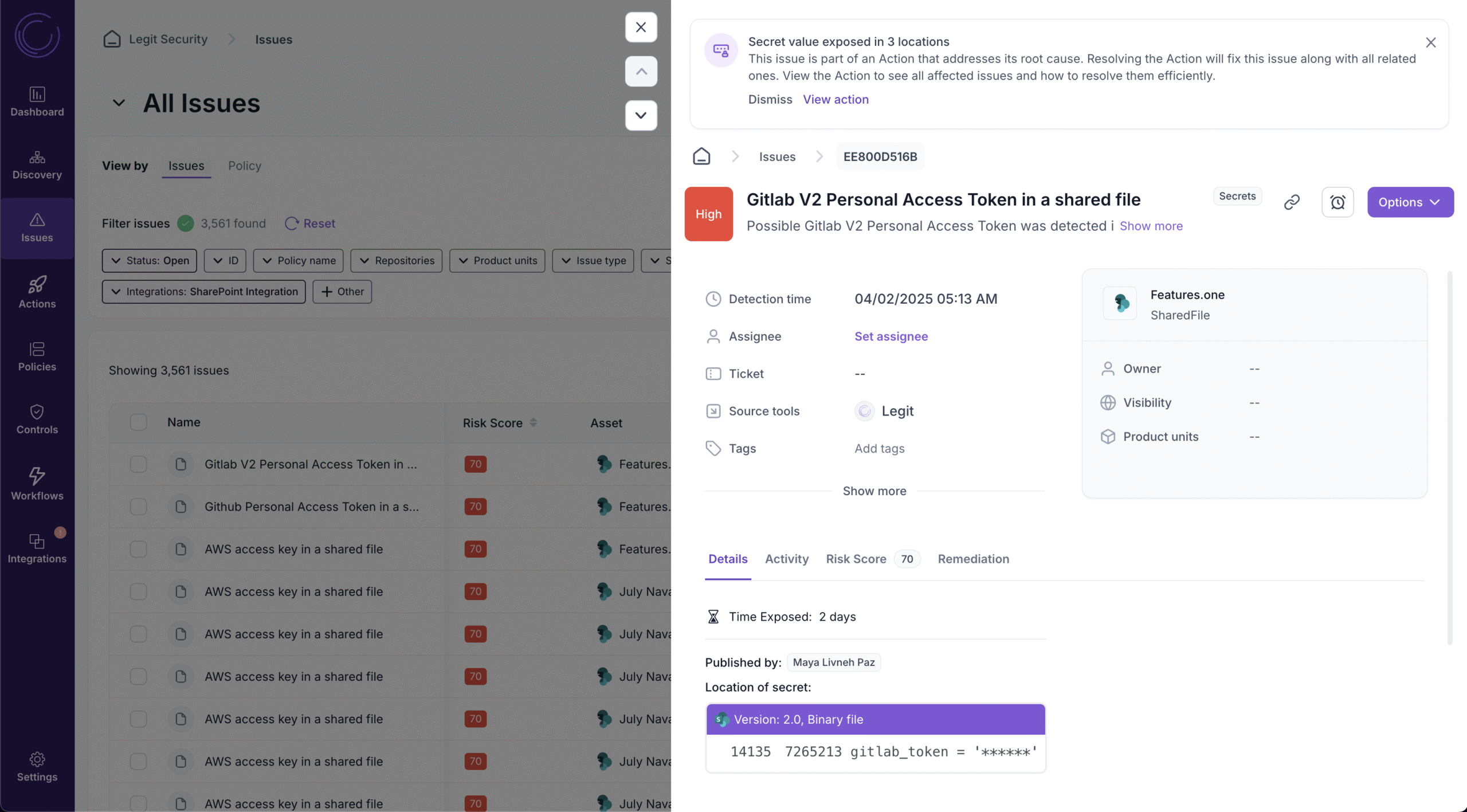
Enterprise organizations have unique requirements. They need role-based access control. They need audit logs. They need support for multiple teams and business units. Both platforms claim enterprise readiness, but their approaches differ.
OX Security Enterprise Features
OX Security built features for organizations managing complex development operations. Their platform handles scenarios where multiple teams work across shared and separate codebases.
Enterprise-relevant OX Security features:
- Multi-Team Support: Separate views and policies for different groups
- Role-Based Access: Granular permissions based on job function
- Policy Enforcement: Consistent security rules across the organization
- Reporting: Executive and technical reporting options
- API Access: Programmatic integration for custom workflows
Customer testimonials mention OX as “essential to our AppSec strategy.” This suggests the platform handles real enterprise security program needs.
Legit Security Enterprise Features
Legit Security explicitly targets large enterprises. Their positioning emphasizes suitability for organizations in “highly regulated industries” with “complex, diverse development environments.”
Enterprise-relevant Legit Security features:
- Framework Mapping: Direct alignment with compliance requirements
- Organization Modeling: Structure that mirrors business units and teams
- Governance Controls: Enterprise-grade access and change management
- Audit Support: Evidence collection for compliance audits
- Executive Dashboards: Board-level reporting and metrics
Legit’s emphasis on “root cause remediation” matters at enterprise scale. When you have hundreds of repositories, fixing individual issues isn’t enough. You need to identify patterns and address underlying causes.
Enterprise Comparison Table
| Capability | OX Security | Legit Security |
|---|---|---|
| Target Size | Mid-market to enterprise | Large enterprise focus |
| Compliance Focus | Available features | Core emphasis |
| Multi-Team | Yes | Yes, with org modeling |
| Governance | Standard enterprise controls | Enhanced for regulated industries |
| Audit Support | Reporting available | Deep audit trail features |
Large enterprises in heavily regulated industries may find Legit Security’s governance and compliance features more developed. Growing organizations with strong DevSecOps cultures may prefer OX Security’s pipeline-focused approach.
Remediation Capabilities: From Finding Issues to Fixing Them
Finding vulnerabilities is only half the battle. Fixing them matters more. Both platforms include remediation features, but their approaches reflect different priorities.
OX Security Remediation Approach
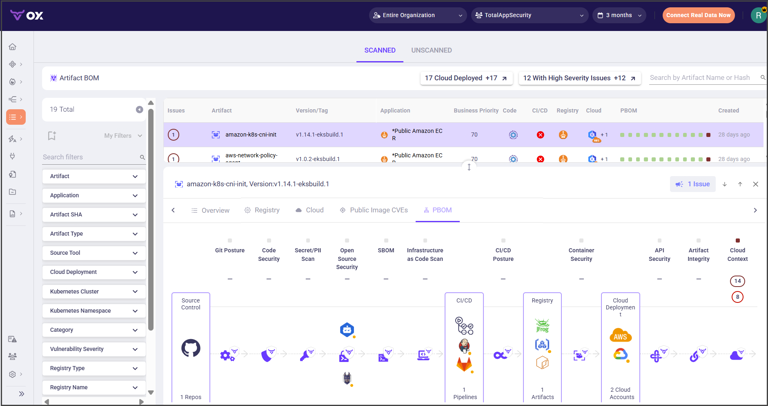
OX Security emphasizes finding issues at their source. Their “pinpoint, investigate and eliminate code-level issues across the entire SDLC” messaging reflects a focus on precise identification.
The platform traces issues back to specific code locations. This precision helps developers understand exactly what needs fixing. Generic guidance gets replaced with specific recommendations.
OX Security remediation features include:
- Source Tracing: Direct links to problematic code sections
- Fix Recommendations: Specific guidance for resolving issues
- Developer Context: Information formatted for development teams
- Pipeline Integration: Blocking vulnerable code from progressing
- Verification: Confirming fixes actually resolved issues
OX positions their approach as “eliminating it at the source.” The philosophy favors prevention over detection. Stop bad code early rather than finding it later.
Legit Security Remediation Approach
Legit Security emphasizes “root cause remediation” as a differentiator. Rather than just fixing individual issues, the platform helps identify why problems keep appearing.
This matters at enterprise scale. If the same vulnerability type appears across 50 repositories, fixing them one by one wastes time. Identifying the root cause (maybe a flawed template, insecure library recommendation, or training gap) fixes the problem everywhere.
Legit Security remediation features include:
- Pattern Analysis: Identifying recurring vulnerability types
- Root Cause Identification: Finding why problems keep happening
- Automated Remediation: AI-powered fix generation
- Developer Guidance: Educational content alongside fixes
- Progress Tracking: Monitoring remediation across the organization
Legit describes their platform as automating “AppSec issue discovery, prioritization, and remediation.” The automation extends through the entire workflow, not just detection.
Remediation Philosophy Comparison
OX Security focuses on precision and prevention. Find the exact source. Block it early. Give developers specific information.
Legit Security focuses on patterns and efficiency. Identify root causes. Fix problems at scale. Prevent recurrence through systemic changes.
Both approaches have merit. The right choice depends on your organization’s security maturity and operating model.
Deployment and Implementation: Getting Started
How quickly can you get value from each platform? Implementation complexity affects time-to-value. Both platforms offer cloud-based deployment, but setup requirements differ.
OX Security Implementation
OX Security connects to existing development infrastructure. Setup involves authorizing access to source control, CI/CD systems, and other development tools.
Typical OX Security implementation steps:
- Tool Integration: Connecting source control and CI/CD platforms
- Scanner Configuration: Enabling built-in or connecting existing security scanners
- Policy Setup: Defining what issues block pipelines
- Team Configuration: Setting up users and access levels
- Tuning: Adjusting prioritization based on environment specifics
The platform aims for early value. Customer testimonials mention getting “valuable insights” and “early issue detection” quickly. This suggests reasonable time-to-value for basic use cases.
Legit Security Implementation
Legit Security emphasizes comprehensive discovery during implementation. The platform maps your entire “software factory” before providing full functionality.
Typical Legit Security implementation steps:
- Environment Discovery: Automatic mapping of applications and infrastructure
- Control Assessment: Identifying existing security measures and gaps
- Framework Alignment: Mapping findings to relevant compliance requirements
- Organization Setup: Configuring teams, roles, and reporting structures
- Integration Activation: Connecting security tools and workflows
The discovery phase may take longer, but it provides comprehensive visibility. Enterprises with complex environments may prefer this thorough approach over faster but shallower setup.
Implementation Comparison
| Factor | OX Security | Legit Security |
|---|---|---|
| Initial Setup | Integration-focused | Discovery-focused |
| Time to Basic Value | Generally faster | More comprehensive but longer |
| Required Resources | Technical team access | Technical and organizational input |
| Full Deployment | Iterative expansion | Thorough initial mapping |
Pricing Considerations: What to Expect
Neither OX Security nor Legit Security publishes detailed pricing publicly. Both offer custom pricing based on organization size and requirements. Still, we can discuss typical pricing factors for ASPM platforms.
Common ASPM Pricing Models
Factors that typically affect ASPM pricing:
- Number of Applications: More applications generally means higher cost
- Developer Count: Some platforms price per developer seat
- Repository Count: Others price based on repositories monitored
- Feature Tiers: Basic, professional, and enterprise feature levels
- Support Level: Standard versus premium support options
Both platforms target mid-market to enterprise customers. Expect enterprise software pricing rather than developer tool pricing. Budget accordingly for proof-of-concept and production deployments.
ROI Considerations
Cost matters, but value matters more. Consider ROI factors when evaluating either platform:
- Time Savings: How much time will teams save on triage and prioritization?
- Risk Reduction: What’s the value of preventing security incidents?
- Tool Consolidation: Can this replace or reduce other tool spending?
- Compliance Efficiency: How much audit preparation time will this save?
- Developer Productivity: Will faster remediation improve development velocity?
Request pricing from both vendors based on your specific environment. Compare total cost of ownership, not just license fees.
Use Case Analysis: When to Choose Each Platform
Different organizations have different needs. Let’s look at specific scenarios where each platform might be the better choice.
Choose OX Security When:
Your primary concern is software supply chain security. OX Security’s Gartner Magic Quadrant Leader recognition reflects deep investment in this area. If supply chain attacks keep you up at night, OX’s focused approach may provide better coverage.
You’re heavily using AI coding assistants. OX’s specific features for preventing vulnerabilities in AI-generated code address a growing risk area. If your developers use Copilot, CodeWhisperer, or similar tools daily, this capability matters.
You want deep pipeline integration. OX emphasizes “early issue detection in the CI pipeline.” Teams wanting to shift security left into development workflows may prefer this approach.
Your DevOps teams drive security decisions. OX’s technical focus and pipeline-centric approach resonates with DevOps-oriented organizations. The tooling feels natural to teams already living in CI/CD systems.
Choose Legit Security When:
You operate in a heavily regulated industry. Legit Security explicitly targets organizations in “highly regulated industries.” Their framework mapping and compliance features support audit requirements directly.
You have a complex, diverse development environment. Legit emphasizes handling “complex, diverse development environments.” If your organization uses multiple tech stacks, has acquired companies with different tools, or operates globally, this breadth matters.
Root cause analysis matters more than individual fixes. Legit’s “root cause remediation” helps enterprises dealing with recurring problems across large codebases. If the same issues keep appearing, identifying underlying causes provides more value than fixing instances.
You need strong executive reporting. Legit’s enterprise focus includes communication tools for non-technical stakeholders. If your security team reports to boards and executives regularly, these features help.
Consider Both When:
You’re building a comprehensive AppSec program. Both platforms offer solid ASPM capabilities. Your specific environment and priorities should drive the decision.
You want to consolidate AppSec tools. Both platforms can aggregate findings from multiple security scanners. Evaluate which integrates better with your existing tool stack.
Customer Feedback and Market Perception
What do actual users say about these platforms? Published reviews and testimonials provide some insight into real-world experiences.
OX Security Customer Feedback
Available testimonials highlight specific value propositions. One customer calls OX “essential to our AppSec strategy.” They specifically mention “streamlining security with early issue detection in the CI pipeline and valuable insights.”
Another early customer describes “searching for an effective solution to upscale application security stack.” This suggests OX attracts organizations actively trying to improve existing security programs.
The Gartner recognition provides third-party validation. Being named a Leader in the first Software Supply Chain Security Magic Quadrant indicates analyst confidence in the platform’s capabilities and market position.
Legit Security Customer Feedback
Legit Security positions itself as a “trusted ASPM vendor” for enterprise customers. Their emphasis on large, regulated organizations suggests a customer base in financial services, healthcare, and similar industries.
The platform’s messaging around “rewriting the rules of application security” indicates ambition to differentiate from standard approaches. This appeals to organizations frustrated with traditional security tools.
Enterprise focus typically means longer sales cycles but deeper customer relationships. Legit’s positioning suggests they prioritize customer success over rapid customer acquisition.
Market Position Summary
| Factor | OX Security | Legit Security |
|---|---|---|
| Analyst Recognition | Gartner Magic Quadrant Leader | Trusted vendor positioning |
| Customer Type | DevOps-forward organizations | Large regulated enterprises |
| Value Emphasis | Early detection, insights | Comprehensive visibility, compliance |
| Market Approach | Technical differentiation | Enterprise relationship focus |
Future Outlook: Where Each Platform is Heading
Platform choices affect long-term strategy. Understanding where vendors are investing helps predict future capabilities.
OX Security Direction
OX Security’s “prompt to runtime” positioning suggests continued investment in end-to-end coverage. Expect continued development of:
- AI code security features as AI adoption grows
- Runtime protection capabilities
- Supply chain security depth
- Pipeline integration breadth
The Gartner recognition in supply chain security validates their core focus. This likely encourages continued investment in that strength while expanding adjacent capabilities.
Legit Security Direction
Legit Security’s AI-native positioning suggests continued investment in automation. Expect continued development of:
- Automated remediation capabilities
- AI-powered analysis and recommendations
- Compliance framework coverage
- Enterprise governance features
Their enterprise focus likely means deeper investment in features important to large, regulated organizations. Compliance, governance, and scalability will probably remain priorities.
Industry Trends Affecting Both
Both platforms will need to address evolving market requirements:
- AI Security: As AI generates more code, both will need stronger AI-specific features
- Regulation: New security and privacy regulations will drive compliance feature development
- Consolidation: Organizations want fewer, more comprehensive tools
- Automation: Manual security workflows are becoming unsustainable
Making Your Decision: OX Security or Legit Security
After this detailed comparison, how do you decide? Here’s a framework for making your choice.
Start With Your Primary Pain Point
What problem brought you here? If you’re losing sleep over supply chain attacks, lean toward OX Security. If you’re struggling with compliance in a complex enterprise environment, lean toward Legit Security.
Consider Your Team Structure
Who will use this platform daily? DevOps-oriented teams may prefer OX Security’s pipeline focus. Security teams operating independently from development may prefer Legit Security’s comprehensive visibility.
Evaluate Your Environment Complexity
How complex is your development environment? Homogeneous environments with standard tooling work well with either platform. Highly complex environments with legacy systems and diverse tools may benefit from Legit Security’s discovery capabilities.
Test Both Platforms
Don’t decide based on marketing materials alone. Request demonstrations and proof-of-concept deployments from both vendors. Test against your actual environment with your actual team.
Decision Framework Summary
| If Your Priority Is… | Consider… |
|---|---|
| Supply chain security | OX Security |
| AI code security | OX Security |
| Pipeline integration | OX Security |
| Compliance mapping | Legit Security |
| Enterprise governance | Legit Security |
| Root cause analysis | Legit Security |
| Complex environments | Legit Security |
| DevOps culture | OX Security |
Conclusion: Choosing Between OX Security and Legit Security
Both OX Security and Legit Security offer strong ASPM capabilities. OX Security excels in software supply chain security, AI code protection, and pipeline integration. Legit Security excels in enterprise compliance, complex environment handling, and root cause remediation. Your choice depends on your primary concerns, team structure, and environment complexity. Test both platforms against your specific requirements before making a final decision. The right choice will improve your security posture and help your team work more effectively.
Frequently Asked Questions About OX Security vs Legit Security
| What is the main difference between OX Security and Legit Security? | OX Security focuses primarily on software supply chain security with a “prompt to runtime” approach, while Legit Security positions itself as an AI-native ASPM platform designed for large enterprises in regulated industries. OX emphasizes pipeline integration and early detection, while Legit emphasizes compliance mapping and root cause remediation. |
| Which platform is better for compliance requirements? | Legit Security has stronger compliance-focused features. They explicitly target organizations in highly regulated industries and offer framework mapping that aligns security findings with regulatory requirements. This makes audit preparation and evidence collection easier for compliance teams. |
| Which platform handles AI-generated code better? | OX Security offers dedicated features for automatically preventing vulnerabilities in AI-generated code. Their “prompt to runtime” approach starts security coverage from the moment developers use AI coding assistants. Legit Security uses AI internally for platform operations but doesn’t emphasize AI code security as strongly. |
| Is OX Security or Legit Security better for small companies? | Both platforms target mid-market to enterprise customers. Smaller organizations might find either platform more than they need. OX Security’s DevOps-friendly approach might suit growing tech companies better, while Legit Security’s enterprise focus makes it more suitable for larger organizations. |
| How do OX Security and Legit Security handle vulnerability prioritization? | OX Security prioritizes based on reachability, exploitability, and potential impact with strong technical context. Legit Security prioritizes based on business context, security control coverage, development activity, and regulatory impact. OX’s approach is more technical, while Legit’s is more organizational. |
| Can I use my existing security scanners with both platforms? | Yes, both platforms integrate with existing SAST, SCA, DAST, and container security scanners. They aggregate findings from multiple sources rather than requiring you to replace existing tools. Check specific integration support for your current scanner stack with each vendor. |
| Which platform offers better supply chain security? | OX Security has stronger supply chain security capabilities. They were named a Leader in the 2026 Gartner Magic Quadrant for Software Supply Chain Security. Their platform provides a unified view across the software supply chain, including third-party tools. Legit Security includes supply chain features but doesn’t emphasize this area as strongly. |
| How long does implementation take for each platform? | Implementation timelines vary based on environment complexity. OX Security typically provides faster time-to-basic-value through integration-focused setup. Legit Security may take longer initially due to comprehensive discovery and environment mapping, but provides more thorough visibility from the start. |
| What types of companies use OX Security vs Legit Security? | OX Security attracts DevOps-forward organizations looking to strengthen supply chain security and catch issues early in pipelines. Legit Security attracts large enterprises in regulated industries like financial services and healthcare that need strong compliance features and governance controls. |
| Do both platforms offer root cause analysis? | Both offer some root cause capabilities, but with different approaches. OX Security traces issues back to their exact source code location. Legit Security identifies patterns across the organization to find why problems keep recurring. Legit’s approach is better for enterprises dealing with systemic issues across many repositories. |

 Stack Insight is intended to support informed decision-making by providing independent information about business software and services. Some product details, including pricing, features, and promotional offers, may be supplied by vendors or partners and can change without notice.